Hobot-298: The first window cleaning robot that sprays liquid onto the glass
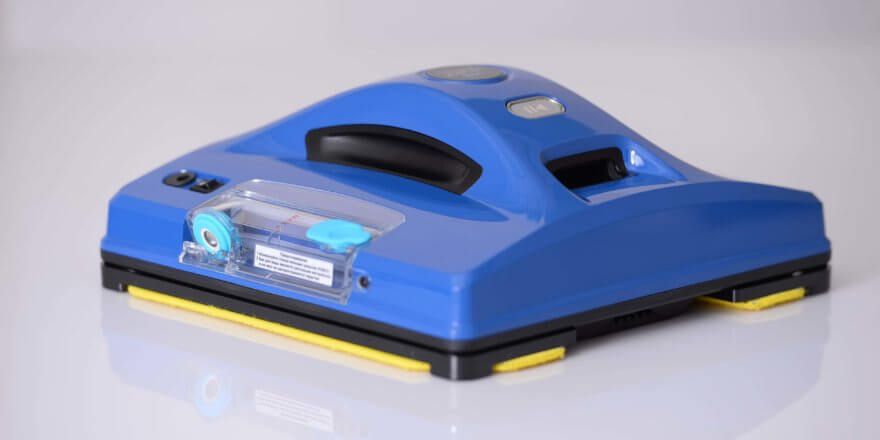
The Hobot-298 Ultrasonic is a new window cleaning robot equipped with a separate water container and special nozzles that spray liquid onto the glass surface before the cleaning cloths. This innovative solution virtually eliminates the need to manually wet the cleaning cloths while the robot cleans windows (although pre-wetting is still necessary). This review will allow you to get to know the Hobot-298 better, learning about its features, functionality, and advantages and disadvantages compared to its competitors.
Equipment
First, let's look at what's included in the package. In addition to the robotic windshield cleaner itself, the box contains:
- Safety cord.
- Power supply with extension cord.
- Remote control.
- Cleaning wipes (2 pcs.).
- Branded cleaning product.
- Operating instructions.
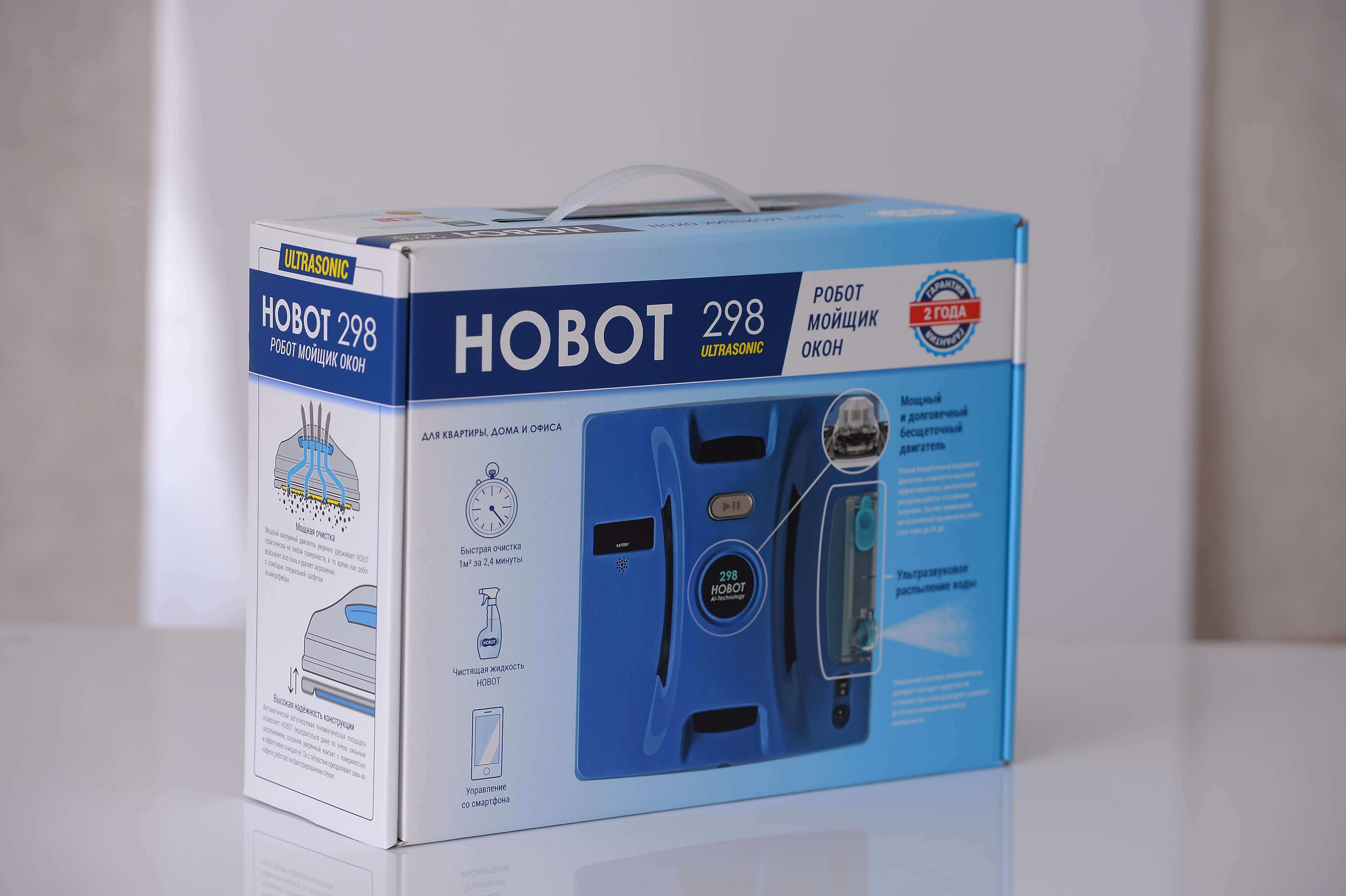
Branded box
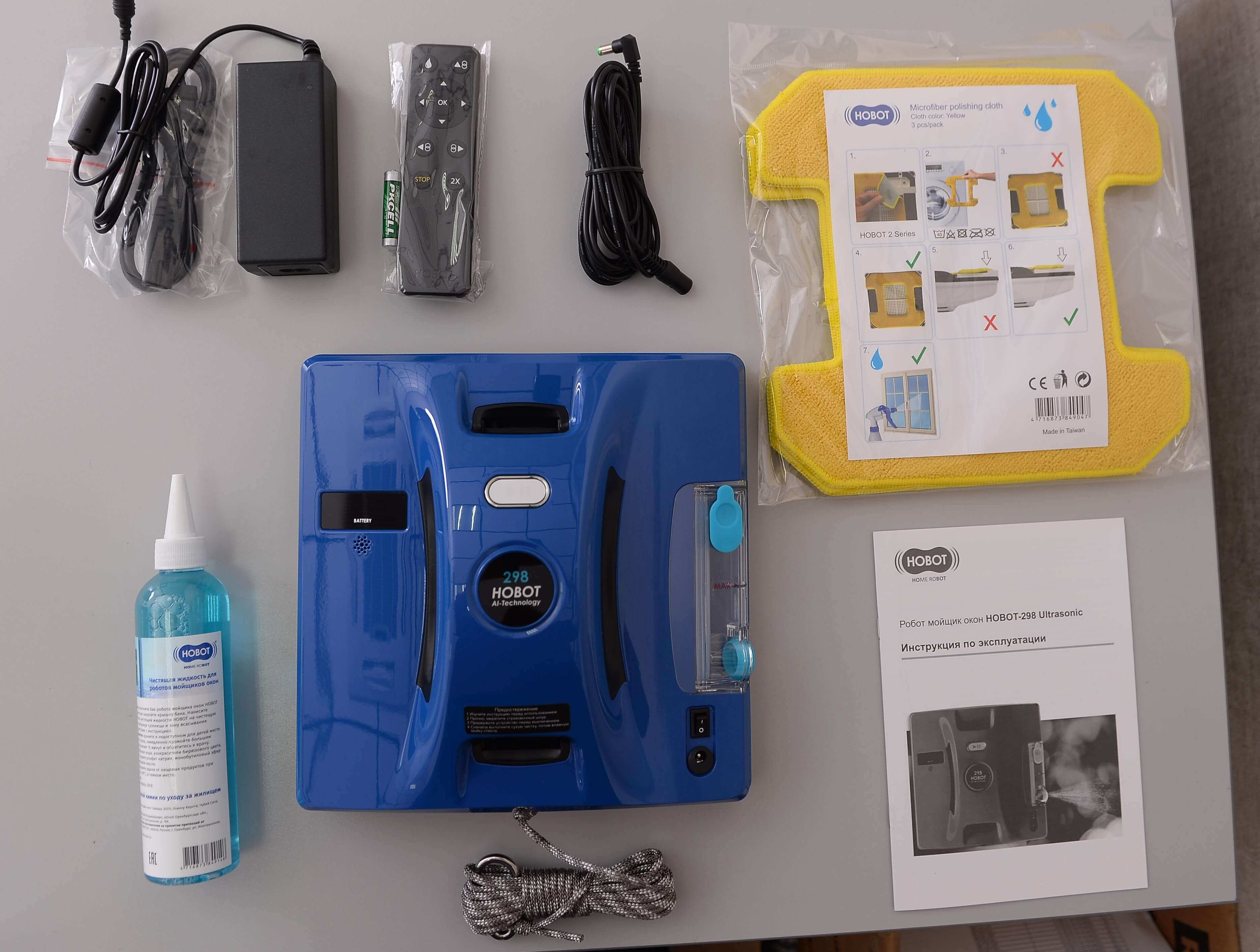
Hobot components
The manufacturer has thoughtfully included batteries for the remote control, so there is no need to purchase them separately.
Design
The model is available in blue. Viewed from above, the window cleaning robot is virtually identical to the previous 268 and 288 models. The only noticeable difference is the additional water container mounted on the side. This is the main feature of the Hobot-298.
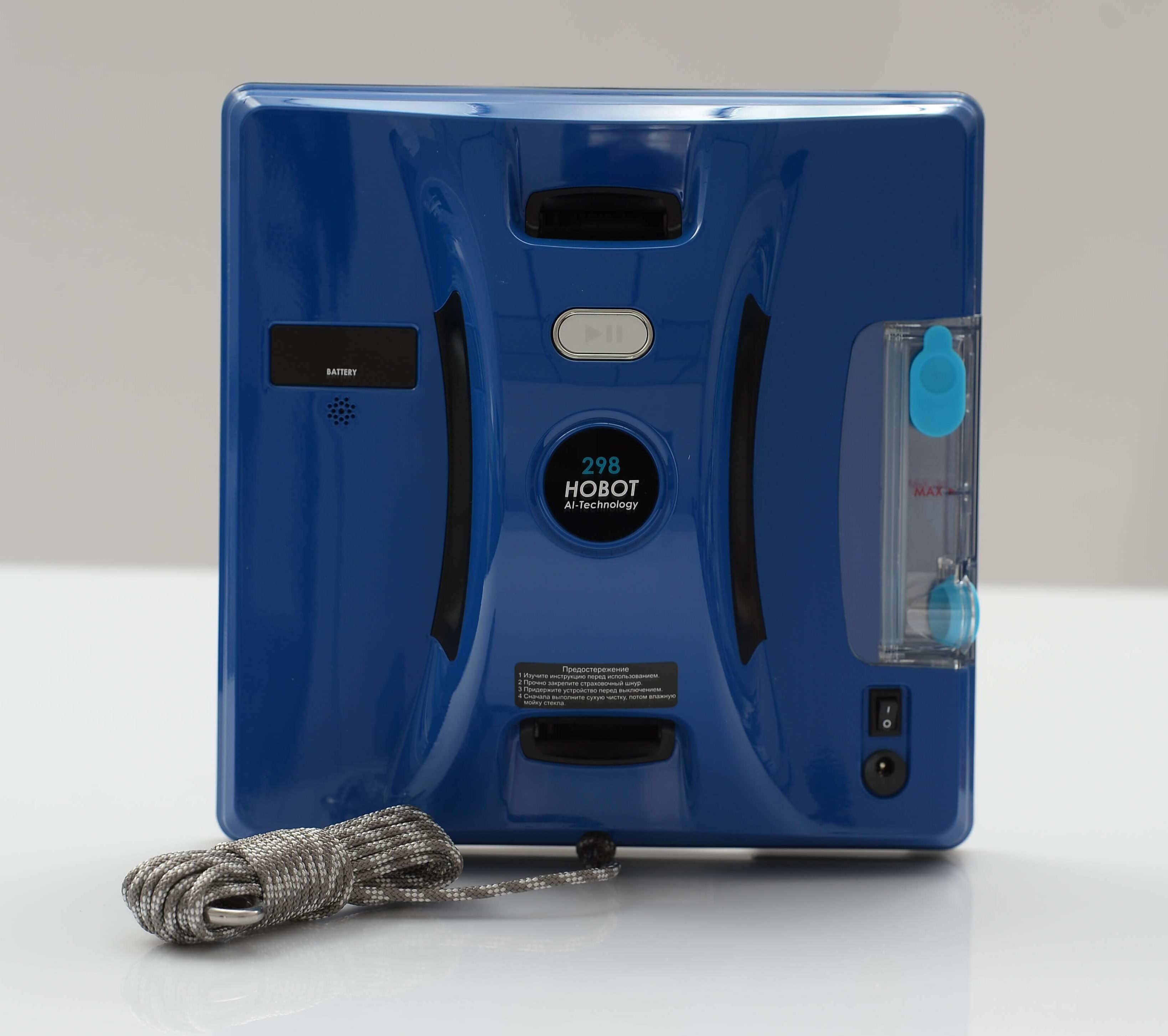
Top view
The water tank is removable and can be replaced with a new one if the ultrasonic nozzles become clogged and stop spraying. The water tank holds 50 ml. The manufacturer claims the nozzles are very efficient, using 1 ml of water per square meter. So, one water tank fill is enough for a glass facade up to 25 square meters in area—that's impressive.
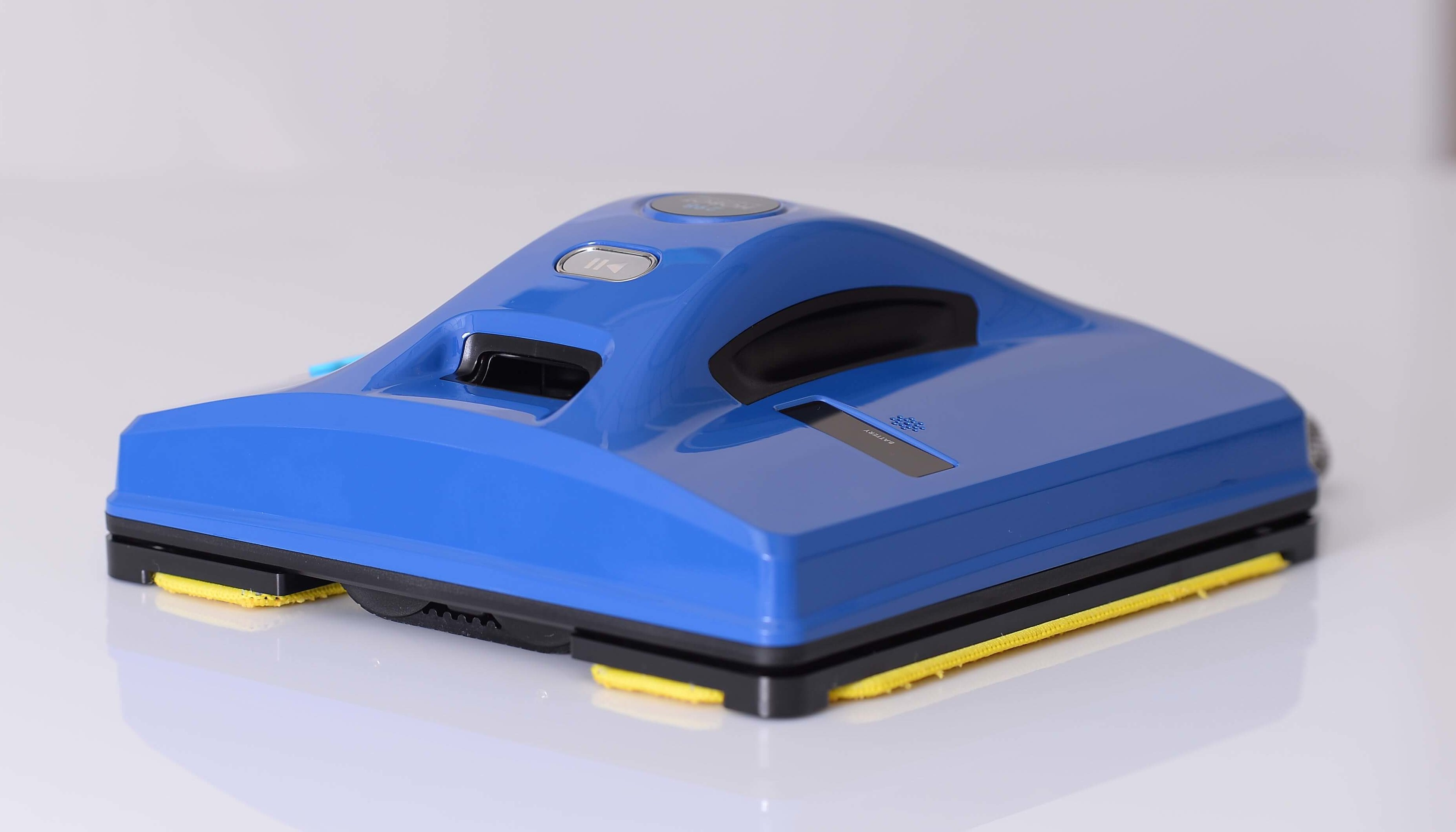
Side view
The bottom of the glass cleaning robot has a standard design: a cleaning cloth measuring 24 x 24 cm is located over the entire surface, tracks are installed on the sides for the robot to move, and the engine is located in the center (behind the ventilation holes).
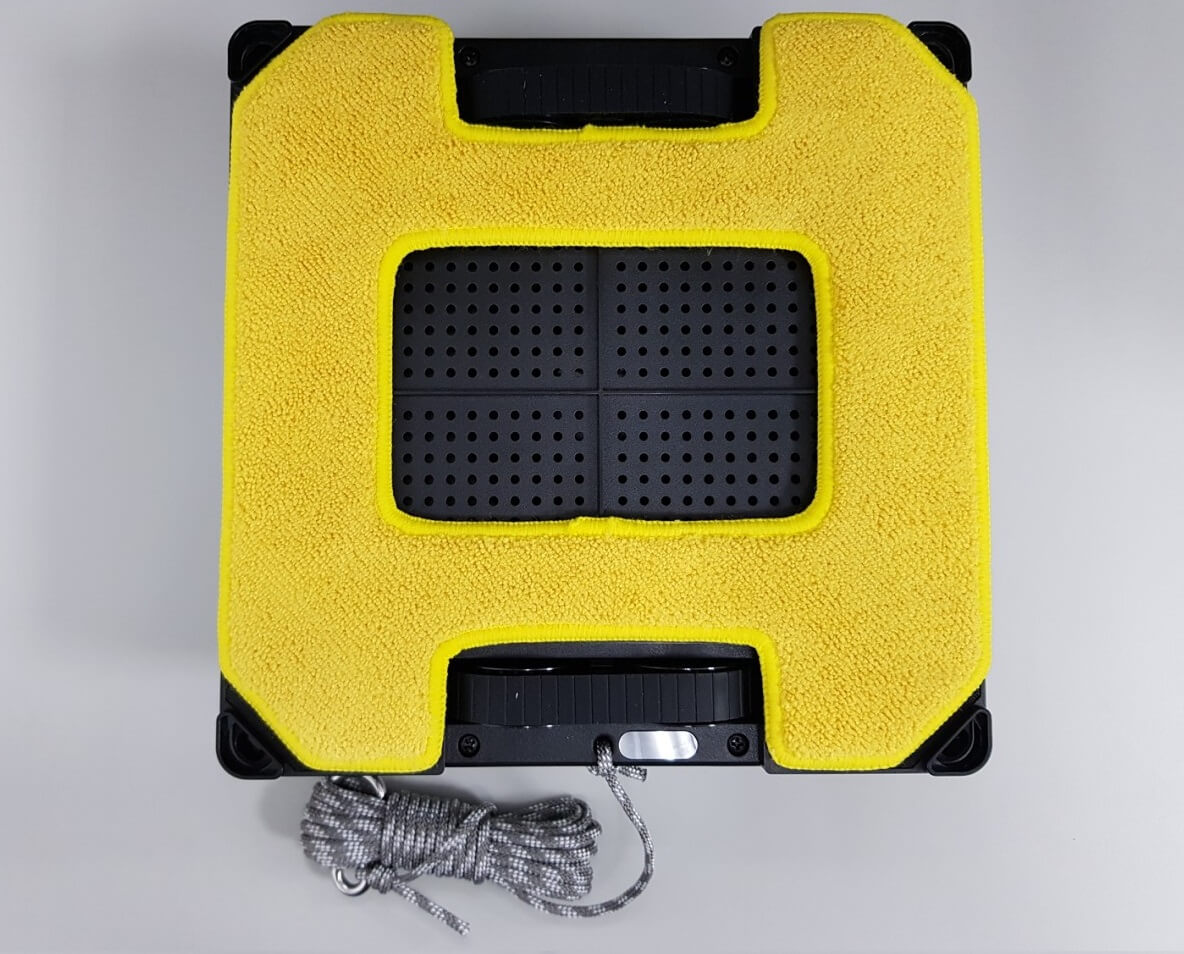
Bottom view
Technical specifications
All the characteristics of the Hobot-298 Ultrasonic are summarized in the table:
| Dimensions | 24*24*10 cm |
| Weight | 1.2 kg |
| Minimum window size | 40*40 cm |
| Battery | Li-Po, 2900 mAh |
| Battery life | 20 min |
| Noise level | 64 dB |
| Maximum surface difference | 1.5 mm |
| Movement speed | 2.4 min/ 1 sq.m. |
| Power consumption | 72 W |
| Number of operating modes | 3 |
Functional capabilities
Let's move on to the most interesting part of the review—the Hobot-298's features. The first thing worth mentioning is the navigation of the window cleaning robot. The device navigates spatially using an integrated gyroscope, while a laser sensor detects the edges of the surface being cleaned. It's important to note that this automatic window cleaner can clean not only windows but also frameless vertical surfaces, such as glass doors.
The robot moves across the surface using N- and Z-shaped movements. The installed tracks provide not only good traction but also high speed—up to 12 cm per second.
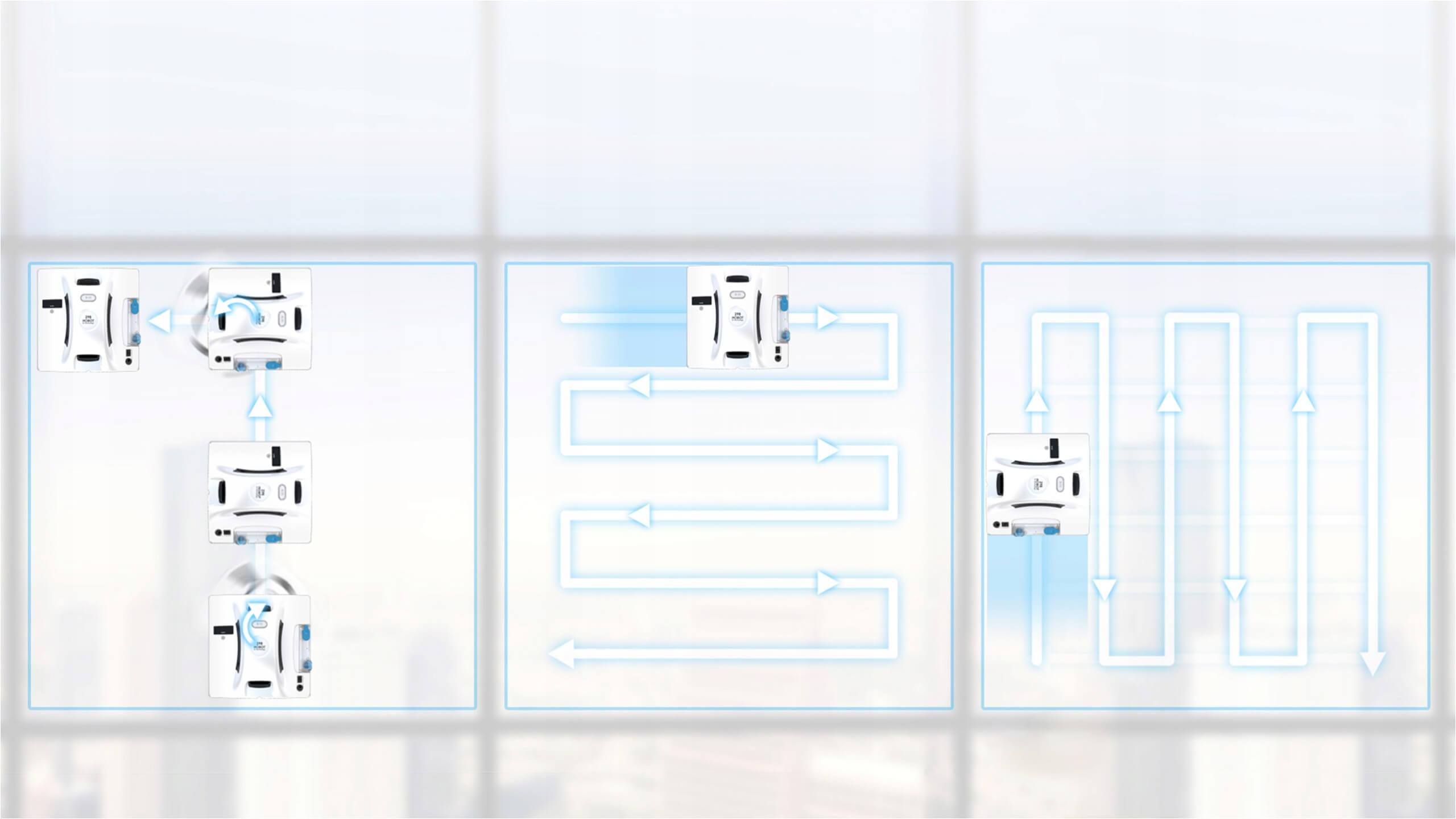
Movement algorithm
The most significant change is the installed water tank with special spray nozzles. Ultrasonic atomization allows for economical yet sufficient flow of liquid for cleaning glass. The detergent and water are transformed into a mist with molecules no larger than 15 microns. It's truly impressive.
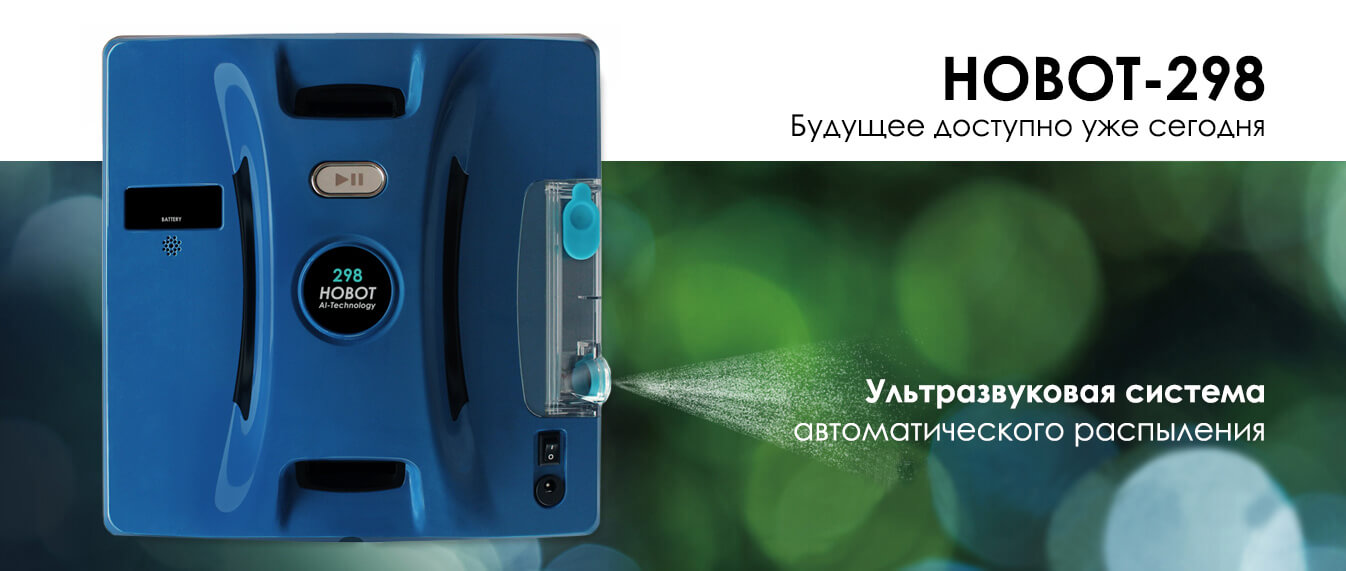
Liquid spraying
The Hobot-298 is attached to the glass using a powerful, centrally mounted vacuum motor. Unlike previous models, the motor is brushless, increasing its lifespan and reducing noise levels slightly.
Equally important is the ability to control the window cleaning robot via a mobile app. It's simple and intuitive, and fully translated into Russian. The window cleaner connects to your smartphone via Bluetooth.
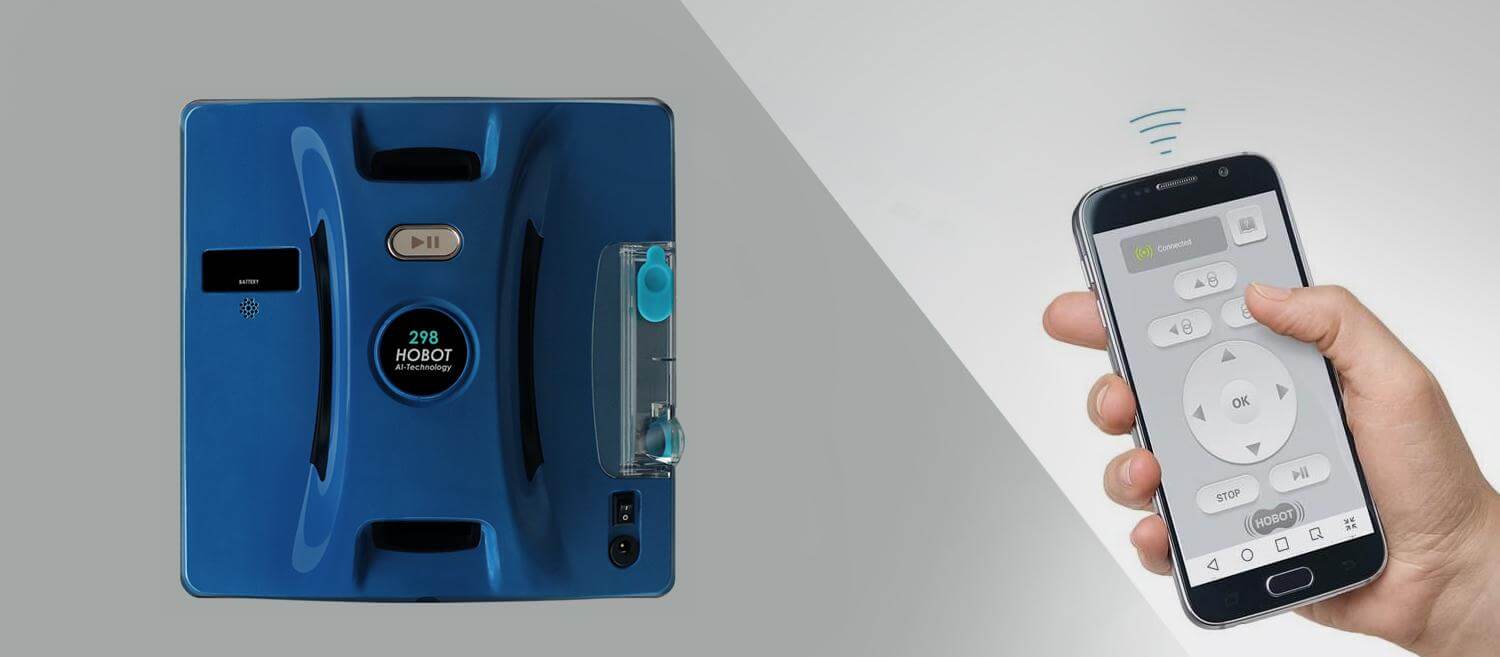
Control via phone
Since the robot is directly connected to the power grid, it's crucial to have a battery backup in case of a power outage in your home or apartment. The Hobot-298 can operate autonomously for 20 minutes, enough for the owner to quickly respond and remove the robot from the window. Even if the power goes out without you noticing and the robot runs out of power, the safety cord will protect it from falling. The cord can withstand a force of up to 150 kg, so you don't have to worry about the robot falling from a floor or even a short distance.
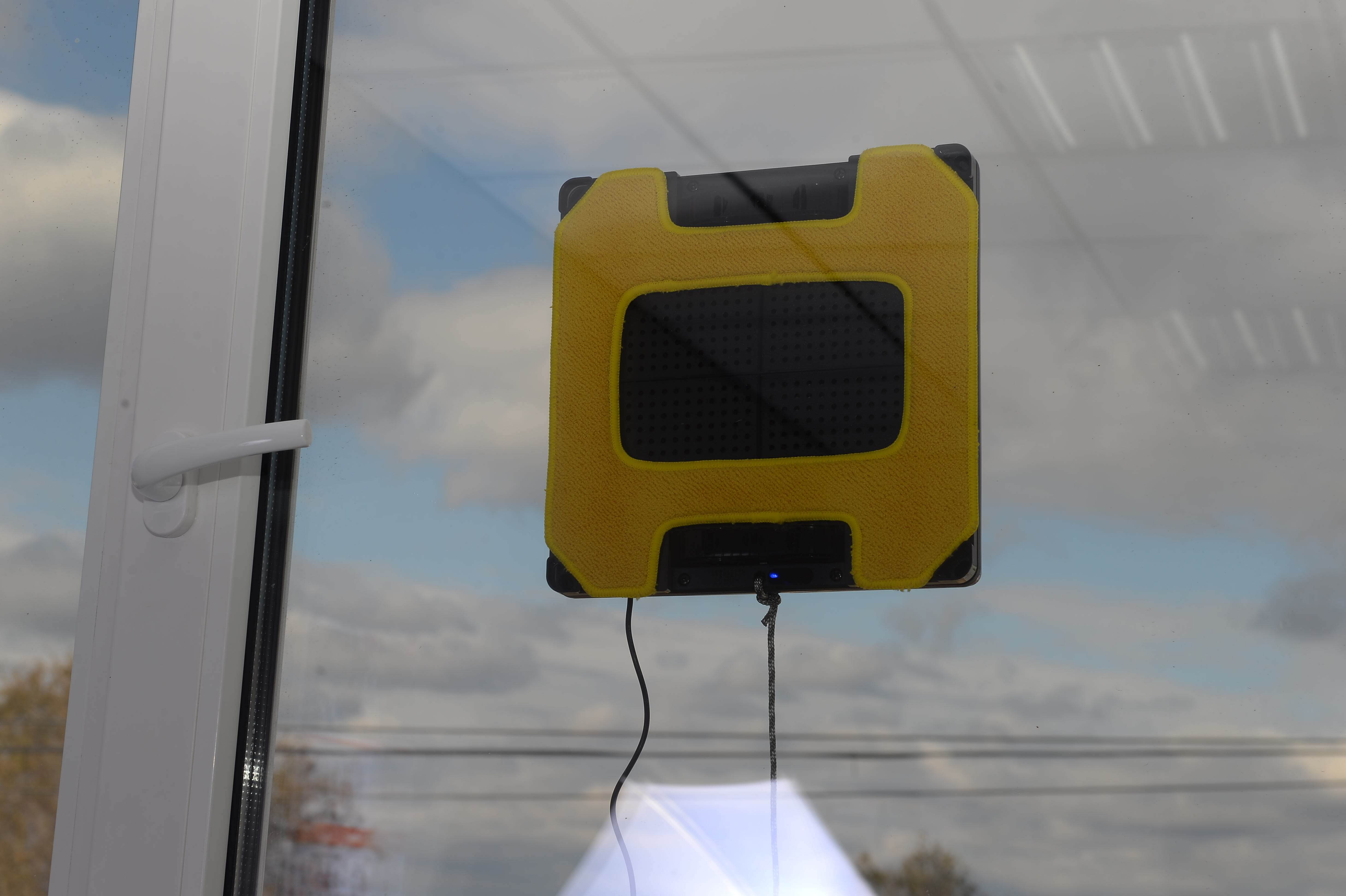
Window mount
Finally, we'd like to point out that this model is suitable for cleaning any hard vertical surfaces: mirrors, rough glass, tiles, and window film, not to mention regular glass. So, you can use the Hobot-298 to clean windows, kitchen backsplashes, bathroom tiles, and even glass doors.
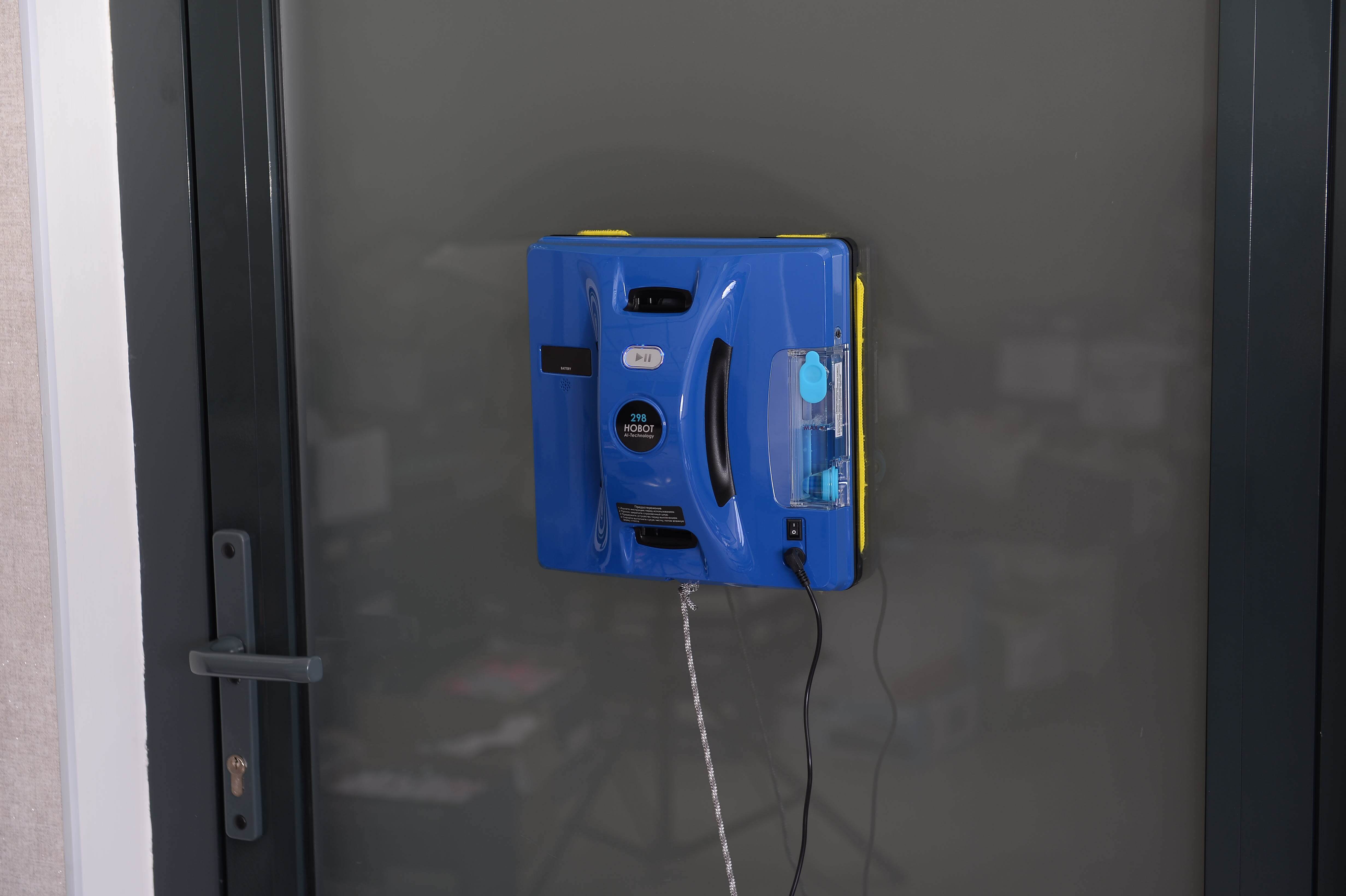
Door mount
Pros and cons
In conclusion, let's highlight the main advantages and disadvantages of the new window cleaning robot. Among the advantages, we would like to highlight:
- Availability of a water tank with ultrasonic sprayers.
- Ability to work on medium and large windows thanks to updated navigation.
- High movement speed.
- Control via mobile application.
- Autonomous operation when disconnected from the network.
- Versatility of the model (work on different vertical surfaces).
- Reasonable price ($250 in 2019).
- 2 years warranty.
We found no significant drawbacks. Considering its price and functionality, this window cleaning robot can easily claim to be one of the best in its segment. If you have any questions, please ask them in the comments below.
Finally, we recommend watching a video review of the Hobot-298 Ultrasonic:
Analogues:
Could you please tell me if I'm cleaning a tiled bathroom wall, will the grout between the tiles interfere with the cleaning process? Will the robot fall over or get stuck on one tile?
Thanks for a great resource on robots!
Good afternoon! What is the service life of this washer?
Hello. Which premium window cleaning robot should I buy?
I think it's Hobot 2S or Garlyn MaxClean.