Hobot LEGEE LuLu Station for the LEGEE-D8 Robot Vacuum Cleaner: What Can It Do?
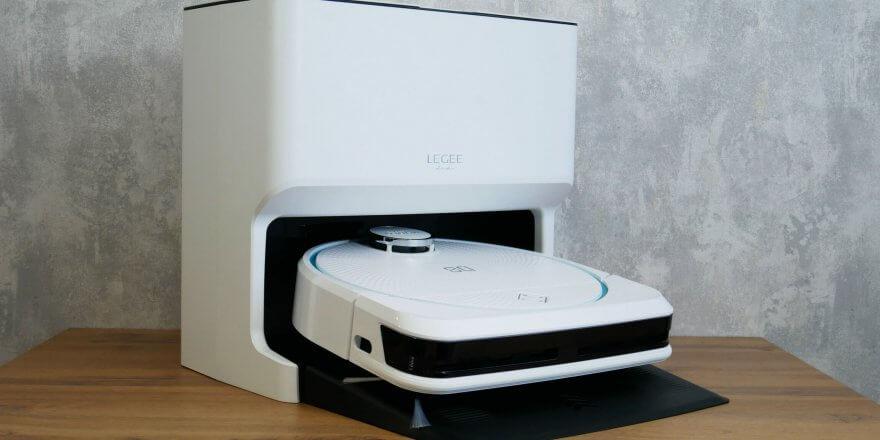
This review covers the station for the new robot vacuum cleaner. Hobot LEGEE-D8It's called the Hobot LEGEE LuLu and will go on sale in early July 2023. The launch price is expected to be around $240 or $260. This station can be optionally added to the robot vacuum, which is very convenient. But the most important thing is the LEGEE LuLu's capabilities. The station is designed to clean and rinse the cleaning cloth during the robot vacuum, dry the cloth with hot air after the cleaning cycle, and automatically refill the robot's water tank with clean water. The Hobot LEGEE LuLu significantly increases the autonomy of the LEGEE-D8 robot vacuum and simplifies its operation. Below, I'll show you how the new station is designed, how it works, and evaluate its effectiveness in tests. So, let's get started!
Appearance
The Hobot LEGEE LuLu station is black and white. Its dimensions are displayed on the screen (L*W*H = 486*410*390 mm). It's important to note that the height with the lid raised is 60 cm.
Hobot LEGEE LuLu
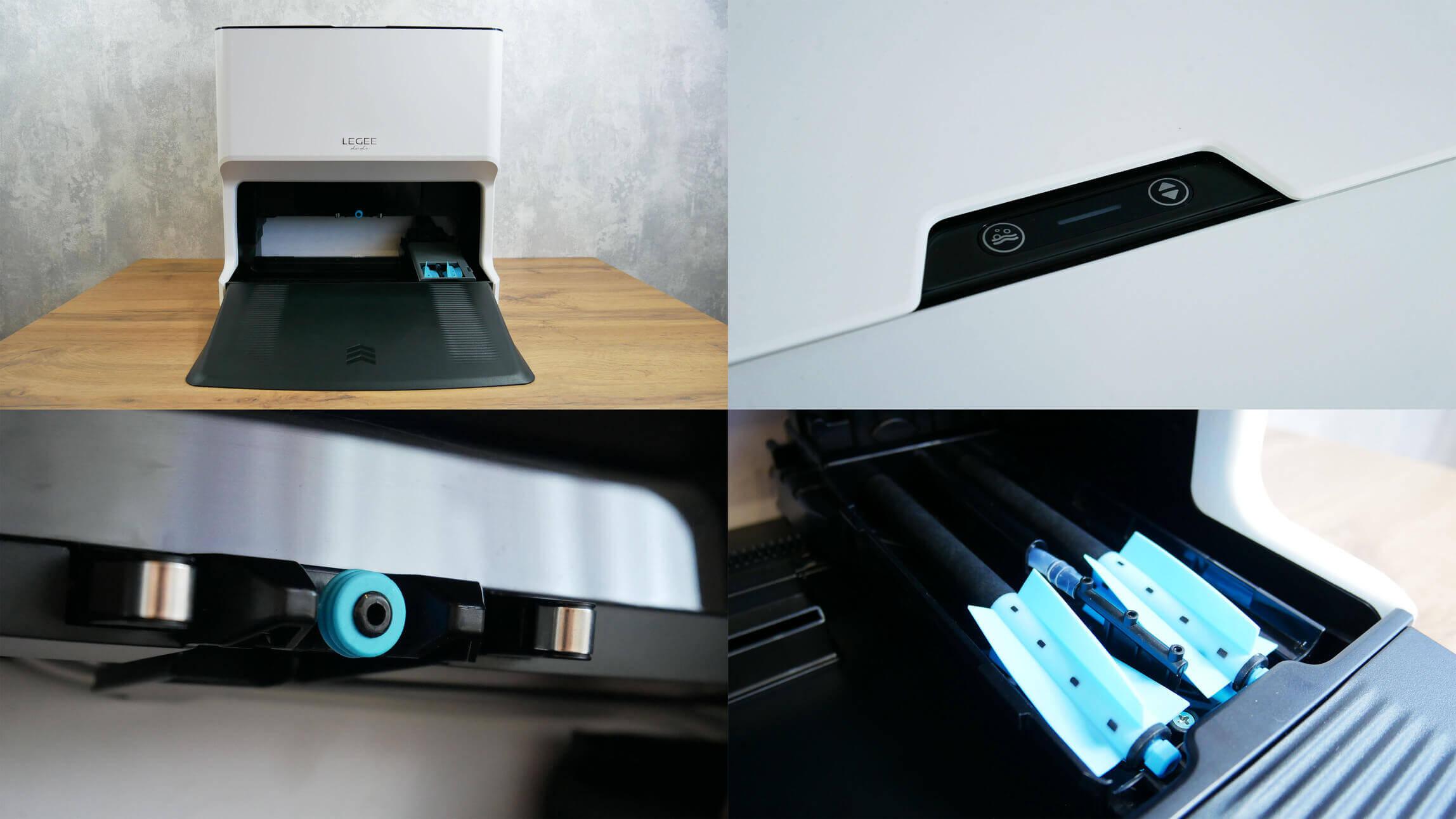
The docking area with the robot is equipped with a platform for driving, a nozzle for filling the robot's water tank, charging contacts, a washing module, and ventilation holes for drying the cleaning cloth. The platform is removable, making it very convenient for cleaning. The washing module is unique, as are most Hobot design solutions. Under the lid are two removable roller brushes with silicone pads, three water nozzles, and a tray for collecting and draining dirty water.
The idea is that water is applied to the cloth precisely where the roller brushes rotate, moving across the entire surface of the cloth. Dirty water is immediately collected in a tray. This prevents the entire bottom of the station from becoming dirty. The solution is actually quite clever. All that's left to do is periodically rinse the roller brushes and wipe down the small tray underneath.
The self-cleaning process itself was also approached differently. The washing module moves left and right within the station, while the robot moves back and forth during the self-cleaning process. This ensures that the entire surface of the wipes is cleaned, leaving no areas missed. Each section of the wipe is passed twice by both brushes: the first time with water applied, and the second time to further wring out water from the wipes, preventing the wipes from becoming over-wet. The self-cleaning performance will be verified in tests.
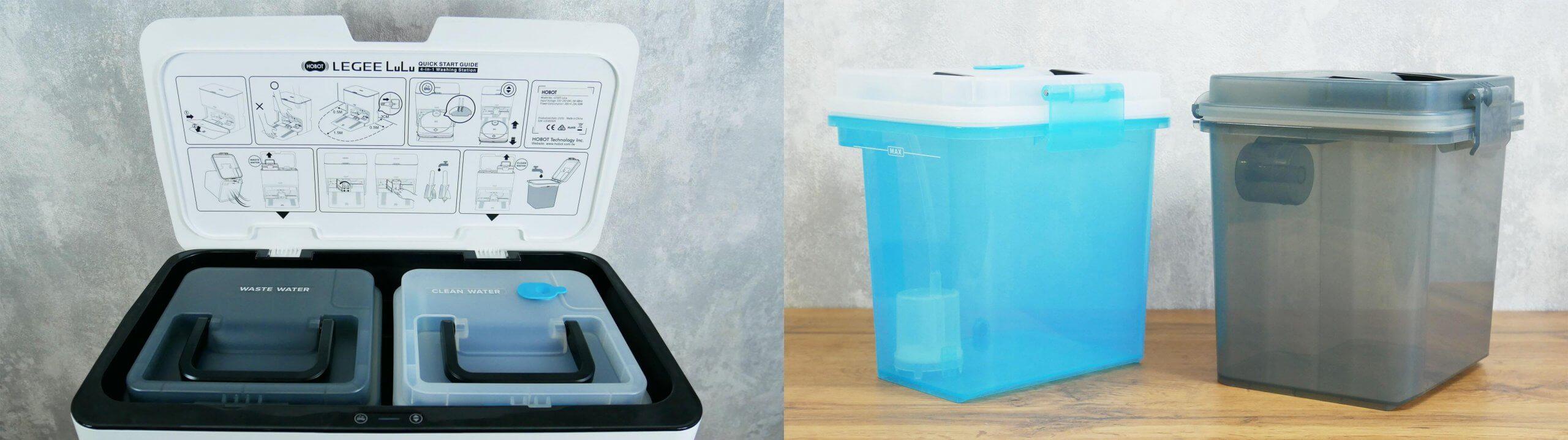
The station's top cover houses the clean and dirty water tanks. A quick-start guide for the station is located on the inside of the cover. Each tank holds 3.2 liters. The clean water tank also has a lid with a sealed valve for adding detergent or water without removing the tank from the station.
Water tanks
The last thing I'll touch on is the station's control panel. It has two mechanical buttons: one for starting the self-cleaning process and one for docking/undocking the robot. The latter function will be handy if the robot needs servicing. It will leave the station automatically, eliminating the need to manually retrieve it.
Overall, the station is well-designed. The unique solutions are pleasing. As for what I liked and disliked, I'll detail it in the conclusion.
I recommend watching a detailed video review of the Hobot LEGEE D8 robot vacuum cleaner in a separate video:
Functions
Speaking of the Hobot LEGEE LuLu's functionality, it's automatically recognized by the robot, adding new features to the menu. A LuLu section has been added to the bottom left of the main screen. Tapping it offers the option to manually start washing or drying the cloths. A "LuLu" section has also been added to the menu, offering more settings. You can turn the cloth rinse function on and off, turn hot air drying on and off, adjust the cloth drying time (from 2 to 4 hours), and, most importantly, adjust the cloth rinse frequency. This section offers options to wash the cloth after a cleaning cycle, by time (from 30 to 360 minutes), and after cleaning each selected area on the map.


Functions
Personally, I miss the ability to select shorter wash intervals, such as every 5, 10, or 15 minutes. I also miss the ability to customize the frequency of cloth washing after a specified cleaning area—again, every 10 or 15 square meters. This would allow for more flexible adjustments to the cloth washing function to suit my needs. I've passed on these recommendations to the brand representatives. I hope they'll add more flexible station settings in the future.
Another important point: if you select the cloth wash mode after each cleaned area, it will only work when you start cleaning in the selected areas. If you select the automatic cleaning mode, the robot vacuum will not rinse the cloth after each cleaning area. In my opinion, this is not very convenient. Again, I've passed on these recommendations to the brand.
Testing
Before we begin testing, I'd like to point out a few important points. First, the station comes with a rubber cap with a sealed valve for the robot. It's white. You'll need to replace the blue cap with a white one, as indicated in the instructions. And, in general, it's a good idea to read the instructions carefully before using the Hobot LEGEE D8 with the LuLu station for the first time.
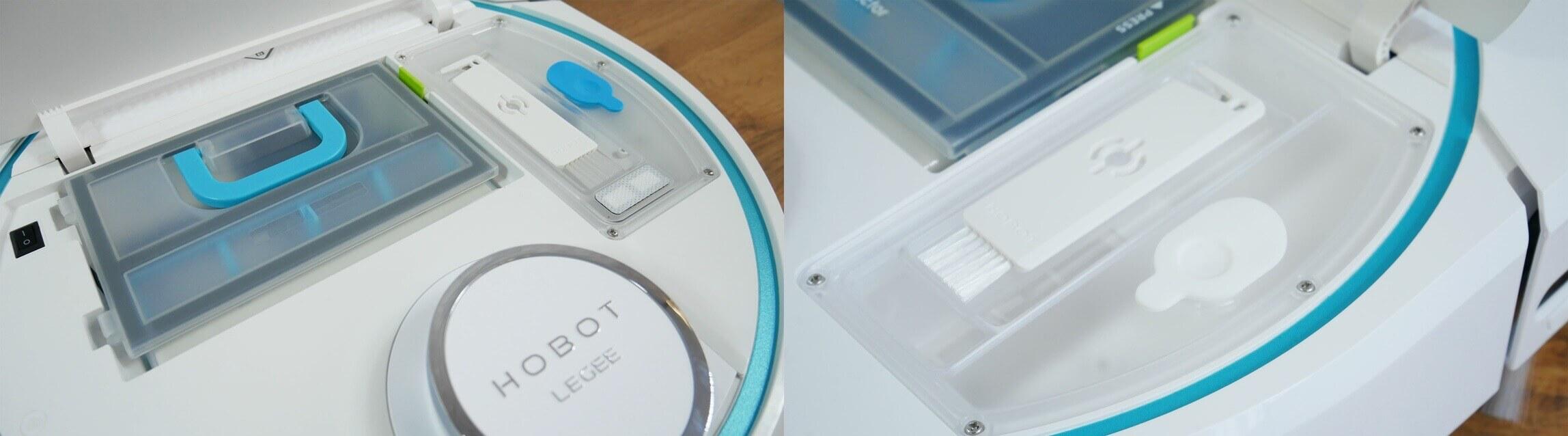
Replacing the cover on the robot
The second issue concerns the quality of the water used to fill the Hobot LEGEE LuLu. The manufacturer includes a special TDS water tester. Incidentally, this express water quality meter can also be used for other household purposes, such as determining the quality of drinking and cooking water. Tables with recommended values are easily found online.
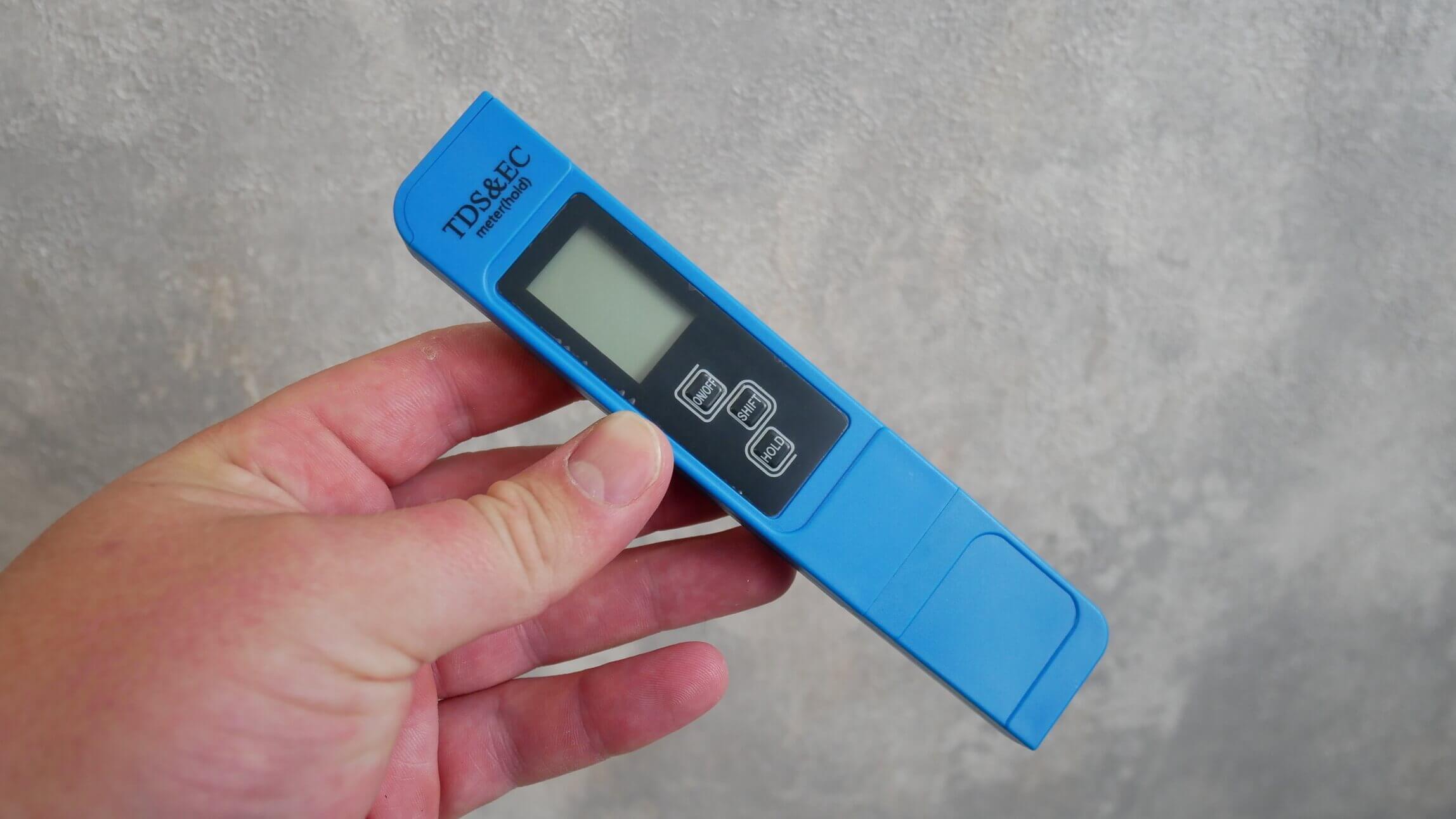
TDS water quality tester
So, it's forbidden to use distilled water with a salt content of less than 5 ppm TDS in the Hobot LEGEE LuLu station. This is due to the way the overflow sensors operate; they simply won't trigger. Ideally, you should use water with a salt content between 5 and 300 ppm. Excessive salt content primarily affects cleaning performance, leaving streaks after the salt water dries, and also can clog the spray nozzles on the robot over time. This can be resolved by cleaning or replacing them; spares are included.
First, I filled the tank with tap water and tested it with a tester—it showed 477 ppm. This water is not recommended. Next, I filled the tank with tap water that had just been filtered. And here's the interesting part. I have a three-stage filter, the most basic one. And even after it passed through, the salt content didn't decrease—it stayed at exactly 477 ppm. Keep this in mind. A four-stage, or better yet, five-stage filter with reverse osmosis purification will reduce the salt content. Or at least a water softening cartridge. Then I filled the tank with bottled drinking water. Only then did the tester show the desired 46 ppm. Another interesting point: I added Hobot branded detergent to the tank with clean water, at a ratio of 1:50, or 60 ml per full tank. Even when mixing water with detergent, the salt content did not change, indicating that the detergent was properly formulated and did not contain any harmful additives.
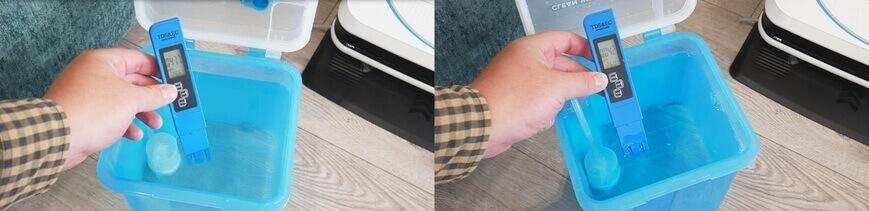
Water quality testing
Now I'll demonstrate the Hobot LEGEE LuLu station in action. I'll describe the tests verbally, but for clarity, I highly recommend watching the video review with all the tests. It's already published on the channel:
The cloth is rinsed after each cleaned area (at least that's how I set it up). The robot vacuum returns to the station, rinses the cloth, and continues cleaning with a clean cloth in the next area.
The main test involved checking the cleaning performance of the cloth after mopping a heavily soiled room. The Hobot LEGEE D8 successfully removed the dirt.
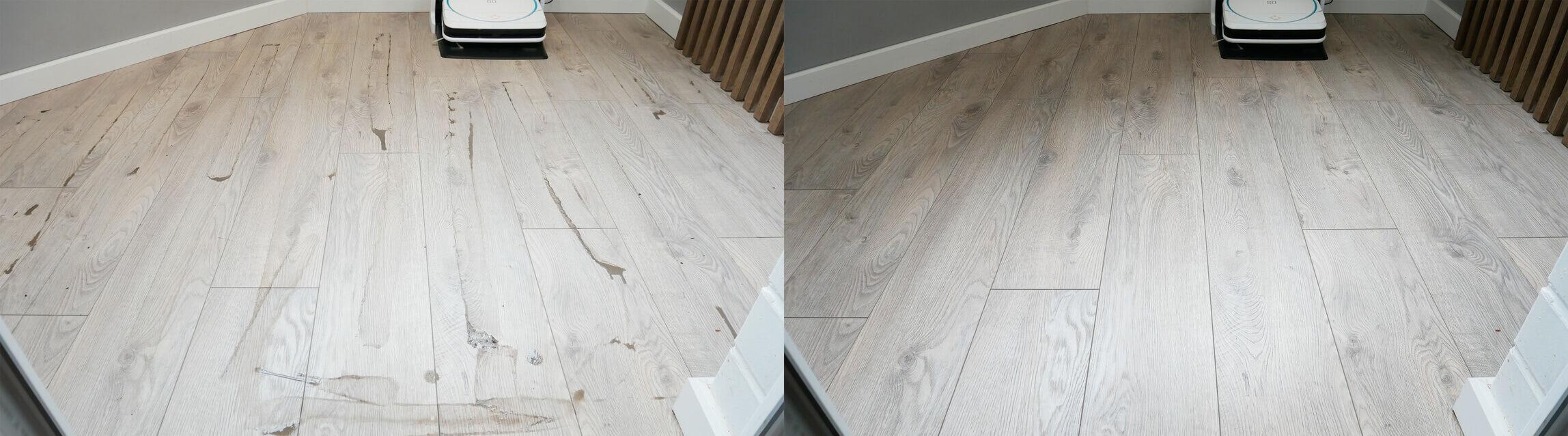
Wiping off dirt
We see that the cloth is very dirty after cleaning. We return it to the station, start washing the cloth, then activate the exit function using the button on the control panel, turn it over, and inspect the results. Visually, the cloth is almost clean. It's not perfectly clean; the fabric is slightly dirtier around the edges. However, I can say that similar products performed no better in a similar test.
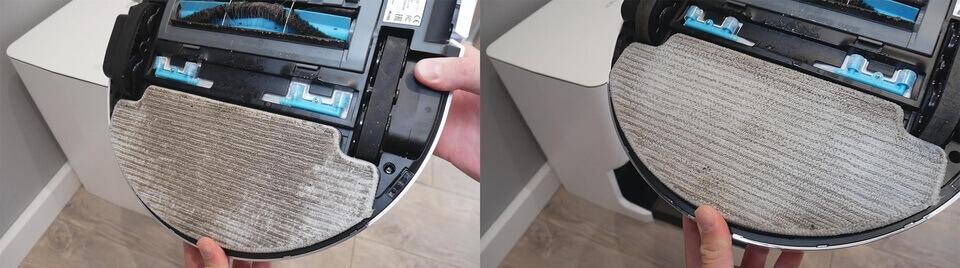
The quality of the napkin's washing
In domestic conditions, with less severe floor soiling, the wash quality is close to ideal. Incidentally, for those interested, the water consumption for rinsing the wipes is 150 ml. As for the duration, similar products use approximately the same amount of water: 150-220 ml. The wash duration is approximately 5 minutes, while similar products typically take about 2 minutes.
Regarding the condition of the station after the complex test, we see that the entire bottom around the washing module is absolutely clean. Nothing is splashing or dripping past the tray. Removing the lid reveals a small amount of dirt remaining on the roller brushes and in the drain pan. It's all very easy to wipe away with a damp cloth or napkin. But if the tray were removable, it would be even more convenient.
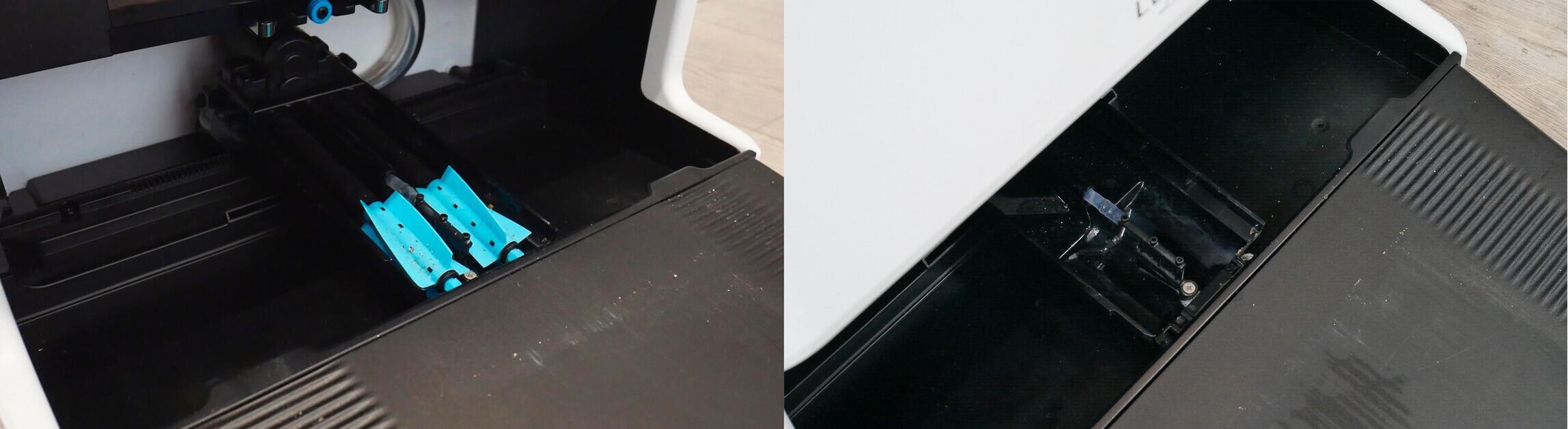
Station status
The drying quality of the wipes was tested. In my conditions, with high room humidity, the wipes were perfectly dry in 4 hours. The station didn't emit any unpleasant odors, which is a plus. If you live in a dry climate, 3 or even 2 hours might be enough to completely dry the wipes. The drying time settings allow you to choose the appropriate cycle length for your conditions.
The noise level was also tested. It was 65-66 dB when washing the cloth, and 51-53 dB when drying. Again, the station isn't too loud or too quiet. Everything is in line with similar devices.
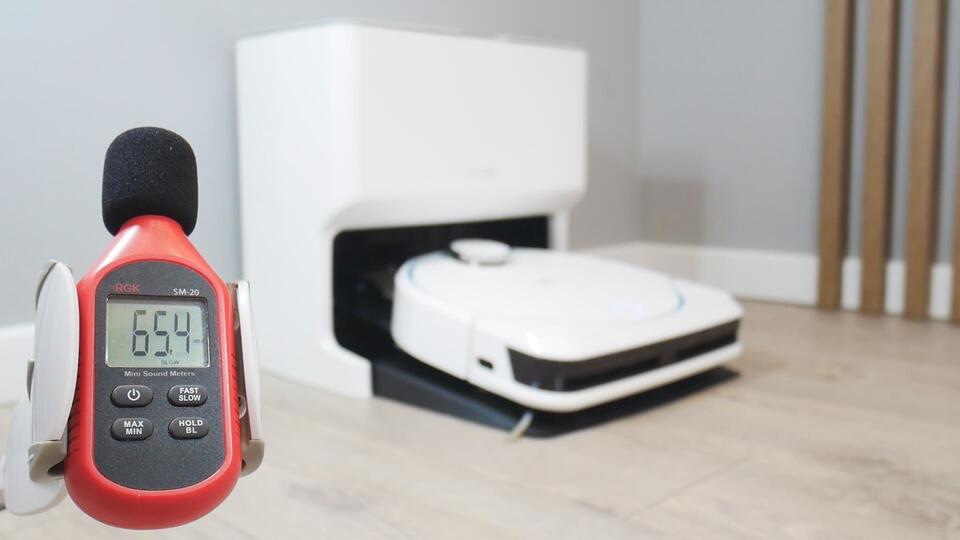
Noise level
Personal opinion
The Hobot LEGEE LuLu station, which is compatible with the Hobot LEGEE D8 robot vacuum, was thoroughly tested. I'll highlight the pros and cons I discovered. I liked the following:
- Relatively compact dimensions.
- High-quality washing of napkins
- Complete drying of the napkin with hot air.
- Convenient service.
- The tank size is optimal given water consumption. According to brand representatives, if you only run the cloth wash after cleaning, the tank with clean water, with refills, lasts for 16 washes of a small apartment floor. This means that if you wash the floor twice a week, the tank will last up to 60 days without maintenance.
- I'd also like to highlight the station's uniqueness. We've developed our own unique napkin washing method, unlike other brands. This deserves praise.
Speaking of disadvantages, I didn’t like the following:
- The station cannot be connected to the water supply and sewerage system.
- There's no automatic detergent dispenser for washing napkins. It must be poured manually into the tank.
- The wipe rinse frequency setting is inflexible. A shorter wipe rinse time interval and a cleaning area-specific setting are needed.
The first two comments aren't that critical, in my opinion. However, more flexible station settings are something the engineers could work on. However, brand representatives have their own opinion on this matter, and they are convinced that due to the design of the cleaning module, specifically the way water is sprayed before the cleaning cloth, the Legee D8 doesn't require frequent cleaning of the cleaning cloth. They believe that for this robot, washing the cleaning cloth only after the cleaning cycle is sufficient, even for an area of about 100 square meters. I have my own opinion on this matter. What do you think? Let me know in the comments!
And by the way, if you evaluate the Hobot LEGEE D8 with the LuLu station, then according to our rating system it scores 169 points and gets into the TOP-7 The best robot vacuum cleaners tested at robovac.washerhouse.comIf they add more flexible station settings, I'll add another 2 points to the overall rating.
Overall, I'm very pleased with the station. I've been waiting for it for a long time, and now the Hobot LEGEE D8 is truly more convenient, more autonomous, and capable of effectively cleaning large floors. I definitely recommend it! It's also important to note that the Legee D8 robot retails for $400, so the complete kit with the station will cost you $600. Considering the model's high efficiency and versatility, a number of advanced design features, and the availability of a full warranty and after-sales service throughout Russia, the price is very reasonable. For this price, you can count on one hand several worthy alternatives.
Station for sale:
Robot with station:
On that note, I'd like to end this review. If you have any questions, please ask them in the comments. Happy shopping. Bye!

Good afternoon
I currently own a Legee 7, and I'm completely satisfied with the cleaning performance. However, I'd like a dry cleaning option that doesn't require maintenance before each use. I have a dog at home, a Maine Coon, and the amount of hair can fall overnight like snow.
In your professional opinion, is it better to buy a separate robot for dry cleaning (suitable for wool) or to switch to a Legee d8 with lulu and live happily?
Hello! I'm having a problem with the water refill. After cleaning, there's still water left in the robot, and when I restart it, the station refills again, and water starts leaking out the white valve. What could be causing this?
Good afternoon,
I'm comparing this station with the Xiaomi Mijia OMNI 1S, as I understand it, they are pretty similar.
I don't have carpets or pets, so I need ease of use and minimal interaction with the robot and additional cleaning. Which one would be best?
Hello,
Am I correct in assuming the waste container doesn't empty? The robot itself is interesting, but the fact that it only has a compacting system without emptying, even with the station, is somewhat underwhelming.
The container is not emptied, that's correct.