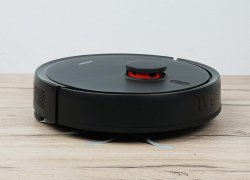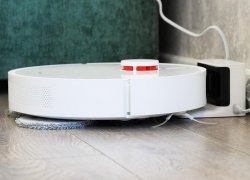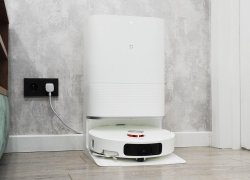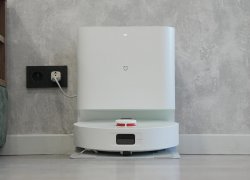
Xiaomi Mijia 5 Pro: 23,000 Pa, accurate recognition of backlit objects, remote home monitoring
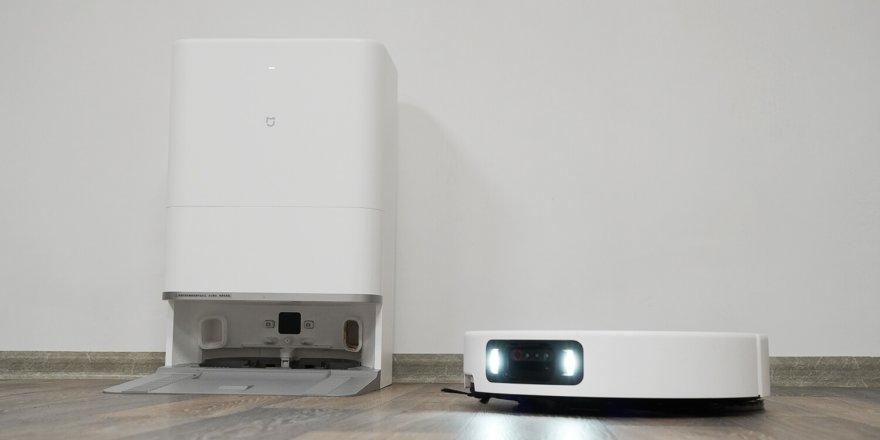
Hello to all readers of this project! This review will focus on the Xiaomi Mijia 5 Pro robot vacuum cleaner. The model number is OV21CN, meaning it's for the Chinese market, as a global version is also sold under the same name, but with the part number OV21GL and a completely different price. The Chinese version is priced between $450 and $550, which is 1.5 to 2 times cheaper than the global version. For this price, the robot vacuum cleaner is equipped with a cutting-edge set of features. These include an object recognition system with backlighting, a retractable lidar sensor, and even a first for Xiaomi robots, remote home monitoring. Additionally, the robot has increased suction power to 23,000 Pa, as well as an effective cleaning module with a turbo brush with blades, a retractable side brush, and a cleaning cloth. And of course, an all-in-one station with heated water and air. So, below, I'll be thoroughly testing the Xiaomi Mijia 5 Pro, highlighting the pros and cons based on my test results, and then expressing my personal opinion on the robot. So, let's get started!
Equipment
The robot vacuum cleaner arrived in a branded box like this:
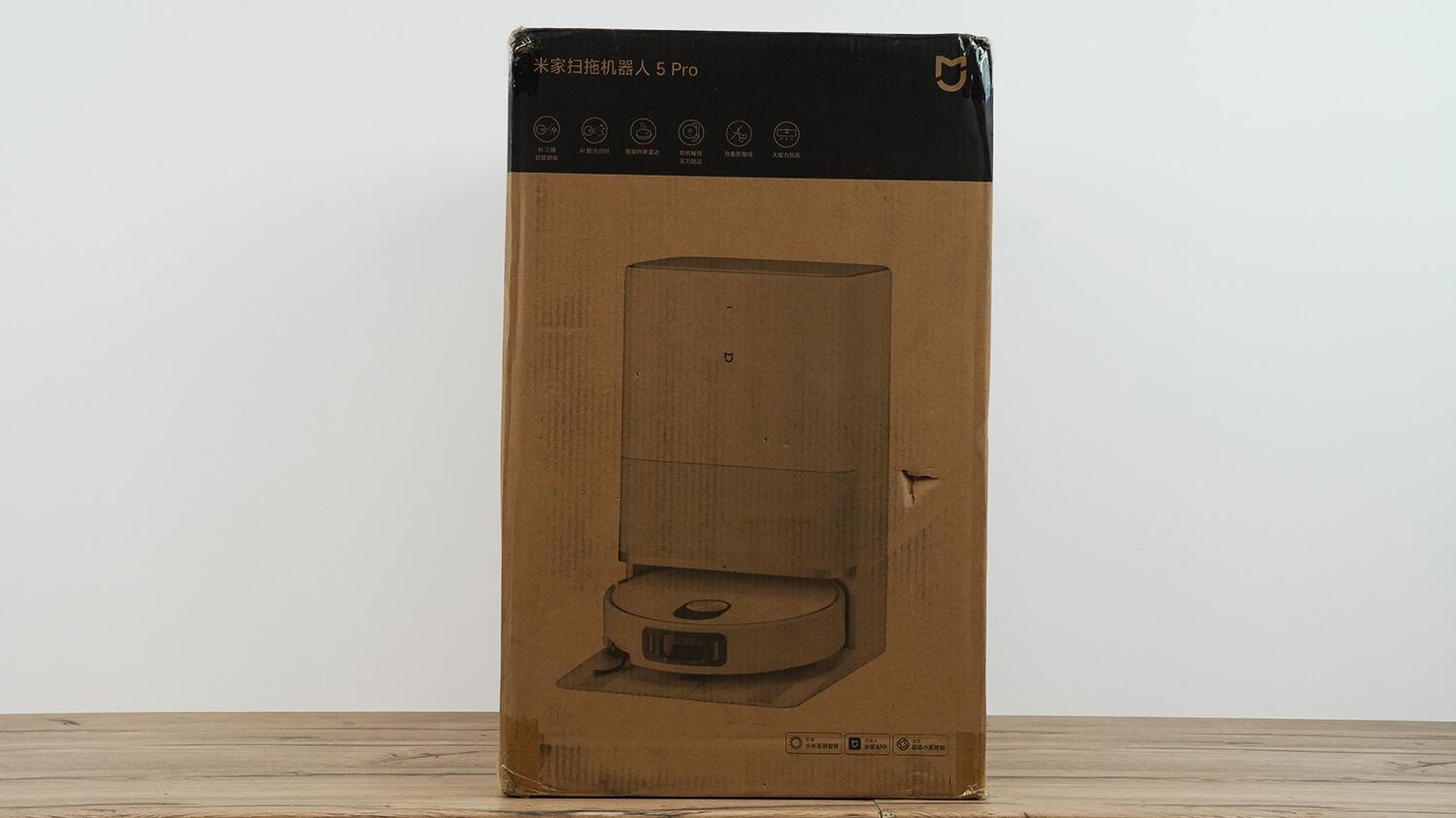
Box
The package includes the robot itself and its station, two cleaning cloth holders, a power adapter with a Chinese plug and a European adapter, and a Chinese-language instruction manual. Everything is standard here.
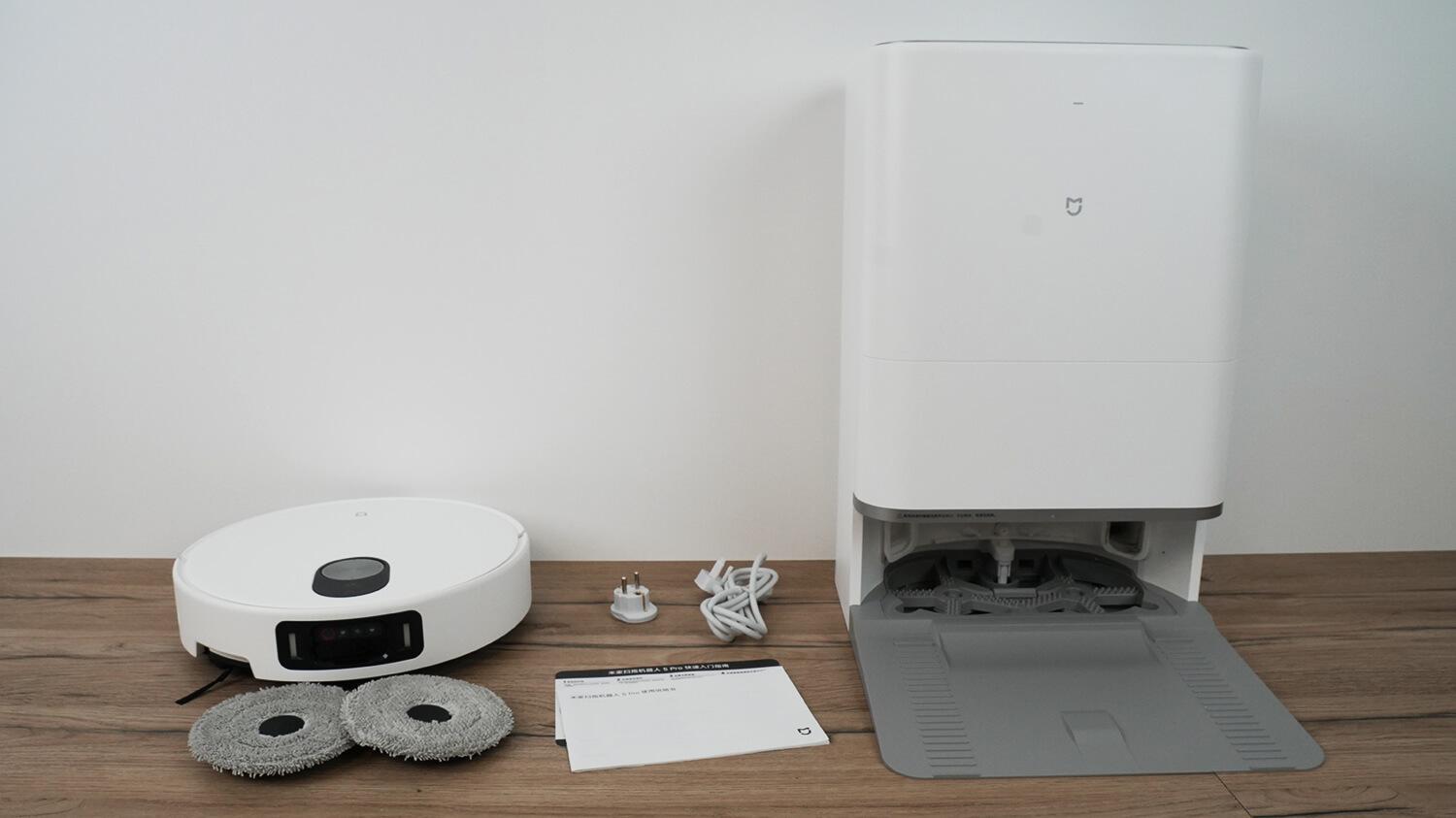
Equipment
Appearance
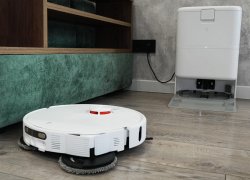
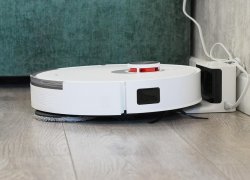
Let's take a look at the design of the Xiaomi Mijia 5 Pro. It's white and round, with a wall sensor mounted on the right side.
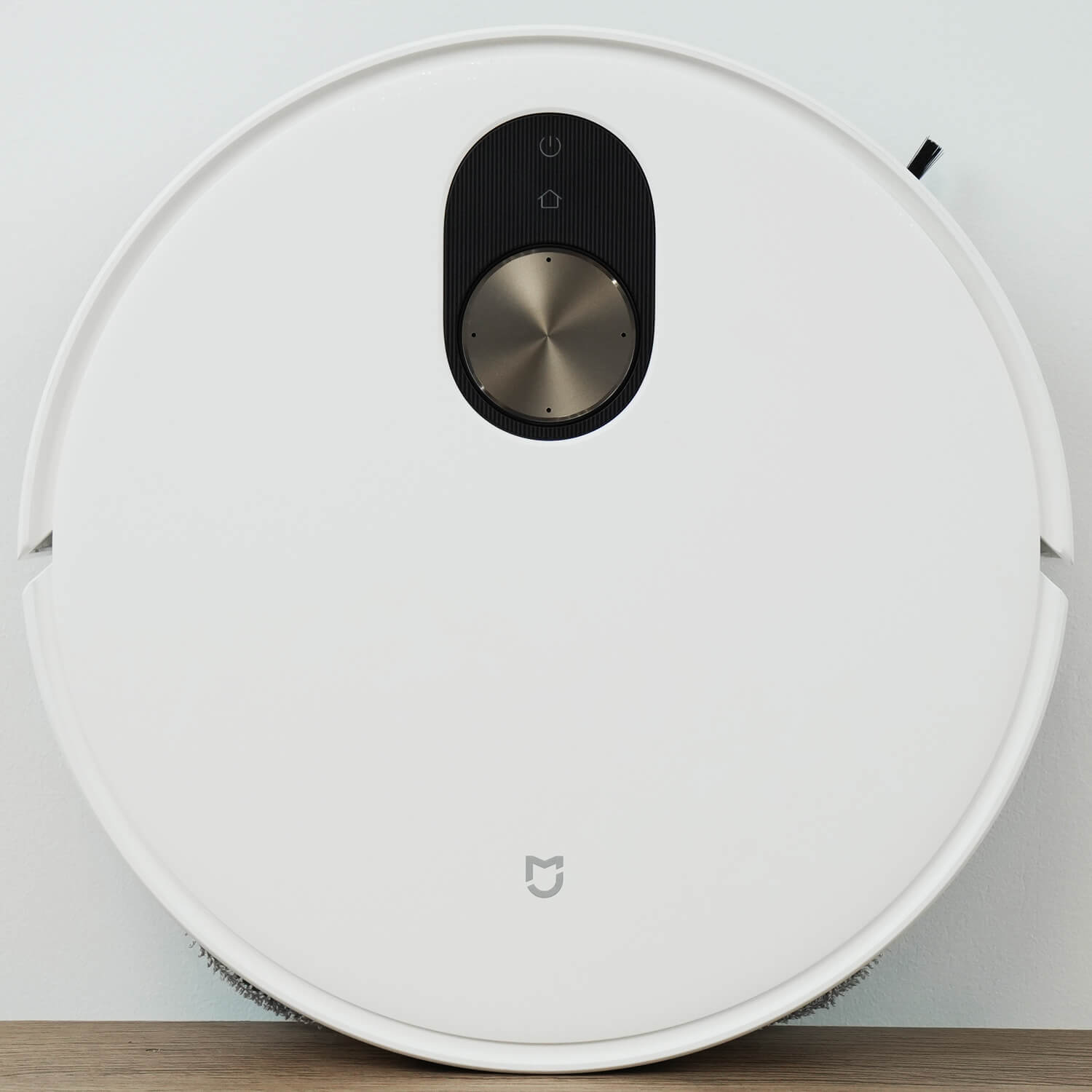
Top view
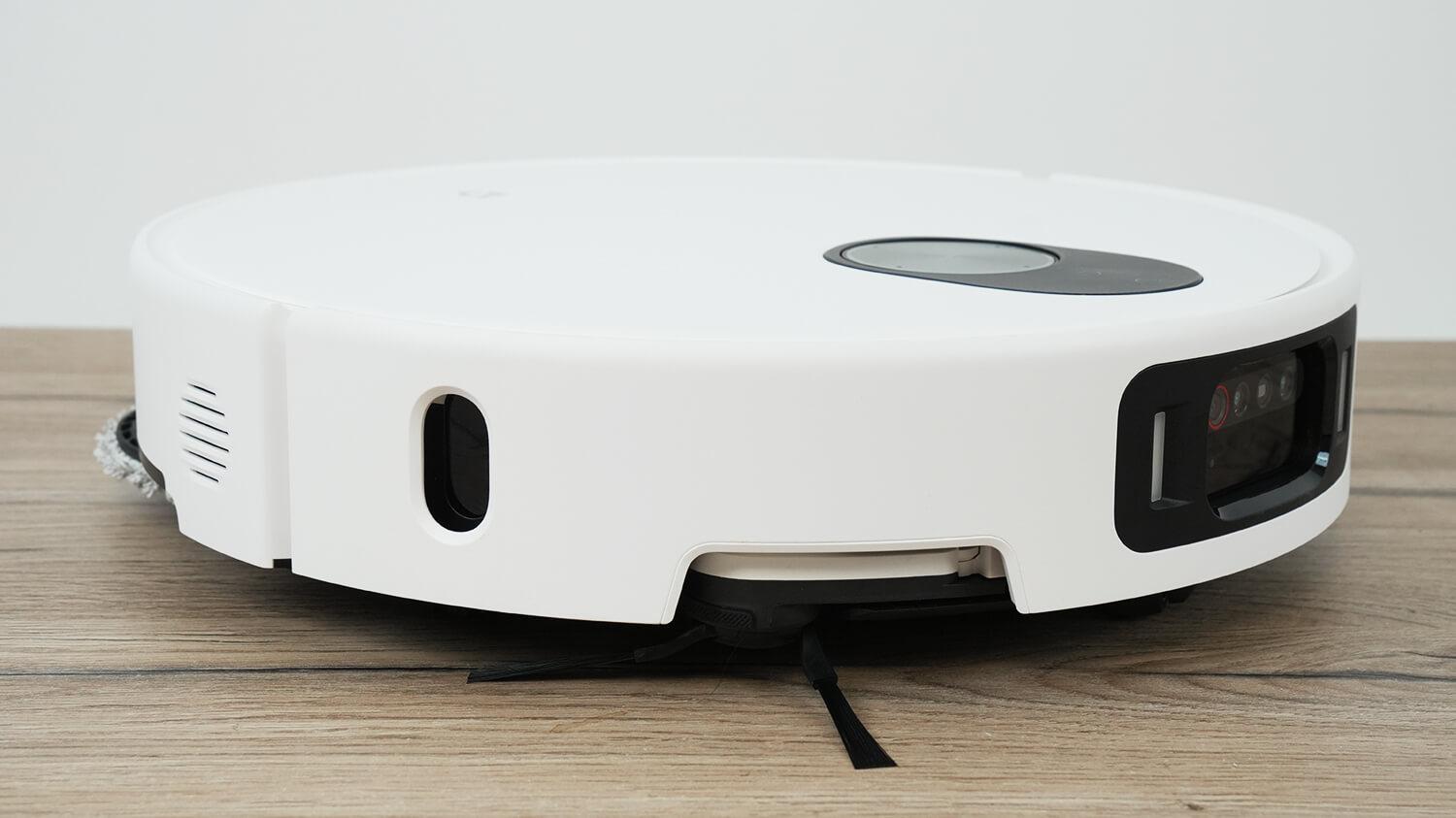
Side view
In the center we see a block of cameras and sensors for recognizing objects on the floor.
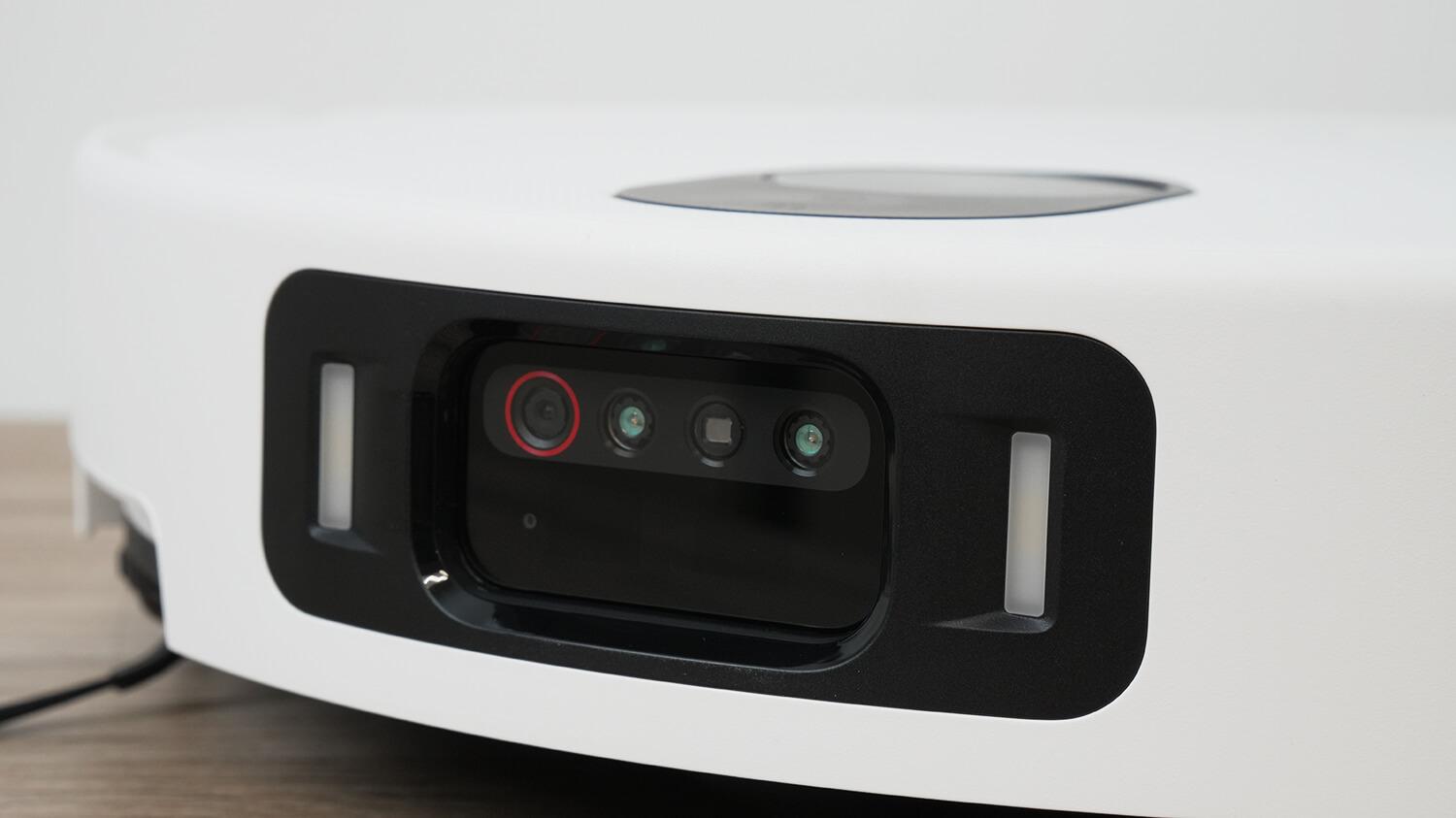
Object recognition system
Illumination lights are installed on the sides of the object avoidance system, increasing the robot's alertness in complete darkness.
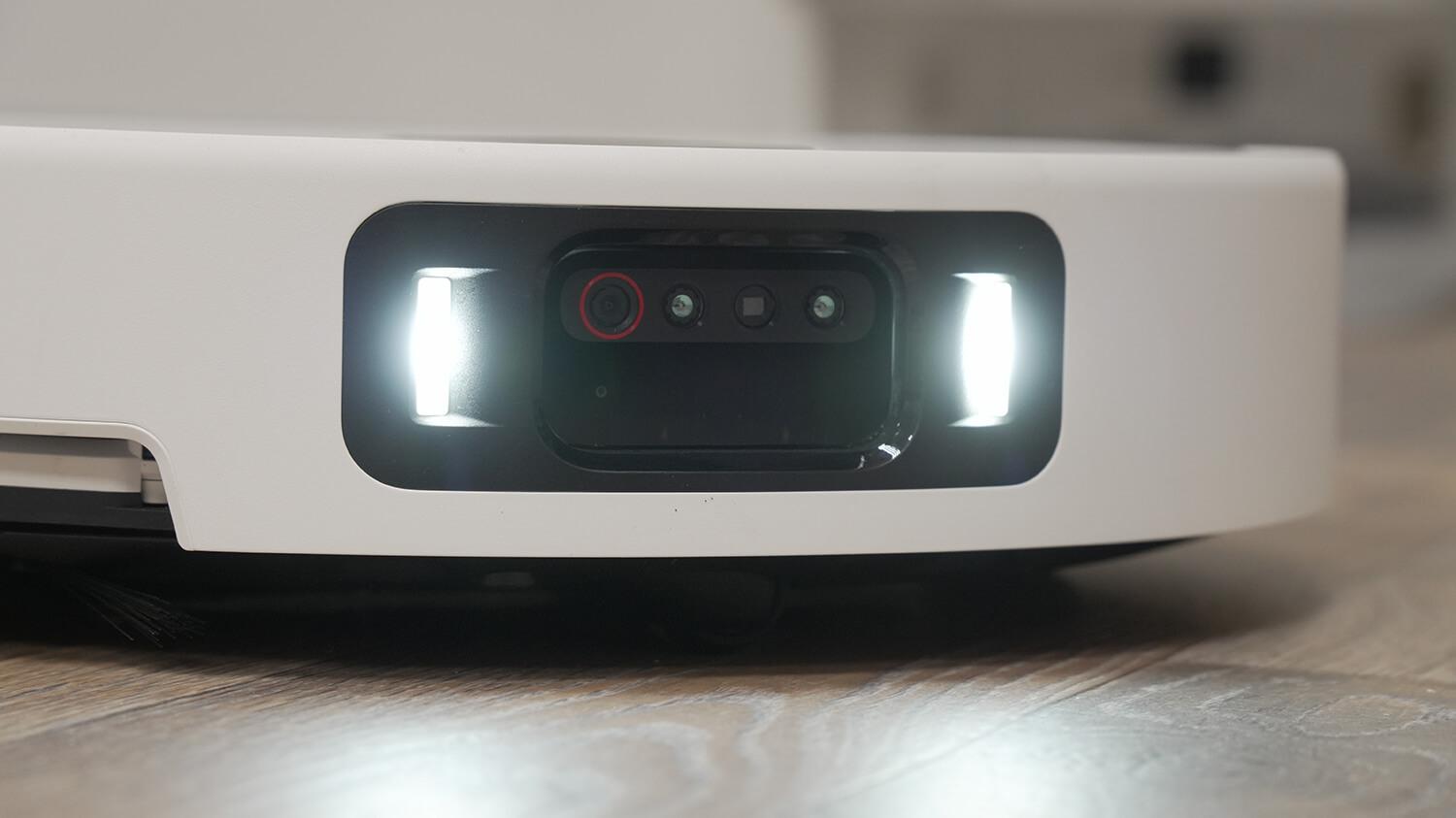
Backlight
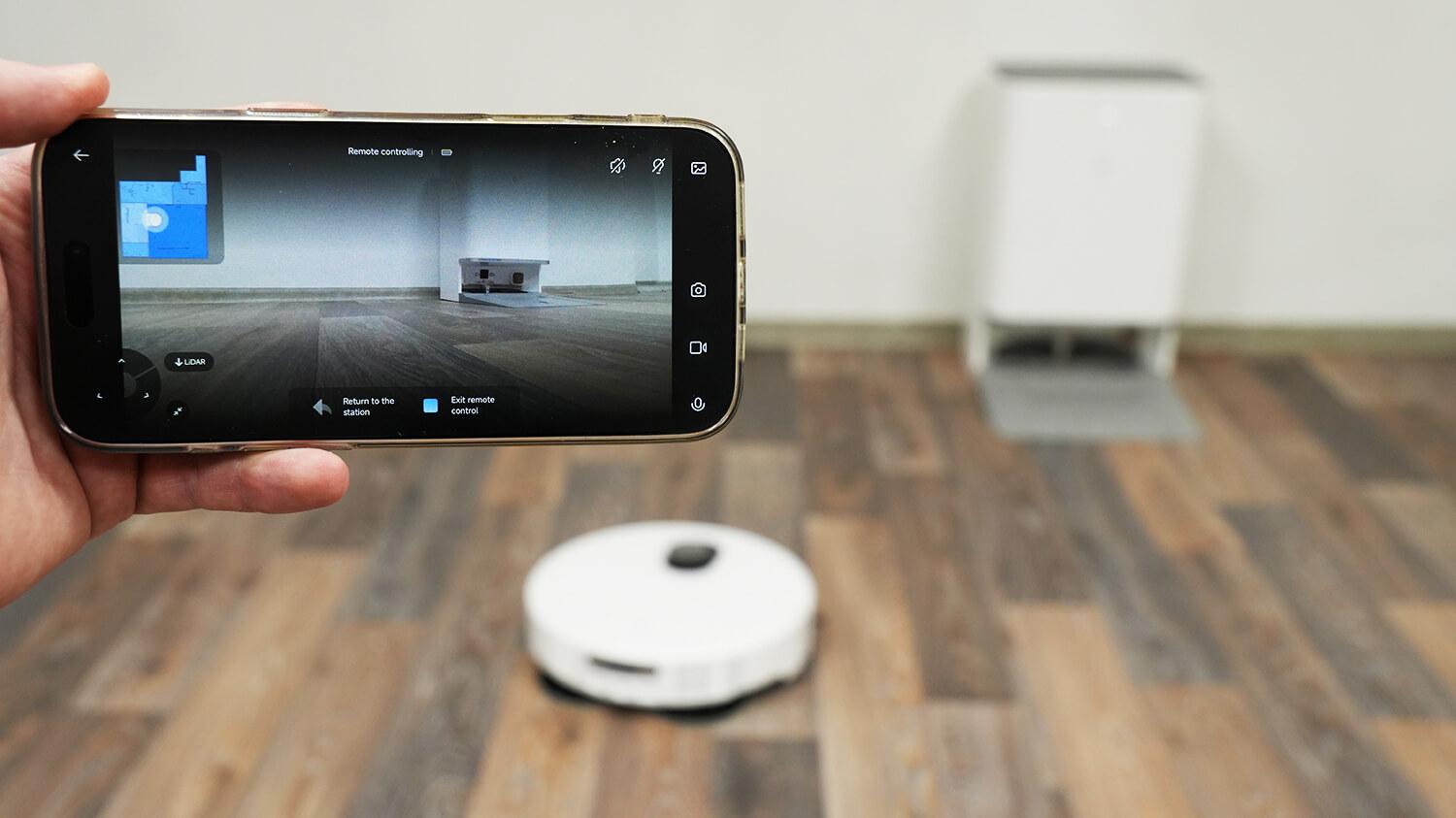
As already mentioned, Xiaomi has finally received the function of remote home monitoring via the robot camera.
Remote home monitoring
In addition to cameras and sensors, the robot navigates in space using a lidar, which can enter the body, as was previously implemented in its predecessor. Xiaomi Mijia M40s.
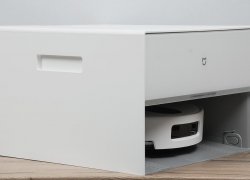
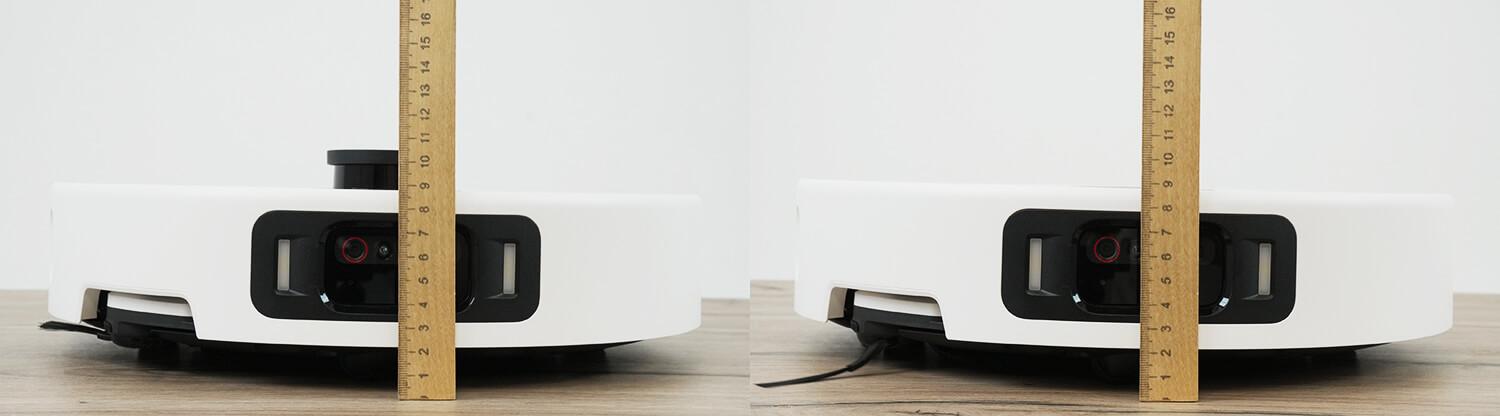
The lidar's retractable lidar allows the robot to enter gaps it couldn't reach with its lidar raised. In the Xiaomi Mijia 5 Pro, the robot's height with its lidar raised is approximately 107 mm, compared to just 88 mm with its lidar retracted. This allows the robot to physically move under furniture up to 9 cm, something most lidar models can't do.
Body height
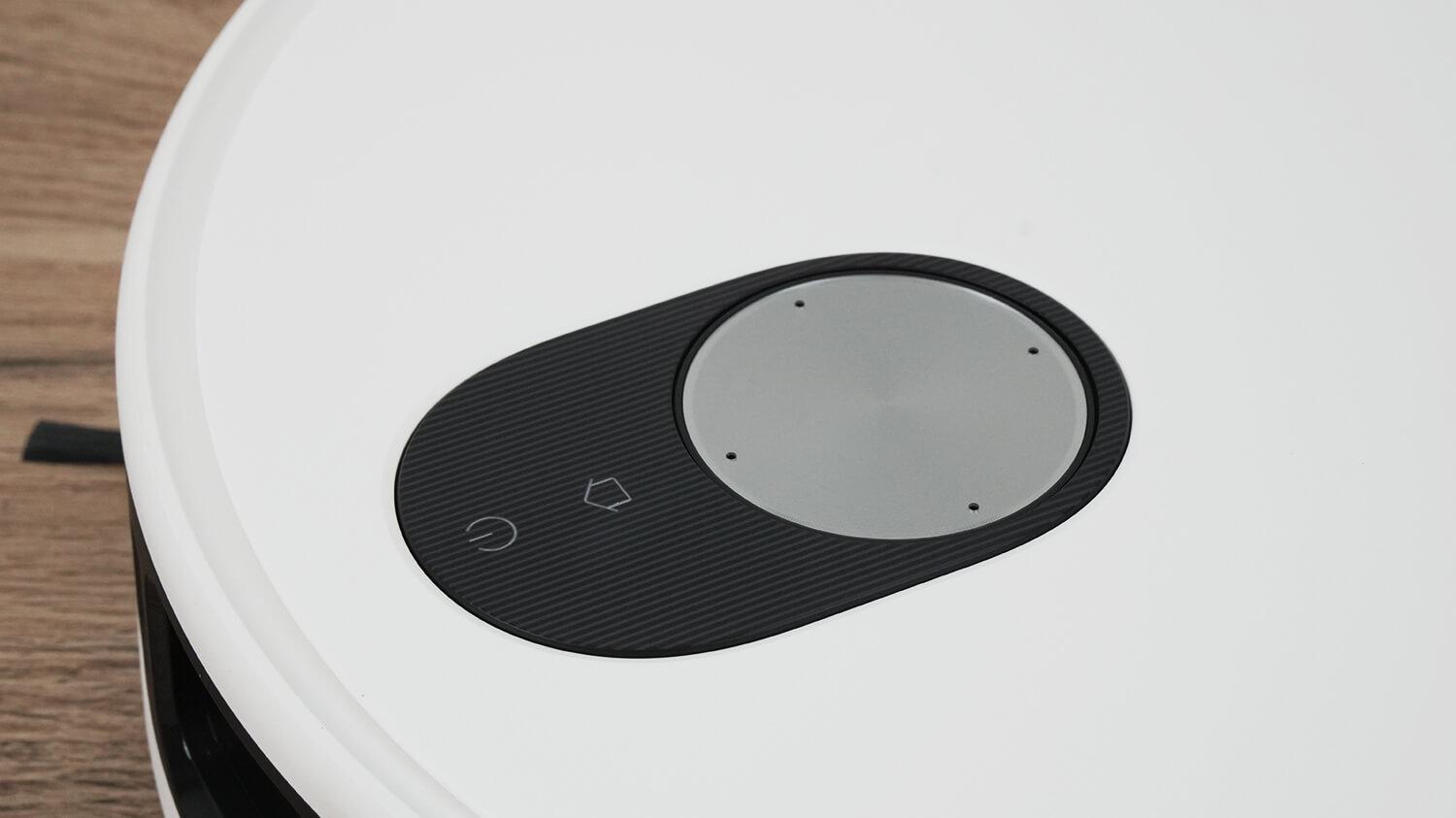
The lidar houses the microphones for the proprietary Mi AI voice assistant. Two mechanical control buttons are located nearby.
Lidar and control panel
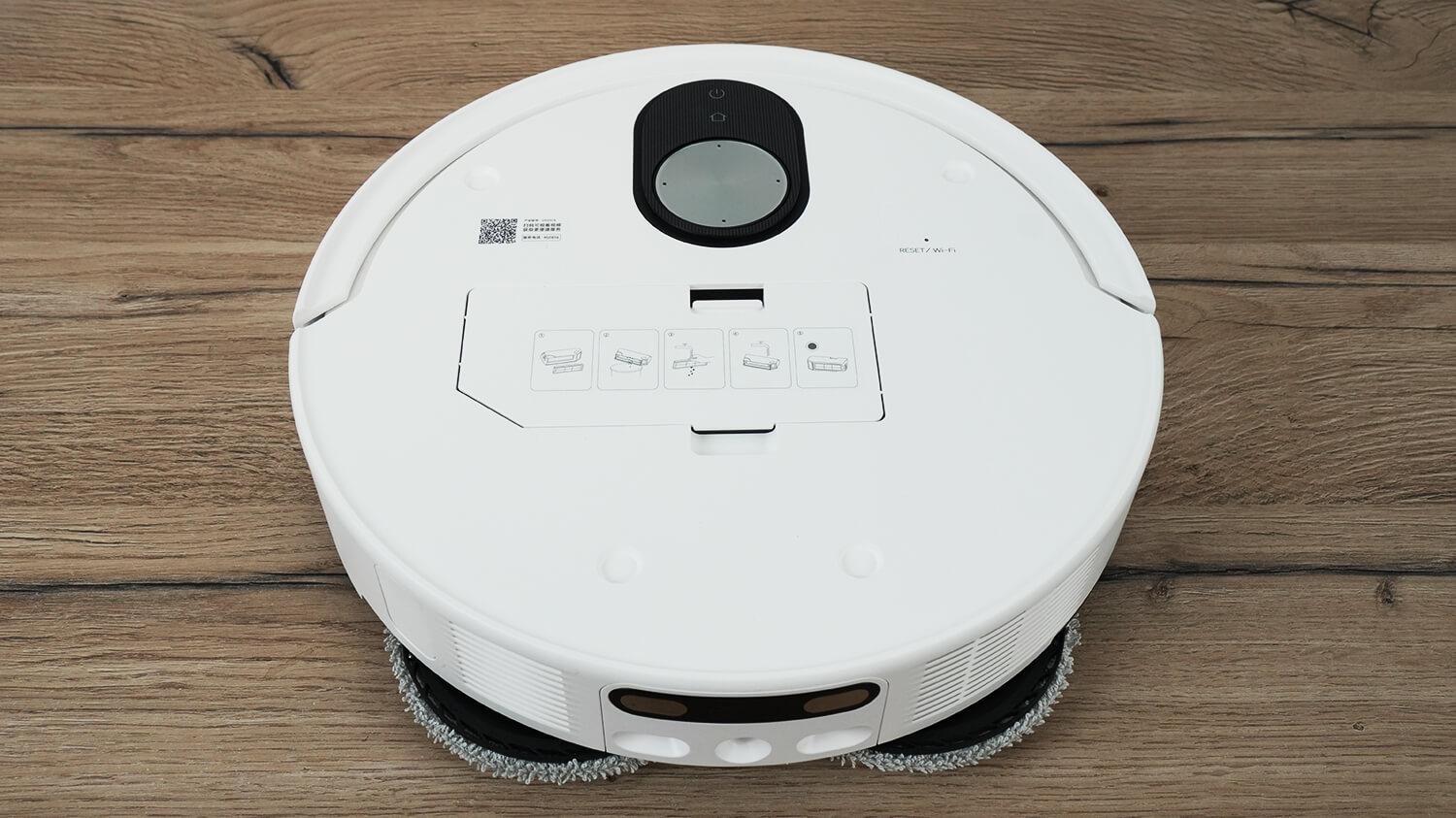
The dust container is located under the top cover, which is held in place by magnets. The manufacturer allows the container and HEPA filter to be washed with water.
Dust collector location
The filtration system is HEPA-only. The container capacity is 290 ml. The robot also houses a 70 ml water tank, traditionally hidden within the body. Water is pumped in automatically through the station.
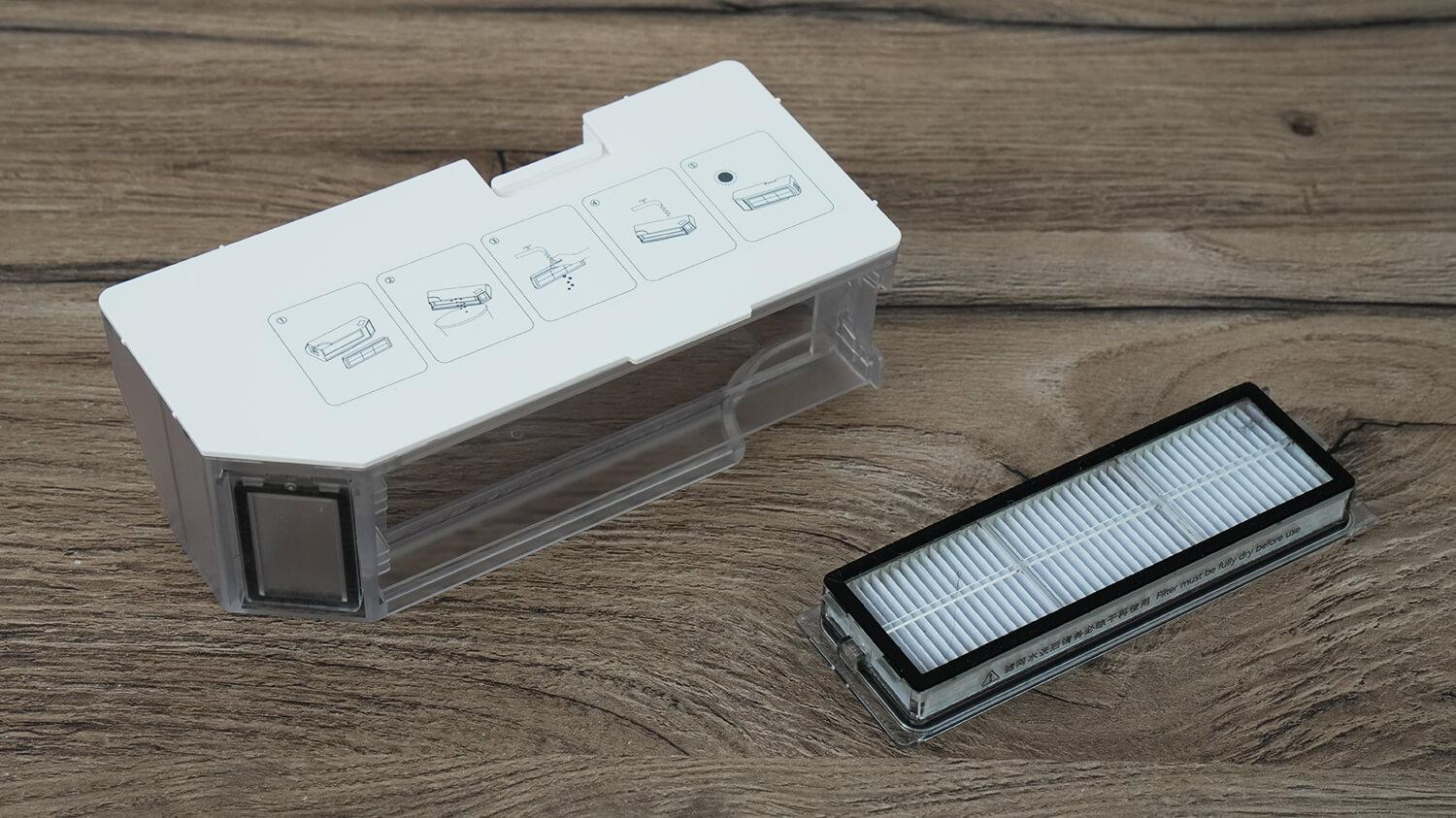
Filtration system
The robot has four fall protection sensors on the bottom. Fortunately, they also installed a carpet sensor, a rarity among Xiaomi robots. The three-beam side brush is secured with a screw.
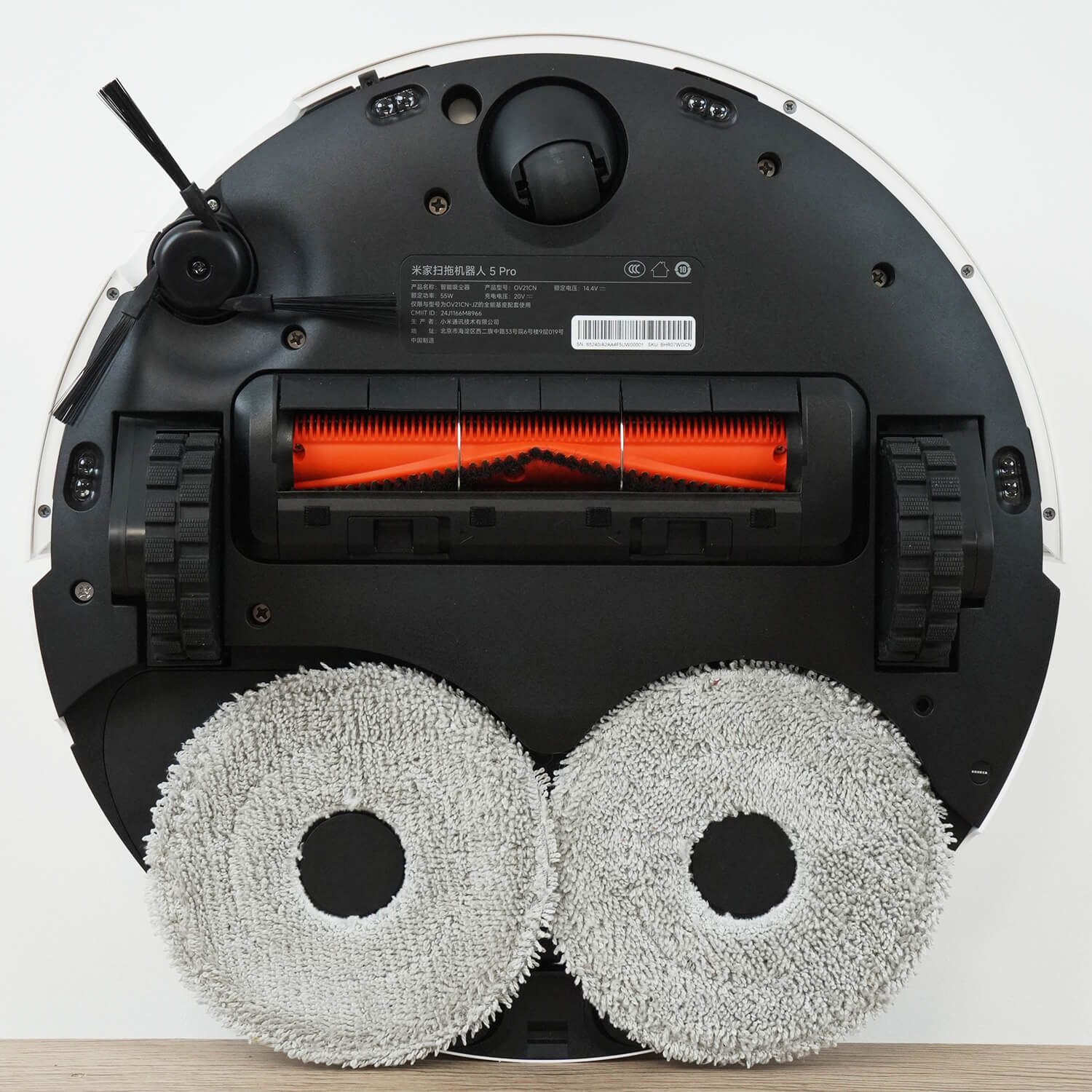
Bottom view
It extends into corners for thorough sweeping, which is a plus. I'd also like to point out that the side brush lifts up when it detects puddles and when mopping the floor without dry mopping.
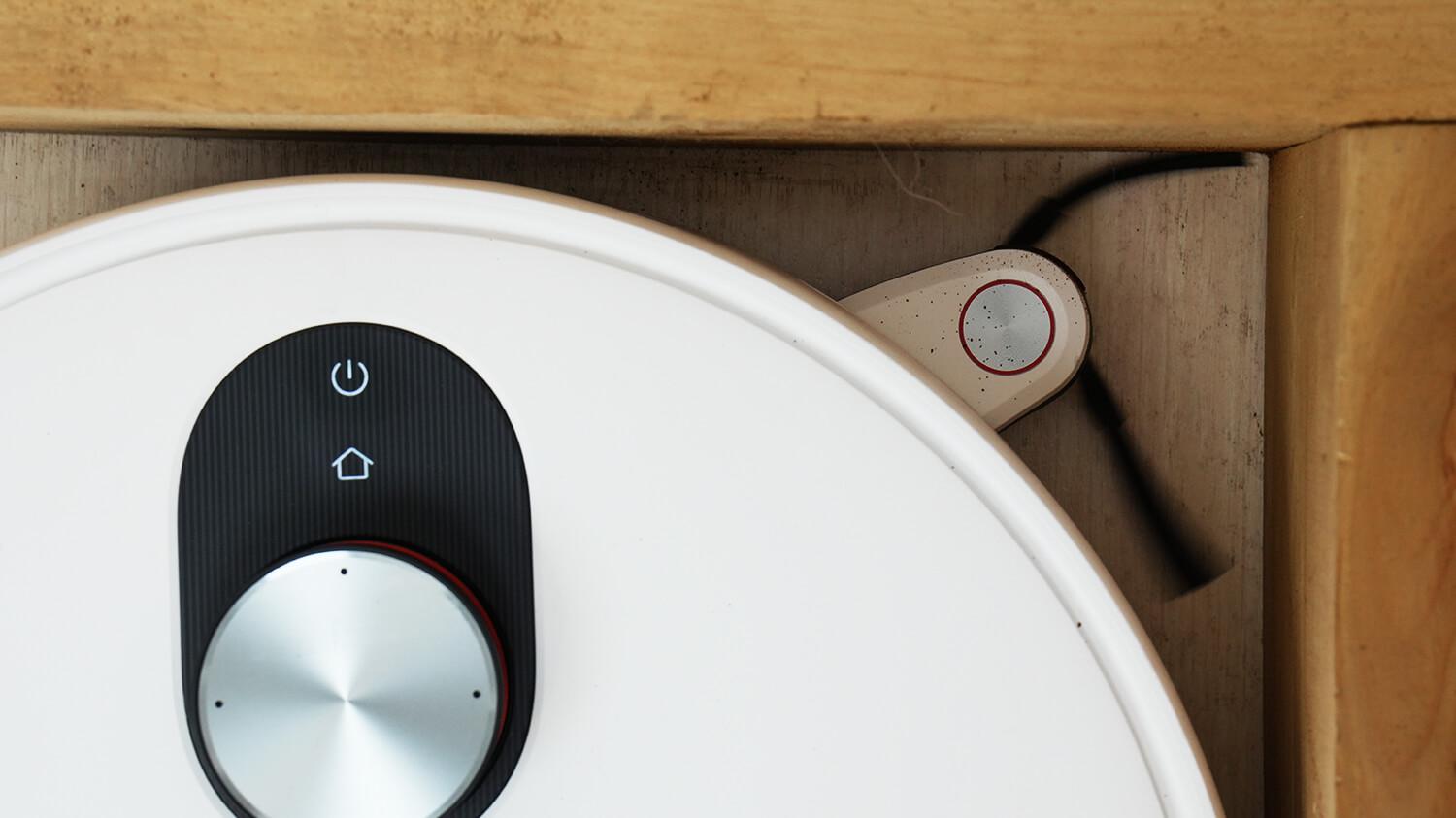
Side brush extension
The central brush unit floats, which is a good thing. Furthermore, the central brush rises when the robot is mopping the floor without dry vacuuming, and also when puddles are detected.
The turbo brush has built-in blades on both sides, which is necessary for automatically cutting away tangled hair and fur. I'll test the effectiveness of this solution. However, what I didn't like right away was that the ends of the brush aren't removable, unlike the Dreame. Only the side caps can be removed.
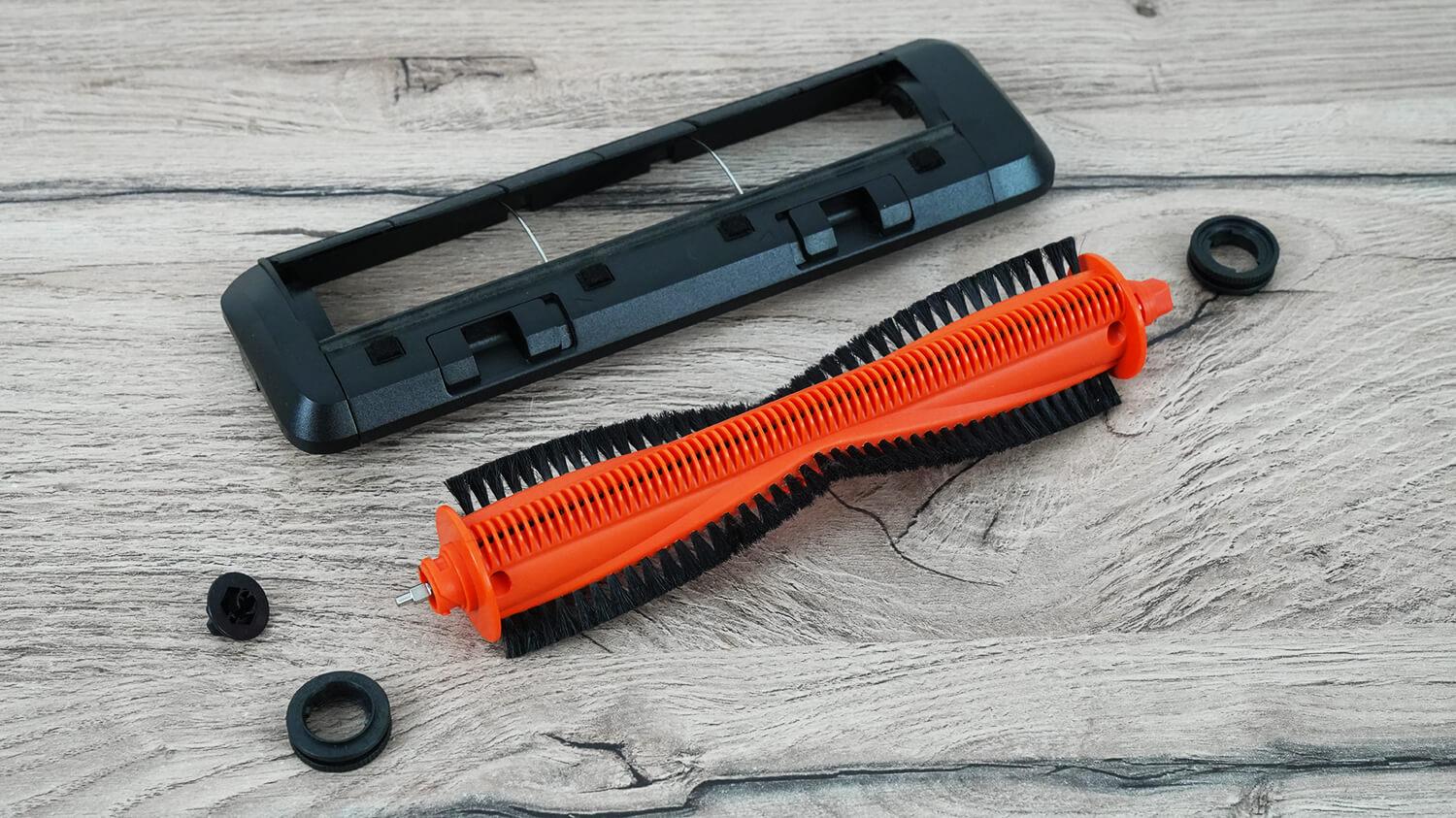
Central brush
Floor cleaning is accomplished with two standard, round, rotating cloths. The cloths are secured with Velcro. One of the holders extends to the edge of the unit for thorough cleaning along walls and furniture.
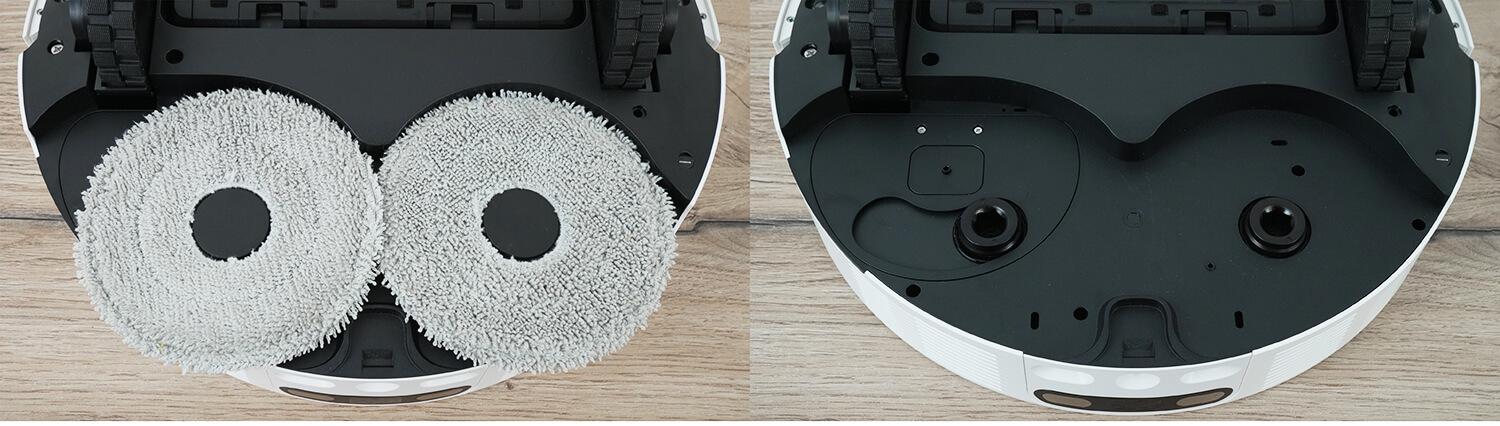
Wet cleaning wipes
I would also like to add that the wipers automatically rise 15 mm upwards during dry cleaning, carpet cleaning, and when the robot returns to the station.
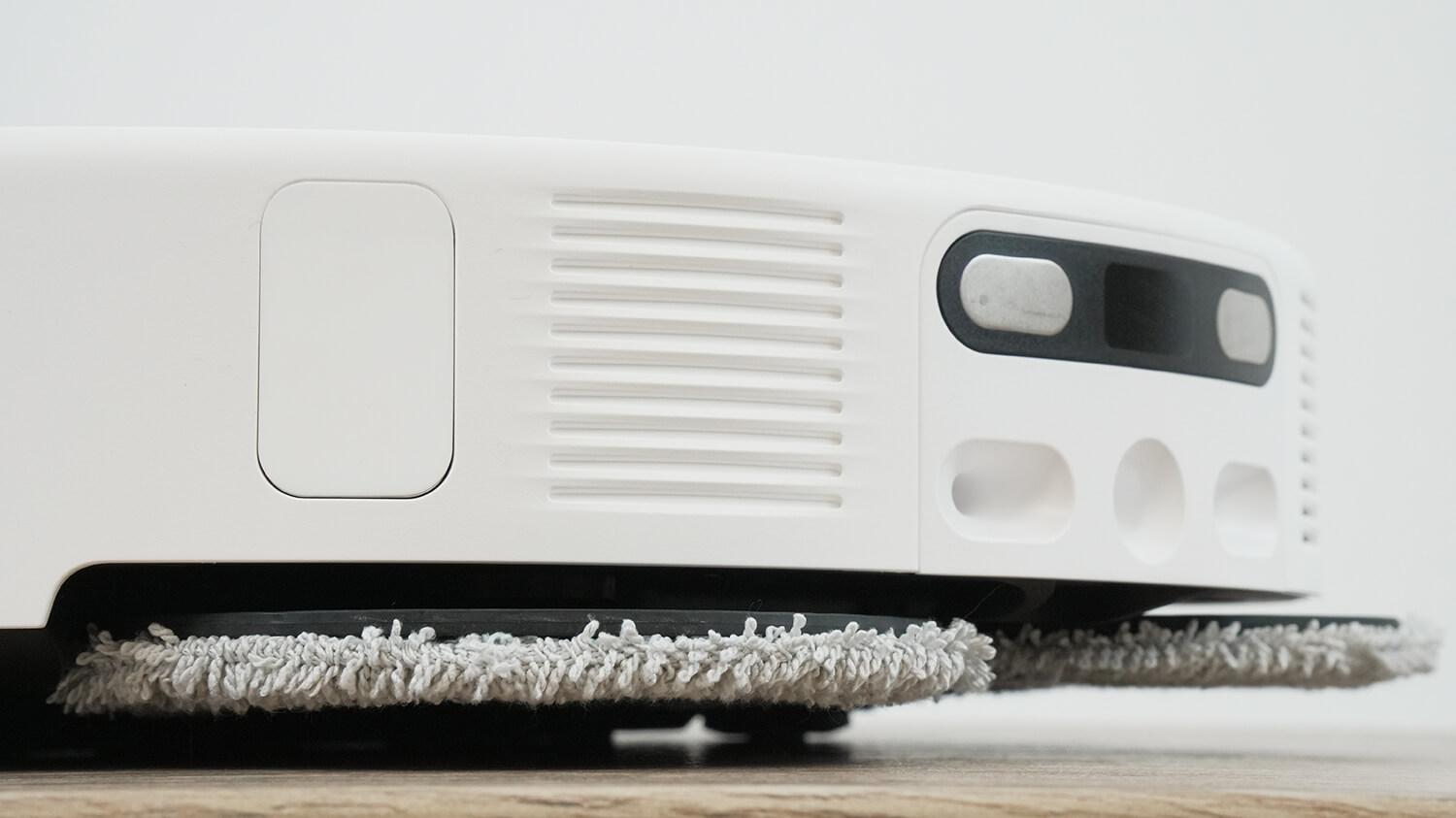
Lifting napkins
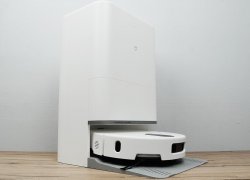
As for the station, the Xiaomi Mijia 5 Pro self-cleans, automatically refills the robot's water tank, washes the cleaning cloths with hot water heated to 80 degrees Celsius (176 degrees Fahrenheit), and dries them with warm air (113 degrees Fahrenheit) after cleaning. They've also added an automatic feature that detects the degree of soiling of the cleaning cloths, allowing them to be re-washed if necessary.
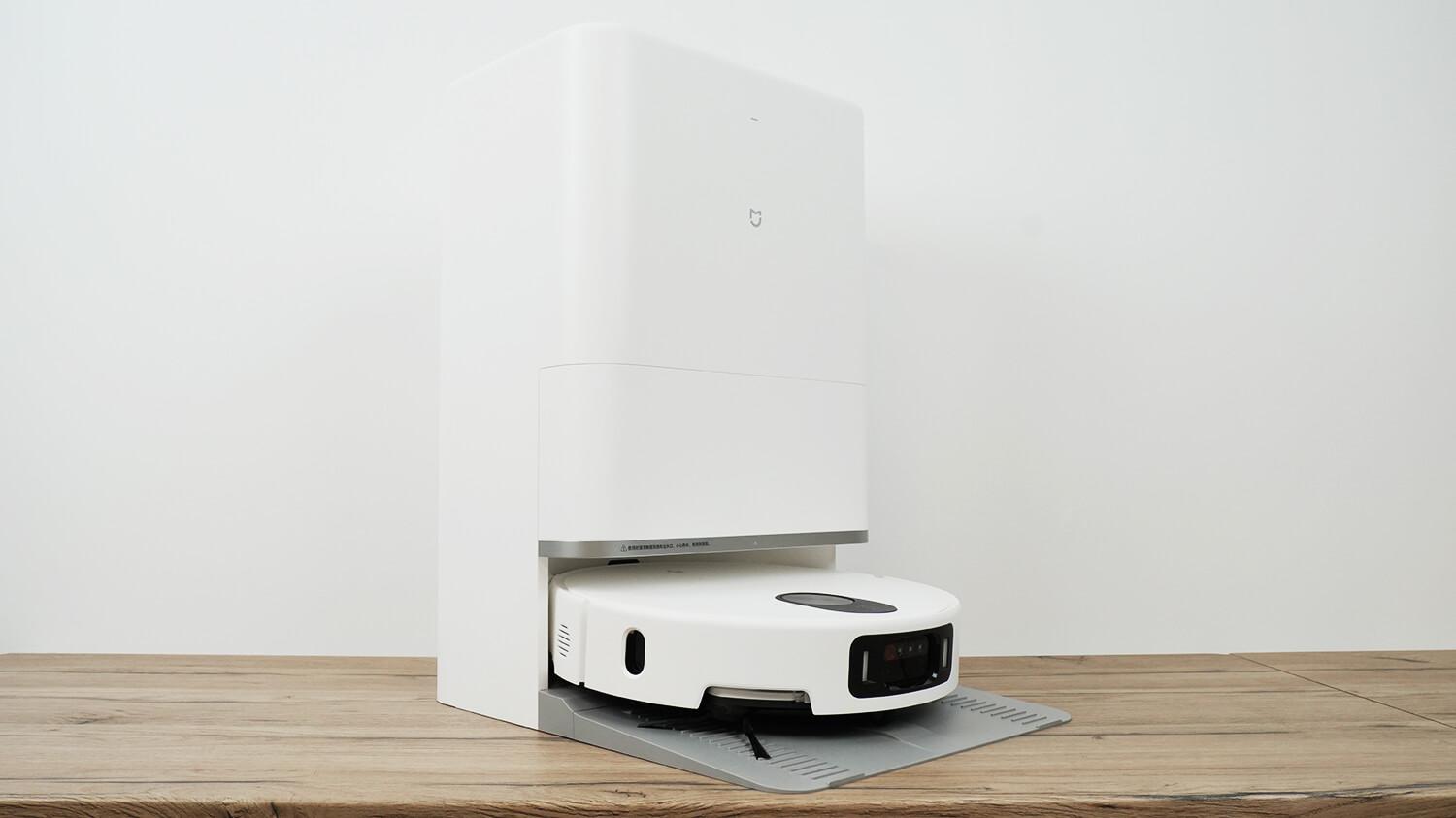
Robot vacuum cleaner at the station
It's important to note that this station does not connect to the water supply or sewer system, which is a significant drawback of the new product, even compared to its predecessor, the M40. A separate built-in station is available for connection to utility lines.
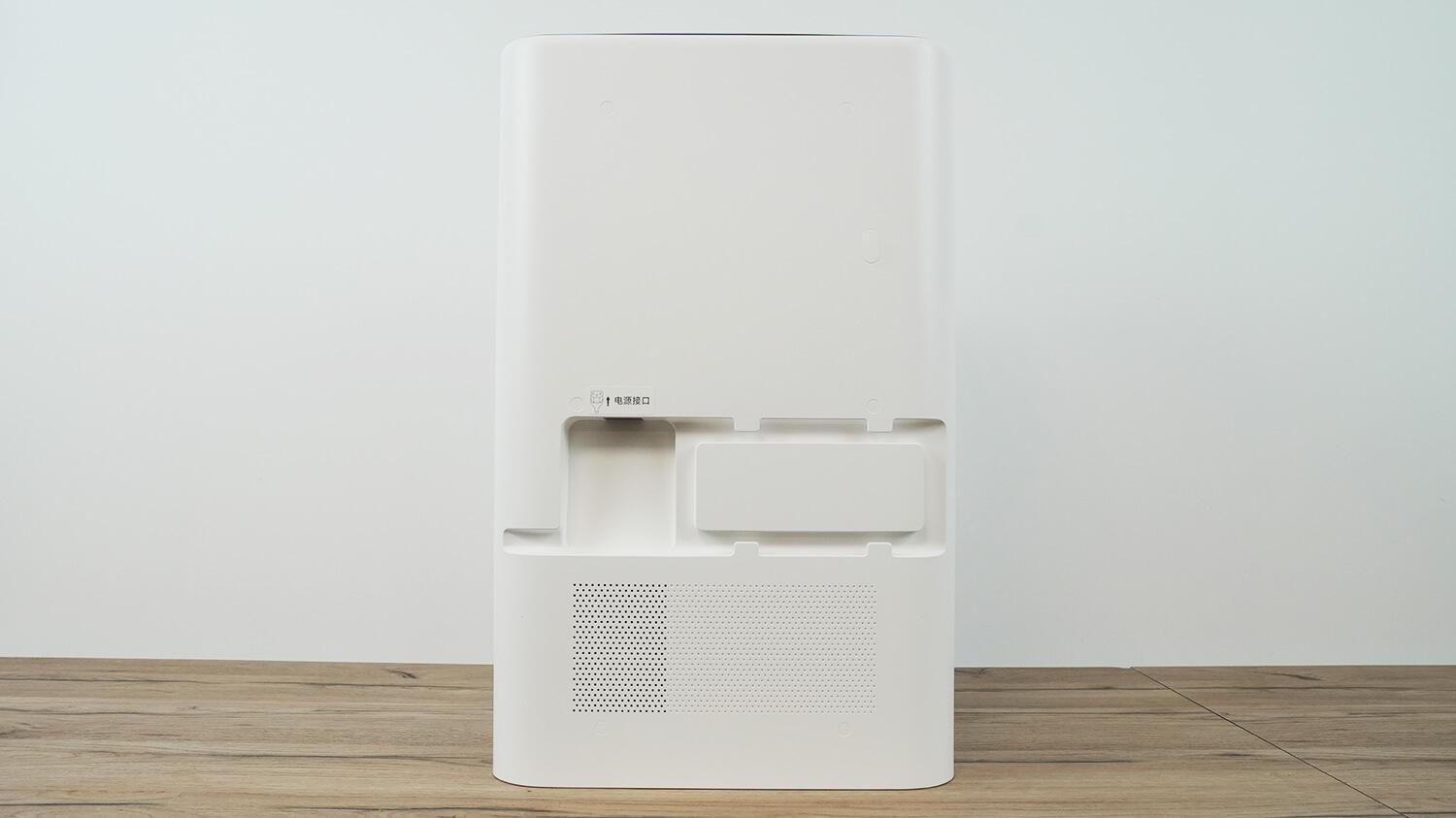
View of the station from behind
The robot's ramp is removable. The wipe washing module is also removable, and it's equipped with self-cleaning scrapers for the station's bottom.
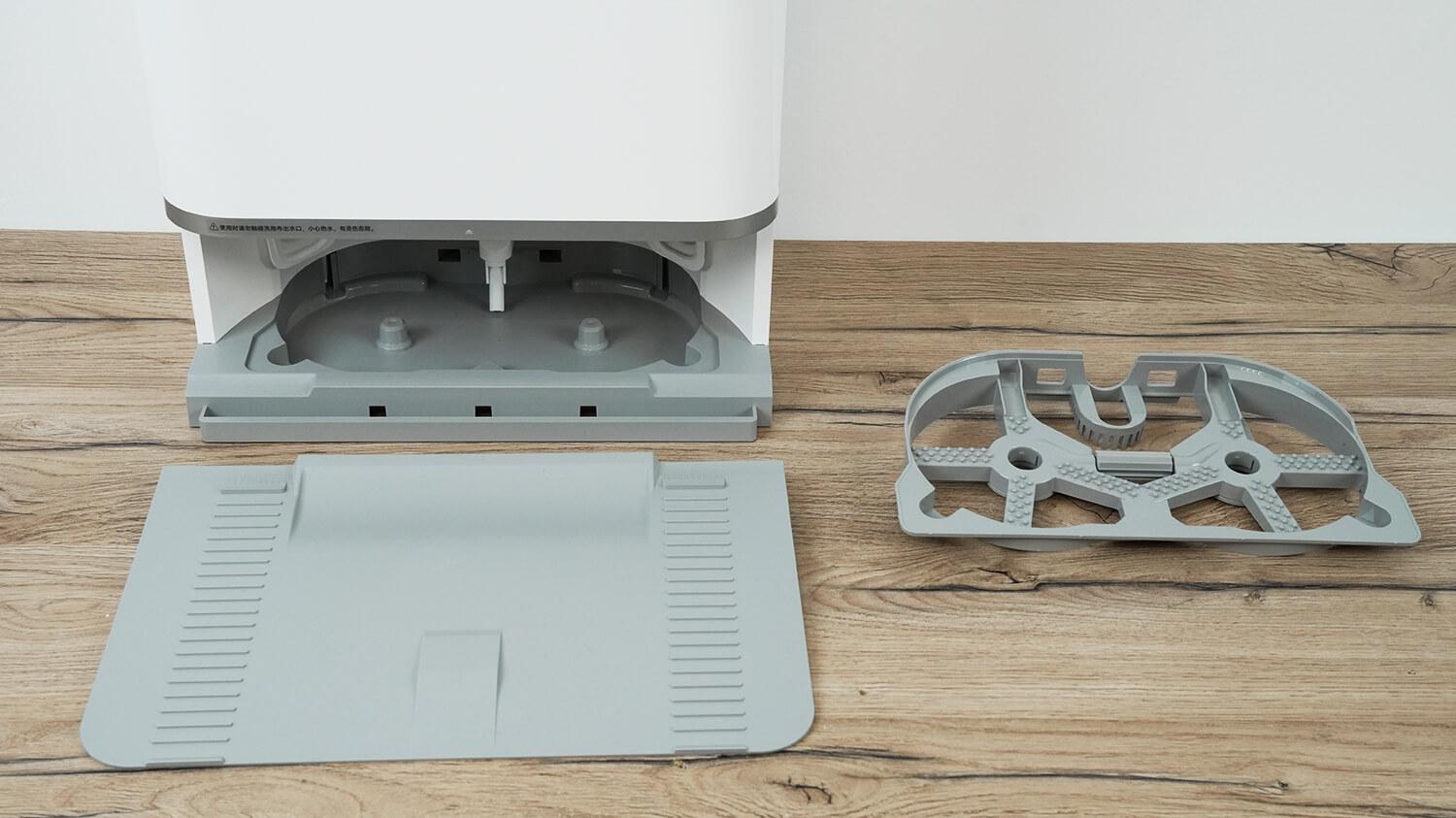
Removable station modules
A 2.5-liter waste bag is located under the lid at the front. Next to it, we see a slot for a detergent container, similar to what we see on competitors' machines.
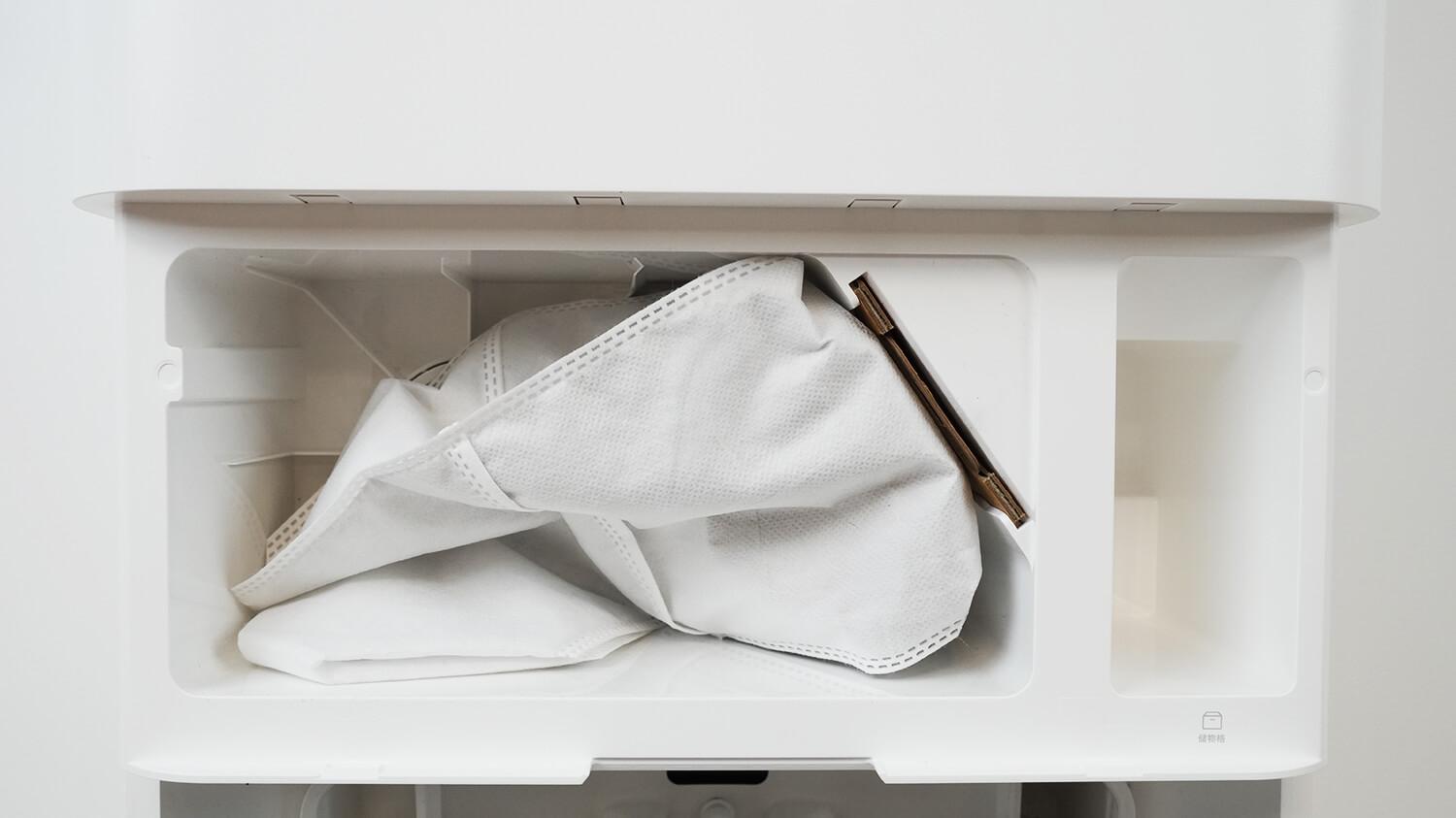
Bag location
But in the case of the Xiaomi Mijia 5 Pro, it's just a niche without terminals and the physical ability to install a special container with detergent, i.e. there is no automatic mixing function for detergent, although even the old man Xiaomi Mijia OMNI 1S There was such an option. Alternatively, you can store spare bags for the station or a stash here.
Under the lid are two water tanks, each holding 4 liters. The clean water tank contains a scale inhibitor, which is a plus.
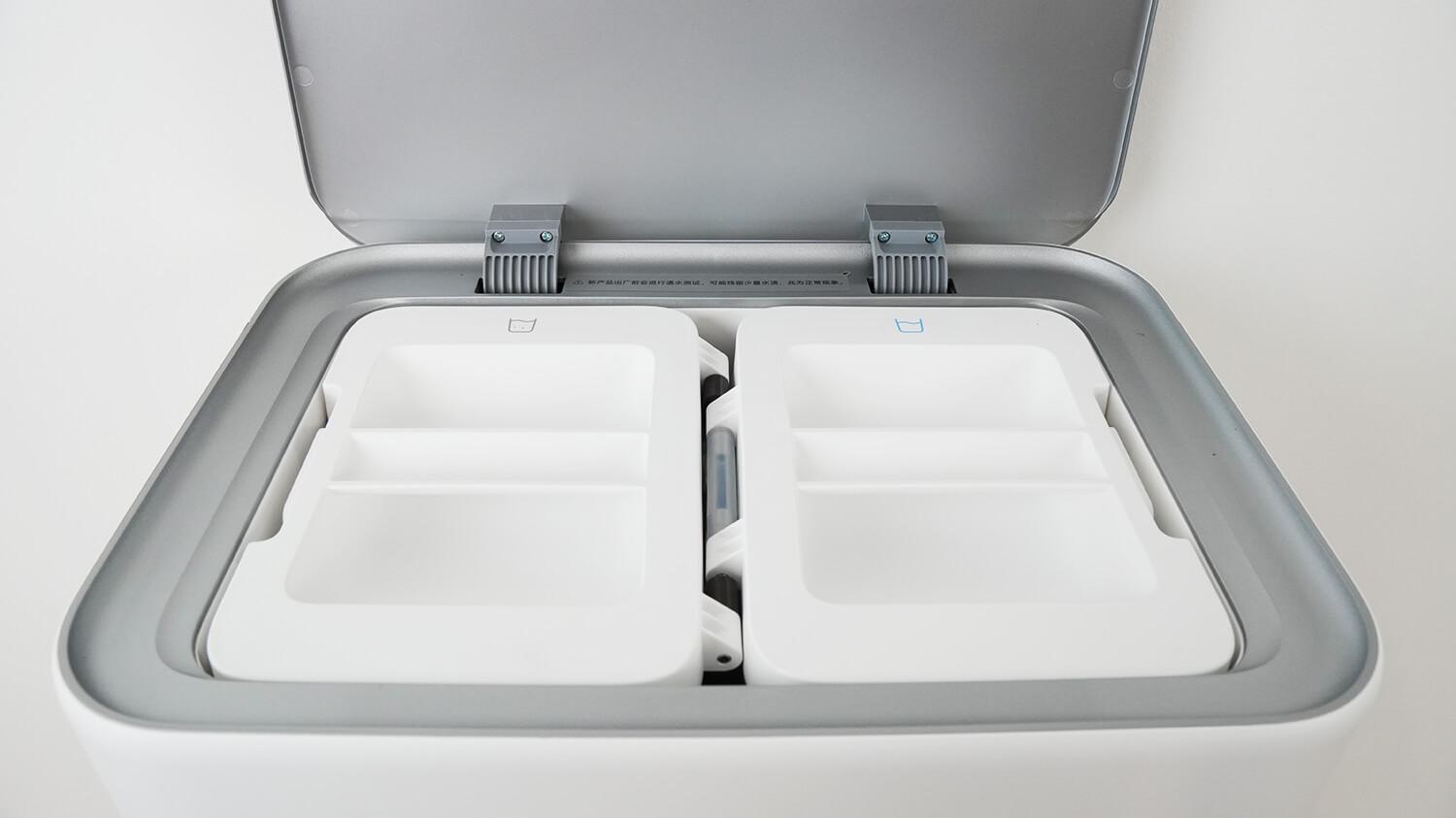
Water tanks
We see that the new Xiaomi Mijia 5 Pro has received a number of important design updates, but some components still remain unfinished compared to flagships from competing brands. All the pros and cons we've identified will be discussed in the final review. Let's move on!
Technical specifications
The main characteristics of the Xiaomi Mijia 5 Pro, as stated by the manufacturer:
Robot vacuum cleaner:
- Li-Ion battery 5200 mAh.
- Suction power up to 23,000 Pa.
- Cleaning area> 200 sq.m.
- Dust collector: 290 ml.
- Water tank: ≈ 70 ml.
- Obstacle clearance up to 20 mm.
- Dimensions: 350*107/88 mm.
Station:
- Clean water tank: 4 l.
- Dirty water tank: 4 l.
- Bag in the station: 2.5 l.
- Dimensions (W*D*H): 360*470*572 mm.
Everything here is on par with premium analogs, including the highest claimed suction power, which will definitely be verified in tests.
Functional capabilities
Regarding controls, the robot vacuum cleaner is designed for the Chinese market and connects to Mi Home via the China region. There are no regional locks, so don't worry. At the time of writing, the interface is in English, which isn't ideal. The app is responsive and easy to use.
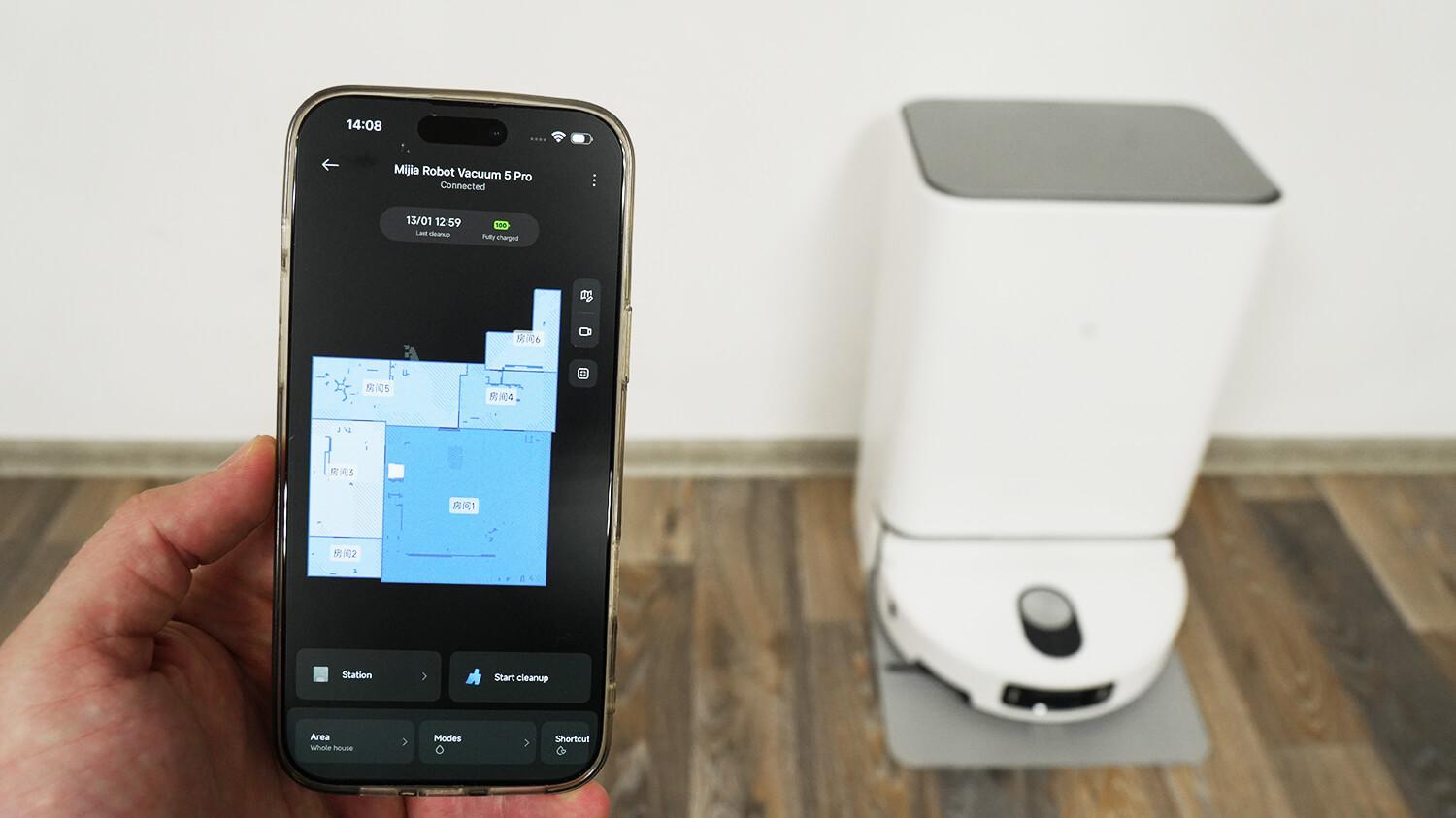
Control via app
All the main features are displayed on the screen:
- Self-cleaning dust collector.
- Wash napkins with hot water (80°C).
- Drying napkins with warm air (45°C).
- Raising the wipers, side and central brush.
- Side brush extension in corners.
- The napkin extends to the edge.
- Lidar entering the body.
- Recognizing objects on the floor.
- Camera illumination in low light conditions.
- Remote home monitoring via smartphone.
- Saving multiple cleaning maps in memory.
- 3D map of the room.
- Automatic zoning of premises into rooms.
- Selecting areas and rooms for cleaning.
- Virtual walls and no-go zones (and for wet cleaning mode).
- Suction power adjustment.
- Setting the frequency of washing napkins.
- Automatic detection of the degree of contamination of napkins.
- User mode.
- Intelligent recognition of stains and debris.
- Cleaning log.
- Setting up cleaning according to a schedule.
- Automatic power increase on carpet.
- Carpet cleaning in wet cleaning mode.
- Yandex.Alice support.
- Support for the MI AI assistant
Several new features have been added. The map editor now allows you to manually delete non-existent zones that may be visible, for example, due to mirrors. Map rotation is also now possible.
In terms of object recognition, the Xiaomi Mijia 5 Pro has learned to automatically recognize trash and stains on the floor, as well as take photos of recognized objects and display them in the appropriate locations on the map.
The remote home monitoring feature deserves special attention. You can manually control the robot, force the lidar to enter and exit the robot's housing, and take photos and videos of the surroundings using the robot's camera. Incidentally, the image quality is excellent, even though it's a Chinese version.
Overall, the functionality is quite diverse and allows you to flexibly customize cleaning parameters to suit your individual needs.
But I didn't like the fact that there's still no way to manually set the zones where the robot vacuum cleaner should lower the lidar, as is the case with similar products. I'll show you why this is a problem in my tests.
Testing
A detailed video review of the Xiaomi Mijia 5 Pro, including all tests, has already been published on the channel:
Navigation
And finally, let's move on to the tests. First, we'll test the Xiaomi Mijia 5 Pro's navigation in a room with obstacles. The robot vacuum first moves around the perimeter of the room, then cleans the entire accessible area in a serpentine pattern. It carefully navigated around the dryer's feet. It also swept around the box and chrome feet, then returned to the dryer's feet, moved them over, and then tucked them between the feet. The mirror introduced some error into the map, but remember, any non-existent areas can be removed in the editor. Overall, nothing critical was discovered in this test.
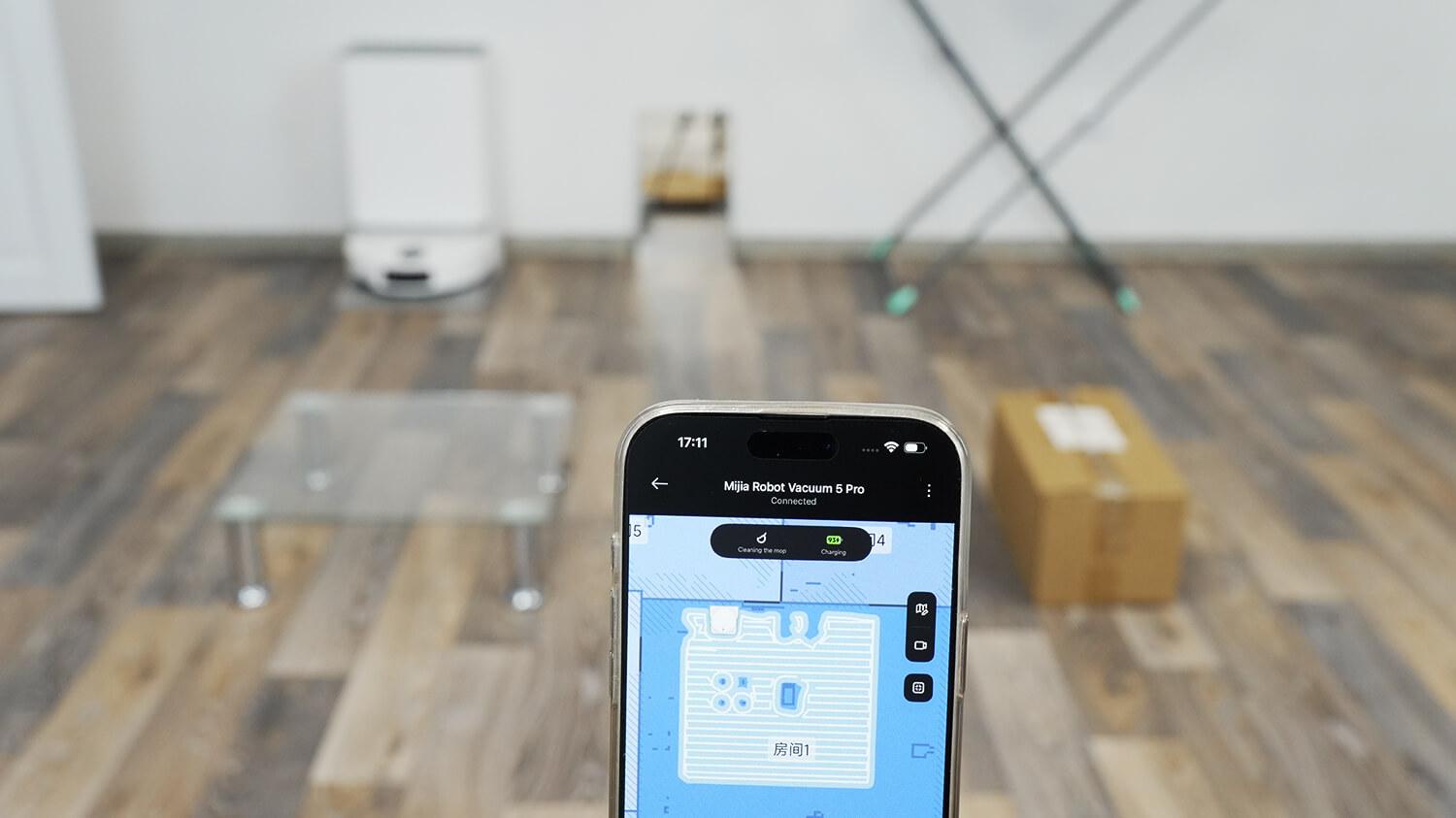
Navigating an Obstacle Room
Speaking of navigating within the house, the robot vacuum cleaner cleans room by room, following the perimeter, then in a serpentine pattern. After each room, as I've determined, it returns to the station and washes the cleaning pads, then resumes cleaning from where it left off. There's just one nuance here that's worth exploring in more detail.
This area on the map contains a rug that was successfully identified and cleaned by almost all the robots reviewed. In this case, after mapping and during the first cleaning with the object recognition system enabled, the Mijia 5 Pro avoided the rug, apparently detecting its boundaries as an obstacle.
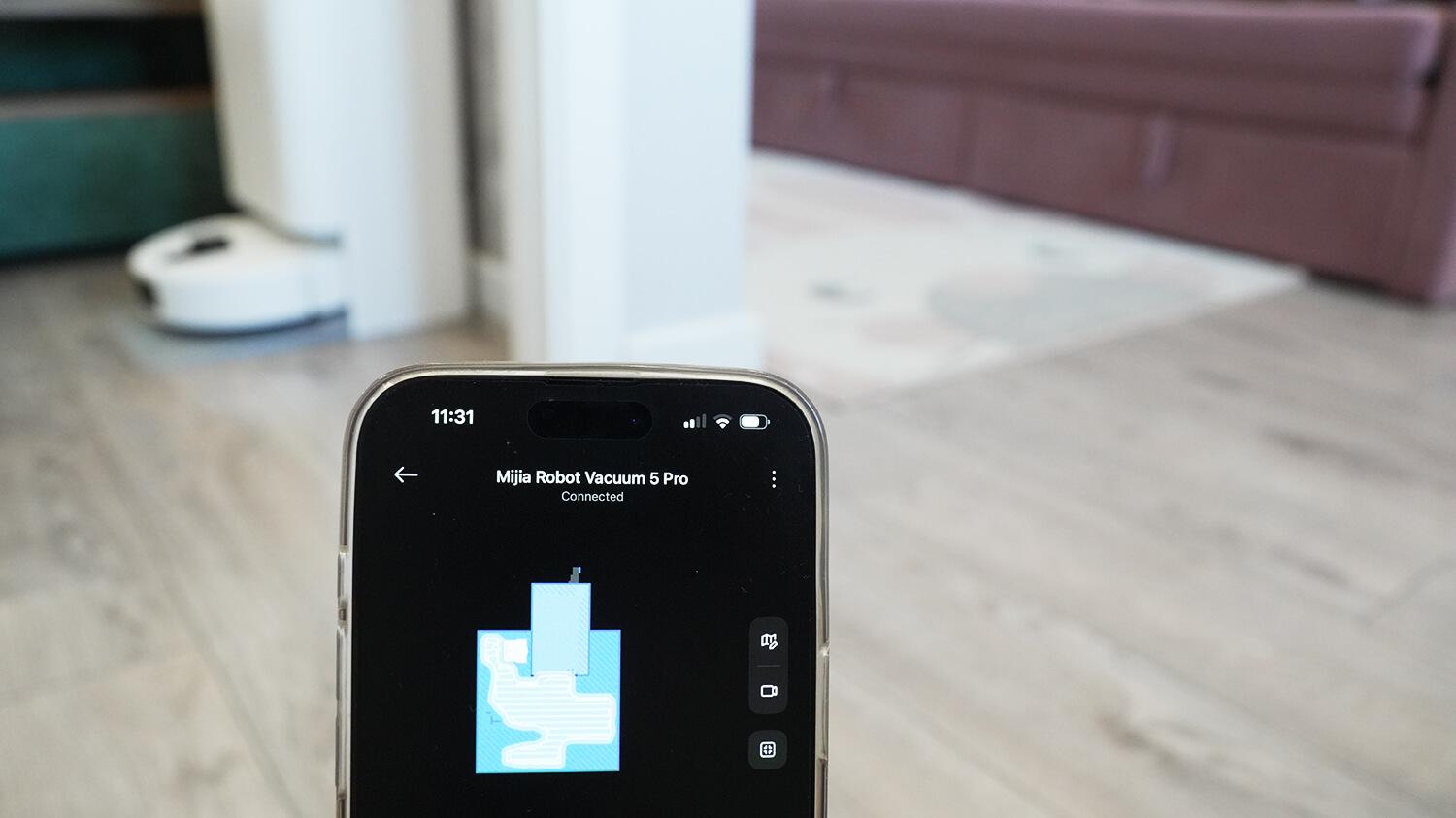
The robot didn't get onto the carpet.
I tried running the robot in the same area with the object recognition system disabled. The robot drove onto the carpet, automatically drew it on the map thanks to the carpet sensor, and cleaned without missing any areas.
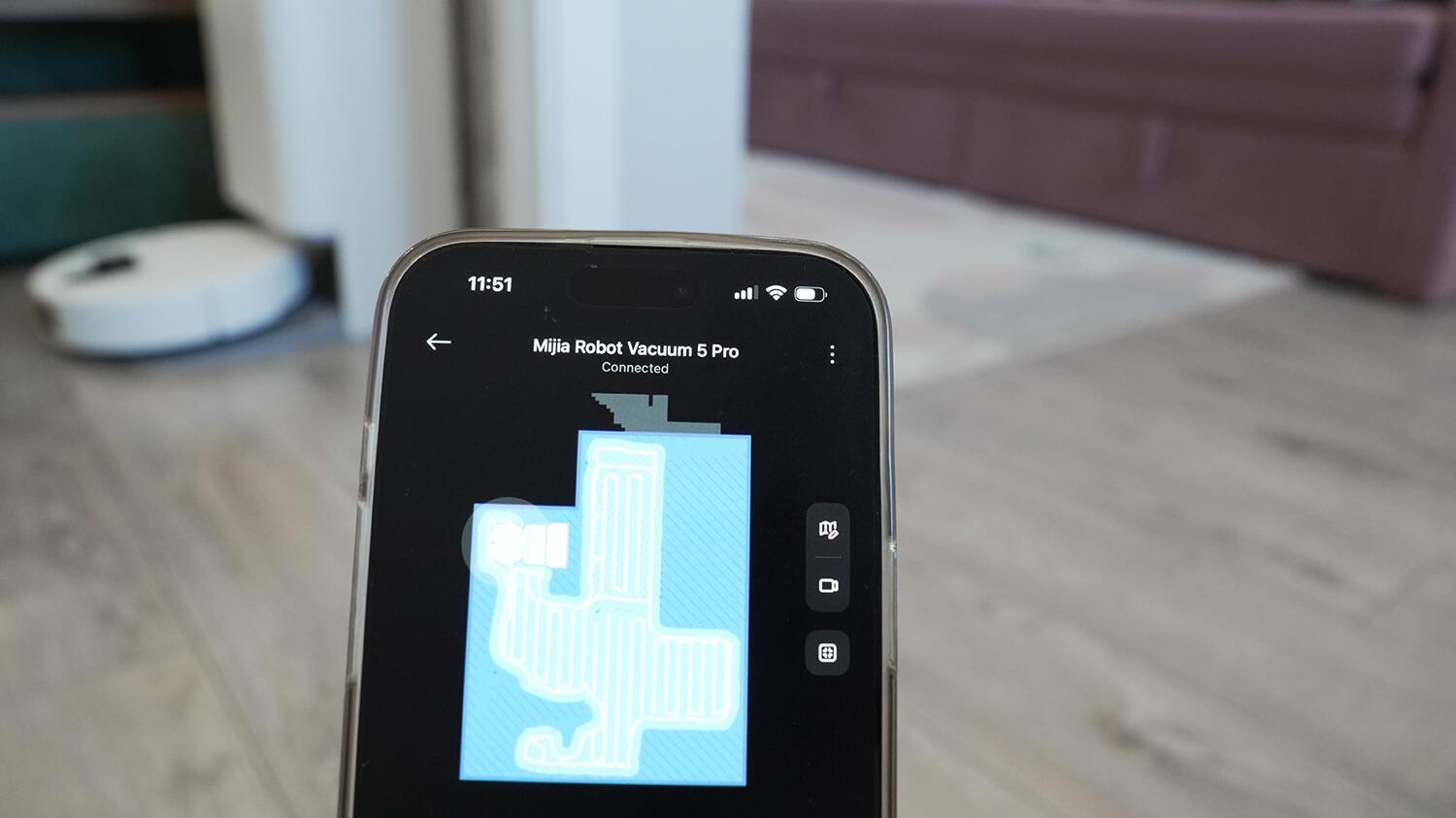
The robot recognized and cleaned the carpet.
Later, when the carpet automatically appeared on the map, I enabled the object recognition system, and the robot began to move onto the carpet without any problems. In general, keep this in mind: if the robot doesn't move onto the carpet, try the first launch after creating the map with object recognition disabled, but perhaps my case was isolated.
Cleaning behind the curtains
Like most lidar-based robot vacuums, this one can't clean behind curtains and drapes by avoiding them. This is worth keeping in mind.
Passing under low furniture
The minimum driving height of the Xiaomi Mijia 5 Pro was also tested. Since it's impossible to manually set zones where the lidar should be lowered, the robot decides when to do so. And, as with the Mijia M40s, it couldn't get into the 9 cm clearance on the first try. On the second try, it lowered the lidar and entered the clearance. It's good that it succeeded, but it's bad that it didn't do so immediately, and it's not guaranteed that it will get under someone else's furniture on the second try. Overall, this model desperately needs zones with forced lidar entry.
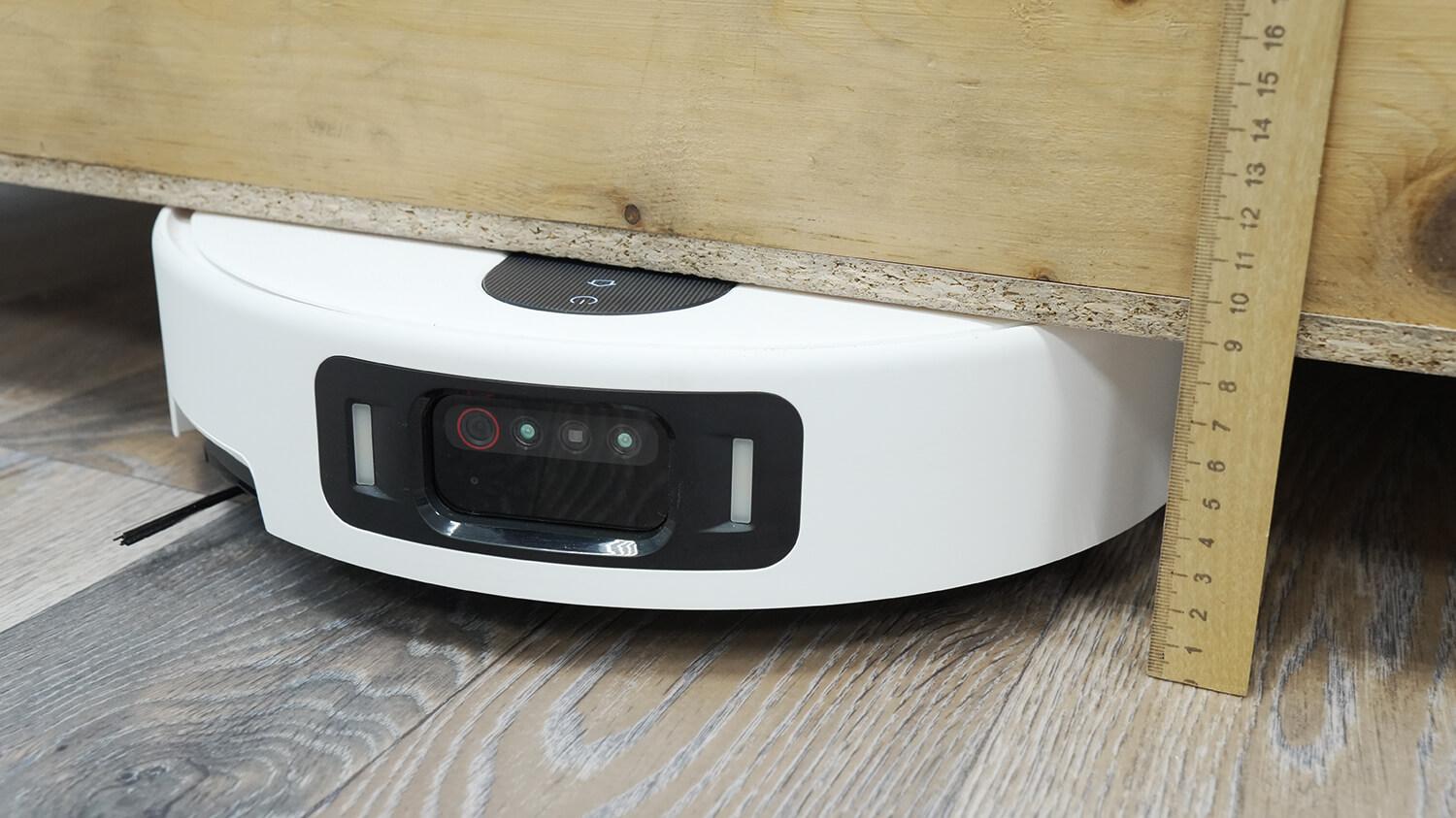
Xiaomi Mijia 5 Pro: 9cm clearance
I also noticed that the trajectory with the lidar lowered is not as ideal compared to the robot's movement with the lidar raised. Small missed areas may remain.
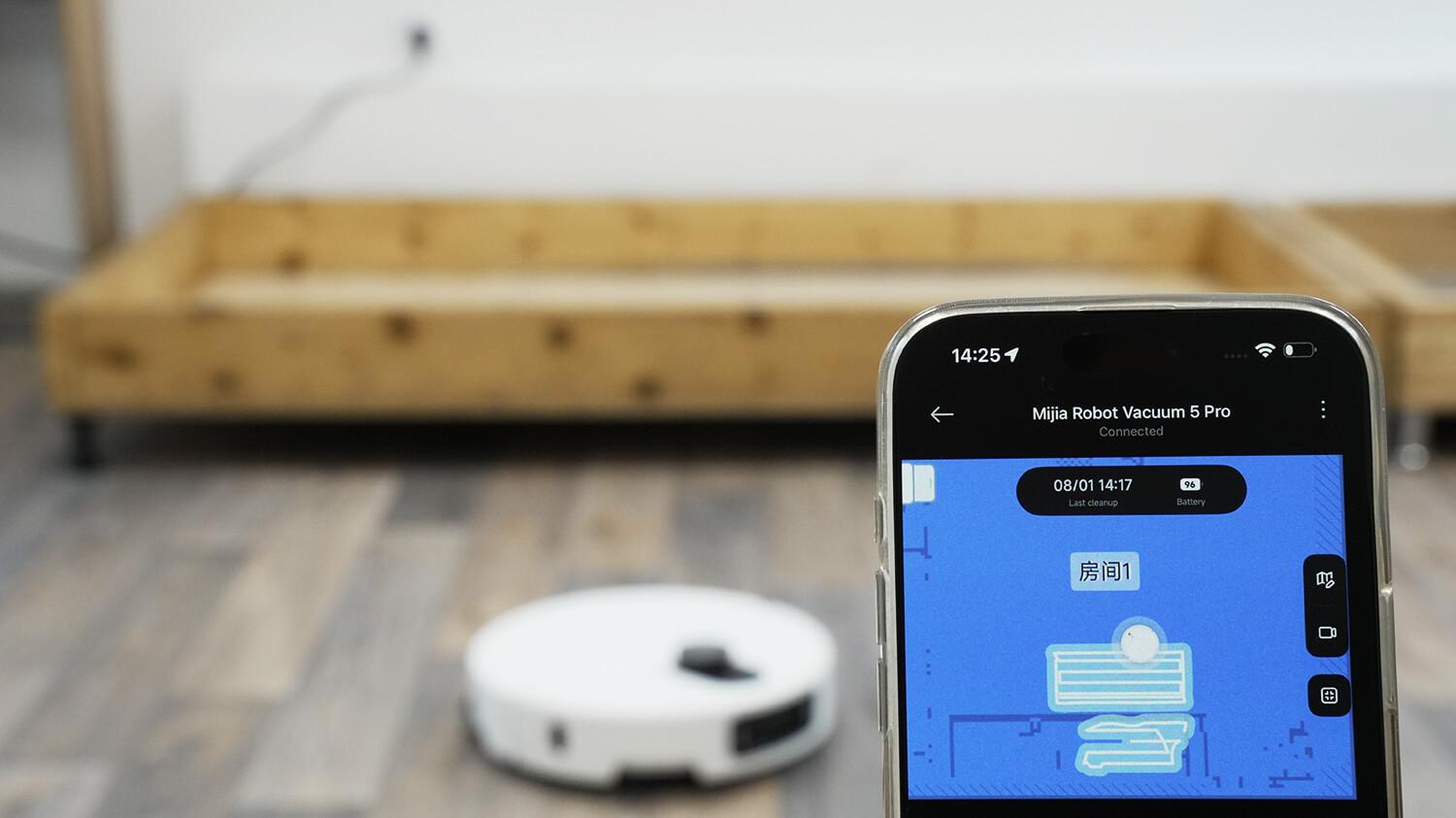
Trajectory of movement with the lidar lowered
Autonomy
I tested the battery life when running the robot at maximum power with wet cleaning enabled. It lasted 70 minutes, cleaning 45 square meters of usable space. In reality, that's just over the equivalent of cleaning a two-bedroom apartment of 70 square meters once. It also features a recharge mode, allowing it to resume cleaning after recharging at the base, so this model is capable of cleaning larger areas. In any case, the robot's battery life is rather weak compared to similar robots and its predecessors. This is likely due to the camera and backlight, which drains the battery.
Object recognition
One of the most interesting tests for me personally was to determine how well the new system of sensors and backlit cameras recognizes objects on the floor.
In good lighting, the Xiaomi Mijia 5 Pro was able to accurately navigate around 6 out of 6 objects, correctly identifying 5 of them. The only item missing from the database was a stuffed animal, which was expected. The robot also correctly identified and accurately navigated around 3 socks and 4 wires. In the case of pet surprises, the robot navigated around 5 out of 6 traps, correctly identifying 4 of them. Oddly, it recognized one of the traps but still ran over it.
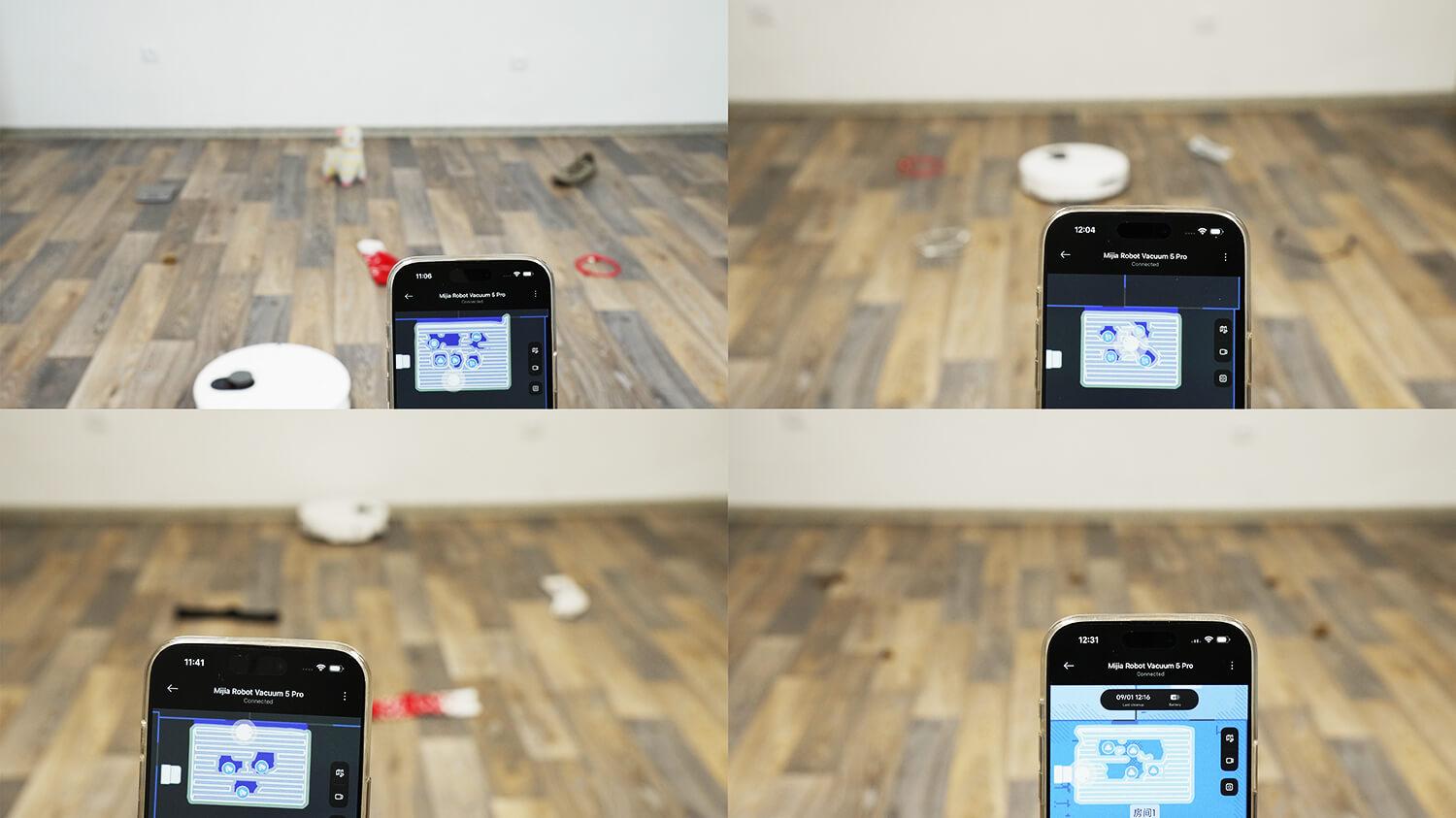
Recognizing objects in good lighting conditions
In complete darkness, the Xiaomi Mijia 5 Pro also avoided six of six household items, but this time, some recognition errors appeared. For example, the robot recognized a toy as fabric and a imitation pet surprise as a non-cleanable liquid. It correctly recognized and accurately avoided three of three socks, recognized and avoided three of four wires, and chewed up one black one. Of the six simulated feces, the robot again accurately avoided five, chewing up one. It also recognized four traps and one as a puddle that should not be touched.
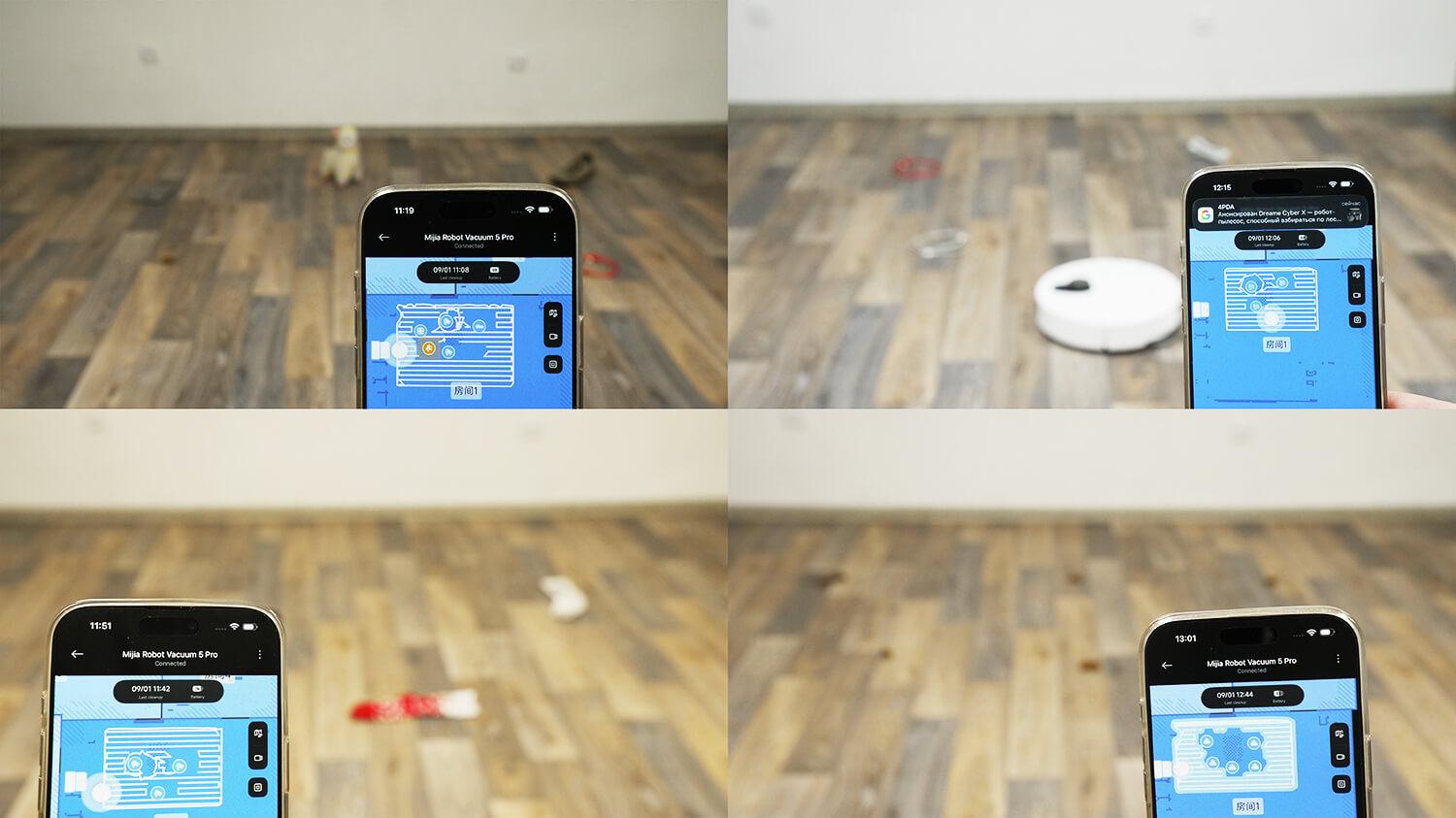
Recognizing objects in complete darkness
In my opinion, the result is very good. Definitely the best in the Xiaomi lineup and one of the best overall, compared to the capabilities of competitors. The object detection system needs some minor improvements, and given the presence of artificial intelligence, I think we can expect the sensors and cameras to be more accurate in the future.
I also tested how accurately the Xiaomi Mijia 5 Pro detects puddles and stains on the floor. The results are standard: a ketchup stain, a milk puddle, and a puddle of clear water. The robot didn't detect the clear water, even though it moved over it with its brushes rotating. The robot recognized the milk as a stain that needed to be cleaned separately. In this situation, the robot raises its brushes, turns off suction, and switches to floor-only mopping mode. It passed over the puddle area twice locally, then went to wash the wipes, returned to the dirty area, cleaned it locally twice more, washed the wipes again, and continued cleaning in both vacuum and floor-mopping mode. The robot recognized the ketchup stain as an area that shouldn't be cleaned. The artificial intelligence likely mistook this stain for simulated excrement, which is not uncommon.
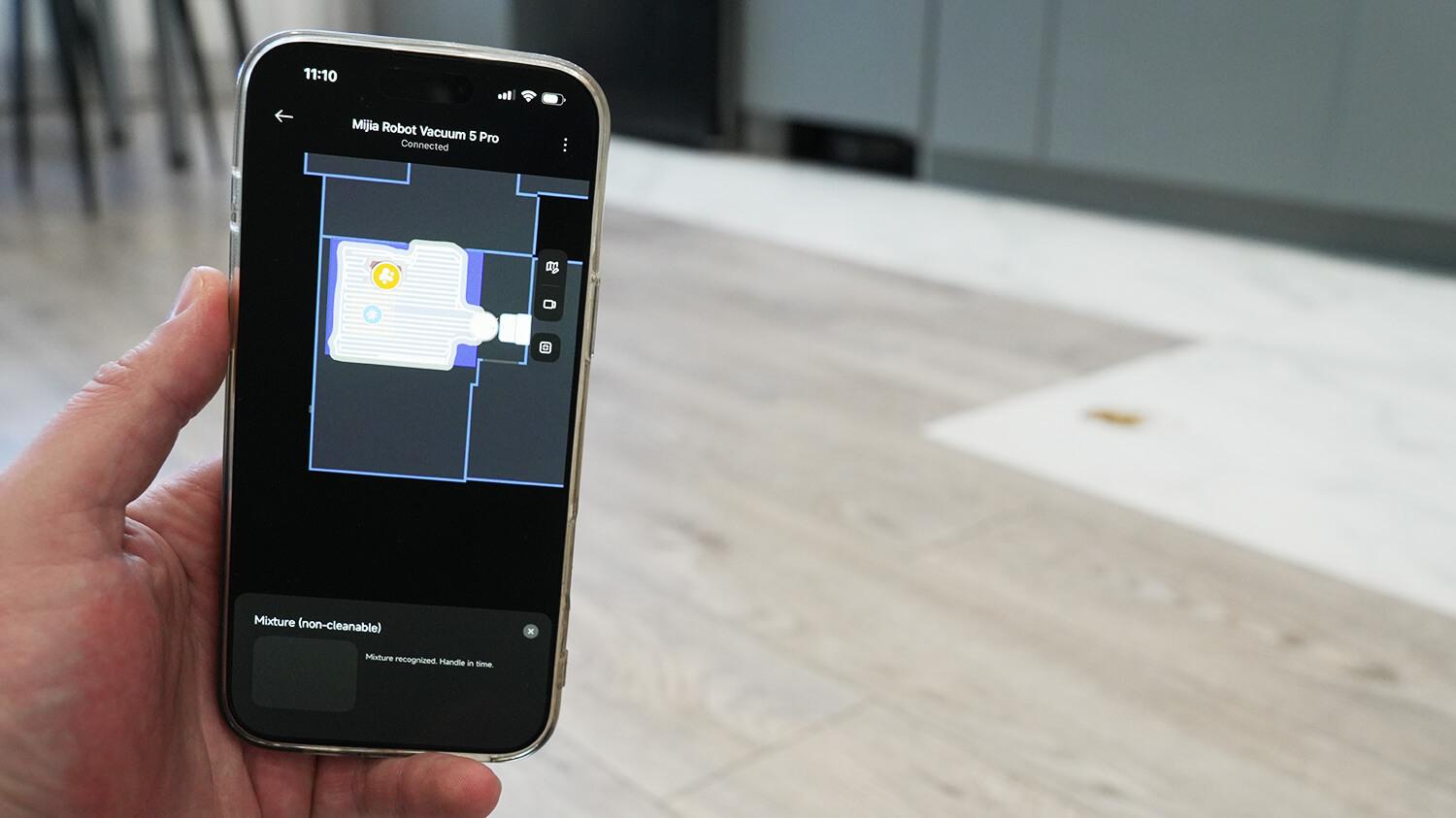
Recognition of puddles and stains
In general, this robot vacuum cleaner does recognize stains and puddles, although with some errors.
Suction power
The next important test was a true power test. The results were as follows: in Quiet mode, the robot was able to partially clean debris from a 2 mm gap. In Standard mode, a 2 mm gap was cleaned better, while 4 and 6 mm gaps were partially cleaned. In "Powerful" mode, the result remained unchanged, but in "Turbo" mode, the robot vacuum cleaner was able to better clean a 6 mm gap and even partially reach the 10 mm mark.
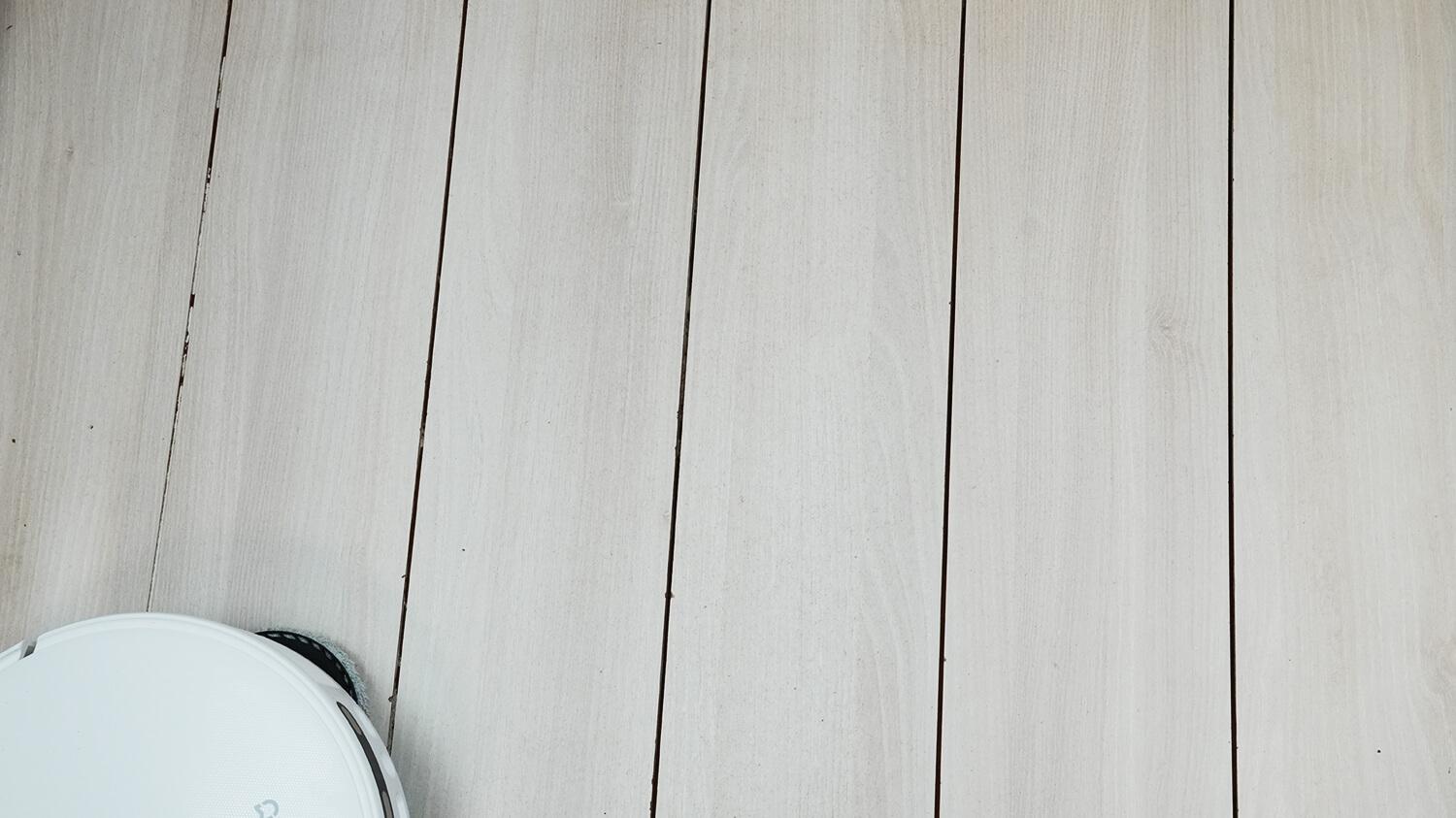
Suction power
This is truly a powerful robot vacuum cleaner, bravo Xiaomi engineers!
Dry cleaning
The robot's pickup performance on laminate floors is excellent, even for debris of varying textures. Thanks to its retractable side brush, it even managed to clean debris in corners.
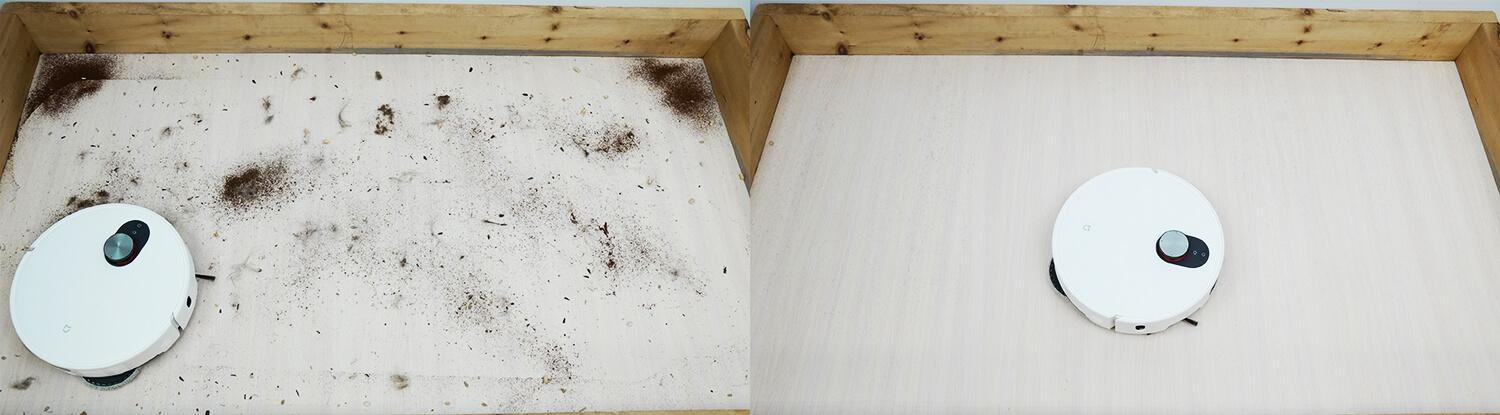
Dry cleaning
There is a small blind spot when sweeping outer corners, but this is a weak point of many robot vacuum cleaners.
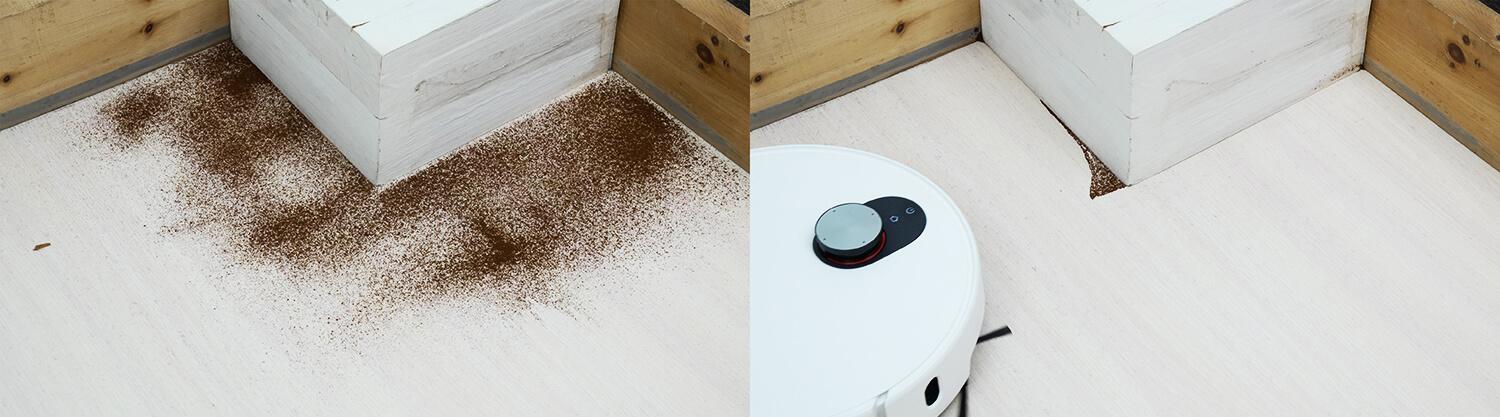
Overcasting external corners
And here's the state of the cleaning module. The central brush was tangled in hair, but simply didn't have time to cut through it. But the side brush is completely clean!
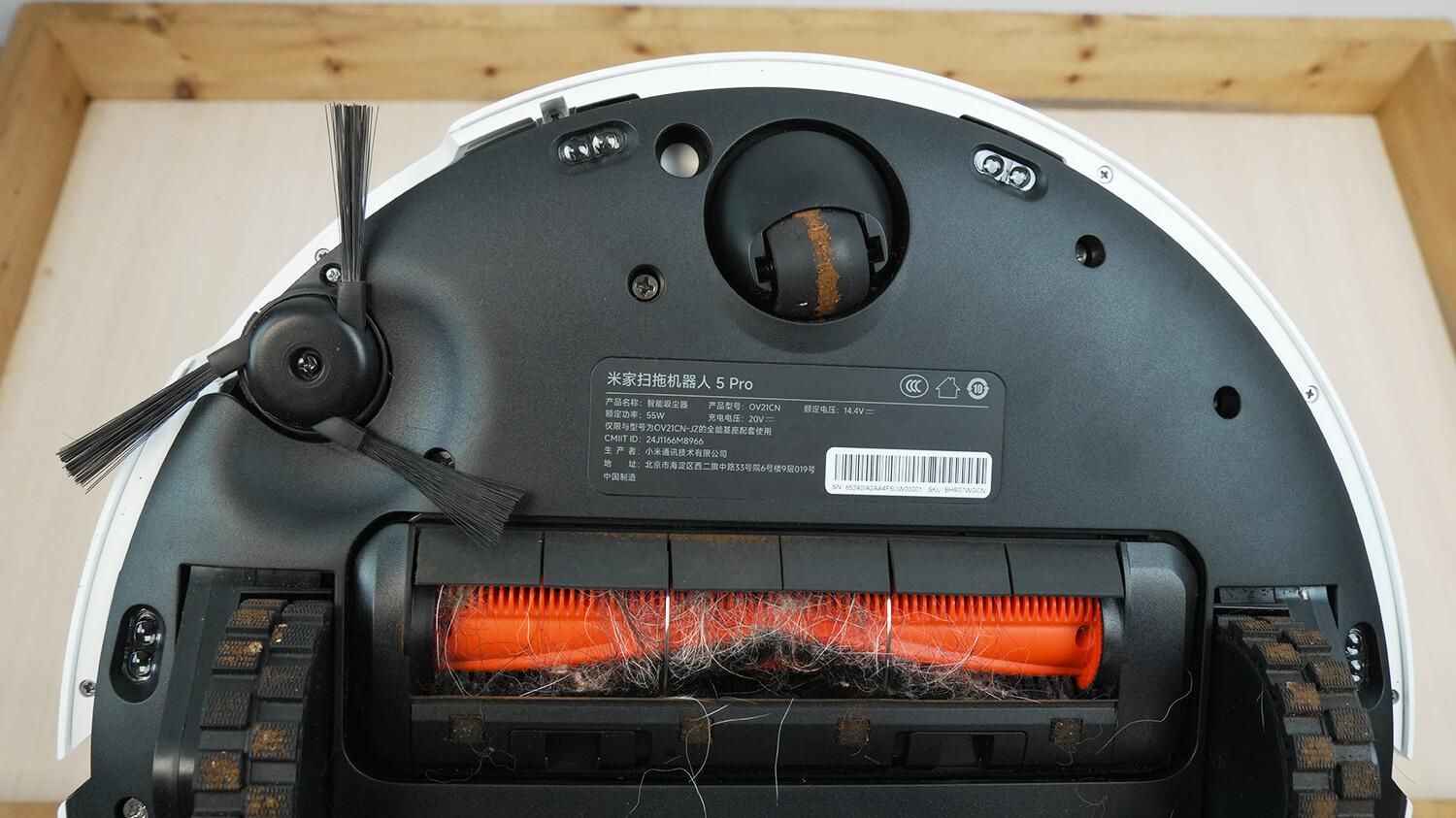
Cleaning module after testing
Anti-tangle Hair Protection
I also tested the turbo brush to see how it handled cutting through tangled hair. And here we see that the hair remained on the brush and it didn't cut through it.
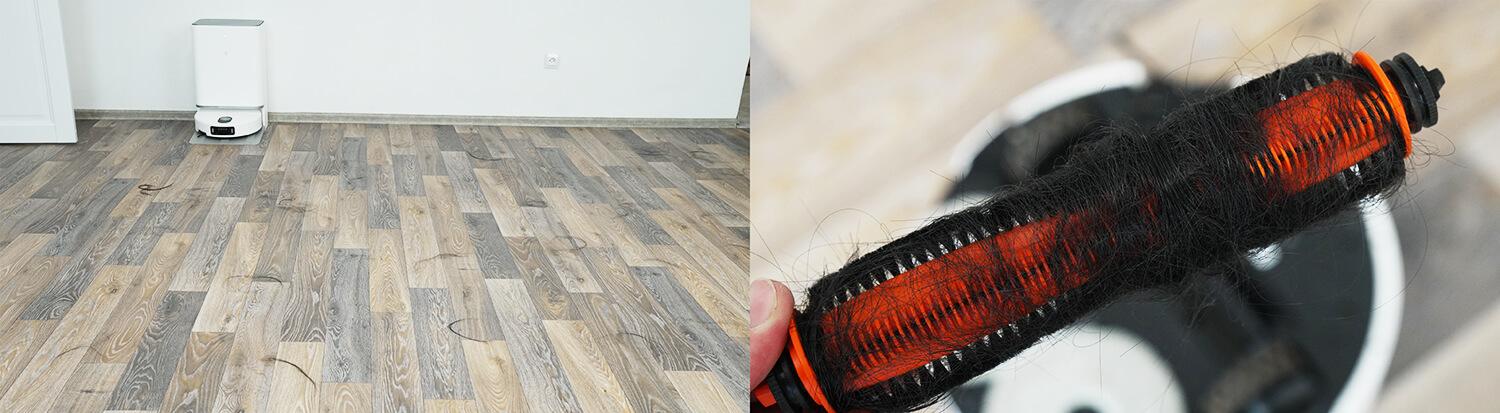
Anti-tangle Hair Protection
The test was certainly challenging, but previous Xiaomi models with the same brush also had similar issues. And what's particularly inconvenient is that the brush ends aren't removable. Cleaning it manually will be difficult.
But I can say that in everyday life, after a week of cleaning, the brush is completely clean; it really does a great job of cutting hair and fur! And we have two girls and a perpetually shedding corgi living in the apartment.
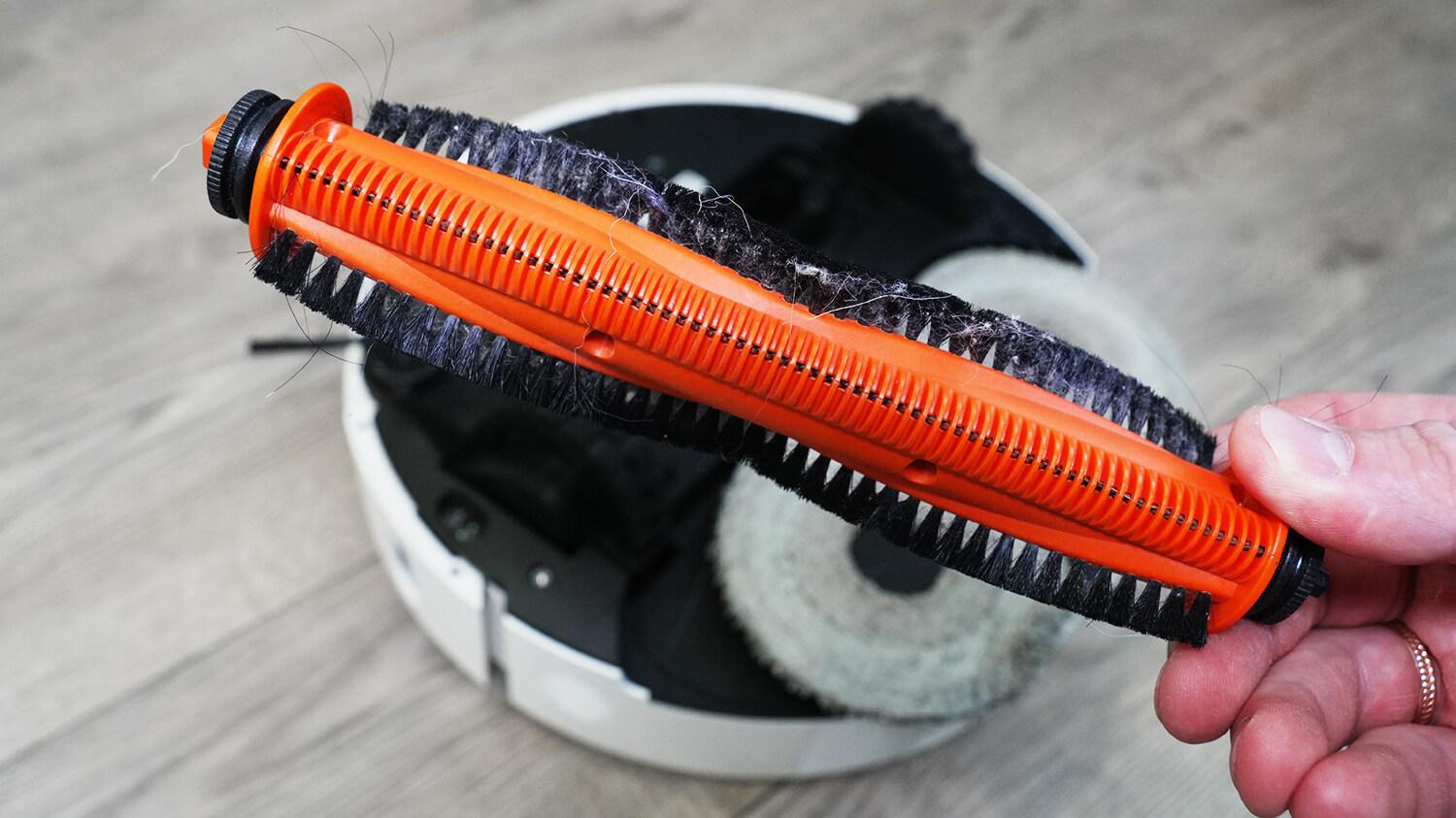
Condition of the turbo brush in everyday life
Carpet cleaning
Regarding carpet cleaning, the robot thoroughly cleans low-pile carpets. However, on medium-pile carpets, some debris remains in the pile, which isn't a critical issue, but nevertheless clearly demonstrates the difference in the effectiveness of different cleaning modules. Most importantly, the object avoidance system doesn't identify the pile as an obstacle, as was the case with its predecessors.
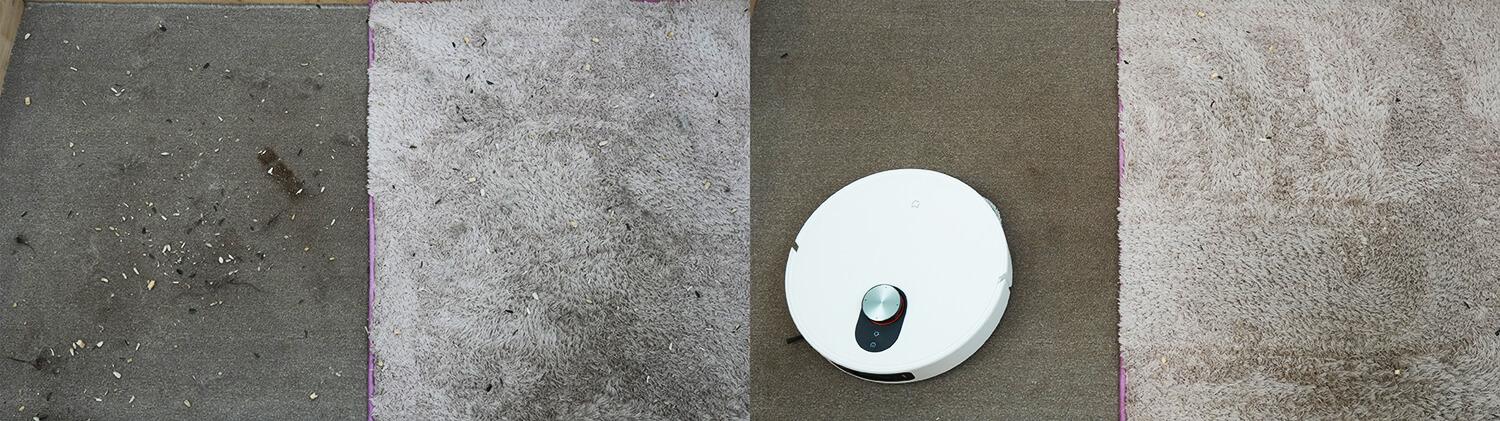
Carpet cleaning
Self-cleaning
Immediately after the "dirty tests," I checked how well the robot vacuum self-cleaned. I returned it to the station and started the self-cleaning routine. The results were good.
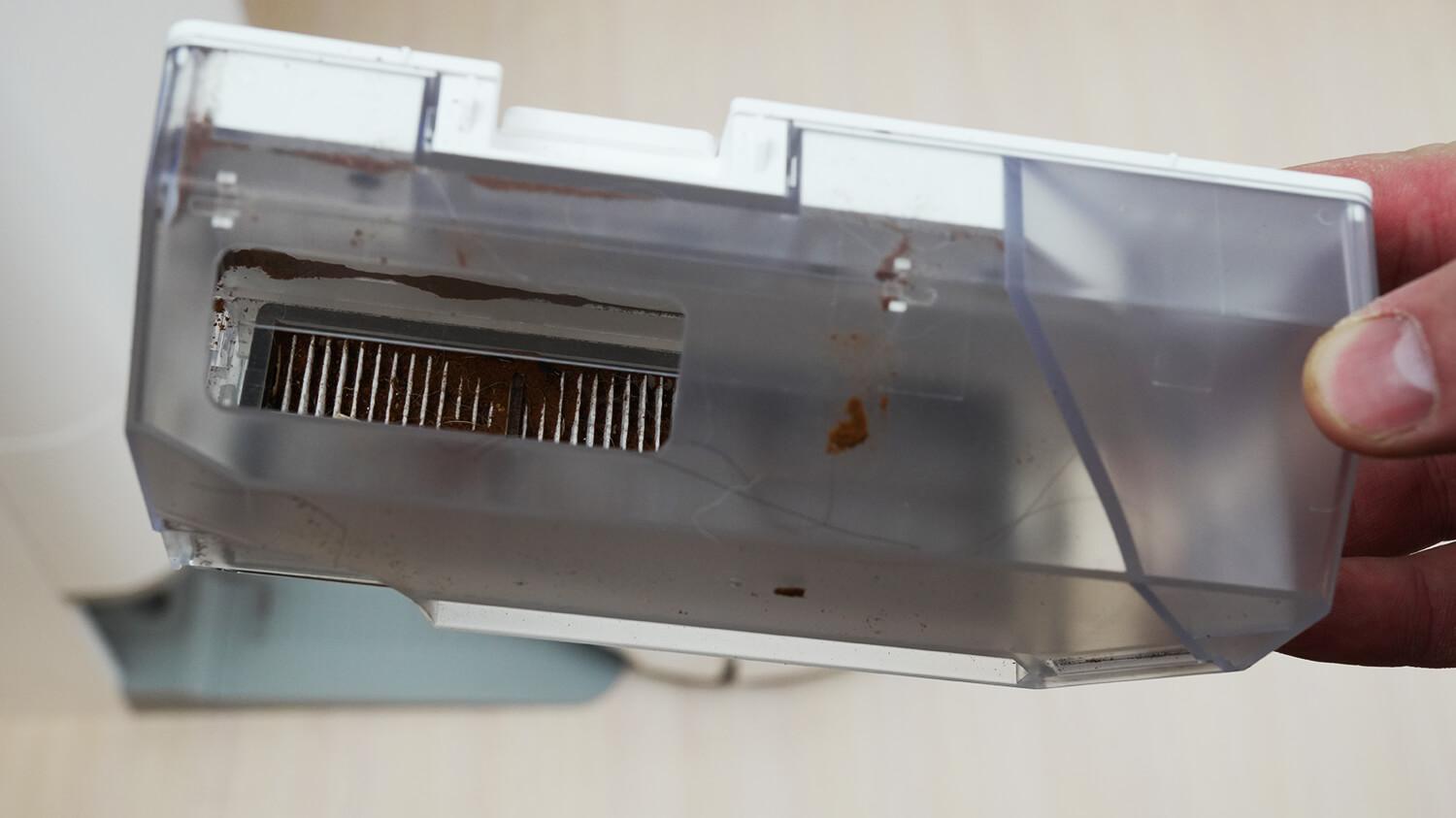
Self-cleaning
Wet cleaning and carpets
When it comes to wet cleaning on carpeted floors, there are several robot behavior options. The most optimal option is to automatically lift the cleaning cloths when entering the carpet, allowing the robot vacuum to simultaneously vacuum and mop the floor, leaving the carpets dry and clean.
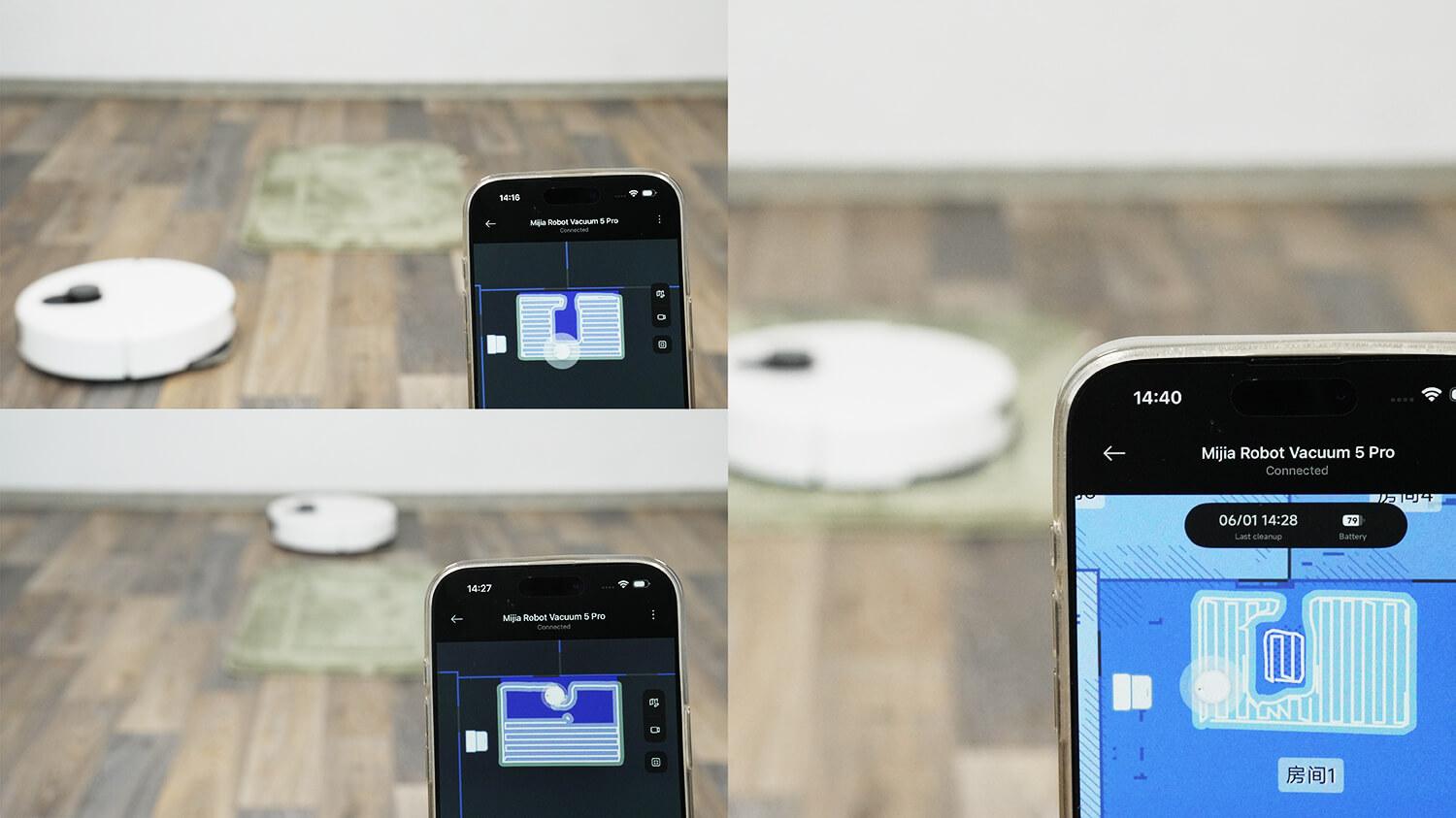
Wet cleaning and carpets
The second option is to enable the automatic carpet avoidance feature in wet cleaning mode. There's also a carpet rotation mode and a carpet transit mode, which allows the robot to simply move over carpets rather than clean them.
Wiping off dirt
The dirt removal performance is also on par with similar products. The cloth presses firmly to the floor and absorbs dirt. At the same time, there's no narrow zone along the baseboard, thanks to one of the cloths extending toward the baseboard. This is a plus! Here, we see only small, unwashed areas between the cloths in confined spaces, as well as blind spots in outer and inner corners, which, again, is the case with most other robotic vacuums.
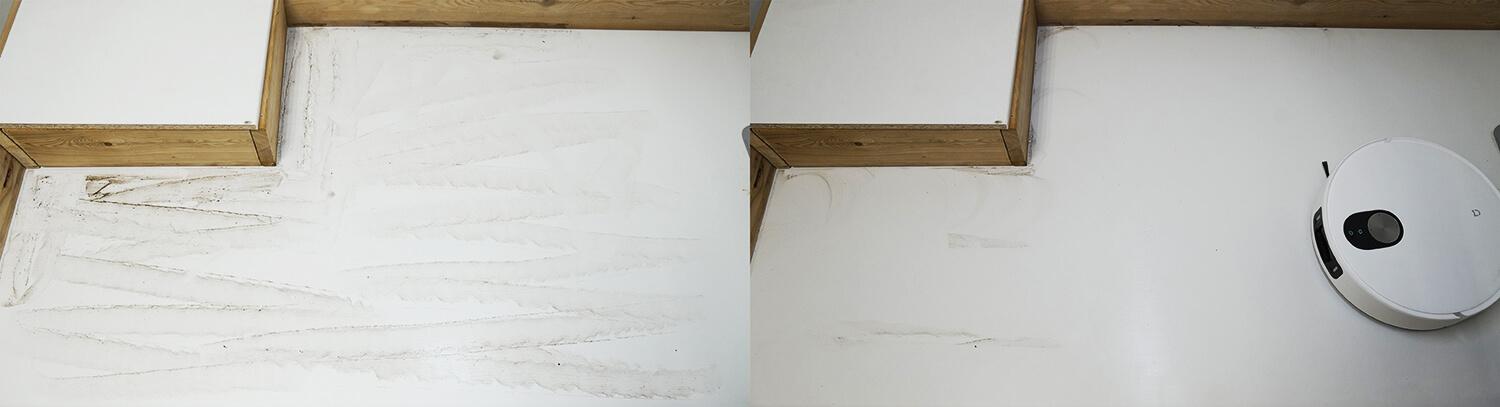
Wiping off dirt
I also checked how the robot cleans the floor around the chair legs. We can see that the cloth extends, but it doesn't clean those areas perfectly. Previously reviewed Xiaomi Mijia 5C with an improved napkin ejection mechanism it copes with this task better.
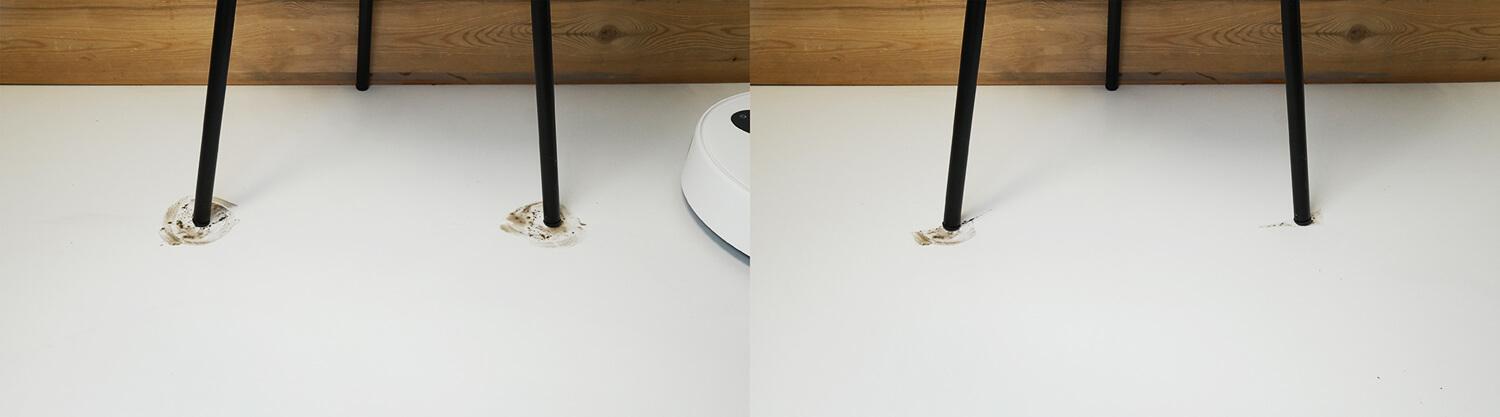
Blind spots around chair legs
Removing difficult stains
Regarding tough stains, I first tried running the robot with the object recognition system and stain detection enabled. It recognized one part of the stain as a cleanable area, while the other part wasn't. So, I turned off all smart features and restarted the robot. Even after that, it took the robot 10 passes to completely clean the stand. The result was exactly the same as the Xiaomi Mijia M40s, which is quite standard.
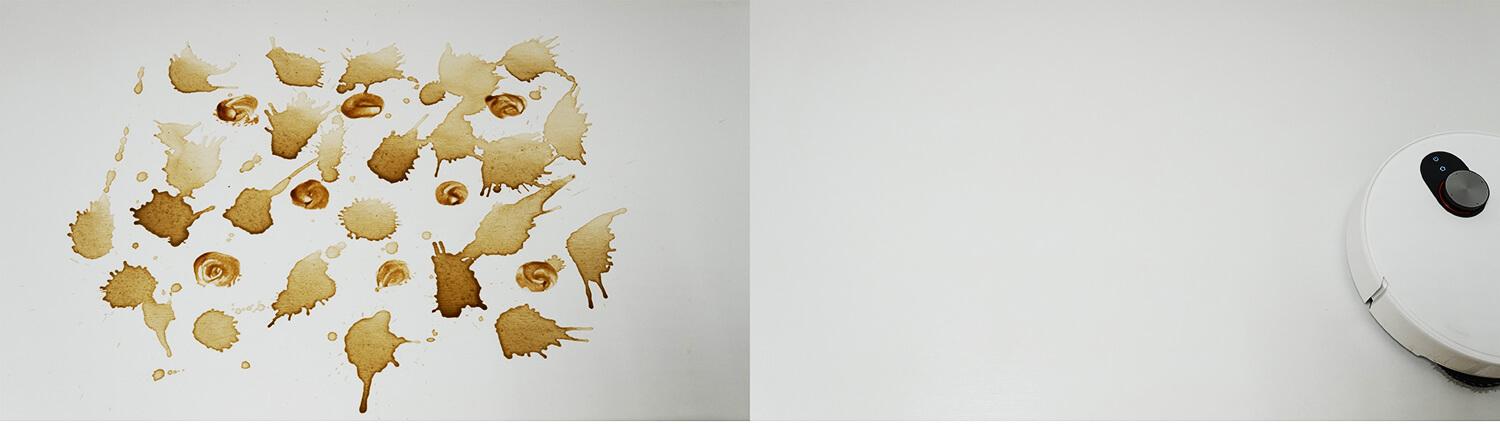
Removing difficult stains
Washing quality of napkins
I'd like to immediately talk about the effectiveness of the station itself. Let's start with the cleaning quality of the wipes. Even after extensive testing, the wipes look better after washing at the station, but we still see some stains remaining near the center.
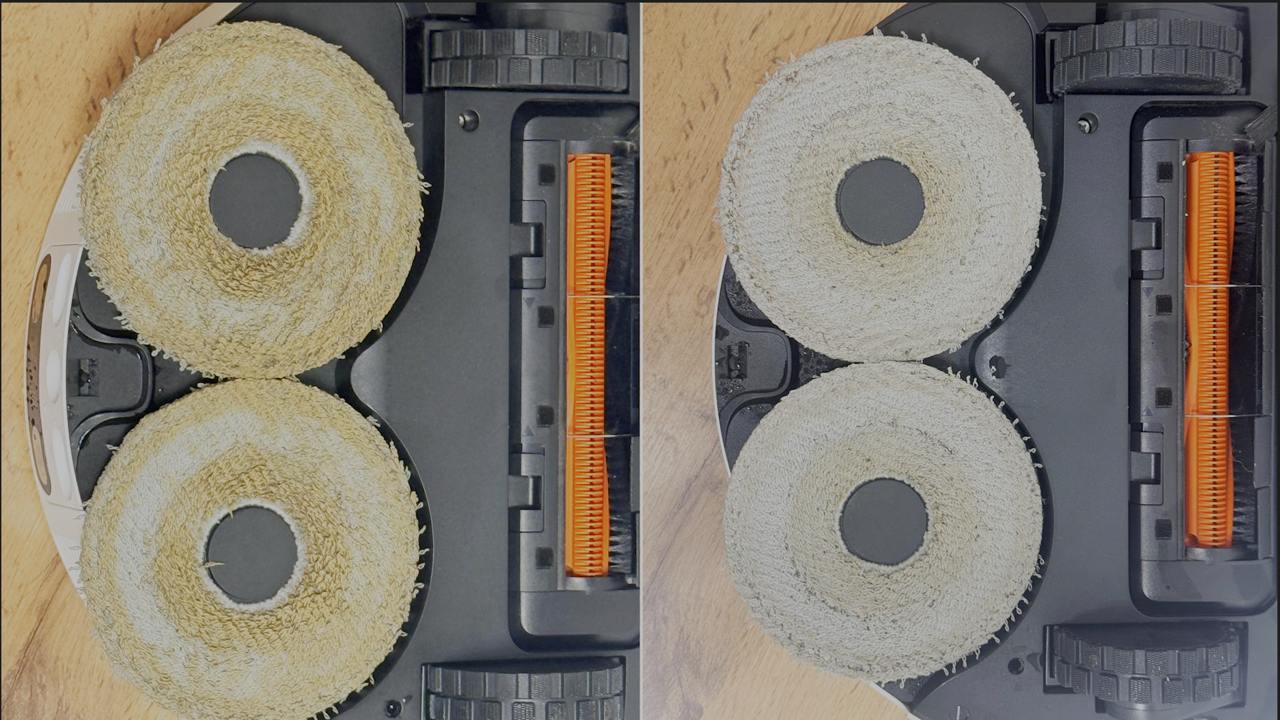
Washing quality of napkins
In domestic conditions, after washing the floor, the wipes are washed well at the station, but again, they seem to be darker towards the center, although the dirt is not washed off them under the pressure of clean water.
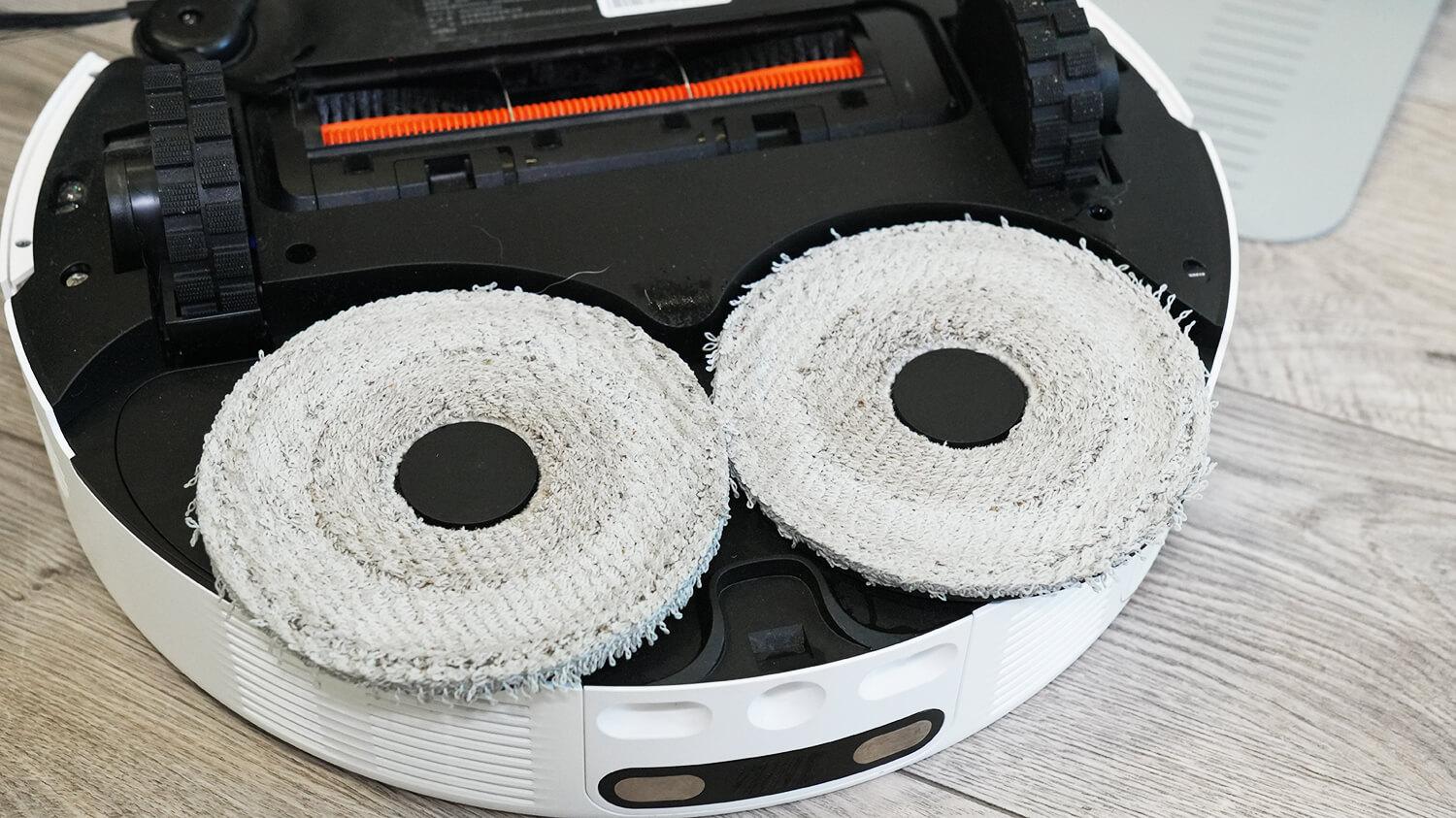
The condition of napkins in everyday life
I decided to test the wash temperature myself – in my case, the peak temperature in the napkin wash zone was 70.4 degrees, and this is a very good result, taking into account losses and measurement errors!
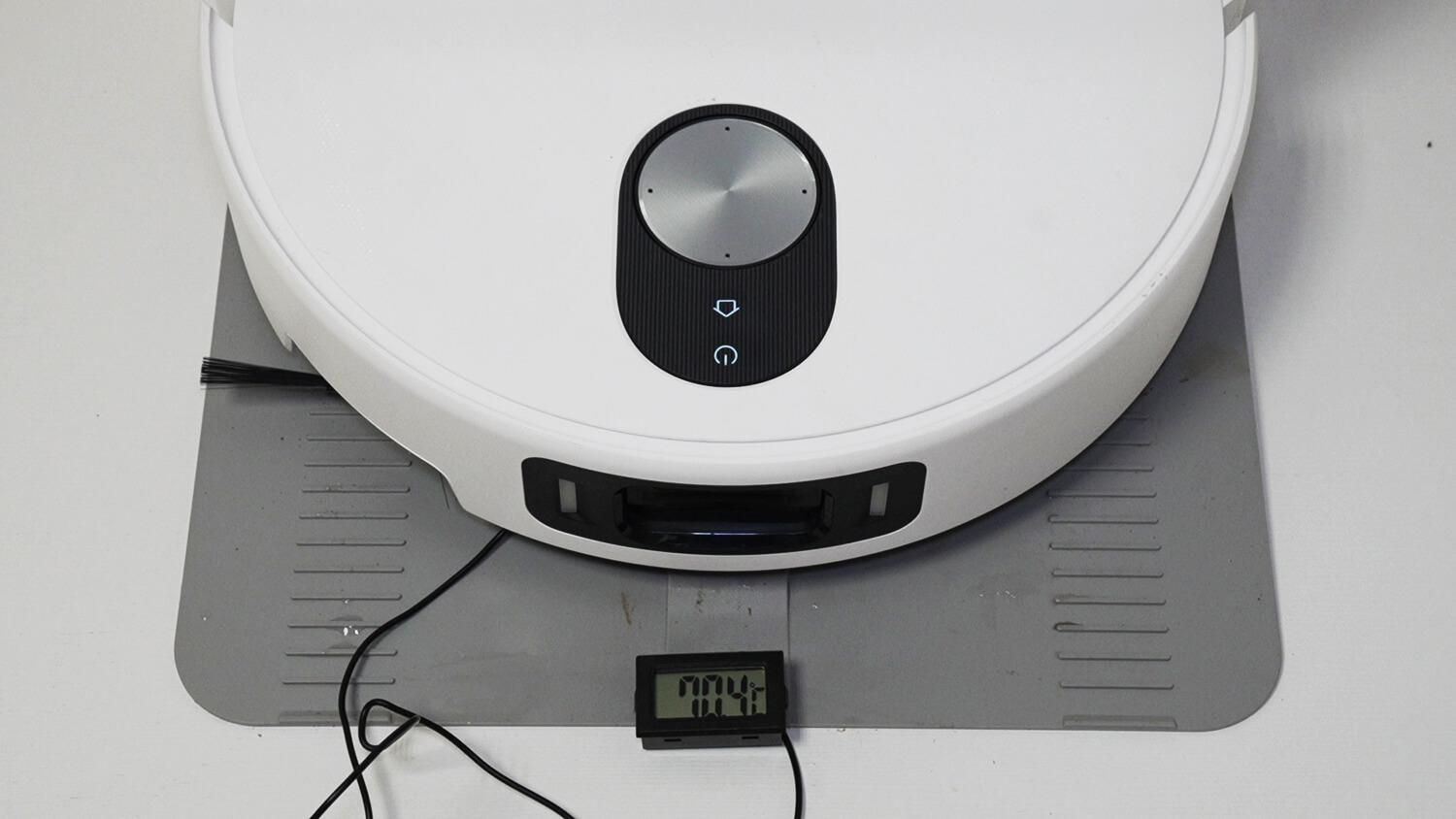
Washing temperature for napkins
After washing, the temperature of the wipes reaches 54 degrees, and this is also an excellent result.
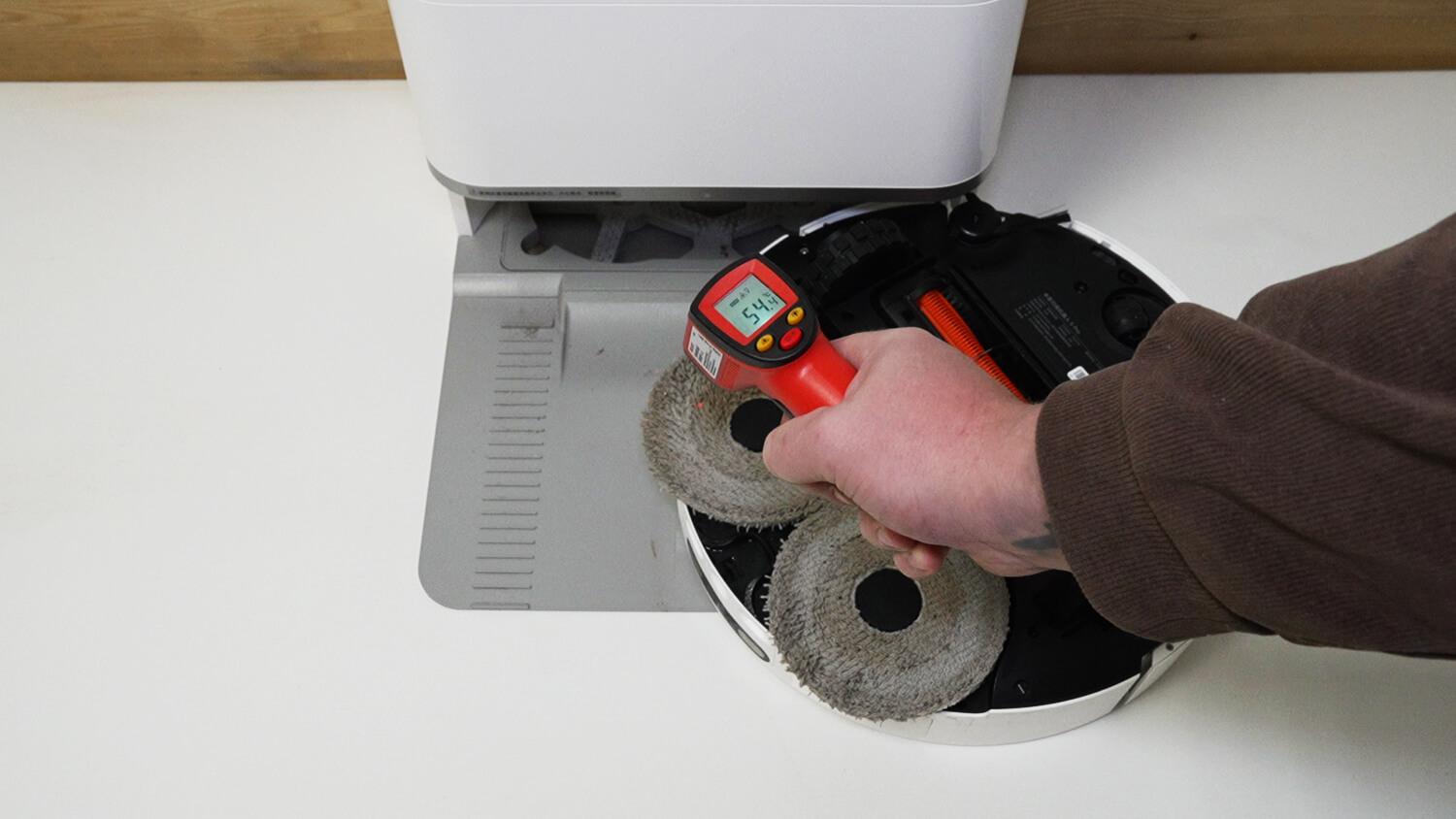
Temperature of napkins after washing
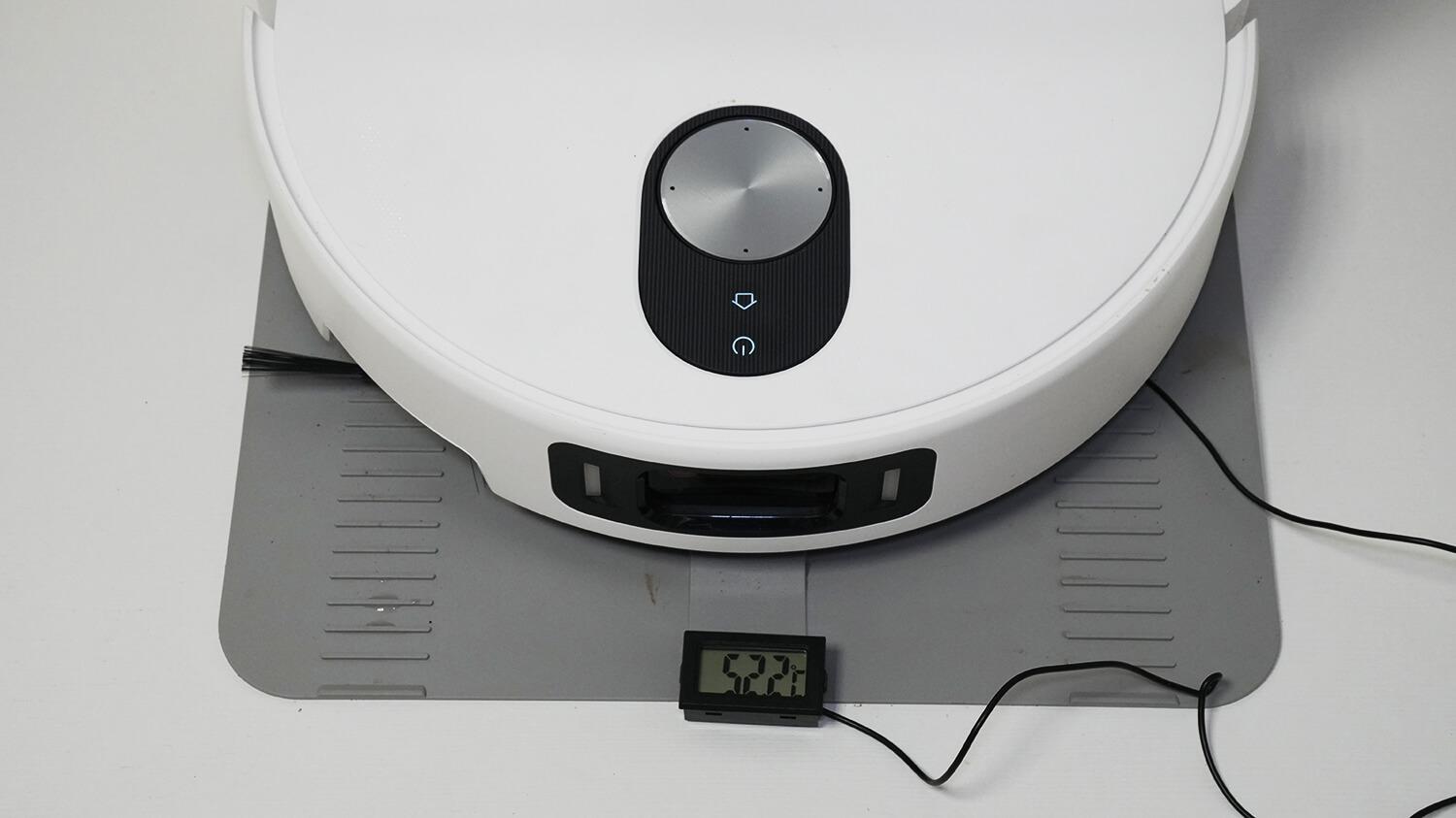
The drying temperature for the wipes after washing exceeds 52 degrees, which is even higher than stated. No complaints about the station!
Drying temperature for napkins
Station maintenance
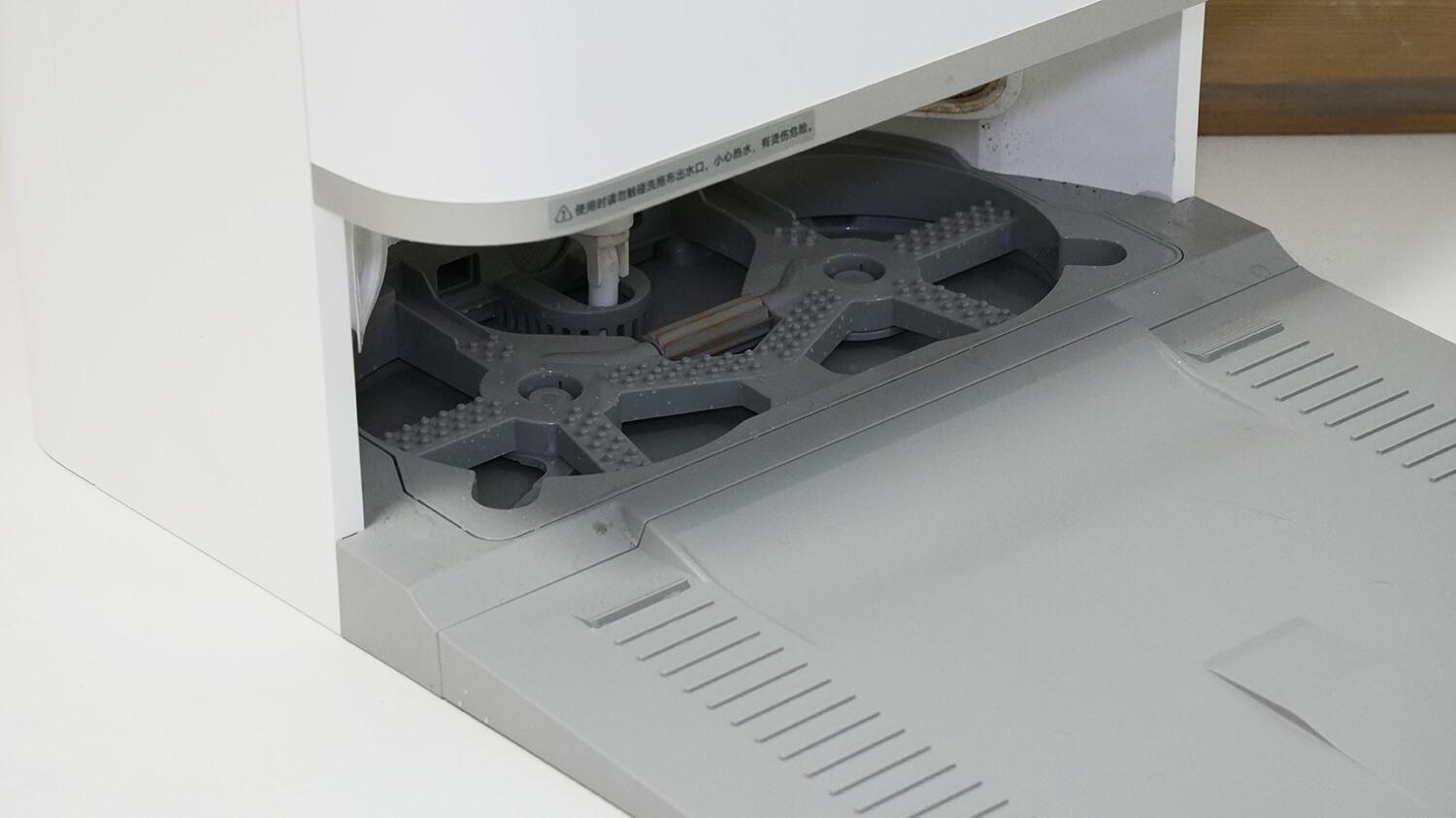
The station itself is easy to clean. We activate a special mode, the robot moves out of the station, and water fills the cloth washing tray. You can remove the drain, scrapers, and tray, rinse them in the sink, then brush the bottom of the station and wait for the dirty water to automatically roll back into the tank. Then, you can wipe away any remaining dirt with a cloth and return the cleaned parts. Basically, it's a simple process.
Station maintenance
Obstacle clearance
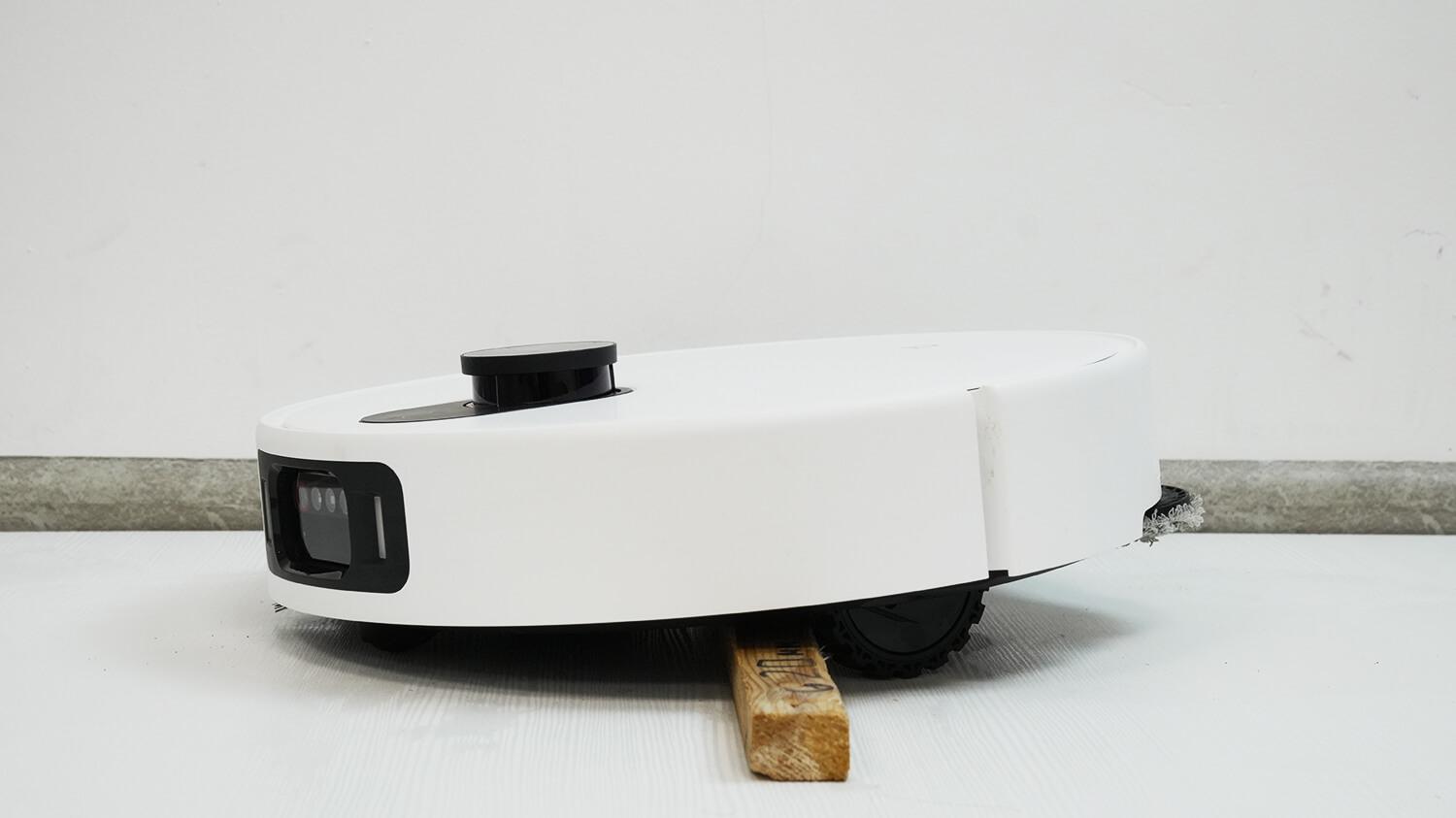
The robot vacuum cleaner is physically able to drive over 2 cm high thresholds, but sensors and cameras on the bumper can detect thresholds as obstacles.
Obstacle clearance
It's not possible to set threshold zones on the map, as is the case with competing brands. Therefore, how the robot interacts with thresholds in individual conditions is a matter of chance.
Driving on black surfaces
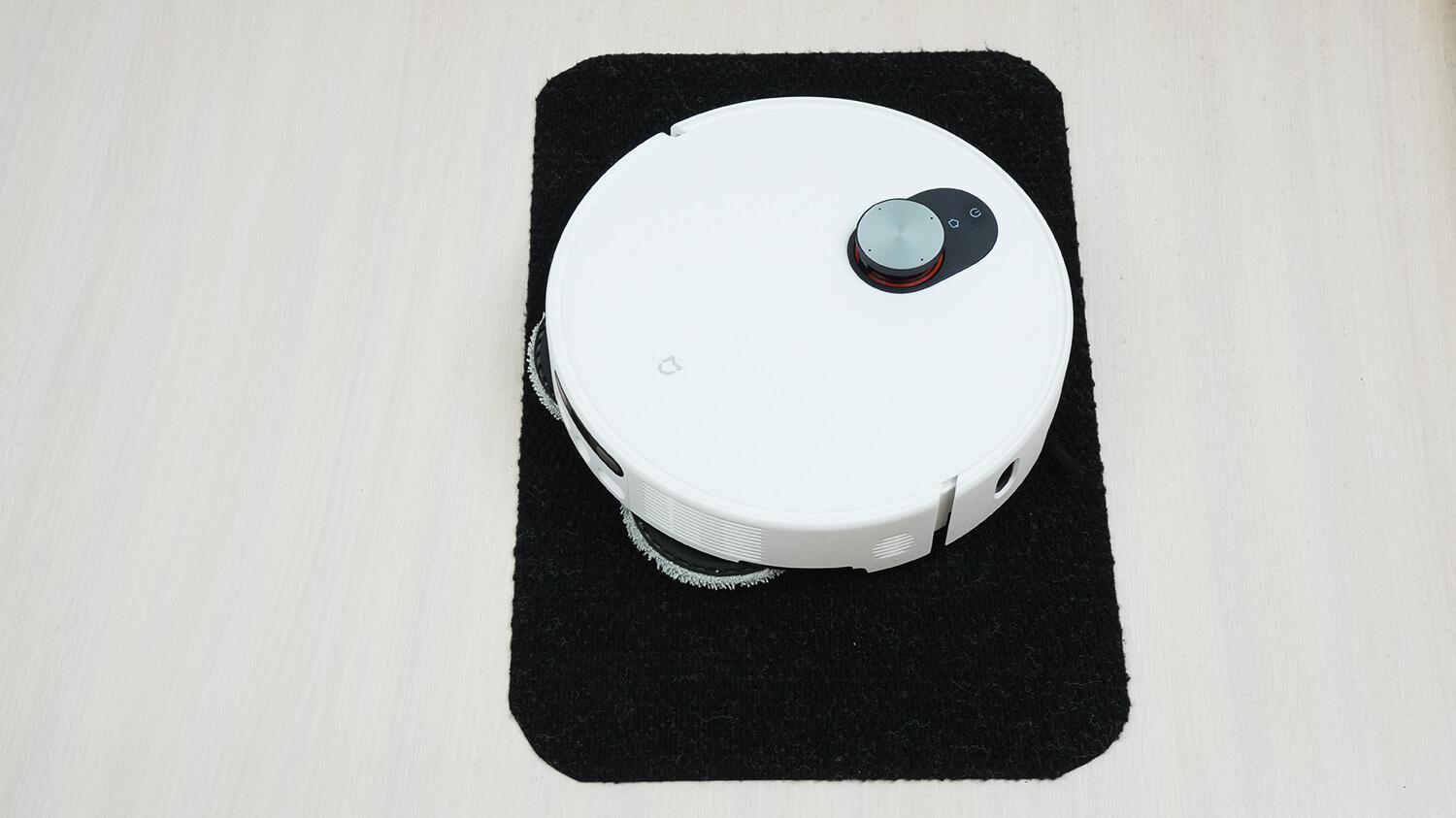
It's also not afraid of black surfaces, easily driving on completely black carpet. This is another advantage of the robot!
Driving on black surfaces
Noise level
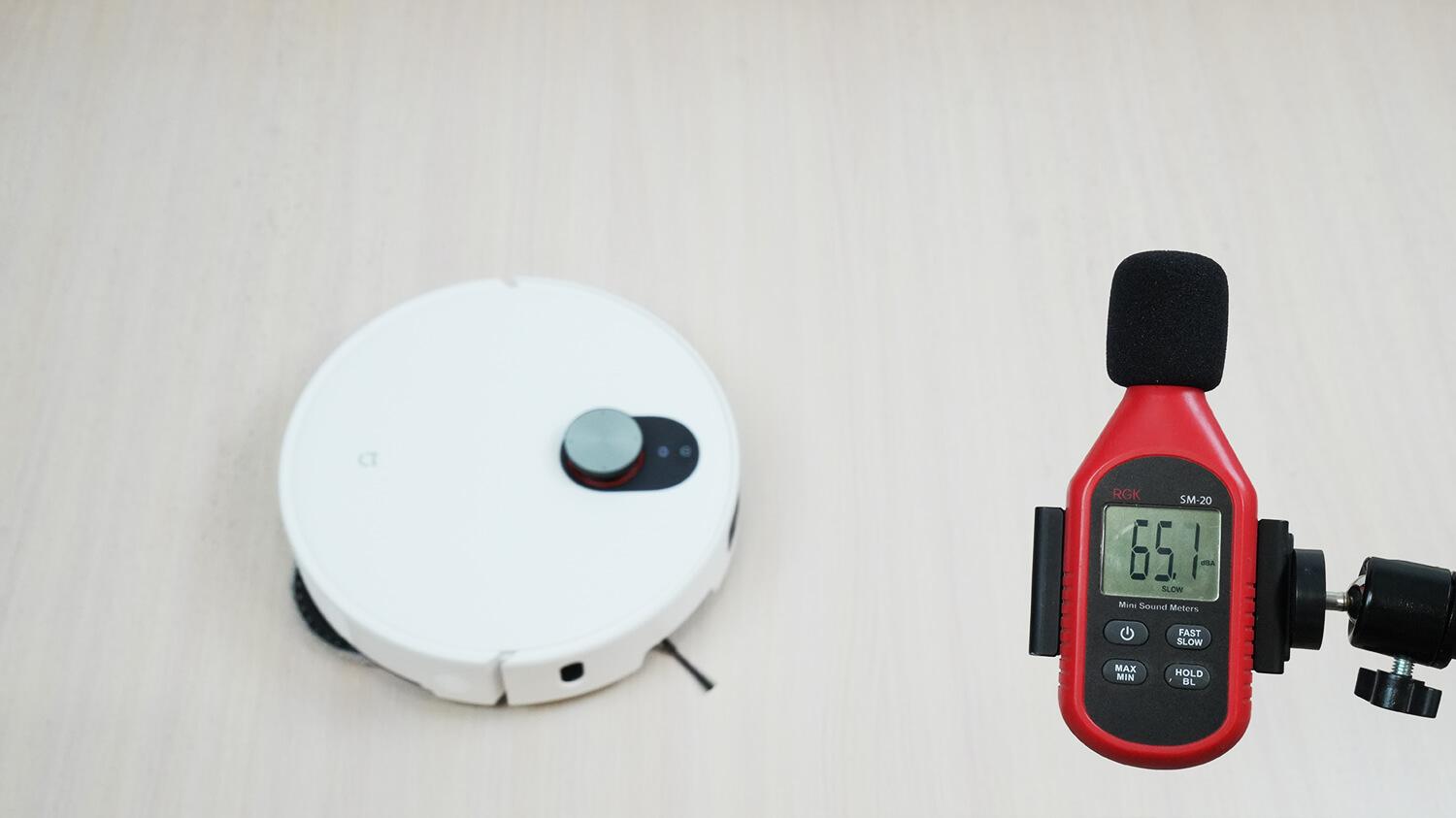
As for the noise level, it ranges from 56 to 68 dB. This is lower than most similar products, especially considering its high suction power! The station's noise level during self-cleaning is approximately 72.5 dB. This is already a standard result.
Noise level
Personal opinion
The Xiaomi Mijia 5 Pro robot vacuum cleaner has been thoroughly reviewed and tested. our evaluation system he managed to gain 209 points, which is expectedly the best result from the Xiaomi line, or to be precise, from the robot vacuum cleaners that were reviewed. For comparison, Xiaomi Mijia M40s in a built-in version was able to score 197 points, and Mijia M40 192 points. If we were to predict the score for the global version of the Xiaomi Mijia 5 Pro, then with the same test results, this model would score around 221 points and be ranked in the top 15 on robovac.washerhouse.com.
Overall rating of tested robot vacuum cleaners: https://robovac.washerhouse.com/en/rejtingi/robovac-obshhij-rejting-robotov-pylesosov-robo.htmlI'll highlight the pros and cons I've discovered, and then share my opinion about the robot.
I liked the following:
- A highly accurate object recognition system. The database contains a large number of objects, and the robot can accurately navigate around many of them, both in good lighting and in complete darkness, including puddles and stains. This model demonstrated very good results in tests!
- Remote home monitoring function via robot camera.
- The lidar slides into the body, allowing the robot vacuum cleaner to clean in gaps as small as 9 cm.
- In reality, the suction power is high, both in figures and according to test results.
- High-quality dry cleaning on hard surfaces and low-pile carpets.
- High-quality floor cleaning over large areas. The robot can remove tough stains, clean right up to baseboards, lift the cleaning cloth when entering carpets, and then rinse them with hot water. Everything is well-designed.
- The Xiaomi Mijia 5 Pro can sweep away debris from corners thanks to its retractable side brush mechanism.
- The turbo brush self-cleans with built-in blades and is less likely to become tangled with hair and fur. Manual cleaning is unlikely to be necessary at home.
- The side and central brushes rise when puddles are detected and the floor is washed.
- The all-in-one station features a fully self-service robot, cleaning itself, washing wipes with hot water, and drying them with warm air. The station automatically detects the degree of soiling of the wipes, features large tanks, and is easy to maintain.
- The app allows for flexible cleaning settings. Moreover, the functionality is constantly being refined and updated. I was especially pleased with the ability to delete non-existent zones on the map.
- The robot vacuum cleaner is not afraid of black floor coverings.
- Low noise level of the robot itself.
- A version with an ultra-thin built-in station is available for sale.
- And, just as importantly, it's priced optimally given its capabilities. At around $500, it's easily rivaled by very few robotic vacuum cleaners.
Speaking of disadvantages, I didn’t like the following:
- The first and most important drawback for me personally is that this version of the station doesn't connect to the sewer or water supply at all. It would have been great if there was a choice between regular tanks and a module within a single station.
- The version of the station we reviewed does not have an automatic mixing function for detergent and water, which has become a common feature for top-end robotic vacuum cleaners.
- You can't manually set the zones where the lidar should be lowered. You have to rely on the robot to figure it out and, after a few tries, begin lowering it. This is better than with the M40s, but this setting is still crucial when the lidar can be moved into the body. Even with the lidar lowered, there are issues with its trajectory under low furniture.
- Weak battery life at maximum power.
- The robot vacuum cleaner is designed for the Chinese market. It doesn't speak Russian, and the app interface isn't fully translated. Furthermore, it doesn't offer full service or warranty support from the manufacturers. While the app can be localized and even customized with voiceovers, that's an added hassle, especially if you have an iPhone.
- The ends of the turbo brush are non-removable, making it more difficult to clean manually, although this may sometimes be necessary, given the test results.
- The robot vacuum cleaner does not clean behind curtains and drapes.
- The object recognition system requires minimal modification.
So, what's the bottom line? Certainly, some of the criticisms are specific to Xiaomi robots, but there are also some unique characteristics. The first three shortcomings, for me personally, somewhat dampened my impression, but overall, considering its strengths, I consider the Xiaomi Mijia 5 Pro one of the best robot vacuum cleaners for the money. Its high placement in the overall ranking, considering its price, is indirect confirmation of this.
The robot vacuum cleaner is powerful, neat, smart, and efficient. If these comments aren't critical to you, you should definitely consider purchasing this model. On that note, I'd like to conclude this review. Thank you all for your attention, and happy shopping. Bye!