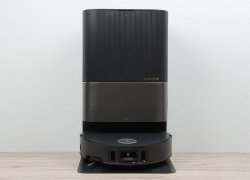
Dreame Aqua10 Ultra Roller Complete: A dual-chamber, 30kPa cleaning robot
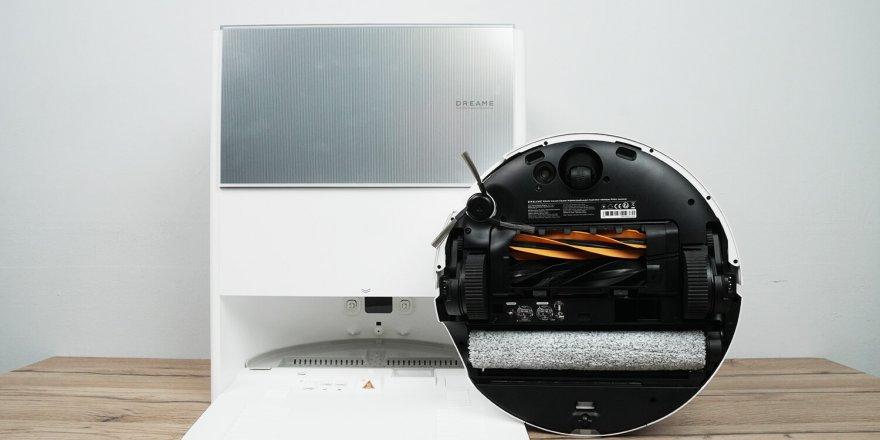
Hello to all readers of this project! This review will examine the Dreame Aqua 10 Ultra Roller Complete. It's the brand's first roller-equipped robot vacuum cleaner! This roller can self-clean with clean water while cleaning, extend to the edge of the unit, rise when driving onto carpets, and even close with a special lid to prevent wetting the carpet pile. The roller isn't the only feature of this model. It also features effective brushes for collecting debris, increased suction power up to 30,000 Pa, a completely new navigation system with artificial intelligence, and a self-service station that's fully charged by 2025 standards. In short, it offers a number of advanced solutions typical of the premium segment, which is where this robot vacuum cleaner fits. The price is in the $1,200-$1,500 range. So, below, I'll be thoroughly testing the Dreame Aqua 10 Ultra Roller Complete, highlighting the pros and cons based on my test results, and then expressing my personal opinion on the robot. So, let's get started!
Equipment
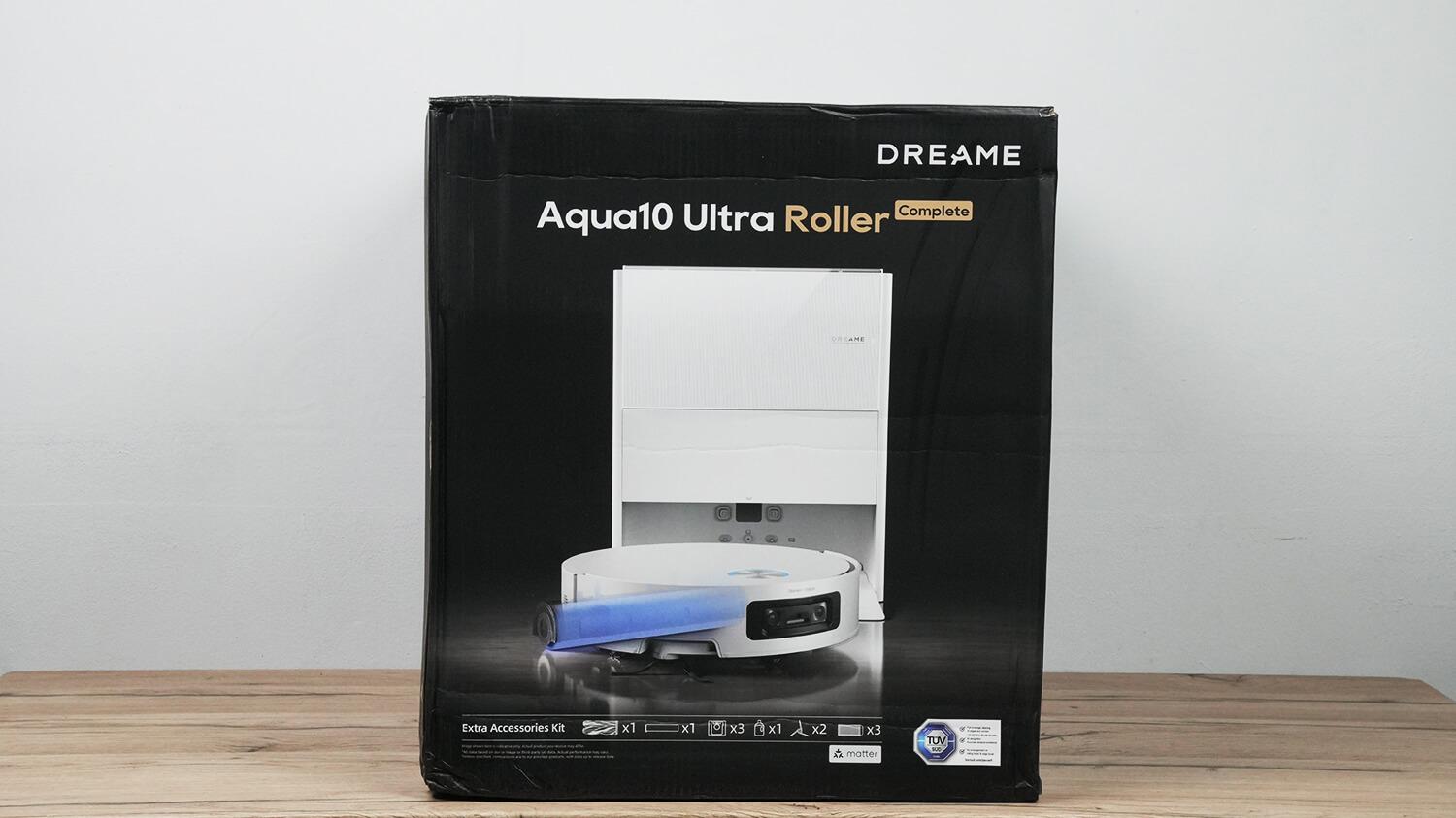
The robot vacuum cleaner arrived in a branded box like this:
Box
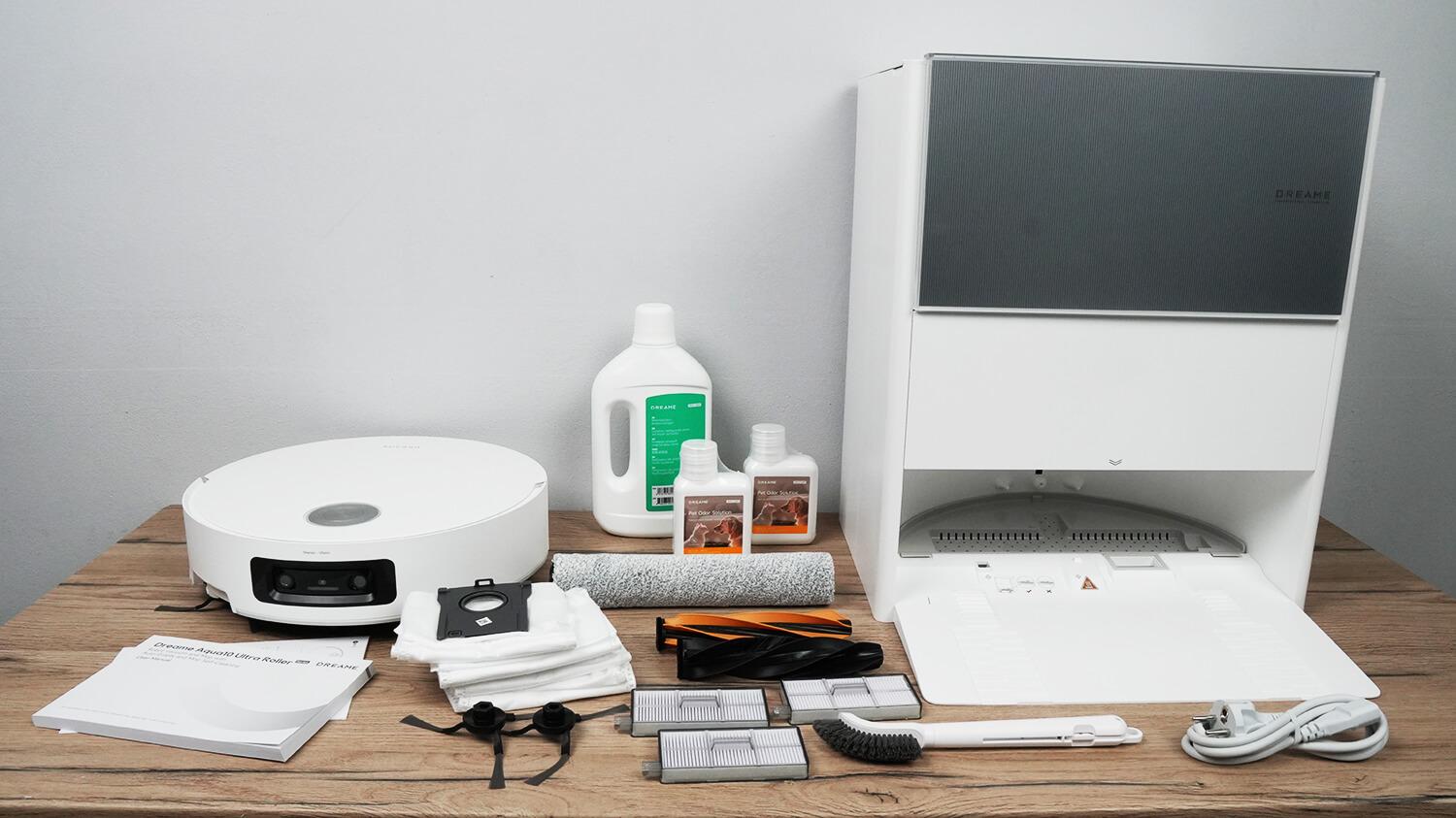
In addition to the robot and station itself, the delivery kit includes:
- Power adapter.
- Brush for cleaning the robot and station.
- A liter bottle of branded detergent.
- Two bottles of separate pet odor control detergent.
- Spare roller.
- Spare central brushes.
- Two spare side brushes.
- Three spare HEPA filters.
- Four spare bags for the station.
- The robot's documentation is available in several languages. Surprisingly, there's no Russian version.
As always, the Complete version comes well-equipped with all spare parts. That's a plus!
Equipment
Appearance
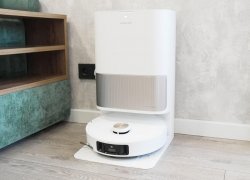
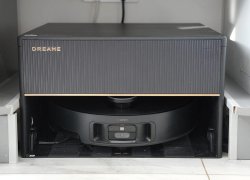
Let's take a look at the Dreame Aqua 10 Ultra Roller Complete. The robot and station come in white, although the app also displays a black version.
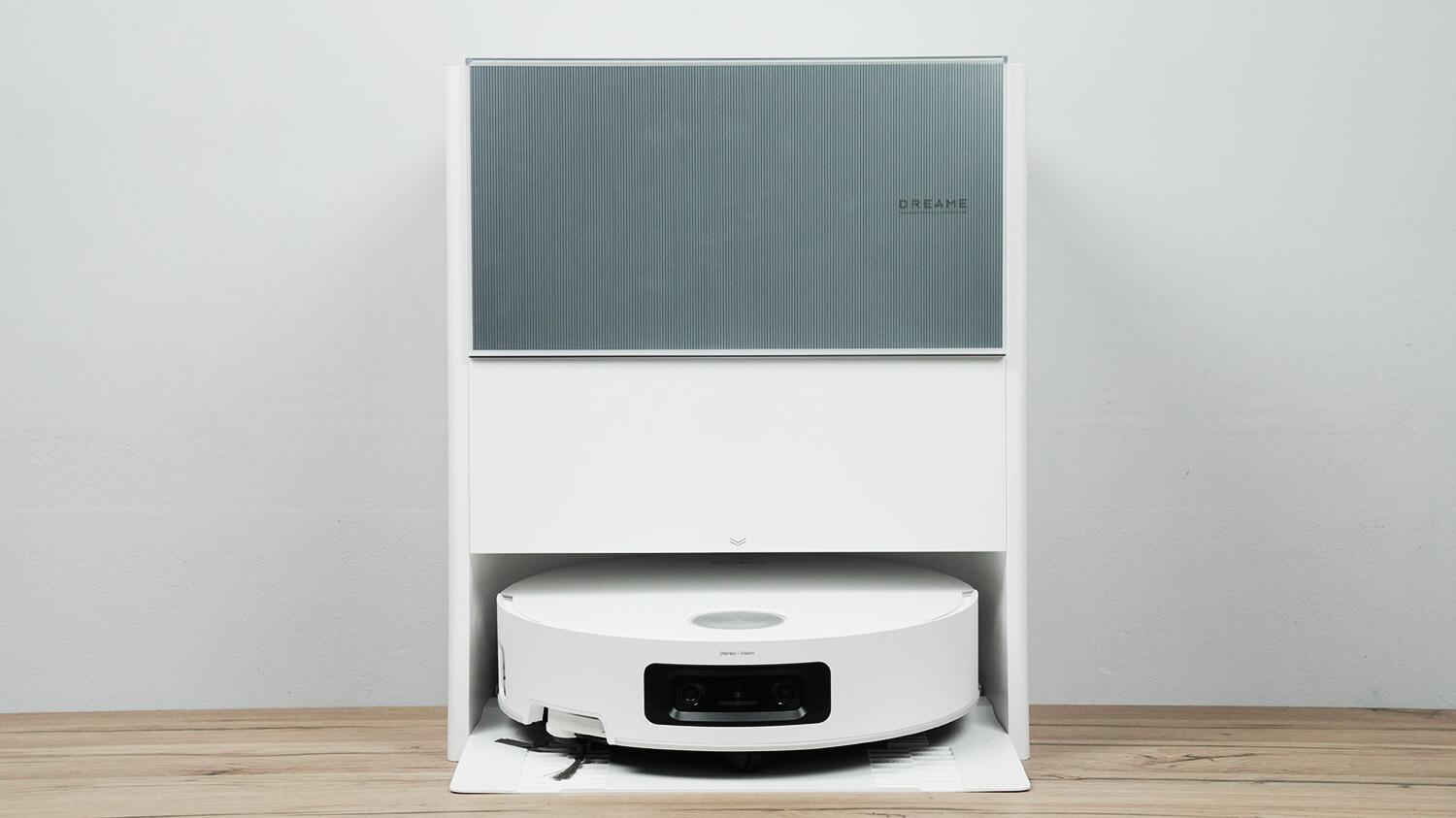
Robot at the station
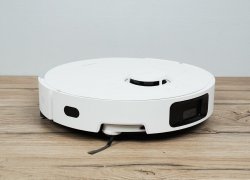
The robot vacuum cleaner itself is round, with a body height of 120 mm with the lidar sensor extended and 97.5 mm with the lidar sensor retracted. This is another feature of the robot, allowing it to clean within standard 10 cm gaps under furniture.
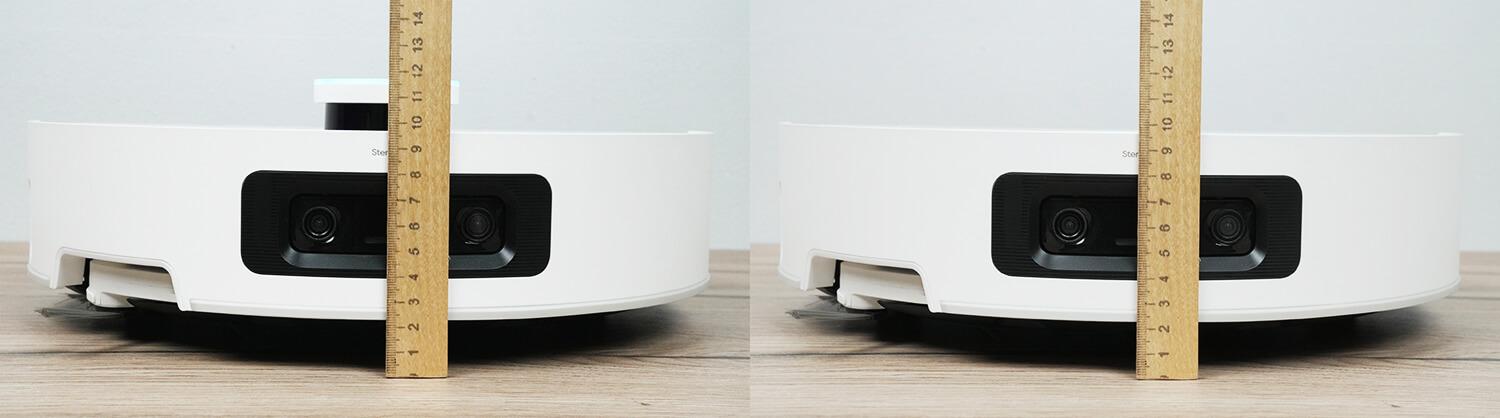
Body height
A wall sensor is mounted on the right side of the bumper. It is also used to avoid obstacles on the floor, such as wires and other small objects.
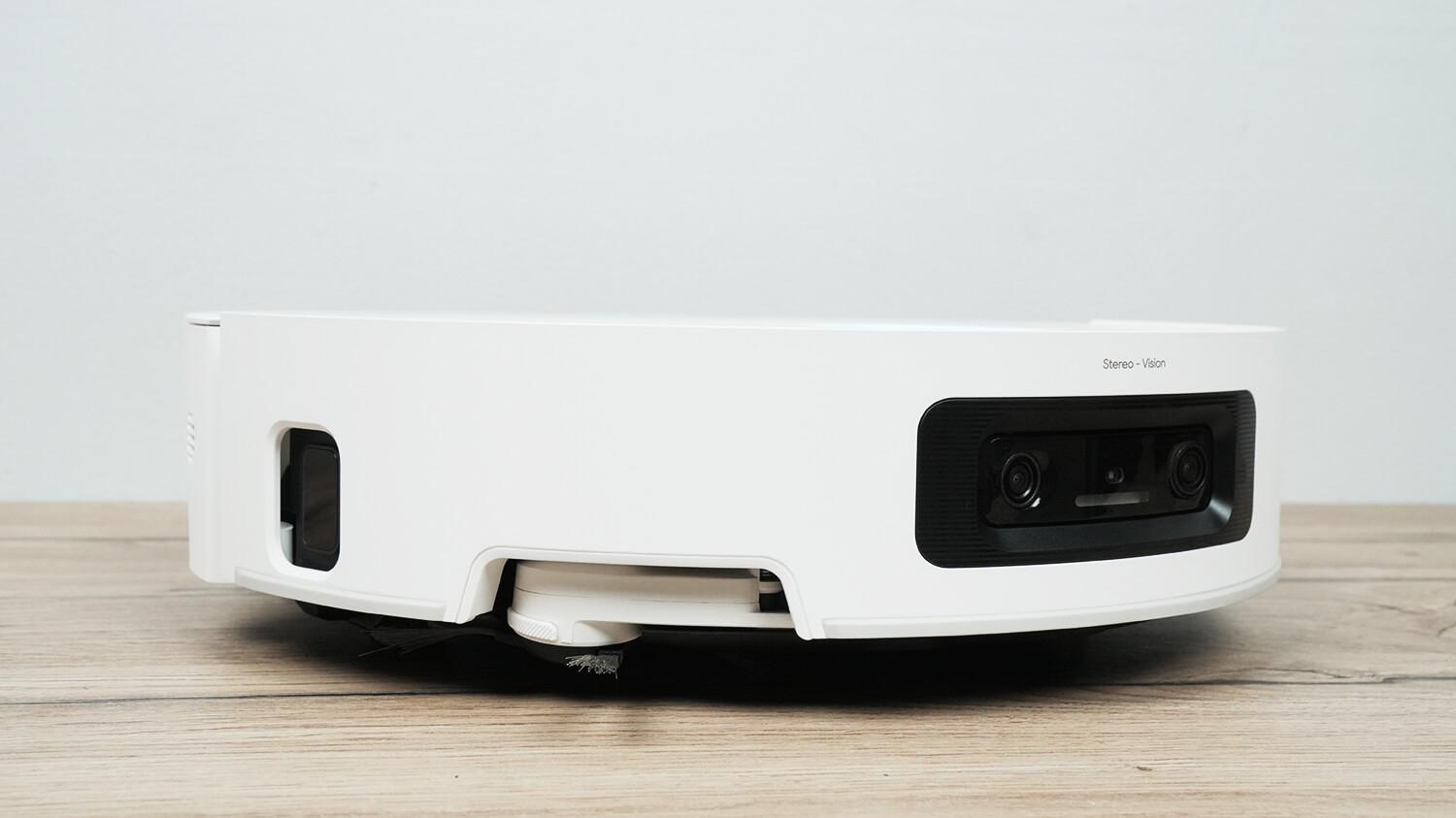
Side view
A new navigation system called Stereo Vision is located in the center. It features two illuminated cameras. Smart obstacle avoidance is claimed to be powered by NVIDIA and features self-learning artificial intelligence, whose database already includes 240 object types.
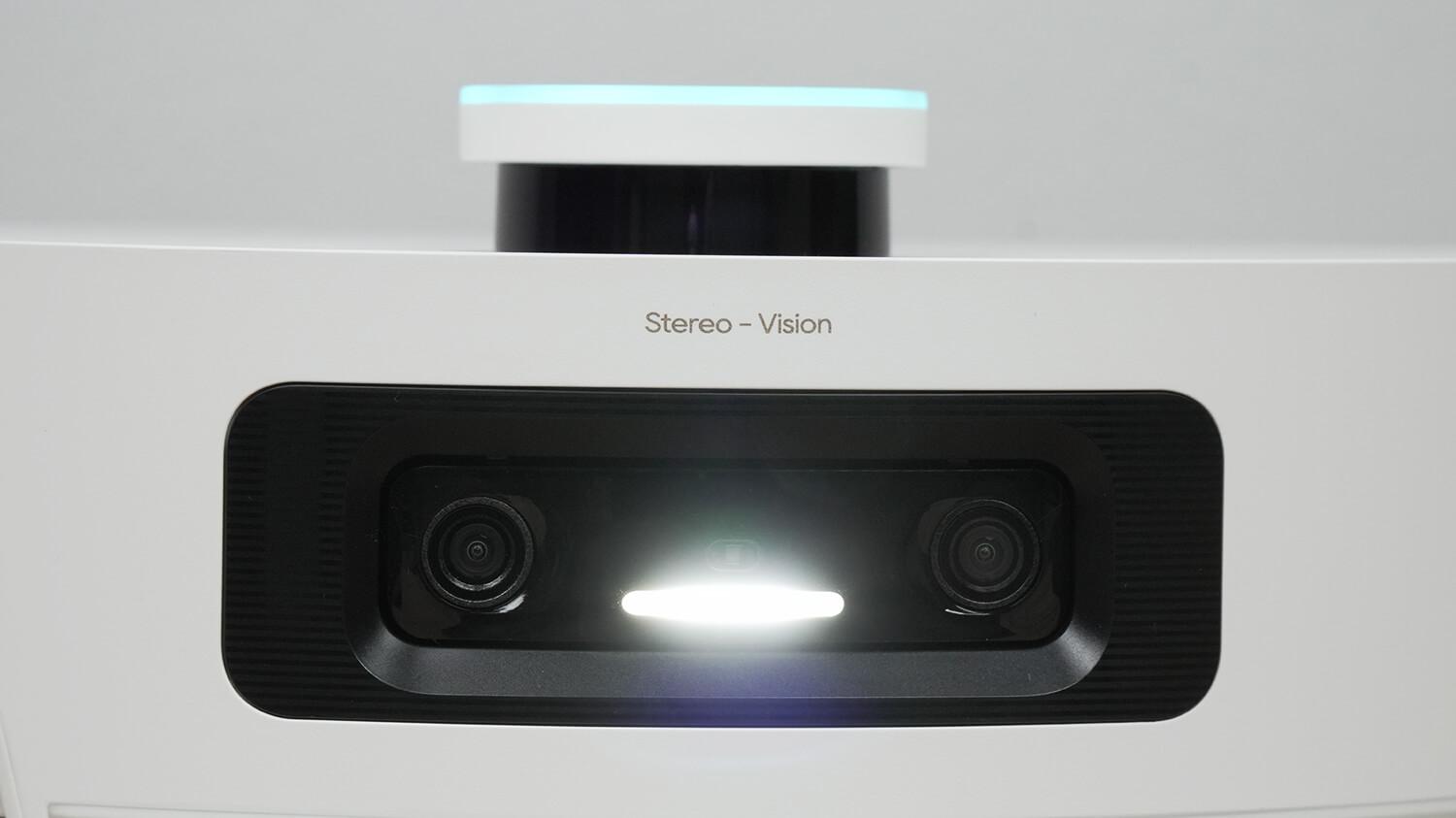
Recognition of illuminated objects
In addition, the robot's camera allows you to remotely monitor your home via your smartphone.
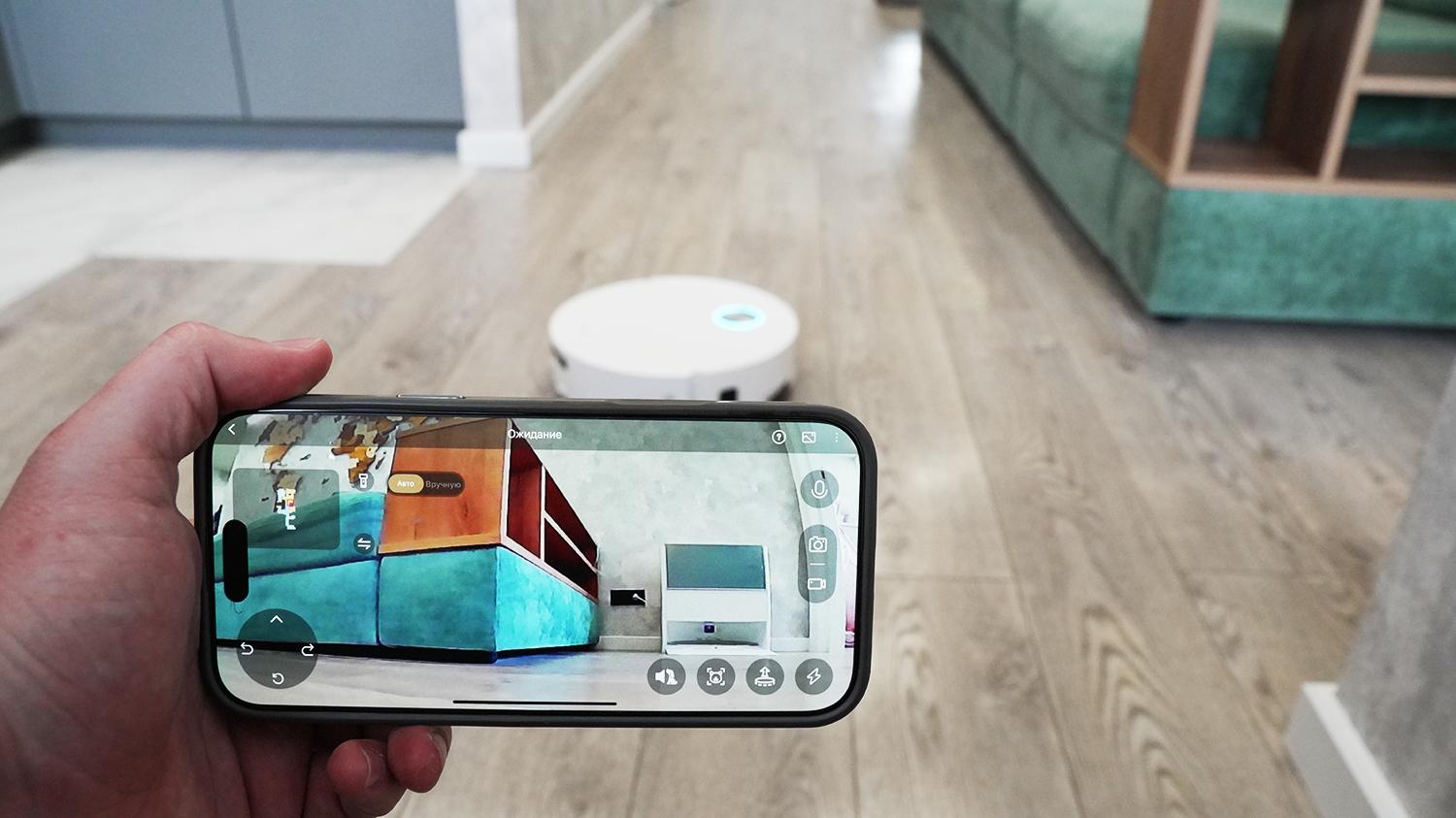
Remote home monitoring
The lidar has no spring-loaded cover, as it retracts into the body, making one likely unnecessary. Three microphones for the "Ok, Dreame" voice assistant are located on top, along with two mechanical control buttons.
The dust collector is located under the top cover, which is held in place by magnets. A QR code for connecting the robot to a Wi-Fi network is located nearby.
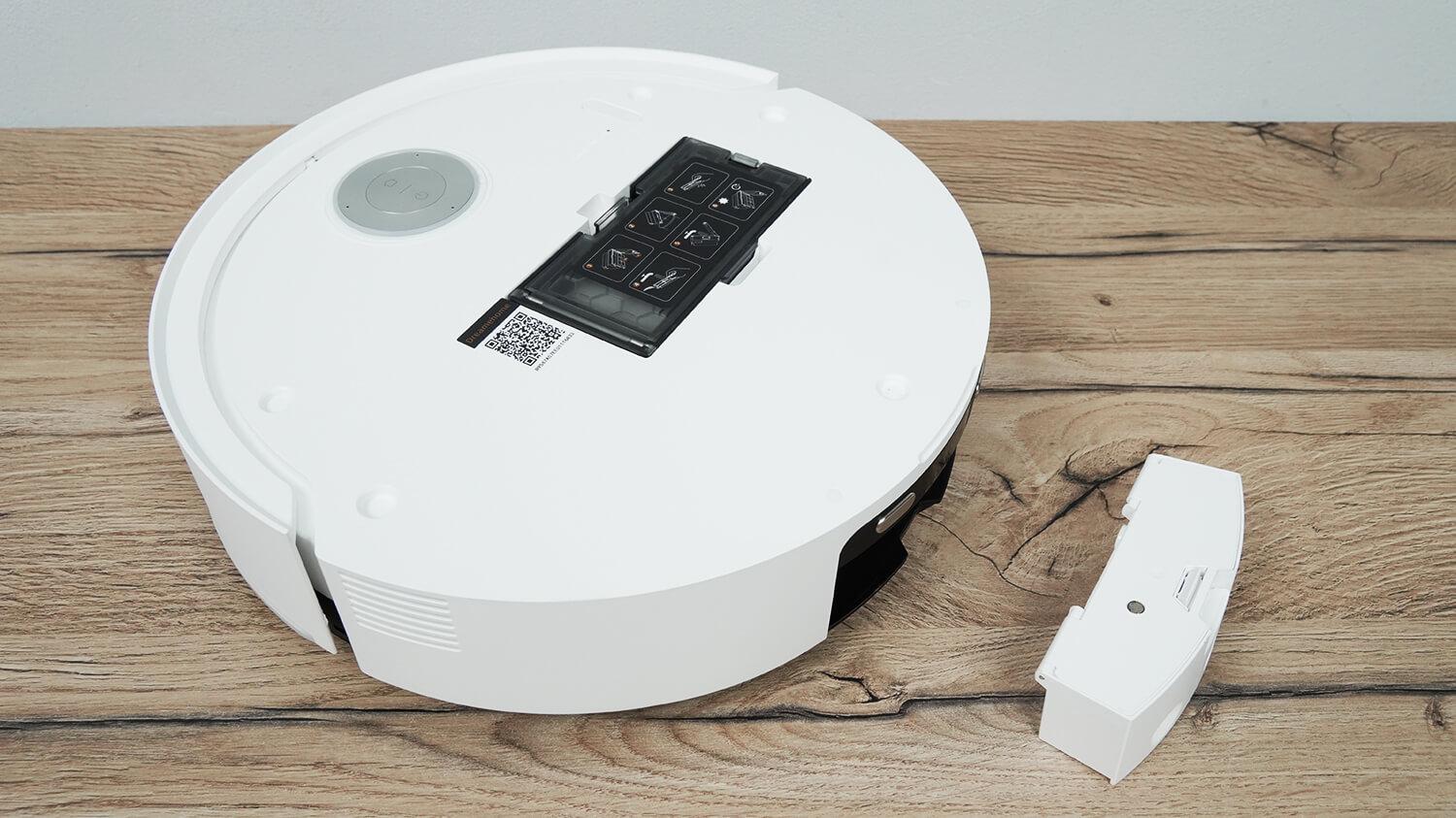
Location of the dust collector and dirty water tank
We see that the container and filter can be washed with water. The dust container capacity is small, only 220 ml. Only a HEPA filter is installed inside.
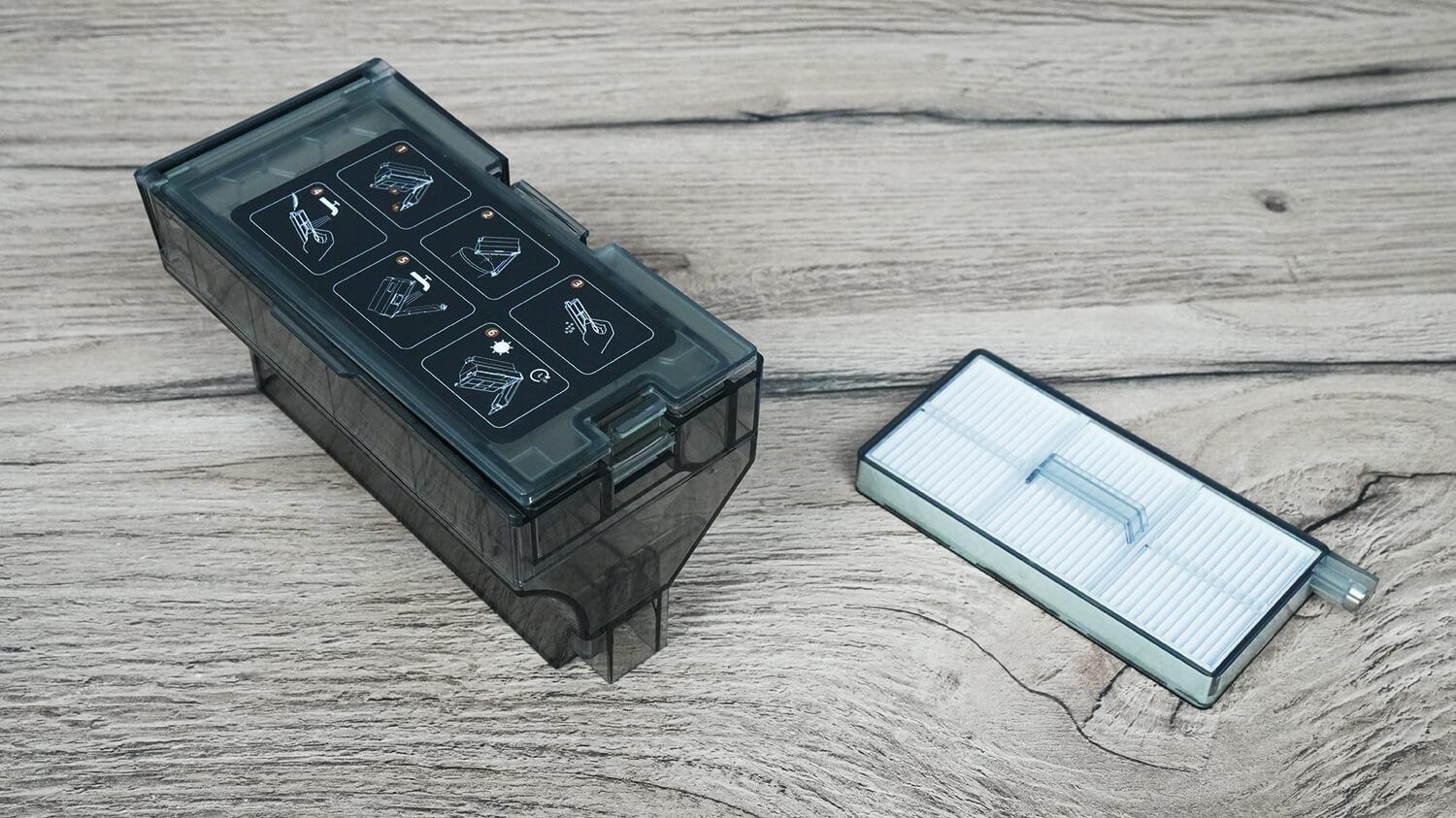
Filtration system
The rear of the robot houses a dirty water tank with a separate tube that transfers clean water to a separate clean water tank hidden inside the robot. The dirty water tank is where the liquid from the roller is squeezed out during self-cleaning with clean water. Its capacity is 140 ml, while the clean water tank holds 100 ml.
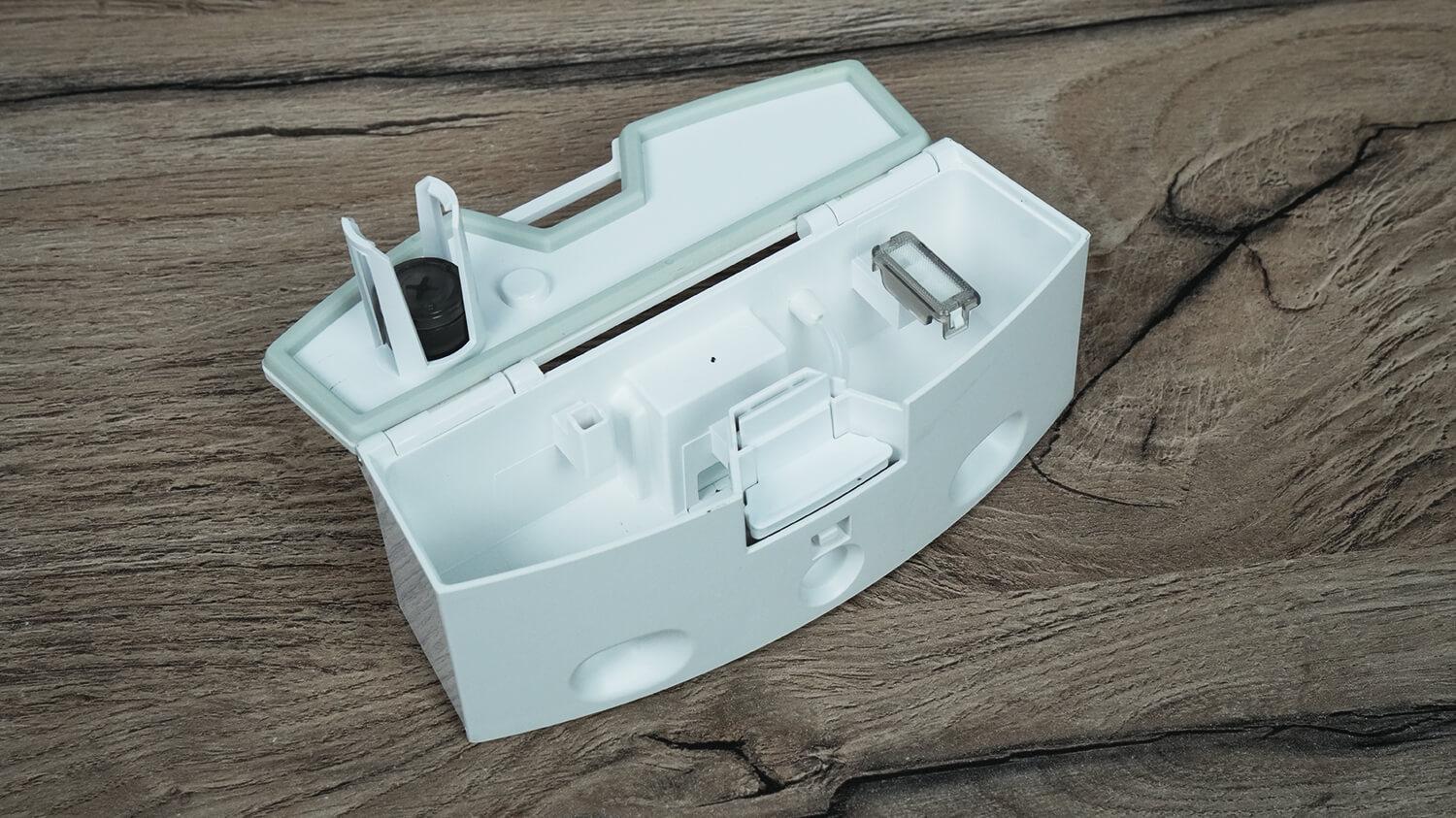
Dirty water tank
The robot's underside is equipped with four anti-fall sensors and a carpet detection sensor. It has a single, three-beam side brush secured with a screw. The brush extends into corners for thorough sweeping.
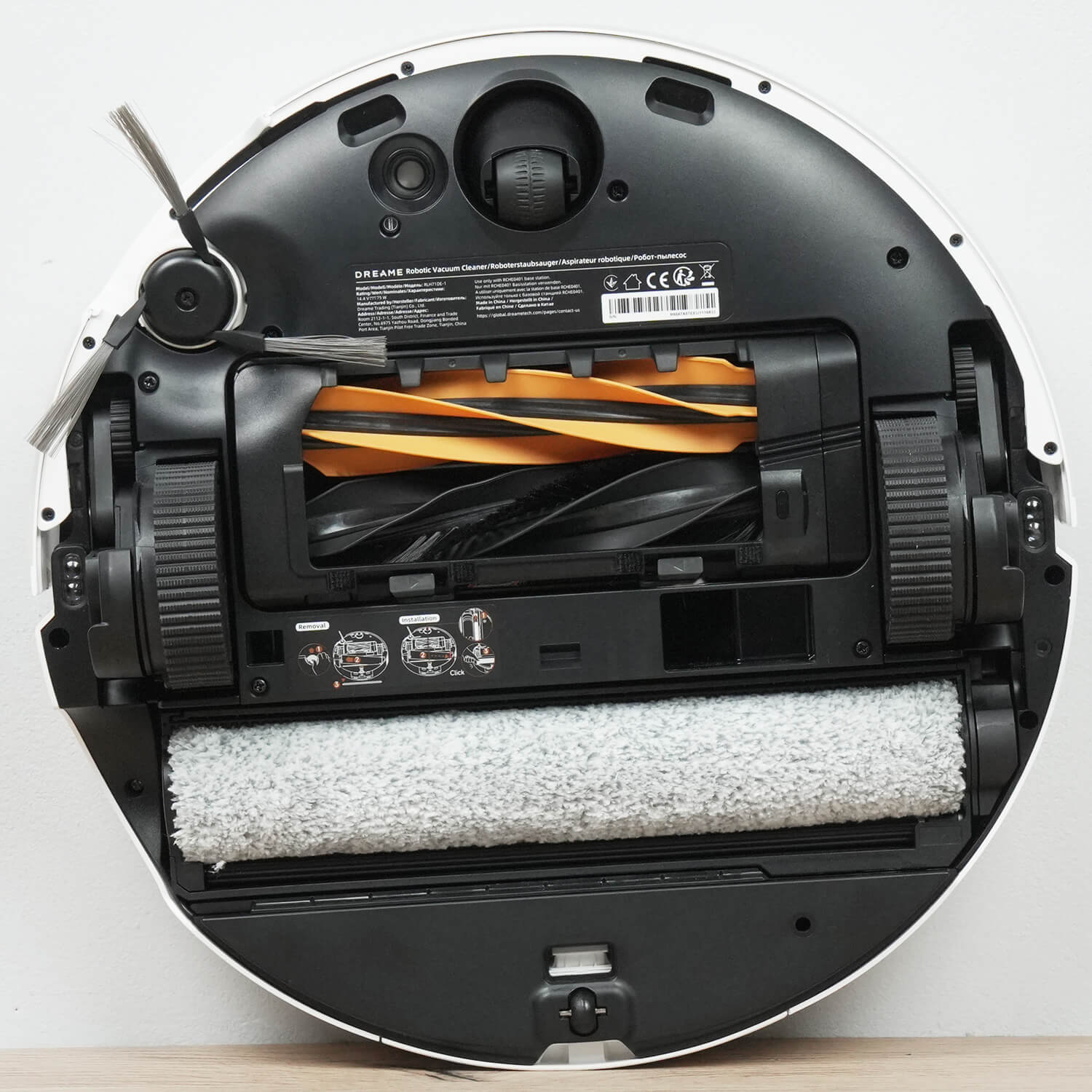
Bottom view
The robot's wheels deserve special attention. They are equipped with an additional mechanism for lifting the body, allowing the robot to overcome obstacles up to 8 cm high. This means two-level thresholds (4 cm + 4 cm). The body can also be raised when cleaning on carpets, if you enable this setting in the app.
The central brush assembly is already familiar. It features dual HyperStreamT™ turbo brushes, which have proven themselves in the previously released Dreame X50 Ultra Complete and Master, as well as the Dreame L40s Pro Ultra, which were also reviewed.
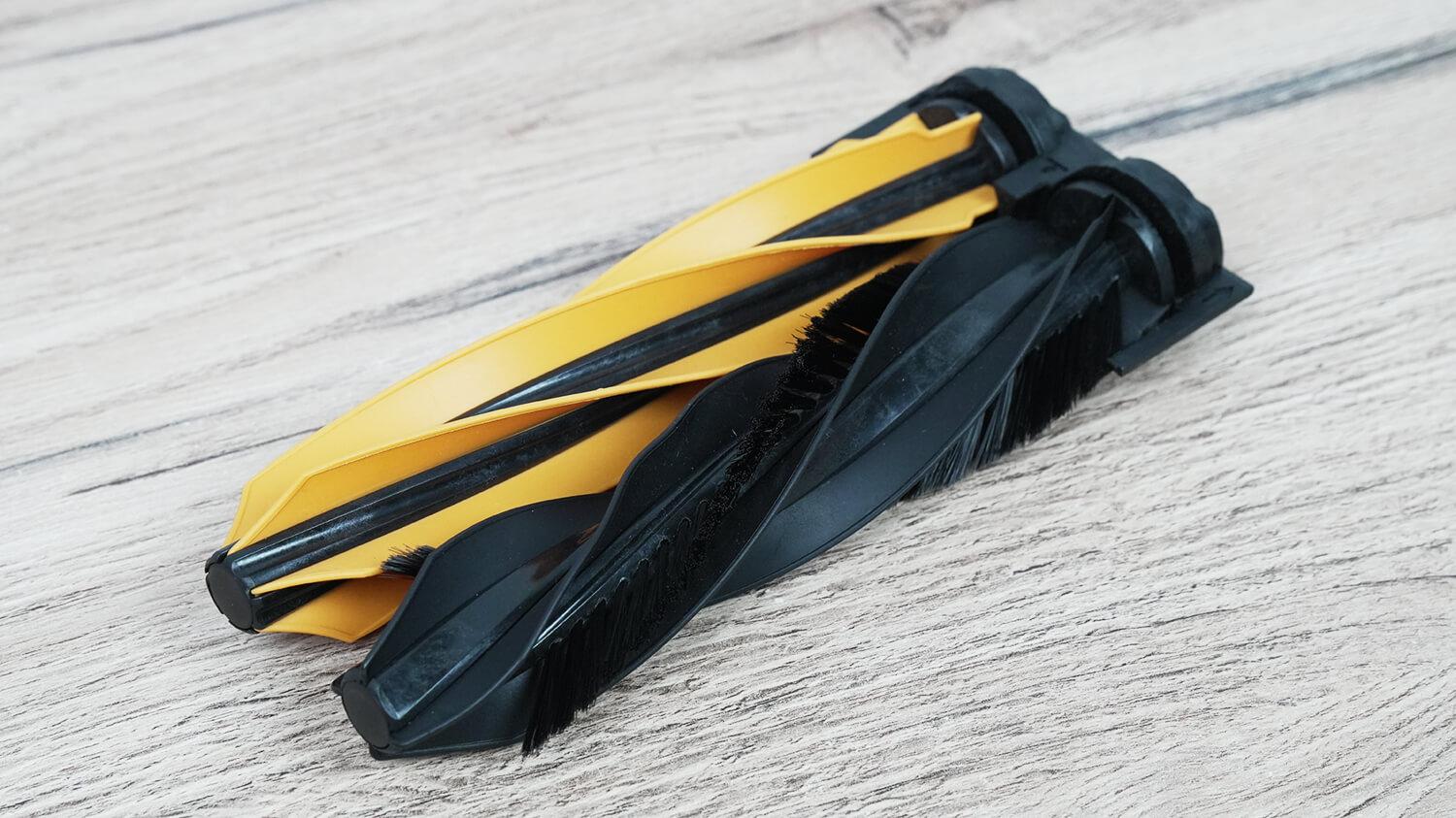
Central brushes
The brush assembly is floating and can also automatically rise, along with the side brush, when washing the floor. The front orange brush is silicone, while the rear black brush has bristles and petals. They are held in place by spokes. The end is tapered, allowing for the release of tangled hair and fur as it rotates.
Well, and probably the most interesting thing about the robot’s design is its cleaning roller.
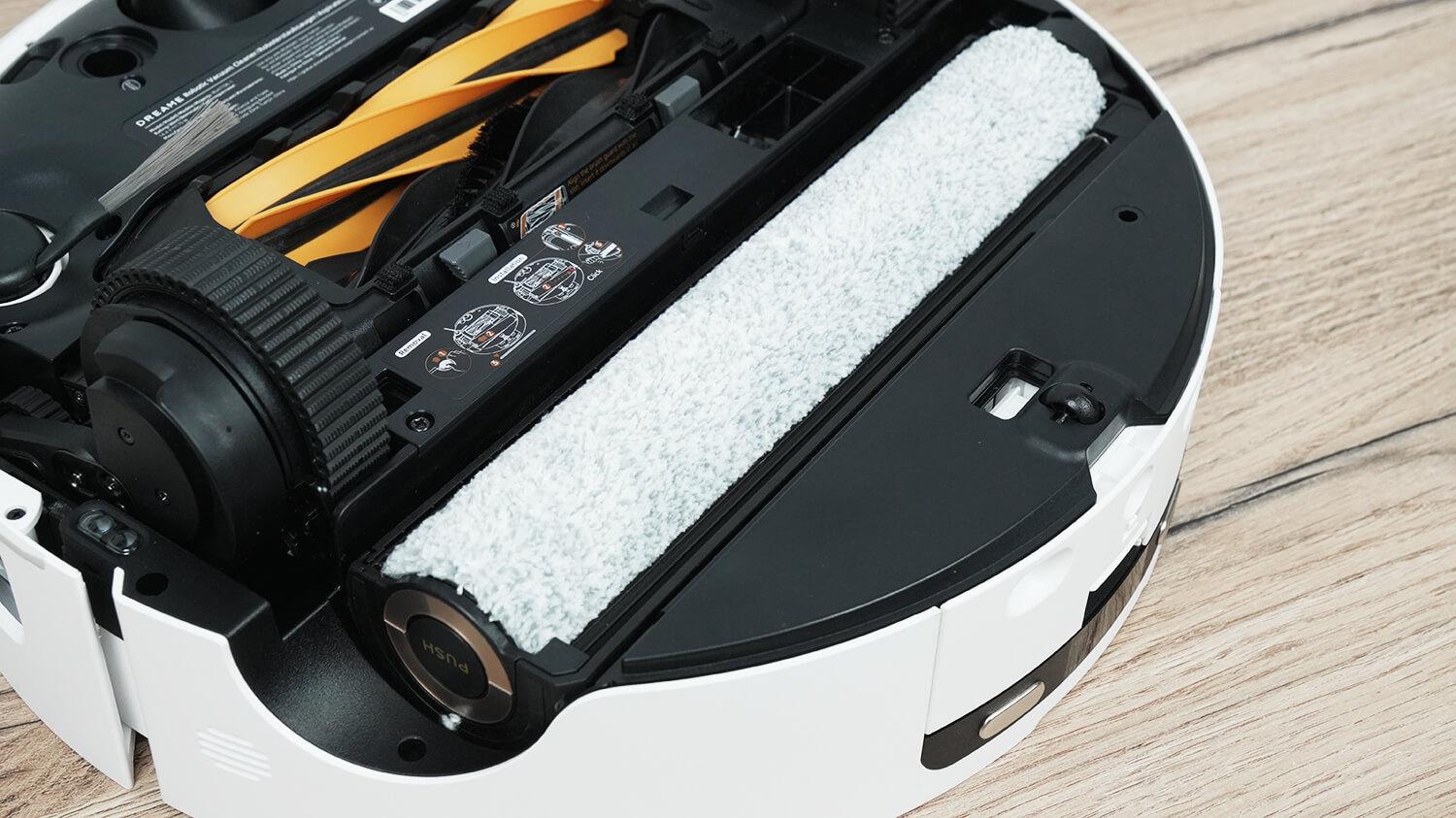
Washing module
The locking mechanism is released from the side by pressing the PUSH button. The roller itself is mounted on a cross-shaped holder, similar to the one found on Dreame vertical washers.
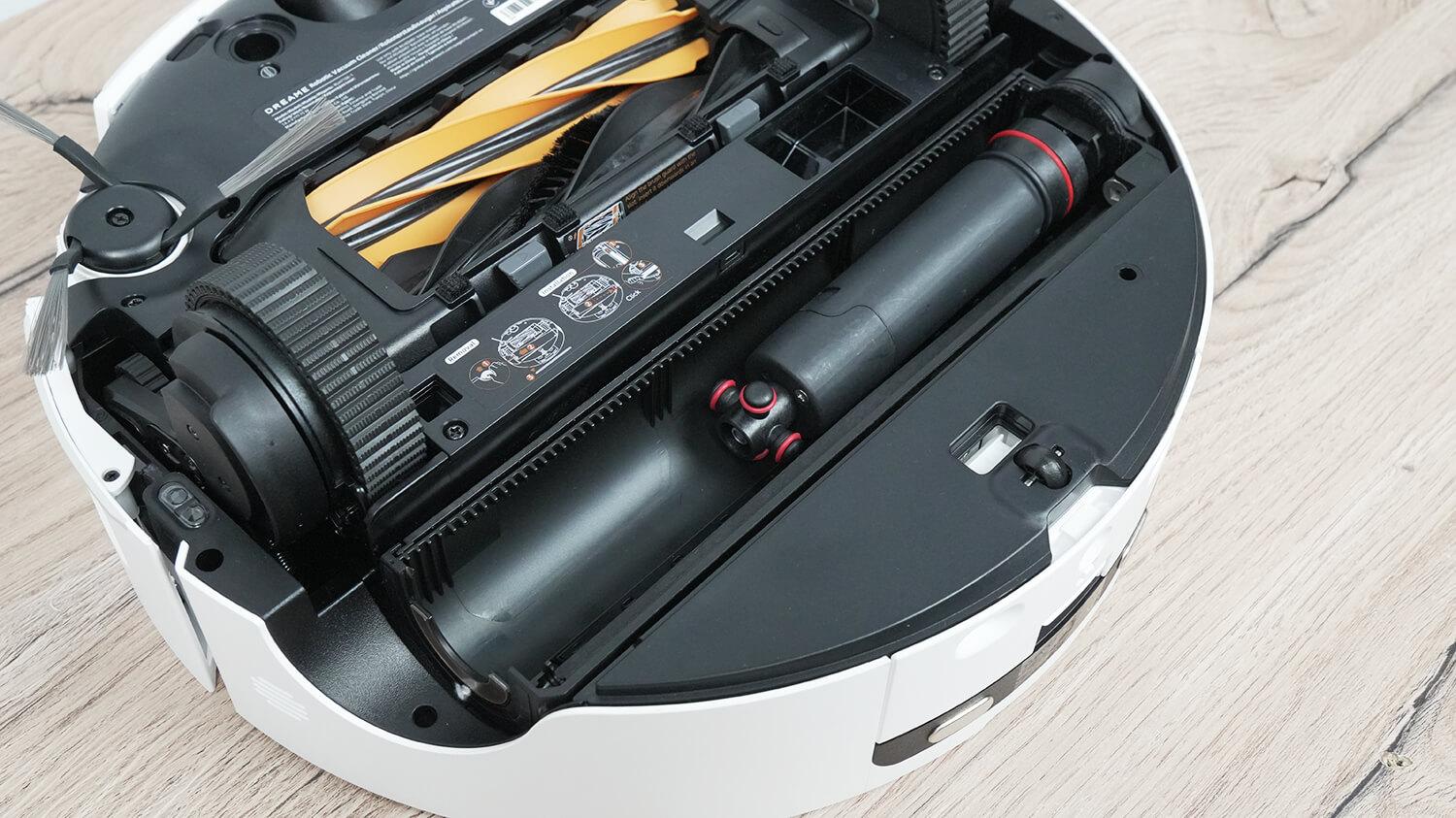
Roller holder
The roller is a traditional design—it's covered in soft, fluffy bristles. Next to it is a silicone roller, which fluffs the fibers of the main roller by rotating in the opposite direction, preventing them from clumping.
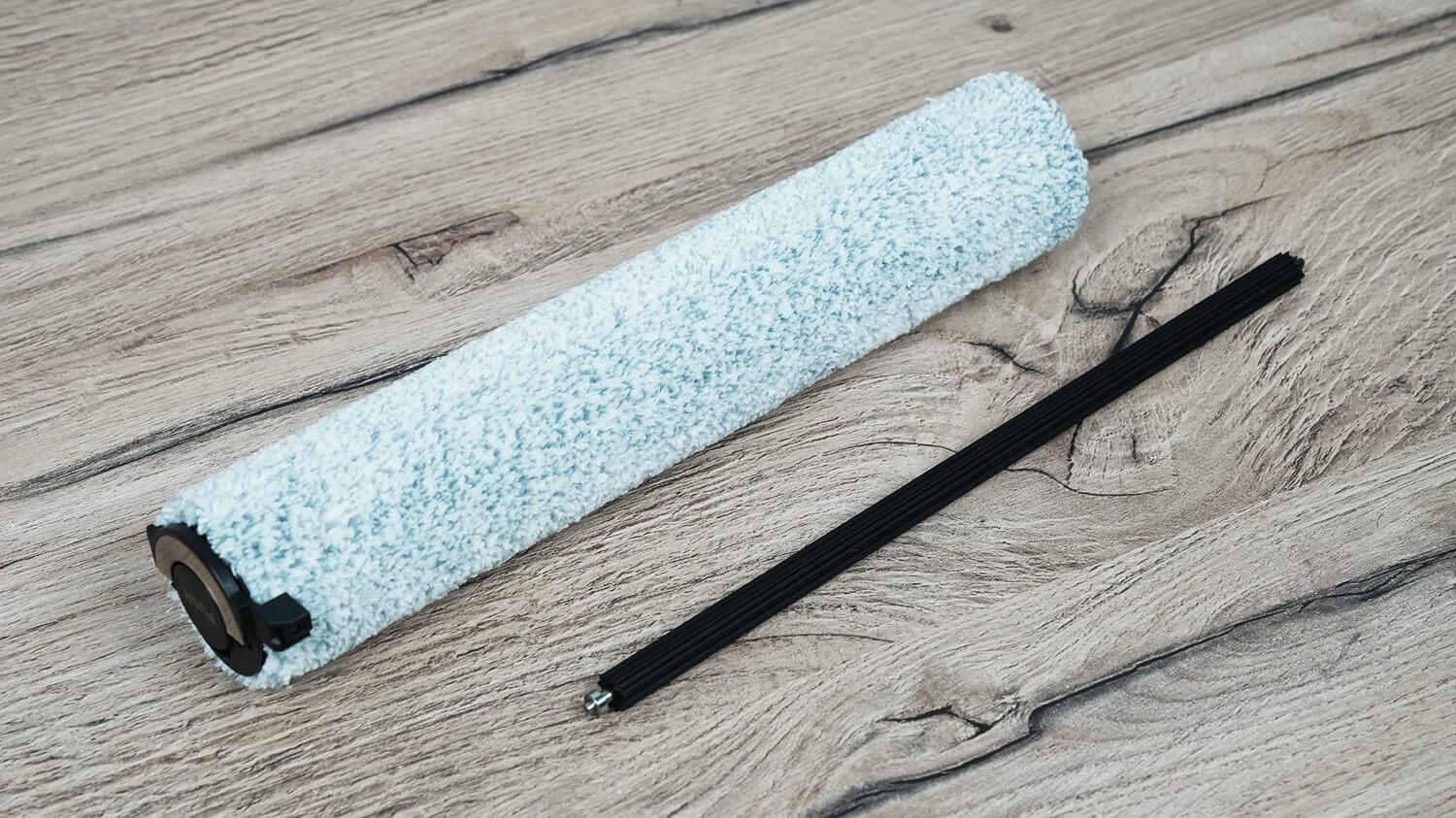
Lint and silicone roller
We also see a comb for untangling the roller from wound hair and wool.
This roller can automatically rise 14 mm when placed on carpets, closing with a special cover that completely prevents the wet pile from coming into contact with the carpet. A very cool solution. And, as befits top-of-the-line products, the roller extends to the edge of the housing to thoroughly clean areas along walls and furniture.
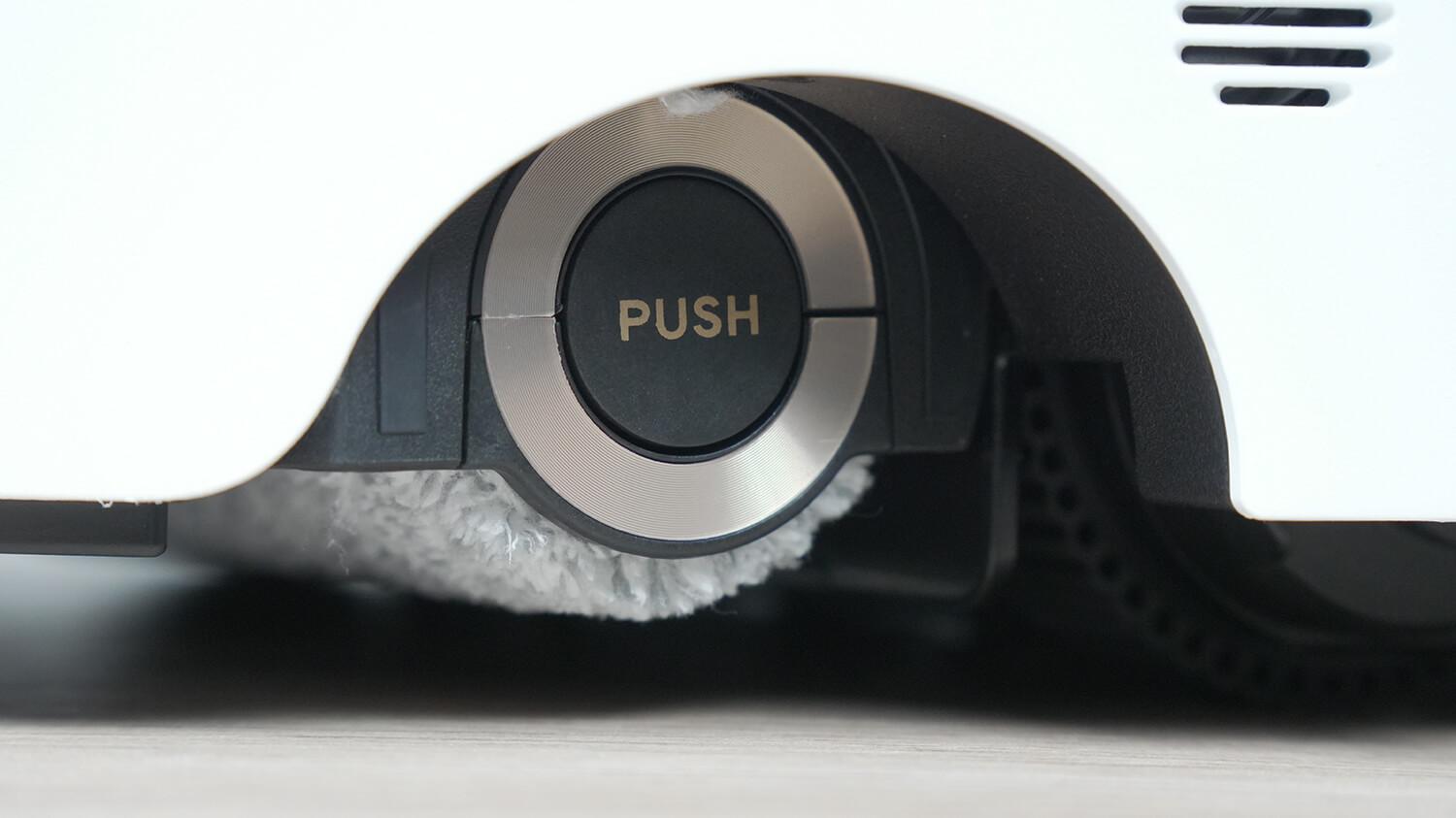
Roller lift
I will also add that the roller’s downforce reaches 11 Newtons, and the rotation speed is 100 revolutions per minute.
Now that we've covered the robot, let's take a look at the station. Here, the Dreame Aqua 10 Ultra Roller Complete charges, self-cleans the dust bin, rinses the roller with hot water heated to 100 degrees Celsius (212 degrees Fahrenheit), automatically mixes in detergent, dries the roller with hot air reaching 70 degrees Celsius (158 degrees Fahrenheit), and even dries the dust bag with air heated to 50 degrees Celsius (122 degrees Fahrenheit) after the cleaning cycle.
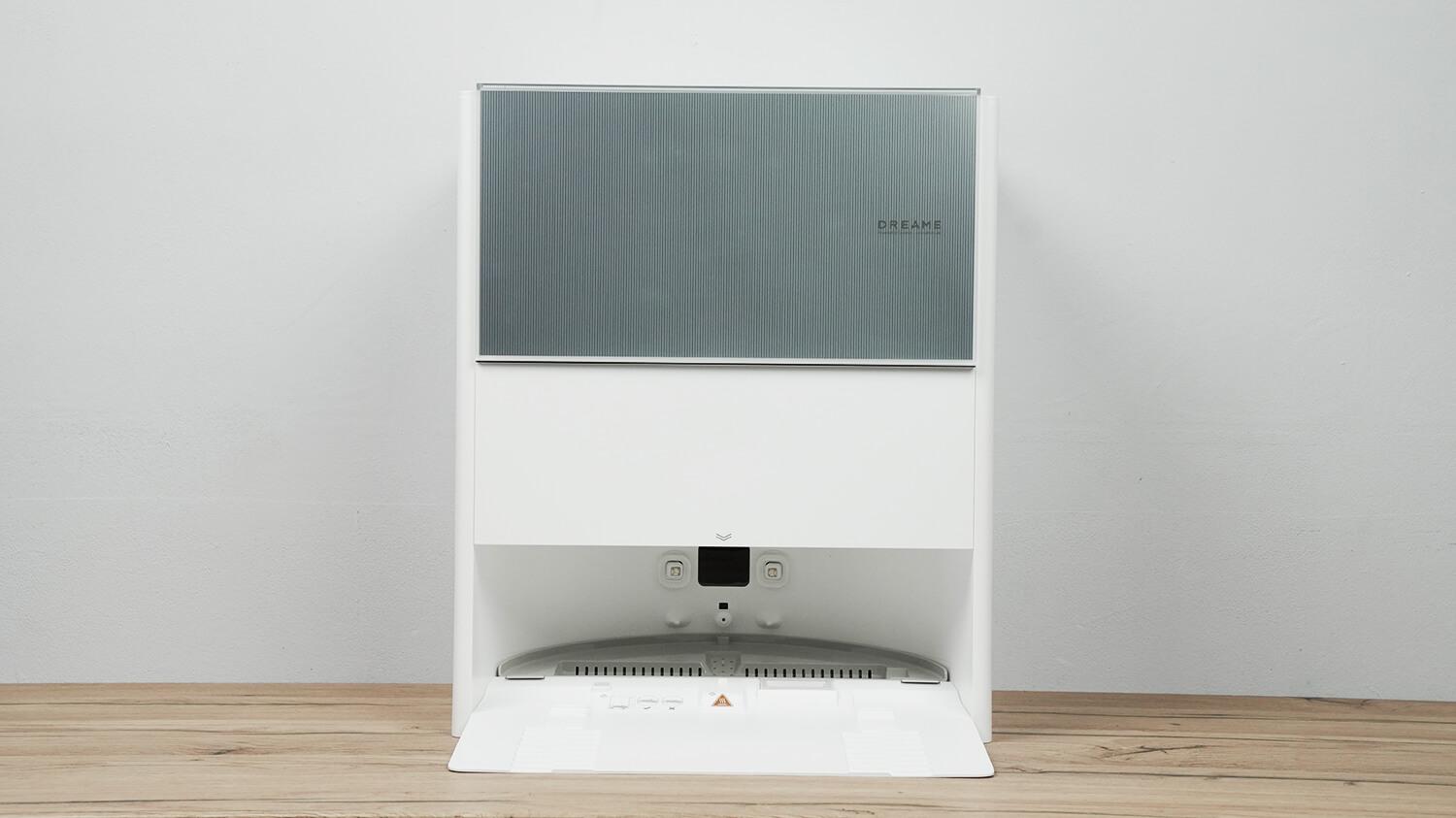
Station
The station can also automatically detect the roller's level of contamination to re-rinse it, and, crucially, it can be connected to the sewer and water supply by purchasing the appropriate module, called RAW8.
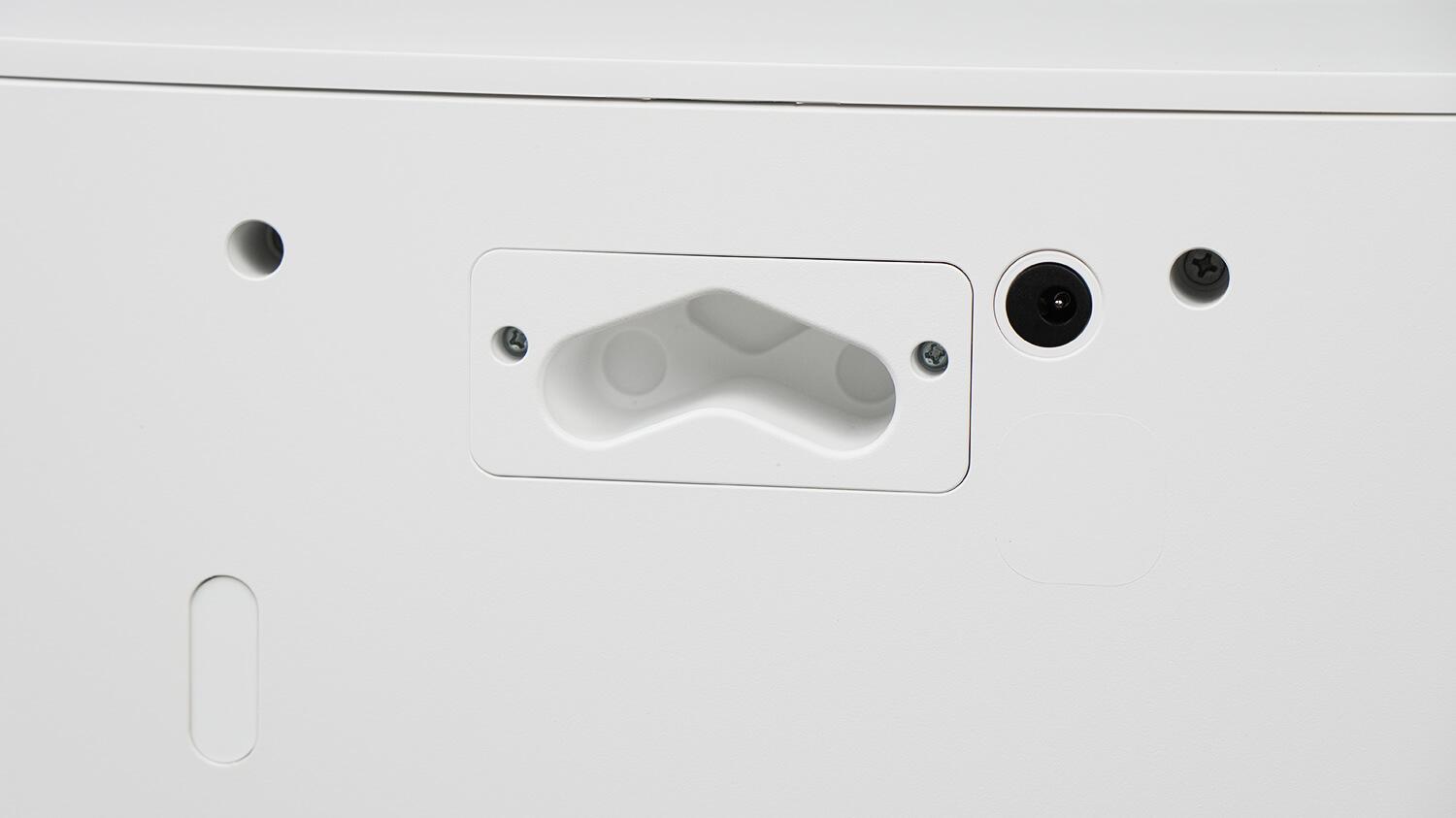
Bends for connection to sewerage and water supply
Let's go over the main components. The robot's access ramp is removable. The roller wash tray is also removable. A plate is installed underneath it that heats the water used to clean the roller. The location of the self-cleaning waste chute has been changed. Waste is now discharged through the bottom.
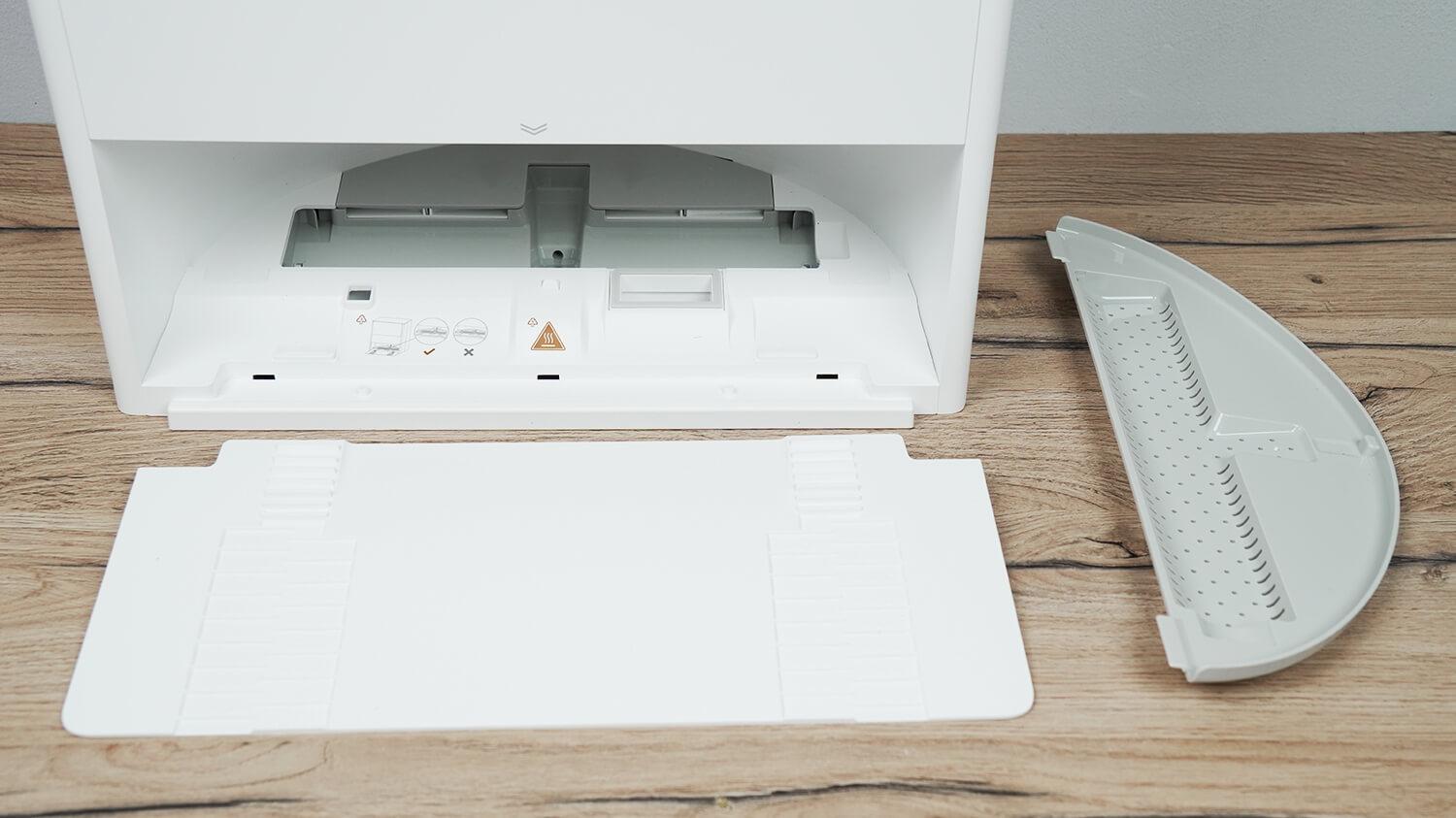
Removable drain and tray
Under the white cover in the center of the station there is a garbage bag and a detergent dispenser.
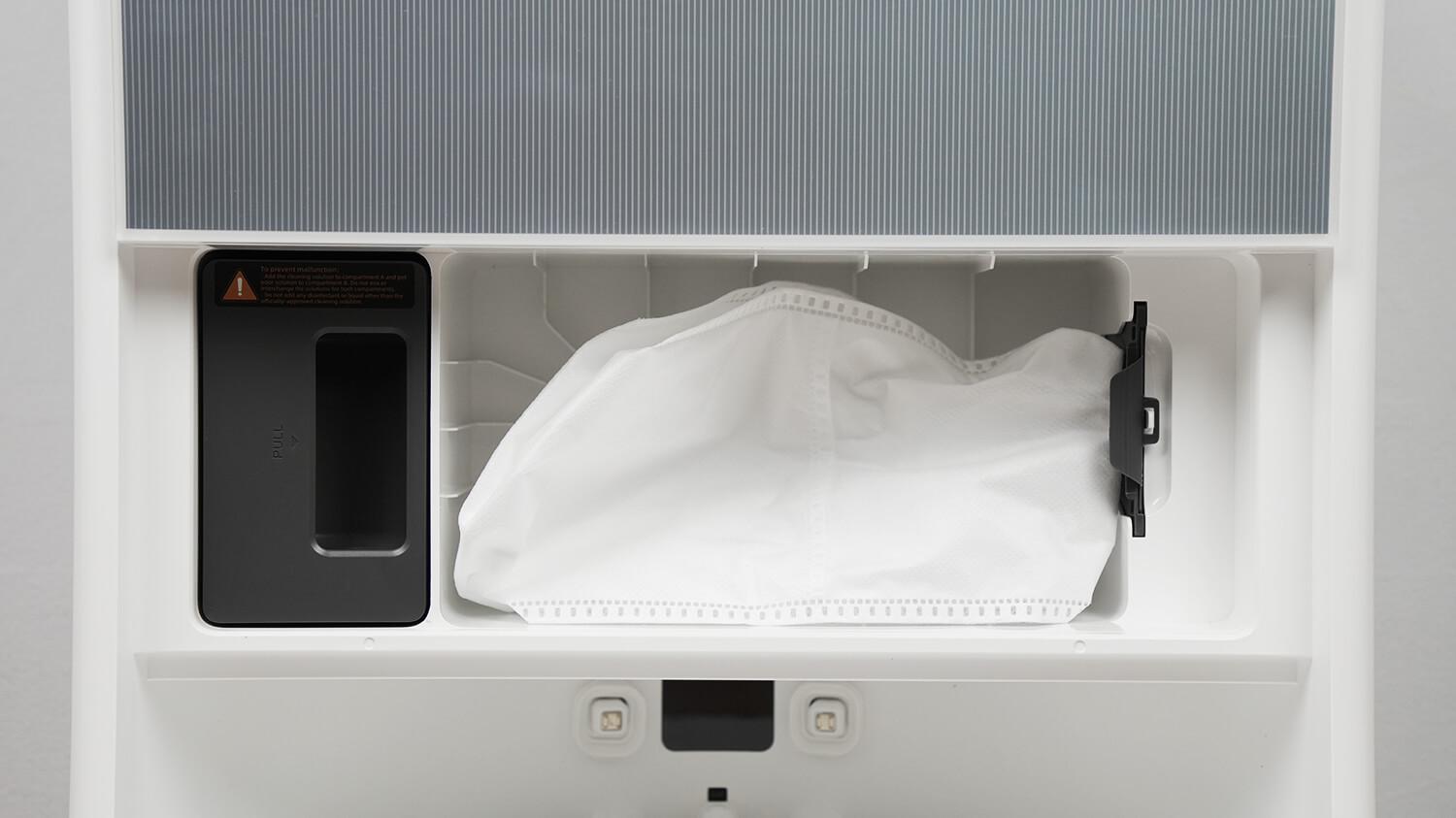
Location of detergent dispenser and garbage bag
The bag is still standard, but the detergent container has been updated. It now has two compartments: one for regular detergent and one for eliminating pet odors.
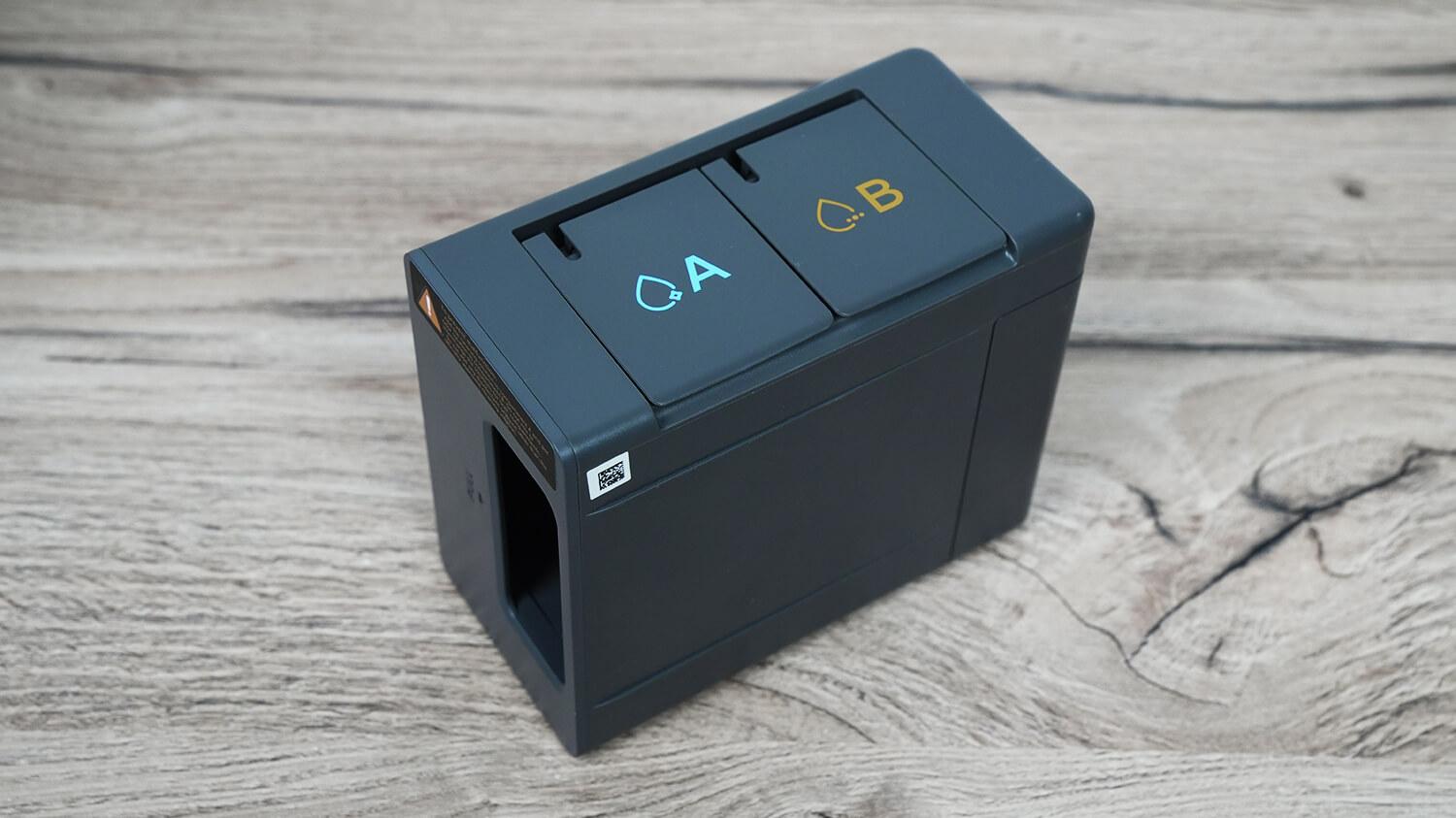
Two-compartment detergent container
Located under the lid on top are the clean and dirty water tanks, with capacities of 4 and 3.5 liters, respectively. They are of the standard design. There is no scale inhibitor in the clean water tank.
As a result, we see that we've updated a lot. I'll discuss all the pros and cons of the design after testing, when I summarize the results. Let's move on!
Technical specifications
The main characteristics of the Dreame Aqua 10 Ultra Roller Complete, as stated by the manufacturer, are displayed on the screen:
Robot vacuum cleaner:
- Li-Ion battery 6400 mAh.
- Suction power up to 30,000 Pa.
- Dust collector 220 ml.
- Clean water tank 100 ml.
- Dirty water tank 140 ml.
- Obstacle clearance up to 80 mm.
- Dimensions: 350*120/98 mm.
Station:
- Clean water tank: 4 l.
- Dirty water tank: 3.5 l.
- Bag in station: 3.2 l.
- Dimensions: 420*440*505 mm.
The increased suction power stands out here, which will be verified in tests. The other characteristics haven't changed much.
Functional capabilities
Speaking of features, the Dreame Aqua 10 Ultra Roller Complete is controlled via the proprietary Dreamehome app. Connecting to the network is seamless, with no regional blocking or workarounds. The app is in Russian, and the robot itself also speaks Russian. Everything is user-friendly and intuitive. After connecting, you'll be prompted to update the firmware to the latest version. Interestingly, the robot and station can now be updated separately.
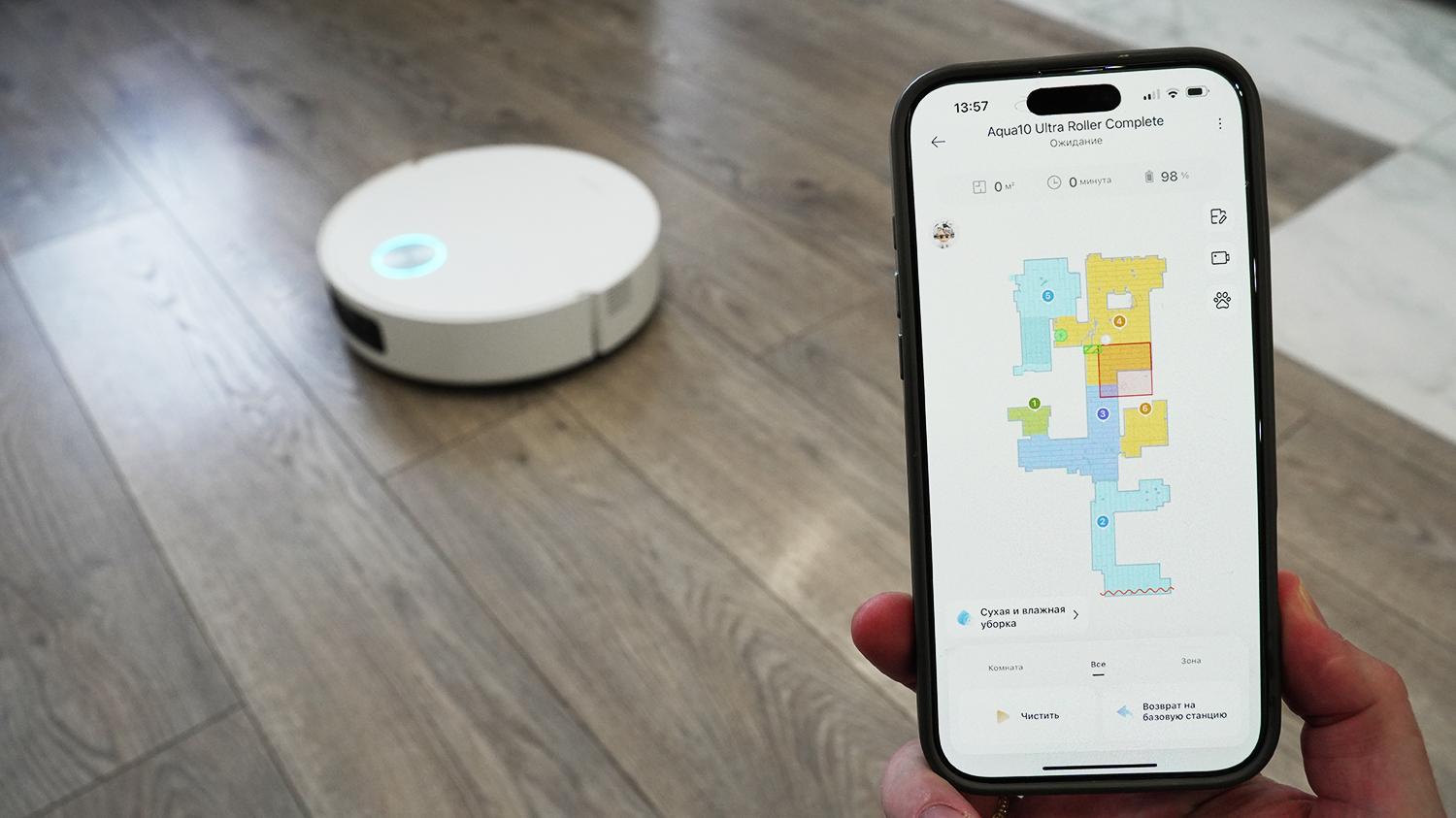
Control via app
The main functions are displayed on the screen. New features are highlighted in bold:
- Self-cleaning dust collector.
- Rinsing the roller with hot water (100°C).
- Drying the roller with warm air (70°C).
- Drying the garbage bag in the station (50°C).
- Automatic addition of detergent.
- Lifting the roller, side and central brush.
- Side brush extension in corners.
- Lidar entering the body.
- Raising the body to overcome rapids.
- Body lifts on carpets.
- Recognizing objects on the floor.
- Camera illumination in low light conditions.
- Remote home monitoring via smartphone.
- Saving multiple cleaning maps in memory.
- 3D map of the room.
- Automatic zoning of premises into rooms.
- Selecting areas and rooms for cleaning.
- Virtual walls and no-go zones (and for wet cleaning mode).
- Suction power adjustment.
- Setting the frequency of roller cleaning.
- Adjusting the roller pressure on the coating.
- User mode.
- CleanGenius mode.
- Spot recognition.
- Cleaning behind the curtains.
- Cleaning log.
- Setting up cleaning according to a schedule.
- Automatic power increase on carpet.
- Carpet cleaning in wet cleaning mode.
- Automatic protection of the roller from contact with carpets.
- Yandex.Alice support.
- Support "Ok, Dreame"
- Dynamic cleaning of an area with obstacles.
New features include in-station trash bag drying, automatic body lift on carpets, adjustable roller pressure on flooring, and an automatic roller cover. This is in addition to the already extensive set of functions for flexible cleaning settings. It's encouraging that the brand is constantly improving functionality and introducing new features to its robots. Let's keep moving forward!
Testing
A detailed video review of the Dreame Aqua 10 Ultra Roller Complete, including all tests, has already been prepared and published on the channel:
Navigation
And finally, let's move on to the tests. First, we'll test the robot's navigation in a room with obstacles. After leaving the station, it navigated the perimeter of the room, recognizing and carefully navigating around the legs of a dryer. It then began cleaning the entire accessible area in a serpentine pattern. It swept around the legs of a table and a box, then returned to the station. The mirror introduced no errors in the map. The test was successful!
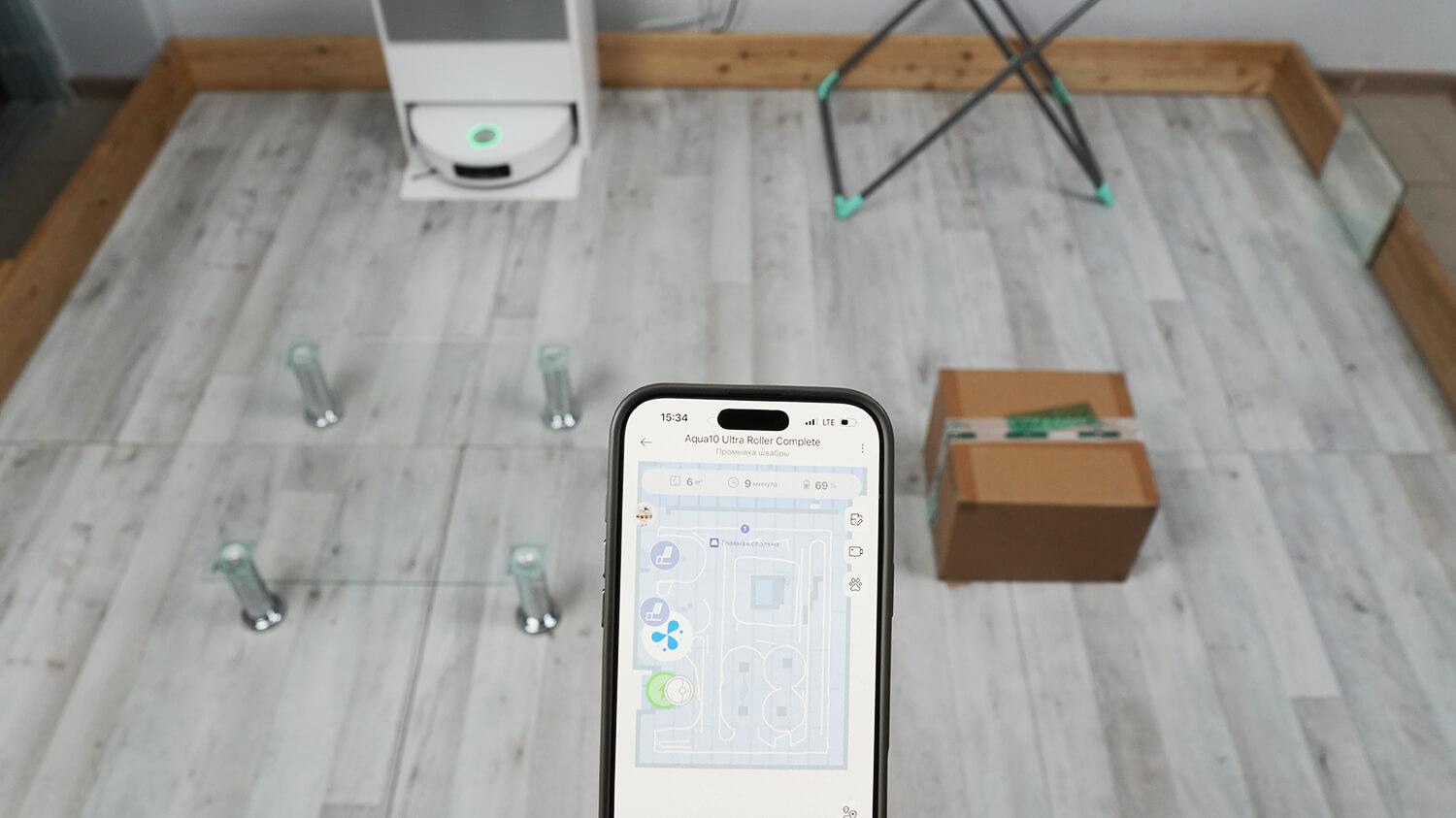
Navigating an Obstacle Room
Speaking of navigation within the house, the robot vacuum cleans room by room, following the perimeter, then in a serpentine pattern. After each room, as I've determined, it returns to the station and rinses the roller, then resumes cleaning from where it left off. There are no uncleaned areas; this model has excellent navigation!
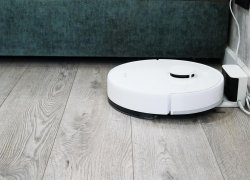
Passing under low furniture
The minimum height at which the robot can drive was also tested. Given the robot's height with the hidden lidar sensor at 98 mm, I created a 10 cm gap, and this led to a very strange situation. The robot managed to enter this gap once, but didn't cover the entire accessible area. Then, after several attempts and even with the lidar concealment area manually set, the robot failed to enter this gap, even after disabling the collision protection and object recognition systems. Similar reviews of this model are also found online.
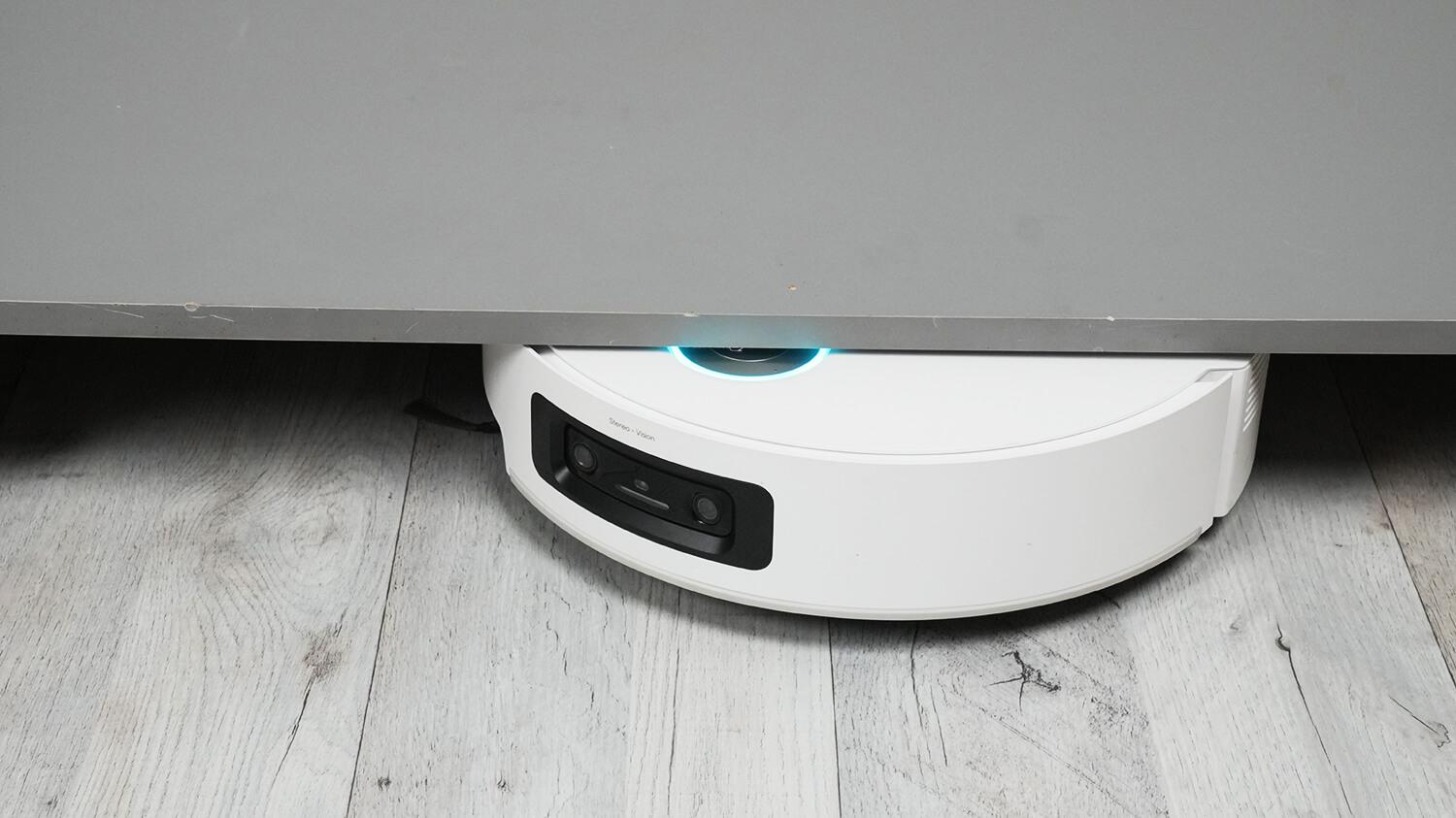
Passing under low furniture
So far, the Dreame Aqua 10 Ultra Roller Complete has issues with 10 cm clearances. I hope a firmware update will fix this, as the robot is physically capable of going under 10 cm of furniture.
Autonomy
I also tested the battery life when running the robot at maximum power with the floor cleaning mode enabled. It lasted 102 minutes, cleaning 72 square meters of usable space. In reality, that's just under two full cleanings of a two-bedroom apartment. However, it's worth noting that the cleaning resume mode is enabled after charging at the base, so this model can clean twice as much. Compared to the Dreame X50 Ultra Complete, the Aqua series battery drains faster, as the roller apparently uses more power and has 1.5 times more suction power.
Recognizing objects on the floor
Regarding the object avoidance system, I have some questions. In good lighting, the robot vacuum was able to avoid all six household objects, but failed to recognize the cord and scale. Of the three socks, it only recognized two, even moving the black one. Of the four wires, it recognized and avoided two, moving them slightly, and chewed the other two. Of the six simulated pet surprises, it recognized and avoided all six.
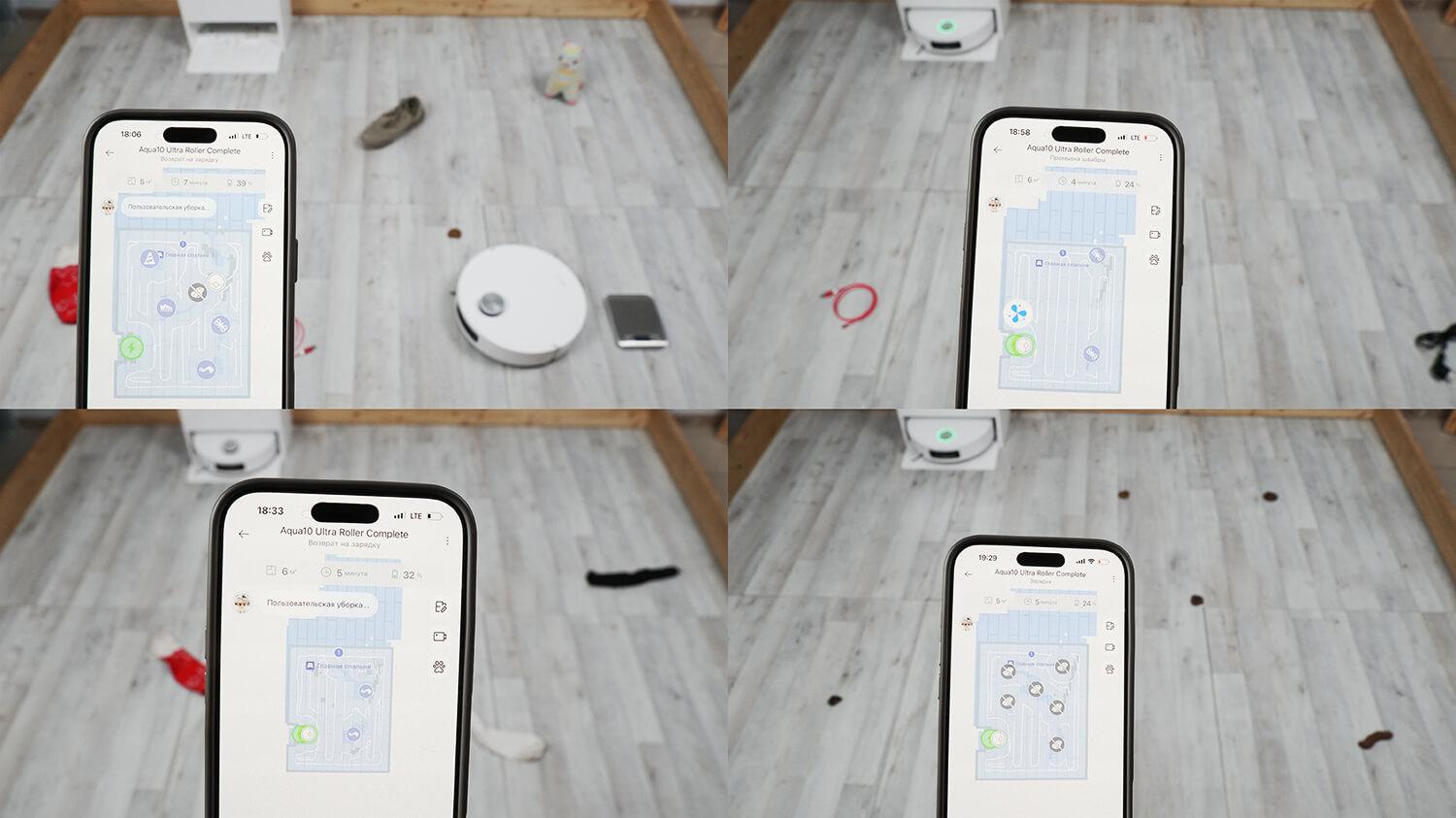
Recognizing objects on the floor in good lighting conditions
In complete darkness, the object avoidance system is somewhat blind. The robot avoided four of the six household items. It didn't recognize them, but did avoid the scale. It did recognize them, but moved the wire, and didn't recognize the imitation pet surprise, so it moved it. It avoided all three socks separately, recognizing two. The black sock wasn't recognized. Of the four wires, it recognized two and avoided them, moving them slightly. It moved one without recognizing it, and chewed another. Of the six imitation feces traps, the robot recognized five, but only avoided three.
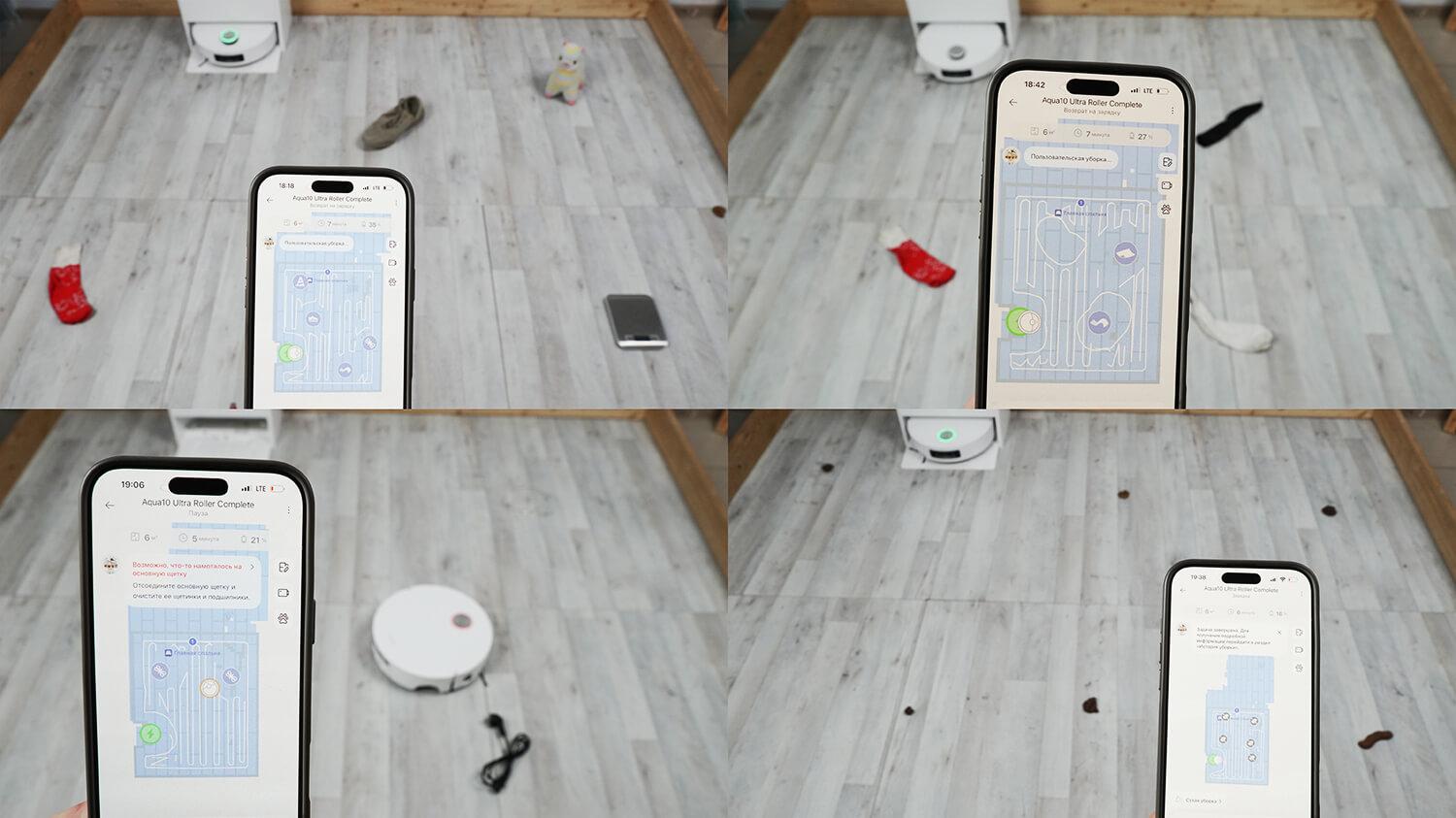
Recognizing objects on the floor in the dark
In general, the object recognition system currently requires some improvement. The predecessor Dreame X50 Ultra Complete It does its job more accurately, so the new navigation hasn't convinced me yet.
I also tested the stain detection feature. The robot recognized a dried ketchup stain, turned off the suction, and cleaned the stained area in floor cleaning mode. It then returned to the station, rinsed the roller, and resumed cleaning as usual. It didn't check a second time to see if the stain was still there, and it was, so I can say the stain detection feature is indeed there, but it's still a bit rough around the edges.
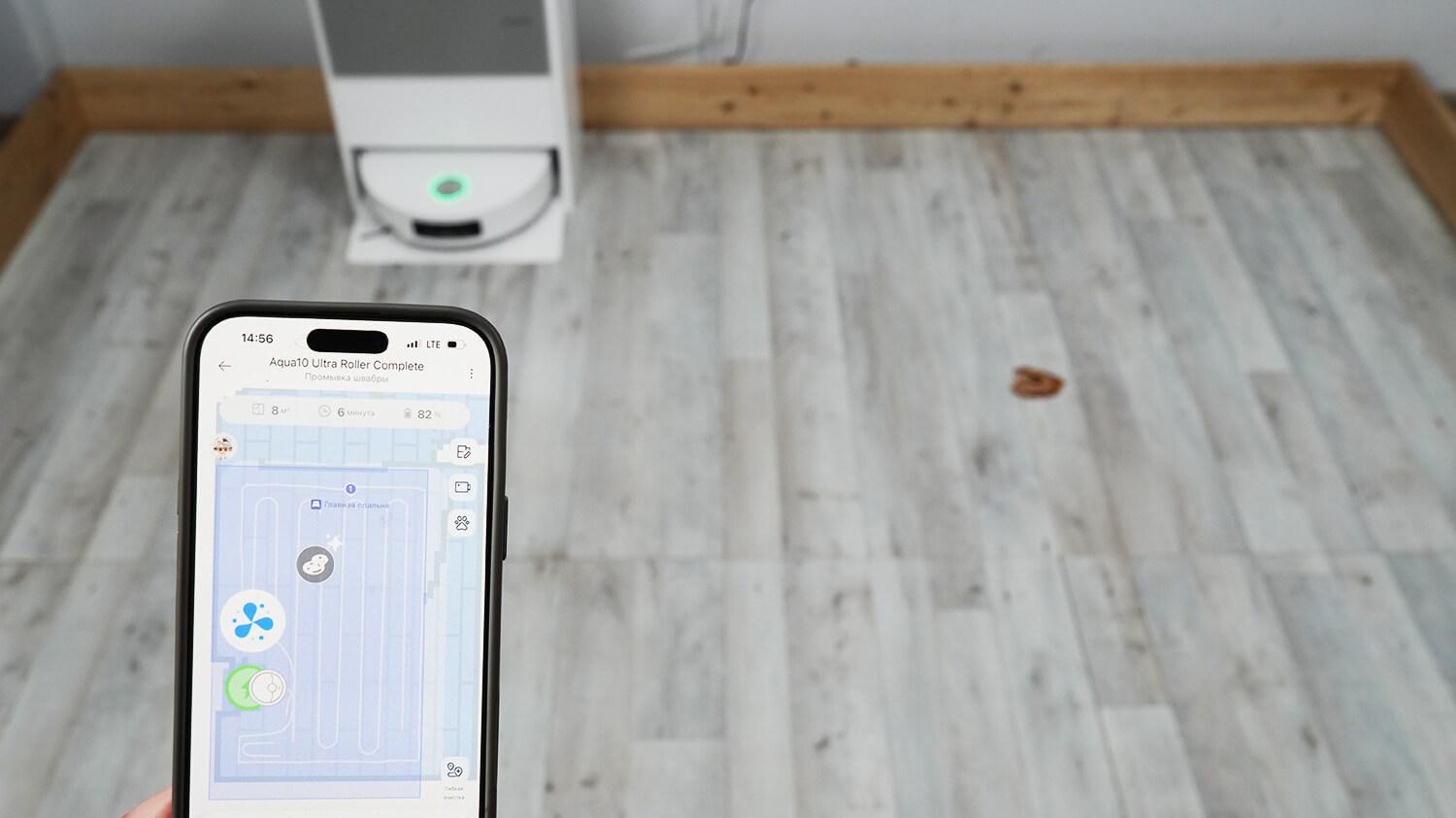
Spot recognition
In principle, the application states that this is a laboratory function, which means that it is still working in test mode.
Cleaning behind the curtains
I also tested the behind-the-curtains feature, as some robot owners had complained about it. My model, however, handled the task well, and interestingly, the robot doesn't hide its lidar or turn on the backlight when pushing through the curtains. It gently rams past them and cleans the area. Test passed!
Suction power
One of the most important tests is to check the actual suction power on a test bench with crevices of varying depths. In "Quiet" mode, the Dreame Aqua 10 Ultra Roller Complete was able to partially clean a 2 mm crevice. In "Standard" mode, it completely cleaned a 2 mm crevice. The results remained unchanged in Turbo and Maximum modes. And in "Maximum+" mode, the robot partially cleaned crevices of 4 and 10 mm depth.
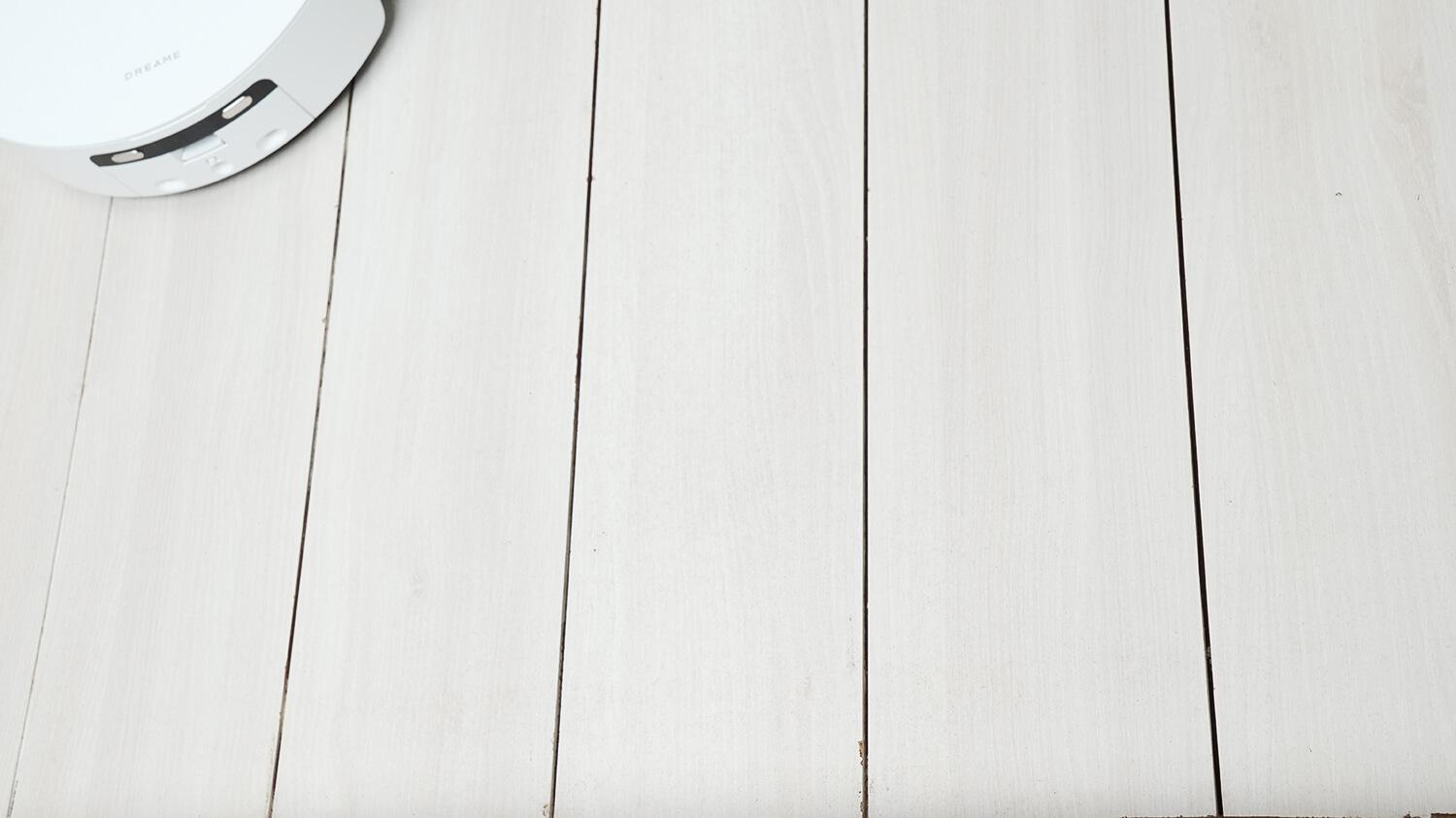
Suction power
I couldn't reach 12 mm on the updated test bench, so the maximum result was 10 mm (partially). This is a truly powerful robot vacuum, but aerodynamic losses are still observed due to the large gap between the brushes. Nevertheless, the robot actually turned out to be slightly more powerful than the X50 version, which achieved a partial result of 8 mm.
Dry cleaning
The quality of debris collection on laminate floors was good. Various debris was collected from the rack, including cat litter pellets, which often clog the turbo brush. It's important to note that this robot vacuum cleaned the inner corners well, leaving no debris behind. This is thanks to the retractable side brush. However, the robot doesn't completely clean the outer corners, leaving small blind spots. This issue could be improved.
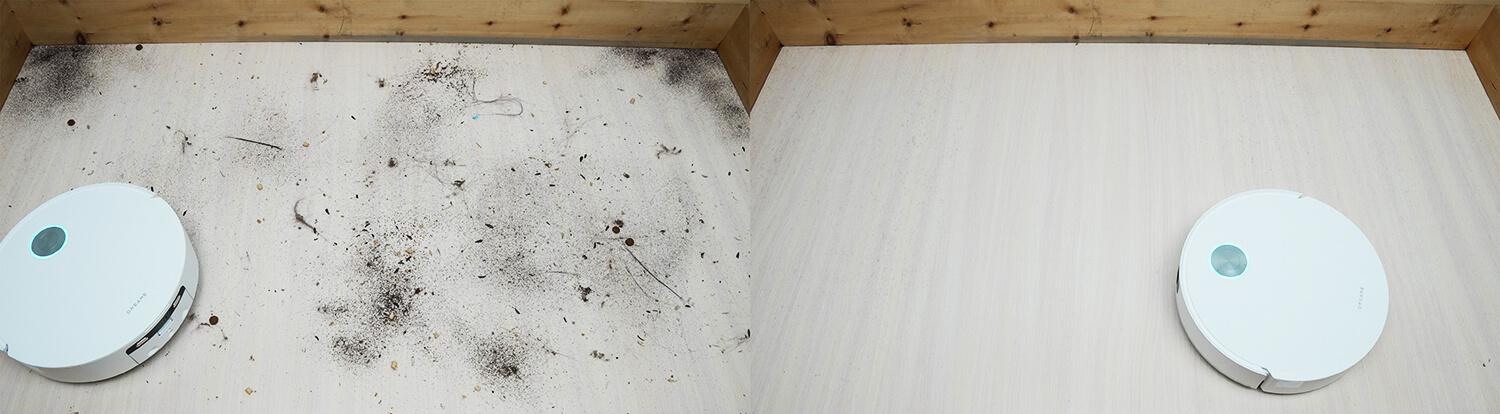
Dry cleaning
And what’s interesting is that after such a difficult test, the robot’s brushes are completely clean, that’s awesome!
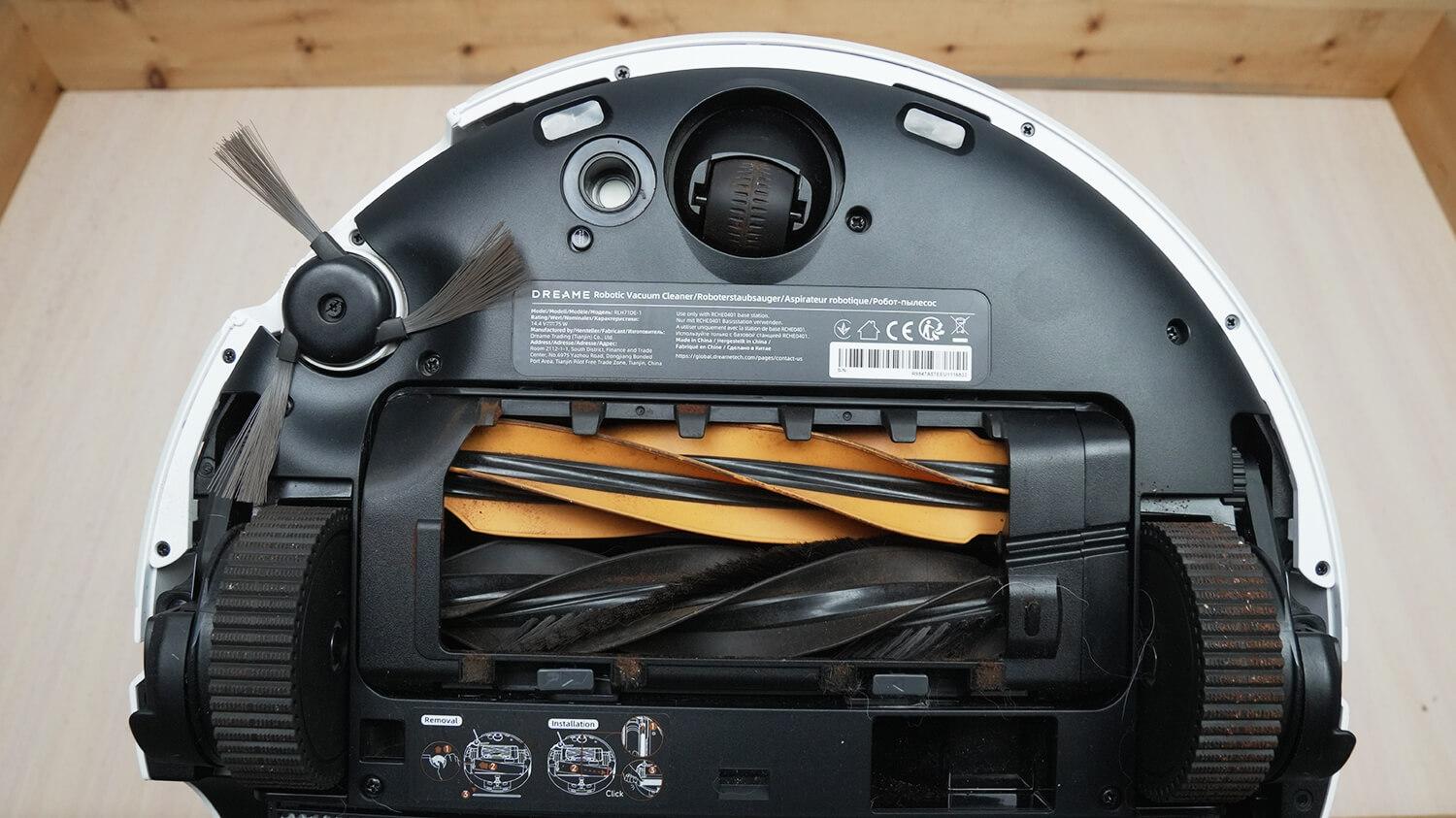
Cleaning module status
Anti-tangle Hair Protection
I also tested how the turbo brushes self-cleaned from hair and pet hair. I laid hair of varying lengths on the floor. The robot picked it up, and we saw that the brushes were practically clean. A few hairs got tangled in the rear bristle-petal brush, but it's very easy to clean thanks to its well-designed design.
I tested the brushes under normal household conditions after using them in an apartment with a shedding pet. Even under these conditions, the brushes were clean, so I consider the cleaning module effective in preventing hair and fur from tangling!
Carpet cleaning
Additionally, debris was scattered on a low-pile carpet. I can say that the Dreame Aqua 10 Ultra Roller Complete thoroughly cleaned the carpet. It also cleaned medium-pile carpet thoroughly. Test passed!
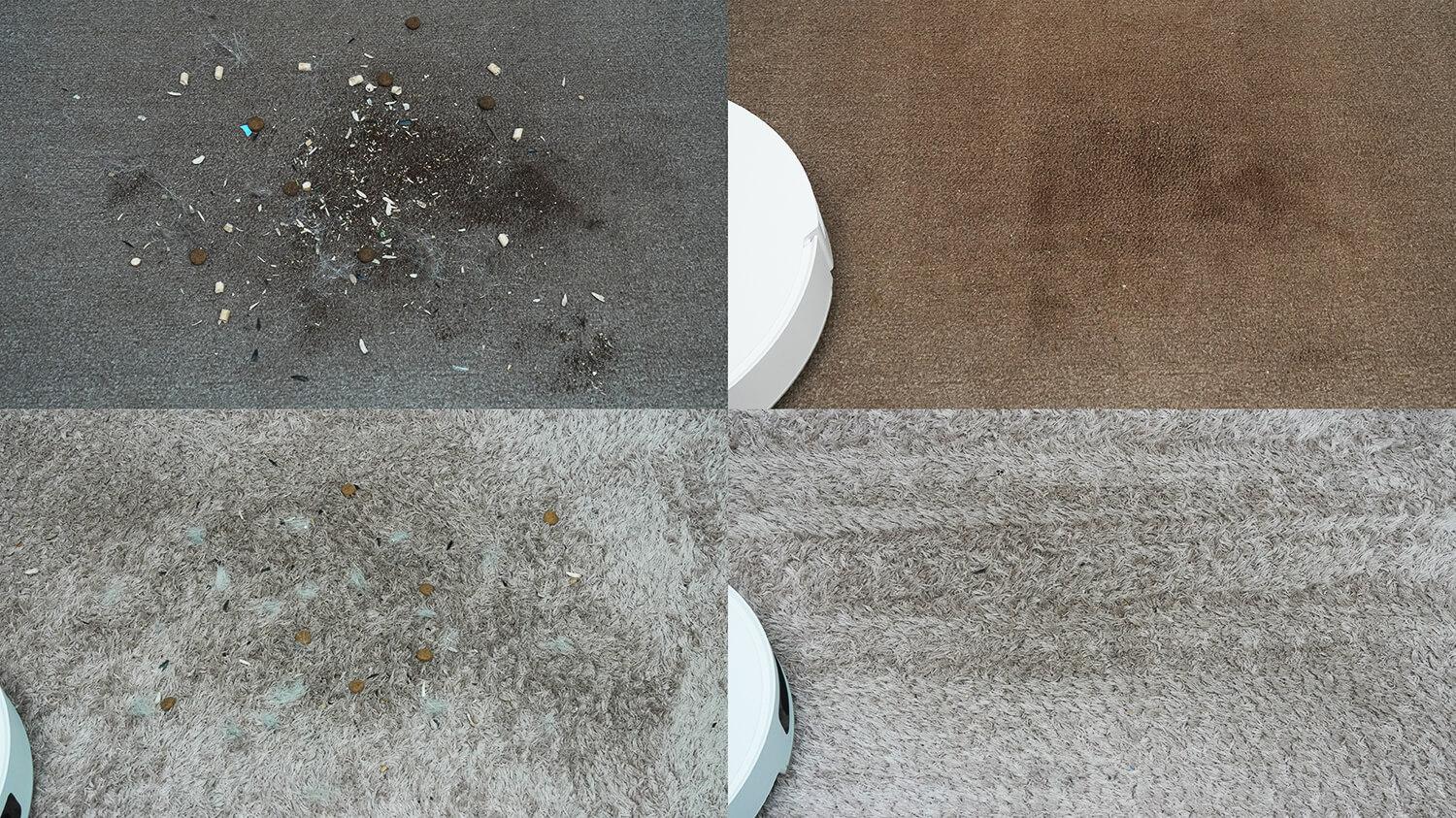
Carpet cleaning
Self-cleaning
Immediately after the "dirty tests," I checked the robot vacuum's self-cleaning performance. I returned it to the station and ran the self-cleaning cycle. The results were good. However, the HEPA filter is clearly clogged. It would definitely benefit from some pre-cleaning protection like a mesh.
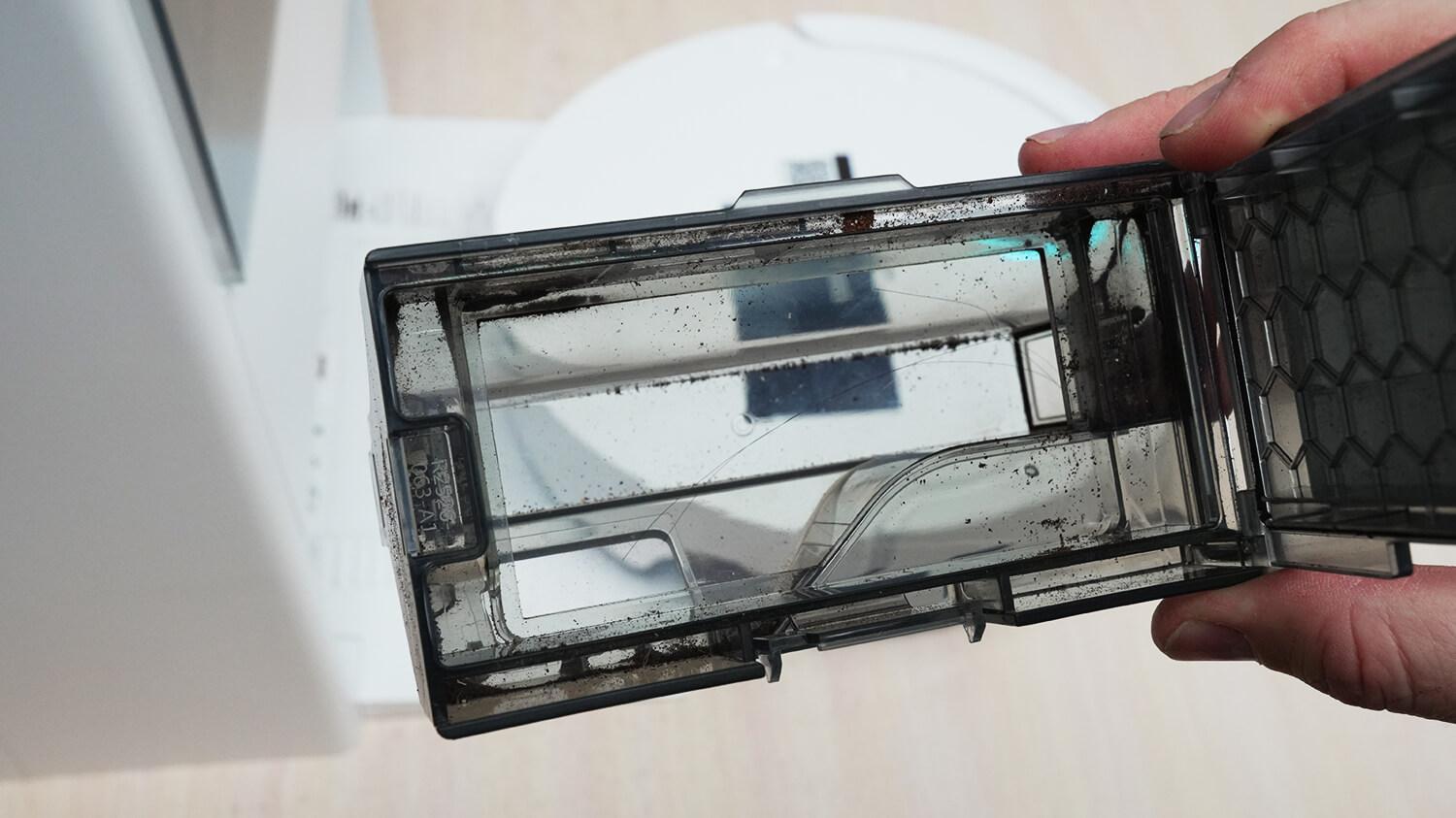
Self-cleaning
Wet cleaning and carpets
When it comes to wet cleaning on carpets, there are several different robot behaviors. I'll highlight three of the most interesting. The first is to enable automatic carpet avoidance in wet cleaning mode. The second is carpet ignoring, which involves the robot making contact with the carpet with its roller, a feature some use for surface cleaning of carpets. And the third mode is to raise the roller on the carpet, allowing the robot to vacuum and mop simultaneously, leaving the carpets dry and clean.
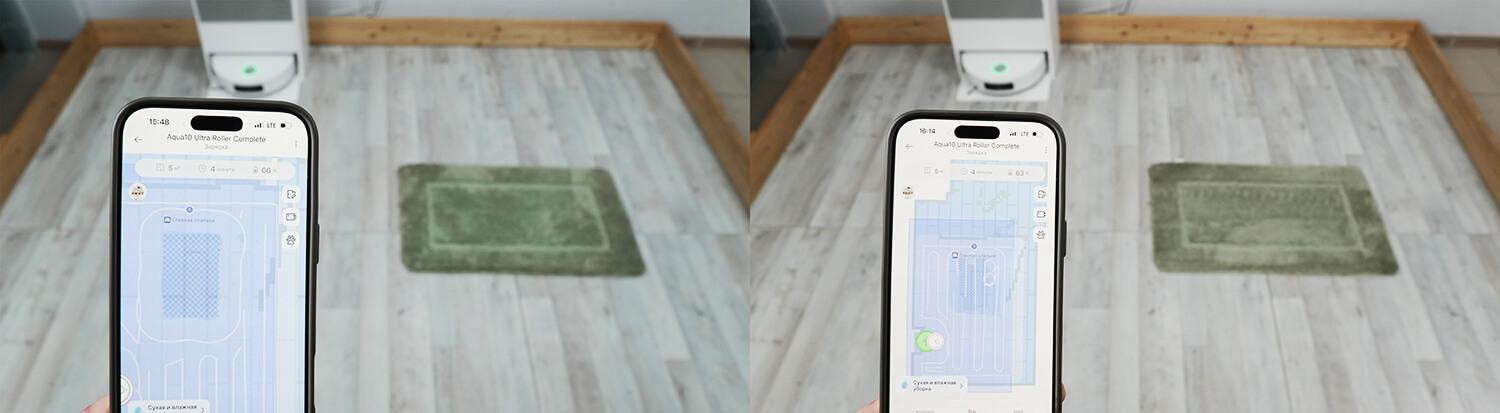
Wet cleaning and carpets
I'd also like to remind you that contact between the wet roller and carpet is completely eliminated thanks to the lid, which automatically closes the roller on carpets. And, I'd also like to reiterate, the robot's body can be raised on carpets.
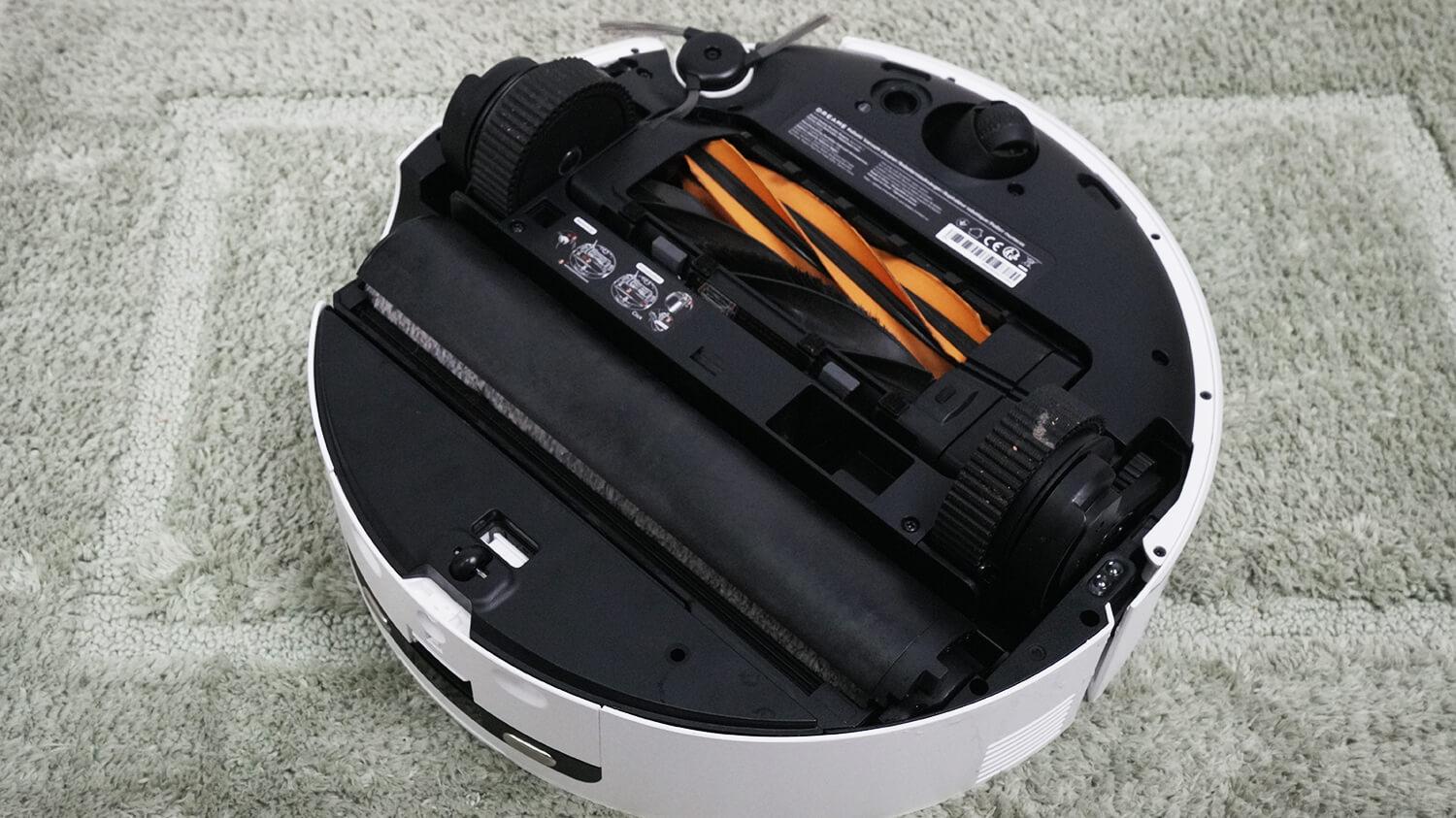
Protecting the roller with a cover
Wiping off dirt
The floor cleaning performance is excellent, significantly better than that of alternative cleaning modules. Just look at that beautiful, clean mark left by the robot's passes over a dirty floor. No streaks or marks.
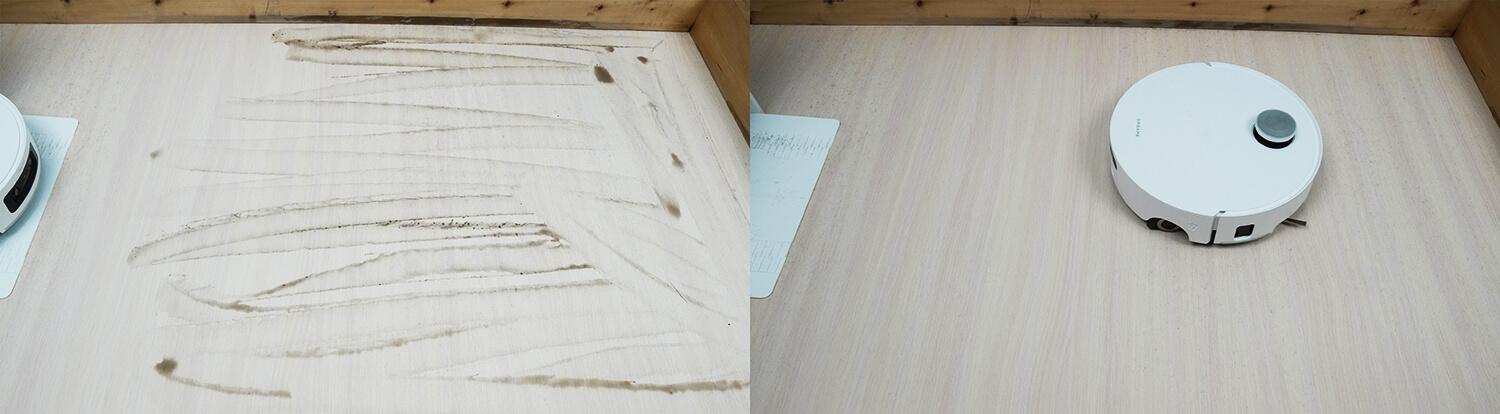
Washing the floor from dirt
A full-fledged robotic floor wash, with a minimal blind spot at the baseboard, no more than 4 mm, due to the roller's end lock.
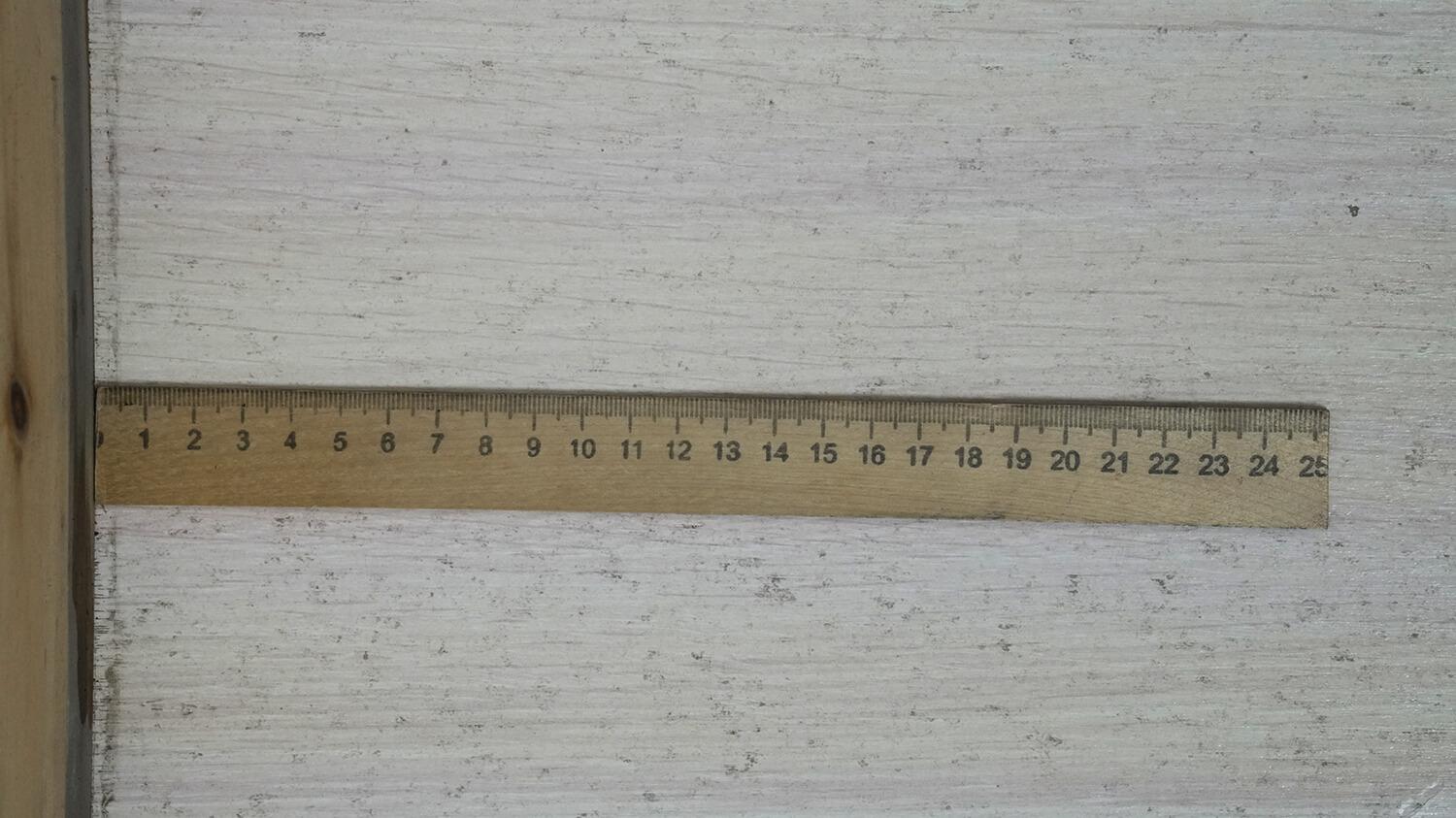
Blind spot along the baseboard
But the robot doesn't reach into corners with its back when cleaning the floor, and the blind spots in the corners are slightly larger than those of robots with round cloths; this is important to understand.
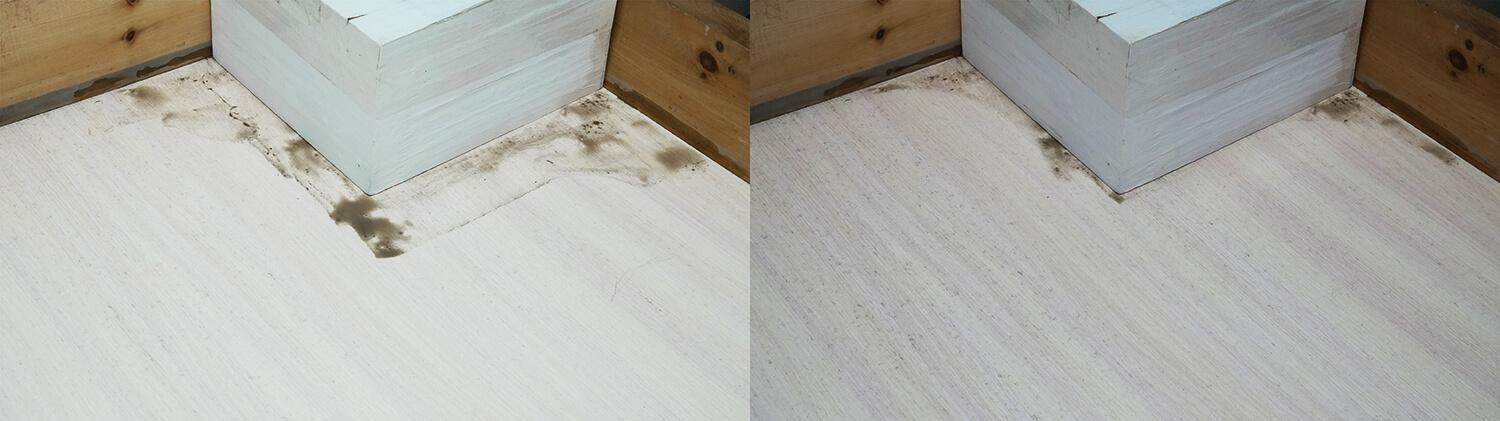
Blind spot in the corners
In a domestic environment, the robot may occasionally drift slightly away from the walls, but overall, the roller thoroughly sweeps along the baseboard. No issues there.
Removing stains
Many people have probably wondered how quickly the Dreame Aqua 10 Ultra Roller Complete removes tough stains like dried coffee and sauce from the floor. I can't say I'm any happier here. It took the robot 10 passes to remove the majority of the stains, and another 4 passes to remove the remaining stain. So, the result is 12-14 passes, which is far from ideal.
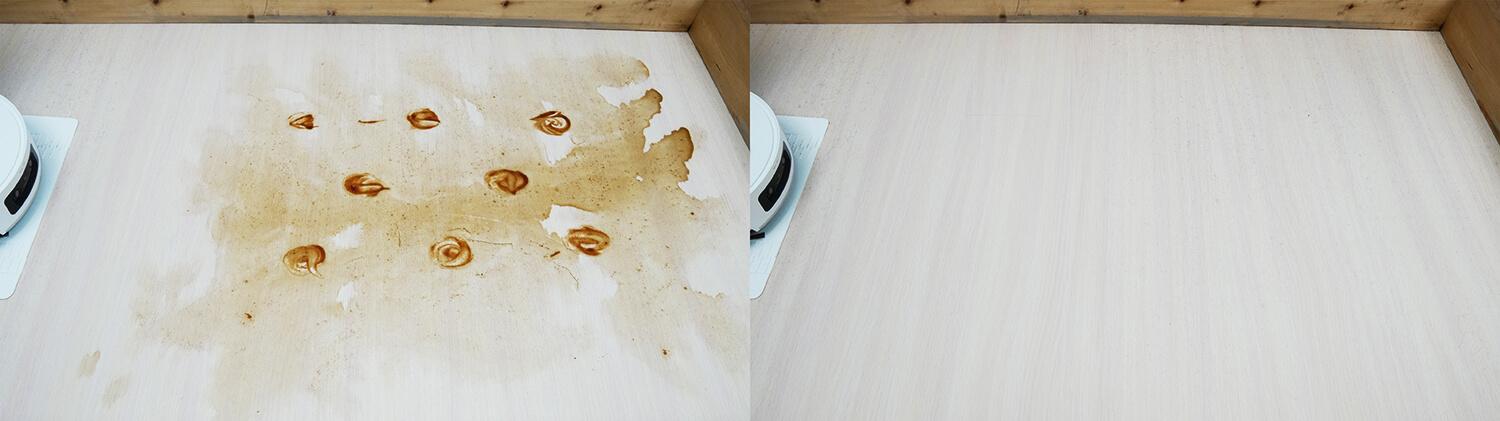
Removing stains
For comparison, the Dreame X50 with round rotating cloths handles the same task in 6-8 passes. But, when compared with the same ECOVACS DEEBOT X8 Pro Plus, which also uses a roller to clean the floor, the aforementioned robot didn't remove all the stains even after 16 attempts, so the Dreame Aqua 10 Ultra Roller Complete performed reasonably well. However, it's becoming clear that the roller is better at cleaning light stains, but less effective at removing tough stains.
Roller washing and drying test
I'd like to immediately talk about the efficiency of the station itself. Let's start with the roller's cleaning quality. Even after extensive testing, it looks significantly better after washing with the station. The washing efficiency is undoubtedly enhanced by the water heating function up to 100 degrees Celsius and the automatic detergent mixing function.
In everyday life, after washing the floor, the roller is thoroughly rinsed at the station. No visible dirt was found. Incidentally, no hair got tangled in it after several days of vigorous use around the apartment with two long-haired girls. The combs do a good job of detangling the roller, in my opinion.
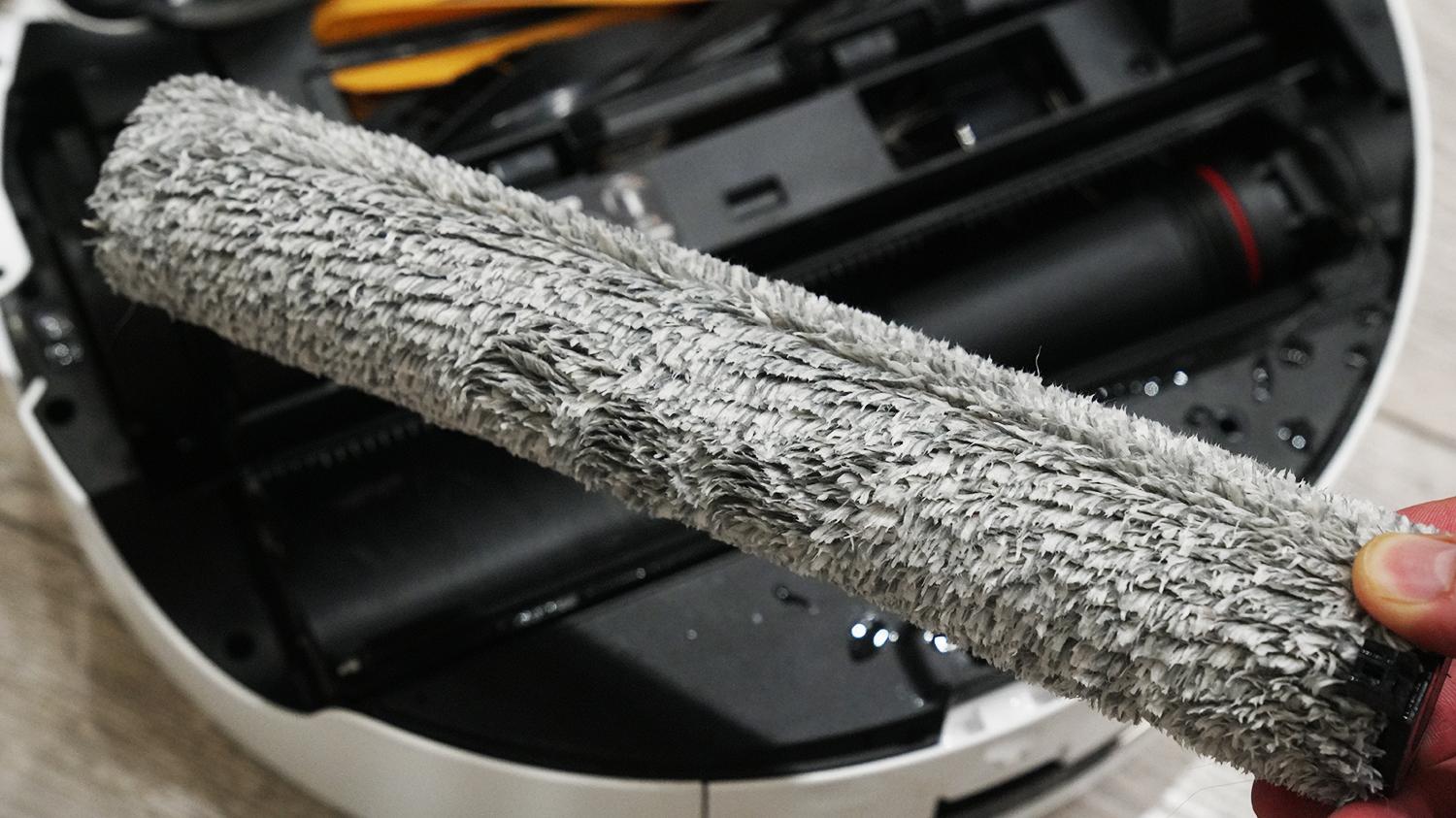
Self-cleaning quality of the roller
I decided to test the wash temperature myself—in my case, the peak temperature in the drain area was 54.4 degrees. After the wash, the roller temperature itself was around 32-34 degrees when leaving the station.
The roller's drying temperature is high – the sensor showed over 58 degrees, and this is a good result!
I also checked the drying temperature of the bag in the station. The sensor showed above 68 degrees, so the heating is there and effective.
Robot and station maintenance
A few words about robot and station maintenance. After using the robot in a home environment, we notice that the roller's bottom, wash tray, and ramp are a bit dirty. We remove them and rinse them in the sink, wipe the station's non-removable parts with a cloth, and replace the cleaned parts. Overall, it's not difficult, but it would be better if the entire robot platform were completely removable.
Robot maintenance deserves special mention, as the cleaning module is unusual and requires attention. Here's a look at the dirty water tank. After testing, we see it's already a bit dirty. It will need to be washed manually periodically.
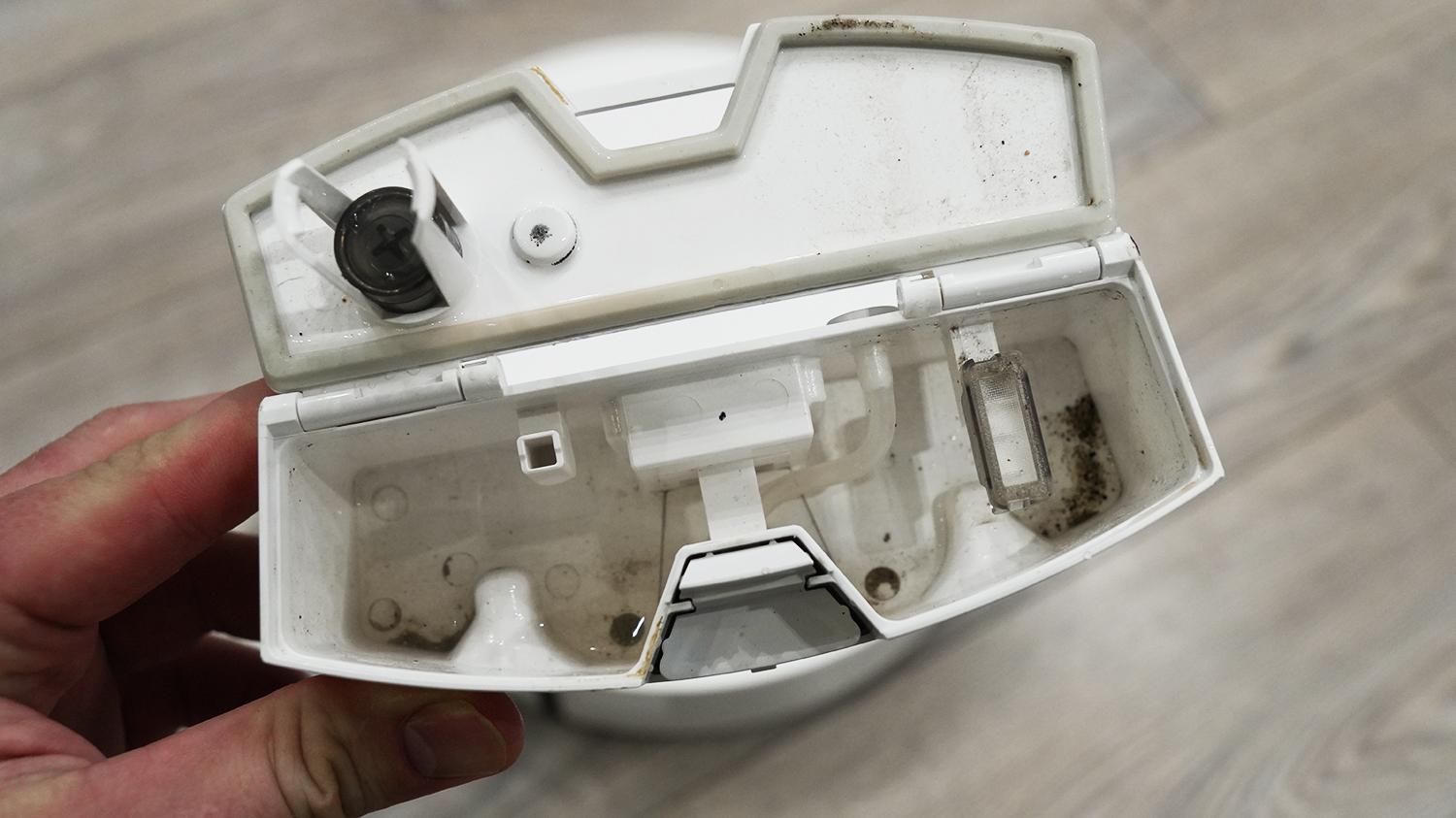
Condition of the dirty water tank
The area behind the roller is surprisingly clean after all the tests. This area self-cleans well, but will likely still require manual maintenance from time to time. This is also typical for vertical roller cleaners; it's a nuance of this cleaning module.
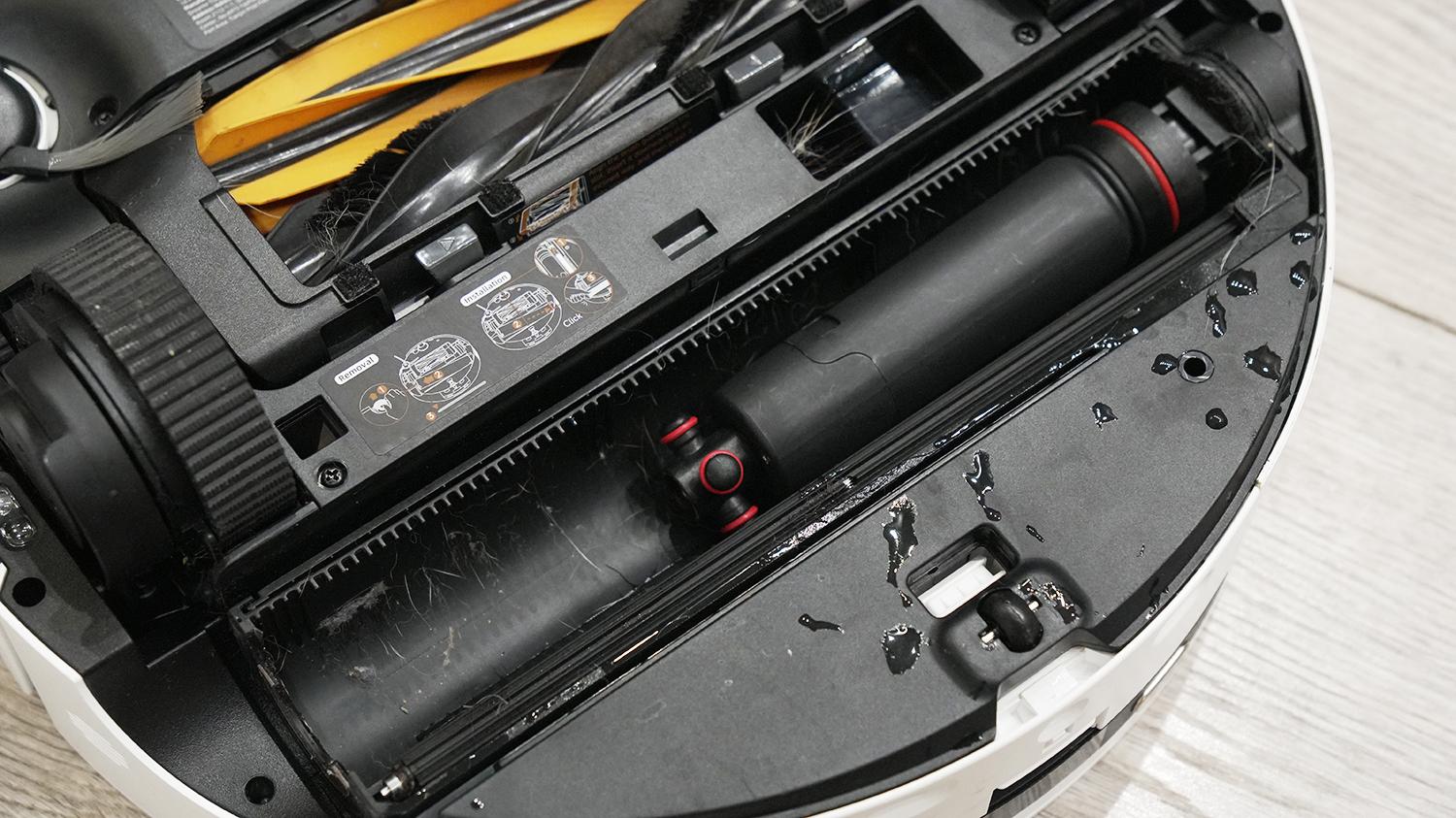
Condition of the area behind the roller
Passability
An equally interesting test is the robot's cross-country ability. I'd like to point out that there are two threshold-crossing modes: step-over and synchronous two-wheel crossing. There's also a mode for crossing low thresholds with the body raised. In my opinion, the step-over mode is more gentle, but with synchronous two-wheel crossing, the robot crosses thresholds more confidently.
Let's start with the 2 cm threshold. It crossed it without a problem. A 3 cm threshold is also no problem for this robot. The Dreame Aqua 10 Ultra Roller Complete managed to overcome a 4 cm threshold. However, it failed to cross a 5 cm threshold. It managed to get onto it once, but then it crashed. However, the Dreame X50 Ultra Complete managed to cross a 5 cm threshold. Apparently, the X50's body balance is better. In fact, the manufacturer claims a 42 mm single-level threshold clearance, which I confirm for the Aqua version.
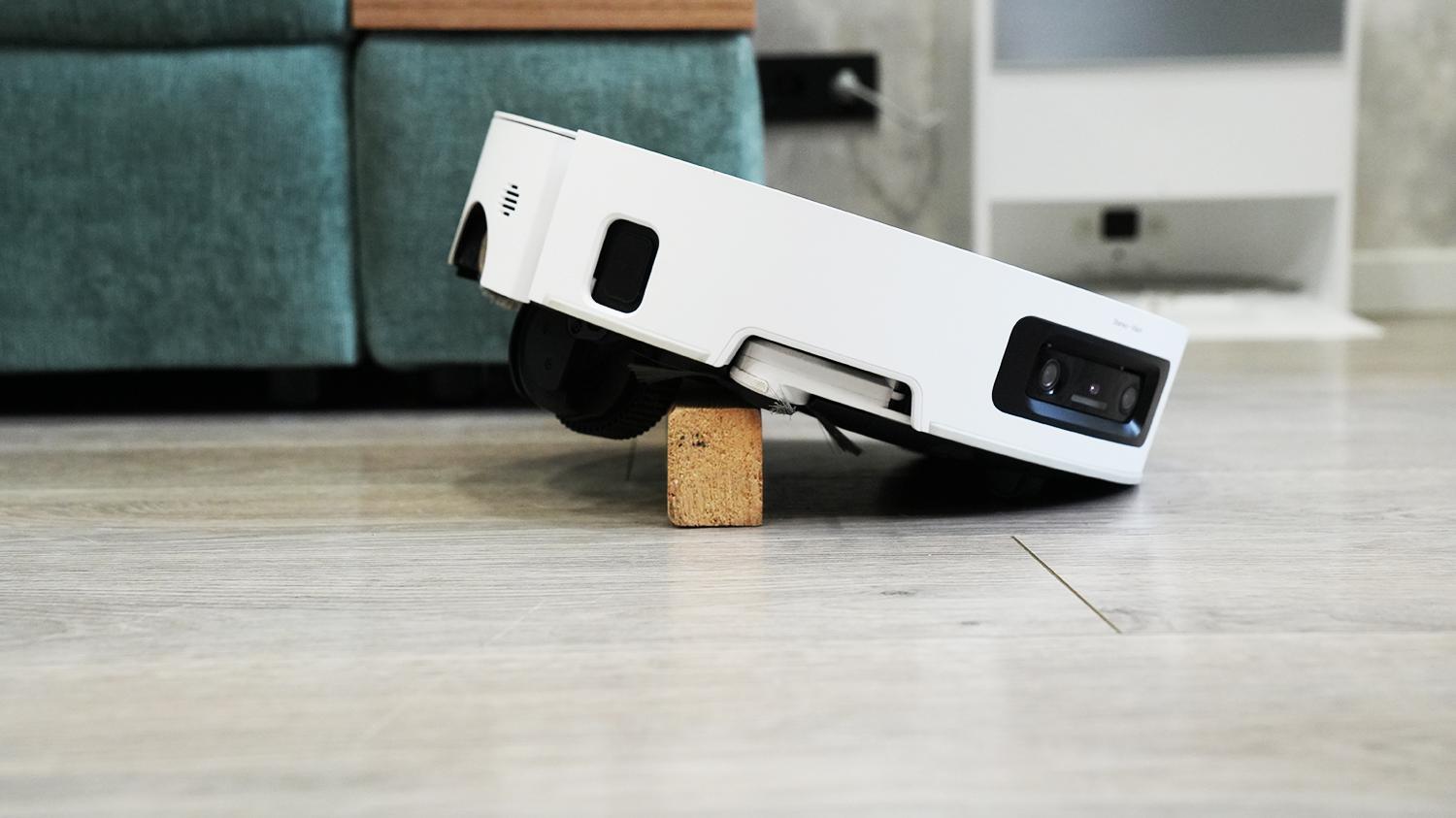
Crossing a single-level threshold
But it was also interesting to test the cross-country ability of two-tiered thresholds. I modeled a threshold 8 cm high: each step was 4 cm. And here, it probably all depends on the threshold configuration. Since in the first case, the robot couldn't climb over, the wheels couldn't grip the first level, apparently because the step wasn't deep enough. I increased the step depth, and the robot managed to jump over, but it took a pretty good hit after crossing.
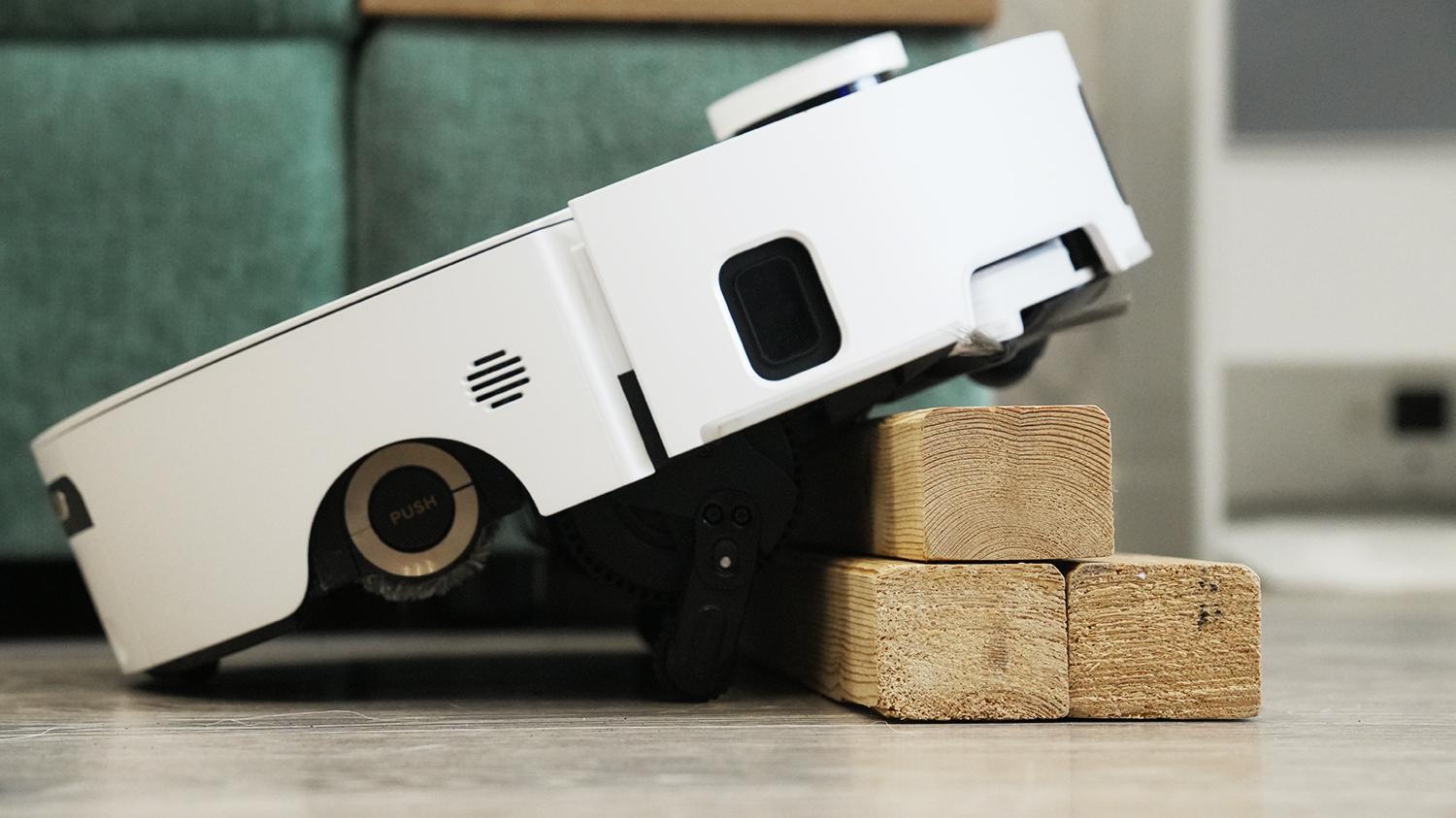
Crossing a two-level threshold
In short, it can cross an 8 cm threshold, but it's a bit dangerous. In any case, the robot has excellent cross-country ability.
Driving on black surfaces
Driving over black carpets is no problem. The robot glides over the black carpet as if nothing had happened.
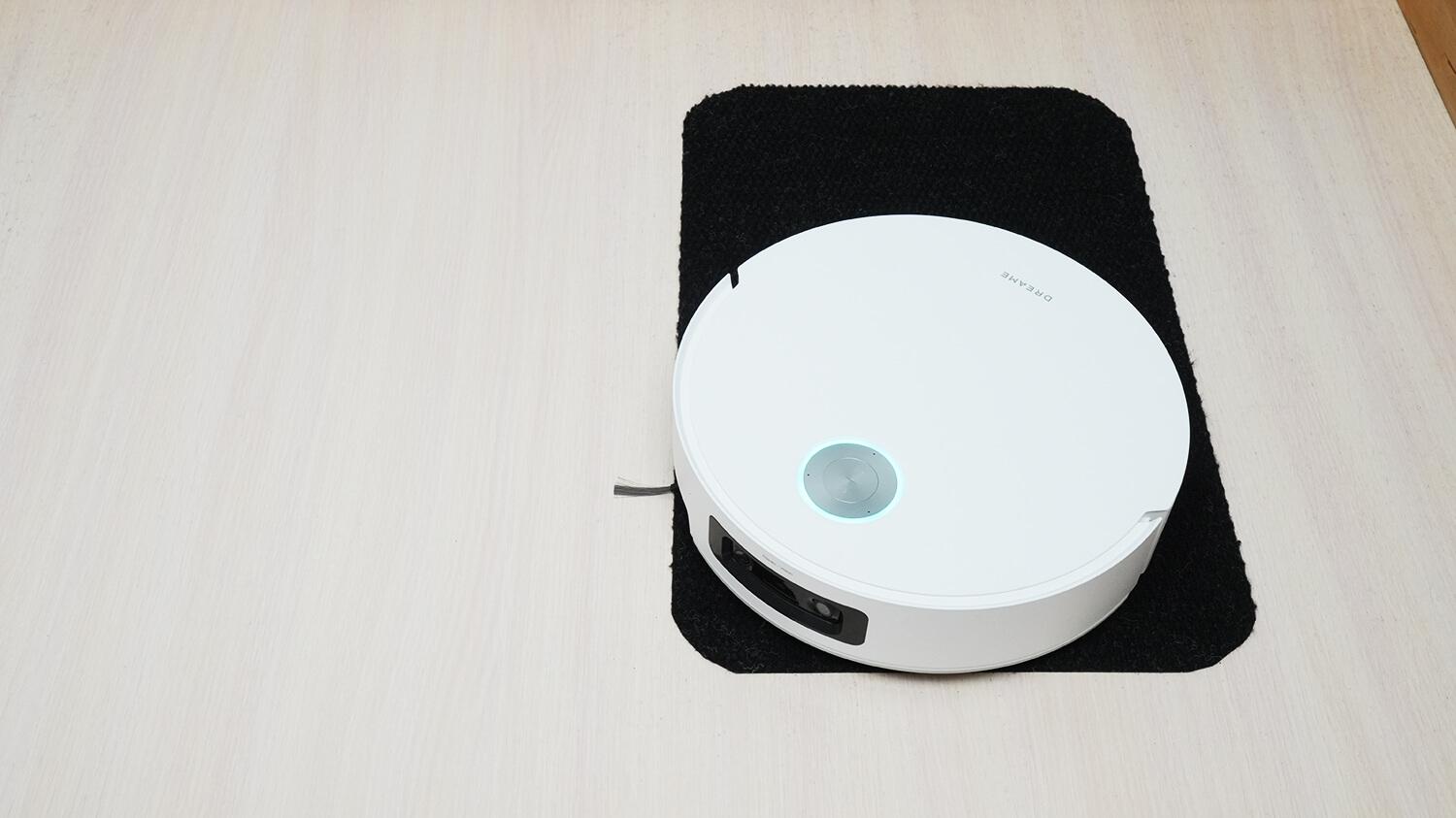
Driving on black surfaces
Noise level
As for the noise level, it ranges from 53.5 to 73 dB, depending on the selected operating mode. The robot has a higher noise level, but its power is also high, and these parameters are interconnected.
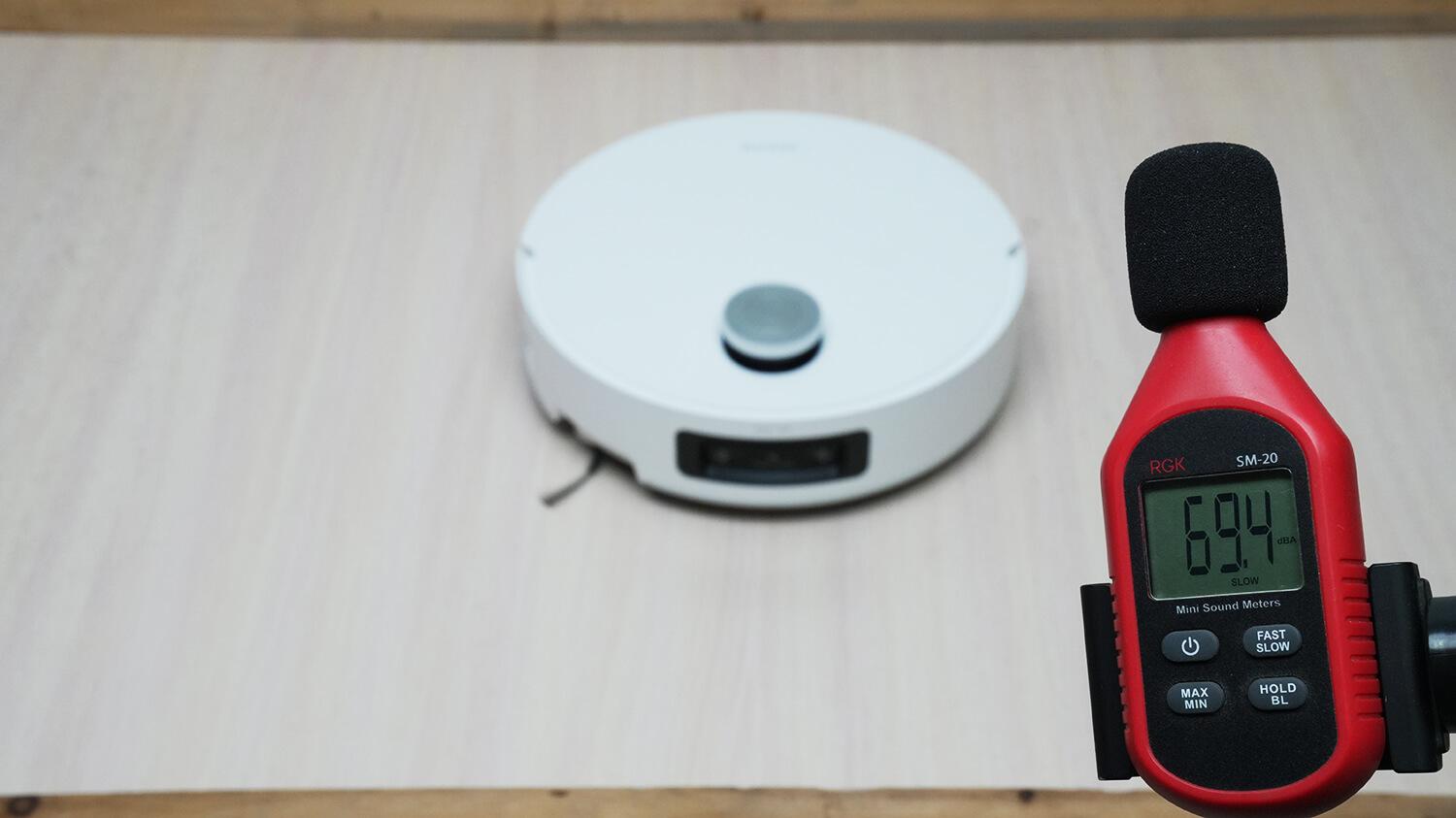
Noise level
The station's noise level during self-cleaning is approximately 74 dB. This is a standard result.
Personal opinion
The Dreame Aqua 10 Ultra Roller Complete robot vacuum cleaner has been thoroughly reviewed and tested. According to our rating system, it scored 250 points and enter the top three in The overall ranking of tested robotic vacuum cleaners on the robovac.washerhouse.com projectIf not for the comments, it would have confidently topped the ratings, but even so, it compares favorably to competitors with similar cleaning modules.
I'll highlight the robot's pros and cons, then share my opinion. I liked the following:
- A fully-charged all-in-one station by 2025 standards. It has absolutely every feature available on the market: water heating to the highest possible temperature, heated air during roller drying, a dust bag drier, automatic detergent mixing from different compartments, and roller soil level monitoring. The only things missing are antibacterial protection in the water tanks and UV lamps.
- A separate advantage worth highlighting is the fact that the station connects to the sewer and water supply, which significantly distinguishes this robot from some competitors.
- High-quality floor cleaning over large areas thanks to self-cleaning and evenly moisturizing the roller over its entire surface during cleaning. The wet mark is clearly visible on the floor at the highest settings. This solution is clearly more effective for everyday floor cleaning at home than the popular two-rotating pads or vibrating platform. There are no streaks or marks left, even when cleaning dirt from the floor. Furthermore, I believe this type of cleaning module is suitable for picking up liquids from floors, such as wet footprints in the bathroom and trampled shoe marks.
- The roller extends to the edge of the body, allowing for more thorough cleaning of areas along walls and furniture.
- The roller rises on carpets and is additionally covered with a lid, which completely eliminates contact of the wet roller pile with carpeting and allows the robot to simultaneously wash the floor and vacuum the carpets, leaving them dry.
- The side and central brushes automatically rise when washing the floor and when the robot moves, and if necessary, the side brush can be raised on carpets.
- High-quality dry cleaning on a variety of surfaces. The robot vacuum cleaner can effectively pick up debris of various textures on both hard floors and carpets. The brushes don't get blocked by large debris, effectively remove pet hair, and the side brush thoroughly sweeps debris into corners.
- Increased suction power. Yes, it has its own nuances, but the robot still managed to partially reach 10 mm, which is a good result.
- The robot vacuum cleaner cleans more accurately than many similar products in varying room lighting conditions thanks to its backlit object recognition system. We'll discuss this further below, but the inclusion of cameras is a definite plus.
- Remote home monitoring function via smartphone.
- The robot vacuum cleaner is capable of cleaning behind curtains and drapes, which makes it stand out from most lidar-based alternatives.
- Very good maneuverability. One of the best among the robots I tested, and there were over 200 of them in the test room.
- The robot's pet-friendly features deserve special attention. It can add a separate detergent to protect against pet odors. It has a pet recognition feature, the ability to launch the robot in pet activity zones, and a pet monitoring mode. The central brushes are designed to shed hair. Pet owners will appreciate all of this functionality.
- Well-equipped with all the necessary accessories and consumables for the first period of using the robot.
- The robot vacuum cleaner is not afraid of black surfaces.
- The proprietary app offers a wide range of features. New features are constantly being added to improve cleaning efficiency and the robot's autonomy.
- Built-in voice support "Ok, Dreame" to control the robot with voice commands without using a smartphone.
- Full Russification of the app, voice notifications, and commands. The robot is fully adapted to the market.
- High-quality assembly and high brand authority.
- Availability of warranty and service.
Now let's go over the comments, there are some too:
- At the time of writing, there were problems with the robot entering 10 cm gaps, which is why the lidar needed to enter the body.
- The object recognition system requires refinement. The new Stereo Vision cameras performed worse in testing than the already well-proven AI Action system implemented in their predecessors.
- The roller has difficulty removing difficult stains from the floor.
- The roller has more blind spots than round cleaning pads. It doesn't clean corners as well, there's a small blind spot near baseboards due to the end clip, and it physically can't fit under furniture, compared to round cleaning pads.
- Small dust collector capacity.
- Aerodynamic losses are still observed due to the brush design and the increased clearance between them. Even increasing the stated suction power by 1.5 times didn't significantly improve the test bench results.
- Well, more of a nuance than a criticism: the new cleaning module requires periodic maintenance of the area behind the roller, where debris can accumulate, as well as the dirty water tank, where plaque collects.
So, what's the bottom line? The first two issues, related to driving under furniture and object recognition, I'm sure can be addressed with a firmware update, which I really hope will happen.
Regarding the dust collector and power loss, these are individual model characteristics and nothing can be done about them. Overall, they are not critical.
Regarding the roller, it's worth dwelling on it and expressing my opinion. Yes, it takes longer to remove tough stains—for now, I'll have to live with that. The similar devices I tested didn't produce better results. Installing rollers in robot vacuums isn't new, but it's a very relevant trend, one that reputable brands have adopted. Rollers are clearly the future, and the technology will be constantly refined, likely leading to improvements in stain removal efficiency. I think they'll also work on eliminating blind spots, just as they did with round cleaning cloths over several years of refinement.
Therefore, it's important to understand that rollers have their own distinct advantages compared to other cleaning module options. Floor cleaning with a roller is significantly better when it comes to visible dirt, such as fresh dirt and spills. It's no wonder that rollers are installed in upright vacuum cleaners.
So far, the Dreame Aqua 10 Ultra Roller Complete is the best robotic vacuum cleaner with a floor roller I've tested, and it's definitely recommended. Its high ranking in the overall rankings is indirect confirmation of this.
That's all from me. If you have any questions, please ask them in the comments. Happy shopping, everyone. Bye!