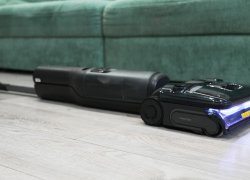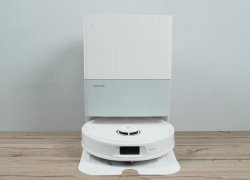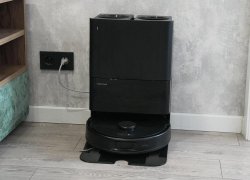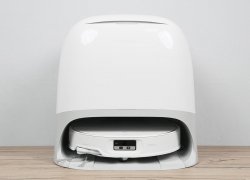
Roborock Saros 10R (built-in version of the station): how it all works?!
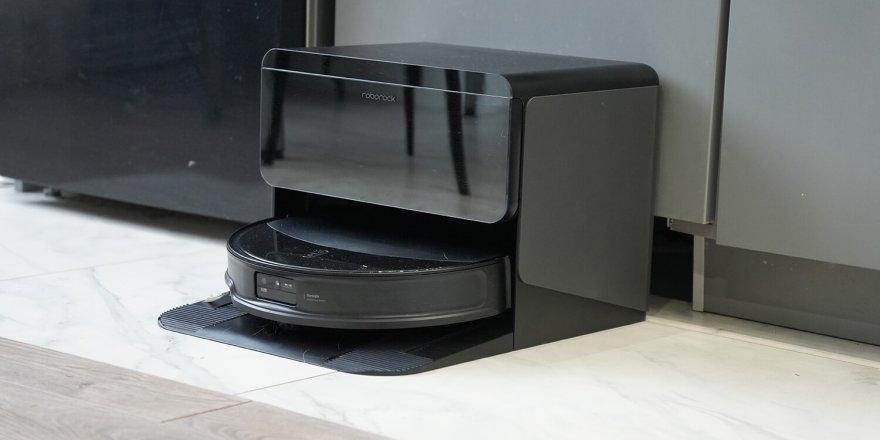
Hello to all readers of this project! This review will examine the Roborock Saros 10R robot vacuum cleaner with a built-in docking station for connection to both sewer and water lines. This is the first Roborock robot vacuum cleaner on the market that can be connected to utility lines. In addition to the technical ability to connect to water and drain lines, the docking station boasts a compact size and advanced self-cleaning capabilities. These include water heating for washing, hot-air drying of cloths, and even automatic detergent mixing. The robot vacuum itself also boasts a flagship set of features, including a precise object recognition system, suction power of up to 20,000 Pa, improved maneuverability, a slim body, and an effective cleaning module with protection against hair and pet hair entanglement. All this will set you back approximately $1,200 at the time of writing. Below, I will thoroughly test the robot vacuum, highlight its pros and cons, and then express my opinion. So, let's go!
Equipment
The robot vacuum cleaner arrived in a branded box like this:
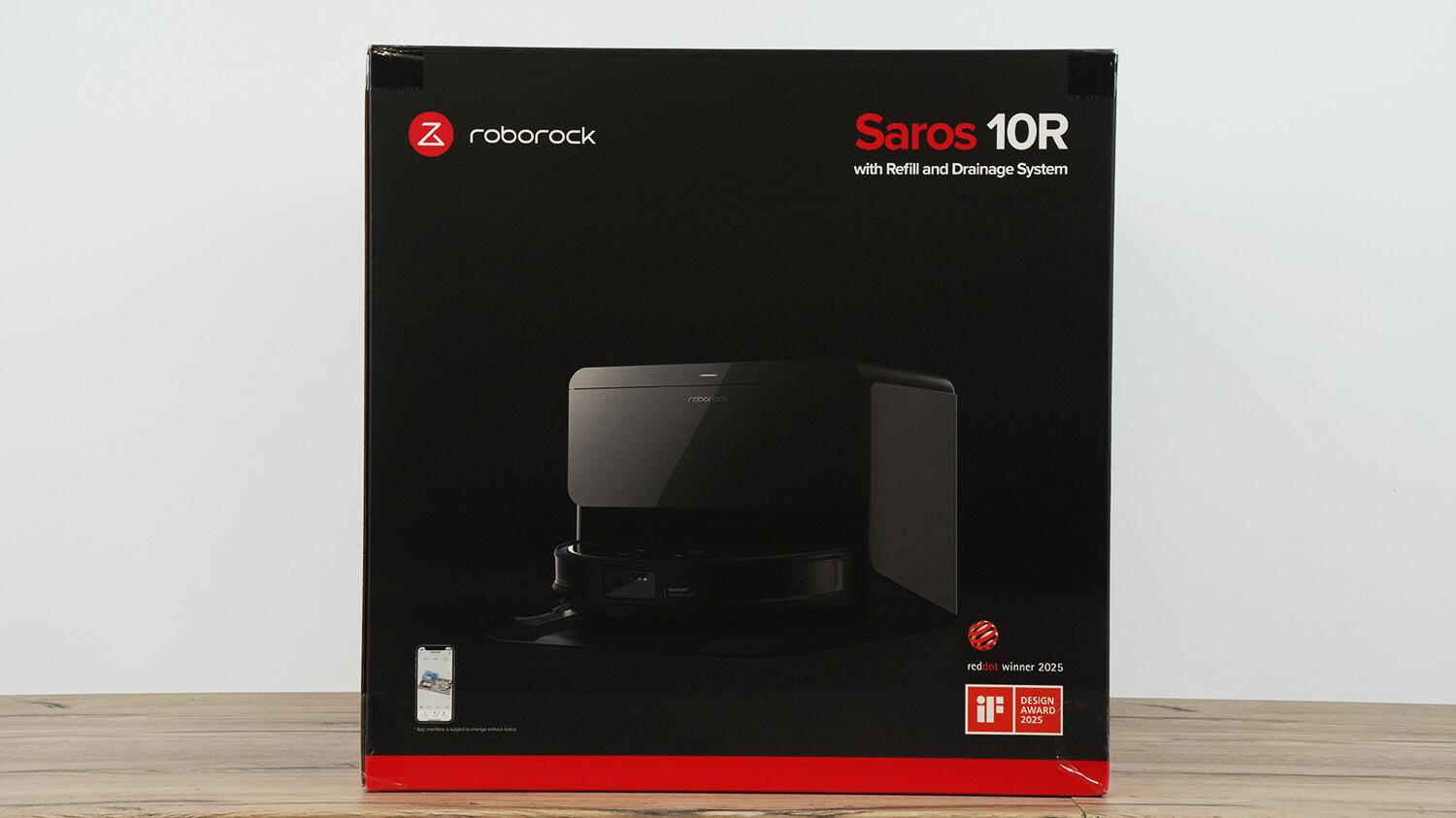
Box
In addition to the robot and the station, the kit includes two holders with cleaning cloths, a power adapter, a spare station bag, an operating manual translated into Russian, and a connection kit for the station to the utility lines. This includes pipes for connecting to the water supply and drain, a perforated hose for concealing the pipes, a 1/2-inch elbow to plastic with a ball valve, a mesh filter, and locking clamps.
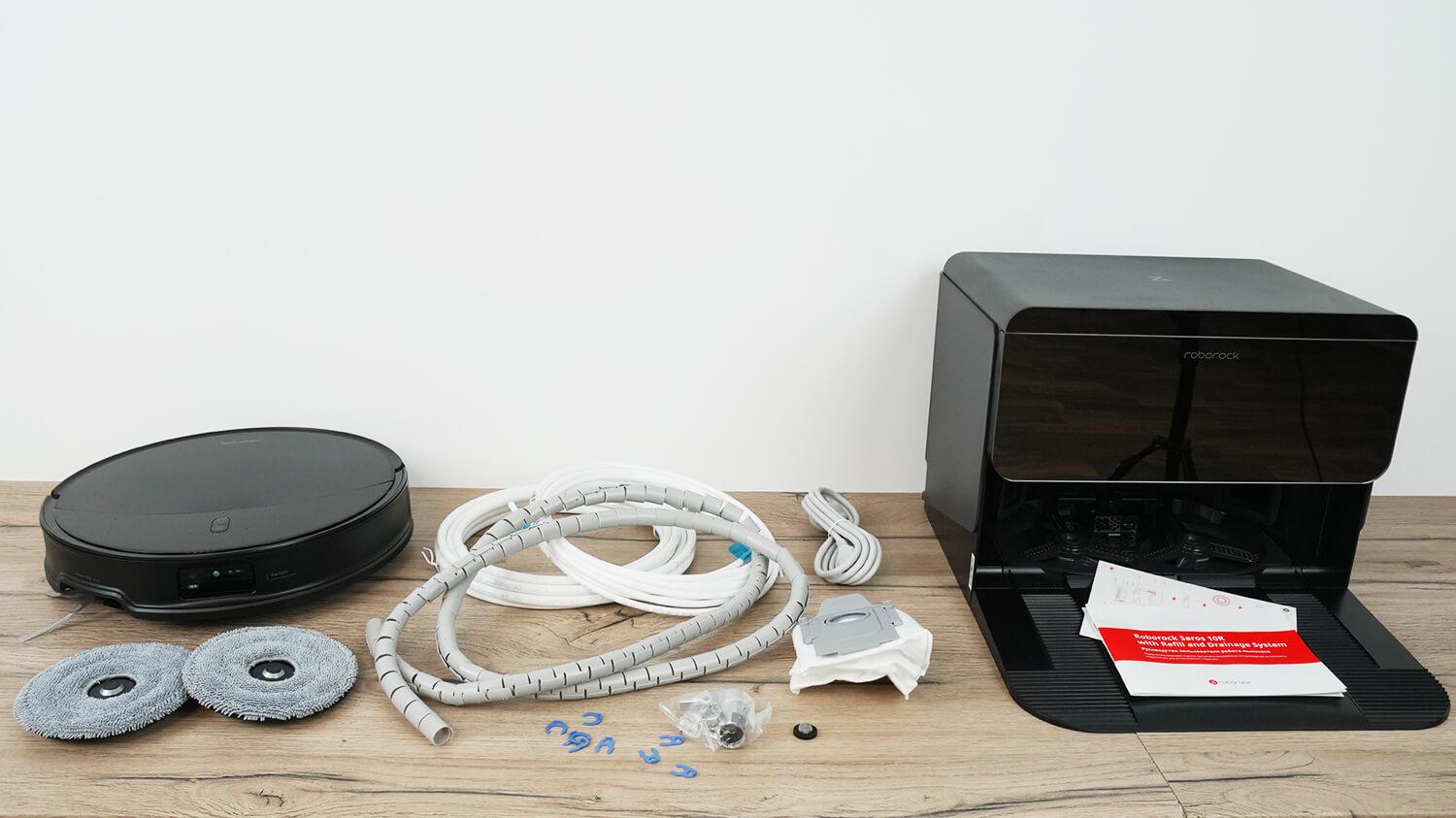
Equipment
Appearance
Let's take a look at the design of the Roborock Saros 10R. This robot vacuum cleaner was previously reviewed with a station featuring standard water tanks. The robot vacuum itself is similar in design. It's round and comes in black.
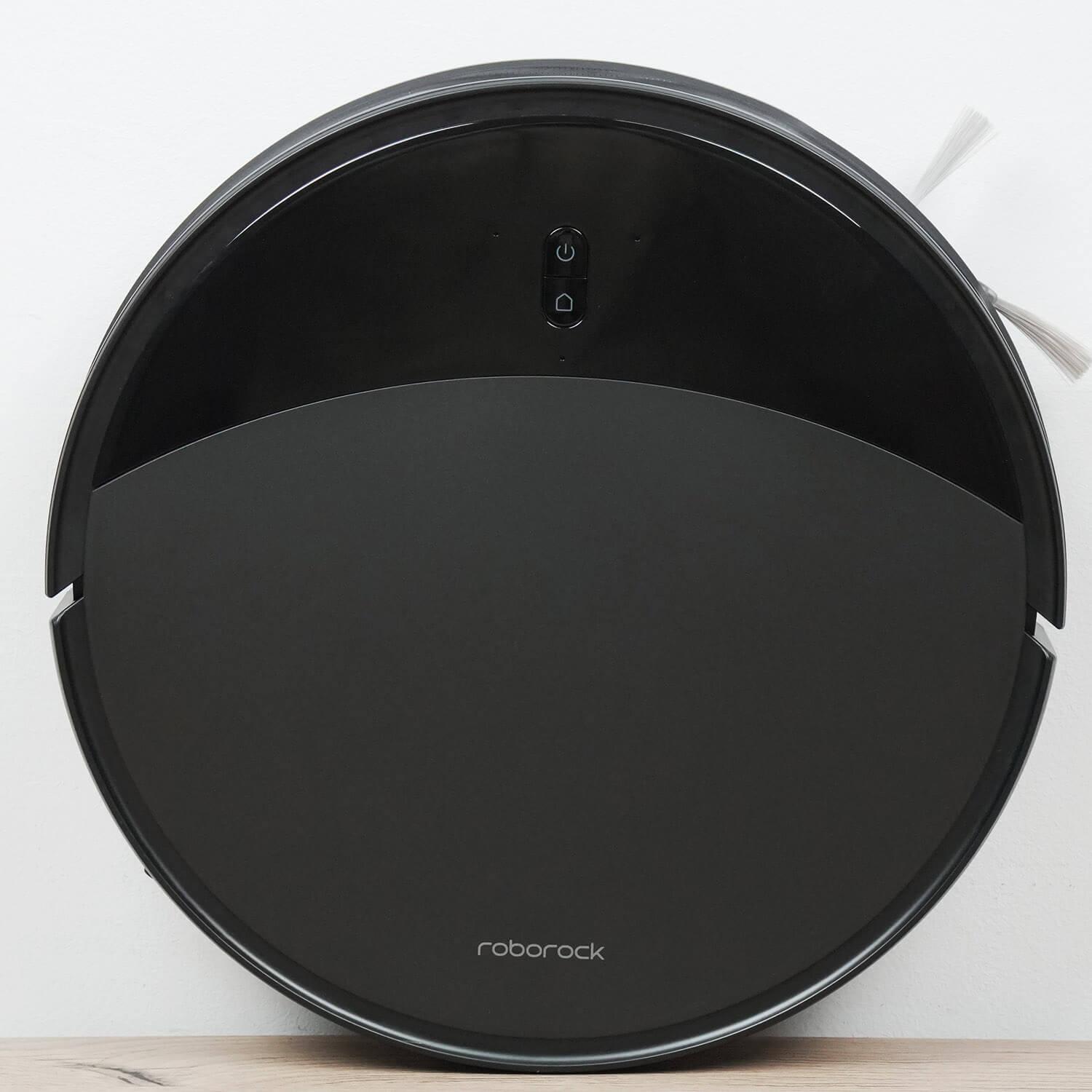
Top view
The robot vacuum cleaner is only 7.98 cm tall because it lacks the usual tower-shaped lidar.
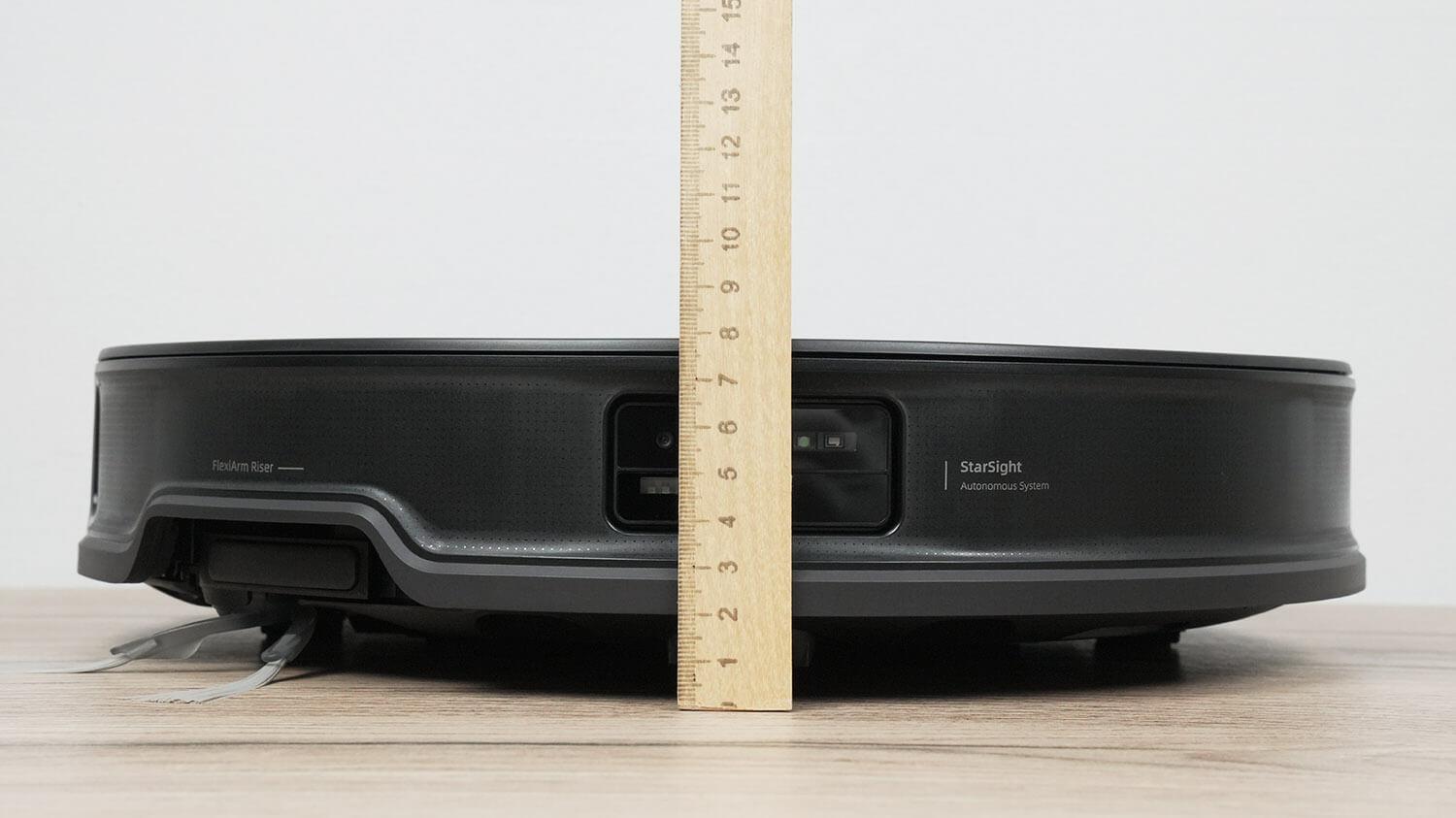
Body height
Instead of a traditional lidar sensor, the Roborock Saros 10R is equipped with a sensor and camera system called StarSight Autonomous System 2.0. This system combines an object recognition system with a front-facing light on the bumper and sensors and cameras on the side near the self-cleaning dust collector curtain. In addition to the object recognition system, the device also features an active camera for remote home monitoring.
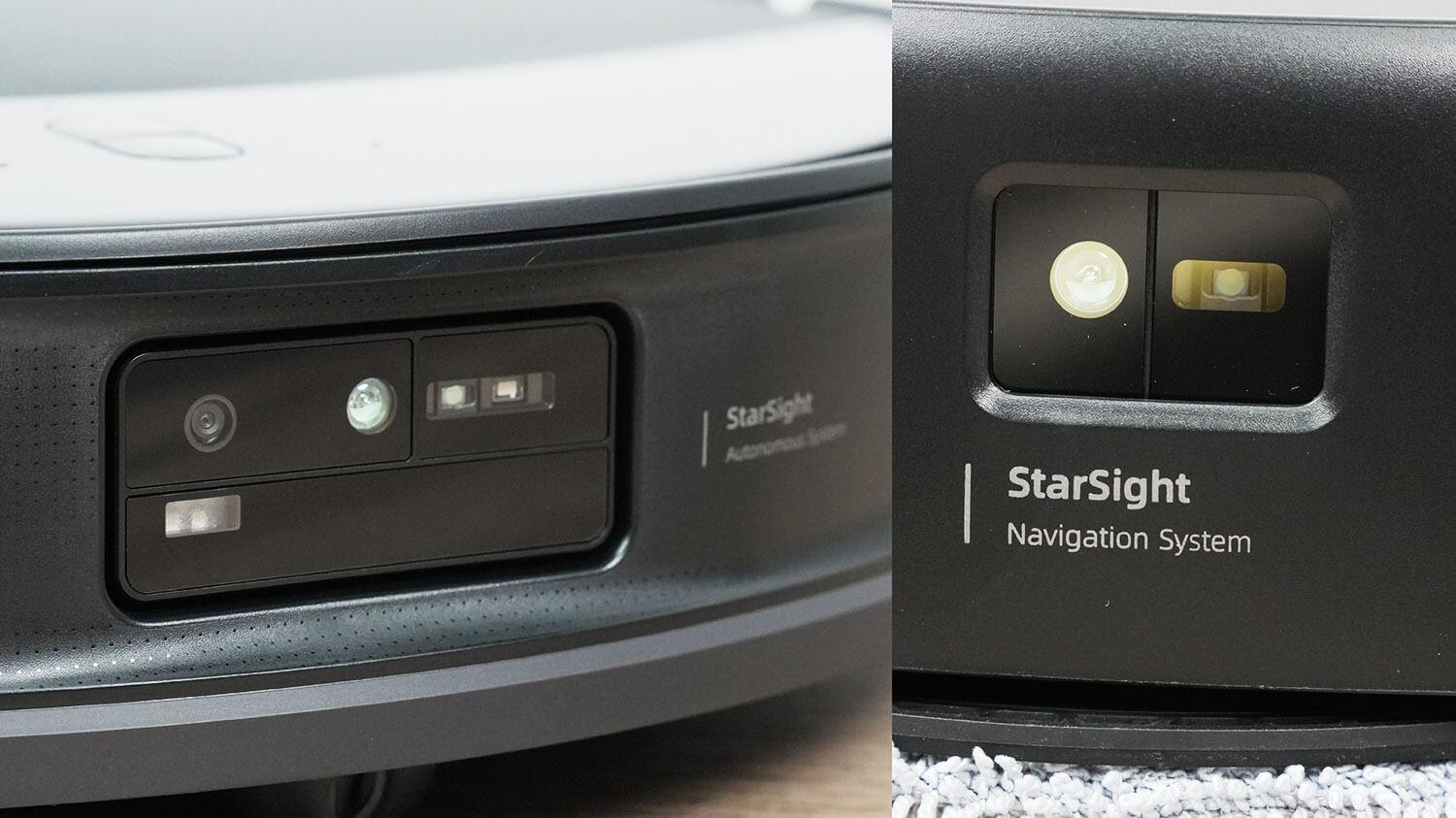
Navigation
Continuing with the sensors, the robot is equipped with a wall sensor, 5 fall protection sensors, a new optical sensor that is used to more accurately avoid wires on the floor, and a carpet sensor.
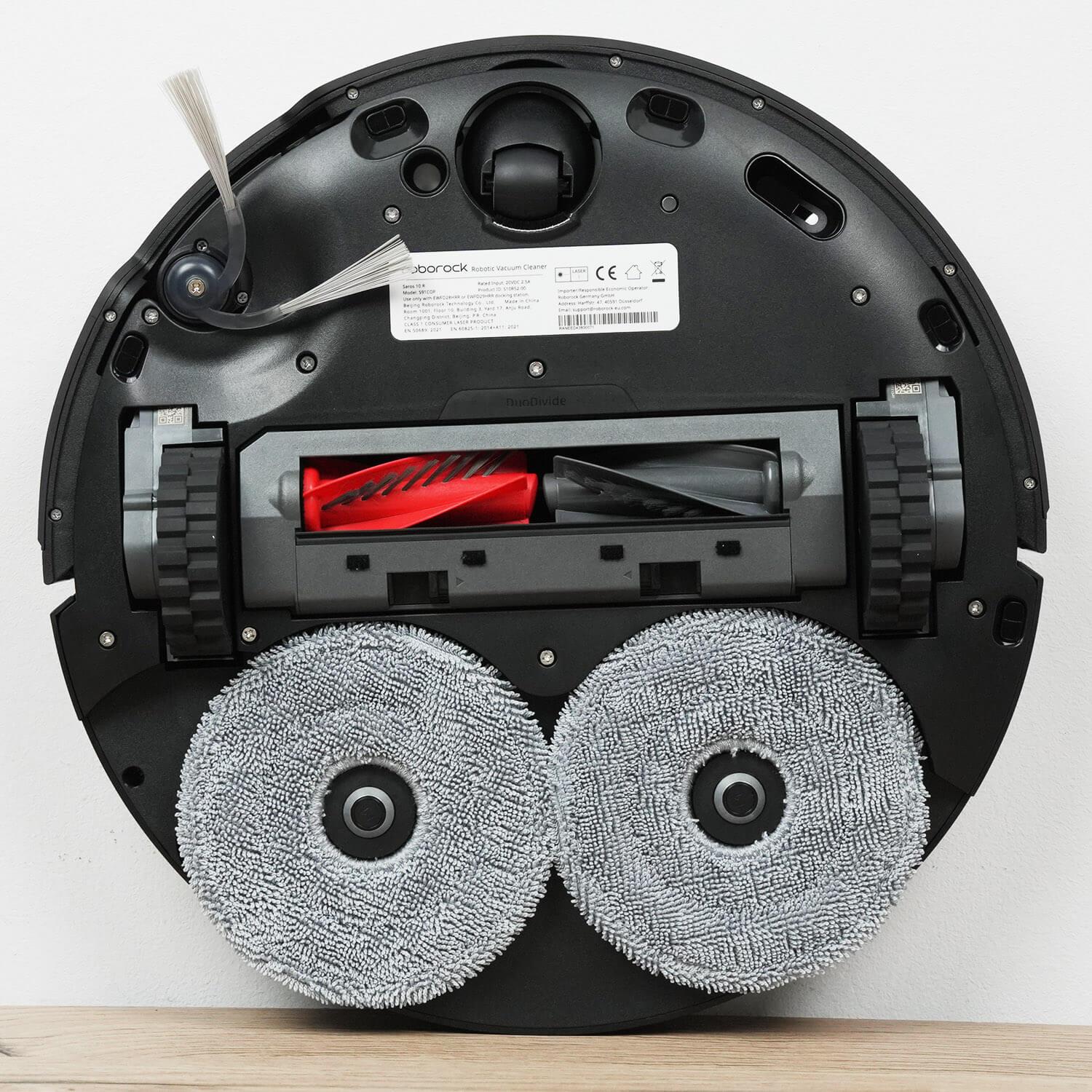
Cleaning module
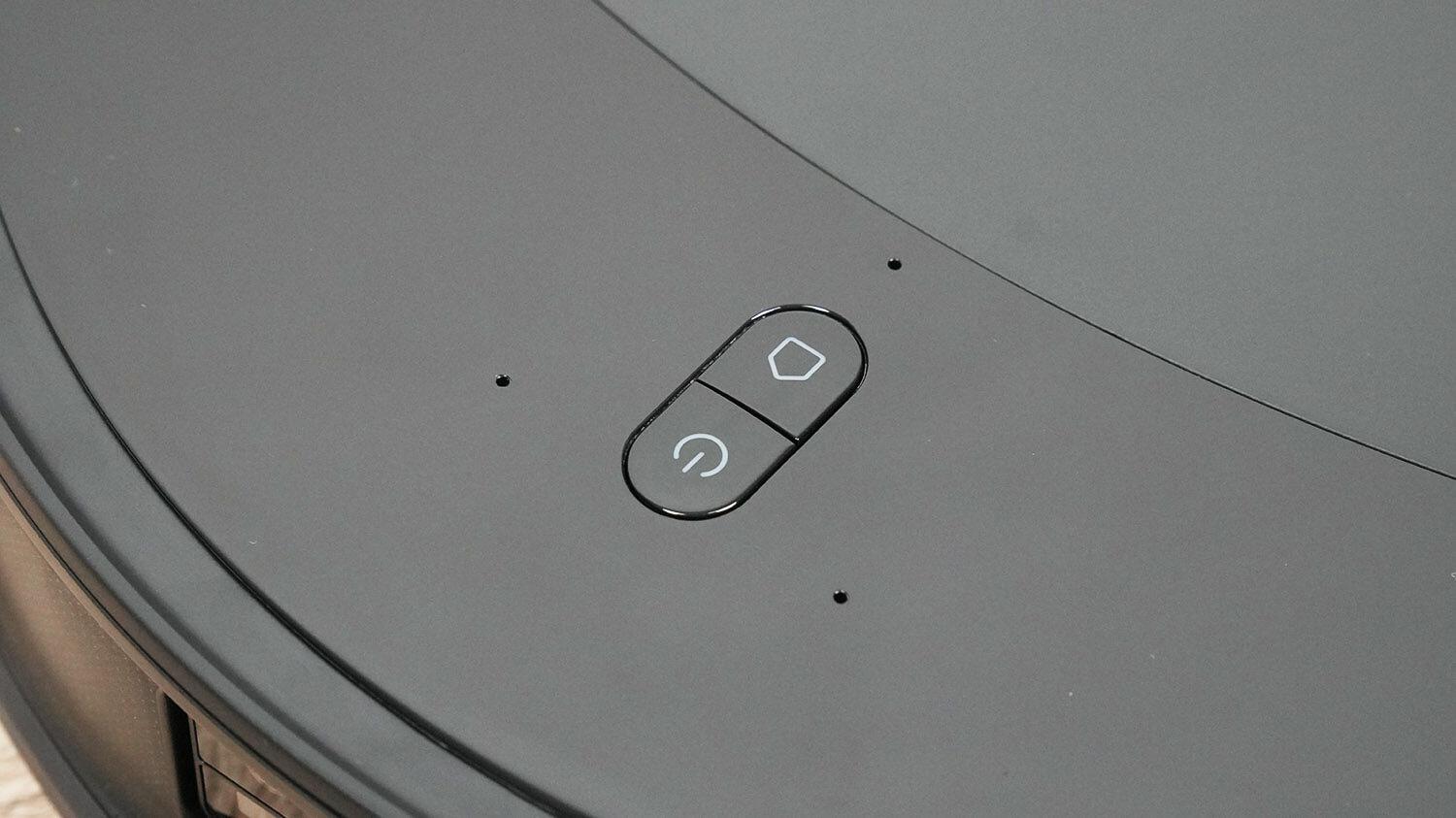
On the top of the body there are two mechanical control buttons and three speakers for the built-in “Hello, Rocky” assistant.
Control Panel
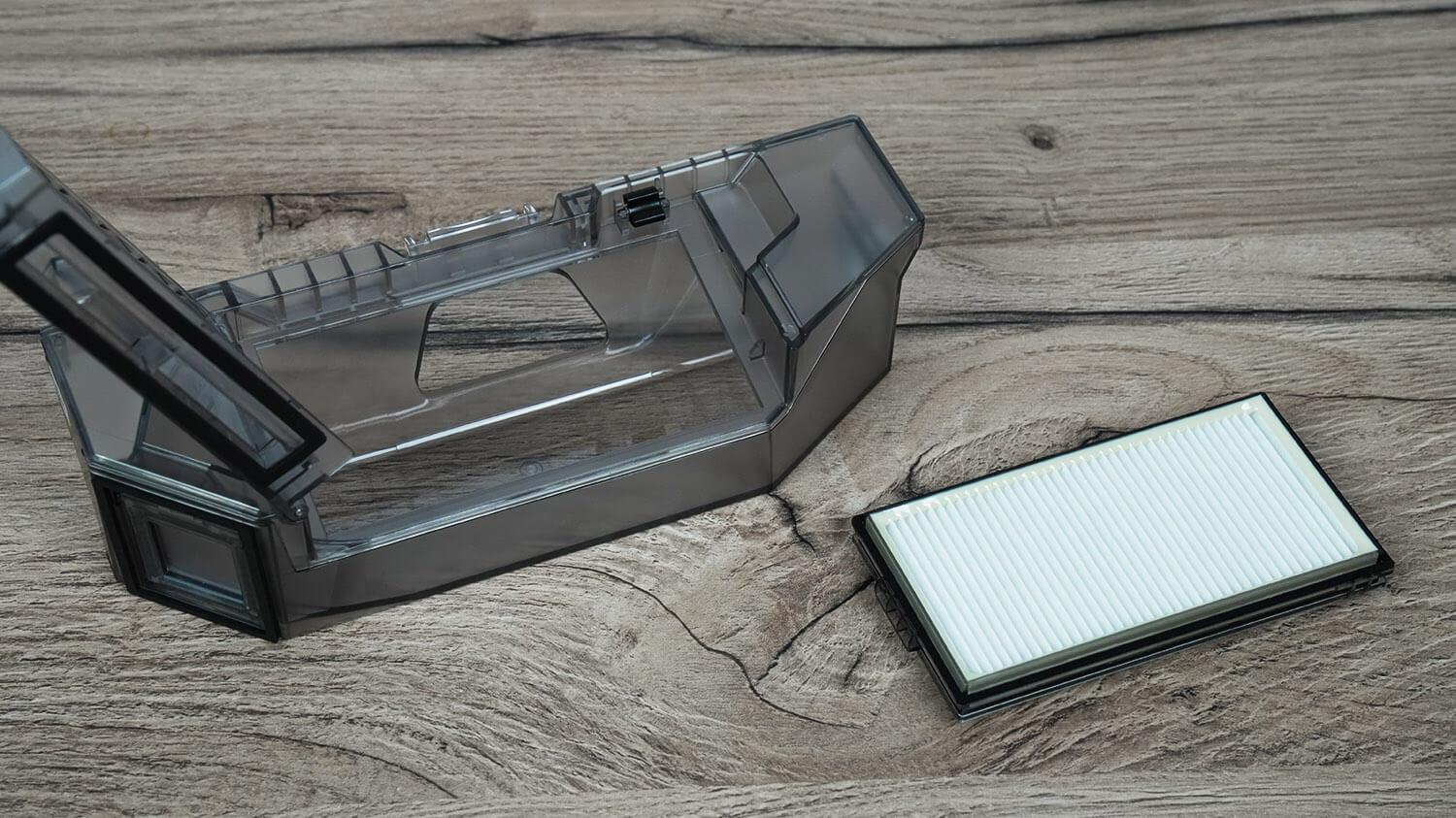
The dust container is located under the magnetically secured top cover. The container, like the filter, is washable with water. The filtration system is based on a HEPA filter. The robot also has a hidden water tank. Water is automatically pumped in at the station.
Dust collector
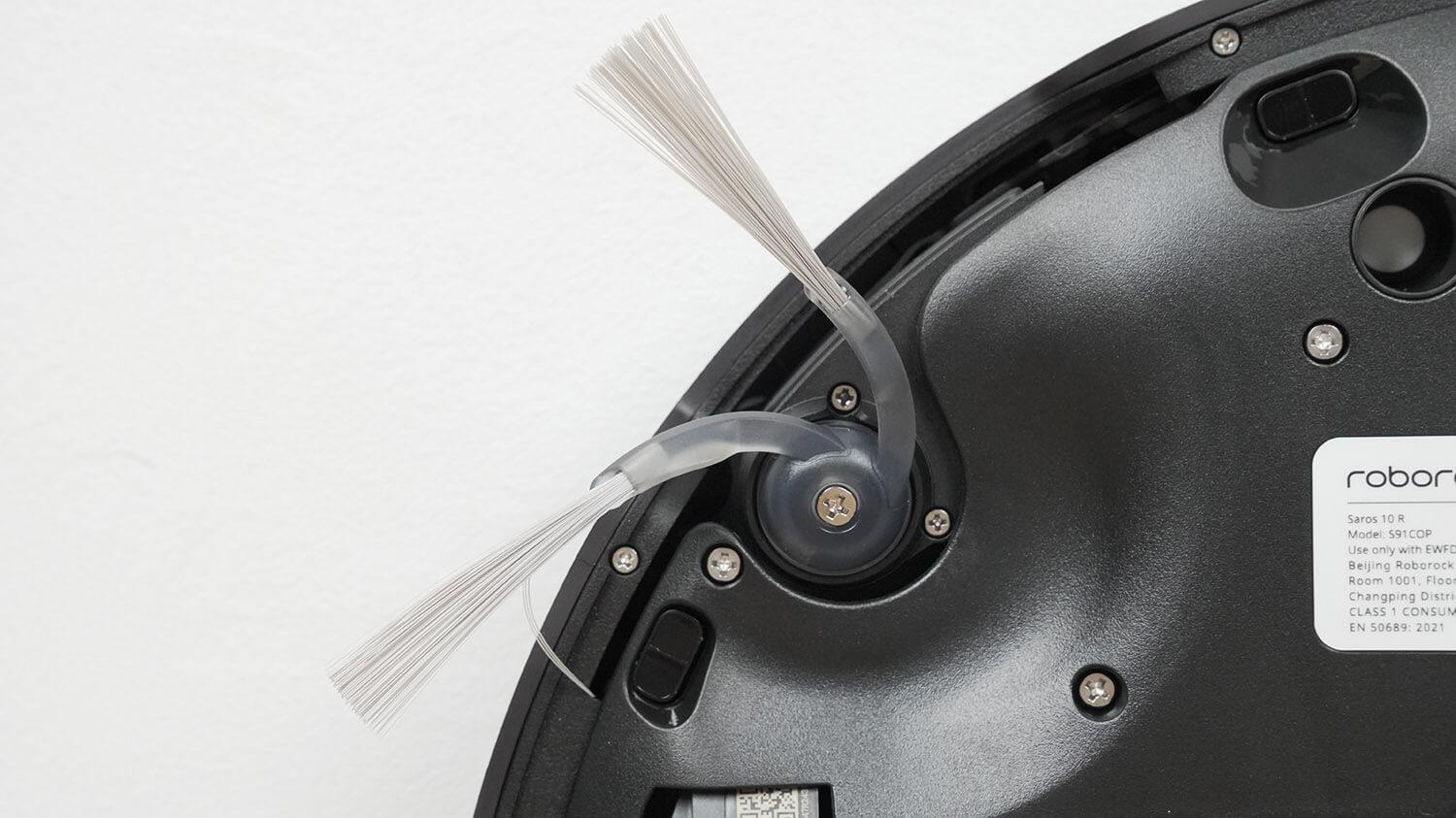
There's a single, dual-beam side brush secured with a screw. It extends into corners to sweep up debris, and automatically raises when entering carpets, during floor cleaning, and when the robot returns to its home station.
Side brush
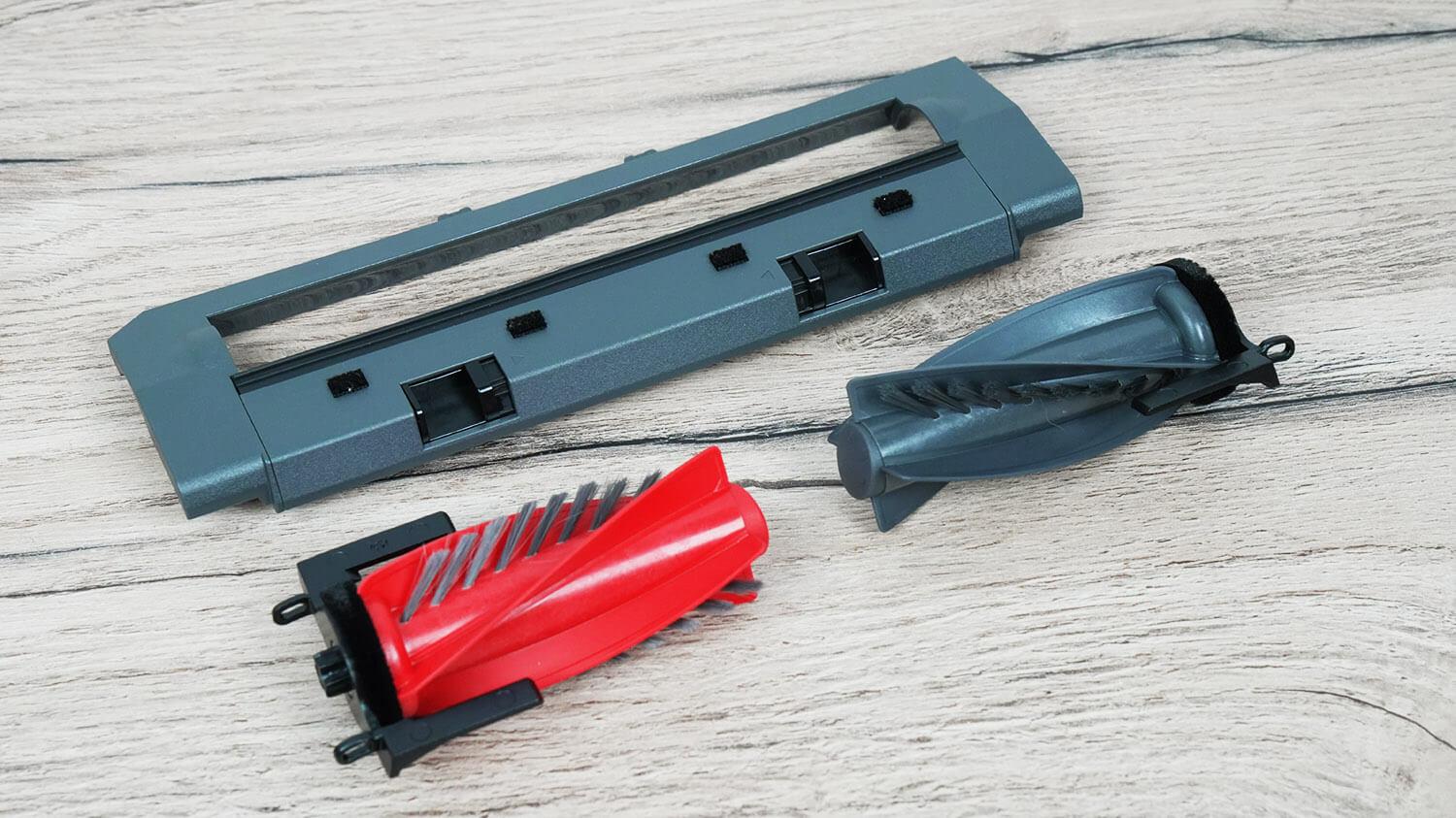
The central brush consists of two parts: two bristle-petal half-brushes with a gap in the center between them.
Central brush
The brush unit is floating. Each section disassembles. Hair and fur are collected through the opening. The turbo brush rises during floor cleaning and when the robot vacuum returns to its station.
Behind the central brush there are two rotating round cloths, one of which moves towards the baseboard during wet cleaning.
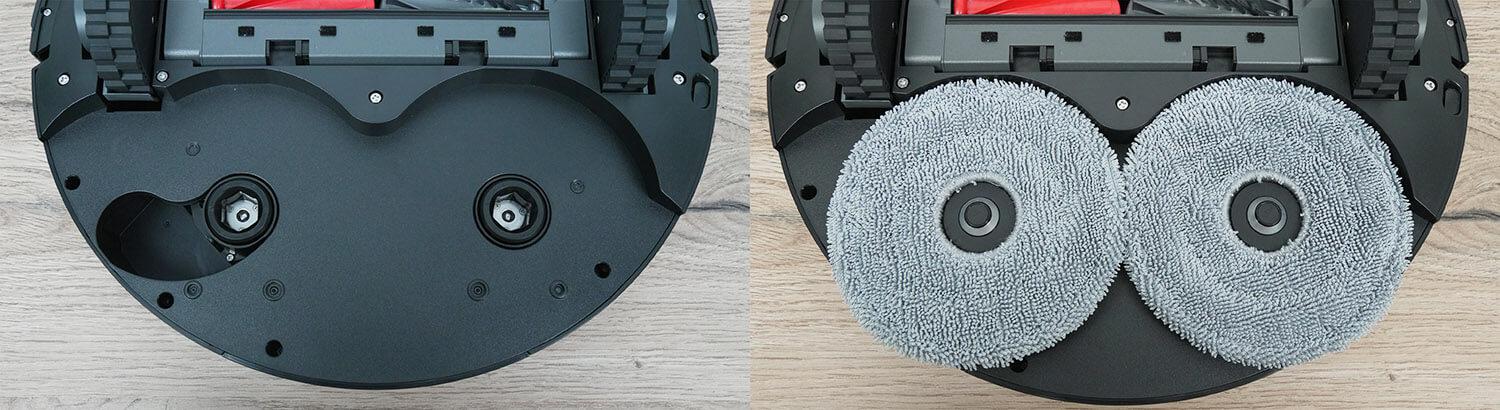
Napkins
The robot also features automatic lifting and automatic removal of the wiper holders at the station. The robot can release the holders for a full dry cleaning and carpet cleaning, and then automatically reattaches them.
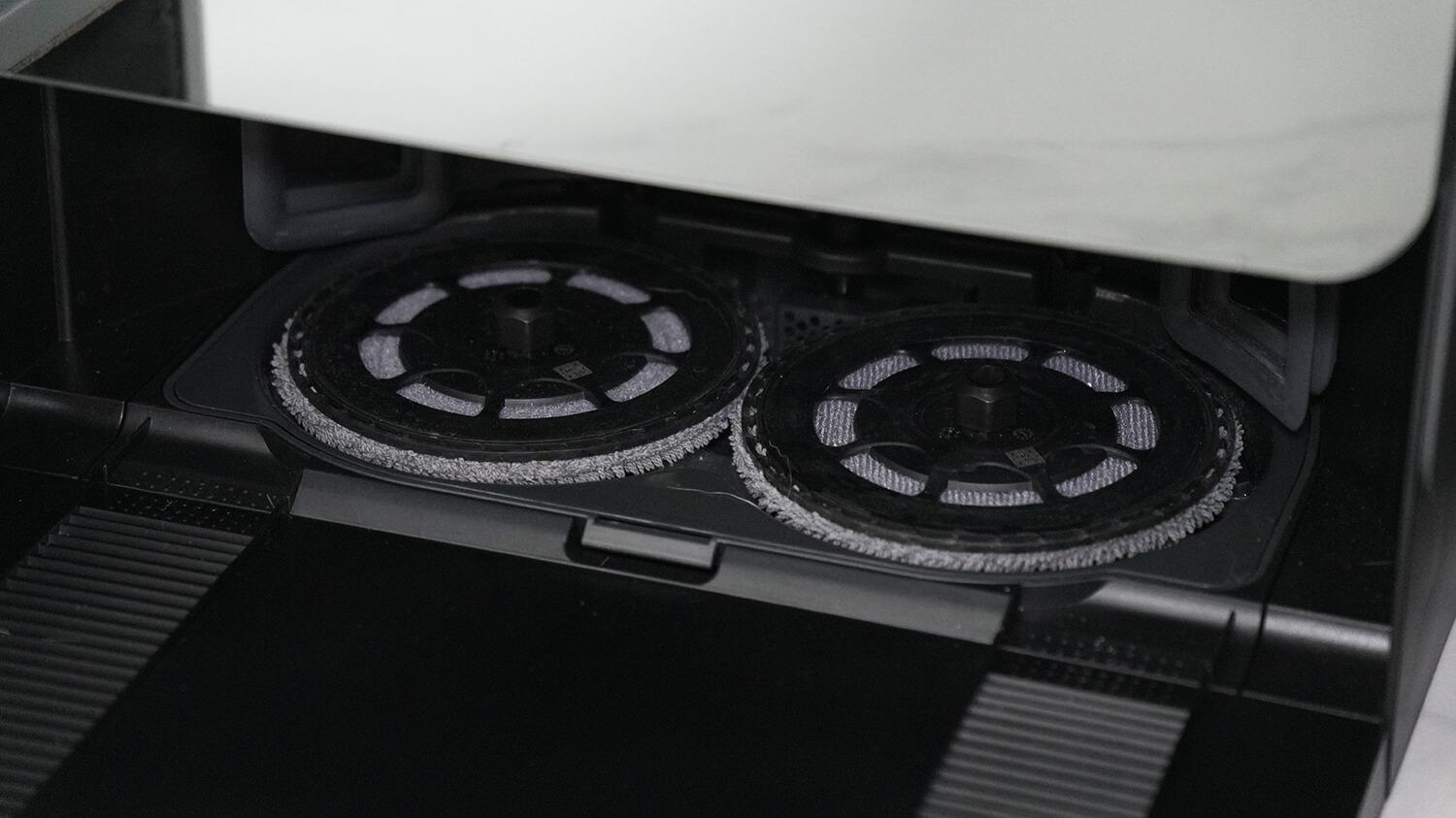
Resetting napkins
The robot's body lift also deserves special attention. The entire body automatically rises when the robot detects tall obstacles or medium-pile carpets. This allows the robot vacuum to clear thresholds up to 4 cm high. This technology is called AdaptLift.
And now the most interesting part – the station. First, you can compare the dimensions of the built-in version with the standard station using the Xiaomi robot as an example. The difference in size is noticeable.
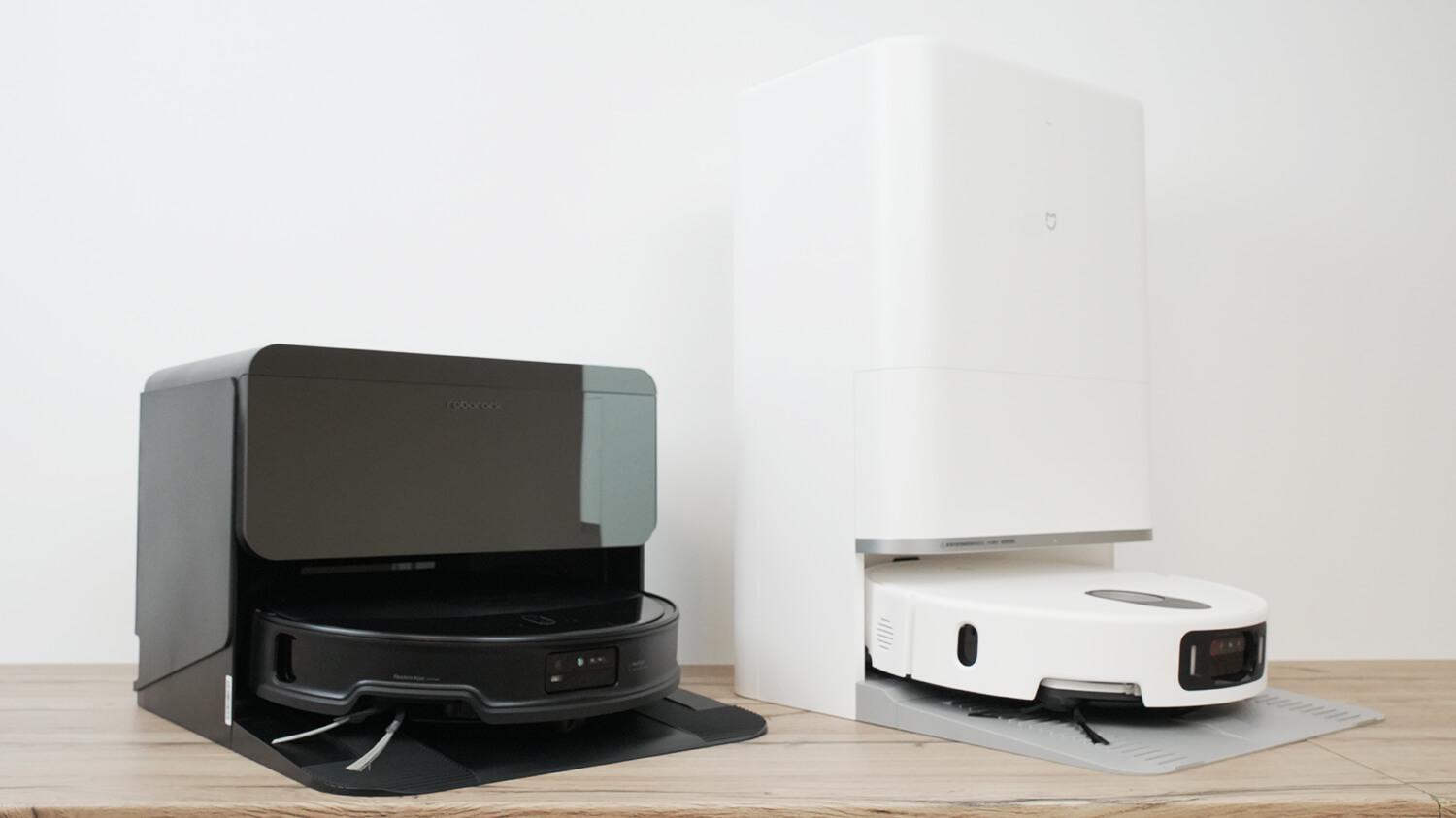
Built-in and standard station
The built-in height is only 300 mm, allowing it to be installed even within a kitchen cabinet. The width and depth are 381 and 475 mm, respectively.
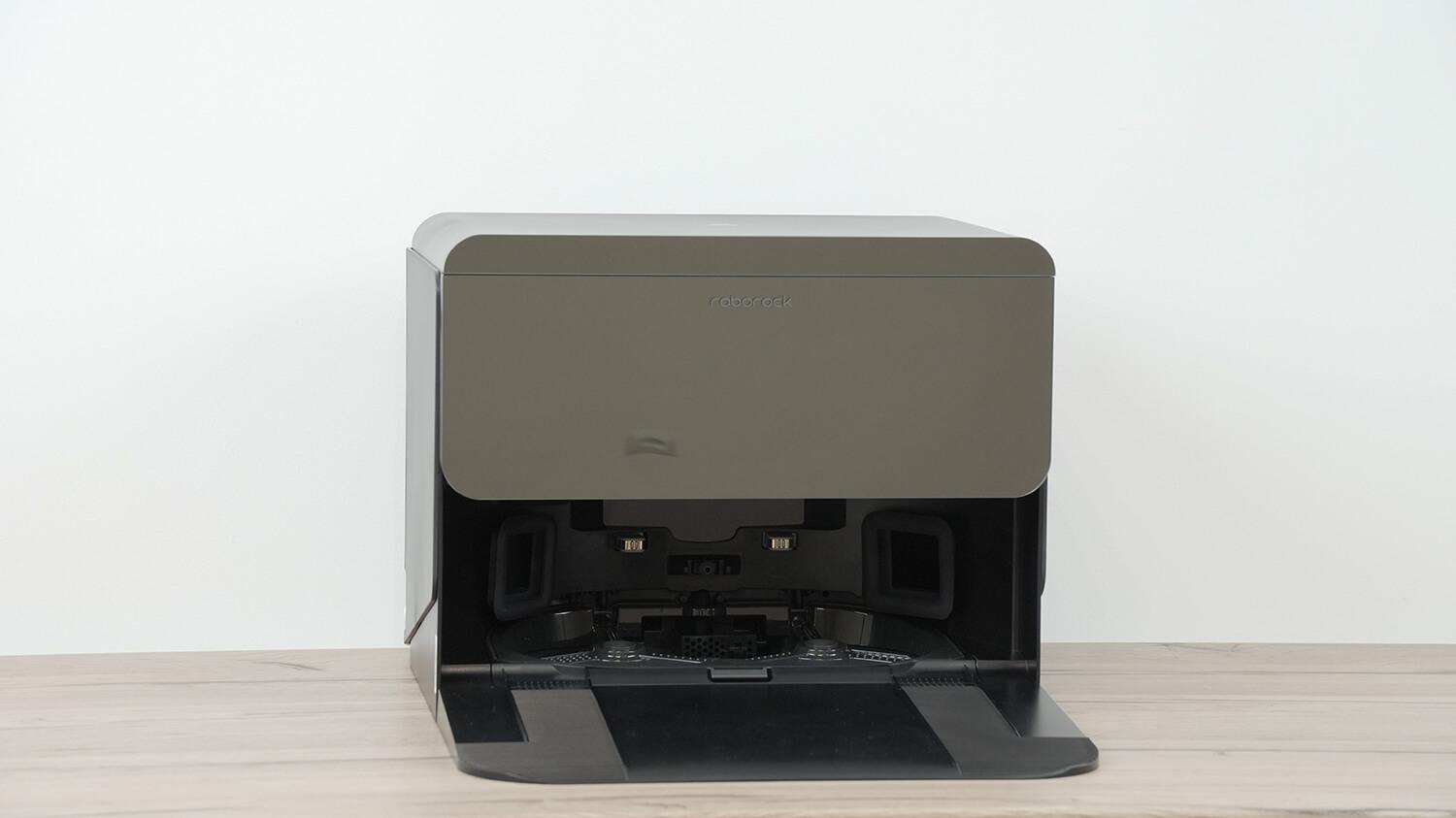
Station
At the Roborock Saros 10R station, the vacuum cleaner automatically empties the dust bin, washes the cleaning cloths with hot water, dries with warm air, cleans the bottom of the station with its scrapers, automatically mixes detergent, and pumps water into the robot's tank. The robot also features a quick charge in just 2.5 hours and automatic soiling detection for cleaning the cleaning cloths, allowing for re-washing when needed.
Let's look at each station component separately. The robot's access ramp is removable. The wipes' washing tray is also removable. It consists of a removable module with combs for cleaning the wipes, a tray with scrapers, and a coarse filter for dirty water. The washing water temperature reaches 80 degrees Celsius. After washing, the wipes are dried in air heated to 55 degrees Celsius.
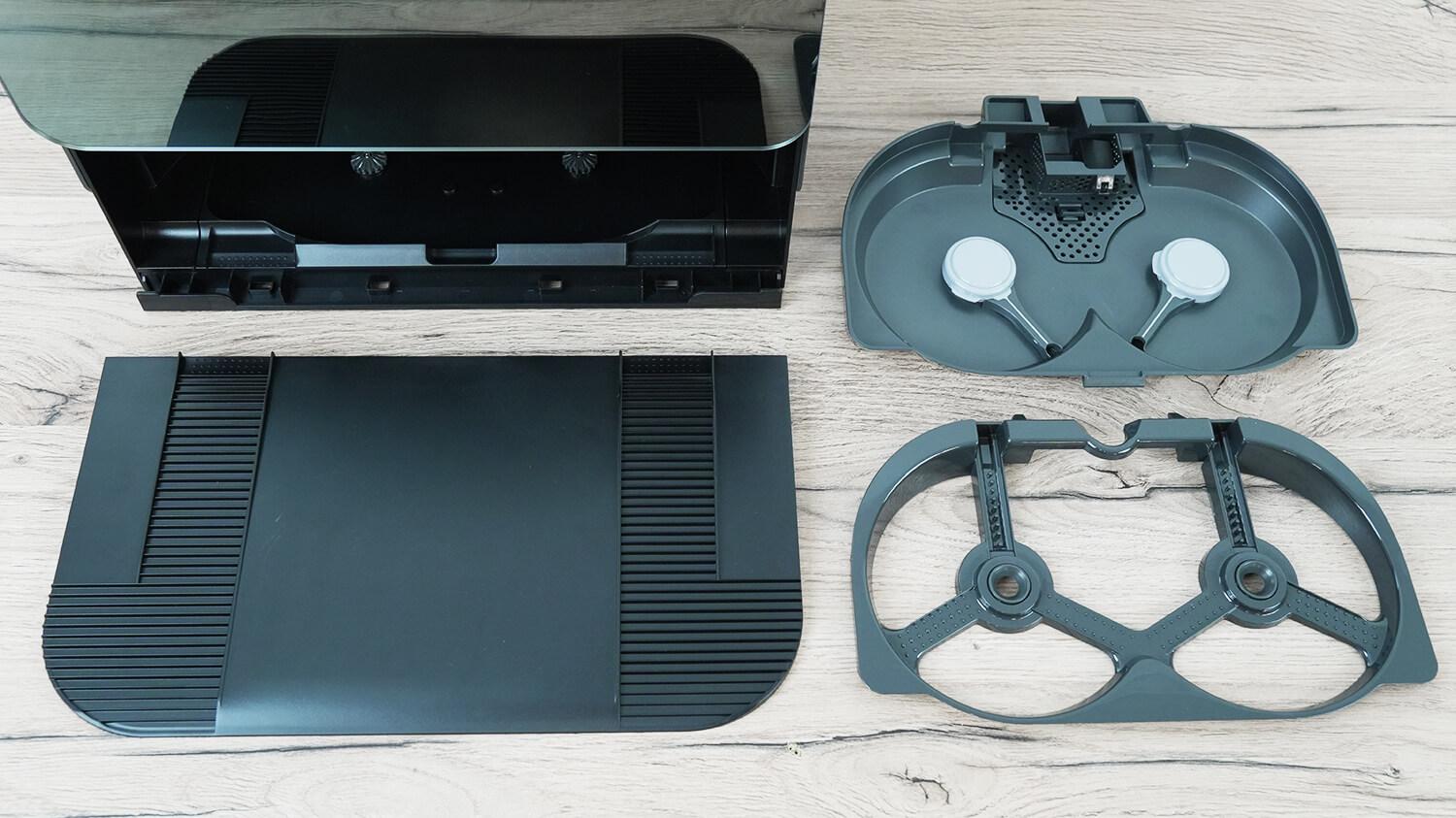
Removable station modules
A waste bag is located under the lid at the front. It's a standard design. Next to it is a reservoir for automatically mixing detergent with clean water. This reservoir holds 590 ml.
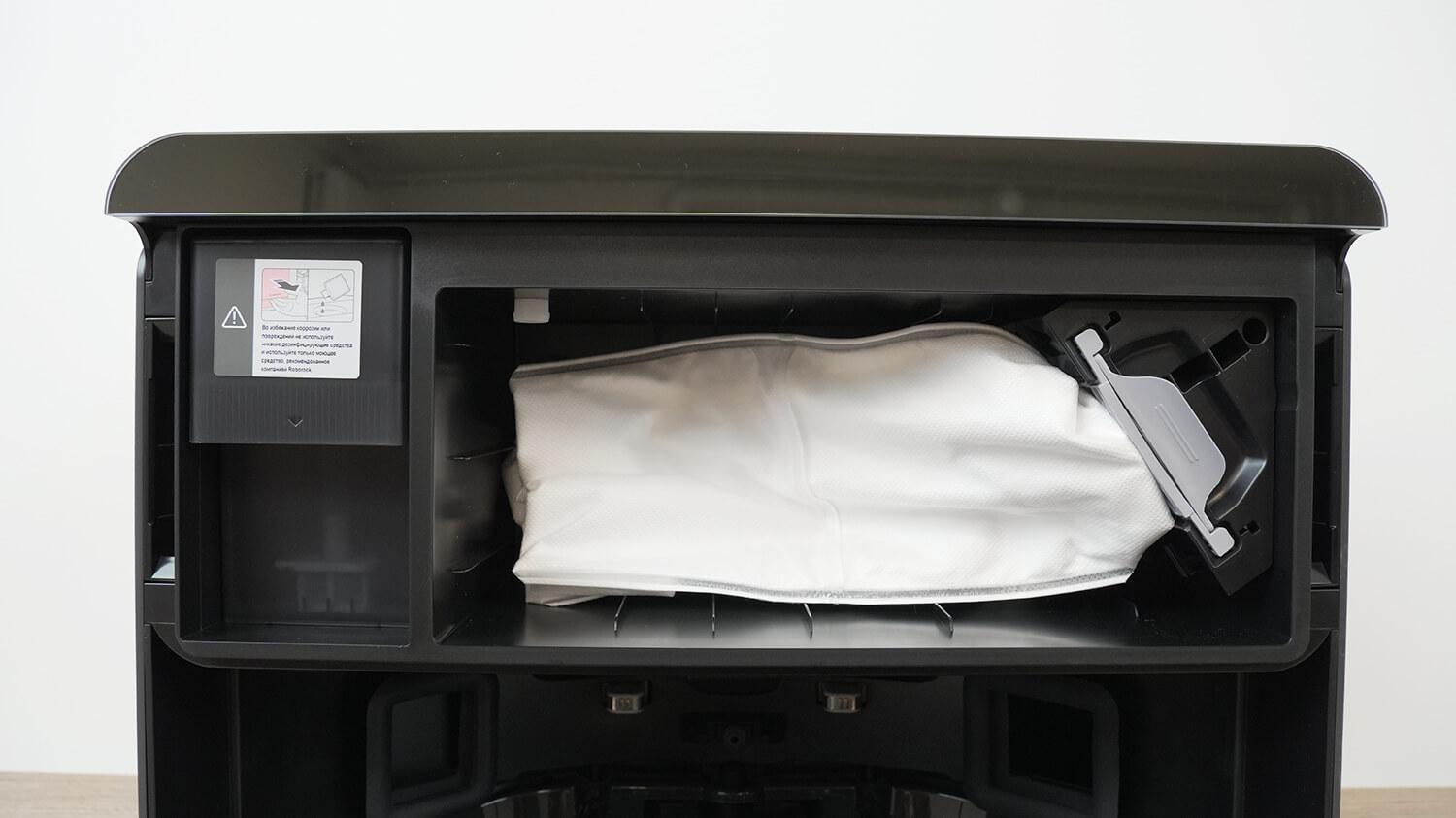
Detergent and garbage bag
One inconvenience is the lack of access to the water inlet/drainage system. The review included built-in stations that had access to an intermediate dirty water tank where the mesh could be cleaned of scale. Manual maintenance is not possible here, and that's not a good idea. Experience shows that such stations still require periodic maintenance of the internal tanks.
On the back of the station, there are outlets for connecting pipes. They can be positioned in either direction, depending on the layout of the utilities in individual conditions.
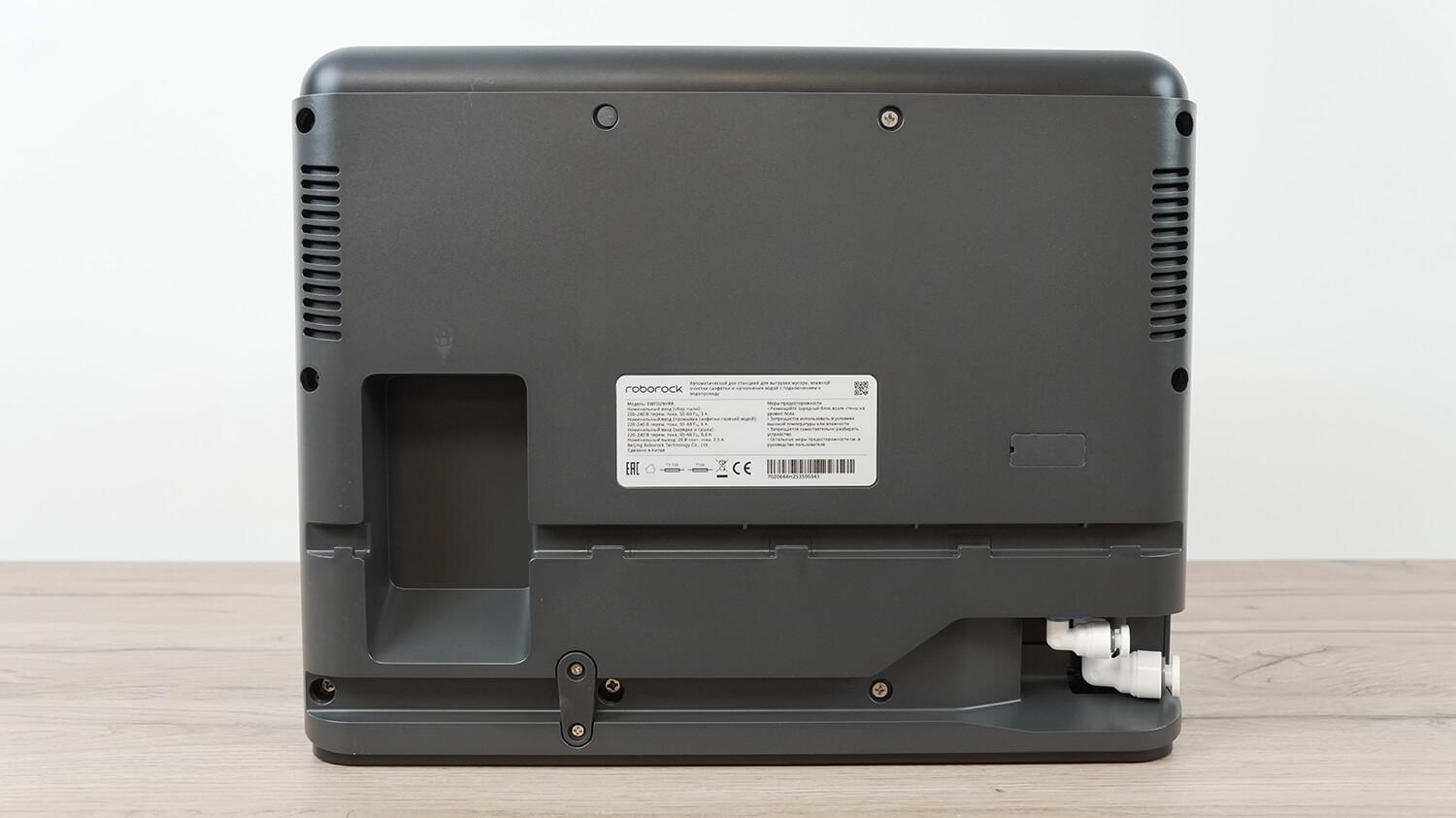
View of the station from behind
All the pros and cons of the design will be discussed during the final review. Let's move on!
Technical specifications
The main characteristics of the Roborock Saros 10R, as stated by the manufacturer:
Robot vacuum cleaner:
- Battery 6400 mAh.
- Suction power up to 20,000 Pa.
- Dust collector capacity ≈350 ml.
- Water tank capacity is ≈80 ml.
- Obstacle clearance up to 40 mm.
- Robot dimensions: 353*80 mm.
Station:
- Bag in the station: 2.5 l.
- Detergent tank: 590 ml.
- Station dimensions: 381*475*300 mm.
Here, only the station's altitude has changed, compared to the regular Saros 10R version.
Functional capabilities
Speaking of features, the robot vacuum cleaner is controlled via the proprietary Roborock app. Connection is simple and convenient, the interface is in Russian, and the Russian-language version of the robot itself, like mine, even has Russian voice prompts. The global version doesn't have a Russian voice package, and that's important to keep in mind.
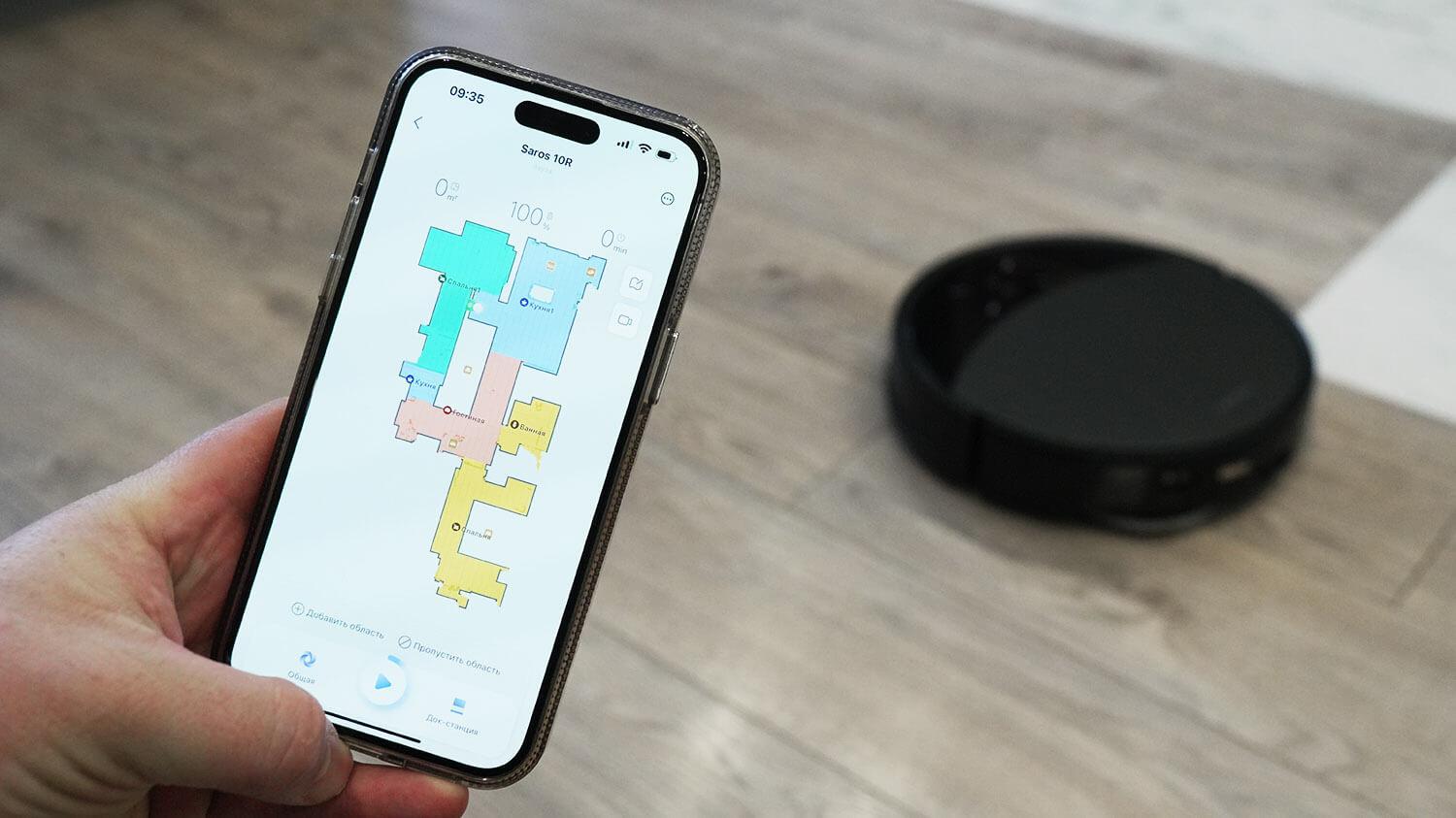
Control via app
The main functions of the Roborock Saros 10R are displayed on the screen:
- Self-cleaning of the dust collector at the station.
- Washing napkins at the station with hot water.
- Drying napkins with warm air.
- Side brush extension in corners.
- Moving the holder with a napkin to the baseboard.
- Refilling the robot's water tank via the station.
- Automatic mixing of detergent.
- Removing napkin holders at the station.
- Recognizing objects on the floor.
- Remote home monitoring via camera.
- Saving multiple cleaning maps in memory.
- Automatic zoning of premises into rooms.
- Selecting areas and rooms for cleaning.
- Virtual walls and no-go zones (and for wet cleaning mode).
- Suction power adjustment.
- Adjusting the degree of wetting of the napkin.
- User mode.
- Cleaning log.
- Setting up cleaning according to a schedule.
- Automatic power increase on carpet.
- Carpet cleaning in wet cleaning mode.
- Lifting napkins when driving onto carpets.
- Raising the turbo brushes in wet cleaning mode.
- Raising the body when overcoming obstacles.
- Hello Rocky support.
- Voice notifications in Russian.
- Yandex.Alice support.
The robot's control via the company's "Hello Rocky" voice assistant deserves special attention. You simply give the robot a command by voice, and it carries it out. No third-party devices are required. Very cool!
Overall, a wide range of options have been implemented for flexible customization of cleaning parameters to suit your needs. That's a plus!
Testing
A detailed video review of the Roborock Saros 10R, including all tests, has already been prepared and published on the channel:
Connection to utility networks
A few words about how I installed the station. Since I use a built-in unit from a different brand, I already had a slot in my kitchen cabinets. There's also an outlet there to connect the station to the power supply.
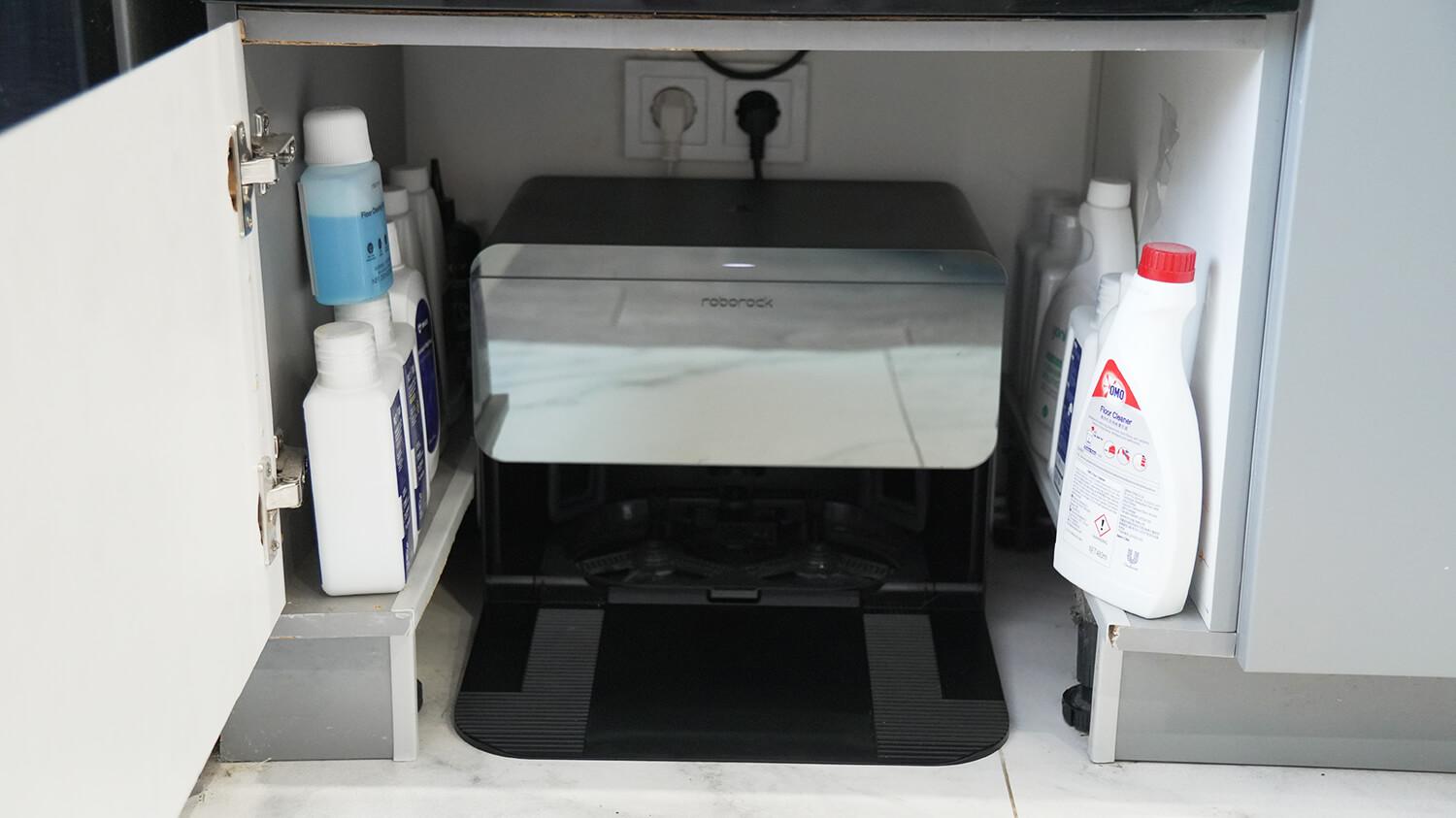
Station placement
I connected the tubes to the station, installing retaining rings.
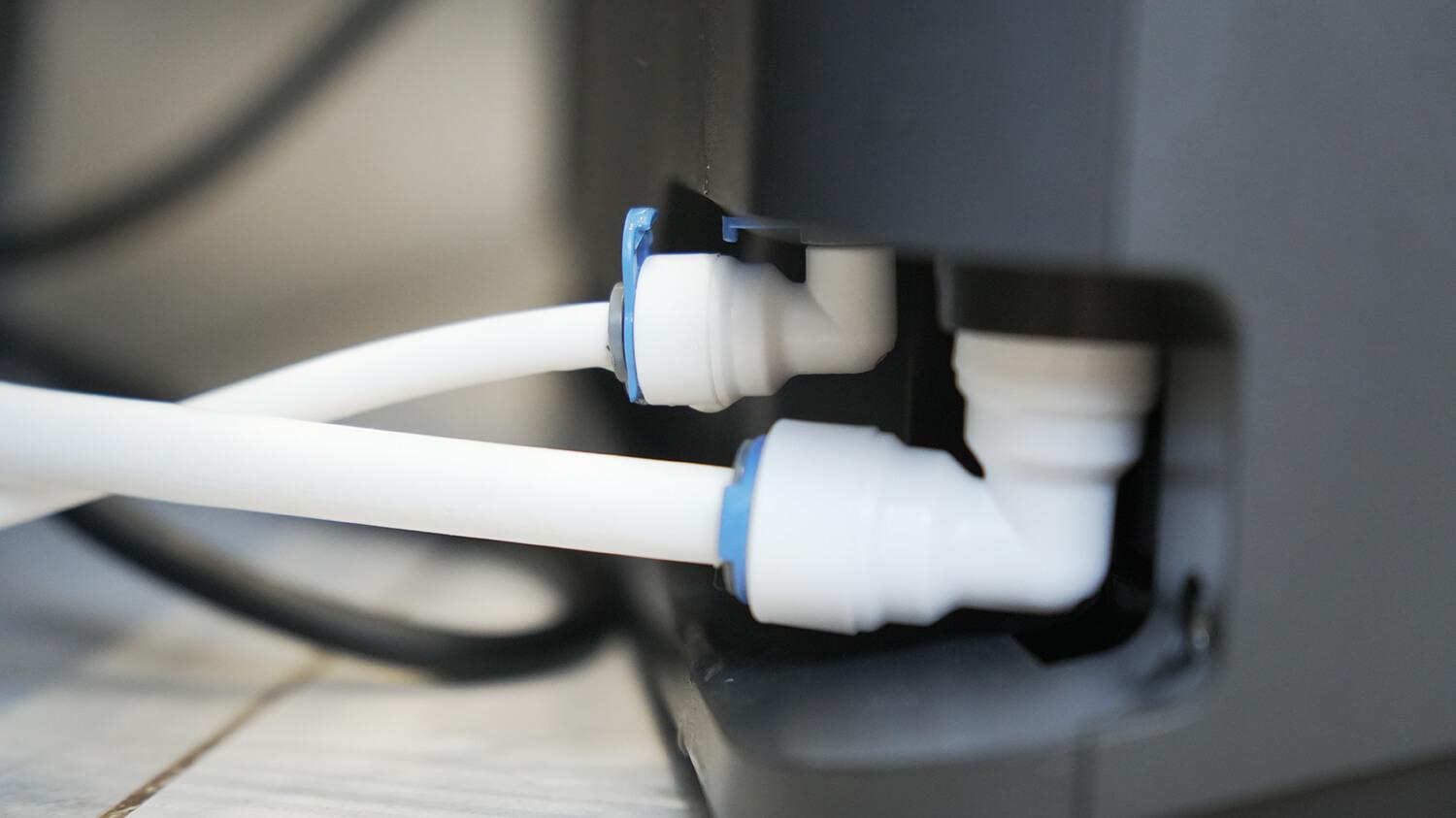
Connecting the station to the water supply and sewerage system
I connected the station to the water supply through a standard Geyser-type under-sink filtration system. The outlet water pressure is sufficient for the system to function properly. Incidentally, the manufacturer states a minimum pressure of 0.1 MPa (megaPascal).
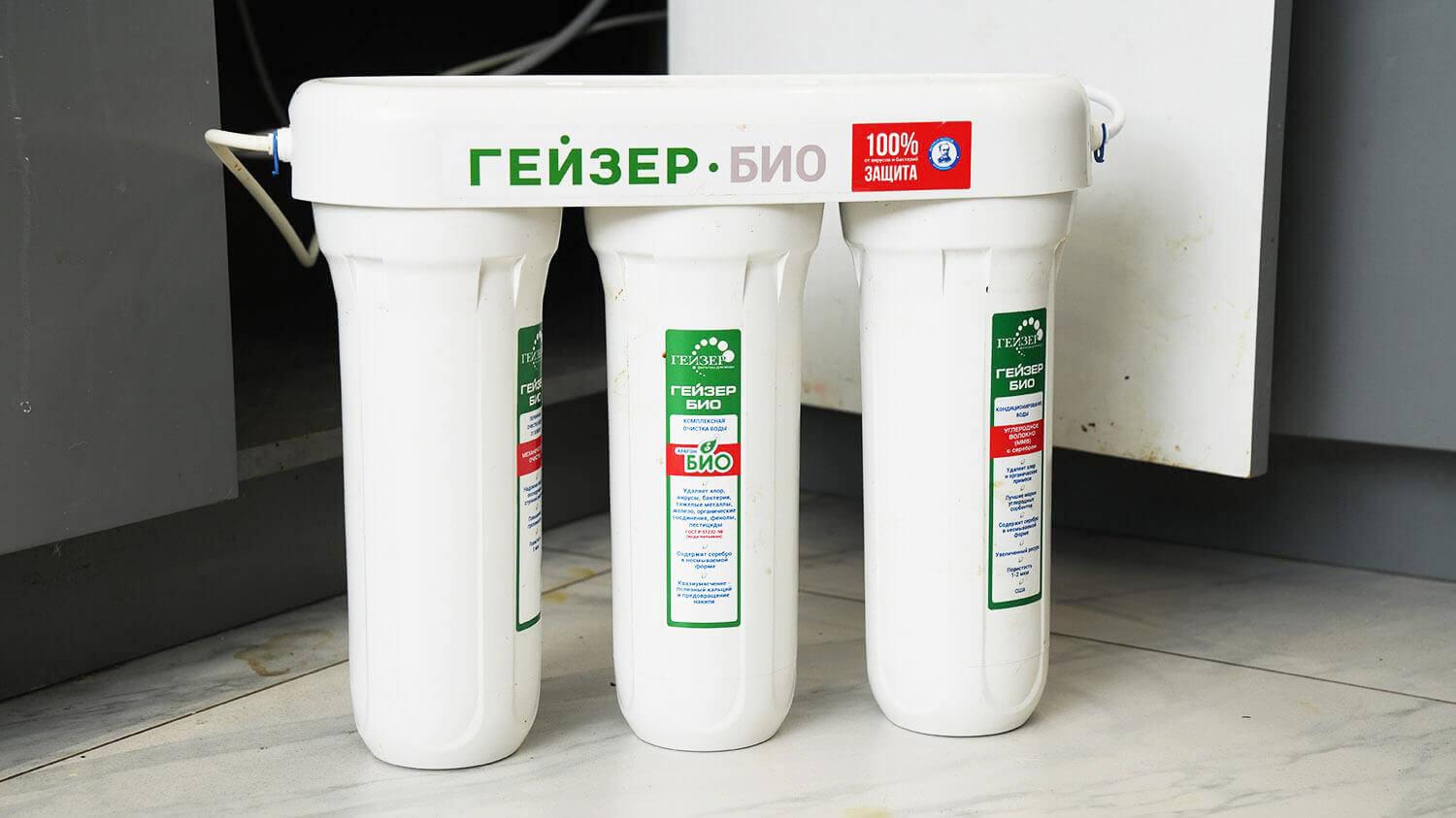
Geyser
I installed the drain through a tee installed under the sink. I bought a plug for the tee, drilled a hole of the appropriate diameter in it, inserted the tube, and sealed it with sealant. The manufacturer recommends connecting the tube to the drain no higher than 50 cm from the floor.
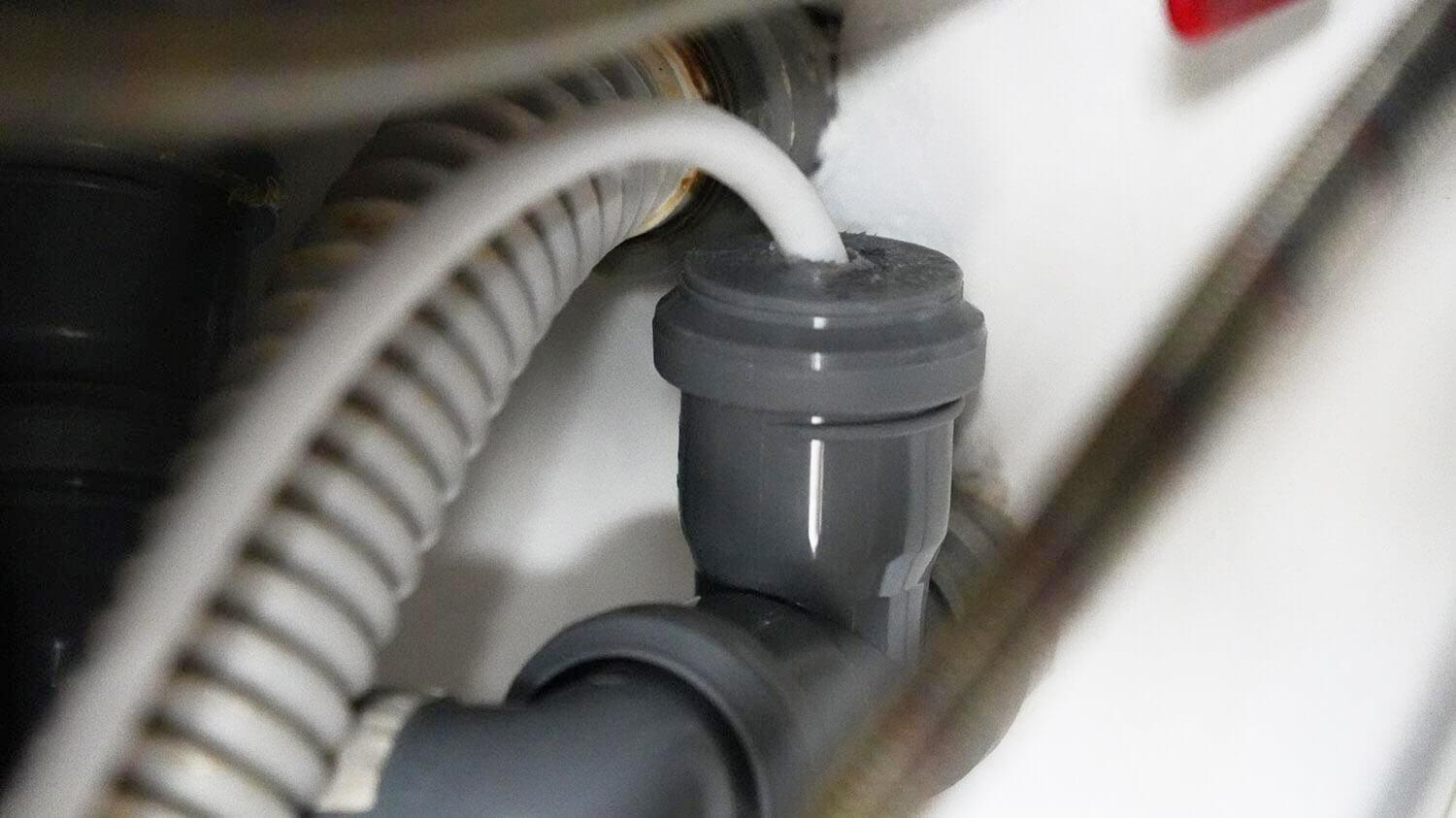
Drain
I couldn't find a section in the app to diagnose whether the station was connected correctly. I tested it the first time with the water supply turned off, and a corresponding notification with an error code appeared. I turned the water back on, and the station rinsed the wipes properly, then drained the water into the sewer.
We launch the robot, and here's a visual example of the Roborock Saros 10R emerging from a niche in the kitchen cabinet. In my opinion, it's a very cool solution.
Navigation
And finally, let's move on to the tests! First, we'll test the Roborock Saros 10R's navigation in a room with obstacles. The robot vacuum first navigated around the table legs, then around the perimeter of the room, and then proceeded to clean the entire accessible area in a serpentine pattern. The robot carefully navigated around the dryer's legs and also swept around the box. The mirror introduced some mapping errors, a common issue with most robot vacuums. Overall, the robot's performance was flawless, and there were no uncleaned areas, so the test was a success.
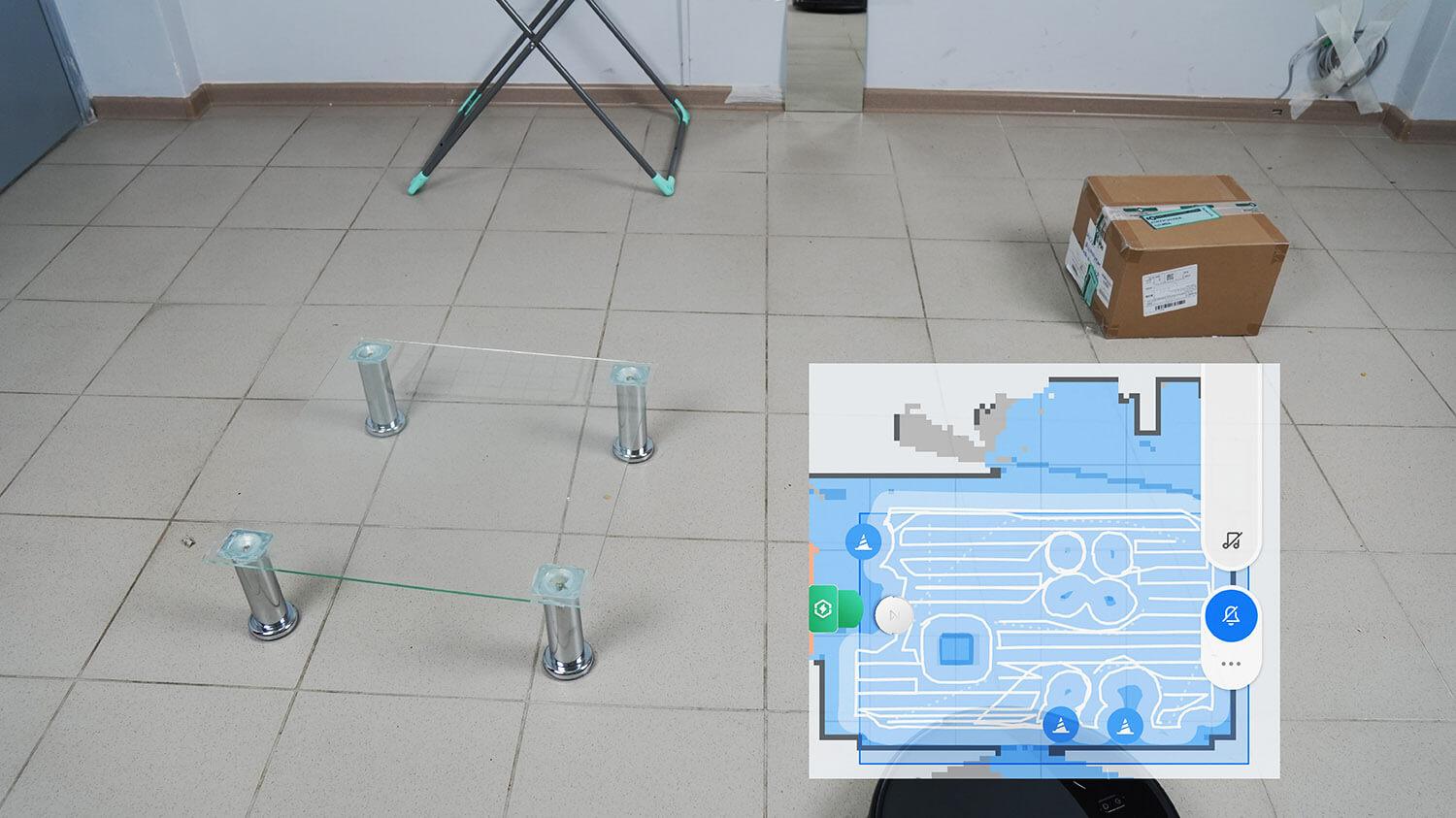
Navigating an Obstacle Room
Speaking of navigating around the home, the Roborock Saros 10R cleans room by room, first along the perimeter, then in a serpentine pattern. After a selected time interval or after each room, the robot vacuum returns to the station and rinses its cleaning pads, then returns to clean where it left off. There are no uncleaned areas, the cleaning speed is high, and this model has excellent navigation!
Passing under low furniture
The minimum clearance height of the Roborock Saros 10R was also tested. The robot entered the 80 mm clearance without issue and cleaned evenly. No complaints about the robot in this regard!
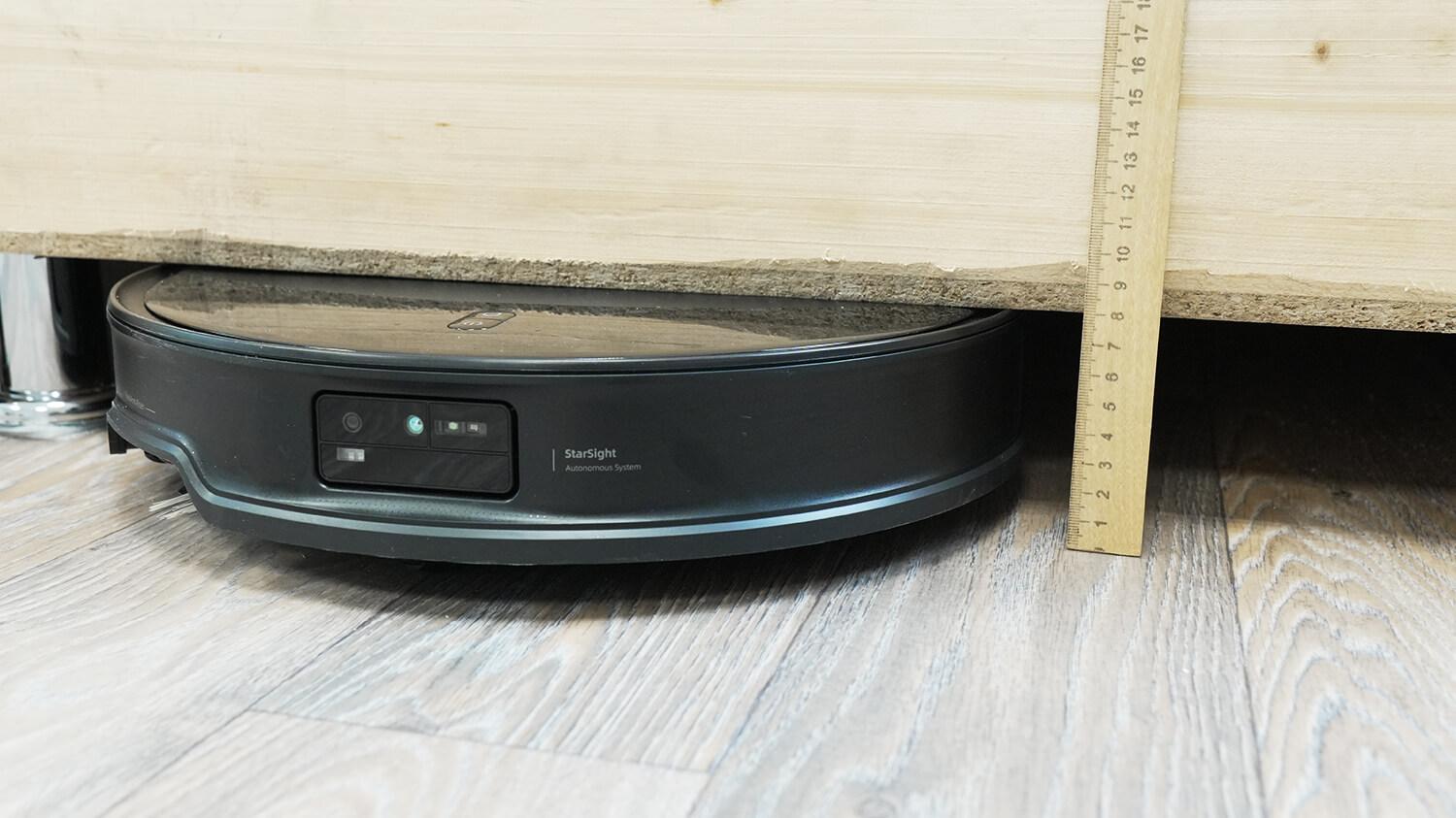
Clearance clearance of 8 cm
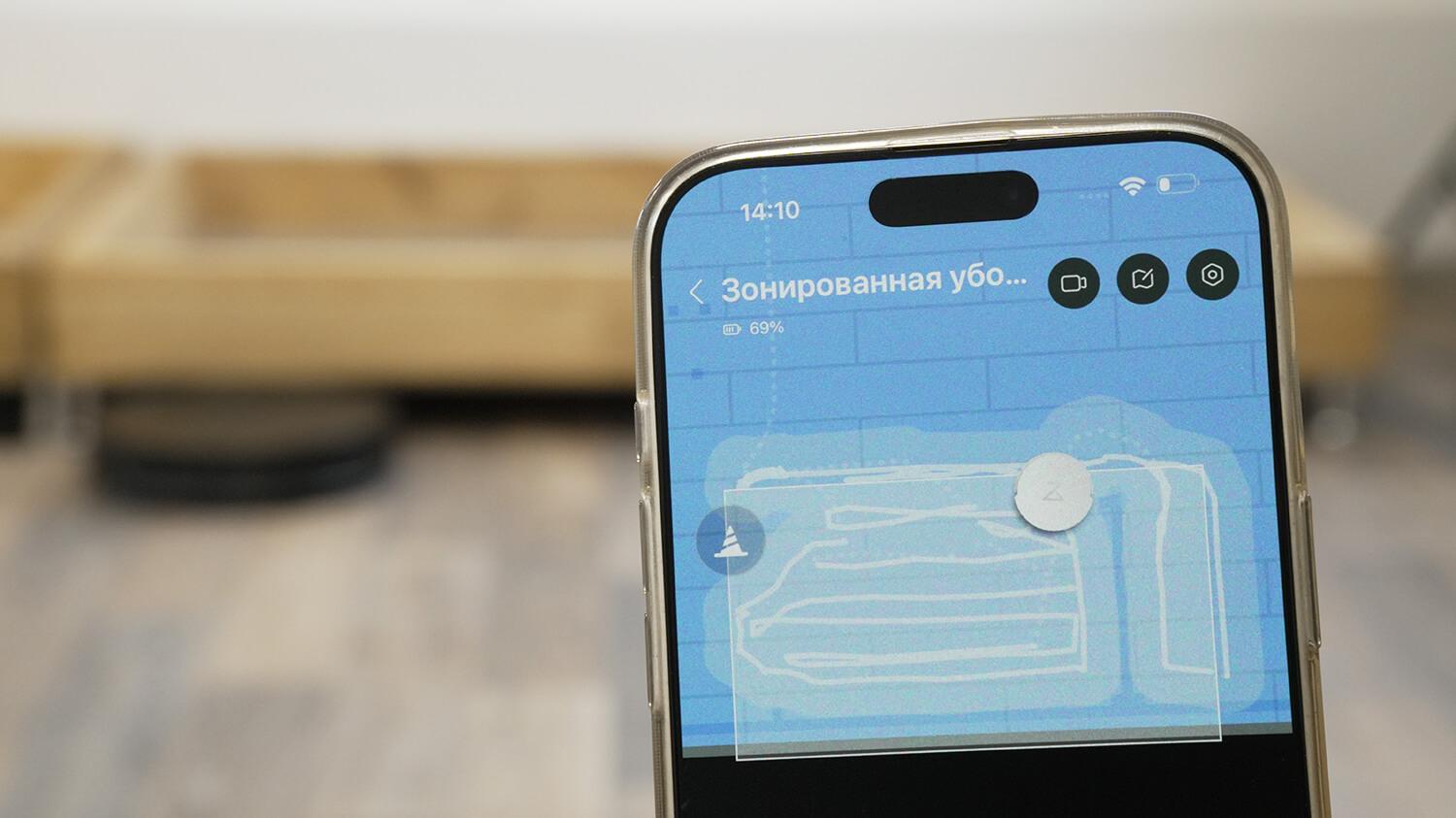
Navigating under furniture cleaning
Autonomy
The robot's autonomy was previously tested during a review of a model with a standard docking station. It managed to operate for 122 minutes, cleaning 88 square meters of usable space. In reality, that's more than two full cleanings of a two-bedroom, 70-square-meter apartment. It also features a resume cleaning mode after recharging at the docking station, making this model capable of cleaning larger areas.
Recognizing objects on the floor
As for the object detection system, I re-tested it, as almost a year has passed since the regular Saros 10R was released, and there have been many firmware updates, which have likely improved the accuracy of object recognition.
In good lighting, the robot was able to correctly identify and safely navigate around 6 out of 6 objects on the floor, even recognizing a toy as a pet. It was also able to accurately navigate around 3 out of 3 socks, all 4 wires, and 6 out of 6 simulated pet surprises, correctly identifying 3 traps.
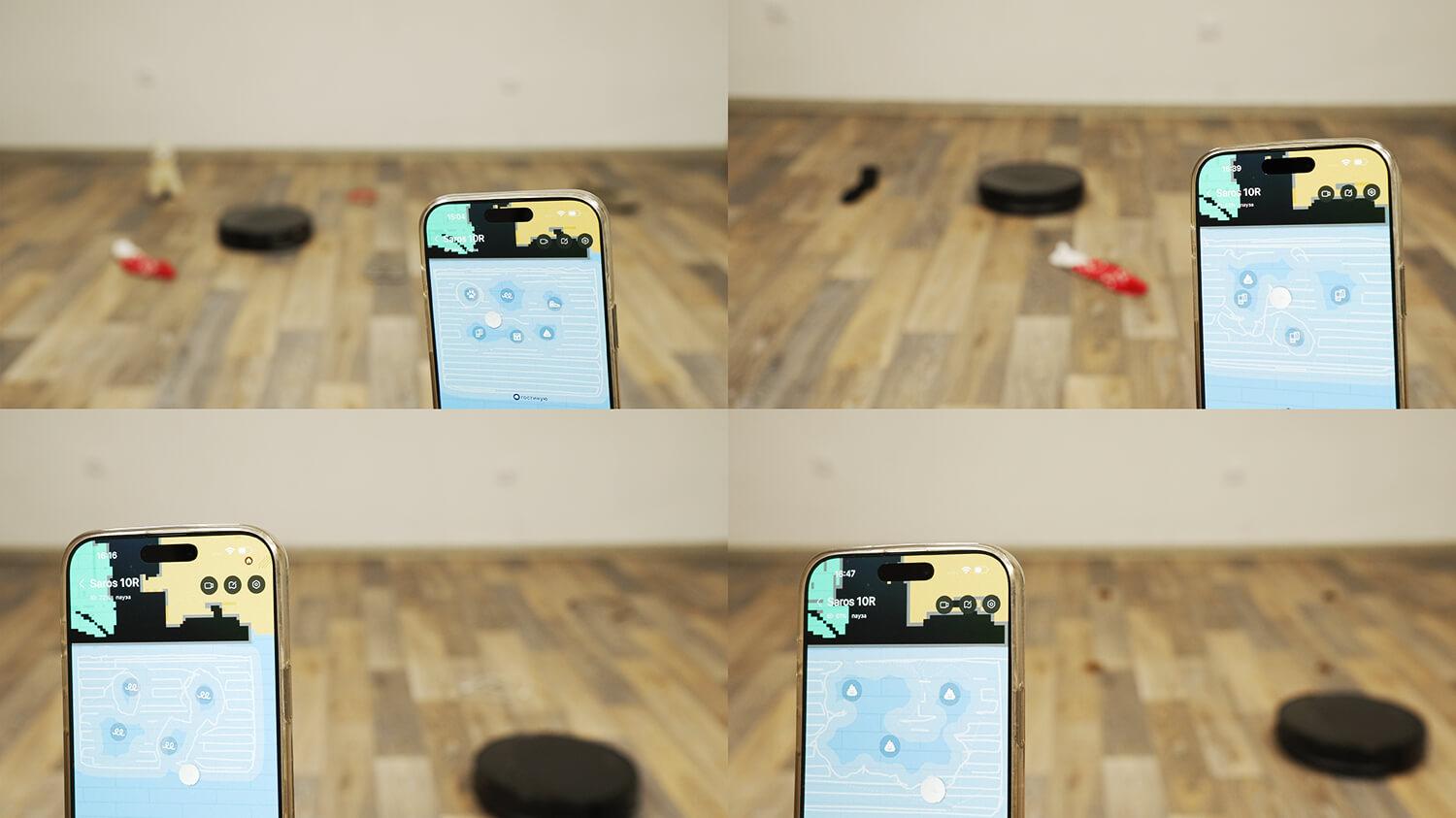
Walking around objects in good light
In complete darkness, the detection system is blinded, but not significantly. The robot was able to avoid 5 of 6 standard objects, correctly identifying 3 of them. Just like a year ago, it again ran into a pet surprise trap, running over it. It also avoided 4 of 4 wires on the floor, correctly identifying only 3. It carefully avoided 3 of 3 socks, identifying 2. And the most challenging part: in the dark, it avoided 1 of 6 imitation feces traps, identifying one as a simple obstacle, the second as fabric, and the third as a TV stand. In my opinion, the object recognition system has been improved only minimally. The robot still ran into the same traps as a year ago.
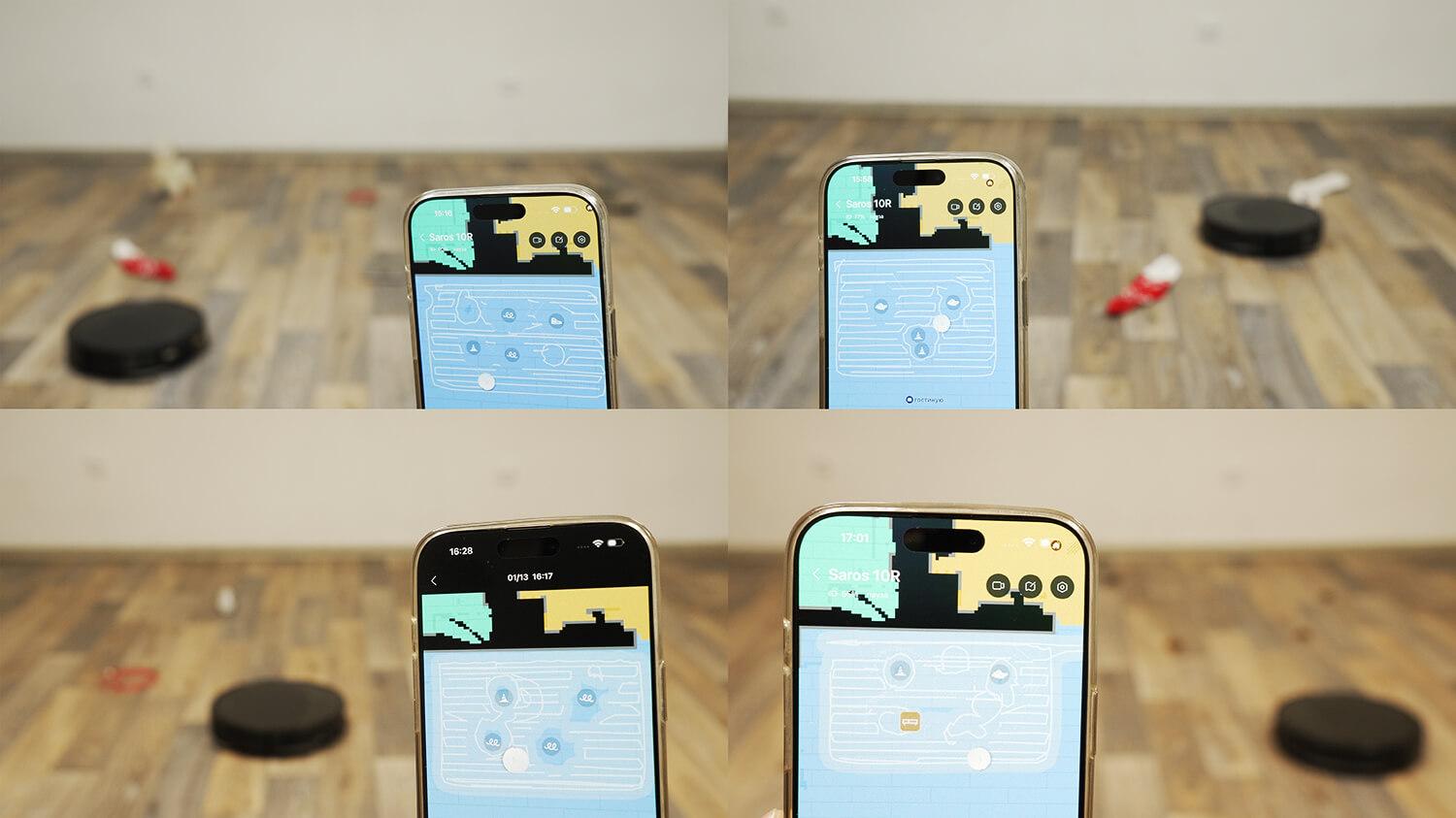
Traversing objects in complete darkness
The floor stain recognition feature deserves special attention. In my case, there was a dried ketchup stain, a milk puddle, and a puddle of clear water. The camera didn't recognize the water, but it did detect the milk. In this situation, the robot turns off the suction, raises its brushes, and goes over the puddle in a crisscross pattern, wiping it with cloths. Surprisingly, after spot cleaning the puddle, it didn't bother washing the cloths; it simply continued cleaning. Even more surprising was that it didn't recognize the stain, even though it was high-contrast and quite large.
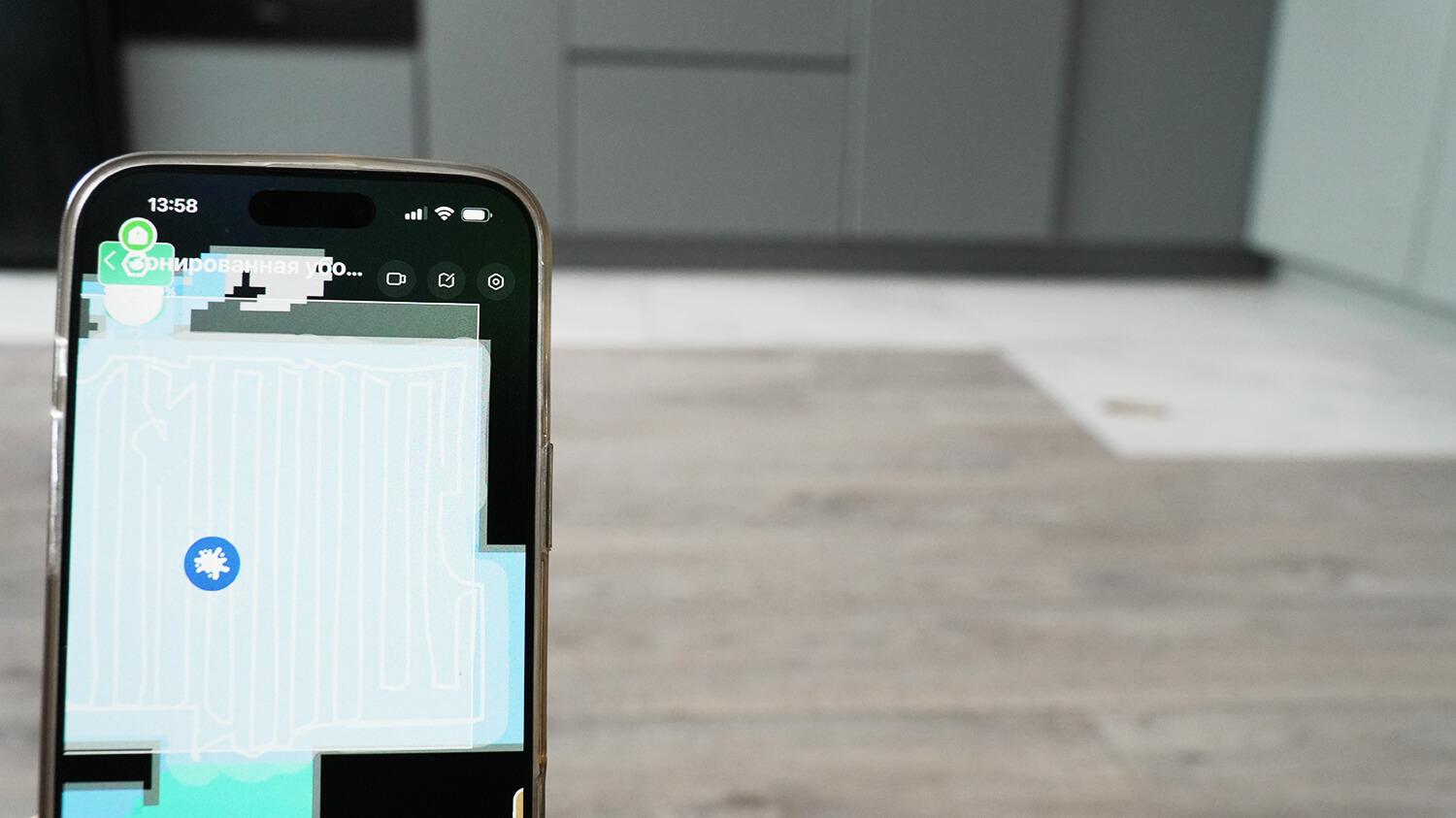
Puddle recognition
From experience, I can say that the object recognition system is actually very accurate, on par with premium analogs, but it still requires some improvement. The brand's engineers still have room for improvement.
Cleaning behind the curtains
I also checked whether the new navigation system can clean behind curtains and drapes, something most lidar robots can't do. No, this robot, like its siblings in the line, doesn't clean behind curtains.
Suction power
Just to be sure, I checked the suction power again. As expected, the results remained unchanged. In Silent mode, the Roborock Saros 10R was only able to clean debris from a 2 mm gap. In Balance mode, it partially cleaned a 4 mm gap. In Turbo mode, the results remained unchanged. In Maximum mode, the robot cleaned better in crevices 2 and 4 mm deep. And in Max+ mode, it partially cleaned crevices 6 and even 8 mm deep.
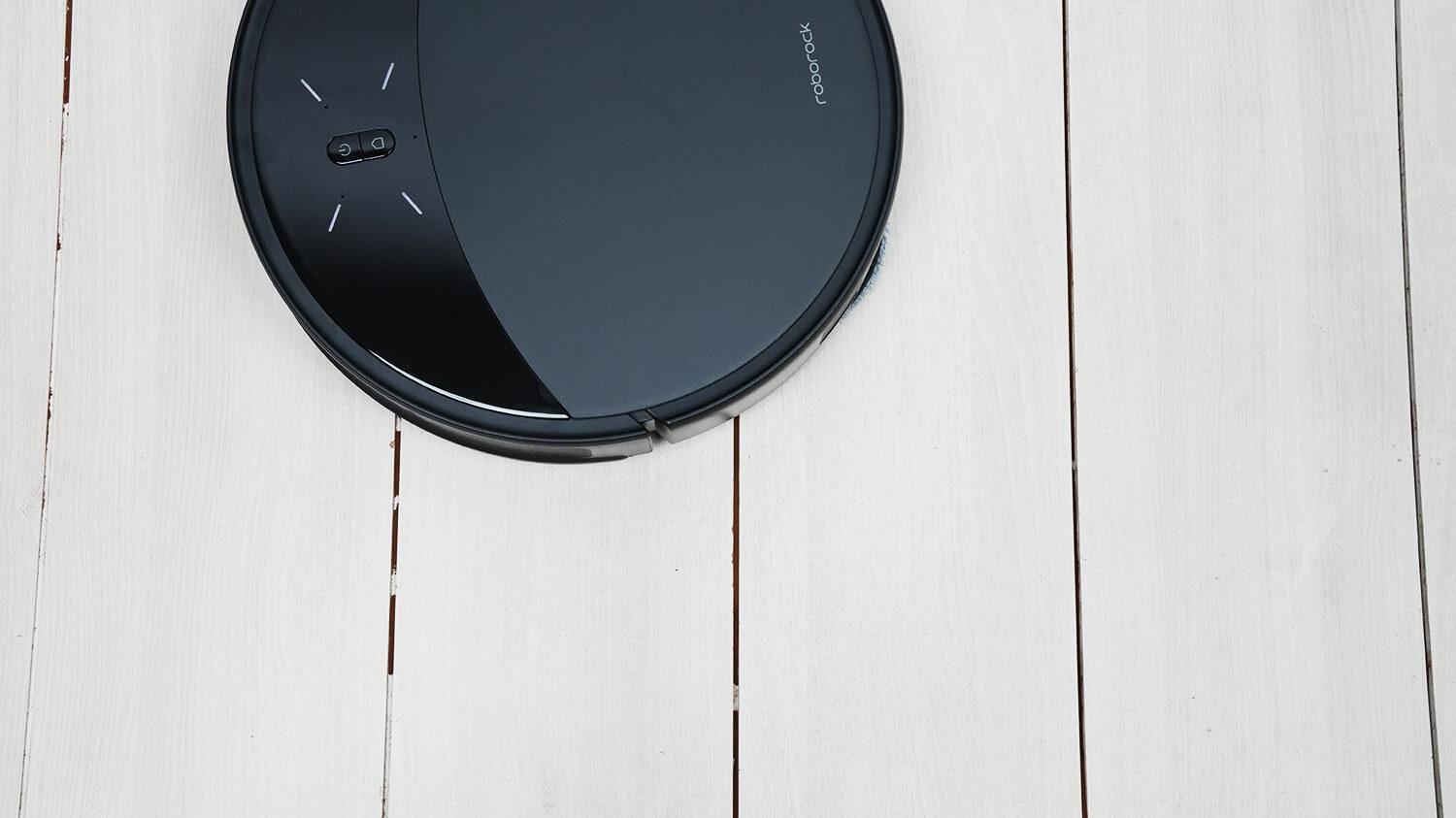
Suction power
So, the suction power is actually increased, but aerodynamic losses are still noticeable. For example, the previously reviewed smaller Roborock Qrevo S was able to clean a 10 mm gap at 7000 Pa.
Dry cleaning
The robot's pickup performance on laminate floors is excellent, even for debris of varying textures. Thanks to its retractable side brush, it even managed to clean debris in corners.
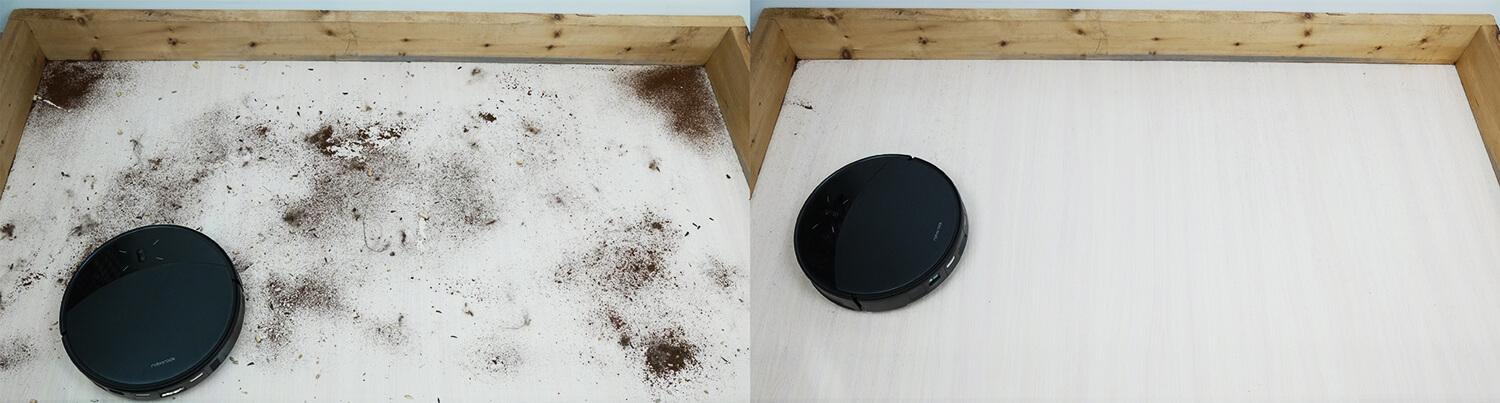
Dry cleaning
It is interesting that the robot is able to carefully sweep not only internal but also external corners.
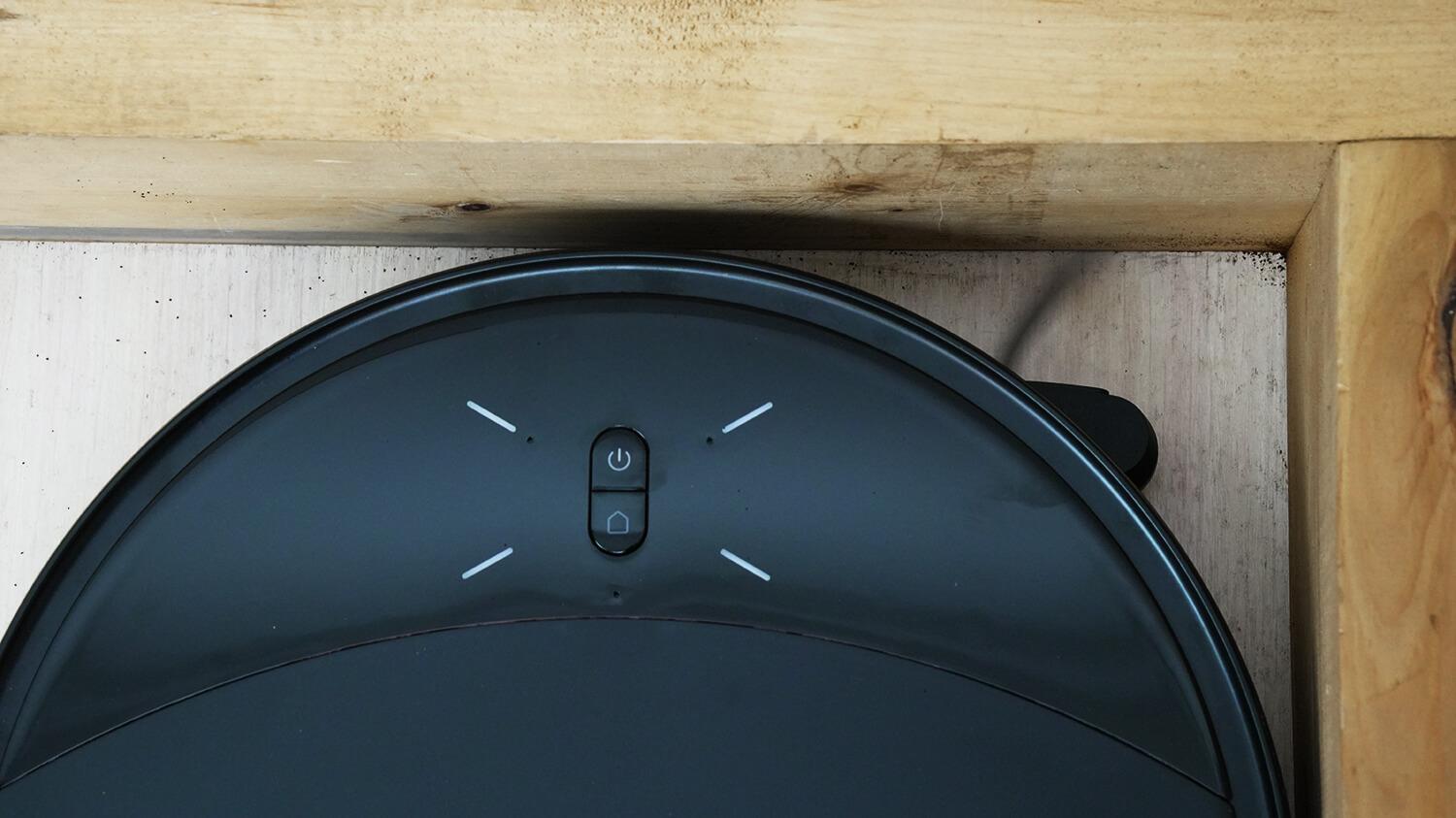
Sweeping in the corners
I'd like to point out that the center and side brushes are clean. As always, bravo to Roborock engineers! The test was a success!
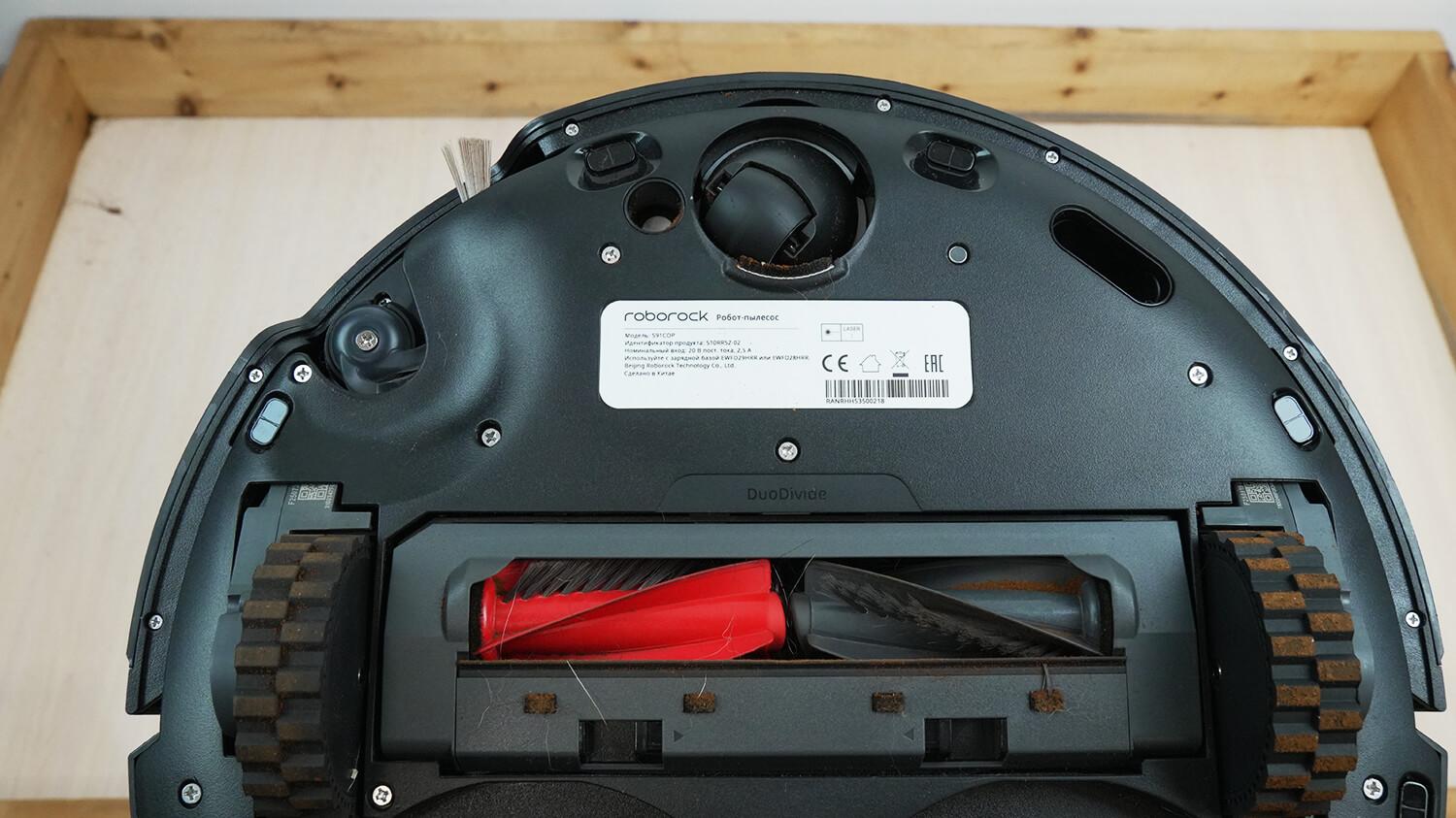
Cleaning module status
Anti-tangle Hair Protection
I also tested the turbo brush to see how it handles removing tangled hair. Here, we see that the hair is tangled closer to the center of the brush, while the sides are clean. This means that when the brush rotates, it actually directs the hair toward the opening and releases it into the dust collector. It's just that the large amount of hair has bunched up and gotten stuck.
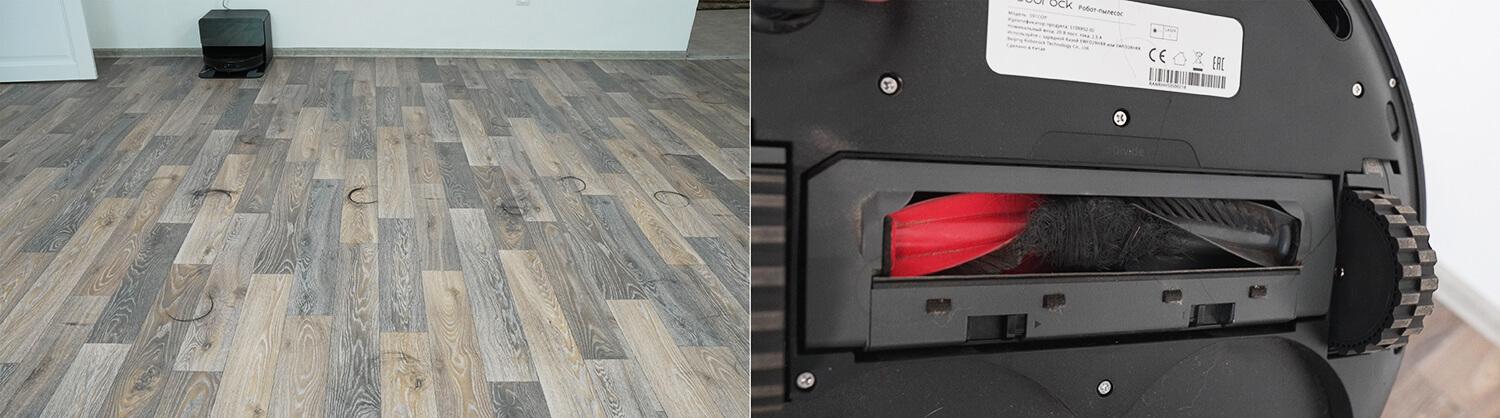
Anti-tangle Hair Protection
In a domestic setting, after a week of cleaning, the side and center brushes are completely clean; they truly do an effective job of removing hair and fur! Moreover, the apartment is shared by two girls and a perpetually shedding corgi.
Carpet cleaning
The robot's carpet cleaning performance is excellent. This applies to both low-pile and medium-pile carpets. Minimal debris was caught in the pile, but the results are excellent compared to similar products!
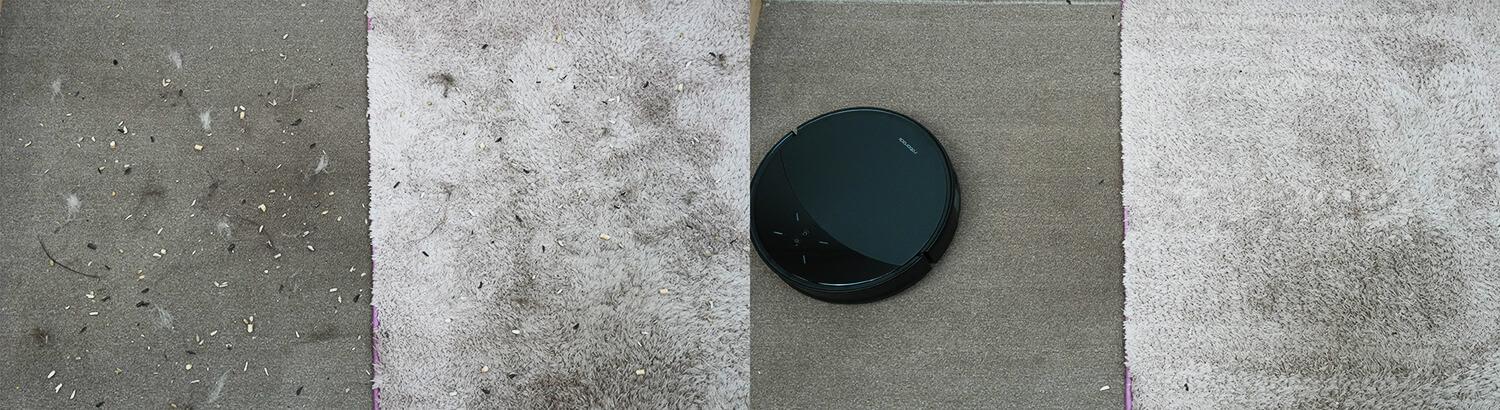
Carpet cleaning
Self-cleaning
Immediately after the "dirty tests," I checked how well the robot vacuum self-cleaned. I returned it to the station and started the self-cleaning routine. The results were good.
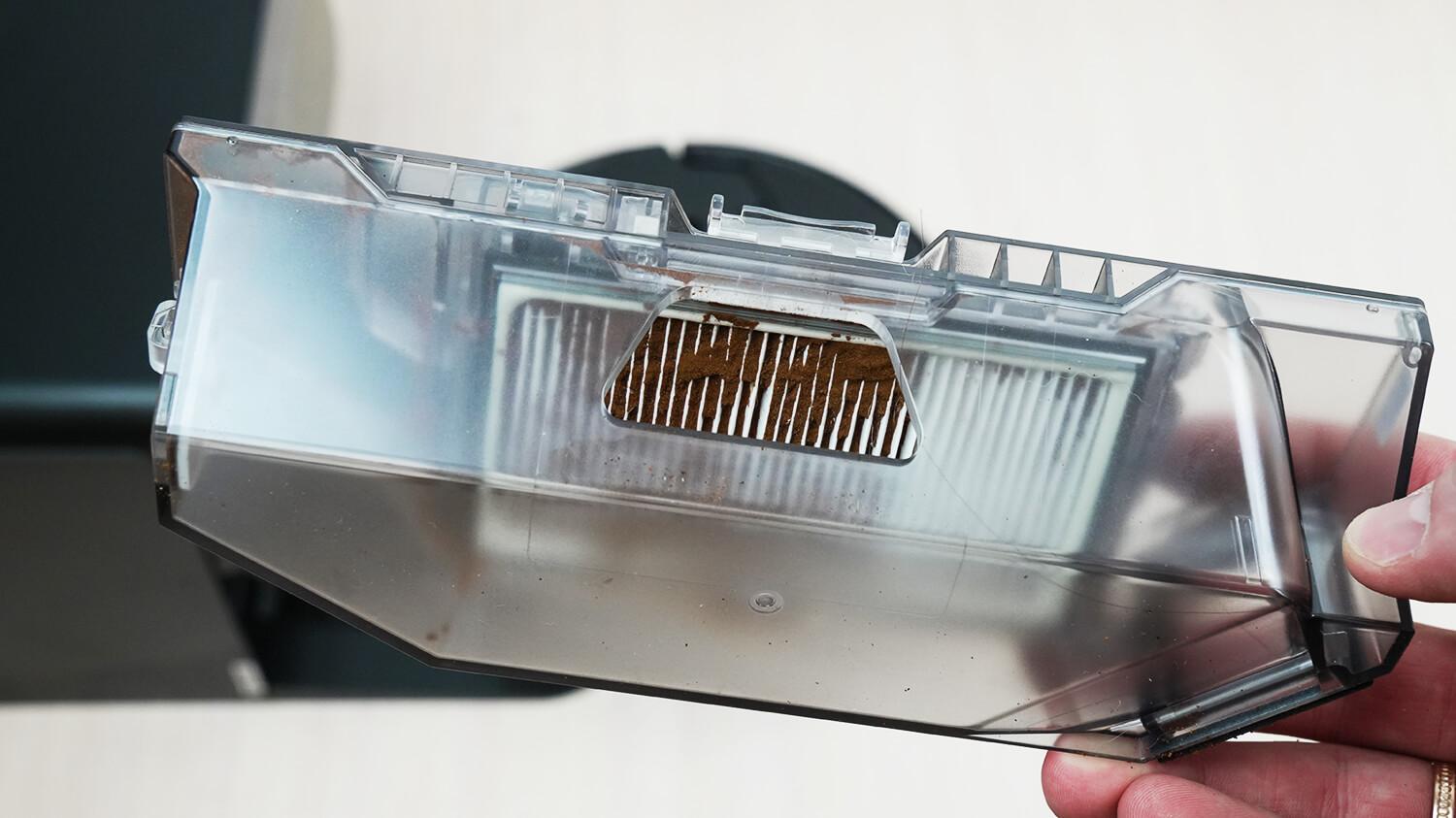
Self-cleaning
Wet cleaning and carpets
When it comes to wet cleaning on carpeted floors, the robot offers several different modes of interaction. It can carefully navigate around the carpet in wet cleaning mode, or it can enter and touch the carpet with the cleaning pad if you want to clean it with the robot. It can also clean carpets during wet cleaning, automatically lifting the cleaning pads and even the robot body when entering the carpet. It can also automatically remove the cleaning pads at the cleaning station and clean the carpets without them, completely eliminating any contact between the wet cleaning pads and the carpet pile. The last two options are the most efficient.
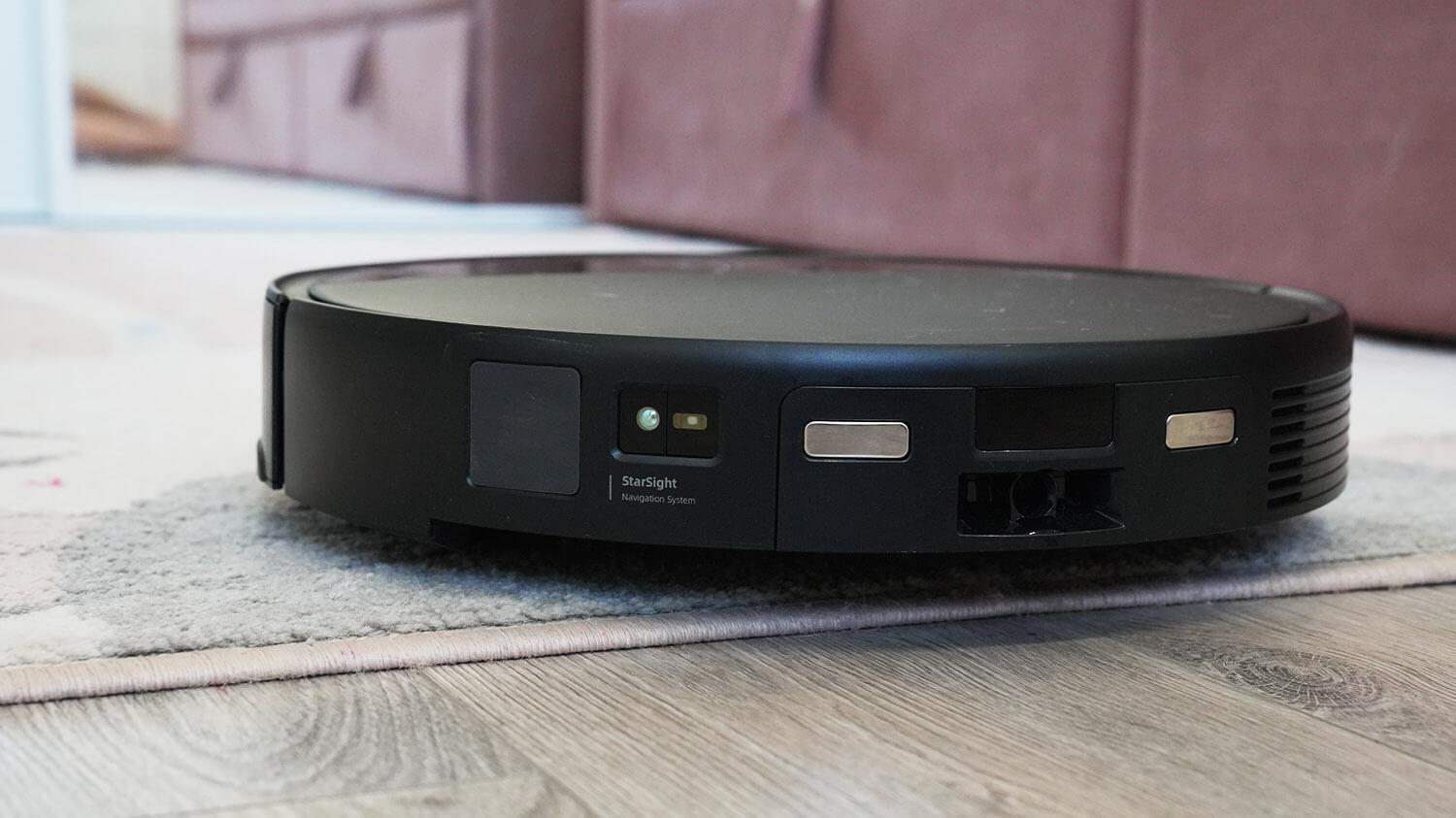
Wet cleaning and carpets
Wiping off dirt
The cleaning performance is excellent. The wipes press firmly against the floor and absorb dirt. There's no unwashed area along the baseboards, thanks to the wiper's extension. That's a plus!
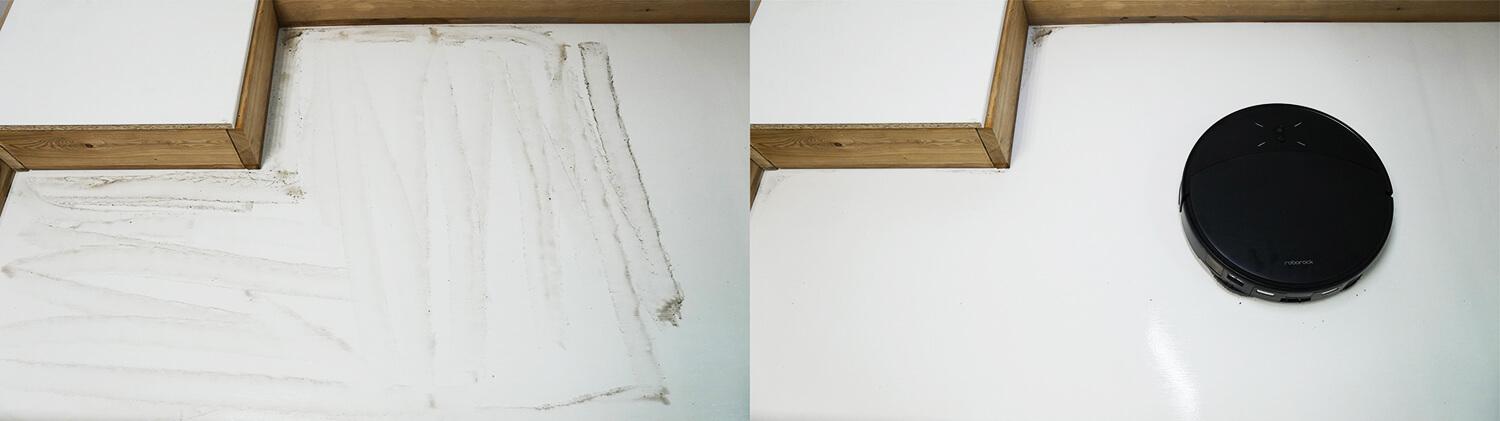
Washing the floor from dirt
I also checked the blind spots along the outer and inner corners separately. Here, too, we see that the outer corner isn't being cleaned completely, leaving a small blind spot a couple of centimeters wide. The blind spot is larger in the inner corners, as the cloth physically can't fit tightly into the corner.
I also tested how the robot cleans the floor around the chair legs. We can see that the cleaning cloth extends, but it doesn't clean those areas perfectly. The brand's engineers still have some work to do.
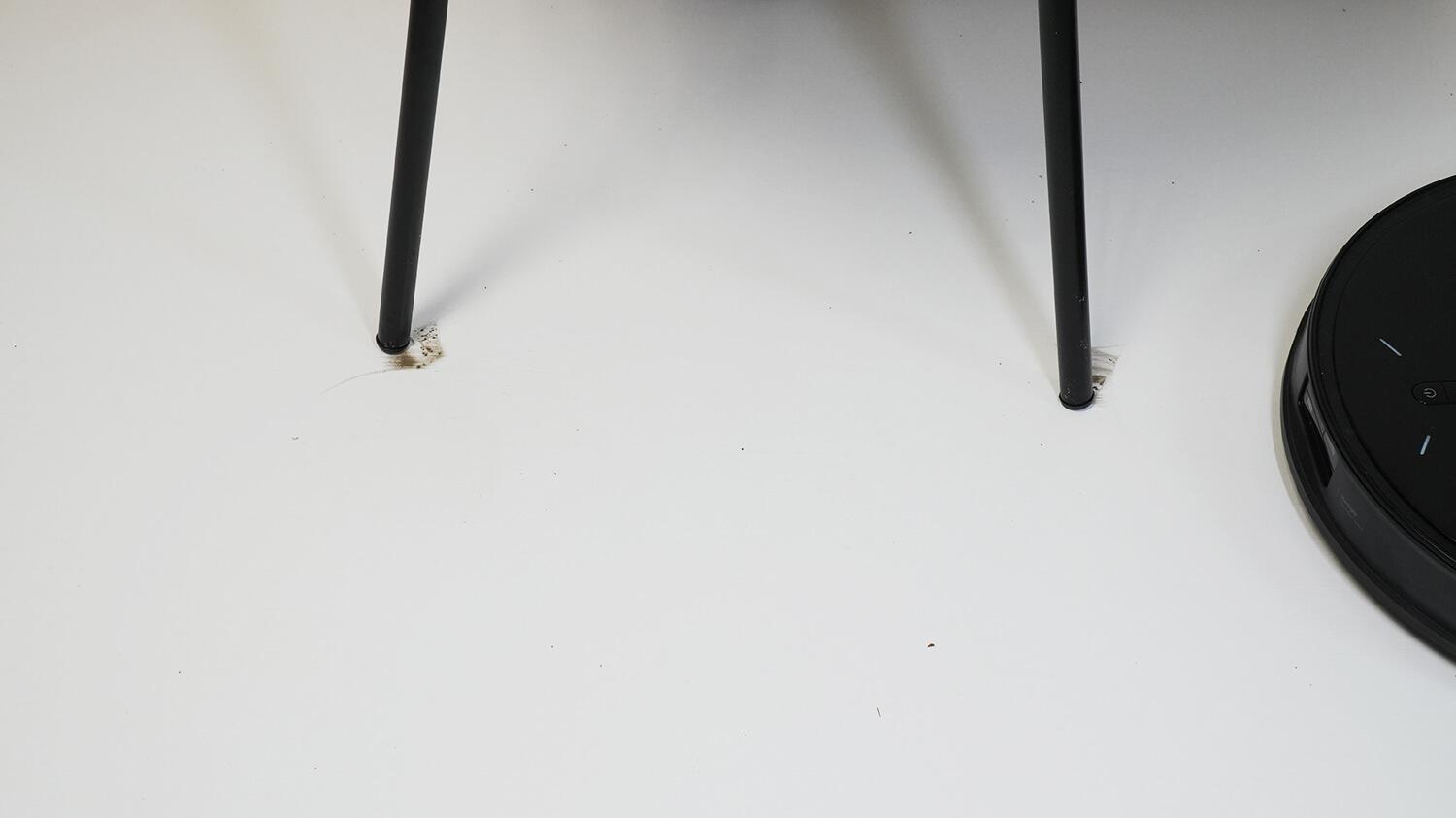
Washing around chairs
Removing difficult stains
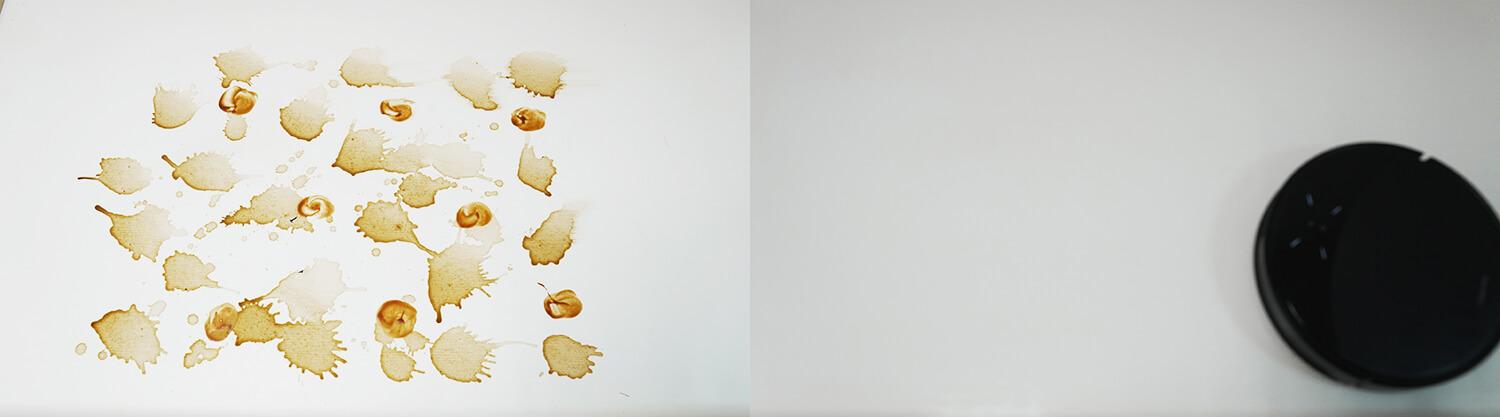
Regarding tough stains, the robot was able to remove even dried-on coffee and sauce stains. It removed most of the stains in six passes, and another was removed after nine passes. However, we still consider the result to be six passes, as the Saros 10R, which was previously tested with a standard station, also achieved the same result.
Removing stains
The result was one of the best, compared to similar products reviewed. Moreover, no detergent was used, as it wasn't included. The test was passed successfully!
Washing quality of napkins
I'd like to immediately talk about the efficiency of the station itself. Let's start with the quality of the wipes' washing. Even after extensive testing, the wipes look significantly better after washing with the station. The water heating feature undoubtedly improves the washing efficiency here.
In a domestic setting, after washing the floor, the wipes are thoroughly rinsed at the station. No visible contamination was detected.
I decided to test the wash temperature myself – in my case, the peak temperature in the napkin wash zone was 76.1 degrees, and this is a very good result, taking into account losses and measurement errors!
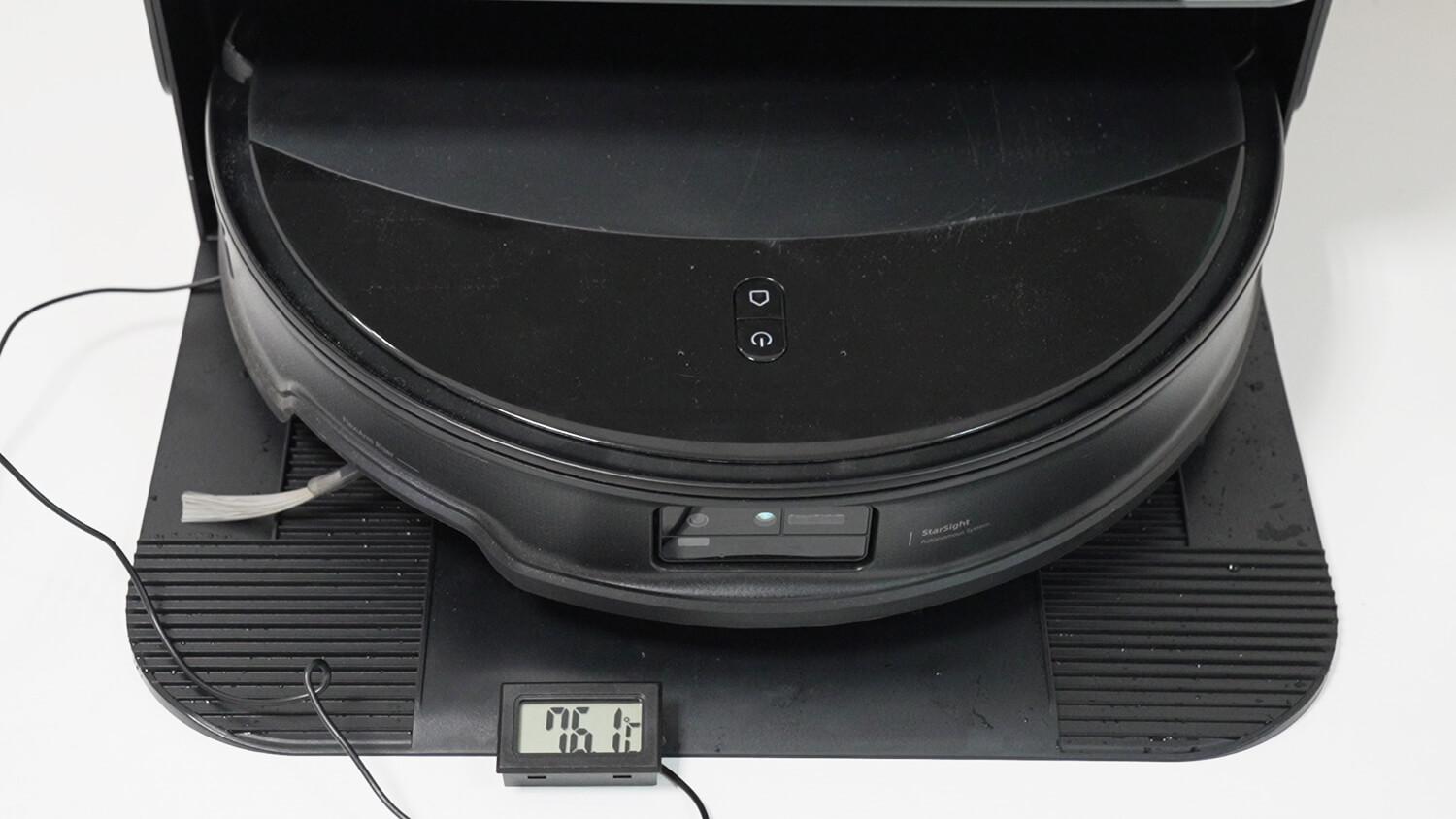
Washing temperature for napkins
After washing, the temperature of the wipes reaches 42.4 degrees, and this is also an excellent result.
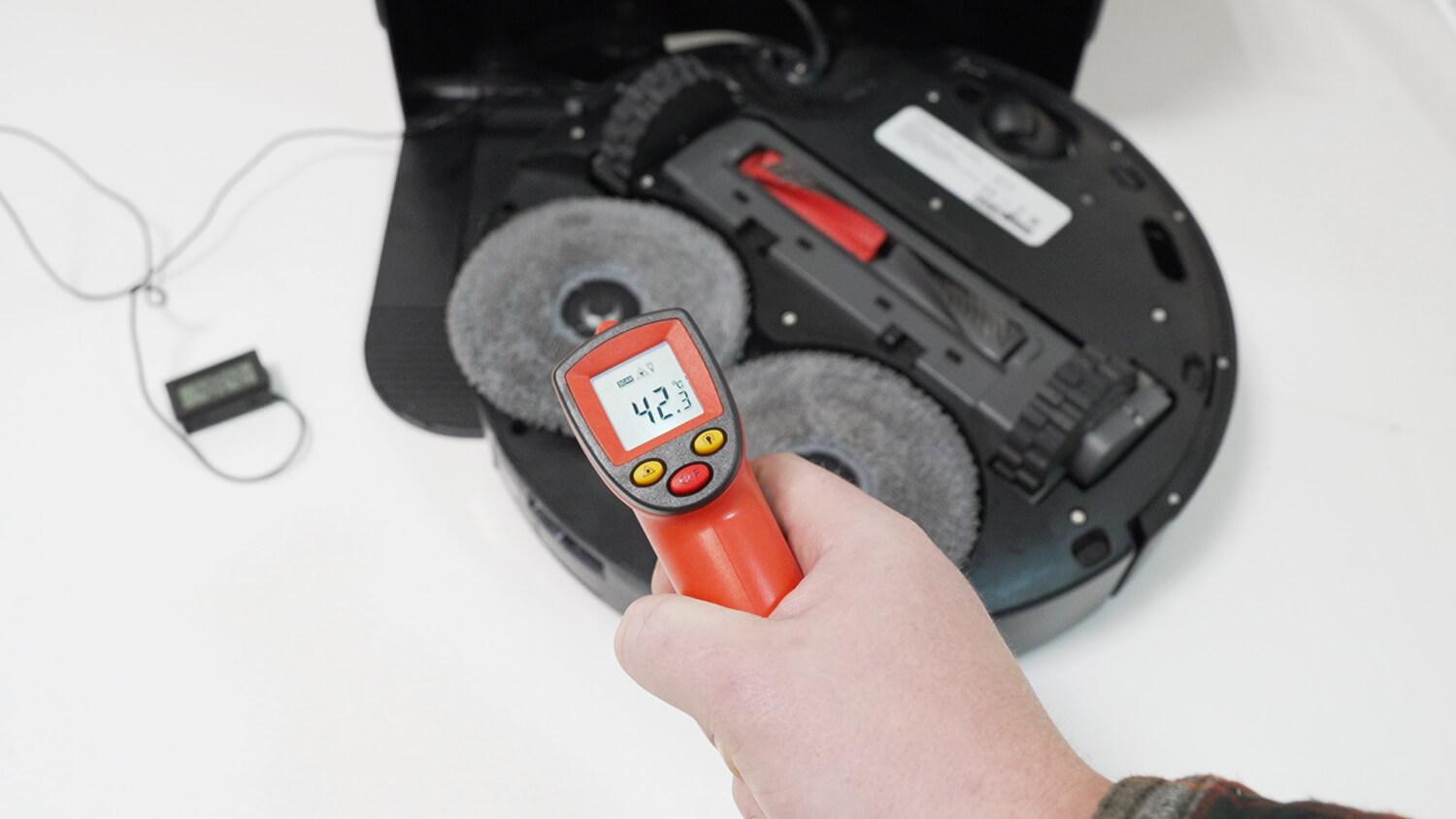
Temperature of napkins after washing
The drying temperature for the wipes after washing exceeds 55 degrees, which is even higher than stated. No complaints about the station!
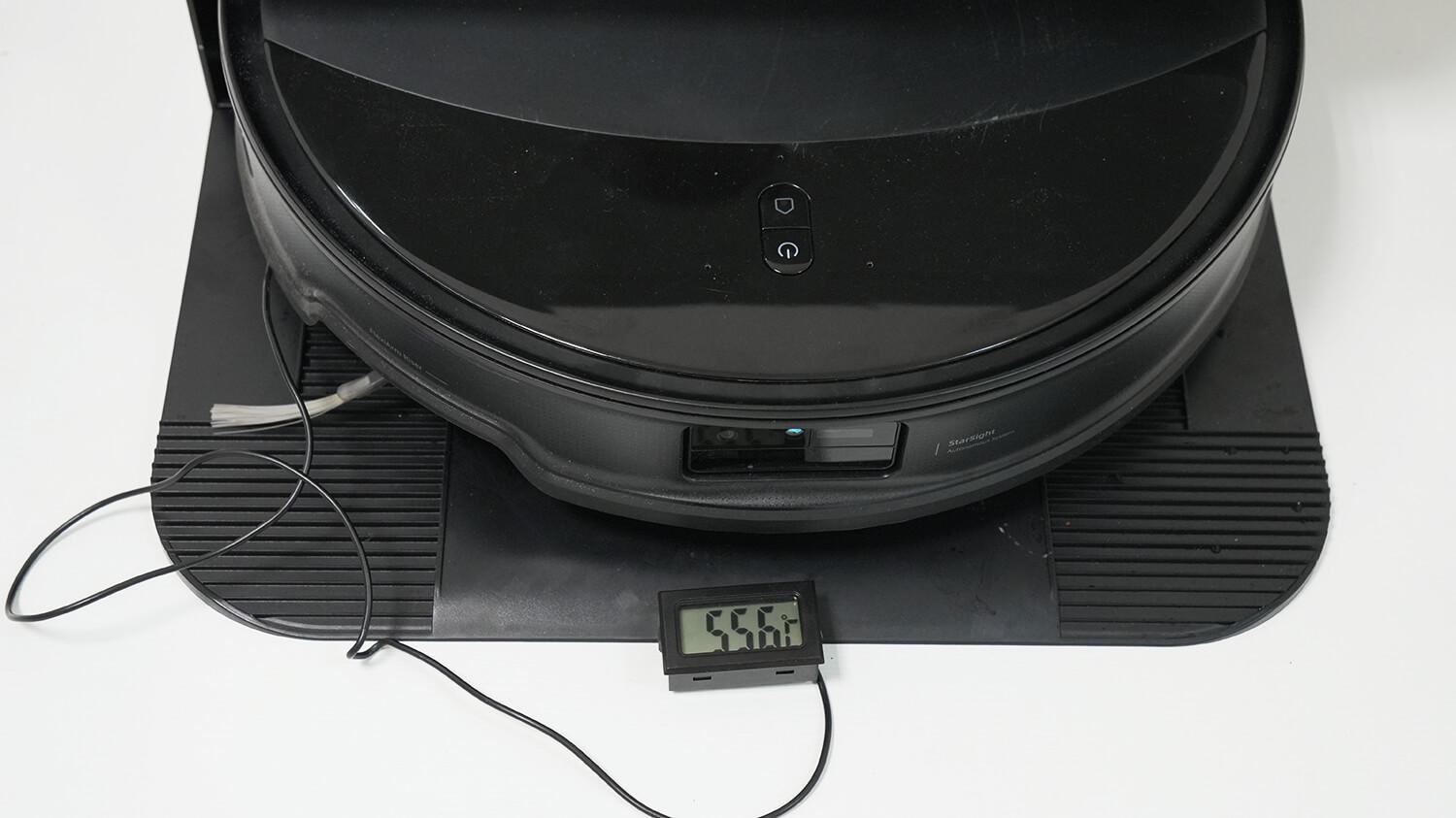
Drying temperature for napkins
Station maintenance
The station itself is easy to clean. We activate a special mode in which the station automatically cleans the bottom with scrapers. After this process is complete, you can manually remove the drain and the napkin tray and rinse them in the sink. Basically, it's a simple process.
Regarding the lack of access to the station's built-in tanks, I even took it apart to see how everything was organized inside and whether the station needed any maintenance. The clean water tank is accessible after removing the protective covers, but the dirty water tank is completely non-removable.
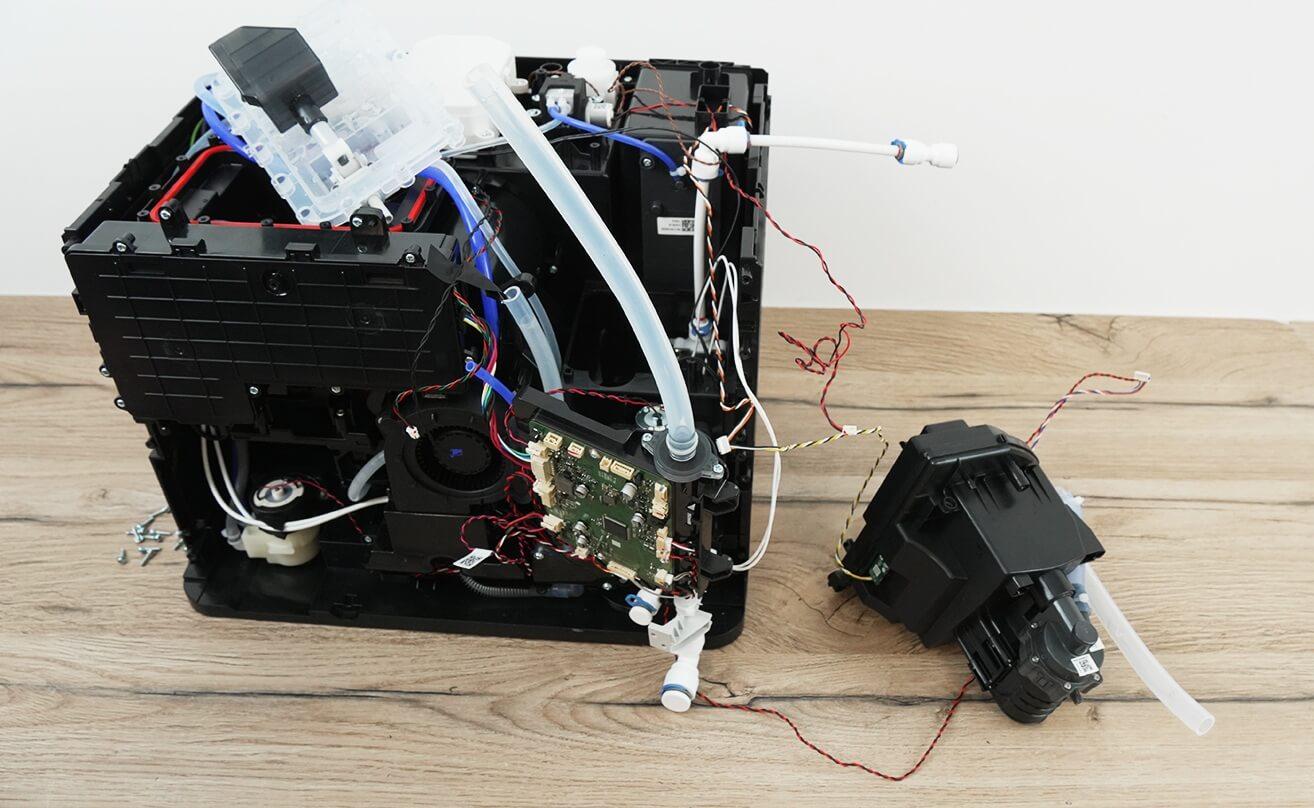
Non-detachable tank for dirty water
This means that all the plaque inside, which will inevitably accumulate over time, cannot be cleaned even by hand. This is not good.
Obstacle clearance
An interesting point is crossing thresholds. The Roborock Saros 10R can easily cross a 2 cm threshold, which seems obvious. However, the robot vacuum has difficulty crossing a 3 cm threshold.
The robot vacuum cleaner failed to cross the 4 cm threshold, or more accurately, the 38 mm threshold, no matter how much it raised its body or at what angles it tried to enter. However, with a two-level threshold, 2 cm on each level, in my configuration, the robot managed to navigate the obstacle after several attempts. However, once it even got stuck on the threshold and crashed. In any case, its maneuverability is better than many models on the market.
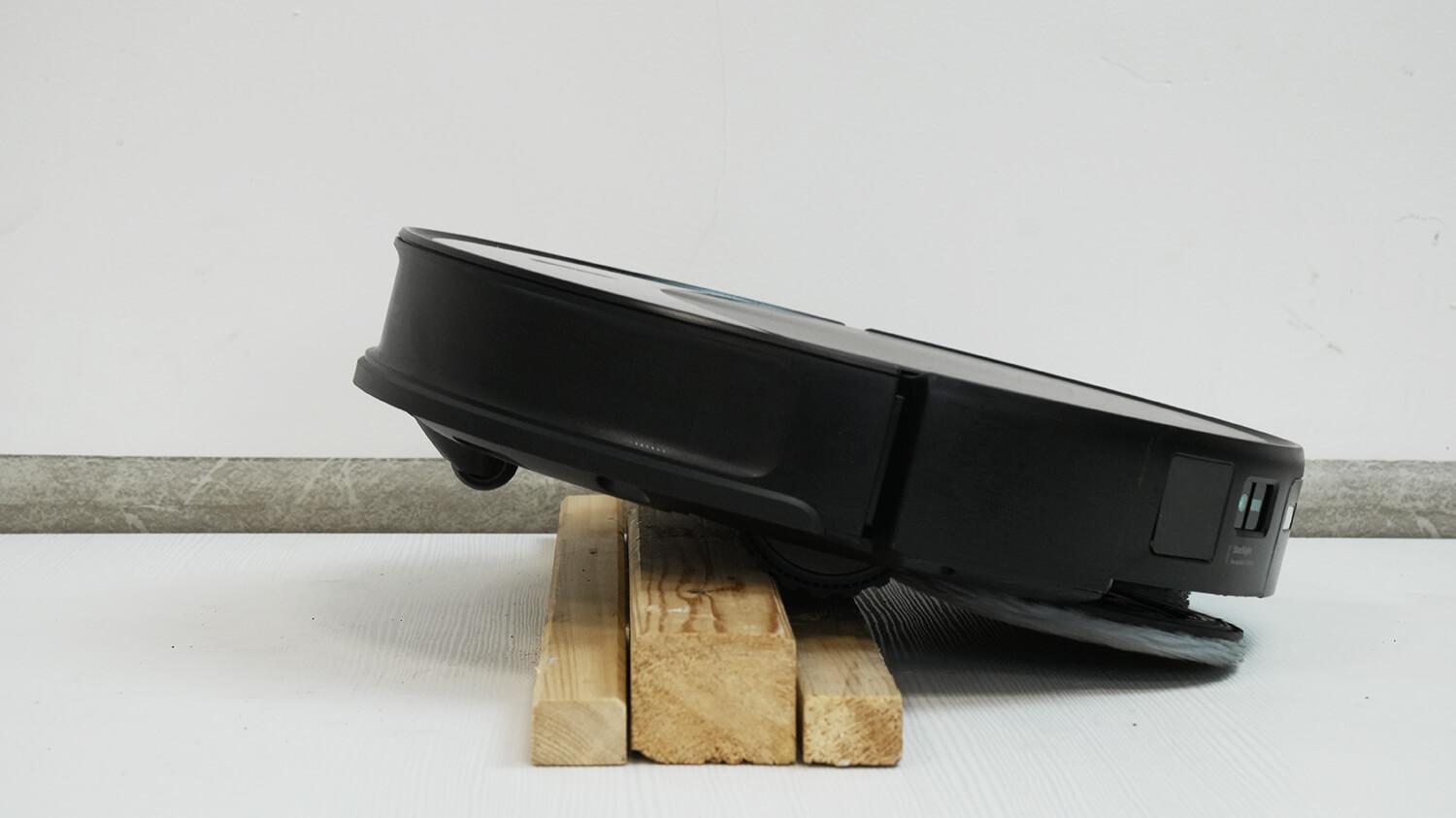
Obstacle clearance
Driving on black surfaces
Driving over black carpets is no problem. The robot glides over the black carpet as if nothing had happened.
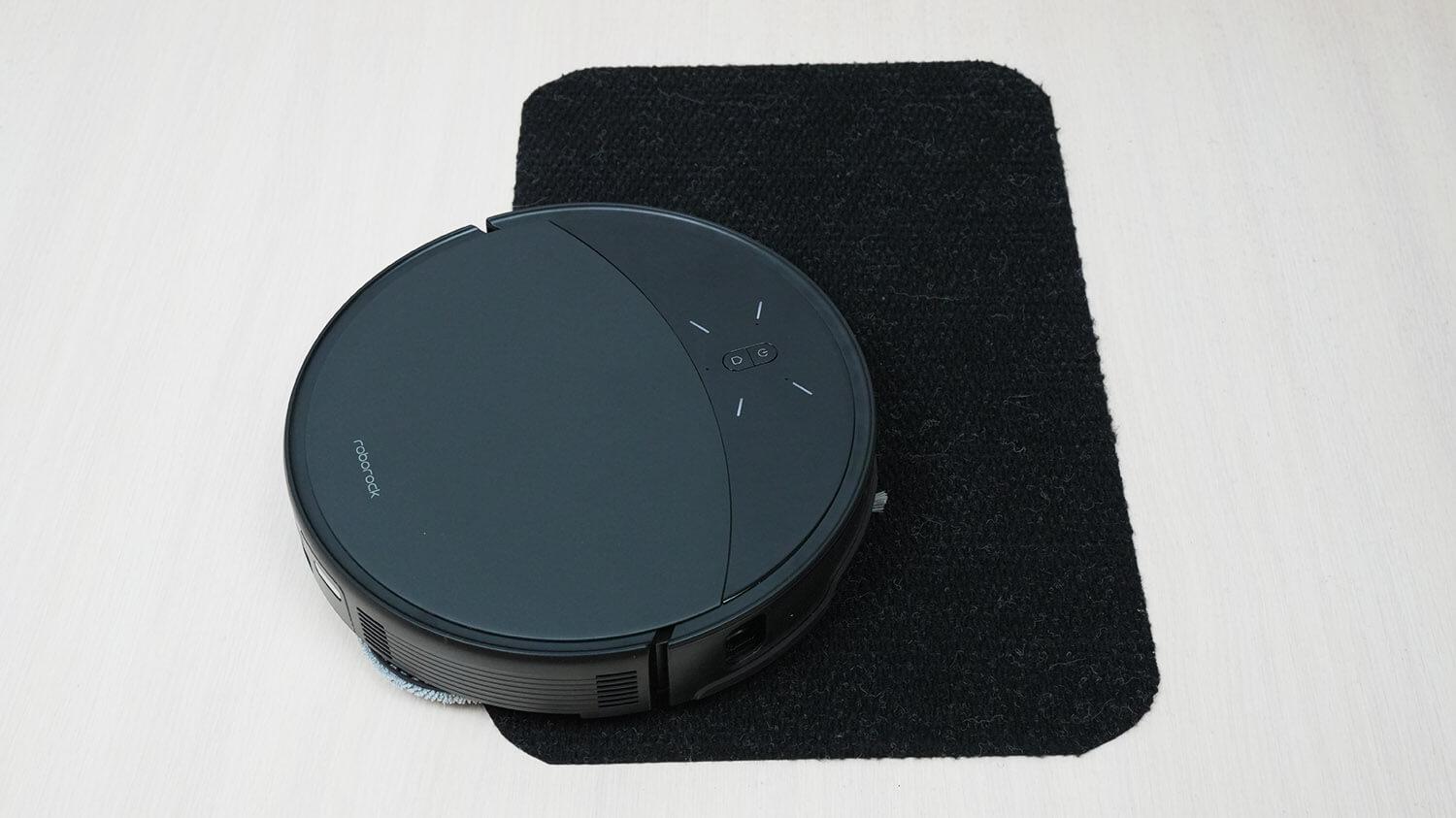
Driving on black surfaces
Noise level
As for noise levels, they range from 56.5 to 66.1 dB, depending on the selected operating mode. The robot's noise level is actually very low, especially considering its increased suction power. The station's noise level during self-cleaning is around 72 dB. This is also a good result.
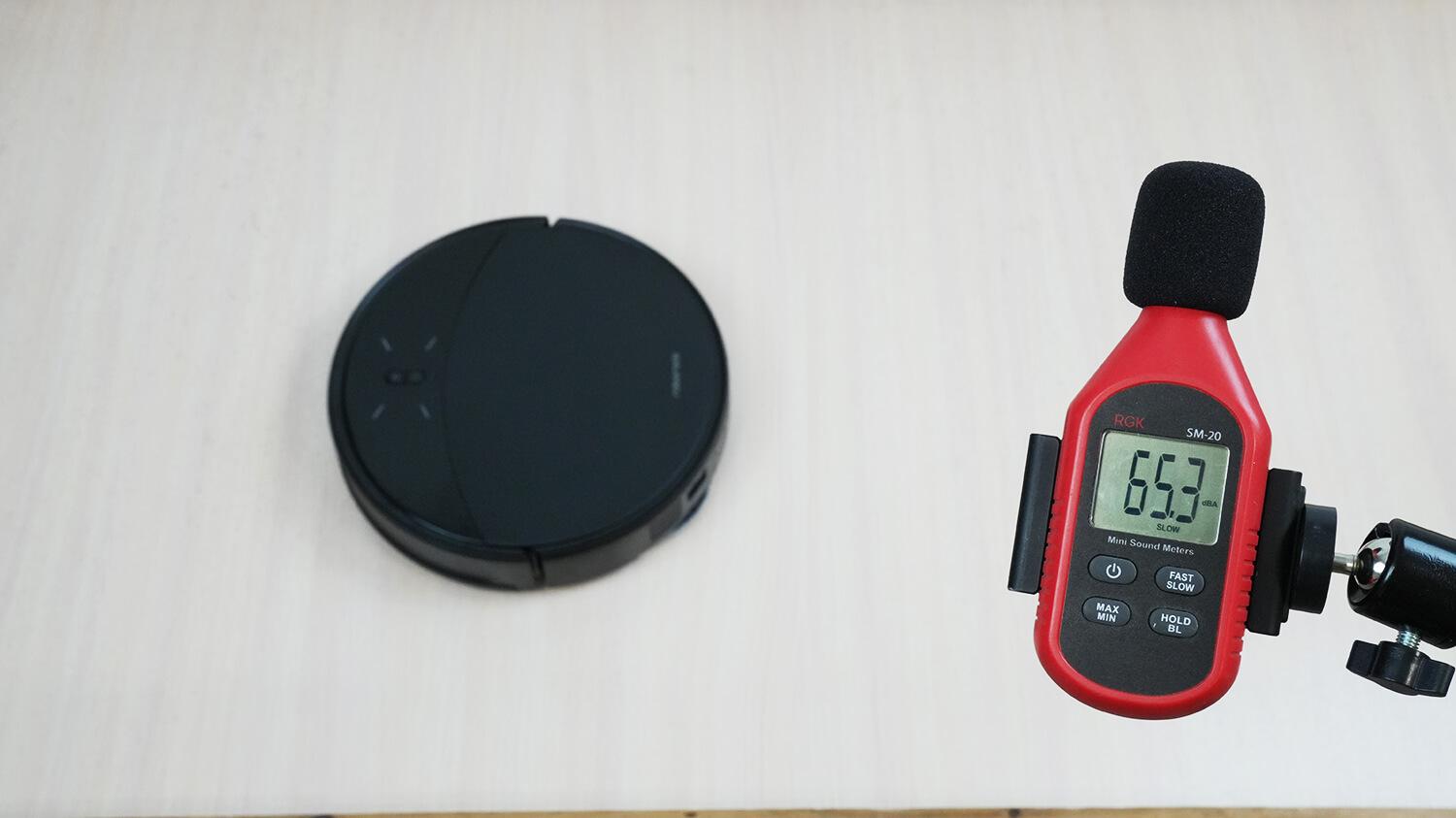
Noise level
Personal opinion
The Roborock Saros 10R robot vacuum cleaner with a built-in docking station was thoroughly reviewed and tested. According to our rating system, it scored 241 points, ahead of the version by 2 points Saros 10R with conventional tanks. With this result, the robot vacuum cleaner entered the TOP-10 best on the robovac.washerhouse.com project. overall rating at the time of review preparationI'll highlight the pros and cons of a robot vacuum cleaner.
First, about the pros. I liked the following:
- First and foremost, the built-in station's compact size allows it to be installed in a cabinet, hidden from view and saving valuable space.
- The station connects to both the sewer and water supply. In fact, it's currently the only Roborock robot vacuum cleaner on the market that can be connected to utility lines.
- The robot is shorter than lidar models and can clean within 8 cm of spaces under furniture, without compromising navigation. It can access areas that robots with a lidar tower mounted on the body cannot. Moreover, its trajectory is accurate, without missing any areas.
- A backlit object recognition system that works effectively in good lighting conditions.
- A fully charged station by 2026 standards. It has absolutely every feature available on the market: water heating, air heating, self-cleaning bottom, automatic detergent mixing, and wipe soil level monitoring.
- The side and central brushes do not tangle hair and fur thanks to their updated design.
- Improved maneuverability thanks to the raised body. The robot vacuum cleaner can overcome thresholds over 3 cm high, a feat not possible with similar products currently available on the global market.
- The retractable side brush completely sweeps away debris from corners.
- The napkin is pulled out close to the baseboard.
- Lifting napkins when driving onto carpets.
- Automatic napkin removal at the station.
- Raising the turbo brush and side brush in wet cleaning mode.
- Increased suction power.
- High-quality dry and wet cleaning on various surfaces.
- Capable of removing even stubborn stains faster than its analogues.
- A large number of functions in the application.
- Full Russification in the version for the Russian market.
- Remote home monitoring by connecting to the robot's camera via a smartphone.
- Control via the proprietary voice assistant Hello Rocky.
- The robot vacuum cleaner is not afraid of black surfaces.
- Low noise level of both the robot and the station.
- High-quality assembly and high brand authority.
- Availability of warranty and service.
As for the shortcomings, here are the ones that were identified:
- The main thing for me is that there's no access to the station's internal components, specifically the wastewater drainage system. It's impossible to carry out an inspection. And it will be necessary anyway.
- The robot vacuum cleaner does not clean behind curtains and drapes.
- The object recognition system is a little blind in the dark and therefore requires some improvement.
Ultimately, in my opinion, the Roborock Saros 10R is currently the best robot vacuum cleaner in the premium Roborock line. It's efficient, powerful, clean, and now even connects to a drain and water supply, something Roborocks sorely lacked. It's definitely one of the best robot vacuums available as of early 2026, before new models are released. Its high placement in the overall rankings is indirect confirmation of this.
On that note, I'd like to end this review. If you have any questions, please ask them in the comments. Happy shopping, everyone. Bye!