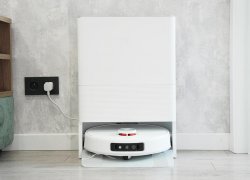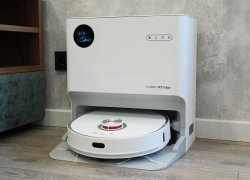
Xiaomi Robot Vacuum S20: 5000 Pa, dry and wet cleaning, floor cleaning mode
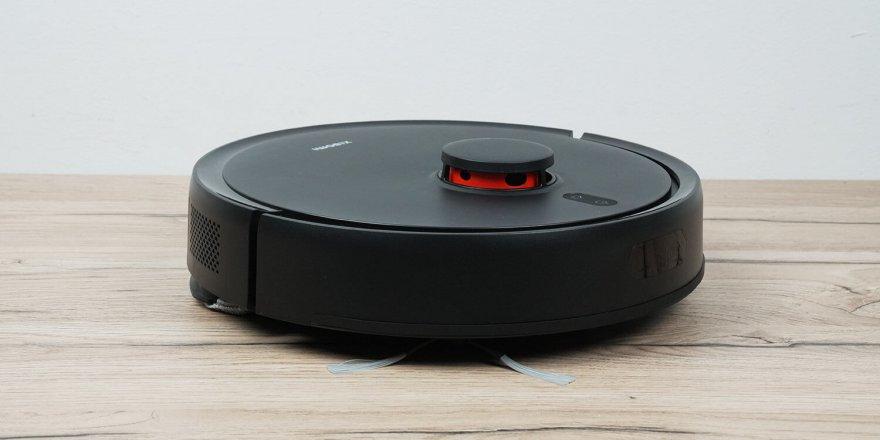
Hello to all readers of the project! This review will focus on the Xiaomi Robot Vacuum S20 robot vacuum cleaner. Model number: D106. Its price at the time of writing is between $160 and $200, which is even cheaper than the previously reviewed model. Xiaomi Robot Vacuum S10+For this price, the robot is equipped with a lidar sensor, dry and wet cleaning functions with a Y-mopping mode, and suction power reaching 5000 Pa. The robot itself is a global version, so it's localized and comes with full warranty support. So, below, I'll thoroughly test the Xiaomi Robot Vacuum S20, highlight its pros and cons based on the test results, and then share my personal opinion. So, let's get started!
Equipment
The robot vacuum cleaner is packaged in a branded box like this:
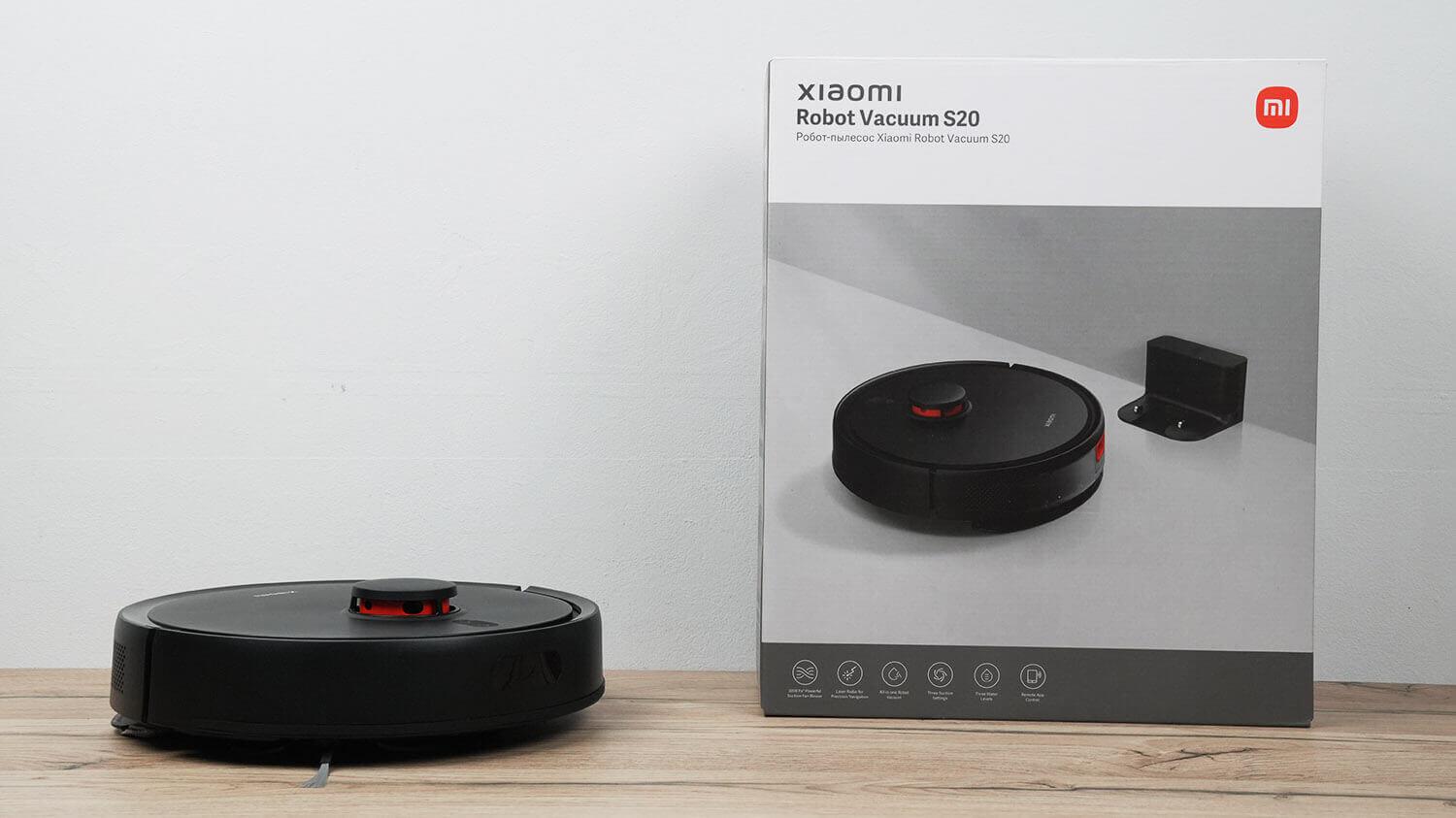
Robot and box
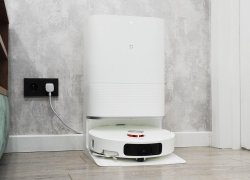
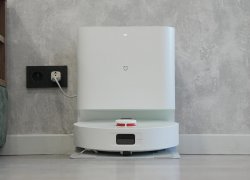
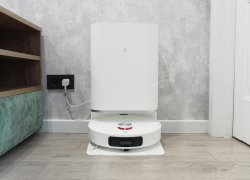
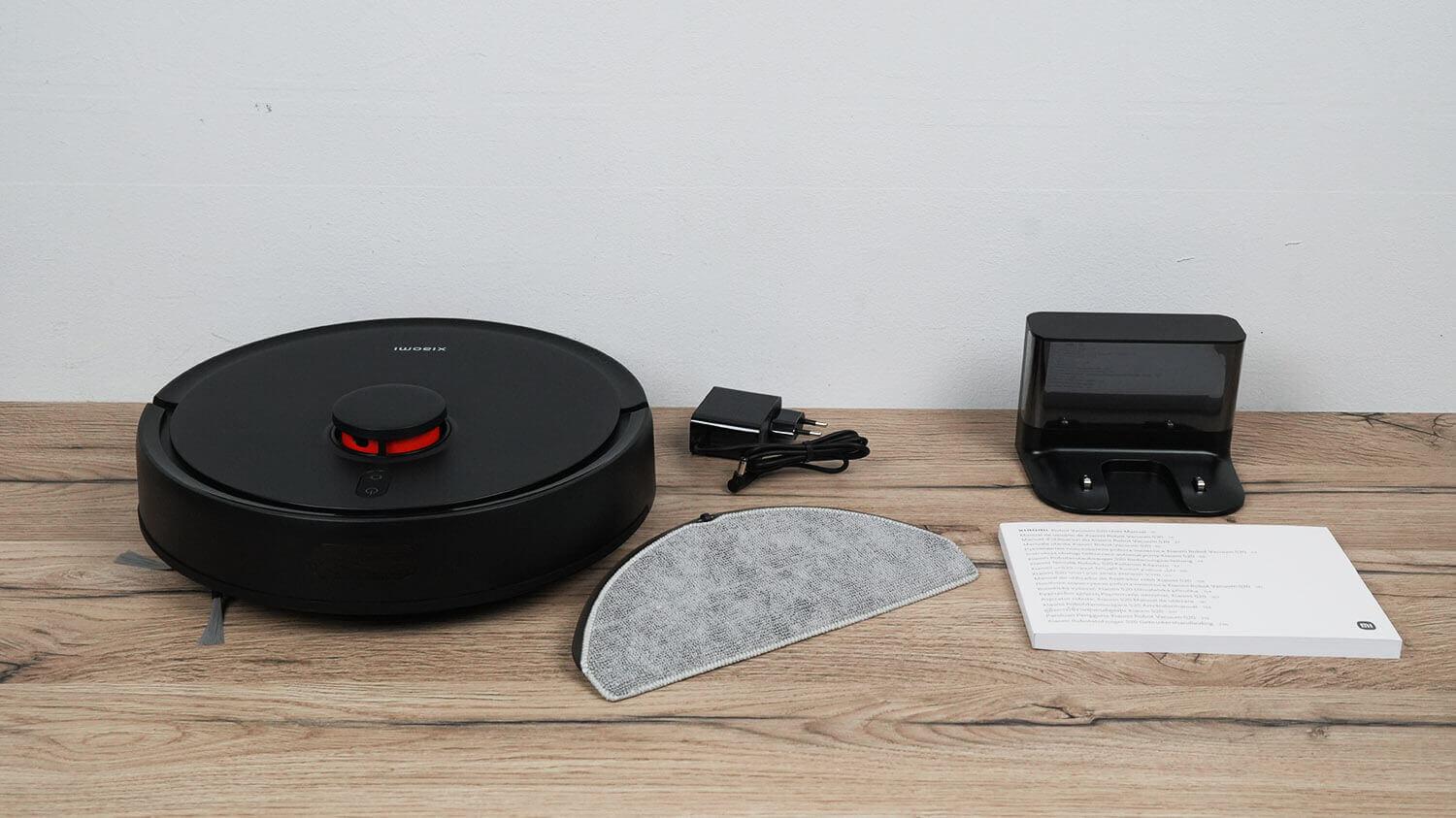
The package includes the robot itself, a charging base and power adapter, a holder with a cleaning cloth, and a user manual translated into Russian. Everything is standard here.
Equipment
Appearance
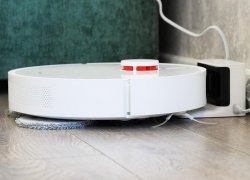
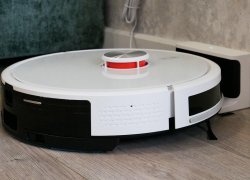
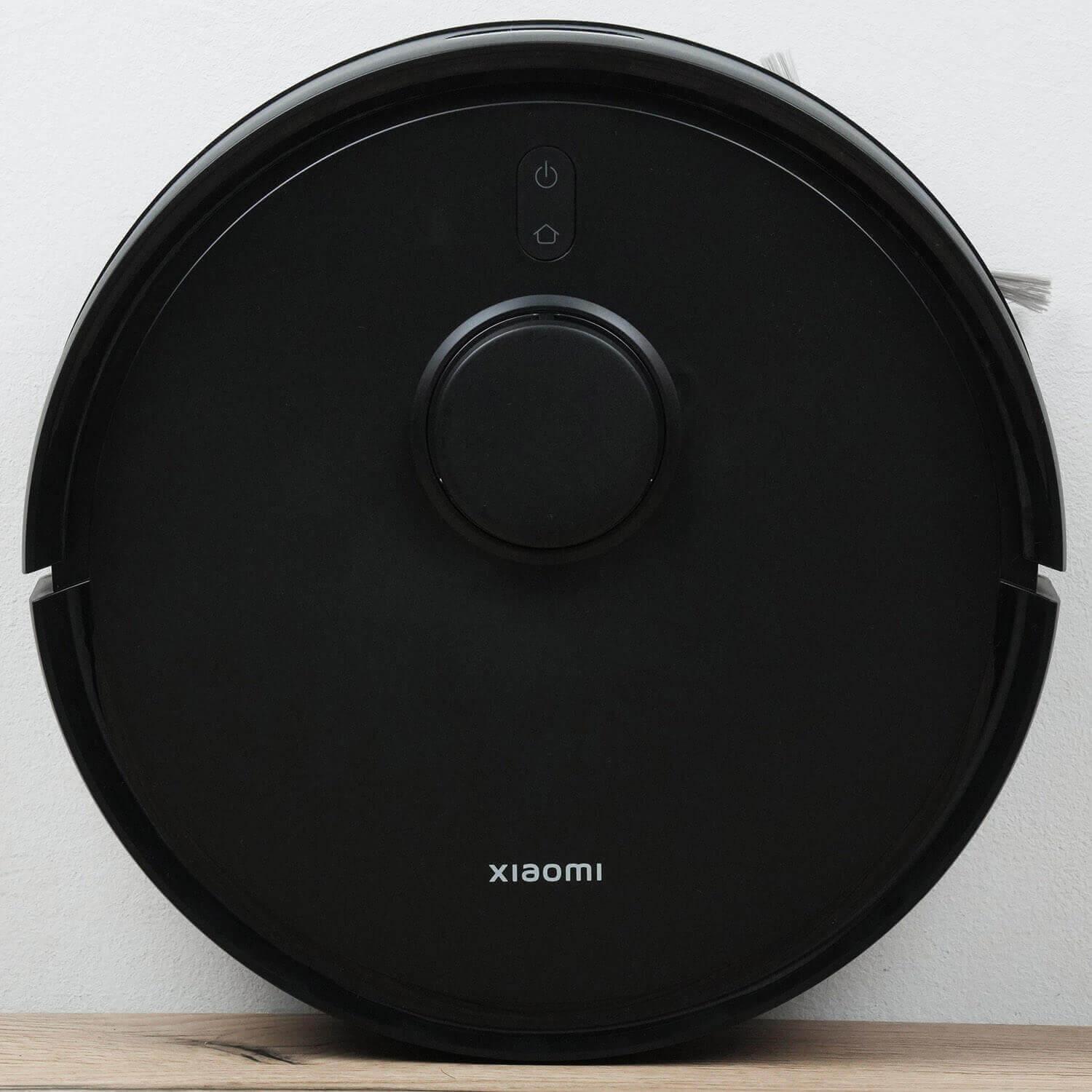
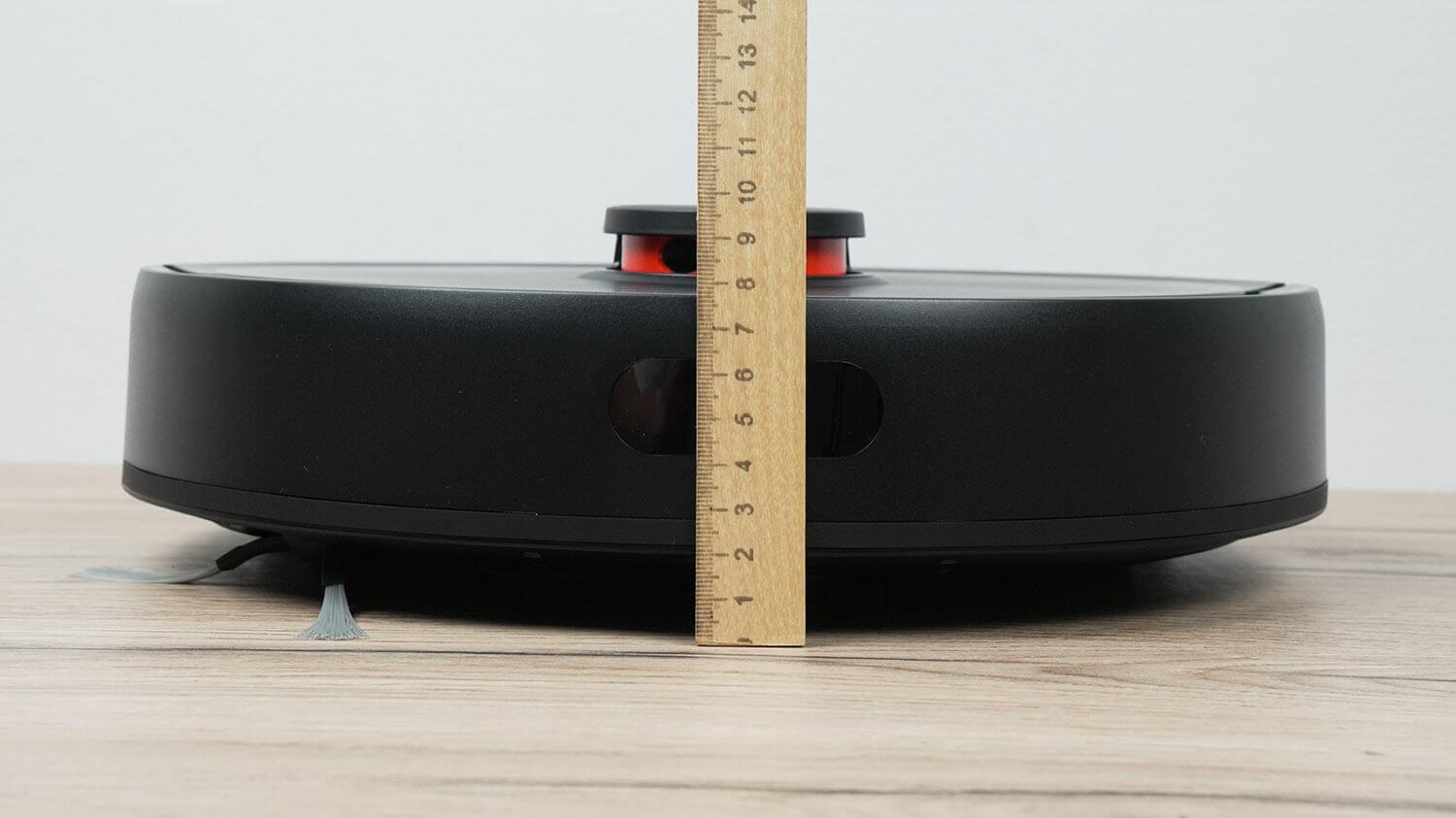
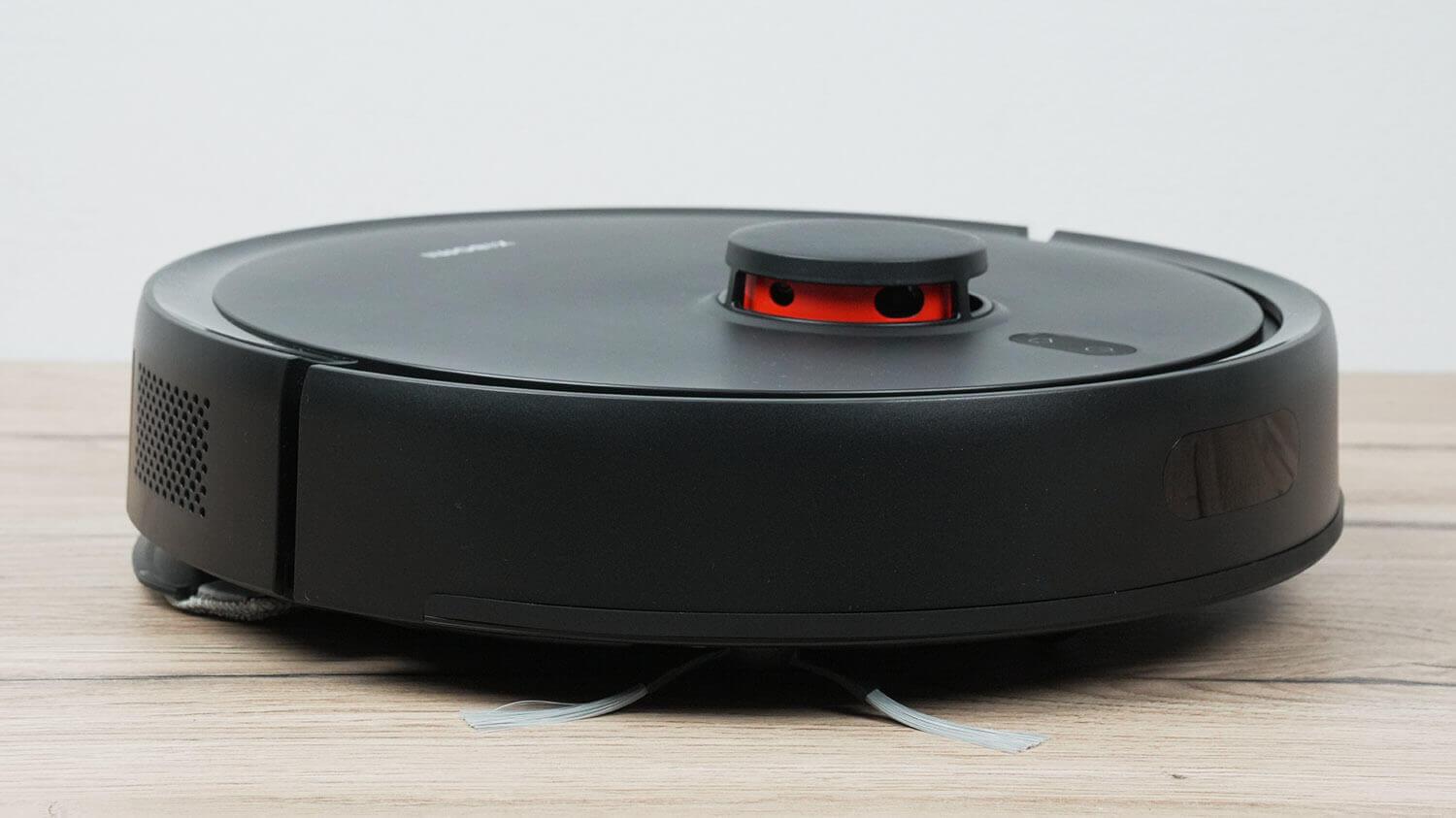
Now let's take a look at the design of the Xiaomi Robot Vacuum S20. The robot vacuum cleaner is available in white and black, with a round body and a height of 98 mm from the floor.
Top view
Body height
There is no wall sensor; a sensor for detecting large obstacles in the robot’s path is located in the center.
Side view
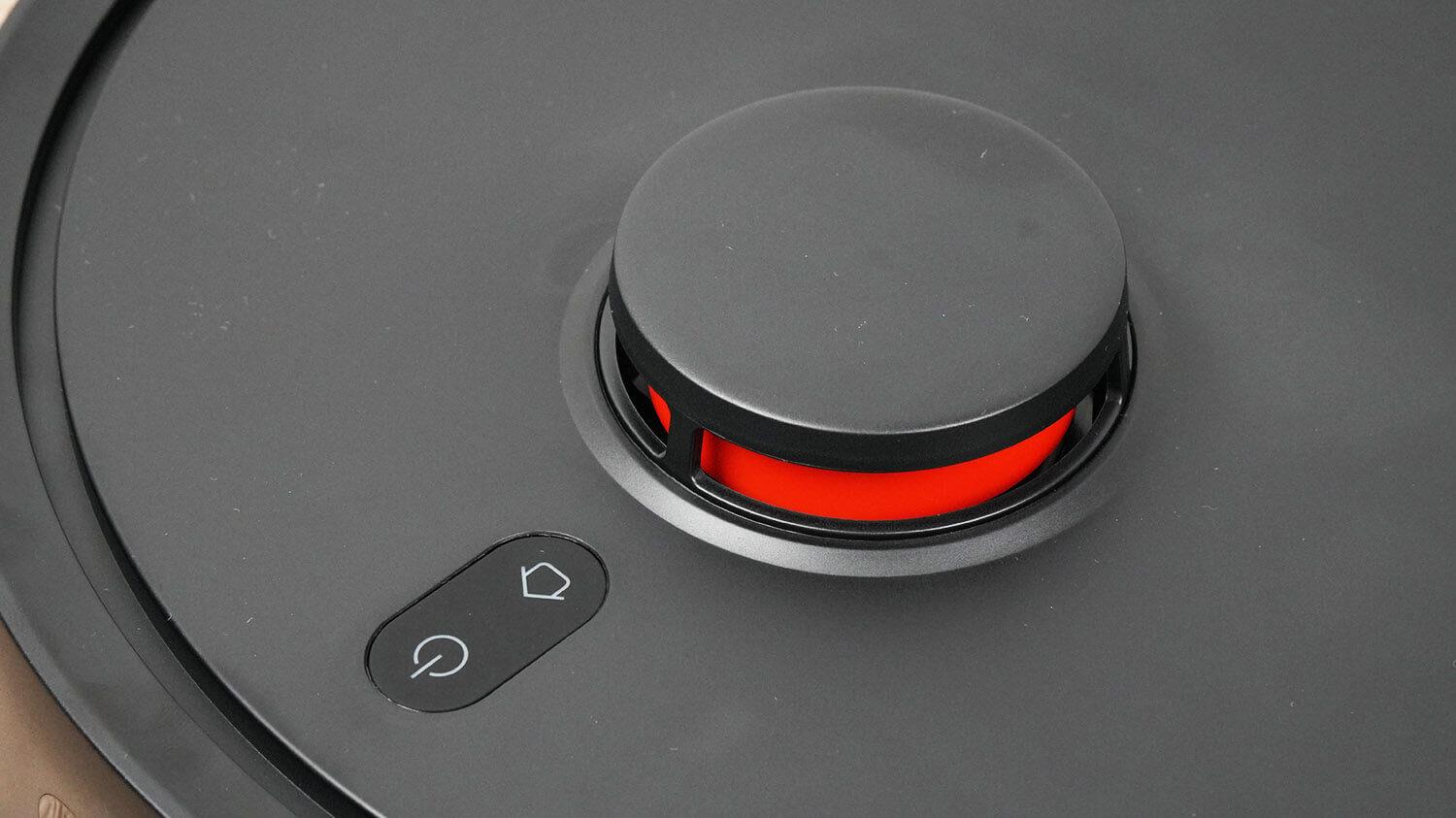
The primary navigation device is the lidar. It is permanently mounted on the body. Two mechanical control buttons are located next to the lidar.
Lidar and control buttons
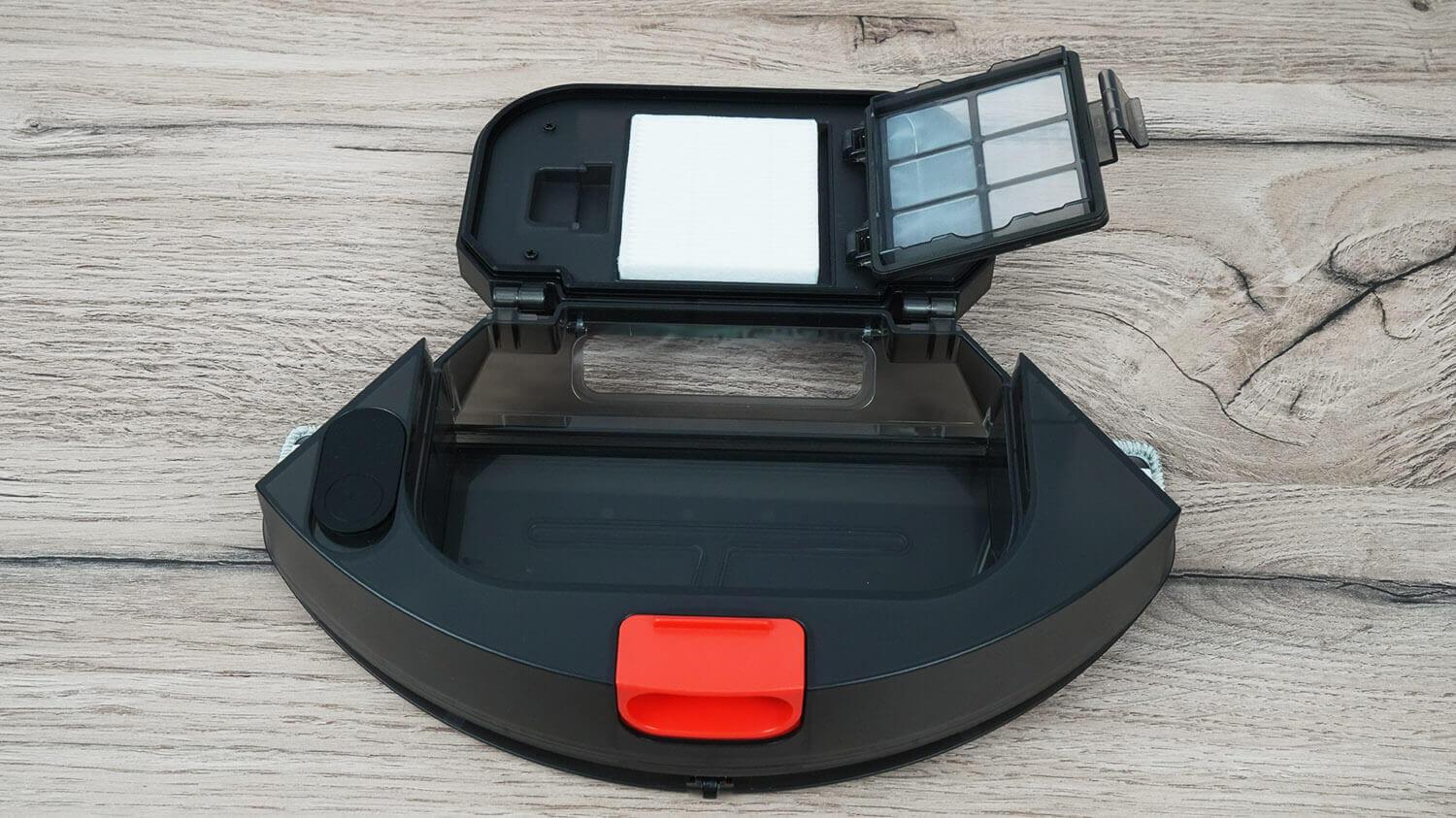
The combined container with compartments for dirt and water is removable from the rear. It conveniently houses a cleaning tool for the turbo brush.
Combined container
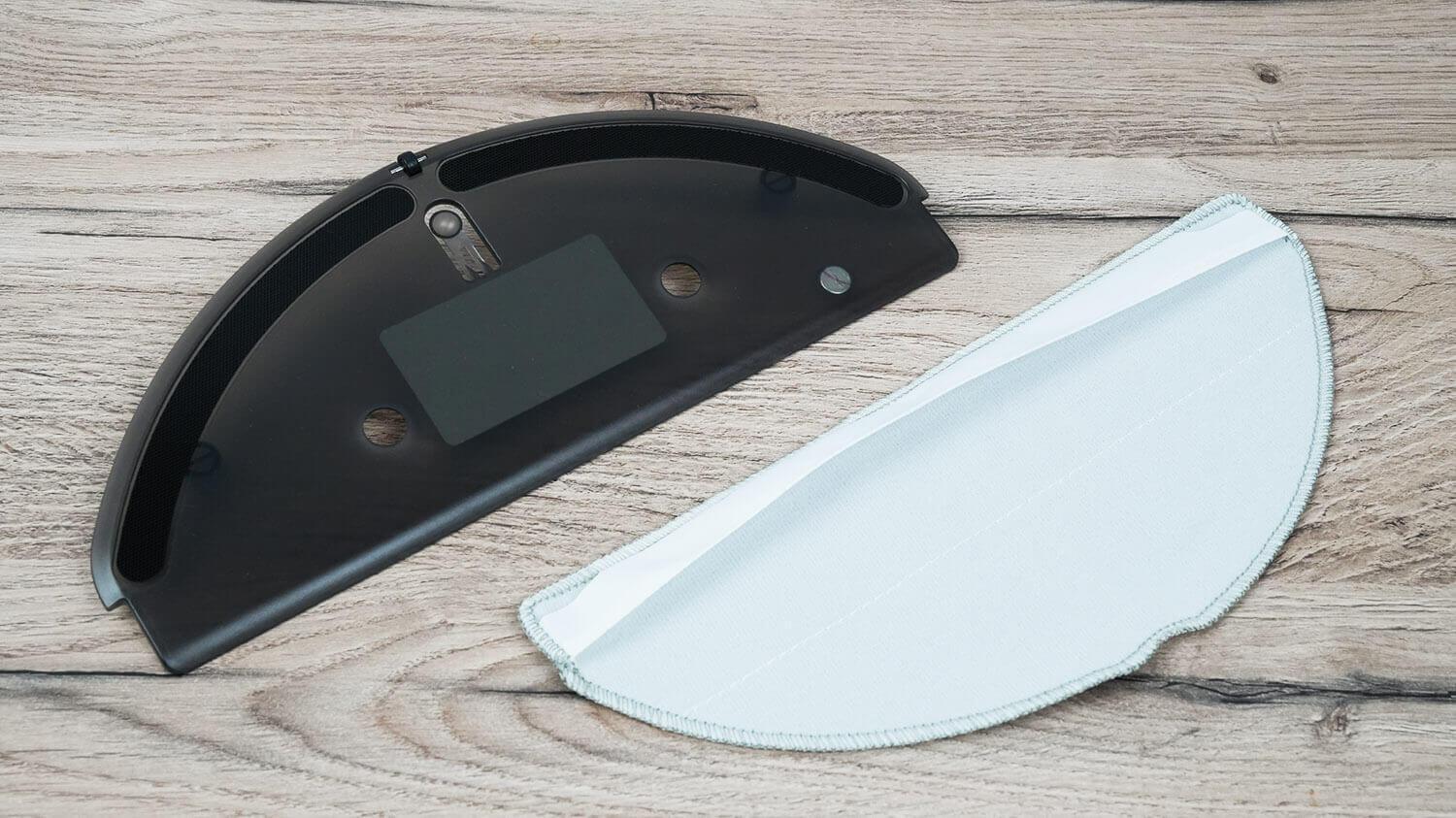
The waste container has a capacity of 400 ml. It features a dual filtration system, including a HEPA filter and mesh. The water tank holds 270 ml. The water flow to the wipes is electronically controlled. A wipe holder is attached to the bottom of the tank. The wipe is a standard size, secured with Velcro and a pocket.
Holder and napkin
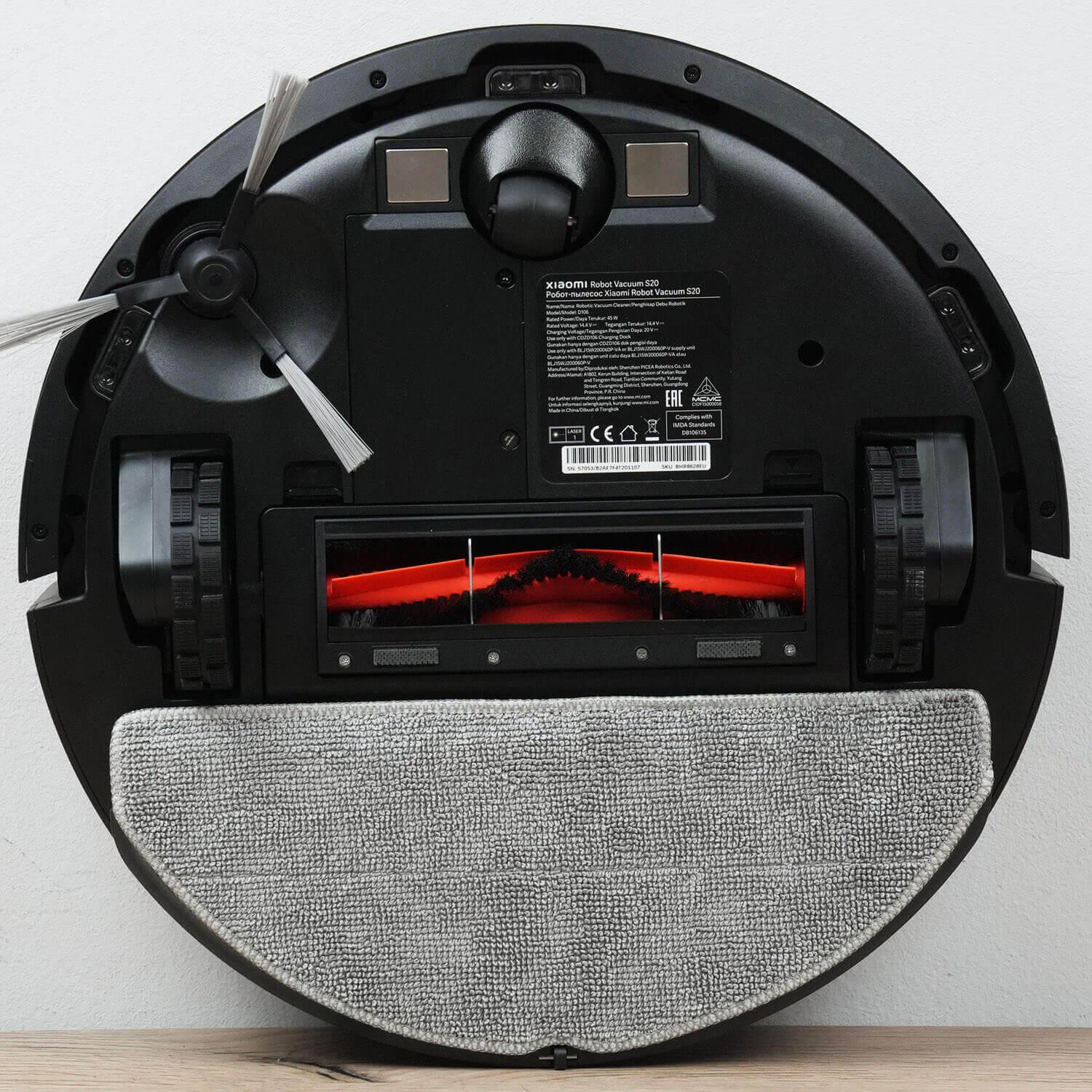
The robot has three anti-fall sensors installed underneath. There is no carpet sensor. It has a single, three-beam, quick-release side brush.
Bottom view
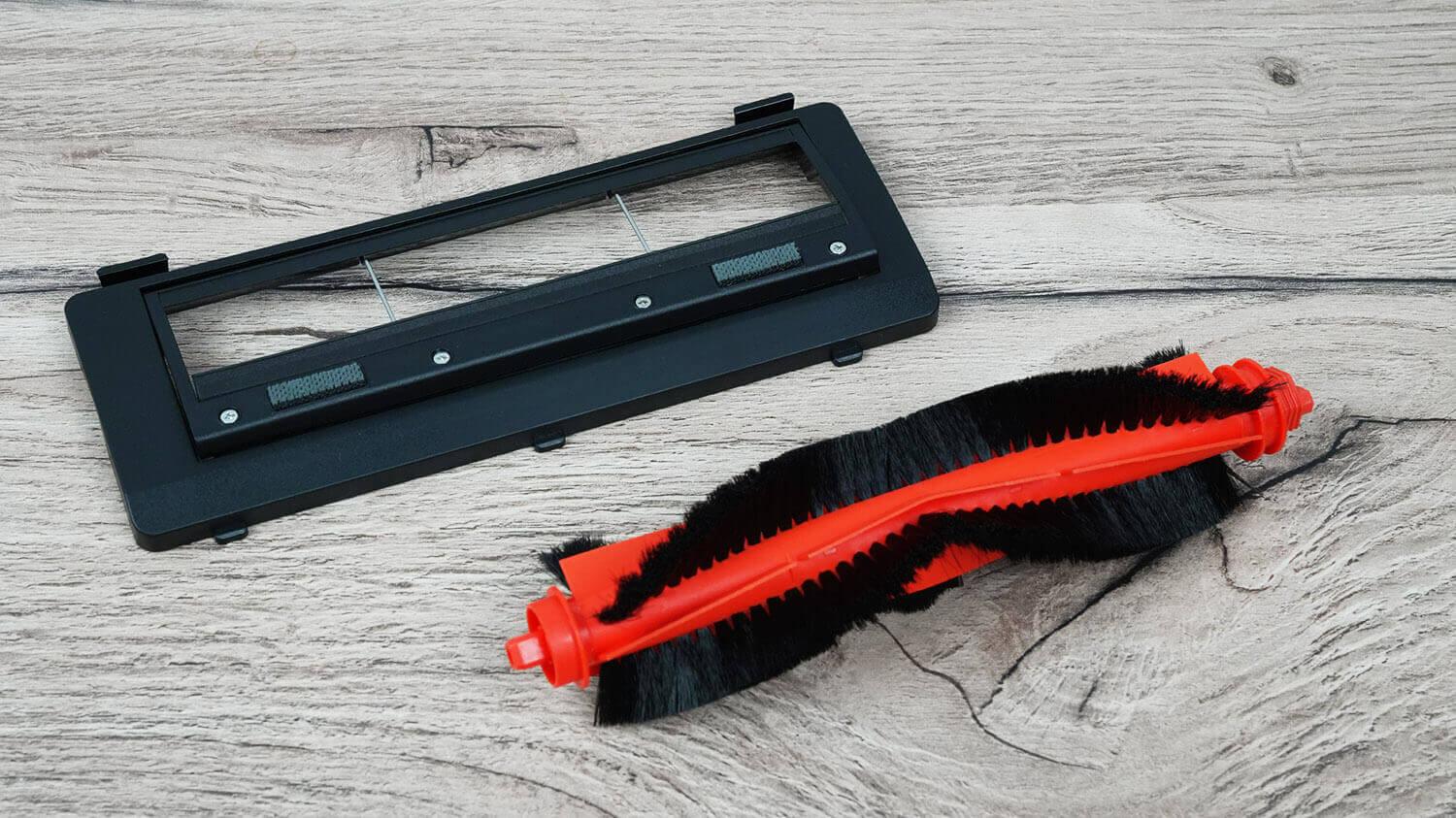
The central brush unit is fixed, which is a disadvantage. The turbo brush is made of bristles and petals. It can't be disassembled, which is also a disadvantage.
Central brush
All the pros and cons of the robot's design will be discussed during the final review. Let's move on!
Technical specifications
The main characteristics of the Xiaomi Robot Vacuum S20, as stated by the manufacturer:
- Li-Ion battery 3200 mAh.
- Suction power 5000 Pa.
- Dust collector 400 ml.
- Water tank 270 ml.
- Obstacle clearance 2 cm.
- Robot dimensions: 325*98 mm.
Overall, the specifications are standard for this price segment and for the realities of 2025. It's worth noting that the battery is a bit weak. However, the body diameter is smaller than most Xiaomi robots, which may be important for some.
Functional capabilities
As for the robot vacuum cleaner's functions, it's controlled via the proprietary Mi Home mobile app. It's entirely in Russian, as are the voice commands. Everything is convenient and intuitive. Since the version is European, you can select the Russian region when connecting.
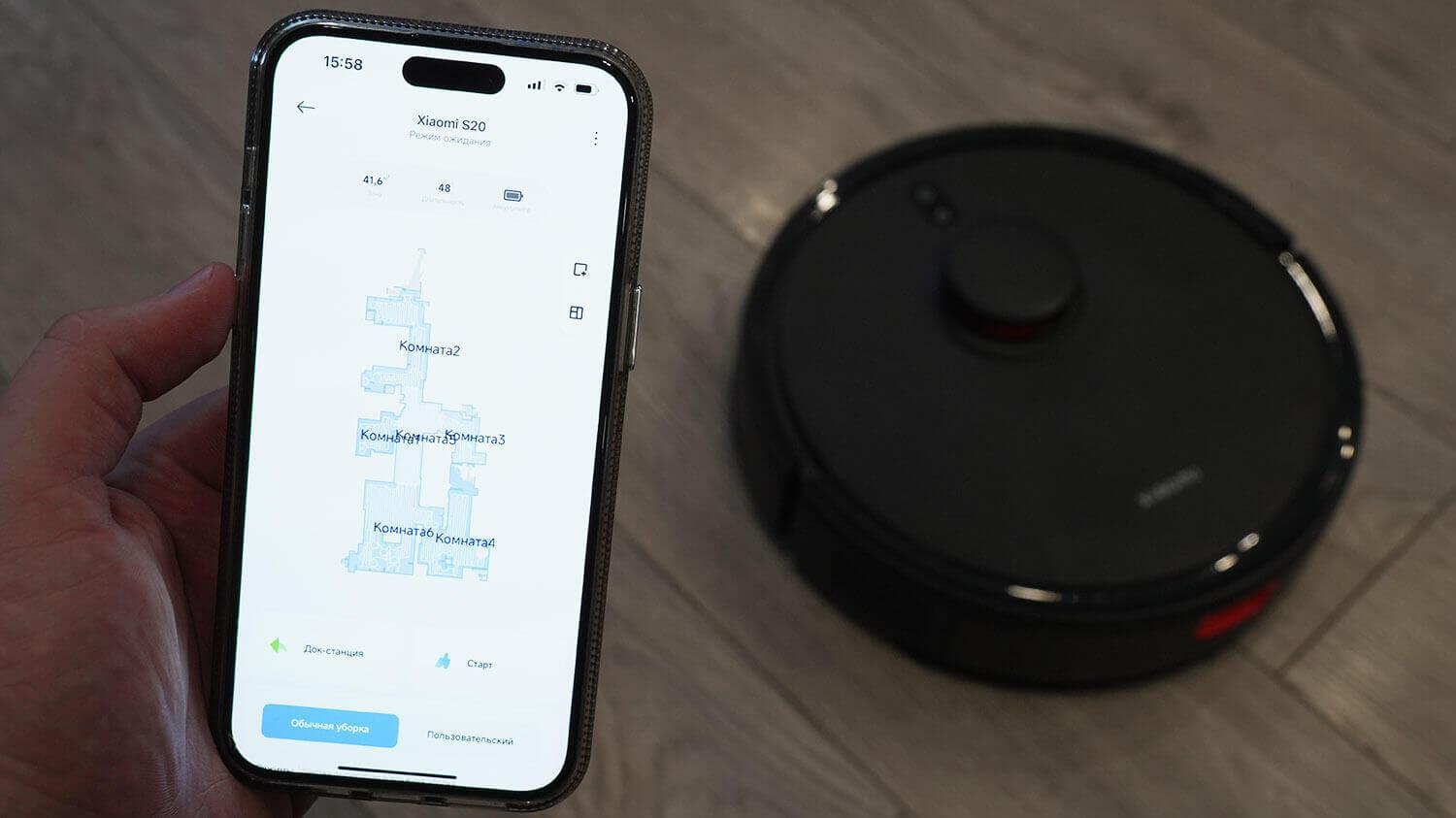
Control via app
All main functions are displayed on the screen:
- Saving multiple cleaning maps.
- Zoning of premises into rooms.
- Selecting areas and rooms for cleaning.
- Virtual walls and no-go zones.
- Suction power adjustment.
- Adjusting the water supply level.
- User mode.
- Cleaning log.
- Setting up cleaning according to a schedule.
- Voice notifications in Russian.
- Y-shaped wet cleaning mode.
- Yandex.Alice support.
One interesting feature worth noting is the Y-mopping mode, which improves the quality of wet cleaning. However, this robotic vacuum cleaner does not detect carpets, so it does not avoid them or automatically increase power when entering carpets.
And so, it has all the basic functions for flexible adjustment of cleaning parameters, as for the $200 price segment.
Testing
A detailed video review has already been prepared and published on the channel:
Navigation
Finally, let's move on to the tests. First, we'll check the navigation in a room with obstacles. After leaving the base, the robot navigates the perimeter of the selected area. The mirror introduced some error in the map, but this is normal for lidar robots. The robot didn't get stuck on the clothes dryer, even though it rolled over the legs. After traversing the perimeter, the Xiaomi Robot Vacuum S20 begins cleaning the entire accessible area in a serpentine pattern. I also swept around the box and the chrome table legs, but it's clear that it's touching the objects roughly, causing them to move. This is because there's no wall sensor or object detection system on the bumper.
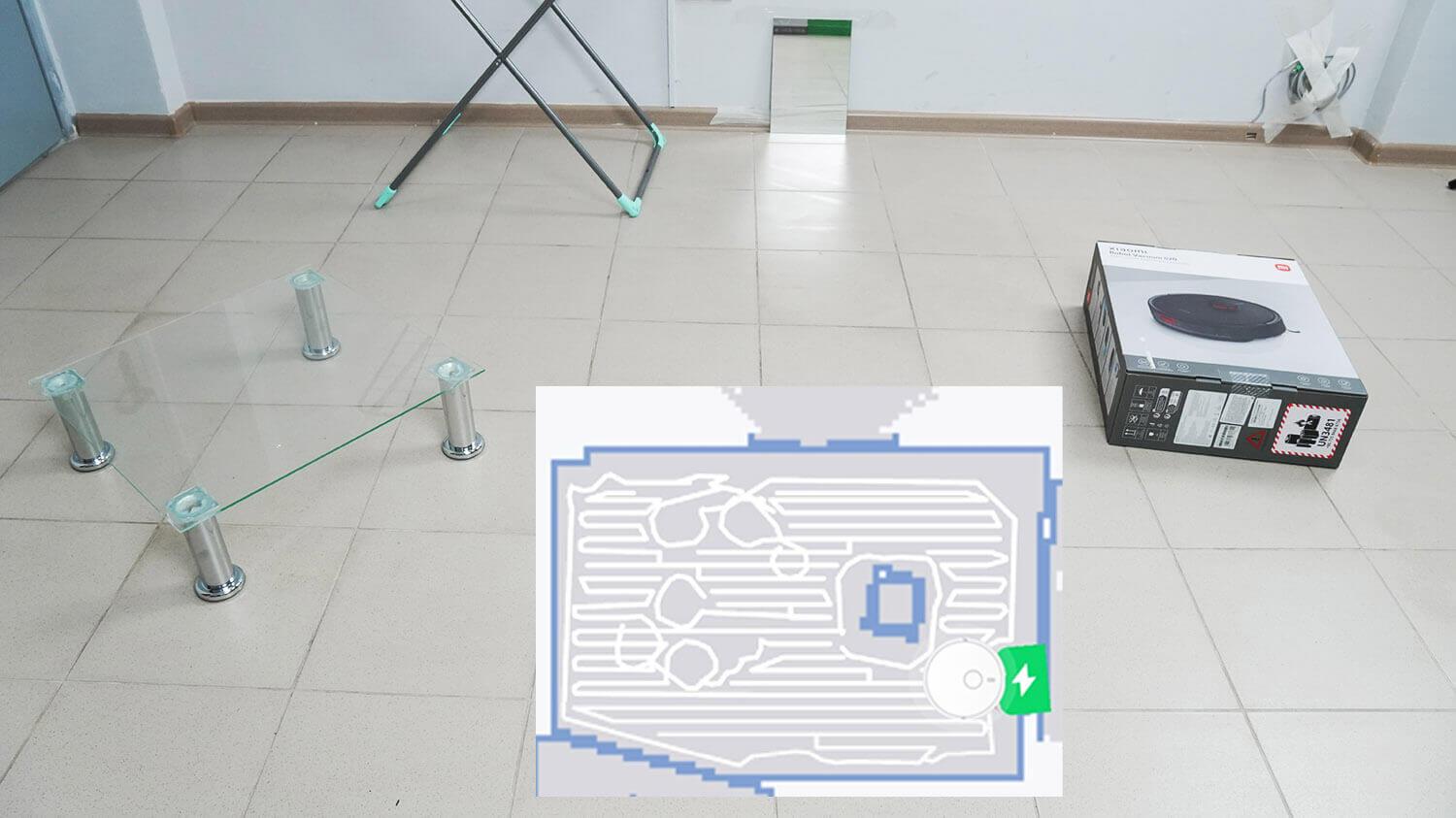
Navigating an Obstacle Room
Regarding house navigation, the robot cleans room by room, following the perimeter, then in a serpentine pattern. There were no uncleaned areas, and the cleaning speed was high, so this test was passed.
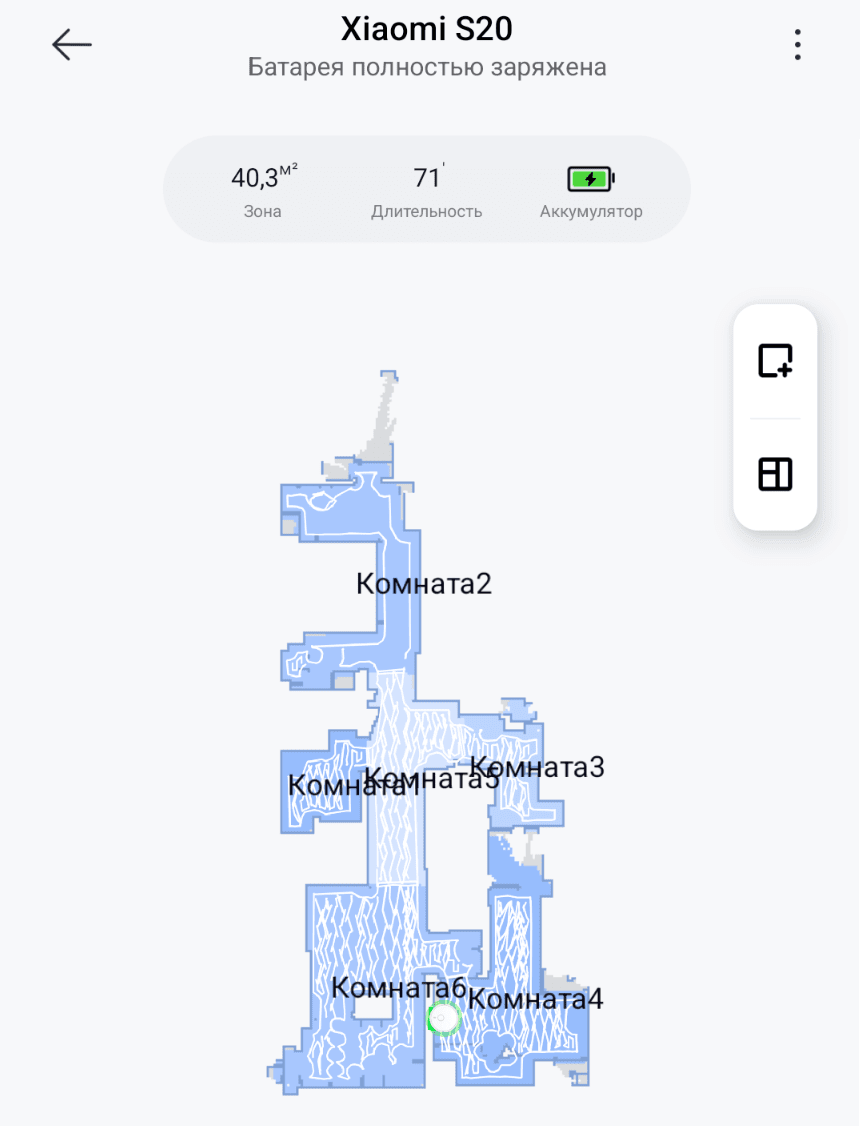
Navigation within the home
Passing under low furniture
The minimum height for passing under furniture was also checked - the robot vacuum cleaner is able to pass under a 10 cm gap, which is good.
Autonomy
I also tested the battery life when running the robot at maximum power with wet cleaning enabled. It managed to run for 70 minutes, cleaning 40 square meters of usable space. However, the Y-mopping mode was enabled, which significantly slows down the cleaning speed. In reality, the robot can cover approximately 60-70 square meters of usable space in Turbo mode with its normal motion algorithm.
Suction power
Regarding suction power, the Xiaomi Robot Vacuum S20 failed to clean a single crevice in Silent mode. In Standard mode, it partially cleaned crevices 2 and 4 mm deep. In Turbo mode, the robot even partially cleaned a 6 mm crevice. So, in reality, this model's suction power is slightly stronger. In comparison, the S10+ only partially cleaned 2 mm deep, even at maximum power.
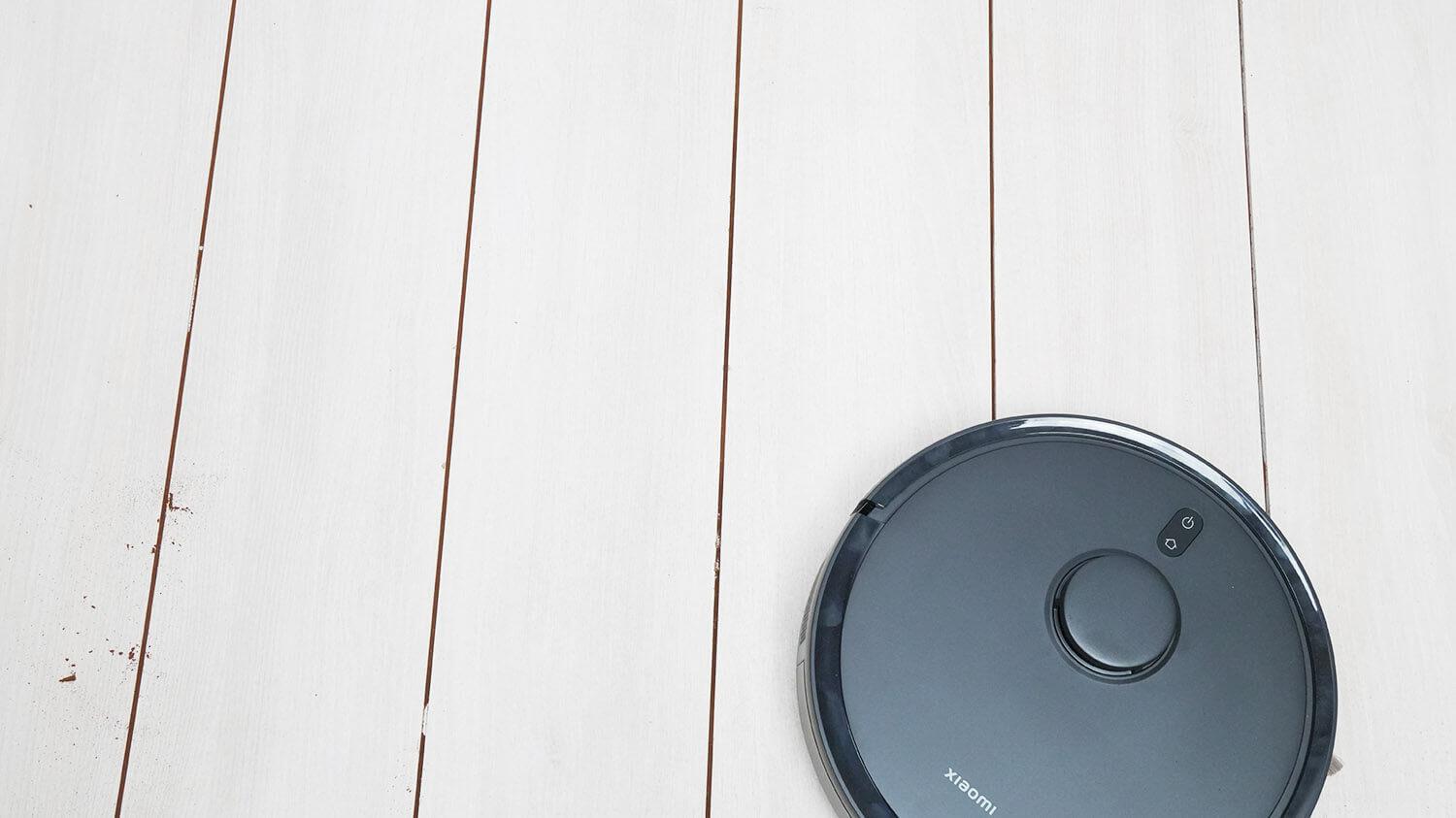
Suction power
Dry cleaning
Cleaning performance on laminate floors is on par with similar products—almost all debris was removed, with the exception of small remnants in corners that are difficult for round robots to reach. The center brush became tangled with pet hair, which is normal for this type of brush. Cleaning it will be more challenging due to its non-detachable design.
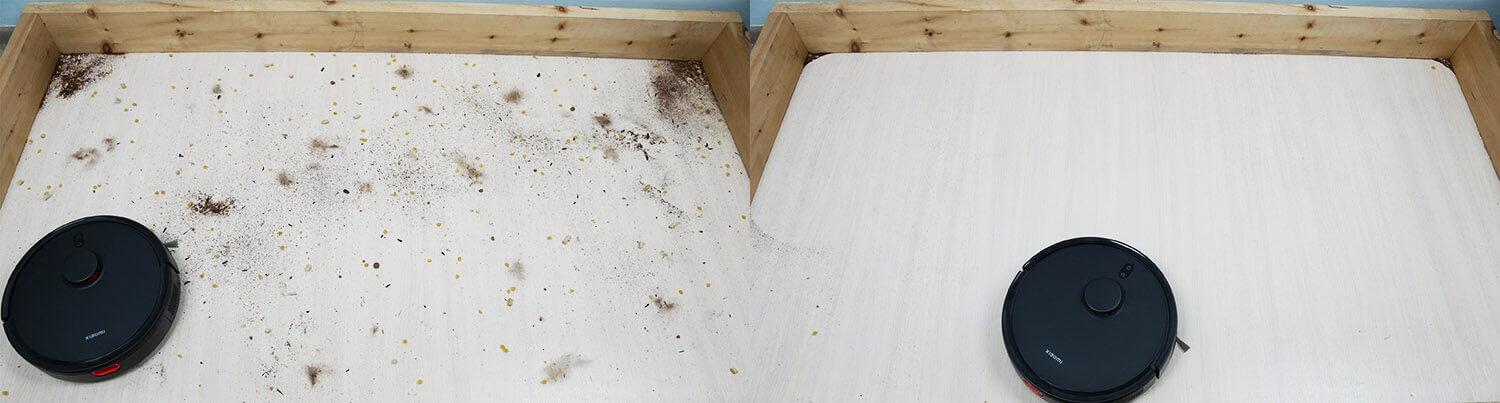
Dry cleaning
Carpet cleaning
The robot is capable of cleaning low-pile carpets, but its cleaning performance on medium-pile carpets is mediocre. This is due to the central brush unit not floating, and the brush itself being of inferior design.
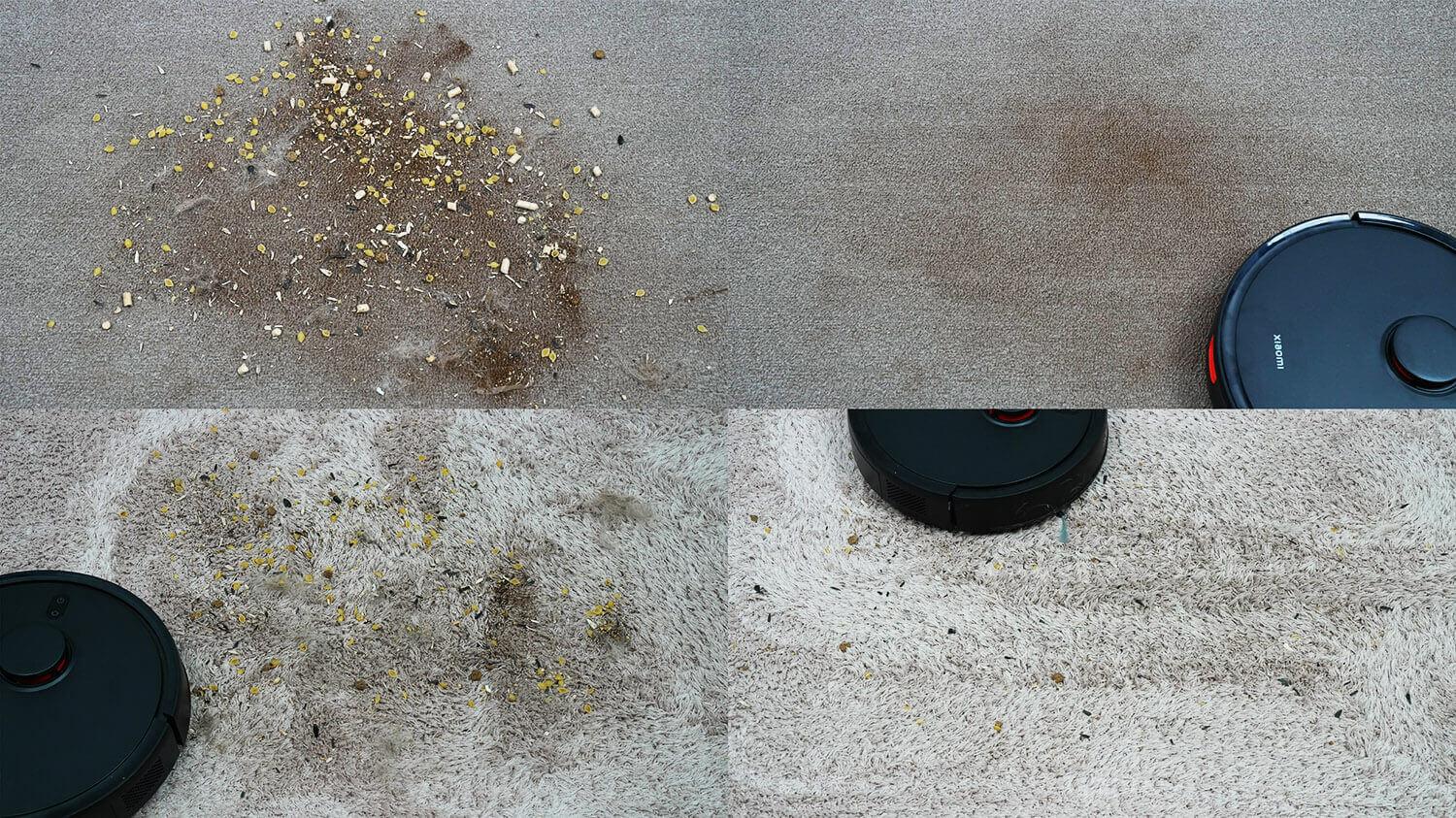
Carpet cleaning
Wet cleaning
The dirt removal performance is on par with most similar products in this price range. The robot vacuum cleaner is capable of removing slightly dried-on dirt from floors, even streak-free.
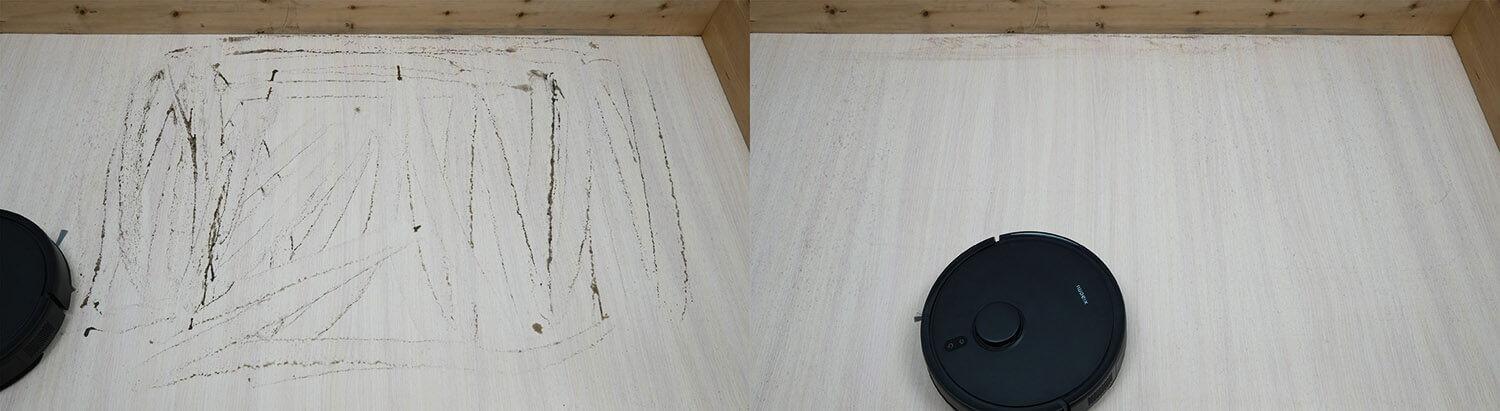
Wet cleaning
The only thing to consider is that the blind area between the edge of the napkin and the baseboard is about 6 cm.
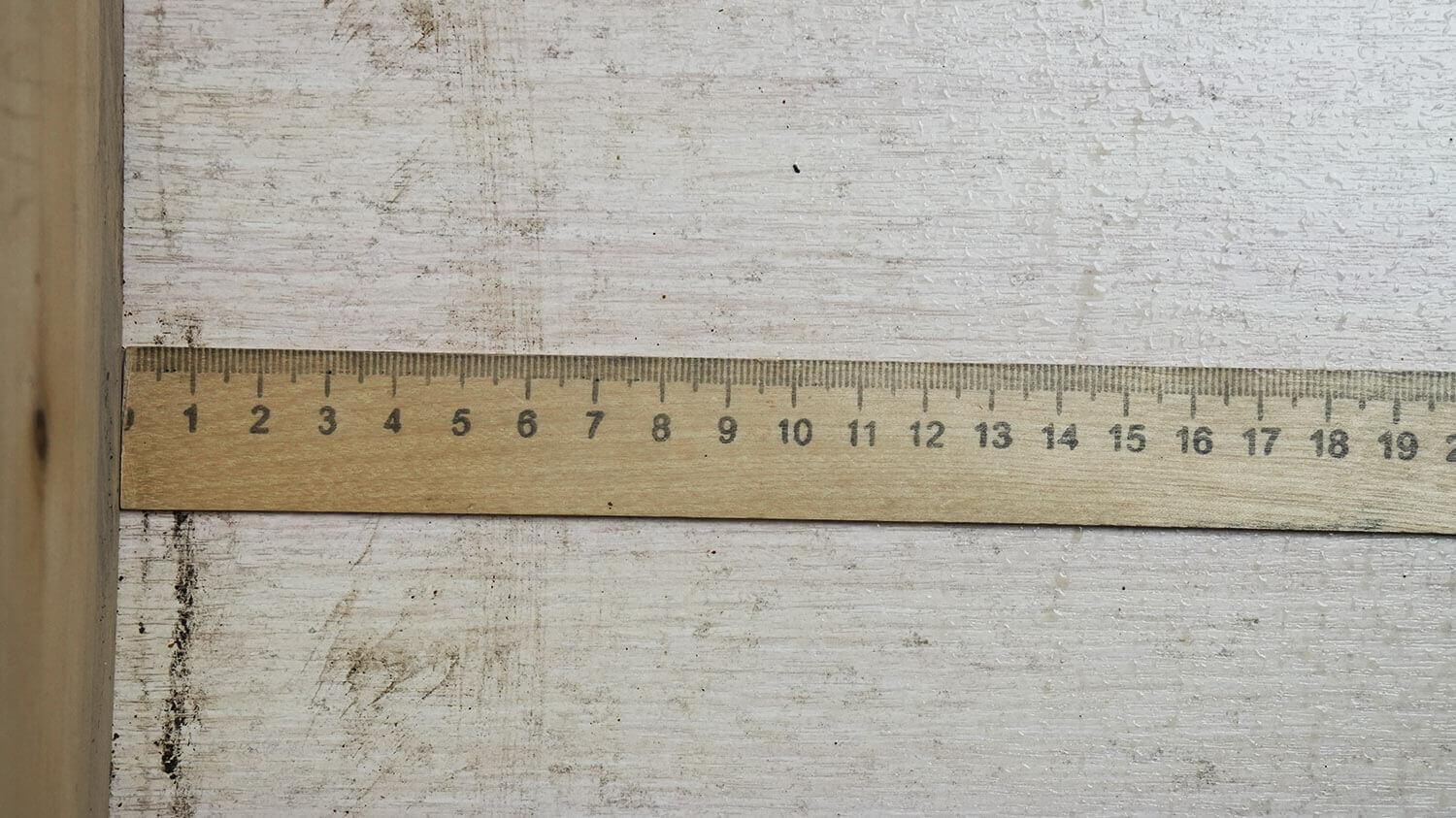
Blind spot
In a domestic environment, the robot really does wet the cloth well and is capable of gentle wet cleaning, picking up dust and debris missed by the brushes. And you can immediately see how the Y-pattern floor cleaning algorithm works:
Wet cleaning and carpets
Speaking about wet cleaning in the presence of carpets, since the robot vacuum cleaner does not have a carpet sensor, it is not able to detect carpets and moves onto them with a cloth.
In this case, to clean the carpets without wetting them, you can simply remove the cloth. Separate no-clean zones for the wet cleaning mode can also help protect the carpets from getting wet.
Obstacle clearance
The robot vacuum cleaner can easily move over 2 cm high thresholds. That's a plus!
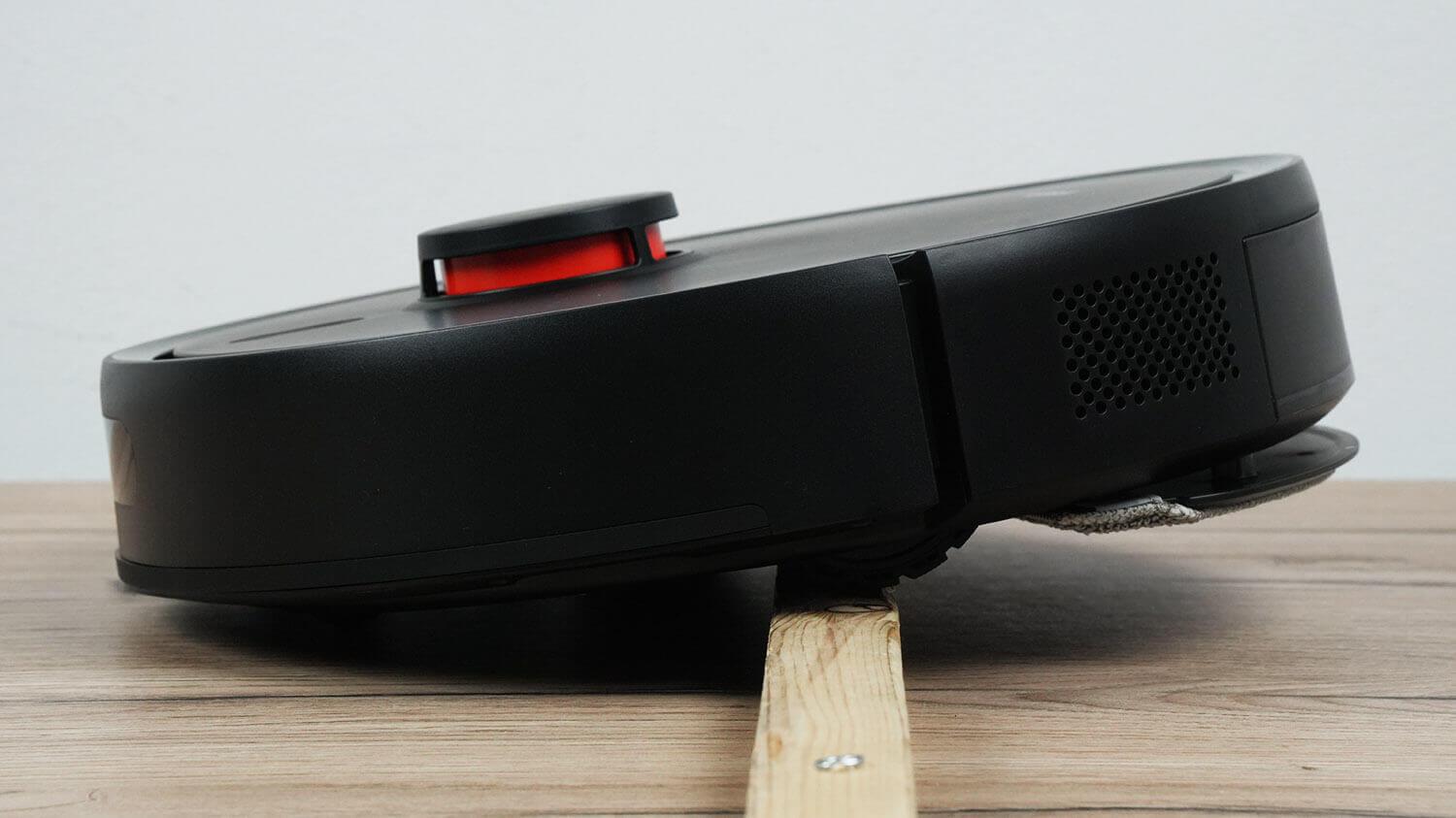
Obstacle clearance
Driving on black surfaces
It's not afraid of black surfaces, and can easily navigate even completely black carpet. This is another advantage of the robot!
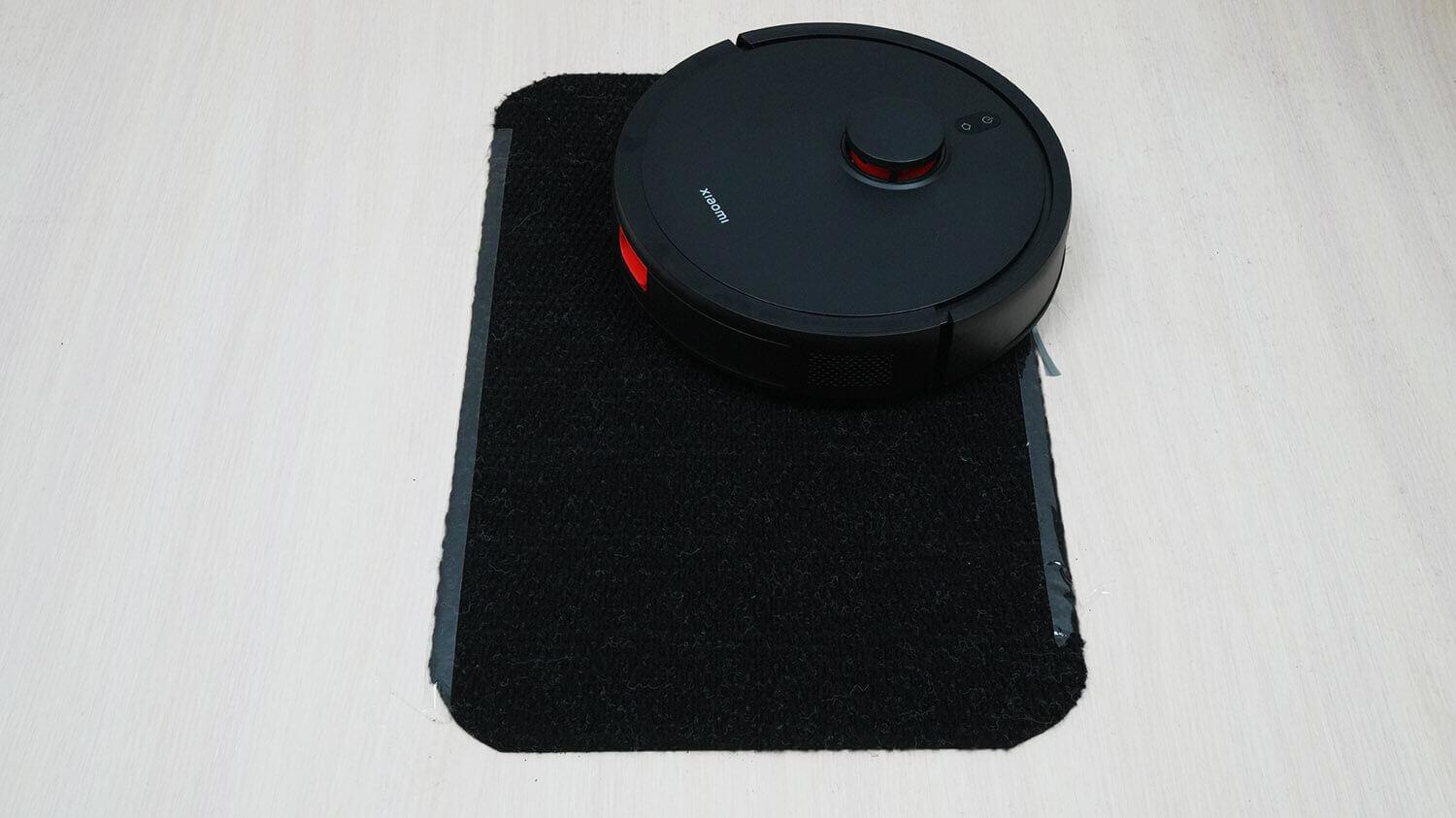
Driving on black surfaces
Noise level
As for the noise level, it ranges from 62 to 72 dB, depending on the selected power mode. I wasn't particularly impressed with the very loud pump that supplies water to the cloth.
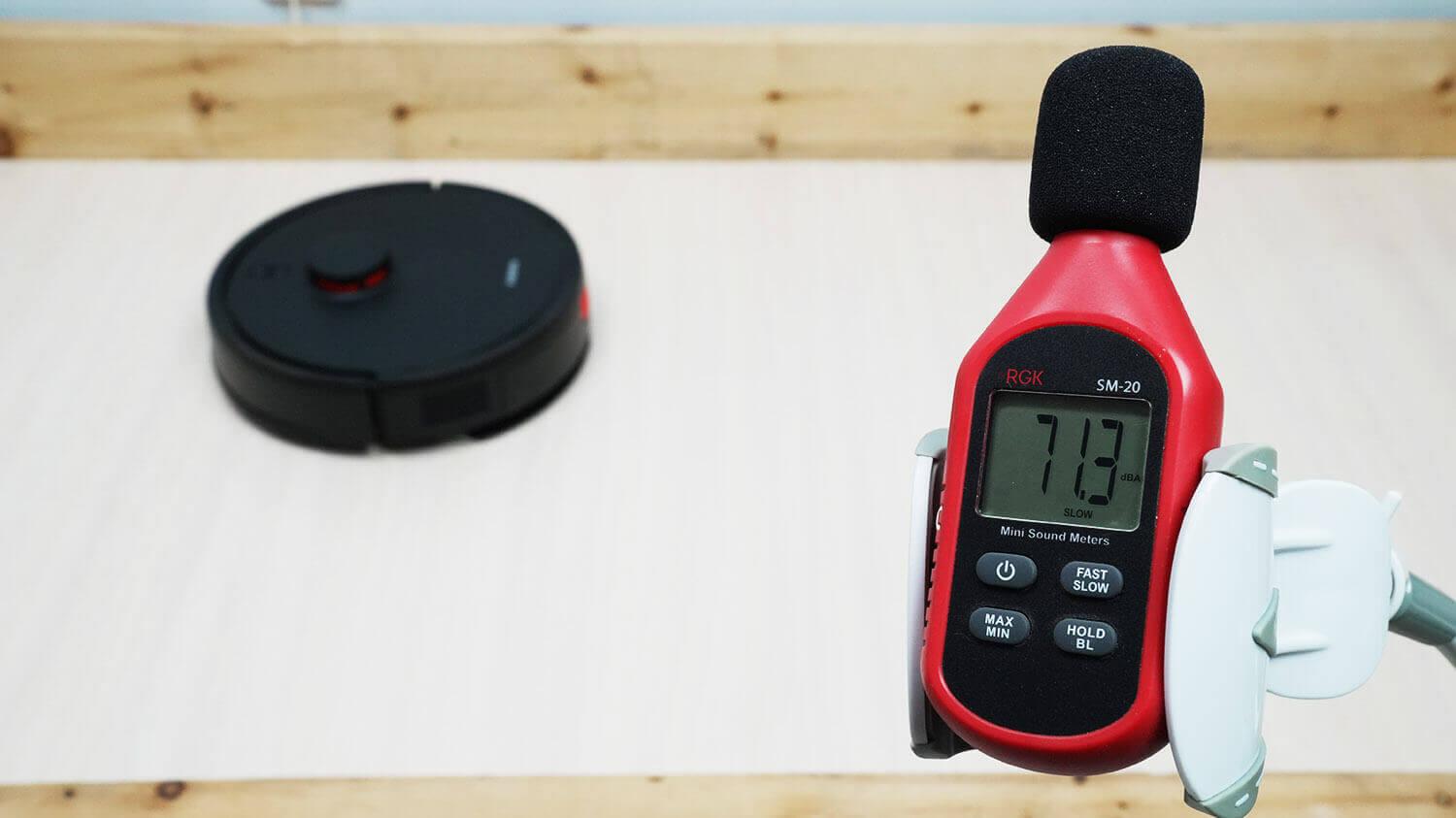
Noise level
Here I can say that at maximum power the noise level is increased in this model.
Personal opinion
The Xiaomi Robot Vacuum S20 robot vacuum cleaner has been thoroughly reviewed and tested. our evaluation system he managed to gain 104 points, which is far from the best result, even for inexpensive lidar robots.
Overall rating of tested robot vacuum cleaners: https://robovac.washerhouse.com/en/rejtingi/robovac-obshhij-rejting-robotov-pylesosov-robo.html.
I'll highlight the pros and cons I discovered during the review, and then share my opinion on the robot. I liked the following:
- Good cleaning quality on hard surfaces, for this price segment.
- Slightly increased suction power.
- Y-shaped floor mopping mode.
- Full Russification of the application interface and voice commands.
- The robot vacuum cleaner is not afraid of black surfaces.
- Good cross-country ability.
- Availability of warranty and service.
However, this model still has its fair share of drawbacks. The main ones are:
- The turbo brush cannot be disassembled, so cleaning it is not a pleasure.
- Doesn't clean medium pile carpets well.
- It touches objects more roughly, since there is no wall sensor and no detection of obstacles in the robot’s path.
- Does not detect or avoid carpets during wet cleaning, and does not automatically increase suction power on carpets.
- Blind zone near the baseboard during wet cleaning.
- High noise level at maximum power.
- Weak battery.
Ultimately, we see that most of the complaints stem from the fact that the assembly has been significantly reduced, even for a price range of $150-$200. There's no wall or carpet sensor, the central brush unit is fixed, there are fewer fall protection sensors, the lidar is fixed, and the brush is non-removable. All of this negatively impacts the functionality, cleaning performance, and navigation of this robot vacuum.
Considering all the comments and test results, I would recommend this model primarily for cleaning hard surfaces, and of course, if it were priced closer to $150. There are plenty of more powerful and well-designed alternatives from other brands for $20,000!
On that note, I'd like to end this review. If you have any questions, please ask them in the comments. Happy shopping, everyone. Bye!