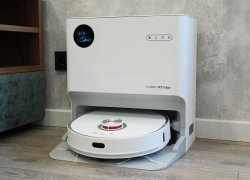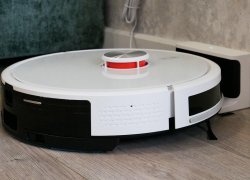
Xiaomi Mijia M30 Pro: The Best Xiaomi Robot Vacuum Cleaner of 2024
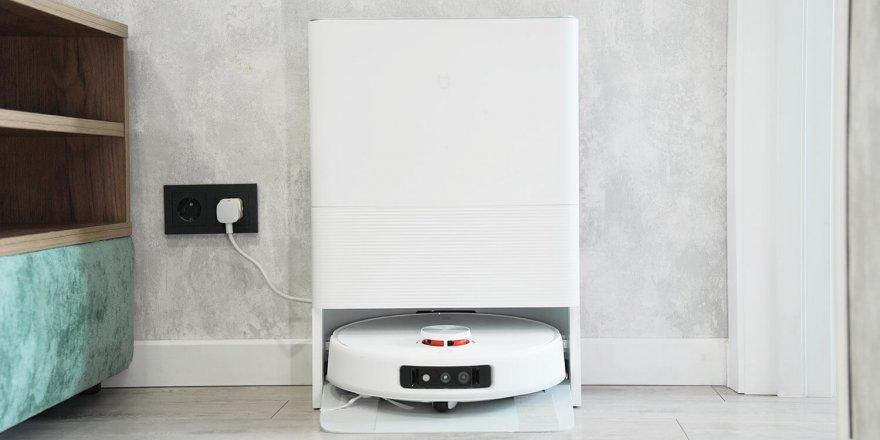
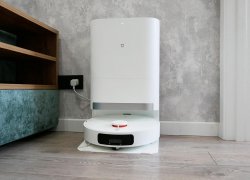
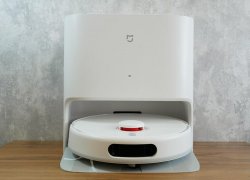
The new Xiaomi Mijia M30 Pro robot vacuum cleaner is the company's flagship at the time of writing. The device has received a number of upgrades compared to its predecessors. First and foremost, this is an improved object recognition system with backlighting. Furthermore, the device is equipped with a unique technology that cuts hair wound around the turbo brush directly at the docking station. At the same docking station, the Xiaomi Mijia M30 Pro self-cleans, washes cloths with hot water, and dries with warm air. And that's not all: the 2024 flagship model boasts a connection to the sewer and water supply, an improved algorithm for washing floors along the baseboards, and increased suction power, reaching 7000 Pa. In short, a number of advanced solutions enhance the robot's efficiency and autonomy. And all this comes at a relatively reasonable price. During the sales, the new Xiaomi can be ordered for just $520, while the standard price is in the $600-700 range. So, below, I'll be taking a detailed look at the Xiaomi Mijia M30 Pro, highlighting its pros and cons based on the test results, and then expressing my own opinion on the robot. So, let's get started!
Equipment
The robot arrived in this branded box:
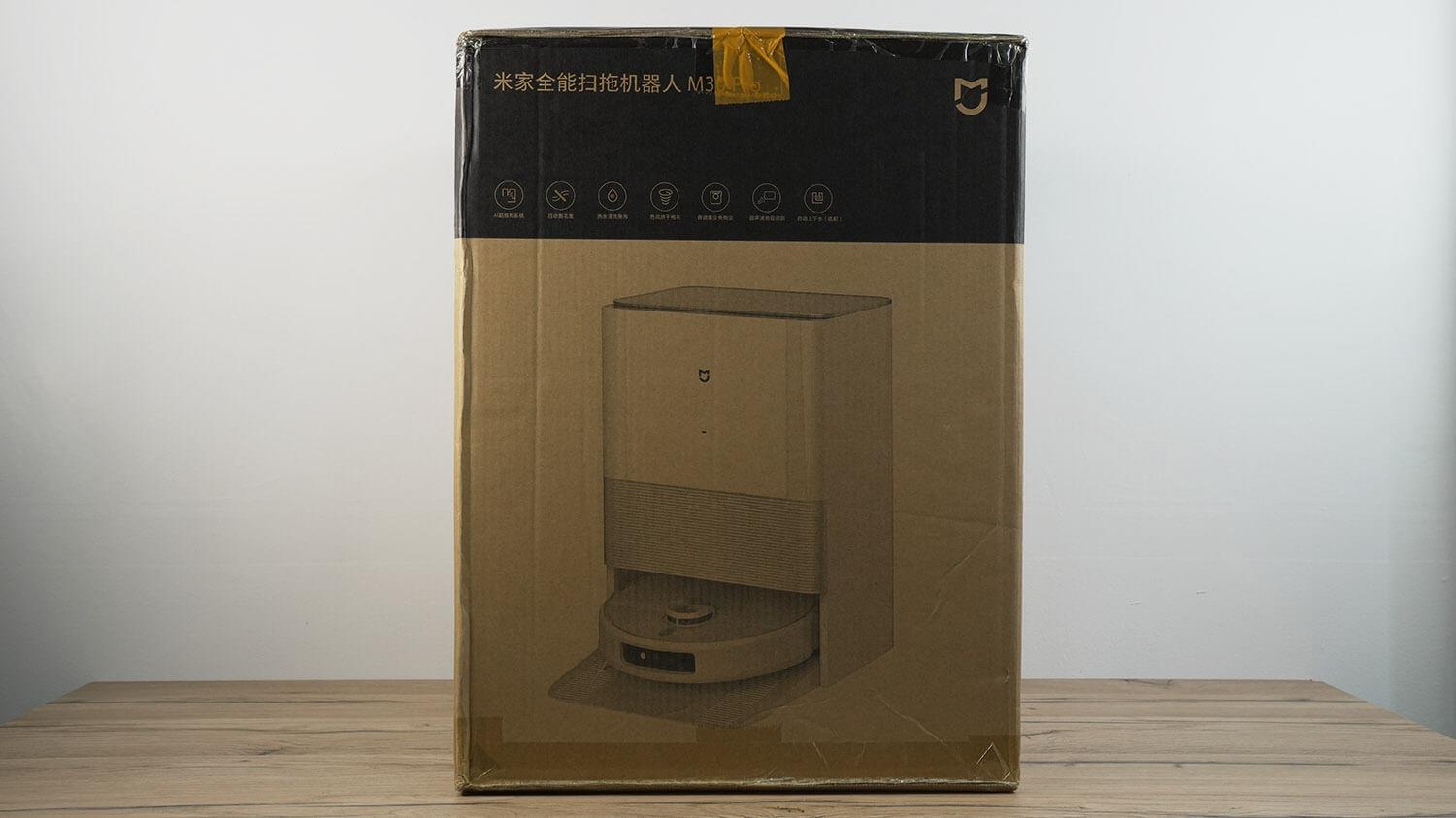
Box
It contains the robot itself with a station, as well as two holders with napkins, a power adapter with a Chinese plug, an adapter for a European socket, and instructions in Chinese.
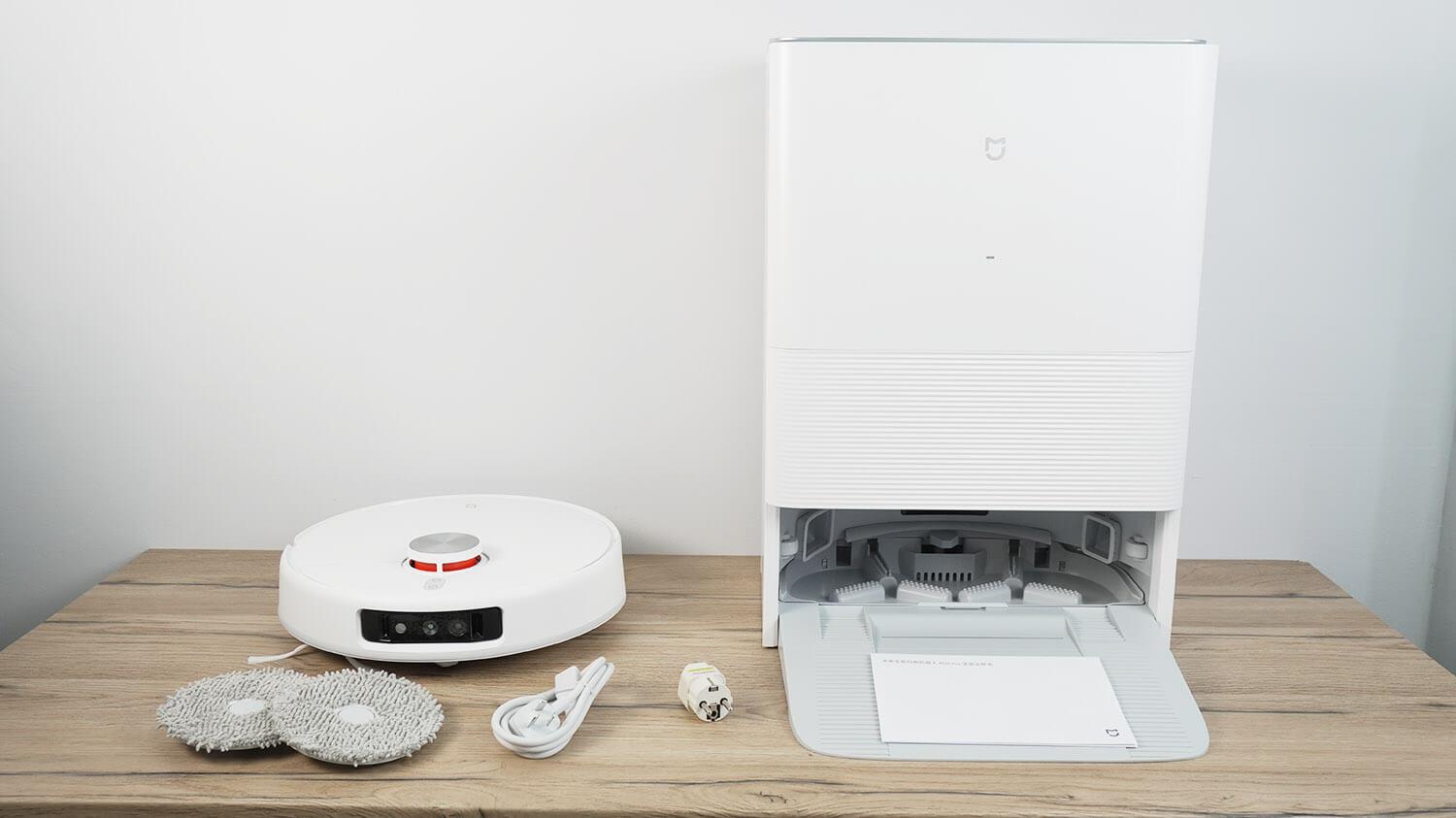
Equipment
The sewer and water supply connection module is purchased separately for approximately $120. It includes:
- The module itself, which is installed instead of the usual tanks in the station.
- Magnetic control unit.
- Plastic pipes for connecting the station to utility networks.
- A perforated hose in which you can hide the tubes from the station, and a special device for pulling them out.
- Corner connectors combined into one block for connecting tubes to the station.
- John Guest type connectors.
- Straight through branch from 1/2 inch to plastic with ball valve.
- Locking brackets.
- Station instructions in Chinese.
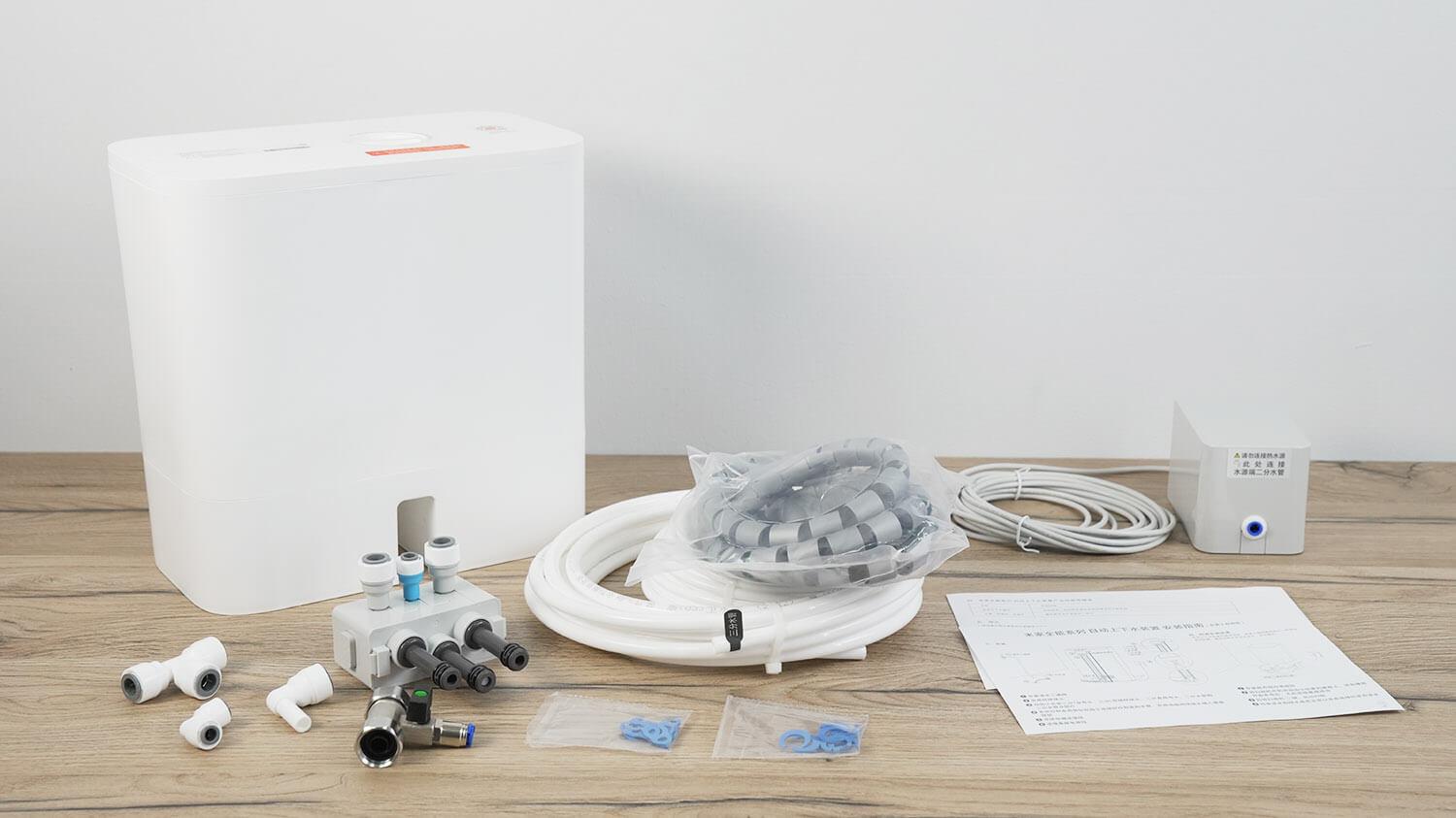
Module configuration
I'd like to point out that this module is also compatible with the Xiaomi Mijia OMNI 2, based on online information.
Appearance
Now let's take a look at the design of the Xiaomi Mijia M30 Pro. For reference, the alternative name for this model is the Xiaomi Mijia Infinite Robot Vacuum-MOP M30 PRO. To avoid confusion, refer to the part number C107+C107JZ.
The robot is the classic Xiaomi white color. Its body is round and it stands 103 mm above the floor.
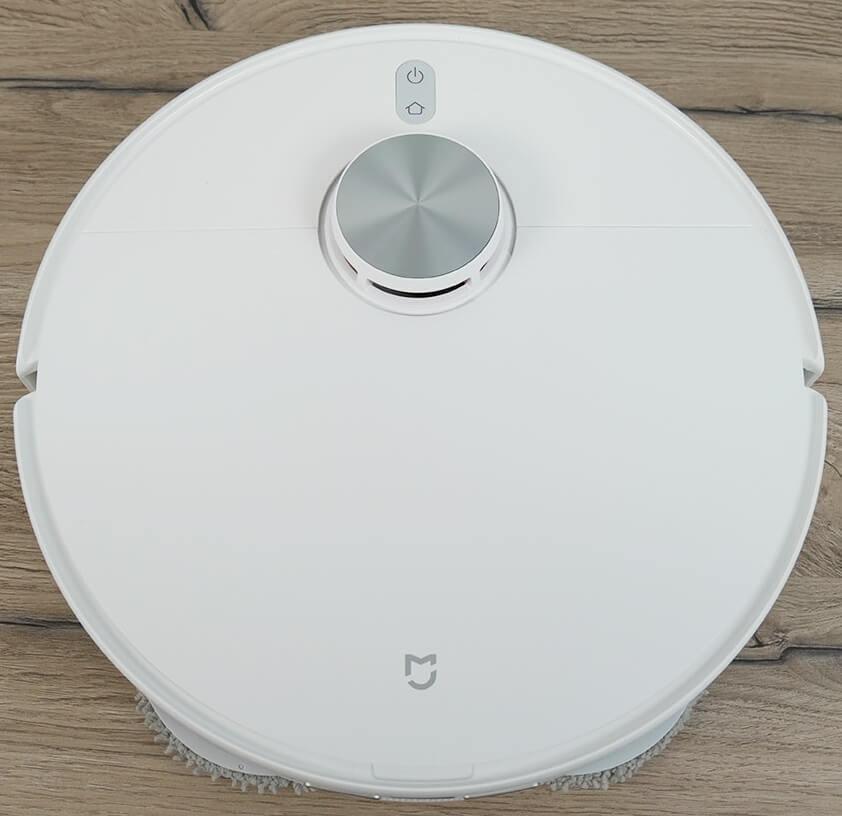
Top view
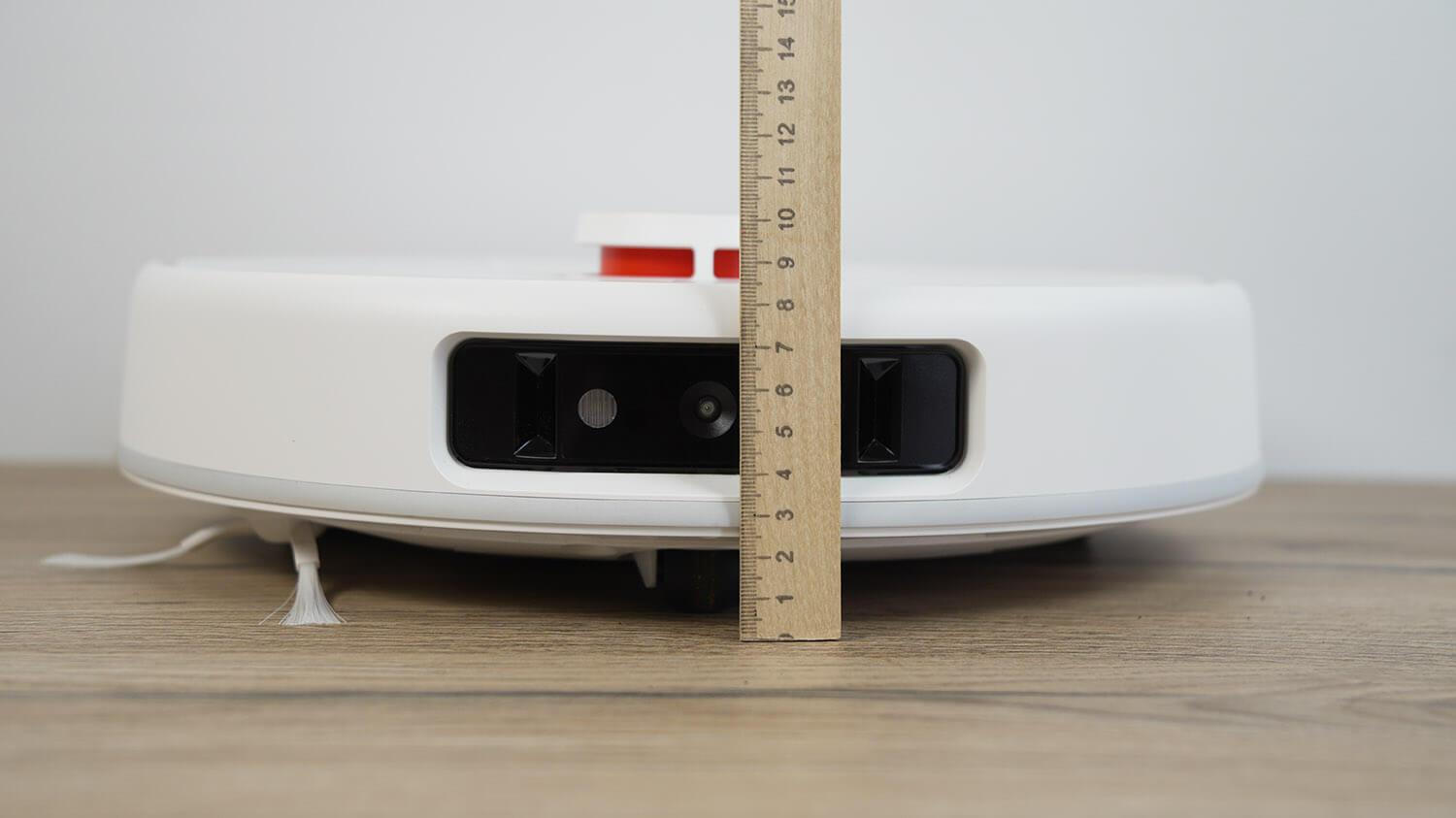
Height
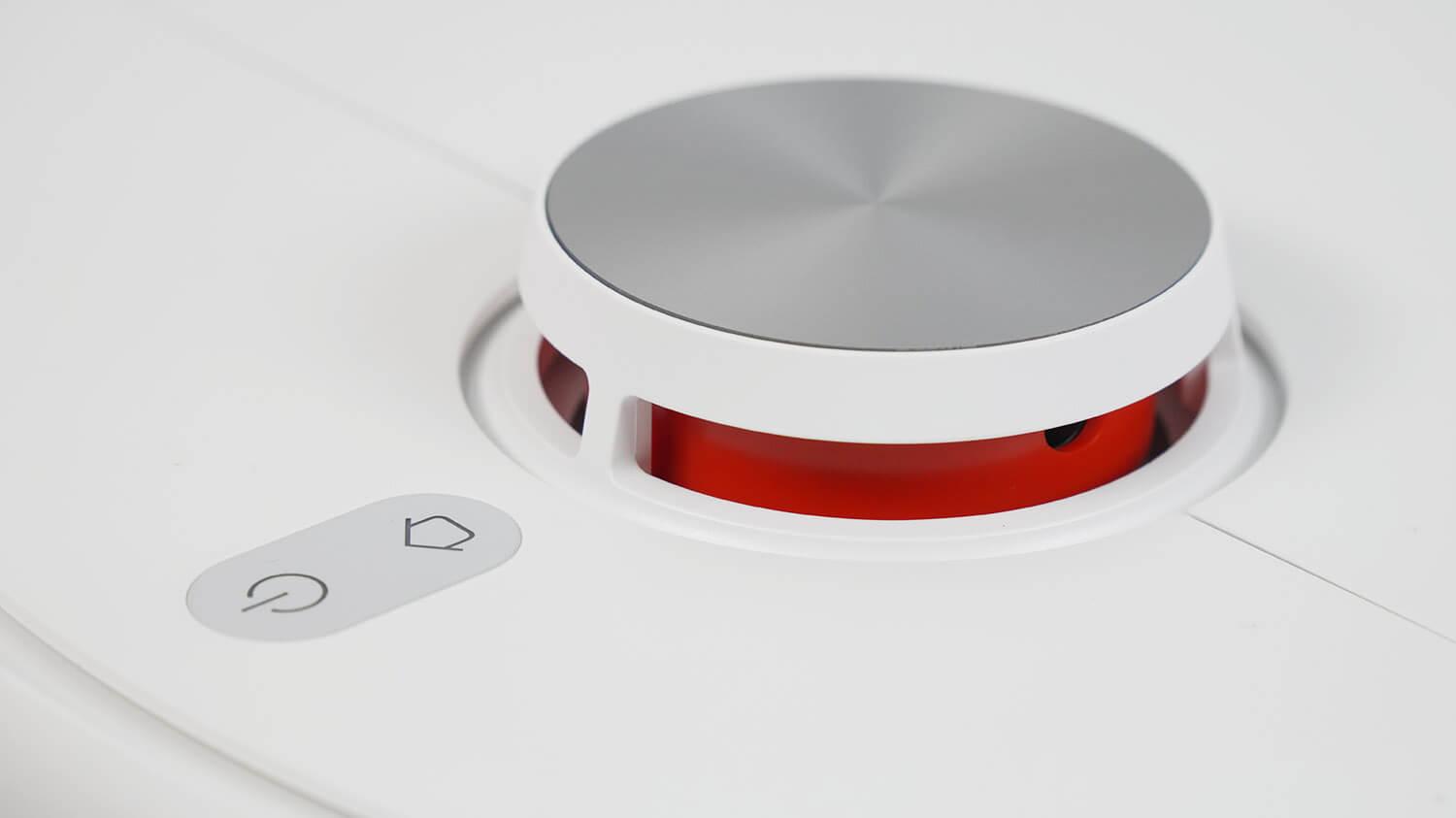
The main navigation system is the lidar on the top of the body. There's no wall sensor on the bumper, and that's not a good thing. I'll show you why in the tests.
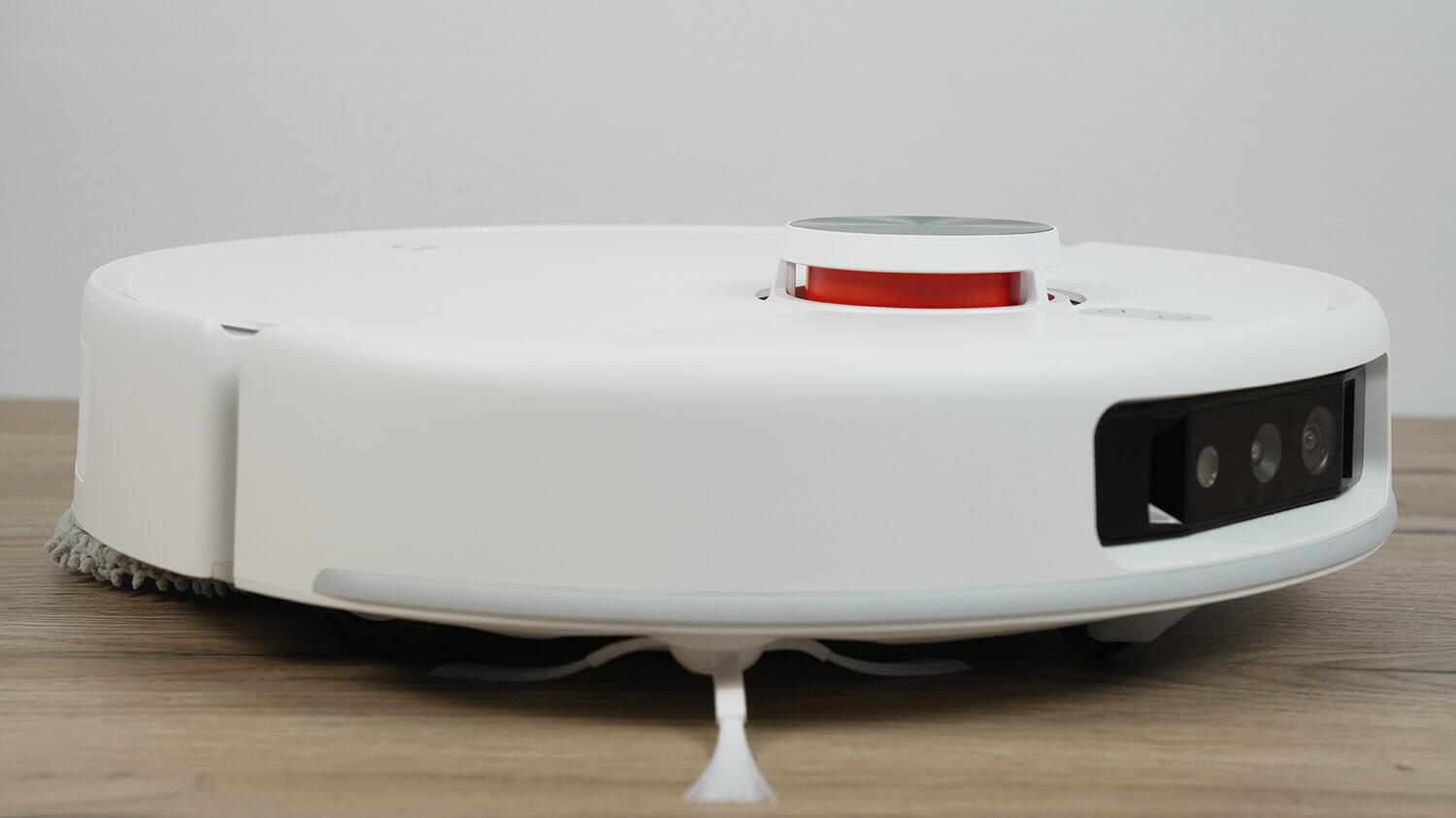
Side view
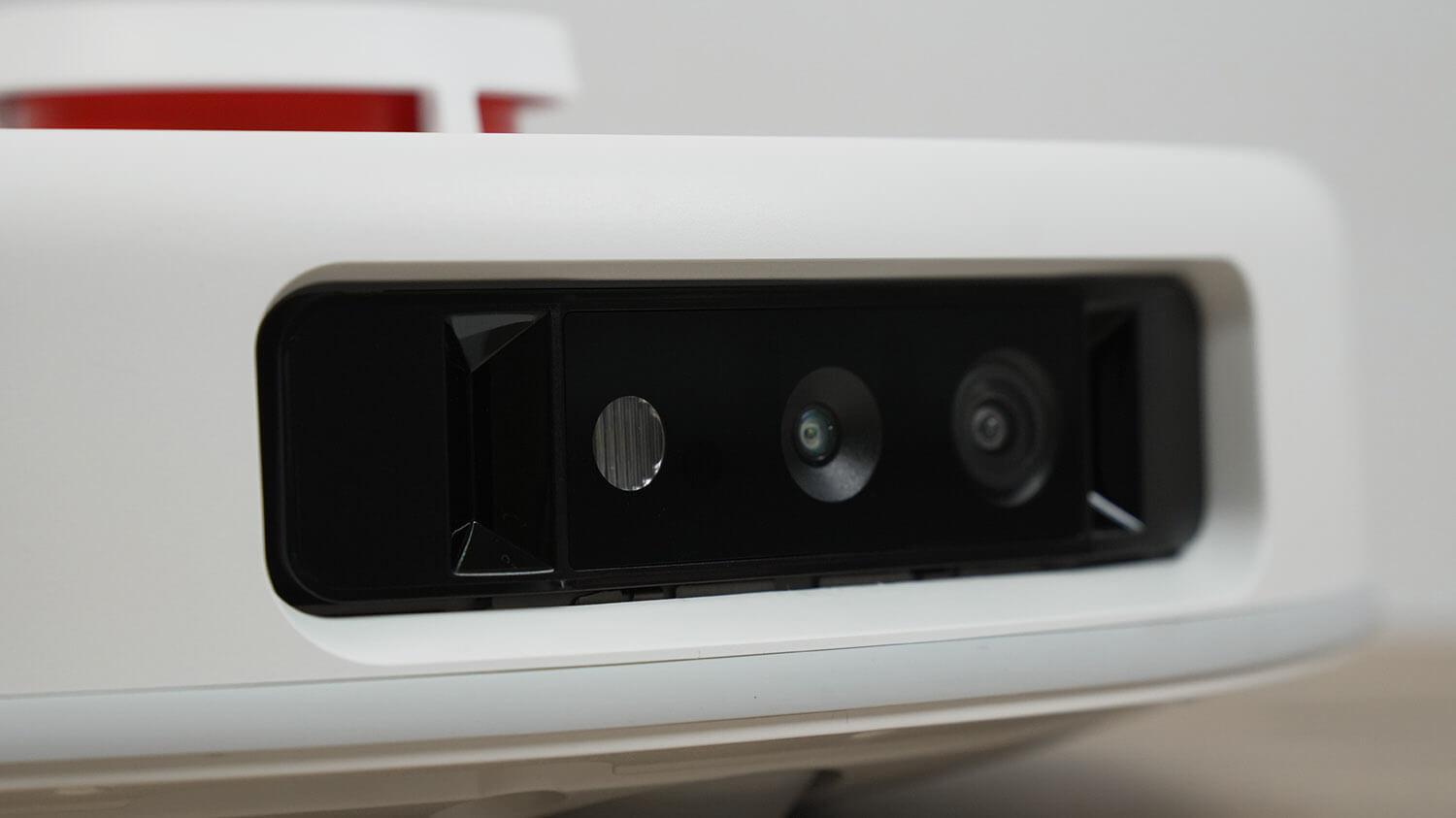
A front-mounted sensor and camera system with backlighting ensures accurate obstacle avoidance. LED backlighting allows the robot to navigate around objects on the floor even in complete darkness.
Object recognition system
Artificial intelligence is implemented. The robot understands what exactly is on the floor in front of it. According to the manufacturer, the database already contains 55 types of objects that the robot can identify. It's worth noting that the camera doesn't transmit an image to a smartphone screen. This means there's no remote home monitoring feature.
The body contains two mechanical control buttons. The lidar is equipped with a spring-loaded cover to prevent it from getting stuck under low furniture.
Lidar and control panel
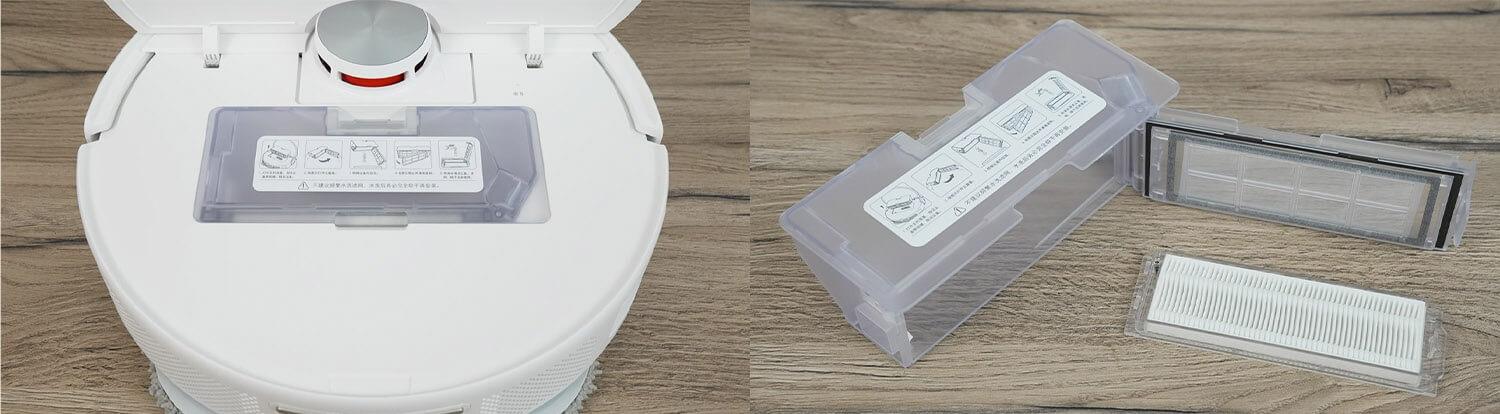
The dust container is located under the top cover. The filtration system uses a mesh and HEPA filter. A self-cleaning curtain is located on the side of the container at the station. Note that the robot itself does not have a water tank. The cloths are only moistened at the station at a preset interval.
Dust collector
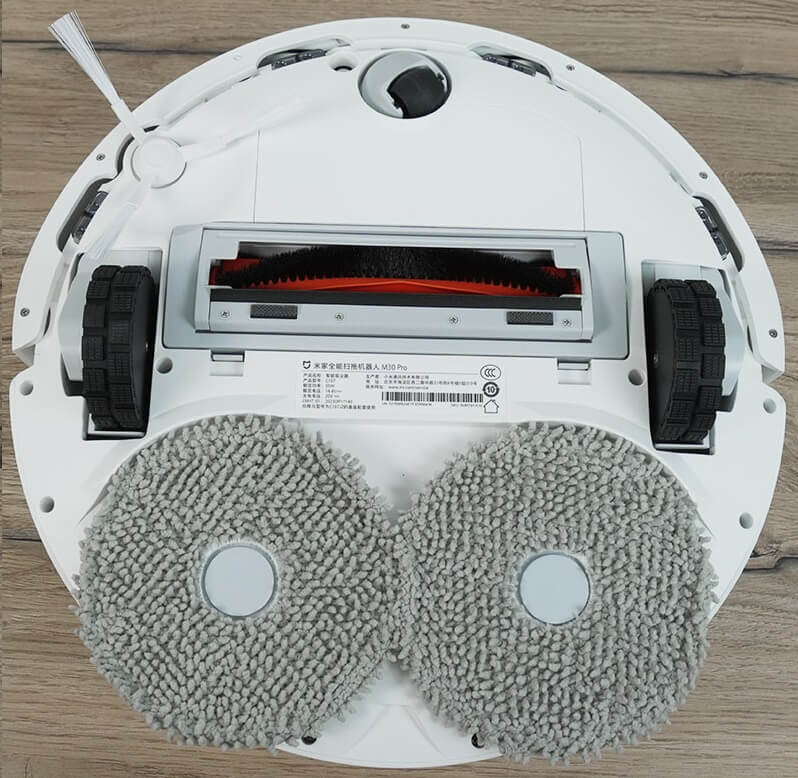
There are only four height sensors. However, there is a carpet detection sensor. There is a single side brush: a three-beam, quick-release unit. Surprisingly, the entire turbo brush unit does not float; only the cover, which also functions as a scraper, moves.
Bottom view
The central brush has bristles and petals and can be disassembled on both sides to remove tangled hair and fur.
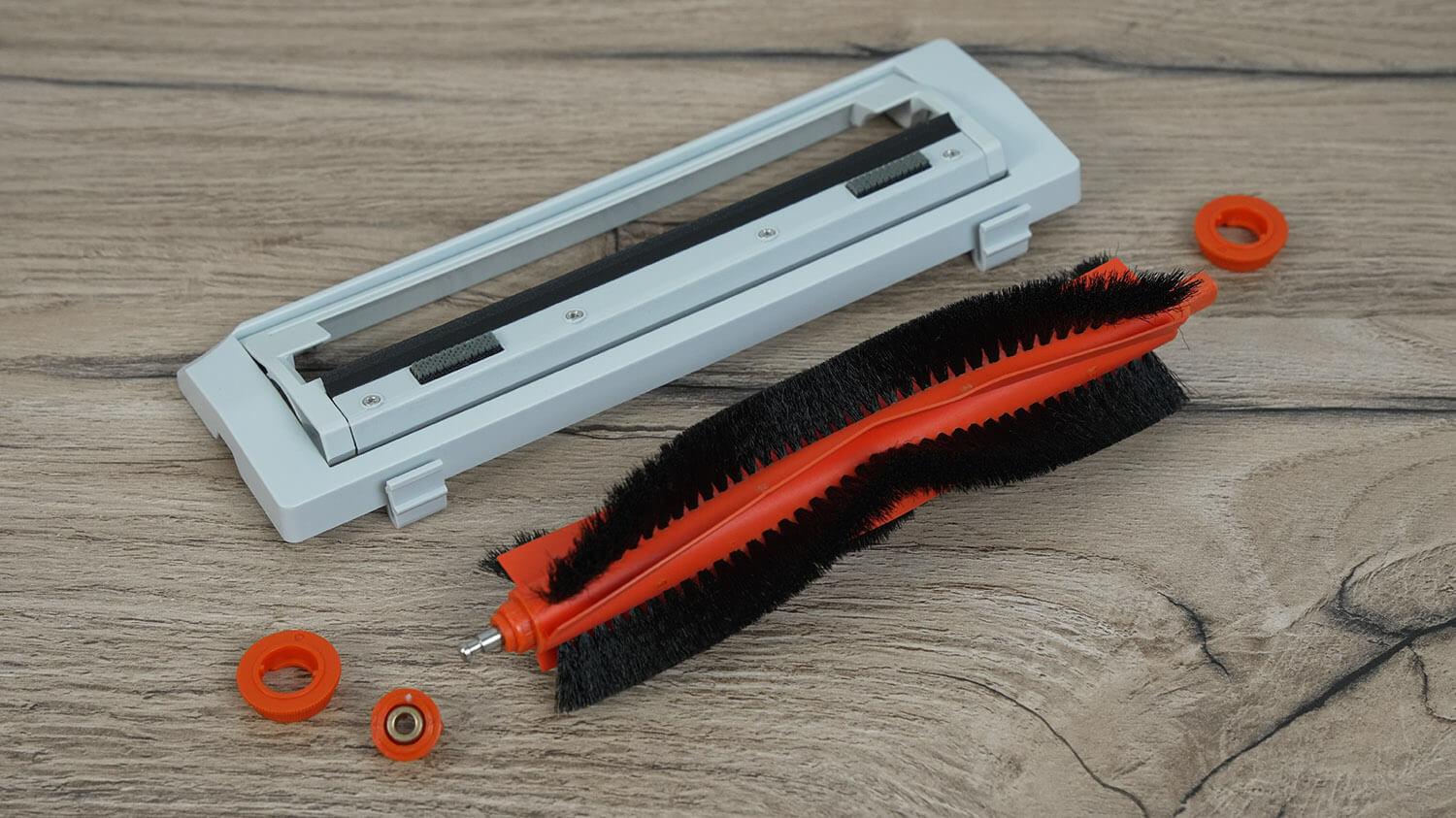
Central brush
Behind the brush are two rotating holders with familiar cloths. The cloths automatically lift up in dry cleaning mode and when entering carpets.
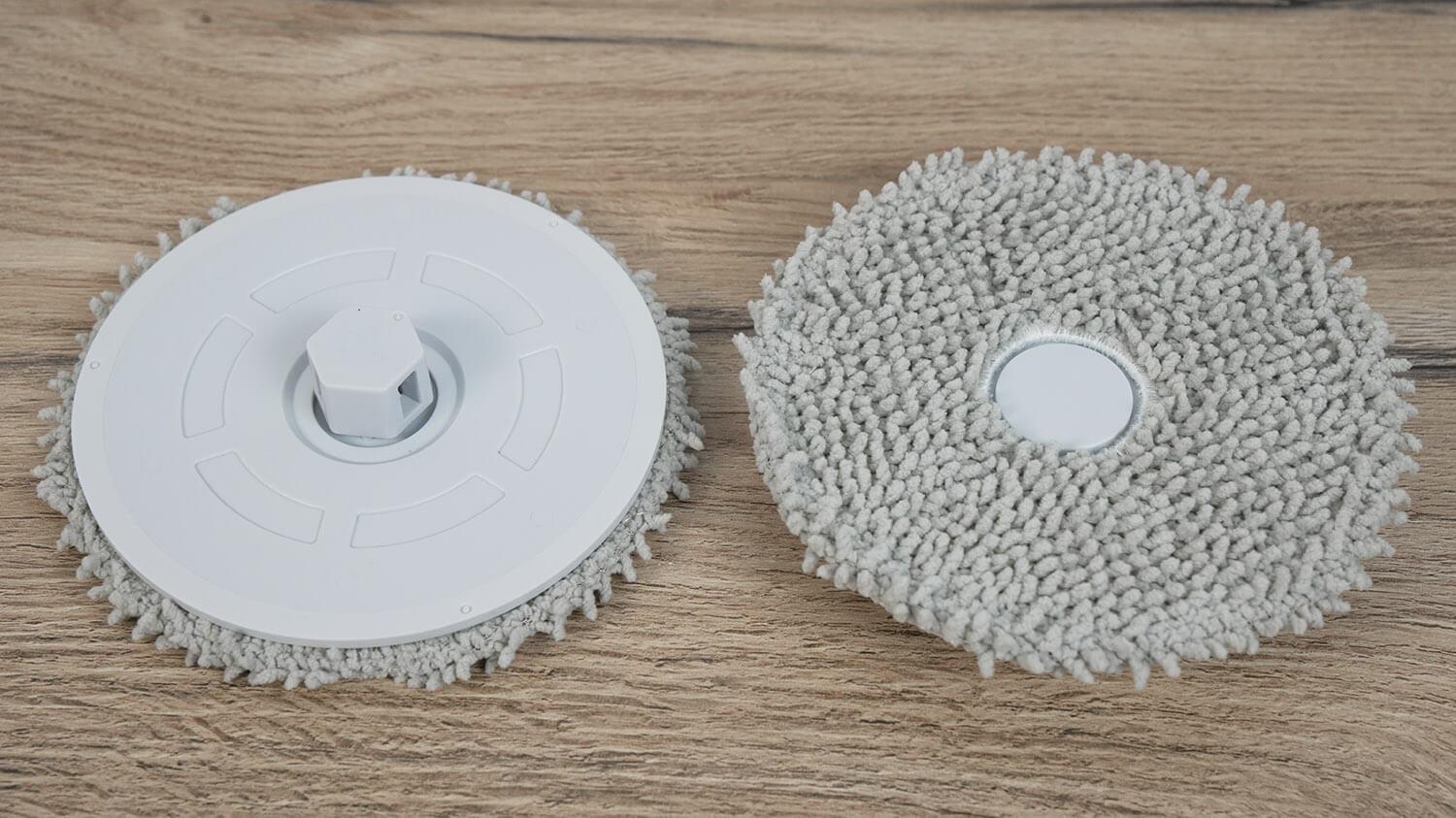
Napkin holders
There's no retractable holder, unlike new flagships from other brands. Xiaomi currently solves the problem of cleaning floors along baseboards by rotating the back of the case. This causes the wipes to extend out toward the edge of the case.
Now that we've sorted out the robot, let's move on to the station. It's very convenient that not only the ramp for the robot to enter can be removed, but also the internal tray where the wipes are washed. This makes cleaning the station much easier.
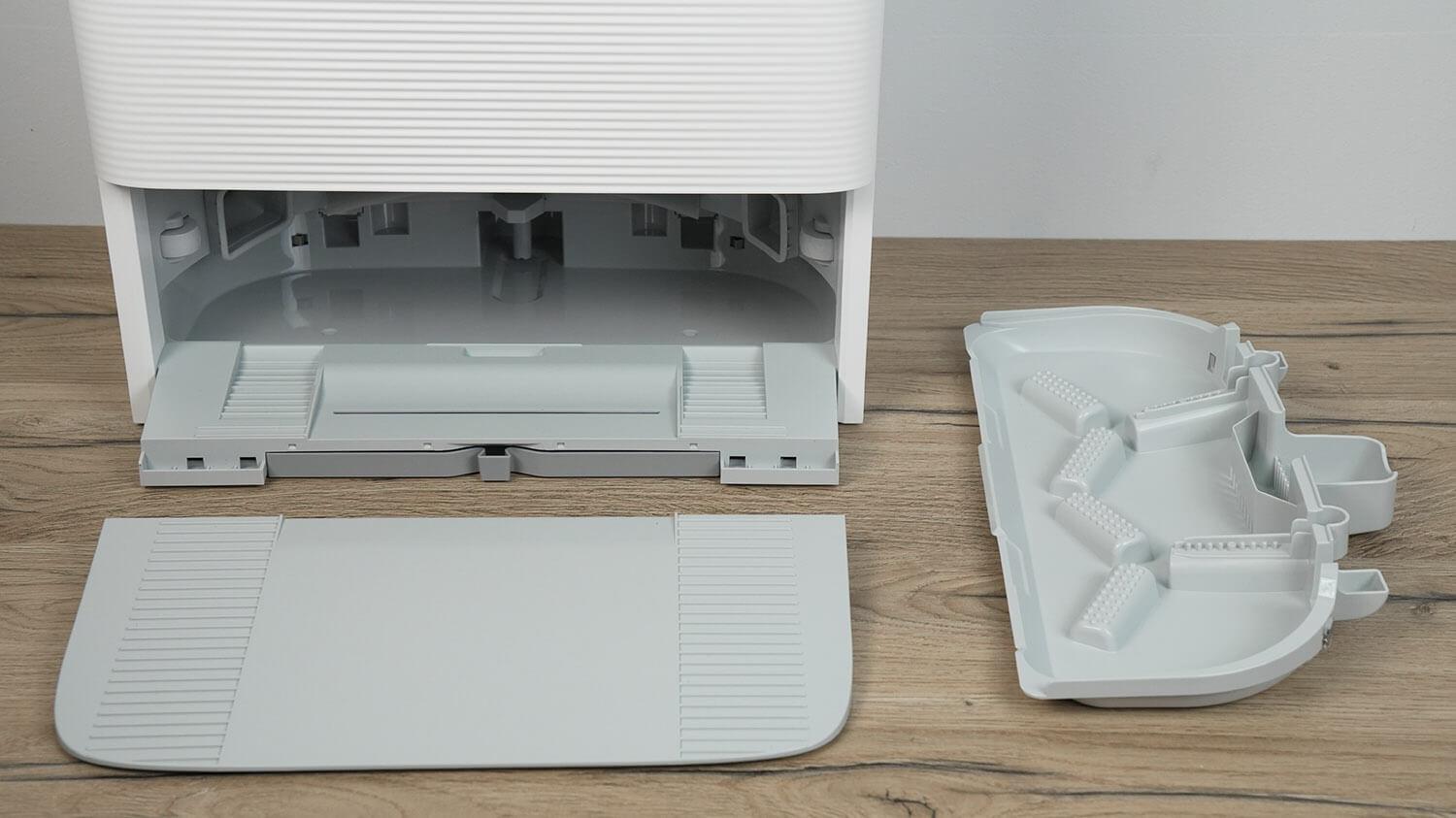
Removable platforms in the station
The new station's key feature is its built-in blades, which cut through hair and fur wrapped around the central brush. This eliminates the problem of brush tangling. As the blades rotate, the cut hair is simultaneously sucked into a waste bag.
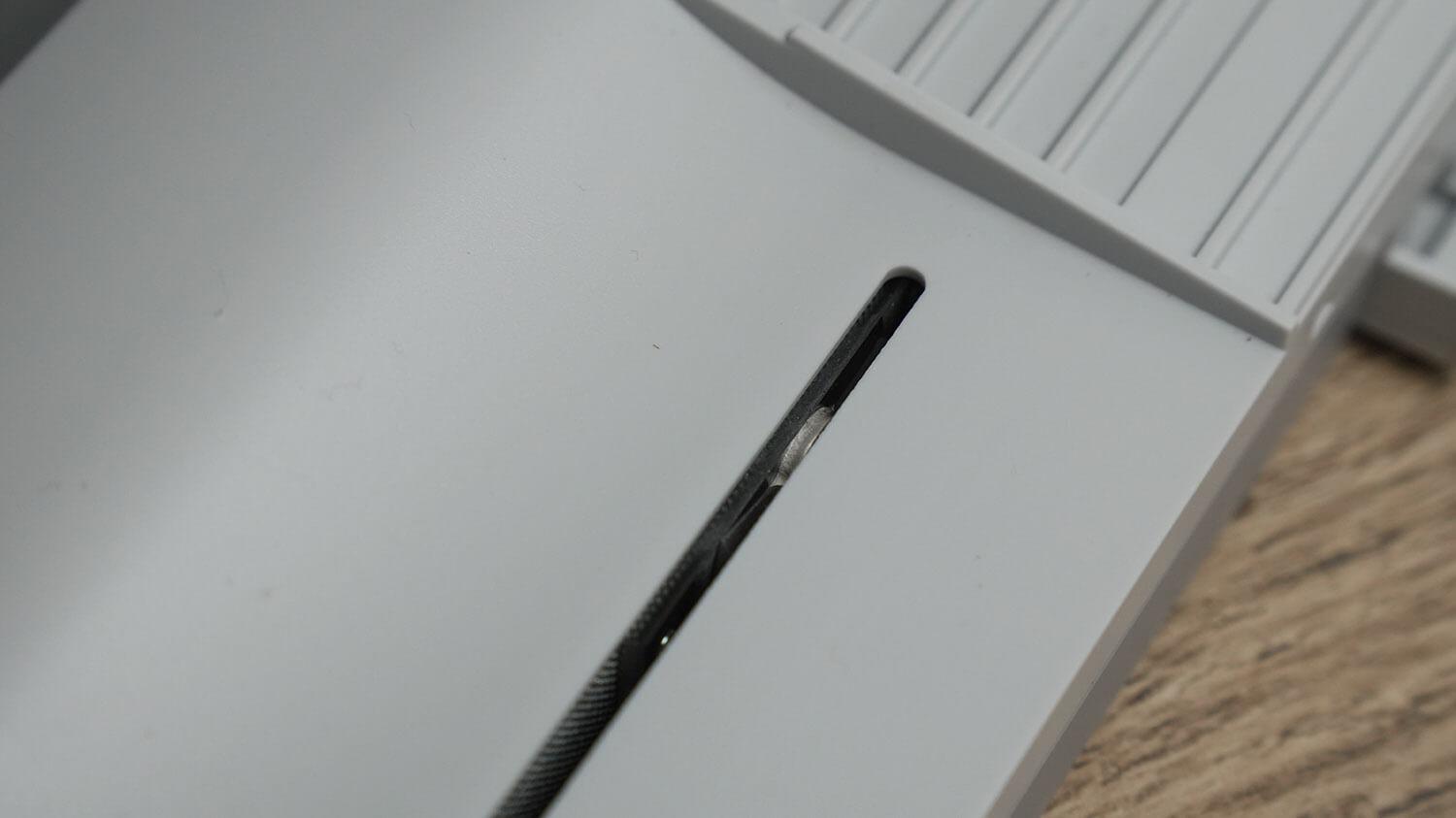
Knives at the station
There is a small tray under the blades that collects hair and other debris.
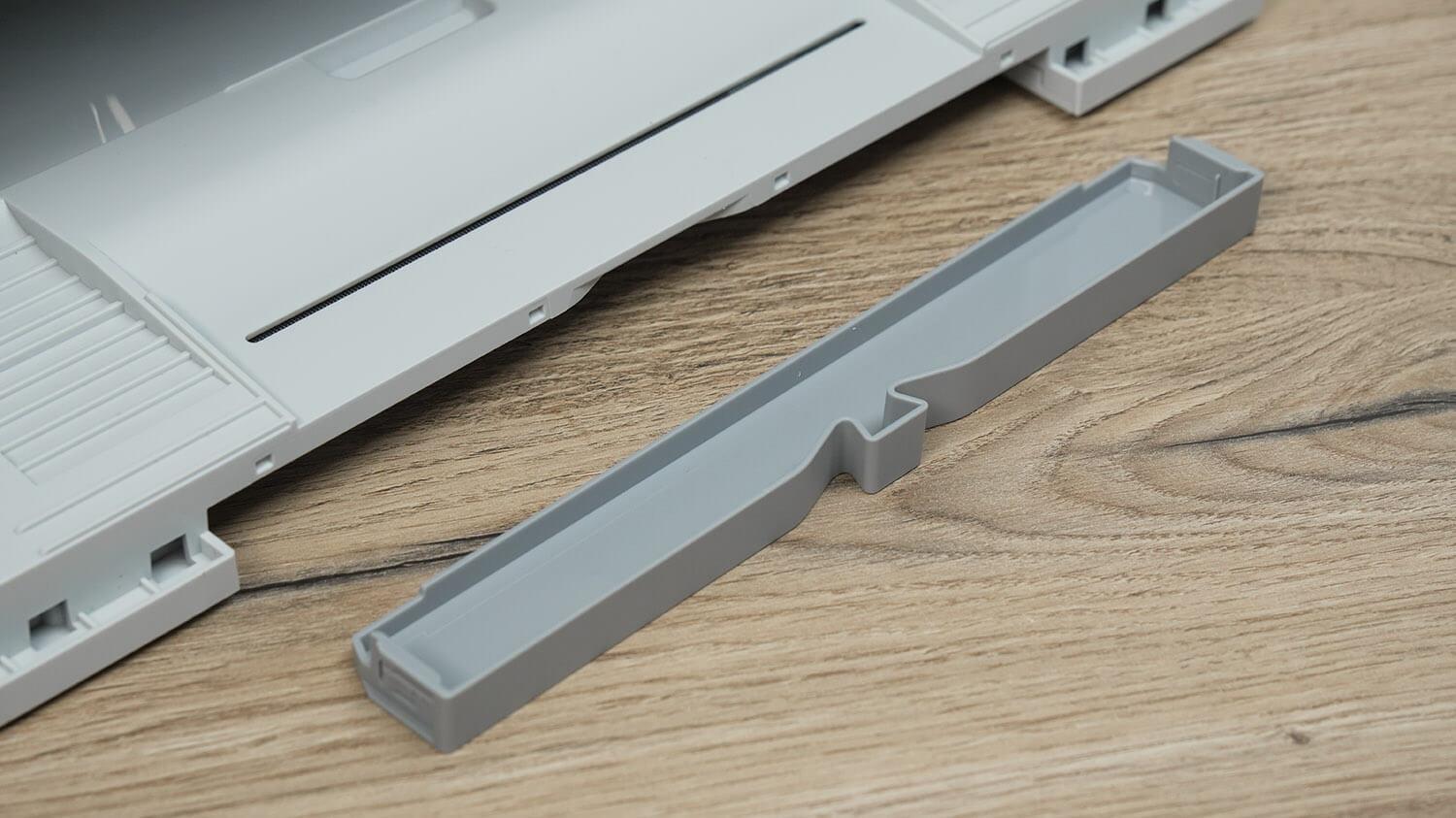
Litter tray
The bag is located slightly higher under the lid. It is of a standard design.
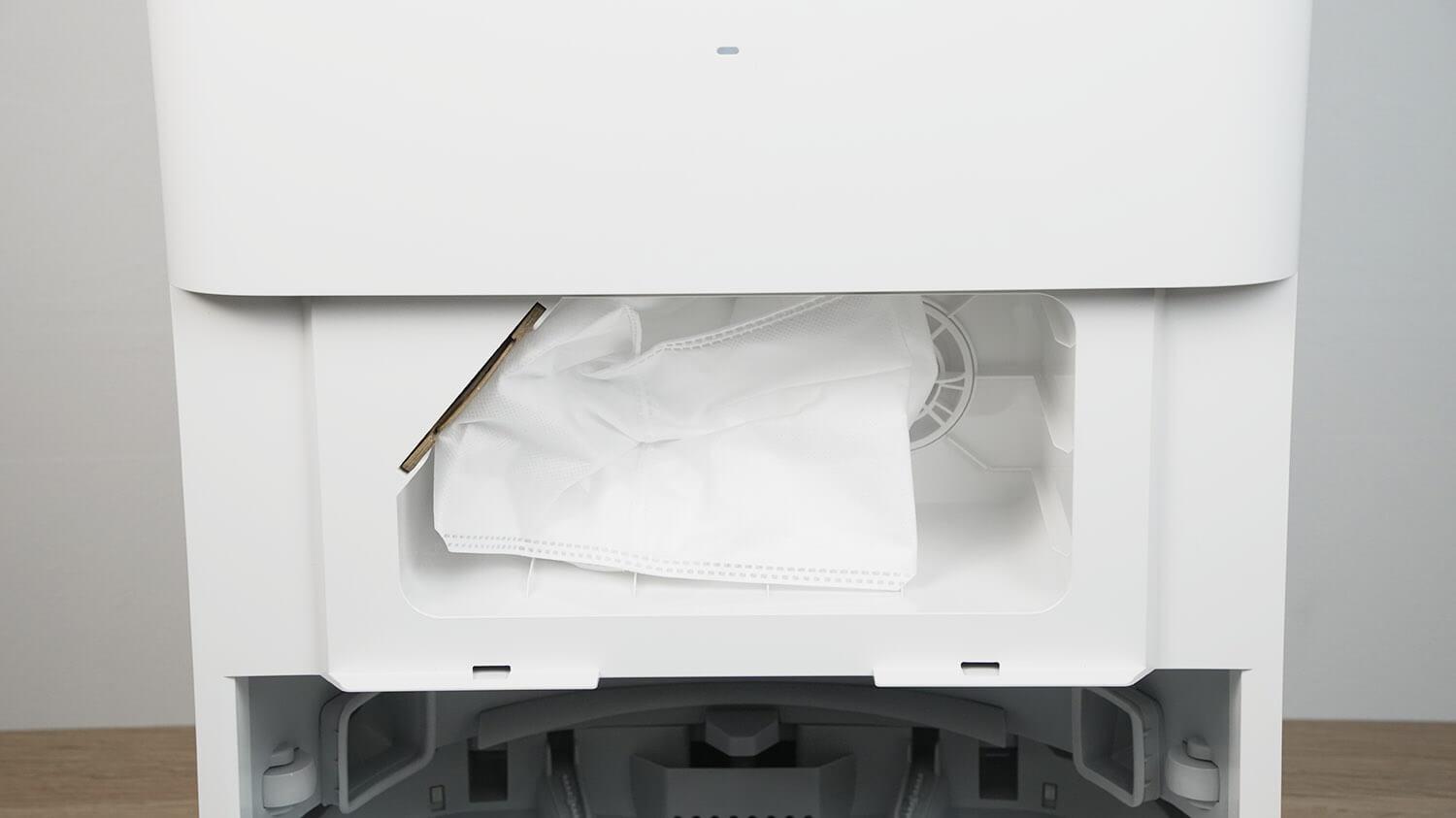
Garbage bag
Under the top cover there is a 4-liter tank for dirty water and a similar tank for clean water.
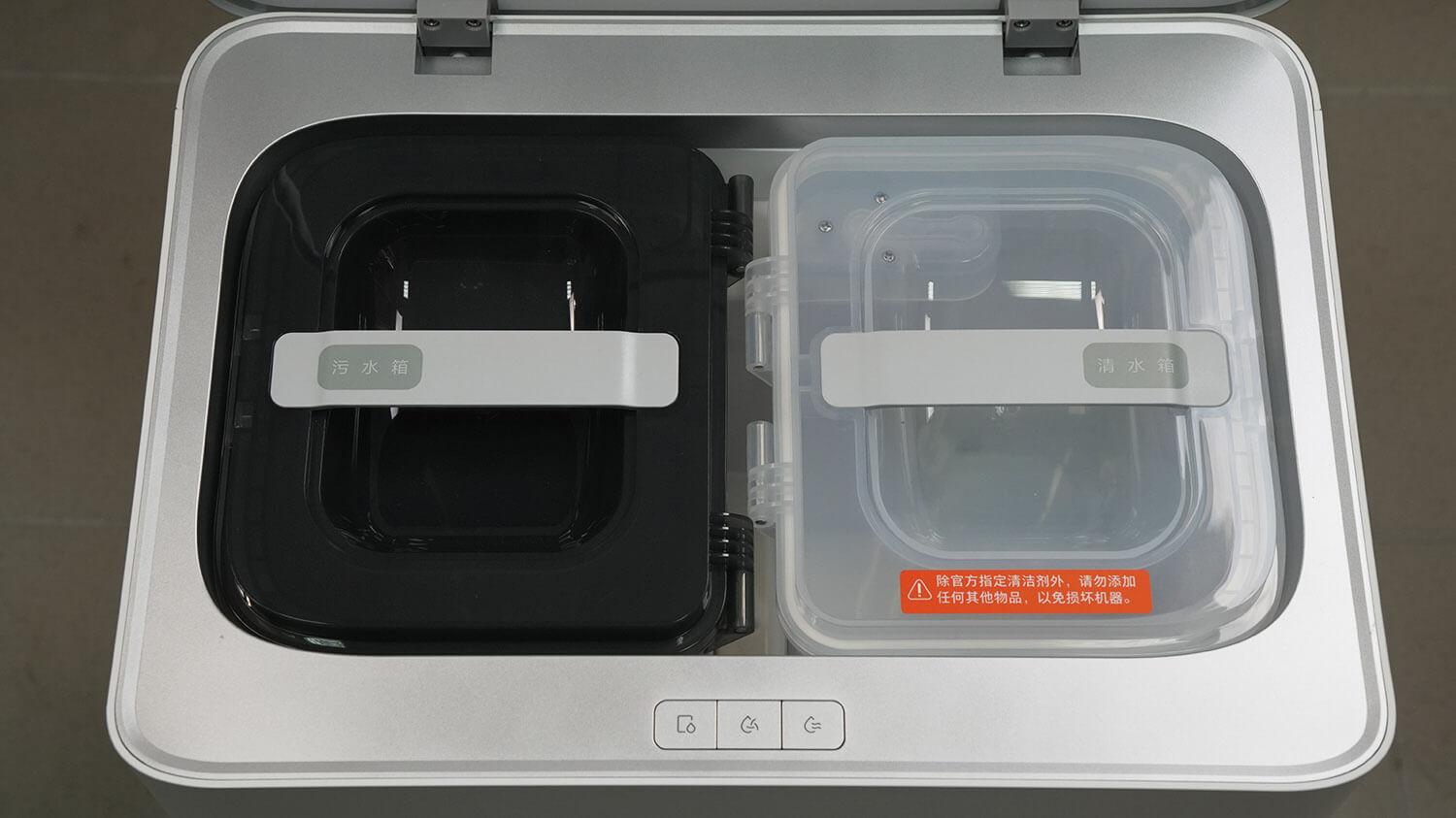
Water tanks
The station doesn't have a detergent compartment. You'll have to manually add detergent to the clean water tank as needed. Three mechanical control buttons are also visible on the top of the station.
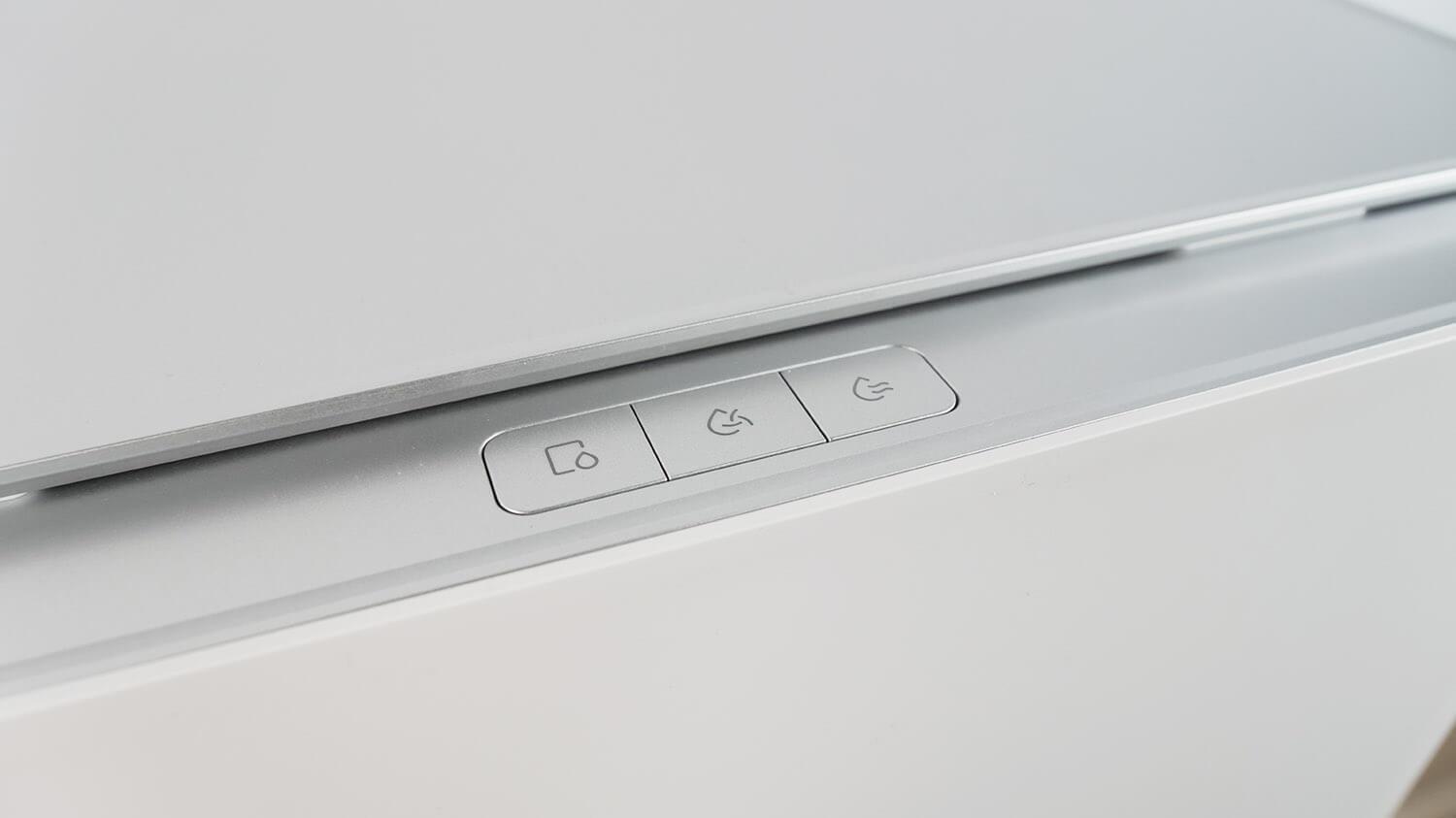
Buttons at the station
It's worth noting that this station heats the water to 60 degrees when washing the wipes, and also dries the wipes with warm air after the cleaning process is complete.
Connecting the station to the sewer system is quite simple. Simply remove the standard tanks, install the module in their place, connect the connectors at the back, and run the pipes to the pre-prepared sewer and water supply connection points. Connect the magnetic control unit, and that's it – the station is ready for autonomous operation.
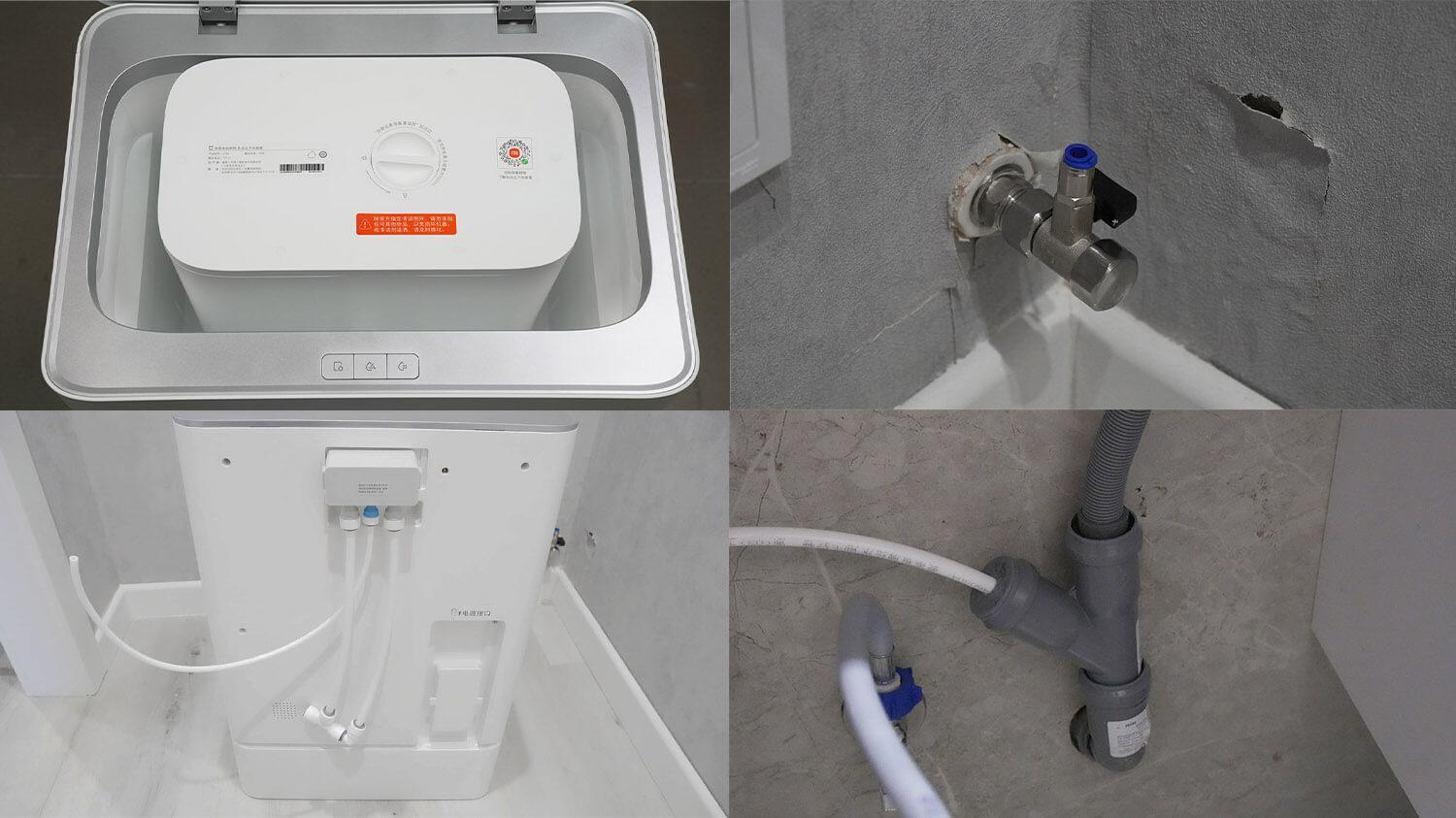
Connecting the station to the sewer and water supply
By the way, the module itself has a 900 ml compartment for detergent, which will be automatically mixed with the water when washing the napkins. That's a plus!
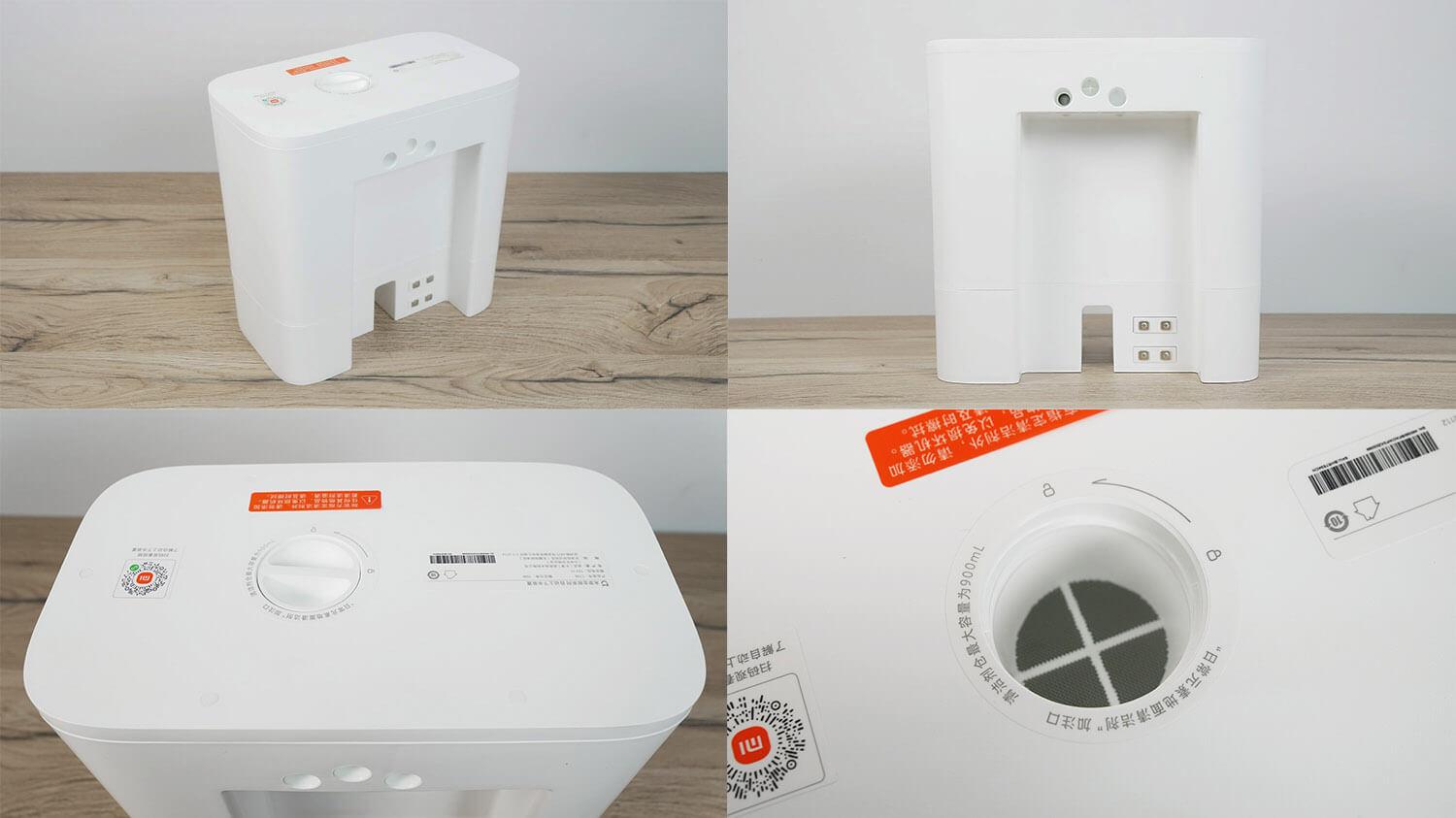
Communications connection module
Overall, we can see that work has been done to improve the Xiaomi robot lineup. All the pros and cons of the updated design will be discussed in the conclusion. Let's move on!
Technical specifications
The main characteristics of the Xiaomi Mijia M30 Pro, as stated by the manufacturer:
Robot vacuum cleaner:
- Li-Ion battery 5200 mAh.
- Suction power up to 7000 Pa.
- Cleaning area> 200 sq.m.
- Dust collector: 400 ml.
- Water tank: none.
- Obstacle clearance up to 20 mm.
- Dimensions: 350*103 mm.
Station:
- Power consumption: up to 1000 W.
- Clean water tank: 4 l.
- Dirty water tank: 4 l.
- Bag in the station: 2.5 l.
- Dimensions (D*W*H): 490*400*584 mm.
The main improvement here is the stated suction power, compared to previously released flagship models. I'll verify this in tests. The water tank capacity has also been increased, which is important if you don't plan to connect the station to utility lines. For those interested, the station's height with the lid raised is approximately 815 mm.
Functional capabilities
Regarding controls, the robot vacuum cleaner is designed for the Chinese market and therefore connects to Mi Home via the China region. The interface is in English, which isn't ideal. The app's response isn't lightning fast due to it being connected to Chinese servers, but it's also not too slow, so it's tolerable.
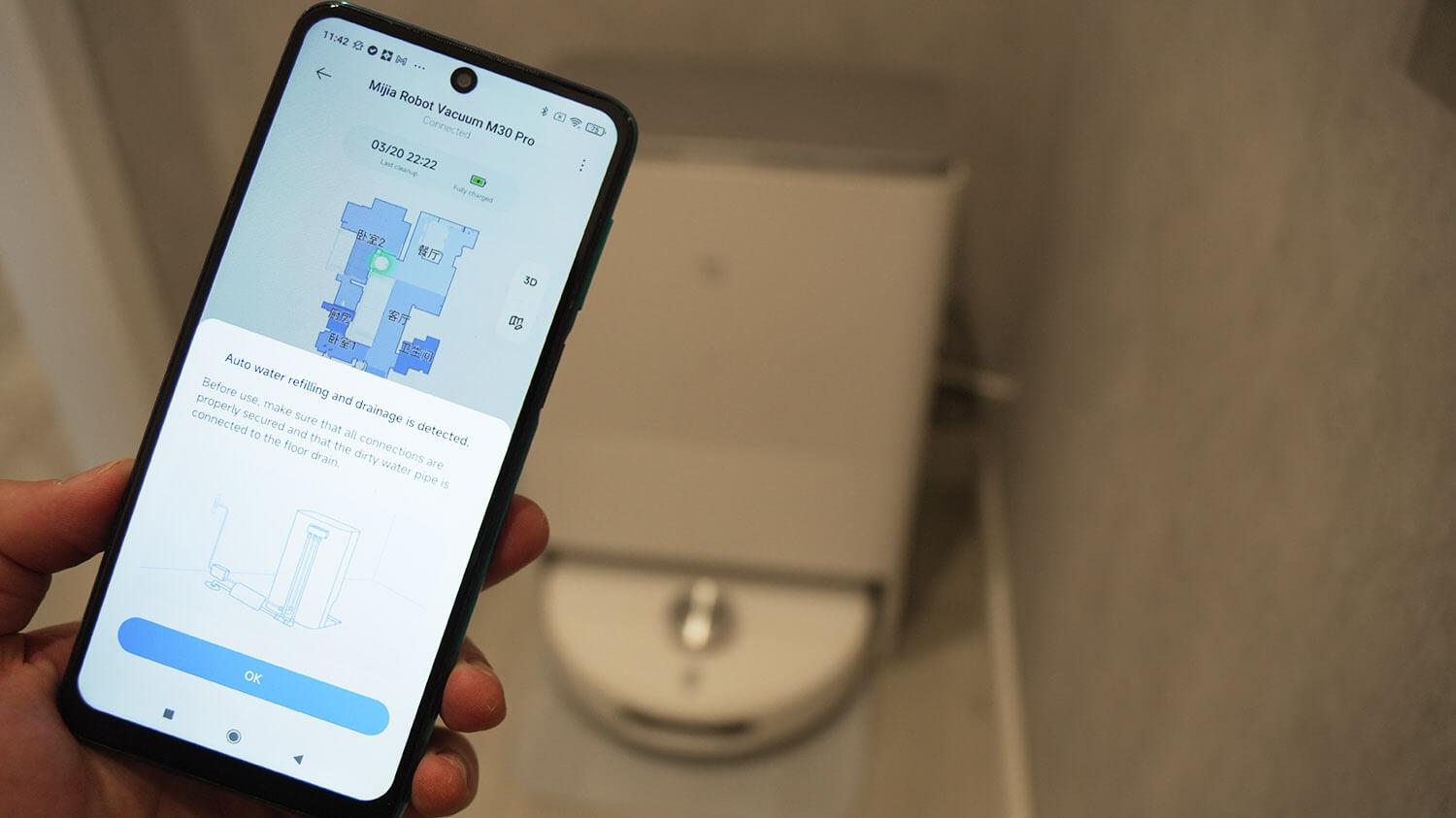
Control via app
The basic settings are intuitive, and a translator will help with the rest. If desired, you can localize the app and even pair the robot with Alice. There's plenty of information online on how to do this. At the time of writing, the creative voice pack isn't available, but I expect it will be available soon.
Main features of Xiaomi Mijia M30 Pro:
- Self-cleaning dust collector.
- Washing napkins at the station with hot water (60 OWITH).
- Drying napkins with warm air.
- Cleaning the turbo brush with knives at the station.
- Recognizing objects on the floor.
- Saving multiple cleaning maps in memory.
- 3D map of the room.
- Automatic zoning of premises into rooms.
- Selecting areas and rooms for cleaning.
- Virtual walls and no-go zones (and for wet cleaning mode).
- Suction power adjustment.
- Setting the frequency of washing napkins (5/8/10 sq.m.).
- Cleaning log.
- Setting up cleaning according to a schedule.
- Automatic power increase on carpet.
- Carpet cleaning in wet cleaning mode.
- Lifting napkins when driving onto carpets.
- Mi AI voice assistant.
- Yandex.Alice support.


Functions
Overall, the features are quite extensive. I'll tell you what I personally miss. The cleaning cycle isn't implemented correctly. There's no way to choose whether to return to the cleaning station after each area cleaned, or to flexibly adjust the cleaning cycle. There are only three options: return to the station after 5, 8, or 10 square meters. I also couldn't find any way to customize cleaning parameters for each room. There's also no remote home monitoring feature via the robot's camera. But none of this is really a deal-breaker.
Testing
A detailed video review of the Xiaomi Mijia M30 Pro, including all tests, has already been prepared and published on the channel:
Navigation
And finally, let's move on to the tests. First, we'll test the Xiaomi Mijia M30 Pro's navigation in a room with obstacles. The robot vacuum first moves around the perimeter of the room, then cleans the entire accessible area in a serpentine pattern. It detected the feet of the dryer and carefully navigated around them. It also swept around the box and chair legs separately, before returning to the station. The test was successful.
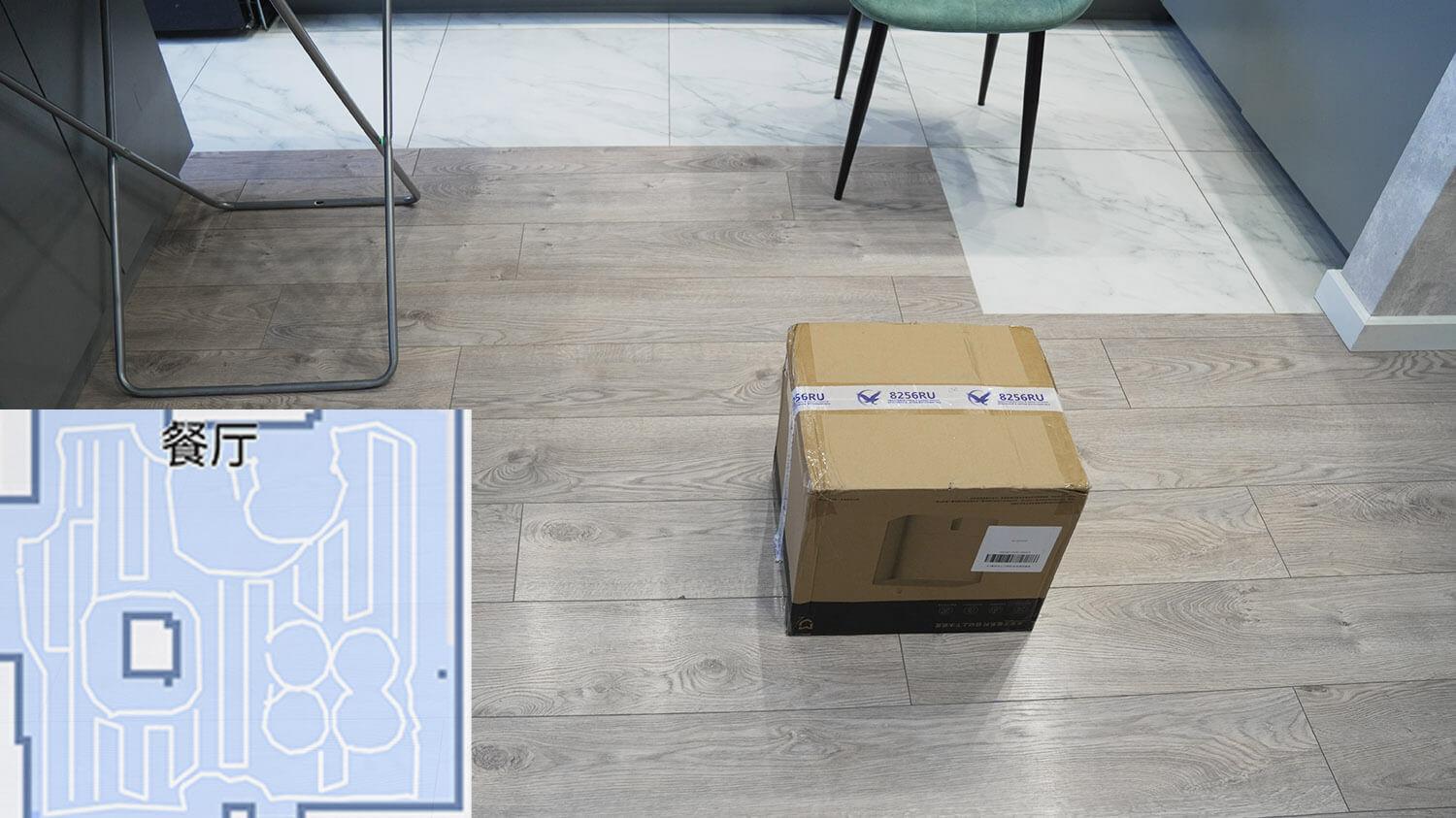
Navigating within a room
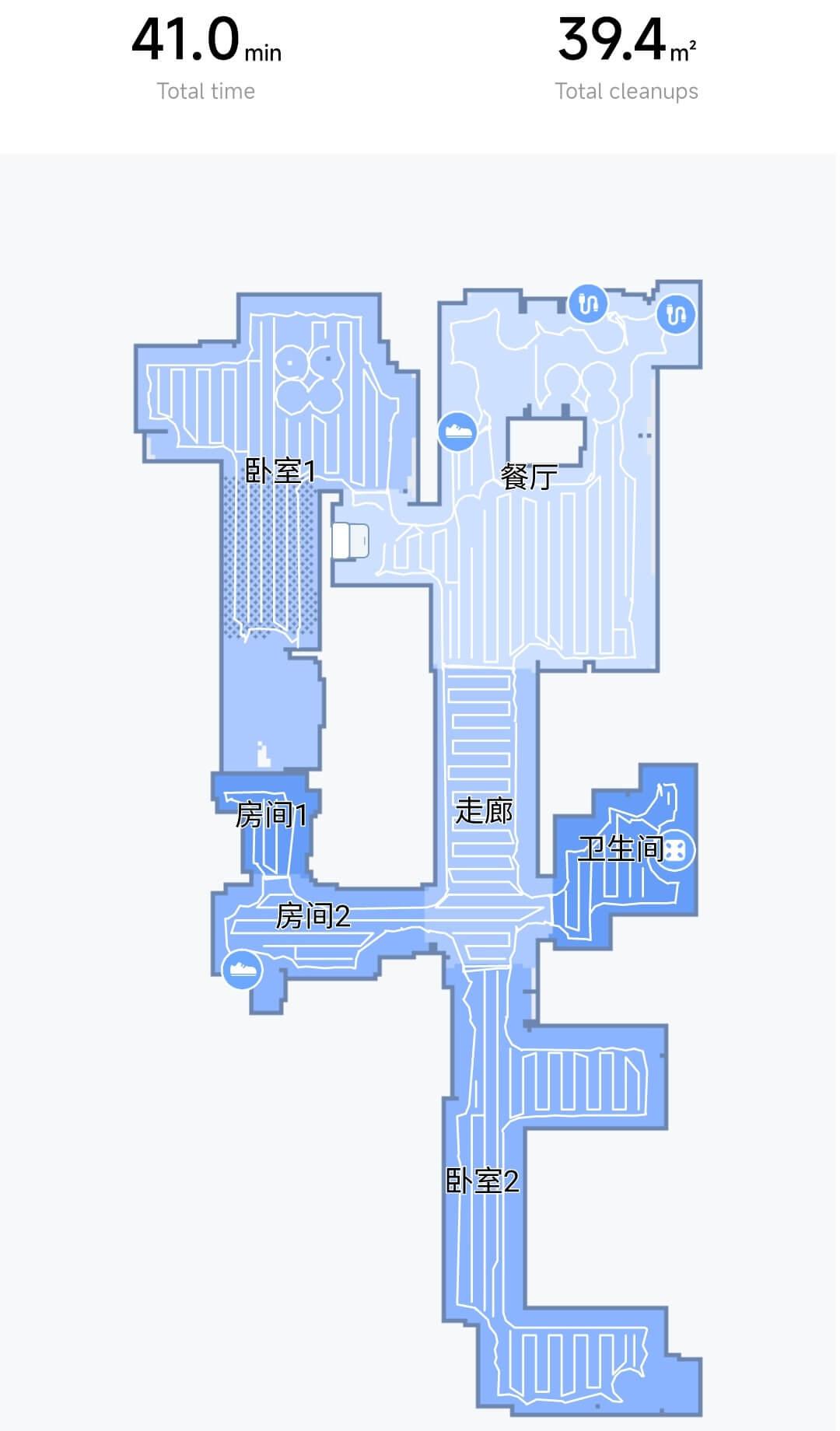
Speaking of navigation within the house, the robot vacuum cleaner cleans room by room, following the perimeter, then in a serpentine pattern. Every 10 square meters, as I determined, it returns to the station and rinses its cleaning cloths, then resumes cleaning from where it left off. Ultimately, the apartment was cleaned with three intermediate trips to the station. There were no uncleaned areas, and this model's navigation is as good as its predecessor's.
Navigation within the home
Recognizing objects on the floor
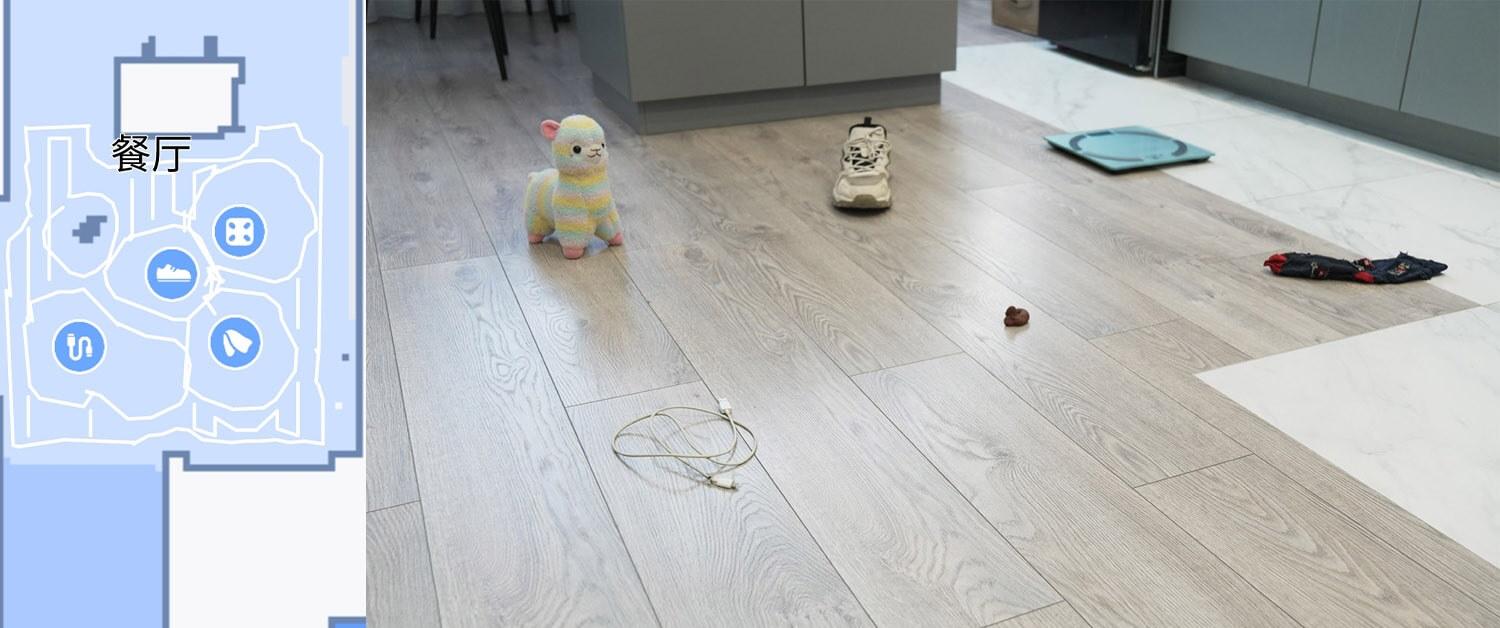
As for the object avoidance system, in good lighting, it was able to accurately avoid six of six objects on the floor. Moreover, it recognized four of the six objects and displayed them on the map with corresponding icons.
Recognition in good light
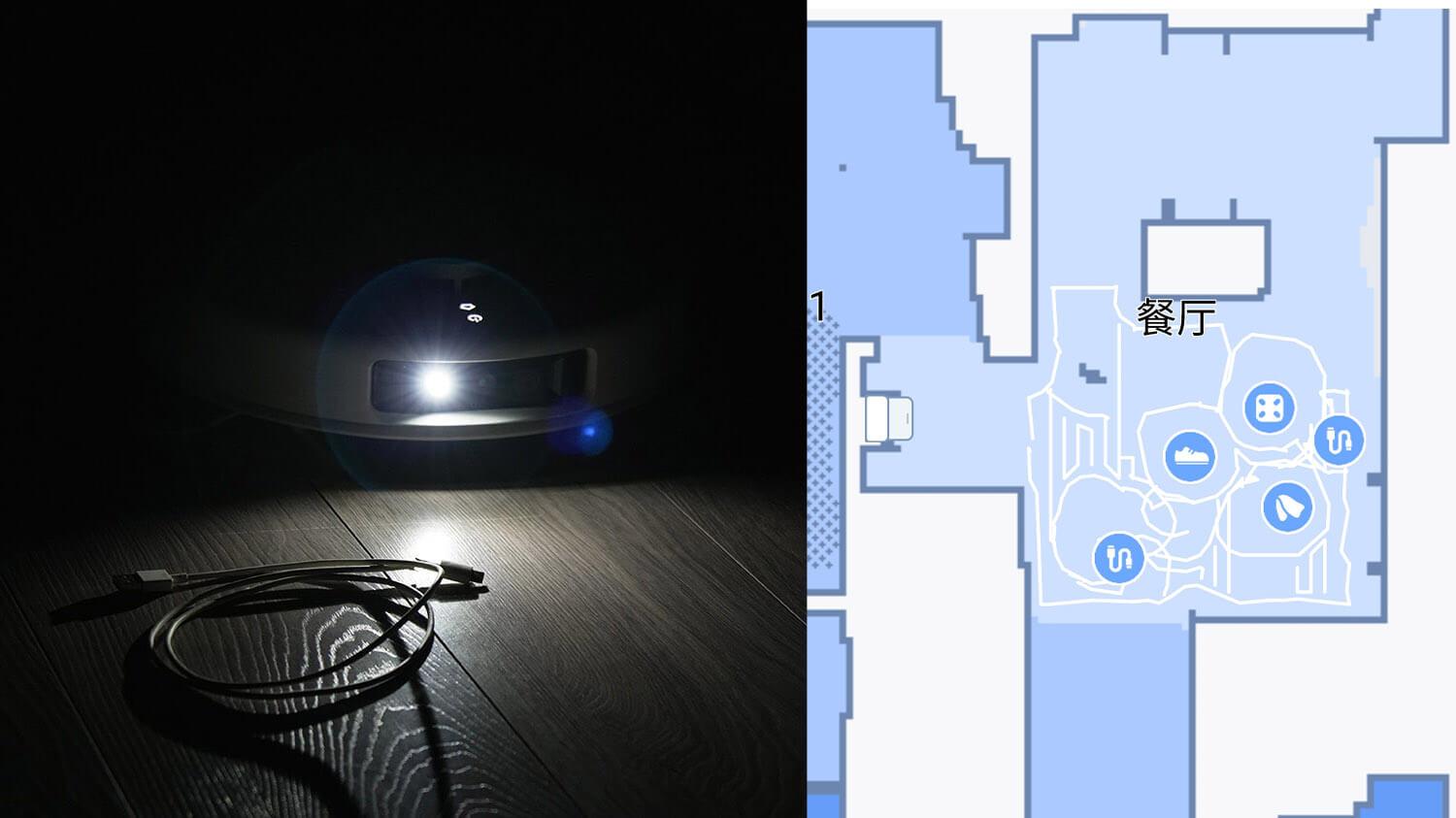
The robot vacuum is also capable of recognizing objects in complete darkness. However, in this test, it alternately avoided and then drove over the simulated pet surprise. It also slightly moved the charging cord.
Recognition in complete darkness
So, I can say that the camera and sensor system is better implemented than the solution in its predecessor, the Mijia Omni 1S, but it still needs some refinement. In any case, the robot is much more accurate than most of its competitors, and even the implemented system is an advantage. The only issue is that there is no way to see what exactly the robot has recognized. The icons are not clickable.
Suction power
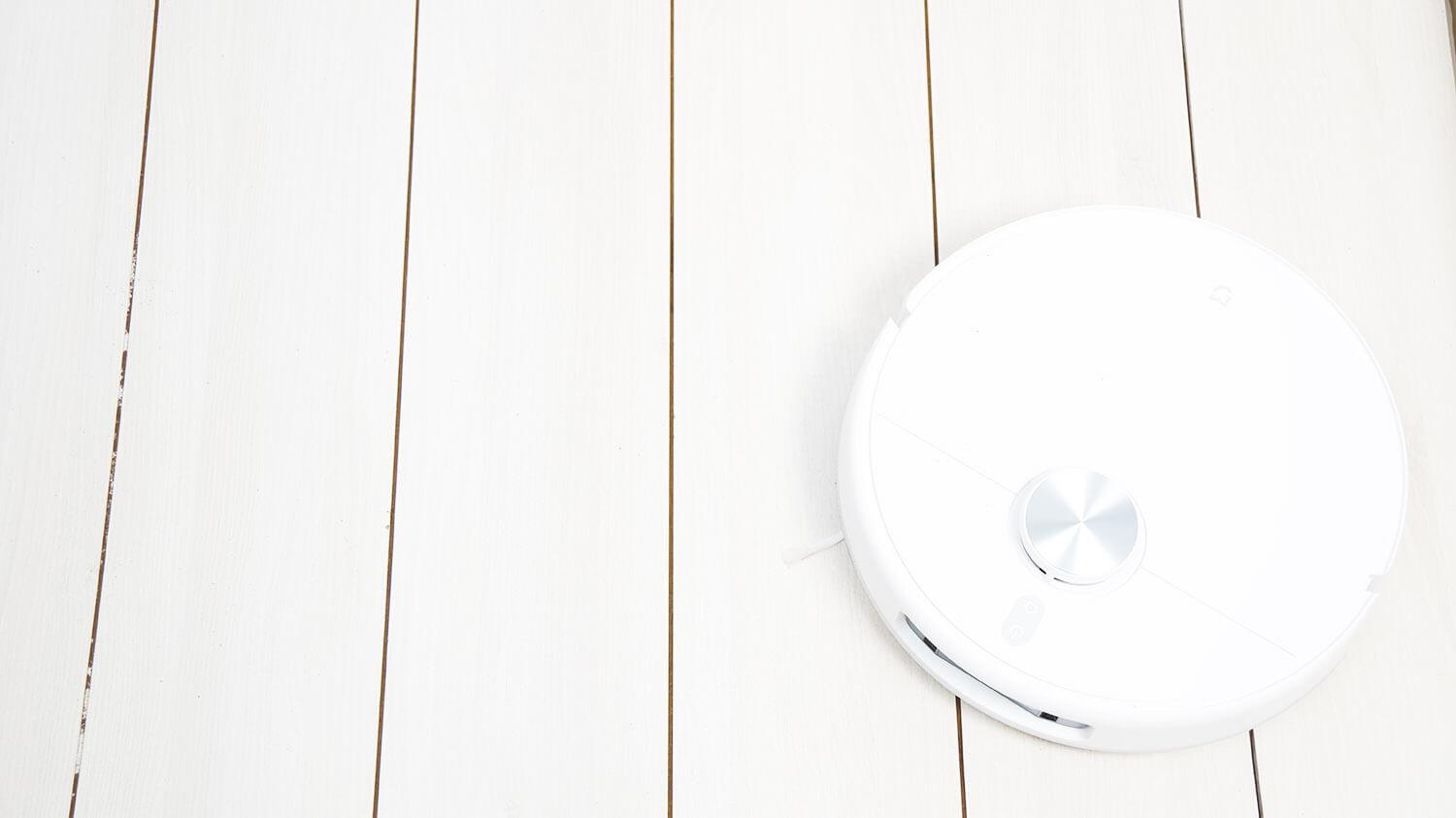
As for suction power, here's an interesting point: the Xiaomi Mijia M30 Pro was only able to suck up debris from crevices 2 mm deep.
Power
For comparison, Mijia OMNI B101CN was able to suck out debris from a 10 mm gap, and OMNI 1S and OMNI 2 The results were 4 mm. In fact, the new M30 Pro performed the weakest on the test bench. The first thing that comes to mind is that the central brush unit doesn't float. But perhaps that's not the reason. Some might call the test unfair, but I'm used to judging power based on actual cleaning results, so the test results didn't confirm the claimed high power.
Dry cleaning
However, the collection performance of various types of debris on laminate flooring is good. Only a little debris remains in the corners, where round robotic vacuums can't sweep. The central brush caught some hair and fur. However, the majority of the debris is collected in the dust bin. Test passed!
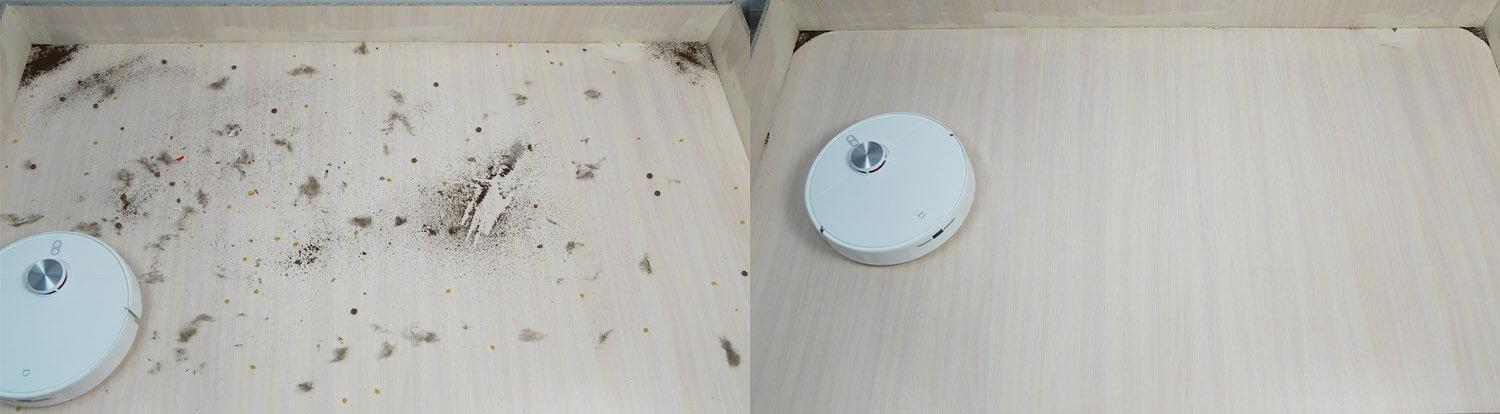
Dry cleaning
Carpet cleaning
The same debris was scattered on a low-pile carpet. And I can say that the Xiaomi Mijia M30 Pro cleaned the carpet well. It can also clean medium-pile carpet. The test counts.
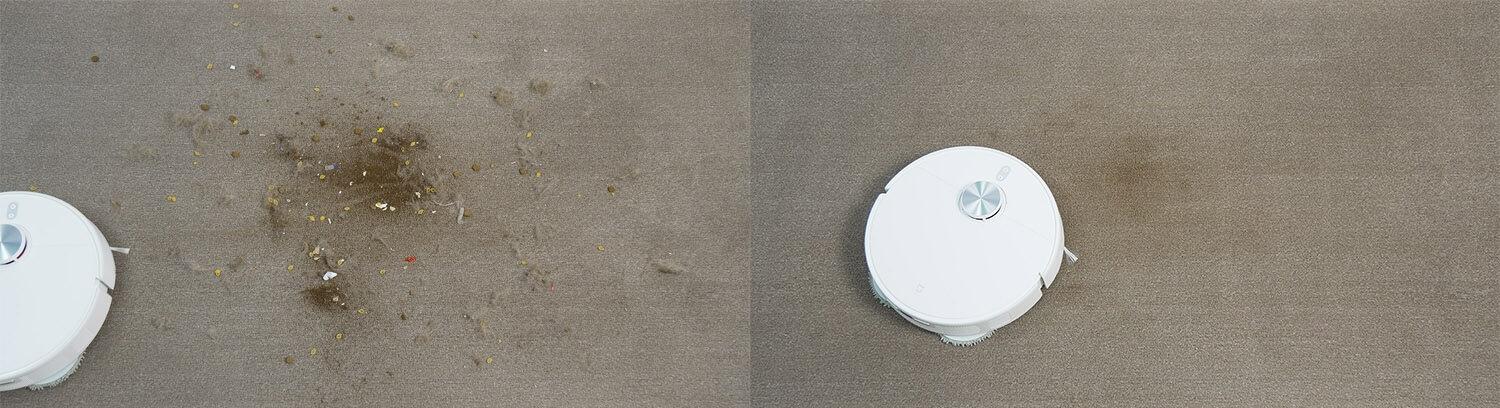
Carpet cleaning
Wet cleaning and carpets
When wet cleaning carpets, you can choose between two robot behaviors. The first is to automatically lift the cloths when entering the carpet, allowing the robot to simultaneously vacuum and mop the floor, leaving the carpets dry and clean.
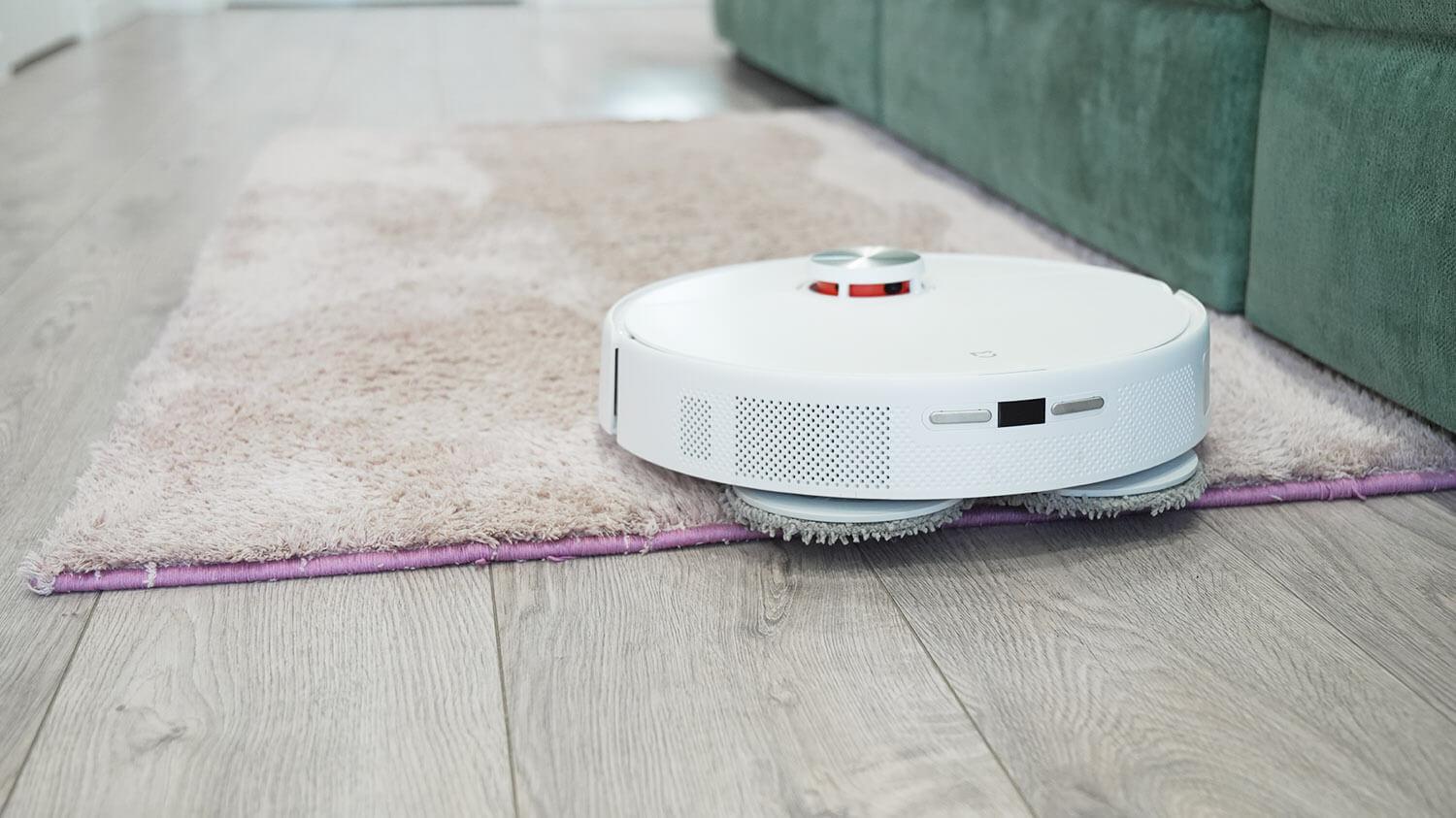
Entry onto the carpet with the napkins raised
The second option is to enable the automatic carpet avoidance feature in wet cleaning mode. This is especially useful for high- and medium-pile carpets, as it completely eliminates any contact between the cleaning pad and the carpet if necessary.
Wiping off dirt
The robot does a good job of wiping away dirt. It cleaned the stand without leaving streaks or marks.
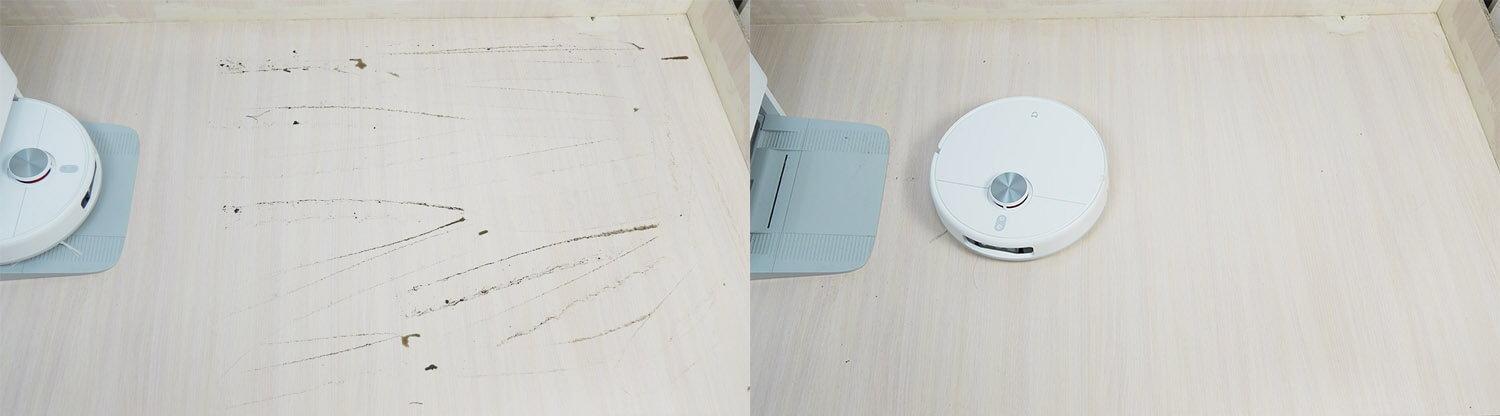
Wiping off dirt
Removing difficult stains
But what surprised me most was that the robot was able to remove even the toughest dried-on coffee and sauce stains. Granted, it didn't work the first time. But it did manage to remove the bulk of the stains.
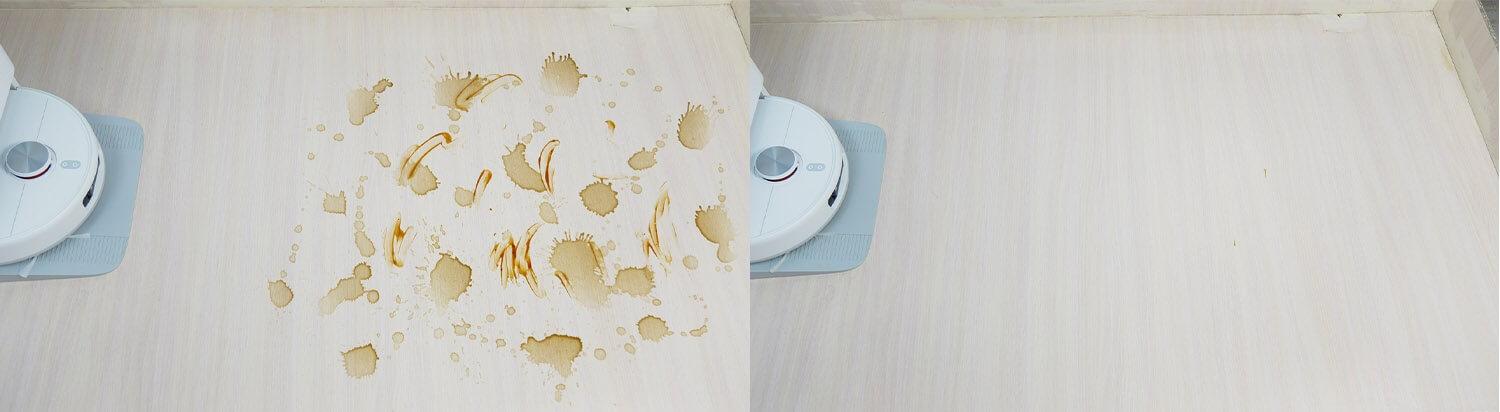
Removing difficult stains
Many similar and predecessor models in the line failed to achieve even this result. This is a clear advantage of the new product, which the manufacturer, incidentally, mentions in promotional materials, noting improved napkin rotation. The robot itself also feels heavier, and accordingly, presses the napkins harder onto the surface.
Blind spot along the baseboard
The effectiveness test of the baseboard cleaning feature deserves special attention. You can see that even with the housing rotating, there remains a blind spot between passes. Therefore, baseboard cleaning isn't perfect, but it's better than models that don't have this feature.
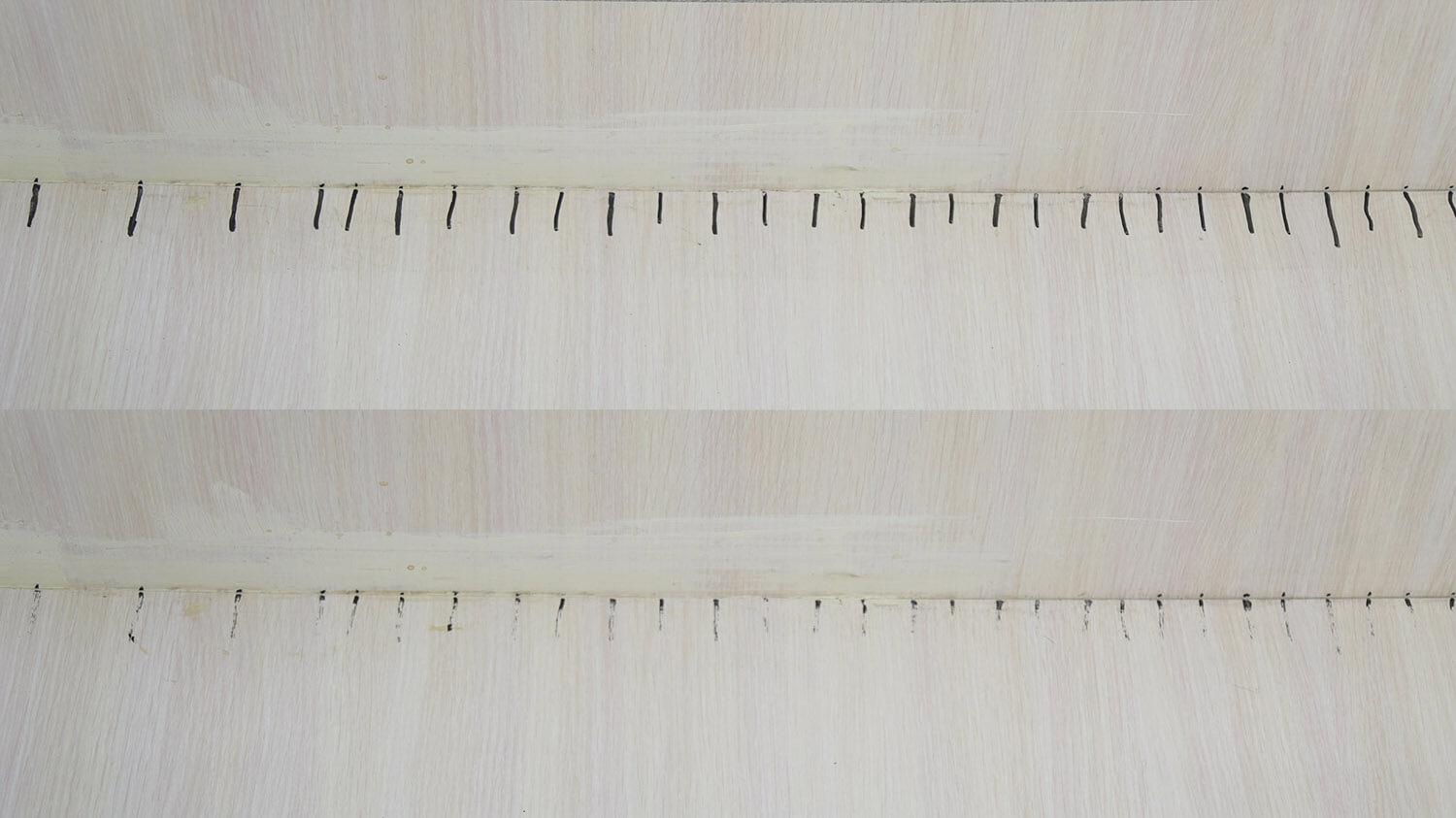
Blind spot
The lack of a wall sensor also played a cruel joke. If it had, I think the robot would have followed the wall better and left fewer missed areas. The blind spot ranges from 3 to 8 mm.
Washing quality of napkins
I'd like to immediately talk about the effectiveness of the station itself. Let's start with the cleaning quality of the wipes. Even after extensive testing, the wipes look significantly better after washing at the station. The water heating feature certainly improves cleaning efficiency. In a domestic setting, after washing the floor, the wipes are thoroughly rinsed at the station. A minimal amount of dirt is removed under the pressure of warm water. This is a plus.
The station itself is very easy to clean. It has a self-cleaning function activated by a button on the station, but it's best to periodically remove the tray and drain and rinse them in the sink.
Self-cleaning quality
I tested the dust bin's self-cleaning performance simultaneously with the turbo brush's self-cleaning performance at the station. After both tests, the dust bin was completely clogged. The central brush had tangled up with hair and pet hair. We returned the robot vacuum to the station and saw that the dust bin was empty after self-cleaning. This robot's self-cleaning performance is excellent!
Regarding the turbo brush, the blades cut off most of the hair, and the station cleaned the roller. Some of the cut hair remained between the bristle inserts, but these were also removed during the next self-cleaning cycle. So, this feature is truly very effective and useful. In a domestic environment with less intense floor dirt, the turbo brush is almost perfectly clean after self-cleaning at the station. Bravo to Xiaomi engineers!
Obstacle clearance
The robot has excellent maneuverability. It can easily cross a 2 cm threshold!
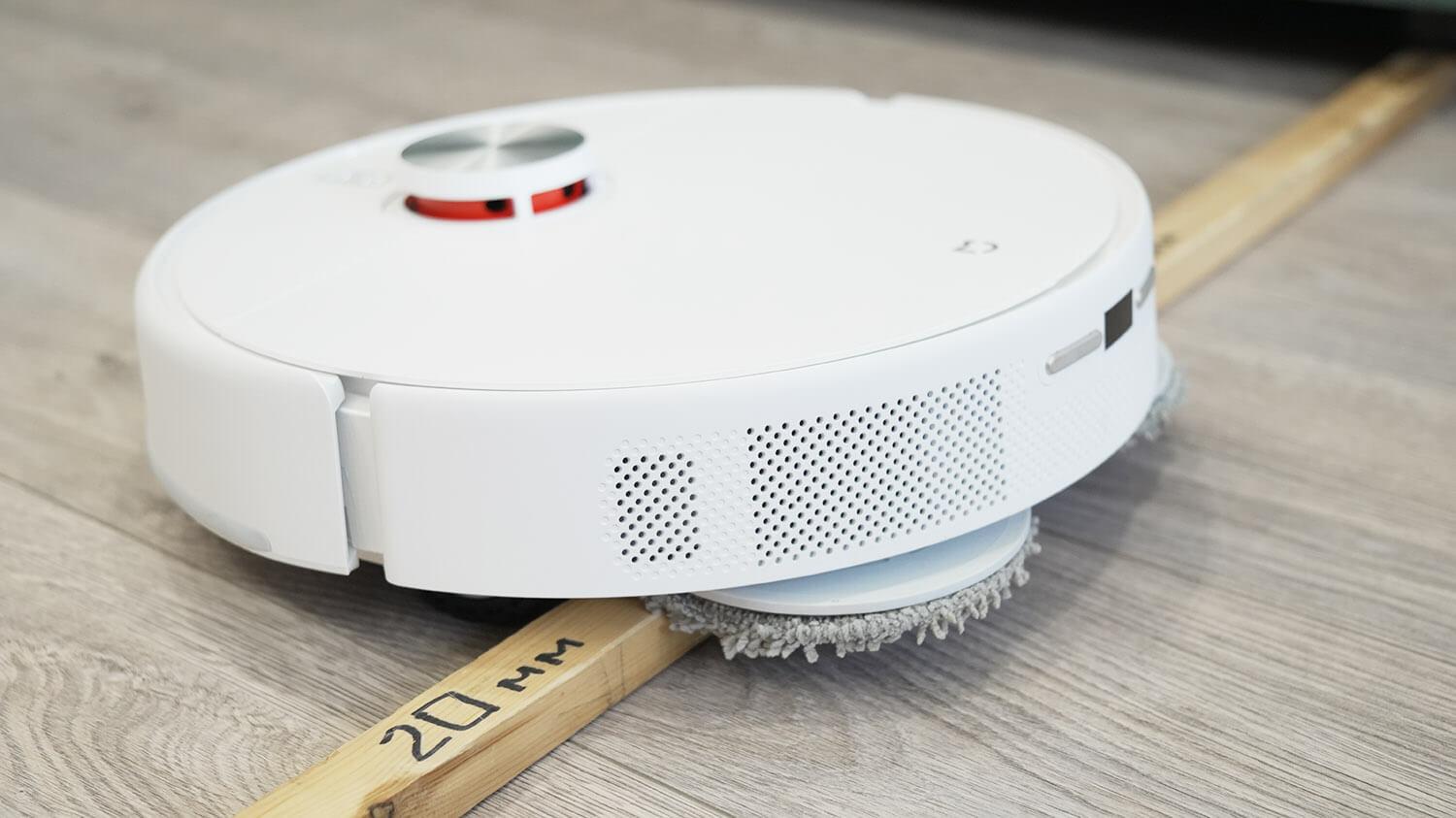
Obstacle clearance
Driving on black surfaces
There are problems with driving through black surfaces, and these are not due to the sensors on the bottom of the robot, but to the object recognition system, which identifies black carpeting as a chasm, causing the robot to back away.
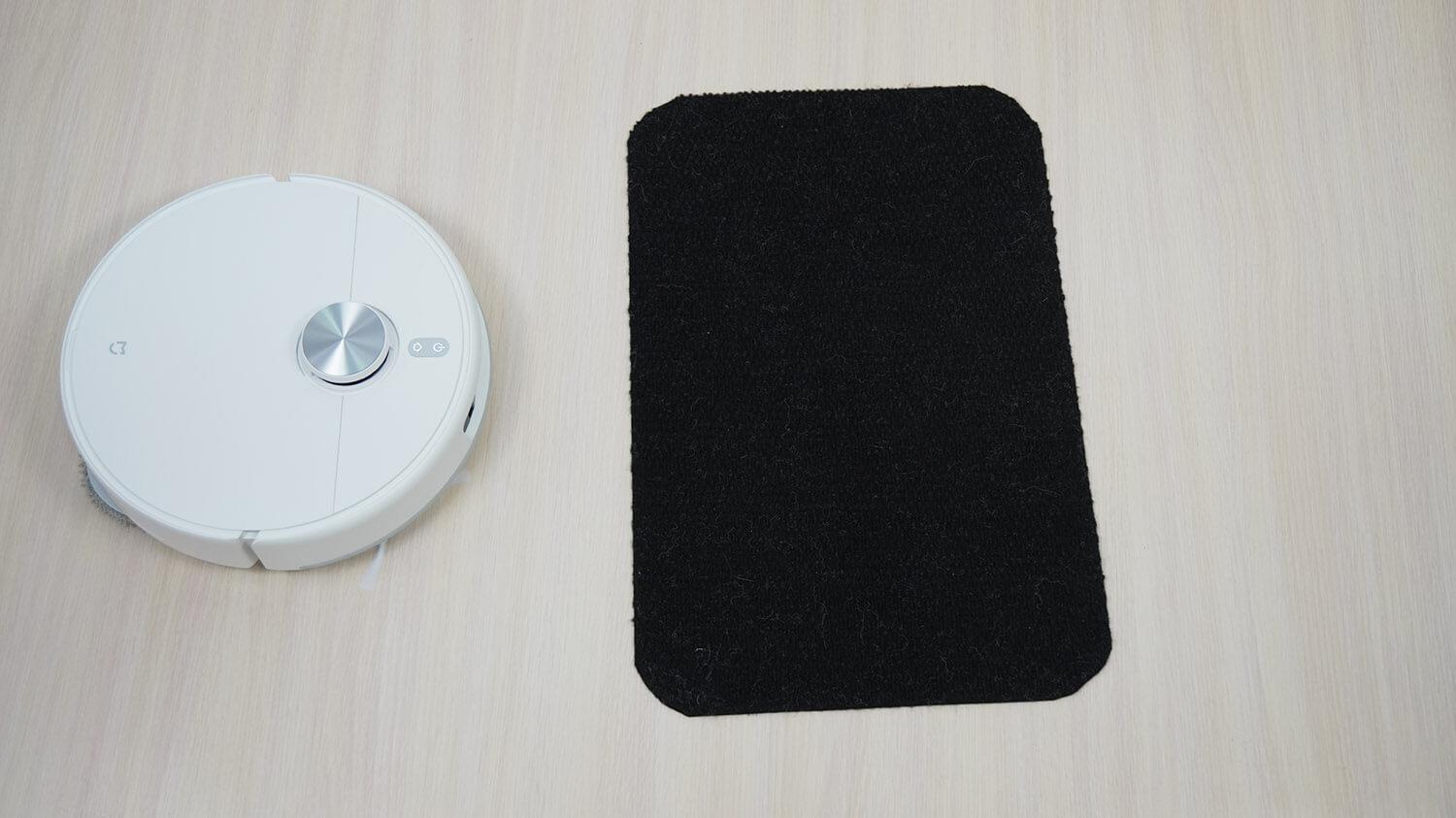
Driving on black surfaces
Moreover, this problem doesn't arise on black hard surfaces. And if you disable the object recognition system, the robot even drives onto black carpet. But there's no point in disabling something you pay for, so this test fails.
Noise level
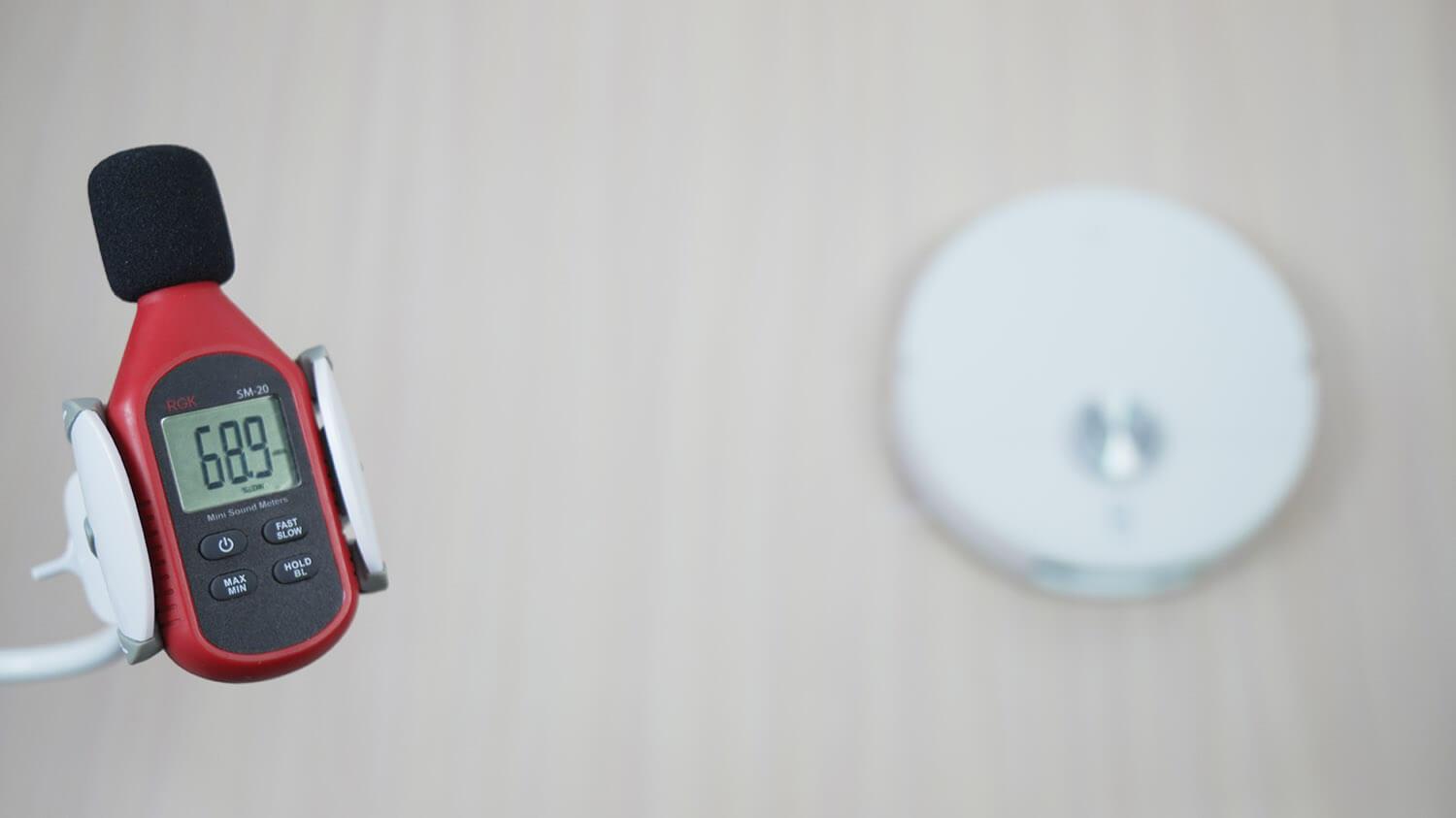
Well, as for the noise level, it is standard, ranging from 57 to 72 dB, depending on the selected operating mode.
Noise level
Pros and cons
The Xiaomi Mijia M30 Pro robot vacuum cleaner has been thoroughly reviewed and tested. our evaluation system he managed to gain 170 points, surpassing the previous flagship Xiaomi Mijia OMNI 1S by 3 points. The result is good, but the robot still couldn't make it into the top 10. in the overall ranking of tested robotsThis is all due to a number of comments that influenced my rating. I'll highlight the robot's pros and cons, and then share my opinion.
I liked the following:
- A backlit object recognition and avoidance system that performs its task to a greater extent even in complete darkness.
- Self-cleaning function of the turbo brush from tangled hair and wool thanks to the knives built into the bottom of the station.
- High-quality dry and wet cleaning on any surface.
- The robot vacuum cleaner is capable of removing even difficult stains.
- An improved algorithm for cleaning floors along baseboards. While not perfect, it still provides higher cleaning efficiency than without the algorithm.
- Automatic lifting of the wipes is provided when entering carpets, when returning to the station and during dry cleaning.
- High-quality self-cleaning dust collector.
- Washing napkins with hot water.
- Drying napkins with warm air.
- The station is easy to maintain thanks to a removable drain and a tray for washing napkins.
- The robot vacuum cleaner can be connected to the sewer and water supply by purchasing the appropriate module.
- Good cross-country ability.
- Spacious tanks at the station.
- Optimal price considering the possibilities.
As for comments, there are quite a few of them. I'll list them from most to least significant. I didn't like the following:
- The declared power was not confirmed in tests.
- There is no wall sensor, which is why the robot more often touches walls and objects on the floor.
- There are blind spots when washing the floor along the baseboard, which is also partly due to the lack of a wall sensor.
- The robot vacuum cleaner does not sweep out debris in the corners.
- The object recognition system requires some improvement.
- There's no remote home monitoring feature via camera. And the camera itself, that is.
- Limited options for setting the frequency of washing napkins.
- There is no water tank in the robot itself.
- When the object recognition system is enabled, the robot vacuum cleaner is afraid of black carpets.
- The robot vacuum cleaner is designed for the Chinese market. It doesn't speak Russian, and the app interface isn't fully translated.
Ultimately, the robot missed out on at least 21 points for all these issues, which would have allowed it to break into the top 10, and maybe even the top 5. However, despite a number of complaints, in my opinion, the main advantages outweigh them. Especially considering the price of the robot vacuum during the sales period.
The Xiaomi Mijia M30 Pro is definitely worth a look and, for me personally, is rightfully considered the best Xiaomi robot vacuum cleaner as of March 2024.
It cleans efficiently and thoroughly, is extremely self-sufficient thanks to a station equipped with virtually every modern feature, and is stylish and half the price of flagship models from competing brands.
Therefore, if you want to choose the top-end Xiaomi model, I am inclined to give preference to this device.
On that note, I'd like to end this review. If you have any questions, please ask them in the comments. Happy shopping, everyone. Bye!