Xiaomi Mijia M40: retractable side brush, 12,000 Pa, turbo brush with blades, All-in-One station!
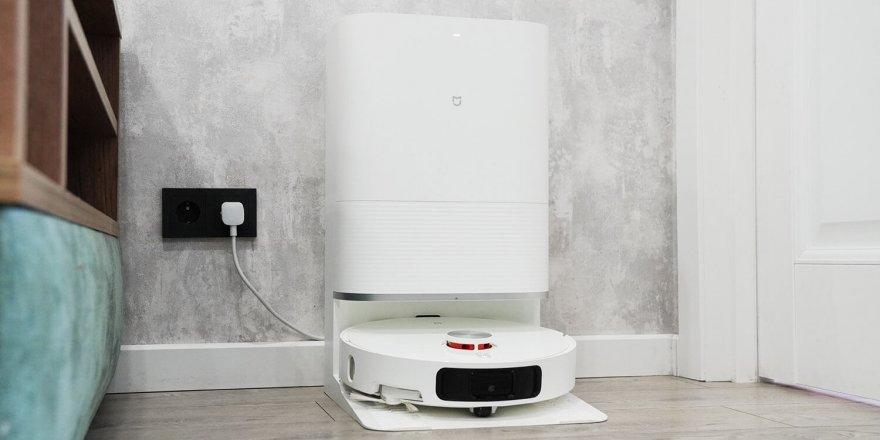
This review examines Xiaomi's flagship robot vacuum cleaner for late 2024: the Xiaomi Mijia M40, model number D110CN. Compared to the previously released Xiaomi Mijia M30s, the device has received two significant upgrades. These include increased suction power to 12,000 Pascals and, most importantly, a retractable side brush for complete cleaning of corners. Additionally, the M40 boasts an object detection system, a turbo brush with blades, a retractable cleaning cloth, and an all-in-one cleaning station. This complete package will set you back $4.80 during sales. The standard price is around $600-650, which is still reasonable, considering its features. Below, I'll thoroughly test the Xiaomi Mijia M40, highlight its pros and cons based on my test results, and then share my thoughts. Let's get started!
Equipment
The robot vacuum cleaner arrived in a branded box like this:
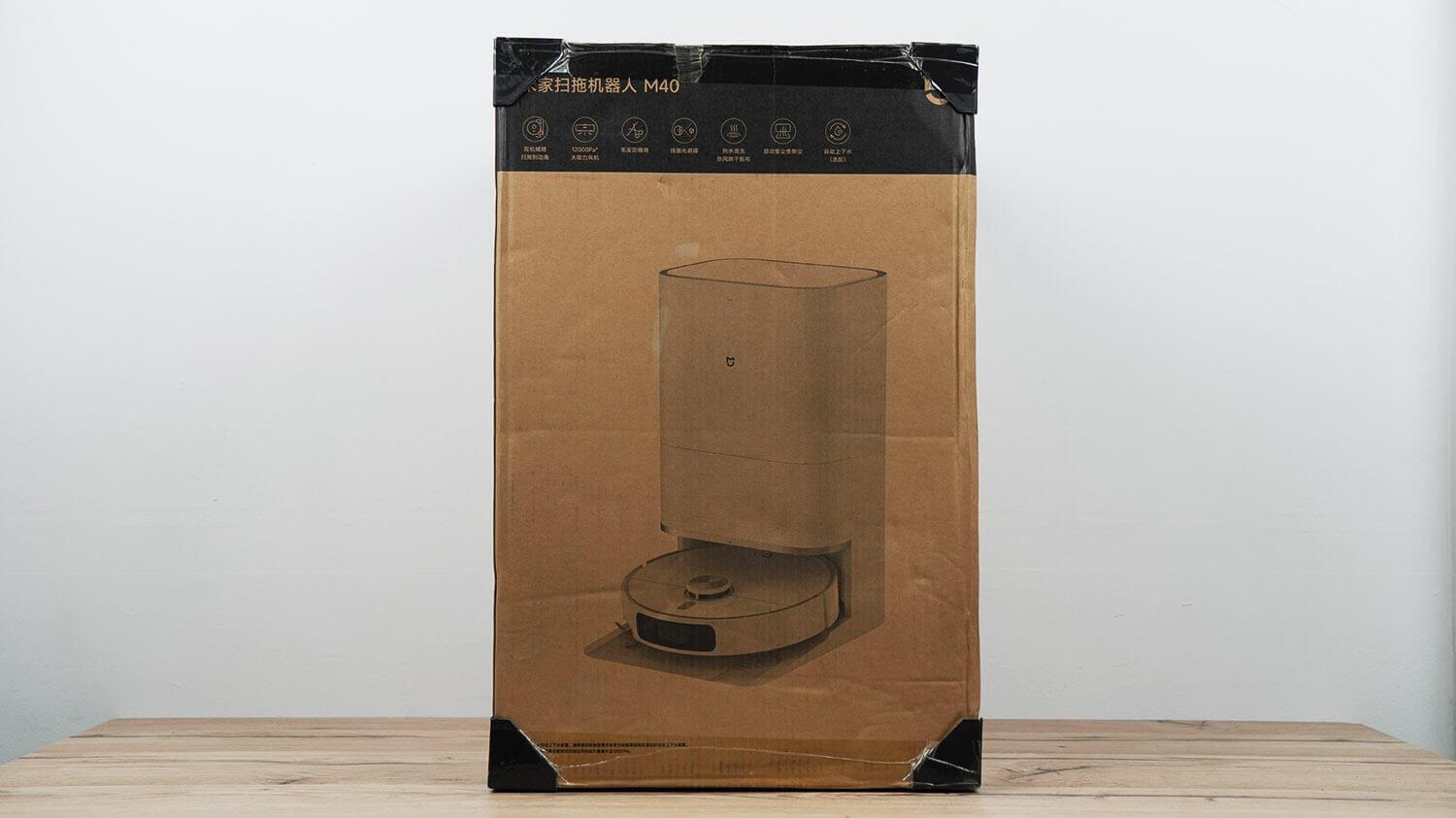
Box
The package includes the robot itself with a station, a power adapter with a Chinese plug and an adapter for a European socket, two napkin holders, an instruction manual in Chinese, and a fan as a gift from the seller.
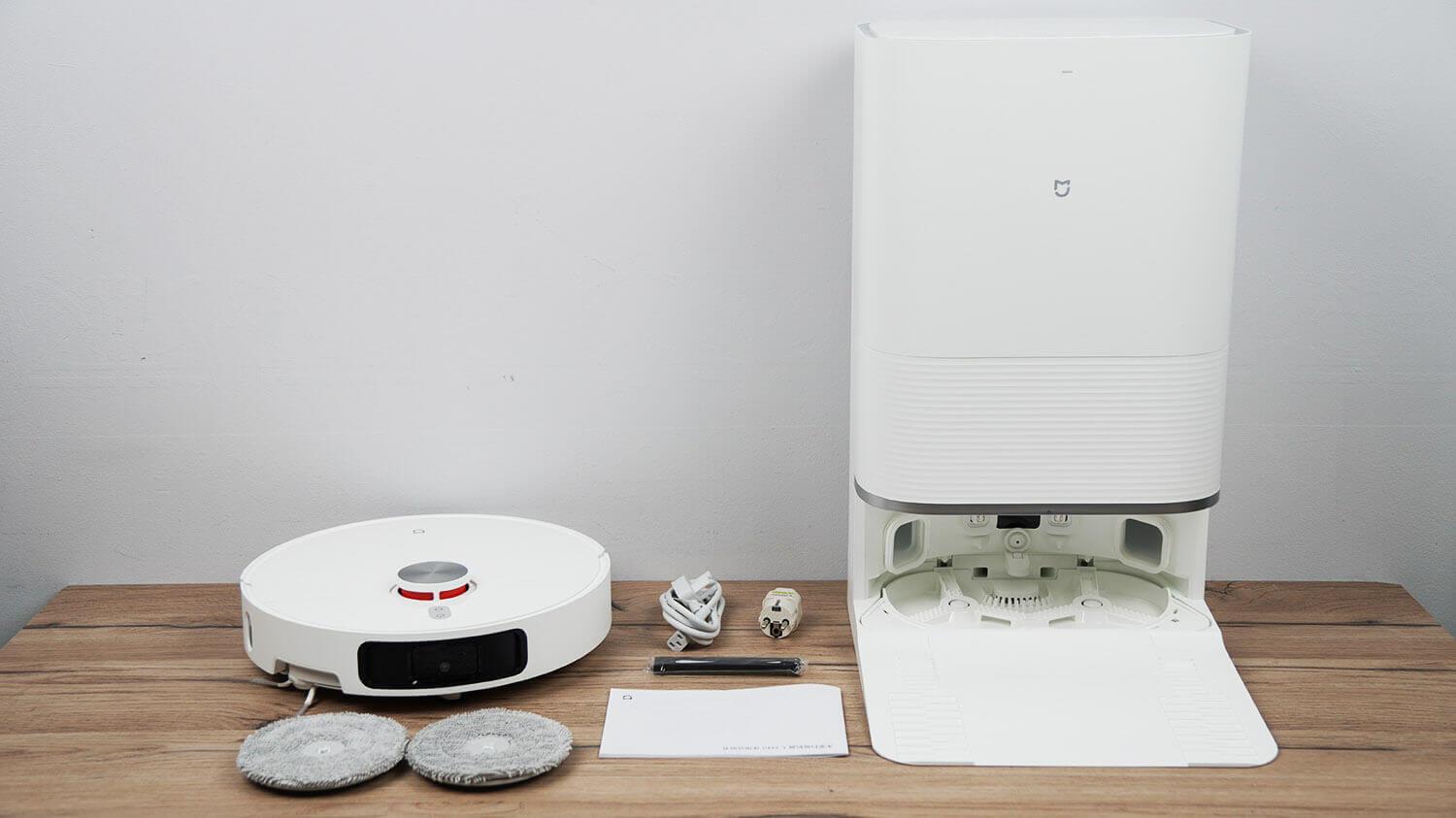
Equipment
Appearance
Now let's take a look at the Xiaomi Mijia M40's design. The robot is white, a color typical of Xiaomi's lineup. Its body is round and stands 97 mm above the floor.
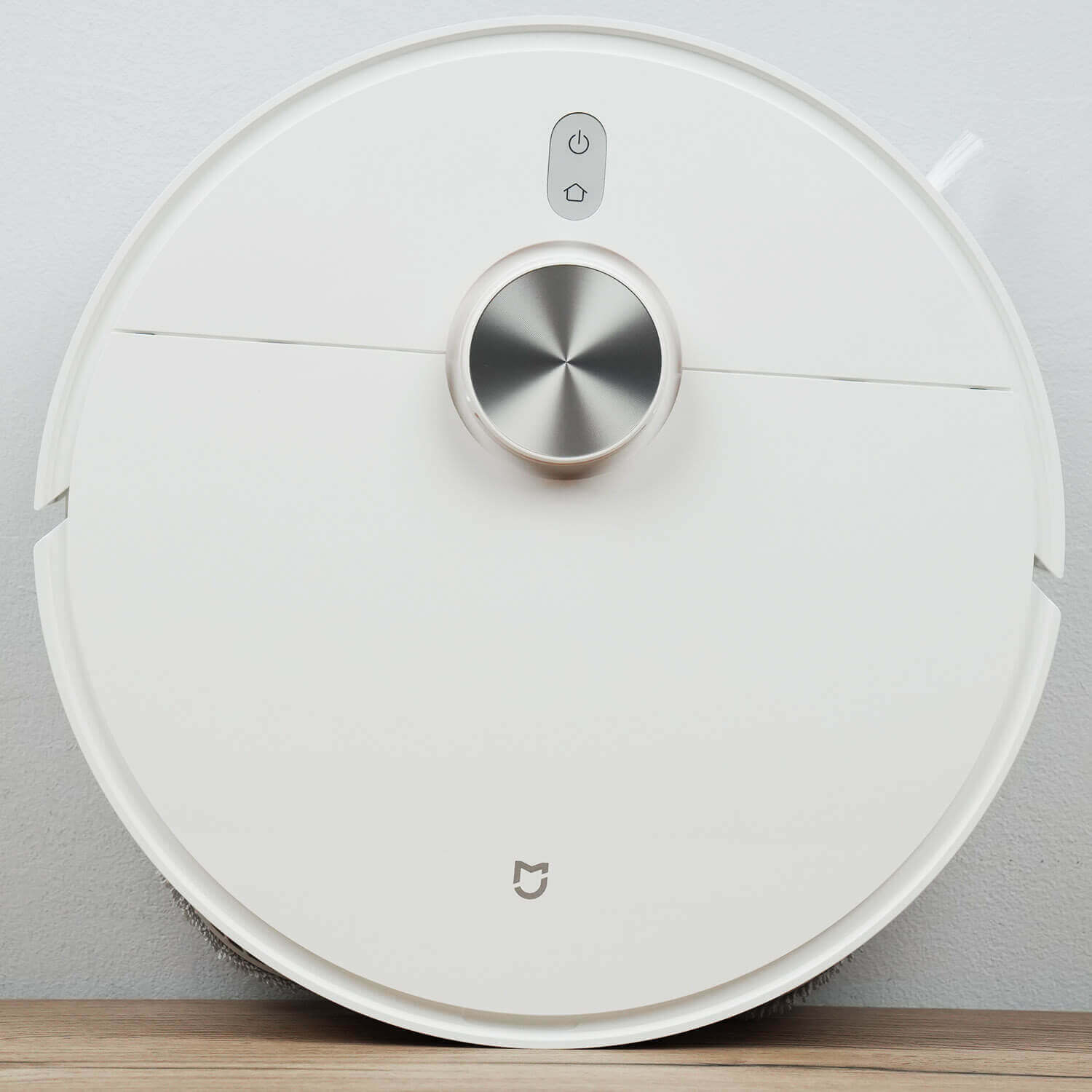
Top view
A wall sensor is mounted on the right bumper. A system of sensors is located in the center to detect and carefully avoid obstacles in the robot's path. There is no remote home monitoring feature.
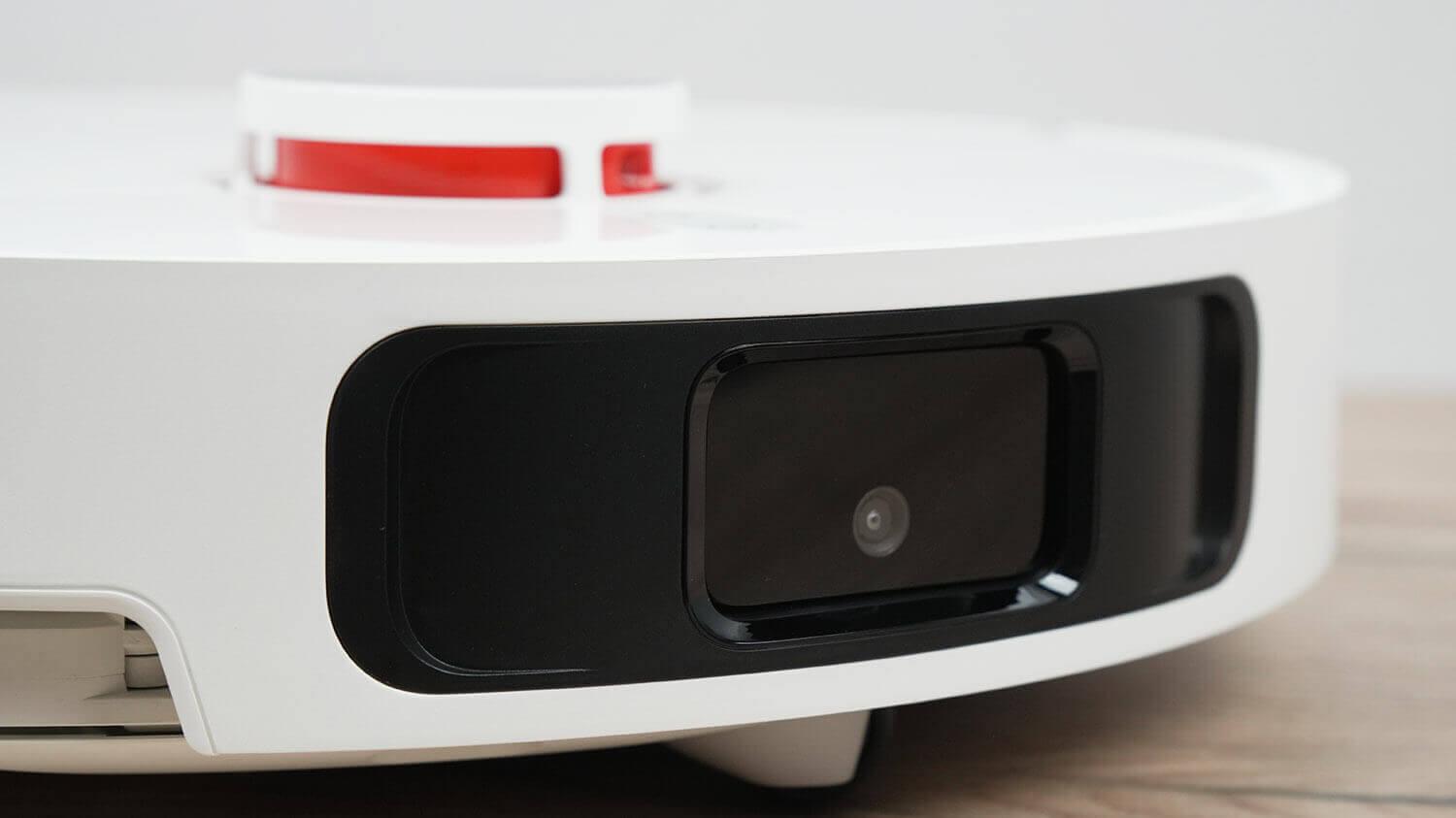
Object Identification System
A lidar is responsible for navigation. It is equipped with a spring-loaded cover to prevent it from getting stuck under low furniture. Two control buttons are located next to the lidar.
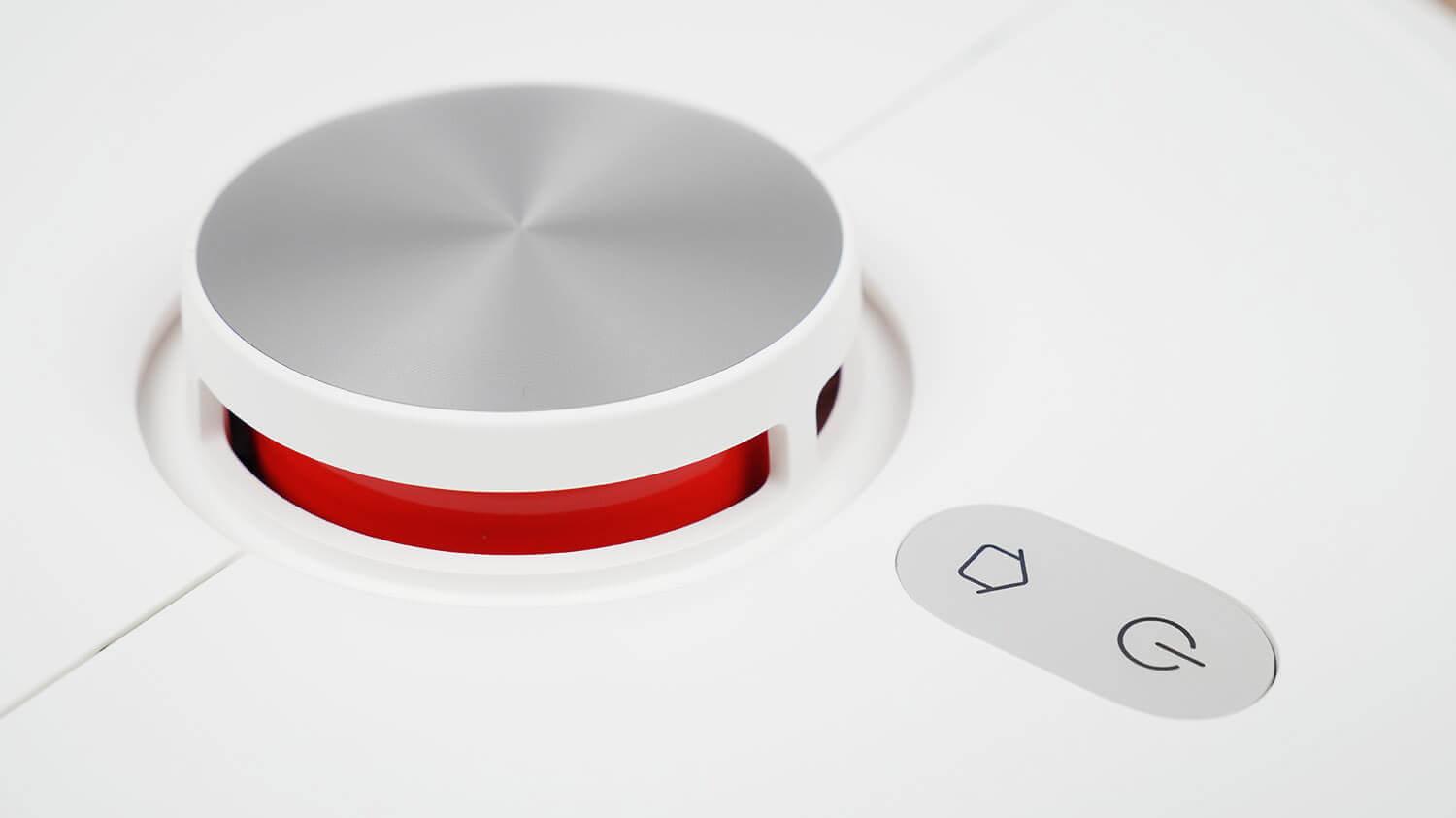
Lidar and control panel
The dust collector is located under the top cover. The filtration system is HEPA-based only.
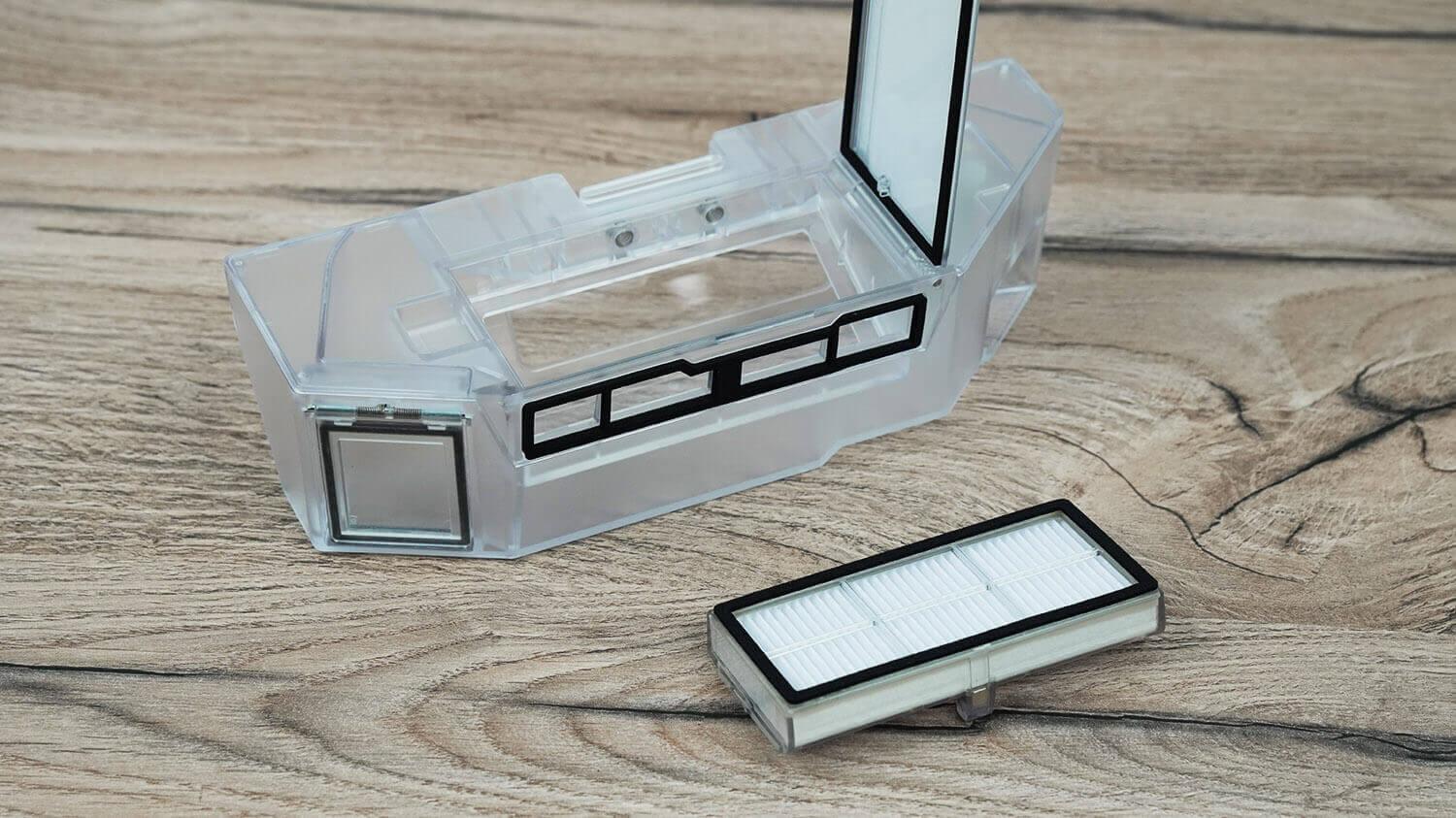
Filtration system
The water tank is hidden inside the robot. Water is automatically pumped into the tank at the station and dispensed onto the cleaning pads during cleaning.
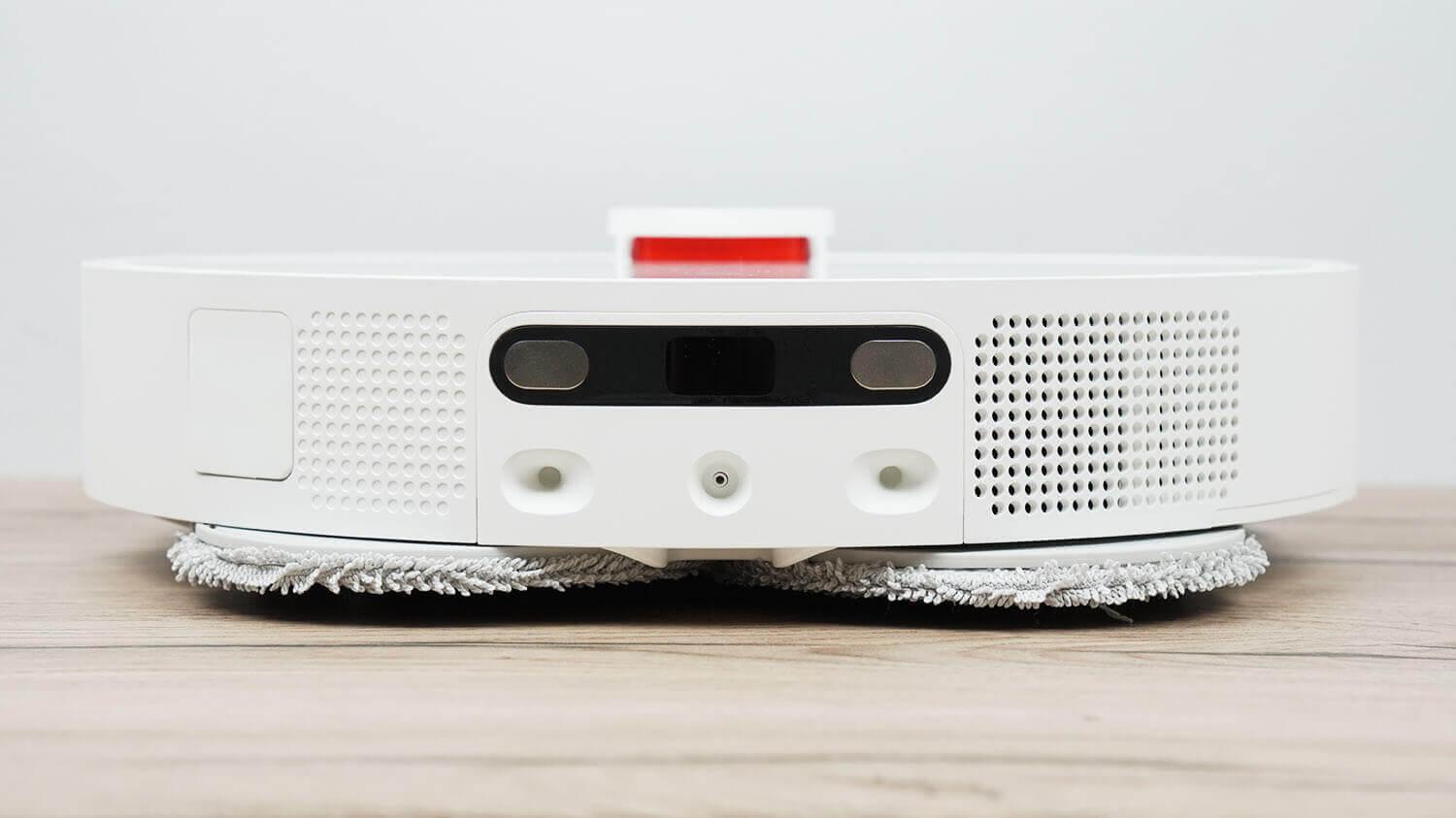
Rear view
The robot has four anti-fall sensors on the bottom. There's still no carpet sensor, which is a very odd decision by Xiaomi engineers. There's only one side brush, a three-pronged one, secured with a screw.
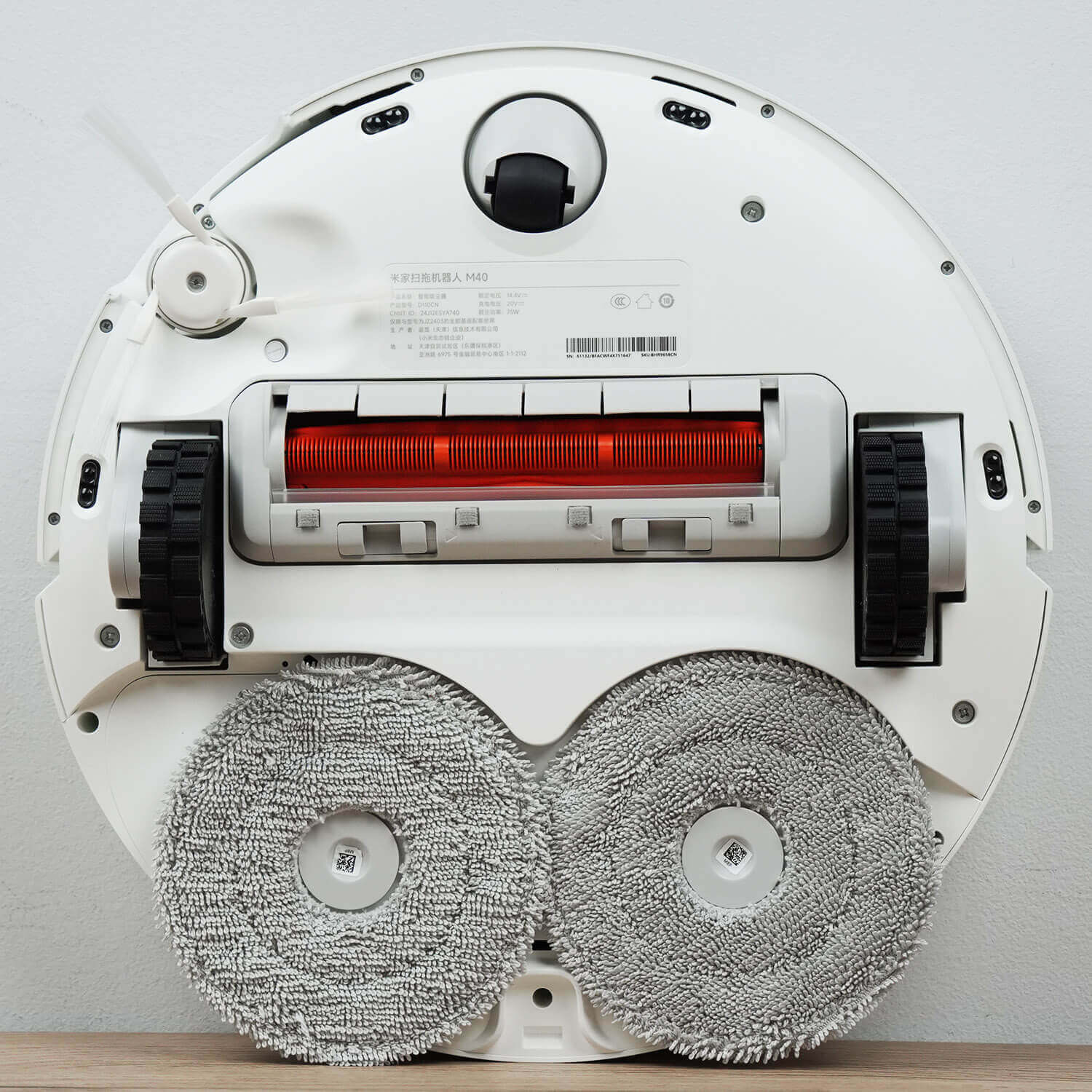
Bottom view
So, this side brush extends into corners to thoroughly sweep away debris. It's not a new solution, but it's already become a must-have feature on all flagship models from popular competing brands.
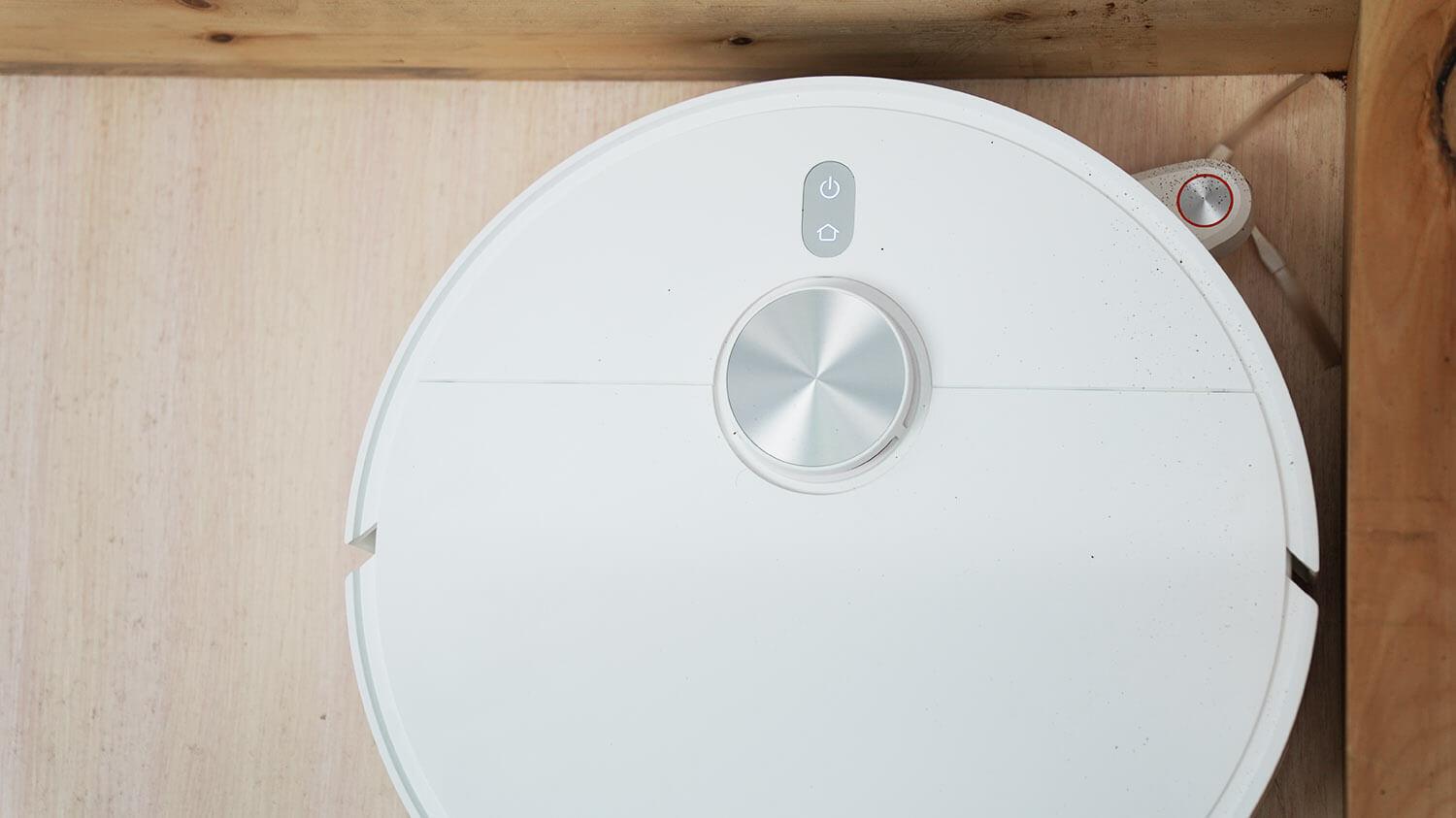
Retractable side brush
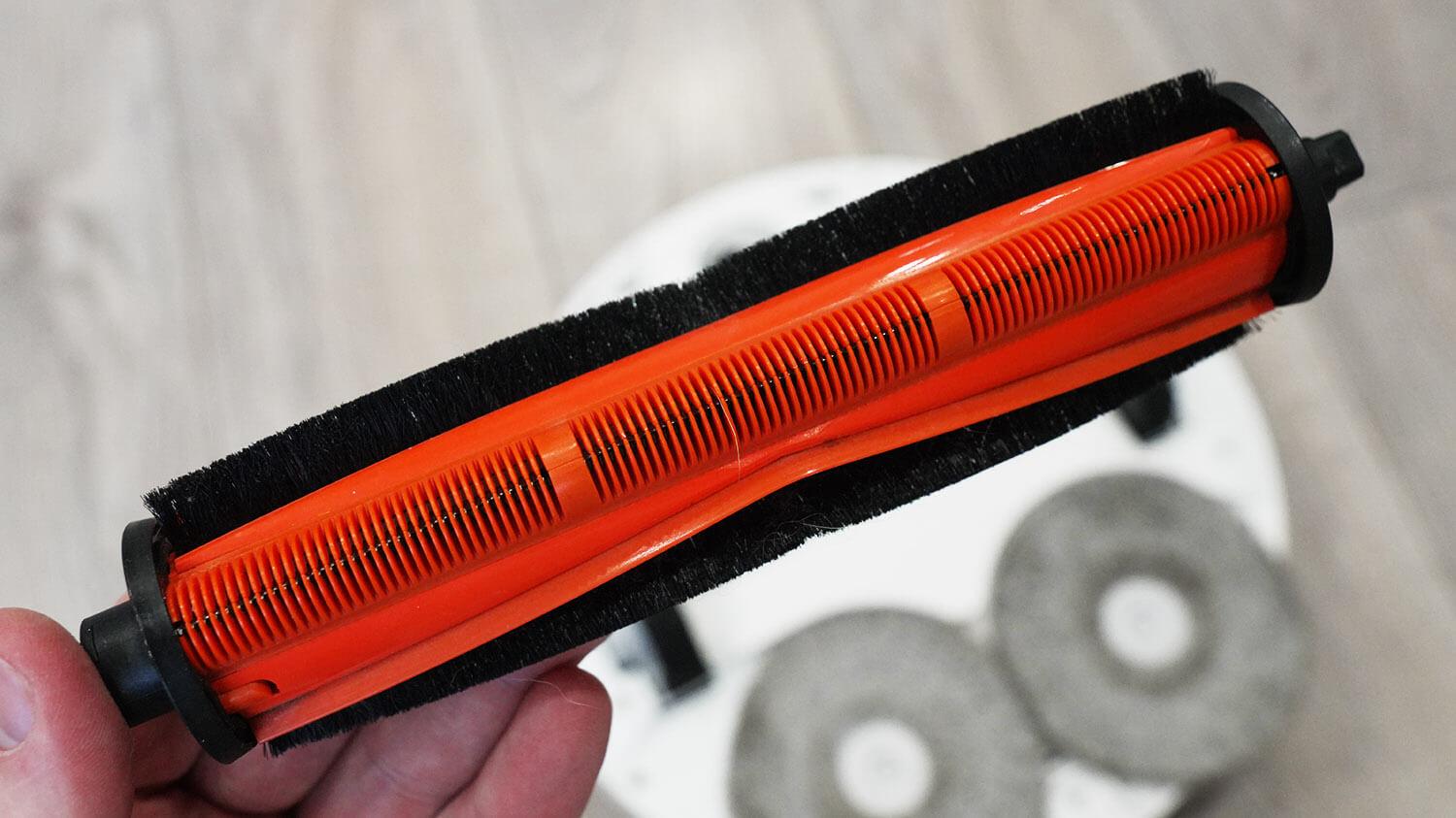
The central brush unit is floating. The robot has a brush with blades inside, just like the flagship Dreame and its predecessors. Mijia M30s, and also H40.
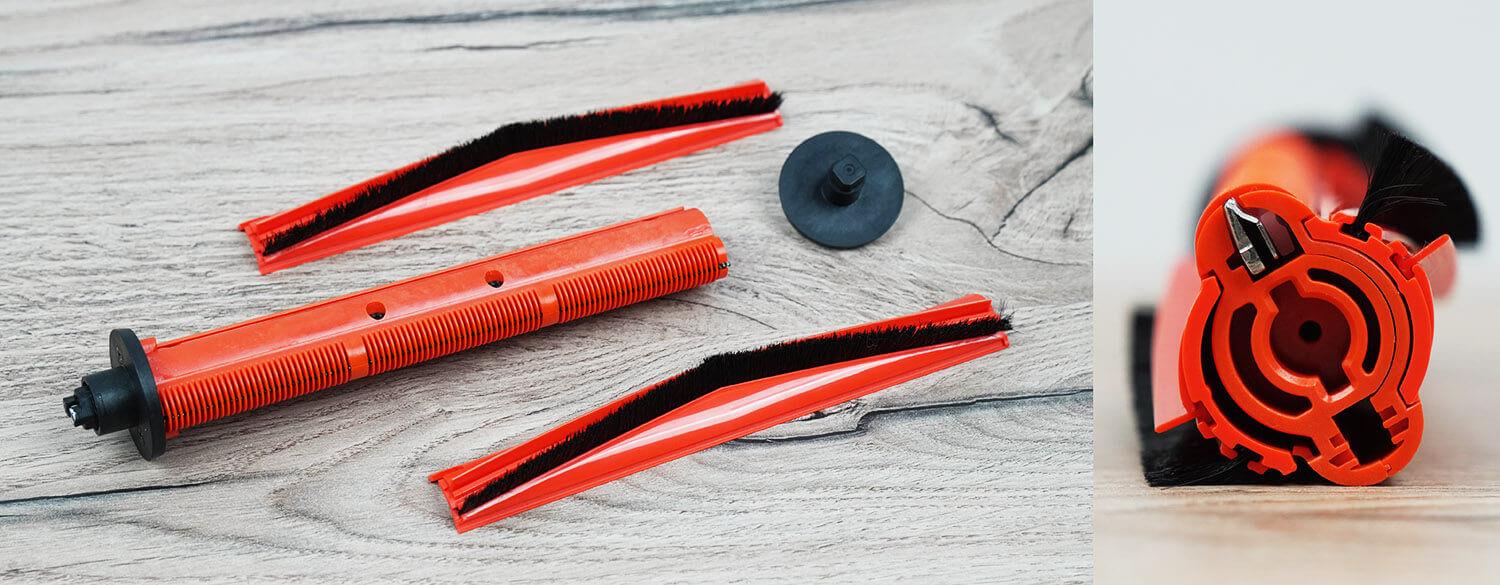
Central brush
This brush self-cleans while removing tangled hair and fur, which is its key feature.
The familiar round holders with cleaning cloths are installed behind the turbo brush. One of the cleaning cloths extends to the edge for cleaning the floor right up to the baseboard, which has also become a must-have solution in 2024.
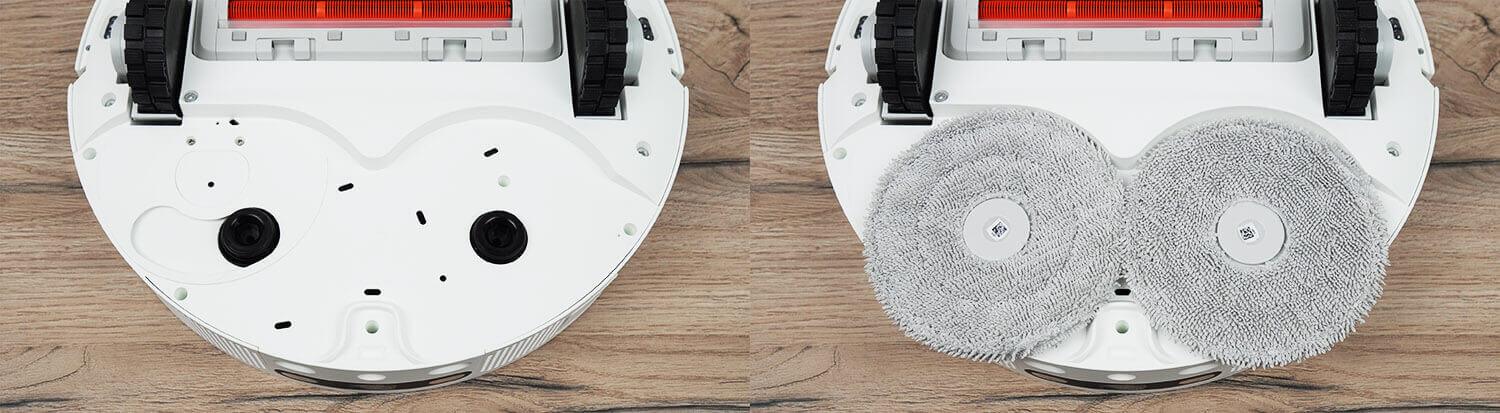
Napkins
I'll add that the cloth not only presses against the baseboard when cleaning, but also rolls into the corner, which improves the quality of cleaning in the corners.
The wipes also lift up automatically when driving onto carpets, during dry cleaning, and when returning to the station.
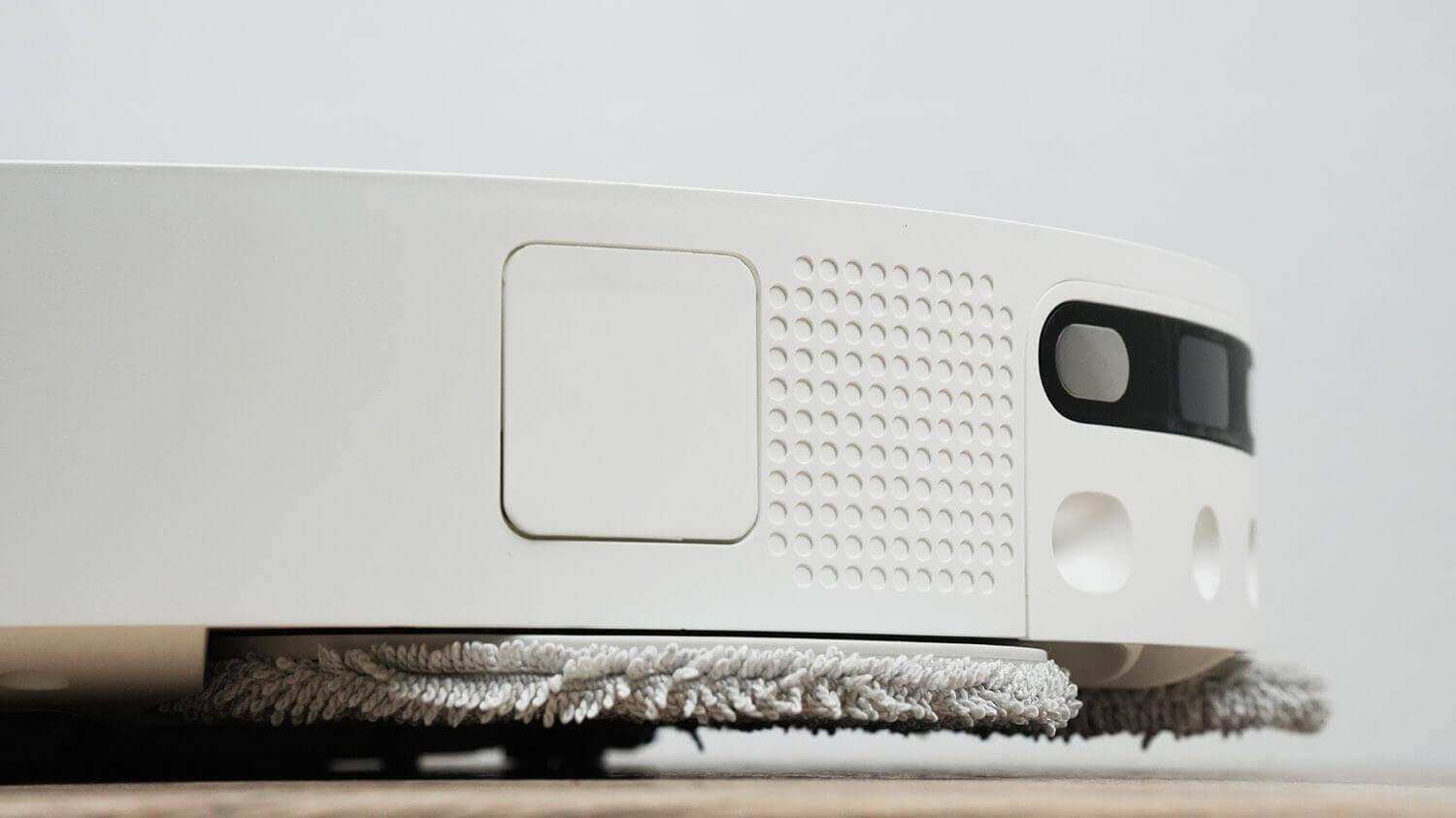
Lifting napkins
As for the station, the Xiaomi Mijia M40 self-cleans, automatically refills the robot's water tank, washes the wipes with hot water, and dries the wipes with warm air after cleaning.
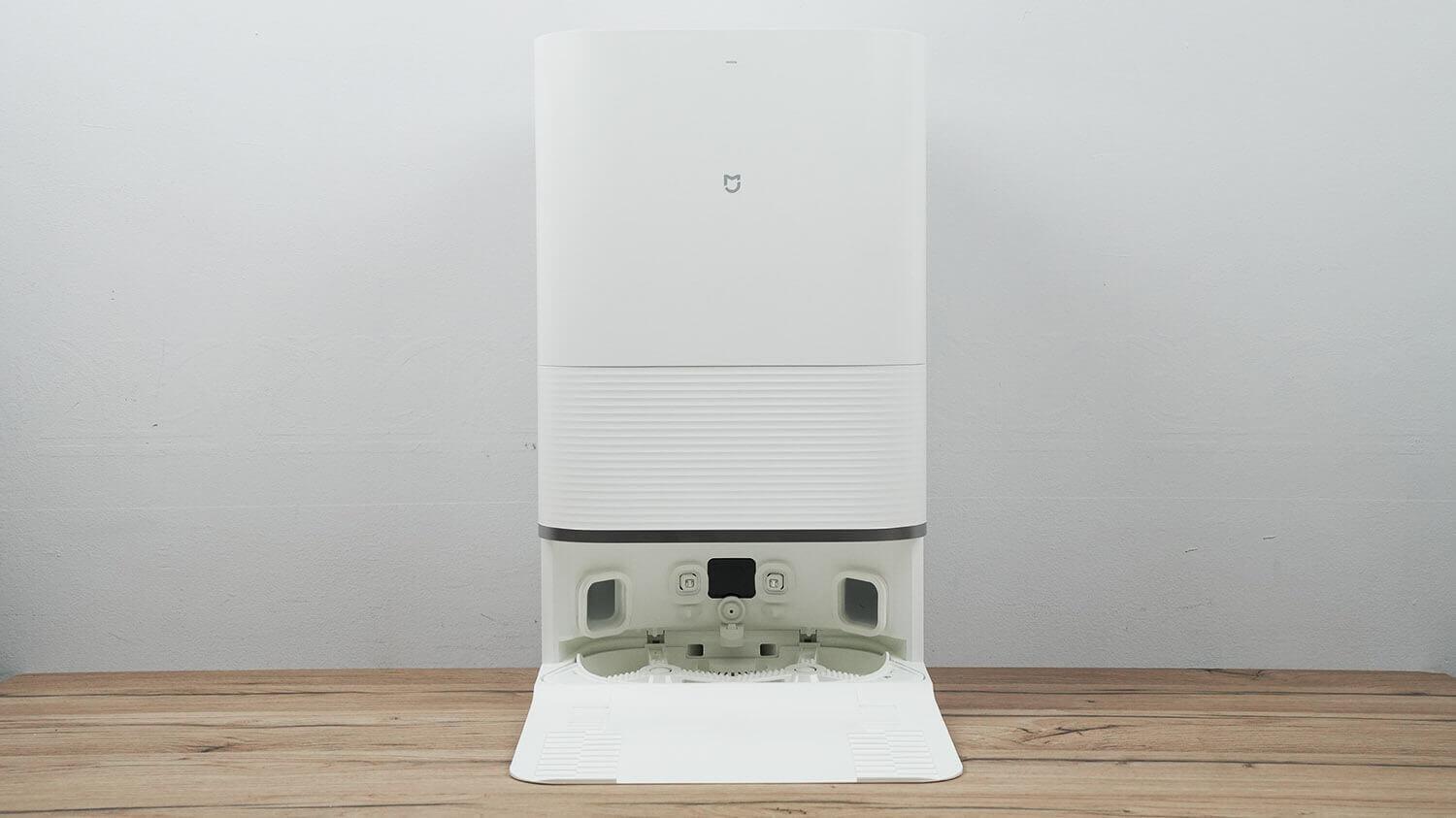
Station
Conveniently, the ramp for the robot to enter and the tray for washing the wipes are removable. The waste bag is located in the center behind the lid.
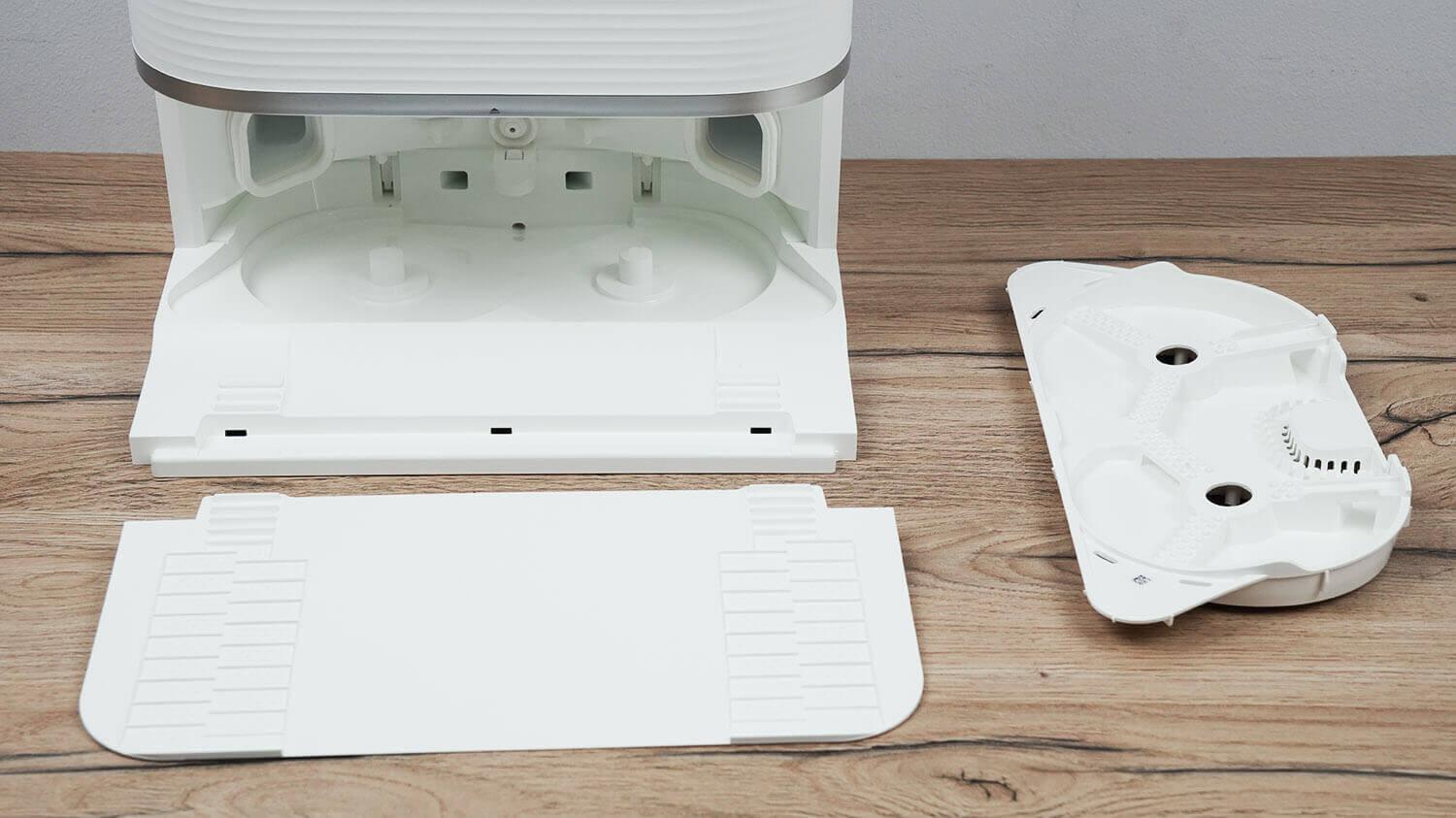
Removable drain and tray
The water tanks are located under the top cover. They have a larger capacity, holding 4 liters each. Behind the tanks are plugs that can be removed to connect the module to the sewer and water supply.
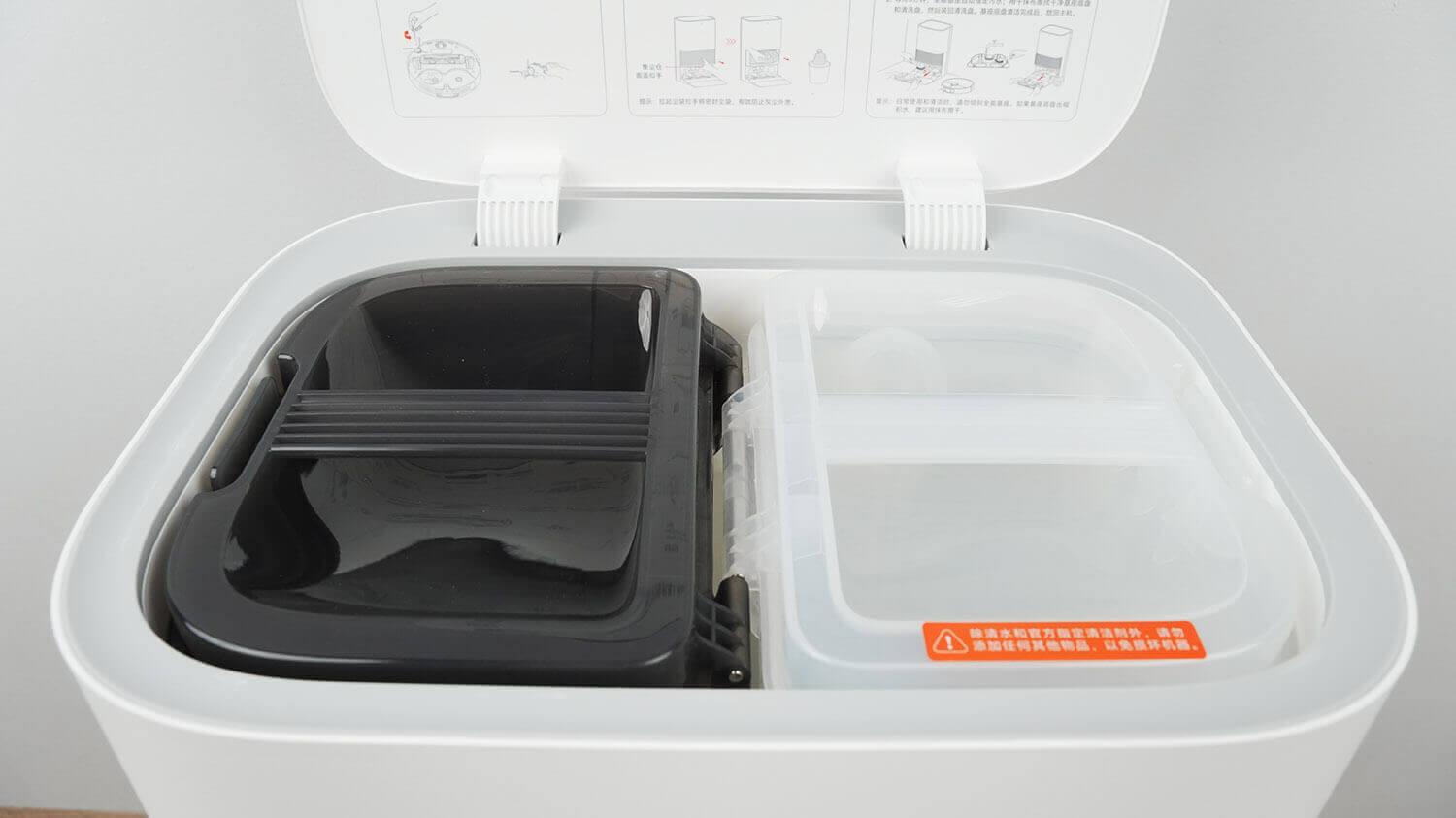
Water tanks
The station doesn't have a detergent compartment. You'll have to add it manually to the clean water tank as needed. However, the module for connecting to the sewer and water supply has a 900 ml compartment for detergent, which will automatically be mixed into the water when washing the cloths. That's a plus!
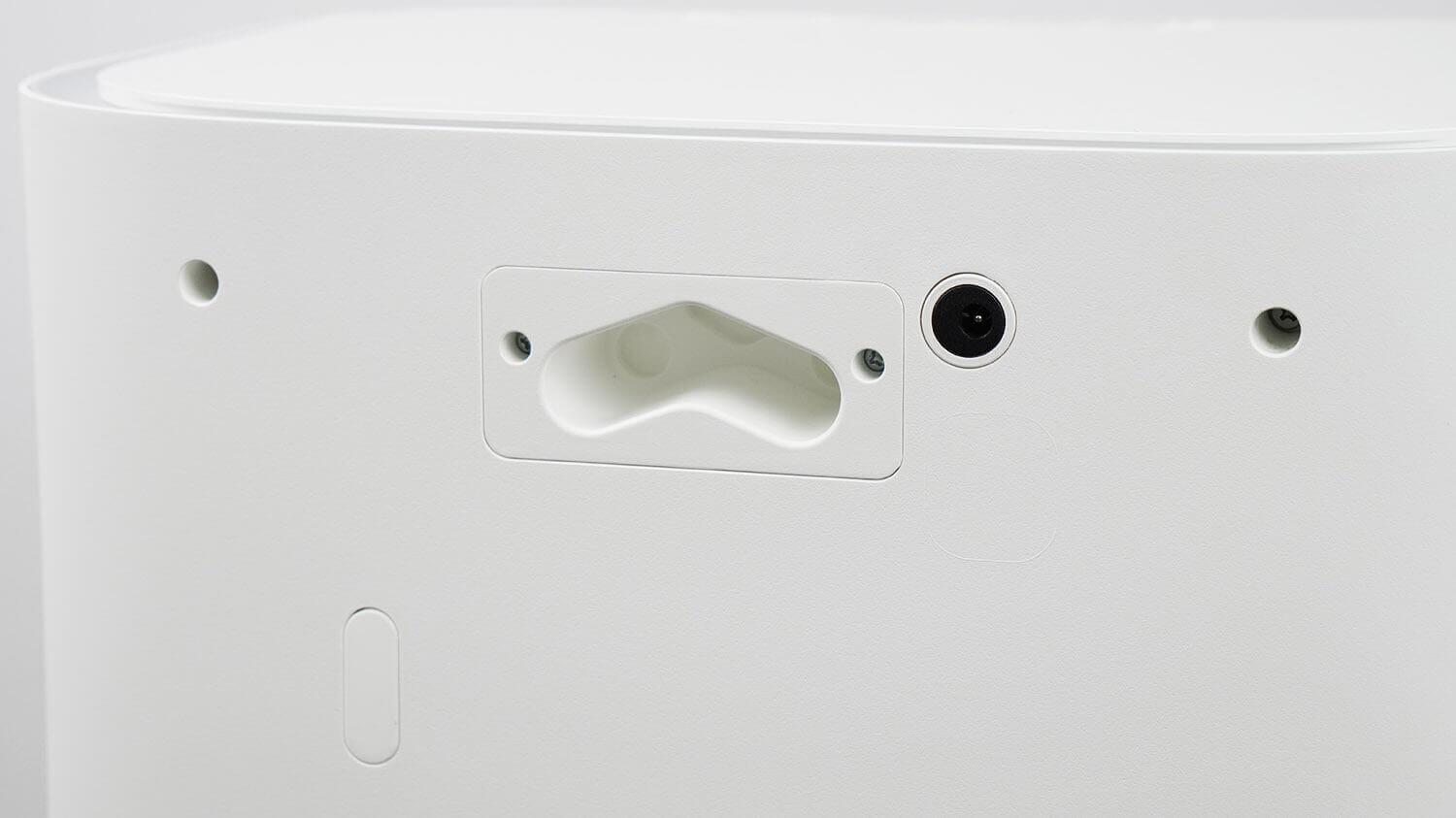
Bends for connection to sewerage and cold water supply
As you can see, the only design difference compared to the M30s is the retractable side brush. The pros and cons of the robot's design will be discussed in the final review.
Technical specifications
The main characteristics of the Xiaomi Mijia M40, as stated by the manufacturer, are displayed on the screen:
Robot vacuum cleaner:
- Li-Ion battery 5200 mAh.
- Suction power up to 12,000 Pa.
- Cleaning area> 200 sq.m.
- Dust collector: 350 ml.
- Water tank: ≈ 80 ml.
- Obstacle clearance up to 20 mm.
- Dimensions: 350*97 mm.
Station:
- Power consumption: up to 1000 W.
- Clean water tank: 4 l.
- Dirty water tank: 4 l.
- Bag in the station: 4 l.
- Dimensions (D*W*H): 340*457*588 mm.
The claimed suction power has increased compared to previously released flagship models. I'll test it out.
Functional capabilities
Regarding controls, the robot vacuum cleaner is designed for the Chinese market and therefore connects to Mi Home via the China region. At the time of writing, the interface is in English, which isn't ideal. The app's response isn't lightning fast due to it being connected to Chinese servers, but it's also not too slow, so it's tolerable.
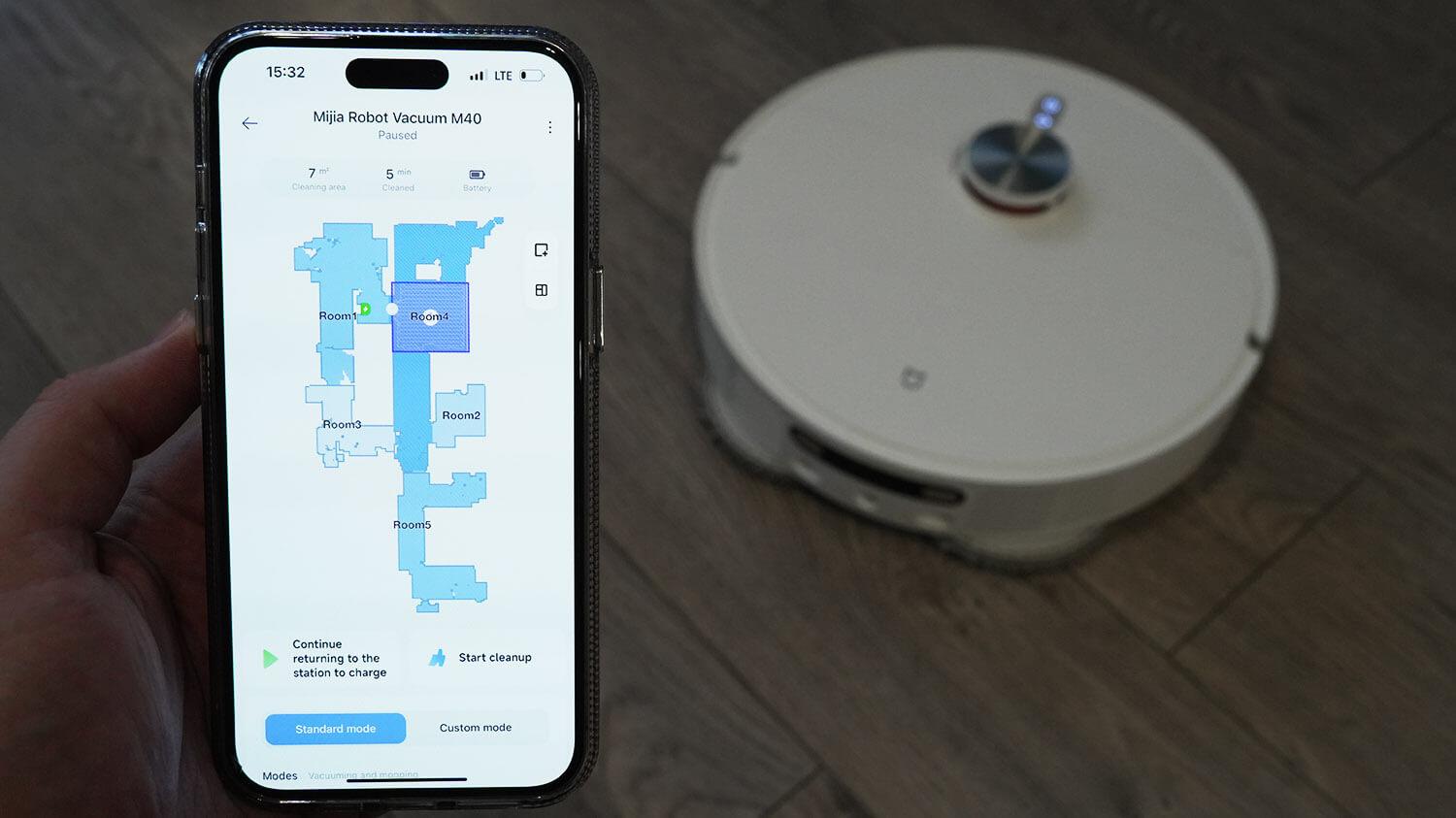
Control via app
The main functions of the Xiaomi Mijia M40 are displayed on the screen:
- Self-cleaning dust collector.
- Washing napkins at a station with hot water (70 °C).
- Drying napkins with warm air.
- Side brush extension in corners.
- Moving the napkin to the baseboard.
- Identifying objects on the floor.
- Saving multiple cleaning maps in memory.
- Automatic zoning of premises into rooms.
- Selecting areas and rooms for cleaning.
- Virtual walls and no-go zones (and for wet cleaning mode).
- Suction power adjustment.
- Setting the frequency of washing napkins (10/15/20/25 sq.m.) and after each cleaned area.
- Cleaning log.
- Setting up cleaning according to a schedule.
- Automatic power increase on carpet.
- Carpet cleaning in wet cleaning mode.
- Lifting napkins when driving onto carpets.


Functions
I'd like to point out that the wash temperature for the wipes has been raised from 60 to 70 degrees. However, when testing, I checked the wipes immediately after washing and wouldn't say they were as hot as Ecovacs T30 Omni or DreameBot X40 Ultra, which also claim 70 degrees. So I can't personally confirm the temperature increase.
Overall, there are quite a number of options, allowing you to flexibly customize cleaning parameters to your specific needs. To make the robot avoid carpets or pick up cleaning pads, you need to set up specific carpet zones on the map; I'll cover this during testing.
Testing
A detailed video review with all tests has already been prepared and published on the channel:
Navigation
And finally, let's move on to the tests! First, we'll test the Xiaomi Mijia M40's navigation in a room with obstacles. The robot vacuum first moves around the perimeter of the room, then cleans the entire accessible area in a serpentine pattern. It also moved over the feet of the dryer. The mirror added a non-existent zone to the map, as with other lidar robots. The robot also separately swept around the box and the chrome feet, then returned to the station. No unusual maneuvers were detected, so the test was successful.
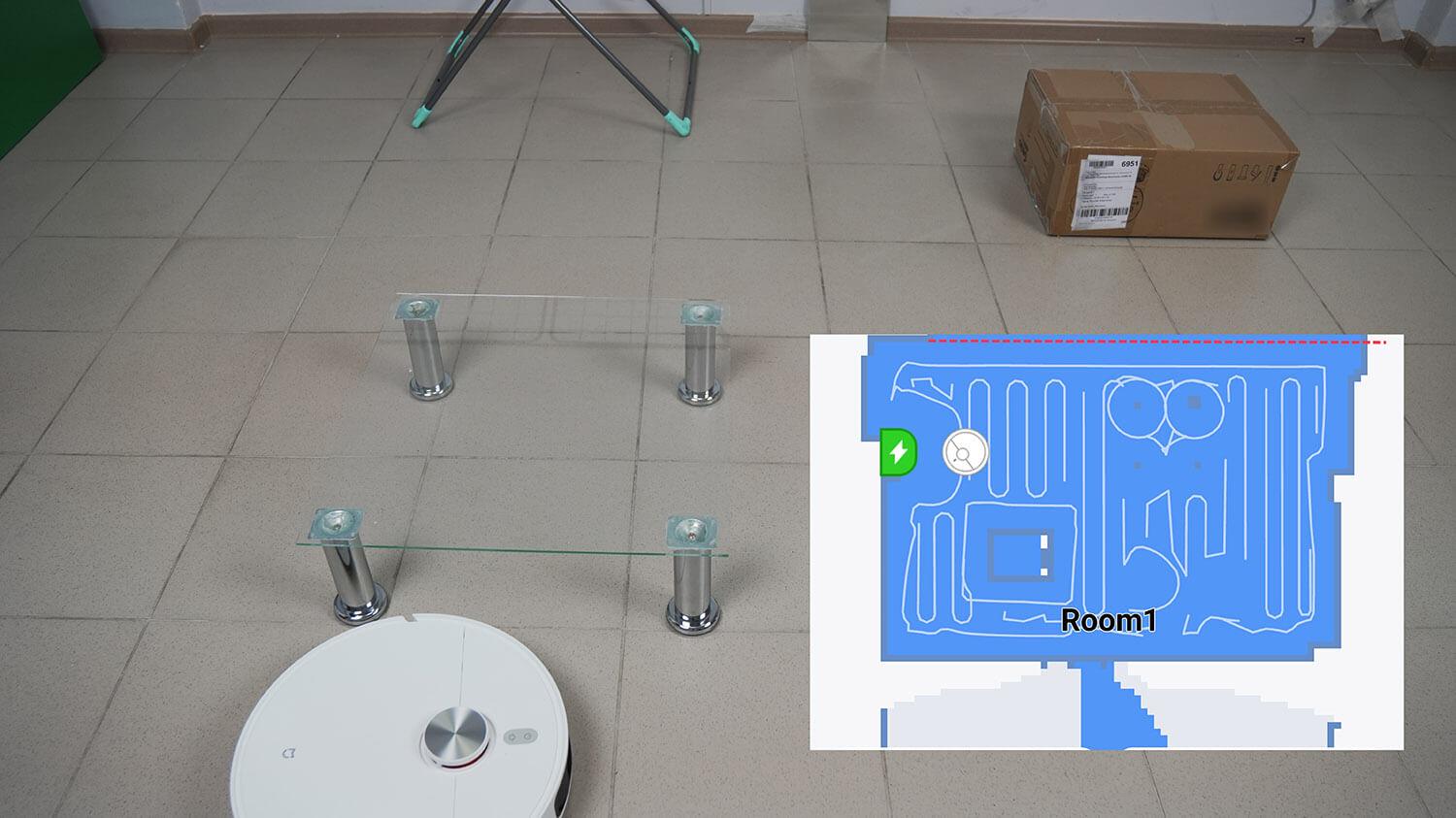
Navigating an Obstacle Room
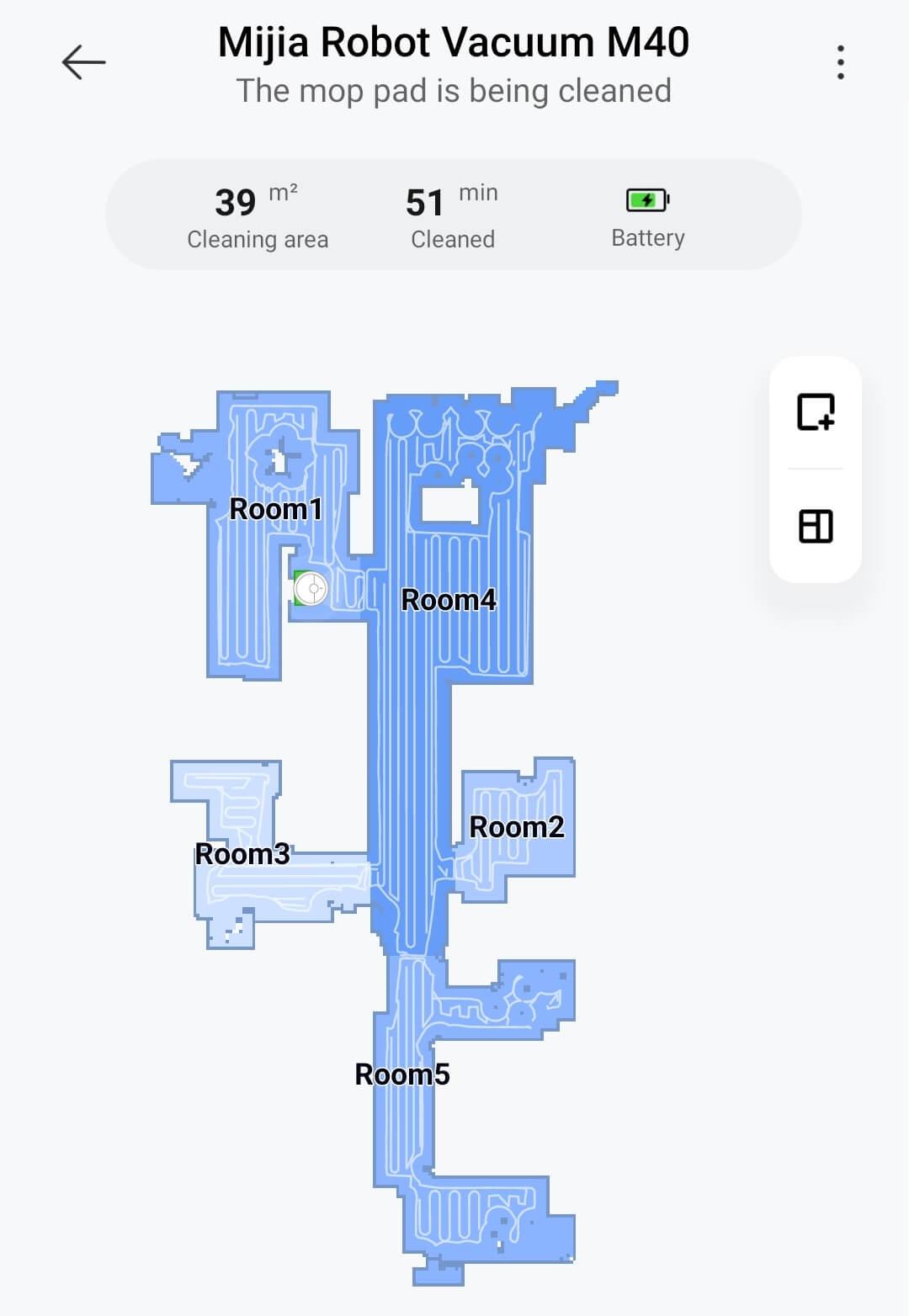
Speaking of navigation within the house, the robot vacuum cleaner cleans room by room, following the perimeter, then in a serpentine pattern. Every 20 square meters, as I've determined, it returns to the station and washes the wipes, then resumes cleaning from where it left off. There are no uncleaned areas left; this model has excellent navigation!
Navigation within the home
Passing under low furniture
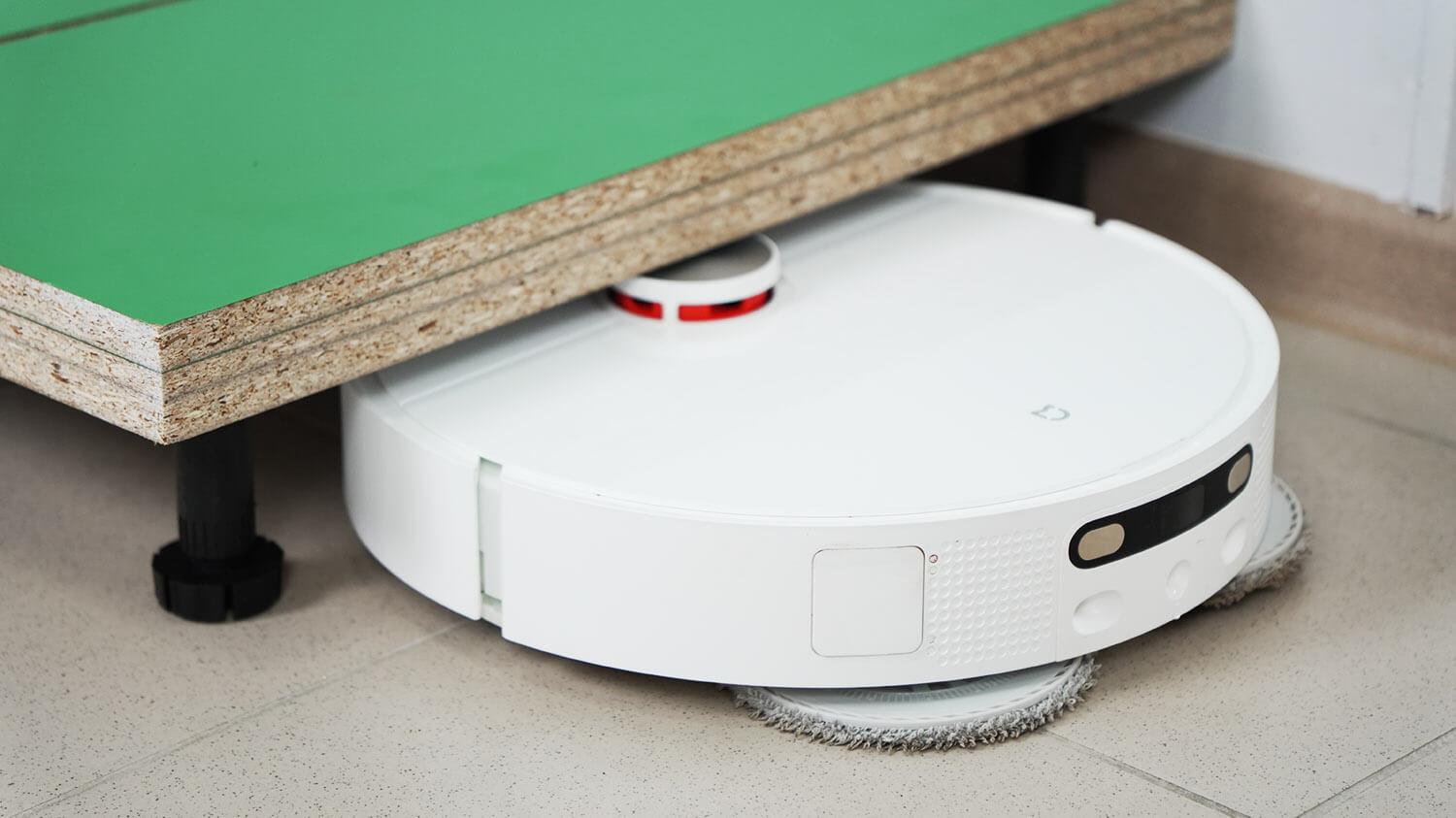
The minimum clearance height of the Xiaomi Mijia M40 was also tested. It fits into the standard 10 cm clearance for cleaning without any problem. That's a plus!
Passing under low furniture
Identifying objects on the floor
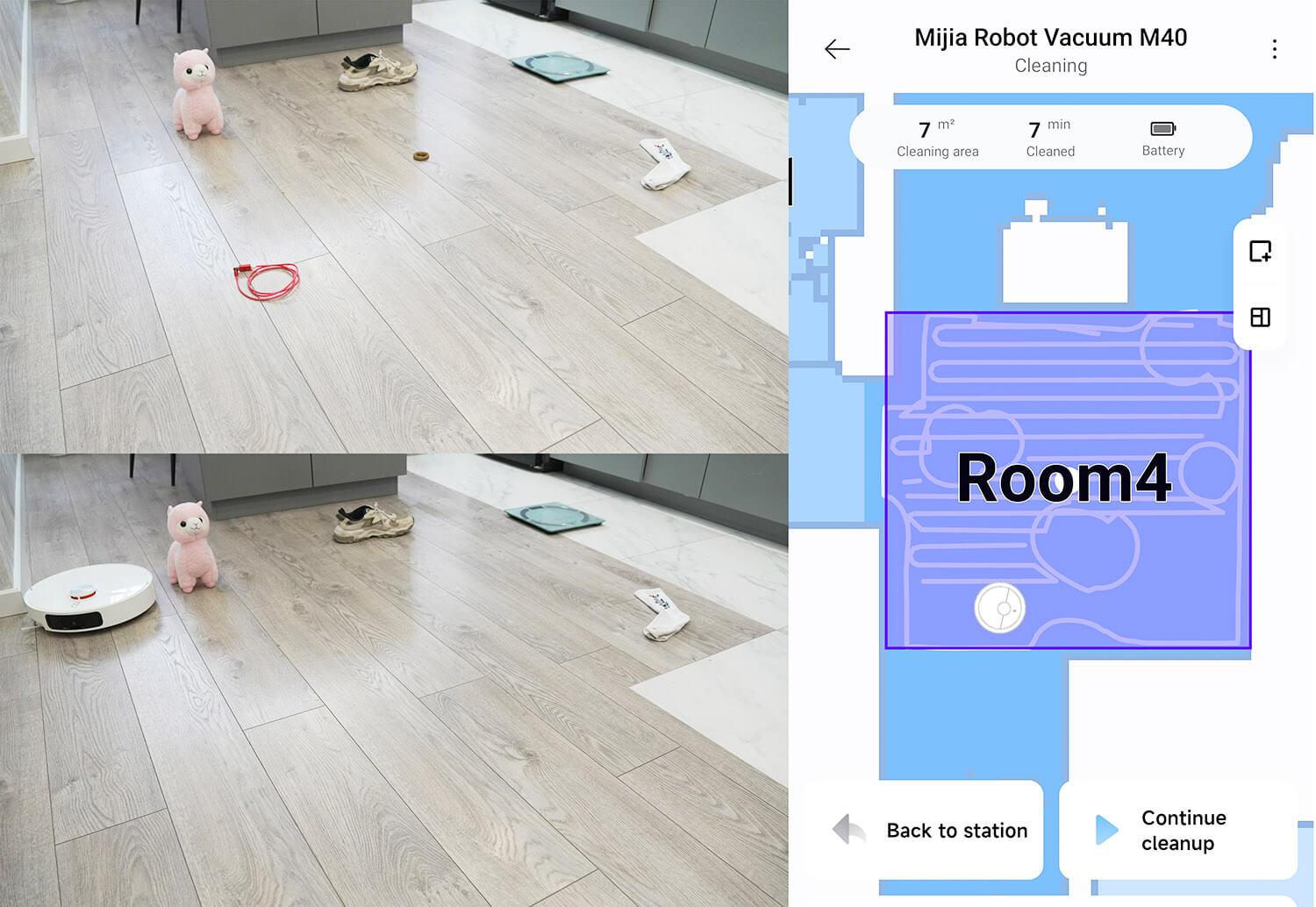
As for the object avoidance system, in good lighting, the robot was able to identify and accurately avoid four of six objects on the floor. It also ran over a simulated pet surprise and chewed the charger cord. The result is essentially identical to the Xiaomi Mijia M30s.
Detour of 6 items
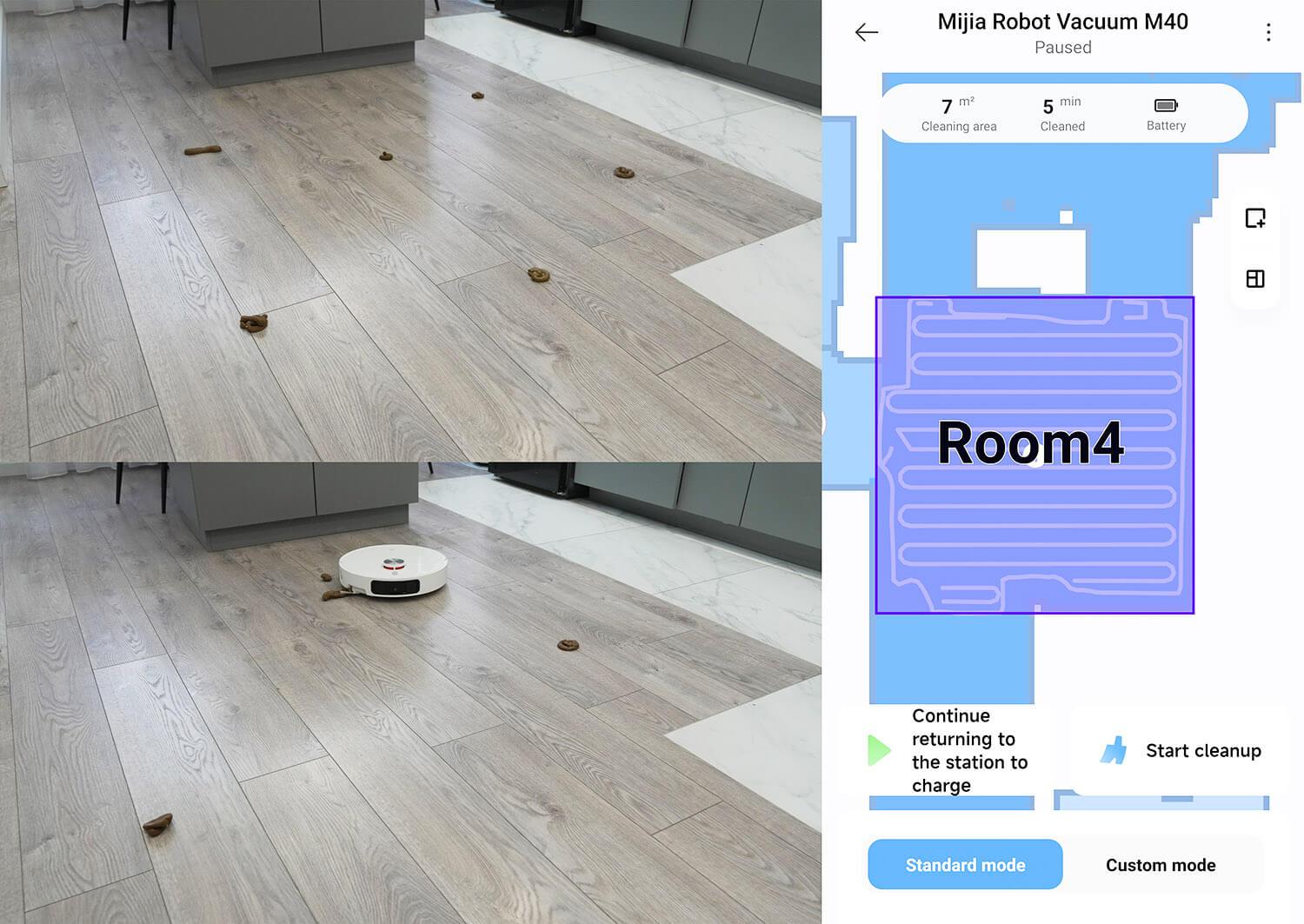
I made the test more challenging by laying out six traps on the floor in the shape of pet surprises. He ran into all six, either by running over them, chewing them, or pushing them out of place.
Minefield Test
I drove through all 4 wires, chewing 2 of them.
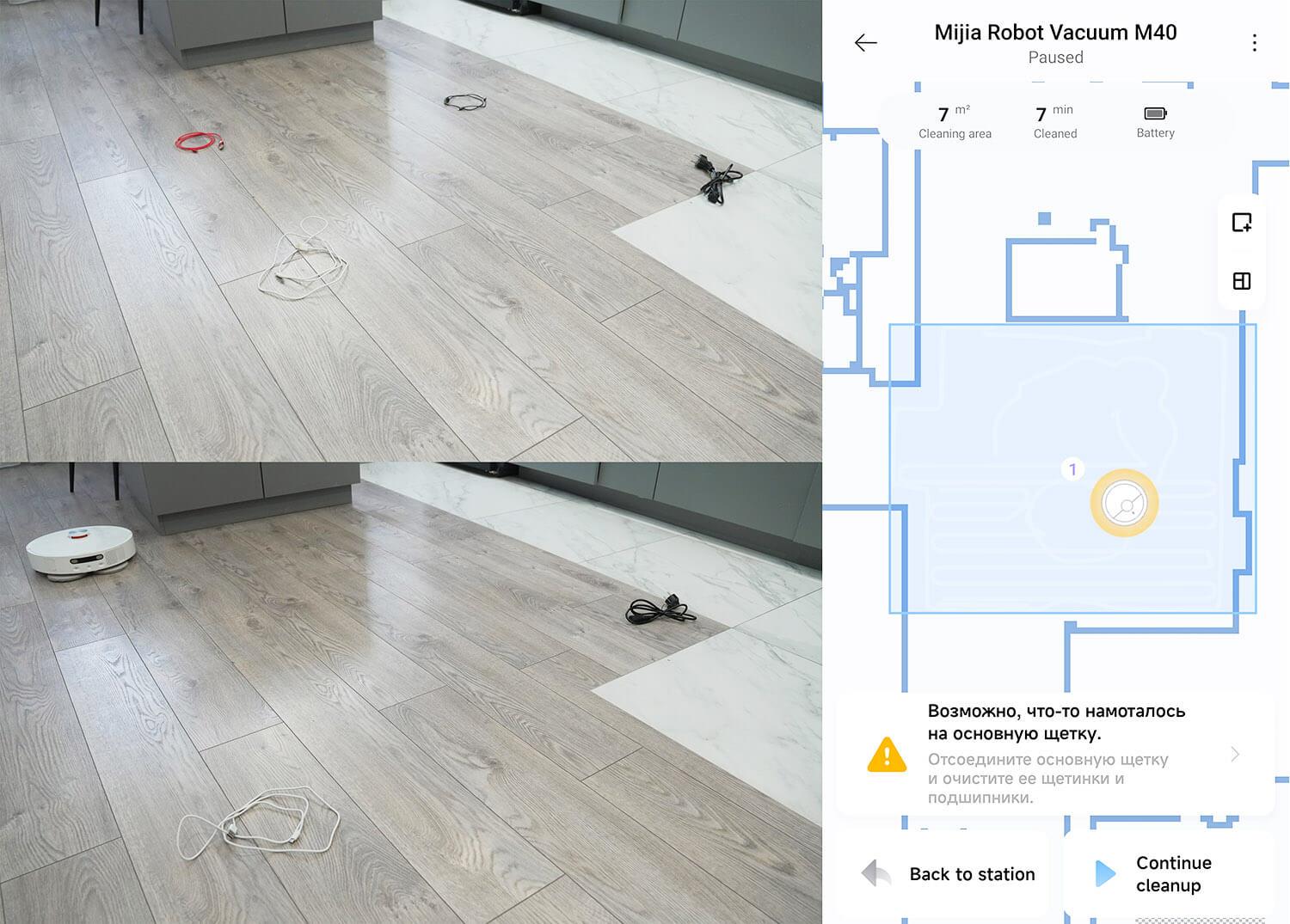
Bypassing wires
But in doing so, he rode around 2 of the 3 socks and chewed one.
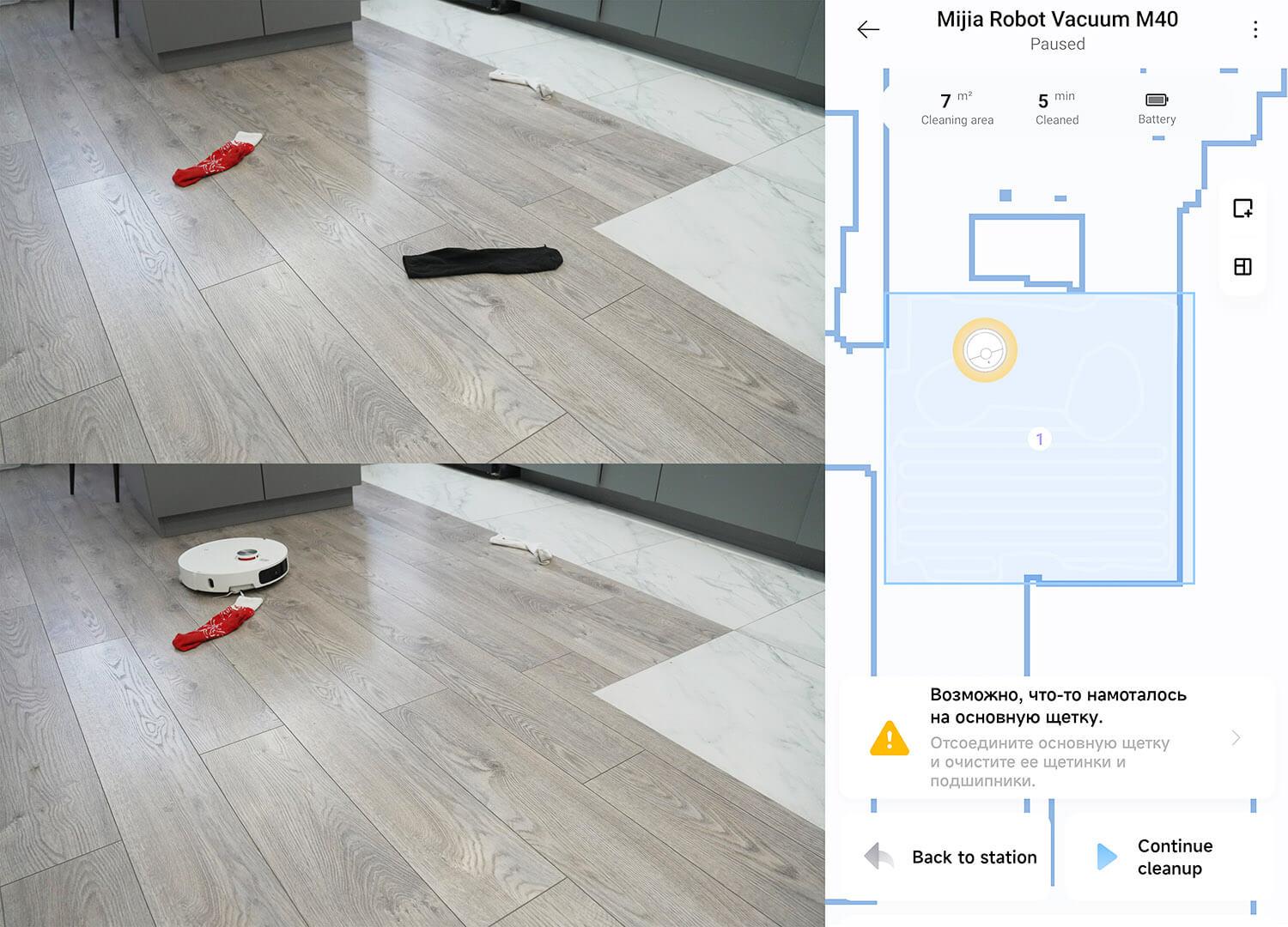
Sock Detour
In complete darkness, the results are expectedly even worse. So I can say that the object detection system is still far from perfect and requires significant improvement. Nevertheless, the robot cleans more accurately than its competitors without any system at all. I should also point out that the Xiaomi Mijia M40 doesn't recognize, but only detects, objects on the floor. While the previously released Xiaomi Mijia M30 Pro equipped with an object recognition system.
Suction power
The suction power is excellent. In Quiet mode, the Xiaomi Mijia M40 cleaned a 2 mm gap well, as well as partially cleaning 4 and 6 mm gaps. In Standard mode, it cleaned 4 and 6 mm better. In Power mode, it partially cleaned 8 and 10 mm gaps, and in Turbo mode, it cleaned better at 8 and 10 mm, even partially cleaning the 12 and 14 mm gaps on the new test bench. So yes, this is indeed a very powerful robot vacuum cleaner! Test passed!
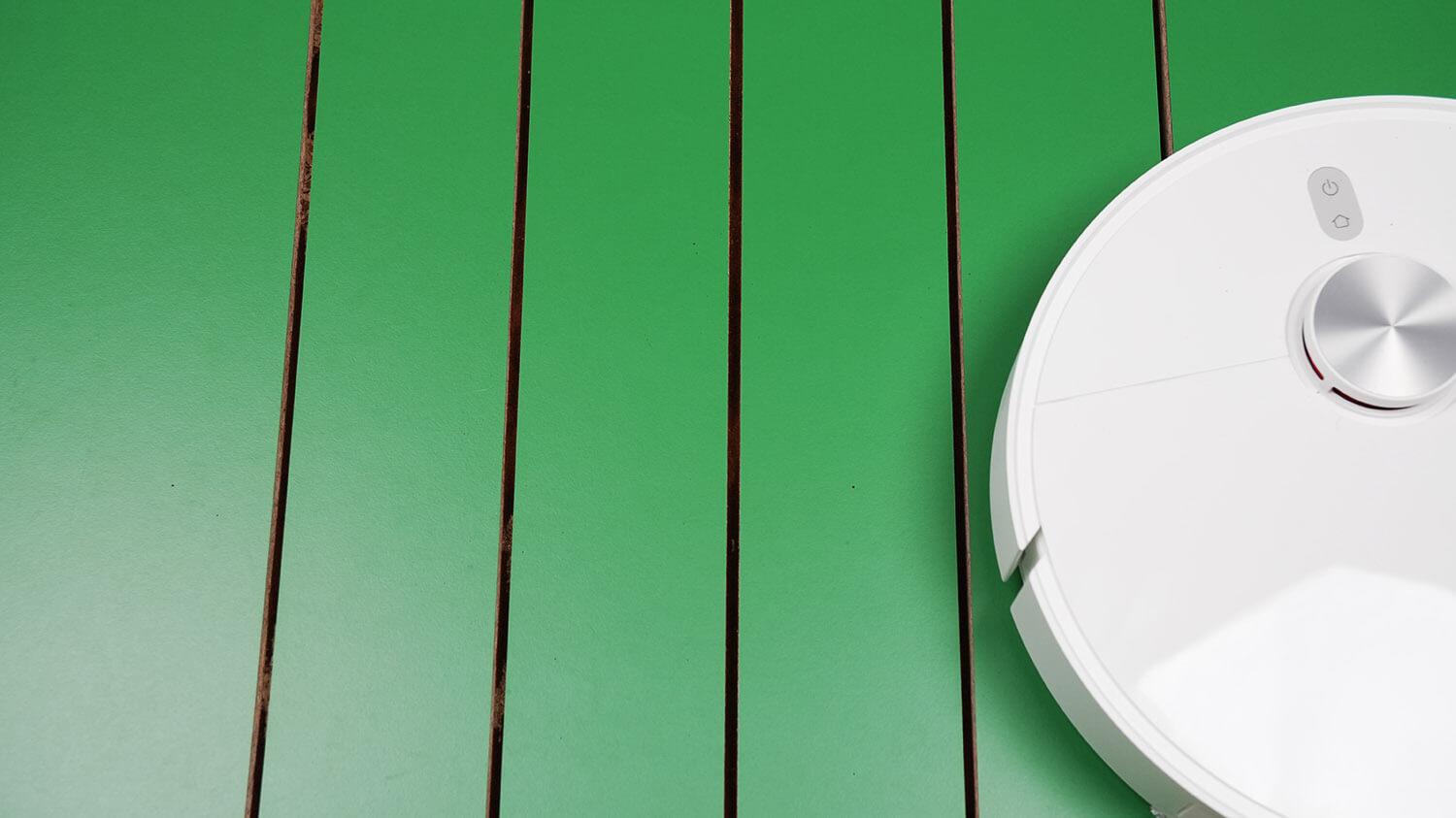
Suction power
Dry cleaning
The robot's pickup performance on laminate floors is excellent, even for debris of varying textures. Thanks to its retractable side brush, it even cleaned debris in corners. Just as importantly, the side and center brushes are completely clean. The turbo brush has some hair, but it's cut and doesn't tangle. Test passed!
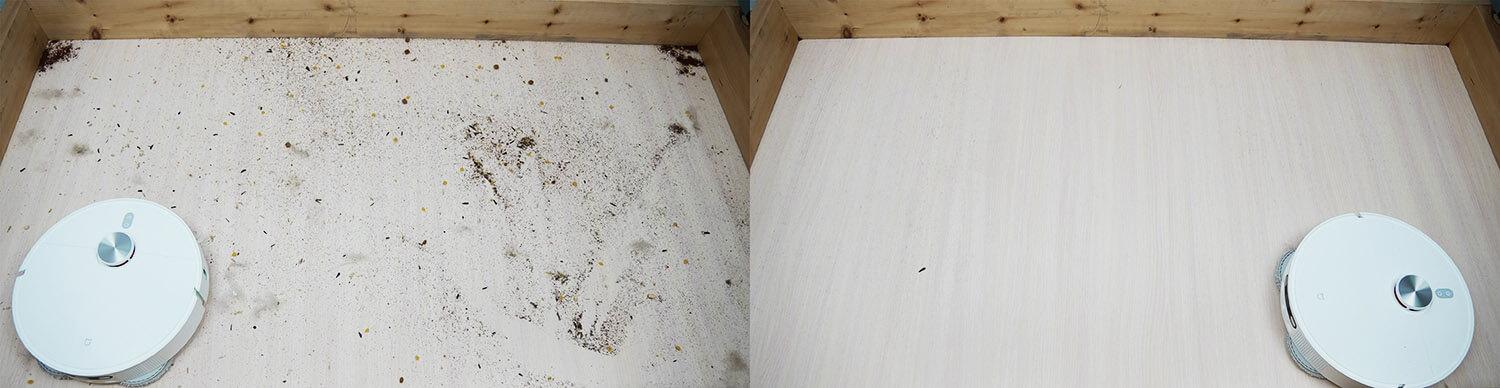
Dry cleaning
Checking the turbo brush
I even tested the turbo brush's effectiveness after a week of cleaning in a residential setting. The apartment is home to two girls and a perpetually shedding corgi. The brush is completely clean, and it really does an effective job of cutting hair and fur!
Checking the turbo brush
Carpet cleaning
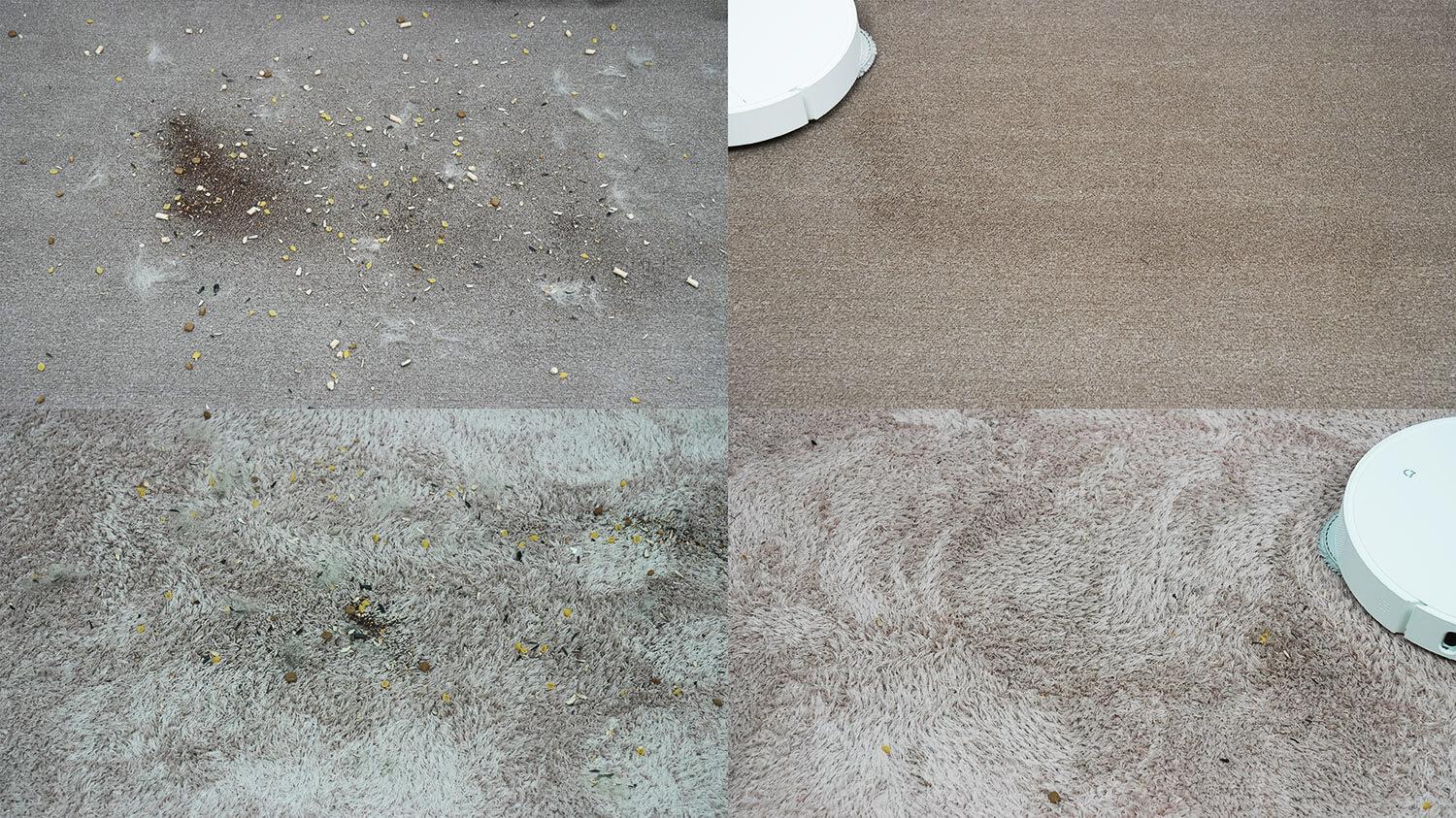
The same debris was scattered on a low-pile carpet. And I can say the robot cleaned the carpet thoroughly.
Carpet cleaning
However, there are issues with cleaning medium-pile carpets. There's no option to completely disable the detection system in the settings. Because of this, the robot identifies the pile as an obstacle, causing it to circle around and avoid areas of the carpet. The areas it passes through clean, but in any case, the test can't be counted. Incidentally, I had the same issue with the Mijia M30s. So it's really strange that it hasn't been fixed in the new product!
Wet cleaning and carpets
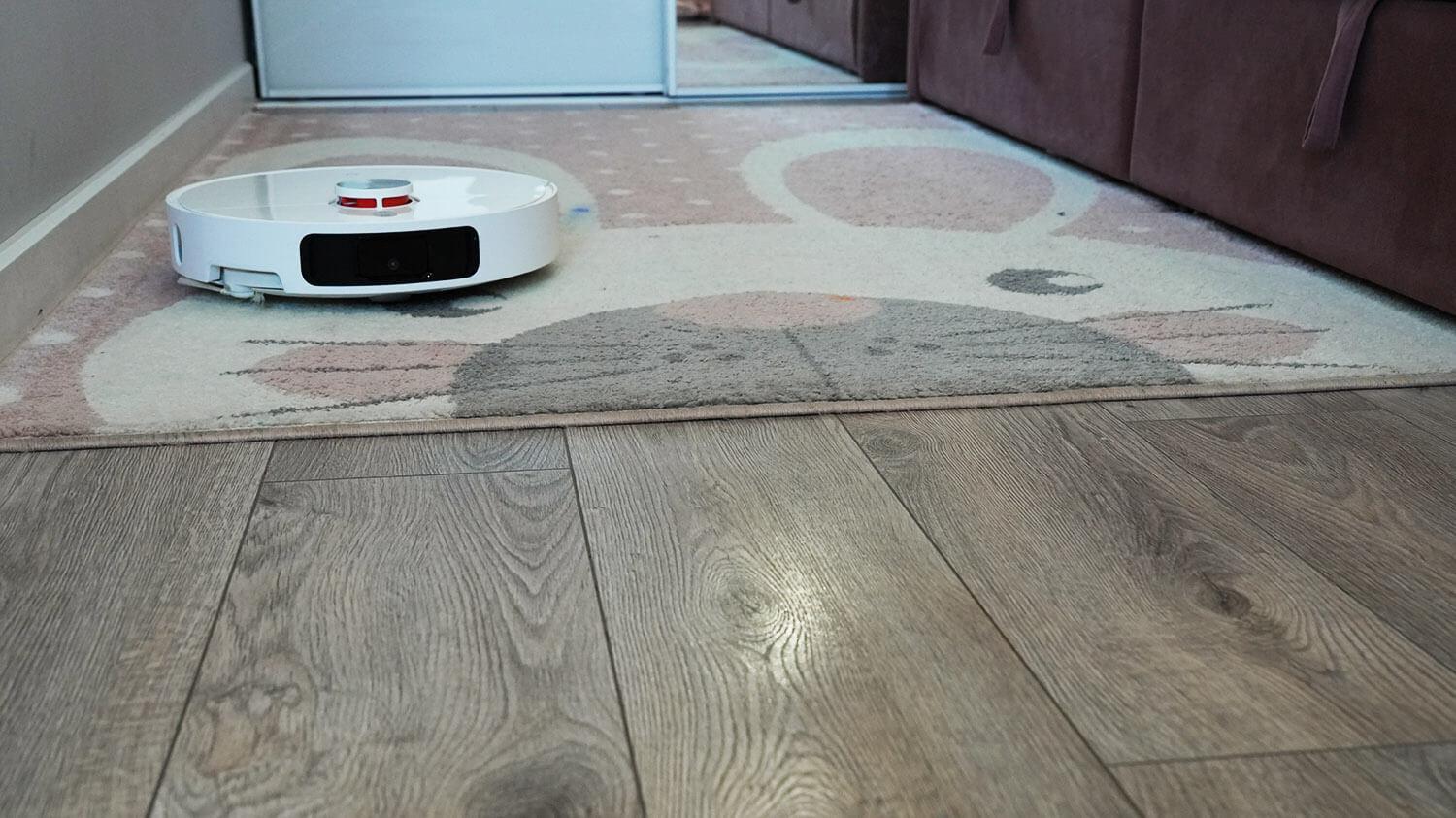
Regarding wet cleaning in the presence of carpets, there's a caveat. Since the robot lacks a carpet detection sensor, it can't automatically detect carpeted areas. You must manually define them on the map. After that, you'll be prompted to choose one of three interaction modes.
Wet cleaning and carpets
It can carefully navigate around carpets in wet cleaning mode, and it can clean carpets during wet cleaning, automatically lifting the cleaning pads when it enters the carpet. This, by the way, is the most optimal cleaning option. It can also drive over the carpet, ignoring the pads and rotating them, which is the least efficient solution.
I was asked to check whether the Xiaomi Mijia M40 can automatically detect carpets using the bumper sensor system. No, it can't.
Self-cleaning
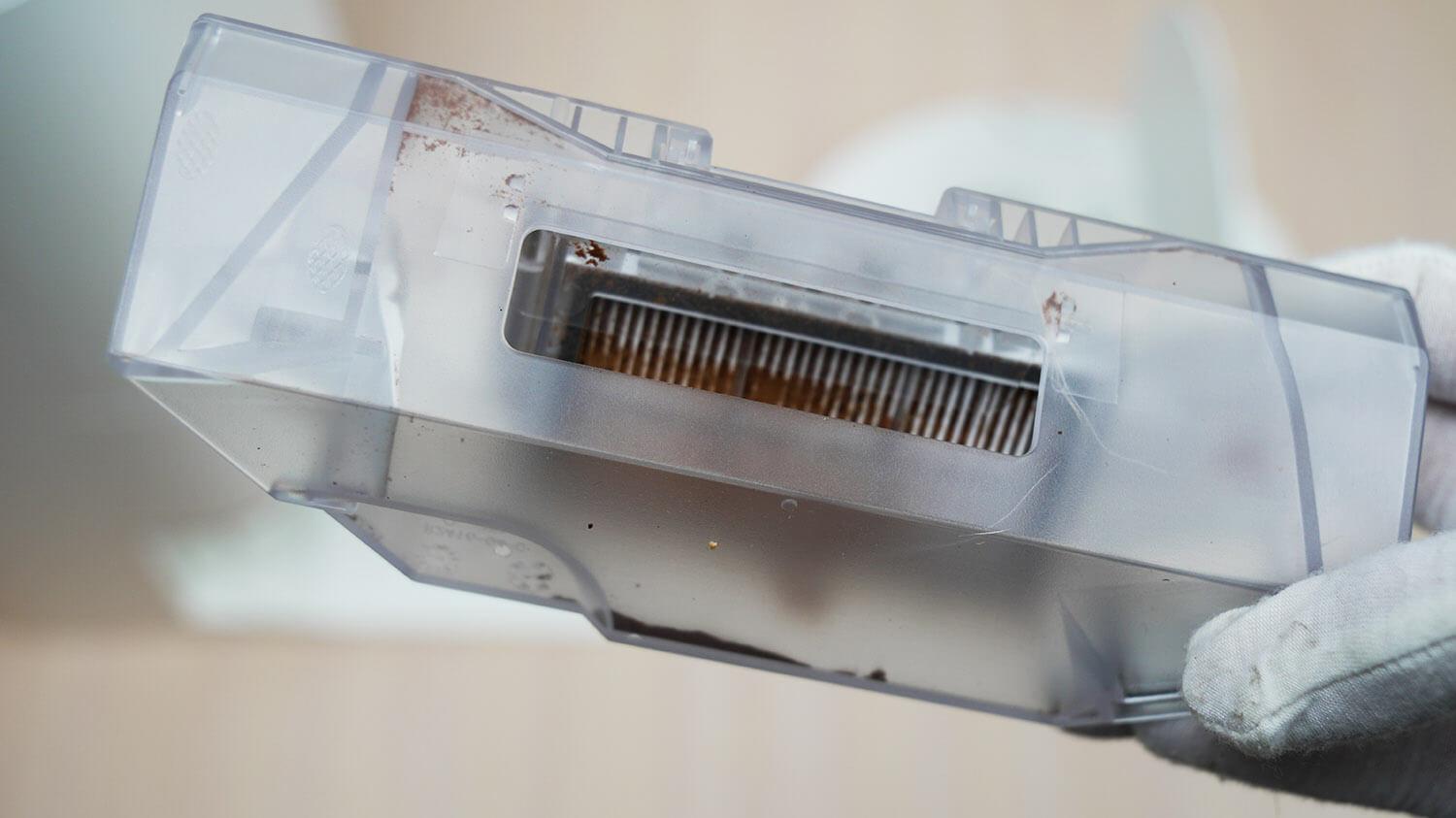
Immediately after the "dirty tests," I checked how well the robot vacuum cleaner self-cleans. Before returning to the station, the dust bin was completely full of dirt. After the self-cleaning test, the dust bin was completely empty, so this robot's self-cleaning is excellent! The results are excellent.
Self-cleaning
Wiping off dirt
This robot vacuum cleaner handles dirt removal with an intermediate stop at the cleaning station to wash the cleaning cloths. This is the main advantage of such robots. Dirt won't be ground into the floor during the entire cleaning process. Consequently, in just a few passes, the robot can actually clean the floor, rather than just mop it.
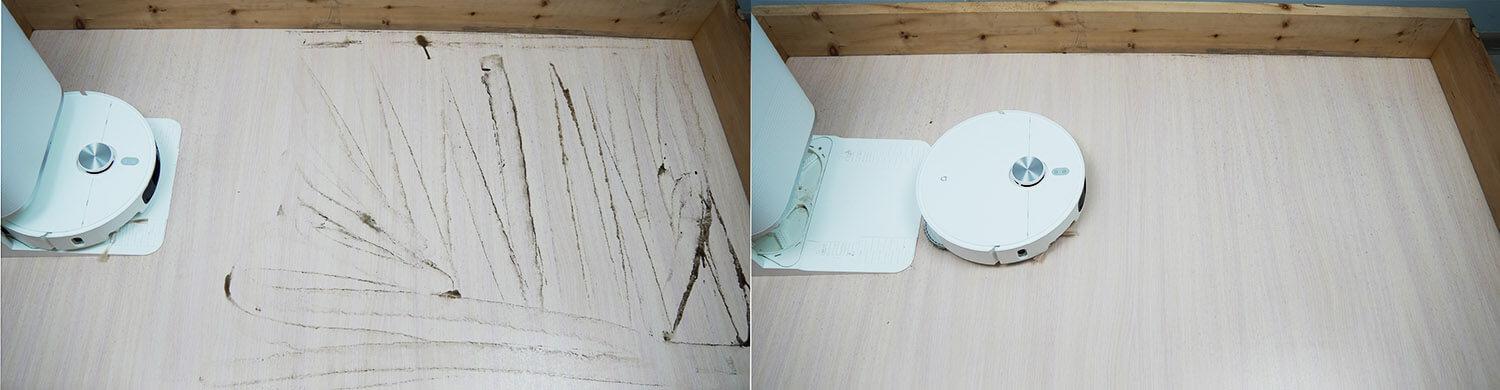
Wiping off dirt
I would like to point out that there is no blind spot near walls and furniture, thanks to the screen extending to the edge of the case.
Removing difficult stains
As for cleaning tough stains, there's a problem. The Xiaomi Mijia M40 couldn't remove stains even after 12 attempts, like its sibling, the Xiaomi Mijia M30s. Unlike its competitors, which get the job done in 8-10 passes, the Xiaomi doesn't have the option to select a tighter zigzag pattern. Therefore, it requires fewer passes, and the cloths exert less pressure on the floor. And, as I mentioned, the washing temperature of the cloths isn't noticeable to the touch after the robot leaves the station. Overall, the robot struggles to remove stains.
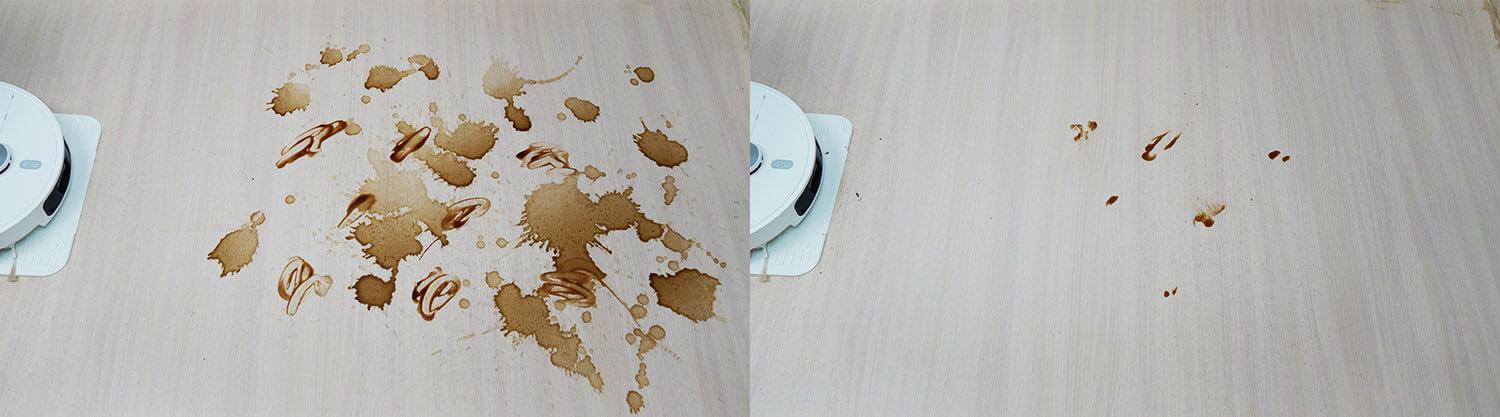
Removing difficult stains
Washing quality of napkins
Now, I'd like to talk about the effectiveness of the station itself. Let's start with the quality of the wipes' washing. Even after extensive testing, the wipes look significantly better after washing with the station.
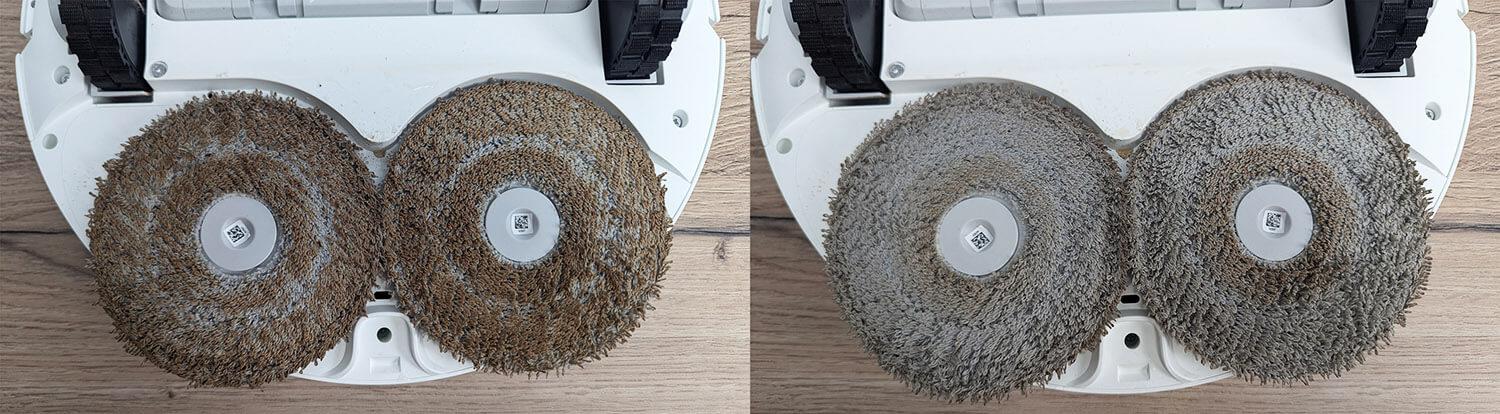
Washing quality of napkins
In a domestic setting, after washing the floor, the wipes are thoroughly rinsed at the station. They appear clean.
The station itself is very easy to clean. It has a self-cleaning function activated by a button on the station, but it's best to periodically remove the tray and drain and rinse them in the sink.
Obstacle clearance
The robot vacuum easily navigates 2 cm high thresholds, lifting up the cleaning cloths as it goes. That's a plus!
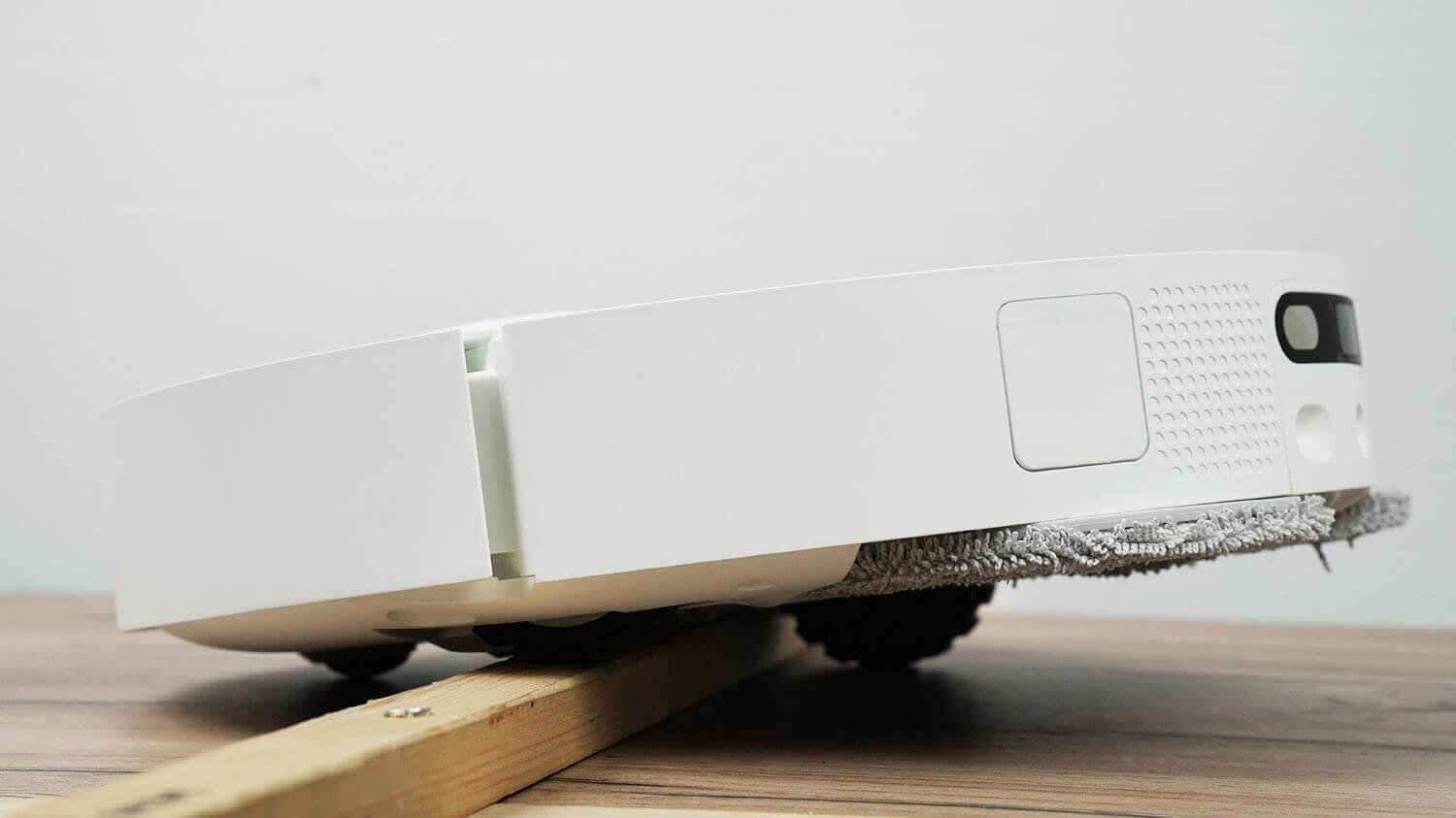
Obstacle clearance
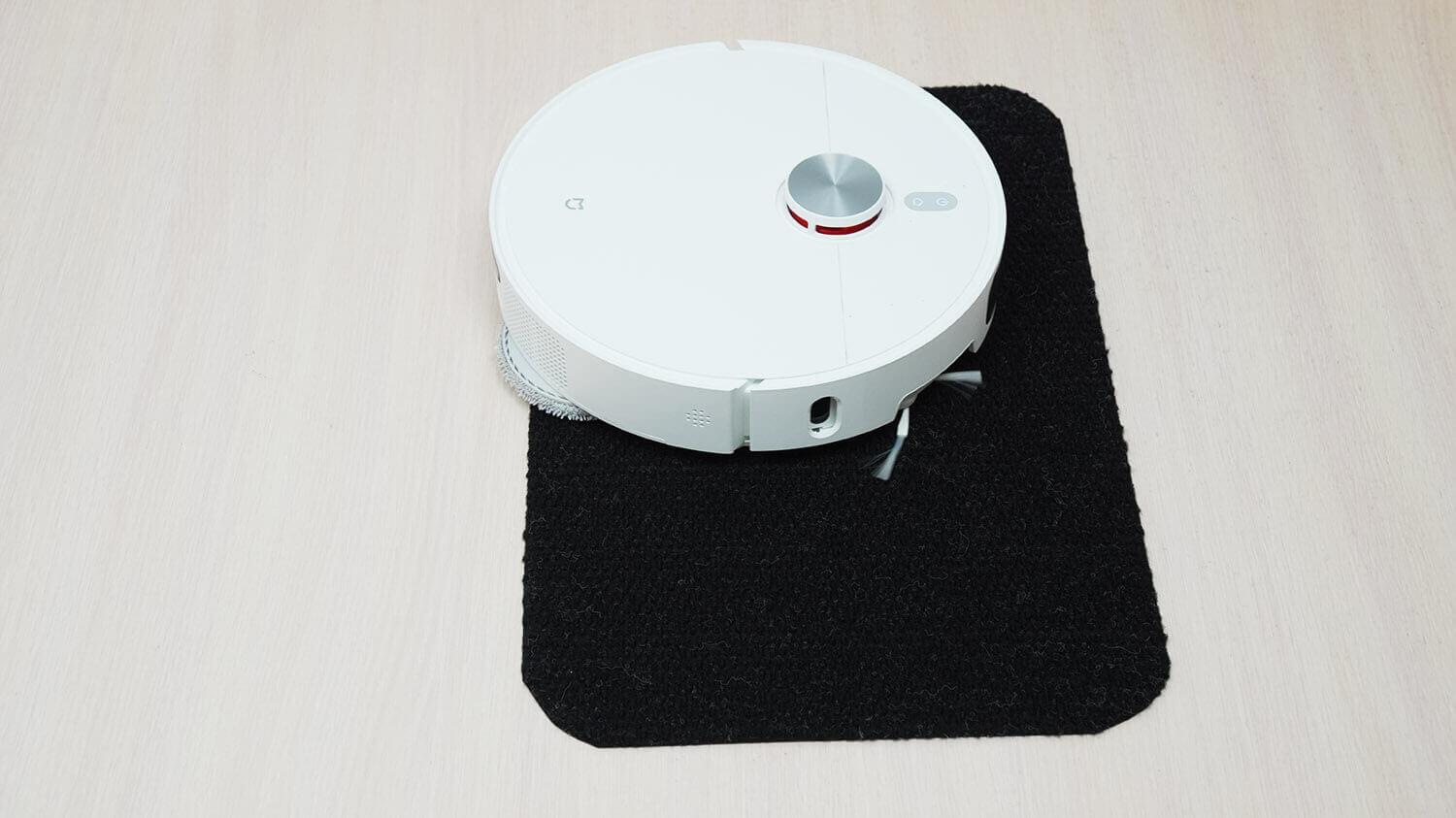
Driving on black surfaces
It's also not afraid of black surfaces, easily driving on completely black carpet. This is another advantage of the robot!
Driving on black surfaces
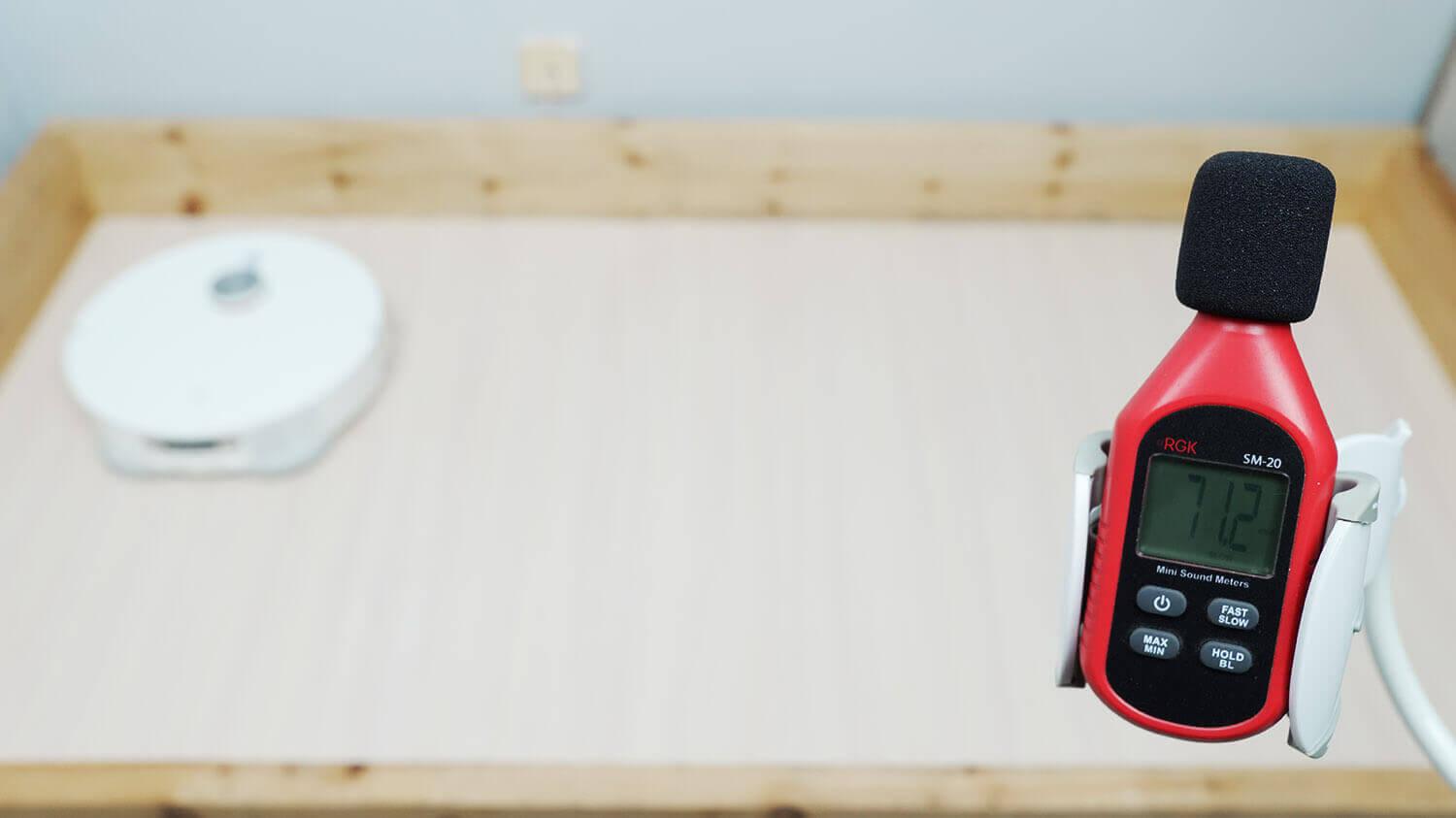
Noise level
As for the noise level, it ranges from 55 to 72 dB. The noise level is quite standard for this model, considering its high suction power.
Noise level
Pros and cons
The Xiaomi Mijia M40 robot vacuum cleaner has been thoroughly reviewed and tested. our evaluation system he managed to gain 192 points, beating the previous flagship Xiaomi Mijia M30s, which scored 183 points. While the result is good, the robot still failed to make it into the top 10. overall ranking of tested robotsThis is all due to a number of comments that influenced my rating. I'll highlight the robot's pros and cons, and then share my opinion.
- The most important thing is the optimal price, taking into account the possibilities.
- The retractable side brush effectively sweeps away debris from corners.
- The turbo brush self-cleans with built-in blades and doesn't get tangled with hair or fur. There's no need to clean it manually.
- Very high suction power, both in figures and in real tests.
- It can clean areas close to baseboards and more effectively in corners, thanks to a retractable holder with a cloth.
- The All-in-One station, where the robot vacuum cleaner self-cleans its dust bin, washes cloths with hot water, dries with warm air, and even automatically mixes detergent when the module is installed for connection to the sewer and water supply, is highly effective in all its functions, including self-cleaning, washing, and drying.
- Convenient maintenance of the robot and station.
- High-quality dry and wet cleaning on hard surfaces and low-pile carpets.
- Touch objects and furniture more accurately thanks to the object detection system.
- Automatic lifting of the wipes is provided when entering carpets, when returning to the station and during dry cleaning.
- A large number of functions in the application.
- Good cross-country ability.
- Spacious tanks at the station.
- The robot vacuum cleaner is not afraid of black floor coverings.
Speaking about the disadvantages, there are the following comments about the robot:
- The robot vacuum cleaner is designed for the Chinese market. It doesn't speak Russian, and the app interface isn't fully translated. Furthermore, it lacks full service and warranty support from the manufacturer.
- The item identification system requires serious revision.
- There are issues cleaning medium-pile carpets. The robot avoids certain areas of the carpet, detecting the pile as an obstacle.
- It removes difficult stains with great difficulty.
- There is no carpet sensor, which is why you need to manually set carpet zones on the map.
- There is no automatic detergent supply in the standard station configuration.
As you've probably noticed, the pros and cons are virtually identical to those of the previously released Xiaomi Mijia M30s. This is understandable, as the update is truly minimal. It's the same robot, only slightly more powerful and with a retractable side brush. This is a good thing, considering the price, especially during sales, is practically the same. But honestly, I expected more—at least some bug fixes and more design updates. The issue with the carpet sensor is unclear, and even more so with the object detection system, which the smaller M30 Pro recognizes and illuminates the cleaning area in the dark. Also disappointing is the lack of a detergent tank in the standard station kit, and the fact that the robot scrubs worse than its competitors. But this is only when compared to premium models priced at $1,000 and above. And if we're talking about the price segment up to $600, the Xiaomi Mijia M40 is definitely the leader, which is why it took first place in the ranking of robot vacuum cleaners priced under $600.
So, I can say the robot itself is good. It's efficient, powerful, autonomous, and worth the money. However, the M30s didn't really wow me, and it's clearly inferior to its twin, the Dreame X40 Ultra Complete, in many ways, as well as the new Qrevo Master and Curv. If you're on a budget or don't want to overspend, this robot is an excellent option and will satisfy you with its cleaning performance. But if you're confident it's just as good as models costing twice as much, I'd argue with that, and I've demonstrated that in my test results.
On that note, I'd like to end this review. If you have any questions, please ask them in the comments. Happy shopping, everyone. Bye!
I would be very grateful if someone could tell me the size of the box, it is very important))