Xiaomi Mijia M40s (OV21CNRD): the most affordable built-in station on the market! Review with teardown.
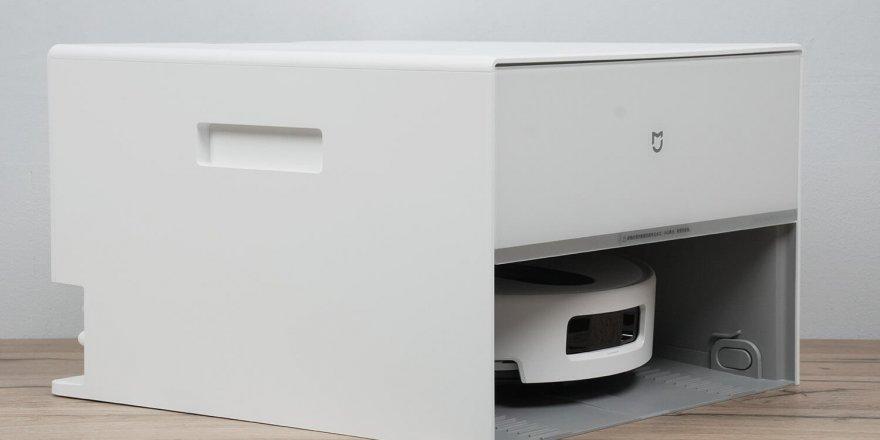
Hello to all readers of the project! In this review, I'll be looking at the most affordable robot vacuum cleaner with a built-in station for connecting to the sewer and water supply. It's the Xiaomi Mijia M40s. To avoid confusion, the robot's part number is OV31CN, and the station itself is OV21CNRD, as the robot is also sold in a version with a standard station with tanks, which is already reviewed on the website. Next, I'll show you how the robot's built-in station works, briefly discuss the robot itself and its test results, and highlight the pros and cons of this model. As a bonus, I'll even disassemble the station to show how it's designed internally, as this is also a very important point. So, let's get started!
Equipment
Let's start with the package contents. The robot vacuum cleaner arrived in this branded box:
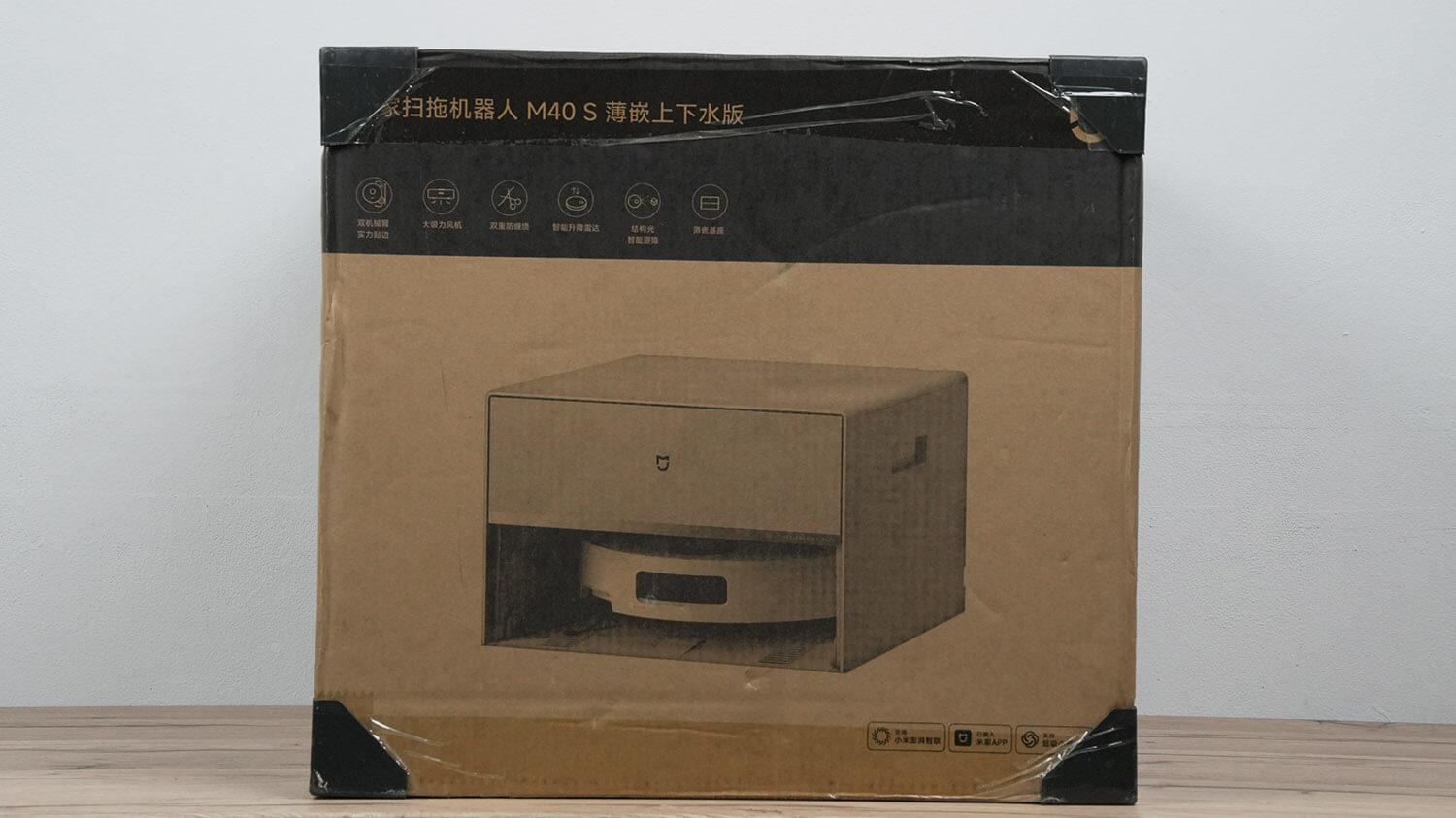
Box
In addition to the robot and the station, the package includes two cleaning cloth holders, a power adapter with a Chinese plug and a European adapter, a 200 ml bottle of detergent, a Chinese-language instruction manual, and a set of accessories for connecting the station to utility lines. These include plastic tubing, a 1/2-inch to plastic elbow with a ball valve, a pressure-reducing valve, and locking clamps.
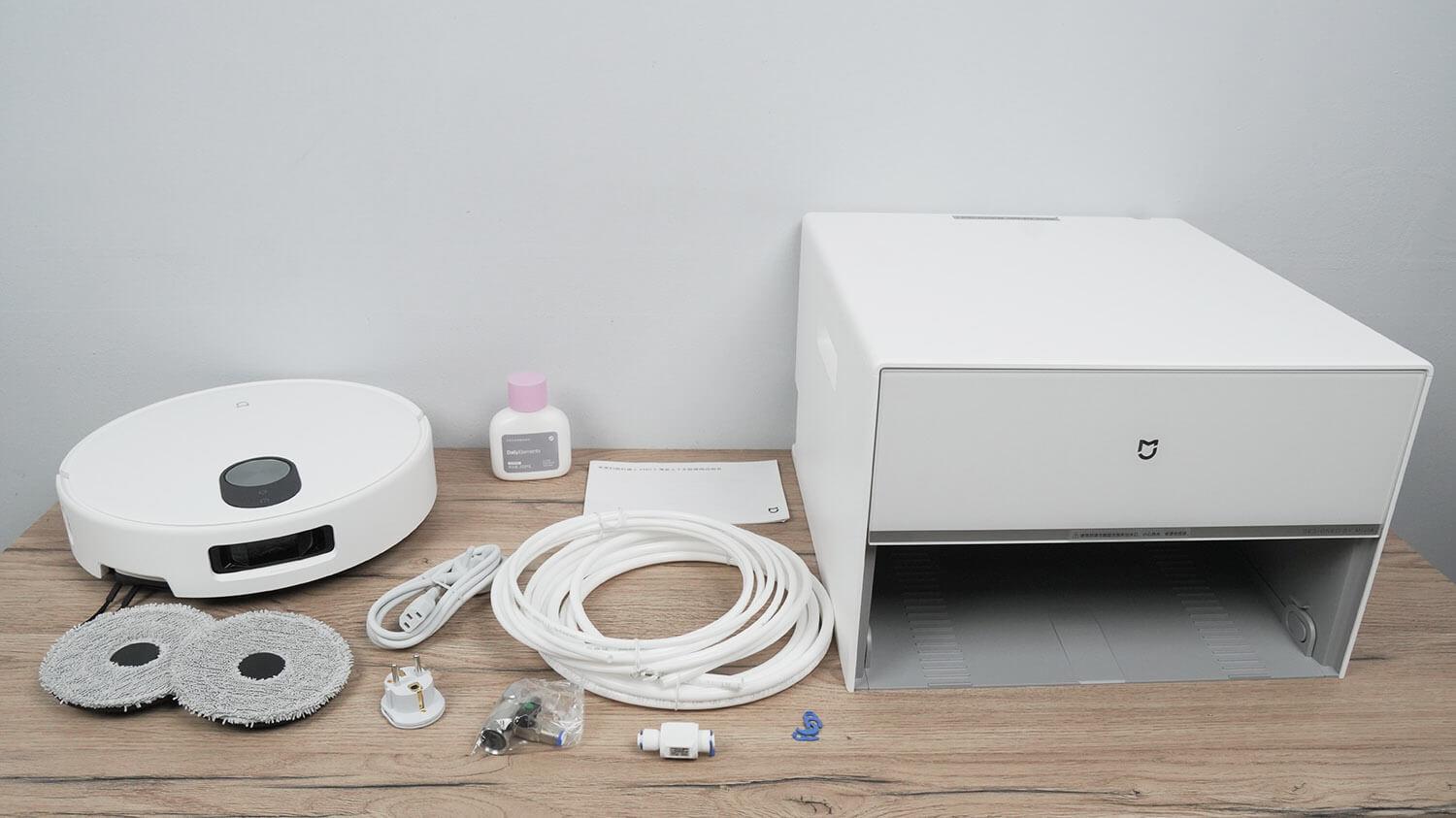
Equipment
Appearance
Now let's take a look at how the Xiaomi Mijia M40s works. And we'll start with the station.
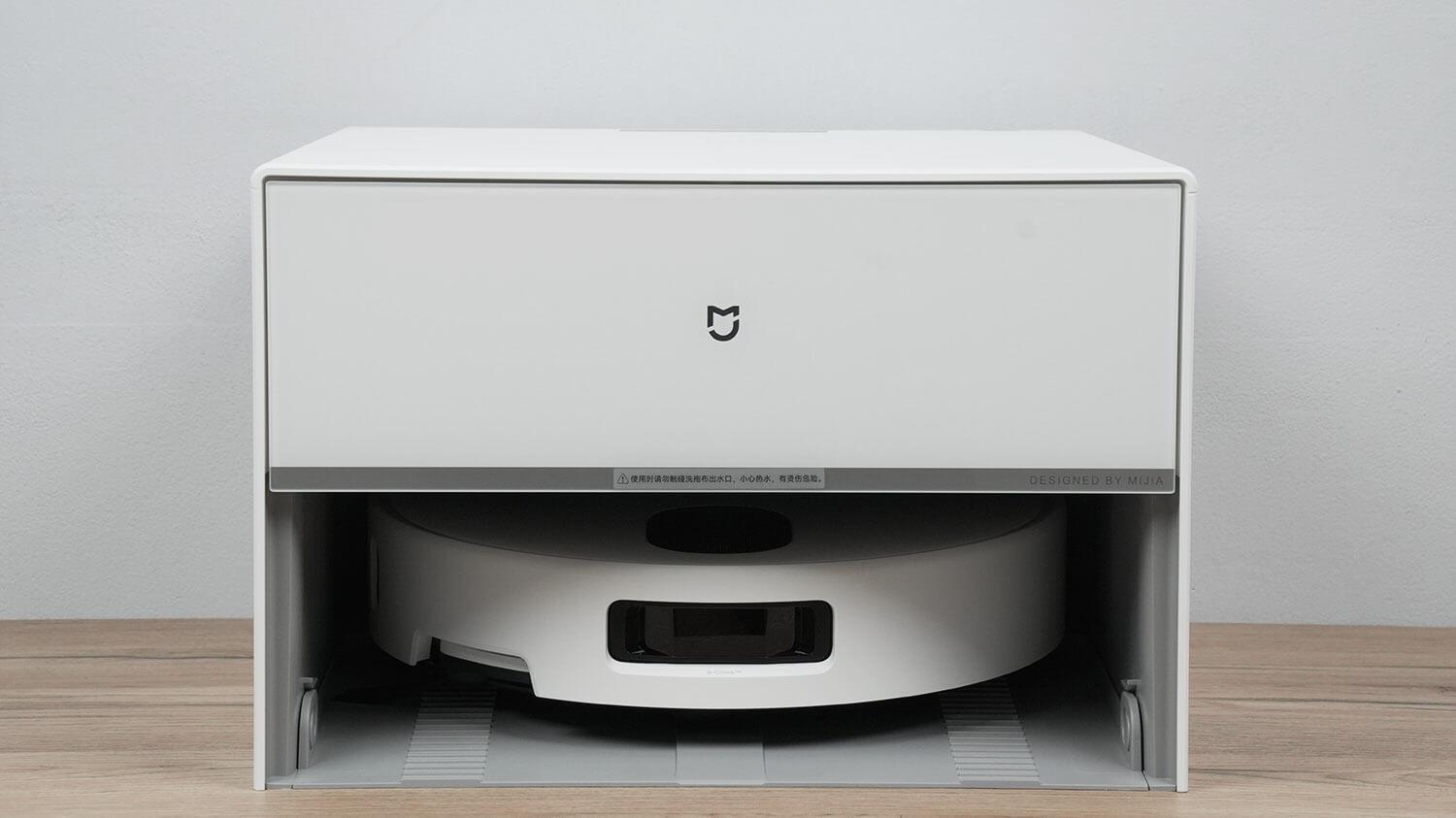
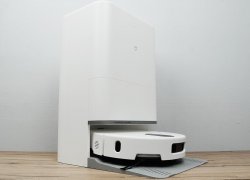
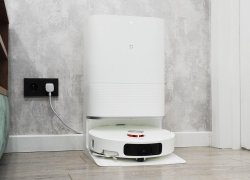
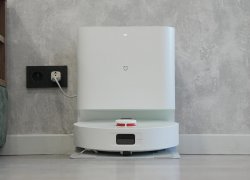
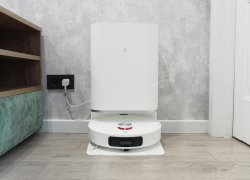
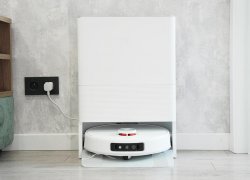
Robot at the station
Its height is 280 mm, and its width and depth are 420 and 450 mm, respectively. This means it fits into a standard 45 cm wide kitchen module without taking up much space. This is the advantage of these stations.
At this station, the robot vacuum cleaner self-empties the dust bin, washes the cloths with hot water, dries them with warm air after the cleaning cycle, and automatically adds detergent when washing the cloths. Compared to a standard station with tanks, this one now has a compartment for filling the detergent, which is a plus.
The waste bag and detergent tank are located under the front cover. Unfortunately, as with the built-in station Dreame X50 MasterThe station's water inlet/drainage system is not accessible. Previously, similar stations reviewed had access to an intermediate tank for dirty water, where the screen could be cleaned of scale. This station cannot be manually maintained, and I didn't like that.
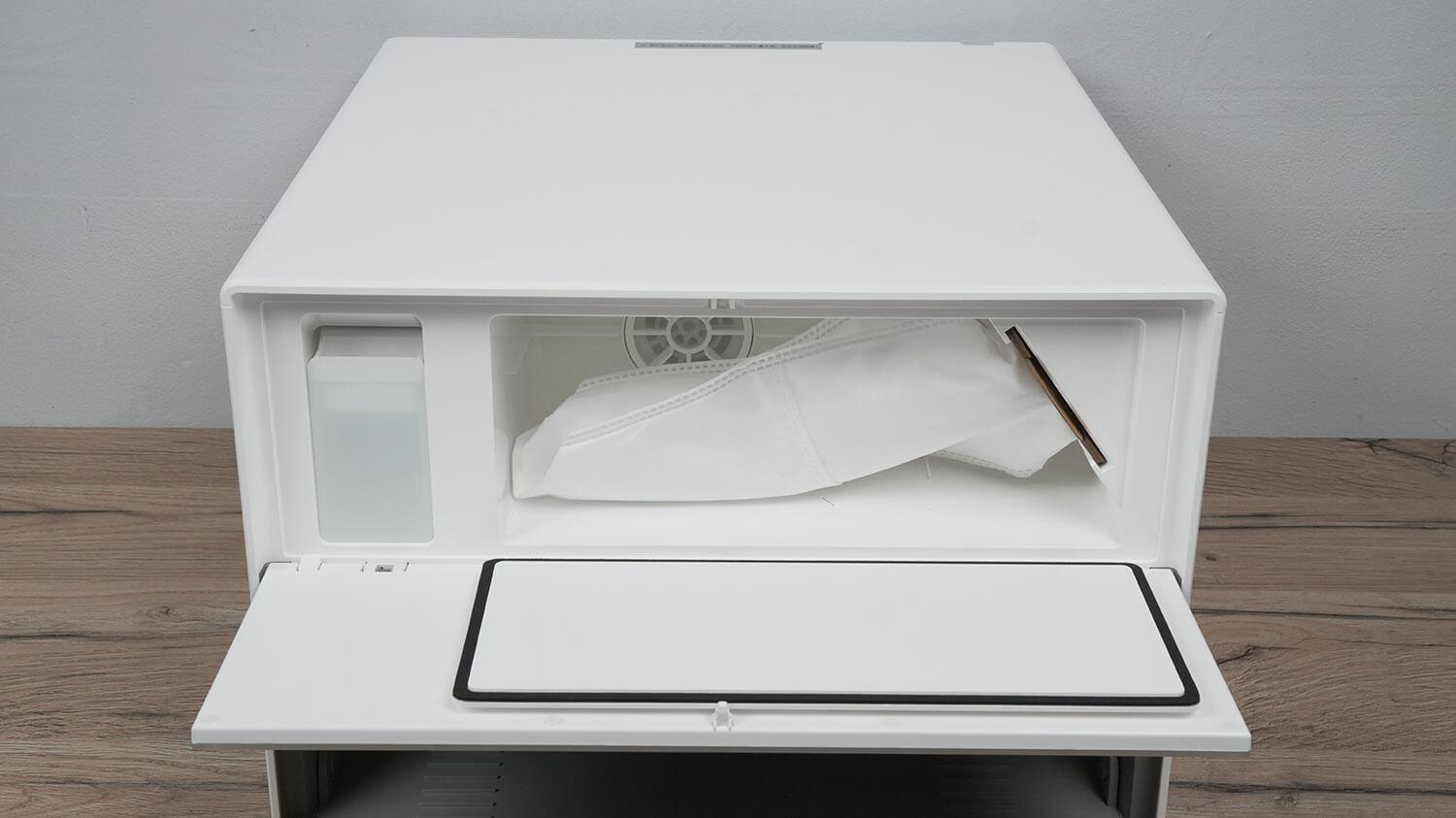
Location of the detergent tank and bag
The robot's drive-in platform is integrated with the wipes' washing tray, and the entire module is removable from the station, making it very convenient for maintenance. The module with the combs and scrapers for self-cleaning the bottom is also removable.
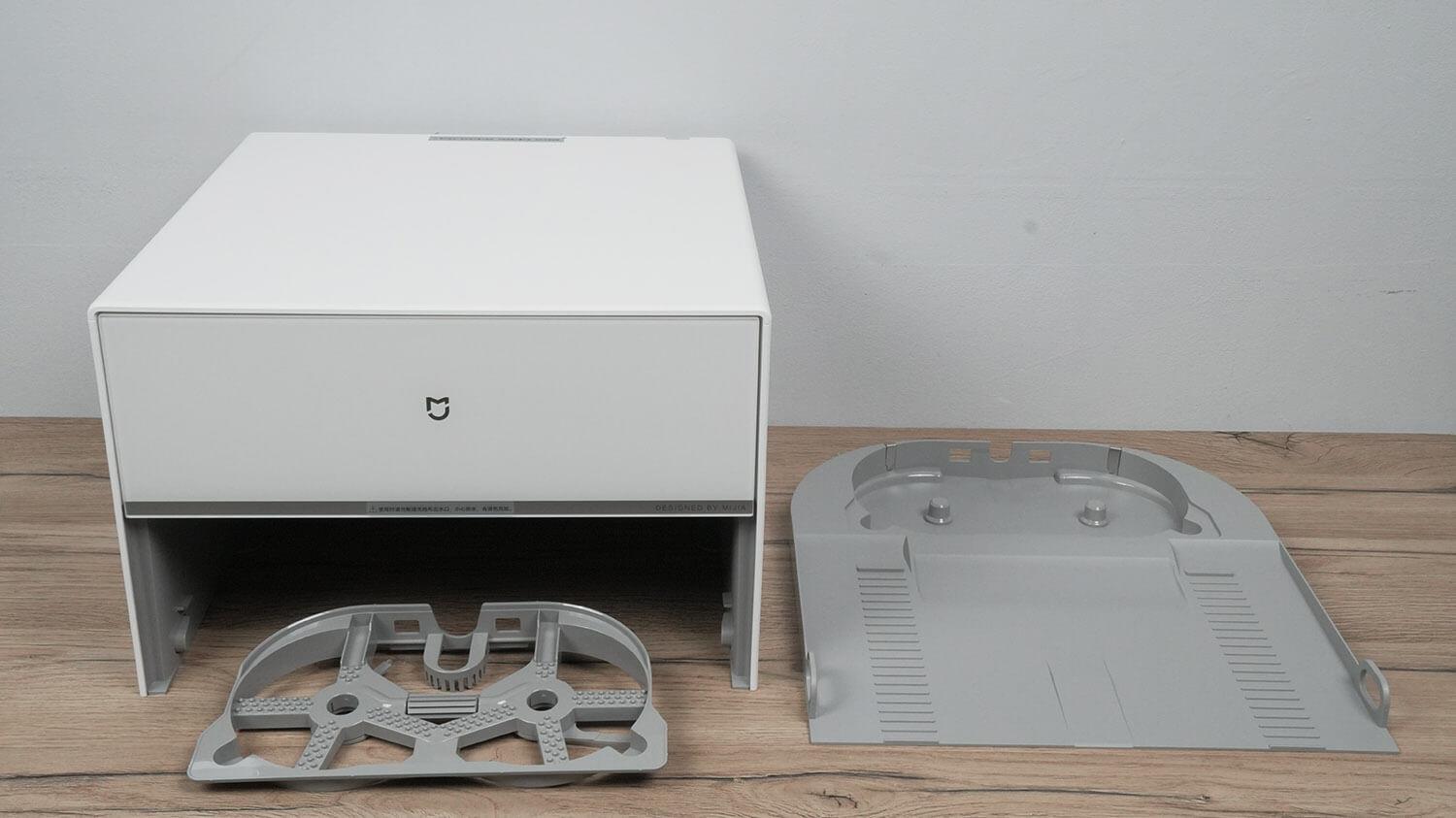
Removable station platform
On the back side of the station there are bends for connecting tubes and channels for discharging them to the side or upwards.
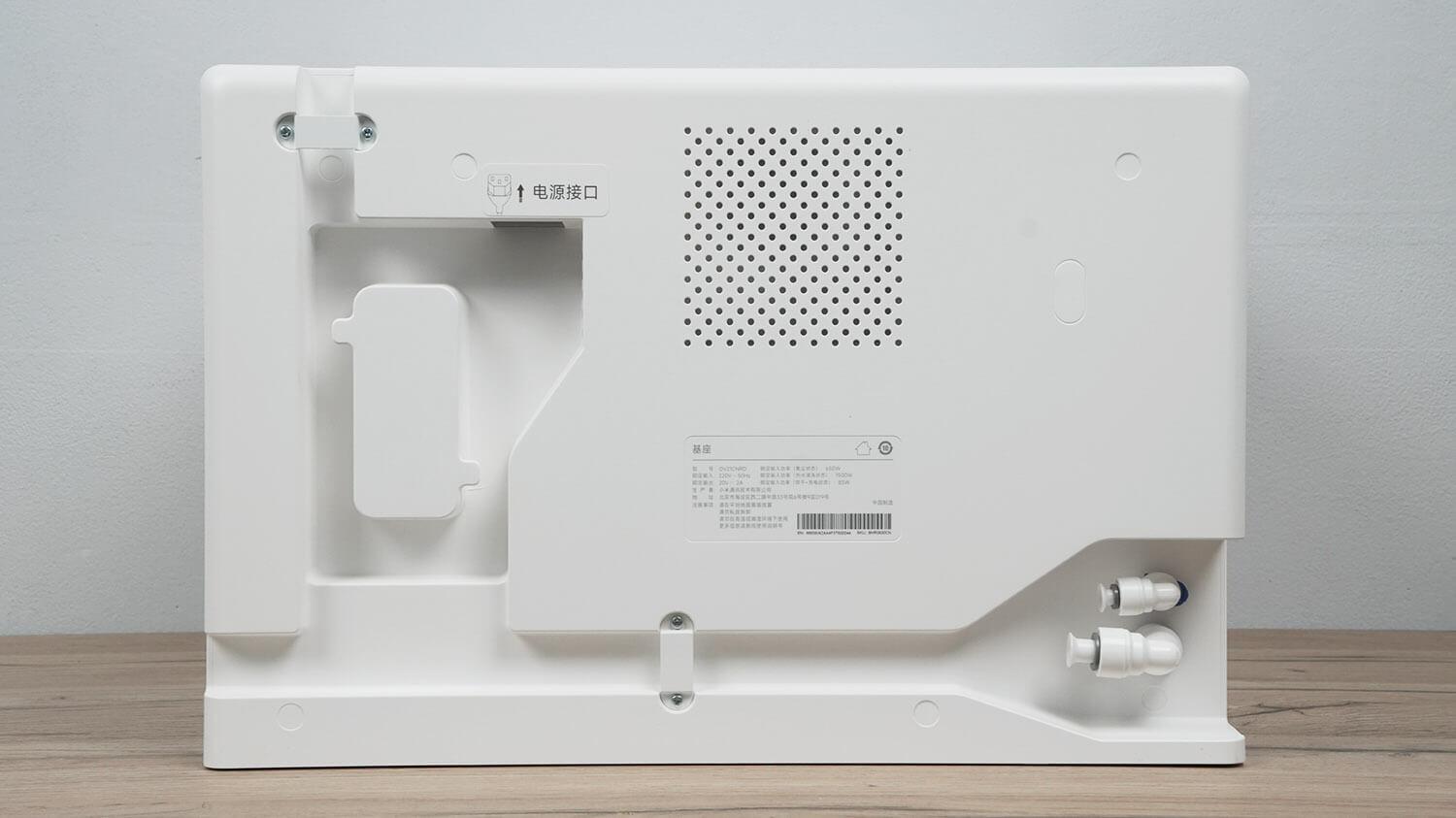
Rear view
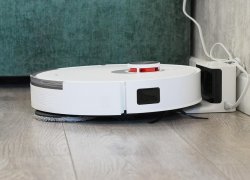
The robot itself is absolutely identical Xiaomi M40s, which is sold in a version with a standard station. It has the same round shape, white color, and a retractable lidar system with an object detection system.
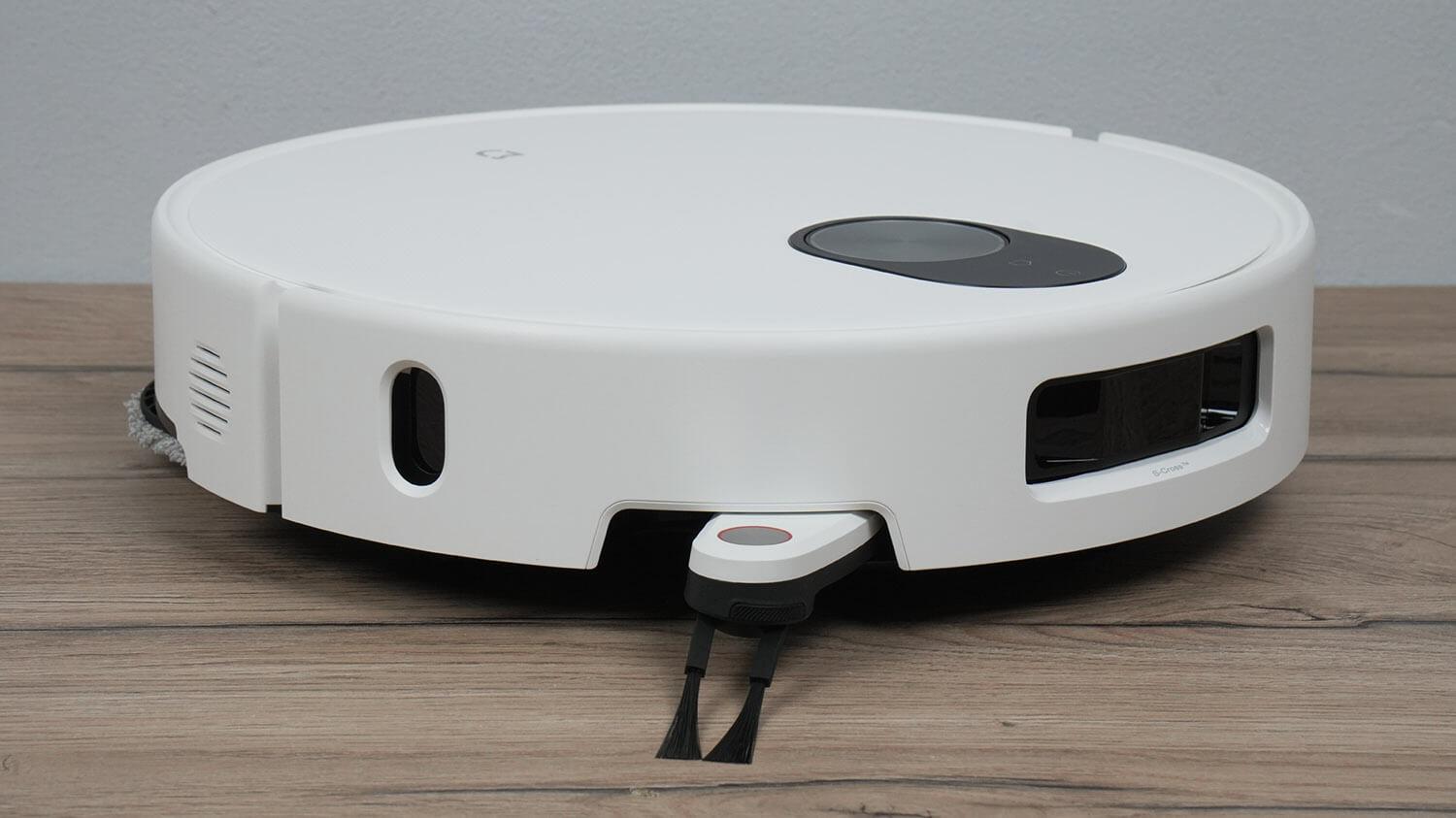
Robot vacuum cleaner
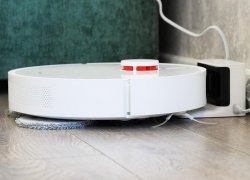
The same cleaning module features a retractable side brush, a central turbo brush with blades, and two cleaning pads. It also lacks a carpet sensor and features a pad-to-edge feature that lifts both pads on carpets. Overall, there are no differences.
For those interested in learning all the design features, its pros and cons, I recommend checking out the dedicated review on the channel. I'll revisit the main pros and cons when summing up this review.
Technical specifications
The main characteristics of the Xiaomi Mijia M40s built-in dishwasher, as stated by the manufacturer:
Robot vacuum cleaner:
- Li-Ion battery 5200 mAh.
- Suction power up to 23,000 Pa.
- Cleaning area> 200 sq.m.
- Dust collector: 290 ml.
- Water tank: ≈ 80 ml.
- Obstacle clearance up to 20 mm.
- Dimensions: 350*103/88 mm.
Station:
- Clean water tank: 4 l.
- Dirty water tank: 4 l.
- Bag in the station: 2.5 l.
- Dimensions (W*D*H): 420*450*280 mm.
Here, the only obvious change is the size of the station, compared to the version with a regular station.
Functional capabilities
Regarding controls, the robot vacuum cleaner is designed for the Chinese market and connects to Mi Home via the China region. There are no regional locks, so don't worry. At the time of writing, the interface is in English, which isn't ideal. The app is responsive and easy to use.
The main functions of the Xiaomi Mijia M40s are displayed on the screen:
- Self-cleaning dust collector.
- Washing napkins at the station with hot water (80°C).
- Drying napkins with warm air (45°C).
- Automatic mixing of detergent.
- Lidar entering the body.
- Side brush extension in corners.
- Moving the napkin to the baseboard.
- Identifying objects on the floor.
- Saving multiple cleaning maps in memory.
- Automatic zoning of premises into rooms.
- Selecting areas and rooms for cleaning.
- Virtual walls and no-go zones (and for wet cleaning mode).
- Suction power adjustment.
- Setting the frequency of washing napkins.
- Cleaning log.
- Setting up cleaning according to a schedule.
- Automatic power increase on carpet.
- Carpet cleaning in wet cleaning mode.
- Lifting napkins when driving onto carpets.
A detergent mixing function has been added. Other features remain unchanged. There's still no way to manually set zones where the robot vacuum should lower its lidar, as is the case with similar products. However, all the basic settings are available, allowing you to flexibly adjust cleaning parameters to your specific needs.
Preparing for launch
A few words about how I installed the station. The mounting area was already prepared, as I use a very similar Dreame X50 Master, and the station's width is the same, so I didn't have to do any modifications. The station compartment is conveniently hidden behind the door where the drawer used to be. It also stores the various cleaning products I use.
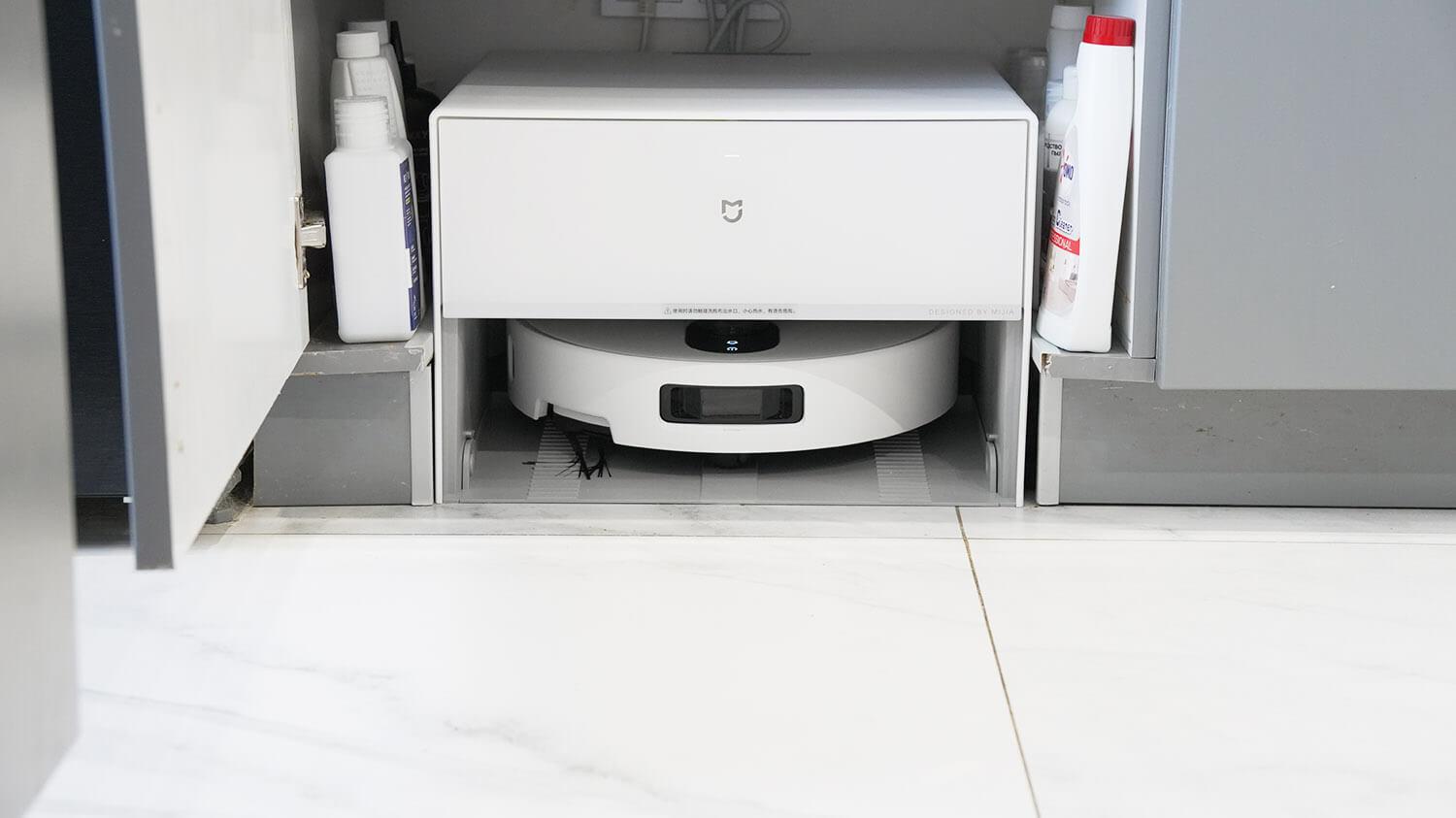
Location of the station installation
I connected the station to the water supply through a standard under-sink filtration system like a Geyser. The water pressure at the outlet is sufficient for the system to function properly.
I installed the drain through a tee installed under the sink. I bought a plug for the tee, drilled a hole of the appropriate diameter in it, inserted a tube, and sealed it with sealant.
Upon entering the app, it prompts you to run a self-diagnosis of the station. I run it and there are no errors. The connection is correct and the system is functioning properly.
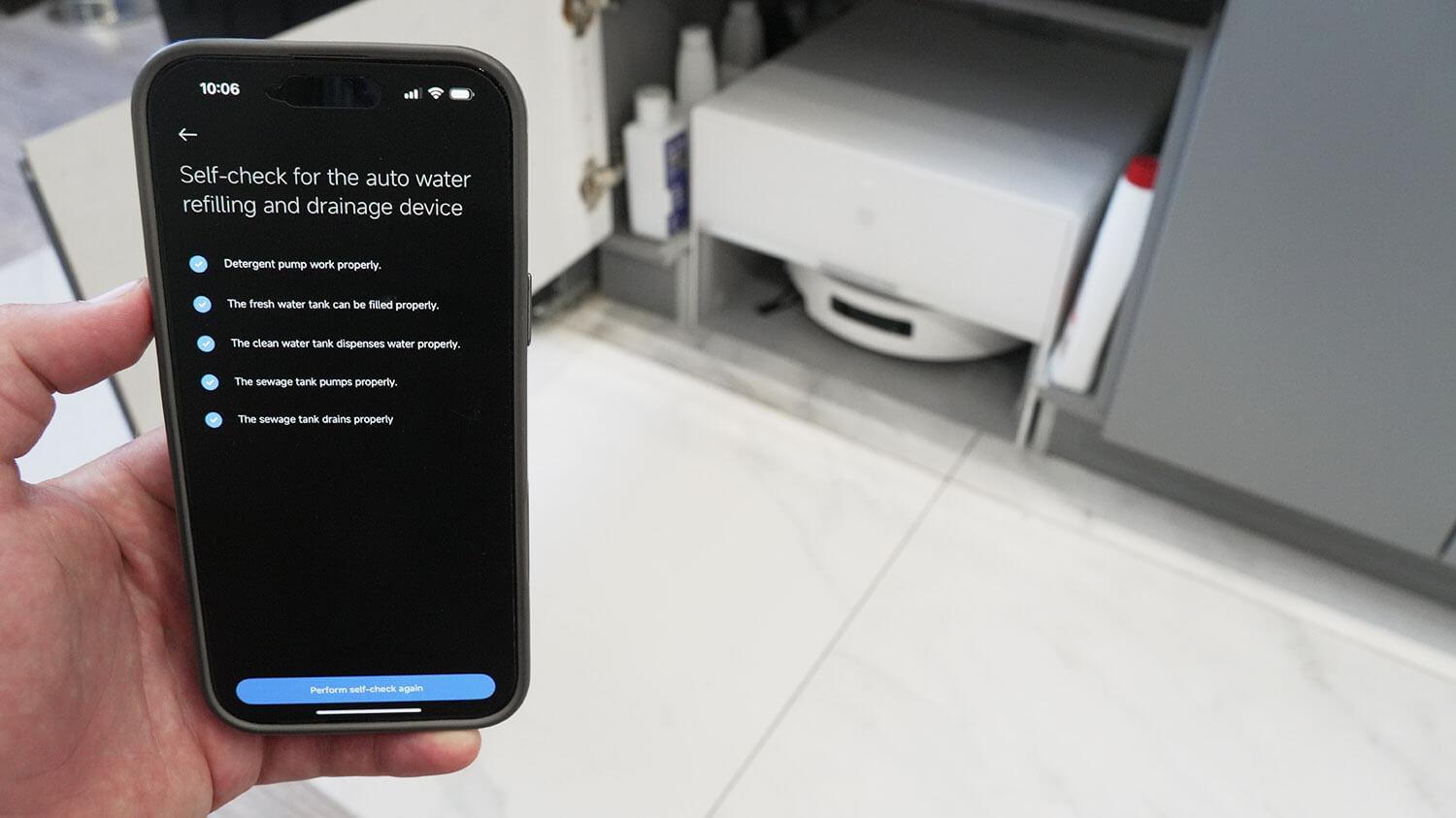
Station self-testing
Well, here it is – the long-awaited test run. Everything works, the floor cleaning is high-quality, no problems.
I'll just note that the robot vacuum cleaner only enters and exits the station with its lidar raised. There must be at least 11.3 cm of clearance for the robot to enter and exit the station.
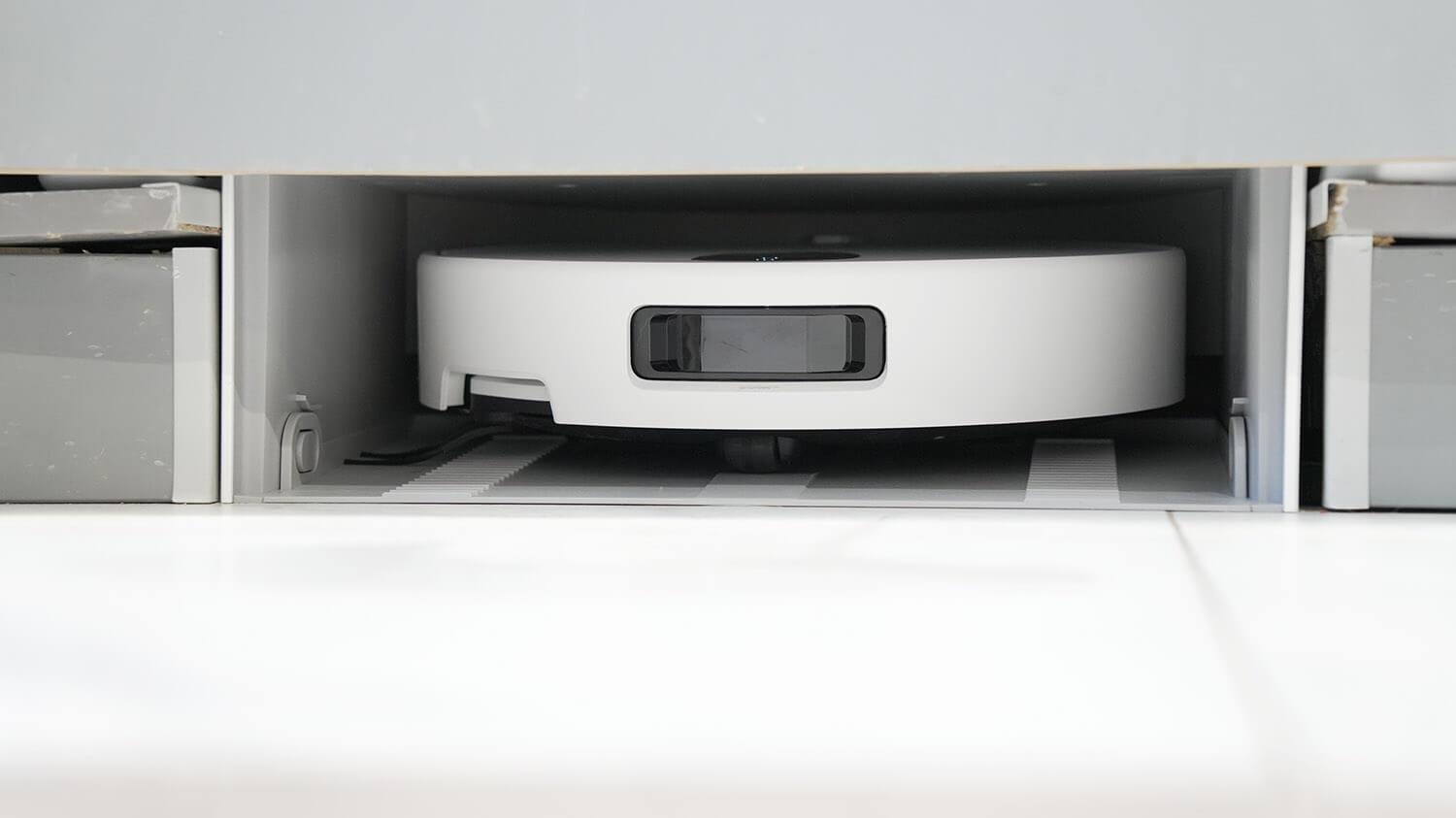
Clearance for the robot to exit the station
It would be better to take it with a reserve and make a clearance of 12 cm, so that in the future other robots could drive in if necessary.
Test results
Regarding the test results, since the robot is absolutely identical to the previously tested version with a regular station, I didn't run it through all the test benches again. I only tested the object avoidance system separately, in case something had changed with the new firmware version. But no—the robot still has trouble detecting objects and running into them.
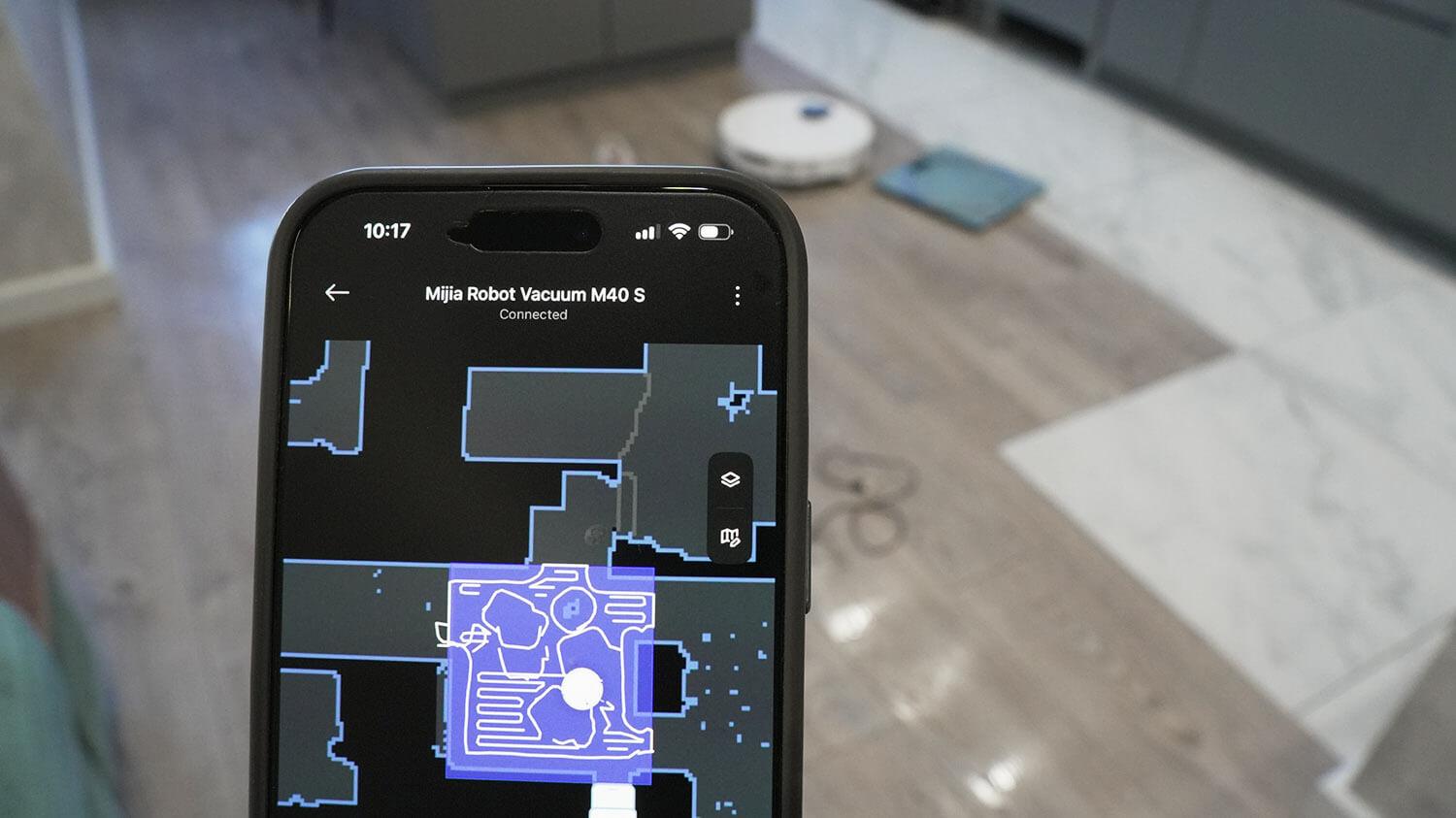
Object Identification System
Otherwise, for those who don't want to read a separate review, I'll briefly describe what the Xiaomi Mijia M40s is capable of and how it performed in tests.
The robot can navigate through 9 cm gaps thanks to its lidar-driven feature. It boasts high suction power. In the test setup, the robot cleaned even a 10 mm gap. Dirt collection performance on hard surfaces and low carpets is high. It's also impressive that it can sweep debris into corners thanks to its retractable side brush. However, on carpets with fluffy pile, the robot may back up because sensors on the bumper detect pile as an obstacle. In everyday use, the anti-hair-tangle protection system on the turbo brushes proved highly effective, but in challenging tests, some hair still got tangled. Wet cleaning performance in everyday use is excellent. The robot efficiently cleans large floors and is capable of removing even stubborn stains faster than its competitors. It cleaned stains on the test setup within 10 attempts, which is a typical result. Its maneuverability is on par with most competitors – the robot can drive over a 2 cm threshold. The station is also effective – it efficiently self-cleans its wipes, dust collector, and its own bottom.
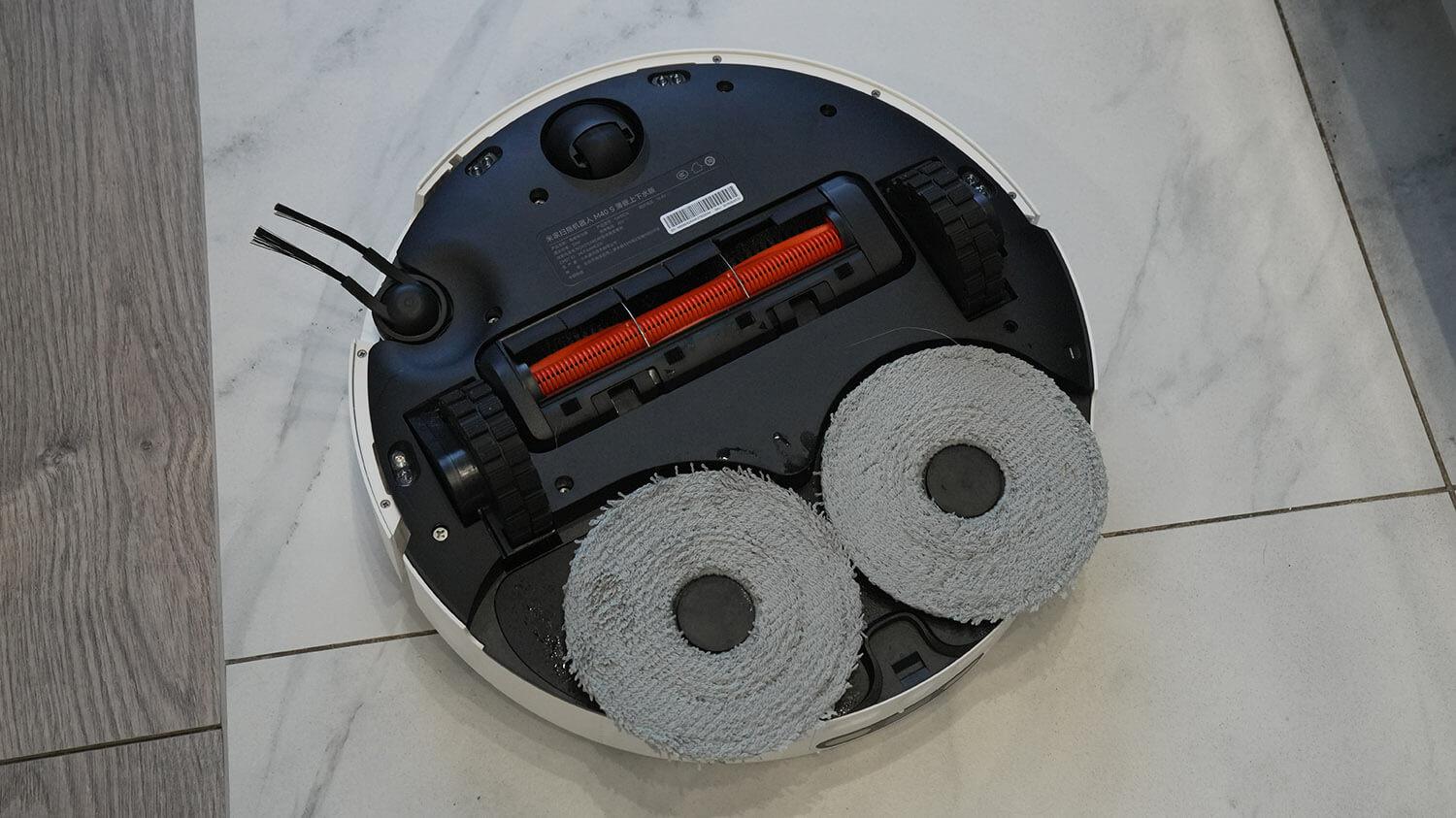
Self-cleaning quality
Overall, the robot performed well in most tests, but some areas need to be improved.
Station maintenance
A few words about station maintenance. As mentioned earlier, the platform is completely removable, which is very convenient. Just remove it, rinse it in the sink, and put it back.
But what's inconvenient is that there's no access to the station's tanks for maintenance, especially the dirty water compartment. I even took the station apart to see how it was arranged inside.
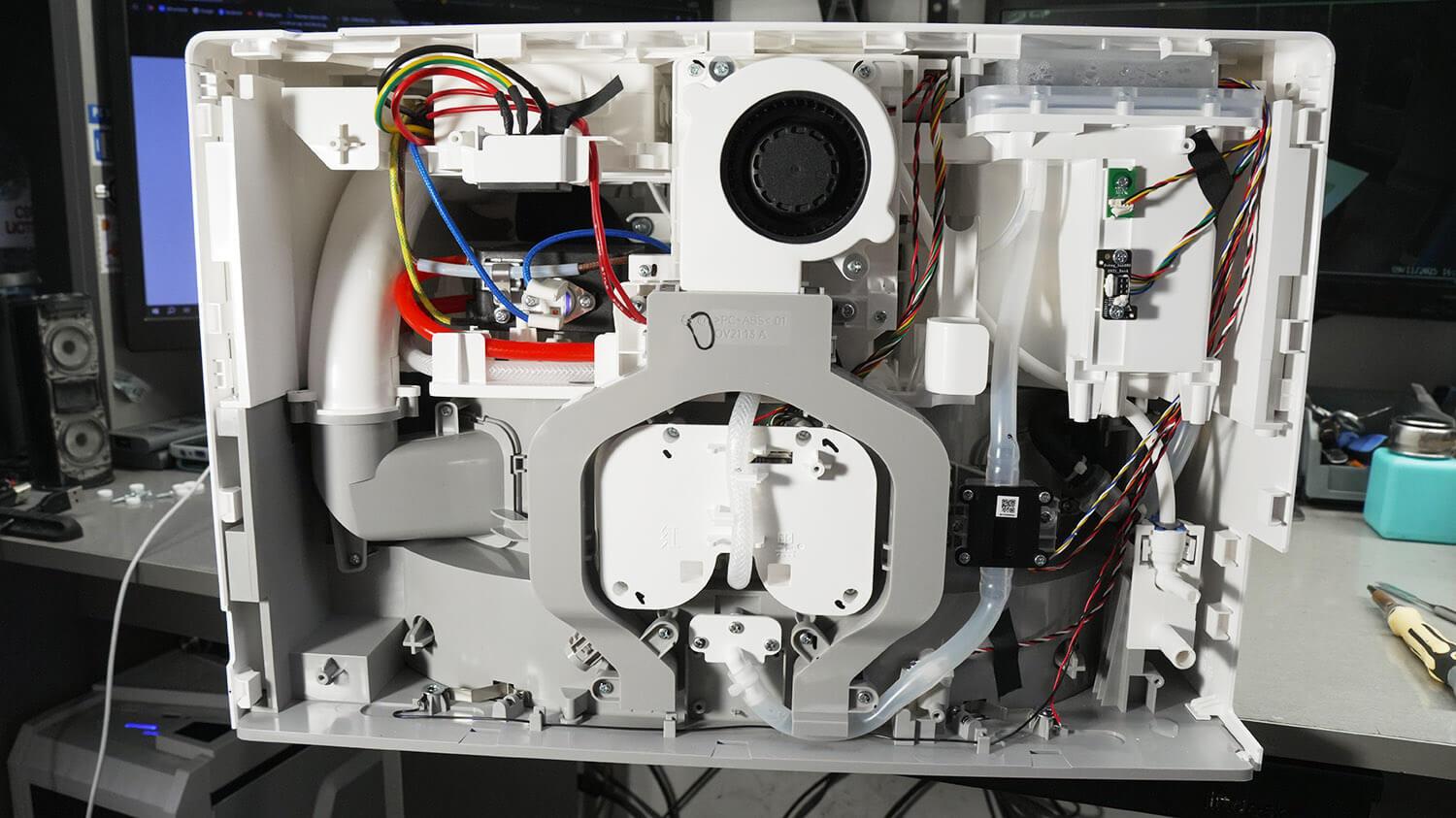
The station in disassembled form
We see two tanks installed there: one with clean water, which is smaller, and one with dirty water. Interestingly, the clean water tank has a disinfection module, which is very good.
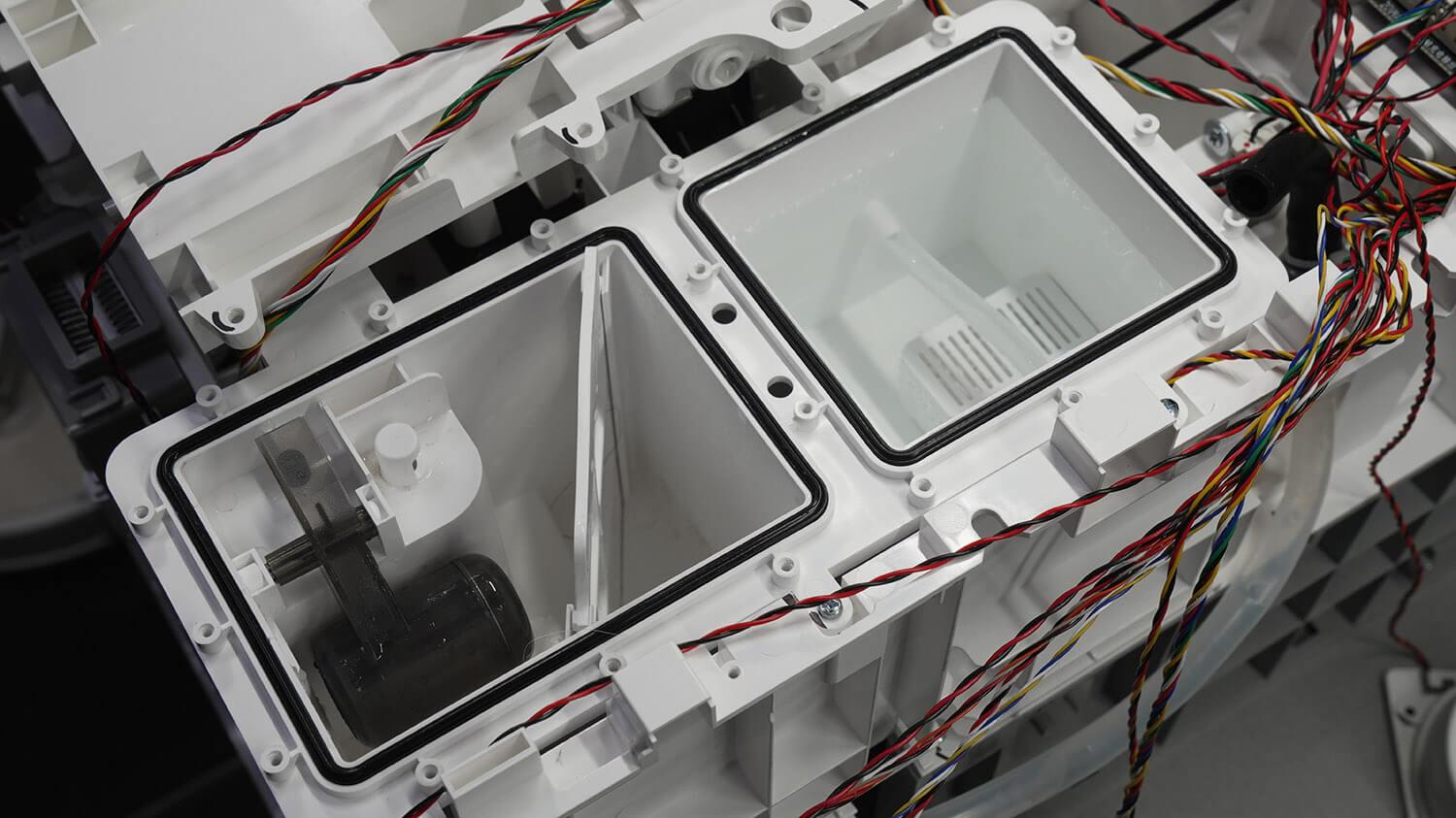
Water tanks
But in the dirty water compartment, we see a mesh that needs to be cleaned periodically. Just look for yourself: after a week of testing, the first small accumulations of dirt are already visible:
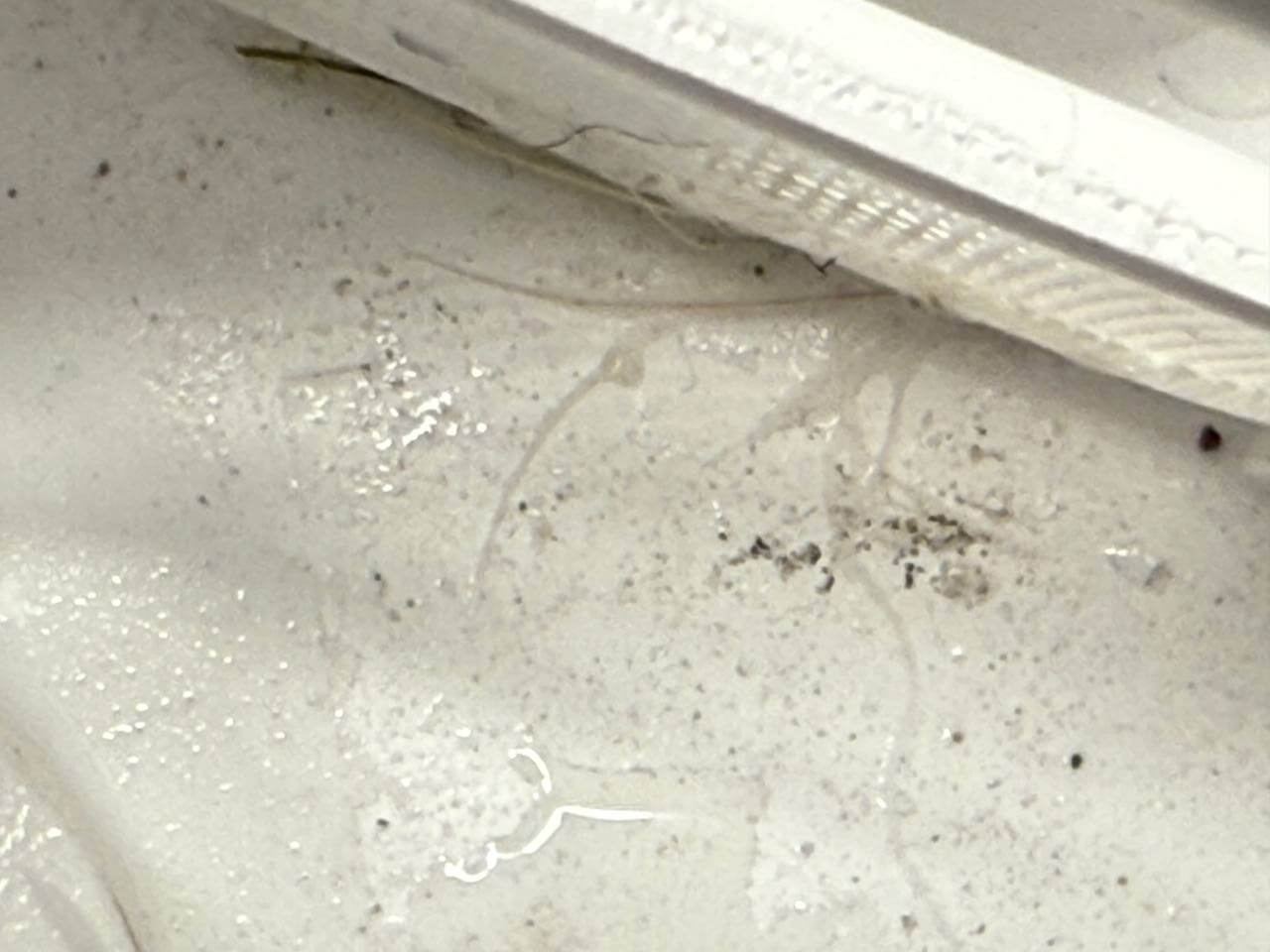
The first accumulations of dirt
Now imagine what will happen in a year or even six months? Dirt will accumulate inside and could clog the system, requiring you to disassemble and clean everything. This is a very strange solution, and apparently, the Dreame X50 Master is designed similarly internally, and the station will also need to be disassembled from time to time for maintenance.
Personal opinion
Let's sum it up. Here's an interesting point. The Xiaomi Mijia M40s robot vacuum cleaner with a built-in docking station managed to score 197 points, and the results are better than those of the standard M40s with integrated water tanks. This is because the built-in unit connects to the sewer and water supply and automatically mixes in the included detergent. The bottom of the station is also completely removable, making it more convenient.
Overall rating of tested robotic vacuum cleaners: https://robovac.washerhouse.com/en/rejtingi/robovac-obshhij-rejting-robotov-pylesosov-robo.html.
Among the advantages of the built-in Xiaomi Mijia M40s, I would like to highlight:
First and foremost, this is the most affordable built-in slim docking station on the market, with no regional restrictions or other inconveniences. The only alternatives are the Dreame X50 Master or the older Xiaomi 5 Pro with a built-in docking station, but they cost $80-$100 more.
In addition, this version has its own advantages, namely:
- Automatic mixing of detergent.
- A fully removable platform for the robot to enter the station
The rest of the advantages are the same as the regular M40s:
- The lidar slides into the body, allowing the robot vacuum cleaner to clean in gaps as small as 9 cm.
- The updated side brush does not tangle fur and hair.
- The turbo brush self-cleans with built-in blades and doesn't get tangled with hair or fur. There's no need to clean it manually.
- The robot vacuum cleaner is able to sweep out debris from corners thanks, again, to the retractable side brush mechanism.
- High suction power. While not as powerful as advertised, the robot nevertheless delivered decent results.
- The cloth extends to the edge to wash the floor along the walls and furniture.
- The water heating temperature for washing napkins at the station has been increased.
- Convenient maintenance of the robot and station, thanks in part to scrapers on the bottom and brushes with protection against hair tangling.
- High-quality dry and wet cleaning on hard surfaces and low-pile carpets.
- The app allows you to flexibly configure cleaning parameters.
- Good cross-country ability.
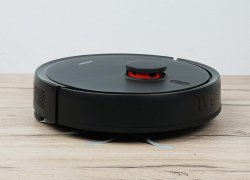
- The robot vacuum cleaner is not afraid of black floor coverings.
- Low noise level of the robot itself.
Among the disadvantages I would highlight the following:
- The robot vacuum cleaner is designed for the Chinese market. It doesn't speak Russian, and the app interface isn't fully translated. Furthermore, it lacks full service and warranty support from the manufacturer.
- The system for identifying objects doesn't work at all and it would be better if it didn't exist, it does more harm.
- There are issues cleaning medium-pile carpets. The robot avoids certain areas of the carpet, detecting the pile as an obstacle, precisely because of the sensor system on the bumper.
- There is no carpet sensor, which is why you need to manually set carpet zones on the map.
- The assembly has been made cheaper.
- You can't manually set the zones where the lidar should be lowered. You have to rely on the robot to figure it out and, after a few tries, begin lowering it.
- There's no access to the station's internal components, specifically the wastewater drainage system. An inspection is impossible, but it's desperately needed, as the station's dismantling revealed.
So, what's the bottom line? For the price, the robot is certainly an interesting choice, given its capabilities, station format, and high-quality cleaning. However, there are many nuances, and the improved Xiaomi 5 Pro is already available, also with a built-in station and a number of important improvements. This has created mixed feelings about the model. If these issues aren't critical for you, the robot is definitely recommended for those on a budget, especially if you don't have medium-pile carpets.
On that note, I'd like to end this review. If you have any questions, please ask them in the comments. Happy shopping, everyone. Bye!