Hobot LEGEE-D8: ECOpress, vibration platform, station compatibility, and other features
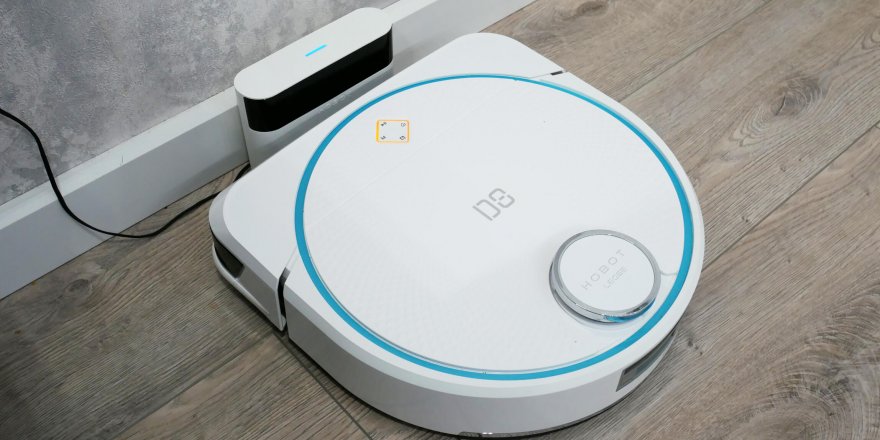
The Hobot LEGEE-D8 is a new product for 2023. Sales of this model are scheduled to begin in May 2023. The estimated launch price is around $520 or $400. For this price, you'll find a robot vacuum cleaner with a number of unique features. These include a D-shaped body, light debris pre-collection in front of the central brush, which protects the brush itself from hair and pet hair, a carpet lift function, and high-frequency vibrations of the brush, which helps remove dirt from floors. Creative voice commands that can be recorded. The signature ECOpress, which compresses debris in the dust bin, is also included. And there's even an optional self-cleaning station called Hobot LuLu, which will be released later. Overall, this robot is definitely intriguing and is likely to be considered one of the best in 2023. So, below I'll be taking a detailed look at the Hobot LEGEE-D8, and then I'll share my thoughts on what I liked and didn't like about it. So, let's get started!
Equipment
The robot vacuum cleaner arrived in a branded box like this:
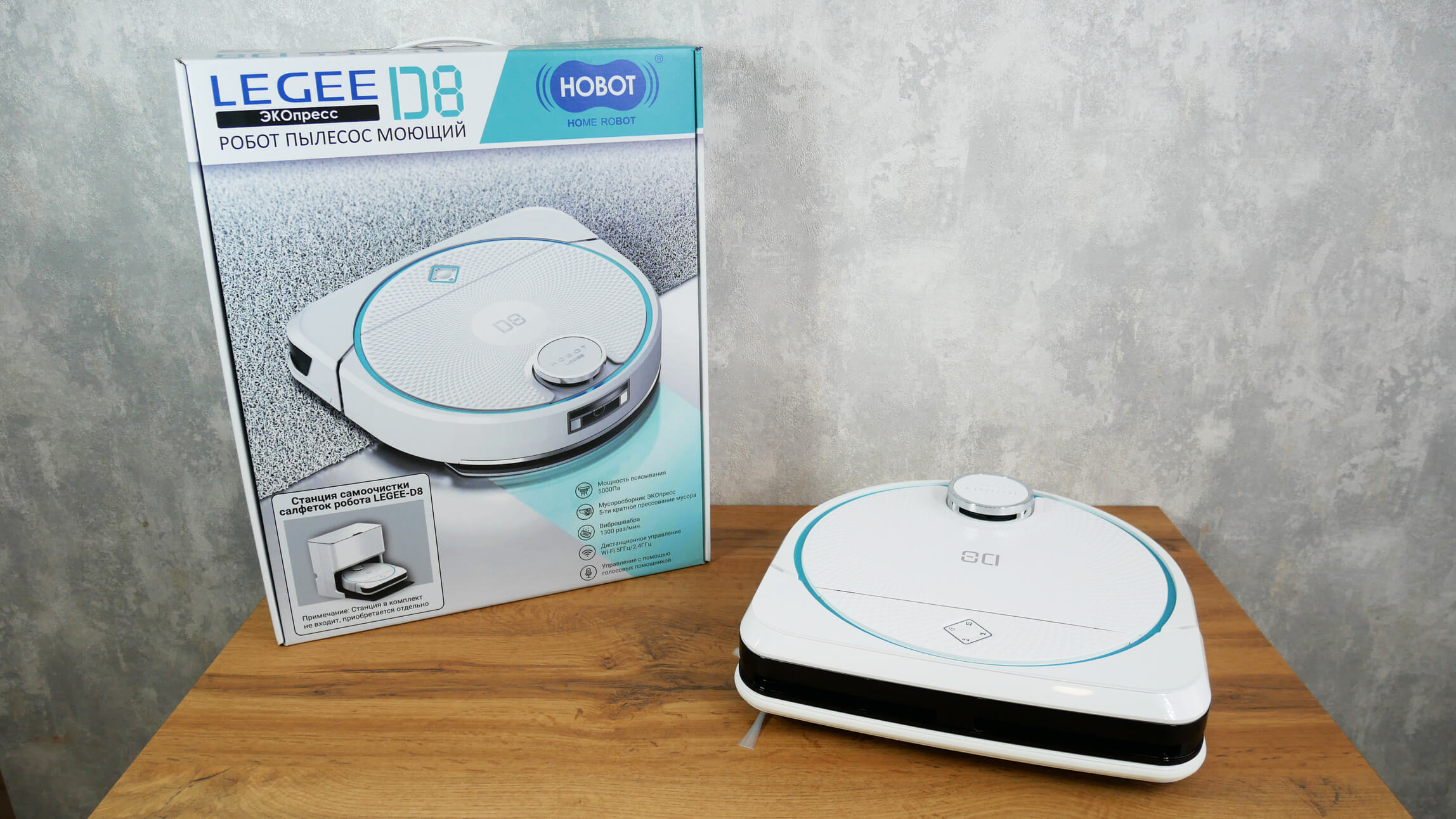
Robot and box
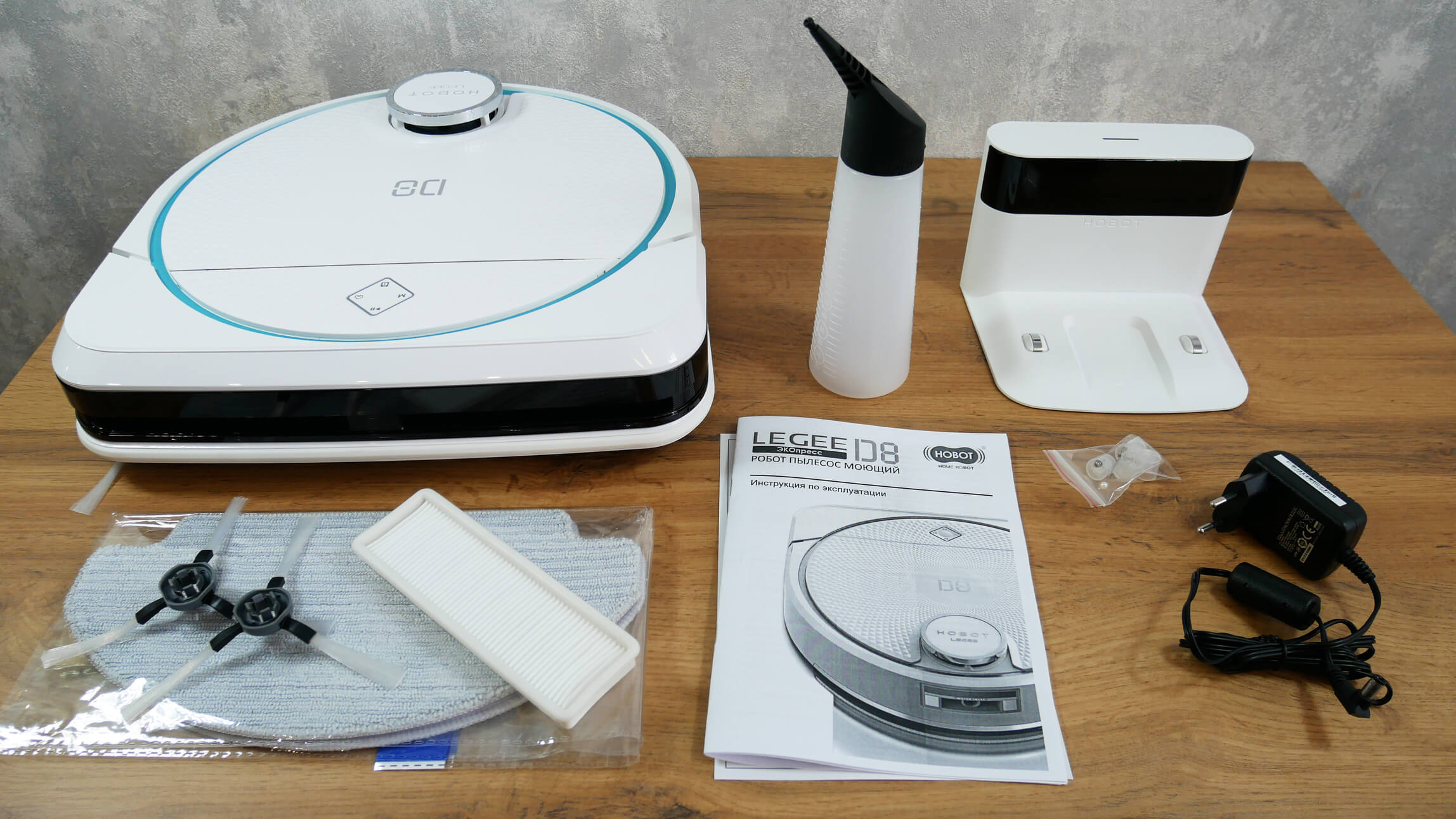
The package includes:
- Charging base.
- Power adapter.
- Two spare microfiber cloths.
- Operating instructions.
- A bottle for filling water into the robot's tank.
- Spare set of water sprayers.
- Two spare side brushes.
- Spare HEPA filter.
This robot comes with a good set of accessories, including all the spare parts. That's a plus.
Equipment
I'll start with the Hobot LuLu station; I'll return to it periodically throughout this review. It will be available for purchase starting in September 2023 and will cost around $260, or about $200, which is quite reasonable given its capabilities. The complete robot will cost no more than $600, at least according to forecasts at the current exchange rate.
Appearance
Now let's take a look at the Hobot LEGEE-D8's design. Its design is virtually identical to the previously released model. LEGEE-D7The white color scheme, D-shaped body, lidar, and four control buttons on the top of the body are present. The top bezel is a different color, and we also see a wall sensor on the right side of the bumper. A number of obstacle detection sensors have been installed in the front bumper. The rear has additional charging terminals for the LuLu charging station, as well as a port for automatically filling the robot's water tank at the station.
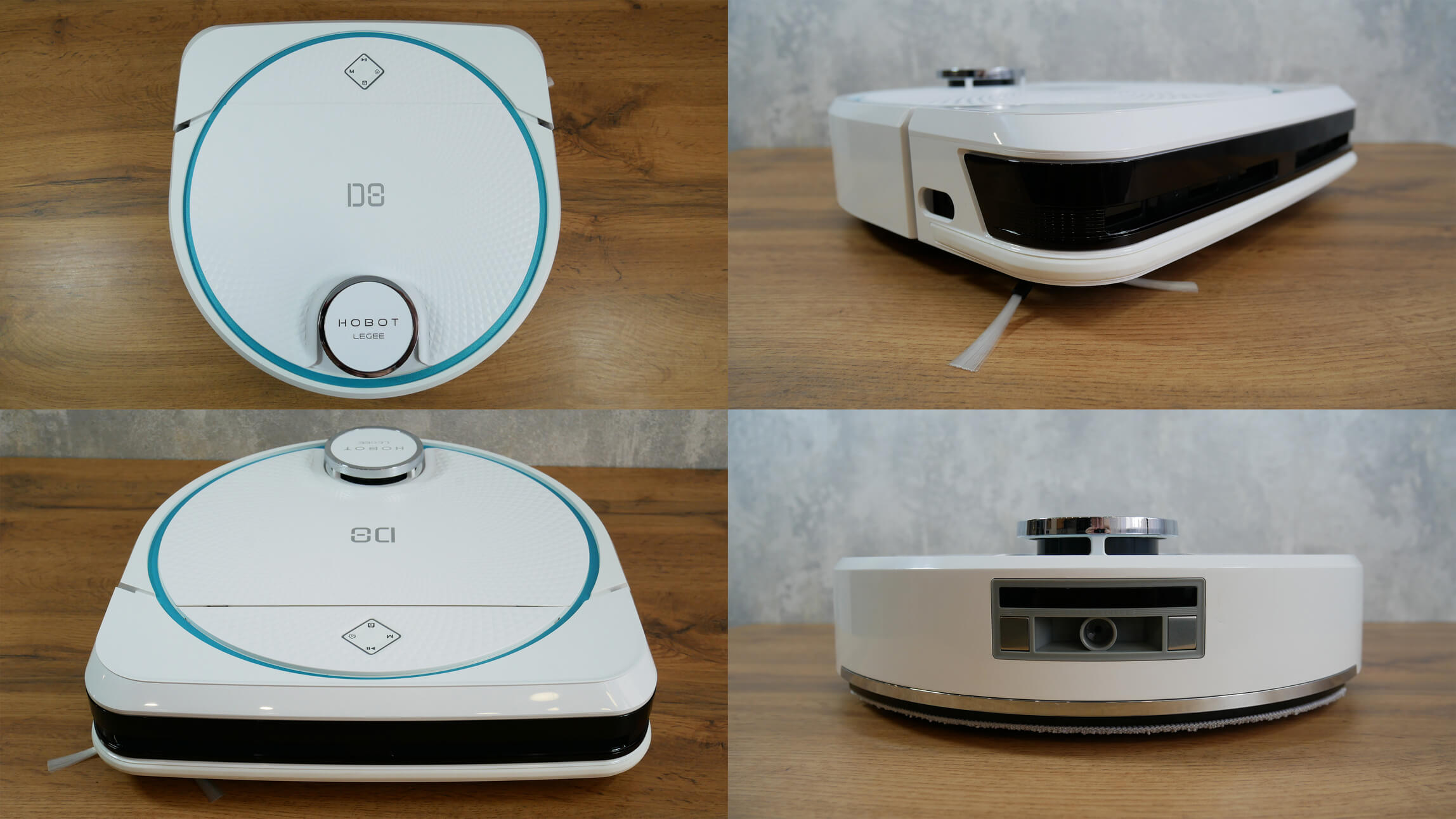
Appearance
The dust container and water tank are located on top, under the lid. The updated dust container deserves special attention. It features a mechanical press called the ECOpress. It compresses lightweight debris, thereby increasing the dust container's estimated capacity by up to five times. This means you'll need to empty the dust container five times less often. This is an alternative to the self-cleaning feature developed by Hobot engineers, while also significantly reducing the cost of bags.
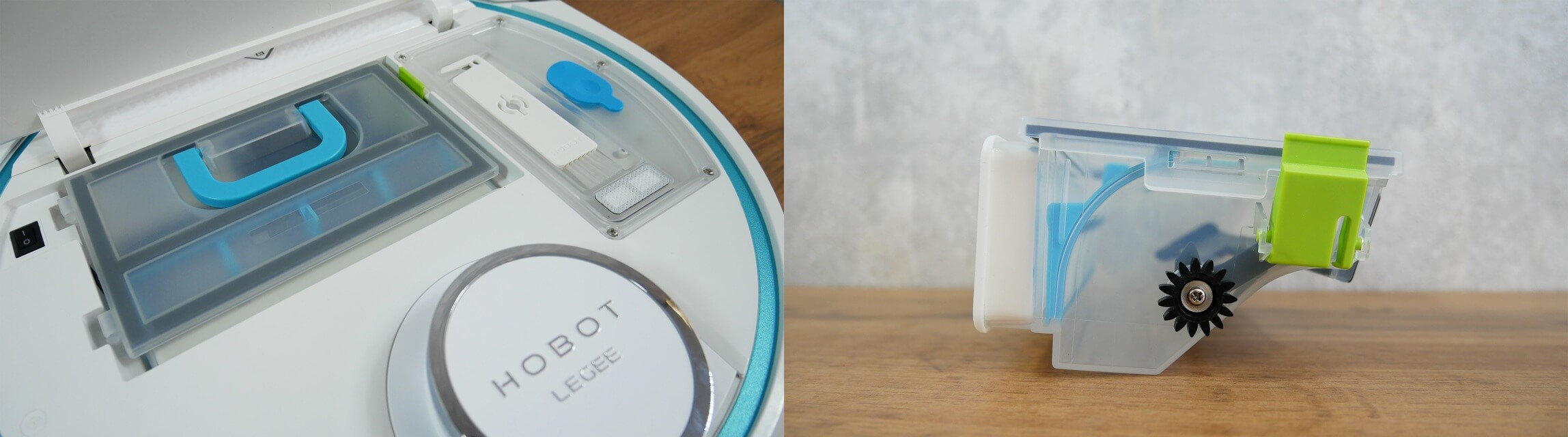
Dust collector
Besides the savings, there's also the eco-friendliness factor of this device, as the first part of the name – ECO – suggests. The fact is that almost all stations are self-cleaning, with the exception of the one that comes with Roborock S7, are not equipped with a blow-out HEPA filter. Most often, a sponge filter is installed at the outlet. And users of robots with a self-cleaning station have likely noticed a slight dust odor in the room after emptying the dust container. Manufacturers haven't yet addressed this issue, but Hobot engineers have approached self-cleaning from a different perspective. By compressing the dust inside the container, dust particles are prevented from dispersing, resulting in cleaner air in the room. In my tests, I'll show you how it actually works.
Let's return to the dust container. It has two openings: one for loading debris from the pre-suction chute and one for loading debris from the central brush unit. The filtration system is dual, using a mesh filter and a HEPA filter. The container itself holds up to 500 ml of dry debris.
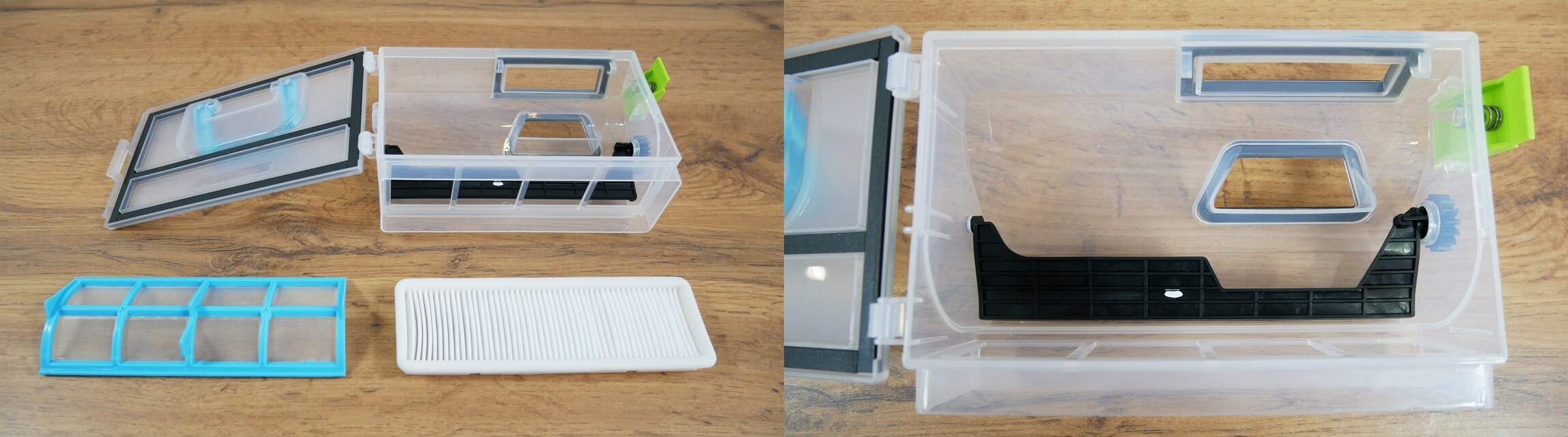
ECOpress and filtration system
The water tank houses a cleaning tool for the robot and brush. The tank holds up to 320 ml of water.
The bottom of the robot features four fall protection sensors, one side brush, charging terminals on the standard base, tracks for the robot's movement, a pre-vacuum chute for light debris before the brush, and the central brush itself. It's a non-removable brush with bristles, which I think could have been improved compared to the D7 model.
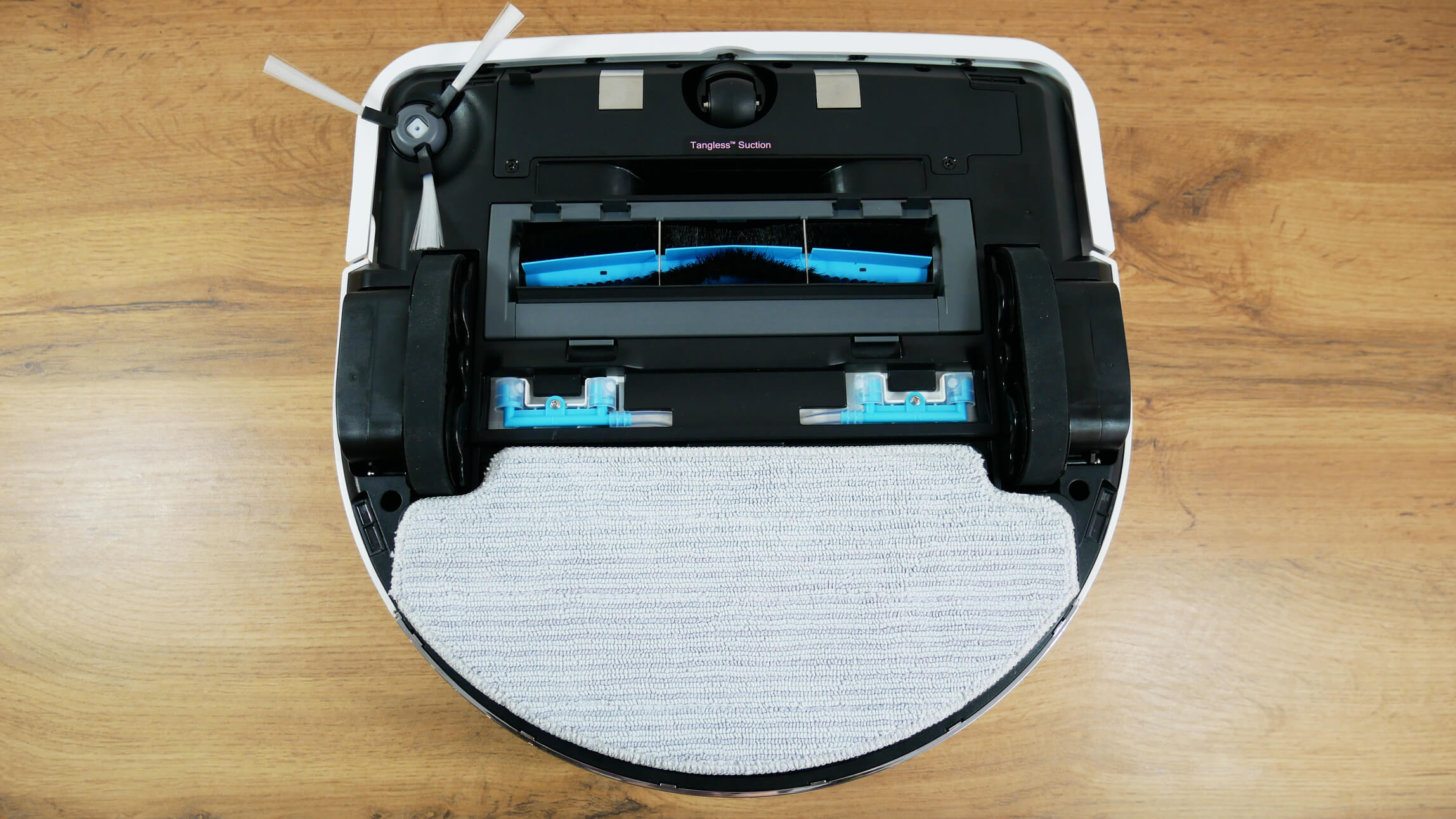
Bottom view
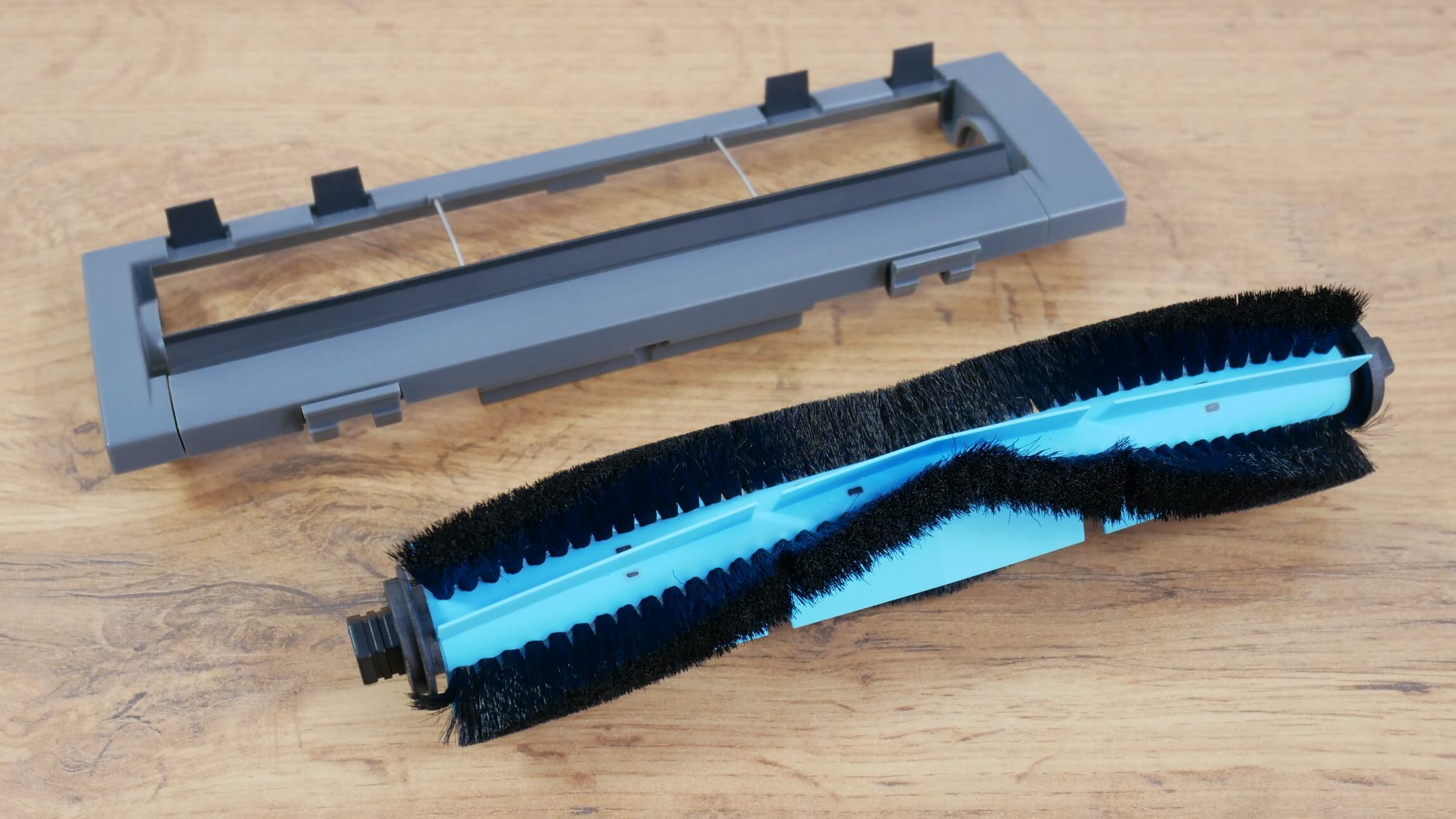
Central brush
Four water spray nozzles are located behind the brush. This is another unique feature of Hobot robots. Other robots spray water from top to bottom through a cloth, which reduces the purity of the water during cleaning to the same extent as the cloth itself gets dirty. Hobot robot vacuums, on the other hand, spray water purity is unaffected and does not decrease during cleaning. And most importantly, the cloth itself collects residual water, wiping the floor dry and streak-free.
The cleaning pad also deserves special attention. According to the manufacturer, the pad contains silver ions for disinfection. The pad vibrates mechanically at a rate of up to 1,300 strokes per minute. Furthermore, it exerts a scrubbing force of up to 800 grams and can automatically lift up 7 mm when entering carpets. This allows the Hobot LEGEE-D8 robot vacuum cleaner to simultaneously vacuum and mop, leaving carpets dry and clean after each pass. Additionally, the pad lifts up after the cleaning cycle is complete when returning to the base. This prevents the wet pad from coming into contact with the floor while charging, preventing damage to the wood flooring.
Overall, in terms of its design features, this is one of the most advanced and productive robots available. The only thing missing is a system for detecting and carefully avoiding small objects on the floor.
A few words about the Hobot LuLu station, which will be released a little later and will be reviewed separately. The Hobot LEGEE-D8 can refill the water tank, clean the cleaning cloth while cleaning, and dry the cloth with warm air after the cleaning cycle. The engineers have also implemented a unique approach to cleaning the cleaning cloth. Two special roller brushes run along the entire perimeter of the cloth, thoroughly removing debris and dirt. Furthermore, the dirty water collection tray has an ingenious design. It moves in sync with the brushes, catching all the dirt and draining it into the dirty water tank inside the station itself. The manufacturer claims that this eliminates the need to manually clean the bottom of the base, which is a very appealing feature.
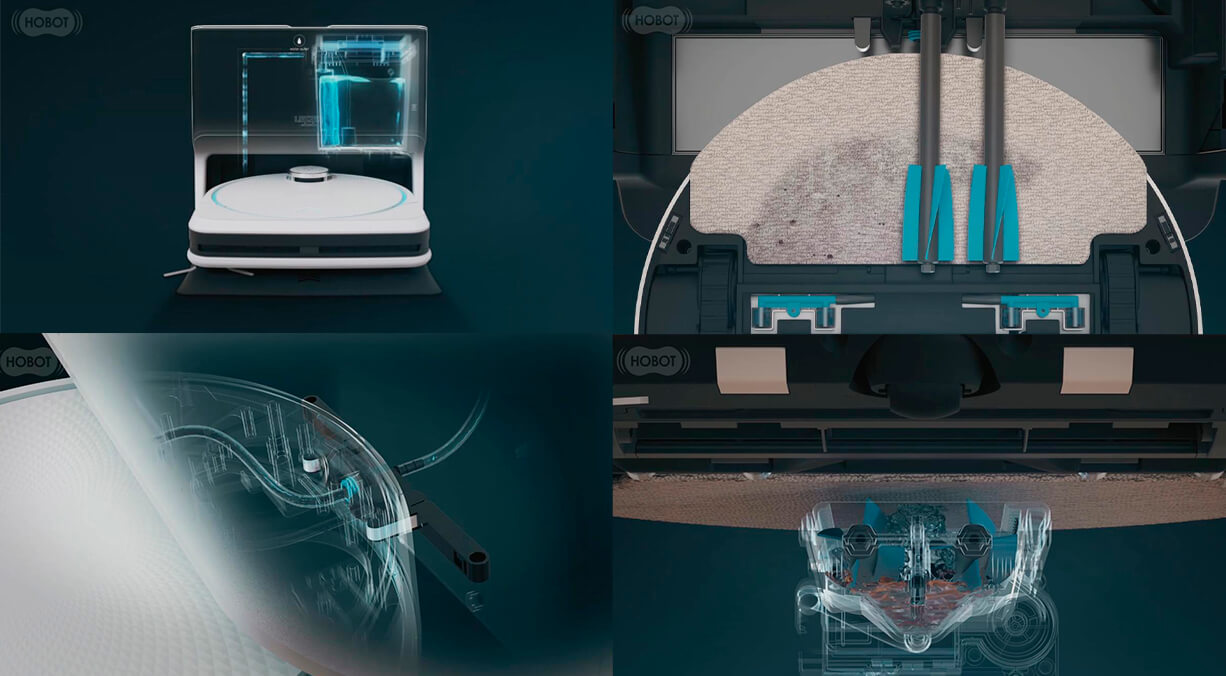
Trunk LuLu
All these station capabilities allow the new Hobot LEGEE-D8 to be used for cleaning large areas, and, of course, minimize the maintenance of the robot vacuum cleaner.
Technical specifications
The main characteristics of the Hobot LEGEE-D8, as stated by the manufacturer:
- Li-Ion battery 4900 mAh.
- Suction power 5000 Pa.
- Cleaning area up to 300 sq.m.
- Operating time up to 160 min.
- Charging time: up to 200 min.
- Dust collector 500 ml.
- Water tank 320 ml.
- Napkin vibration frequency: up to 1300 movements per minute.
- Napkin lifting height: 7 mm.
- Obstacle clearance up to 20 mm.
- Dimensions 340*339*98 mm.
It's important to highlight the increased claimed suction power, which will be verified in tests. The remaining specifications are quite standard and no different from the previously released Hobot LEGEE-D7.
Functional capabilities
Speaking of the robot's functions, it's controlled via the new Hobot app. It addresses some of the previous software's shortcomings and also slightly improves the interface, making it more intuitive. Since I tested the robot at the factory, some phrases aren't yet fully translated, but the interface will be fully in Russian by the time it goes on sale.
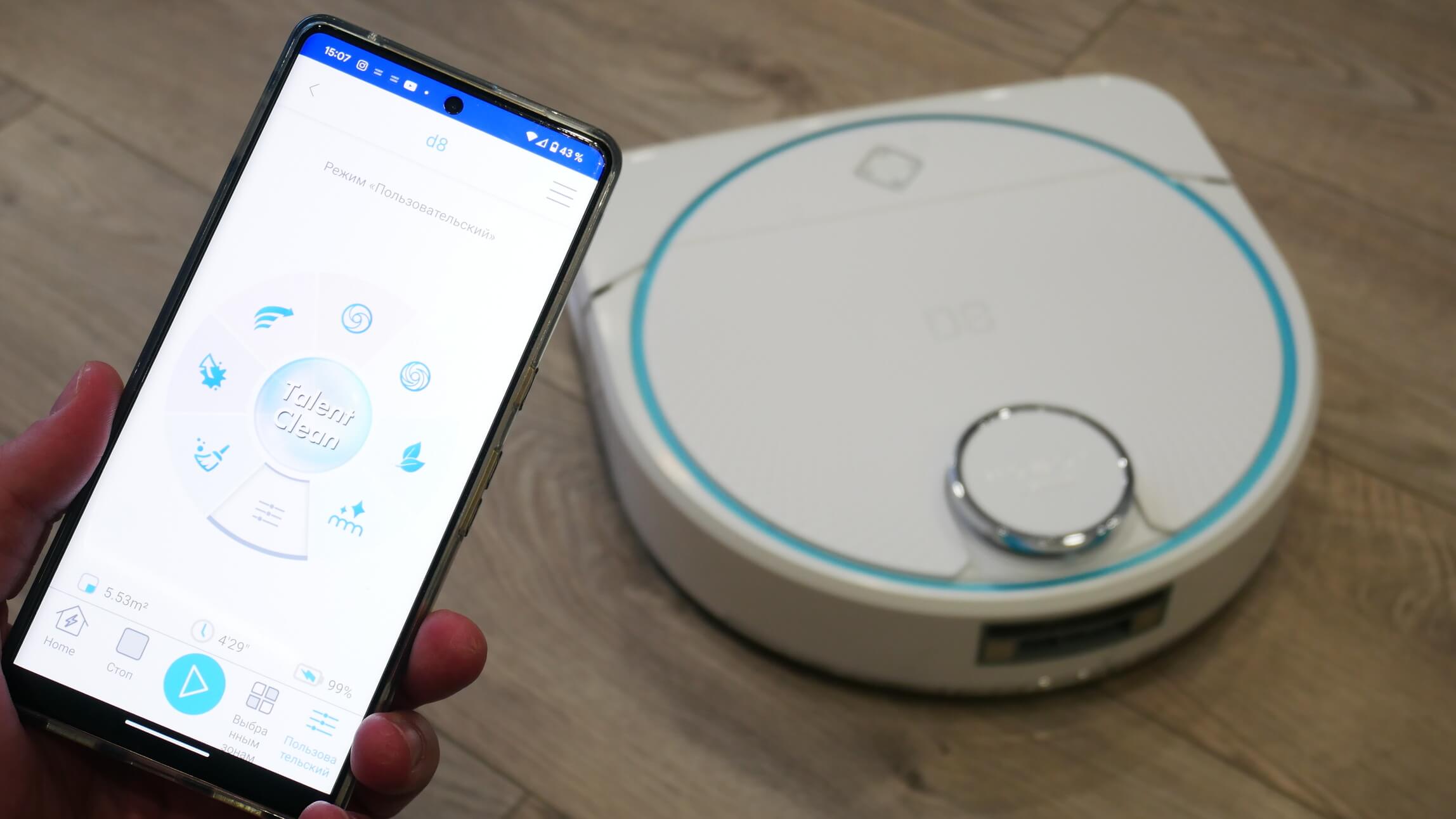
Application
The main features of the Hobot LEGEE-D8 are displayed on the screen:
- ECOpress.
- Saving multiple cleaning maps in memory.
- Quickly scan and save the map.
- Automatic zoning of premises into rooms.
- Selecting rooms for cleaning.
- Cleaning at the specified location.
- Cleaning under the curtains.
- Custom zones.
- Virtual walls and no-go zones.
- 7 operating modes for different tasks.
- User mode.
- Suction power adjustment.
- Adjusting the water supply level.
- Adjusting the robot's speed.
- Adjusting the rotation speed of the turbo brush.
- Speed control movements napkin vibrations.
- Cleaning log.
- Setting up cleaning according to a schedule.
- Automatic power increase on carpet.
- Automatic lifting of the cloth on carpets.
- Continue cleaning after charging at the base.
- Voice notifications in Russian.
- Recording creative voice commands.
- Support for Yandex.Alice, Siri, and OK Google.
- Connect to 2.4/5G Wi-Fi network.
- Remembering settings for 3 Wi-Fi networks.


Functions
I'll go into some of the unique features in more detail. I mentioned the ECOpress when reviewing the robot's design.
It's very convenient that you can flexibly adjust various robot parameters in Custom mode, such as the frequency of the wiper blades or the cleaning speed. This certainly improves the cleaning quality. In Custom mode, you can select individual cleaning parameters for each room—another useful feature.
Cleaning under curtains is what sets the Hobot LEGEE-D8 apart from many competitors. You can set curtain zones on the map, and the robot will literally ram the curtains to the wall and clean behind them. Other lidar robots carefully navigate around curtains and drapes, and there's nothing you can do about it.
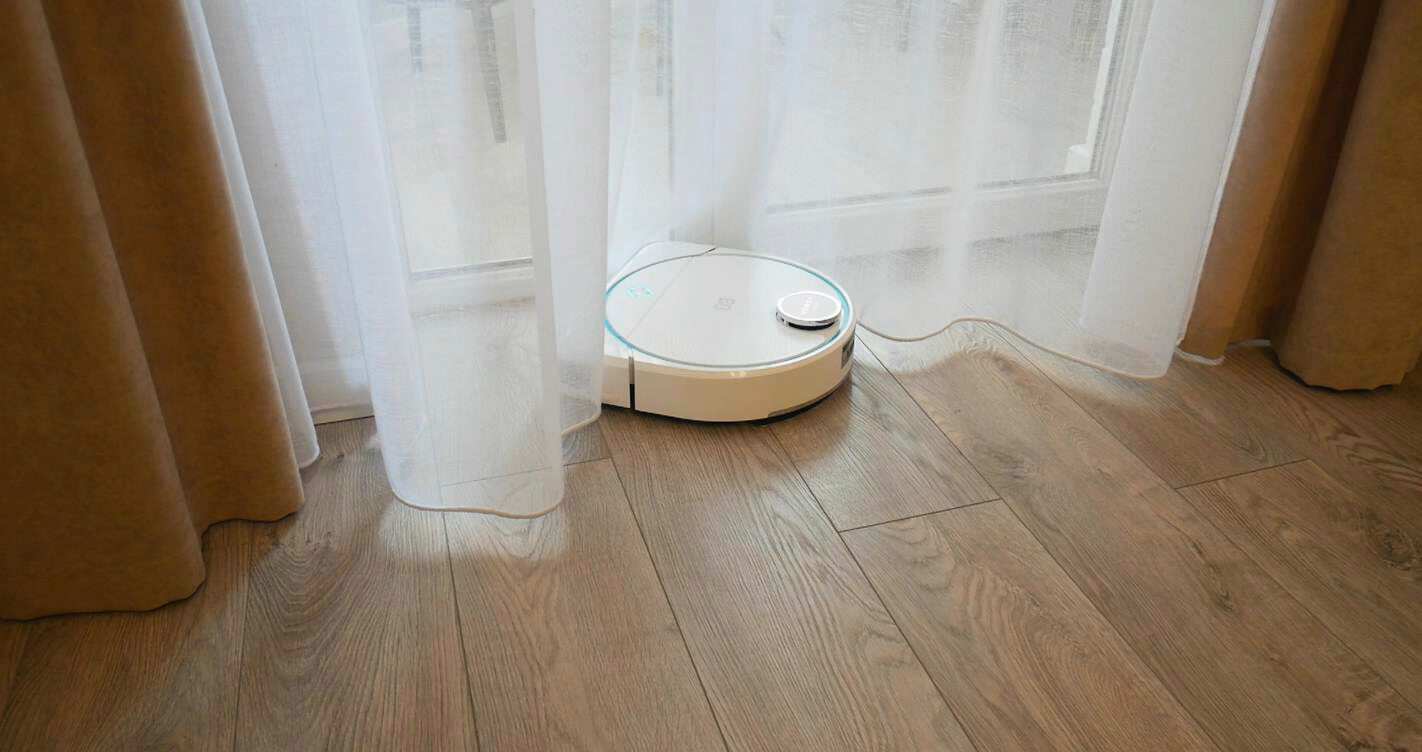
Cleaning behind the curtains
User-defined zones: The "Reduce Climb" zone, on the other hand, is a manually set zone where the robot must carefully touch and navigate around objects without attempting to climb on them. These could include fragile floor vases, the legs of clothes dryers, or bar stools, and so on.
Another cool feature of the Hobot LEGEE-D8 is the ability to record creative voice commands for each robot status. You can either select the desired audio files from your smartphone's memory or record them using a voice recorder.
Speaking of Yandex.Alice, the Hobot LEGEE-D8 supports this voice assistant, but when adding a device to the "Smart Home with Alice" app, select a "TuyaSmart" device type.
Overall, there are a lot of functions, and this will allow you to flexibly adjust cleaning parameters to suit your own conditions.
Testing
A detailed video review of the Hobot LEGEE-D8, including all tests, has already been prepared and published on the channel. I recommend watching the full video:
Navigation
And finally, let's move on to the tests. First, we'll test the Hobot LEGEE-D8's navigation in a room with obstacles. First, the robot vacuum cleaner navigates the perimeter of the room, then cleans it in a zigzag pattern. It didn't get stuck on the dryer, and it swept around a few chair legs, but didn't specifically sweep around the box.
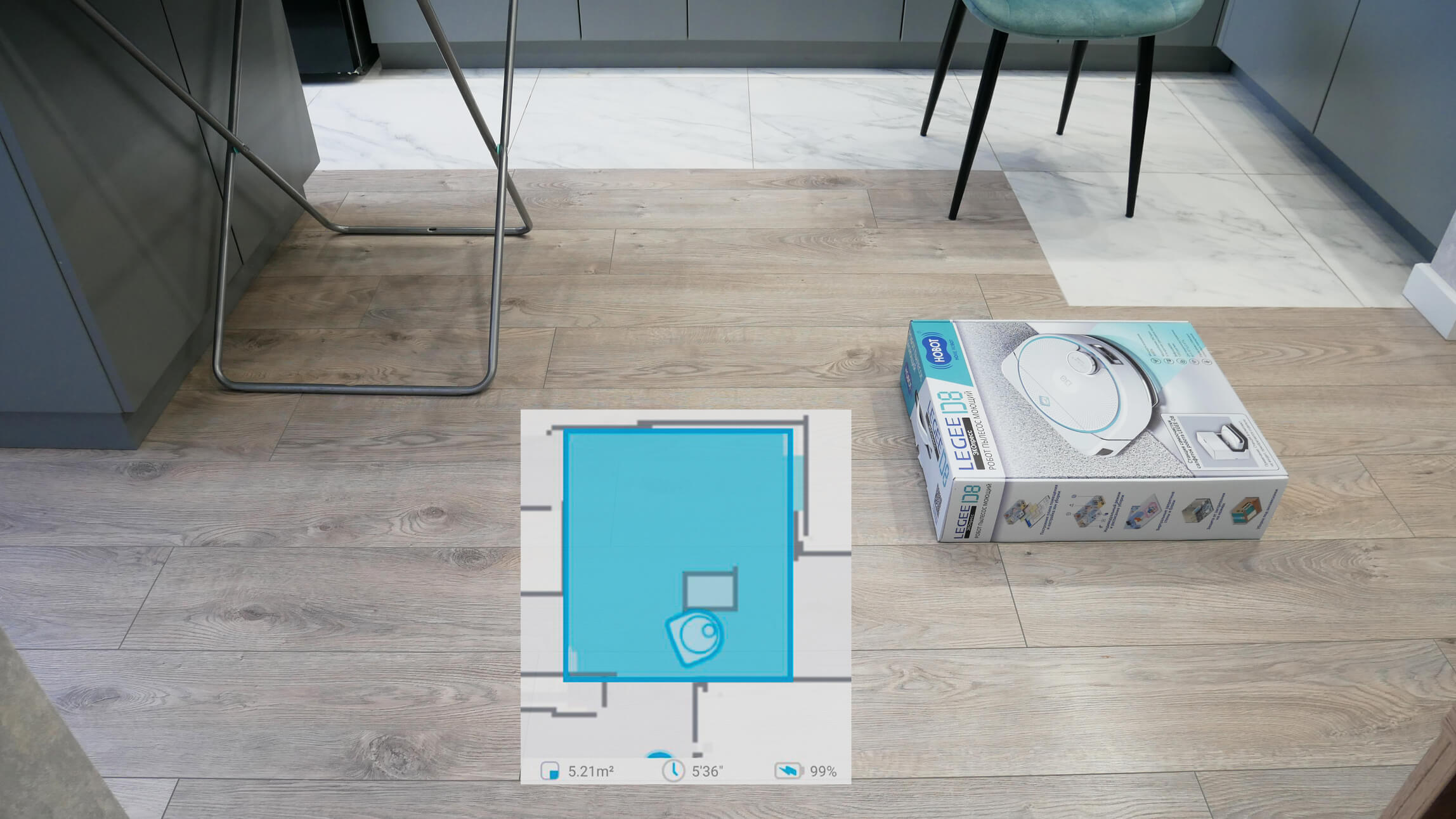
Navigating an Obstacle Room
Speaking of navigation within the home, the Hobot LEGEE-D8 cleans room by room, first along the perimeter, then in a serpentine pattern. There were no uncleaned areas, and the cleaning speed was on par with similar models, so overall, this model's navigation is good.
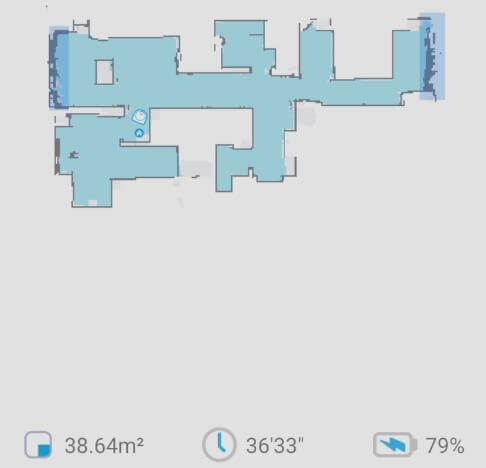
Navigation within the home
Suction power
The robot vacuum's high suction power was confirmed. It was able to suck up debris from a crevice as deep as 8 mm.
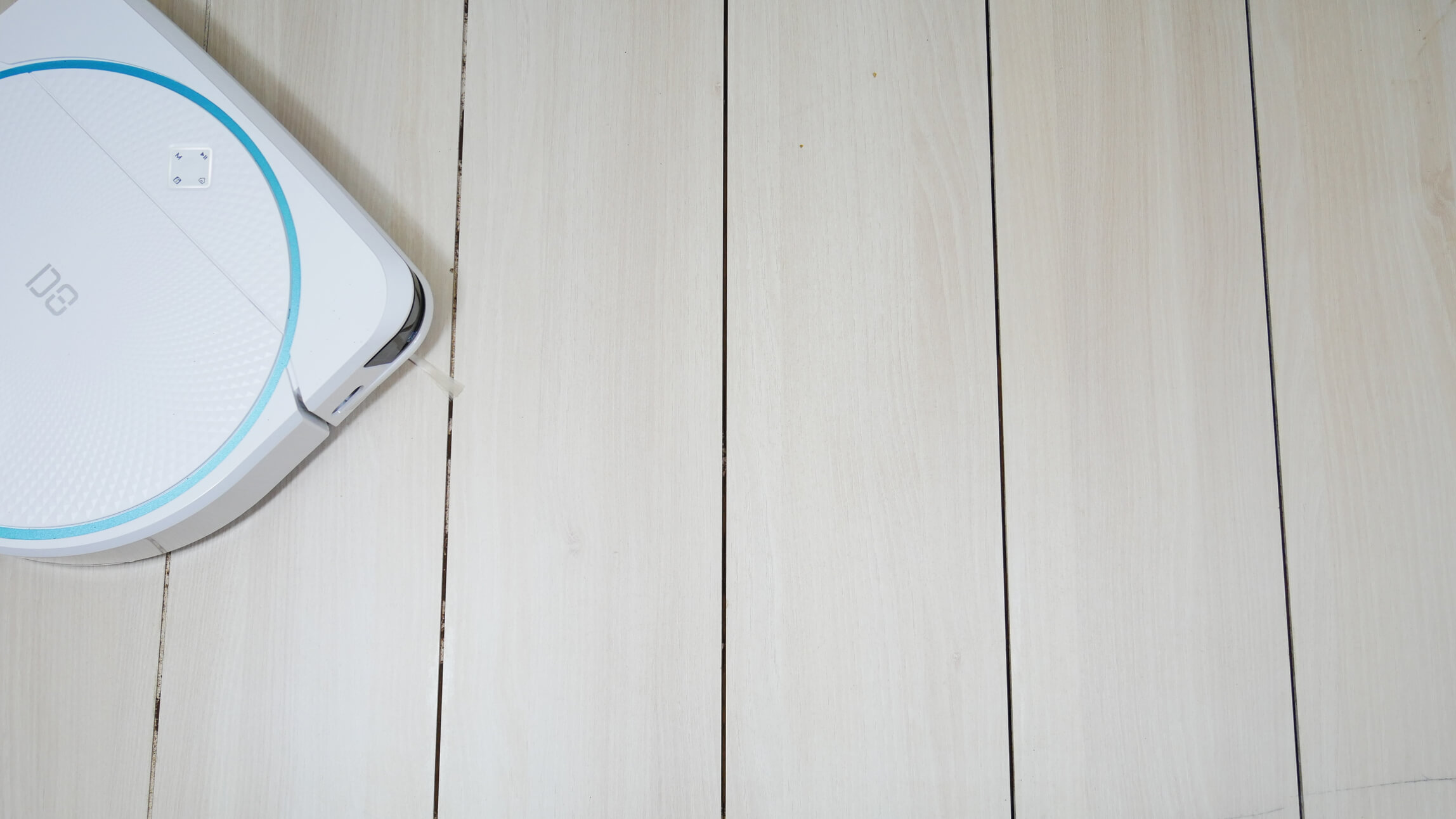
Suction power
Meanwhile, the Hobot LEGEE-D7's predecessor managed to vacuum debris from a 10mm gap. However, the D7 had the ability to turn off the pre-suction, which allowed for increased suction through the turbo brush unit. The D8 lacks this feature, and the suction power is distributed between two suction nozzles. Ultimately, I can say that even the demonstrated power is a very good indicator, and the Hobot LEGEE-D8 can be considered a powerful robot vacuum cleaner.
Dry cleaning of laminate flooring
The collection performance of various types of debris on laminate flooring is also excellent. The robot vacuum cleaner was able to pick up all debris from the floor, including perfectly cleaning corners. Moreover, hair and pet hair barely tangled around the central brush. The majority of the debris was collected in the dust bin. Test passed!
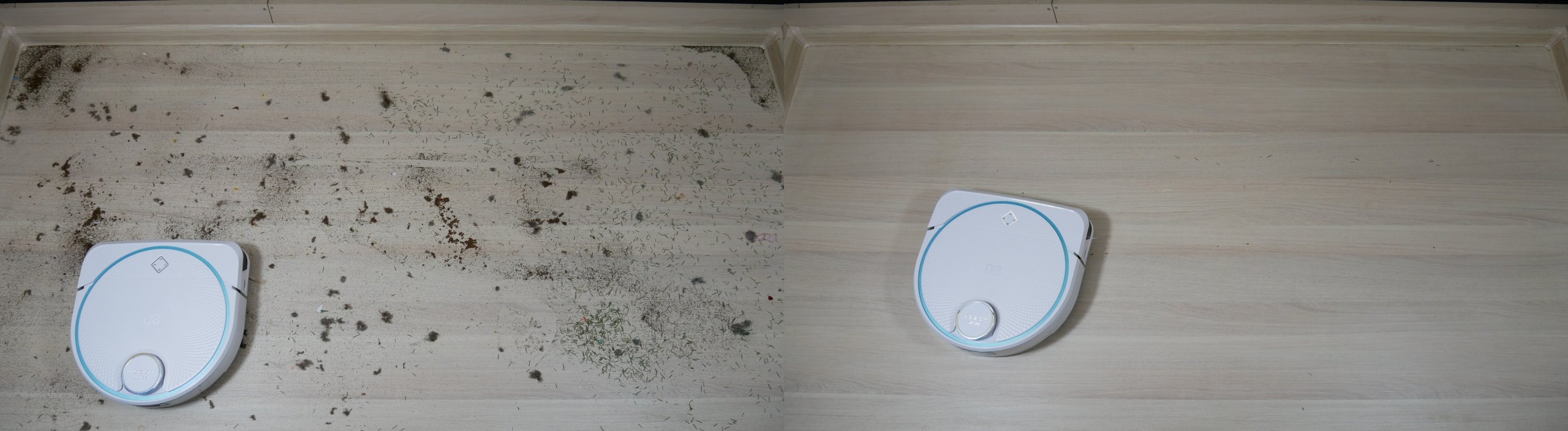
Dry cleaning of laminate flooring
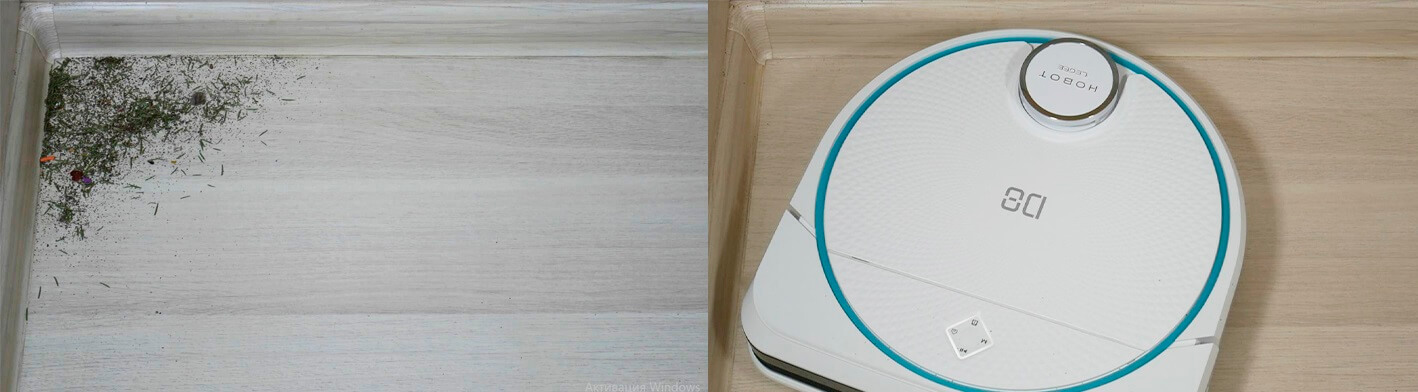
Sweeping out the trash in the corner
Carpet cleaning
The LEGEE-D8 also does a good job of cleaning carpets; there were literally just a couple of clumps of hair caught in the pile. But in any case, considering the carpet's original condition and its fluffy texture, I think the robot cleaned it well and is suitable for this task!
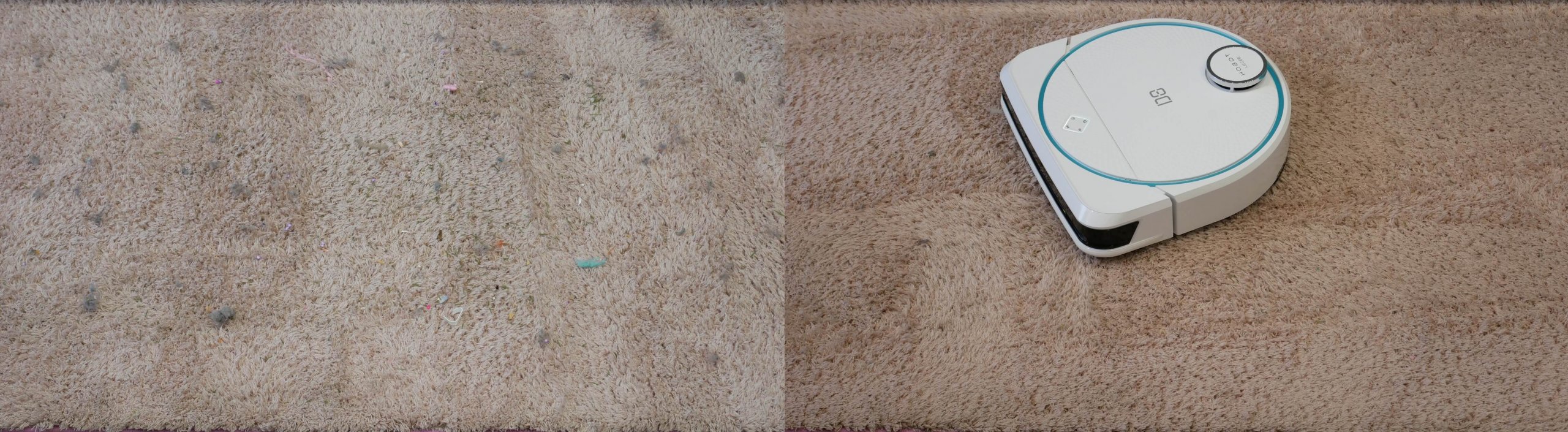
Carpet cleaning
ECOpress
The ECOpress was tested separately to see how it performed. Before the test, the dust bin was clean and weighed 125 grams. Then I ran the robot in a room with a large amount of debris, including hair and fur, repeatedly adding new debris to the floor after each cleaning cycle. Over time, the dust collection efficiency began to decline, and the robot began missing some of the debris on the floor. I removed the dust bin and weighed it; it weighed 170 grams. This means the robot managed to compact 45 grams of dry debris. It's more important to show the volume of debris, so take a look:
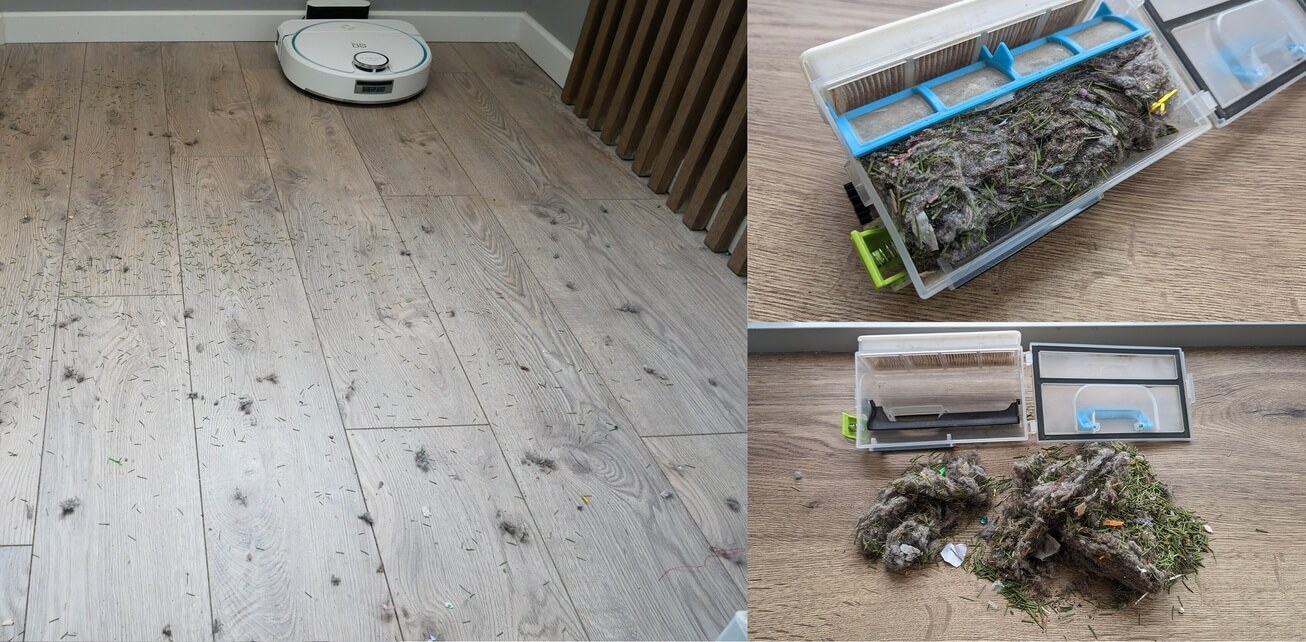
ECOpress
It really did fit a lot, but there's a catch. I used debris from other robots, which I always use in tests. And it's different from real household dirt on the floor. Hair and fur were in clumps, and the dust itself was already compressed into larger particles. Ultimately, this affected the ECOpress's performance.
Ideally, you'd run the robot, say, every day for a month, and see when it actually signals that the container is full and needs to be emptied. I think its lifespan would actually increase severalfold, even taking into account its own results. But again, this isn't a substitute for self-cleaning. We see that the robot's power will decrease slightly as the dust container fills, and at some point, its dust collection performance will become poorer.
Yes, the idea is great, a better solution than robots without a station at all. Absolutely. However, self-cleaning still solves the problem of a completely full dust bin, while the ECOpress only allows you to empty it less frequently. So, it's up to you to decide what's more important: saving money on bags and eco-friendly waste collection, but having to empty the bin manually every 3-4 weeks. Or completely autonomous emptying of the dust bin, but with the added expense of bags and the added dustiness of a self-cleaning station.
Wet cleaning
The Hobot LEGEE-D8 does an excellent job of removing dirt. It's capable of removing not only dried-on dirt but also stubborn coffee and sauce stains.
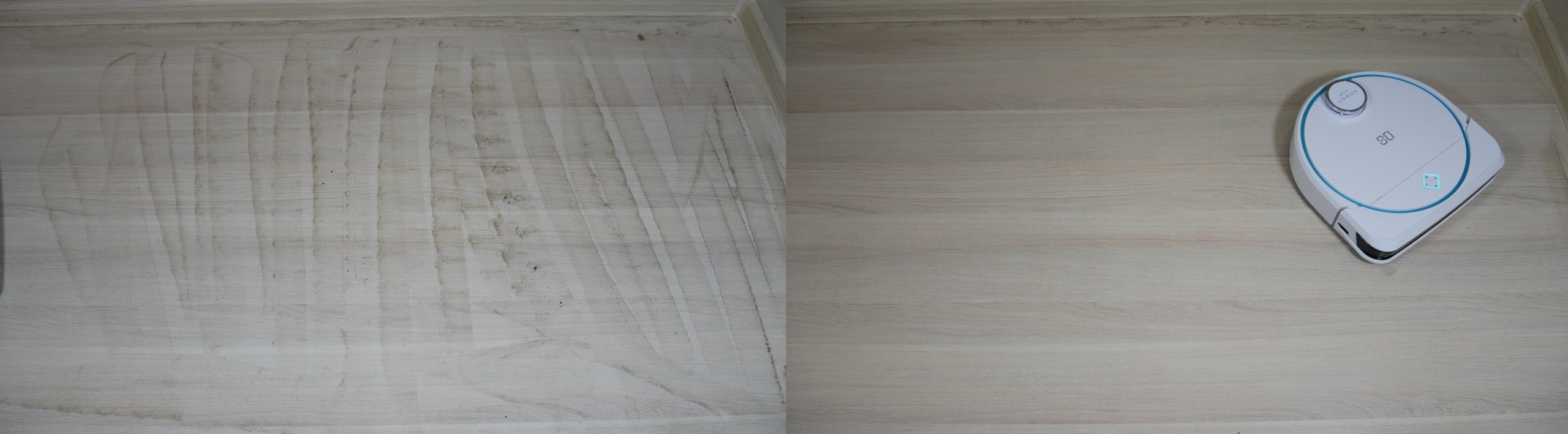
Wiping off dirt
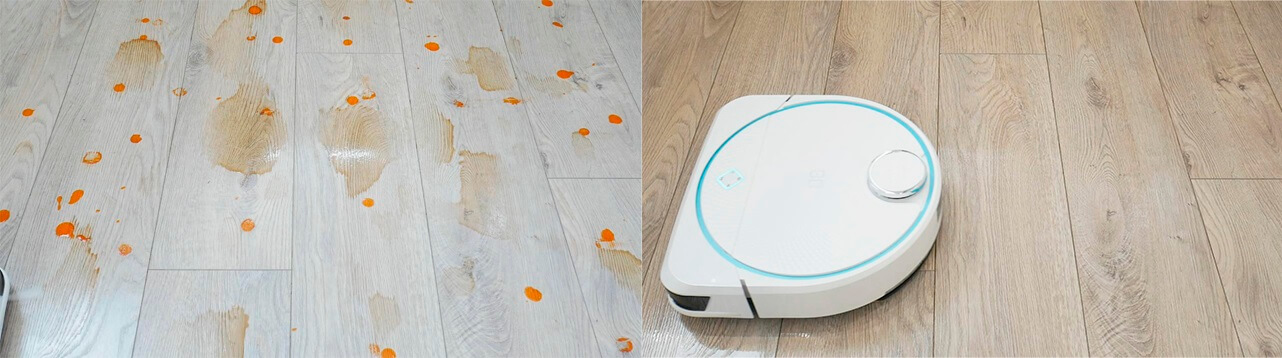
Removing difficult stains
This robot can definitely be considered a floor polisher, given its vibrating platform. The only caveat is that it leaves an unwashed area along the baseboard, as the cleaning pad doesn't extend to the edge of the body. However, this has been a weak point of all the robots reviewed so far.
Wet cleaning and carpets
When it comes to wet cleaning on carpeted floors, the robot can recognize carpeting and automatically lift the cloth when it enters it. This ensures carpets are always kept dry and clean. This is a very useful feature!
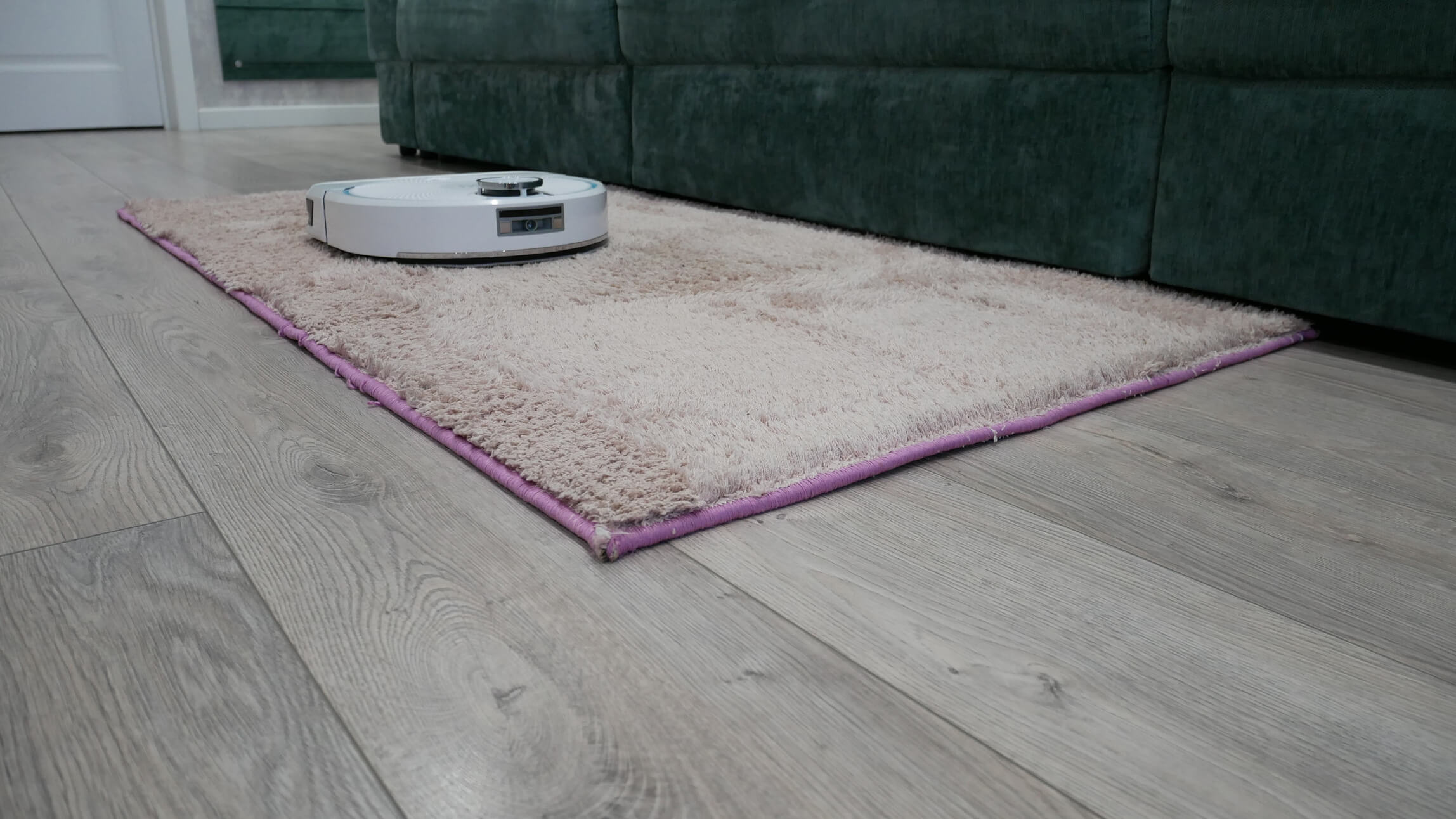
Wet cleaning and carpets
Obstacle clearance
The Hobot LEGEE D8 has good maneuverability. It can overcome 2 cm thresholds and, accordingly, can climb medium-pile carpets.
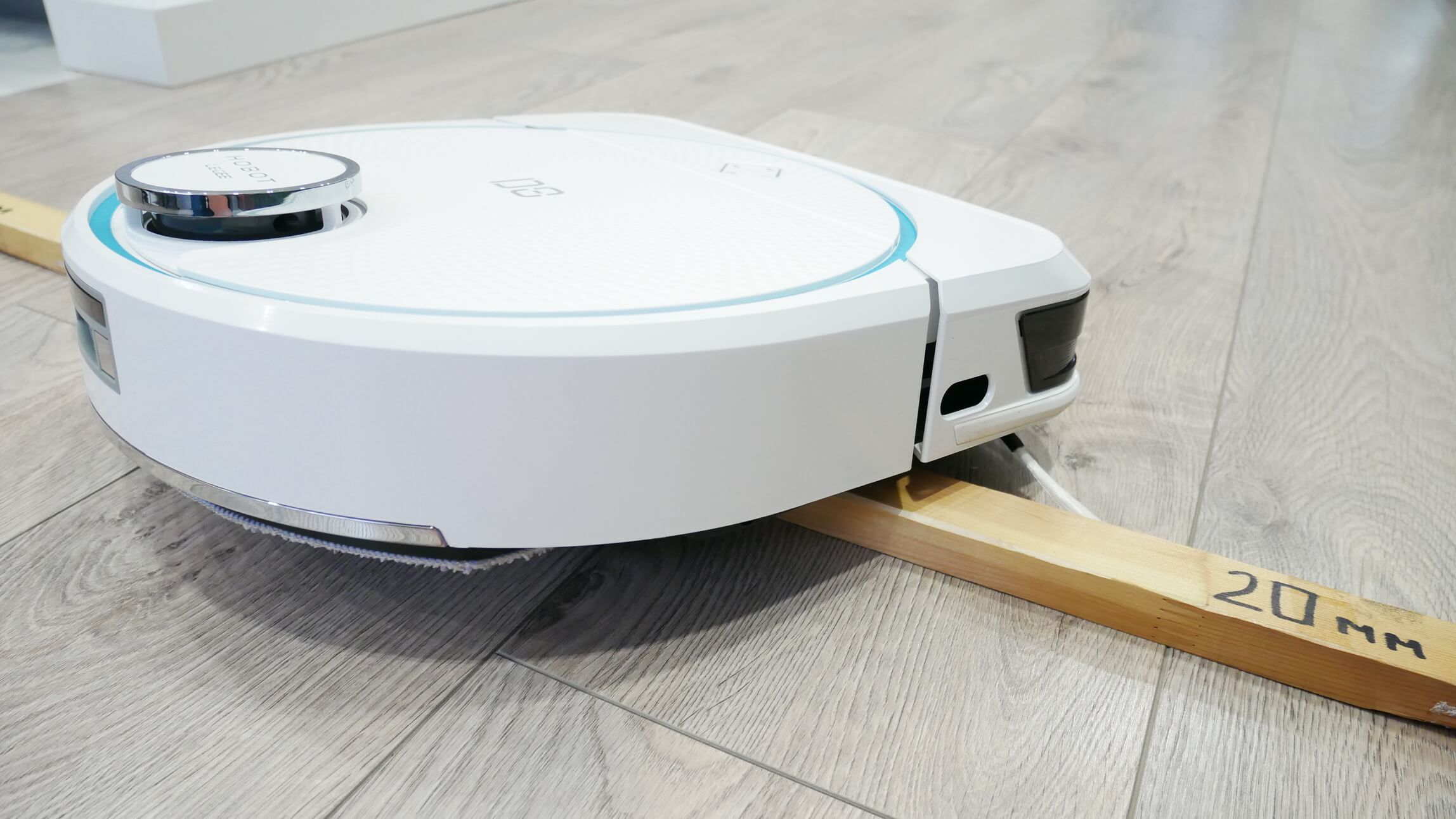
Obstacle clearance
Driving on black surfaces
There's a catch when it comes to driving over black surfaces. The robot vacuum cleaner can easily navigate hard black surfaces, like my black plastic mat. However, it's wary of black carpet, like most other robots on the market. The height sensors detect a drop in the carpet, causing the robot to back away. This is important to keep in mind.
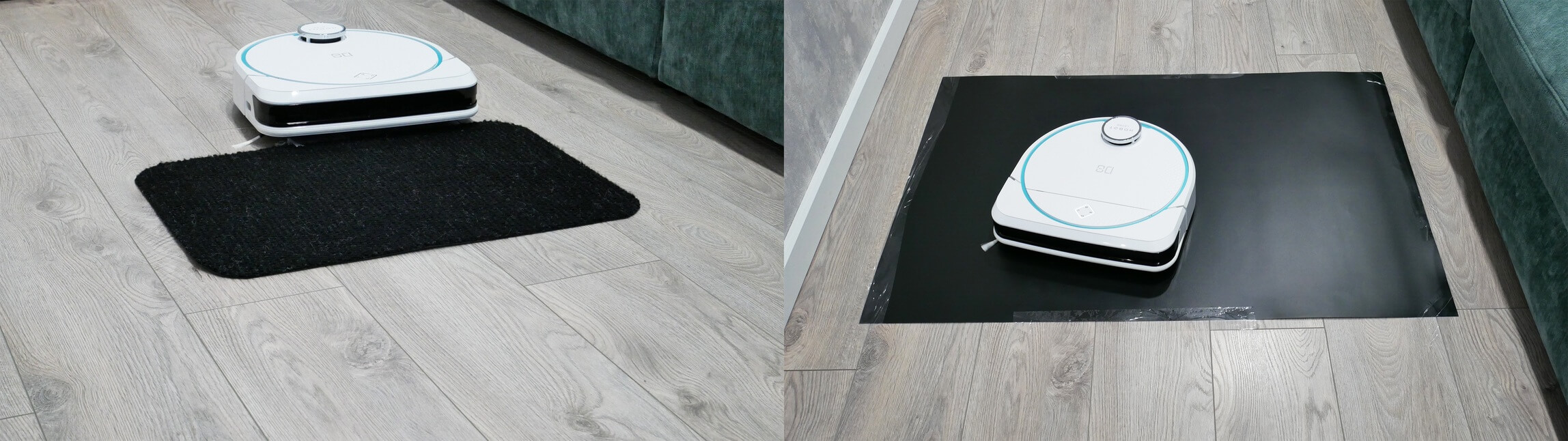
Driving on black surfaces
Noise level
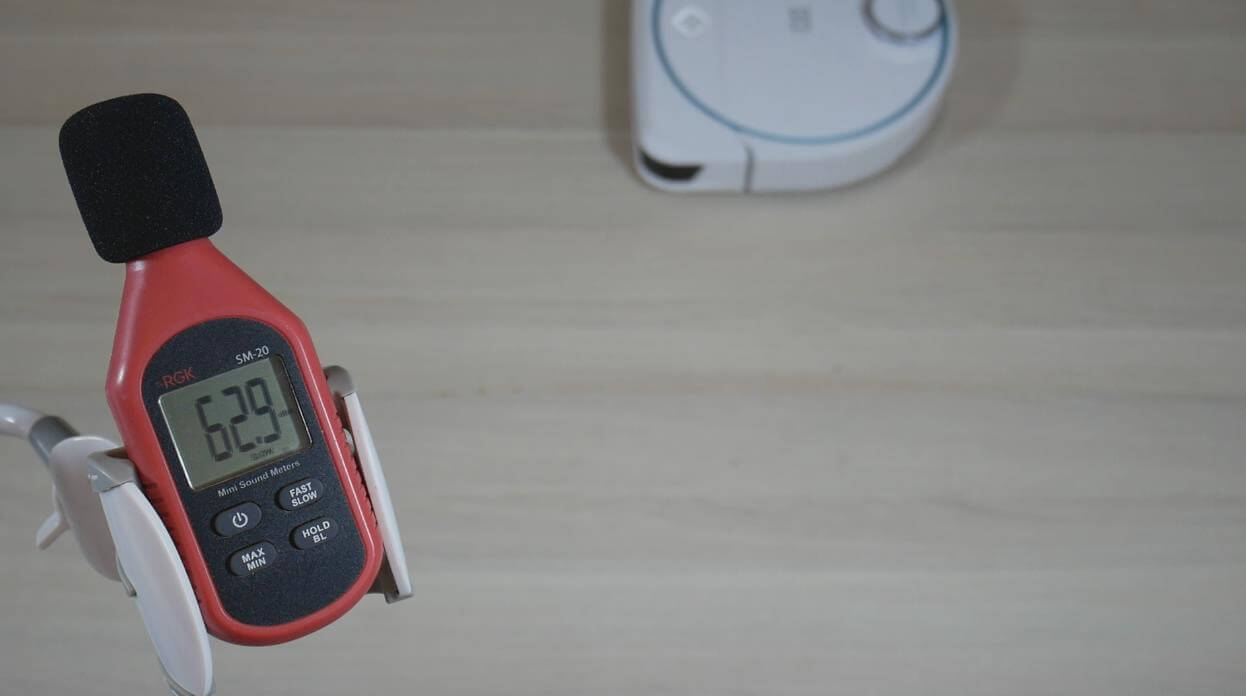
Noise levels range from 62 to 73.7 dB, depending on the selected operating mode. At maximum power, it's certainly loud, but it's worth noting that the robot is also quite powerful.
Noise level
Personal opinion
The Hobot LEGEE-D8 robot vacuum cleaner has been thoroughly reviewed and tested. our evaluation system he managed to gain 155 points and enter the TOP-10 tested robotic vacuum cleaners According to the project's version. And this one comes without the station. Once the Hobot LuLu station is released, I'll test the robot with it and evaluate it separately in this configuration. I'm confident it will compete for a spot in the top 5. I'll share my opinion of the robot after getting to know it.
I liked the following:
- High suction power.
- Turbo brush protection system against hair and fur.
- An ECO-compressor for waste in a dust collector, which is more environmentally friendly and cost-effective than purchasing bags for the station.
- It sweeps corners better than round robots.
- Water supply to the floor through nozzles.
- High quality dry and wet cleaning.
- Automatic lifting of the cloth on carpets.
- A vibrating mop that provides additional downforce to the floor.
- A large number of functions for flexible adjustment of cleaning parameters.
- High-quality cleaning in areas with curtains.
- An optional rinsing and drying station for wipes is available.
- Recording creative voice commands.
- Supports 5GHz Wi-Fi.
- Good equipment.
- Support for control via voice assistants, including Yandex.Alice.
- High quality assembly.
- Availability of warranty and service support from the manufacturer.
As for the shortcomings, there are mostly comments about the robot itself, and I'll also simply highlight the features that weren't implemented in Hobot's flagship, comparing it with its competitors:
- Afraid of black carpets.
- The central brush cannot be disassembled.
- A narrow area along the baseboard is not washed.
- The dust collector doesn't have a fully self-cleaning function. For some, the ECOpress will be an alternative, but for others, it won't be, and that's a fact.
- There is no system for identifying and carefully avoiding objects on the floor.
We haven't yet considered the pros and cons of the station itself; that will be covered in a separate, full review. Ultimately, for its price, the Hobot LEGEE-D8 is definitely one of the best. The best robot vacuum cleaners of 2023, but, like flagships from other brands, it has its weaknesses. For some, these are minor, for others, significant. Personally, I liked the upgrade and definitely recommend this robot vacuum.
If you have any questions, please ask them in the comments. Happy shopping. Bye!
Hello! I'm surprised by the 155 points. The previous version, the Legee 7D, got a much higher score—188, I think. Is the D8 worse than the D7? How?
D7 has 147 points. D8 is definitely better.
Hello. Are consumables from the d7 compatible with the d8?
Does the new product look similar to the D7? It's not clear at all why you're paying an extra 6-8 thousand.
I hope that good discounts will start on the predecessor after the release of the new product.
The difference is very significant))
If you had to choose between the Hobot LEGEE-D8 or Dreame L10s Pro robot, which one would you choose if the main focus was on wet cleaning performance?
What is more effective: a vibrating cloth or rotating mops?
Or what robot vacuum cleaner would you recommend for under $400 (no need for a cleaning station, takes up space and is noisy, and it's not a hassle to rinse and dry the rags yourself)?
There are no pets, there is one carpet with a pile of 5-7 mm.
Definitely better than the D8. The vibration platform scrubs better, and the cloth is thick and cleans well.
Hello. Can you tell me if consumables from the D7 are compatible with the D8? Filters, brushes?
Tell me, do you think it is possible to use the press function and the self-cleaning function at the same time on the D8?
How is that?
Tell me, which is better in your opinion: Xiaomi Omni 1s or d8?
There are no black carpets, so a self-cleaning station is not needed at this point. I'm more interested in cleaning quality. The D8, as far as I understand, cleans corners better.
D8 would definitely be better if the station is not needed.
What would be better if we take the station into account? As I understand it, they're very close. There are no carpets, but there's no way to connect the station to the sewer system.
Hello! I'm currently in the process of choosing a robot vacuum, and this model is definitely my favorite. The salesperson at the store tried to switch me to an iRobot i3 or j7, but they look a bit weak compared to this model.
Good afternoon. Could you tell me if I cover the height sensors (I have black carpet), will the carpet mat lift up?
I think so, it's not related.
Hello. Are consumables from the d7 compatible with the d8?
I'm choosing between the LEGEE-D8 and the Roborock S7. What do you recommend?
I'm currently choosing between the Hobot Legee-D8 and the Roborock S7. What do you recommend?
Hello! In your opinion, could the water spray function in this D8 model have a detrimental effect on the parquet flooring? My concerns stem from the direct contact of moisture with the parquet flooring, compared to the wet wipes found in most alternative robotic vacuum cleaners.
Hello! Can I disable the robot's Wi-Fi and Bluetooth? So it doesn't even emit background noise. Will it still work offline by pressing physical buttons?
Hello! I'm planning to buy a robot vacuum cleaner, choosing between the Legge d8 + lulu and the Dreame W10 pro. I want good performance for both dry and wet cleaning. I also want a cleaning station for cleaning the wipes. I have virtually no carpets, except in the children's room. Could you please tell me which robot is preferable?
Can you please tell me where I can download the app for the G8 robot vacuum cleaner with the Lu Lu station?
Can you tell me what is the height of the robot's charging station?
Thank you!