Xiaomi Mijia Self-Cleaning Sweeping Mopping Robot MJSTP: Picks up the cleaning cloth on carpets and rinses it at the station!
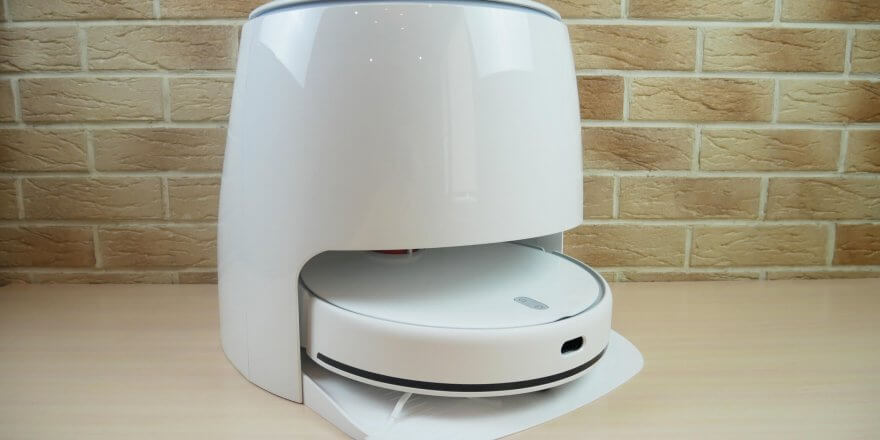
We continue testing New robotic vacuum cleaners with a wipe-rinsing function This review focuses on the new Xiaomi Mijia Self-Cleaning Sweeping Mopping Robot MJSTP, which went on sale at the end of 2021 and is actively selling on AliExpress, where I ordered it. This robot vacuum cleaner not only automatically rinses its cleaning pad at the station while cleaning, but also lifts it when it enters carpets. Thus, in a single cleaning cycle, the Mijia Self-Cleaning Robot Vacuum-Mop, as it's also known, can simultaneously vacuum and mop the floor, leaving carpets dry and clean. But that's not all. The platform with the cleaning pad moves in a reciprocating motion, which should help remove dirt from the floor better. Below, I'll review and test this device in detail, after which I'll express my opinion on how well its functionality is implemented and, therefore, whether the robot vacuum cleaner is worth the money. At the time of writing, its price is in the $400-$500 range, which is reasonable given its stated capabilities and features. So, let's get started!
Equipment
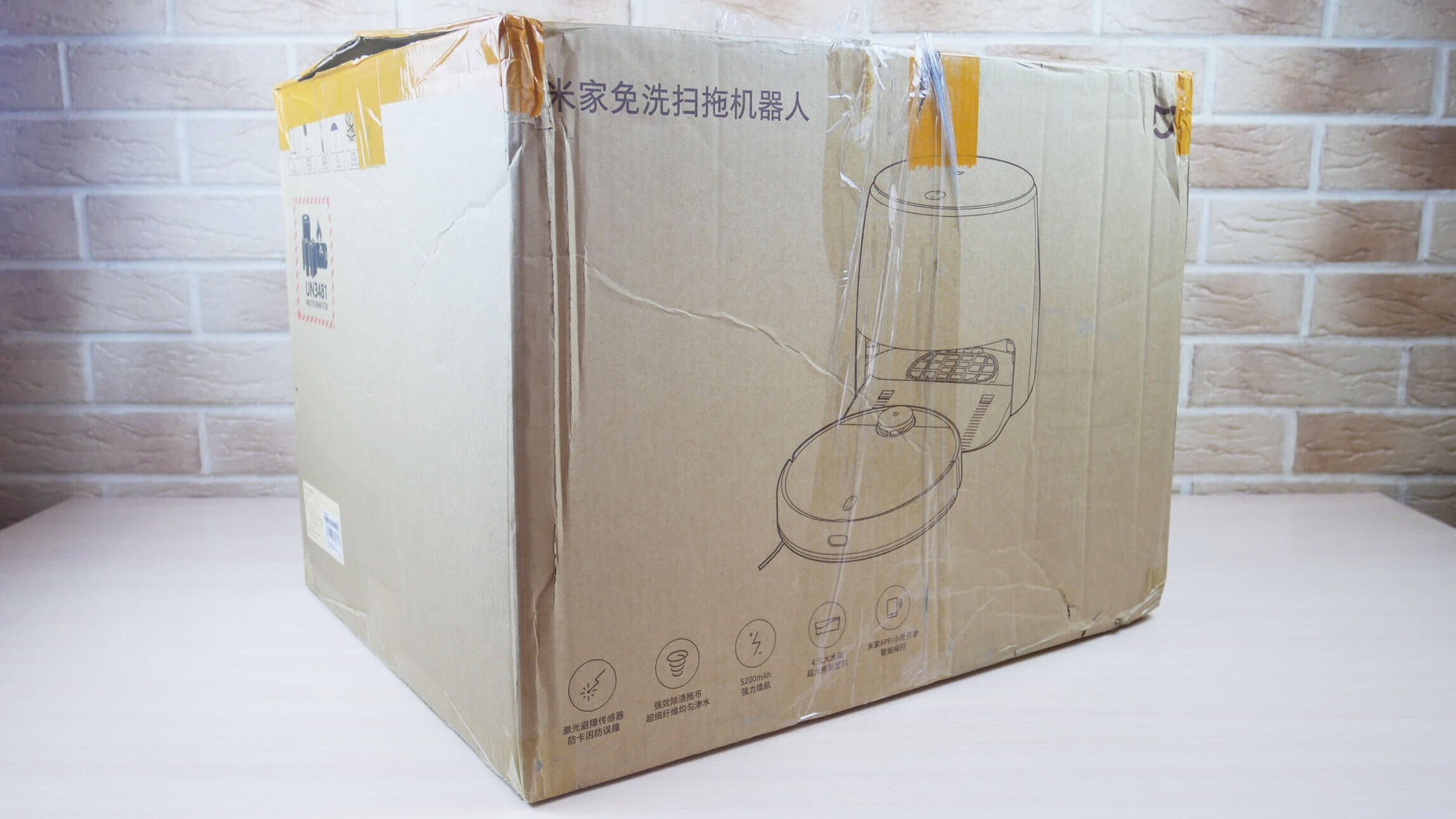
The robot vacuum cleaner arrived in a large box like this:
Box
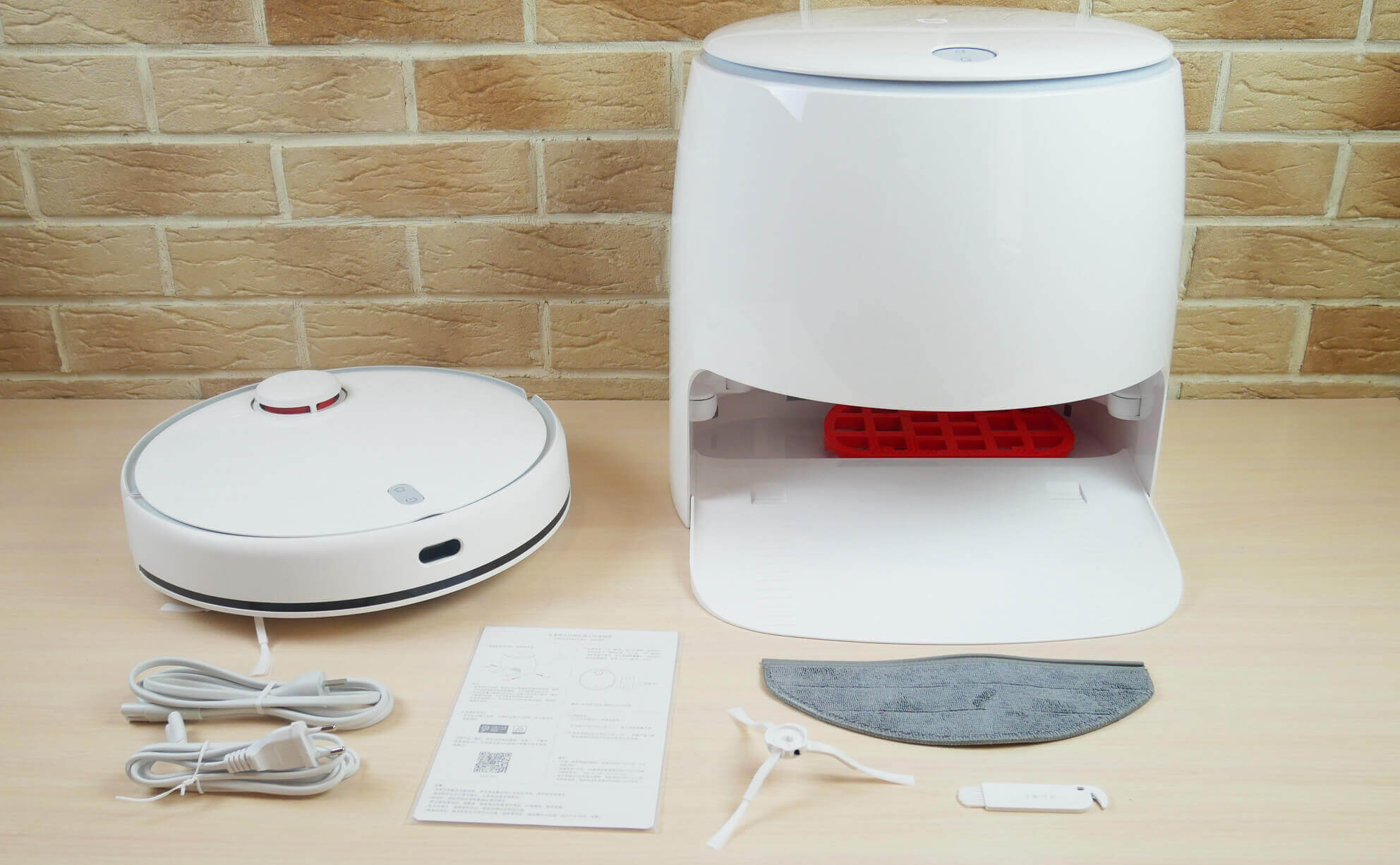
In addition to the robot and station, the delivery kit includes:
- Power adapter with Chinese plug.
- Another power adapter with a European plug.
- Operating instructions in Chinese.
- Spare microfiber cloth (one is already installed on the robot).
- Spare side brush.
- Cleaning tool for robot vacuum cleaner.
Equipment
We see that the kit is not minimal. There are even spare accessories included. But it would have been better to include a spare HEPA filter instead of the side brush. It wears out much faster. But thanks for that!
Appearance
Now let's take a look at the design of the Xiaomi Mijia Self-Cleaning Robot Vacuum Mop MJSTP. Let's start with the robot vacuum cleaner. It's white and round. The height of the body is 97 mm from the floor.
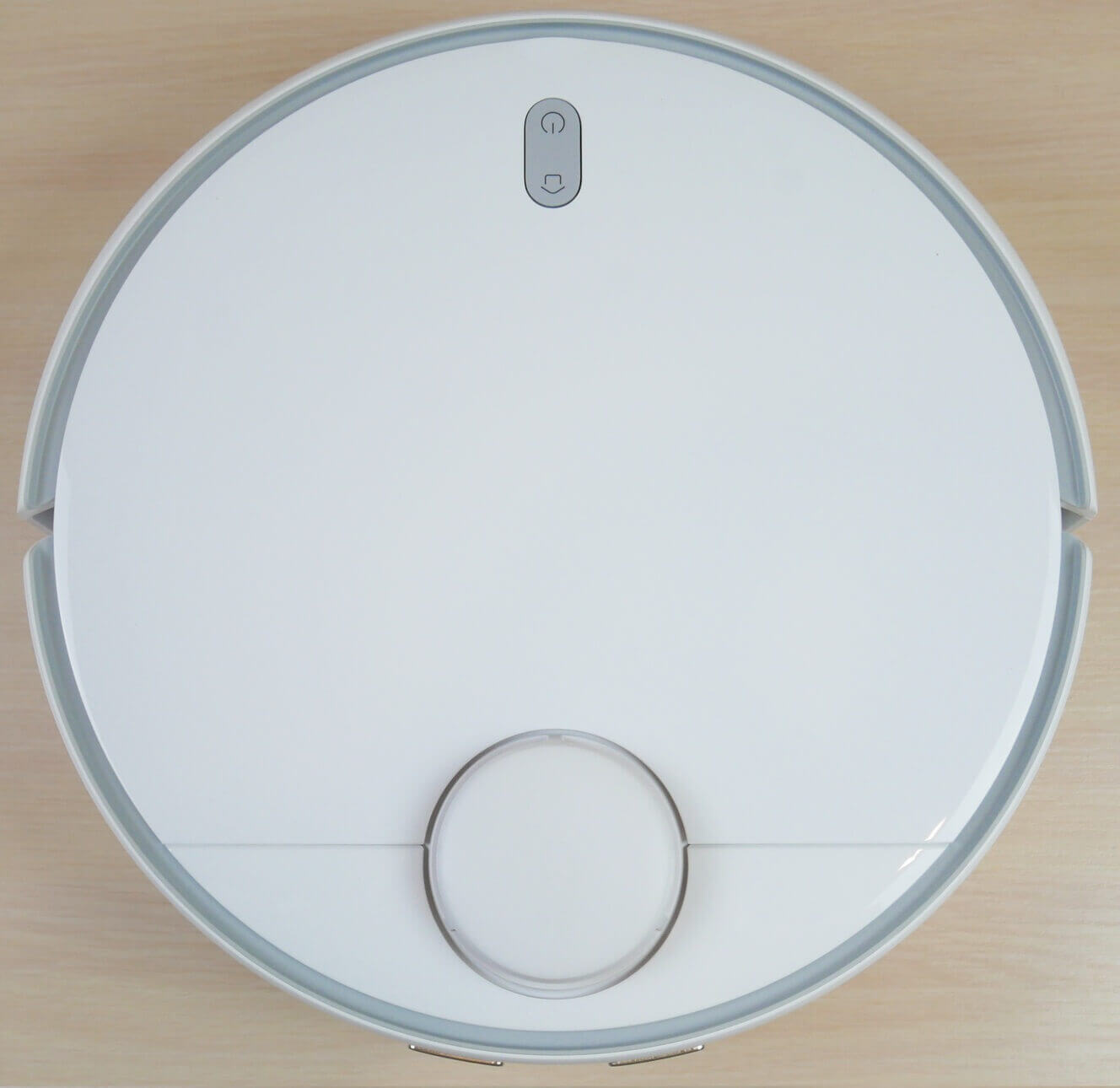
Top view
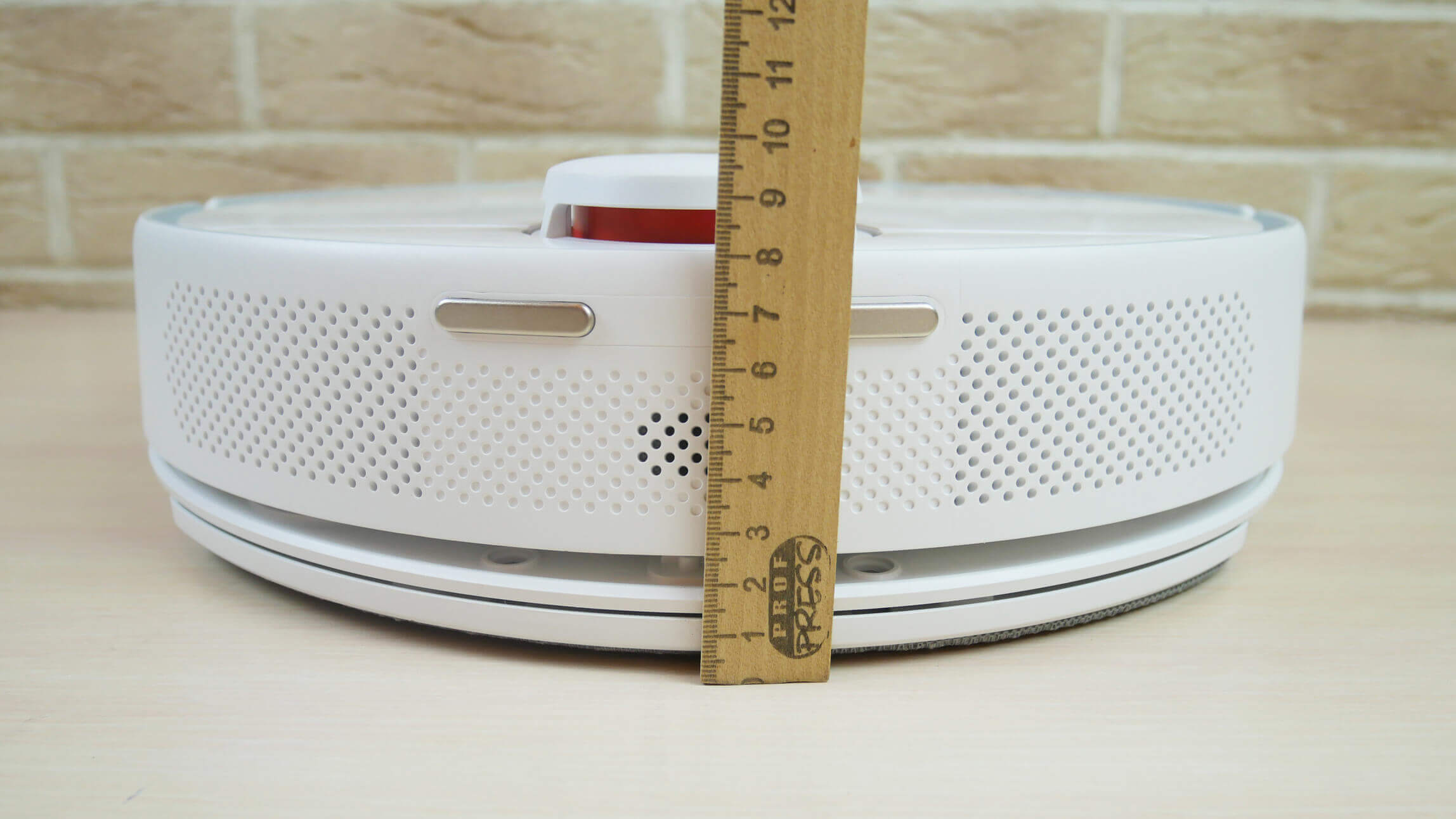
Height of the robot vacuum cleaner
The front mechanical bumper has an obstacle detection sensor. There is no additional wall sensor. The charging terminals are located at the rear.
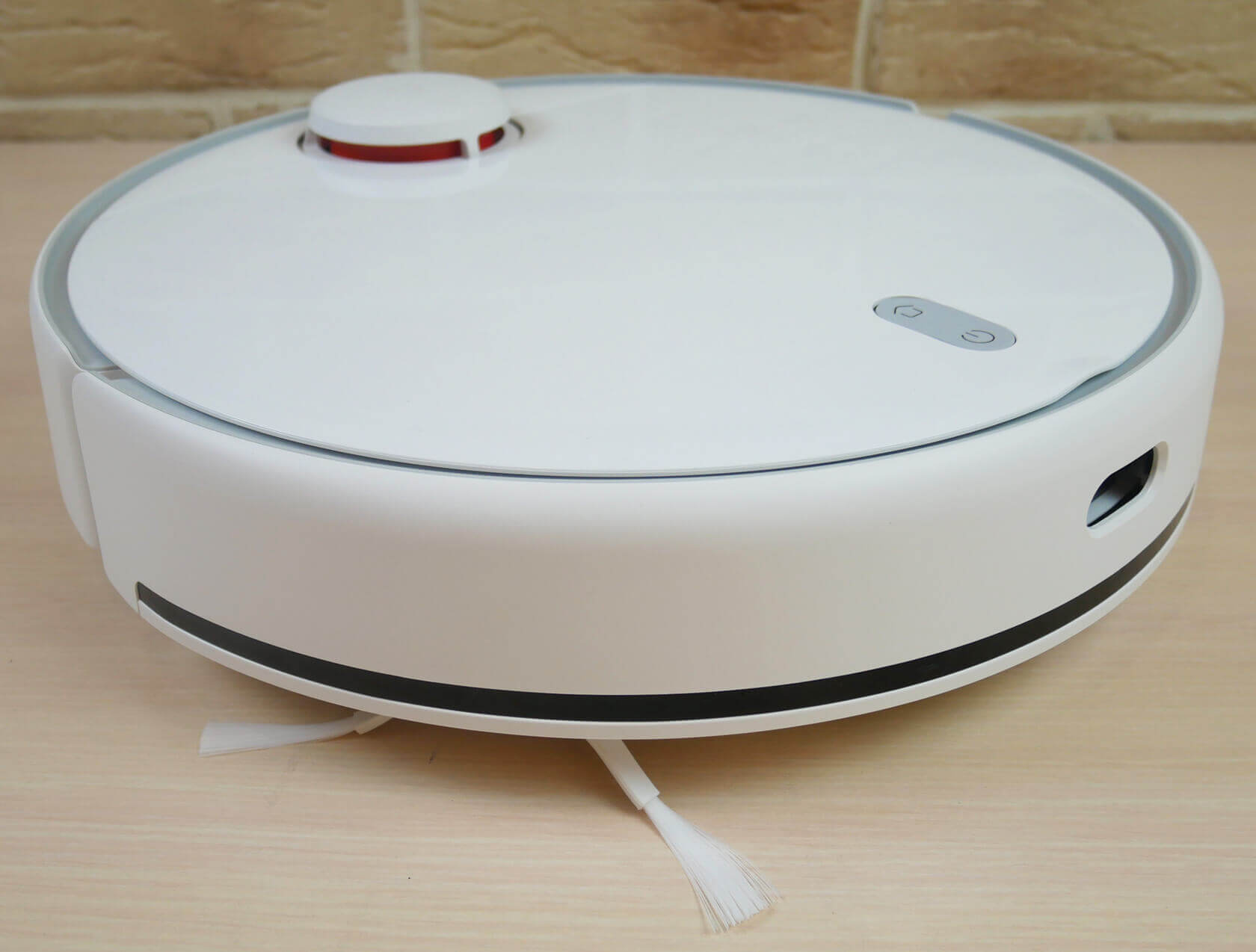
Side view
On the top of the lid, we see two mechanical control buttons: start/pause and forced return to the charging base. A lidar sensor is responsible for navigation. The lidar cover is spring-loaded, preventing the robot vacuum from getting stuck under furniture.
The dust container is located under the top lid. Its capacity isn't specified anywhere, but in my case, it held up to 450 grams of rice. Therefore, the dust container is likely 450-500 ml. The filtration system consists of a mesh filter and a HEPA filter.
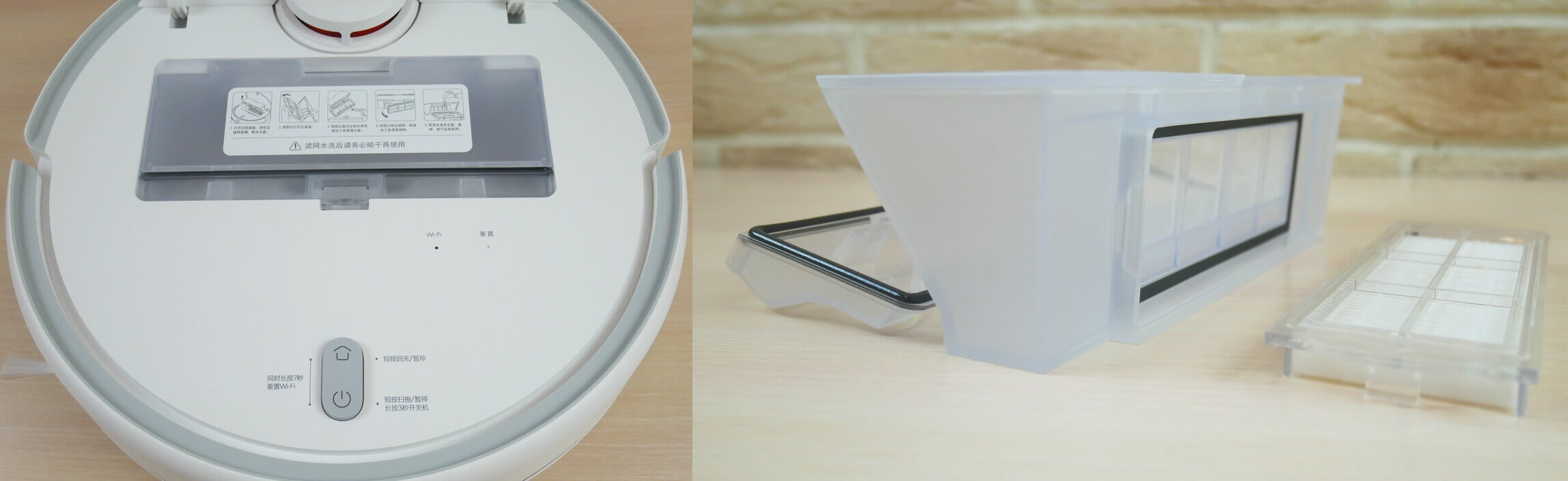
Dust collector
Let's take a look at the robot vacuum's underside. It has six fall protection sensors. The cleaning cloth attachment platform is non-removable; it's held in place by Velcro and a groove. This robot doesn't have a water tank. Incidentally, the cleaning cloth itself is quite thick. It's two to three times thicker than the standard cleaning cloths included with the robot. Xiaomi robot vacuum cleaners.
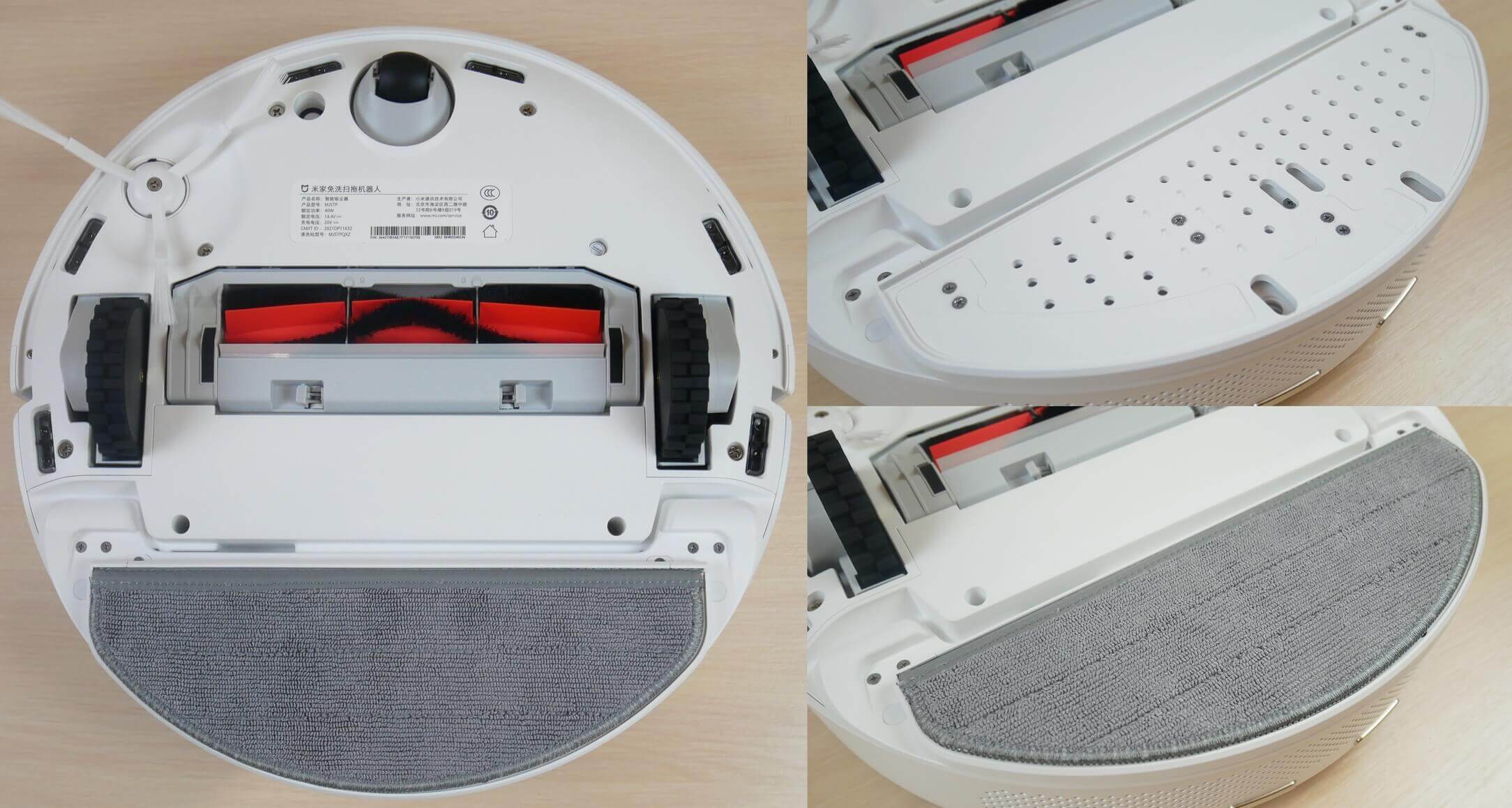
Bottom view
The central brush is made of bristles and petals. The bristles are very dense. Both sides of the brush can be removed to remove tangled hair and fur.
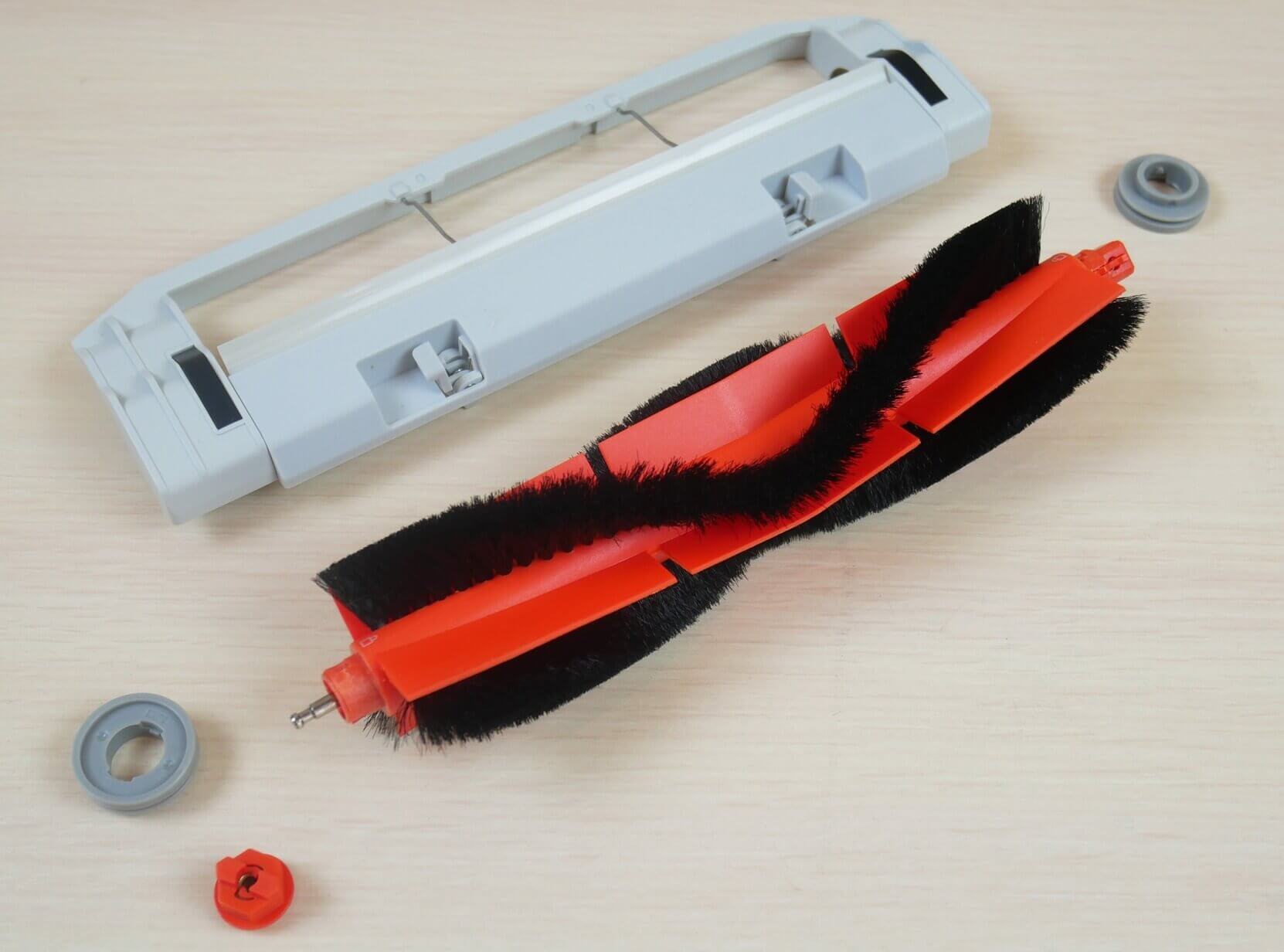
Central brush
And here's an important point: an ultrasonic carpet detection sensor is installed near the swivel roller. This is a plus. Considering all of the above, the build quality of the Xiaomi Mijia Self-Cleaning Robot Vacuum Mop MJSTP is above average. There are no particular complaints about it.
Let's take a look at how the station is set up. I can't help but agree with one of my subscribers that visually it looks a bit like a portable toilet :) Overall, it's an acquired taste. The same Dreame Bot W10 The station looks nicer, in my subjective opinion. The station is 45 cm high, but with the lid open, it's 72 cm high—an important consideration.
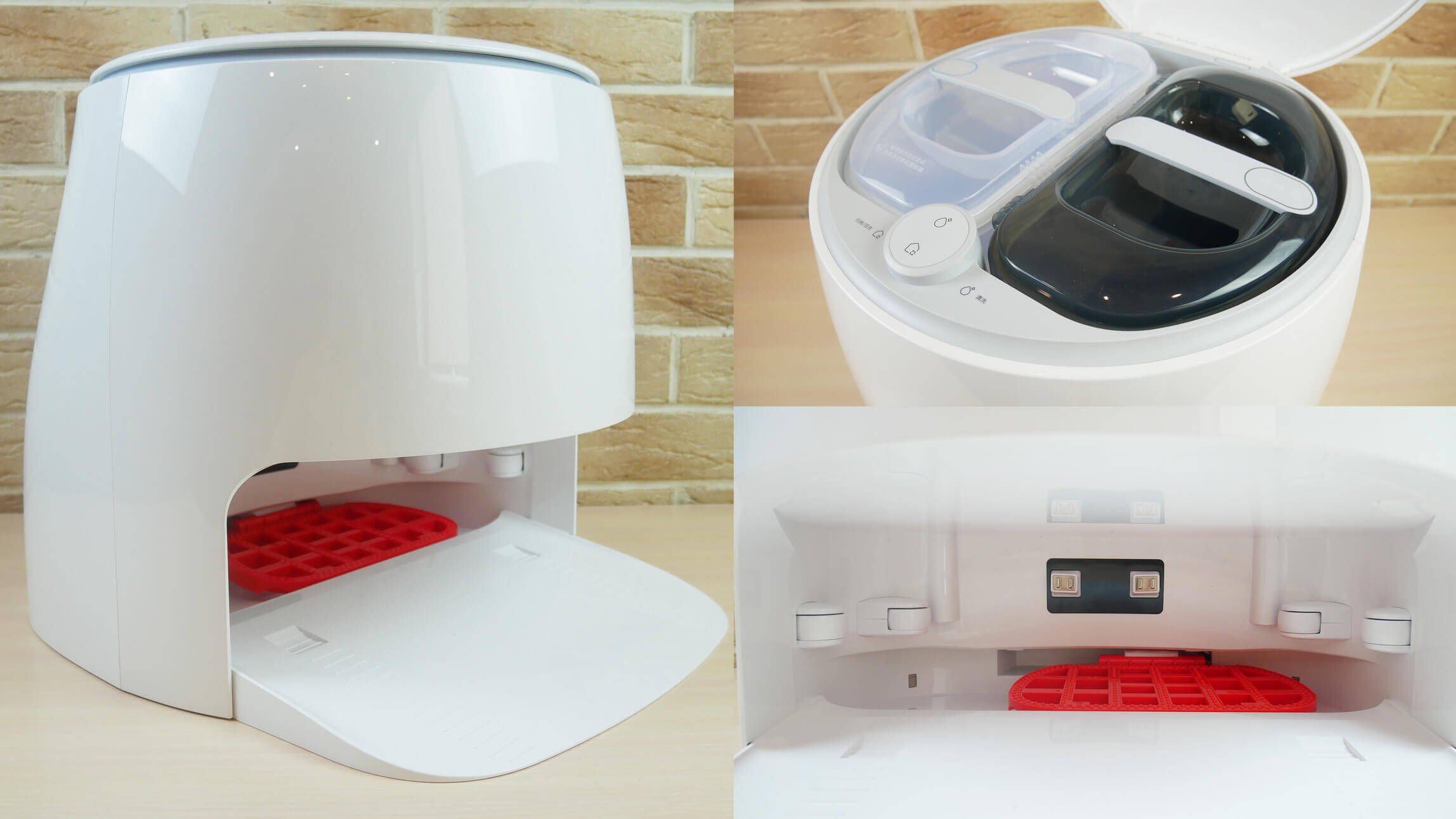
Wipe rinsing station
The station has two mechanical control buttons. Under the lid are two tanks: one for clean and one for dirty water. Their capacity isn't listed, but I weighed a full tank of clean water. The total weight was 5,146 grams. Therefore, each tank holds approximately 4 liters of water when filled to the maximum line.
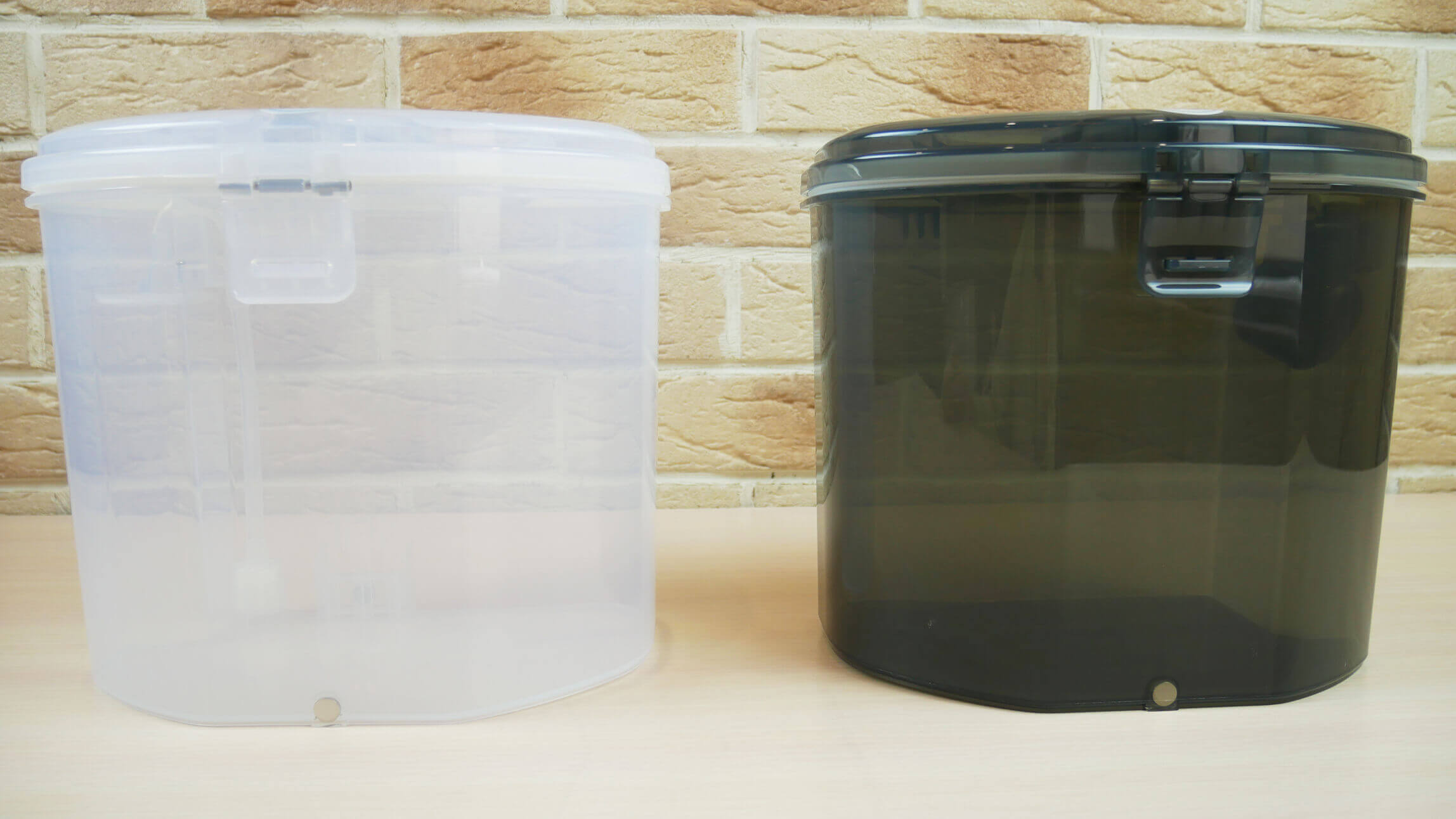
Tank for clean and dirty water
A tube is installed inside the clean water tank to supply water to the rinsing area of the cloth. A float is installed inside the dirty water tank; when activated, a notification appears in the app to empty the dirty water from the tank.
As for the robot's entry platform, the walls are equipped with rollers to help it park inside the station, as well as a brightly colored contraption that cleans the cleaning cloth of the debris it collects. It moves left and right, scraping away debris under a stream of water. The drain hole for dirty water is protected by a plastic filter like this one.
A major drawback of this station is that the platform can't be removed for rinsing, for example, in a sink, as is possible with the Dreame Bot W10. Cleaning it is a pleasure, as I discovered after completing my testing.
So, as a result, the robot is well designed, but the station is not so good.
Technical specifications
The main characteristics of the Xiaomi Mijia Self-Cleaning Sweeping Mopping Robot MJSTP, as declared by the manufacturer, are summarized in the table:
| Battery | Li-Ion 5200 mAh |
| Suction power | Up to 2800 Pa |
| Cleaning area | >100 sq.m |
| Battery life | >120 min |
| Dust collector | ≈500 ml |
| Volume of tanks for dirty and clean water (at the station) | ≈ 4 l + 4 l |
| Obstacle clearance | up to 20 mm |
| Dimensions of the robot | 353*96.5 mm |
| Dimensions of the station | 390*410*450 mm |
The manufacturer doesn't specify runtime, cleaning area, or even the capacity of the station's dust collector or tanks. So, I used approximate values I obtained during testing.
Functional capabilities
Let's move on to an overview of the Mijia Self-Cleaning Robot Vacuum-Mop's features. This robot vacuum cleaner is designed for the Chinese market. An international version is currently unavailable, so you'll need to select China when connecting. Consequently, the app interface will be in English, but the robot itself speaks Chinese. This is important to keep in mind. Also, in keeping with the best traditions of Chinese Xiaomi robots, the app is slow, which can cause some inconvenience during use.
On the main control panel, the robot vacuum cleaner creates a room map and automatically divides it into rooms. By clicking on the desired rooms on the map, you can direct the robot to clean them. There are also zone cleaning and local cleaning modes.
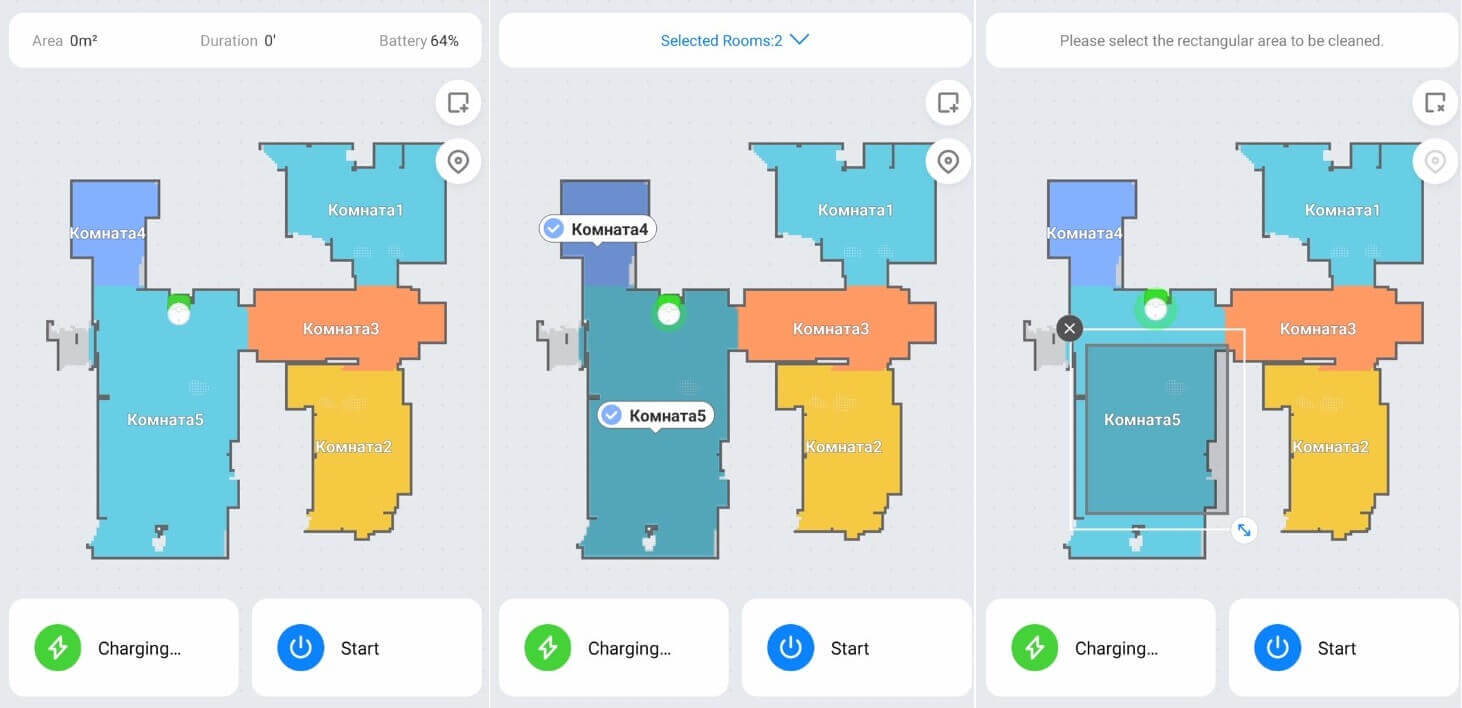
Cleaning modes
Below the map are buttons for forcing the robot to return to the station and for starting/pausing. Below are the cleaning settings. In normal mode, you can select a cleaning mode: dry only, dry and wet, or wet only. Suction power is also adjustable. There's no adjustment for the cleaning level of the cleaning cloth at the station. However, you can flexibly customize cleaning parameters for each room, including the number of passes (one or two), cleaning type, and suction power. That's a plus!


Setting up cleaning parameters
Let's move on to the settings section. First on the list is the cleaning log. Next is the map manager, where you can select one of the saved maps. This robot vacuum supports multiple maps. Within the selected map, you can set virtual walls and no-go zones, even separate no-go zones for wet cleaning mode. You can also edit room boundaries and name them. If necessary, you can reset the map and activate the rinsing and drying functions.
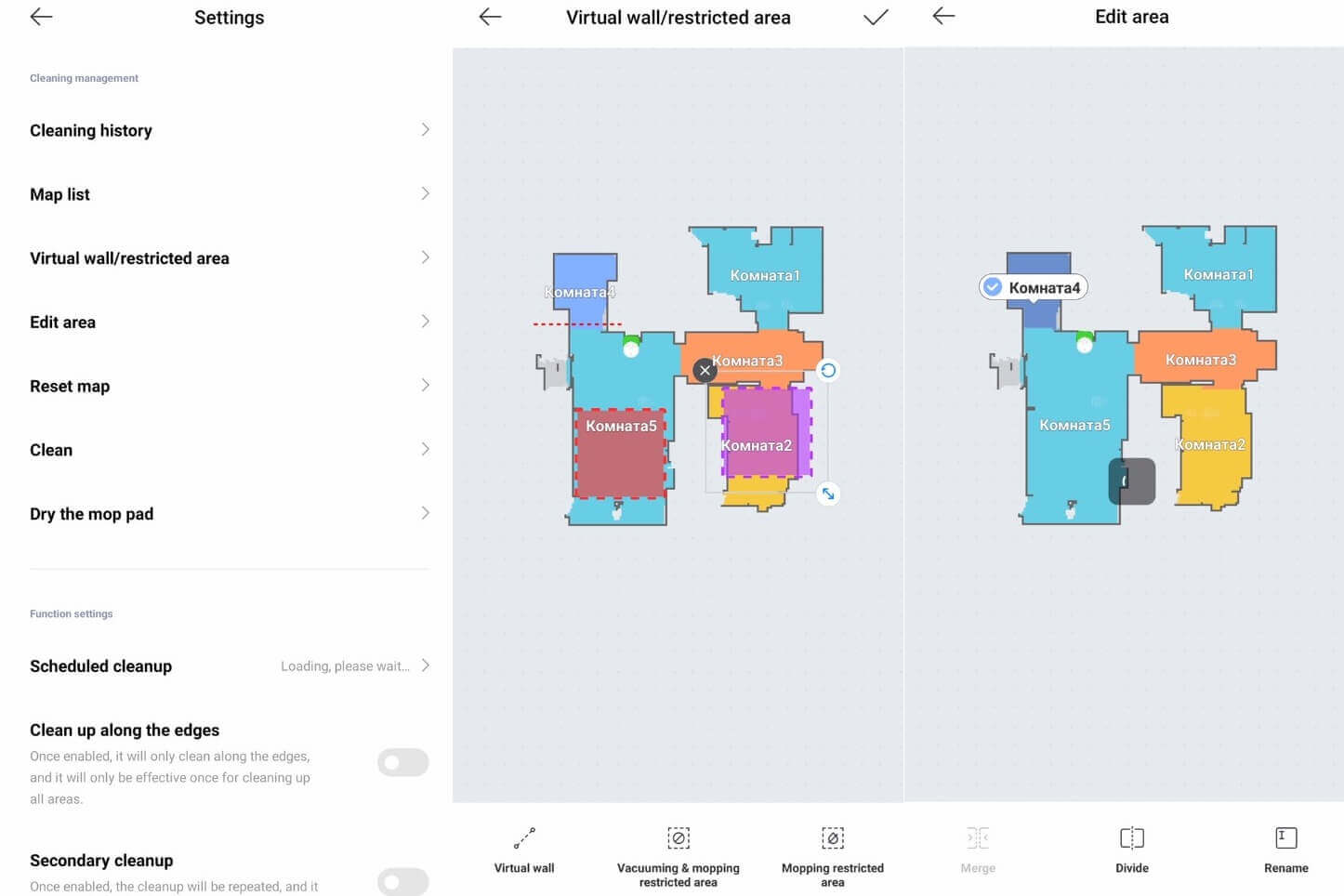
Basic settings
In the scheduled cleaning settings section, you can select days of the week, cleaning times, rooms, and customize cleaning settings for each room. This is a plus.
The two sliders below enable perimeter cleaning and double-cleaning of the entire accessible area. There's also a "Do Not Disturb" mode at a set time and a quick cleaning map function. Below that is another slider—it enables water sterilization in the station.
There are also sections where you can monitor the status of consumables, enable the robot's search by sound signal, and configure additional cleaning parameters. I'll cover this section in more detail.


Additional settings
There's a subsection for carpet cleaning settings. It includes features such as automatic power boost when entering carpets, a carpet avoidance feature, and displaying carpets on a map. You can also turn voice alerts on and off, adjust their volume, and choose the robot vacuum's mopping pattern. It can either move in an S-pattern, like most other robots, or in a herringbone pattern, which allows for better floor cleaning. Below that, you can calibrate the robot's sensors and enable manual control. That's all the functionality of the Mijia Self-Cleaning Robot Vacuum-Mop.
These capabilities are sufficient for automatically maintaining cleanliness in your home. It's also worth noting that the robot can continue cleaning after recharging at the base.
Testing
A detailed video review with all the tests has already been prepared and published on the channel. I recommend watching the entire video:
Navigation
Let's move on to the tests. First, we'll test the Mijia Self-Cleaning Robot Vacuum-Mop's navigation in a room with obstacles. It first sweeps the entire area along the perimeter, then in a serpentine pattern. The mop automatically lifts off the floor when placed on the dryer's feet and when passing thresholds, increasing the robot's maneuverability. As a result, the robot didn't get stuck on the dryer's feet and was able to clean around all the chair and box legs separately. During the cleaning process, it even stopped at the station for an intermediate rinse, as the algorithm is set to rinse the mop every 10 square meters. The test was a success!
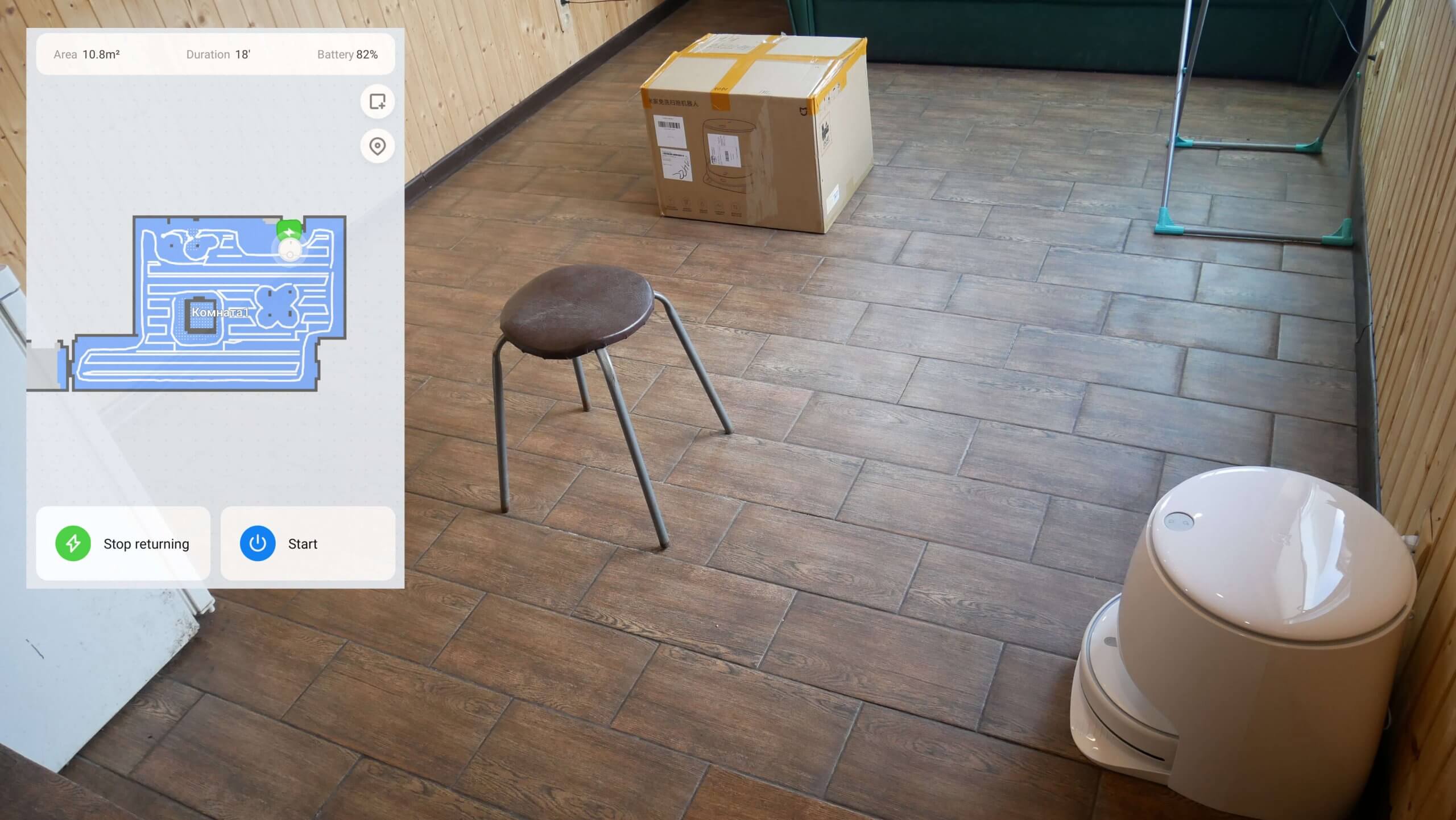
Navigating an Obstacle Room
Navigating the house was seamless. The robot cleaned room by room, first along the perimeter, then in a serpentine pattern. There were no uncleaned areas left. The test was successful!
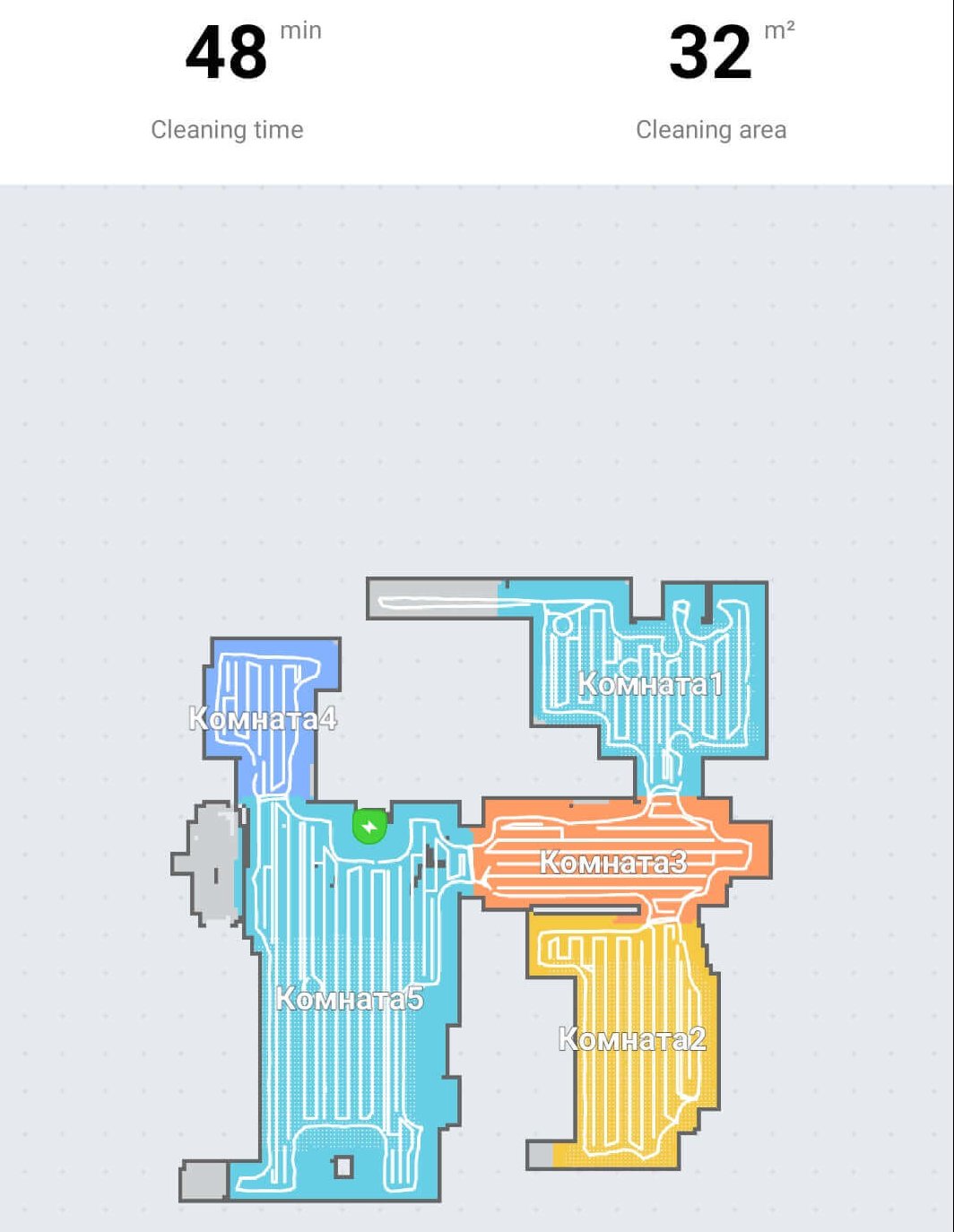
Navigation within the home
Suction power
The suction power, however, is a major concern. The manufacturer claims a whopping 2800 Pa, yet in reality, the robot couldn't even vacuum out debris from a 2 mm gap. The suction power is weak, which is the first serious criticism of the robot.
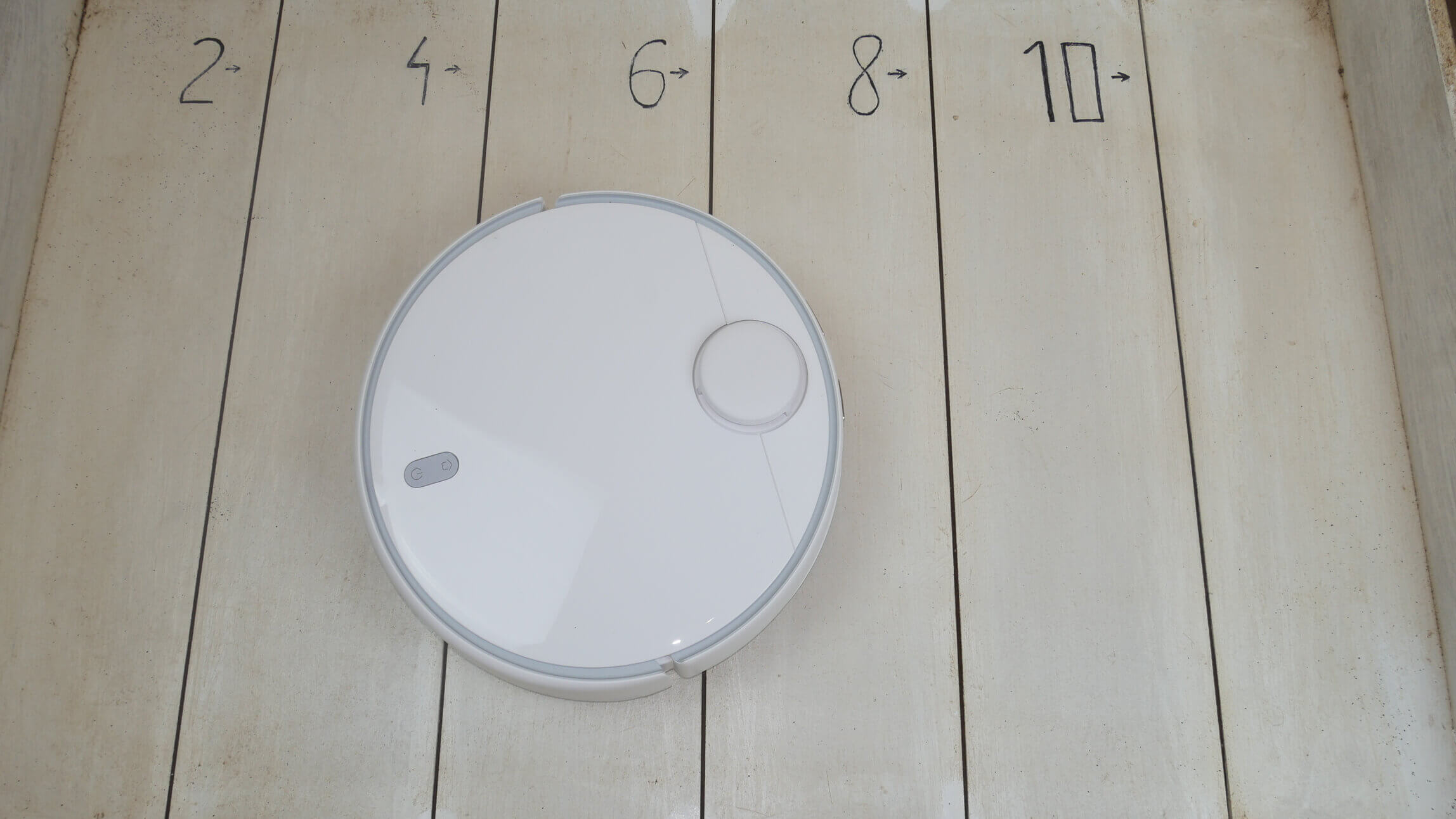
Suction power
Dry cleaning of laminate flooring
The quality of debris collection on laminate floors was excellent. The robot completely collected debris on the rack, leaving only a small amount in the corners due to its round shape. A few hairs got caught in the center brush, but the bulk of the debris was collected in the dust bin. Test passed successfully!
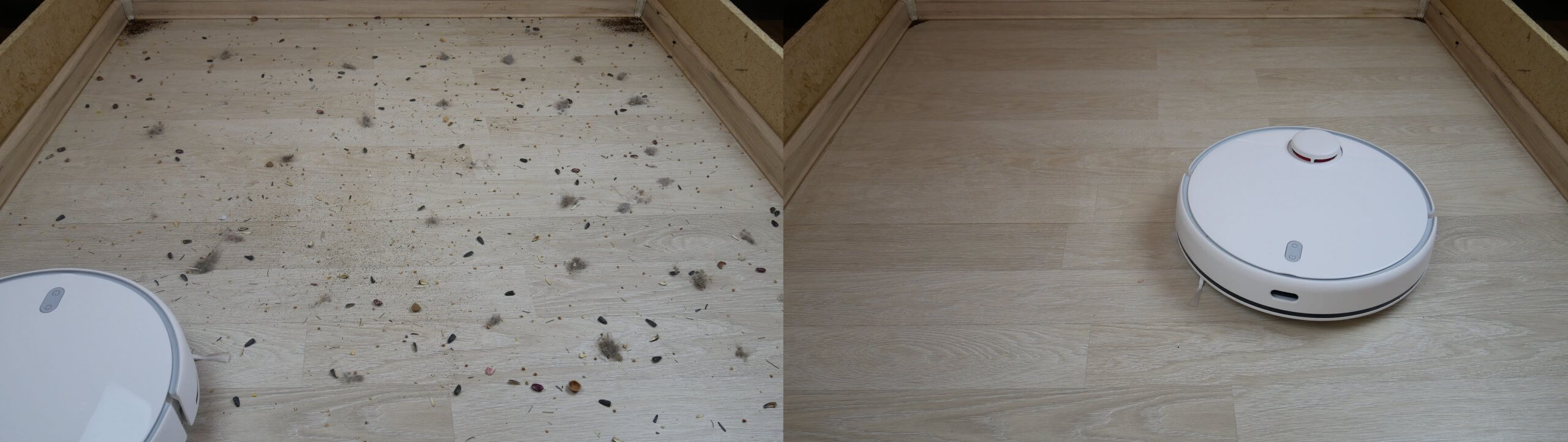
Dry cleaning of laminate flooring
Carpet cleaning
However, carpet cleaning performance, in keeping with the best traditions of Mijia robot vacuum cleaners, is below average. The Mijia Self-Cleaning Robot Vacuum-Mop struggles to clean carpets of various types of debris, and this is important to consider.
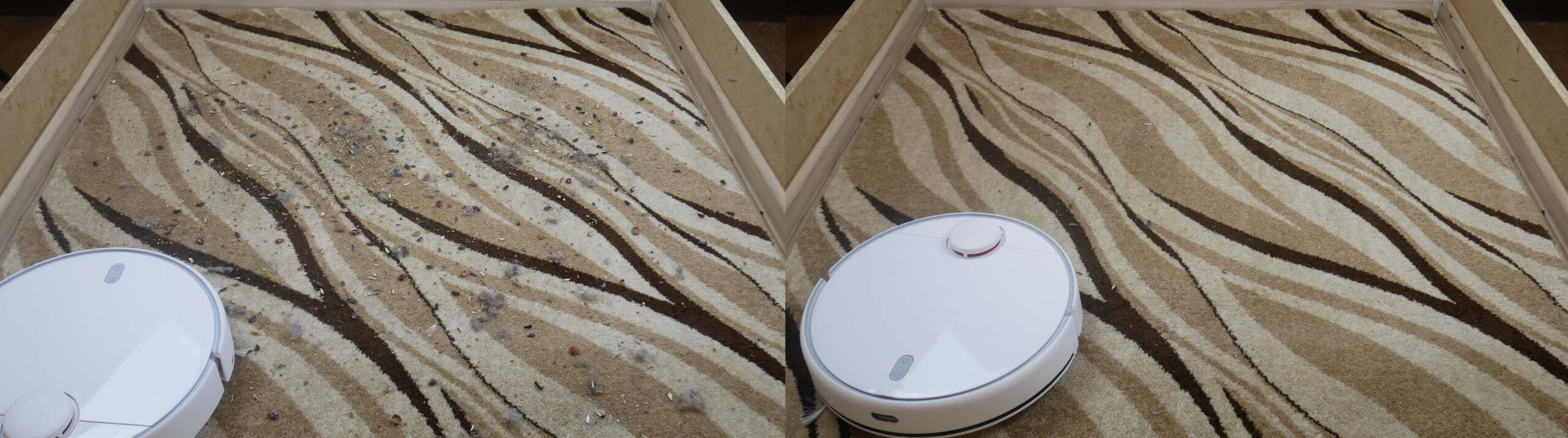
Carpet cleaning
Wet cleaning (wiping off dirt)
An issue arose while testing the dirt removal performance. Wet cleaning doesn't activate even if the robot is manually moved to the desired location, such as the stand in my case. For the robot to mop the floor, it must be started from the station and cannot be moved. Otherwise, after restarting, it will want to return to the base to rinse the wipes. I had to drag the station onto the stand to at least somehow test whether the Mijia Self-Cleaning Robot Vacuum-Mop was capable of mopping the floor.
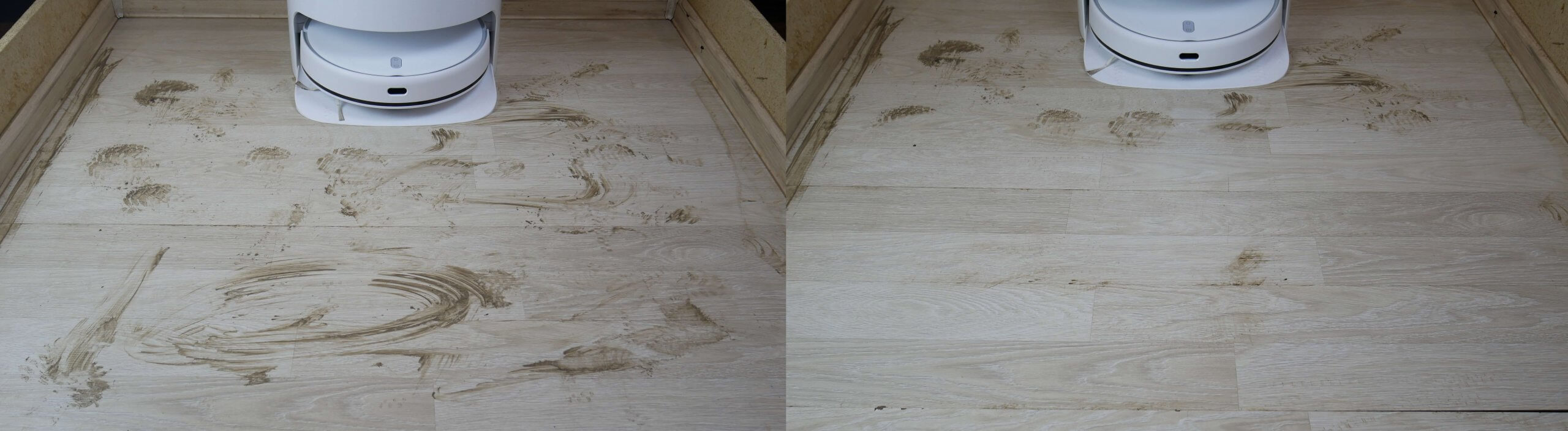
Wet cleaning (wiping off dirt)
It's safe to say that it's capable. While not perfect, its dirt removal performance is above average (it simply didn't reach the areas to the left and right of the base). Like most robots, it has a blind spot along the baseboard where the cleaning cloth can't reach. However, after several attempts and rinsing the cloth in between, the robot finally removed most of the dirt in the cleaning area.
Wet cleaning (removing stubborn stains)
But it's completely incapable of removing tough, dried-in stains. It's not just incapable of removing sauce; even coffee stains are a big problem for it. The cloth presses very weakly against the floor, and its movements don't improve the effectiveness of the cleaning process. So it's mostly marketing. The same old story. Hobot Legee 7 much more suitable for such tasks!
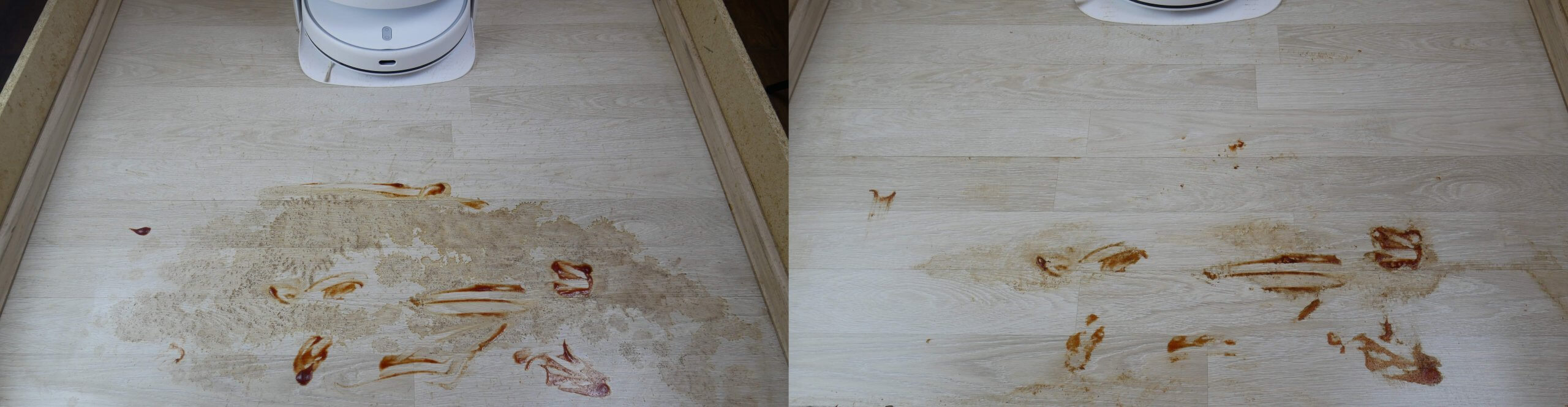
Wet cleaning (removing stubborn stains)
Wet cleaning and carpets
As mentioned earlier, when entering carpets, the robot vacuum cleaner automatically lifts the cloth, as it does Roborock S7Therefore, the robot is capable of thoroughly cleaning the floor and collecting debris, leaving carpets dry and clean.
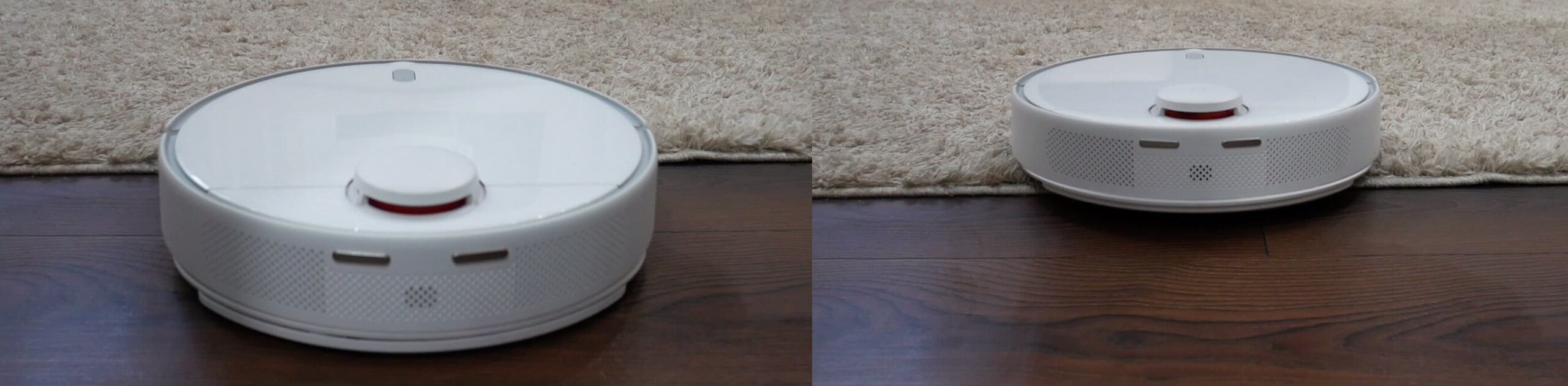
Lifting the napkin when driving onto the carpet
However, if necessary, you can enable carpet avoidance mode to prevent the robot from entering them at all. This can be useful if the pile is very high and the cleaning pad isn't raised high enough.
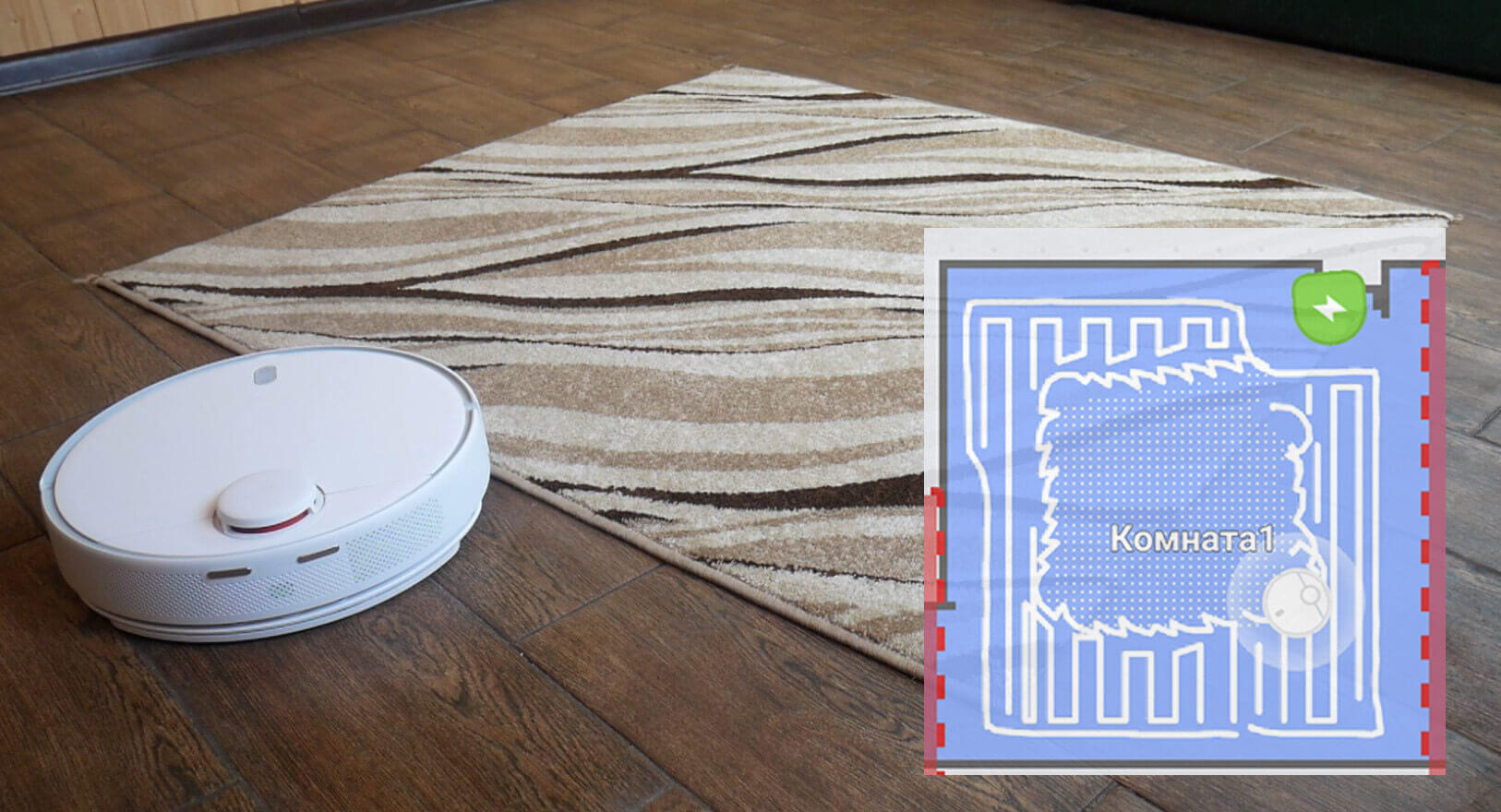
Carpet avoidance mode
Simultaneous dry and wet cleaning
However, a big advantage of the Xiaomi Mijia MJSTP is that it can vacuum and mop the floor simultaneously, while rinsing the cleaning cloths during the cleaning cycle to ensure the cleaning quality does not deteriorate.
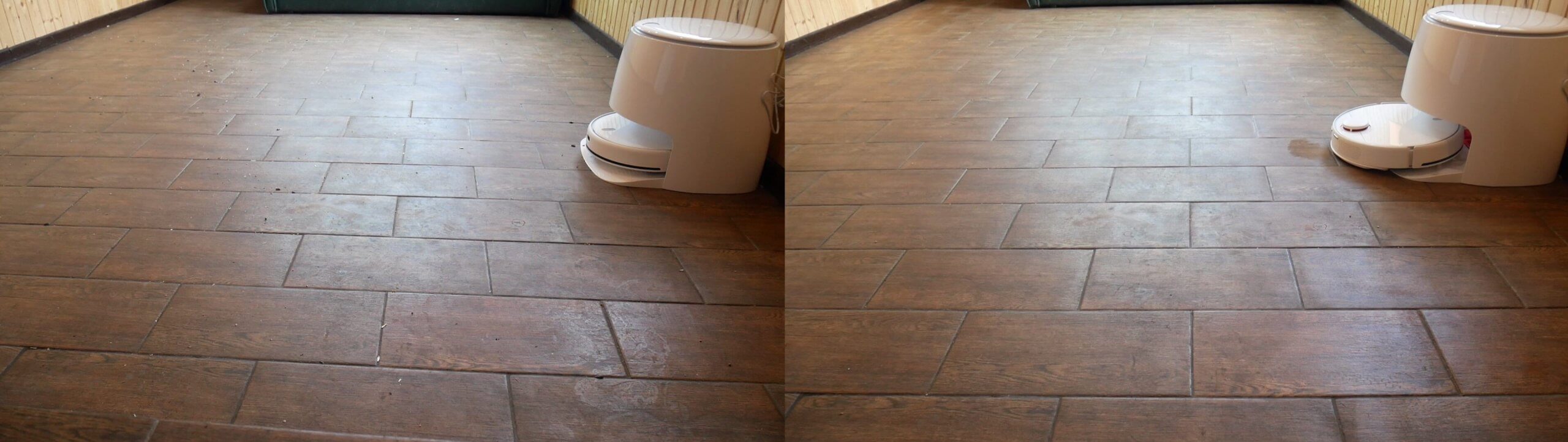
Simultaneous dry and wet cleaning
However, it's a shame that you can't choose how often the wiper rinses. 10 square meters is optimal, but sometimes you'd still like the robot to rinse the wipers more frequently during cleaning. Or to rinse after each cleaning zone, as is the case with the Dreame Bot W10.
Self-cleaning quality of wipes
I'll share the results I obtained regarding the station's wiper rinsing performance. After a complex test, we see that the wiper is heavily clogged with debris. After the rinse cycle, it's much cleaner, although not perfectly clean. However, in real-life household conditions, the wiper's condition isn't so dire during cleaning, so the station is truly up to the task.
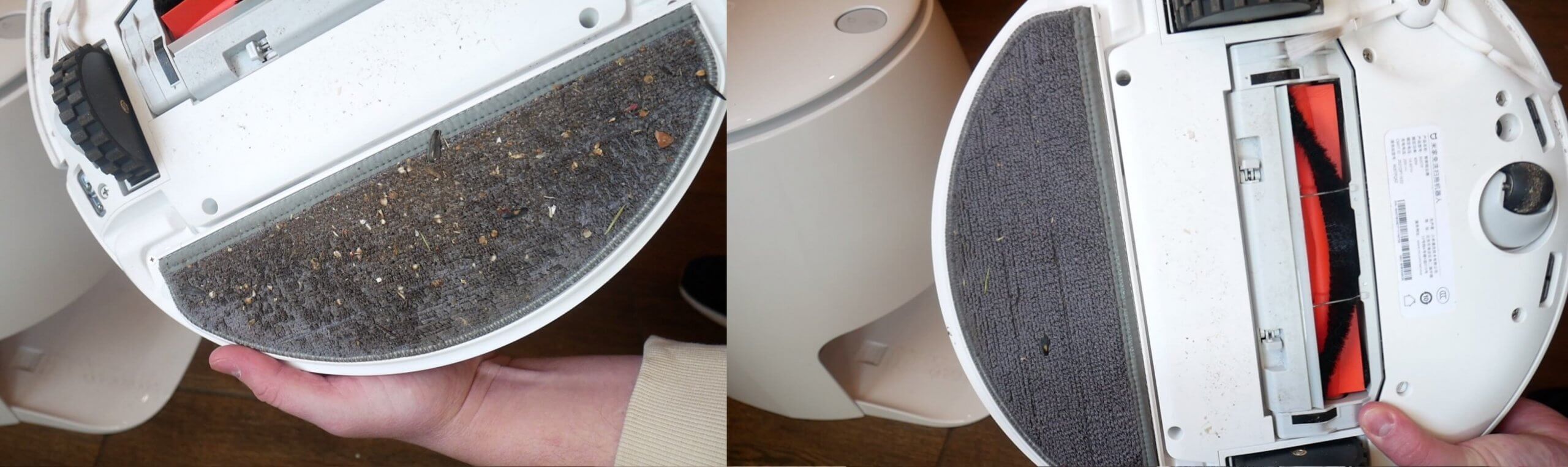
Self-cleaning quality of wipes
I decided to test the already-washed wipe under running clean water. The water was a bit dirty when rinsing by hand, but the wipe was cleaner than dirty. So, in my opinion, the station is more effective.
I also tested how well the station dries the cloth after a cleaning cycle. The next morning, the cloth was completely dry and clean. There was no unpleasant odor in the room, so this feature is truly useful and practical.
Obstacle clearance
The Mijia Self-Cleaning Robot Vacuum-Mop has excellent obstacle clearance. It easily navigates a 2-centimeter threshold, lifting the mop as it passes. That's a plus!
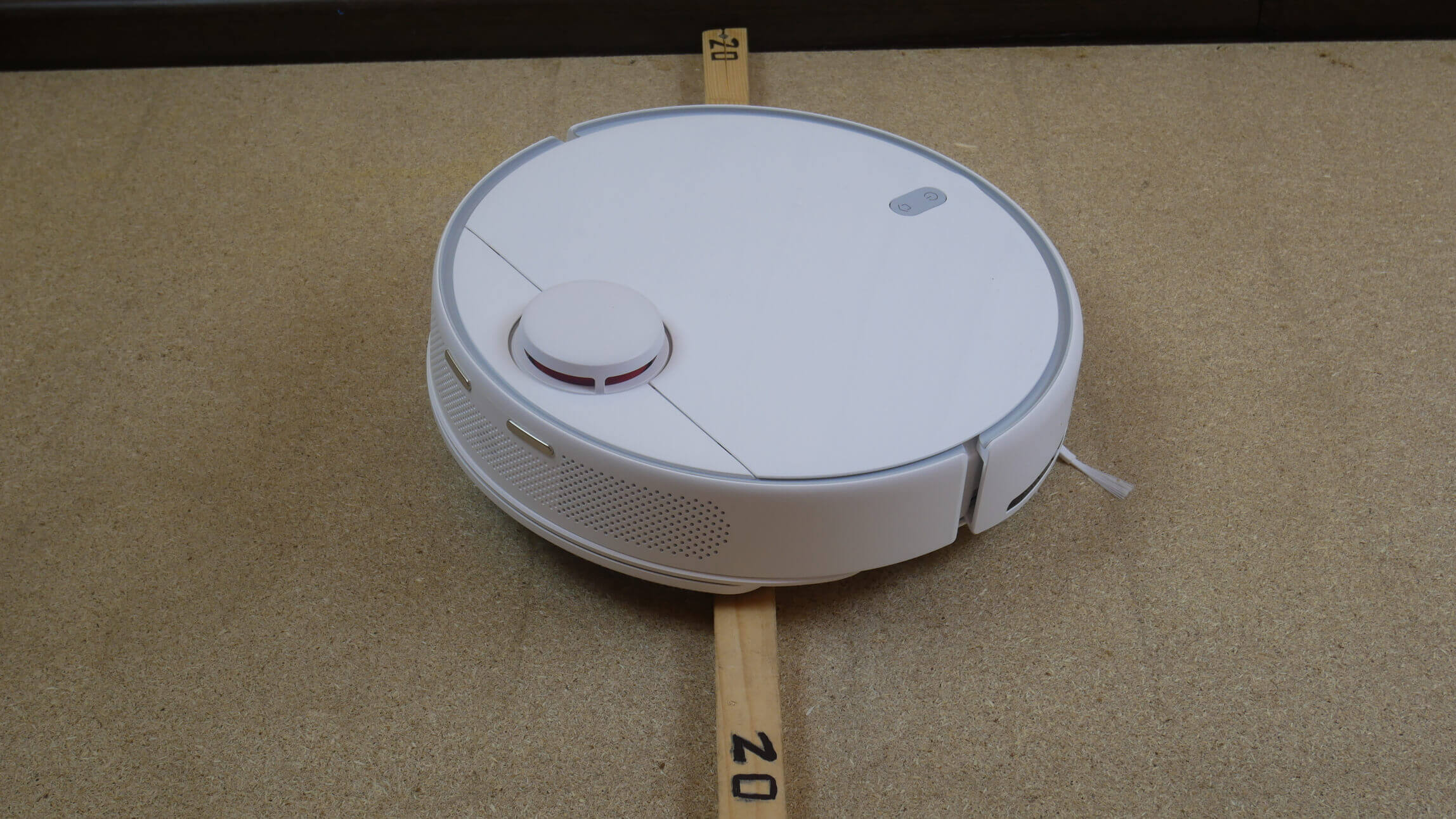
Obstacle clearance
Driving on dark surfaces
Another plus is that the robot vacuum cleaner is not afraid of dark surfaces, unlike most robots in the Xiaomi family.
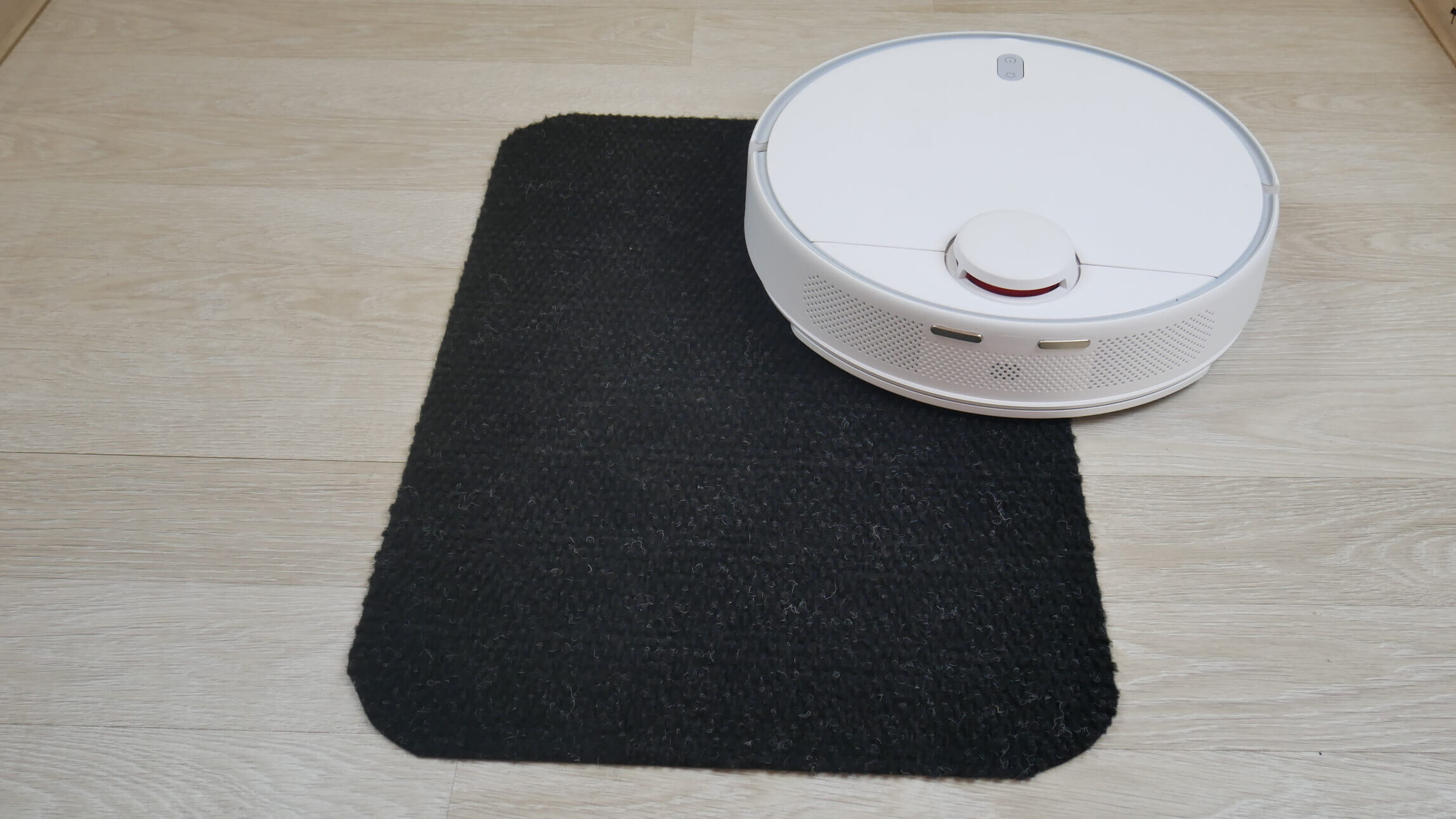
Driving on dark surfaces
Noise level
In Quiet mode, the noise level is between 59-62 dB. In Standard mode, it reaches 63.5 dB. In Medium mode, the noise level rises to 66 dB, and at maximum power, the peak was 69.3 dB. The noise level is elevated, given the weak suction power. And that's not good.
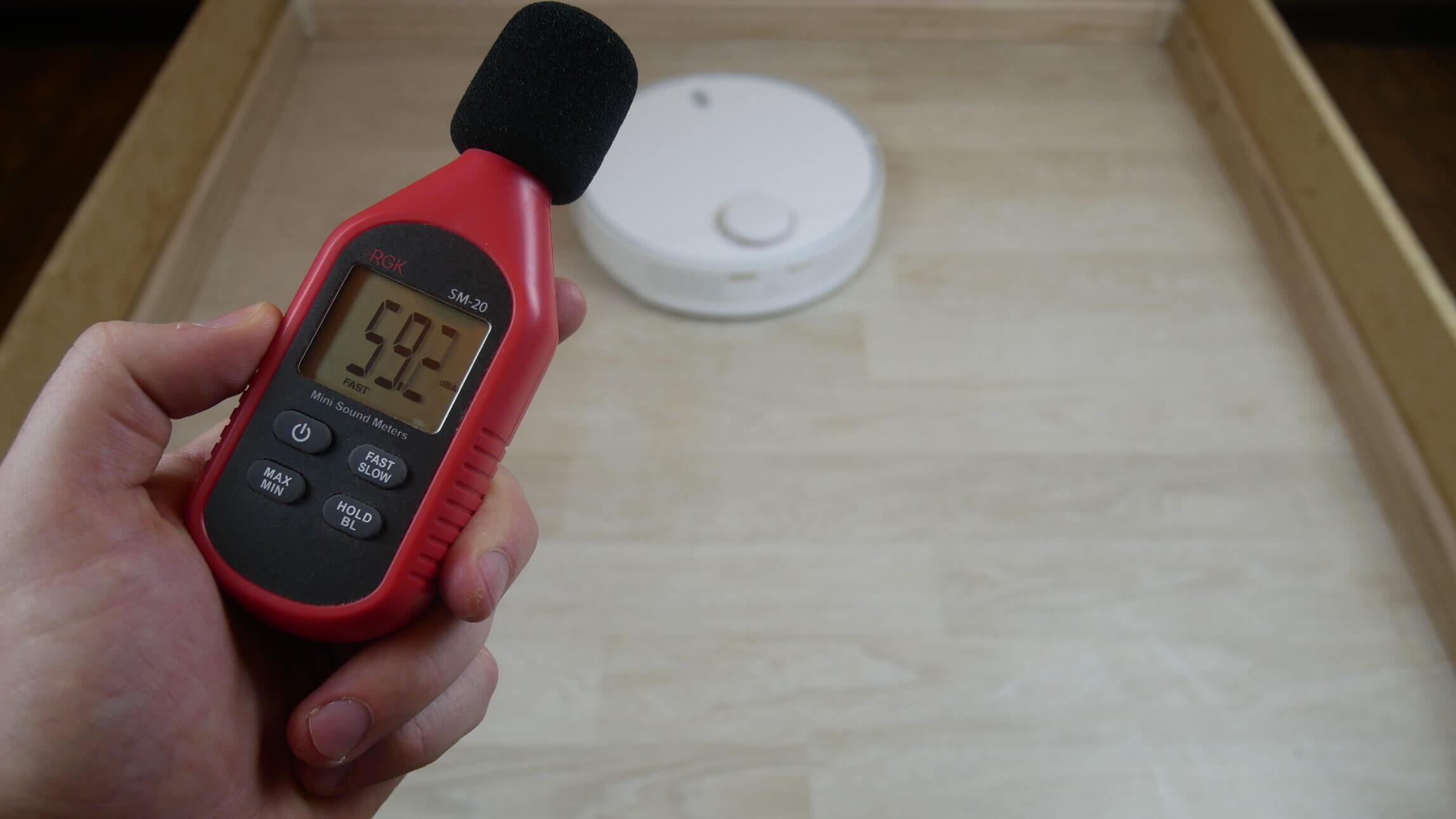
Noise level
Some observations
Well, I’ll share some observations that I discovered during testing.
First, the Mijia Self-Cleaning Robot Vacuum-Mop does not clean a wide enough area along the baseboard.
Second, it can clean carpets in a herringbone pattern by lifting the cloth. The key is to enable the professional wet cleaning mode in the settings. This is certainly an interesting solution that will slightly improve the cleaning quality on carpets. However, it will also increase the cleaning time.
And thirdly, each wipe rinse uses about 200 ml of water, but the figure fluctuates somewhat. Sometimes it uses 150 ml, and sometimes 220-230 ml. Overall, it's not entirely clear what explains the difference in consumption.
Well, the rinsing of the napkin itself takes about 2 minutes, perhaps someone was interested to know this.
Let's sum it up
Xiaomi Mijia Self-Cleaning Sweeping Mopping Robot MJSTP has been thoroughly reviewed and tested. our evaluation system he managed to gain 73 out of 100 points.
Overall rating of robot vacuum cleaners tested on robovac.washerhouse.com:https://robovac.washerhouse.com/en/rejtingi/robovac-obshhij-rejting-robotov-pylesosov-robo.html.
The result is good, but I obviously expected more from the new product. For example, the imperfect Dreame Bot W10 managed to score 79 out of 100. Xiaomi didn't even reach it in this regard, due to a number of issues. Let's take it one step at a time.
I liked the following:
- The presence of a station for rinsing wipes, which effectively copes with its task.
- Simultaneous dry and wet cleaning.
- The robot vacuum cleaner can lift its cloth when it enters carpets, making it very practical and versatile.
- Good navigation.
- High-quality dry cleaning on hard surfaces.
- Good obstacle clearance.
- The robot vacuum cleaner is not afraid of dark floor coverings.
- Flexible setting of cleaning parameters for each room.
- A very good price, considering the presence of a station and the cost of similar robots with a station for rinsing wipes.
But there are also many disadvantages, namely:
- Not capable of removing difficult stains.
- It doesn't wash along the baseboard.
- Low suction power.
- Poor quality carpet cleaning.
- The robot is designed for the Chinese market and therefore operates on Chinese servers. The app is laggy, the interface is in English, and the instructions and voice notifications are only in Chinese.
- Poor quality carpet cleaning.
- Small dust collector capacity.
- It is not possible to adjust the rinsing frequency of the wipe.
- It is inconvenient to maintain a platform that cannot be removed for cleaning when dirt accumulates.
As a result, I have a lot of criticism for the Xiaomi Mijia Self-Cleaning Sweeping Mopping Robot MJSTP, some of which are quite serious. Yes, it certainly has some merits compared to the Roborock S7 with its classic self-cleaning station for dry debris, especially if you're looking for a robot vacuum cleaner for wet cleaning large areas. But I can't call it one of the best in its class. If it were at least good at cleaning carpets or scrubbing away dirt—at least one of those two strengths—then yes, there would be fewer issues. Otherwise, its results are pretty average, and it doesn't stand out in any way.
Although, again, the price is very attractive, and the robot is suitable for keeping the house clean. Just don't expect miracles from it. If you have carpets in your home, but want a robot to vacuum and mop everything without getting the carpets wet, it certainly makes sense to buy it. Since the only comparable products are the Roborock S7 and Hobot Legee D7, which will soon go on sale. However, they don't have a rinsing station. Therefore, this solution is, in some ways, optimal for certain conditions.
On that note, I'd like to end my question. If you have any questions, please ask them in the comments. Happy shopping. Bye!
I couldn't wait for you to review the Roidmi EVA, so I'm testing it myself. When you do the review, please check the list of glitches and rough edges from my first post - and maybe you can tell me how to get around them?
Hello! Excellent review, thank you. I'll try to check everything out! Some of the issues are typical for other robots. For example, you can't move it to another floor without a mopping station. The Mijia MJSTP has the same problem. After getting to know it personally, I'll try to check everything out and find a solution. What city are you from? Can we arrange to borrow your robot for a few days for review? Mine won't arrive anytime soon.
Hello, is a review of the Xiaomi Mijia Pro STYTJ06ZHM planned, and if so, when can we expect it?
Hello! It's planned. I ordered it back in early January, and it's still being delivered from China. I don't know where, so I can't give you an estimate on the delivery date yet. I hope to have a review in March. Stay tuned.