Xiaomi Mijia Robot Vacuum-Mop Tangle-free Brush: A robot vacuum cleaner that cleans its own turbo brush
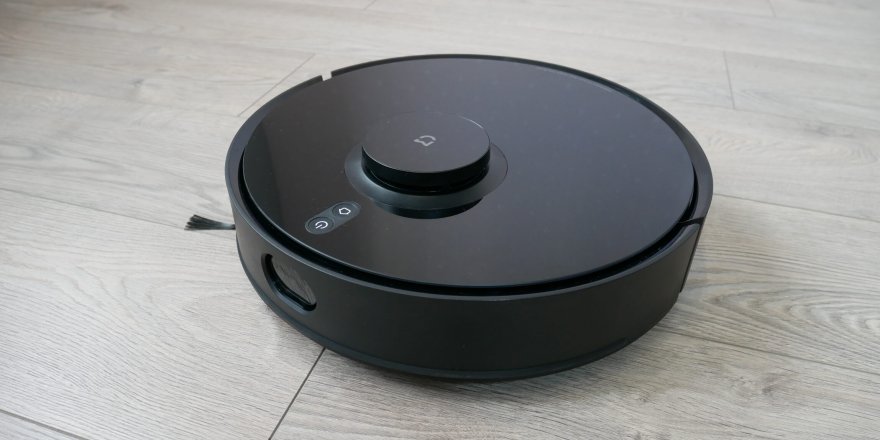
The Xiaomi Mijia Robot Vacuum-Mop Tangle-free Brush (STFCR01SZ) is a Chinese version of this robot vacuum cleaner. The global version is sold as the Xiaomi Robot Vacuum S10T. The device stands out for two key features: suction power of up to 8000 Pa and a hair-tangle prevention system. This suggests that this robot vacuum cleaner is suitable for cleaning carpets and picking up pet hair. Furthermore, maintenance is expected to be minimal. Additionally, the Mijia Tangle-free Brush is equipped with a lidar sensor and a wet mopping function. Overall, it's a promising option, with an average price of around $350-400. I'll review and test this robot vacuum cleaner in detail below, after which I'll share my opinion on whether it's worth buying. So, let's get started!
Equipment
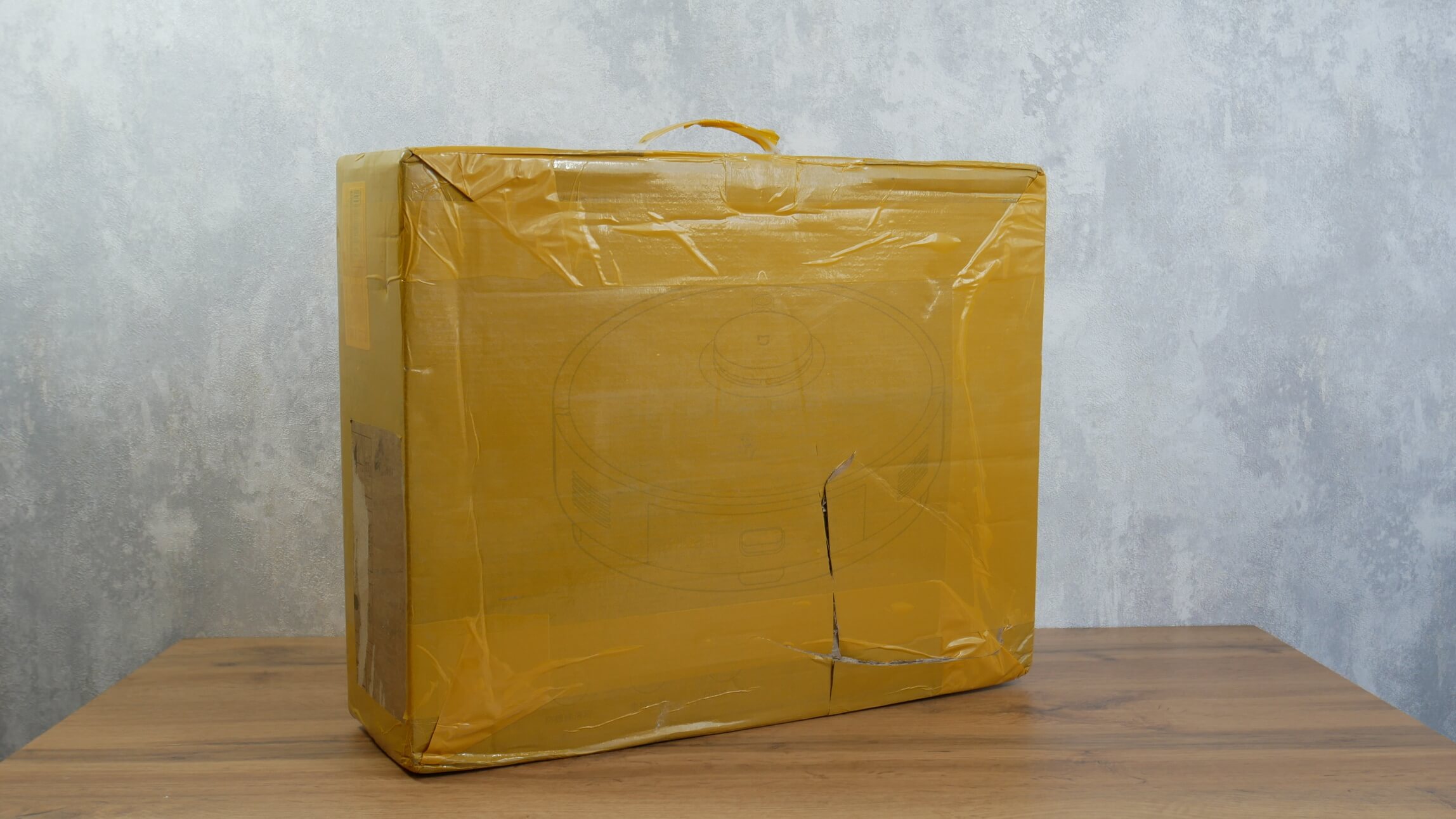
The robot vacuum cleaner arrived in a branded box like this:
Box
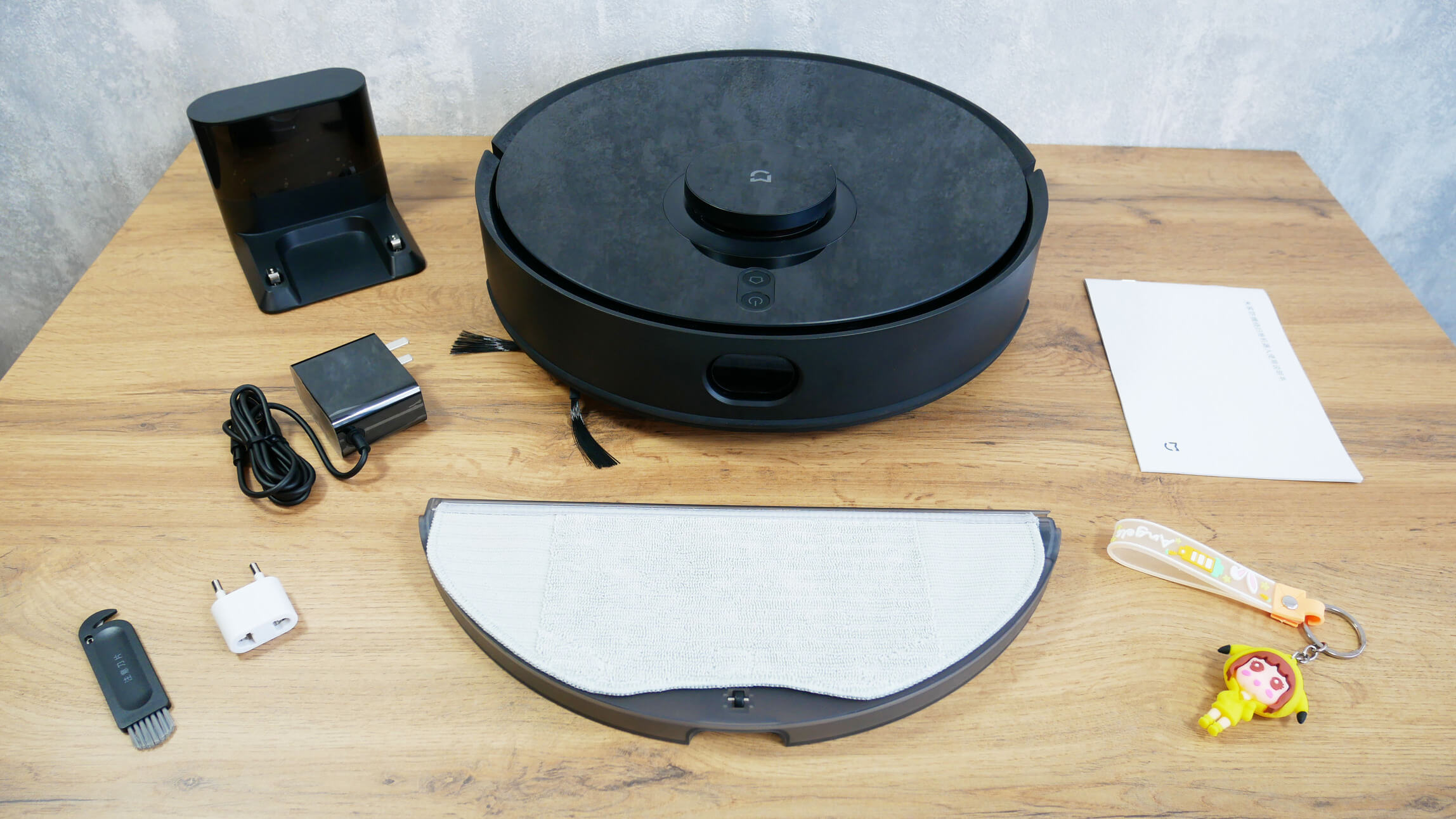
The package includes:
- Wet cleaning nozzle with a microfiber cloth installed.
- Charging base.
- Power adapter with adapter for European socket.
- Operating instructions in Chinese.
- Robot cleaning tool.
- And it's not clear whether it's a gift from the manufacturer or the store. But it's very nice.
Equipment
The package includes minimal accessories, which is typical for robot vacuum cleaners in the Xiaomi ecosystem.
Appearance
Let's take a look at the Xiaomi Mijia Robot Tangle-free Brush. It's black. The top cover is glossy and easily soiled. The body is round. The robot's height is about 103 mm, which isn't ideal.
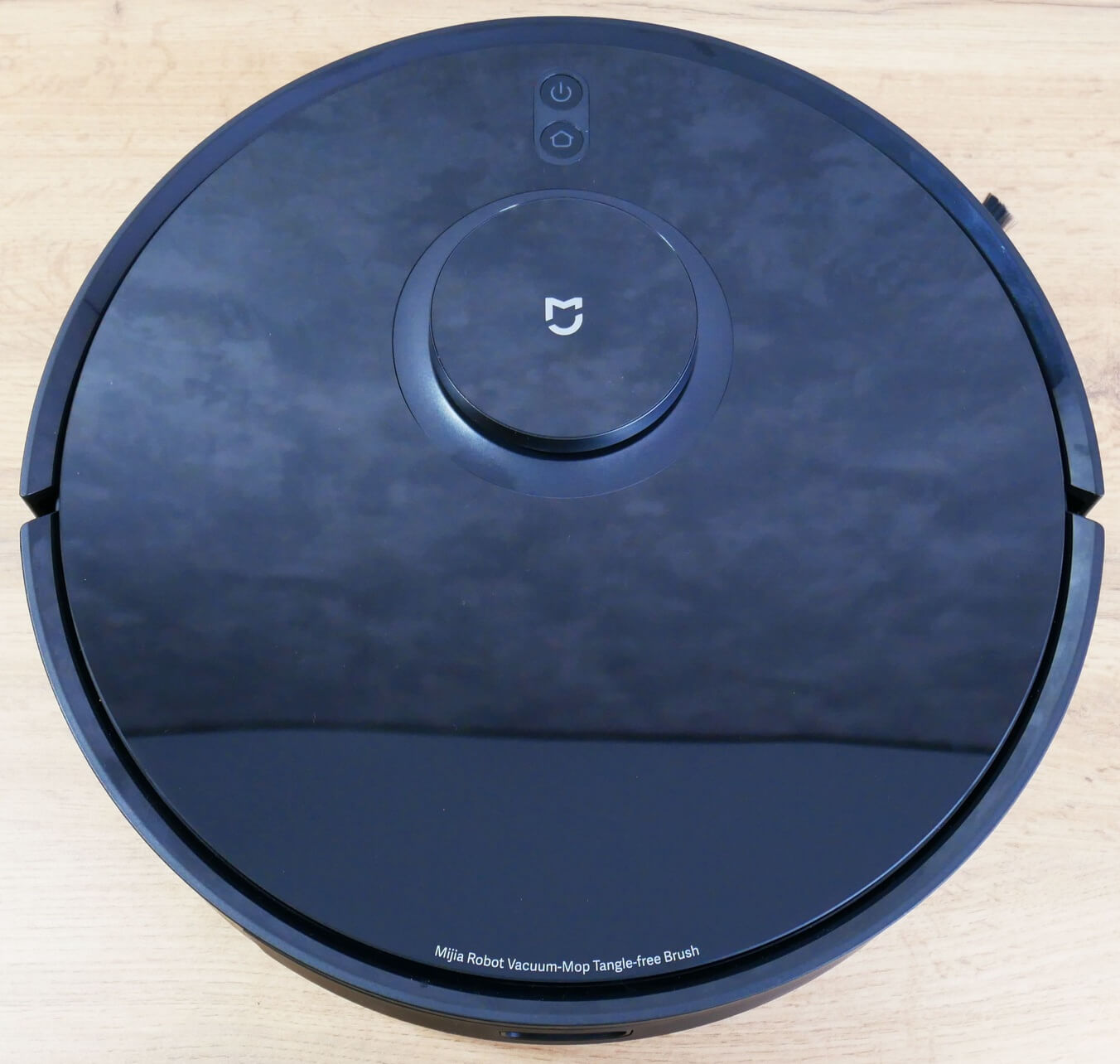
Top view
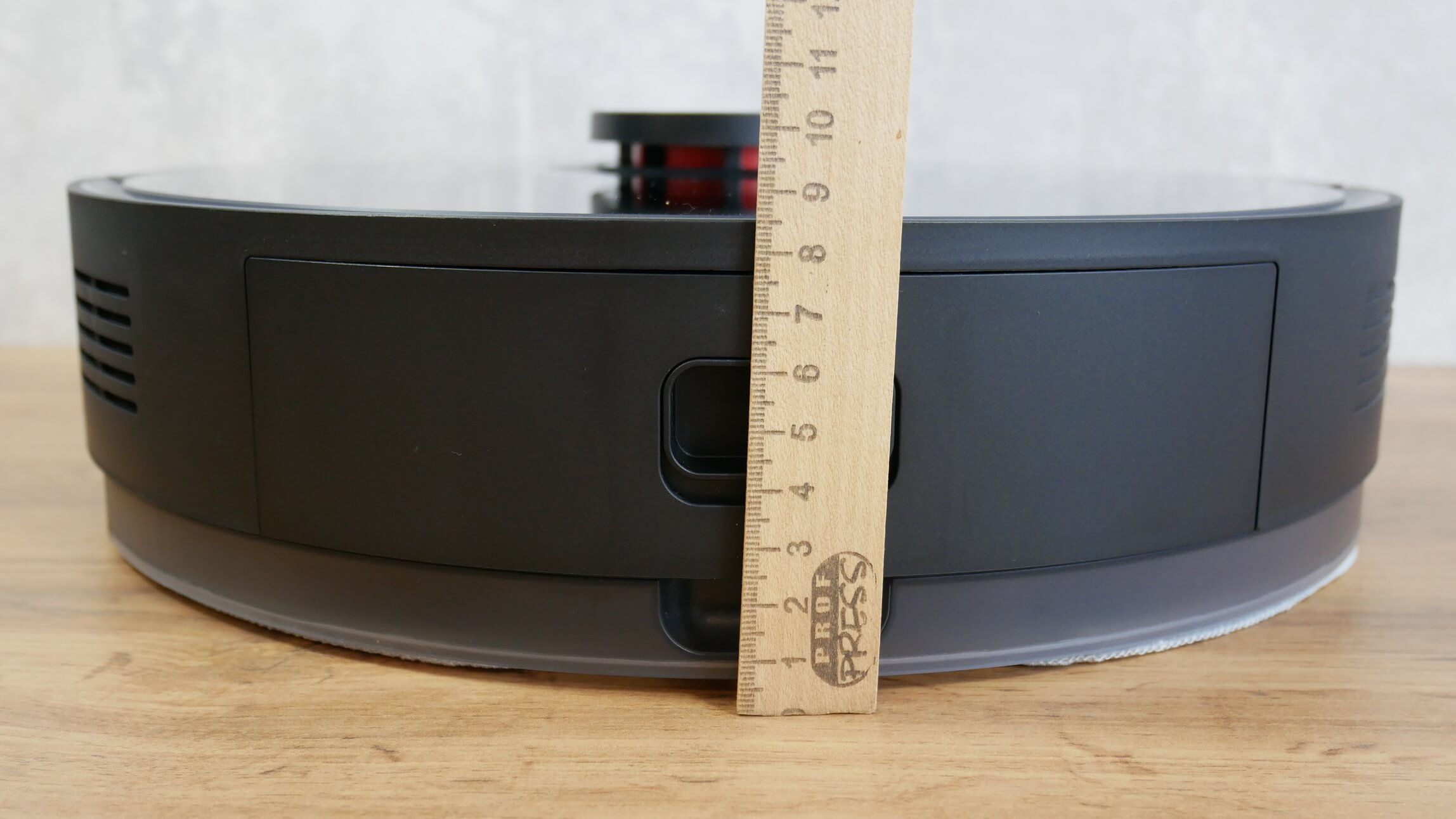
Body height
The mechanical bumper has a wall sensor and a fairly large obstacle detection sensor. The marketing materials don't mention its capabilities, but I'll still test it out to see how it performs, given its size.
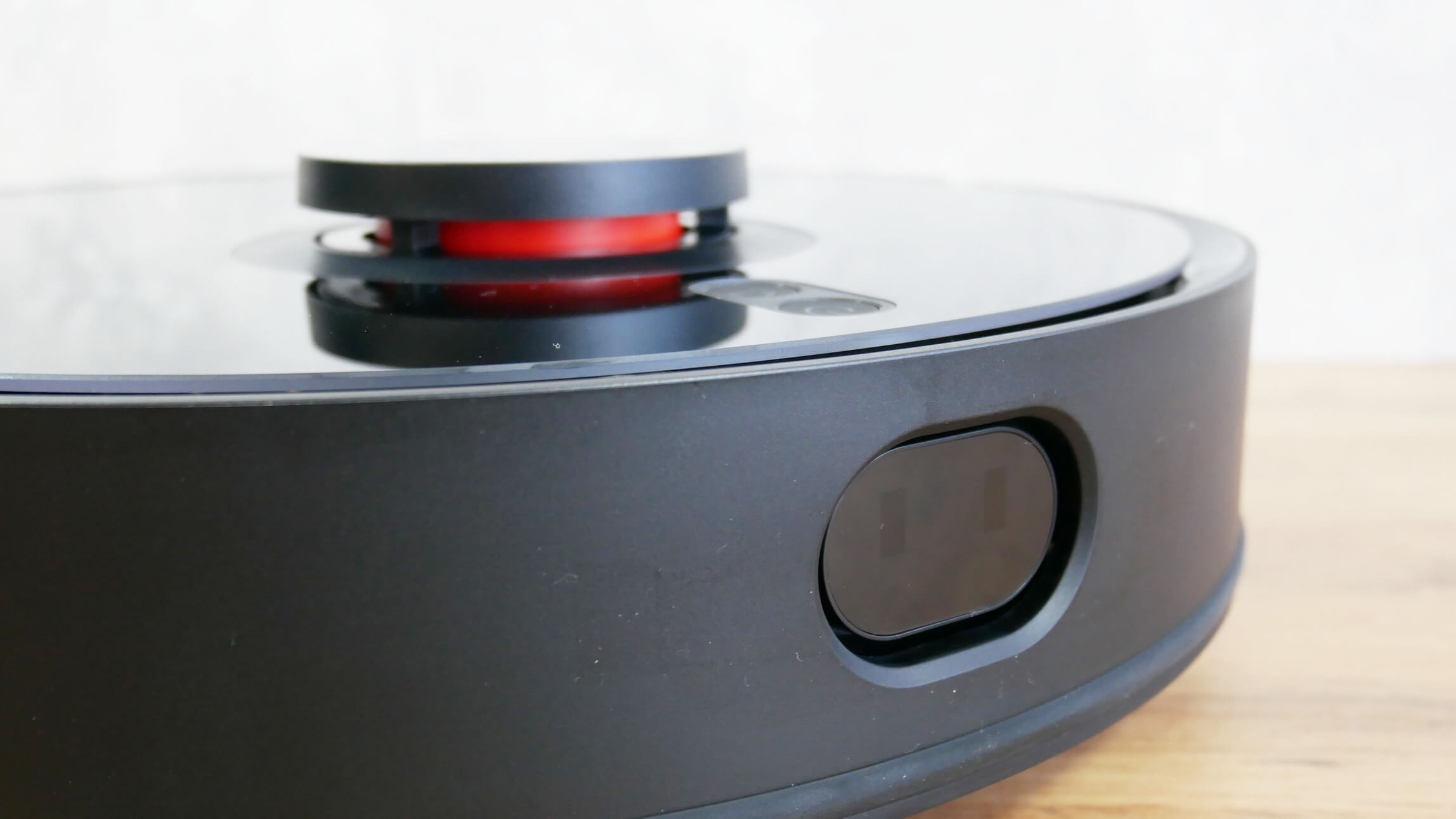
Obstacle detection sensor
The top of the body contains two mechanical control buttons. A lidar sensor is used for navigation. It is equipped with a spring-loaded cover to prevent the robot from getting stuck under furniture.
The 450 ml dust container is located at the rear. It's a non-standard design. The manufacturer allows the container and filter to be washed with water. The HEPA filter is hidden under the lid. The filter itself contains a mesh, providing a dual filtration system.
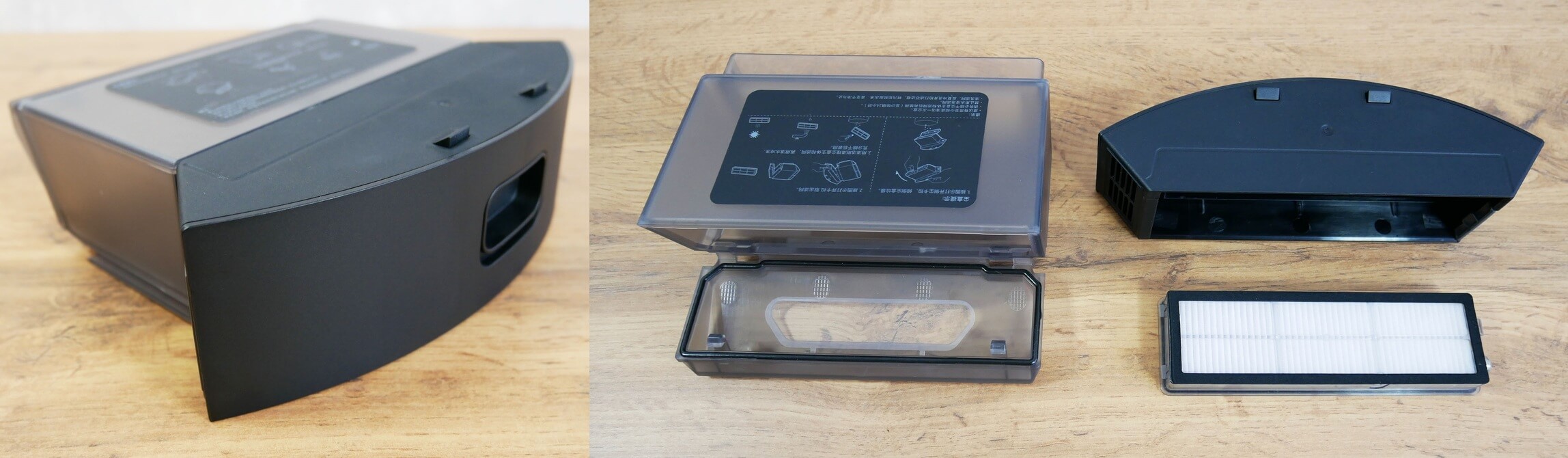
Dust collector
A wet cleaning attachment is attached to the bottom of the robot. The tank holds up to 250 ml of water. The cloth is bare on the sides, which is another minor criticism of the robot. A pump for electronically regulating the water flow is installed inside the tank.
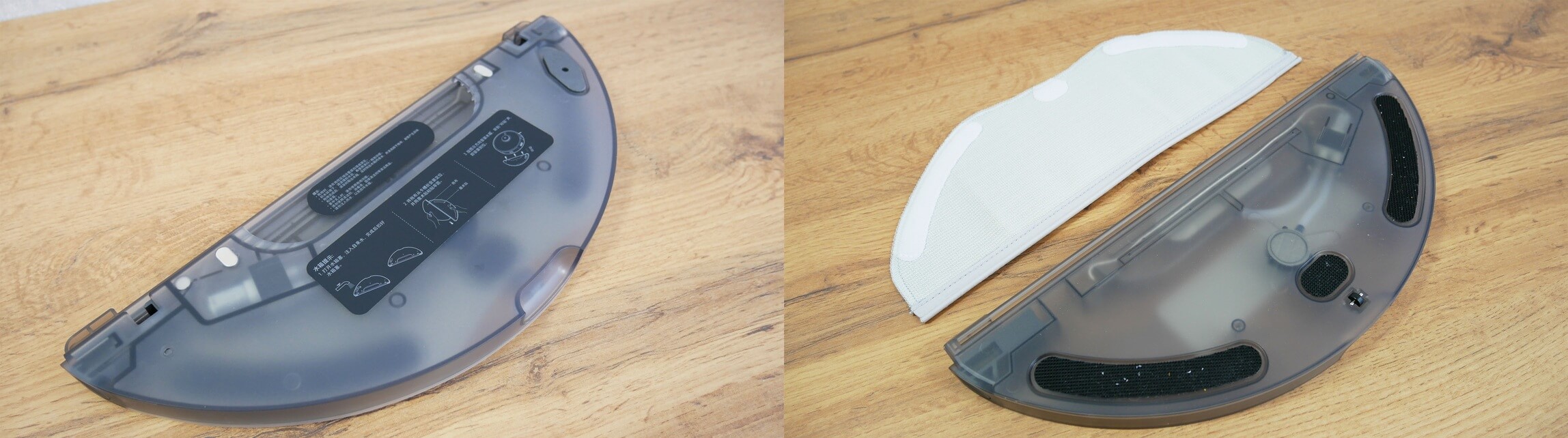
Water tank
The robot has six fall protection sensors mounted underneath. It has a single, three-beam side brush, secured with a screw. The central brush unit is floating, which is a plus. The turbo brush is offset toward the right wheel.
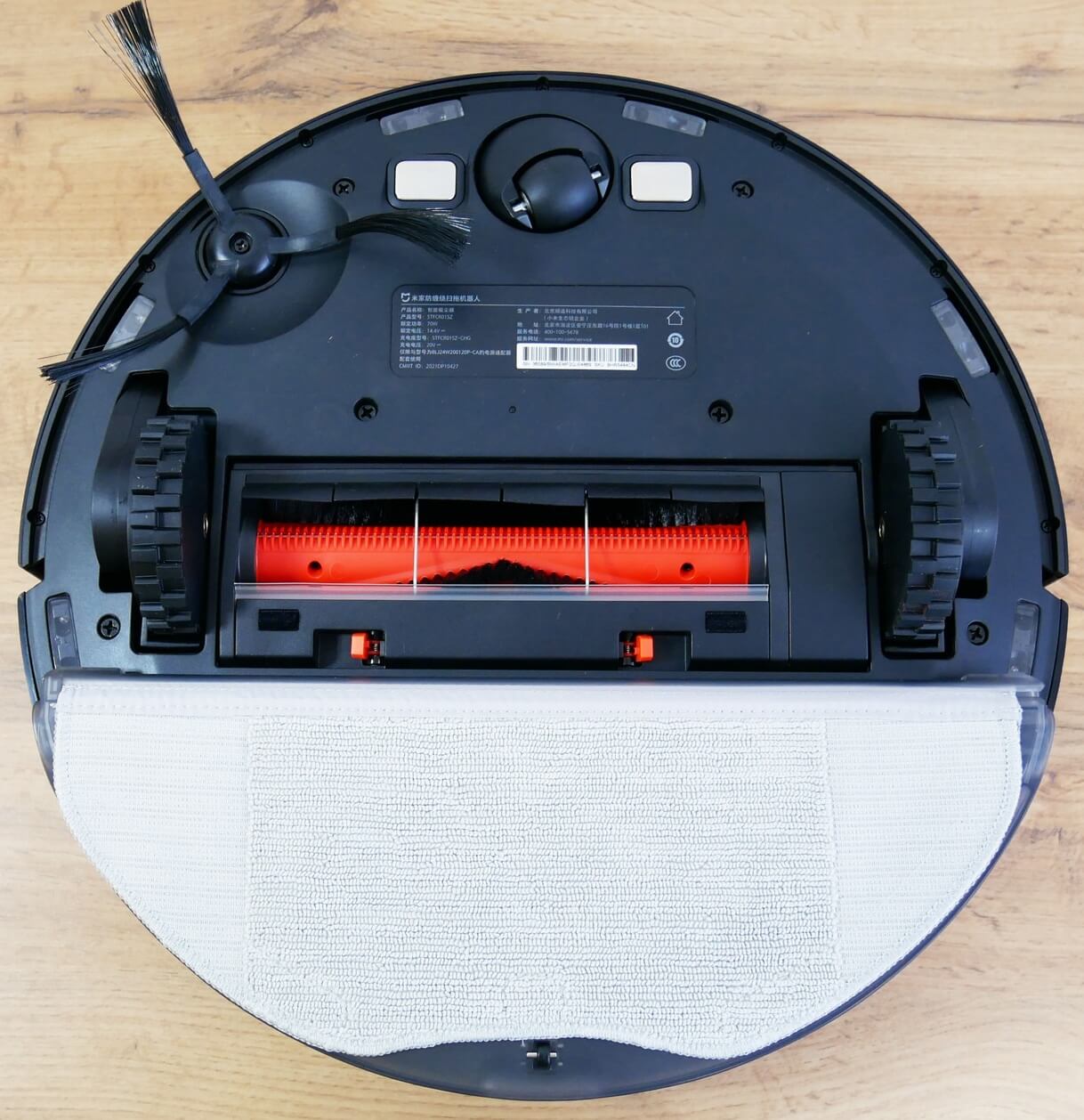
Bottom view
Now let's talk about the turbo brush itself, which is the main highlight of this robot vacuum cleaner. It features bristle inserts with two blades running the entire length of the brush between them. These blades are hidden inside the shaft, preventing the user from cutting their hands while cleaning the brush. This is a plus.
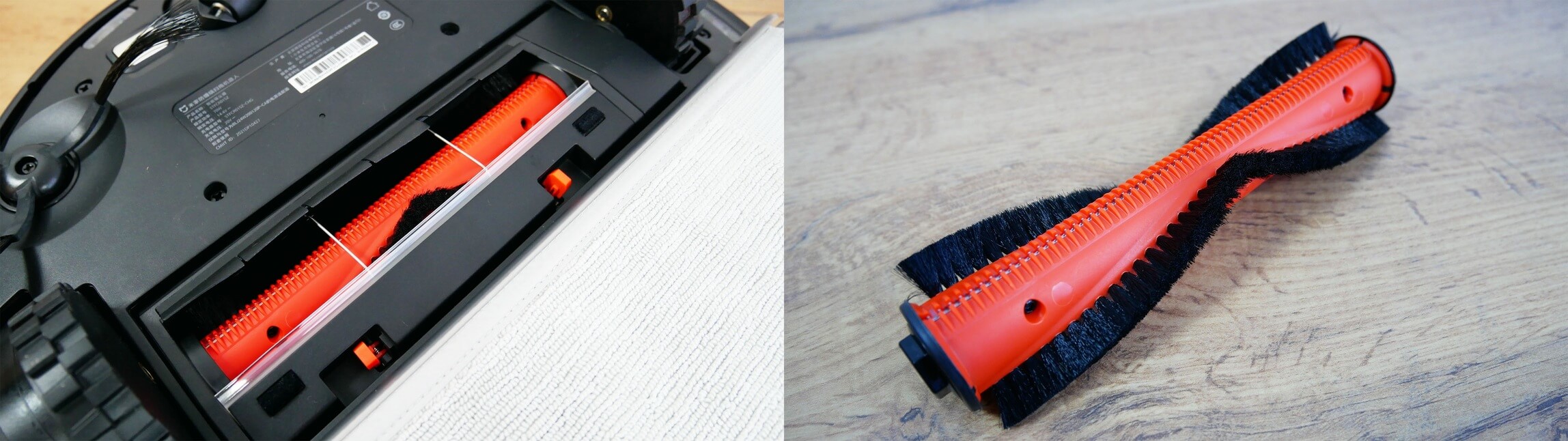
Self-cleaning turbo brush
Additionally, the suction channel contains combs for combing the hair on the brush. This comprehensive engineering solution allows the hair wound on the brush to be cut automatically as the central brush rotates. In other words, the hair on the brush is combed, wound onto the shaft, and cut by blades. We'll test how it all works in real-life situations.
We've covered the robot's design. Let's move on!
Technical specifications
The main characteristics of the Xiaomi Mijia Robot Vacuum-Mop Tangle-free Brush, as stated by the manufacturer:
- Battery: Li-Ion 5200 mAh
- Suction power: up to 8000 Pa
- Cleaning area up to 180 sq.m.
- Battery life: up to 180 min
- Dust collector: 450 ml
- Water tank: 250 ml
- Obstacle clearance: up to 20 mm
- Dimensions: 345*102.3 mm
Personally, the only specification I'm interested in is the stated suction power, which will be tested on the rig. The rest of the specs are pretty standard for a lidar robot vacuum.
Functional capabilities
Let's move on to an overview of the robot's features. Since this is a Chinese version, it can only be controlled by selecting the China region in the proprietary Mi Home app. Consequently, the robot vacuum cleaner itself speaks Chinese or English, and the app interface is in English. This is important to keep in mind. Also, in keeping with the best traditions of the Chinese Mi Home, the app is prone to lag, which can be a bit of a hassle.
The main features of the Xiaomi Mijia Robot Tangle-free Brush are displayed on the screen:
- Saving multiple cleaning maps in memory.
- Automatic zoning of premises into rooms.
- Selecting rooms and areas for cleaning.
- Setting up virtual walls and no-go zones.
- Separate restricted areas for wet cleaning.
- Continue cleaning after charging at the base.
- Adjusting the power and water supply level.
- Manual control.
- Setting up cleaning according to a schedule.
- Do not disturb mode.
- Cleaning log.
- Monitoring the status of consumables.


Mi Home features
As you can see, the functionality isn't very diverse. There's no automatic power boost on carpets or a Y-shaped motion pattern.
Testing
A detailed video review of the Xiaomi Mijia Robot Tangle-free Brush has already been prepared and published on the channel. I recommend watching the video:
Navigation
Let's move on to the tests. First, we'll test the robot vacuum's navigation in a room with obstacles. After leaving the base, the robot navigates the room's perimeter and then cleans it in a serpentine pattern. It didn't get stuck on the dryer. It also swept around the dryer and the chair legs. This test was successful!
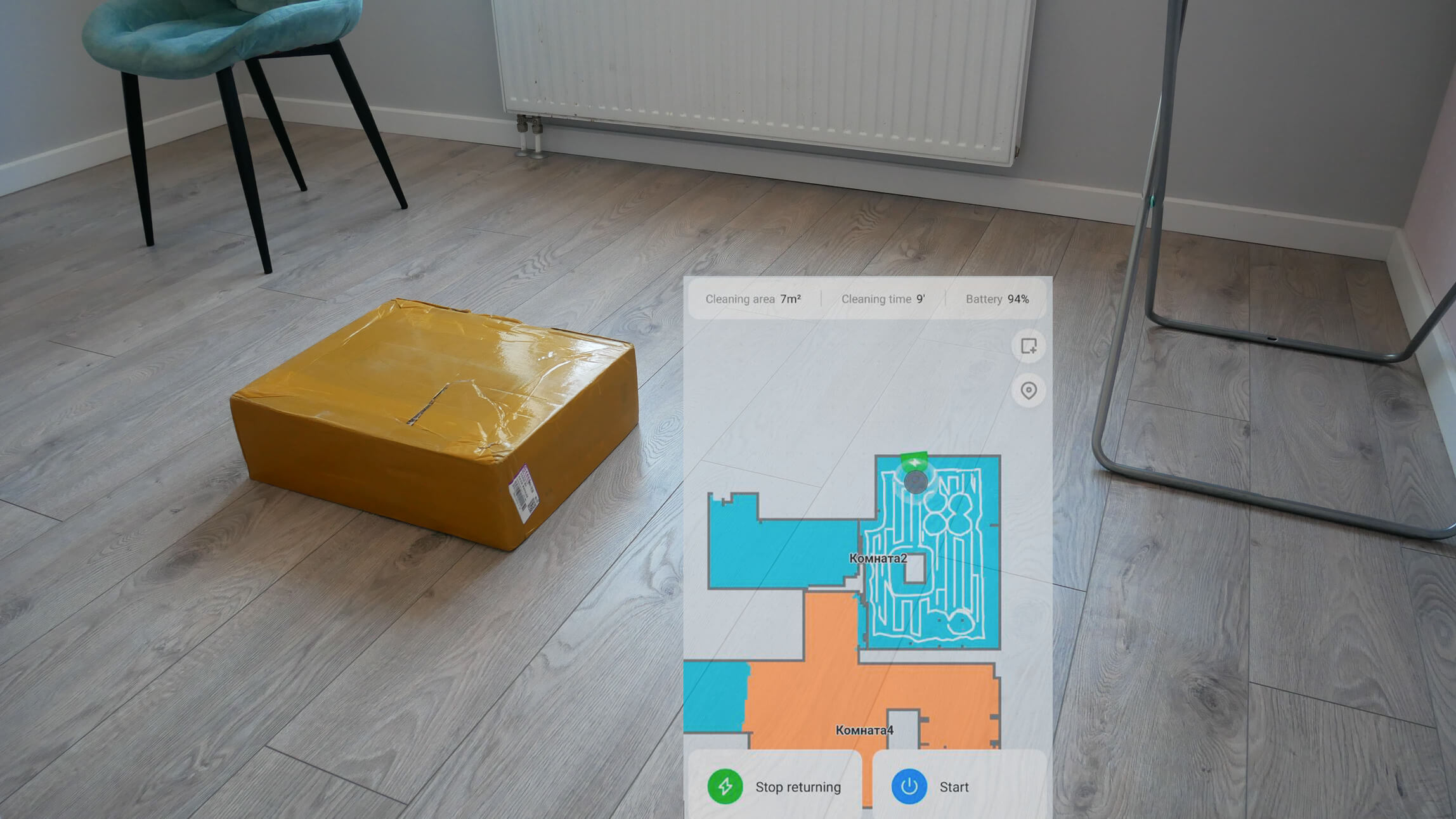
Navigating an Obstacle Room
As for navigating throughout the house, the robot goes room by room, first along the perimeter, then in a serpentine pattern. Cleaning speed is high, and there are no uncleaned areas. This model has excellent navigation!
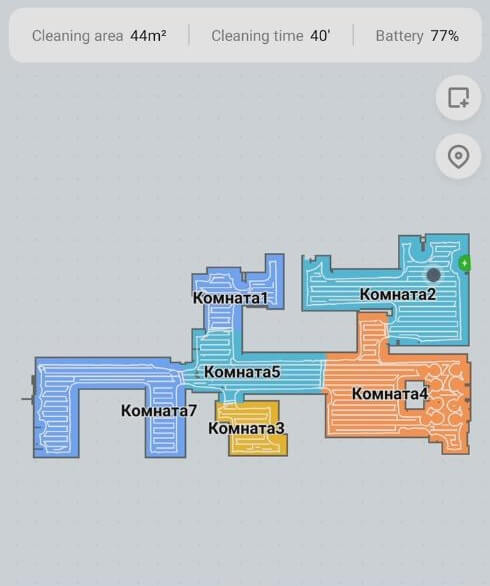
Navigation within the home
I immediately decided to test the bumper sensor. Maybe it could detect objects lying on the floor. The robot bumped its bumper into a bathroom scale, ran over a fake pet surprise, and chewed on a charger cord and a sock. Overall, despite the increased sensor size, the robot didn't become any more accurate.
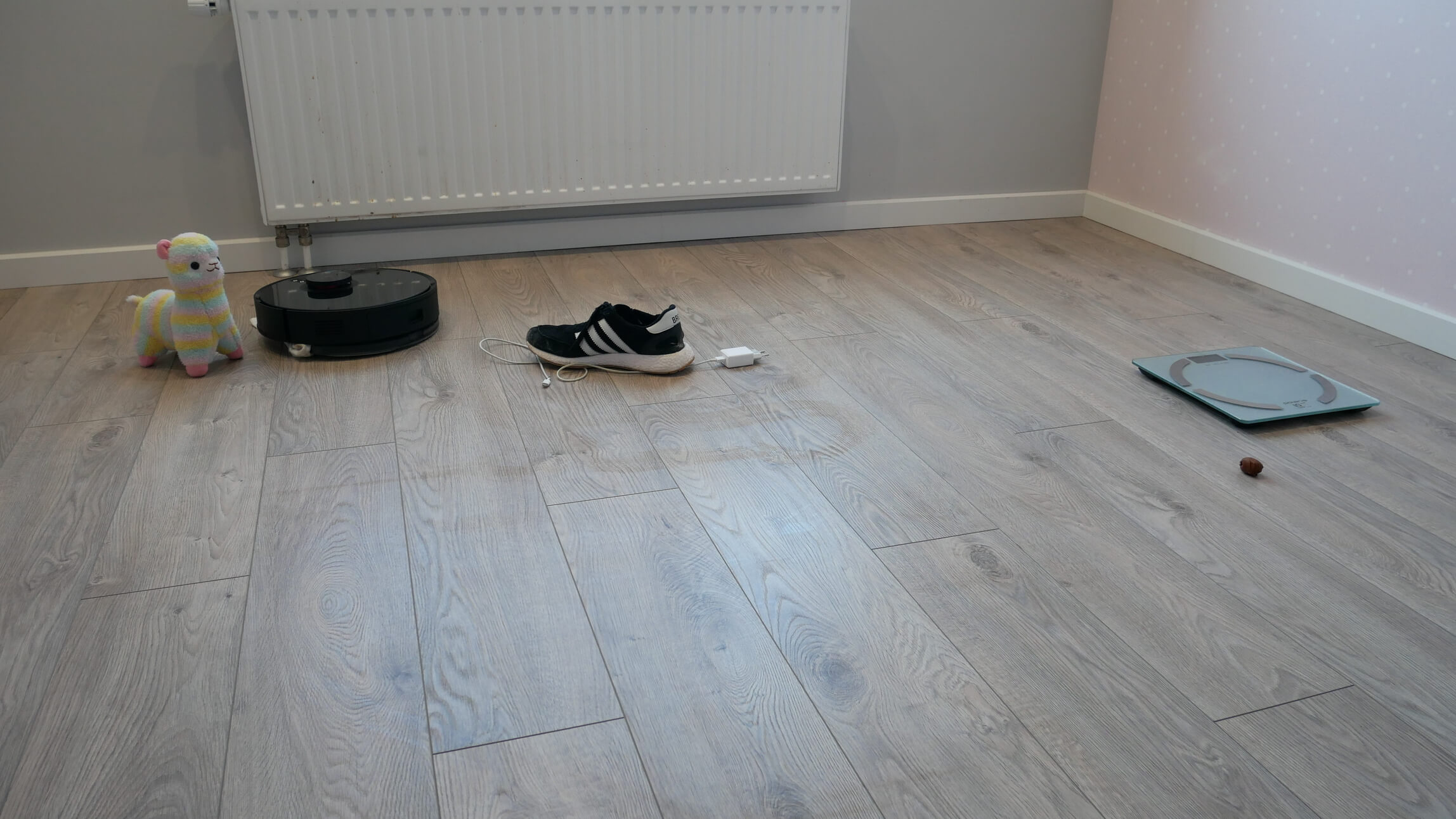
Recognizing objects on the floor
Suction power
Now let's check the robot's suction power, which is claimed to be a whopping 8000 Pa. In reality, the robot vacuum cleaner was only able to suck up debris from a 4 mm-deep crevice, and even then, only a tiny bit. So, this model does have slightly increased suction power, but not as much as the manufacturer claims.
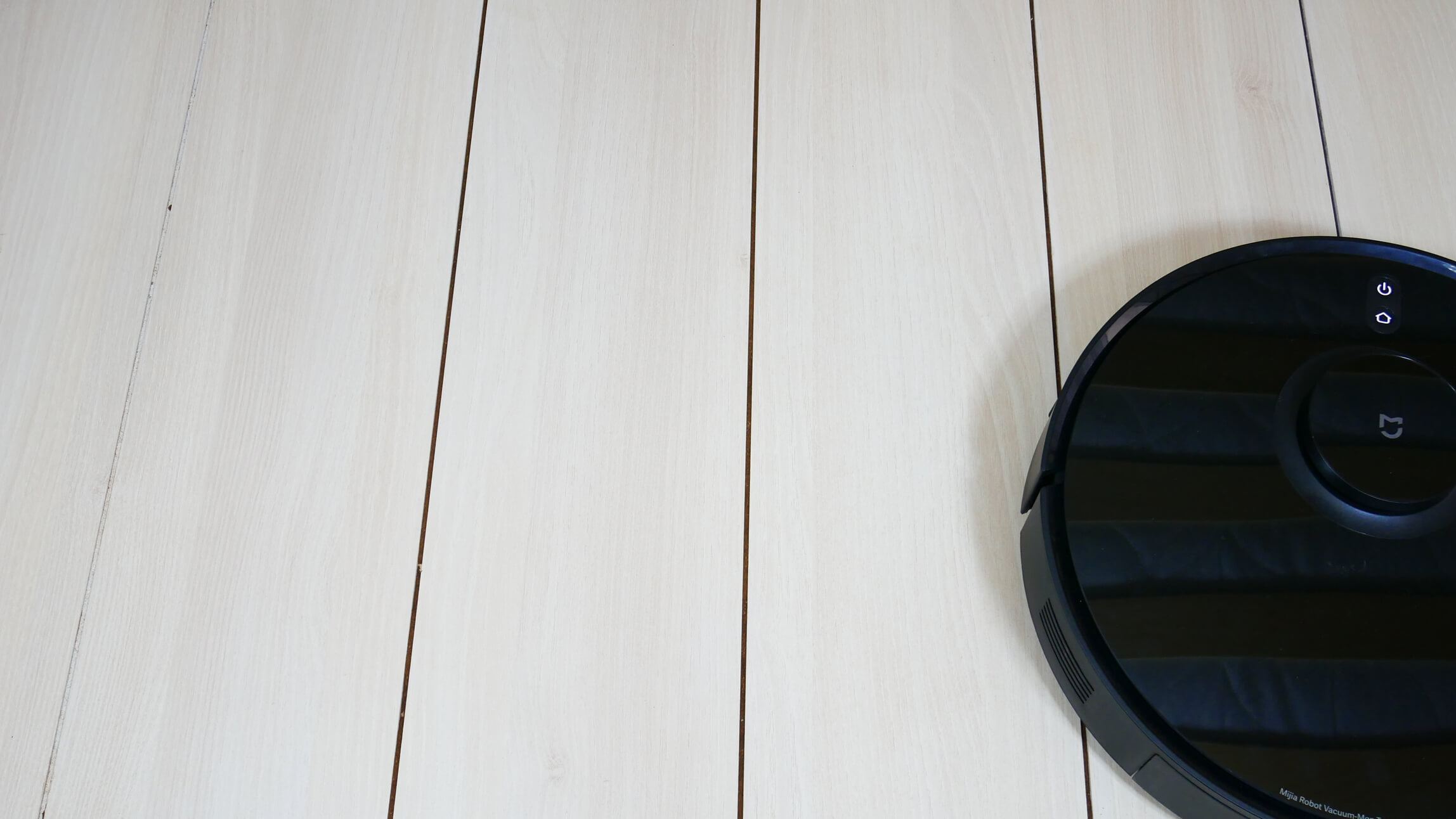
Suction power
Anti-tangle brush system
Let's immediately check out the robot's second feature—the anti-hair-tangle system on the central brush. I scattered hair and fur on the floor and then started cleaning. Let's check the brush's condition. And I have to admit, it really is practically clean. Look at how much hair and fur is collected in the dust bin:
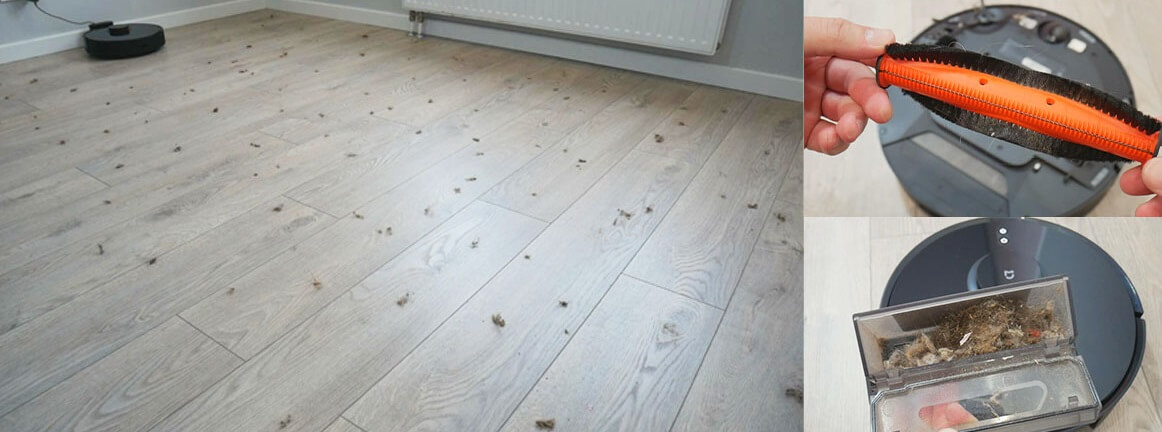
Anti-tangle brush system
The system's effectiveness has been proven! Moreover, the longer the robot vacuum runs, the cleaner the brush will be, as it self-cleans as it rotates. In this mode, I started the robot to clean the remaining rooms, then checked the central brush again. Yes, it got even cleaner!
This know-how deserves attention and I hope that in the future other robots will be equipped with similar brushes!
Dry cleaning
Dry cleaning performance on laminate floors is good. The robot vacuum was able to remove all debris from the floor, including pet hair and fur. It even managed to completely sweep away debris from the corners! This was largely due to the fact that when turning away from a corner, the debris is blown out by air coming out of the main motor's vents. But it's better than nothing! A minimal amount of hair got tangled in the turbo brush, but most of the debris ended up in the dust bin. Test passed!
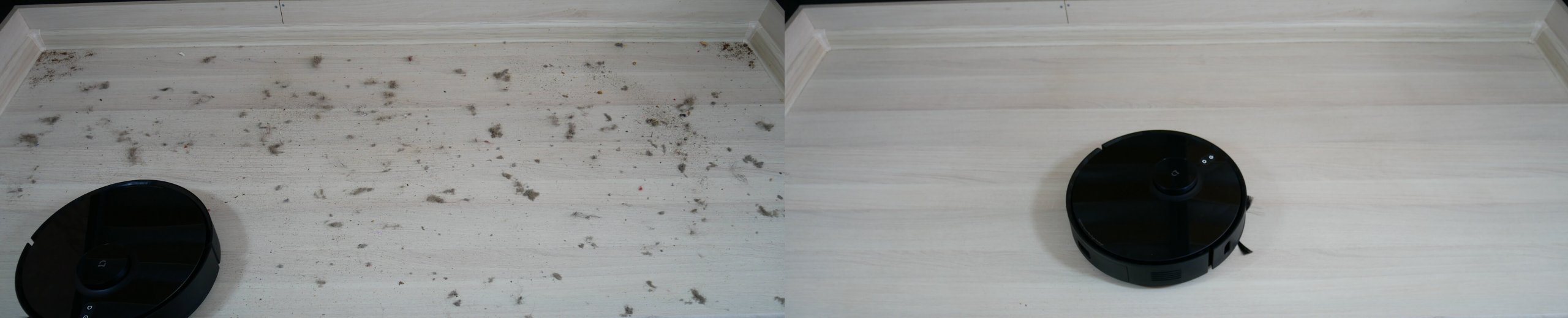
Dry cleaning
Carpet cleaning
The robot also handles carpet cleaning thanks to its increased power, floating brush head, and well-designed brush head. It passed this test, too!
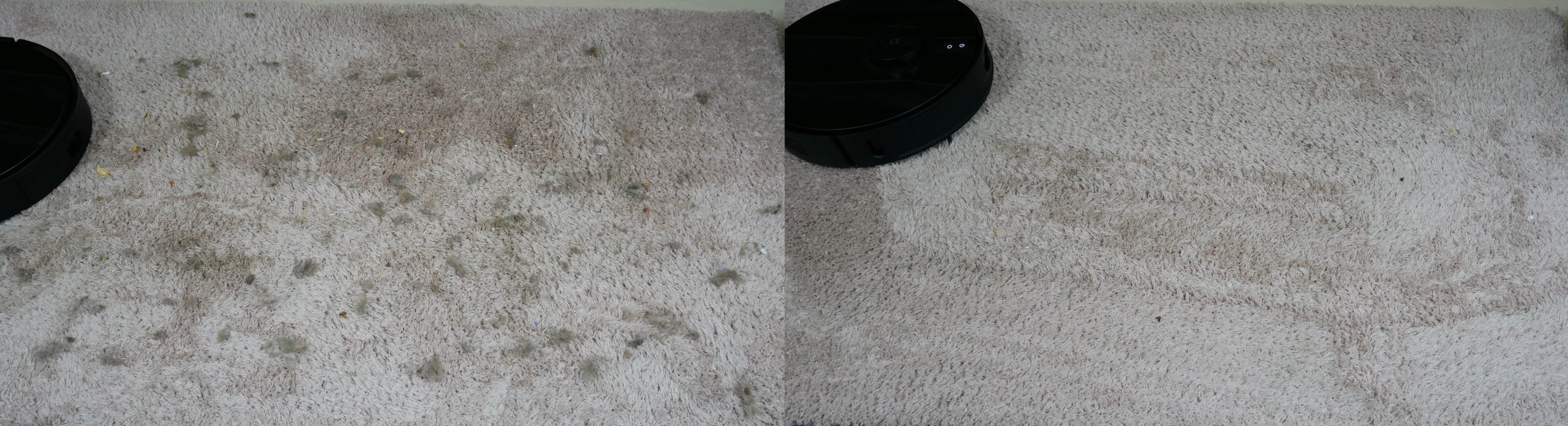
Carpet cleaning
Wet cleaning
However, the Xiaomi Mijia Robot Tangle-free Brush doesn't do a very good job of removing dirt. The water flow isn't very generous even at the highest setting, and the brush is thin on the sides. As a result, the robot doesn't remove all the dirt. This model is best suited for dry cleaning. Wet cleaning is more of a bonus for improved dust collection. The device can vacuum and mop simultaneously, collecting dust and small debris behind the brush.
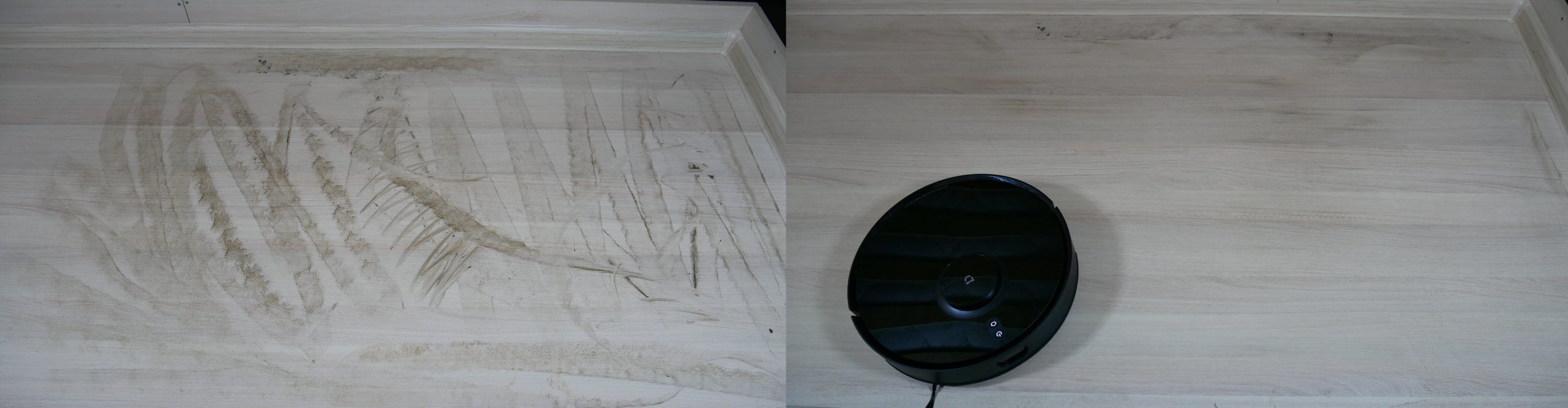
Wet cleaning
Wet cleaning and carpets
The Xiaomi Mijia Robot Tangle-free Brush doesn't detect carpets, so it can't automatically avoid them when mopping. I recommend protecting carpets by setting up no-go zones for mopping where they're located.
Obstacle clearance
Obstacle clearance is good. The robot vacuum easily navigates a 2 cm threshold, even with the water tank installed. That's a plus.
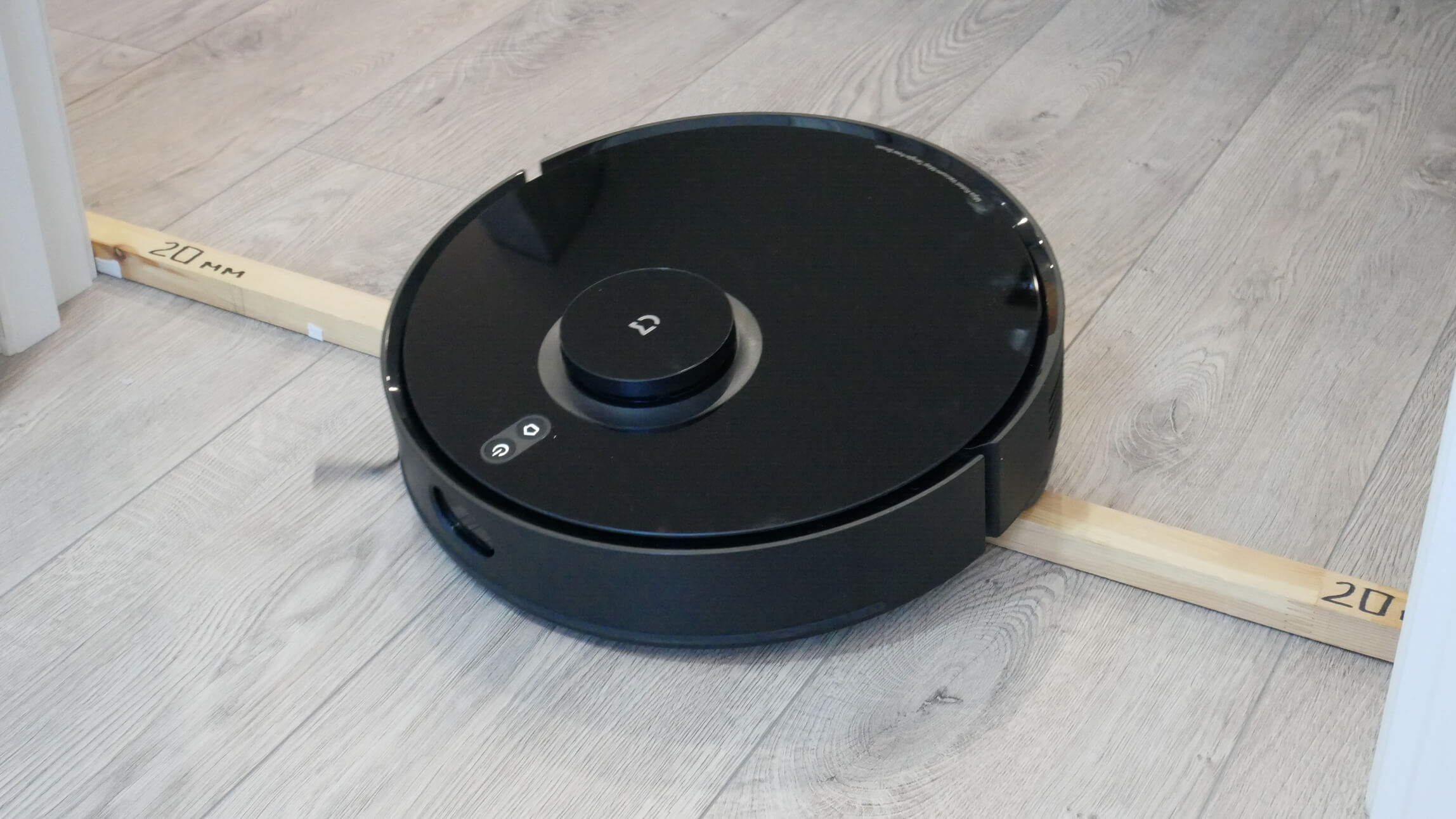
Obstacle clearance
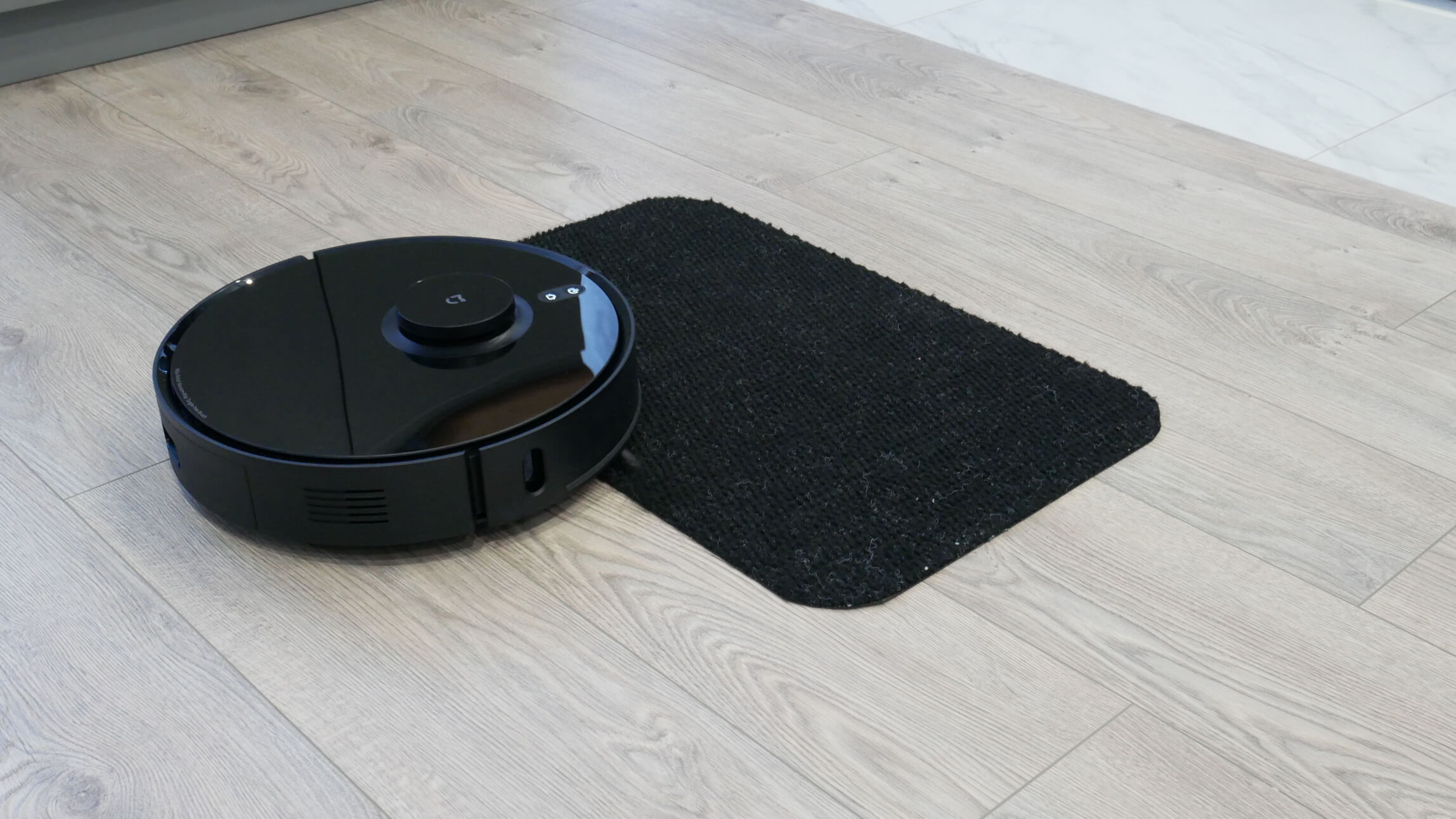
Driving on black surfaces
However, the Xiaomi Mijia Robot Tangle-free Brush, like most other Xiaomi robot vacuum cleaners, is sensitive to black surfaces. This is important to keep in mind.
Driving on black surfaces
Noise level
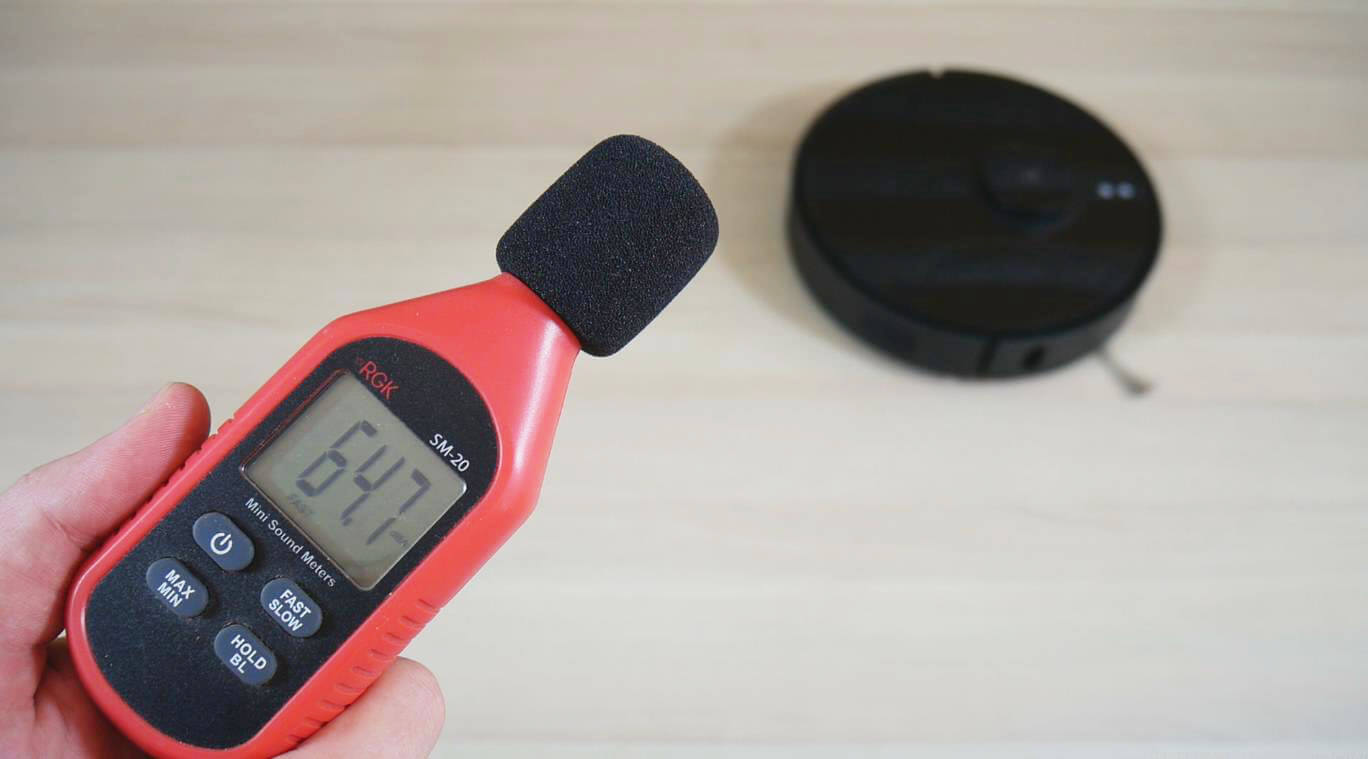
Finally, we measured the robot's noise level in different modes. At minimum power, it ranged from 58 to 60 dB. At medium power, it reached 62 dB. In high power mode, the noise level reached 65 dB, and in Turbo mode, the peak was 67.4 dB. This model's noise level is standard.
Noise level
Personal opinion
Xiaomi Mijia Robot Vacuum-Mop Tangle-free Brush has been thoroughly reviewed and tested. our evaluation system he managed to gain 106 pointsThe result is decent considering the price. However, it's not as high as I'd like, due to a number of concerns.
Overall rating of tested robot vacuum cleaners: https://robovac.washerhouse.com/en/rejtingi/robovac-obshhij-rejting-robotov-pylesosov-robo.html.
I'll share my personal opinion about the device I tested. I liked the following:
- Effective system for cleaning the turbo brush from hair and fur.
- Increased suction power.
- Good quality dry cleaning.
- It sweeps away debris from corners better than many similar products.
- Simultaneous dry and wet cleaning.
- Good cross-country ability.
There's nothing else to highlight, if you're being objective and not trying to find advantages like lidar or virtual walls. For $350-400, those are a given.
As for the disadvantages, there are also few of them, but they exist. Namely:
- Wet cleaning is not very effective.
- The robot vacuum cleaner is afraid of black floor coverings.
- The model is intended for the Chinese market, which is why the interface and voice notifications are in English, and the app itself freezes a little.
- No advanced features.
- The body is easily soiled.
Overall, I can say that this robot vacuum cleaner is a good option for collecting pet hair and fur. I think it deserves a place in the top five for this purpose. Overall, it's more practical for dry cleaning. If the price were under $300, the robot would be much more attractive compared to its competitors. However, it has its pros and cons worth considering. I can definitely say again that the anti-hair tangle system is effective. For those who consider this a key criterion when choosing a robot vacuum cleaner, definitely consider the Xiaomi Mijia Robot Vacuum-Mop Tangle-Free Brush. Don't be fooled by the suction power; it's not much stronger than similar products or other robots in the Xiaomi line.
On that note, I'd like to end this review. If you have any questions, please ask them in the comments. Happy shopping. Bye!
Hello. Could you tell me where I can buy a side brush for this vacuum cleaner? Are there any that fit other models?