A review of consumables for Roborock and Mijia robot vacuum cleaners
Hello everyone! Welcome to the channel! I've received original accessories for Roborock robot vacuum cleaners for review. They were provided by Lamobile, a store where you can purchase original spare parts and consumables for Xiaomi robots, as well as the robots themselves. Below, we'll look at the differences between various accessories and which ones are best to choose. We'll also touch on the issue of interchangeability. For example, we'll briefly compare consumables for Roborock and Mijia robots; in this case, these are consumables for the popular Mijia 1COr alternatively known as the Xiaomi Mi Robot Vacuum-Mop. Let's start with an overview of the various accessories. So, let's get started!
A detailed video review of consumables is available on our channel:
This is the backpack the accessories for this review were delivered to me in. It's a branded Roborock backpack, which Lamobile offered as a gift to customers who ordered robot vacuums at the end of 2020. Now, if you purchase Roborock consumables for $30 or more, you get a free sanitizer.
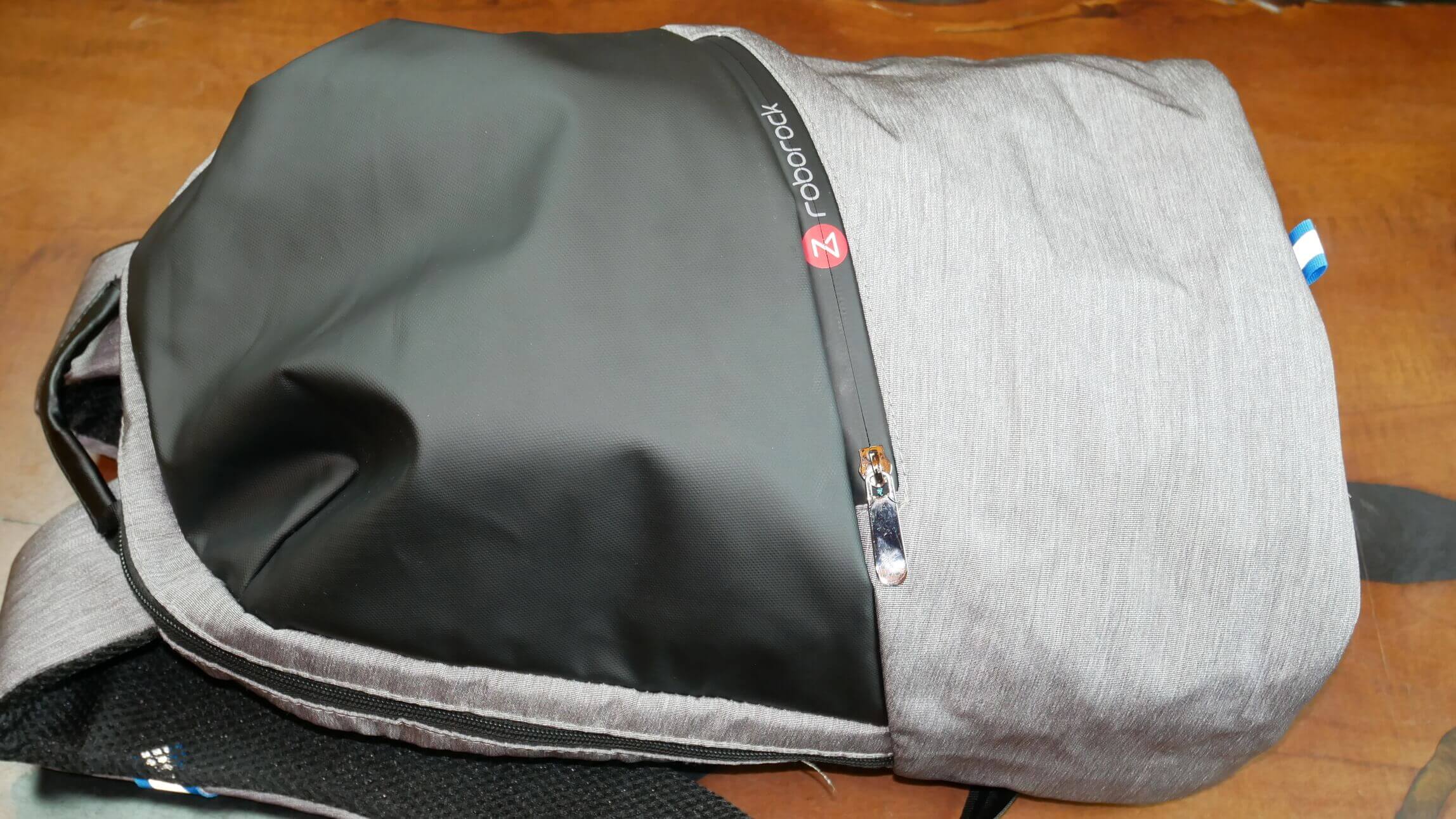
Roborock backpack
All original consumables are sold in branded boxes. They contain basic product information in both Chinese and English. The Mijia 1C side brush box even includes a Russian translation.
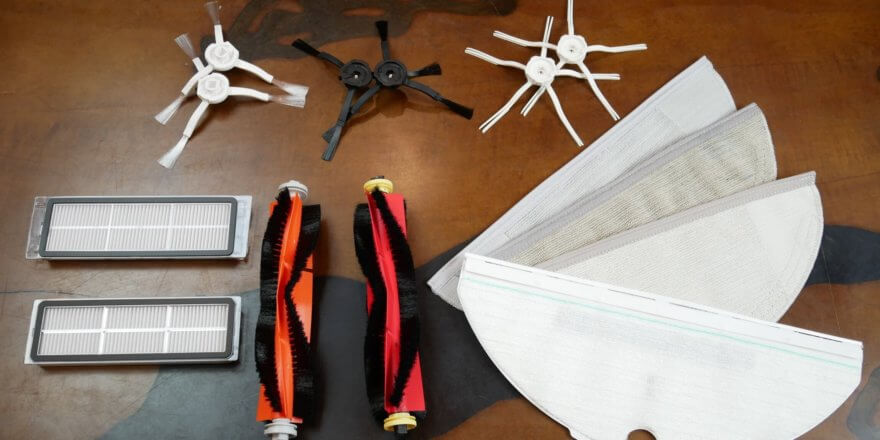
In the end, I'm reviewing the side brushes, HEPA filter, and cleaning cloths for the Mijia 1C. I'm also reviewing the side brushes, HEPA filter, center brushes, and cleaning cloths for Roborock robotic vacuum cleaners.
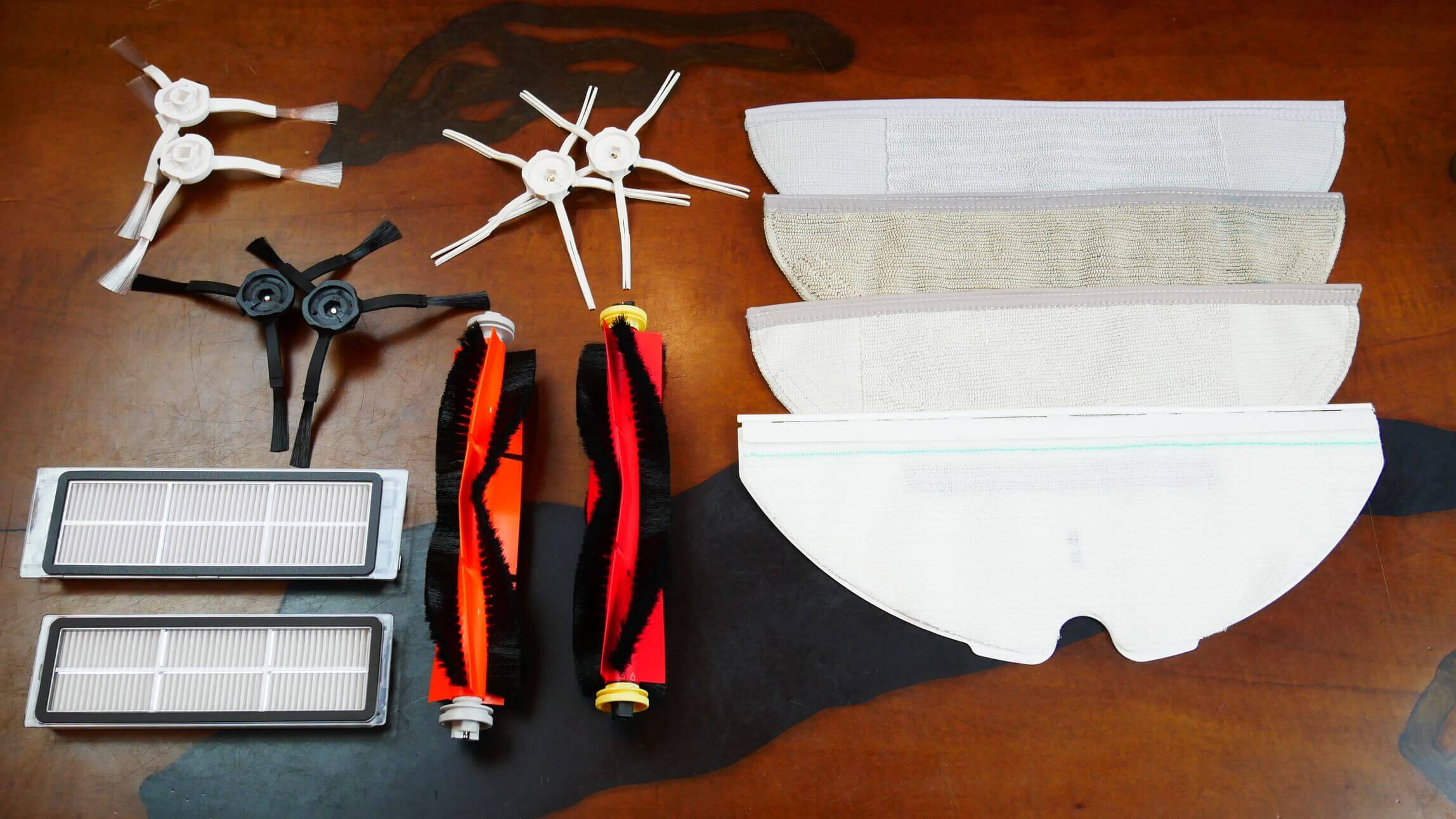
The whole set
First, let's compare the central brushes of Roborock robots. They come in two versions. The first is a non-detachable brush. These were installed on robots up to and including the second generation, i.e., up to Roborock S5Part number SDZS02RR. Original central brushes are additionally equipped with a special cleaning tool. The brush itself differs from the detachable version in that the bristles are thinner, the silicone blades are less flexible, and the brush mechanism is not detachable. This makes it essentially a budget option.
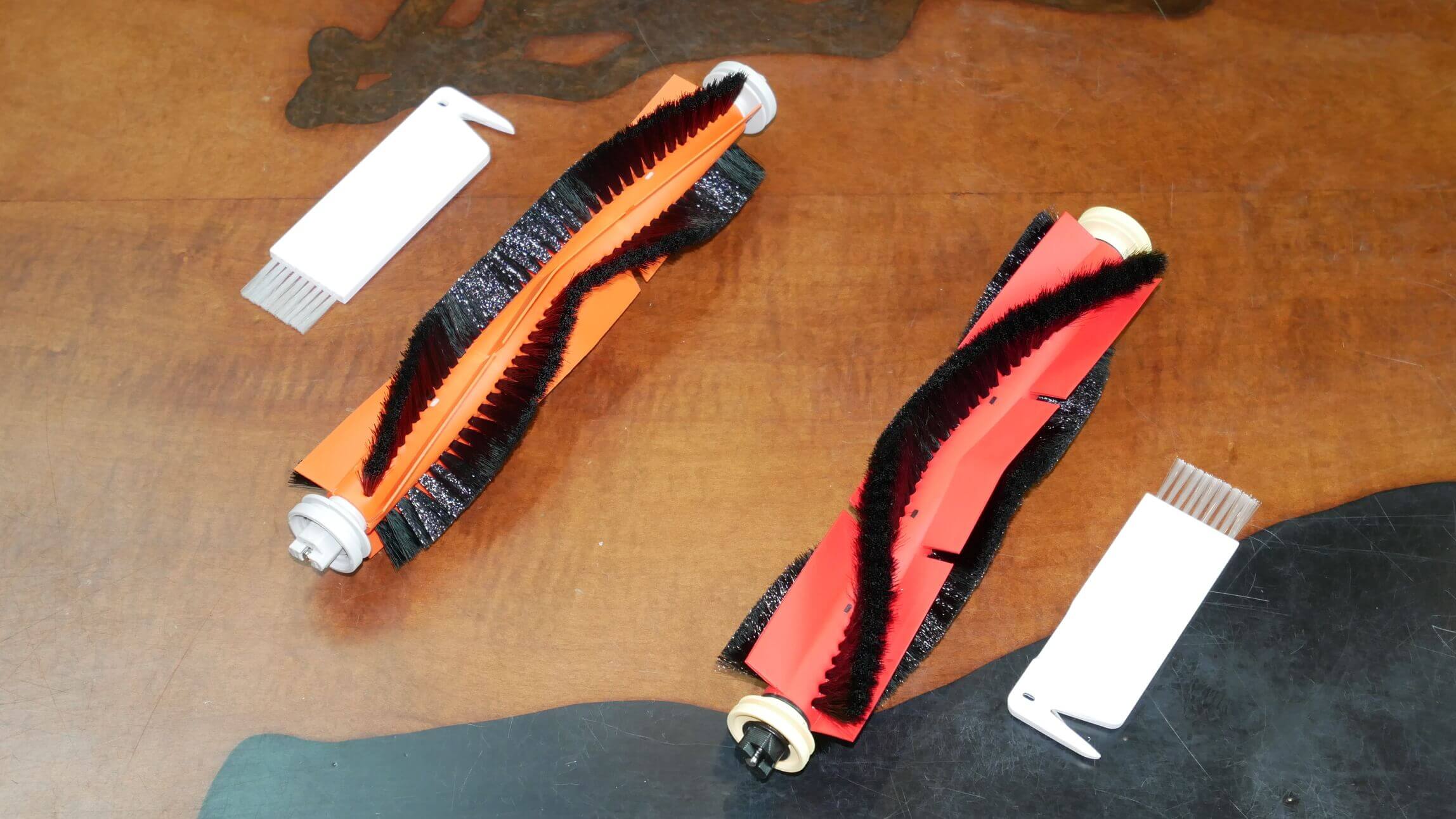
Central brushes
They started installing detachable central brushes Roborock S6 and subsequent new products. Part number SDZS03RR. A brush cleaning tool is also included.
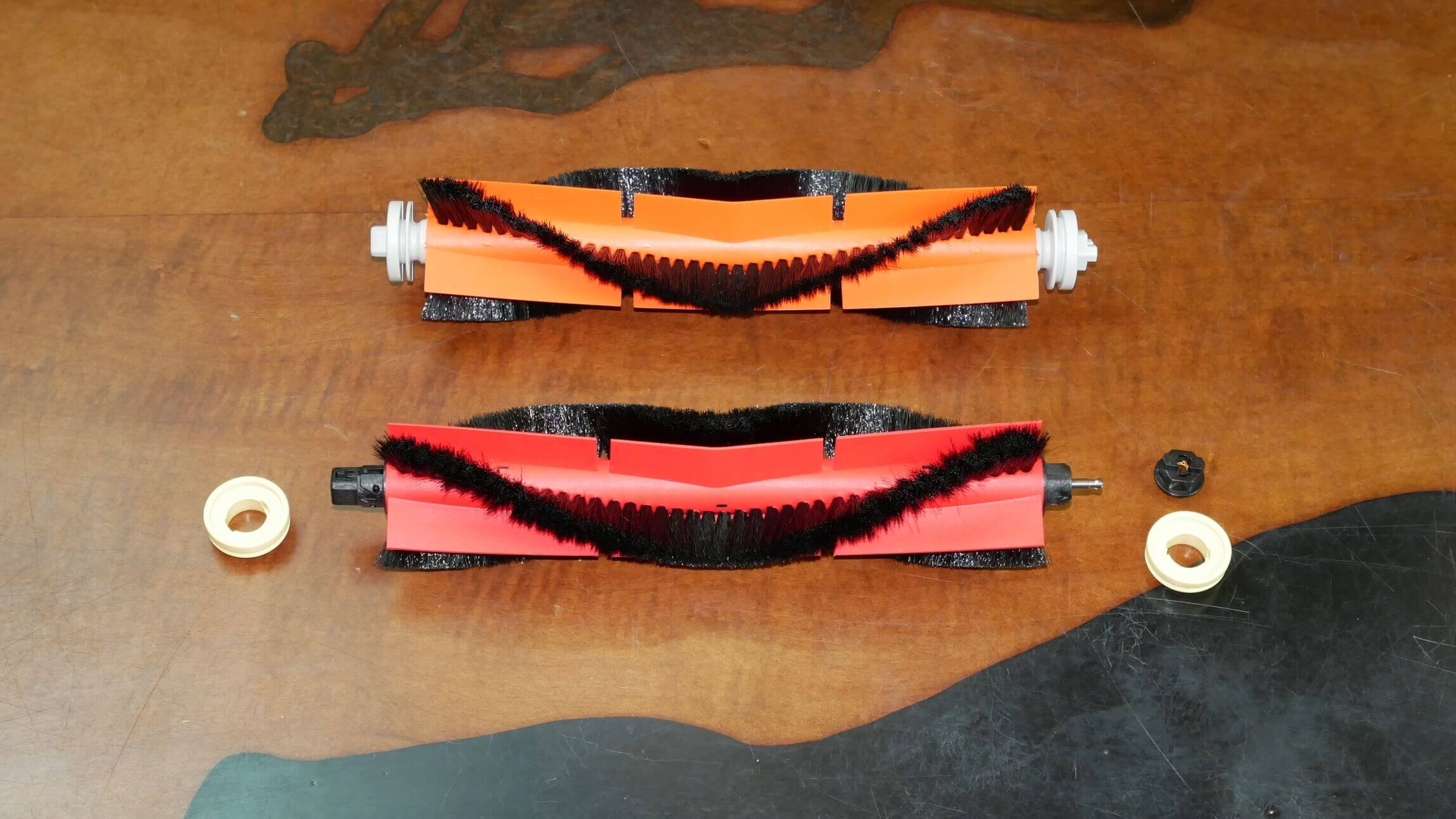
Comparison of turbo brushes
This brush has denser bristles, softer silicone, and a detachable design, making it easy to clean the caps and axle of hair and fur. This design is undoubtedly superior in terms of convenience, cleaning efficiency, and possibly even longer lifespan. The Mijia 1C brush is slightly smaller and is not compatible with Roborock robots, meaning the central brushes are between the Mijia and Roborock. not interchangeable.
Now that we've covered the central brushes, let's move on to HEPA filters. They are generally classified as washable and non-washable. However, many people know that manufacturers don't recommend rinsing filters with water, as this shortens their lifespan by clogging the filter layers with small particles. It's better to blow them out.
Roborock now includes a washable HEPA filter, part number SDLW04RR. The non-washable version is the same size, but its part number is SKV4040TY. Two filters are included in the box. The filter is equipped with a rubber seal, which improves the dust container's seal for better particle capture. The Mijia 1C, part number STLW01ZHM, also uses filters. not interchangeable, as they are different sizes. This is important to understand. Incidentally, this filter can also be washed with water; the manufacturer states that the filter must be completely dry before use.
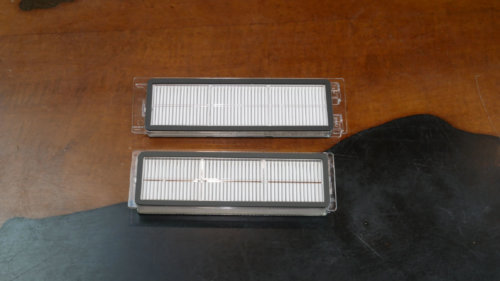
HEPA filters
In any case, it is better to buy a washable filter, it has a slightly longer service life.
Now let's compare the side brushes of the Roborock and Mijia robot vacuum cleaners.
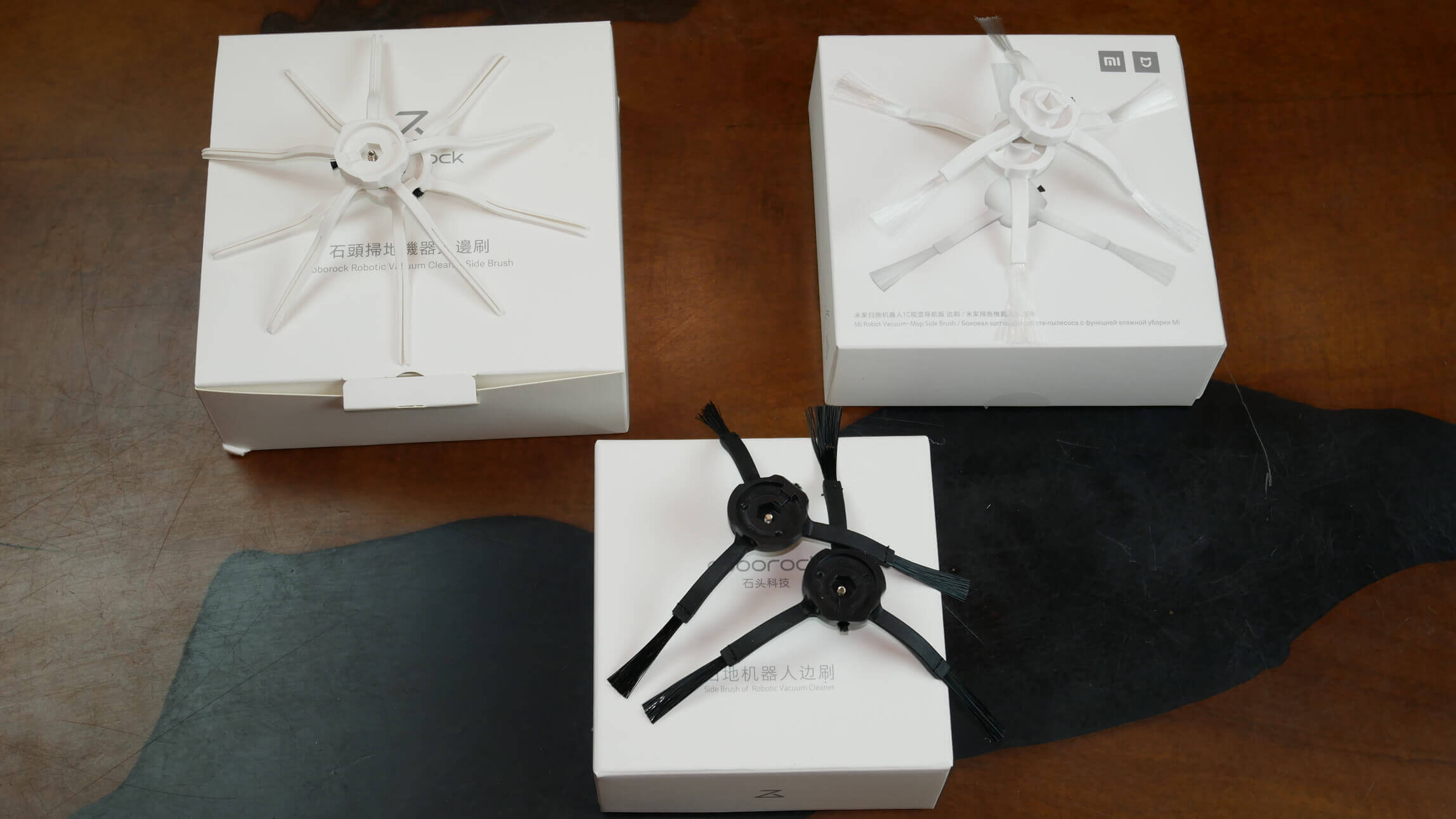
Let's first look at the brushes for Roborock. The new side brushes have the part number SDBS03RR. Their main difference is their all-silicone construction and five-point design. This design slightly improves sweeping performance and increases the brushes' durability. The side brush is attached with a screw and must be screwed to the robot with a screwdriver. A brush on the side makes it easier to clean hair from the side brush. The older side brush has the part number SDBS02RR. It is also attached with a screw and has a three-point design, a harder silicone base, and a bristle brush. The main difference between these brushes is their elasticity. The silicone five-point brush is too soft, making it less effective at cleaning carpets and can even be damaged on high-pile carpets. However, it performed better on hard surfaces. The older-style three-pronged brush is therefore more suitable for cleaning fluffy carpets. Brushes are available in both white and black.
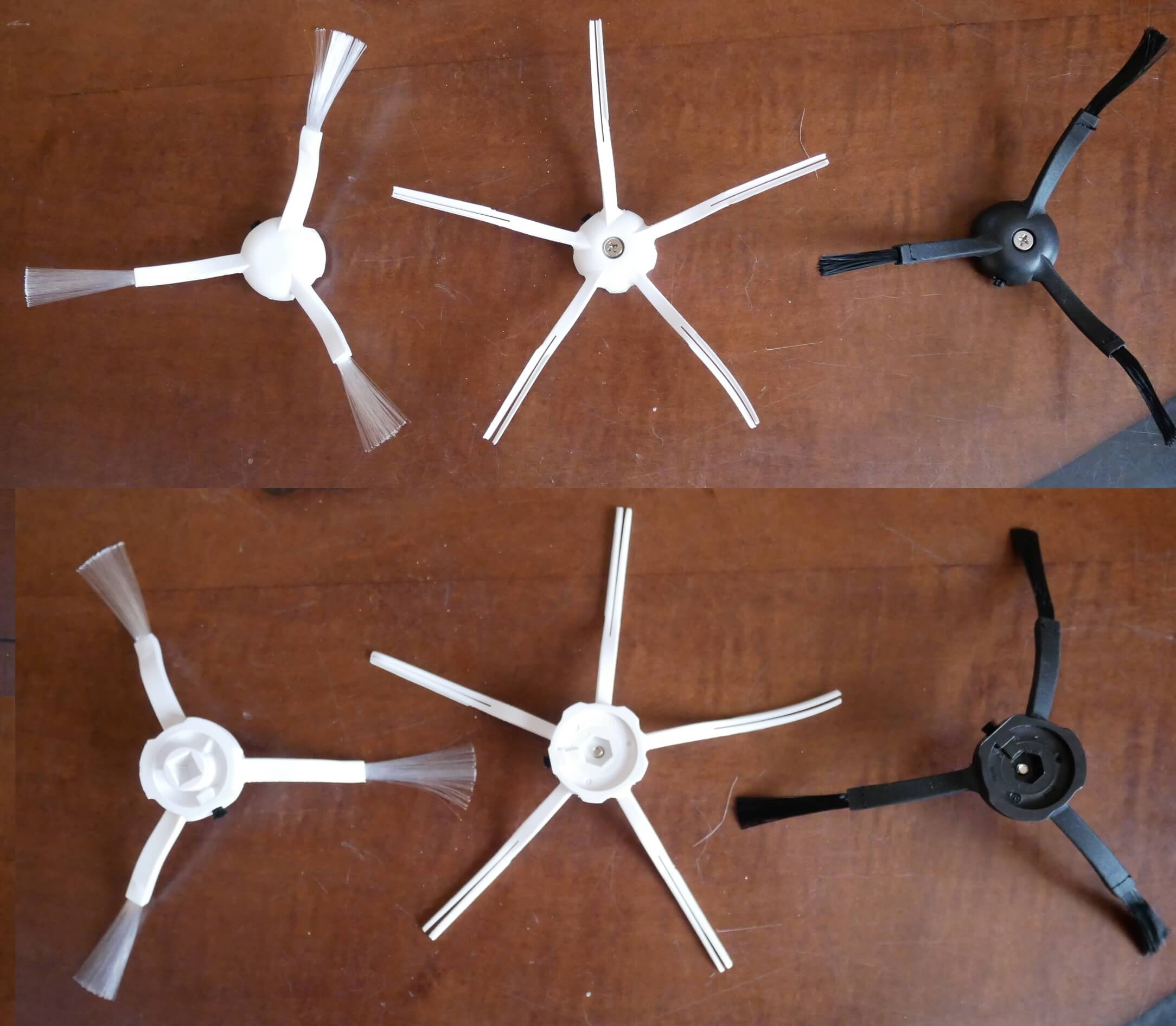
The difference between Xiaomi side brushes
The difference between the side brush and the Mijia 1C, which has the part number STBS01ZHM, is the way it attaches to the robot. It's quick-release and secured with clips, so won't fit Roborock robotic vacuum cleaners. And in terms of design and quality, the difference with the Roborock side brush is barely noticeable.
The last type of consumable for Xiaomi Roborock robot vacuum cleaners and other sub-brands is wet cleaning cloths. They come in several varieties. The top one is for the Mijia 1C. The others are for Roborock robots.
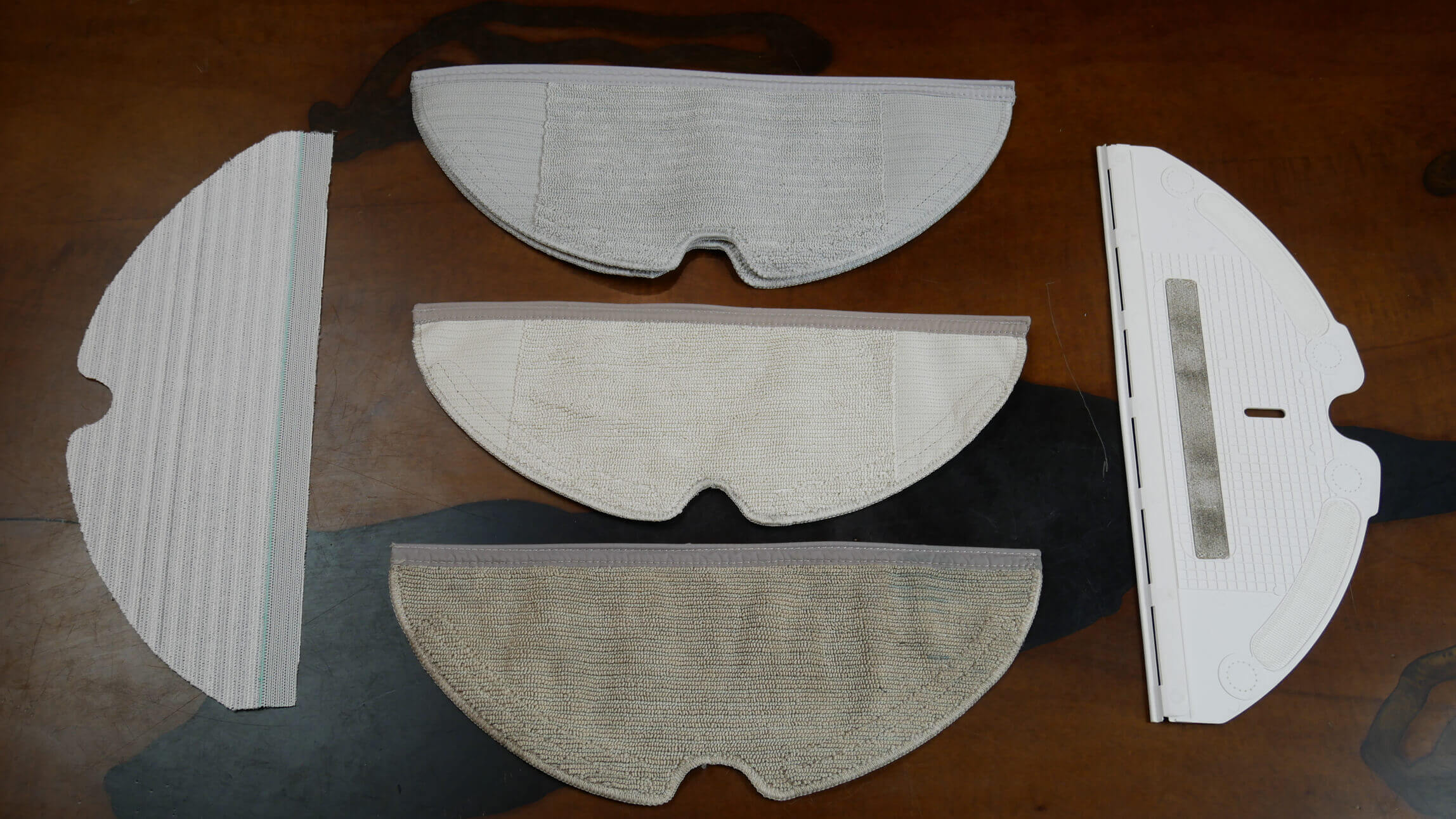
Napkins
Here's the main difference. Firstly, there are cloths without a fluffy layer along the edges. This design isn't very well thought out, as the robot won't clean dirt along baseboards and furniture edges. The cloth is designed to fit the width of the central brush. This is a drawback. The difference between the cloths for Mijia and Roborock robots is their size. Again, they not interchangeable.
Roborock recently launched cloths completely covered in lint. These are better at removing dirt. Roborock's flagship models also come with disposable cloths. These vary in quality and are thinner, so it's recommended to use them only for one cleaning cycle to maintain the cleaning performance. Disposable cloths come with special plastic attachments. Their main problem is fragility. Driving the robot over obstacles with such a cloth can cause the attachment to break, so it's recommended to remove any obstacles in the robot's path before starting a wet cleaning cycle. For example, this could include the feet of a clothes dryer.
So, we've covered the main differences between consumables for Roborock robot vacuum cleaners. I hope it's now clear why they aren't interchangeable with consumables from other Xiaomi sub-brands. I've demonstrated this using the Mijia 1C as an example. It's also important to note that consumables from Viomi aren't compatible.
Finally, I'd like to point out that you can monitor the condition of your consumables in the Mi Home app. It shows the service life of your accessories and the approximate replacement frequency, so use this information as a guide.


Manual cleaning, power adjustment, consumables status
If you're interested, in future posts I'll compare genuine Xiaomi consumables with Chinese ones ordered from AliExpress. The price is several times lower. Share your thoughts in the comments.
That's all I have for you. I hope you found this information useful and interesting. Happy shopping!