Robotic Vacuum Cleaners with High Suction Power: Top 10 Most Powerful Robots
This ranking features the most powerful robot vacuums I've reviewed, which truly stand out for their exceptional suction power. The top 10 includes models with varying price points and features, allowing you to find the perfect fit for your needs and budget. But what all these robots have in common is that they demonstrated high suction power in real-world rig tests, and therefore deservedly qualify as powerful compared to most other robot vacuums. The ranking is structured as follows: premium models with advanced features are considered first, followed by mid-range and budget-friendly robot vacuums. Let's get started!
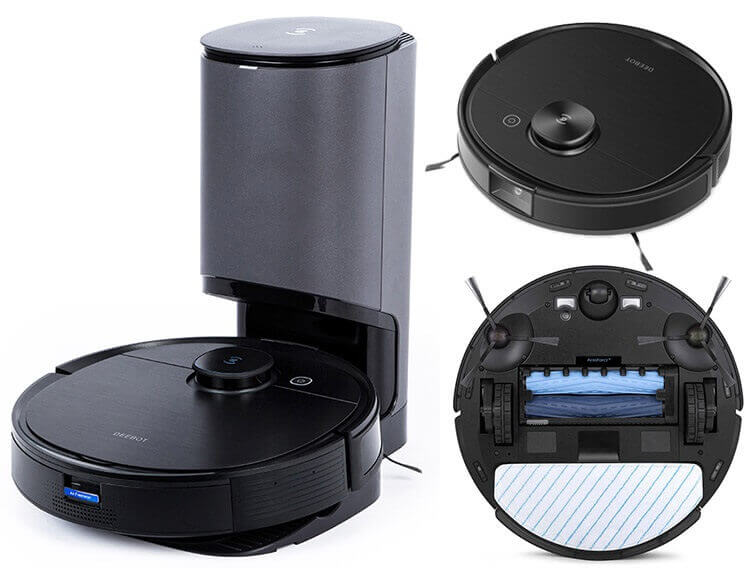
Ecovacs DEEBOT OZMO T9 AIVI+
Opens the ranking of the most powerful robot vacuum cleaners in the world Ecovacs DEEBOT OZMO T9 AIVI+At the time of preparing the materials, he is even leading in overall ranking of robotic vacuum cleaners, who passed the test on robovac.washerhouse.com.
Ecovacs DEEBOT OZMO T9 AIVI+
The DEEBOT OZMO T9 AIVI+ demonstrated not only high suction power but also excellent overall dry and wet cleaning performance, as well as a thoughtful design and advanced features. In terms of power, the robot was able to vacuum debris from a 10 mm gap, and in a comparative test with other flagship robots, it was able to pick up more sand scattered on the carpet than any other robot.
In addition to powerful suction, the robot boasts a vibration module for scrubbing dirt off the floor, two iRobot-style scraper rollers for efficient debris collection, an active camera for object recognition and remote home monitoring via smartphone, and a high-quality self-cleaning dust bin. A lidar sensor is responsible for navigation, and the proprietary mobile app allows for flexible cleaning settings. Overall, it's definitely a top-notch value for the money. The robot costs around $500 with a standard charging base and around $800 with the self-cleaning station.
Roborock S7/S7 MaxV
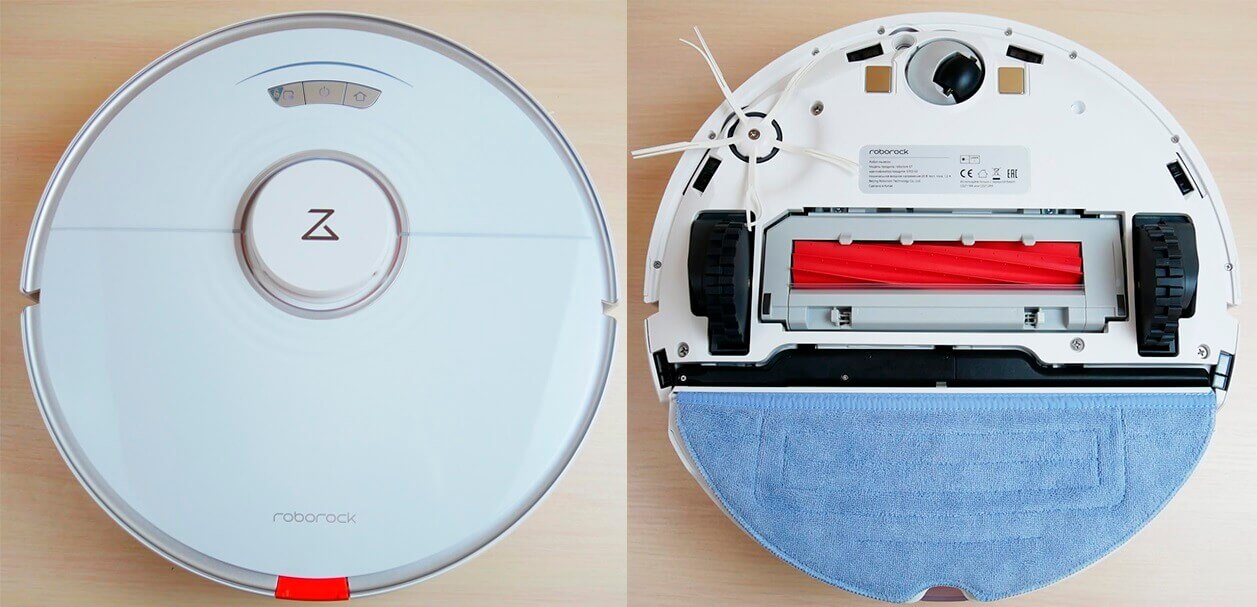
The silver medalists of our ranking are: Roborock S7, which is already on sale and was reviewed, as well as a new product S7 MaxV, which recently went on sale. The robots are identical in their cleaning module design. The updated Roborock S7 MaxV model features a self-cleaning and rinsing station and an object recognition system on the bumper, so we'll use the S7's test results as a reference.
Roborock S7
This robot vacuum cleaner was able to vacuum debris from a 10 mm gap, demonstrated high-quality dry cleaning on both hard floors and carpets, and was even capable of scrubbing light dirt. Furthermore, a key feature of the S7 and S7 MaxV is the automatic cleaning cloth lift when entering carpeted areas. This allows the Roborock S7 and S7 MaxV to simultaneously vacuum and mop, leaving carpets dry and clean. In other words, these are powerful robot vacuum cleaners for both dry and wet cleaning on carpeted floors.
The proprietary mobile app offers a wide range of features for flexible cleaning settings, while the robots are well-built and from a reputable manufacturer. All this makes the Roborock S7 and S7 MaxV among the best powerful robot vacuums in the world. The S7 model with a standard charging base costs around $500, while the self-cleaning station costs an additional $300.
The Roborock S7 MaxV launches with a standard charging base at around $900, while the Ultra version with a combined self-cleaning and rinsing station will cost around $1,400-$1,500. Overall, it's far from a budget option.
Hobot Legee D7
The top three is rounded out by a new one Hobot Legee D7It will go on sale in the second half of 2022 and will cost around $600.
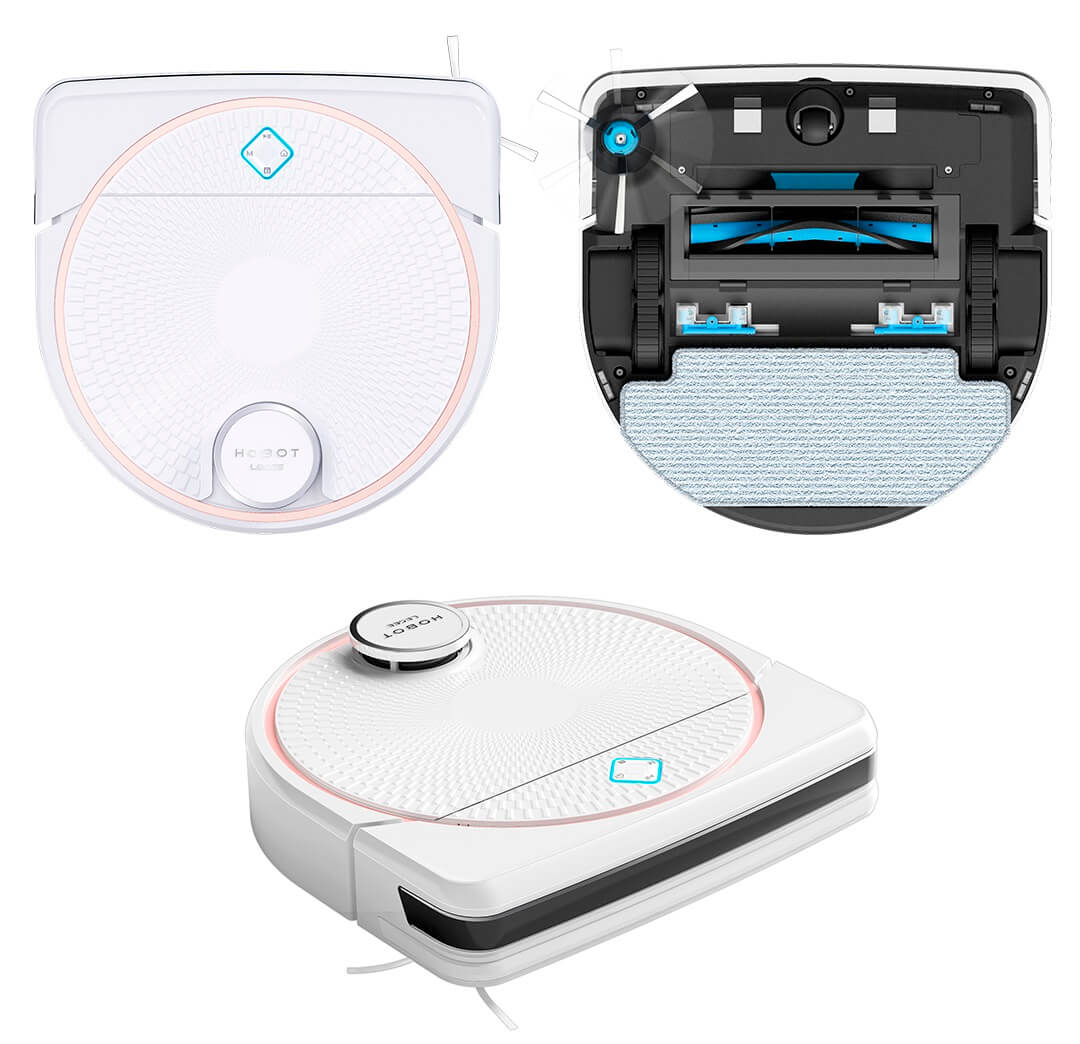
Hobot LEGEE-D7
On display, this robot vacuum cleaner was able to vacuum debris from a 10 mm gap, just like its superior models, making it a truly powerful robot vacuum. The Hobot Legee D7 boasts a significant design advantage compared to other robot vacuum cleaners on the market. A suction hole is installed in front of the central brush for pre-collecting light debris, such as lint and hair. This suction hole not only ensures high suction power but also eliminates the problem of the turbo brush becoming entangled in hair and fur by 80%, as demonstrated in real-world tests.
Additional features of the model include lidar navigation, a D-shaped body for more effective sweeping of debris in corners, and a platform with a cleaning cloth that lifts up on carpets, allowing the robot to perform a comprehensive dry and wet cleaning on carpeted floors. It's also worth noting that water is delivered to the floor not through the cleaning cloth, as with other robots, but through nozzles installed in front of the cleaning cloth. This ensures pre-dissolution of dirt and improves the quality of wet cleaning. The proprietary mobile app offers a wide range of functions for flexible cleaning settings, and it's also worth noting that Hobot products are covered by a full warranty and service support. Therefore, it's safe to say that the Hobot Legee D7 is a powerful, efficient, and functional robot vacuum cleaner for both dry and wet cleaning.
Midea S8+/M7 Pro
The following participants in our ranking Midea S8+ And M7 ProThe main difference between these robots is that the older Midea S8+ is equipped with a self-cleaning station. Otherwise, the robots are identical in navigation, cleaning performance, functionality, and suction power.
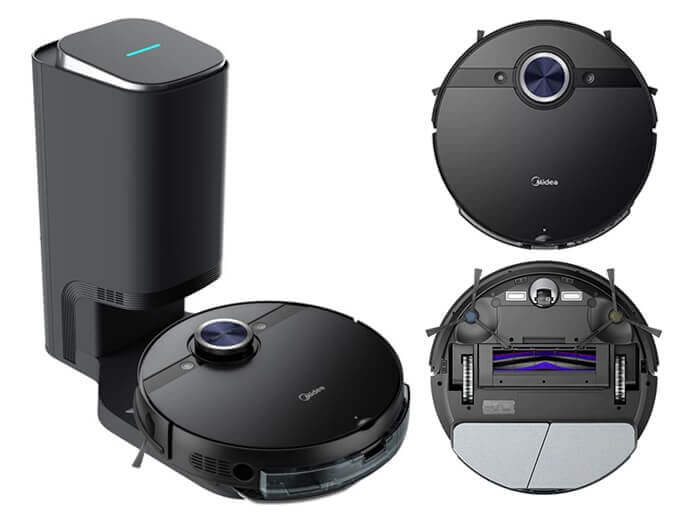
Midea S8+
Speaking of power, the Midea S8+ and M7 Pro robot vacuums demonstrated exceptional performance on the test bench, vacuuming debris from a 10mm gap. An additional feature of these robots is a water tank with a vibrating platform for enhanced dirt removal. The cleaning module itself consists of two side brushes and a central bristle-petal brush. The robots performed well in both dry and wet cleaning, and thoroughly cleaned the carpet. Their functionality is on par with premium counterparts: flexible cleaning settings are available, the app interface is in Russian, and voice assistant control is supported, including Yandex.Alice.
Midea S8+:
The entry-level Midea M7 Pro costs around $300, while the flagship Midea S8+ costs around $500. This is an excellent price considering its powerful suction, self-cleaning, and lidar navigation.
Midea M7 Pro:
Dreame Bot L10 Pro
In fifth place is Dreame Bot L10 Pro. We can say that the whole line Dreame robotic vacuum cleaners It differs from other Xiaomi sub-brands in its high suction power, but the Dreame Bot L10 Pro turned out to be the most powerful, which was able to suck out debris from a 10 mm gap.
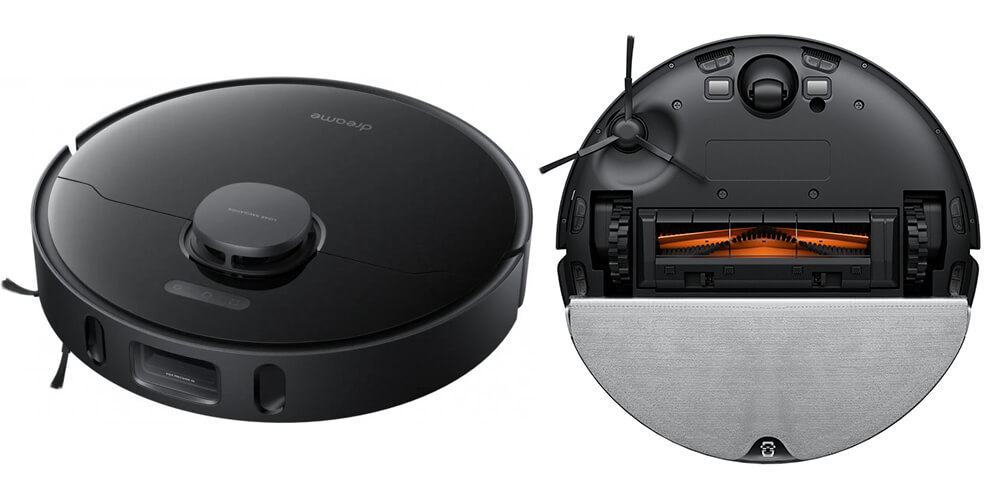
Dreame Bot L10 Pro
The other robots in the line demonstrated results from 4 to 8 mm. A detailed comparison of Dreame robot vacuum cleaners The power was compared separately. Returning to the Dreame Bot L10 Pro, I'd like to highlight its lidar navigation, 3D sensor on the bumper for detecting and avoiding objects on the floor, dry and wet cleaning functions, and a full set of important settings in the proprietary mobile app. During testing, the robot demonstrated high-quality dry cleaning, including carpet cleaning. Its wet cleaning function is less well-implemented and is better suited for gentle floor mopping and dust collection. However, for the price, it's definitely a worthwhile robot vacuum cleaner with high suction power. It costs around $400.
Tefal X-plorer Serie 95
The next powerful entry in our top 10 is the Tefal X-plorer Series 95. This flagship model boasts not only powerful suction but also high-quality wet cleaning thanks to its Y-shaped motion pattern and precise lidar-based navigation.
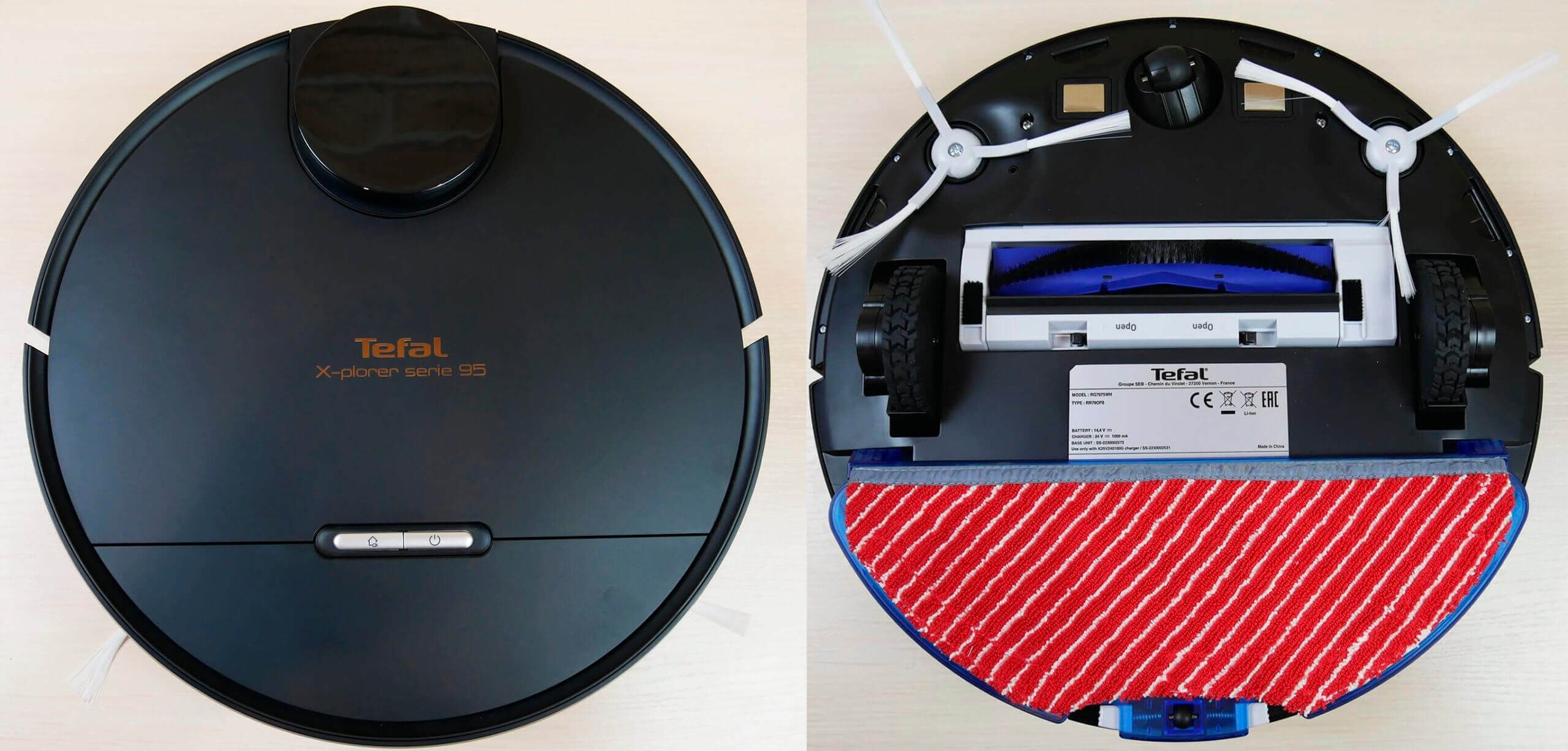
Tefal X-plorer Serie 95
Additionally, the kit includes three different turbo brushes: a bristle-petal brush, a rubber brush, and a lint roller, allowing you to choose the optimal option for your specific conditions and flooring type. However, the parquet lint roller demonstrated the highest power. With this brush, the robot vacuumed debris from a 10 mm gap, while with the other two brushes, it could only reach a 4 mm gap—another impressive result.
In addition to the turbo brush, the cleaning module includes two side brushes and a cleaning cloth attachment. The robot vacuum is controlled via a proprietary mobile app, which offers a wide range of functions. Testing showed good cleaning performance, making the robot a recommended purchase. The price was approximately $900 at the time of writing.
Samsung Jet Bot+
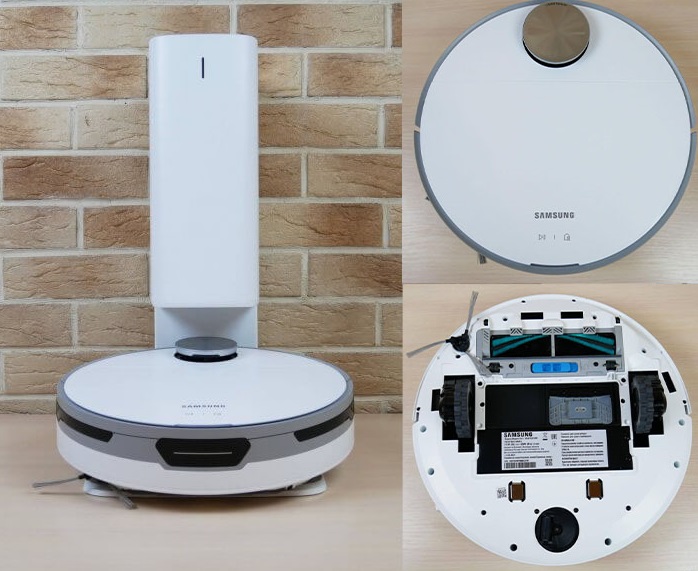
Samsung also boasts powerful robot vacuum cleaners. Here's a relatively new model, Samsung Jet Bot+, has already been reviewed by us and demonstrated high suction power - up to 10 mm.
Samsung Jet Bot+
The robot is equipped with a lidar navigation system and a self-cleaning station. The cleaning module consists of a side brush and a central brush. The turbo brush in the center is designed as a lint roller. There are some nuances here, though. This type of brush performed well on hard floors. However, its cleaning performance on carpets is not very high, despite its high suction power, so the Samsung Jet Bot+ is recommended primarily for cleaning hard floors. It's also important to note that this robot is designed for dry cleaning only. Speaking of controls, all settings and functions are located in the proprietary mobile app. Ultimately, the Samsung Jet Bot+ has its strengths and weaknesses, but it's powerful and does a good job cleaning hard floors. It costs around $800.
Xiaomi Mijia Ultra-Thin Robot Vacuum Cleaner
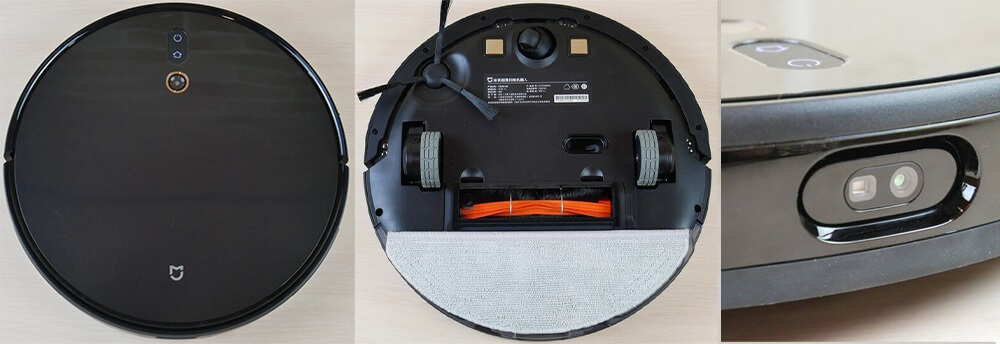
Xiaomi, surprisingly, also released a very powerful robot vacuum cleaner, although this wasn't emphasized in the advertising materials, and its high power was only confirmed during testing. This model is Xiaomi Mijia Ultra-Thin Robot Vacuum Cleaner, which attracts more attention with its ultra-thin body, only 55 mm high.
Xiaomi Mijia Ultra-Thin Robot Vacuum Cleaner
This slim robot vacuum cleaner was able to thoroughly vacuum debris from a 10 mm gap, further captivating its audience. In addition to its slim body and powerful motor, the device boasts a sensor system for detecting objects on the floor, a camera for navigation, and a wet mopping function. Dirt is collected using a side and center brush, followed by a cleaning pad. The proprietary mobile app includes basic map functions. Dry cleaning performance on hard floors is above average. However, wet mopping and carpet cleaning are not as well-performed. Therefore, I would recommend the Xiaomi Mijia Ultra-Thin Robot Vacuum Cleaner for cleaning hard floors. The price was approximately $300-$350 at the time of writing.
Yeedi 2 Hybrid/Yeedi Vac
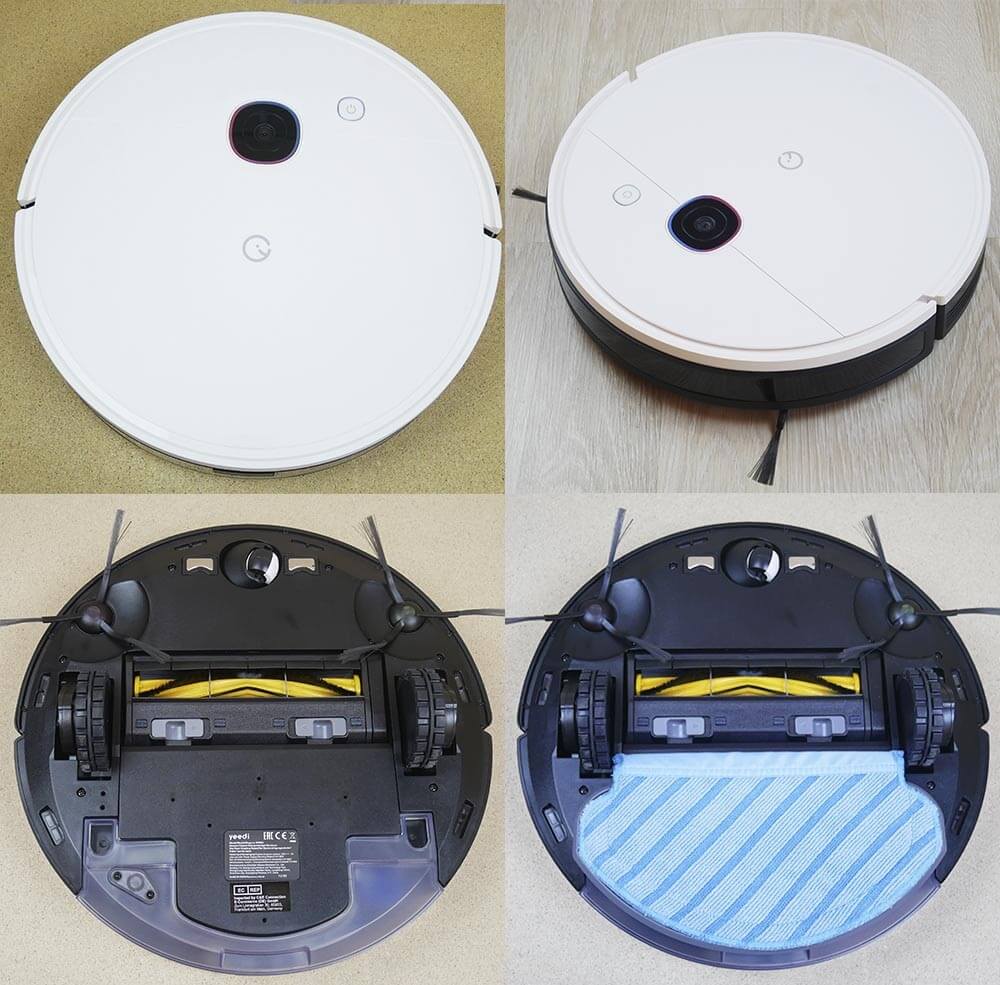
Another line of chamber robot vacuum cleaners with high suction power is Yeedi Vac and Yeedi 2 HybridThe latter was just in review and was able to suck out debris from a 10 mm deep crack.
Yeedi 2 Hybrid
The difference between the robots is minimal, and lies in the fact that the updated Yeedi Vac is equipped with a carpet detection sensor and can automatically increase power when encountering carpets, which is an important feature for saving battery life in a powerful robot vacuum. Therefore, of the two robots, I would still recommend the updated Yeedi Vac, given the minimal price difference between them. Typically, the price is between $2.50 and $3.00.
Speaking of the robots, they are equipped with a camera for navigation, allowing them to create and save a map for future cleaning settings in the proprietary mobile app. Their dry and wet cleaning performance is above average, including on carpets. The cleaning module consists of a side and central bristle-petal brush (the Yeedi 2 Hybrid has two side brushes). A floor cleaning pad can be attached to the turbo brush. These are definitely some of the best robot vacuums for those under $300 who prioritize high suction power.
360 C50
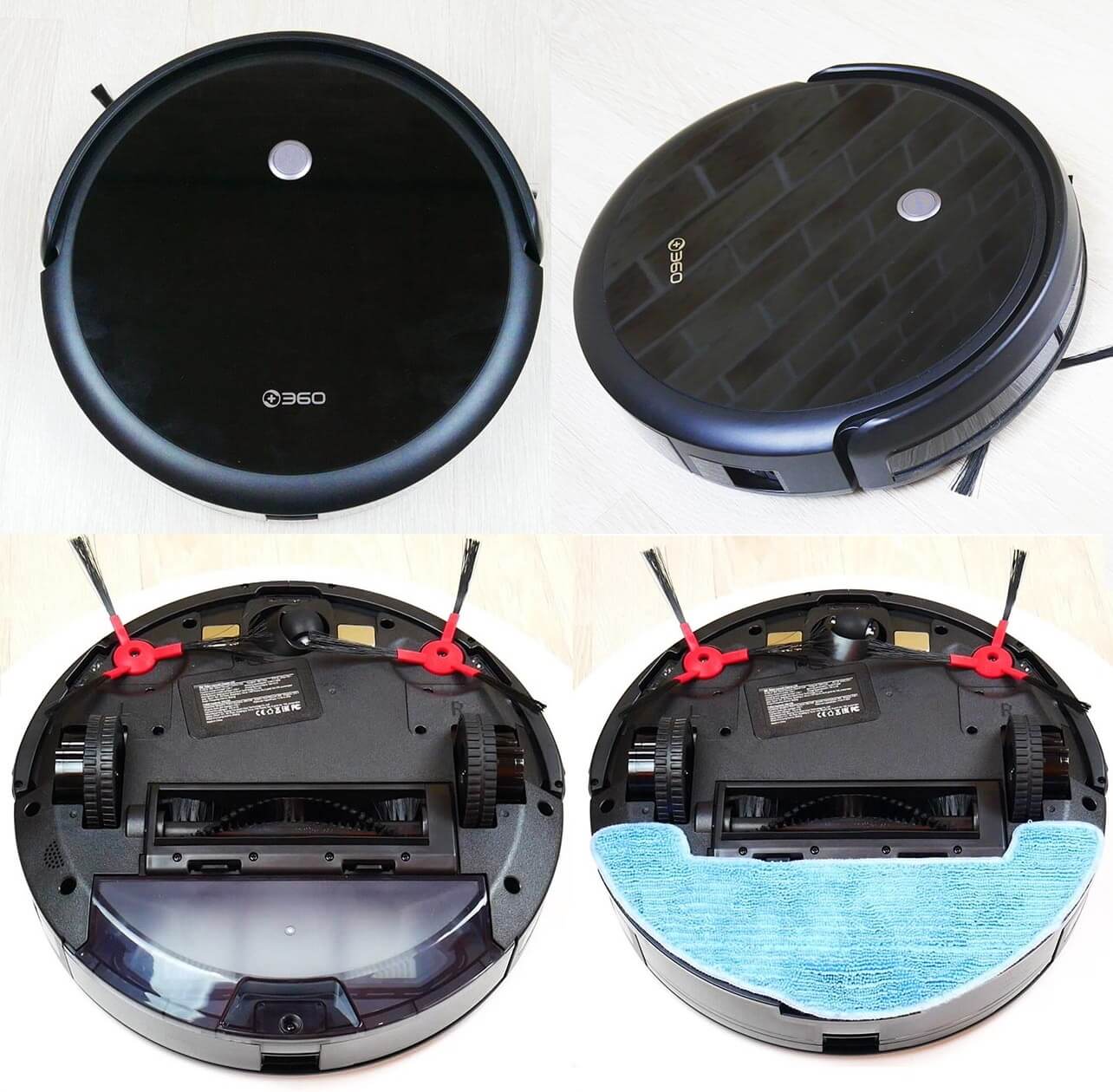
And finally, the ranking of powerful robot vacuum cleaners of 2022 is closed by the most powerful budget robot vacuum cleaner on the market, 360 C50.
360 C50
The main reason we're talking about it is its power. On a test bench, in maximum mode, it was able to suck up debris from a 10 mm-deep crevice. It's important to note that the 360 C50 costs around $160-$200. This is a great deal for those looking for a robot vacuum with high suction power for a small space.
This robot has a gyroscope on board, allowing it to clean areas up to 60 square meters. It demonstrated excellent dry cleaning performance on hard floors and carpets. A water tank can be installed in place of the dust collector. In wet cleaning mode, the robot cannot vacuum, but it can at least sweep into a small dust compartment. The cleaning module consists of two side brushes and a central brush made of bristles. Control is via a remote control and a mobile app. Key features include adjustable suction power and cloth wetting. Overall, this is a very impressive robot for the price, thanks to its high suction power.
Incidentally, AliExpress sells a complete clone of the 360 C50, only without the water tank. This robot vacuum cleaner has the same features, cleaning module design, and suction power, but is designed for dry cleaning only. The model is called Airrobo P10 We reviewed it, so its power is confirmed by real-world tests. Priced at just $120, the Airrobo P10 is one of the best budget robot vacuums with high suction power.
Finally, I recommend watching the video version of the ranking of the most powerful robot vacuum cleaners of 2022:
So, we've reviewed the best robot vacuum cleaners with high suction power in 2022. I hope this rating helped you find the best option for your needs and budget. If you have any questions, please ask them in the comments. Happy shopping!

Battery capacity doesn't determine motor power. A lithium battery can easily deliver double the capacity, and a special lithium battery can easily deliver 20 times the capacity (for example, in a screwdriver).
Artem: +1
Multiplying the capacity by the operating voltage yields Watt-hours (Wh). This value has no correlation with the current the motor can draw. You can get 65 W from 32.5 Wh, but such a device will only run for half an hour.
Multiply the amp-hours by the voltage (total battery), divide by the stated runtime = power consumption (obviously, this includes the running power, efficiency varies, etc.), but this is just an estimate. And it's immediately obvious that the seller often lies about the power.
Cecotes Conga, 10,000Pa. A real showpiece, getting wet. The list is probably to blame.