Comparison of Xiaomi Roborock S5, S5 Max, and S6 robot vacuum cleaners
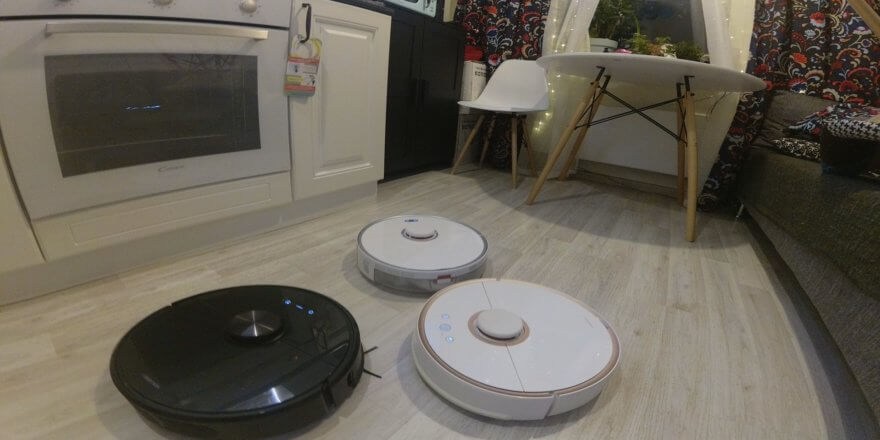
Greetings to all readers of the site robovac.washerhouse.comIn this post, I'd like to compare three of Xiaomi's leading robot vacuum cleaners today! These are the Xiaomi Roborock S5, S5 Max, and S6. Many people wonder which of these robots cleans better, mops better, and, most importantly, is it worth paying extra for? S5 Max or S6, or you can save money and buy Roborock S5 (S50), which is arguably just as good in cleaning quality. Special thanks to Lamobile, which provided all three robots for review and testing. Let's compare the specifications, features, and cleaning performance of all three robots. I should note right away that the current price of the S5 is around $300, the S5 Max costs $400, and the S6 ranges from $40 to $430.
Appearance and equipment
First, let's compare the robot vacuum cleaners' designs. Externally, they don't differ much. All three robots have identical body dimensions: 9.65 cm high and 35 cm in diameter. They weigh approximately 3.5 kg. The only major difference on the top is the buttons. The Roborock S6 and S5 have three mechanical buttons, while the S5 Max has two. The manufacturer has removed the spot cleaning button. Now, to activate spot cleaning, you need to hold the Home button for a few seconds or simply select this function in the app. Additionally, the Roborock S6 and S5 Max have a mechanical button on the lidar sensor, which supposedly helps the robot prevent getting stuck under furniture. In reality, we weren't able to determine its effectiveness.
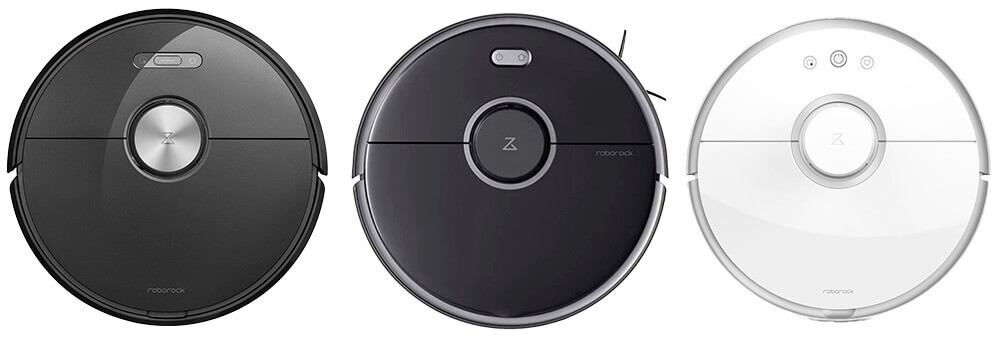
Roborock S6, S5 Max, and S5 (top view)
A more important difference is immediately apparent when examining the robot from all sides. The S5 Max has a separate water tank, which is mounted on the back of the robot. Meanwhile, the S5 and S6 simply attach their nozzle to the bottom of the robot. We'll return to wet cleaning later, as it's one of the most important differences between the robots.
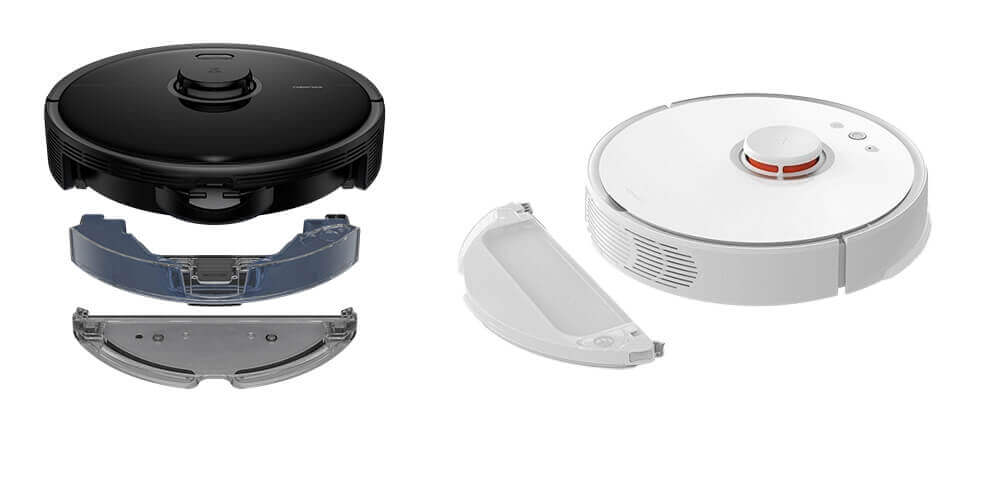
Nozzle vs. separate tank
If you turn the robots upside down, you can see another difference: the new Roborock S5 Max and S6 have a five-beam silicone side brush, while the S5 uses a three-beam nylon side brush.
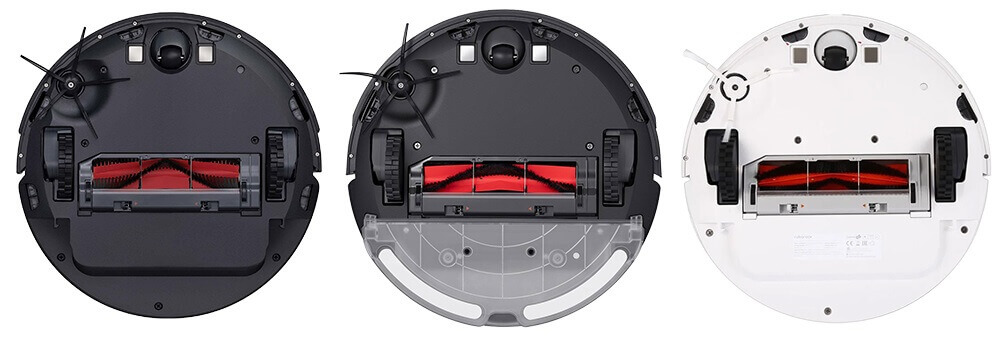
Roborock S6, S5 Max, and S5 (bottom view)
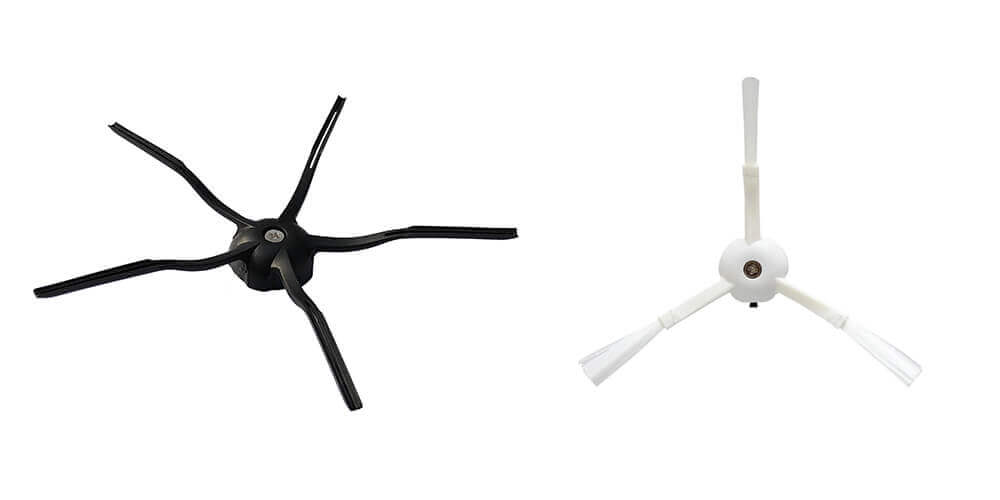
Comparison of side brushes
The updated version cleans better along walls and in corners. The central brush has also been slightly modified. In the two new robots, it is now detachable, making it easier to remove pet hair.
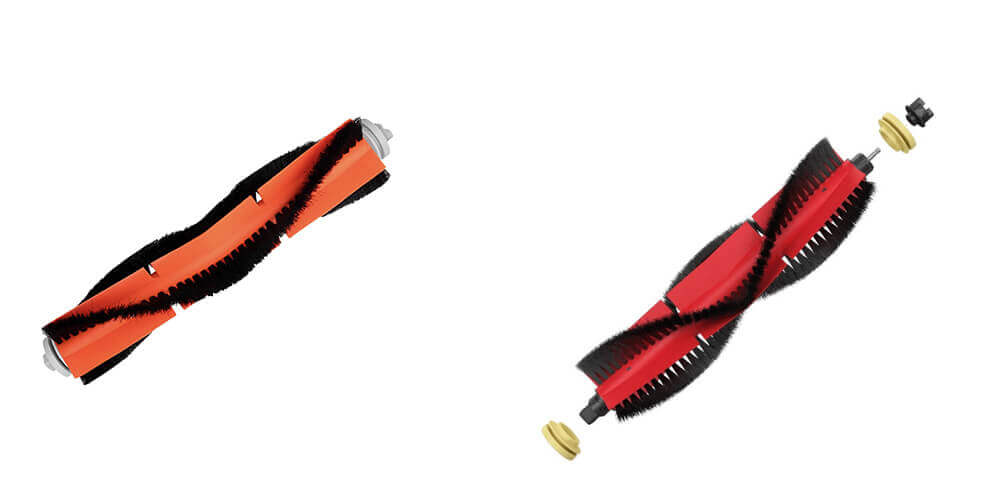
Comparison of central brushes
It's also worth noting that the S6 has a redesigned charging base, which is now wider and includes a compartment for storing excess cord. The Roborock S5 Max and S5 (S50) have a smaller base without a cord compartment.
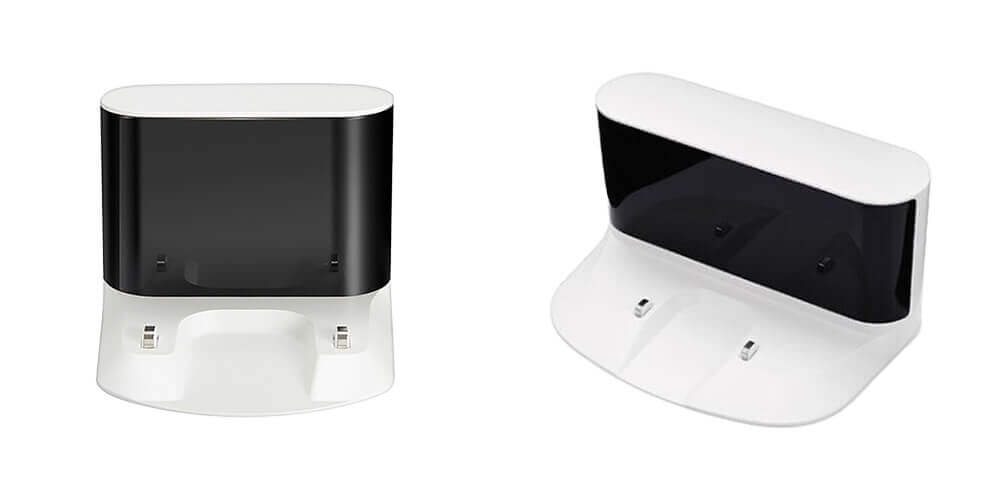
Comparison of charging bases
I'd also like to add that the S6 has the most complete package. It includes two reusable cloths, 10 disposable cloths, and a spare HEPA filter. The S5 Max, surprisingly, comes with only one reusable cloth. Even the S5 comes with a spare reusable cloth and a spare HEPA filter. This is likely why the S5 Max is slightly cheaper than the S6.
Technical specifications
Let's move on to comparing the specifications and features. I won't compare everything we know about the robots, as many of their capabilities and specifications are identical. But we will now compare the most important indicators.
Let's start with the characteristics. For easy comparison, the distinctive and similar features are summarized in a table:
| Roborock S5 (S50) | Roborock S6 | Roborock S5 Max | |
| Battery, mAh | Li-Ion, 5200 | Li-Ion, 5200 | Li-Ion, 5200 |
| Cleaning area, sq.m. | 250 | 250 | 250 |
| Operating time, min | 150 | 150 | 180 |
| Suction power, Pa | 2000 | 2000 | 2000 |
| Dust collector capacity, ml | 480 | 480 | 460 |
| Water tank capacity, ml | 150 | 150 | 290 |
| Noise level, dB | Up to 68 dB | Up to 55 dB | Up to 60 dB |
As you can see, the Roborock S5 Max offers longer battery life. All robots can continue cleaning after recharging, allowing them to clean areas up to 250 square meters.
Another caveat: the Roborock S5 Max's separate water tank capacity is significantly larger than the attachments on the S5 and S6, allowing the S5 Max to clean a larger area. The S6, on the other hand, is quieter than its siblings, thanks to Roborock engineers' extensive noise insulation. This may be a deciding factor for some when choosing between the three robots. However, there's no noticeable difference in noise levels. In any case, the robots are noisy because they are equipped with powerful motors.
Functional capabilities
Now let's compare features—this is key when choosing between the Roborock S5, S5 Max, and S6. For ease of reference, we've summarized all the information in a table.
| Roborock S5 (S50) | Roborock S6 | Roborock S5 Max | |
| Supplying water to the napkin | By gravity | Mechanical regulator on the nozzle, 2 positions | Electronic adjustment in the app, 3 levels |
| Restriction of cleaning zones | No-go zones and virtual walls in the app | No-go zones and virtual walls in the app | No-go zones and virtual walls in the app, separate no-go zones for wet cleaning |
| Zoning the premises into rooms | Eat | Eat | Eat |
| Saving multiple cleaning maps in memory | Yes, 3 | Yes, 3 | Yes, 3 |
| Application | Mi Home | Mi Home/Roborock | Mi Home/Roborock |
| Adjust the suction power and water flow level for each room | No | No | Eat |
| Improved navigation | No | Eat | Eat |
Let me explain everything in more detail. The Roborock S5 uses gravity feeding to deliver liquid to the cleaning cloth. This isn't the best option, especially because even when the robot stops, water will still flow through the capillaries. Furthermore, the cleaning cloth's wetting level can't be adjusted. The S6 now allows you to manually adjust the cleaning cloth's wetting level using the dial on the nozzle. This isn't the most convenient option either. However, the Roborock S5 Max allows you to adjust the cleaning cloth's wetting level in the app. You can also set a custom cleaning level and suction power for each room. For example, if the living room has wooden floors, it's best to set the water flow to the minimum level, but in the kitchen, where the floor is tiled, it makes sense to thoroughly wet the microfiber cloth.
The same applies to suction power: in rooms with carpets, it's best to use high power, while in rooms with hard floors, it makes sense to use medium power to conserve battery life. Another feature of the Roborock S5 Max is the ability to limit cleaning zones separately for the wet mopping mode. This feature is useful to protect carpets from getting wet. The S5 and S6 don't have this feature.
It's important to note that with the firmware update, all three models can now zone rooms. Previously, the Roborock S5 couldn't do this. Furthermore, all three robots can store up to three cleaning maps, two of which are backup.
The final difference between the Roborock S6 and S5 Max and the S5 is that the updated two robots can be controlled not only via Mi Home but also via the proprietary Roborock app. Furthermore, the cleaning algorithm has been slightly updated. Now, in narrow rooms, the robot moves in a serpentine motion along the long side, rather than sideways. This improves the speed and quality of cleaning.
These are all the important differences between the three robots. In the video below, you can compare the cleaning performance of the robots:
Overall, all three robots perform well in dry cleaning. The Roborock S6 and S5 Max performed slightly better, but within a single room, this isn't as noticeable. Visually comparing wet cleaning performance was pointless, as all three robots clean floors using the same technology. There are no vibrating platforms or separate nozzles, which could affect the cleaning performance. The S5 Max's water tank is larger, and the wetness of the cloth can be adjusted as needed.
Comparison results
In conclusion, I'll summarize the comparison of Xiaomi's flagship robots. Dry cleaning is excellent on all three robots. Wet cleaning is significantly better on the Roborock S5 Max. It's important to note that a full water tank is sufficient for 200 square meters at the minimum wetting level, according to international tests. In our apartment, the water tank was sufficient at the medium wetting level. However, the S5 and S6's nozzles are sufficient for approximately 30-40 square meters—a significant difference.
Roborock S5:
Thanks to the new Roborock S5 firmware, which adds room zoning and multiple cleaning plans, this robot is no longer as simplified a version of its previous flagship models. It's significantly cheaper, and if your budget doesn't allow for the Roborock S6 or S5 Max, this robot is also a good choice.
Roborock S5 Max:
When choosing between the Roborock S6 and S5 Max, consider what's more important to you: advanced wet cleaning or a good set of features and a slightly lower noise level. The S6 also has a 20 ml larger dust container, but this isn't a significant consideration when choosing between these robots.
I prefer the Roborock S5 Max for obvious reasons. But if wet cleaning isn't as important, the S6 is likely a better option.
Roborock S6:
By the way, literally within a week we will have a new one for review Roborock S6 PureWe'll test this robot vacuum cleaner and tell you why you might want to buy it, and most importantly, how it cleans.