Comparing the iRobot Roomba i7 and Roomba 980
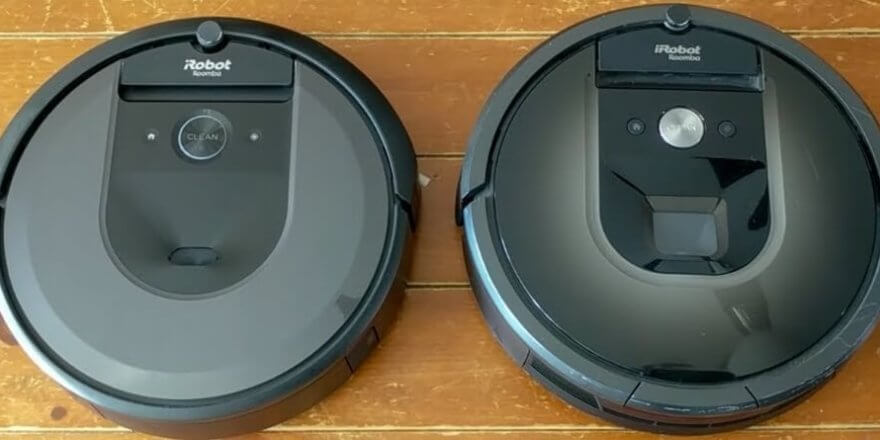
Robot vacuum cleaner iRobot Roomba 980 For a long time, it held a leading position among all existing automated robotic cleaners on the market in terms of its functionality and cleaning efficiency. However, iRobot recently released a new model. Roomba i7 and its modification i7+, aiming to dethrone the current leader. But is this new product truly capable of revolutionizing the industry, or is it just another good robot vacuum? In this review, we'll compare the two models based on key parameters and draw our own conclusions about which is the better choice.
Equipment
The iRobot Roomba 980 comes with the following components:
- Robot vacuum cleaner.
- Home Base charging base.
- Power cable.
- Battery.
- Dual Mode Virtual Wall motion limiter (2 pcs.).
- Spare HEPA filter.
- Spare side brush.
- User manual.
- Guarantee.
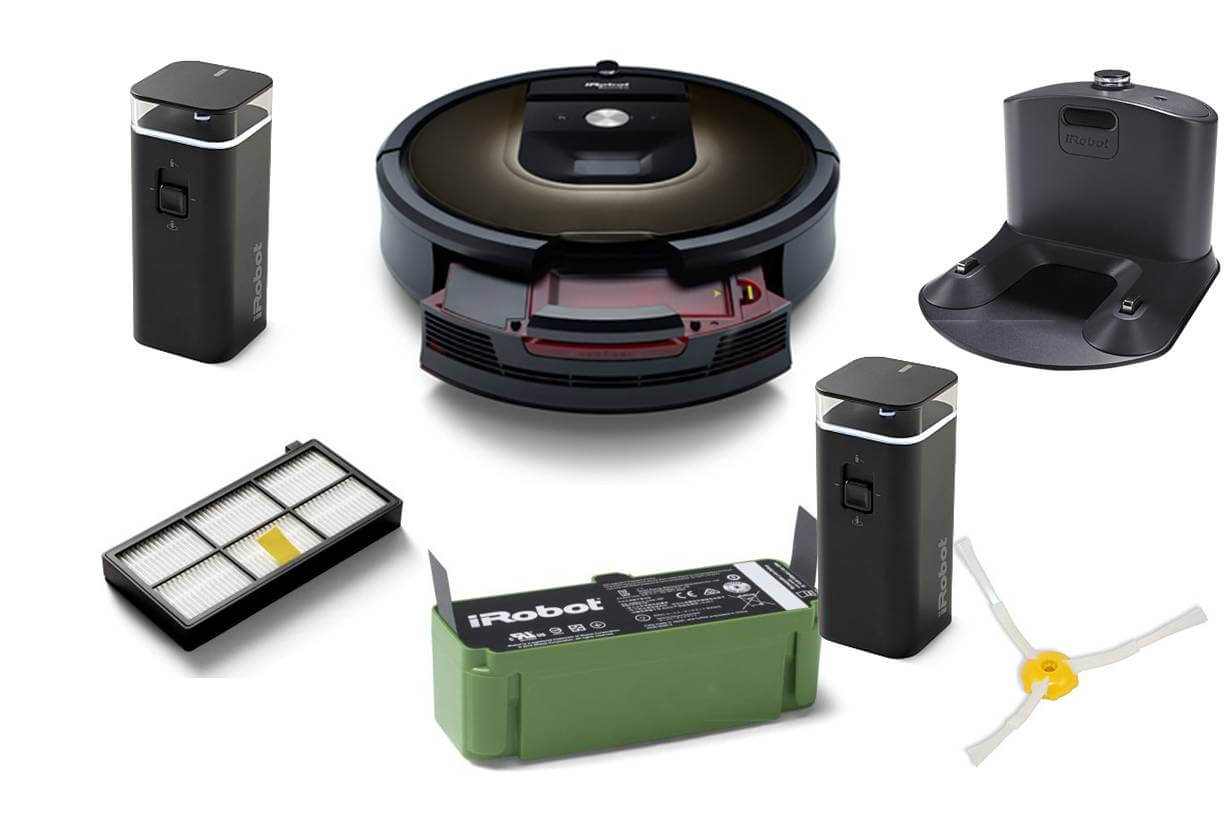
Equipment of the 980 model
The iRobot Roomba i7 comes with:
- Robot vacuum cleaner.
- Home Base Charging Station.
- Power cable.
- Battery.
- Dual Mode Virtual Wall motion limiter (2 pcs.).
- Additional HEPA filter.
- Additional side brush.
- User manual.
- Guarantee.

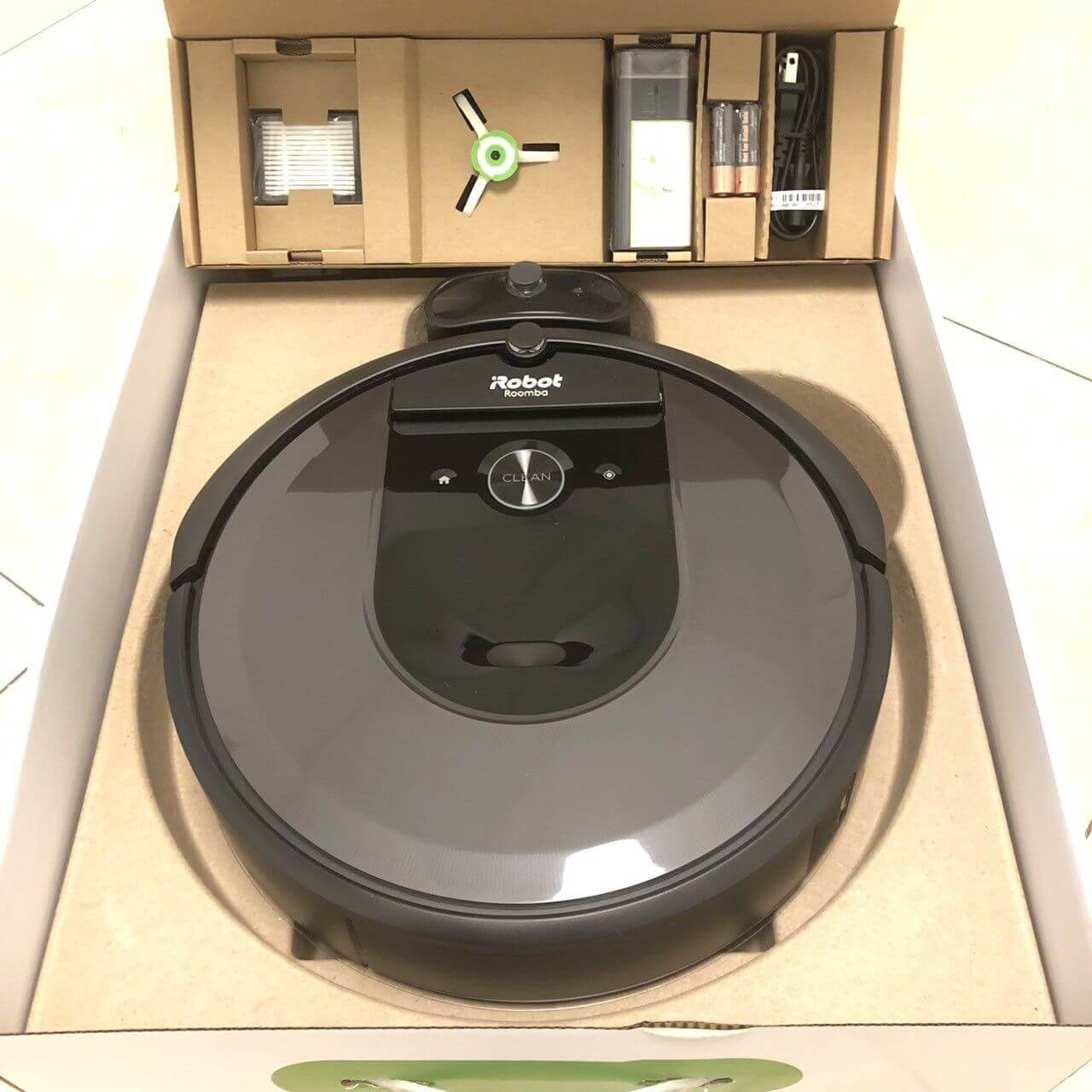
i7 Configuration
When comparing the two robots, it's clear that the package contents are identical. However, if we consider the i7+, a different model, this one comes with a dedicated Clean Base dust collector. It can also be purchased separately, along with a set of disposable bags, for the Roomba i7. This is the main difference from the Roomba 980.
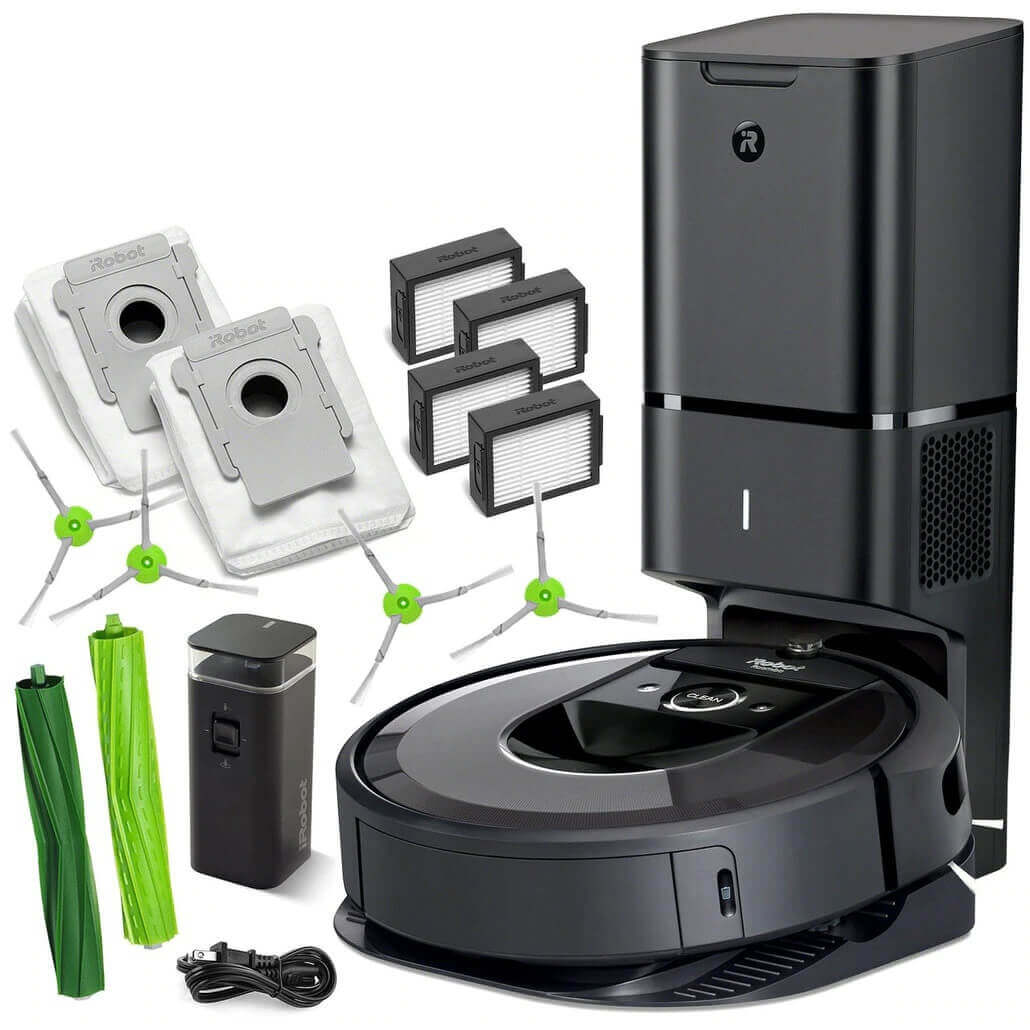
Roomba i7+ Package Contents
Appearance
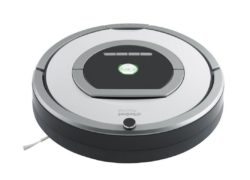
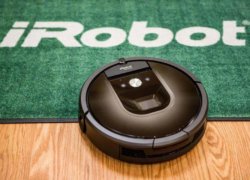
The Roomba 980 robot vacuum cleaner is made of high-quality plastic in iRobot's traditionally understated style: it has a round shape and compact dimensions—35 x 35 x 9.1 centimeters—and is available in black and brown. It weighs 3.95 kilograms.
The Roomba i7 is generally similar in appearance to the 980, but its charcoal-black finish makes it look slightly more elegant than its predecessor. Its dimensions are also nearly identical—34 x 34 x 9.1 centimeters—but it weighs slightly less at 3.37 kilograms.
Design comparison:
The top of the Roomba 980 and Roomba i7 features a control panel with three buttons, a display, and a camera for navigation and mapping. As you can see in the photo below, the panels are slightly different.
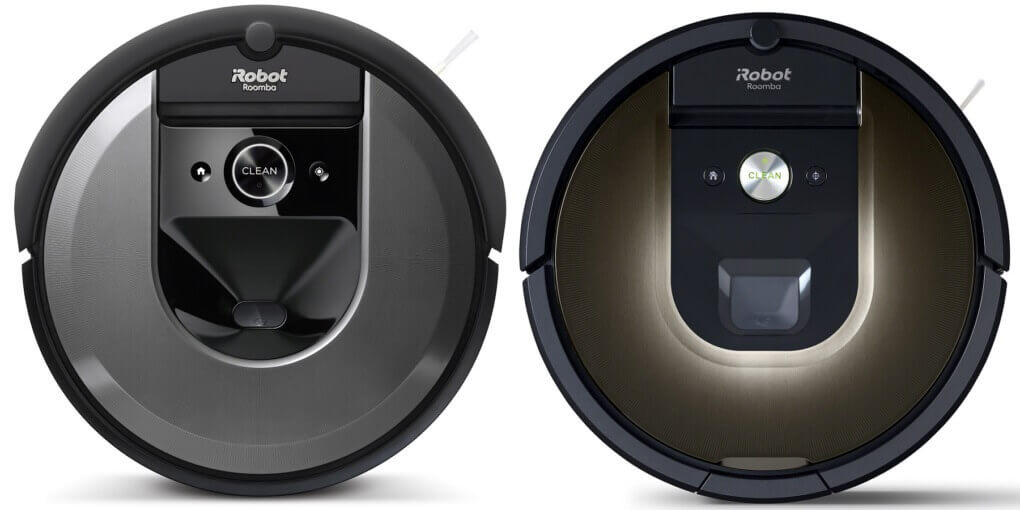
Top view
On the side is a protective bumper and a retractable dust container. On the back are two drive wheels, a front roller, charging contacts, a battery, a central brush (consisting of two extractor rollers), and one side brush.
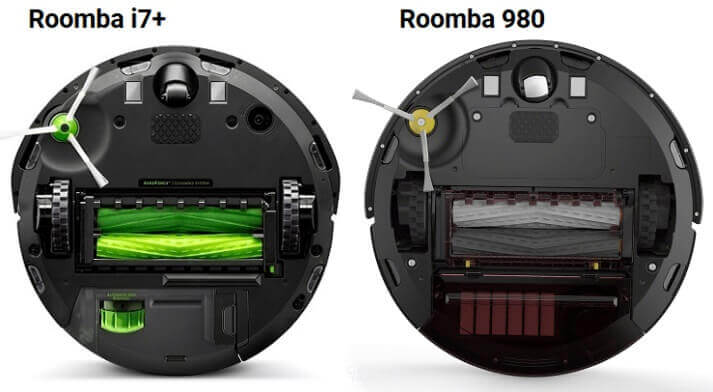
Bottom view
Technical specifications
Let's move on to comparing the technical parameters of the two models:
| 980 | i7 | |
| Dimensions (WxHxD, cm) | 35x35x9.1 | 34x34x9.1 |
| Weight (kg) | 3.95 | 3.37 |
| Battery | Li-Ion | Li-Ion |
| Battery capacity (mAh) | 3300 | 1830 |
| Maximum suction power (Pa) | 1700 | 1700 |
| Battery life (min.) | up to 120 | up to 75 |
| Charging time (min.) | 180 | 180 |
| Cleaning area (m2) | up to 150 | up to 150 |
| Dust container volume (ml) | 1000 | 1000 |
| Noise level (dB) | 60 | 60 |
| Type of cleaning | dry | dry |
| Autonomous return to the charging station | + | + |
| Height of obstacles to be overcome (mm) | up to 20 | up to 20 |
| Wet cleaning | — | — |
| Three-stage cleaning system | 10x suction power | 10x suction power |
| Filtration | AeroVac filter system | AeroVac filter system |
| Programming a cleaning schedule | + | + |
| Anti-entanglement system | + | + |
| Navigation and cartography | iAdapt 2.0 with visual localization | iAdapt 3.0 |
| Dual-mode Virtual Wall barriers | + | + |
| Dirt Detect Technology | + | + |
| Control from a smartphone | + | + |
| Wi-Fi support | + | + |
When comparing the key performance parameters of the robot vacuums, we see that they are virtually identical, with the exception of the lithium-ion battery capacity: the Roomba 980 has a 3300 mAh battery, providing up to 120 minutes of runtime, while the Roomba i7 has a battery capacity of only 1830 mAh, which lasts up to 75 minutes. However, since both robots can continue working after recharging, this difference won't be noticeable, especially if you're away from home while cleaning. Charging time is approximately 2-3 hours.
Ultimately, based on the specifications alone, it's impossible to say for sure which is better: the iRobot Roomba i7 or the Roomba 980. We'll discuss the similarities and differences in functionality and compare them later in the review.
Functional capabilities
Both iRobot robot vacuums are versatile when it comes to cleaning floors, capable of handling hard surfaces as well as carpets and rugs. They clean using rubber extractor rollers and a single side brush, which collect all small and larger debris, dirt, hair, and pet hair. Both the Roomba 980 and Roomba i7 feature an anti-tangle system to prevent hair and fur from tangling around the brushes. An effective filtration system also removes dust and allergens from the surrounding air.
The i7+ model is especially noteworthy for its additional Clean Base self-cleaning system, which allows for fully automated cleaning. However, we are not using this model for comparison in our review.
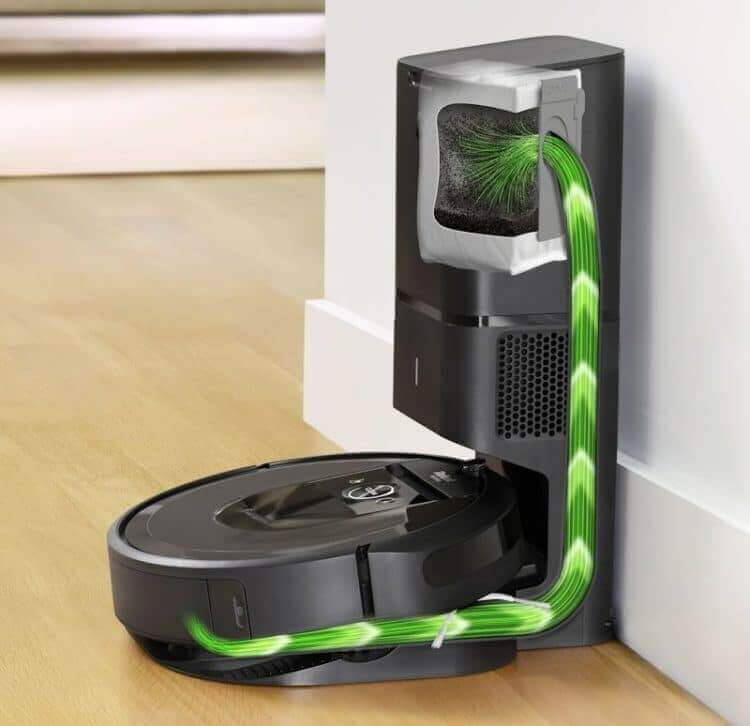
Clean Base
The Roomba 980 and Roomba i7 are equipped with a modern third-generation brushless motor, which delivers up to 1700 Pa of suction power in Turbo mode. These robotic vacuums also feature Dirt Detect technology, which detects the dirtiest areas.
Regarding the navigation and mapping systems, there is a slight difference in comparison. The iRobot Roomba 980 uses iAdapt 2.0 navigation and mapping technology, which combines sensors and a camera in real time to improve navigation accuracy. The new iRobot Roomba i7 uses the more advanced and precise iAdapt 3.0 technology and additional Imprint Smart Mapping technology, which allows it to identify rooms and remember different rooms.
When comparing robotic vacuum cleaners based on their functions, the robotic vacuum cleaners are identical; they have a cleaning scheduler, and the robots' movement can be restricted using the two-mode Virtual Wall barriers.
Wi-Fi support and smartphone control are also available, though a remote control is not included. Voice control is also supported with Alexa and Google Assistant.
Let's sum it up
In conclusion of the comparison, I would like to say that it is actually quite difficult to clearly determine the leader in terms of efficiency of the two robotic vacuum cleaners under consideration.
While the iRobot Roomba i7 is slightly lighter and smaller, boasts a more advanced iAdapt 3.0 navigation and mapping system with Imprint Smart Mapping technology, and the option to purchase a self-cleaning station, the iRobot Roomba 980 has stood the test of time and delivered exceptional results, earning it a well-deserved lead. Furthermore, the new model has a smaller 1830 mAh battery.
In terms of price, the Roomba i7 is slightly more expensive than the Roomba 980, at around $570, compared to its predecessor's $540. We believe there's no point in paying extra for the new model without the self-cleaning base if you don't plan to upgrade to one later, as there are no significant differences between the two models.
This concludes our comparison of the best iRobot robot vacuums. We hope you now understand which one is better to choose and the differences between the two top models.
Related materials: