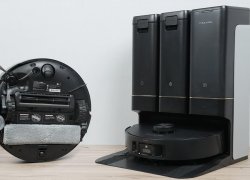
Trouver P50 Pro Ultra: TOP for $600?! Review and test!
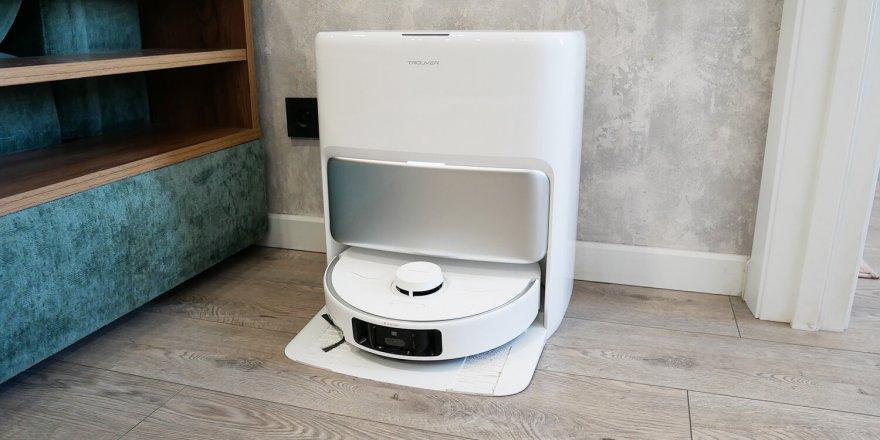
Hello to all readers of the project! This review will examine the Trouver P50 Pro Ultra robot vacuum cleaner. This device boasts a number of advanced features, including an object recognition system with backlighting, a self-cleaning turbo brush with built-in blades, a side brush that extends into corners, and a scrolling cleaning cloth that reaches under furniture. And, of course, there's the all-in-one cleaning station. The robot also boasts increased suction power of 19,000 Pa, remote tracking via smartphone, and a built-in voice assistant for control. Overall, it offers a compelling package for a reasonable price. Speaking of price, it's in the $600-$700 range at the time of writing. Below, I'll thoroughly test the Trouver P50 Pro Ultra, highlight its pros and cons based on my test results, and then share my personal opinion. So, let's get started!
Equipment
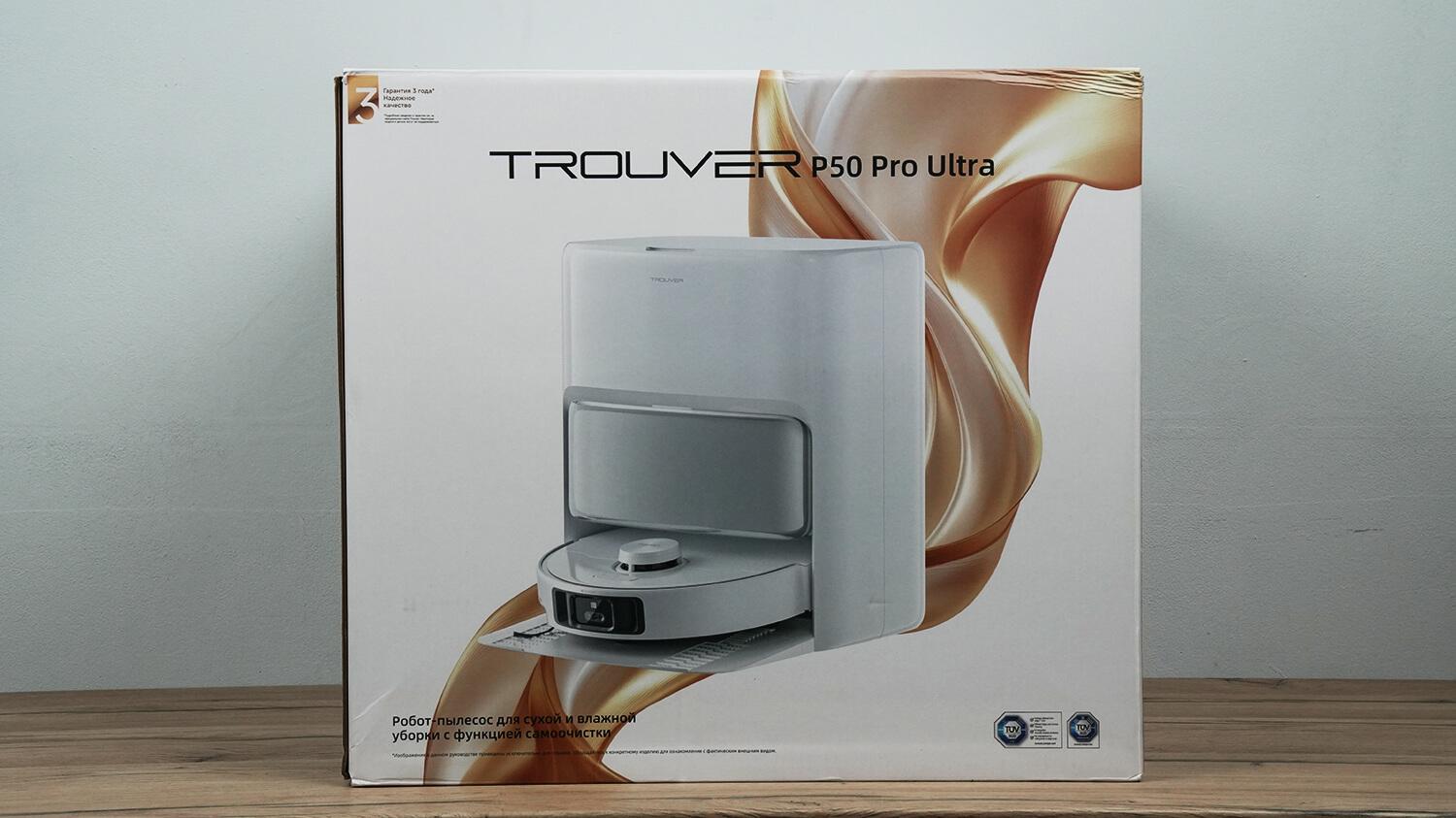
Let's start with the package contents. The robot arrived in this branded box:
Box
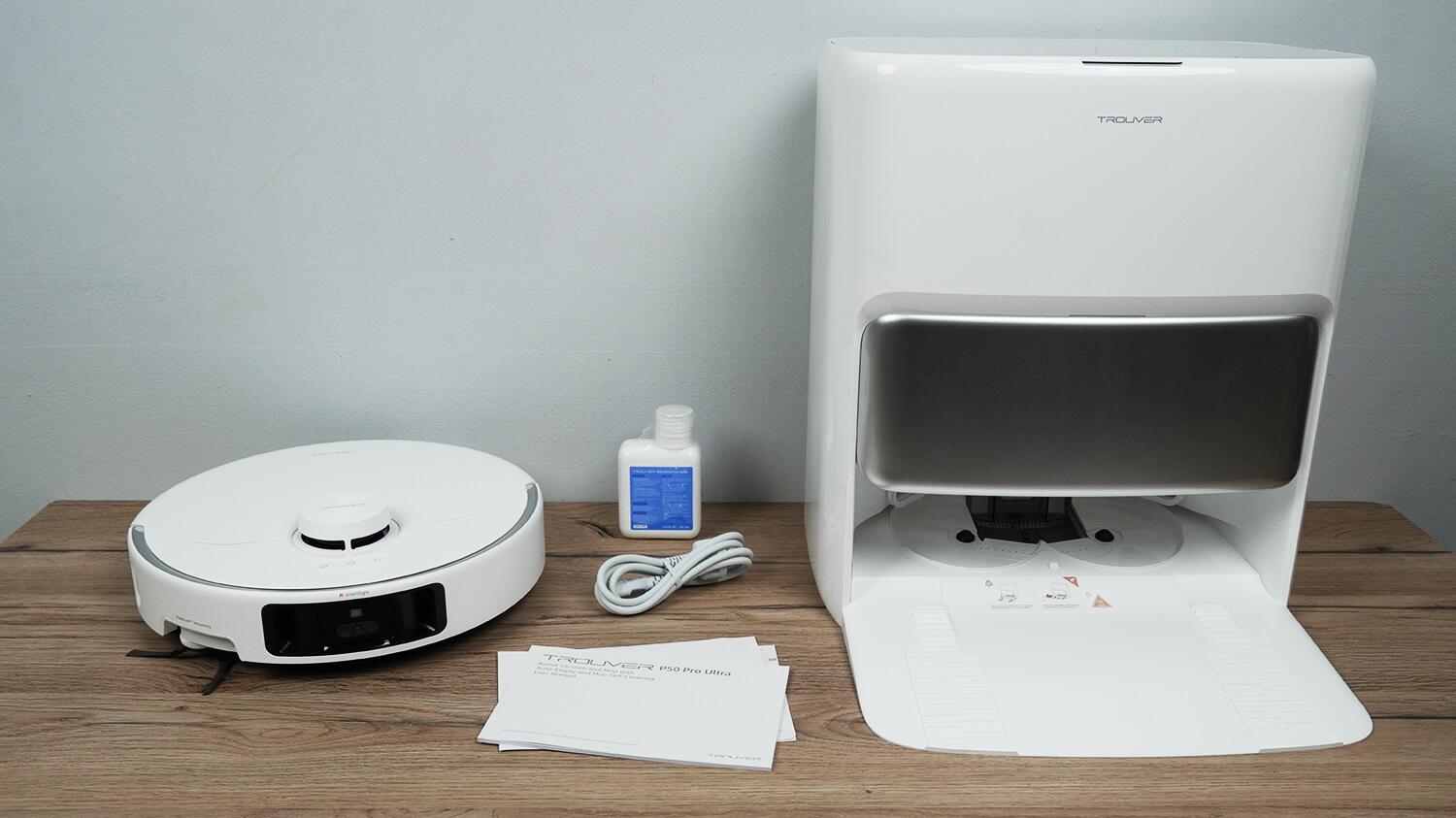
In addition to the robot and station, the package includes a power adapter, a bottle of branded cleaning solution, and documentation for the robot translated into Russian.
Equipment
Appearance
Let's take a look at the Trouver P50 Pro Ultra's design. It's white and round. Its height, 10.3 cm from the floor, is greater than the standard 10 cm of clearance under furniture.
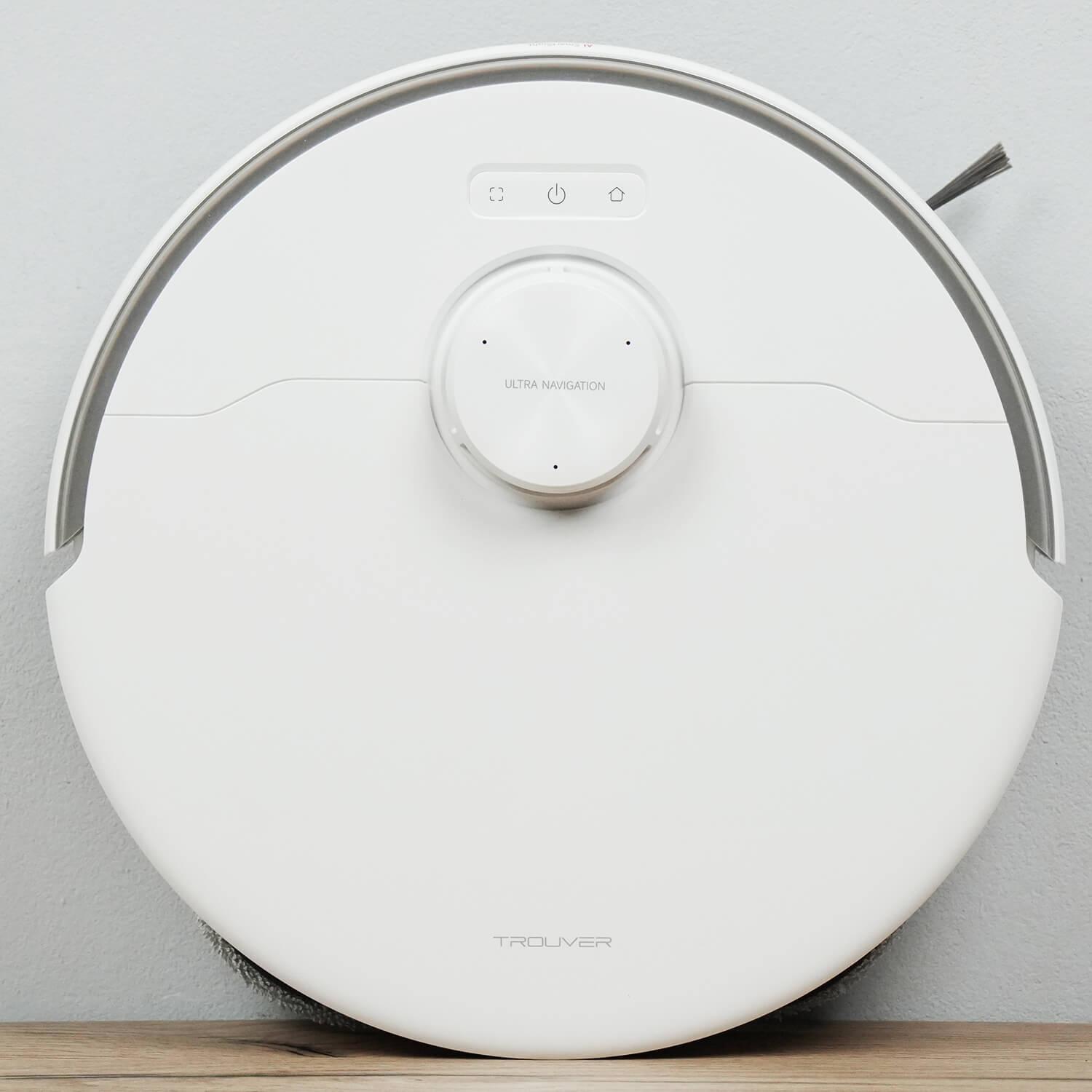
Top view
A wall sensor is installed on the right. A system of cameras and sensors for object recognition is located in the center. The technology is called AI SmartSight.
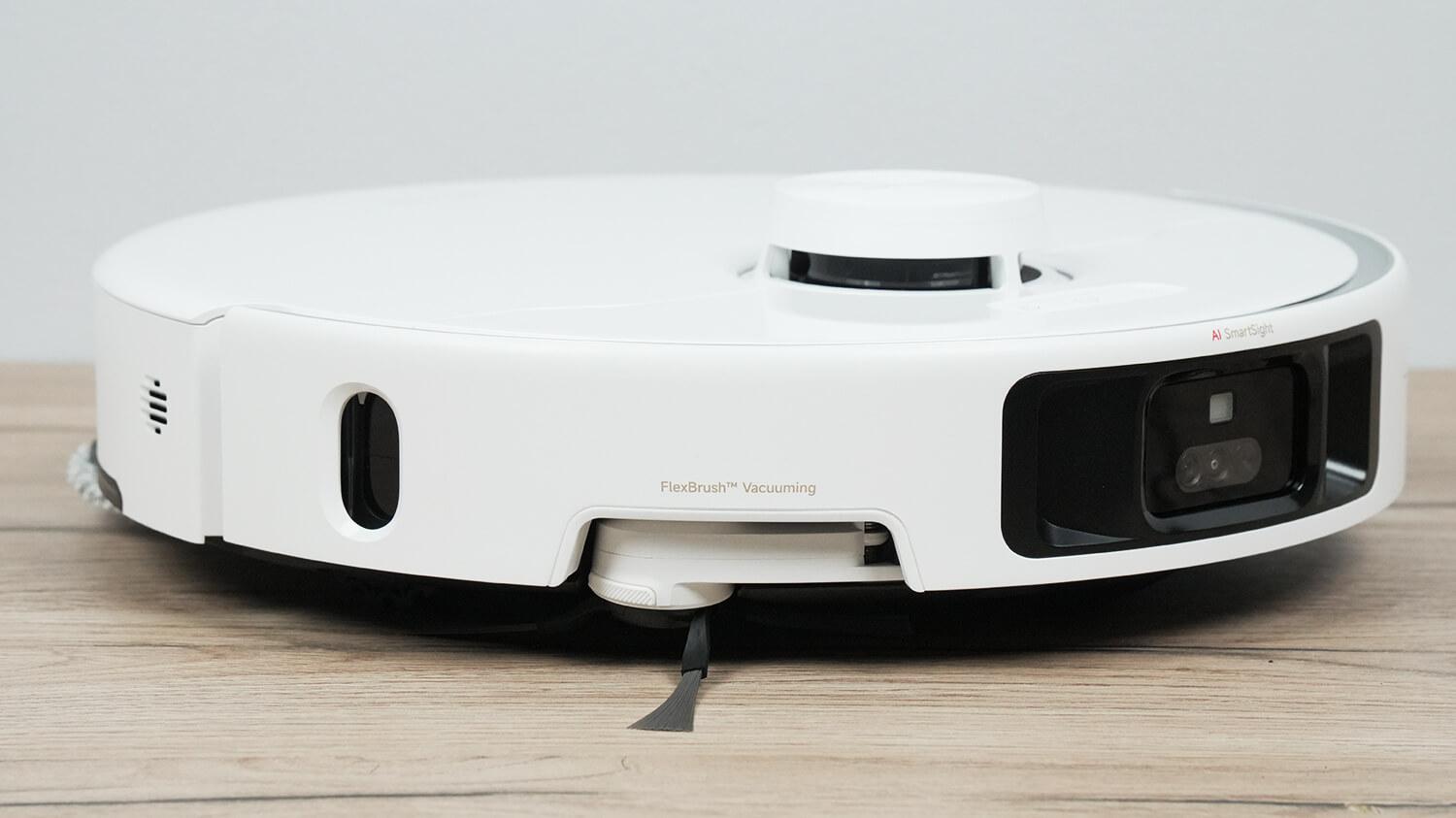
Side view
A light is installed above the cameras to help them navigate objects in complete darkness. I should also add that you can use the robot's camera to monitor your home in the app.
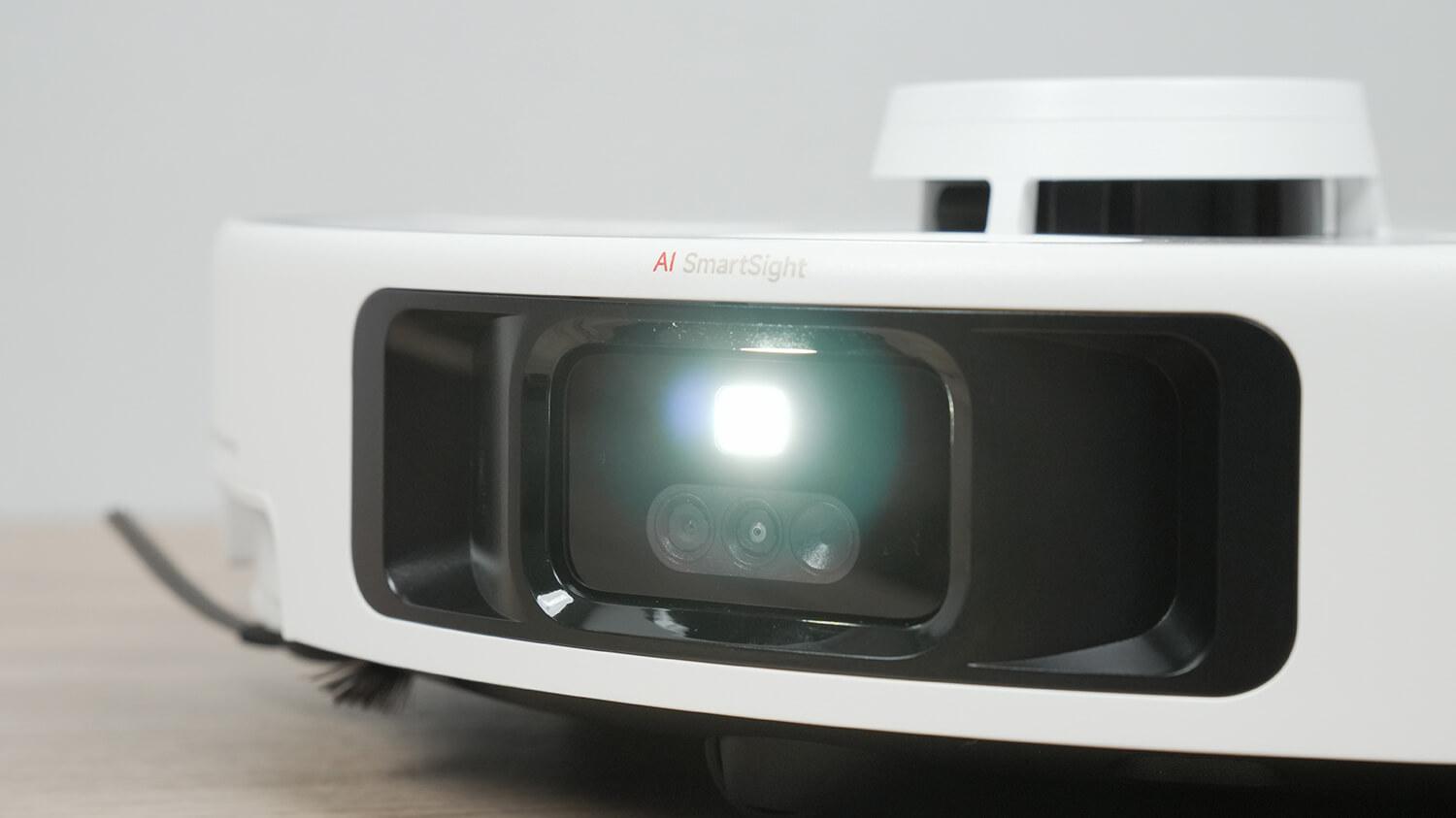
Object avoidance system
Mounted on top of the body is a lidar sensor, which has a spring-loaded cover to prevent it from getting stuck under furniture. The cover also houses microphones for voice control of the robot via the proprietary "Hey, Trouver" assistant, which I'll discuss later. Next to the lidar sensor are three mechanical control buttons.
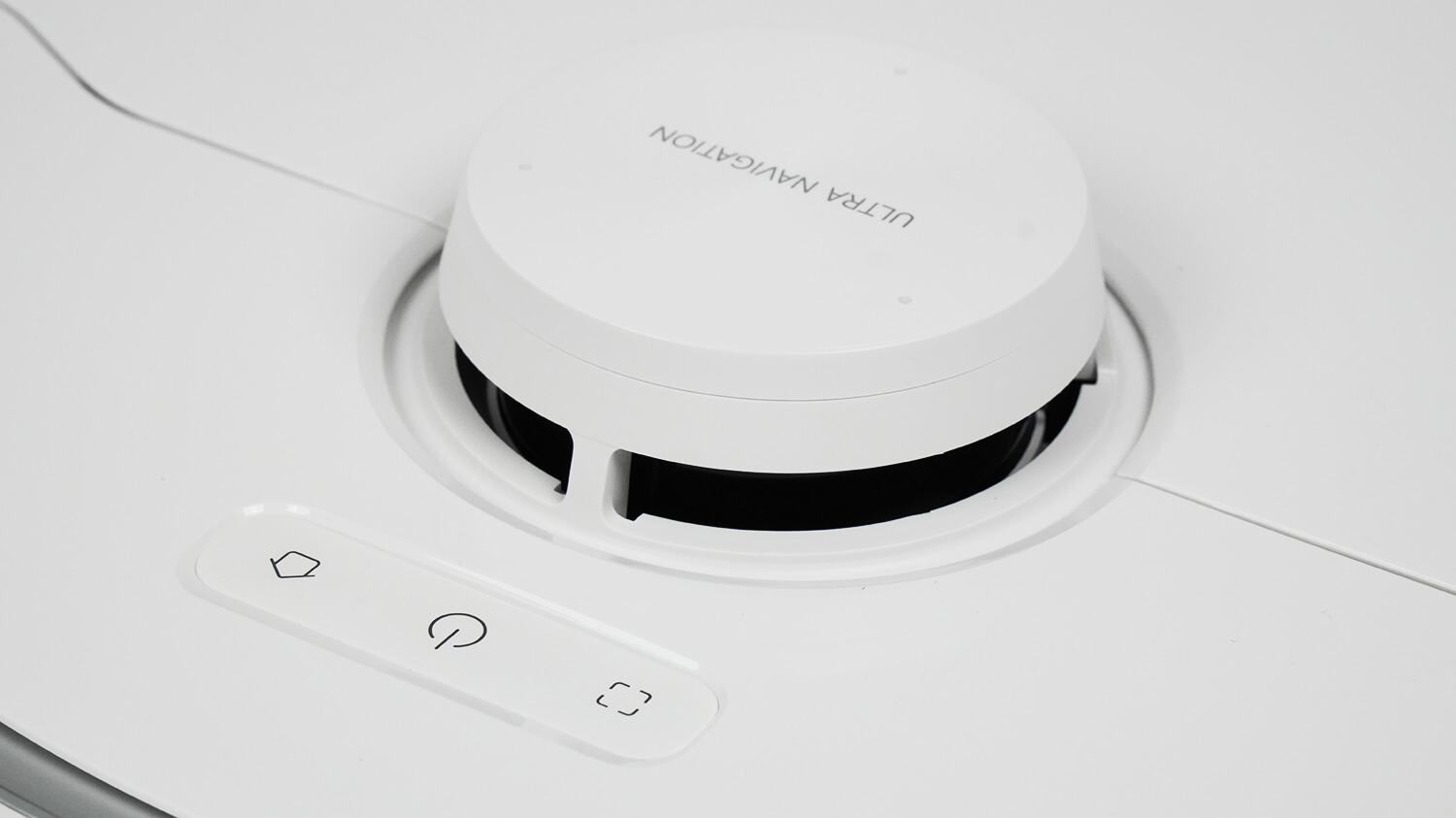
Lidar and control panel
The 300 ml dust container is located under the top lid. Next to the container is a sticker with a QR code for connecting the robot to a Wi-Fi network.
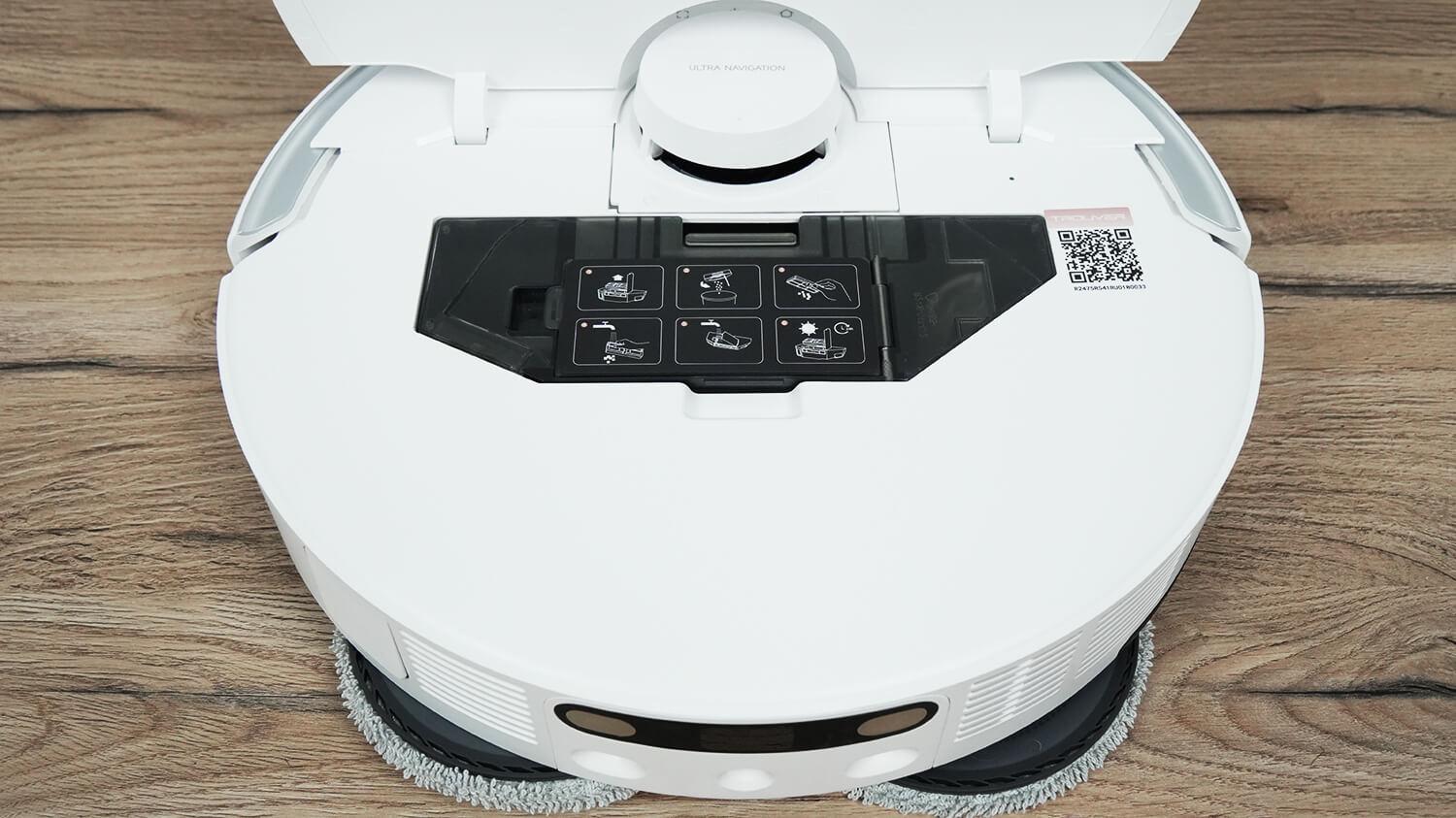
Dust collector placement
The filtration system is based on a HEPA filter. The water tank, which holds approximately 80 ml, is hidden inside the housing. Water is pumped automatically through the station.
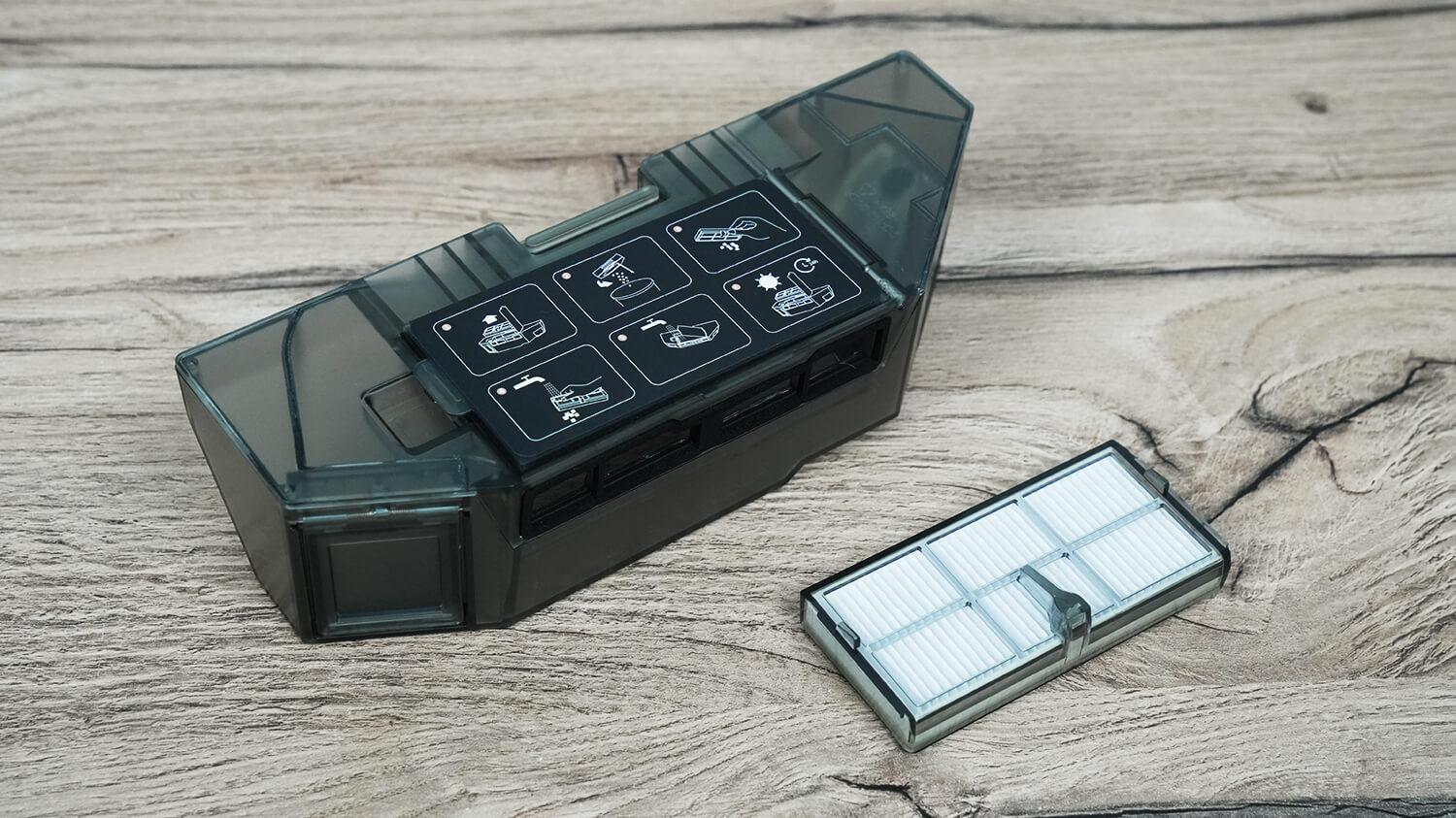
Filtration system
There are four fall protection sensors. There's also a carpet detection sensor. The side brush is three-beam and secured with a screw.
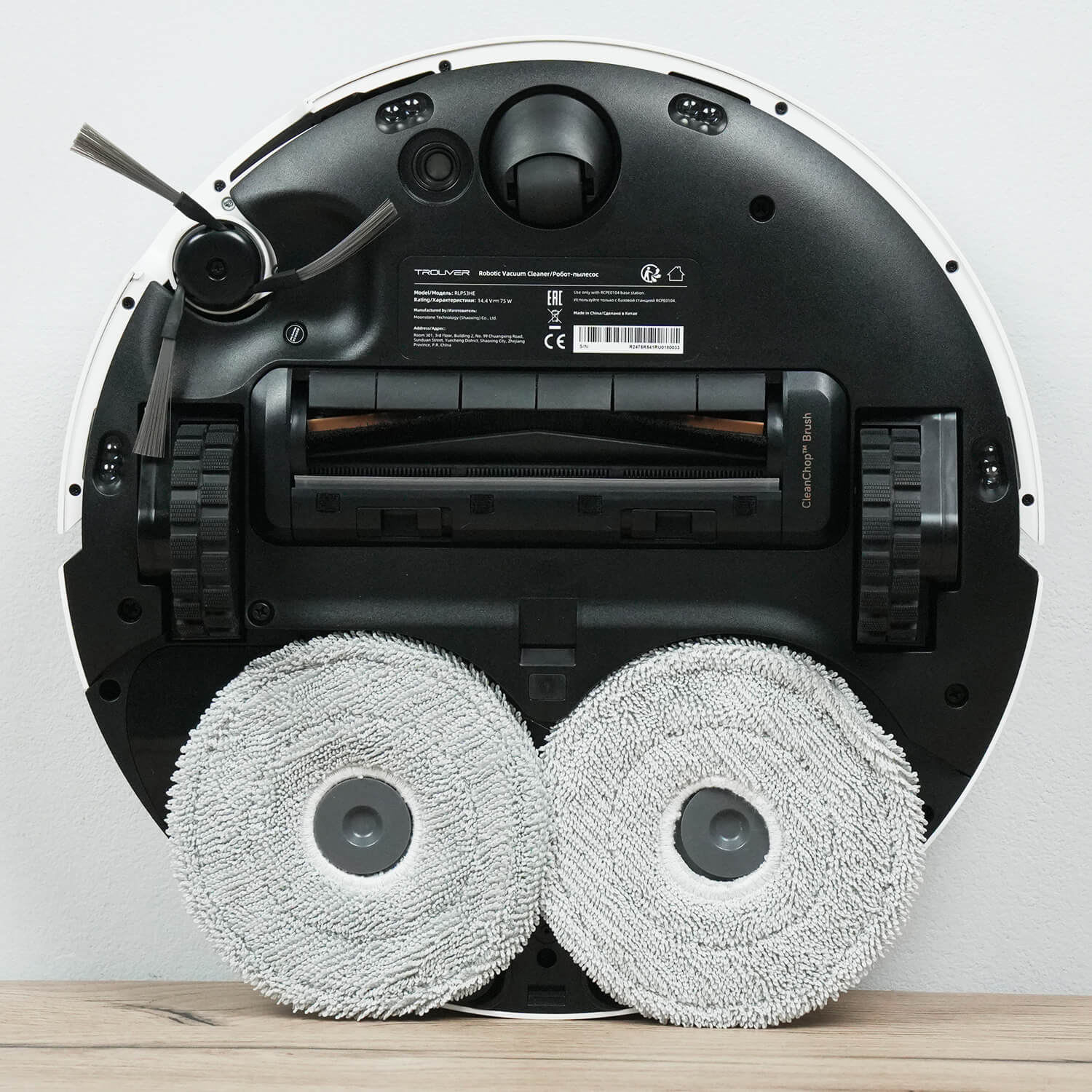
Bottom view
In corners and under furniture, the side brush extends for more efficient debris collection.
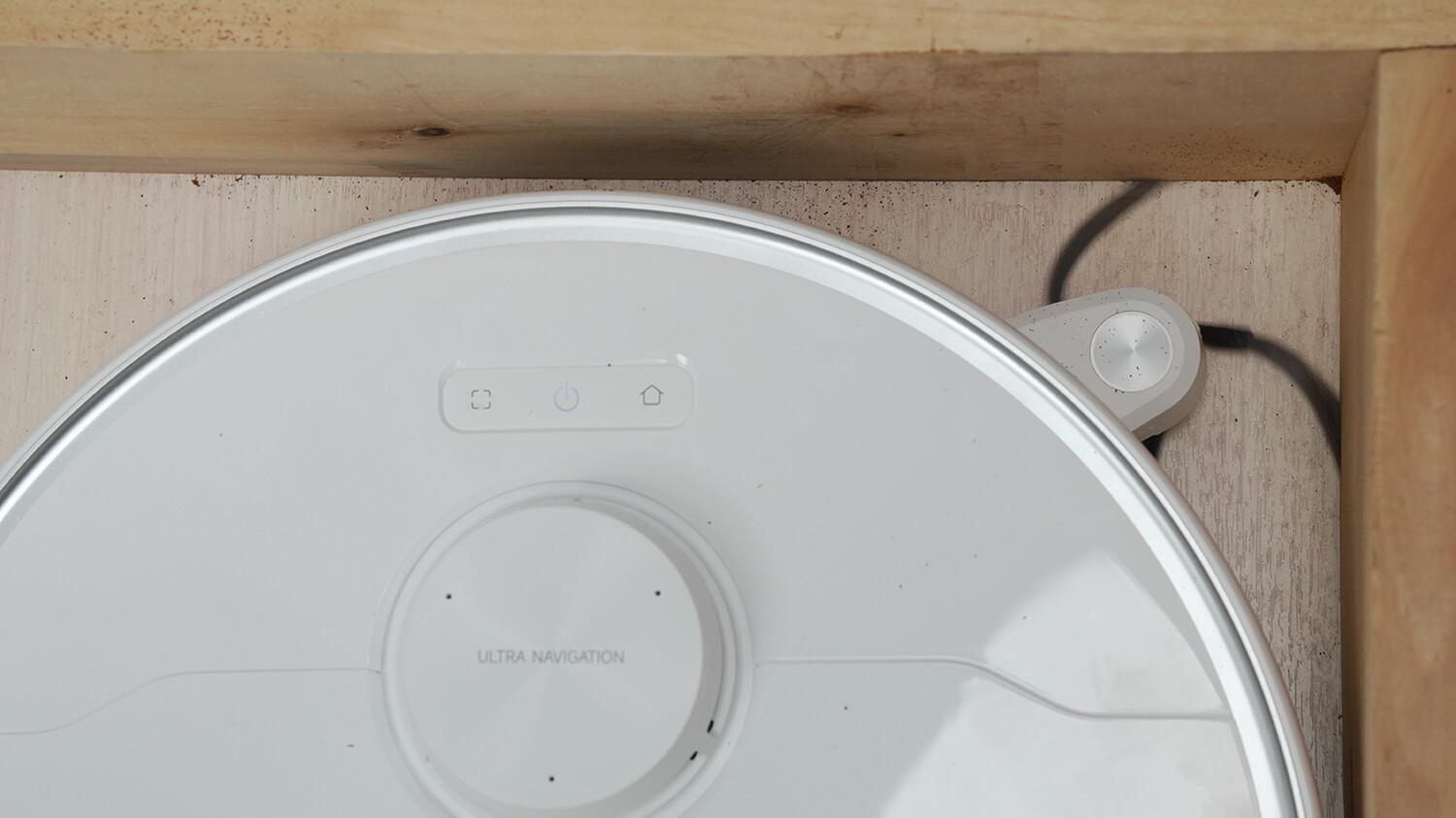
Retractable side brush
The central brush unit is floating. Trouver calls this brush the CleanChop Brush. The shaft has built-in blades that cut through tangled hair and fur as it rotates. The turbo brush itself can be disassembled for manual removal of residual hair.
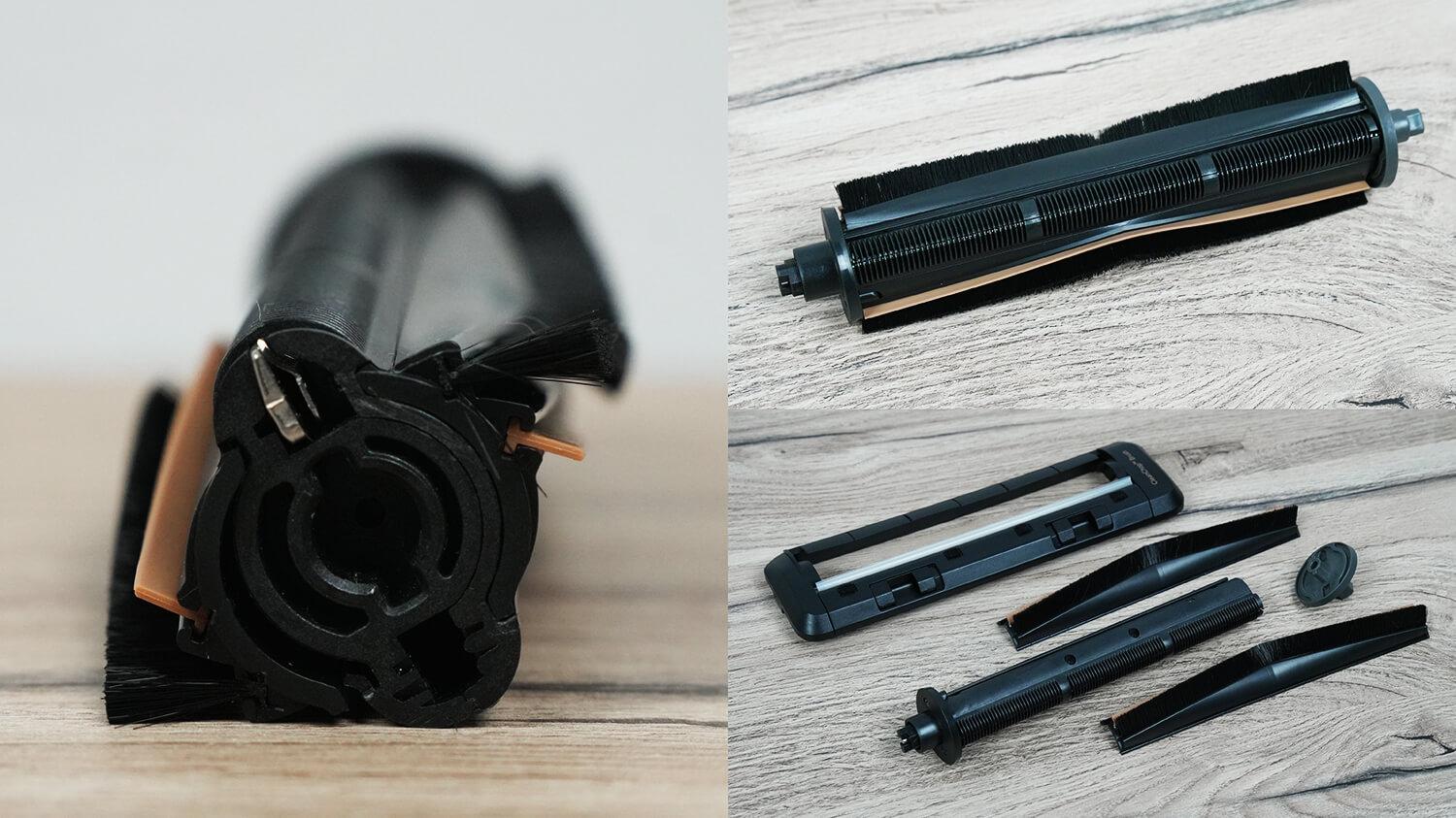
Turbo brush with knives
For wet cleaning, the robot mops the floor with two round, rotating pads. They are of a standard design and are held in place with Velcro.
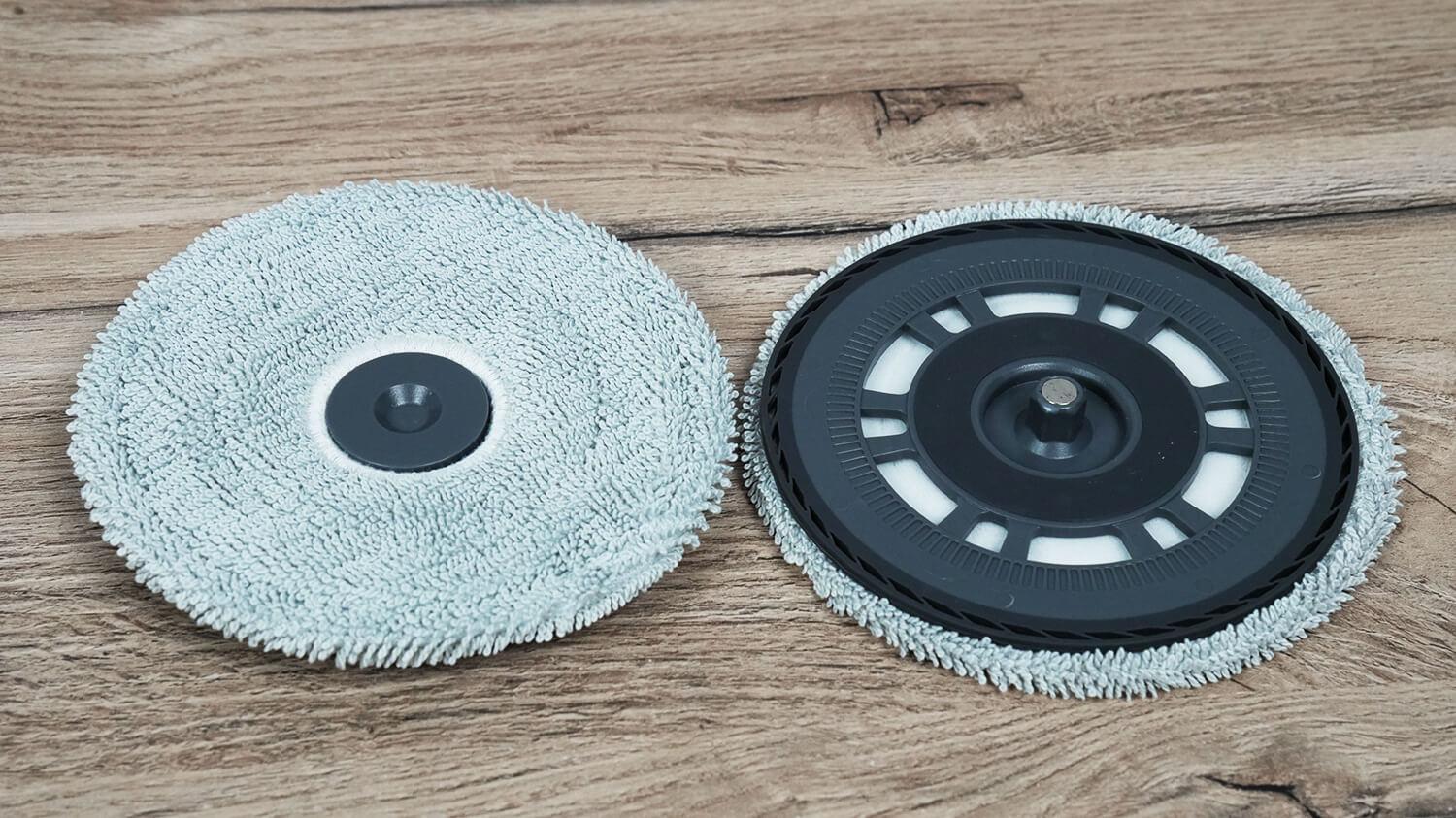
Napkins on holders
One of the cleaning pads extends to the edge of the body for a thorough cleaning of the floor along walls and furniture. There's even an algorithm for the rear end to swipe under furniture. Furthermore, the robot's rear end fits snugly into corners to minimize blind spots.
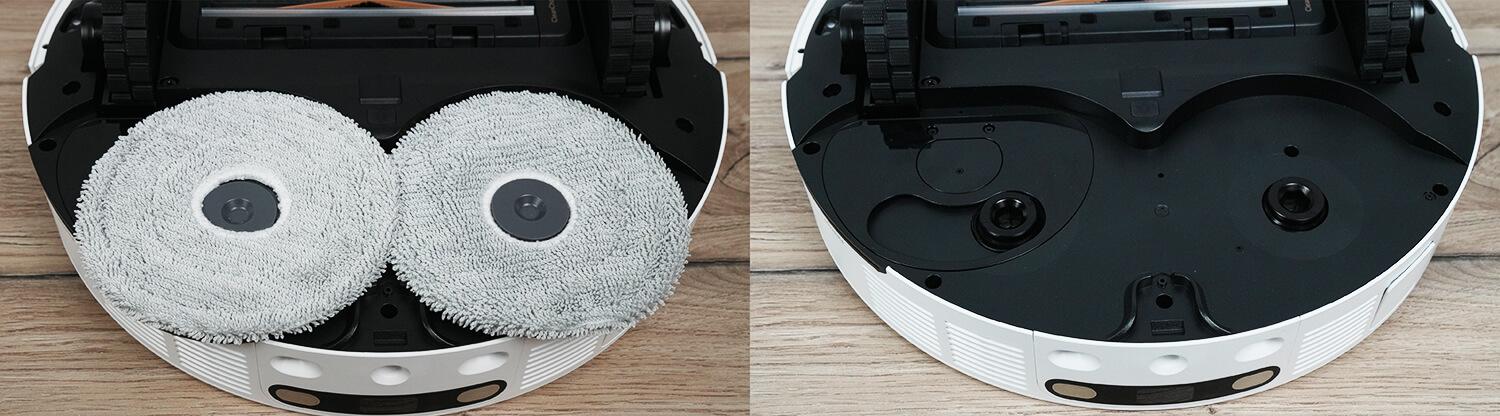
The mechanism for moving the napkin to the baseboard
The wipers can automatically lift up 10.5 mm when entering carpets, as well as during dry cleaning and returning to the station. Furthermore, the robot can automatically drop the wiper holders at the station for a complete dry cleaning.
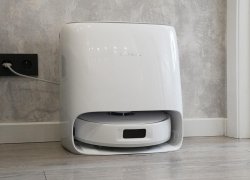
Now that we've covered the robot, let's talk about the station. The Trouver P50 Pro Ultra self-cleans its dust bin, washes its cloths with hot water, automatically adds detergent, and dries the cloths with warm air after each cleaning cycle. The station is also equipped with sensors that monitor the cloths' soiling levels, allowing them to be re-washed when necessary. Regarding connection to the sewer or water supply, unfortunately, this station does not support the installation of a module.
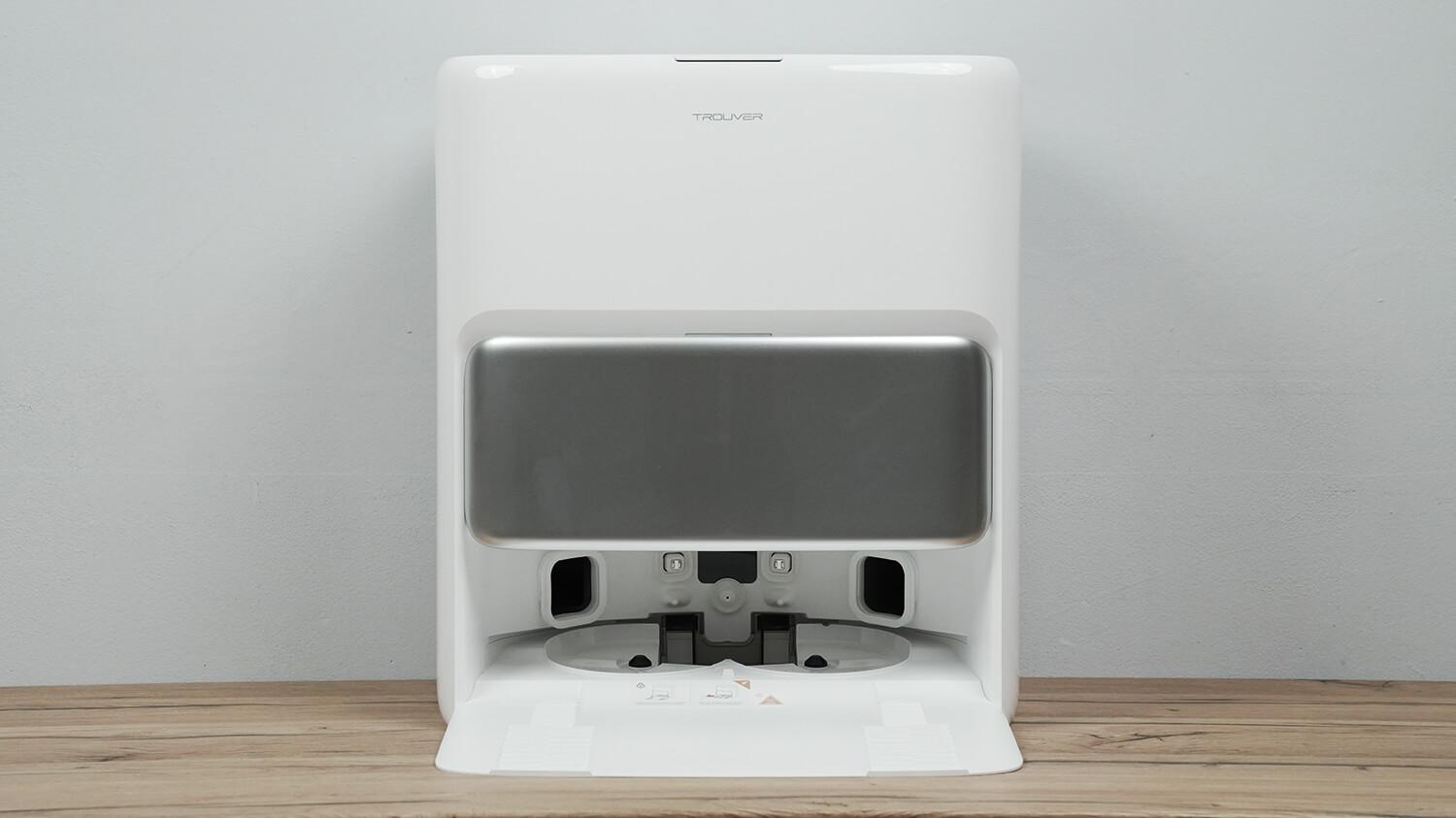
Station
Now let's take a closer look at the design. The station's bottom is flat, without ridges, which should improve the station's self-cleaning properties, simplifying maintenance. Water is supplied through nozzles that evenly wet both wipes.
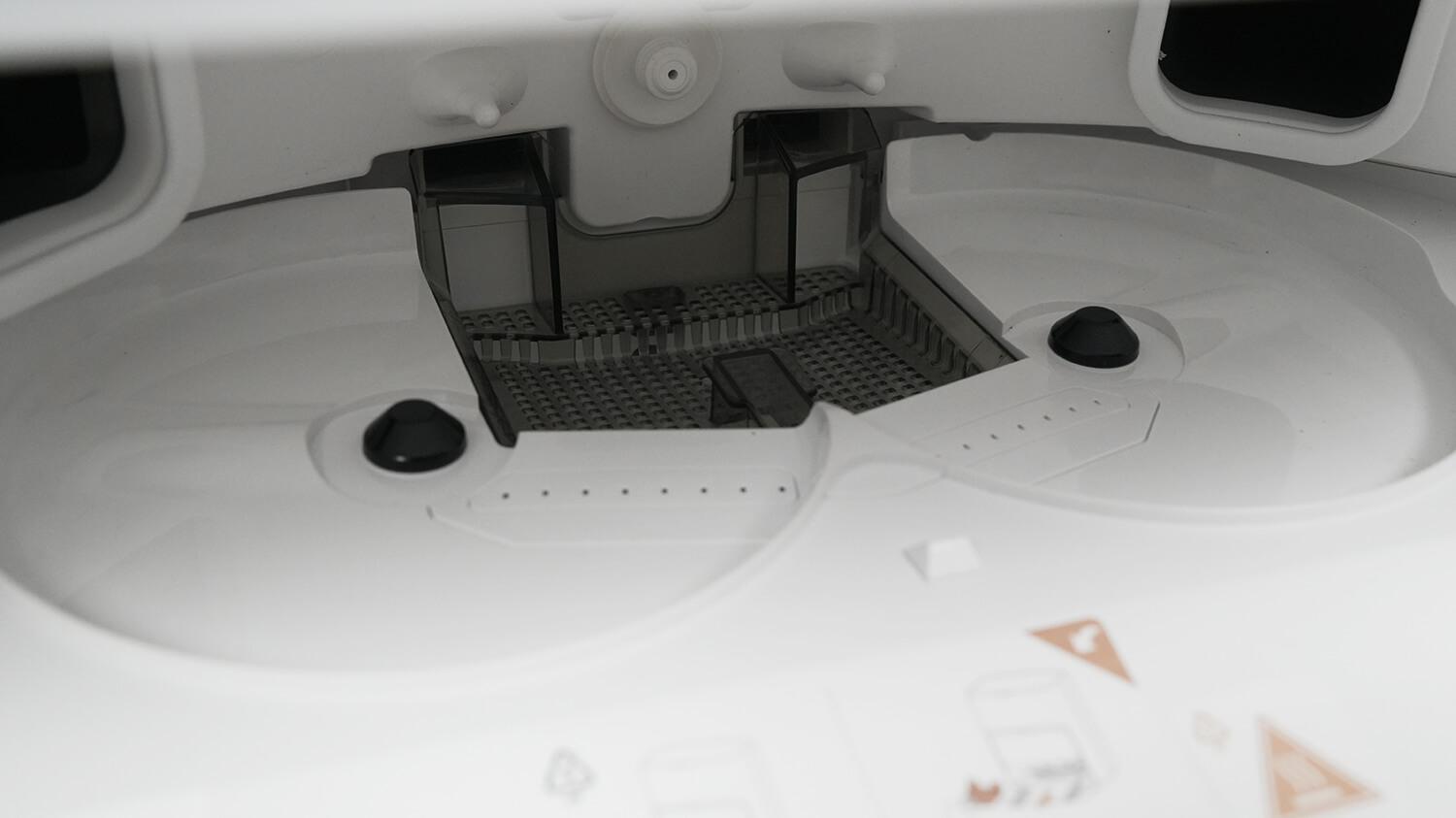
Napkin washing area
The robot's access ramp is removable, as is the coarse filter in the tray. However, the tray itself is not removable. Whether this is a good thing or a bad thing, I'll tell you in the tests.
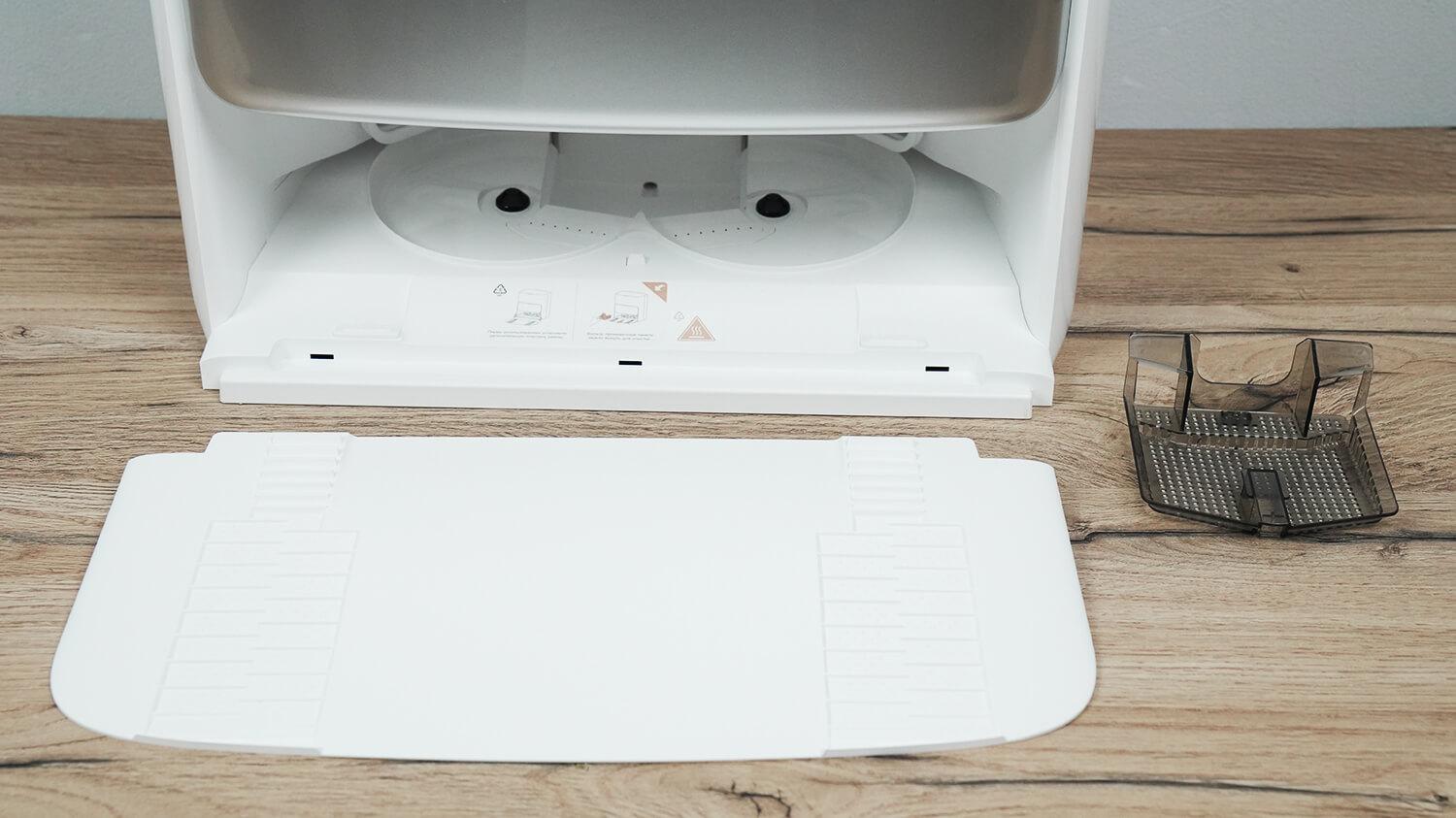
Removable station modules
Above the robot's parking area, under the cover, there is a garbage bag and a container for detergent.
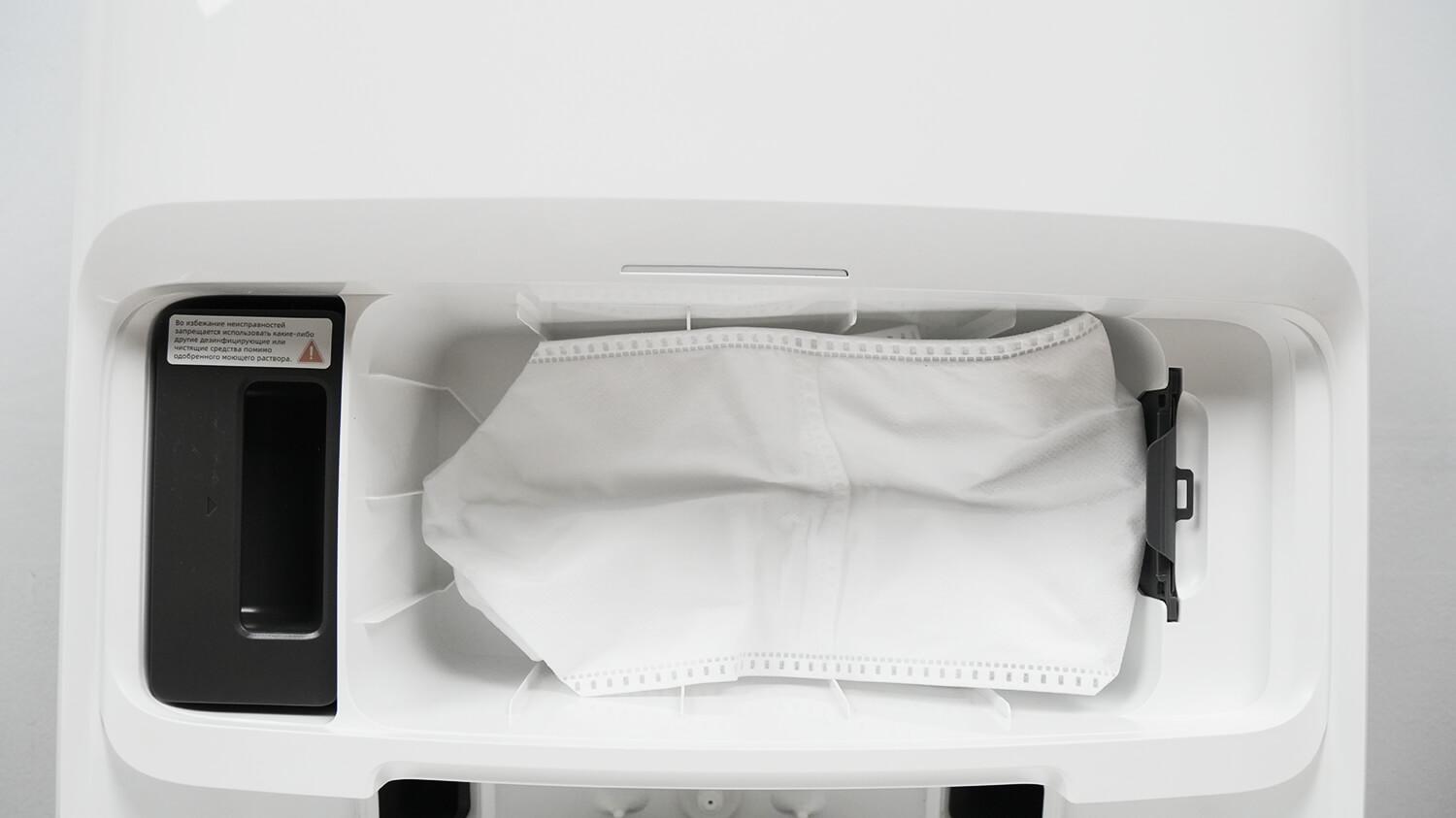
Location of the detergent reservoir and bag
The bag is a standard design and holds up to 3.2 liters of dry waste. It's worth noting that, according to the brand, detergent is added not only to the clean water when washing the wipes, but also to the robot's tank when refilling at the station.
At the top of the station there are tanks for clean and dirty water with a capacity of 4 and 3.5 liters, respectively.
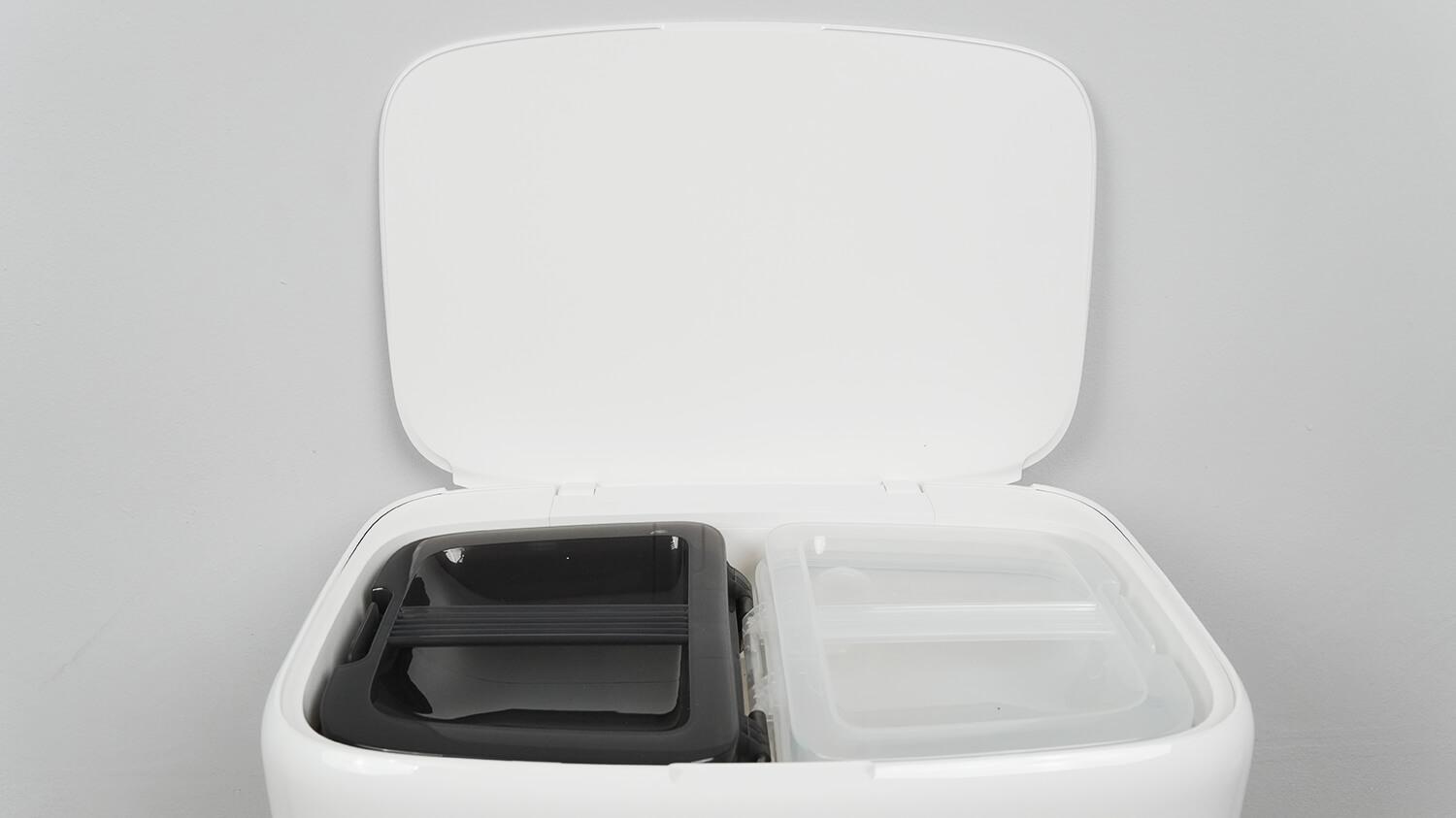
Location of water tanks
The clean water tank has a disinfection module installed, and that's good!
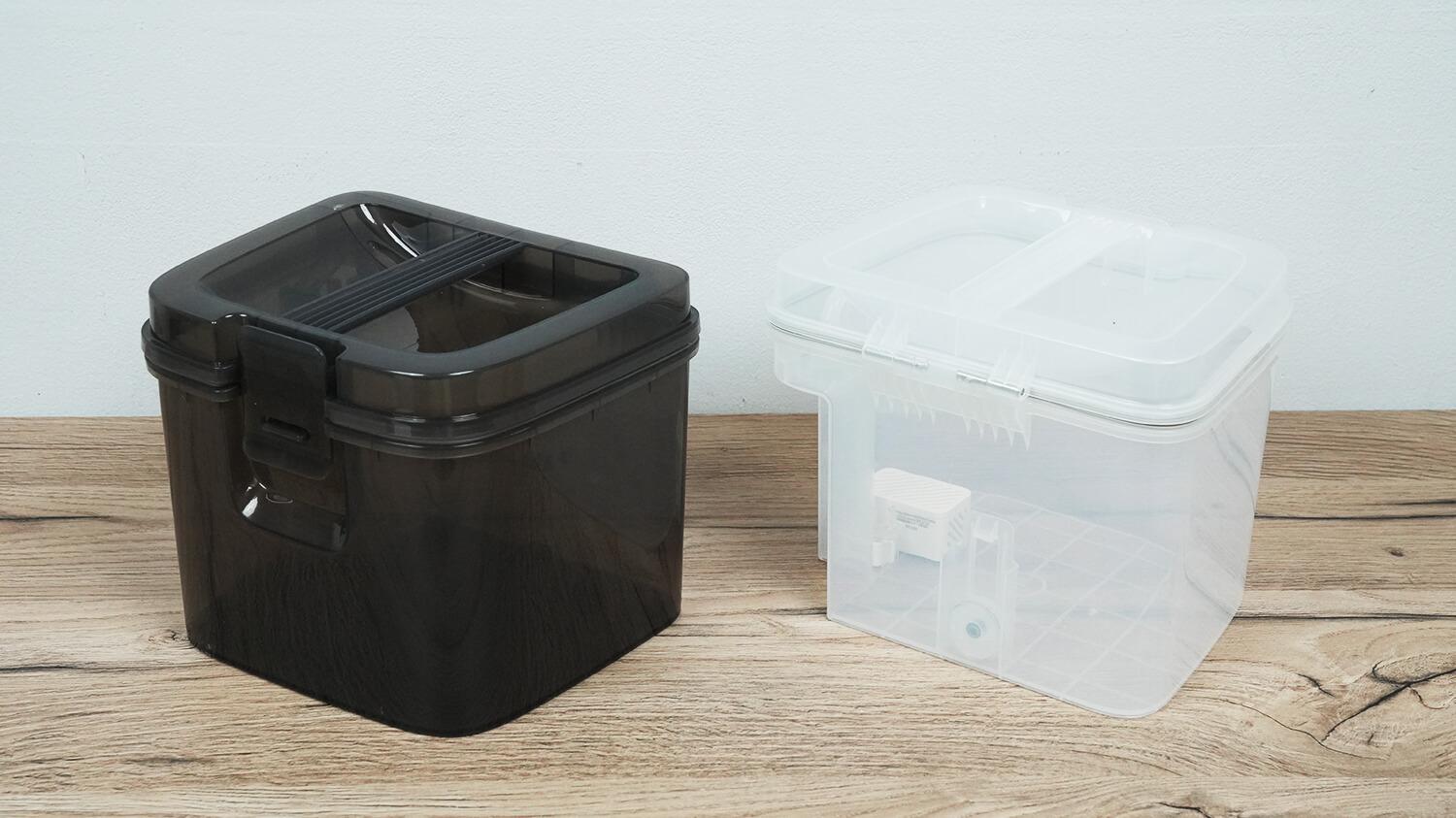
Water tanks
All the pros and cons will be discussed at the conclusion. Let's move on!
Technical specifications
The main characteristics of the Trouver P50 Pro Ultra, as stated by the manufacturer:
Robot vacuum cleaner:
- Li-Ion battery 5200 mAh.
- Suction power up to 19,000 Pa.
- Dust collector capacity: 300 ml.
- Clean water tank capacity: 80 ml.
- Obstacle clearance up to 22 mm.
- Robot dimensions: 350*103 mm.
Station:
- Clean water tank: 4 l.
- Dirty water tank: 3.5 l.
- Bag in station: 3.2 l.
- Station dimensions (W*D*H): 296*420*470 mm.
The robot's high suction power stands out here, which will be confirmed in tests. Another minor advantage is the more compact size of the station compared to similar products.
Functional capabilities
Let's take a look at the Trouver P50 Pro Ultra's features. The robot vacuum is controlled via the proprietary Trouver mobile app. Connecting to the network is straightforward, just follow the manufacturer's instructions. The interface is in Russian, and everything is clear and user-friendly.
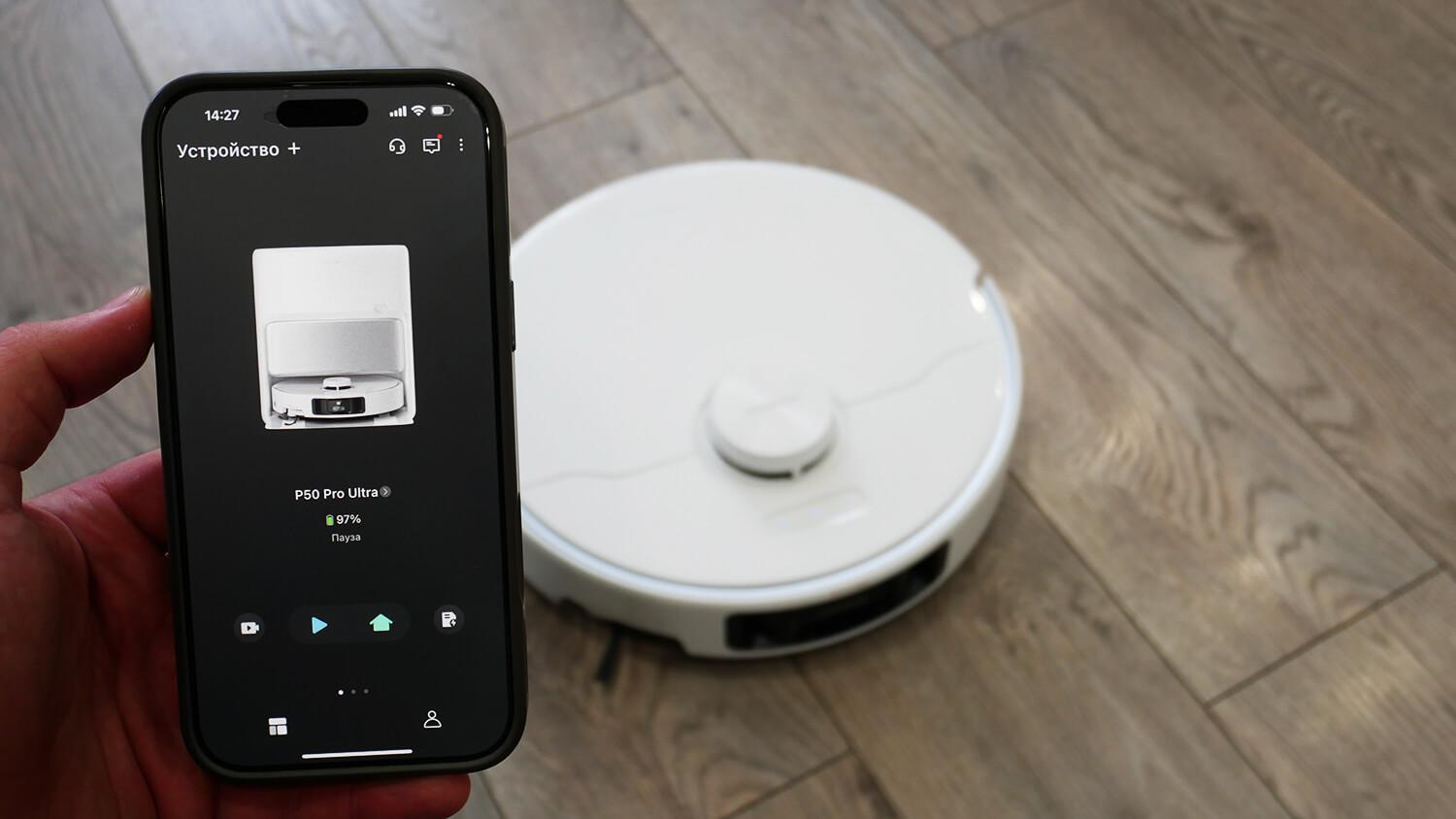
Control via app
The main functions are displayed on the screen:
- Self-cleaning dust collector.
- Wash napkins with hot water (75°C).
- Drying napkins with warm air (45°C).
- Automatic addition of detergent.
- Raising the wipers, side and central brush.
- Removing napkins at the station.
- Side brush extension in corners.
- Moving the napkin to the baseboard (with scrolling).
- Recognizing objects on the floor.
- Camera illumination in low light conditions.
- Remote home monitoring via smartphone.
- Saving multiple cleaning maps in memory.
- 3D map of the room.
- Automatic zoning of premises into rooms.
- Selecting areas and rooms for cleaning.
- Virtual walls and no-go zones (and for wet cleaning mode).
- Suction power adjustment.
- Setting the frequency of rinsing wipes.
- User mode.
- CleanGenius mode.
- Spot recognition.
- Cleaning behind the curtains.
- Cleaning log.
- Setting up cleaning according to a schedule.
- Automatic power increase on carpet.
- Carpet cleaning in wet cleaning mode.
- Yandex.Alice support.
- Support "Hey, Trouver"
- Dynamic cleaning of an area with obstacles.
Interestingly, this model supports control via the proprietary "Hey, Trouver" voice assistant, which understands Russian phrases. While the set of phrases is currently limited, the built-in assistant is very convenient, and there's room for improvement to make the robot more user-friendly. Here's how it works:
It is also worth highlighting the function of remote monitoring of the house through the camera on the robot.
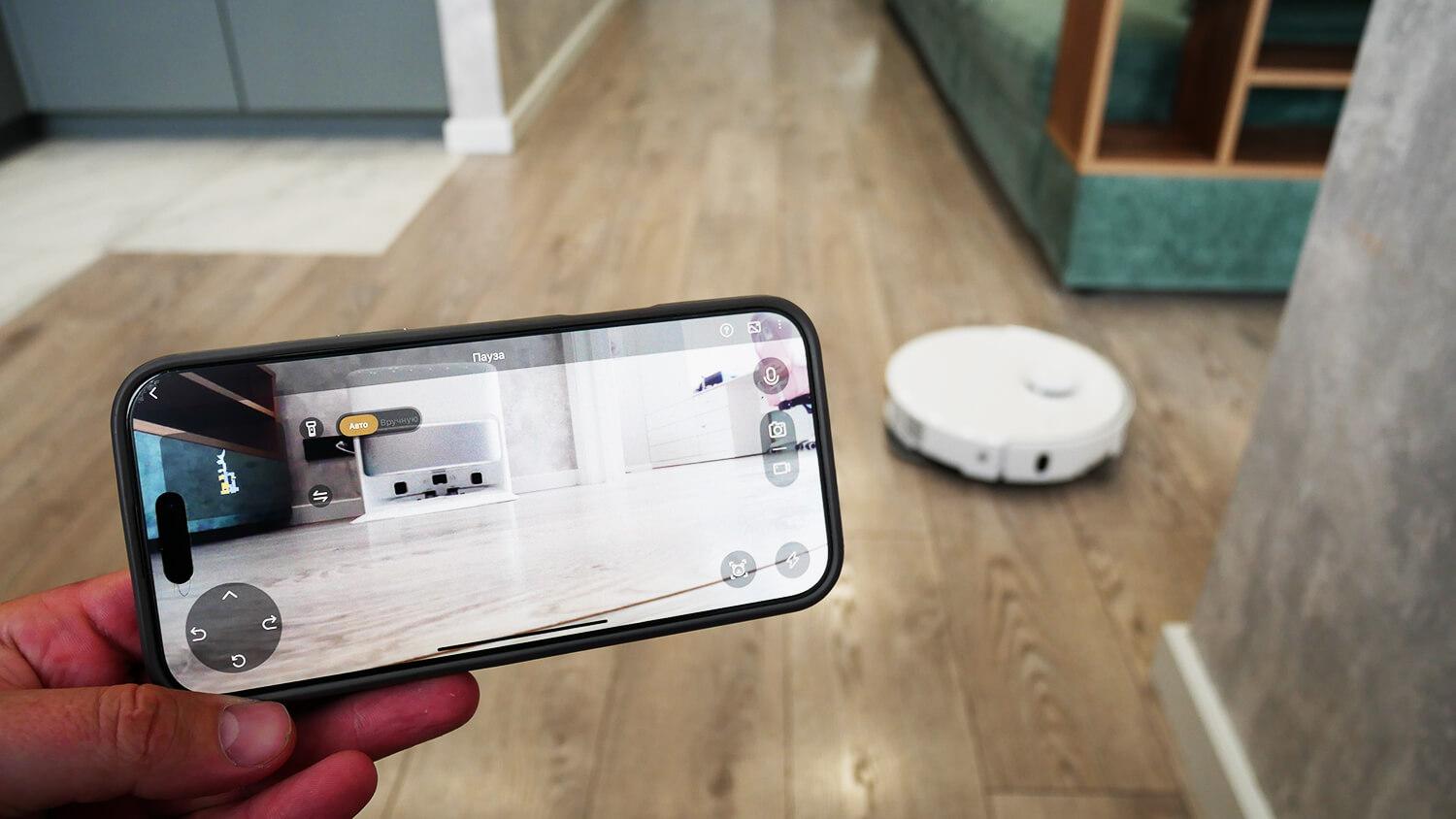
Remote home monitoring
There's also a new dynamic spot cleaning mode. This feature allows the robot vacuum to clean missed areas where people and pets were detected and could interfere with the cleaning process. That's great!
Overall, we see that there are many functions, and they allow you to flexibly customize cleaning parameters to suit your own conditions.
Testing
A detailed video review of the Trouver P50 Pro Ultra, including all tests, has already been prepared and published on the channel:
Navigation
And finally, let's move on to the tests. First, we'll test the robot's navigation in a room with obstacles. After leaving the station, it navigated the perimeter of the room, recognizing and carefully navigating around the legs of a dryer. After that, it began cleaning the entire accessible area in a serpentine pattern. It swept around the legs of a table and a box, then returned to the station. Interestingly, the mirror didn't introduce any errors into the map.
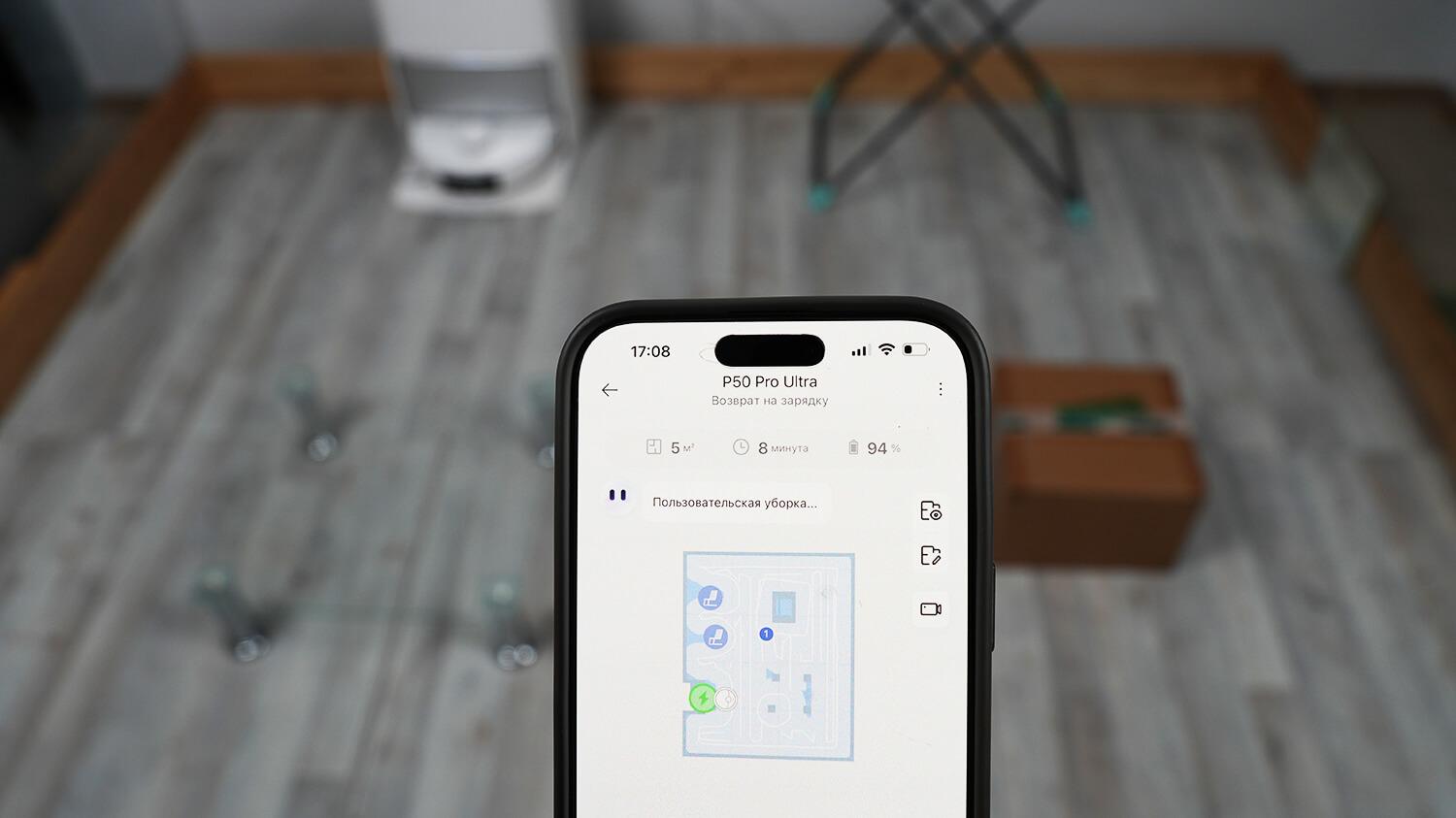
Navigating an Obstacle Room
Speaking of navigation within the house, the robot vacuum cleans room by room, following the perimeter, then in a serpentine pattern. After each room, as I've determined, it returns to the station and washes the wipes, then resumes cleaning from where it left off. There are no uncleaned areas left; this model has excellent navigation!
Passing under low furniture
The minimum height at which the robot can pass was also tested. Given that the robot is taller than 10 cm, it physically won't fit through that gap. However, it can pass through 11 cm without any problems.
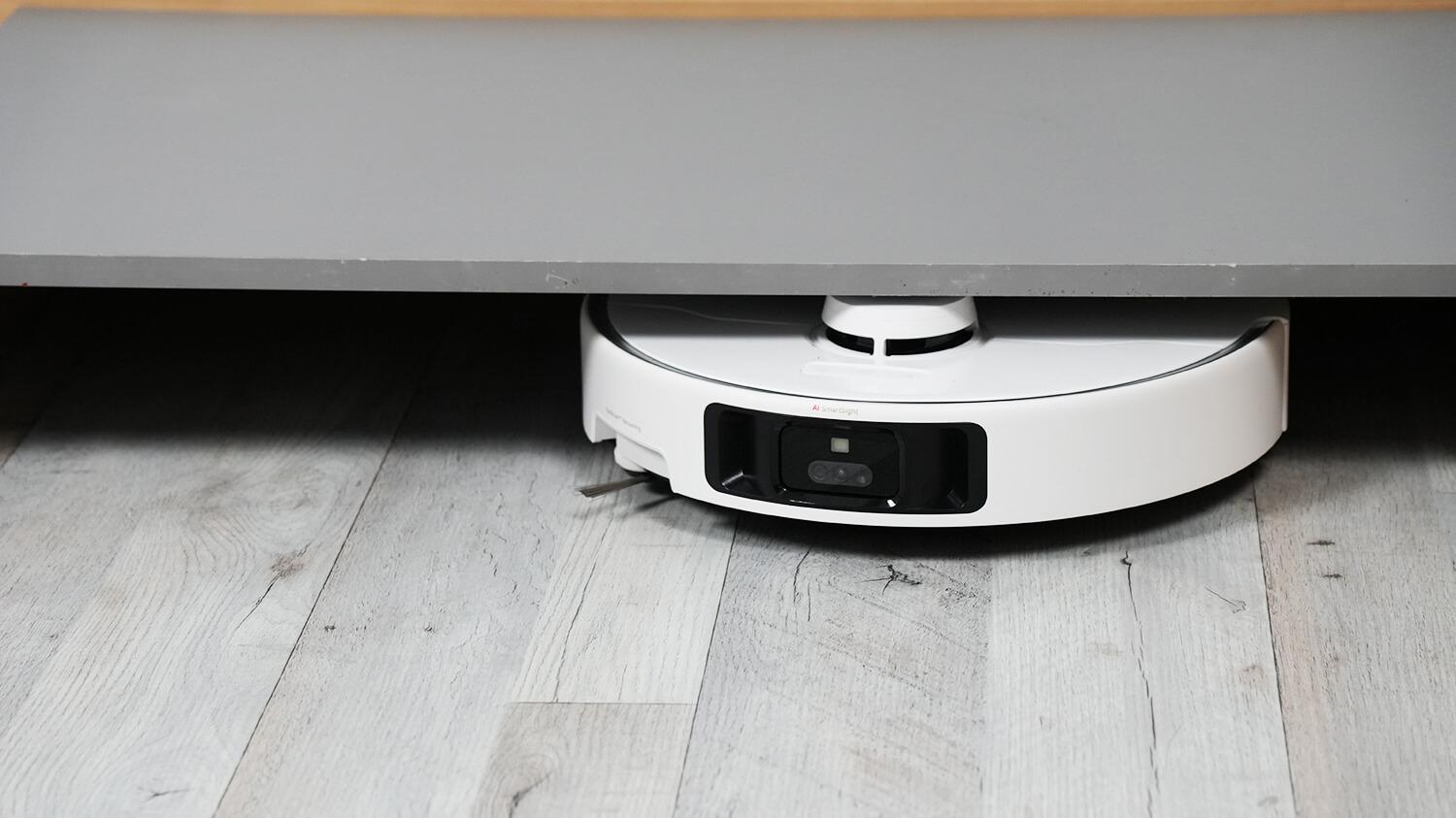
Passing under low furniture
Autonomy
I also tested the battery life when running the robot at maximum power with wet cleaning enabled. It lasted 109 minutes, cleaning 82 square meters of usable space. In reality, that's just under two full cleanings of a two-bedroom apartment. However, I should note that there's a resume cleaning mode after charging at the base, so this model can clean twice as much. In my opinion, the robot's battery life is average.
Recognizing objects on the floor
As for the object avoidance system, everything was top-notch! In good lighting, the robot was able to accurately avoid 6 out of 6 objects on the floor, correctly identifying 5 of them, except for a toy. It was also able to correctly identify and accurately avoid 3 out of 3 socks and all 4 out of 4 wires. Speaking of avoiding imitations of pet surprises, the robot vacuum cleaner avoided all 6 traps, correctly identifying them.
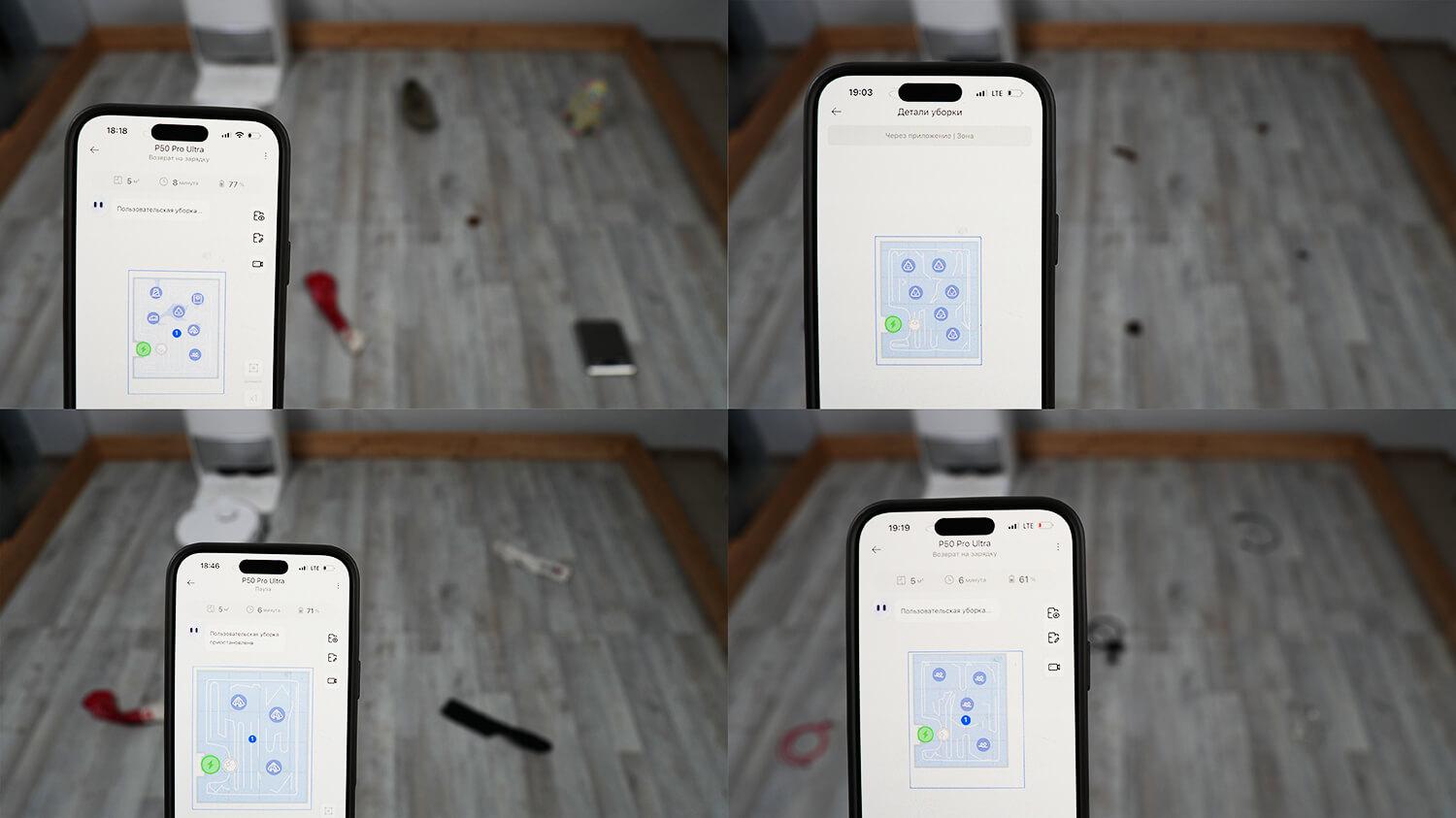
Recognizing objects on the floor
In complete darkness, the object recognition system becomes slightly dim, but it can still function thanks to the backlight. The robot was able to avoid five of the six household objects, only getting caught by the simulated pet surprise. Of the four wires, it recognized and avoided three, but chewed one. Of the three socks, it recognized and avoided all three. As for the simulated pet surprises, the robot was able to recognize and avoid four of the six, but ran over two.
So I can say that the object recognition system is accurate, but requires minimal improvement.
I also tested the stain detection feature. The robot recognized a dried ketchup stain, turned off the suction, and cleaned the stained area in floor cleaning mode. It then returned to the cleaning station, washed the wipes, and resumed cleaning as usual. It didn't check the stain a second time, and it did, so I can say the stain detection feature is indeed there, but it's still a bit rough around the edges.
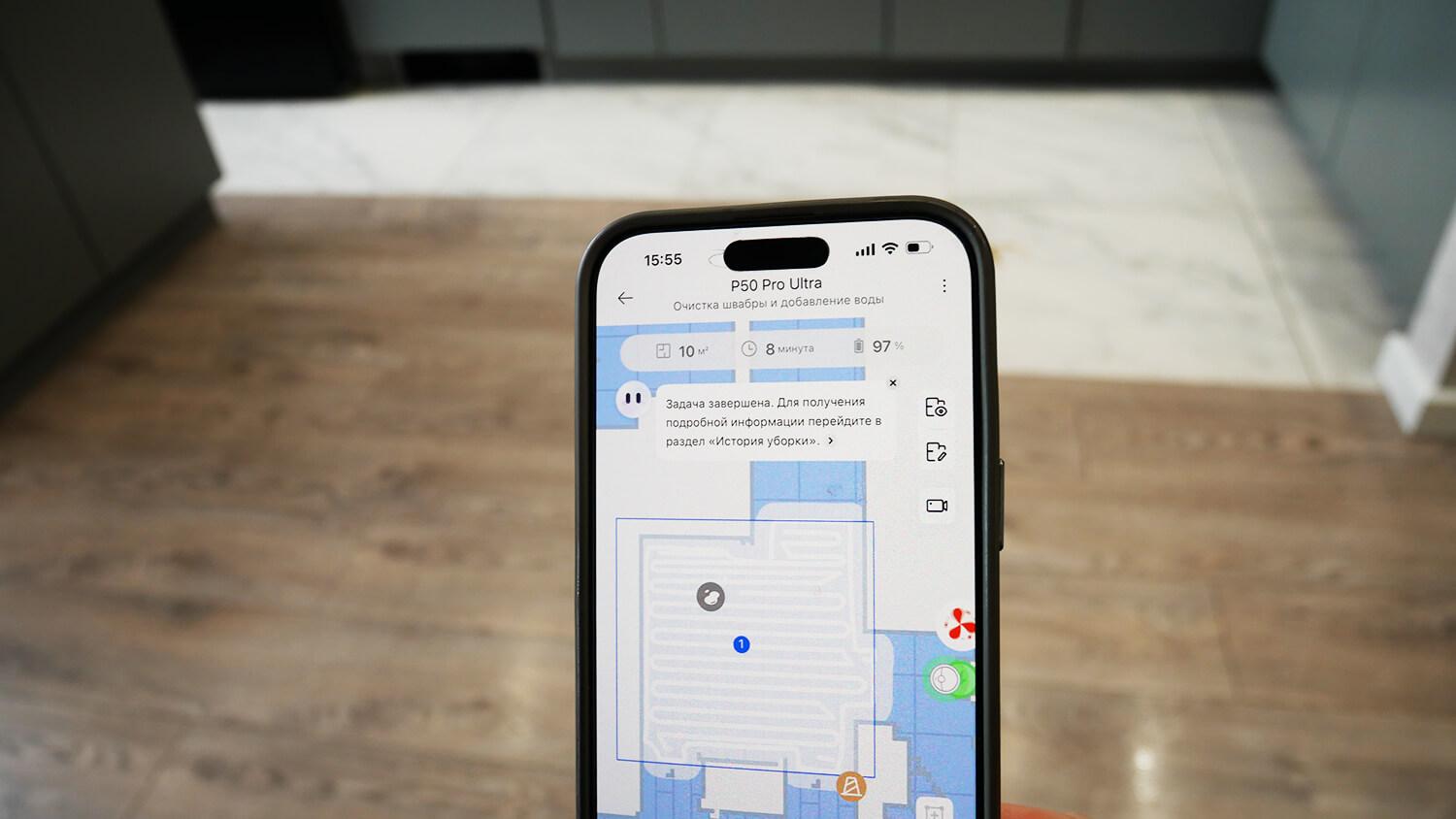
Spot recognition
Cleaning behind the curtains
A key advantage of the Trouver P50 Pro Ultra over its competitors is its ability to clean behind curtains and drapes. To do this, set a specific zone on the map, and the robot first cleans the room in its normal mode, then gently pushes through curtains and drapes, cleaning behind them. Very cool!
Suction power
One of the most important tests is to check the robot's true suction power on a test bench with crevices of varying depths. In "Quiet" mode, the robot was able to completely clean a 2 mm crevice. In Standard mode, it partially cleaned 4 and 6 mm crevices. In Turbo mode, it partially cleaned an 8 mm crevice. In Maximum mode, the robot partially cleaned 10 mm crevices, and in Maximum+ mode, it better cleaned 8 and 10 mm crevices. So, this is a truly powerful robot vacuum cleaner!
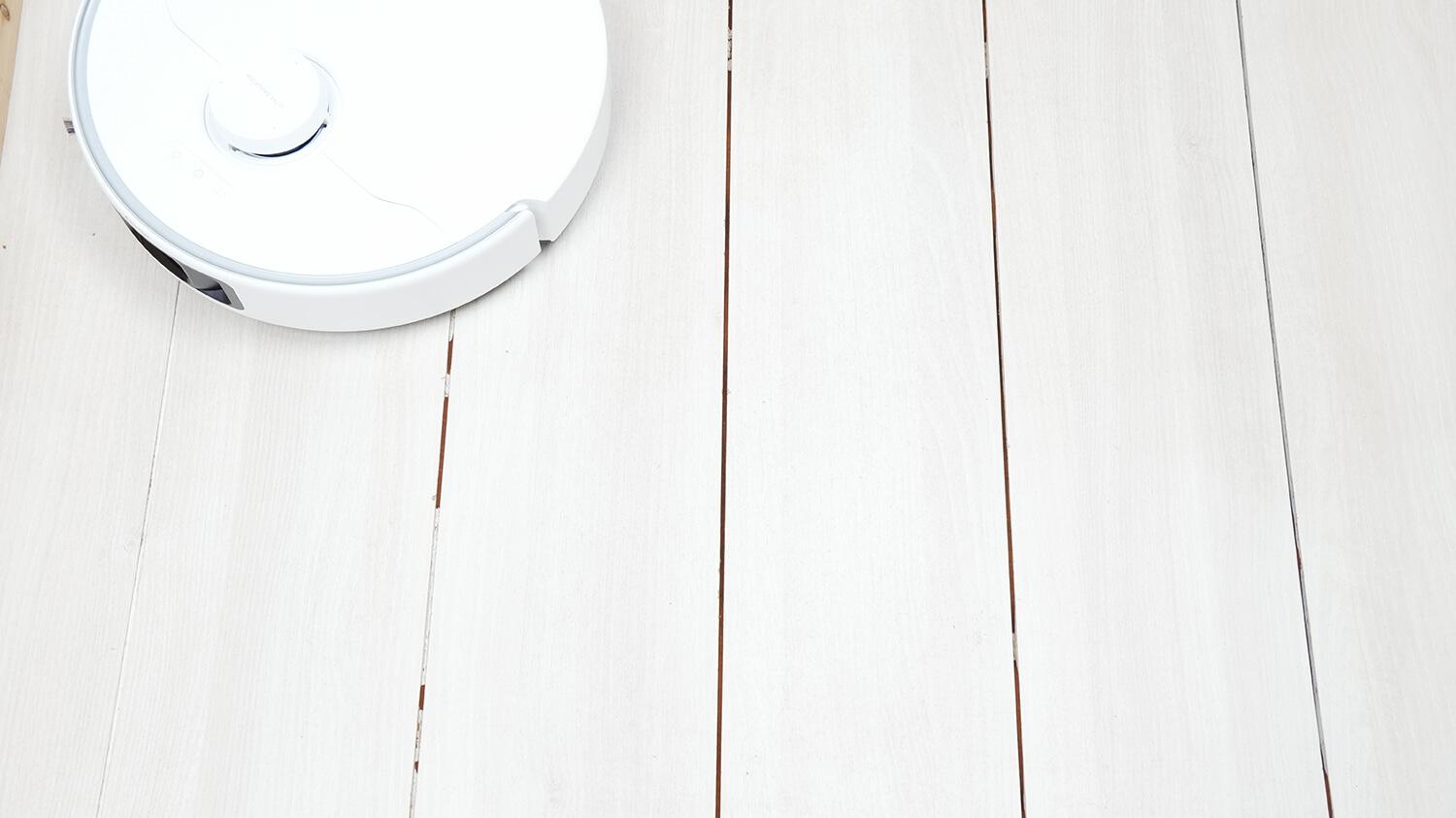
Suction power
Dry cleaning
The quality of debris collection on laminate floors is good, but the blade brush has difficulty picking up larger debris, such as cat food and cat litter pellets, due to the small gap between the brush and the robot's body. You can see that some cat food and a cat litter pellet remain on the stand.
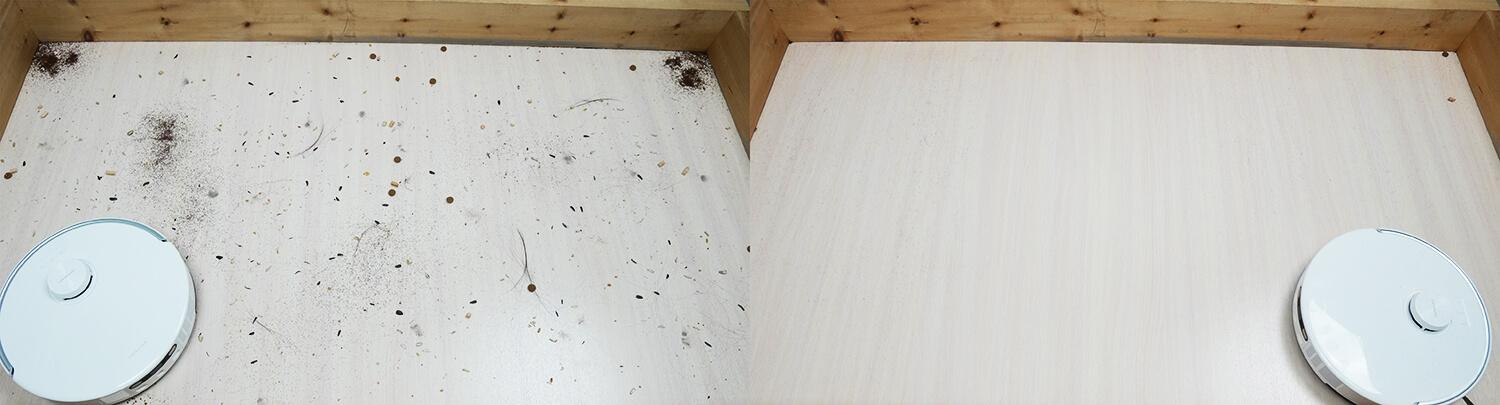
Dry cleaning
It's important to note that this robot vacuum cleaned the inner corners well, leaving no debris behind. This is all thanks to the retractable side brush. However, the outer corners still need some work.
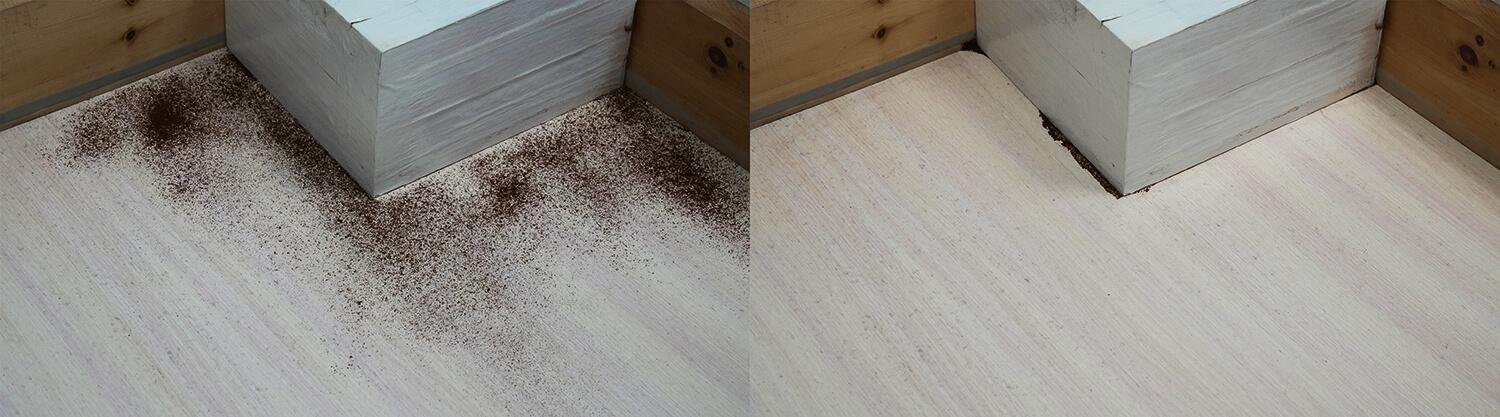
Sweeping out trash in the corners
We can see that the brushes haven't tangled up the hair, which is a plus.
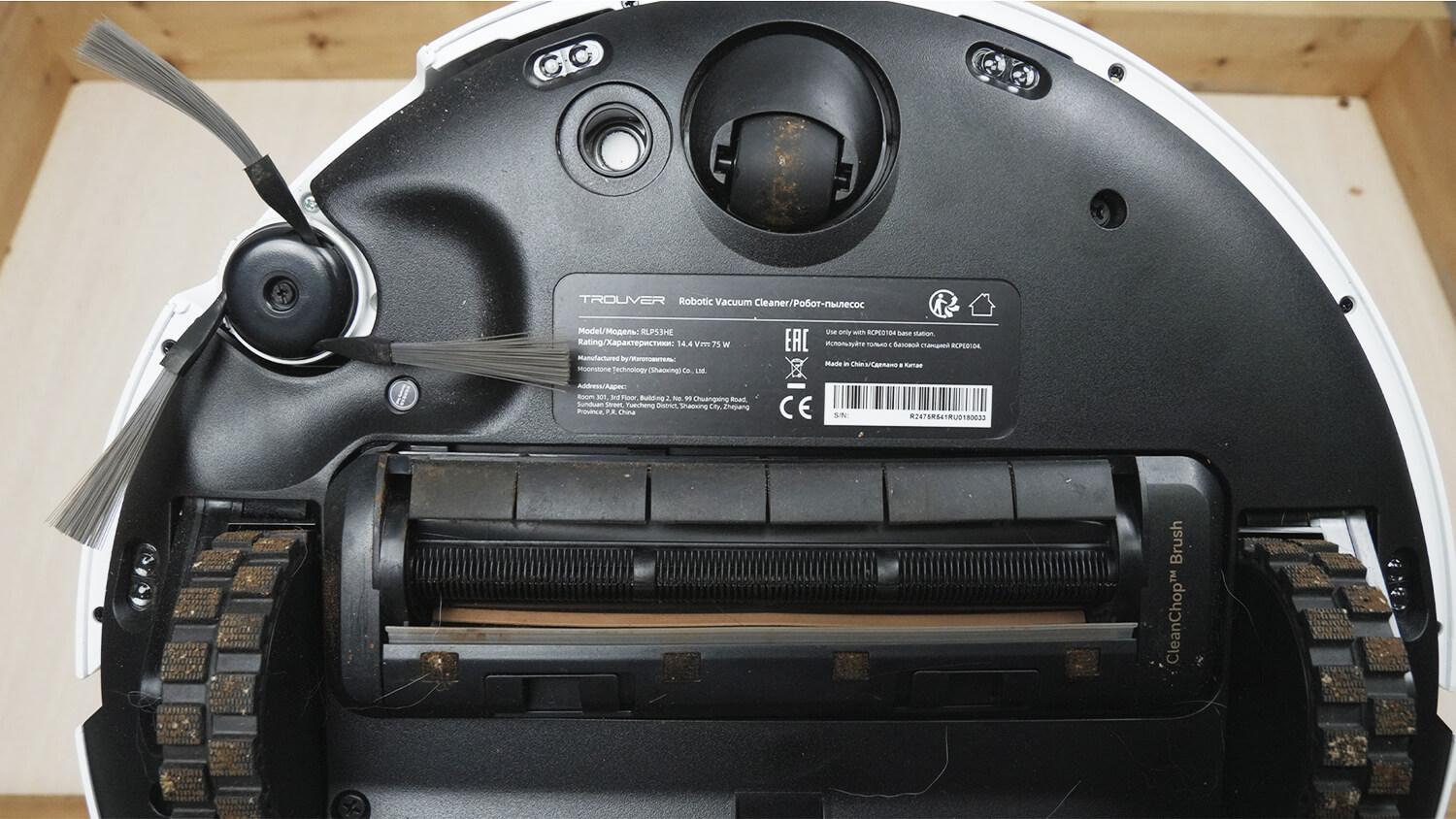
Trouver P50 Pro Ultra: Brush Condition
Anti-tangle Hair Protection
I also tested how the turbo brush with blades would handle self-cleaning hair and pet hair. I laid hair of varying lengths on the floor. The robot collected them, and we see that the brush is completely clean in this situation, which is a plus. All the hair is collected in the dust collector.
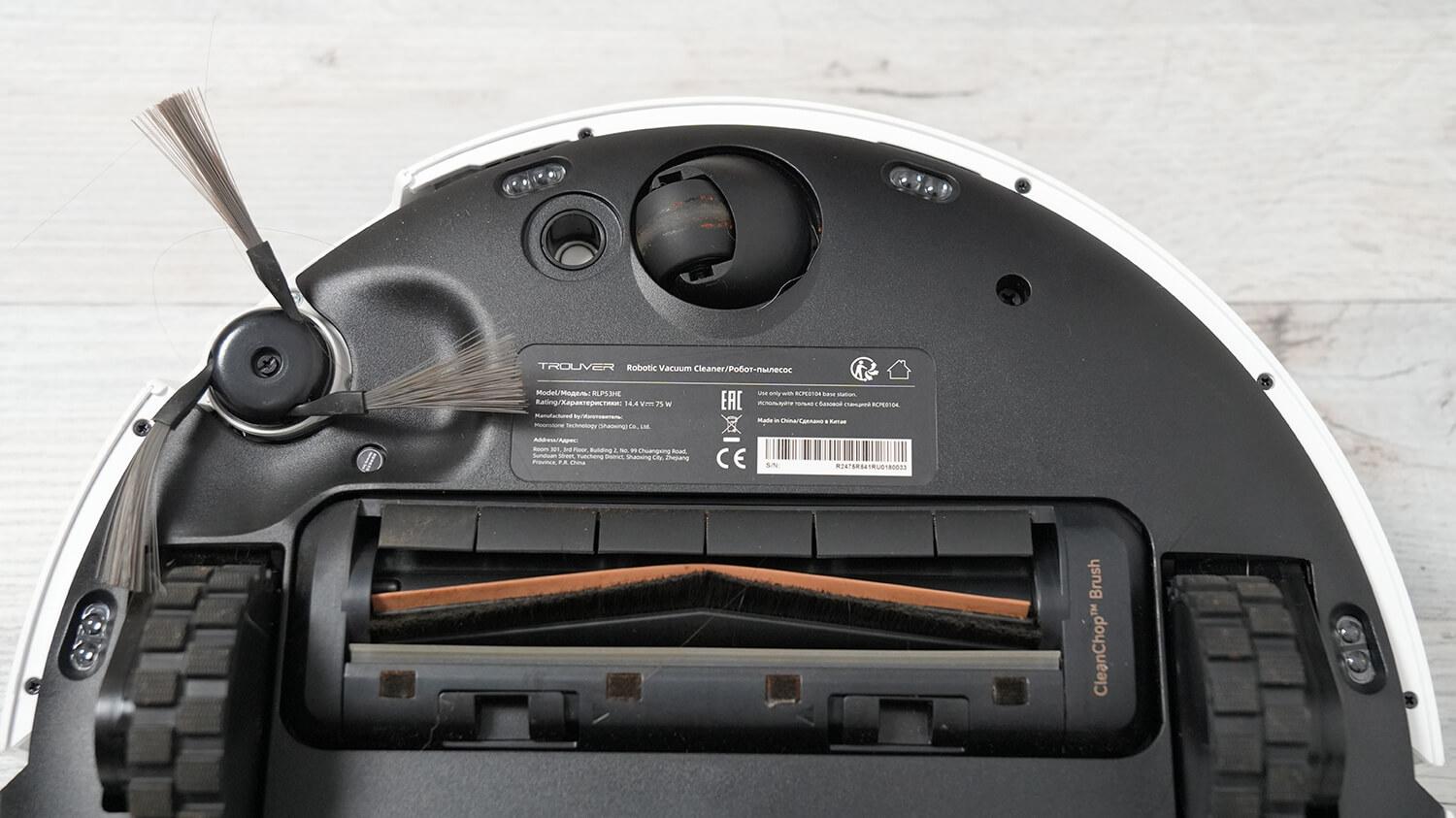
Anti-tangle Hair Protection
I even tested the brushes after a week of use in an apartment with a shedding pet. Even under these conditions, the brushes were clean, so I consider the cleaning module effective in preventing hair and fur from tangling!
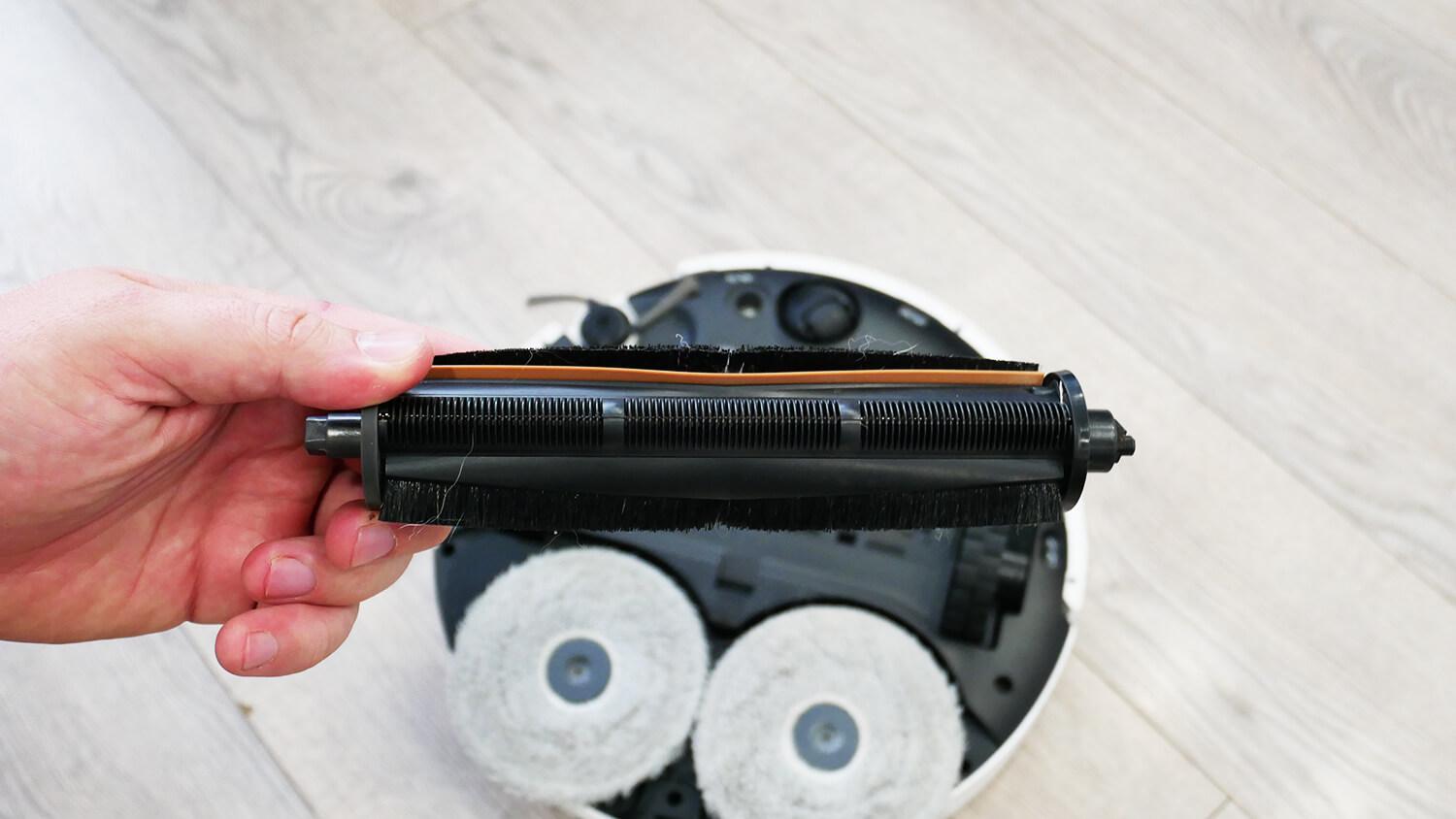
Condition of the turbo brush in everyday life
Carpet cleaning
Additionally, debris was scattered on the low-pile carpet. I can say that the Trouver P50 Pro Ultra thoroughly cleaned the carpet. On medium-pile carpet, the brushes are able to pick up debris on the surface, but they don't clean it deep within the pile, so keep that in mind.
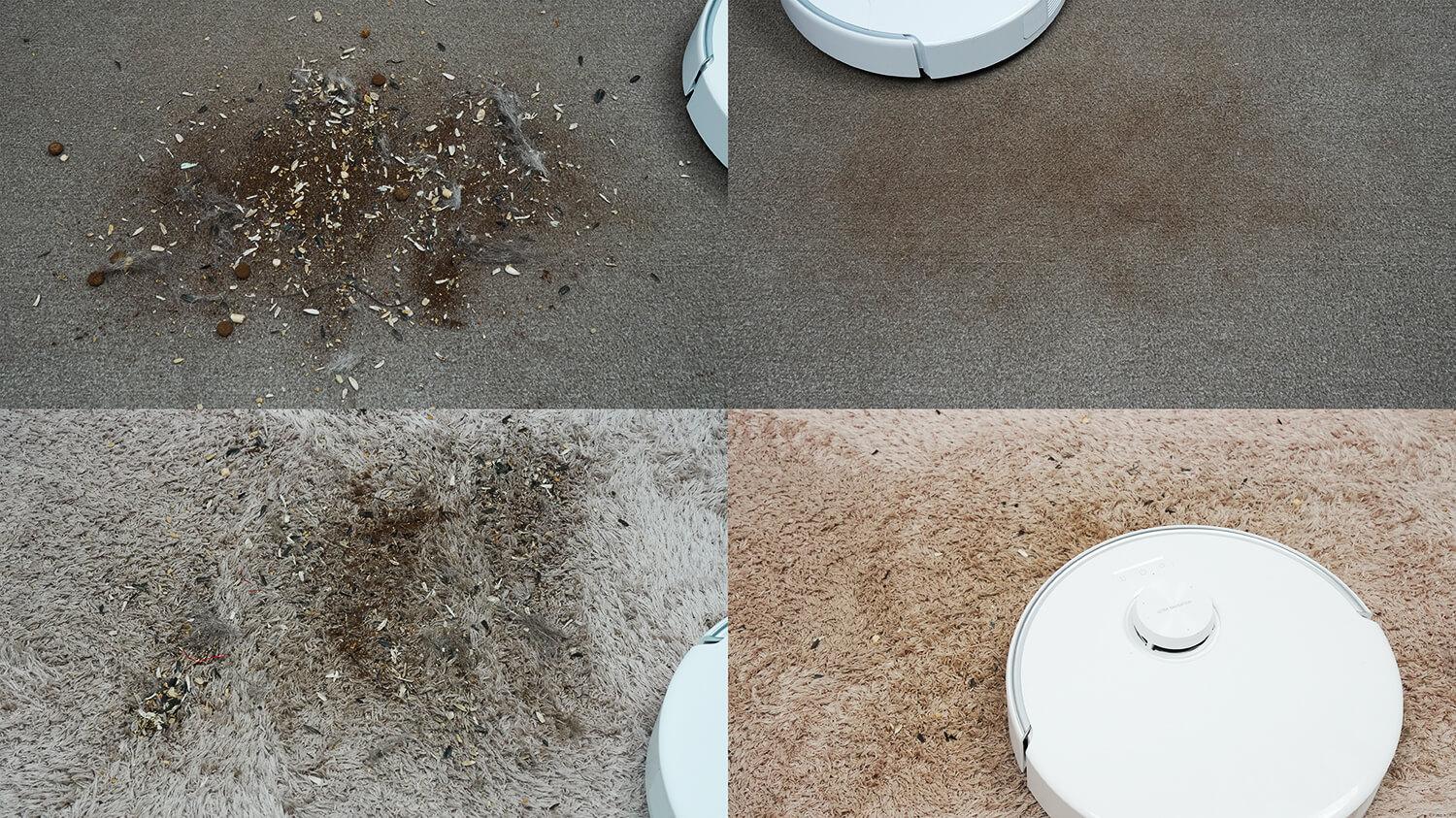
Carpet cleaning
Self-cleaning
Immediately after the "dirty tests," I checked how well the robot vacuum self-cleaned. I returned it to the station and started the self-cleaning routine. The results were good.
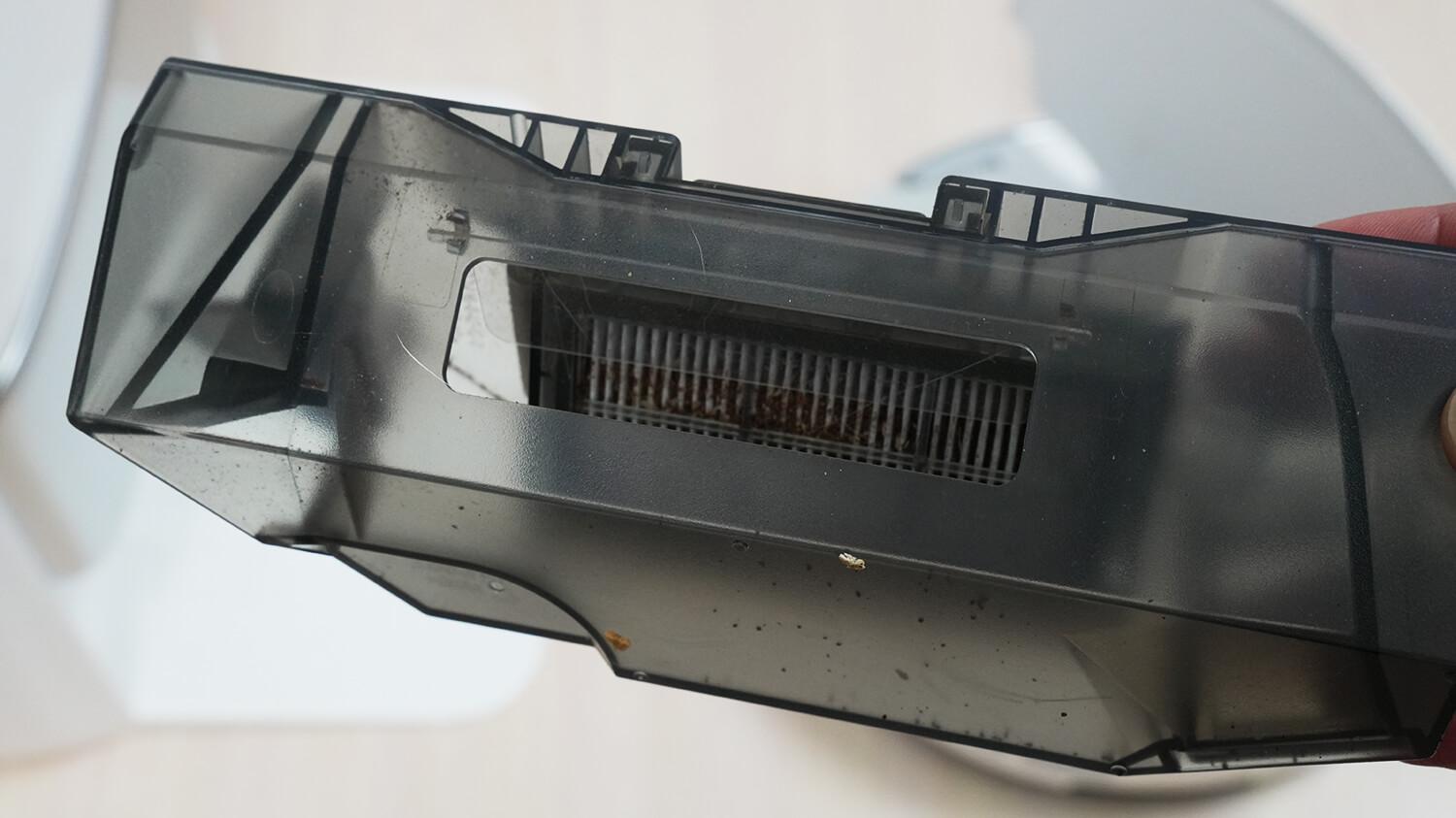
Self-cleaning
Wet cleaning and carpets
When it comes to wet cleaning on carpets, there are several different robot behaviors. I'll highlight three of the most interesting. The first is to enable automatic carpet avoidance in wet cleaning mode. The second is to drive over the carpet with rotating pads. Some users like to clean carpets this way, so the pile is damp, creating a carpet-washing effect.
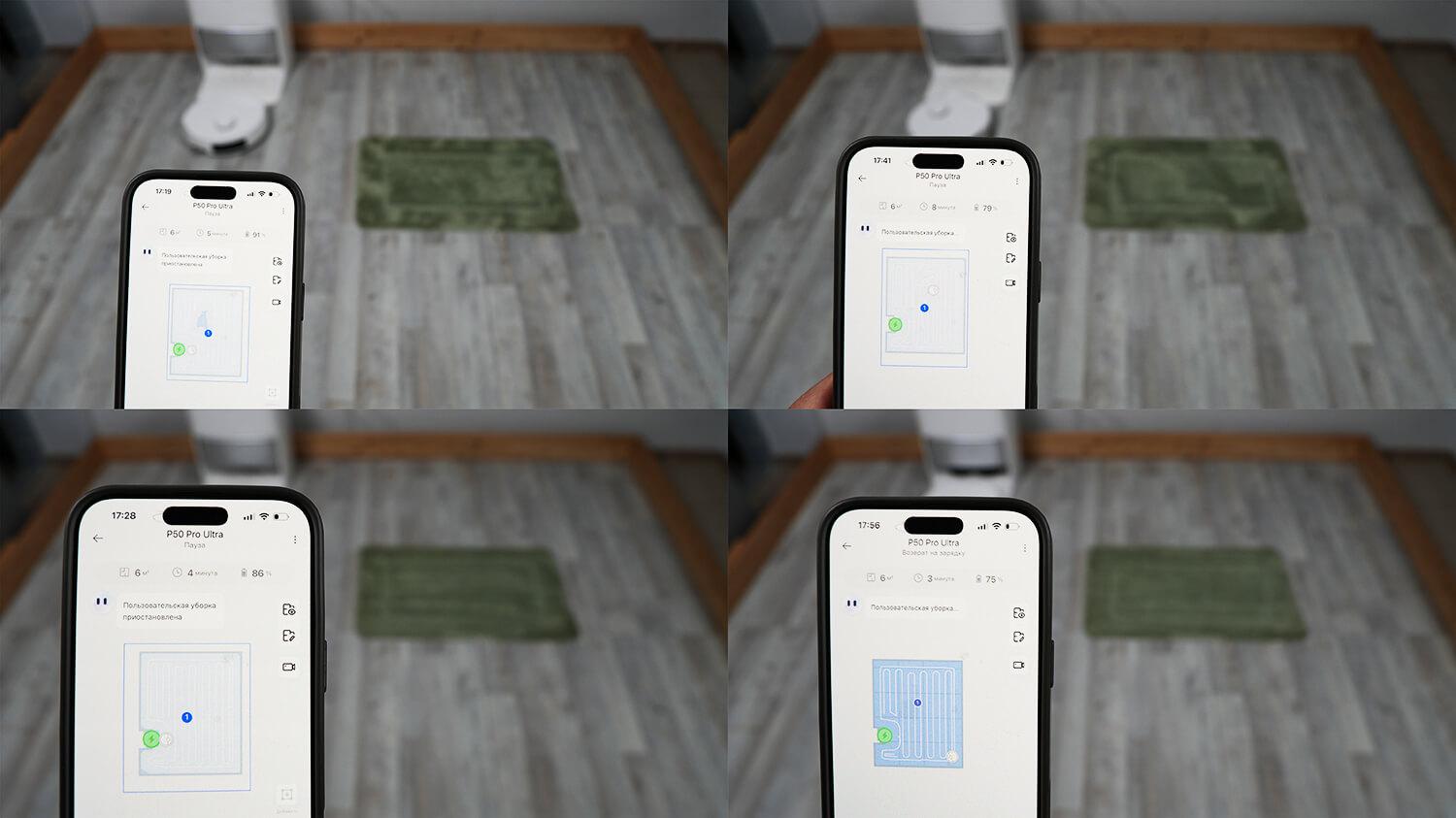
Wet cleaning and carpets
And thirdly, the automatic lifting of the cloths when entering carpets, which will allow the robot vacuum cleaner to vacuum and mop the floor at the same time, leaving the carpets dry and clean.
Another interesting feature is the automatic removal of the cleaning pads at the station, allowing the robot vacuum to clean carpets without the need for a cleaning pad. This is especially useful for high- and medium-pile carpets, as it completely eliminates any contact between the cleaning pad and the carpet if necessary.
Wiping off dirt
The cleaning performance is also excellent. The cloth presses firmly against the floor and absorbs dirt. At the same time, there's no narrow zone along the baseboard, thanks to one of the cloths extending out toward the baseboard. That's a plus! We also notice that the robot backs into corners when mopping, minimizing blind spots, which is also a plus.
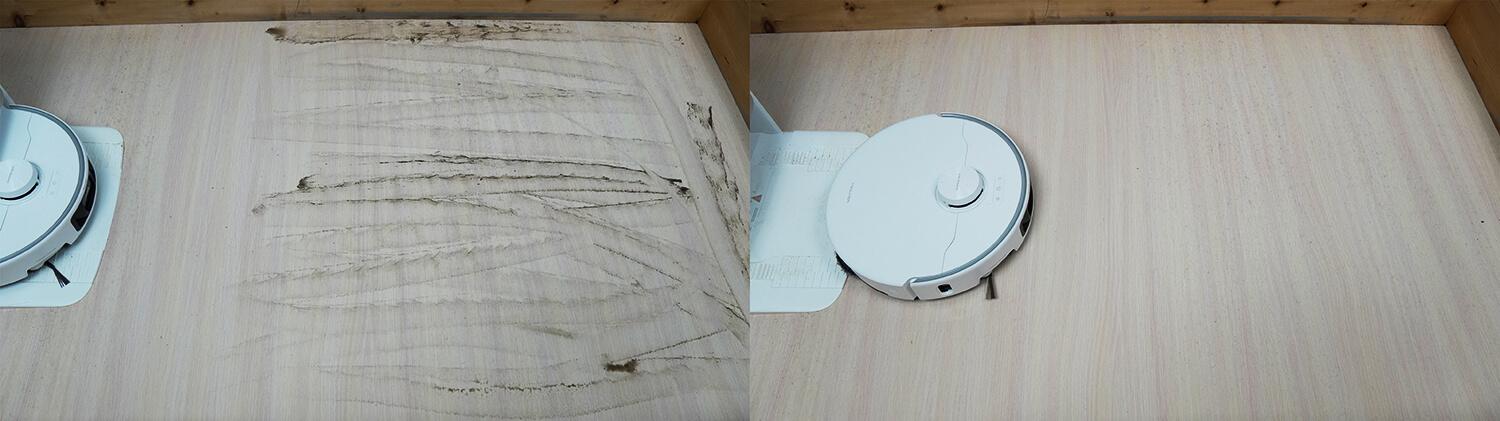
Wiping off dirt
Removing stains
When it comes to removing tough stains, the robot was able to remove even dried-on coffee and sauce stains. Granted, it didn't do it on the first try. To be precise, most of the stains were removed on the sixth try. However, one small stain came off on the seventh try. Still, in my opinion, the robot does a good job of removing stains from the floor. The results are better than many similar robots.
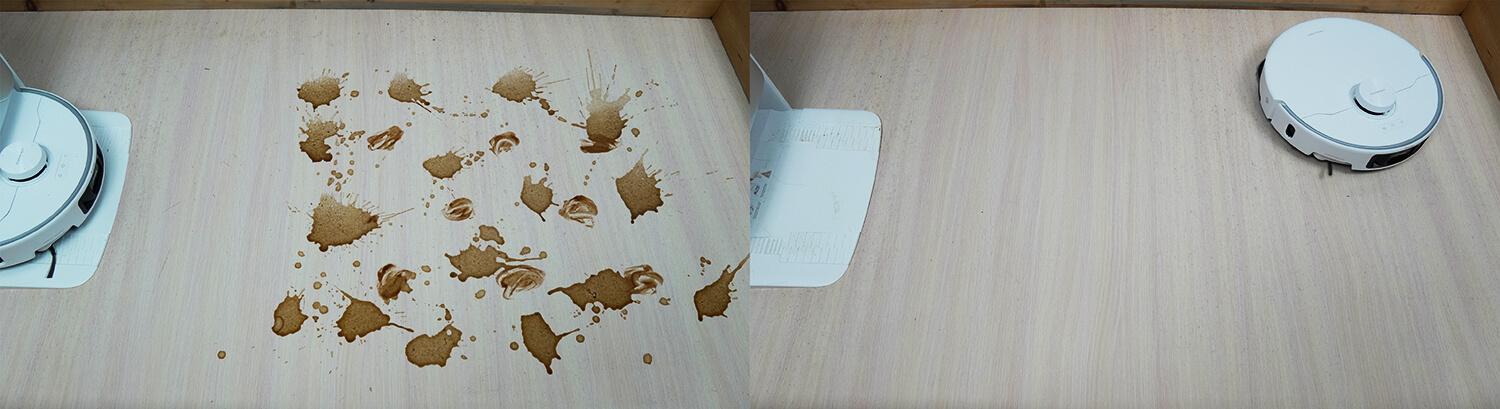
Removing stains
Washing and drying test of napkins
I'd like to immediately talk about the station's effectiveness. Let's start with the cleaning performance of the wipes. Even after extensive testing, the wipes look significantly better after washing with the station. The water heating function and automatic detergent mixing undoubtedly improve cleaning performance. And fortunately, the lack of combs in the station's bottom didn't affect the self-cleaning performance.
In a domestic setting, after washing the floor, the wipes are thoroughly rinsed at the station. No visible contamination was detected.
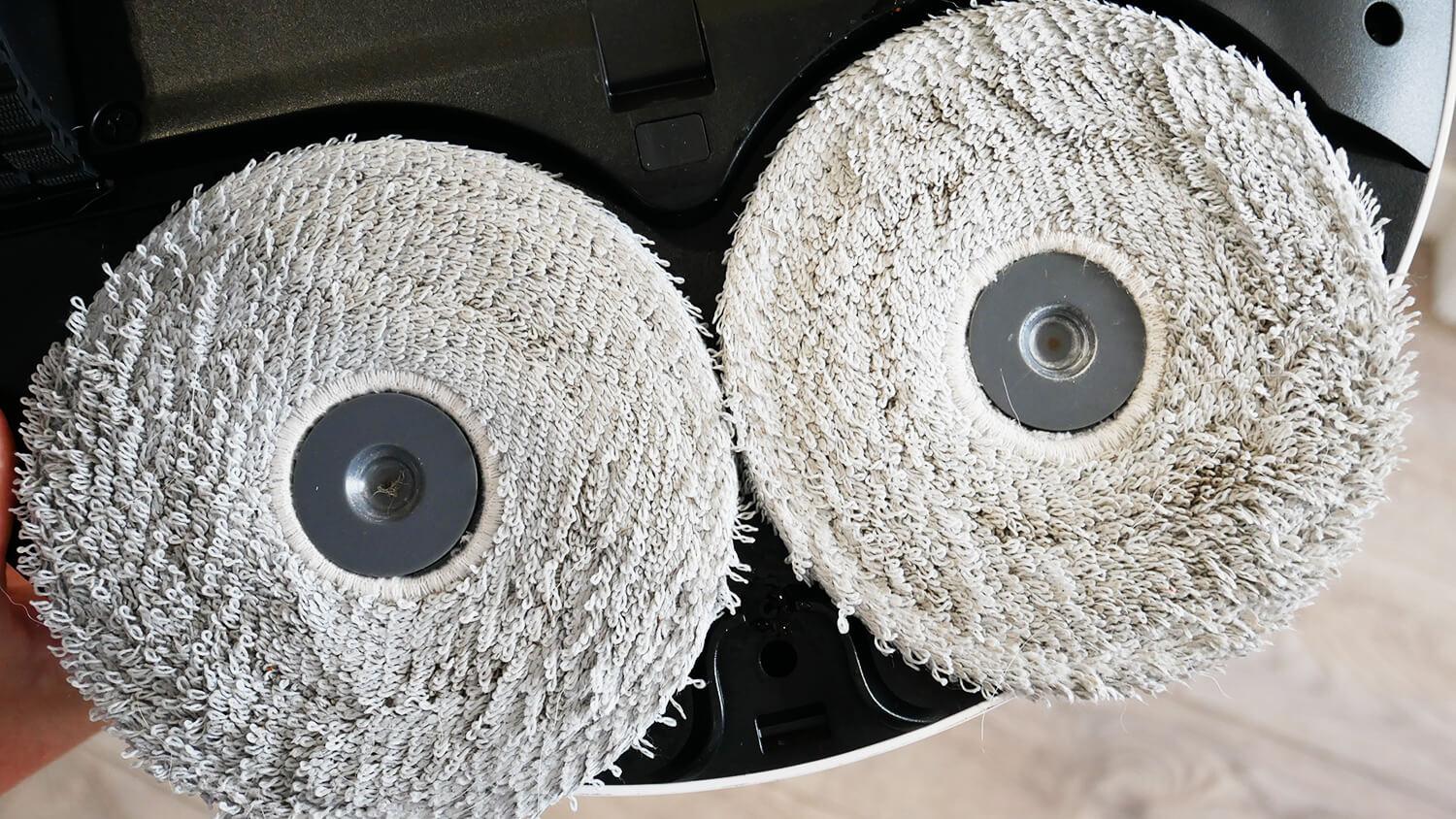
Self-cleaning quality of wipes
I decided to test the wash temperature myself—in my case, the peak temperature in the drain area was 41.1 degrees. After rinsing, the cloths themselves were around 28.5-30 degrees, as the water heating temperature decreases during the wash cycle.
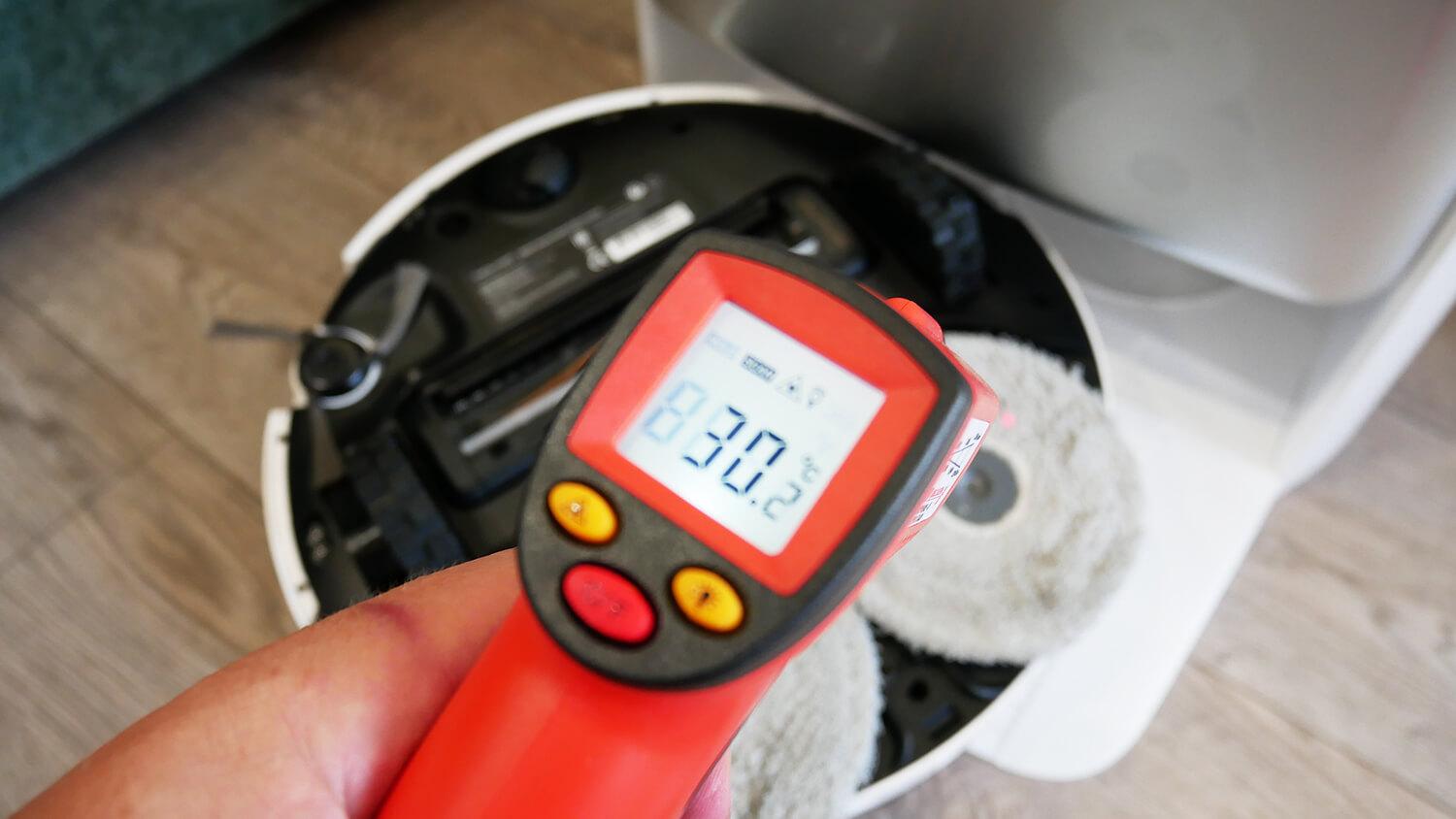
Temperature of napkins after washing
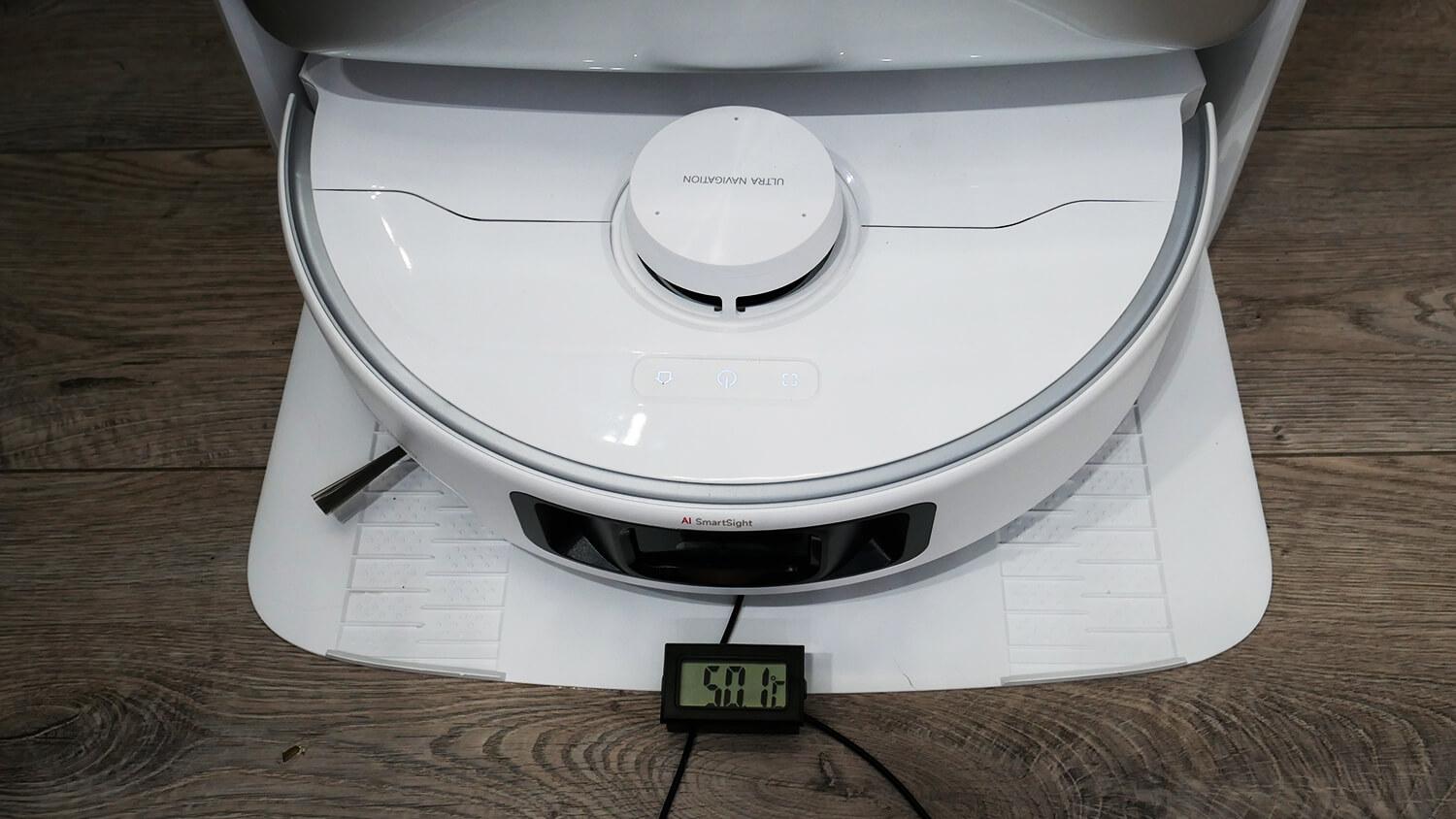
The drying temperature is high – the sensor showed over 50 degrees and this is a good result!
Drying temperature for napkins
Station maintenance
A few words about station maintenance. After using the robot for a week in a domestic environment, we see that the station's bottom isn't particularly shabby, but the drain is a bit dirty. Some debris has accumulated on the coarse filter, which will need to be cleaned manually periodically. We remove the drain and filter, rinse them in the sink, wipe the station's non-removable parts with a cloth, and replace the cleaned parts. Overall, it's not difficult. The station's updated design clearly simplifies maintenance without compromising the self-cleaning performance!
Obstacle clearance
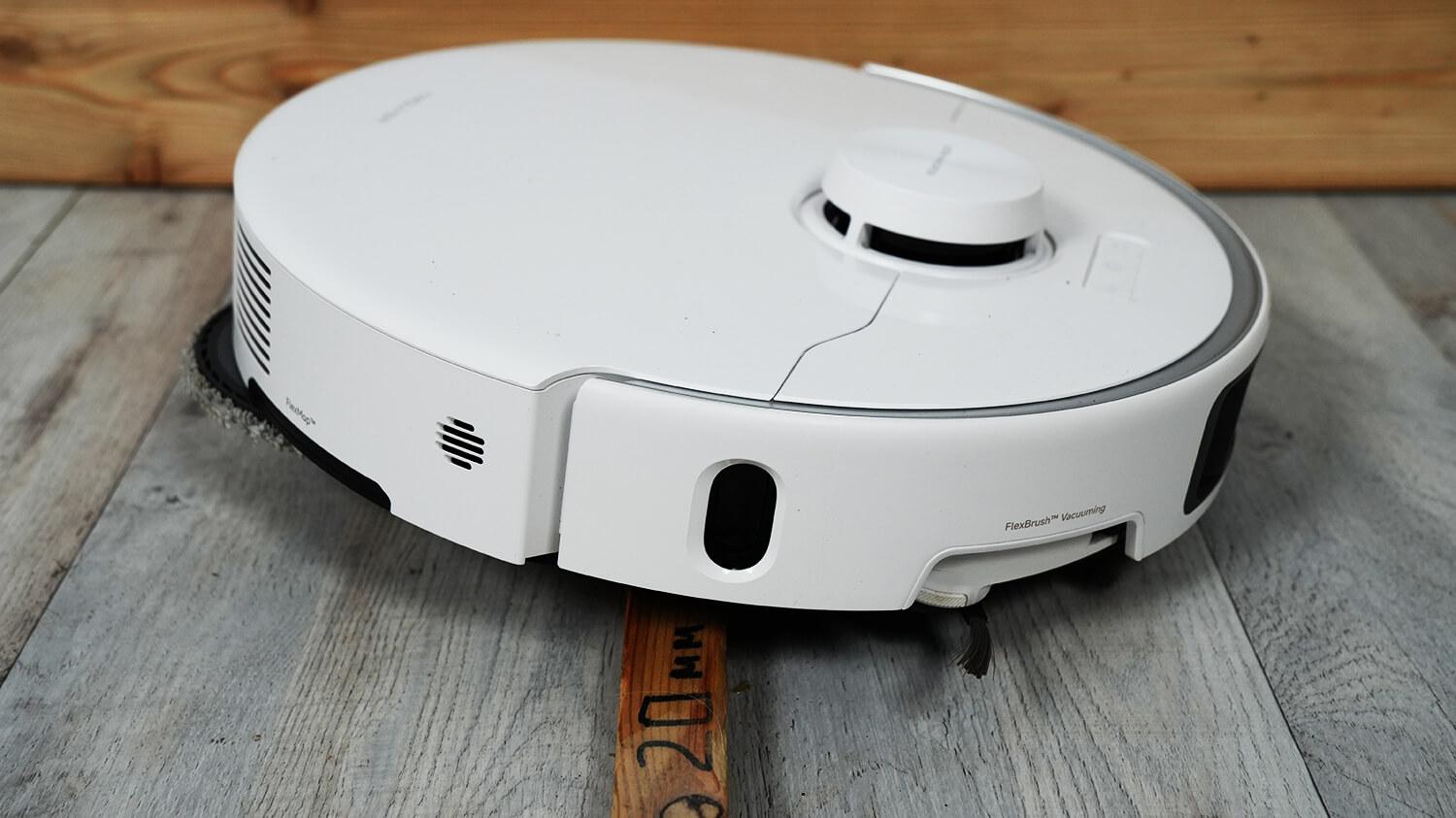
The Trouver P50 Pro Ultra has good off-road capability, capable of climbing 2 cm thresholds.
Obstacle clearance
Driving on black surfaces
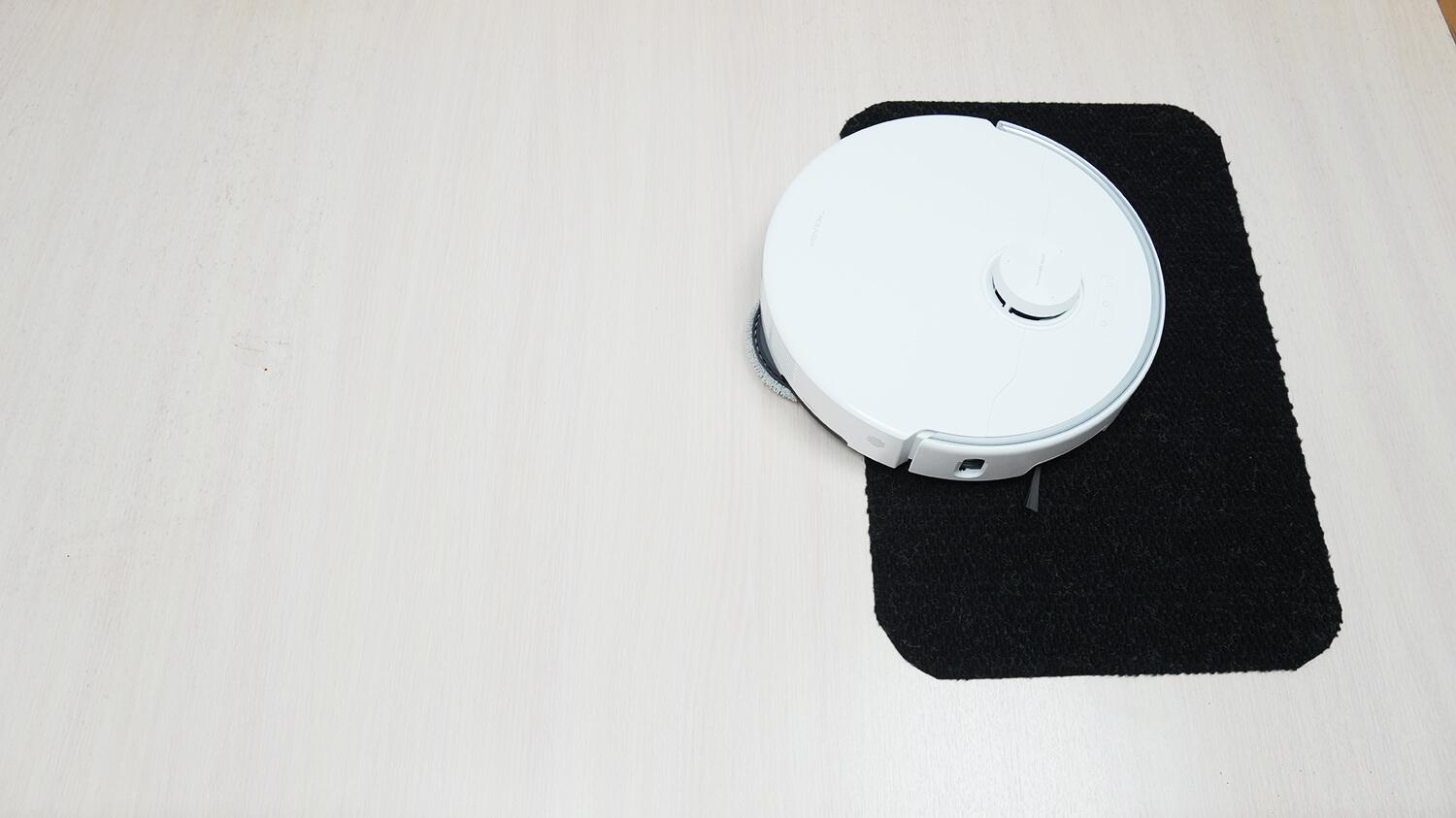
And the robot can easily navigate black carpets. That's a plus!
Driving on black surfaces
Noise level
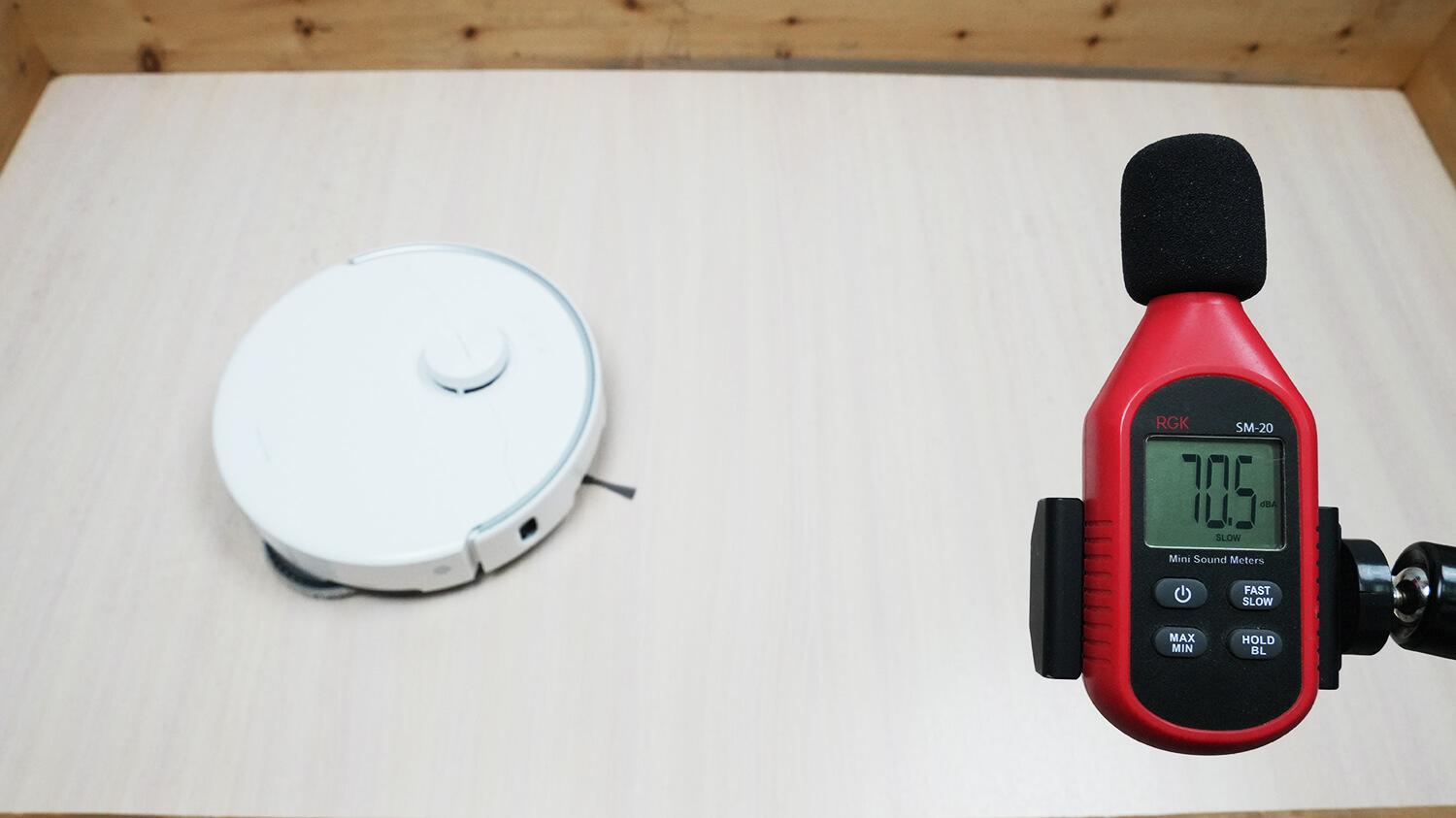
I measured the noise level myself. It ranges from 58 to 72.5 dB, depending on the selected operating mode. This value is slightly higher, but the increased suction power should be taken into account, as these parameters are interrelated. I also checked the station's noise level, and it is around 73.5 dB, which is standard.
Noise level
Personal opinion
The Trouver P50 Pro Ultra robot vacuum cleaner has been thoroughly reviewed and tested. our evaluation system he managed to gain 239 points and enter the TOP-5 best tested robotic vacuum cleaners of the project at the time of review preparation.
I'll highlight the pros and cons I discovered during testing, and then express my own opinion of the robot. I liked the following:
- High-quality wet cleaning over large areas. The cloths press firmly onto the floor, quickly removing tough stains. Plus, the cloth can reach up to baseboards, swivel under furniture, and reach into corners with its back. The cloths also lift up on carpets and can be dropped off at stations for a full dry cleaning. Everything here is fully charged by 2025 standards.
- An all-in-one station, the robot vacuum cleaner self-cleans its pads with hot water, mixes in detergent, dries the pads with warm air, automatically detects the pads' soiling level for re-rinsing, and automatically empties the dust container. Furthermore, the station is easy to maintain, equipped with large water tanks, and features antibacterial protection in the clean water tank.
- Maintenance of the station has been simplified thanks to a new design for the wipes. The flat bottom is virtually dirt-resistant and self-cleans when washed.
- High suction power confirmed by real tests.
- The robot vacuum cleaner is capable of cleaning behind curtains and drapes, which makes it stand out from most lidar-based alternatives.
- A very accurate object recognition system. It's practically perfect and requires minimal refinement.
- The turbo brush with blades prevents hair and fur from tangling. A very effective solution.
- The robot vacuum cleaner completely sweeps out debris from corners and can even partially sweep it from under furniture thanks to its retractable side brush.
- Automatic lifting of cloths, turbo brush and side brush.
- The robot vacuum cleaner is not afraid of black surfaces.
- A large number of functions in the branded application.
- Built-in "Hey, Trouver" voice support allows you to control the robot with voice commands without using a smartphone.
- Remote home monitoring function via robot camera.
- The app, voice notifications, commands, and instructions are fully localized in Russian. The robot is fully market-ready.
- High quality assembly.
- Availability of warranty and service.
Among the disadvantages I would like to highlight the following:
- The station is not connected to the sewerage and water supply.
- The robot is taller than 10 cm, so it will not fit into the standard 10 cm clearance under furniture.
- There are problems with collecting large debris, such as cat litter granules, due to insufficient clearance between the brush and the robot body.
- Not capable of thoroughly cleaning medium pile carpets.
Ultimately, despite all the criticisms, I think this is one of the best robot vacuums for $600-$700. Overall, its rating and placement in the overall rankings make it clear that it's one of the best robot vacuums of 2025. It's powerful, efficient, neat, and easy to use and maintain. Definitely worth considering and highly recommended!
That's all from me. If you have any questions, please ask them in the comments. Happy shopping, everyone. Bye!