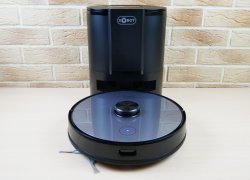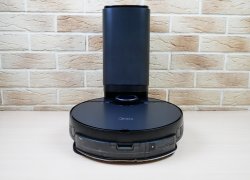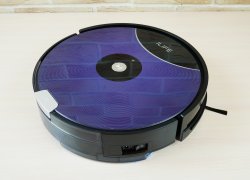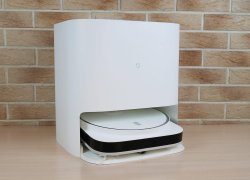
Genio Laser L700: A simplified version with lidar and wet cleaning at a more affordable price
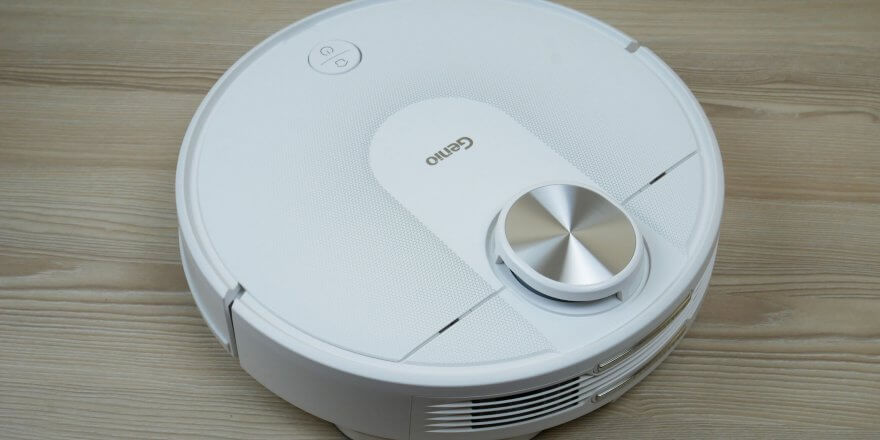
The Genio Laser L700 is a slightly simplified version of the flagship 800 model. By trimming additional features and components, the price was reduced from $330 to $270, or $400 at the time of writing. However, navigation, basic functionality, and cleaning performance remain virtually unchanged. For those on a budget or looking to save money, this simplified model may be just right for many. Below, I'll take a detailed look and test the Genio Laser L700, after which I'll express my opinion on whether this robot vacuum is worth buying. So, let's get started!
Equipment
The robot vacuum cleaner arrived in a branded cardboard box like this:
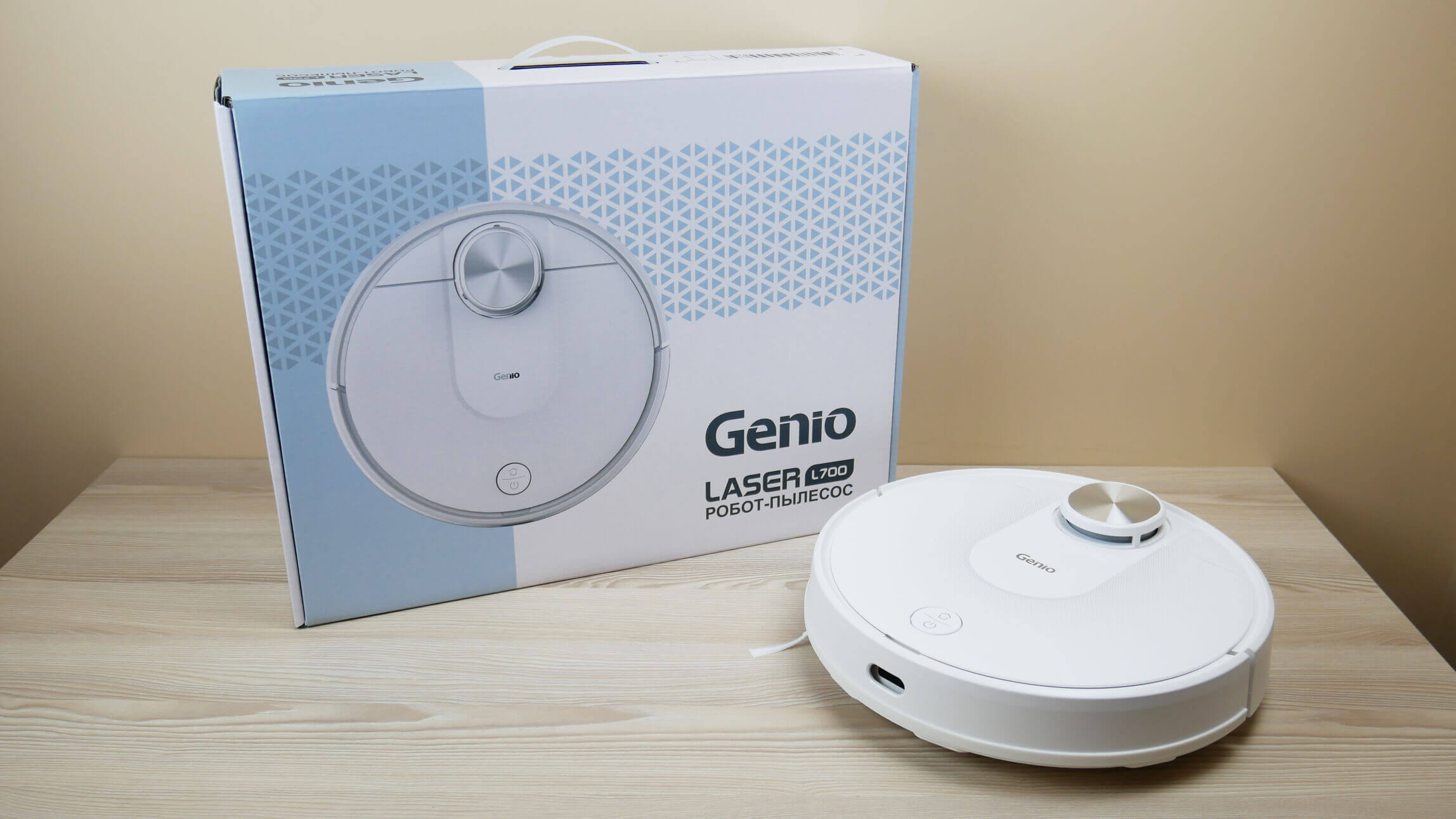
Robot and box
In addition to the robot itself, the kit includes:
- Charging base.
- Power adapter.
- Nozzle with a cloth for wet cleaning.
- Spare microfiber cloth.
- A separate combined container for water and waste. The robot itself also has a dust collector.
- Documentation for the robot vacuum cleaner in Russian.
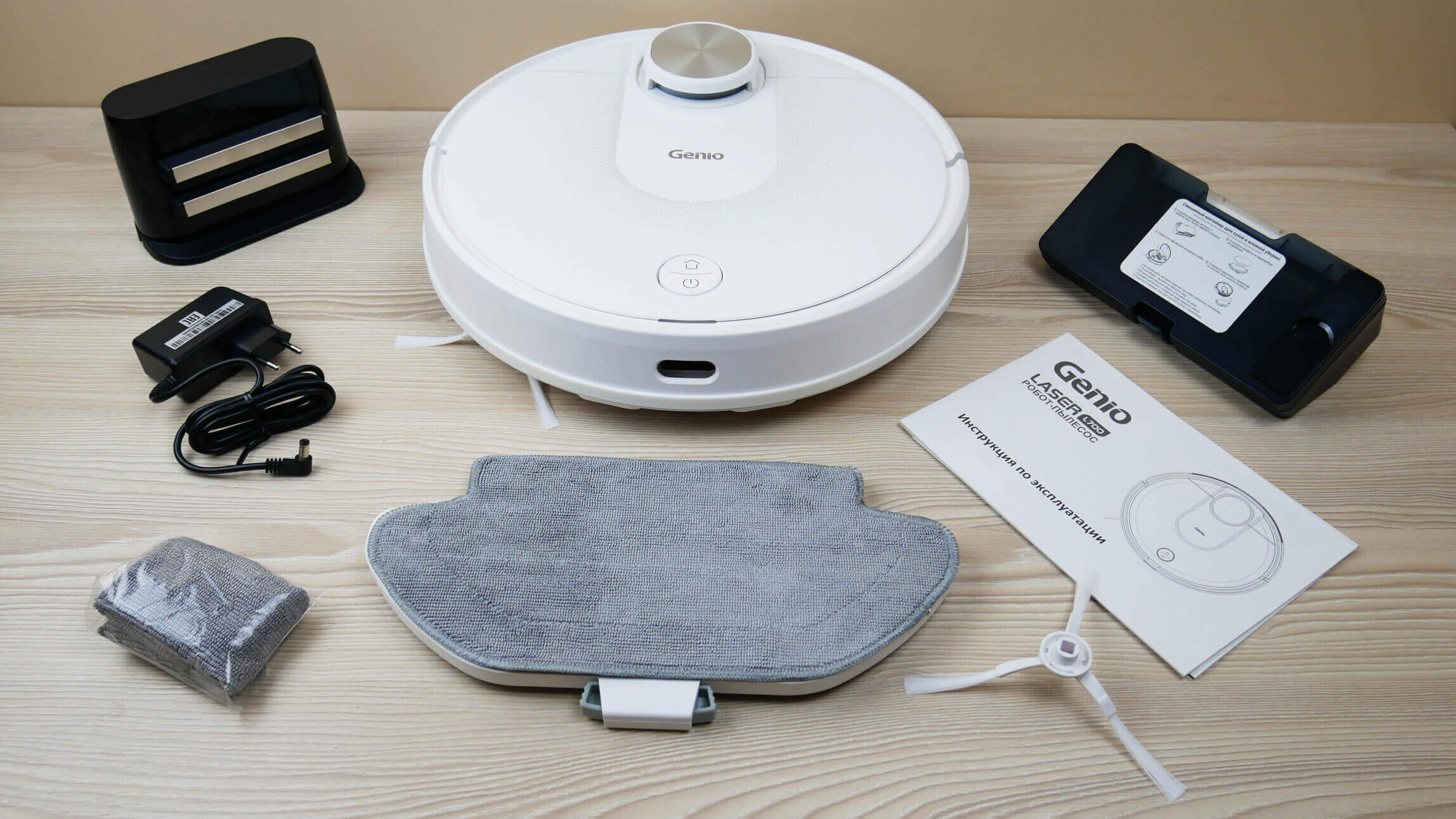
Equipment
The package includes the standard components. Compared to the Genio Laser L800, which was previously reviewed, the remote control, replaceable rubber center brush, and magnetic strip for movement control have been omitted.
Appearance
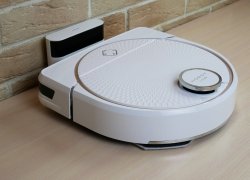
Now let's take a look at the design of the new Genio Laser L700. The case is white and round. The height of the case is 9.5 cm from the floor.
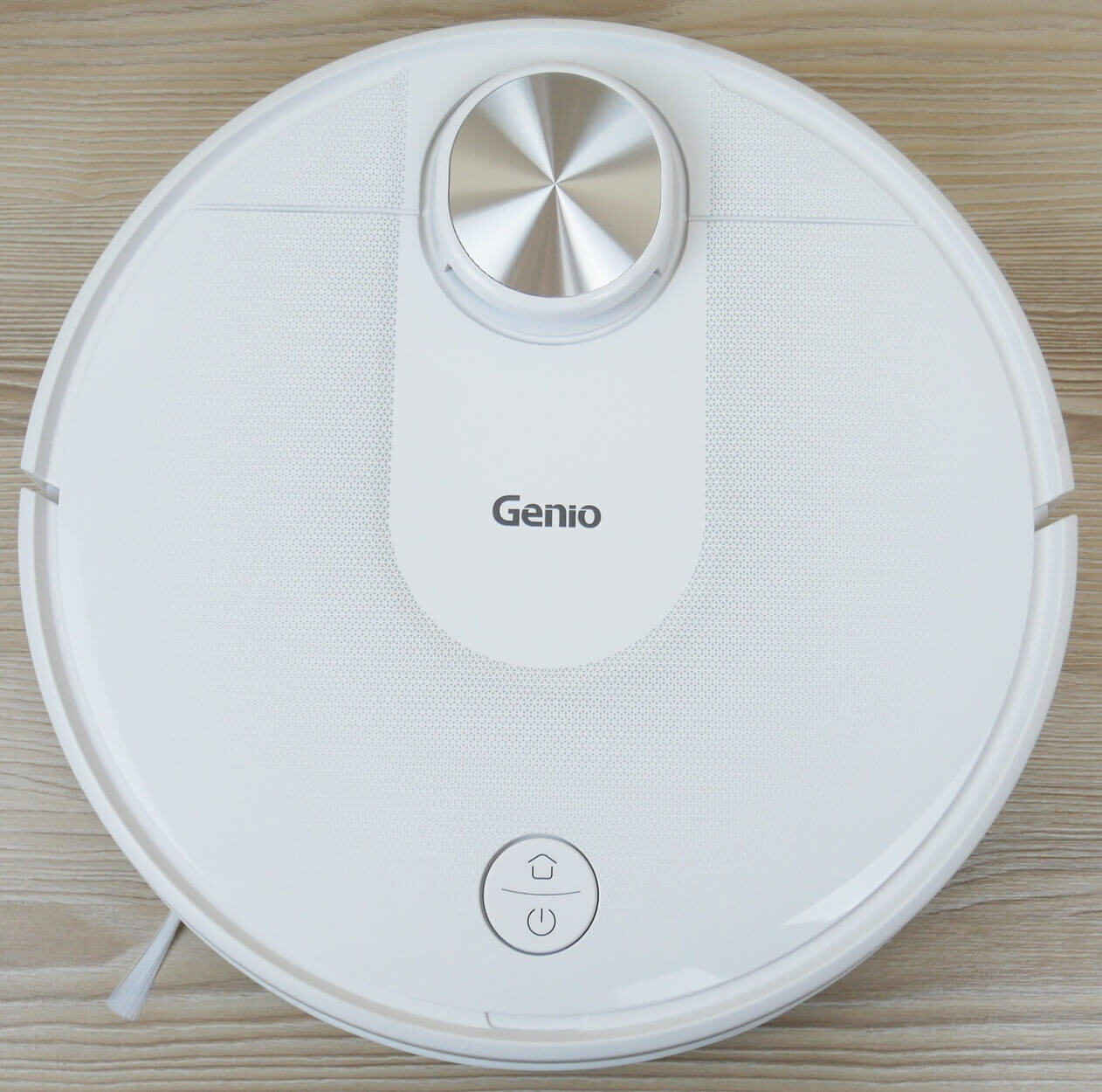
Top view
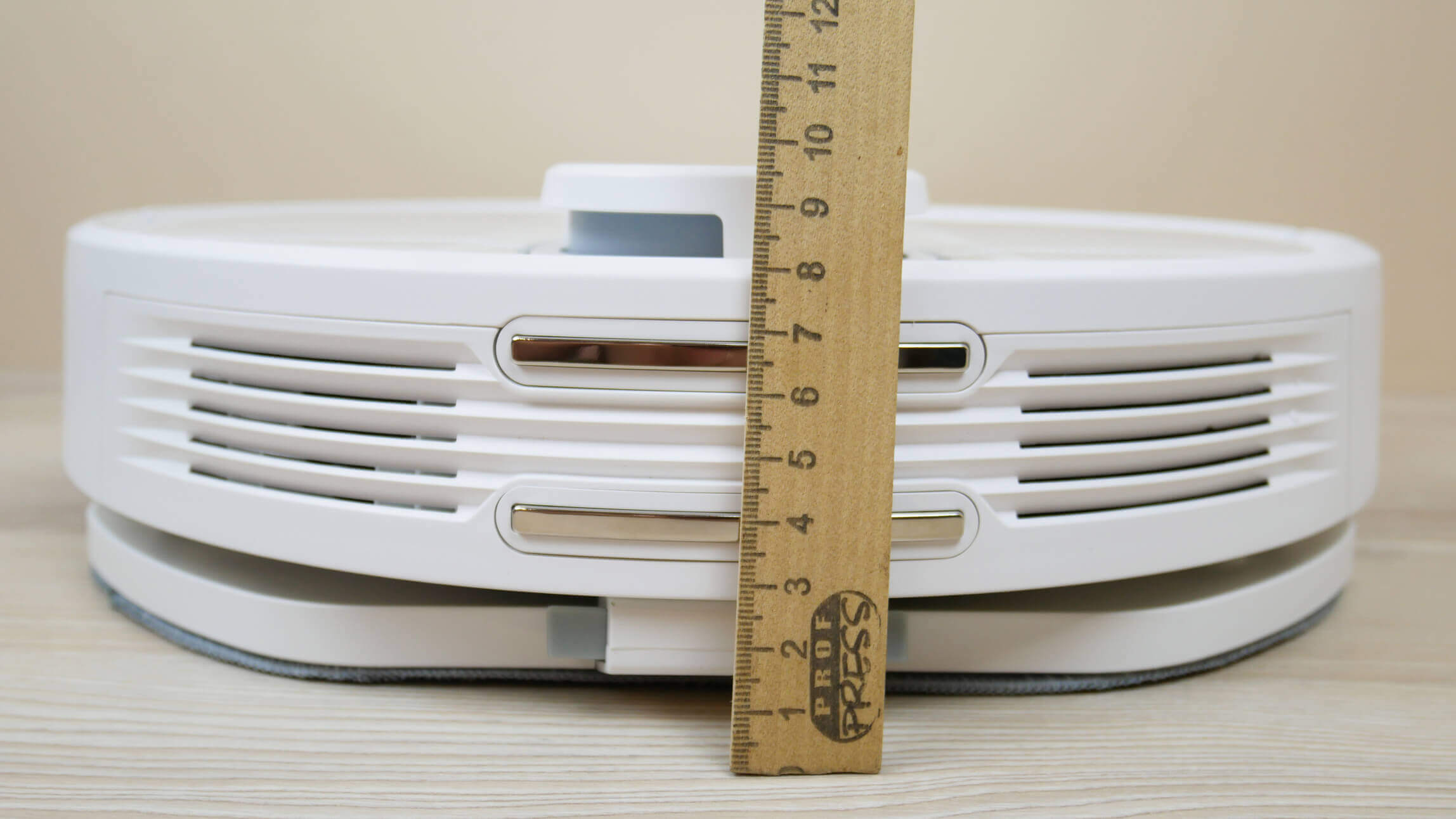
Body height
Navigation is handled by a lidar system, and an obstacle detection sensor is mounted on the mechanical front bumper. An additional wall sensor is not provided.
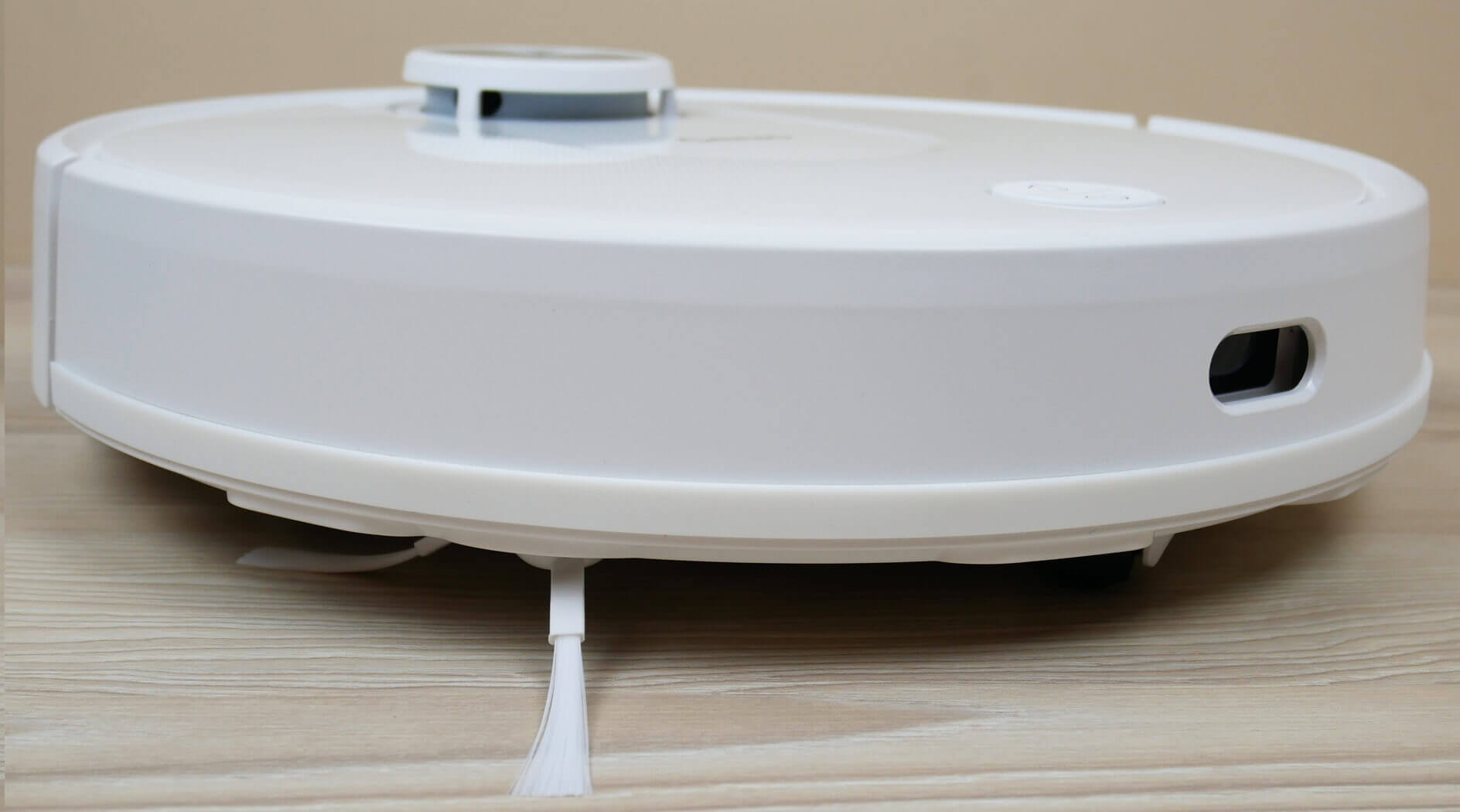
Side view
The control panel features two mechanical control buttons: start/pause and forced return to the charging base. The lidar cover is not spring-loaded. The dust container is located under the top cover. The cleaning tool is conveniently stored nearby. The container holds up to 450 ml of dry waste. The filtration system uses a HEPA filter and a mesh filter.
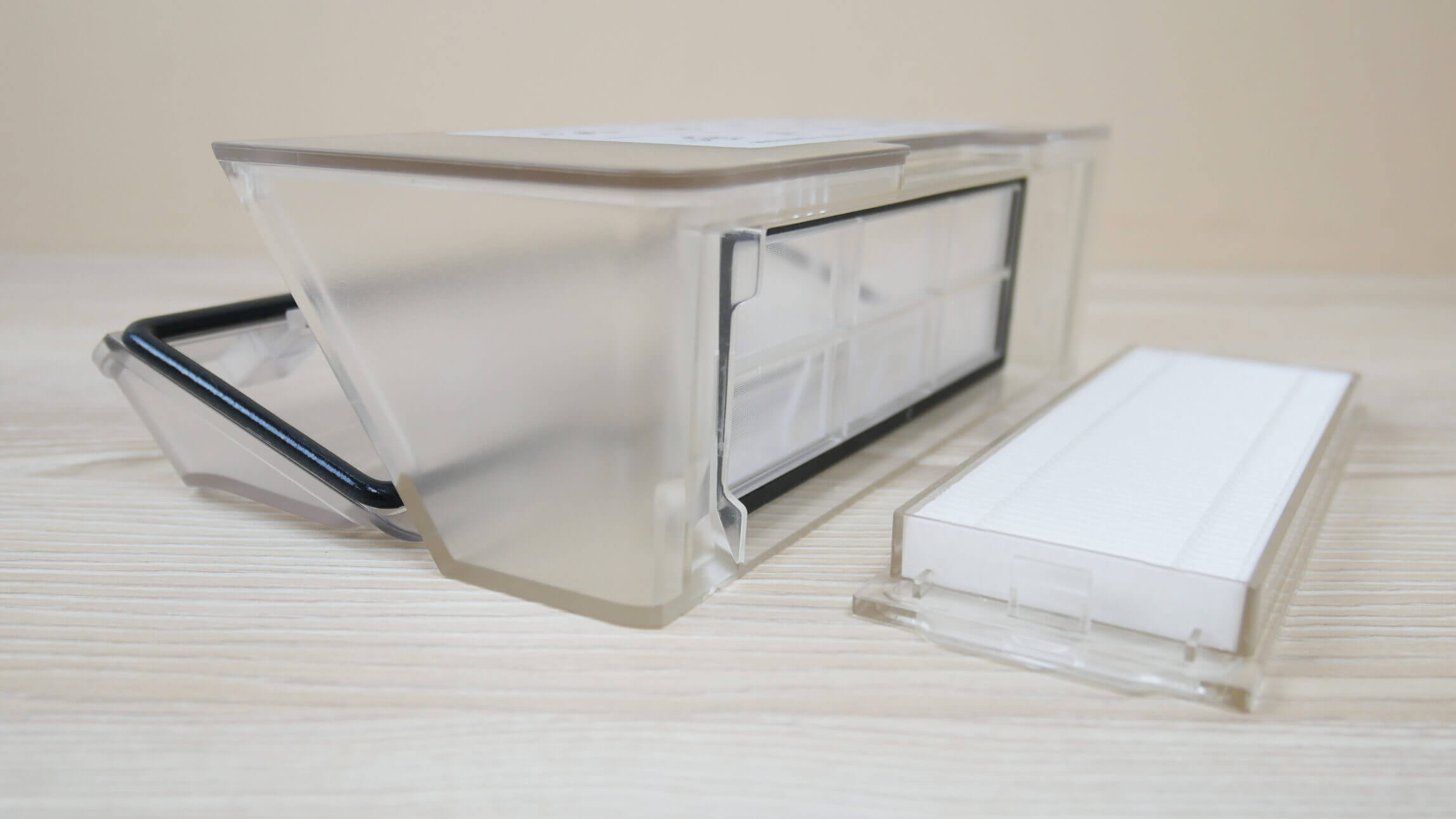
Dust collector
A combined water and waste container can be installed in place of a full-size dust collector. The waste compartment, which holds up to 300 ml, contains only a HEPA filter, without a mesh screen. Waste is discharged through the filter opening. The tank holds up to 200 ml of water. A pump is installed inside for electronically regulating the water flow.
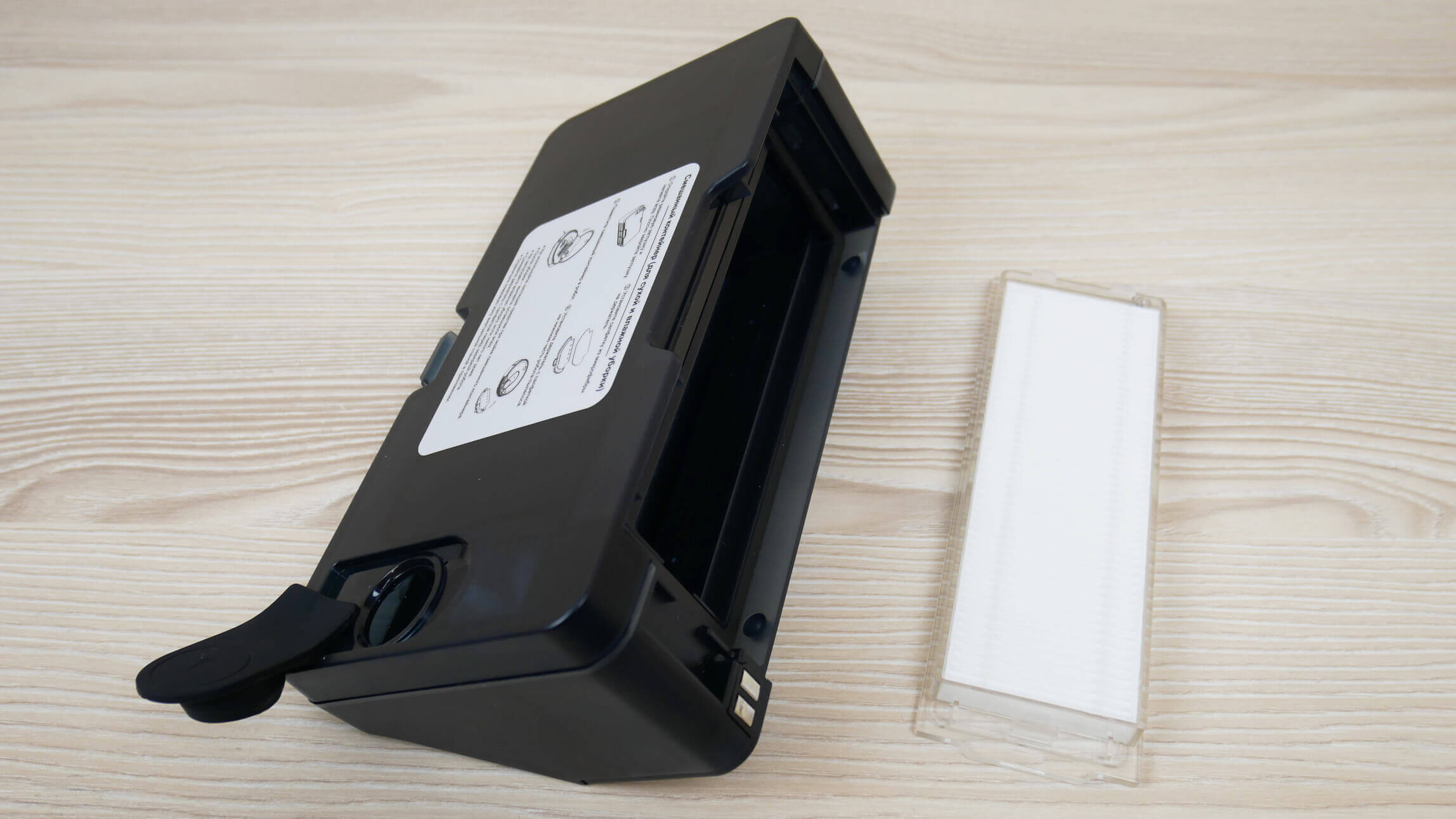
Combined container
Let's take a look at the Genio Laser L700's underside. It features four drop protection sensors, one quick-release side brush, and a central turbo brush. The central brush unit is non-floating. The brush itself is also non-removable; only the cap on one side is removable.
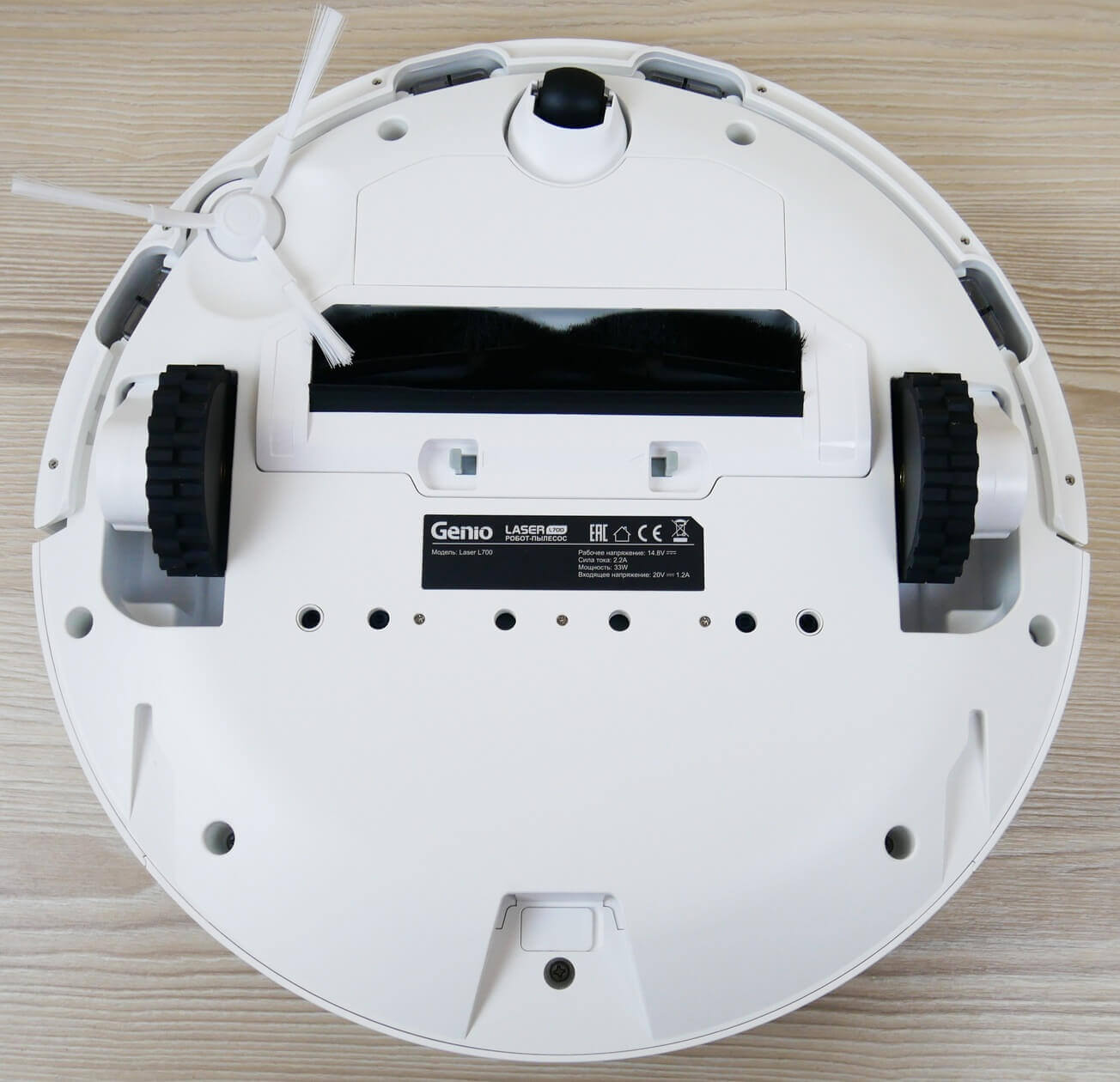
Bottom view
The attachment to which the cleaning cloth is attached has six water supply holes. The cleaning cloth is secured to the attachment with Velcro and a pocket. The attachment itself is secured to the robot via a mechanical lock.
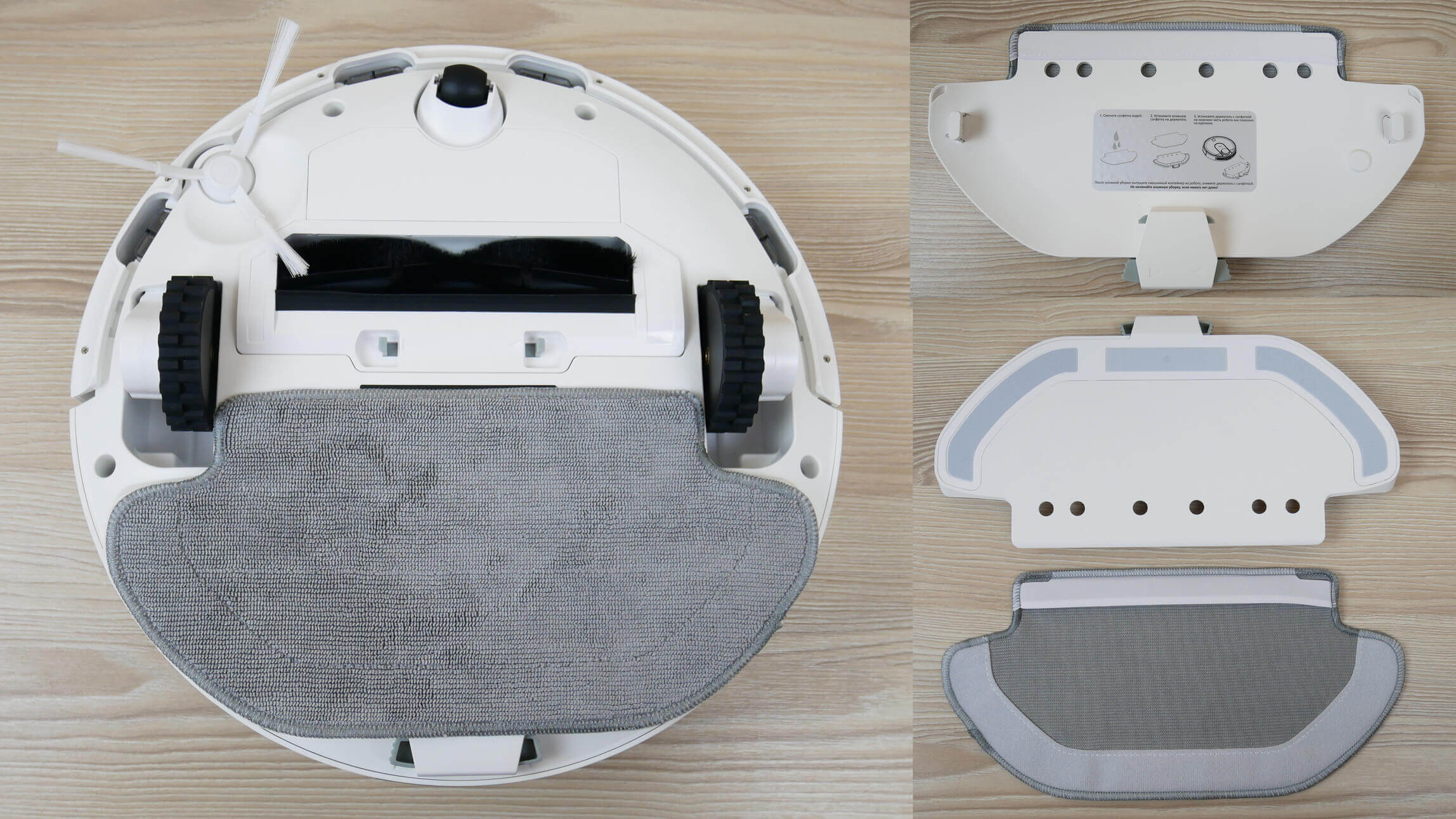
Nozzle with a napkin
Overall, the build quality of the robot vacuum cleaner is average.
Technical specifications
The main characteristics of the Genio Laser L700, as declared by the manufacturer:
| Battery | Li-Ion 3200 mAh |
| Suction power | Up to 2700 Pa |
| Cleaning area | Up to 150 sq.m. |
| Battery life | Up to 110 min |
| Dust collector | 450 ml |
| Combined container | ≈300 + 200 ml |
| Obstacle clearance | up to 20 mm |
| Dimensions | 355*95 mm |
The specifications are quite standard for a lidar robot. It's important to note that the battery is a bit weak, resulting in a battery life of less than two hours.
Functional capabilities
Let's move on to an overview of the Genio Laser L700's features. The robot vacuum is controlled via a proprietary mobile app. Connecting the robot to a Wi-Fi network is straightforward. Follow the manufacturer's instructions. This model does not connect to a 5G network, unlike the larger L800.
On the main control panel, the robot vacuum cleaner creates a room map, saves it to memory, and automatically divides it into rooms. It's important to note that the Genio Laser L700 can store multiple maps. You can use the map editor to change room boundaries as needed.


Map editor
Electronic adjustment of power and cloth wetting is provided. To the right of the map is a mode for selecting the desired rooms for cleaning. You can also set no-go zones on the map where the robot should not enter. There are no separate no-go zones for wet cleaning mode.


Setting up cleaning parameters
The "More" section features features such as manual control, floor polisher mode, perimeter cleaning, spot cleaning, cleaning in selected areas, dual cleaning cycles, scheduled cleaning, and a cleaning log. When setting up a scheduled cleaning, you can select the desired rooms, cleaning mode, number of passes, time and days of the week, as well as suction power and cloth wetting level.


Functions
In the settings section, you can change the robot's name, set quiet times, enable and disable voice alerts and adjust their volume, calibrate sensors, monitor consumables status, and check the firmware version. It's important to note that the Genio Laser L700 speaks Russian.
It's also worth noting that the floor polisher mode, which requires the robot to move in a Y-pattern, didn't work during testing. It's unclear whether this will be fixed or whether the mode will simply be removed from the menu. I'm hoping for the former.
Overall, the functionality of the Genio Laser L700 is standard for a lidar robot vacuum cleaner.
Testing
A detailed video review of the Genio Laser L700, including all tests, has already been prepared and published on the channel. I recommend watching the video:
Navigation
And finally, let's move on to the tests. First, we'll test the Genio Laser L700's navigation in a room with obstacles. First, the robot vacuum cleaner navigates the perimeter of the room, then cleans the entire accessible area in a serpentine pattern. It didn't get stuck on the dryer. It also swept around a box and the legs of a chair, then returned to the charging station. The test was successful.
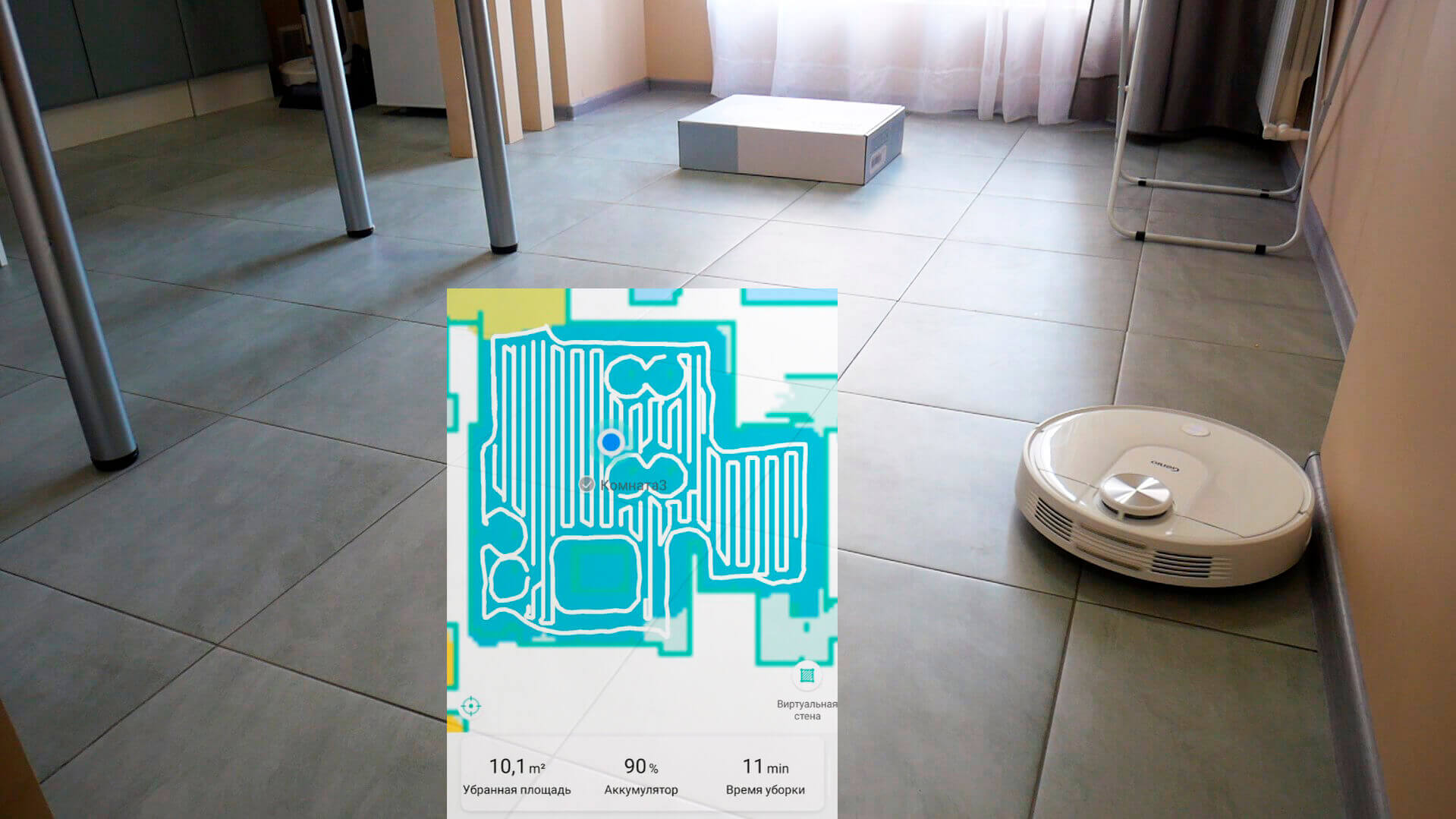
Navigating an Obstacle Room
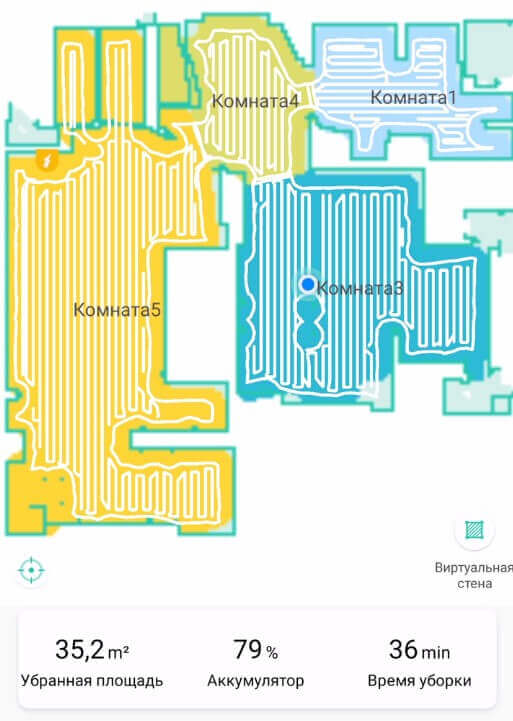
Speaking of navigation within the home, the Genio Laser L700 cleans room by room, first along the perimeter, then in a serpentine pattern. There are no uncleaned areas, and the cleaning speed is high. This model has excellent navigation.
Navigation within the home
Suction power
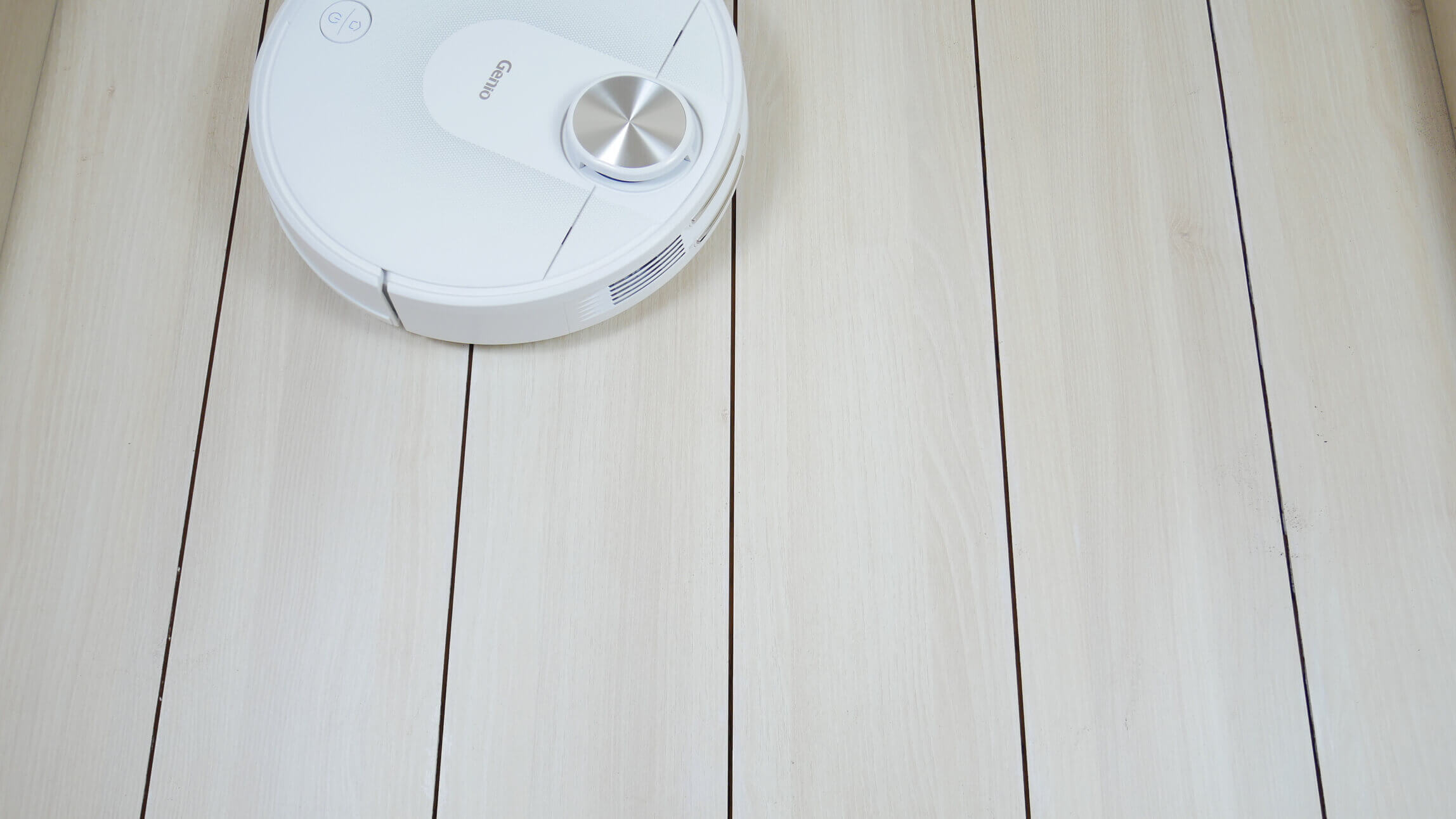
Regarding suction power, the Genio Laser L700 was only able to vacuum debris from a 2 mm gap, like most other robot vacuums. The suction power is quite average and sufficient for cleaning hard floors.
Suction power
Dry cleaning of laminate flooring
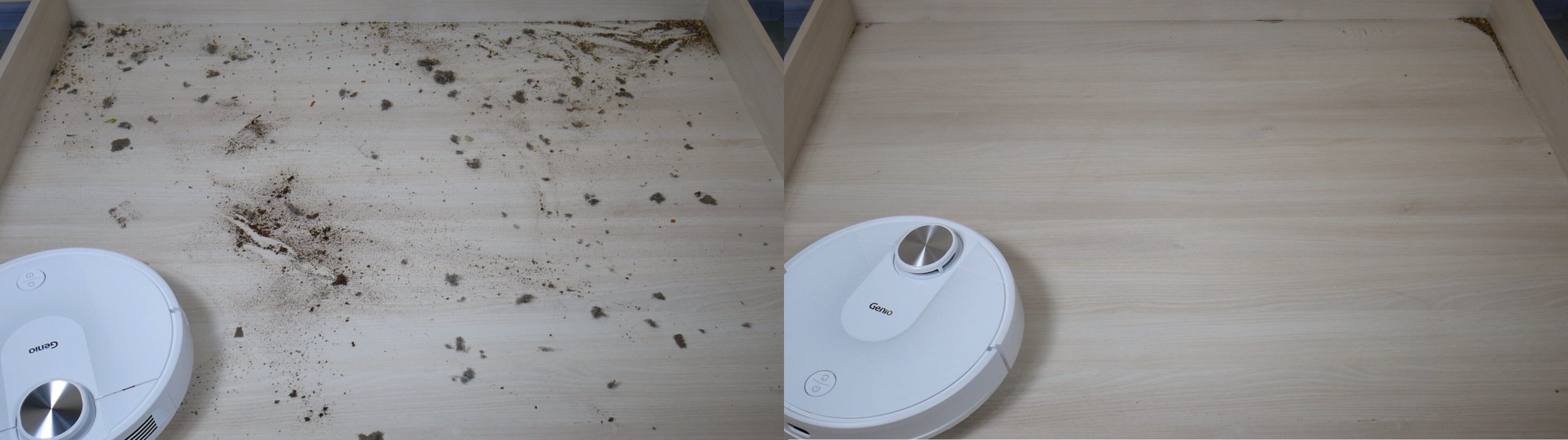
The dry cleaning performance was above average. The robot picked up all the debris from the floor and left it only in the corners, where most round robot vacuums fail to sweep. Some hair and fur got tangled in the central brush, but the bulk of the debris was collected in the dust bin. So, I pass the test.
Dry cleaning of laminate flooring
Cleaning the carpet
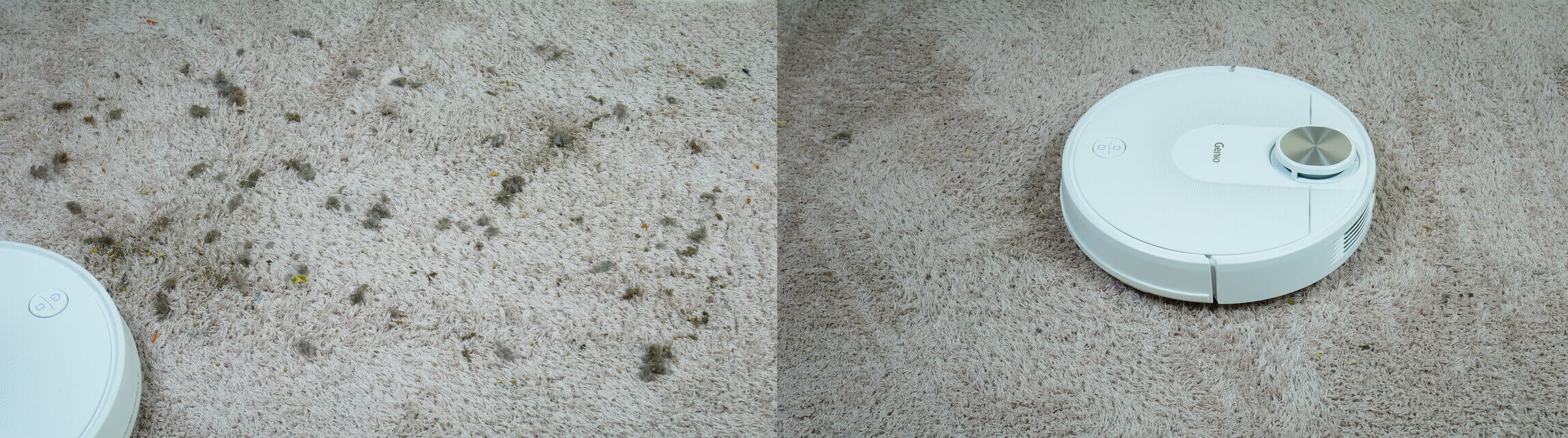
However, the Genio Laser L700 performed poorly on carpet. It failed to pick up some hair and pet hair, making it less suitable for cleaning carpets.
Cleaning the carpet
Wet cleaning
There are no complaints about wet cleaning, however. The robot vacuum presses the cloth firmly to the floor, making it capable of effectively removing light stains, such as slightly dried-on dirt. The only area left unwashed was a narrow area along the baseboard, but that's a blind spot for all the robots I tested.
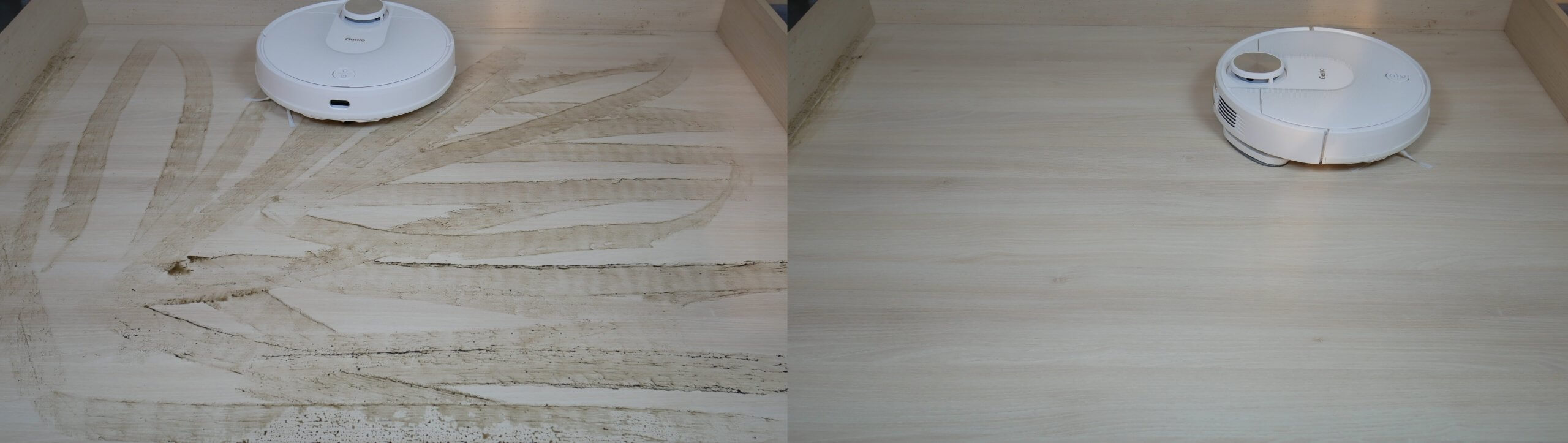
Wet cleaning
Well, it’s important to note that the Genio Laser L700 can vacuum and mop the floor at the same time, which is a plus.
Wet cleaning and carpets
Regarding wet cleaning on carpeted floors, the Genio Laser L700 doesn't detect carpets and, therefore, doesn't avoid them in wet cleaning mode to avoid wetting them. This is important to keep in mind.
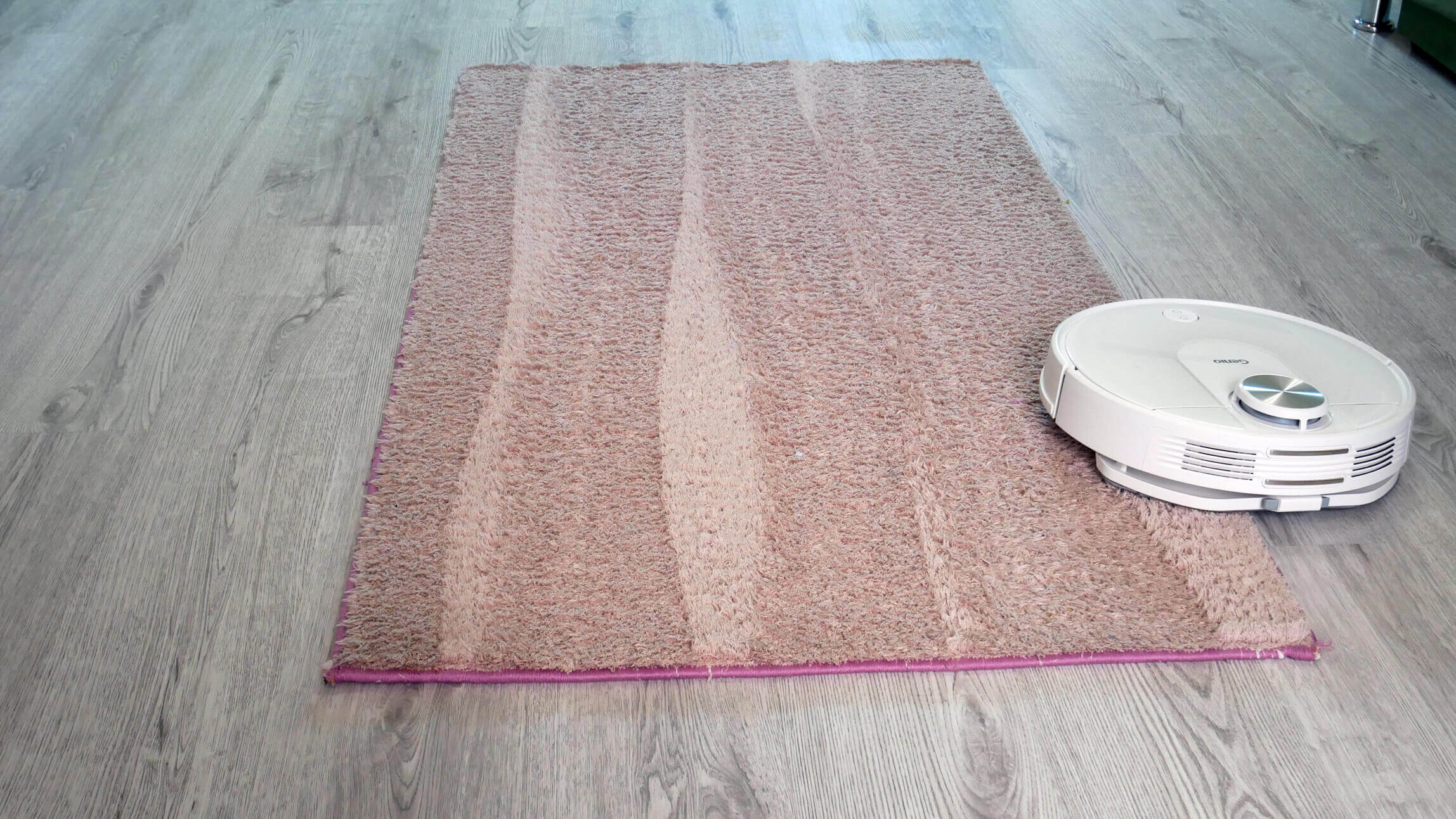
Wet cleaning and carpets
Obstacle clearance
This robot's obstacle crossing ability, even with the mat installed, isn't very good. It couldn't even overcome a 15mm threshold. However, without the mat, the robot can navigate 15mm and even 20mm thresholds.
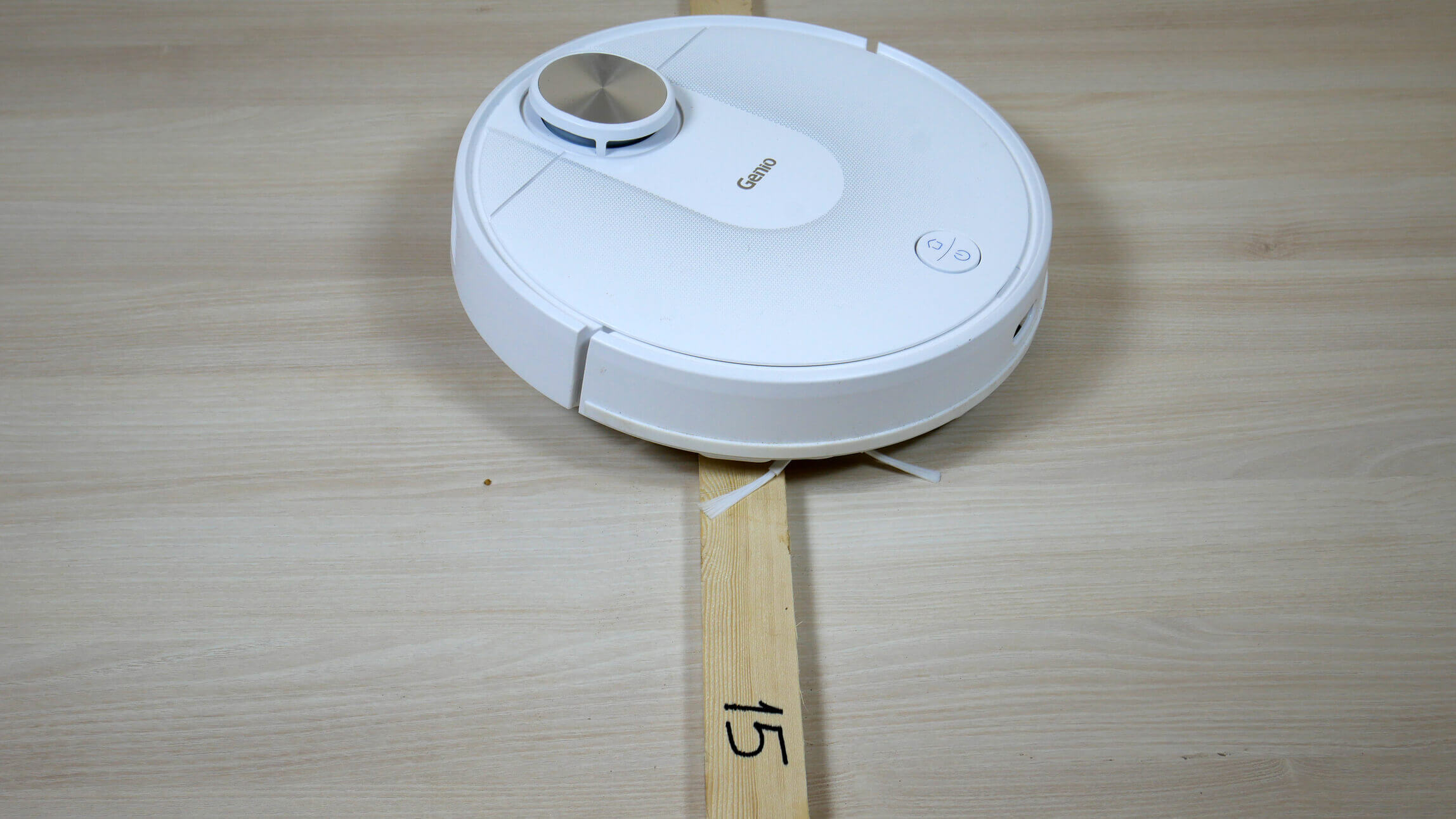
Obstacle clearance
Driving on dark surfaces
But the Genio Laser L700 is not afraid of dark surfaces, which is definitely an advantage of the robot.
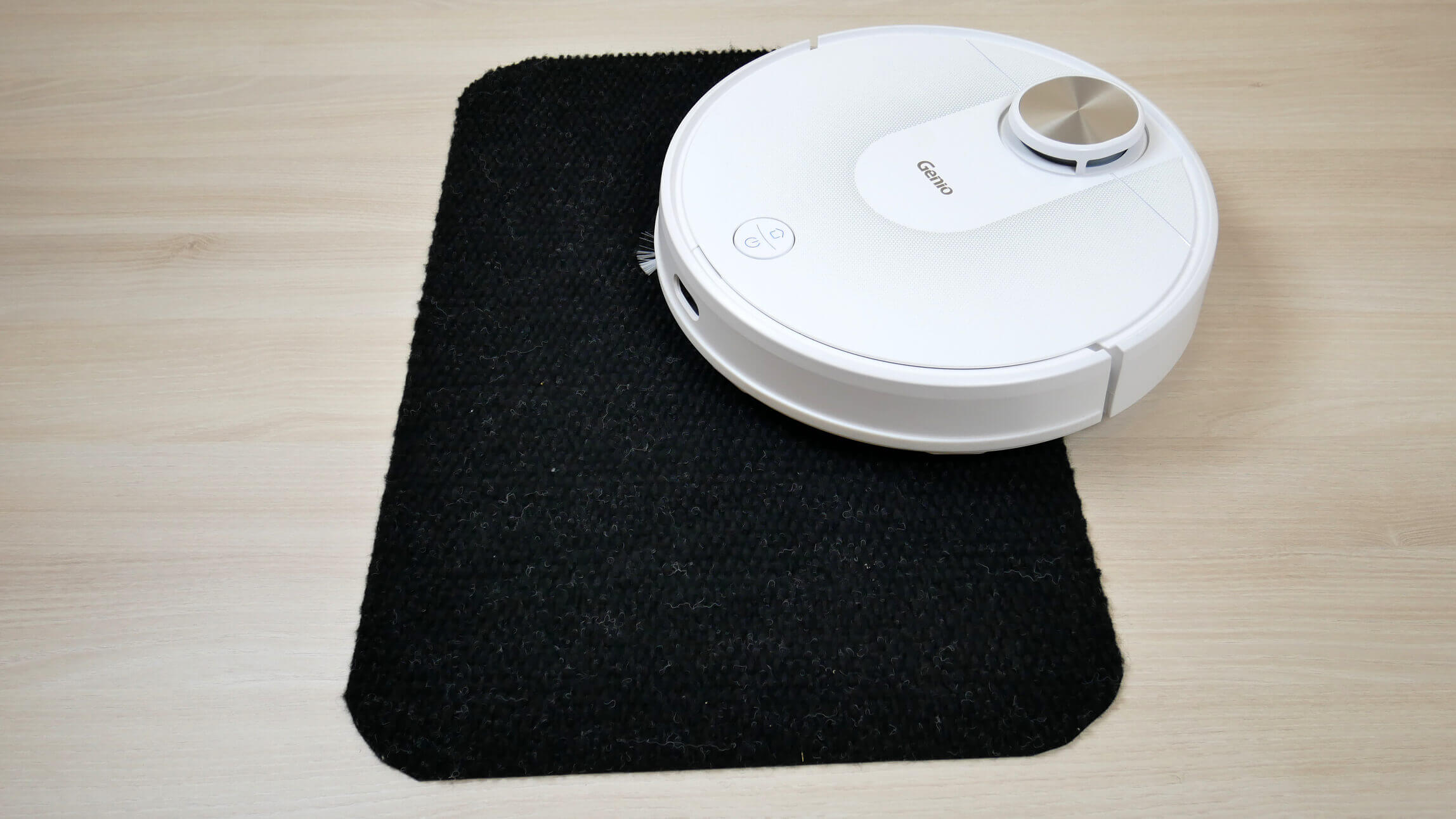
Driving on dark surfaces
Noise level
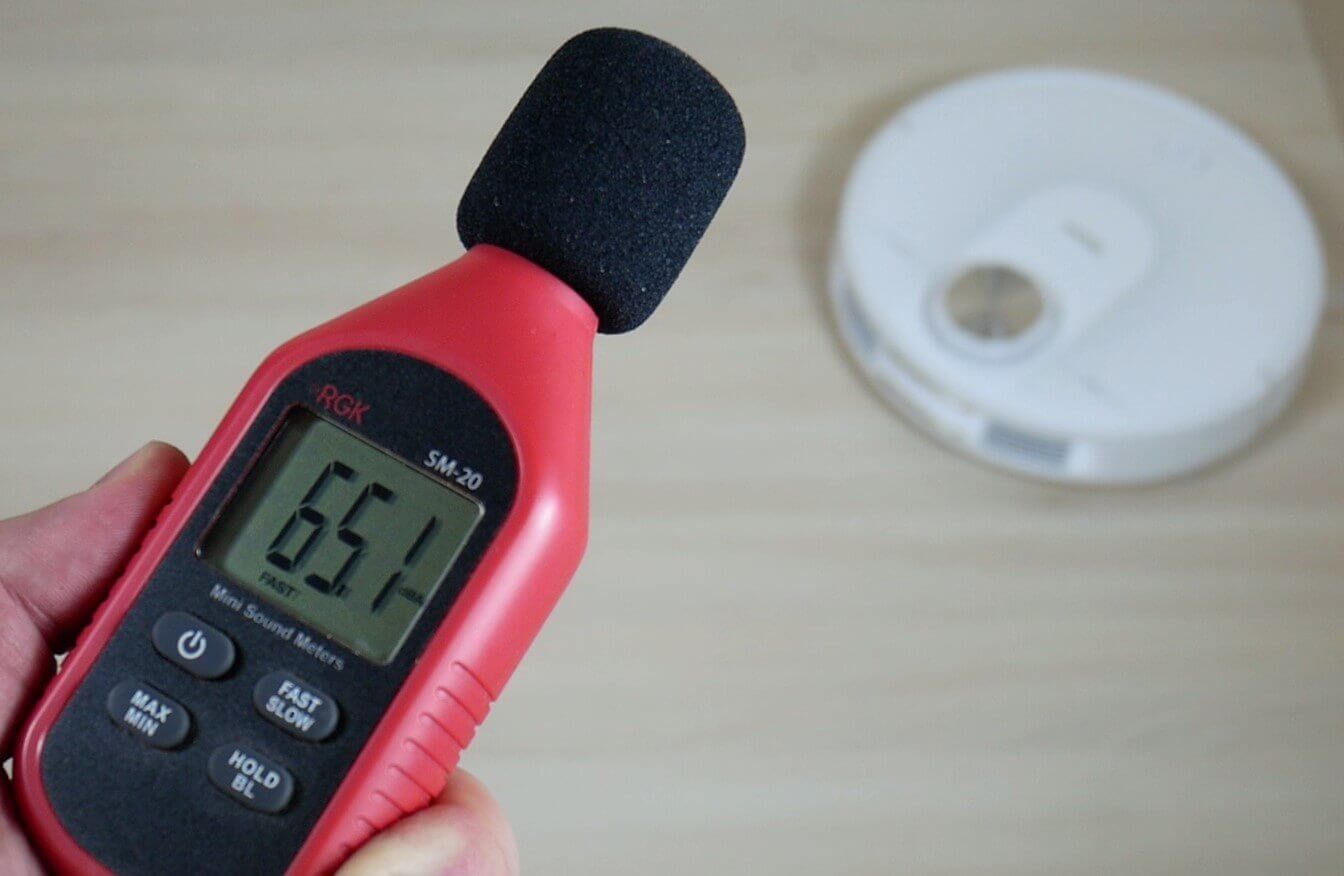
Finally, we measured the Genio Laser L700's noise level in different modes. In "Eco" mode, the noise level is between 63-65 dB, in "Standard" mode it rises to 66 dB, and in "Turbo" mode, the peak was 71 dB. This model's noise level is slightly elevated, considering its suction power is quite standard.
Noise level
Let's sum it up
The Genio Laser L700 has been thoroughly reviewed and tested. our evaluation system he managed to gain 61 out of 100 points, while the flagship Genio Laser L800 was able to score 71 points.
Overall rating of tested robot vacuum cleaners: https://robovac.washerhouse.com/en/rejtingi/robovac-obshhij-rejting-robotov-pylesosov-robo.html.
The result isn't particularly impressive for a lidar robot, due to a number of issues that we'll discuss below. But first, let's talk about the model's strengths. I liked the following:
- Good navigation.
- Good quality dry and wet cleaning on hard surfaces.
- Ability to vacuum and mop at the same time.
- Full Russification of the application interface and voice notifications.
- The robot vacuum cleaner is not afraid of dark surfaces.
- Availability of a warranty and full service support from the manufacturer.
Speaking of shortcomings, there are quite a few. During testing, the following issues were discovered:
- There is no floor polisher mode.
- The robot vacuum cleaner does not clean carpets well.
- The central brush cannot be disassembled.
- The battery is a bit weak.
- Not very good obstacle clearance.
If this robot were priced around $300, most of its shortcomings could be overlooked. However, given the competition, the Genio Laser L700 clearly outperforms its Chinese counterparts only by having official representatives on the market. In any case, I would recommend this robot vacuum cleaner primarily for cleaning hard floors. However, if you can afford the extra money, the larger Genio Laser L800 has a number of important advantages, both in design and functionality.
On that note, I'd like to end this review. If you have any questions, please ask them in the comments. Happy shopping. Bye!