Polaris PVCR 0610
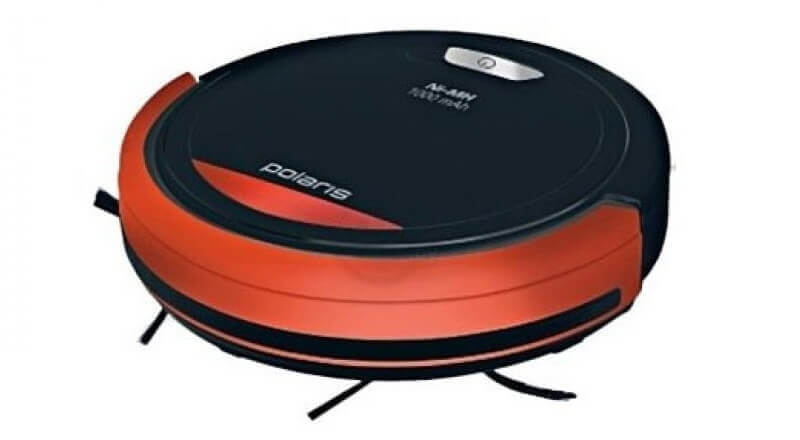
The Polaris PVCR 0610 hit the market back in 2017, but it failed to gain widespread popularity due to a significant number of design and operational flaws. However, given its low price and affordability even for families with lower-than-average incomes, the robot has found its niche. The device is designed for dry cleaning of hard, smooth surfaces by vacuuming dust and small debris in residential settings and is not suitable for industrial or commercial use. The Polaris PVCR 0610 robot vacuum cleaner is equipped with a nickel-metal hydride battery, a small cyclone dust collector with a mesh filter, a pair of side brushes, a soft bumper, and infrared sensors for spatial orientation. An overview of the features and capabilities of this budget robot is provided in this article.
Equipment
The Polaris robot is packaged in a rectangular cardboard box and placed in a plastic bag. Inside the box are lightweight foam inserts that hold the assembled robot vacuum cleaner and its accessories.
The following components are included in the delivery kit:
- The robot itself.
- Battery (installed).
- Waste collection container with filter (installed).
- Charger (power adapter).
- Side brushes (2 pcs.).
- Spare mesh filter.
- Operating instructions.
- List of service centers.
- Warranty card.
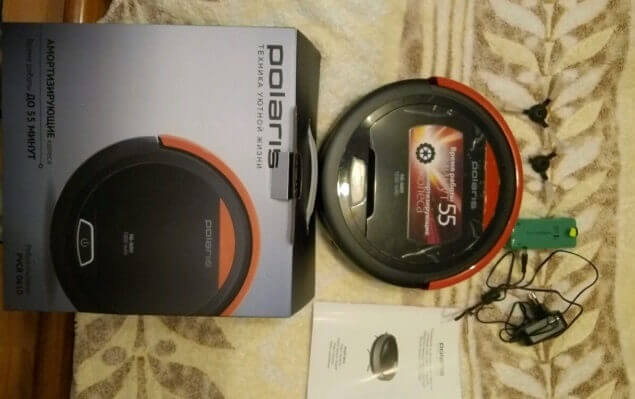
Polaris equipment
Appearance
The Polaris PVCR 0610's design is standard and familiar to similar robot vacuums. Viewed from above, it's round, while from the side, it resembles a pill or a puck. Its primary color is red. Due to its low height and lack of sharp corners, the robot can move freely around the room, reaching even hard-to-reach places and carefully avoiding furniture legs. A flexible bumper made of elastic polymer is located on the front (side) of the device to cushion impacts and protect the body from premature wear.
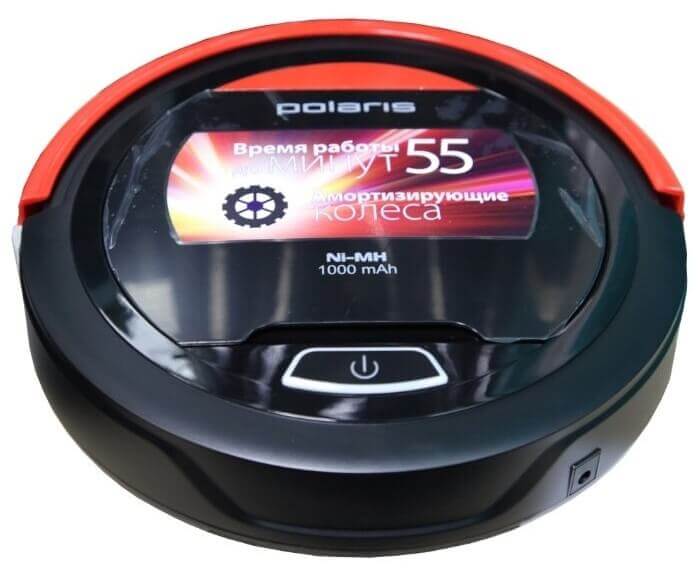
Top view
The bottom of the robot vacuum cleaner has three roller wheels: a front swivel wheel and two slightly spring-loaded wheels on the rear sides. Mounts for removable side brushes are located on either side of the front roller. These can be removed for cleaning and then reinstalled. Each brush is marked (left - "L", right - "R").
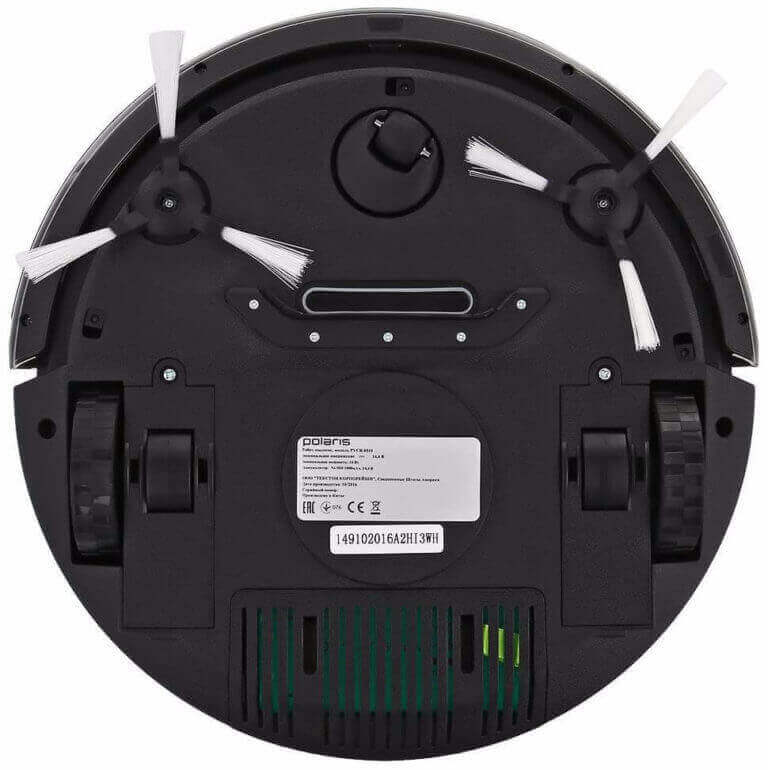
Bottom view
Technical specifications
Let's take a look at the technical specifications of the Polaris PVCR 0610 robot vacuum cleaner:
| Battery | Ni-MH, 1000 mAh |
| Maximum operating time on a single battery charge | 55 minutes |
| Charging time | 300 minutes |
| Installation on the charger | Manual |
| Power consumption | 1000 W |
| Suction power | 14 W |
| Dust collector | Cyclone filter (bagless), 200 ml |
| Overall dimensions | 270x270x75 mm |
| Noise level | 65 dB |
| Additional options | |
| Soft bumper | + |
| Sensors | infrared |
| Side brushes | + |
| Low battery alarm | + |
Functional capabilities
Automated robotic cleaners are designed for autonomous cleaning of rooms, and therefore perform multiple functions simultaneously: they clean the floor of dirt and collect dust using side brushes that direct it through the device's suction opening into the dust container. The dust container is equipped with a filter, but due to its small 200 ml capacity, it will need to be emptied and cleaned frequently (most likely after each cleaning).
The Polaris PVCR 0610 robot vacuum cleaner is capable of dry cleaning in three modes, an overview of which is provided below:
- automatic (movement in a random direction in a straight line until it encounters an obstacle, after which the robot turns around and moves in the other direction);
- cleaning a small area of the room by moving in a spiral;
- cleaning debris and dust along walls and in corners.
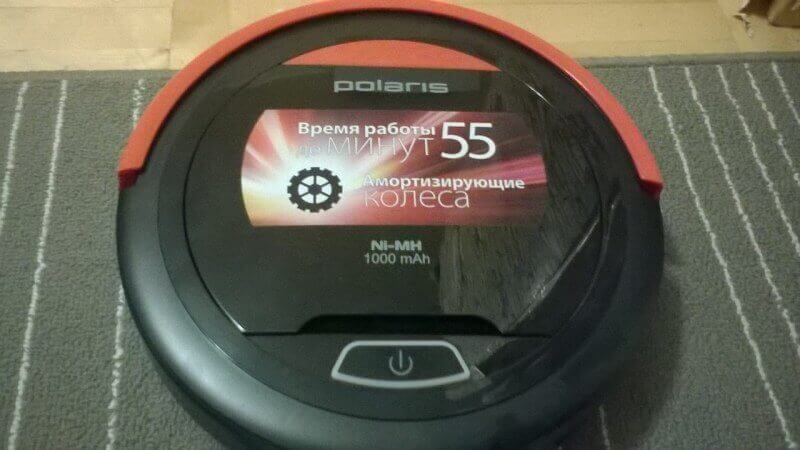
Cleaning the carpet
A robot vacuum cleaner is not designed for wet cleaning. When using dry cleaning only, some dust is lifted into the air by the rotating brushes and eventually settles back on the surface. Therefore, if you prefer a more thorough cleaning of your floors, consider a more expensive model.
Polaris PVCR 0610 navigates in space thanks to infrared obstacle proximity sensors and a soft bumper.
Advantages and disadvantages
Among the advantages of the budget model Polaris PVCR 0610, in addition to the low cost, it is worth noting:
- Autonomy of work.
- Small dimensions allow the robot vacuum cleaner to reach hard-to-reach places.
- Easy to use and maintain.
- The presence of infrared orientation sensors and a soft bumper.
- Sound alert in the form of a signal when the battery is low.
- Decent cleaning performance (according to user reviews, the device collects almost 100% of debris and dust from floor coverings, easily overcomes obstacles, and climbs onto low-pile carpets thanks to its powerful shock-absorbing wheels).
Review of the disadvantages of the Polaris PVCR 0610 robot vacuum cleaner:
- Small volume of dust collector.
- A low-power Ni-MH battery that cannot hold a charge for a long time, resulting in a small cleaning area and the need for long recharging.
- Lack of remote control.
- There is no movement limiter.
- The side brushes are made in the form of bundles of thin fishing line, so they wear out quickly.
- Installation for charging is done manually.
- High noise level.
But given the relatively low price of this robot vacuum cleaner (under $50), it's safe to say the Polaris PVCR 0610 simply has no shortcomings. Test it yourself, and you'll be able to determine whether this robot vacuum is right for you, or whether you should consider more expensive models.
Finally, we recommend watching a video review of the Polaris PVCR 0610:
Analogues:
I've had this vacuum cleaner for three years now. The original battery has really worn out. I tried replacing it with a new one, but it seems like the vacuum itself has lost half its power. It still runs, but the suction is barely working. I'm guessing the batteries are dead. I'm hoping to find lithium batteries with a separate charger. If that helps, the robot might still be in good shape! But when it was working well, it did its job perfectly—collecting cat litter, dust, and other small items. It was more than enough for the daily cleaning of a couple of rooms.