Everybot RS700
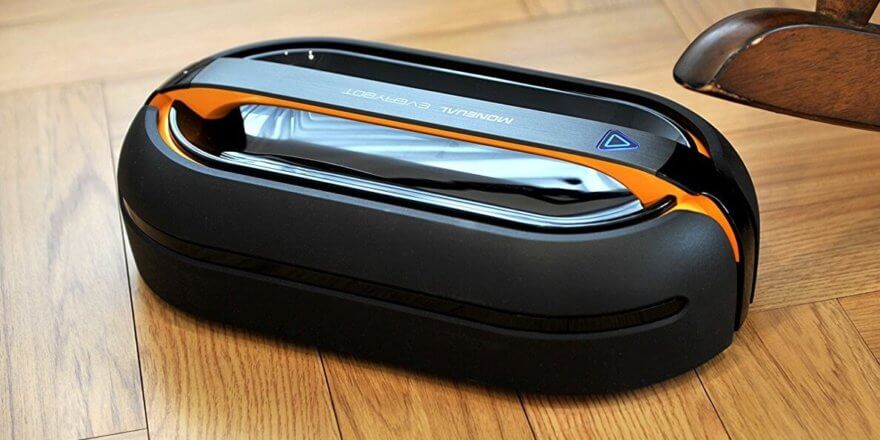
Traditional and familiar automated cleaning robots are capable of independently picking up dust and dirt from smooth floors and sometimes even cleaning low-pile carpets. However, only a small percentage of these devices can perform truly effective wet cleaning and remove dried-in stains. To address this issue, a South Korean manufacturer has created robotic mopping models with automatic water supply. In this review, we'll look at one such model, the RS700, which is a continuation of the Everybot line of floor mopping robots. Compared to the model RS500Compared to the previously released Everybot RS700, the new model features a different color scheme, a lower height, and obstacle sensors, which were particularly lacking in the RS500. The new Everybot RS700 robotic floor cleaner is designed for automatic dry and wet cleaning of floors, as well as manual cleaning of vertical surfaces (tiles, mirrors, windows). Below, we'll provide a detailed overview of the model, covering its specifications and features.
Equipment
The Everybot RS700 robotic mop comes with the same kit as the RS500 model, and includes:
- Main block (polisher).
- Power adapter.
- Two washing panels (bases for napkins).
- Two sets of napkins.
- Remote control with two AAA batteries.
- User manual.
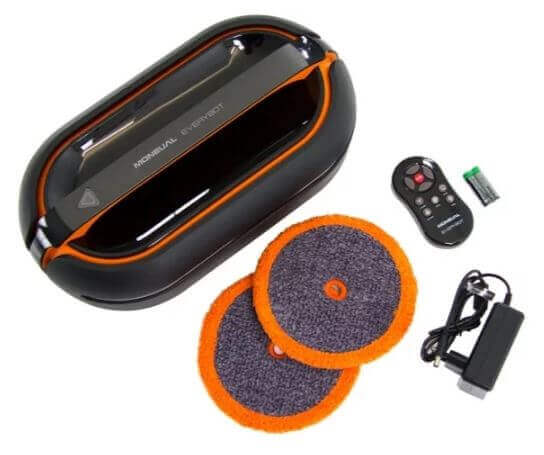
Floor polisher kit
The device and its components are protected by foam inserts and neatly placed inside a box made of thick corrugated cardboard. The box features a plastic handle.
Appearance
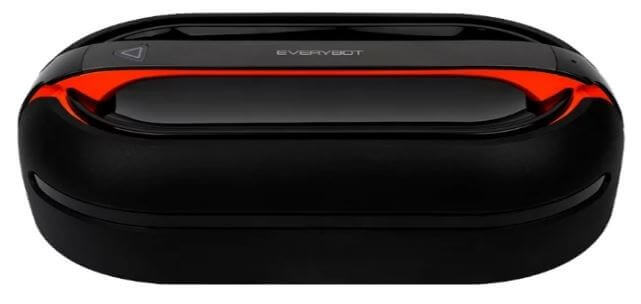
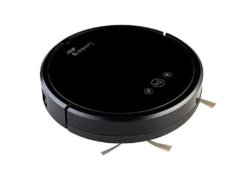
The Everybot RS700 floor polisher has the same design as the RS500: elongated and formed by a pair of interlocking circles. However, the color scheme is different: the body of the device is made of black plastic with orange accents. There is no coating on the surface either. The body features a convenient crossbar that forms a handle, making it easy to use in manual cleaning mode. The recess under the handle is mirror-smooth and has a fairly smudge-resistant surface. The front and back have transparent tinted plastic inserts.
When reviewing the Everybot RS700 from the front, we see a power button, which also serves as an indicator of the current state of the device, and an obstacle sensor.
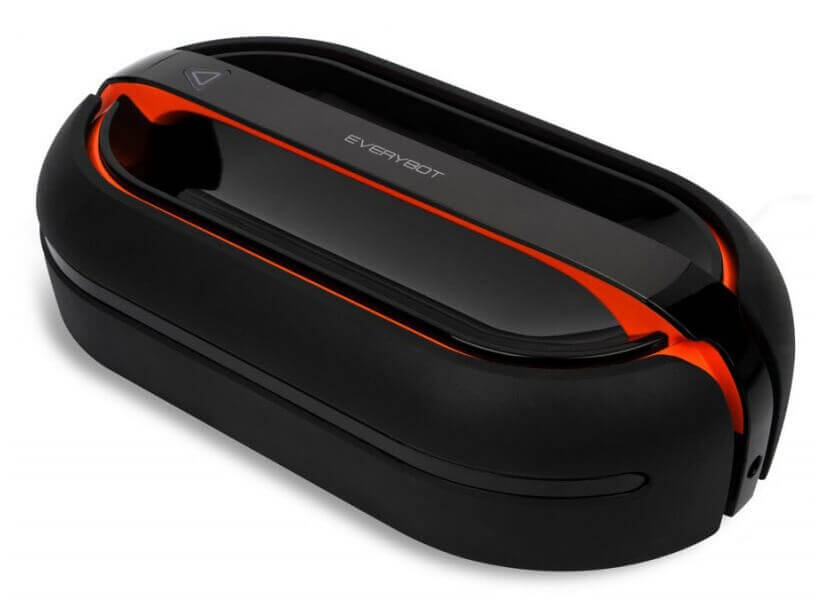
Top view
On the side of the robotic cleaner there is a power connector for connecting the power adapter, and on both sides there are mechanical bumpers made of hard plastic with tinted windows, which have built-in proximity sensors.
Side view
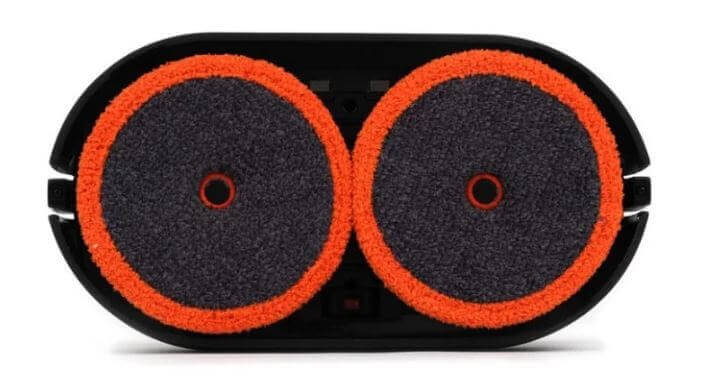
On the bottom of the robotic mop there is a power switch, 60 ml capacity wash panels for attaching wipes, into which water is poured through holes closed with rubber plugs, a rechargeable battery, and infrared height difference sensors.
Bottom view
Technical specifications
The following table will help us get acquainted with the technical characteristics of the robotic floor polisher:
| Autonomous power supply | Li-Ion battery, 2150 mAh, 11.1 V, 23.86 Wh |
| Battery life | 50 minutes (per cycle); 100 minutes (maximum) |
| Battery recharging time | 100 minutes; 150 minutes after full discharge |
| Charging method | From an external power adapter or on a docking station when manually installed (optional) |
| Power consumption | 27 W |
| Movement speed | 20 cm/s |
| Dust collector | Aquafilter |
| Overall dimensions | 370x200x110 mm |
| Weight | 1.9 kg |
| Noise level | 48 dB |
| Additional options | |
| Control | Mechanical button on the body, remote control |
| Sensors | Mechanical bumpers on the sides, infrared obstacle and height difference sensors |
| Notification | LED indication, sound signals |
Functional capabilities
The Everybot RS700 robotic floor polisher has 6 different operating modes:
- Automatic is the main mode, in which the device cleans the entire accessible area of the room until the battery is completely discharged.
- Thorough cleaning of floor coverings by moving in a Y-shaped pattern.
- Local (spot) cleaning – the device intensively cleans the surface of a small area around the starting point of cleaning using circular movements.
- Perimeter cleaning – Everybot RS700 cleans the floor along walls, furniture, and removes dirt from corners.
- Manual cleaning – you can control the robotic mop using the remote control, or hold the main unit by the handle and manually wash vertical surfaces such as tables, mirrors, windows, etc.
- Turbo mode is a mode that increases the speed of the floor polisher and can be enabled in addition to any other mode.
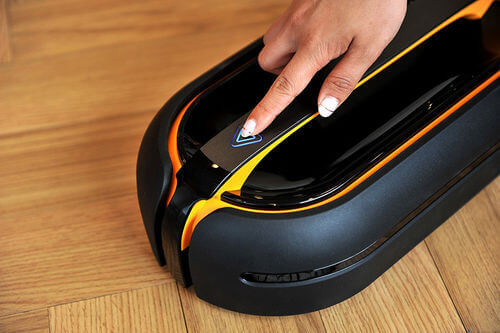
Turning on the floor polisher
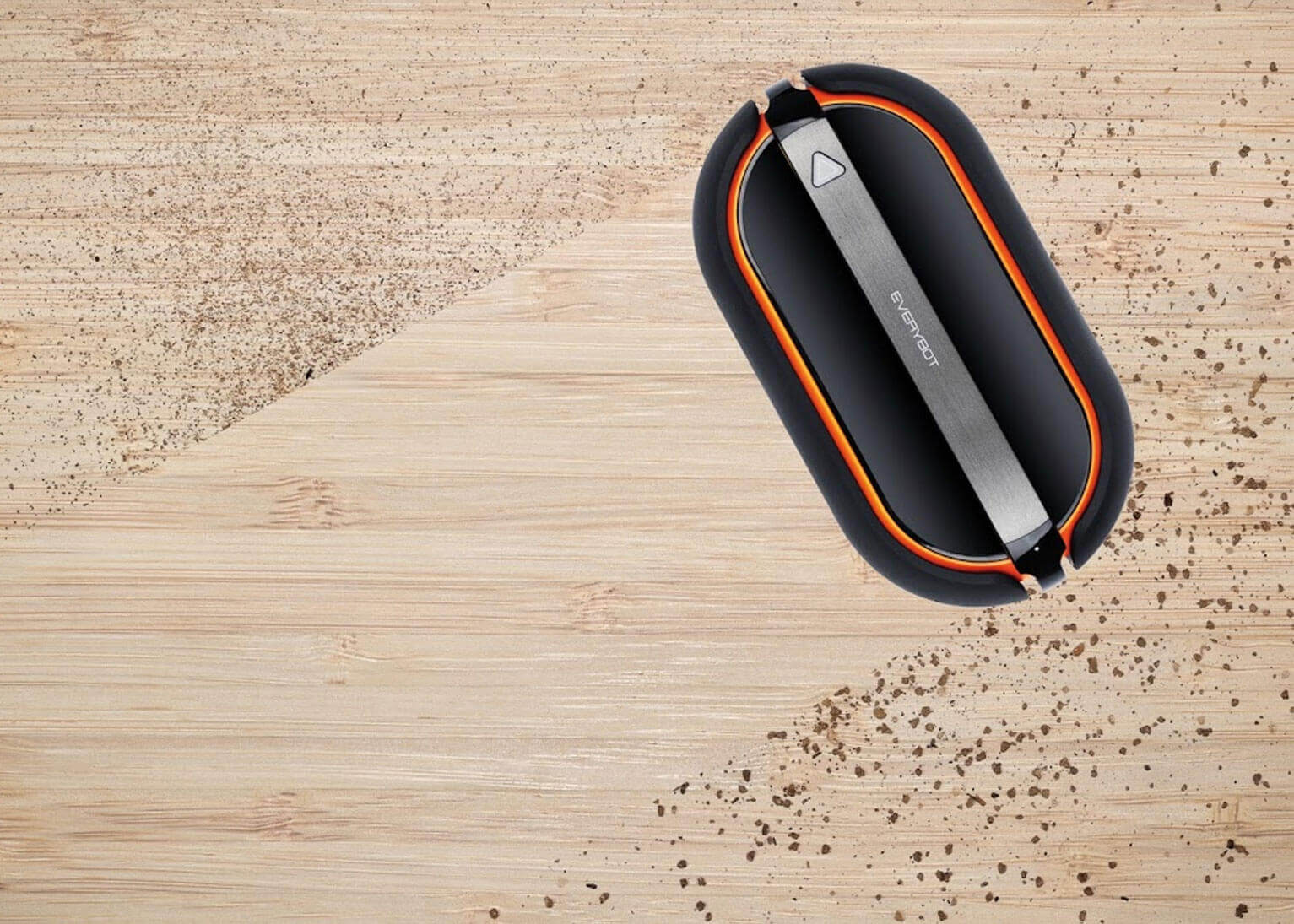
The device lacks a suction system or a solid waste container. The cleaning process of the robotic mop consists of two rapidly rotating attachments with microfiber cloths, allowing for an intensive cleaning of the floor. Cleaning can be done either wet (the device's primary purpose) or dry (this simply requires no water being added to the cleaning pads).
Floor cleaning
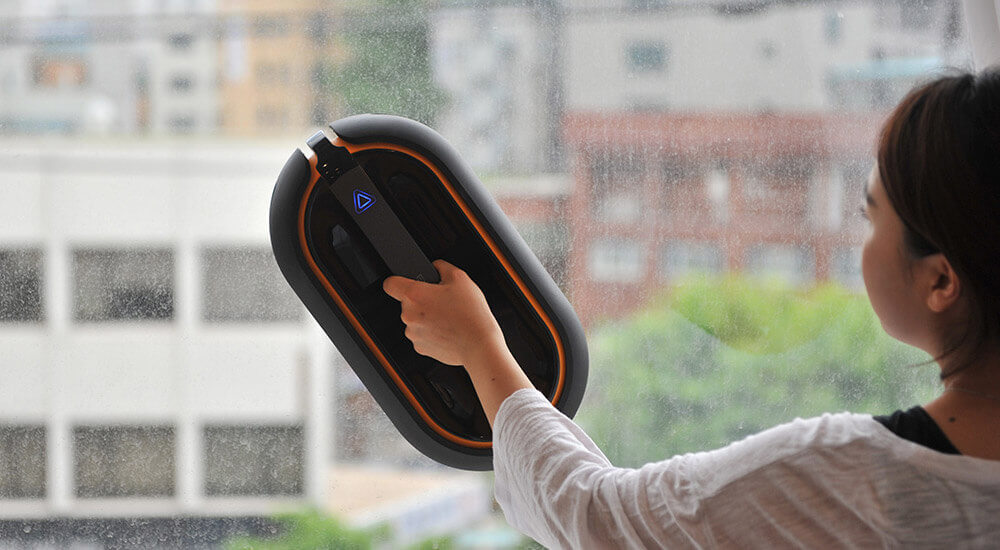
Window washing
According to the manufacturer, the noise level during operation does not exceed 48 dB. However, as actual testing showed, the noise level, depending on the selected mode, ranges from 64 to 74 dB, which is quite high.
Operating instructions
The Everybot RS700 user manual is included in the basic package. It contains information on preparations before starting the machine, safety precautions, a description of components and parameters, and a general overview of care and operation. Additionally, the manual explains the robotic mop's capabilities and cleaning modes.
You can download the Everybot RS700 operating instructions in Russian by following this link: RS700 manual.
Advantages and disadvantages
The Everybot RS700 model has the following advantages:
- Wet and dry cleaning.
- Autonomous operation lasting up to 100 minutes.
- Compact dimensions, attractive external characteristics.
- Ergonomic and durable body.
- The cloths are automatically moistened during the cleaning process.
- Control from the body and from the remote control.
- Soft bumpers, obstacle and height difference sensors.
Since the device is quite expensive (around $200) and borders on the premium price range, the floor polisher must meet corresponding requirements. Based on this, we'll identify the obvious shortcomings of the Everybot RS700:
- Limited cleaning area per cycle.
- The device has poor spatial orientation, is unable to create a map of a room, and moves erratically, without a specific trajectory.
- The device must be charged manually.
- The volume of the washing panels is only 60 ml.
- There is no movement limiter.
- The actual noise level when the robotic floor polisher is operating is much higher than stated.
Finally, we recommend watching a video review of the Everybot RS700:
Analogues:
We bought this floor polisher. I'm very happy with it. I use it after the robot vacuum. It cleans the floors beautifully, leaving no streaks and removing stains. After using it, the floor feels cleaner than when you clean it yourself. A life hack for those who also buy this floor polisher: it's best to wet the rags and wring them out before the polisher starts cleaning the floor.
I was considering buying the previous model, the Everybot RS500. I changed my mind at the last minute. I think this model addresses all of its shortcomings—it lasts longer on a single charge, crashes less, and is lower. If only they'd added navigation, it wouldn't be so expensive.
Compare the floor cleaning performance with the Hobot Legee 668. Is this device really better? Reviews on foreign websites say the Hobot doesn't remove stains well.