Xiaomi Xiaowa Robot Vacuum Cleaner Lite
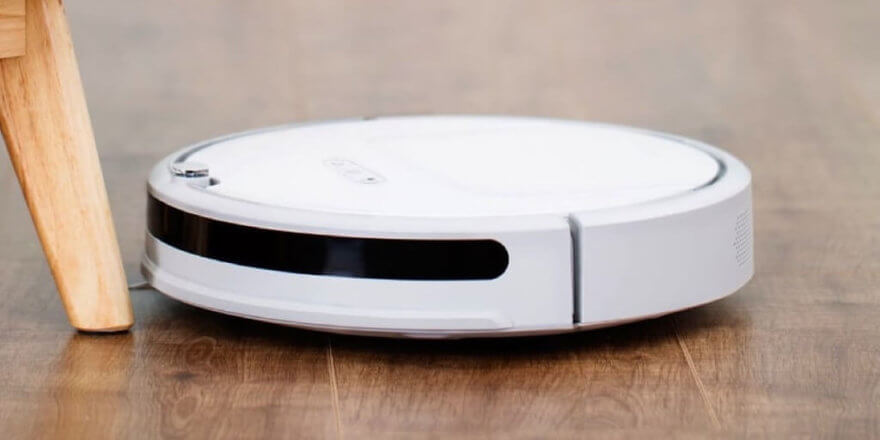
This review focuses on the latest robot vacuum cleaner on the market – the Xiaowa Robot Vacuum Cleaner Lite. This robot is part of Xiaomi's Series 3 lineup, but like the previous two lines, it's actually manufactured by Roborock. Despite being a relatively new model, released in 2018, it's already available in Russia at a reasonable price of around $100, which is a welcome development for buyers. While the vacuum cleaner lacks a wet cleaning function, it can dry clean all types of flooring (linoleum, parquet, tile, carpet, etc.). Equipped with a standard set of sensors, the robot vacuum cleaner is easy to maneuver and capable of thorough cleaning, eliminating dirt and dust along baseboards, furniture legs, and corners. The article below provides a detailed description of the Xiaomi Xiaowa Robot Vacuum Cleaner Lite's specifications and features.
Equipment
The Xiaowa robot vacuum cleaner comes with a minimal set of components, including the following:
- Robot vacuum cleaner.
- Charging base with adapter.
- Brush-comb for cleaning the dust collector.
- Main brush.
- Instructions.
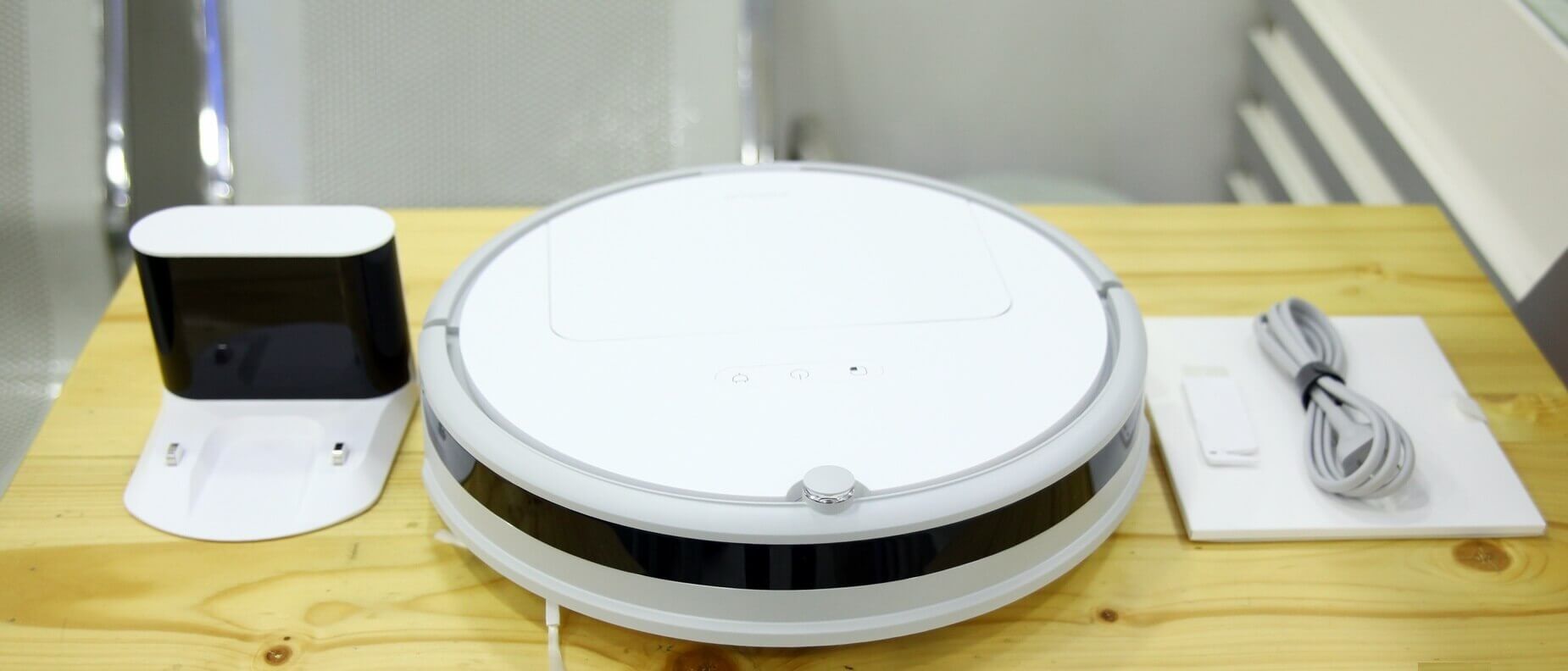
Xiaowa Components
The robot's packaging is standard for this manufacturer's devices: a discreet, sturdy cardboard box with a plastic handle. A remote control is not included, as with similar Xiaomi vacuum cleaners, as primary control is via a smartphone app.
Appearance
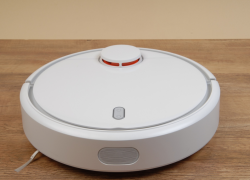
The design of Xiaowa is similar to previous known models Xiaomi Mi Robot Vacuum CleanerAnd Xiaomi Mi Roborock Sweep One The new robot vacuum cleaner is slightly lower. Furthermore, the latest version of the robot vacuum cleaner does not have a protruding laser rangefinder (lidar). The device is puck-shaped, but when viewed from above, it appears perfectly round, and is white.
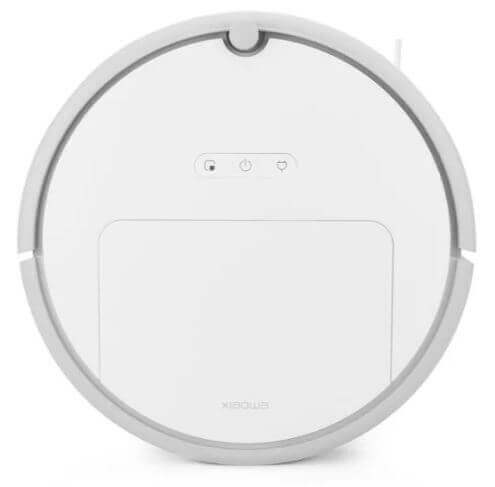
Top view
A look at the Xiaowa's body reveals nothing unusual: the front panel features a lid, underneath which is a large container for storing collected dirt and debris, as well as three control buttons. The sides feature a soft bumper, windows with obstacle sensors, ventilation holes, and an on/off button. The bottom of the robot vacuum cleaner houses two rubber toothed wheels, a front swivel wheel, a main brush, a single petal-bristled side brush, a battery, cliff sensors, and contact pads for automatic charging.
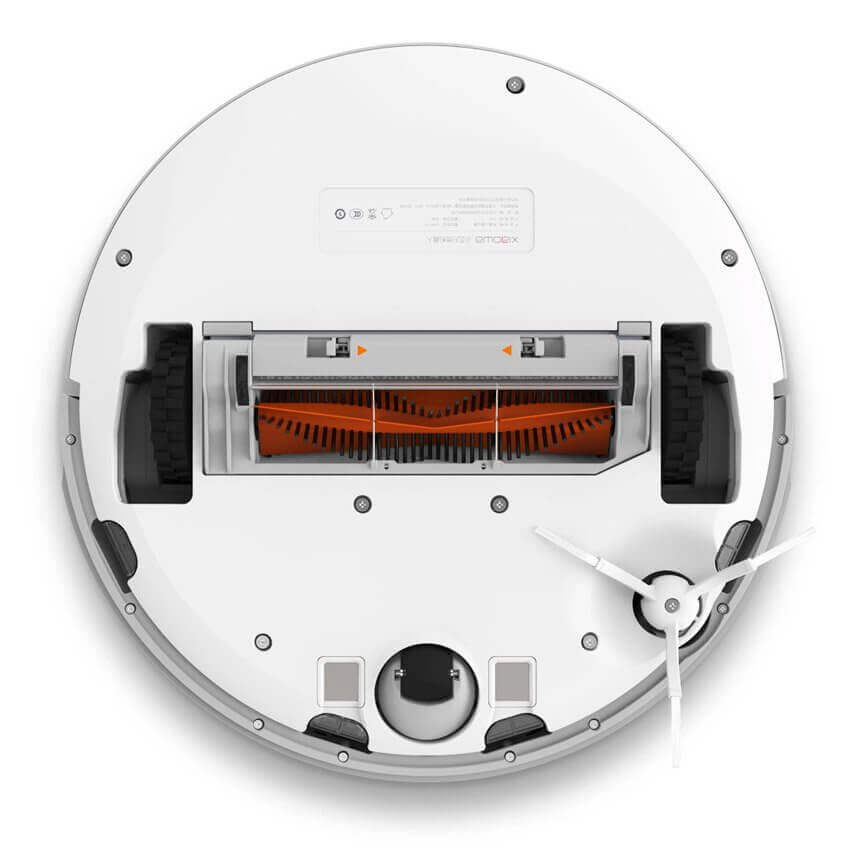
Bottom view
Technical specifications
We have included all the characteristics of the Xiaowa Robot Vacuum Cleaner Lite in the table below:
| Battery | Li-Ion, 2600 mAh |
| Operating time on a full charge | 60 min. |
| Charging time | About 120 min. |
| Installation for charging | Automatic |
| Maximum cleaning area | 80 sq.m. |
| Suction power | 1600 Pa |
| Maximum height of obstacles to be overcome | 2 cm |
| Dust collector | Cyclone filter (bagless), 640 ml |
| Dimensions of the robot | 350x353x90.5 mm |
| Weight | 3 kg |
| Additional options | |
| Side brush | + |
| Fine filter | + |
| Soft bumper | + |
| Programming by days of the week | + |
Functional capabilities
As mentioned above, the main distinguishing feature of the Xiaowa Robot Vacuum Cleaner Lite compared to previous models in the first and second series is the lack of a laser rangefinder. Consequently, this robot vacuum cleaner is unable to map the room. However, this has reduced the cost of the device, making it much more affordable.
For improved spatial awareness, the automated cleaning robot retains infrared obstacle and elevation sensors. The device also features scheduled cleaning and various cleaning modes (Silent, Standard, Strong, and MAX).
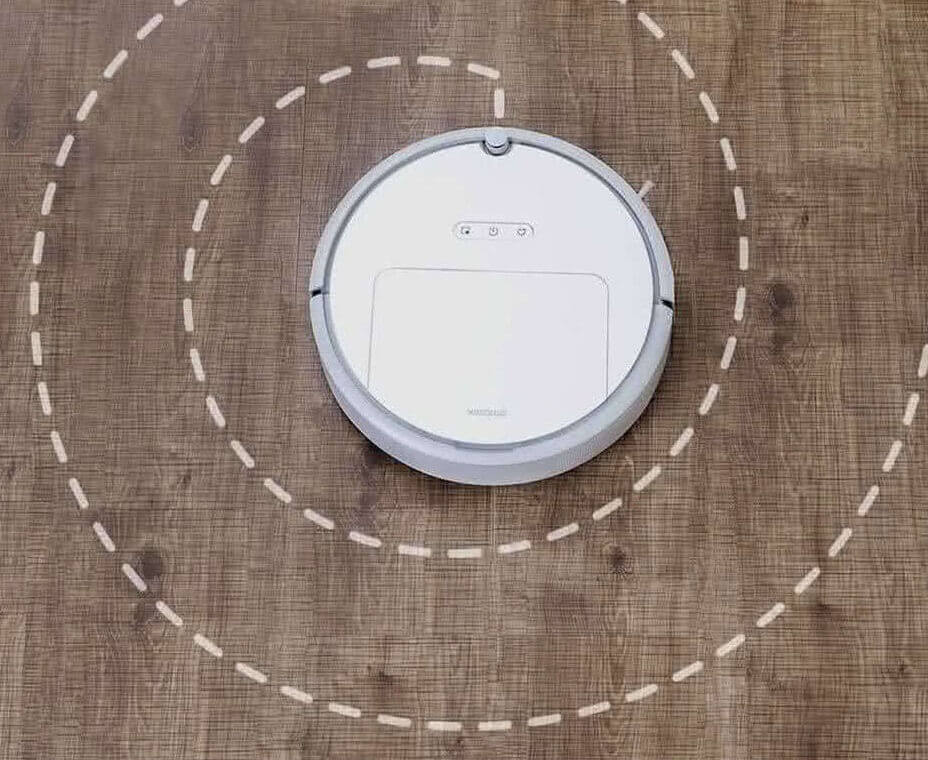
Spiral floor cleaning
The robot vacuum cleaner is controlled using buttons on the body or the familiar Mi Home app for smartphones. In addition to selecting a mode and setting a cleaning schedule, the app lets you monitor the status of consumables (filter, central and side brushes) for timely replacement if necessary.
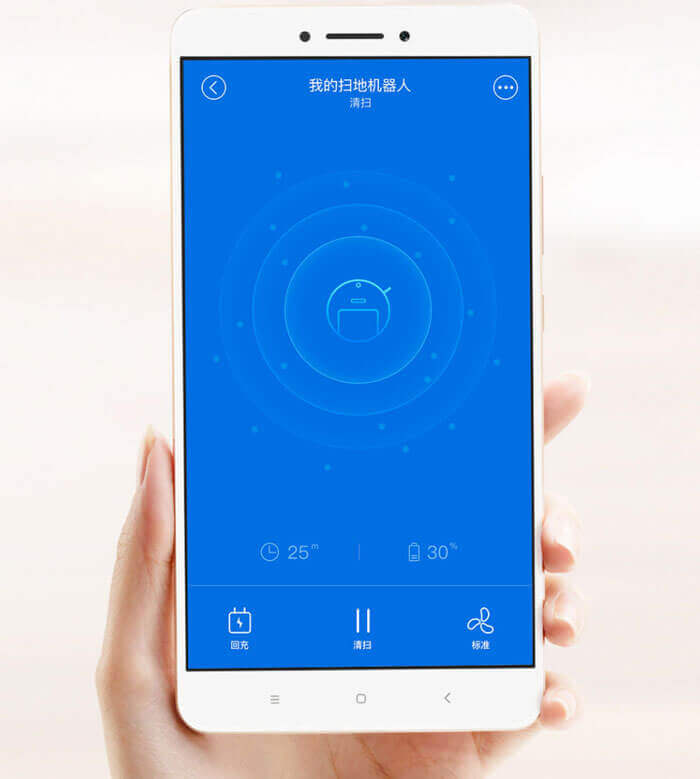
Mi Home
The Xiaowa Robot Vacuum Cleaner Lite is equipped with a medium-power motor with a suction power of 1600 Pa. Tests showed that this power is sufficient for picking up dust and small debris from smooth floors.
Like previous models from earlier series, the robot can overcome obstacles no more than 2 cm high, so a cable lying on the floor will not pose a problem for it.
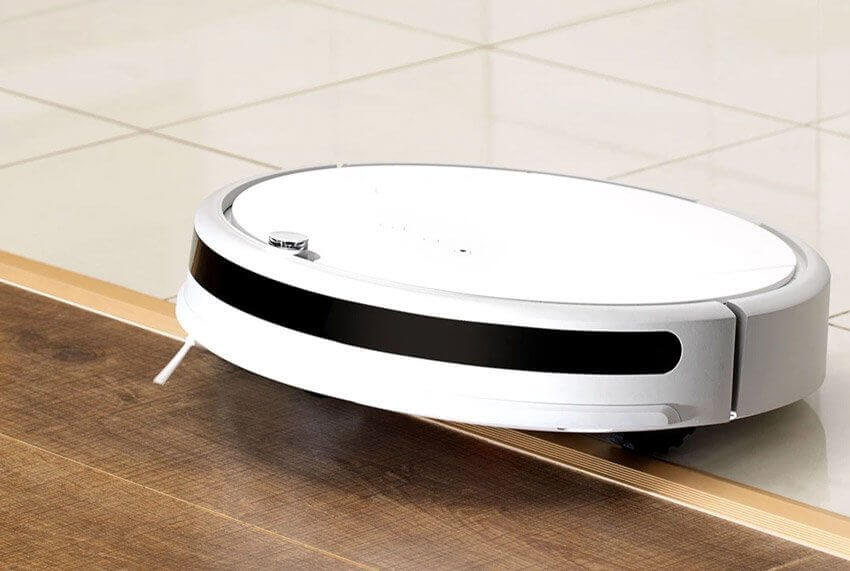
Driving through thresholds
As an additional feature, the robot has the following function: if the device is located on a carpet, it automatically increases the suction power for a more thorough cleaning.
Advantages and disadvantages
The Xiaowa model has a number of undeniable advantages:
- Budget price (around $150 in 2018).
- Signature laconic style.
- Compact overall dimensions.
- Maneuverability.
- Automatic installation for charging.
- Large dust collector.
- Not bad suction power.
- Programming cleaning by days of the week.
- Overcoming obstacles up to 2 cm high.
- Control from a smartphone.
Among the disadvantages of a robot vacuum cleaner, the following can be noted:
- There is no movement limiter.
- There is no remote control included (sometimes the remote control is more convenient to use than a smartphone).
- One side brush (the device can pass some debris in one pass).
To sum it up, I would like to note that in 2018 the model in question is certainly one of the The best robot vacuum cleaners under $150The functionality and specifications are top-notch, and the quality of Xiaomi products has been impressing customers for years.
Finally, we recommend watching a video review of the Xiaowa Robot Vacuum Cleaner Lite:
We also recommend checking out a comparison of Xiaomi robot vacuum cleaners:
Analogues:
What are the differences between the Xiaomi Xiaowa E20 robot vacuum cleaner and the Xiaomi Xiaowa Robot Vacuum Cleaner Lite?