Redroad G10: Rinses the wipe at the station and lifts it on carpets
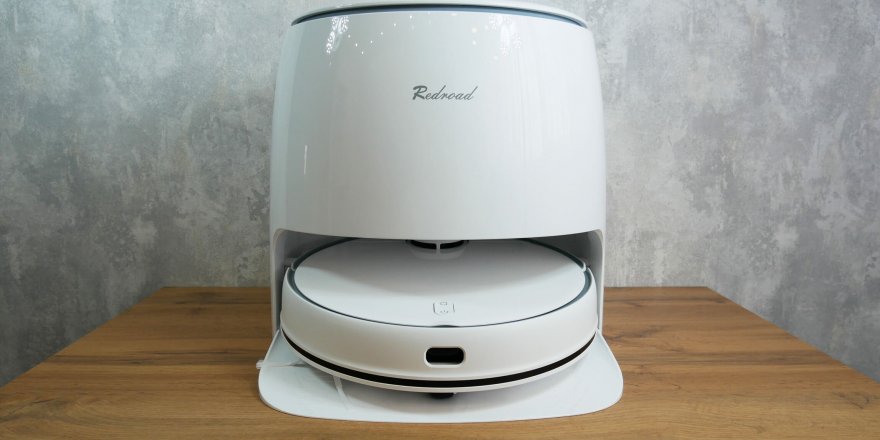
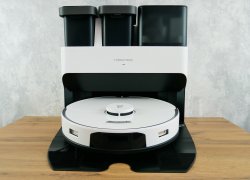
The Redroad G10 robot vacuum cleaner features a trendy cleaning station that rinses the cleaning cloth while cleaning, making it suitable for full-fledged wet cleaning over large areas. Additionally, the Redroad G10 boasts lidar for navigation, a cleaning cloth lift function when driving onto carpets, and even a movable wet cleaning module that mimics the motion of a human hand when scrubbing dirt. Despite all this, the robot vacuum cleaner launched at around $400-450, which is average for the market. Below, I'll thoroughly test the Redroad G10 and then share my opinion on whether it's worth buying, as well as its real-world pros and cons. Let's get started!
Equipment
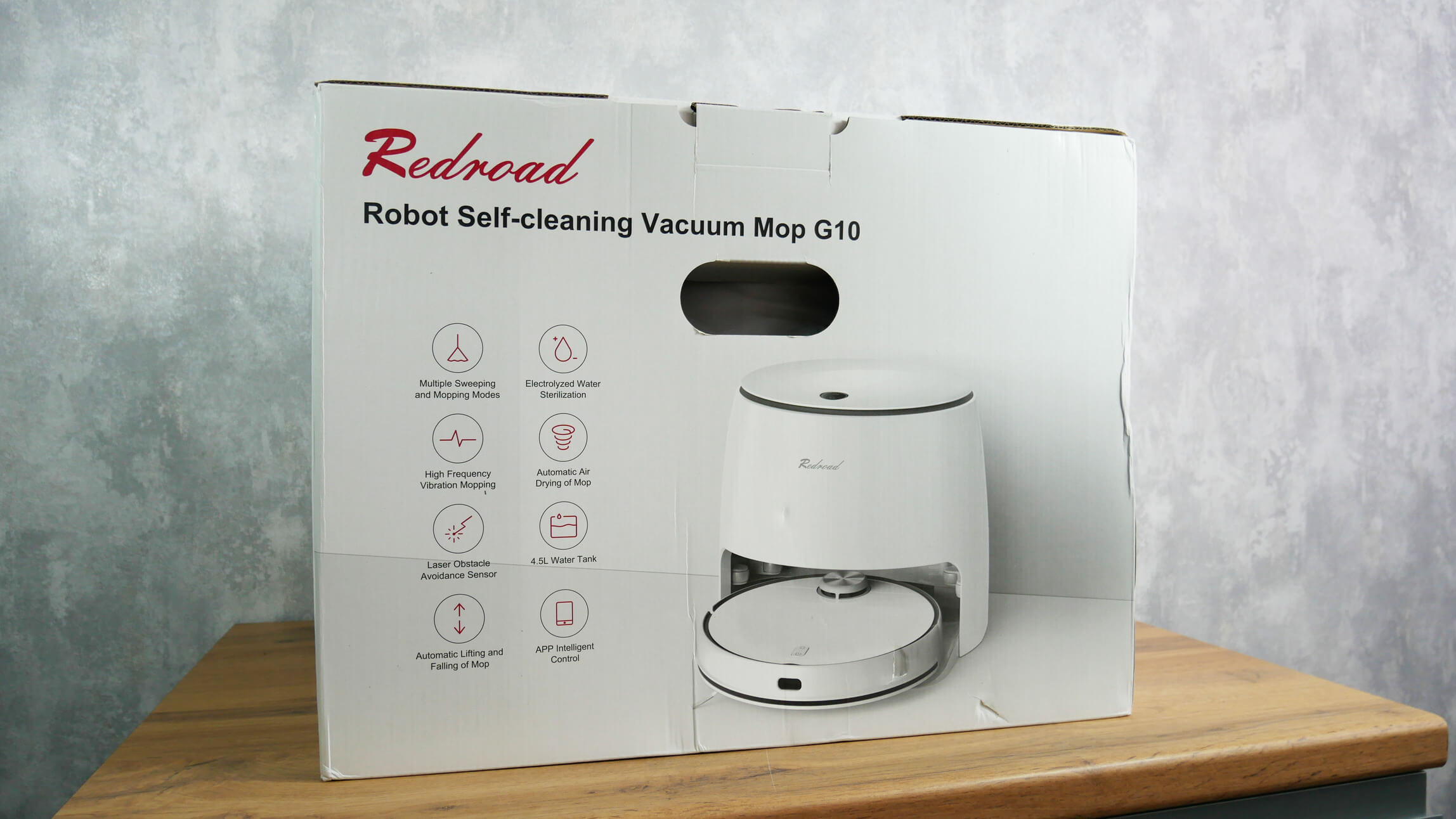
The robot vacuum cleaner arrived in a branded box like this:
Box
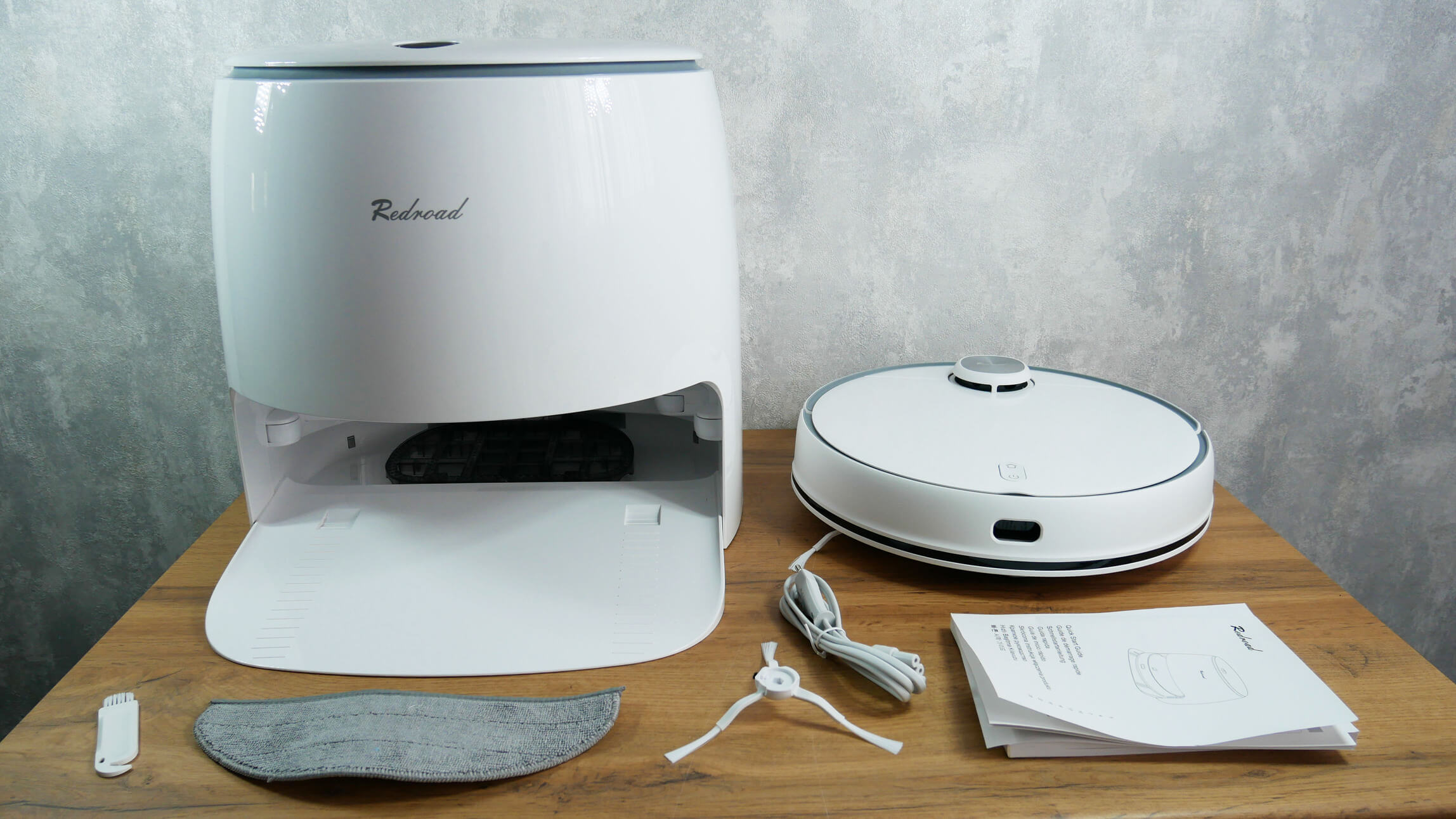
In addition to the robot and station itself, the delivery kit includes:
- Operating instructions translated into Russian.
- Power adapter.
- Spare microfiber cloth.
- Spare side brush.
- Robot cleaning tool.
Equipment
The only thing missing to be completely happy is a spare HEPA filter, but it's good that some consumables are already included in the kit.
Appearance
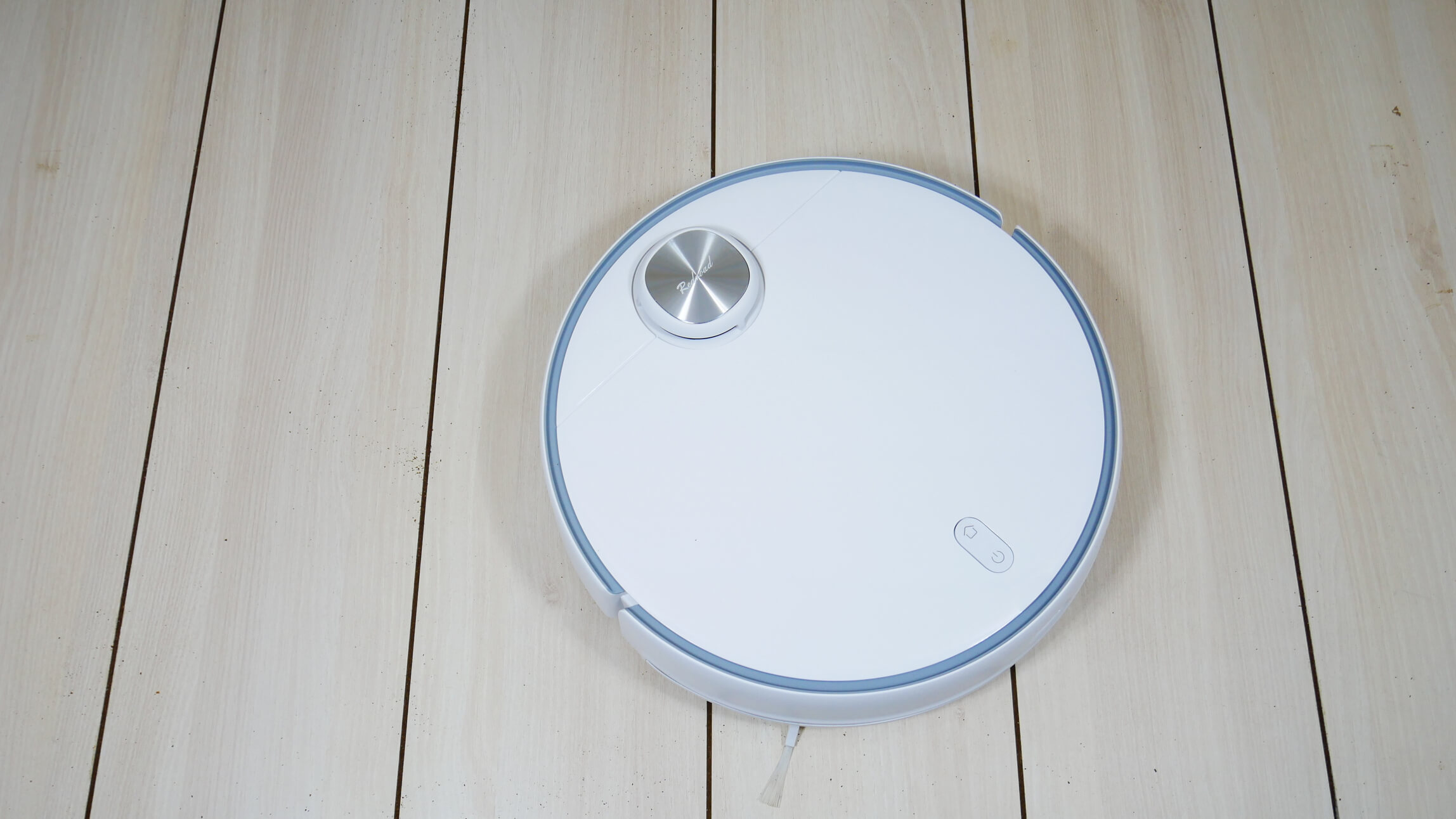
Now let's take a look at how the Redroad G10 is built. Immediately after unpacking it, it became obvious that visually it's a complete twin of the previously released Xiaomi Mijia Self-Cleaning Robot Vacuum Mop MJSTP, a review of which is already available on the channel. The only difference is the logos on the station and the robot's lidar.
Let's first look at the robot vacuum cleaner itself. It's round, white, and stands 96 mm from the floor.
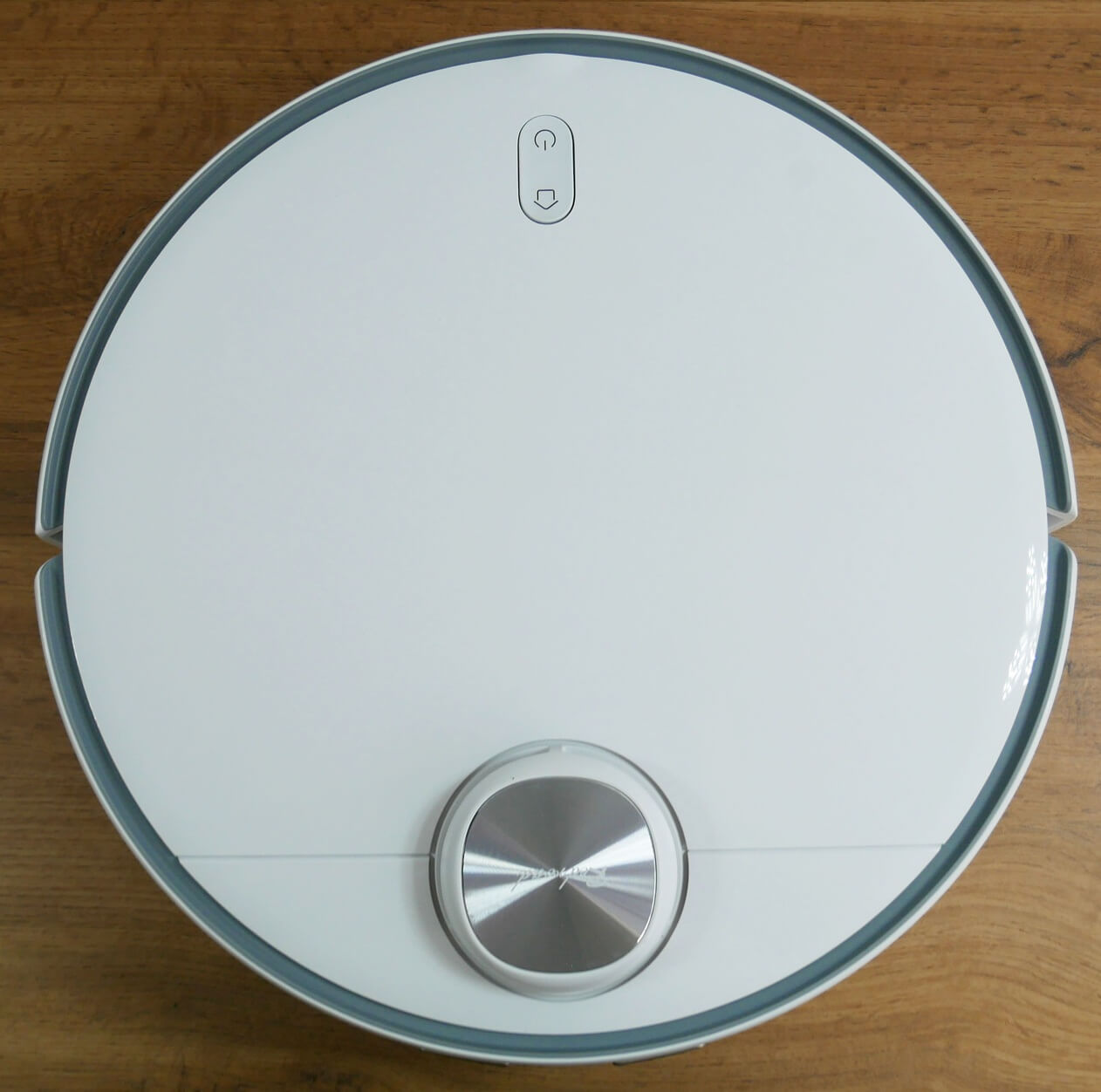
Top view
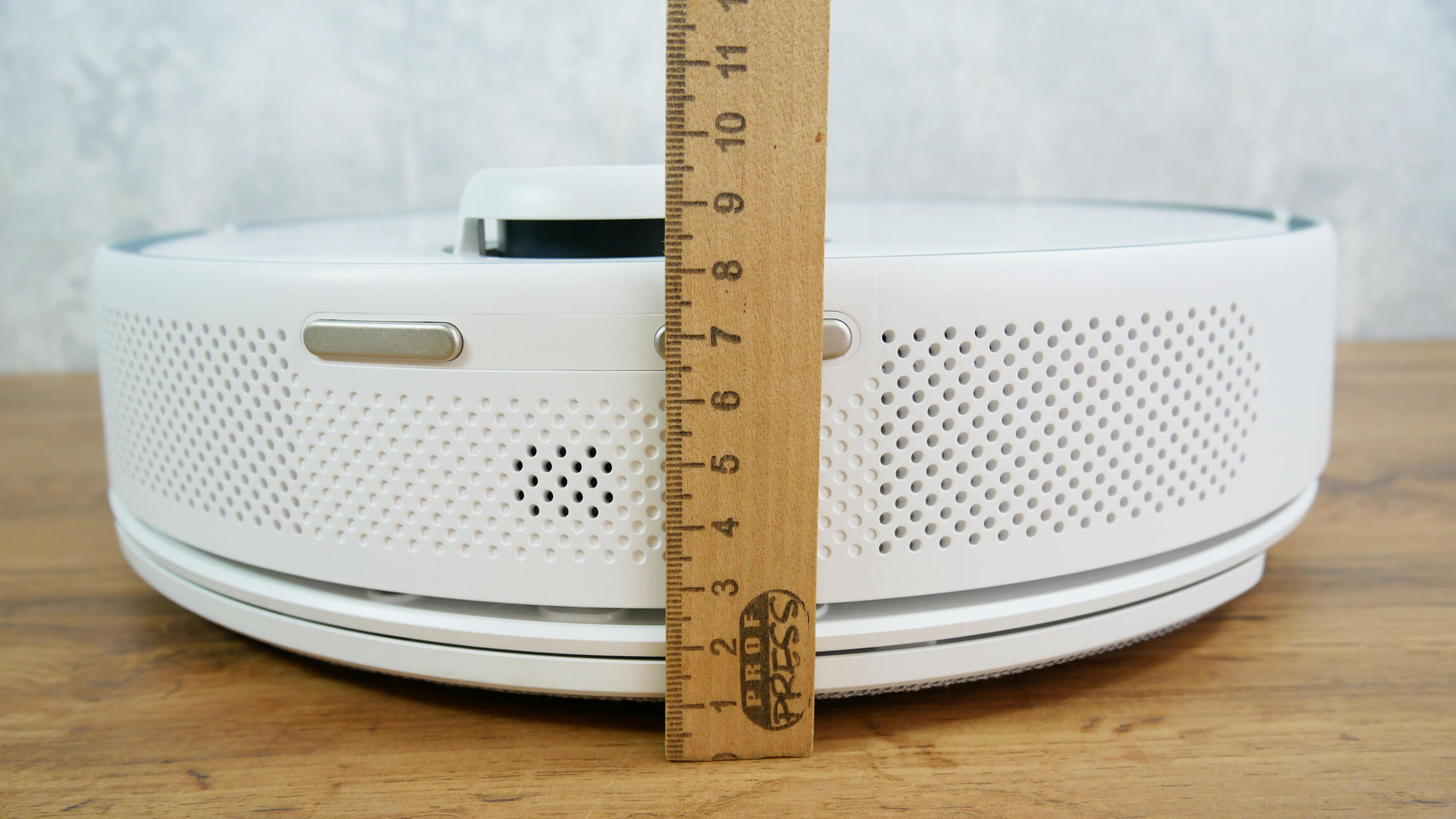
Body height
A soft-touch mechanical bumper is installed at the front. The control panel features two mechanical control buttons. A lidar sensor is used for navigation. It is equipped with a spring-loaded button to prevent the robot from getting stuck under low furniture.
The dust container is located under the top cover. The manufacturer allows you to wash the dust container with water. The container holds up to 450 ml of dry waste. The filtration system uses a mesh filter and a HEPA filter. Regarding the filter, there's no specific indication as to whether it's washable: the mesh or the HEPA. In any case, it's best not to wash the HEPA filter.
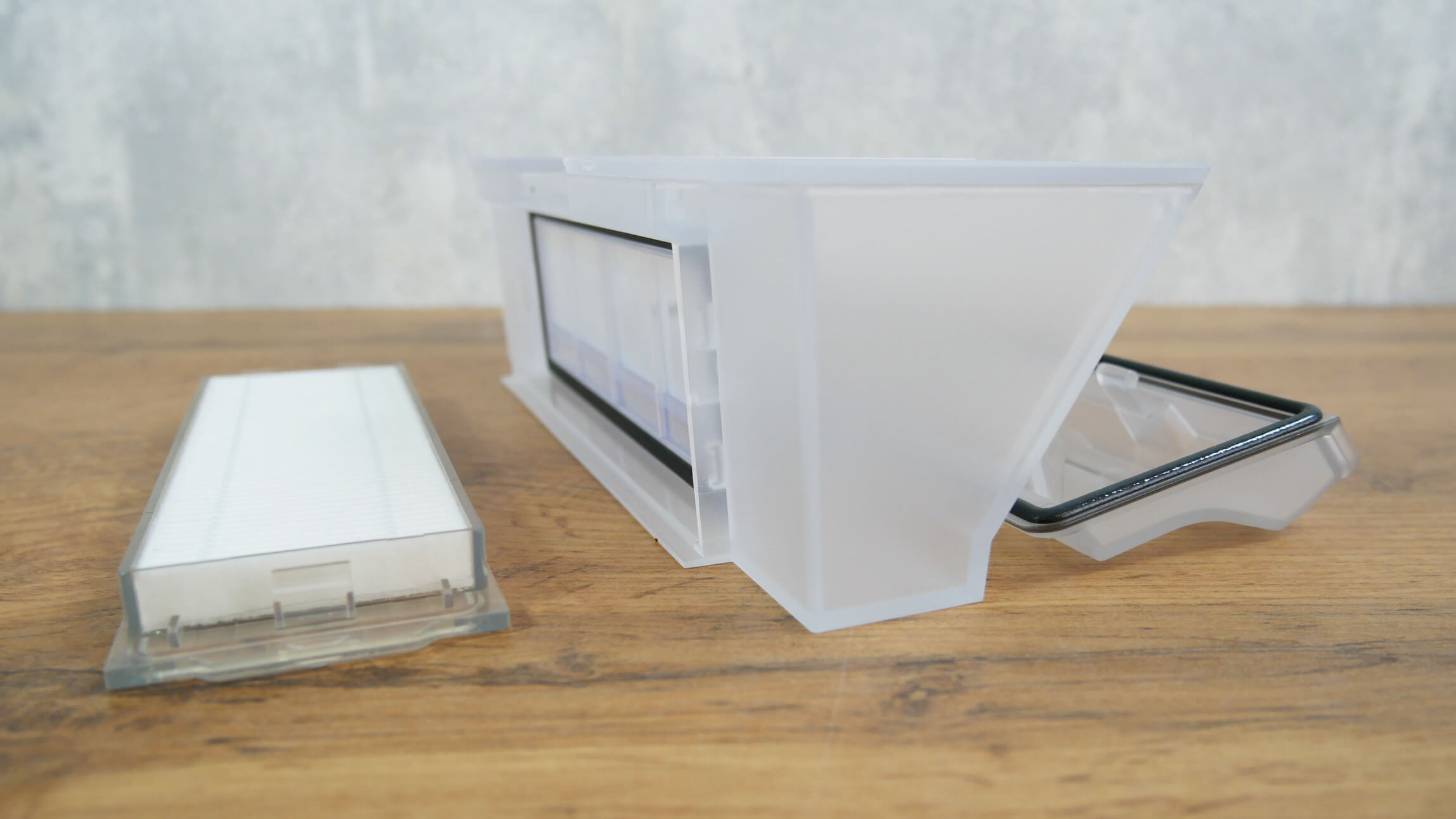
Dust collector
The robot has six fall protection sensors installed underneath. That's a plus! A carpet detection sensor is also installed near the swivel caster. Another plus!
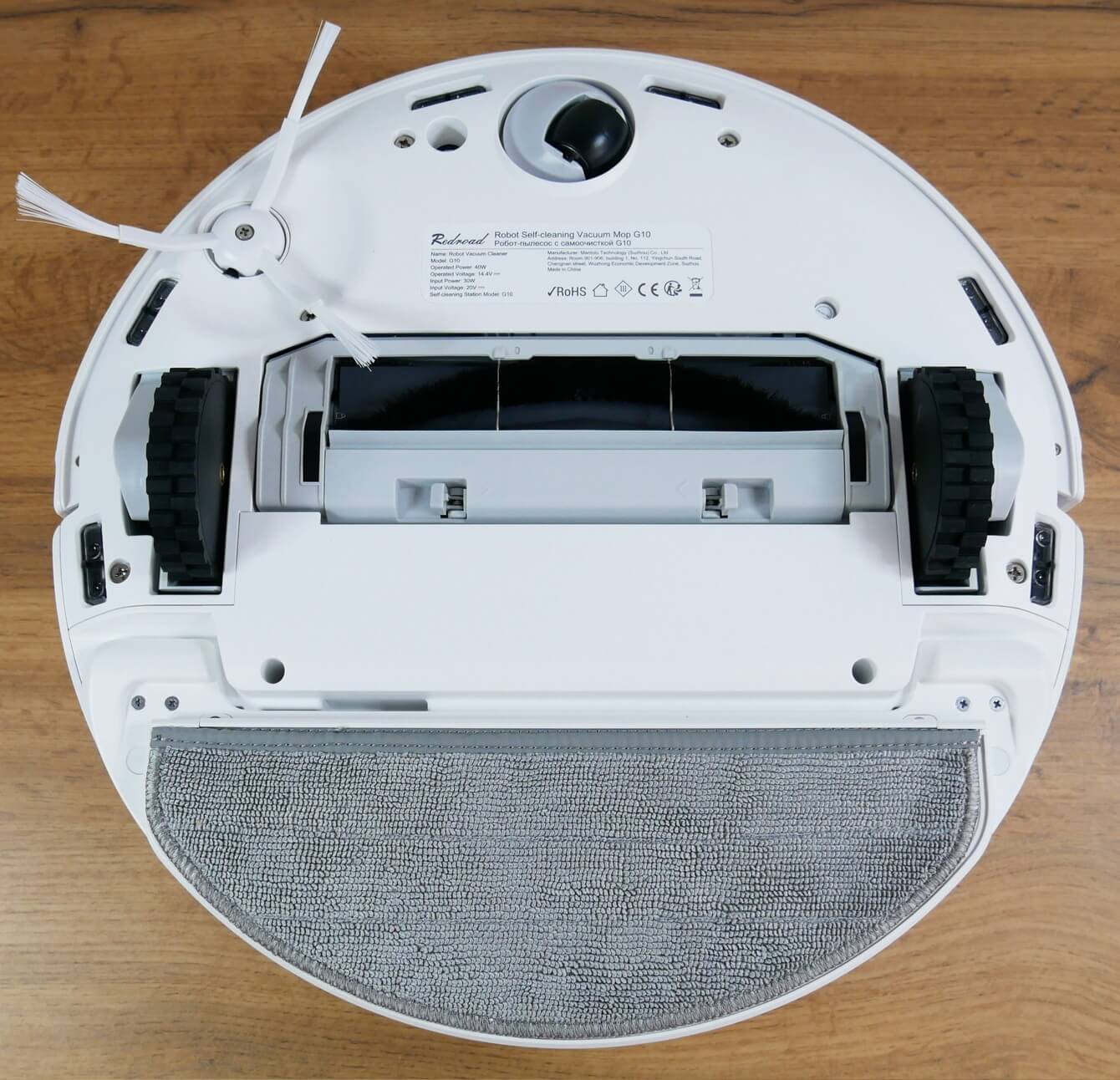
Bottom view
The turbo brush assembly is floating. The central brush itself is made of bristles and petals. It can be disassembled on both sides to remove tangled hair and pet hair.
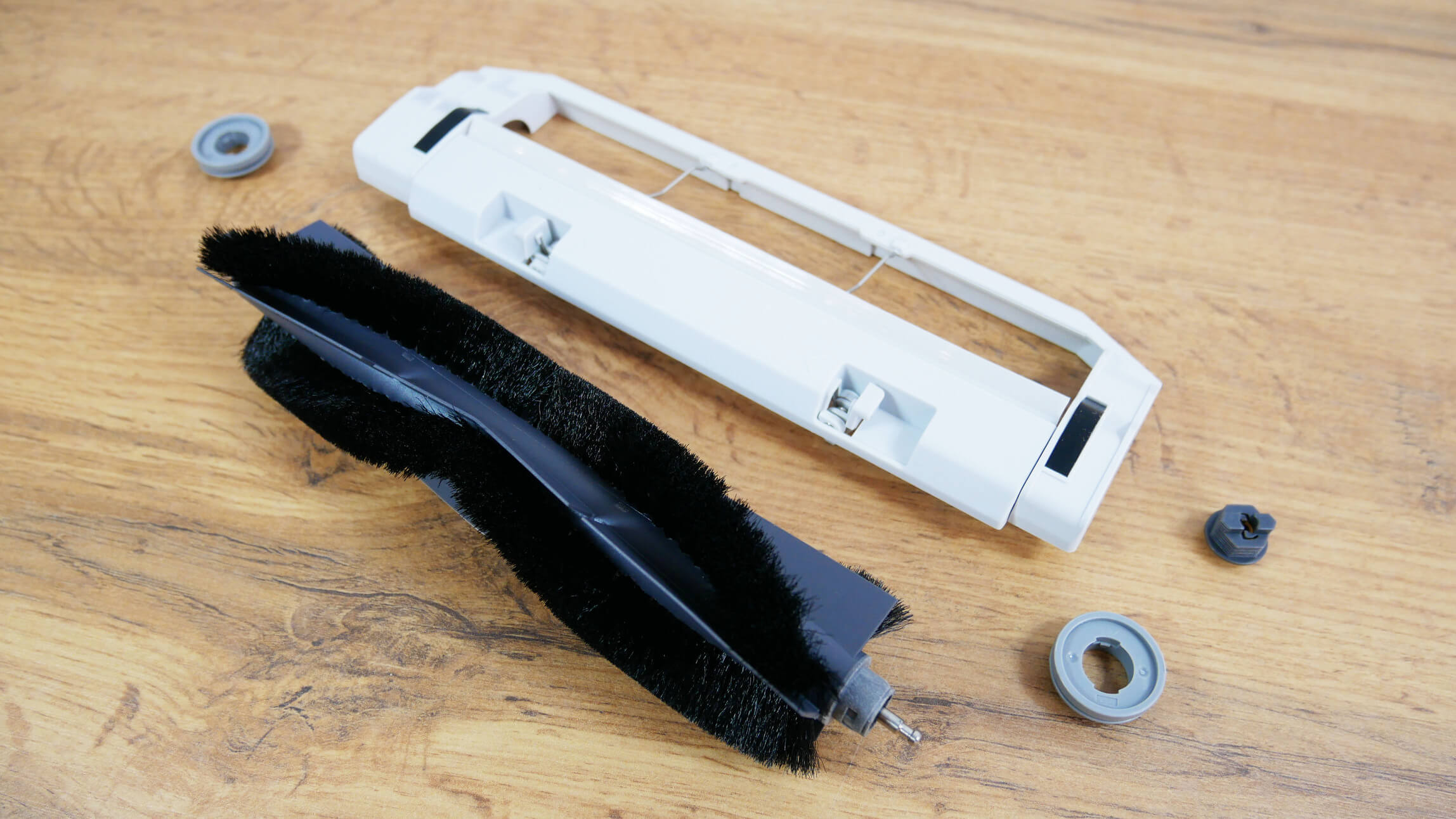
Central brush
The cloth is attached to a non-removable holder using Velcro and a groove. It's quite sturdy. As mentioned, the platform holding the cloth is movable. According to the manufacturer, it generates up to 320 vibrations per minute.
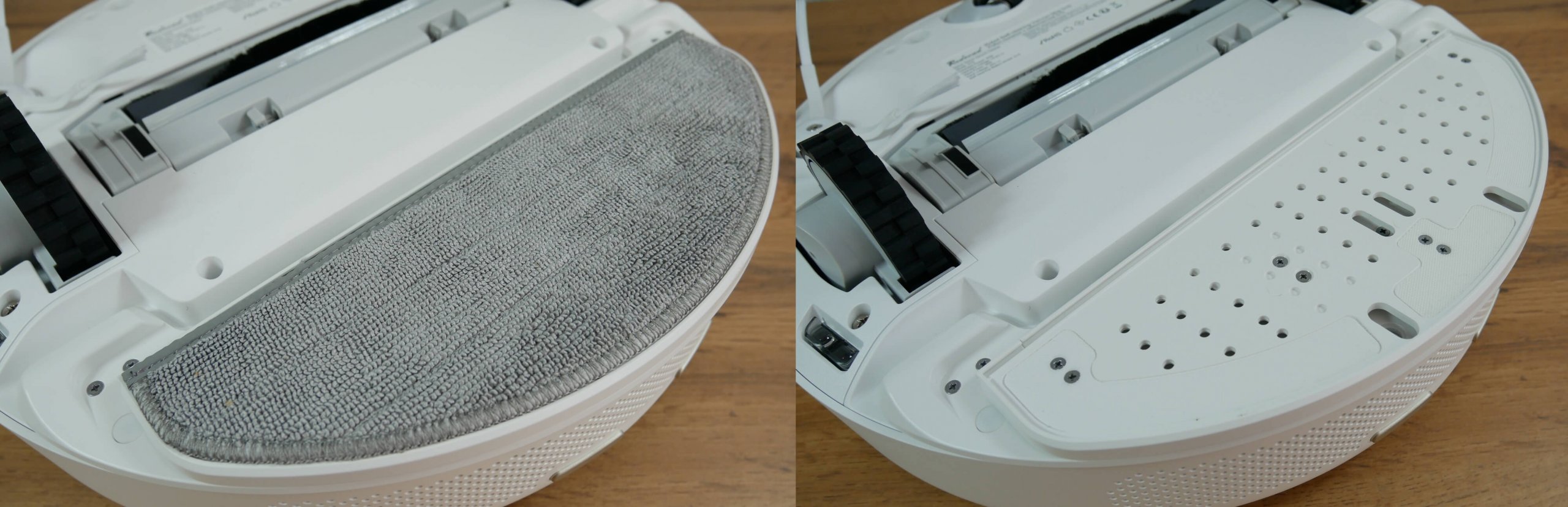
Attaching the napkin
The platform with the napkin even rises 8 mm when driving onto carpeted floors. That's awesome!
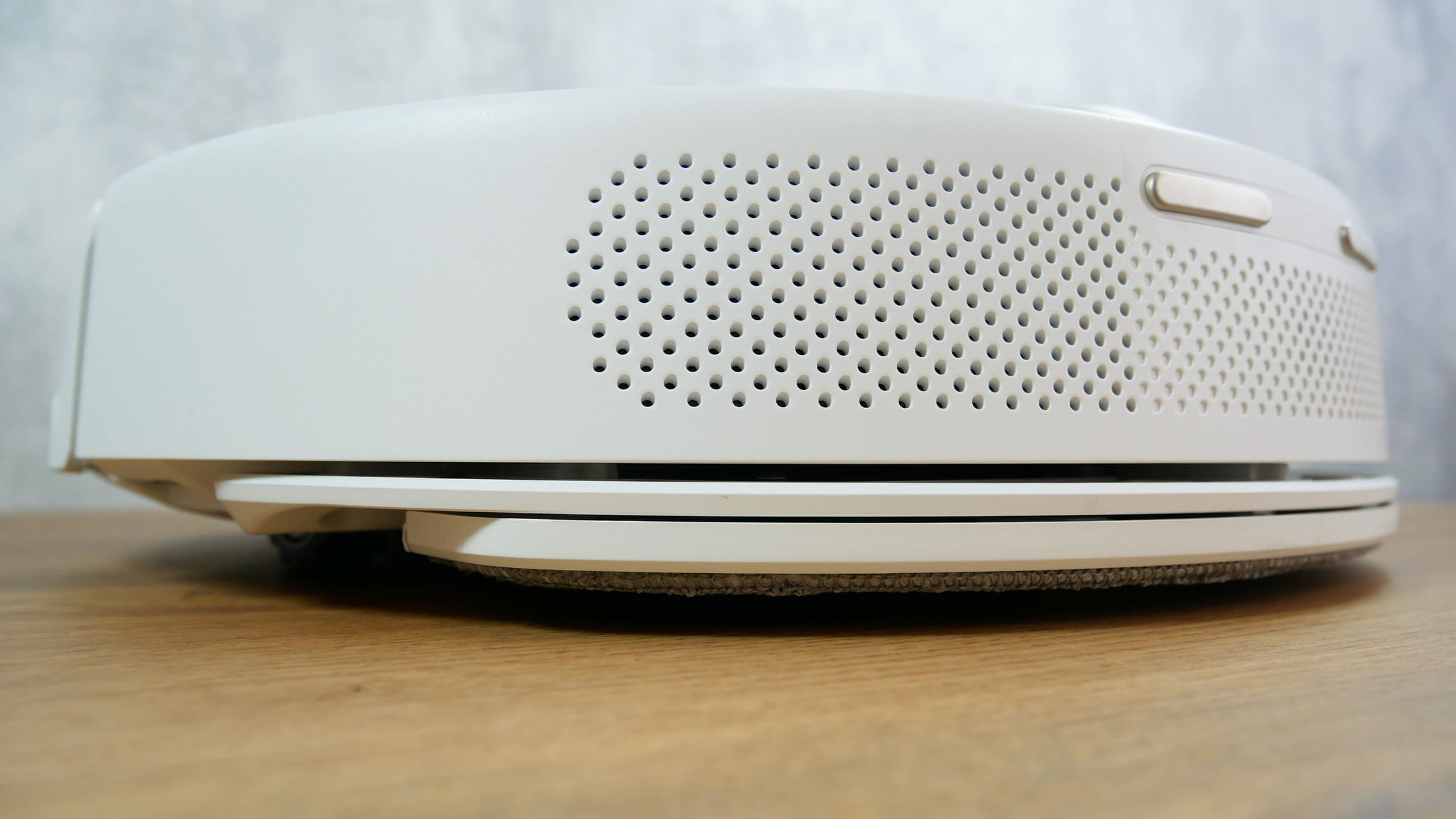
Lifting the napkin
The robot vacuum cleaner itself is well-designed. Nearly all the important design features have been implemented. Let's take a look at the station.
As I noted in my review of the Xiaomi clone, its design is not for everyone. Two mechanical buttons are located on the top: one for cleaning and one for rinsing the wipes. The reservoirs for clean and dirty water are located under the top cover, each holding 4 liters. The design is standard.
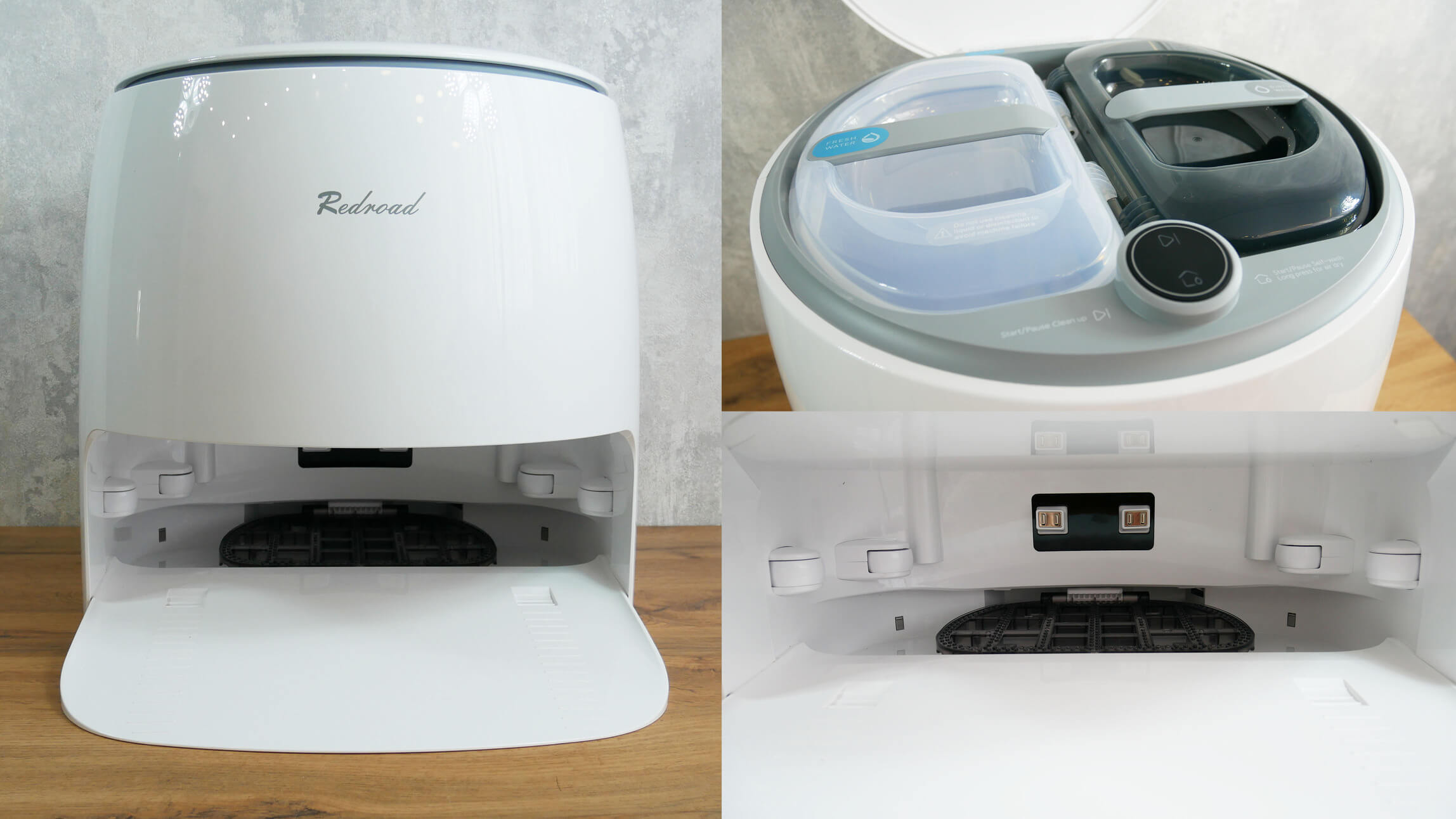
Station
Unfortunately, the platform where the robot enters the station is not removable, so cleaning it can be difficult if dirt and grime accumulate. Rollers are located on the left and right sides of the station to help the robot park. The cleaning cloth is cleaned by a special module with a textured surface. Underneath is a coarse filter for dirty water.
It's also important to note that the station has a function for drying the cloth with air. As far as I understand, it doesn't use hot air. I tested this. After a cleaning and rinsing cycle, the drying function started. The next day, about 24 hours later, I touched the cloth and it was damp. So, the cloth drying function is ineffective with this model, just like with the Mijia MJSTP.
Technical specifications
The main characteristics of the Redroad G10, as declared by the manufacturer:
- Battery: Li-Ion 5200 mAh
- Suction power: up to 2800 Pa
- Cleaning area: up to 180 sq.m.
- Battery life >120 min
- Dust collector: 450 ml
- The volume of tanks for dirty and clean water (in the station) is ≈ 4 l + 4 l
- Obstacle clearance: up to 20 mm
- Robot dimensions: 350*96 mm
- Station dimensions: 450*410*390 mm
For those interested, the station's height with the lid raised is 690 mm. Suction power will be further verified in real-world tests. All other specifications are standard.
Functional capabilities
Let's move on to a review of the Redroad G10's features. The robot vacuum is controlled via the proprietary Redroad mobile app. Unlike the Mijia app, the interface is in Russian, but the translation is poor. Connecting was straightforward. Follow the manufacturer's instructions.
The main functions of the Redroad G10 are displayed on the screen:
- Saving multiple cleaning maps in memory.
- Automatic zoning of premises into rooms.
- Selecting areas and rooms for cleaning.
- Virtual walls and no-go zones (and for wet cleaning mode).
- Suction power adjustment.
- User mode.
- Cleaning log.
- Setting up cleaning according to a schedule.
- Double cleaning cycle.
- Y-shaped floor cleaning pattern.
- Voice notifications in Russian.
- Vibration function of the platform with a napkin.
- Automatic power increase on carpet.
- Carpet cleaning in wet cleaning mode.
- Drying napkins.
- "Electrolytic water".


Functions
Let me highlight some of the features. The custom mode allows you to flexibly customize cleaning parameters for each room, specifically: adjust the suction power and select the cleaning mode: dry, wet, or both. It's very convenient.
A big advantage, compared to its Mijia counterpart, is that the Redroad G10 speaks Russian. In general, this robot vacuum cleaner is better suited for the Russian market. However, there's one important caveat: the app runs on Chinese servers, so, as with the Xiaomi version, it occasionally experiences horrific freezes. Response times can take over 10 seconds, which is extremely inconvenient.
Among the robot's additional advantages, it's worth highlighting the floor polishing mode and the automatic carpet avoidance function. This is very convenient. As mentioned earlier, the cloth drying function hasn't proven effective, and as for the "Electrolytic Water" function, I don't understand how it's implemented. The tanks don't have a UV lamp, like the other one. Xiaomi Mijia Self-Cleaning Robot Vacuum-Mop ProTherefore, how and by what means the intended water sterilization occurs is known only to Redroad engineers or marketers.
Oh, and one more thing – the station's wiper rinse frequency is set to every 10 square meters of cleaning. It's not possible to manually adjust the frequency, for example, after each room cleaned, after 5 or 15 square meters, or every 10 minutes of cleaning. Similar devices can do this.
Testing
A detailed video review of the Redroad G10 has already been prepared and published on the channel. I recommend watching the video:
Navigation
And finally, let's move on to the tests. First, we'll test the Redroad G10's navigation in a room with obstacles. It navigates the entire area along the perimeter, and then in a serpentine pattern. The cloth automatically lifts off the floor when placed on the dryer's legs and when crossing thresholds, improving the robot's maneuverability. As a result, the robot didn't get stuck on the dryer's legs and was able to clean around all the chair and box legs separately, before returning to its base. Test successful!
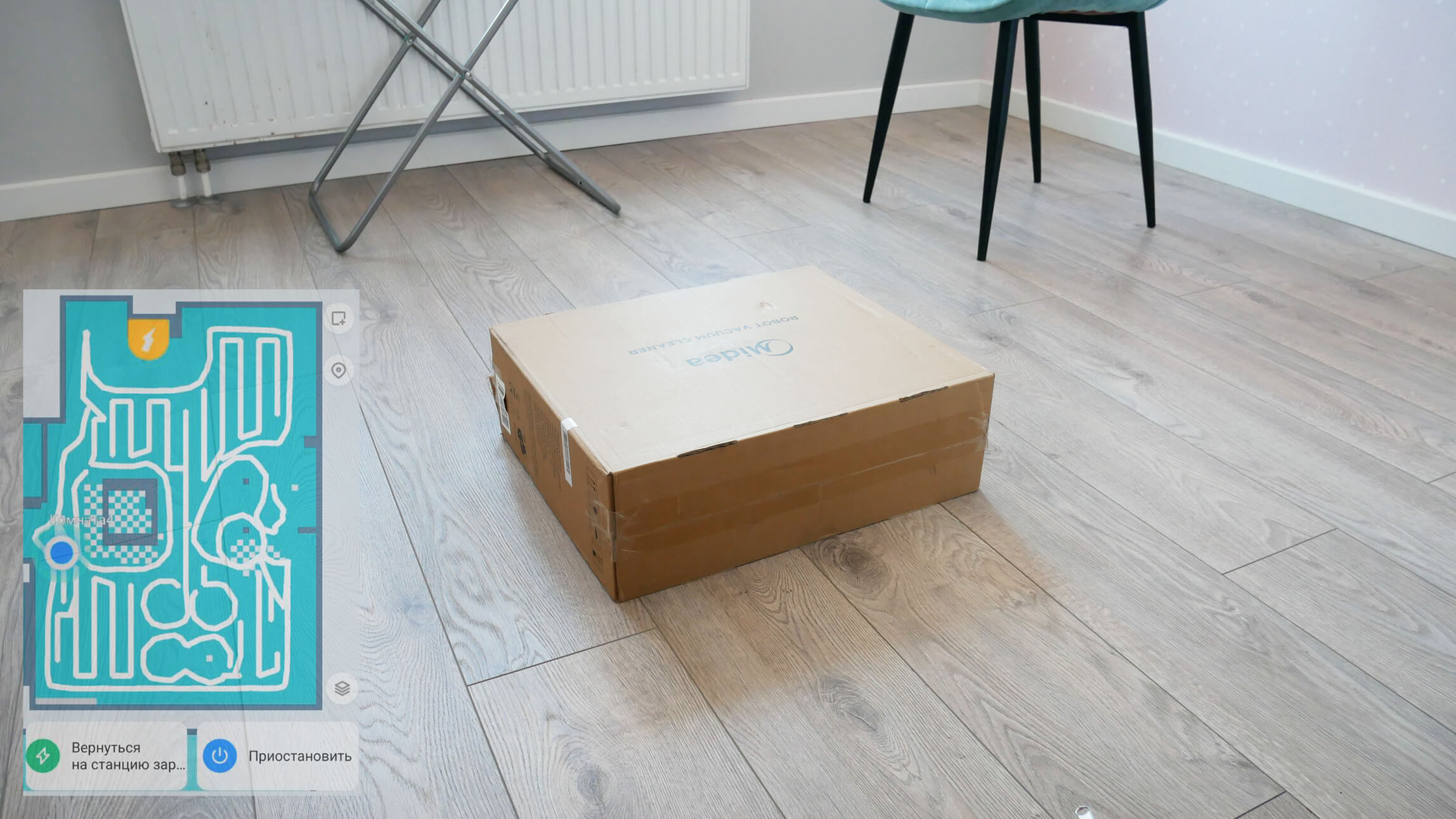
Navigating an Obstacle Room
Speaking of navigating within the home, the Redroad G10 cleans room by room, first along the perimeter, then in a zigzag pattern! Every 10 square meters, it automatically returns to the station and rinses the cloth, then continues cleaning. This allows it to perform high-quality wet cleaning over large areas. There were no uncleaned areas; the test was a success!
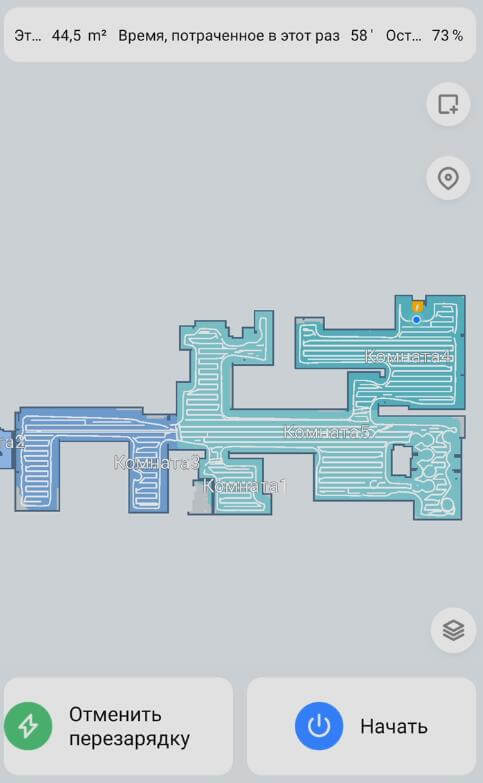
Navigation within the home
Suction power
The suction power, as with its Xiaomi counterpart, leaves much to be desired. This robot vacuum cleaner is unable to sweep debris out of even a 2 mm gap. This is important to keep in mind.
Suction power
Dry cleaning
The quality of debris collection on laminate floors was excellent. The robot completely collected debris on the rack, leaving only a small amount in the corners due to its round shape. A few hairs got caught in the center brush, but the bulk of the debris was collected in the dust bin. Test passed successfully!
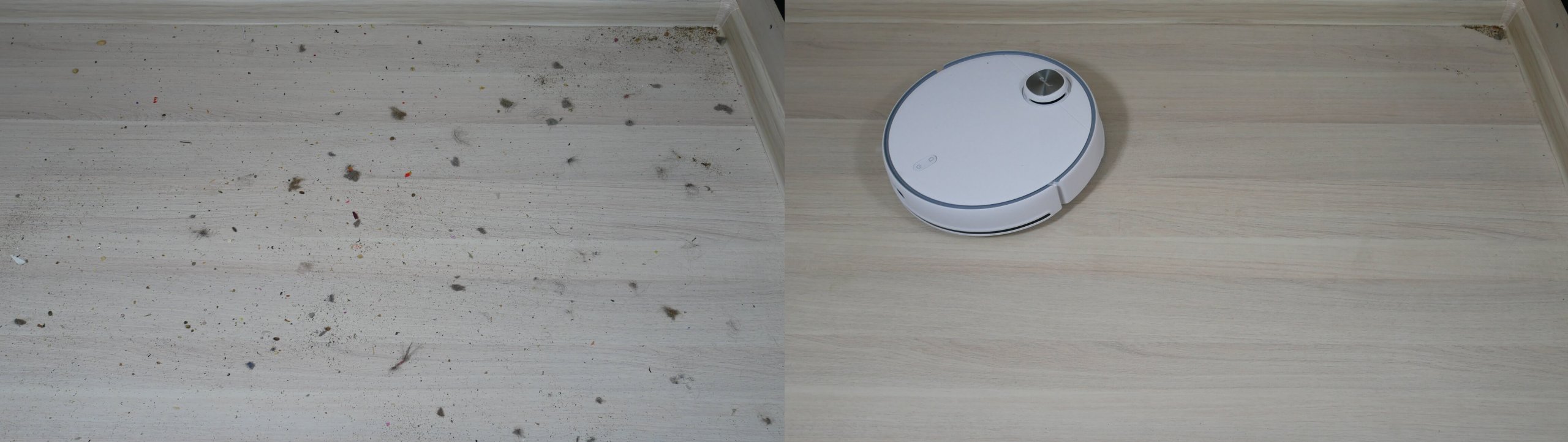
Dry cleaning
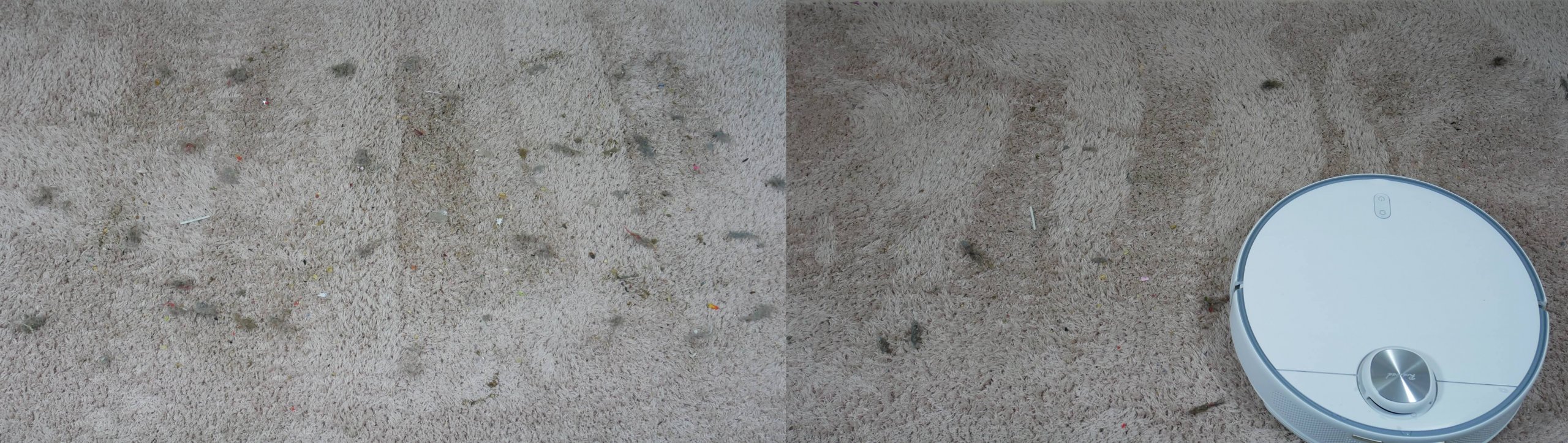
Carpet cleaning
The Redroad G10 failed to clean the carpet. Most of the debris remained on the stand. This test was failed.
Carpet cleaning
Wet cleaning
The cleaning performance also leaves much to be desired. After three attempts, the robot failed to remove the dirt from the stand. Several large marks and streaks remained. There were also issues with cleaning dirt along the baseboard, but this was common with all the robots reviewed.
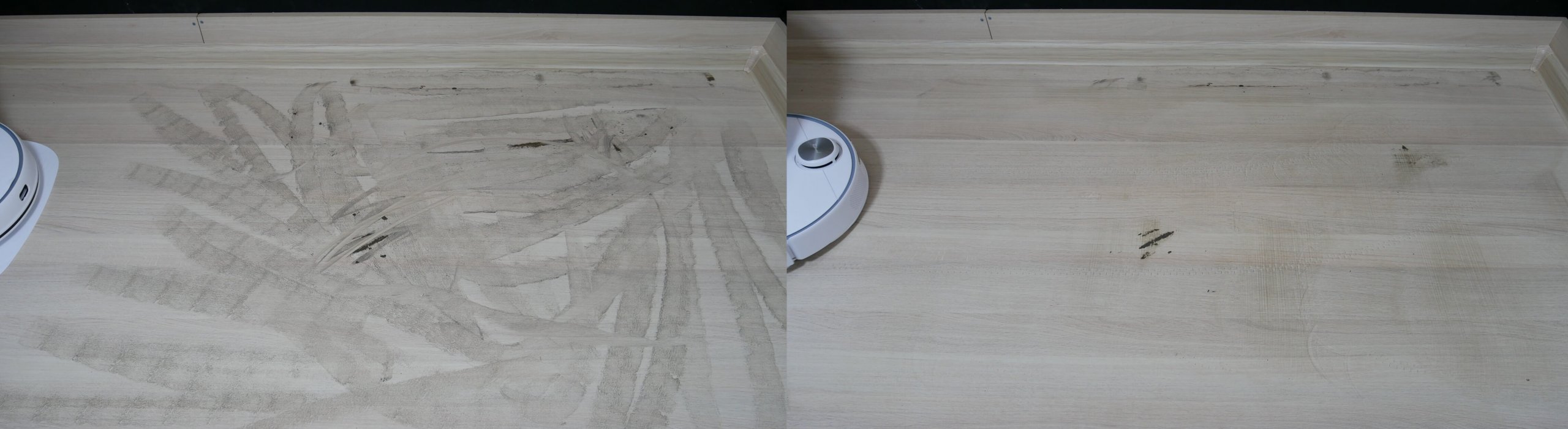
Wet cleaning
But in defense of the robot, I'd like to point out that under normal household conditions, the wet cleaning performance is optimal. The cloth is easily moistened, leaves virtually no streaks, and collects dust and debris missed by the brushes. The test simply shows that the cloth's pressure and platform oscillation frequency are not comparable to those of full-fledged robotic moppers. For example, Dreame Bot W10 or Hobot Legee 7This is important to take into account.
The wipe's rinsing quality is good. Here's the wipe's condition before and after the dirt test. I even checked the wipe's cleanliness after rinsing at the station by rinsing it in the sink. The amount of dirty water was minimal!
Wet cleaning and carpets
As for wet cleaning on carpets, the Redroad G10 can automatically lift the cleaning cloth, as mentioned many times. But if the pile is high, you can enable the automatic carpet avoidance feature, and the robot will carefully navigate around the carpet during cleaning to completely eliminate contact between the wet cleaning cloth and the pile. That's a plus!
Obstacle clearance
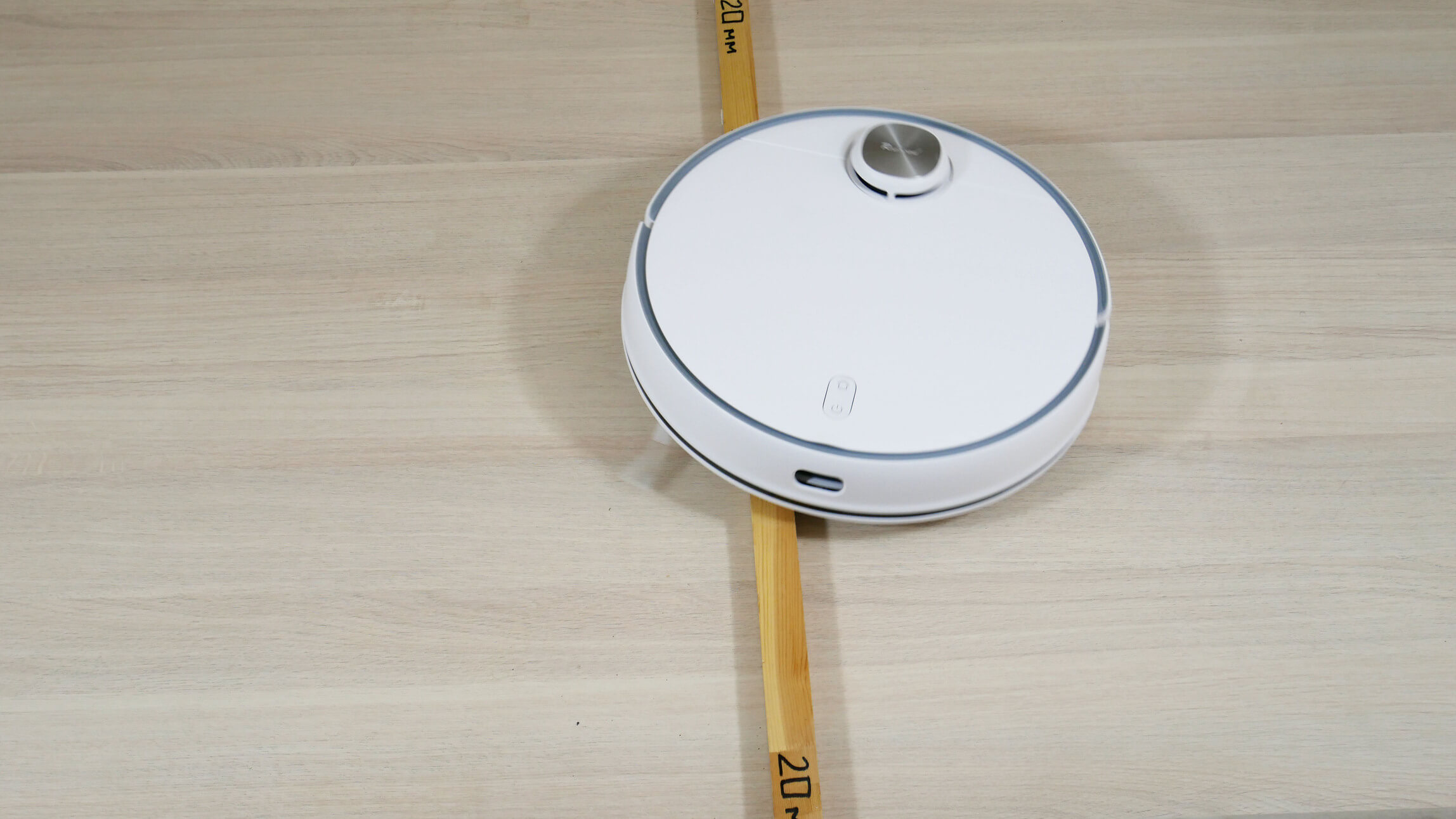
The robot vacuum cleaner has excellent maneuverability. It easily navigates a 2 cm threshold, lifting the platform with the cleaning cloth to prevent it from getting stuck.
Obstacle clearance
Driving on black surfaces
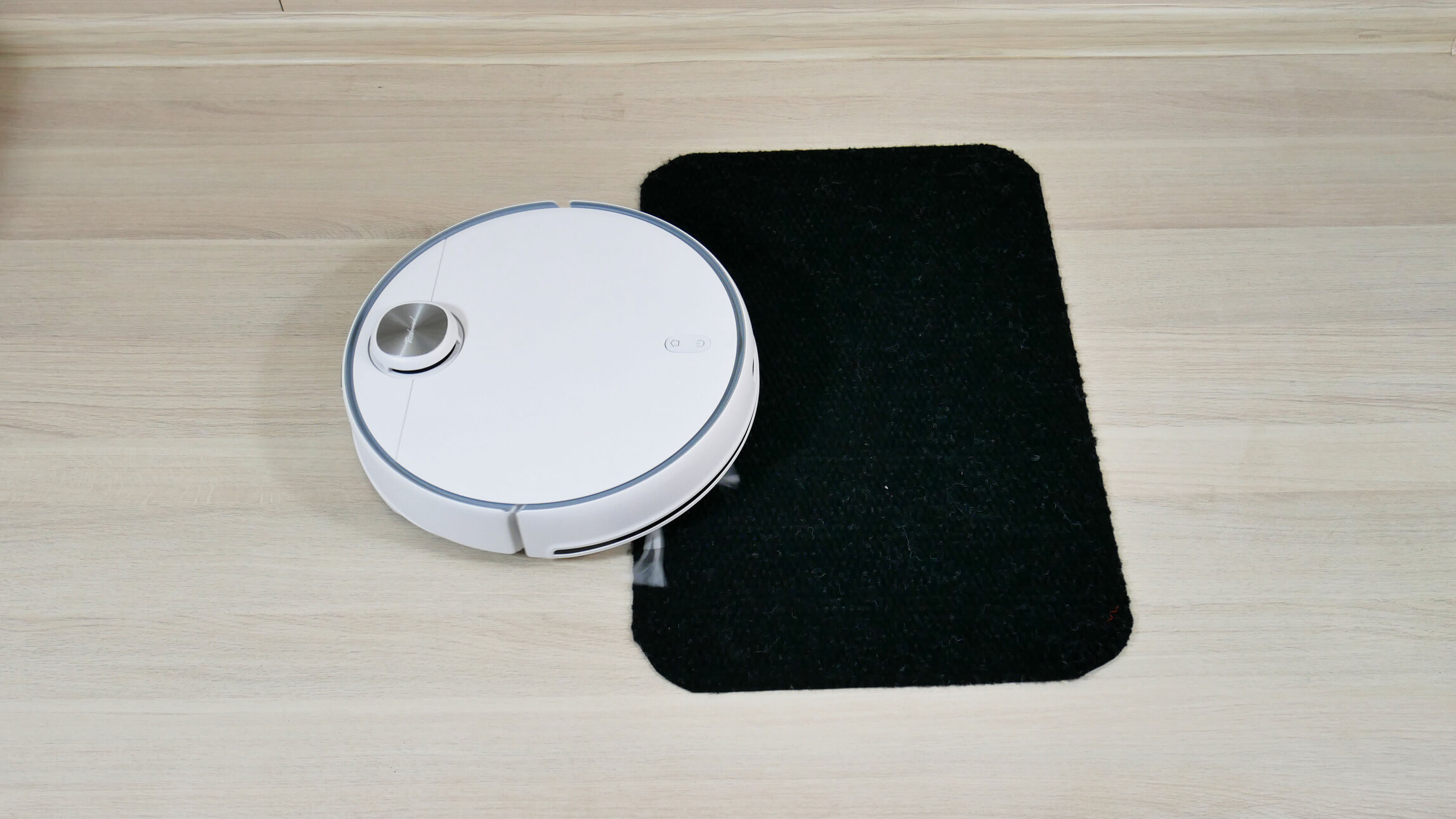
The Redroad G10 isn't afraid of black surfaces, unlike most other robot vacuums. And that's a plus!
Driving on black surfaces
Noise level
Finally, we measured the Redroad G10's noise level in different modes. In Quiet mode, the noise level is between 56-58 dB. In Standard mode, it increases to 59-61 dB. At medium power, the noise level reaches 65 dB, and in Maximum mode, the peak was 67.5 dB. This robot vacuum's noise level is standard.
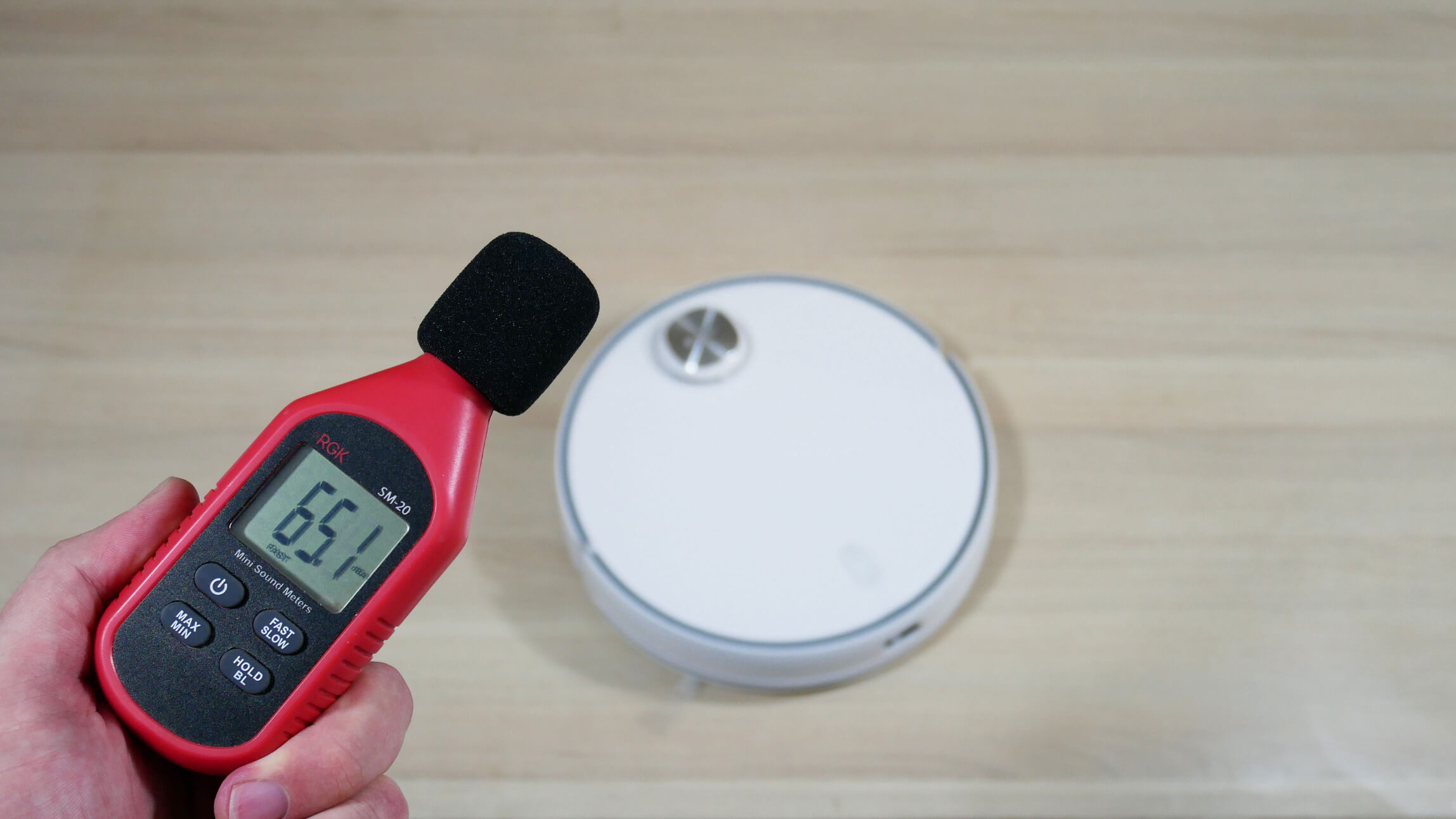
Noise level
Personal opinion
The Redroad G10 robot vacuum cleaner has been thoroughly reviewed and tested. our evaluation system he managed to gain 114 points, slightly inferior to its Xiaomi counterpart. First, I'll cover the pros and cons of this model, then compare it to its counterpart.
Overall rating of tested robot vacuum cleaners: https://robovac.washerhouse.com/en/rejtingi/robovac-obshhij-rejting-robotov-pylesosov-robo.html.
So, here's what I liked about the Redroad G10:
- A wipe rinsing station that allows for high-quality wet cleaning over large areas.
- Good quality dry cleaning on hard surfaces.
- Lifting napkins on carpets.
- Carpet detection and avoidance function.
- Simultaneous dry and wet cleaning.
- Russification of the application and voice notifications.
- The robot vacuum cleaner is not afraid of black floor coverings.
- Good navigation.
- Flexible adjustment of cleaning parameters.
- Good cross-country ability.
There are also quite a few disadvantages, namely:
- Poor quality of dirt removal.
- Poor quality carpet cleaning.
- Weak suction power.
- A non-removable platform for the robot to enter the station.
- Drying the napkin is not effective.
- There is no way to manually adjust the napkin rinsing frequency.
- The application freezes because it runs on Chinese servers.
- The robot cannot be moved without the spot cleaning station.
I'll address the last point separately. If you pick up the robot, move it somewhere, and turn it on, it won't clean. It will notify you to move it to the station and start it from there. This can be inconvenient when using the robot in a two-story house, for example, if you just want it to vacuum the second floor. A similar situation has even occurred within the same floor when I moved the robot to another room and started it. It immediately returns to the station.
Ultimately, I have a number of complaints about the Redroad G10, leaving me with mixed feelings about the robot. Moreover, the negative aspects seem to outweigh the positives. In my opinion, this robot vacuum is only worth considering for dry and wet cleaning on hard floors. Carpet cleaning is definitely not its strong suit.
Compared to Xiaomi, the robot's clear advantage is its localization and the ability to use a dedicated mobile app. This gives hope for timely resolution of issues and more relevant feedback from the manufacturer. We'll see how this plays out over time. Meanwhile, Xiaomi's advantages include support for Yandex.Alice and the ability to flexibly adjust the wipe's rinsing frequency. So, I'd simply base my decision on price. Whichever robot offers the best value is the one to buy. Or, if the distinctive features of one are more important to you, choose the one that best suits your needs.
I'd like to end the review on this note. If you have any questions, please ask them in the comments. Don't forget to subscribe and like. Happy shopping. Bye!
Hello! I've been poring over all your reviews for about a month, but with so many options to choose from, my brain is overwhelmed :((
Could you please tell me objectively which robot is best for a 100 sq. m. apartment with tile and laminate flooring and the occasional small low-pile rug? There are no pets (but it's not guaranteed that they won't appear ))), but there is occasional human hair loss.
I want a versatile fighter that will effectively collect trash and wipe the floors, since both laminate and tiles are in dark colors and any speck of dust even glows.
After reading everything, I understand that it is important for me to have normal software.
I really want a robot with a station for rinsing wipes, but the budget is oh-oh
For myself, I have chosen Roborock S7 (Plus ??), Roborock Q7 Max (I am confused that it does not pick up the napkin when there are carpets), Hobot Legee D7 or maybe Tefal X-plorer Serie 95?
Please help me! 🙂 I would be grateful for an answer.
Another option is the Lydsto W2 or Mijia OMNI B101CN. I think one of these would be fine. They're cheaper, but they have a docking station. Reviews will be out in the next two weeks.
My Redroad G10 speaks English. This is a big problem for me. I started it for the first time yesterday, and after washing it, I decided to remove the cloth and stop drying in the app, and then it lost its network connection. Restarting it didn't help. I'm very frustrated. Can you tell me how to change the language to Russian and how to restore the network connection?