Xiaomi Mijia Robot Vacuum Mop 2: An updated robot vacuum cleaner with a vibrating mop and increased power
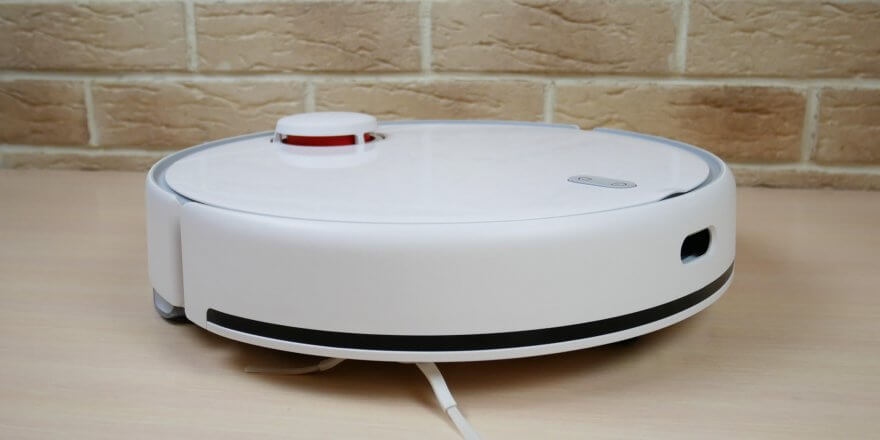
This review examines the new Xiaomi robot vacuum cleaner called the Xiaomi Mijia Robot Vacuum Mop 2. Model number MJST1S. This robot is an updated version of the popular Xiaomi Mijia LDS Vacuum CleanerFirst and foremost, Mijia engineers have upgraded the wet cleaning function. The water tank is attached to the bottom of the robot, and the nozzle itself is equipped with a vibration module that generates up to 10,000 vibrations per minute, improving dirt removal. Furthermore, the suction power has been increased, several features have been added, and the turbo brush design has been redesigned. The price has also increased slightly, currently in the $200-$230 range. Below, I'll take a detailed look at and test the XIAOMI MIJIA 2, after which I'll share my opinion on whether this robot vacuum is worth buying and whether the upgrade was a success. So, let's get started!
Equipment
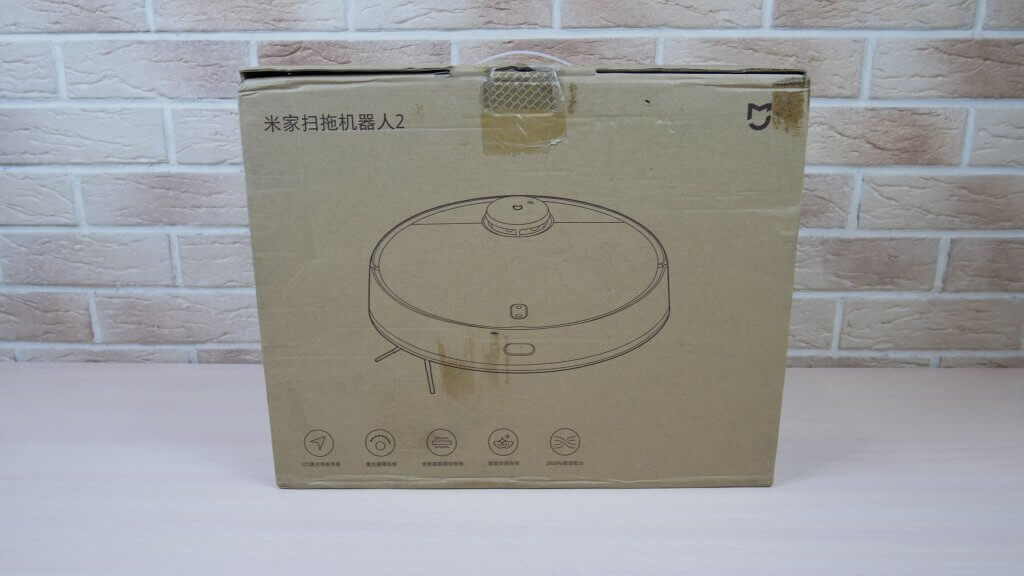
The robot vacuum cleaner arrived in a box like this:

Box
Let me point out right away that the Xiaomi Mijia Robot Vacuum Mop 2 is a Chinese version, so all documentation is in Chinese. A global version under a different name may be released in the future.
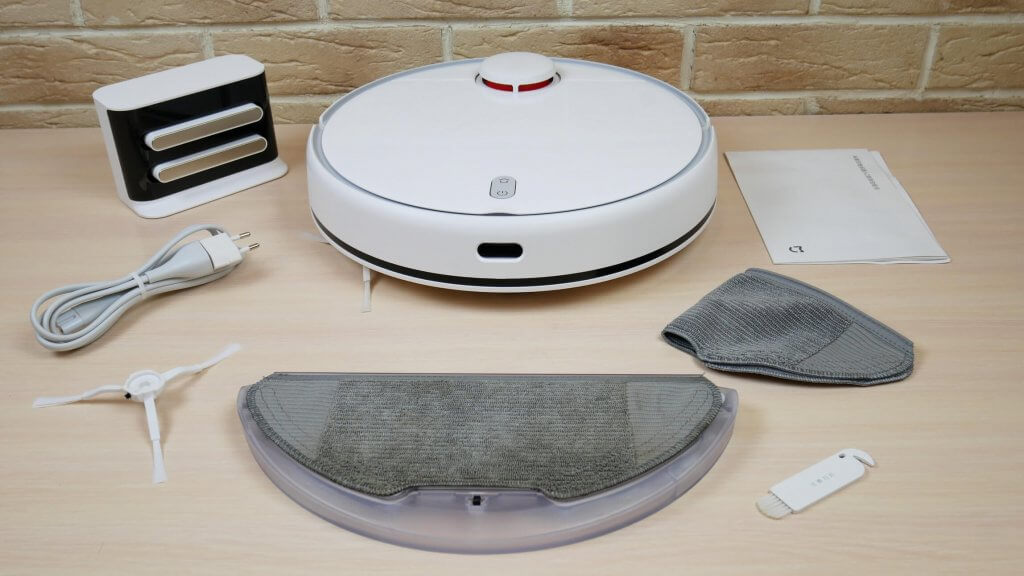
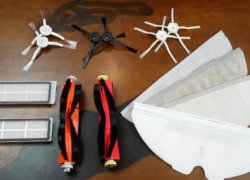
The robot vacuum cleaner kit includes:
- Charging base.
- Power adapter with adapter for European socket.
- Wet cleaning nozzle with a microfiber cloth installed.
- Spare side brush.
- Spare napkin.
- Documentation.
- Robot cleaning tool.

Equipment
We see that Xiaomi robot vacuum cleaners They've improved the package contents. If they'd also included a spare HEPA filter, that would have been really cool. But thanks for that.
Appearance
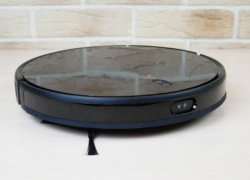
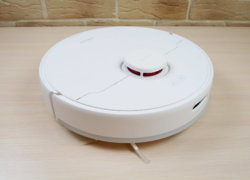
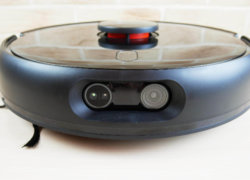
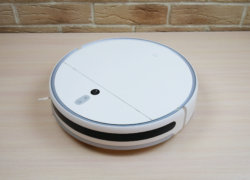
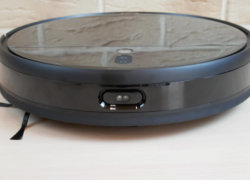
Now let's take a look at the design of the Xiaomi Mi Robot Vacuum Mop 2. It's white. It uses lidar for navigation. An obstacle detection sensor is located on the front of the mechanical bumper, and charging terminals are located on the back. The body stands approximately 9.5 cm from the floor.
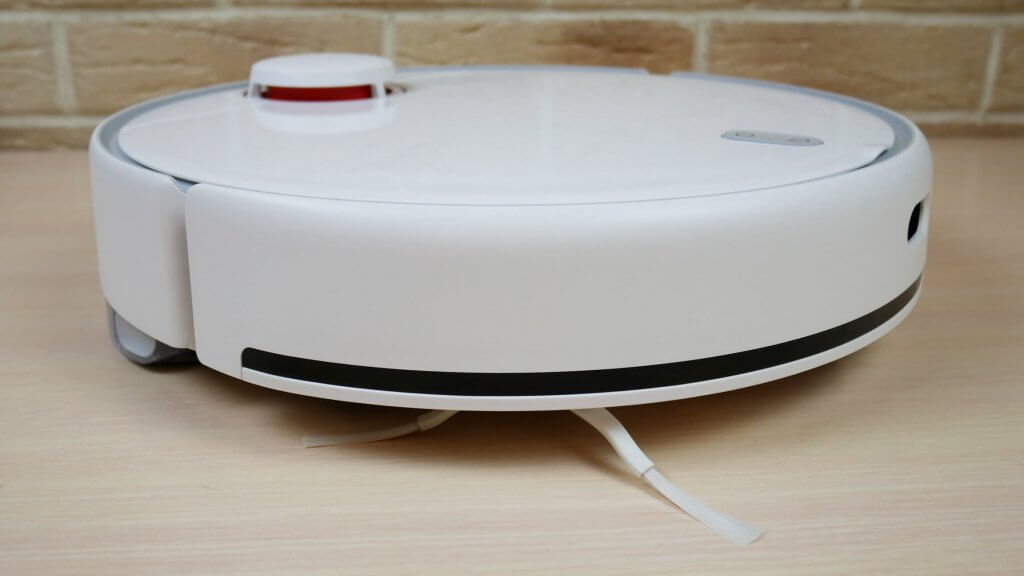

Side view
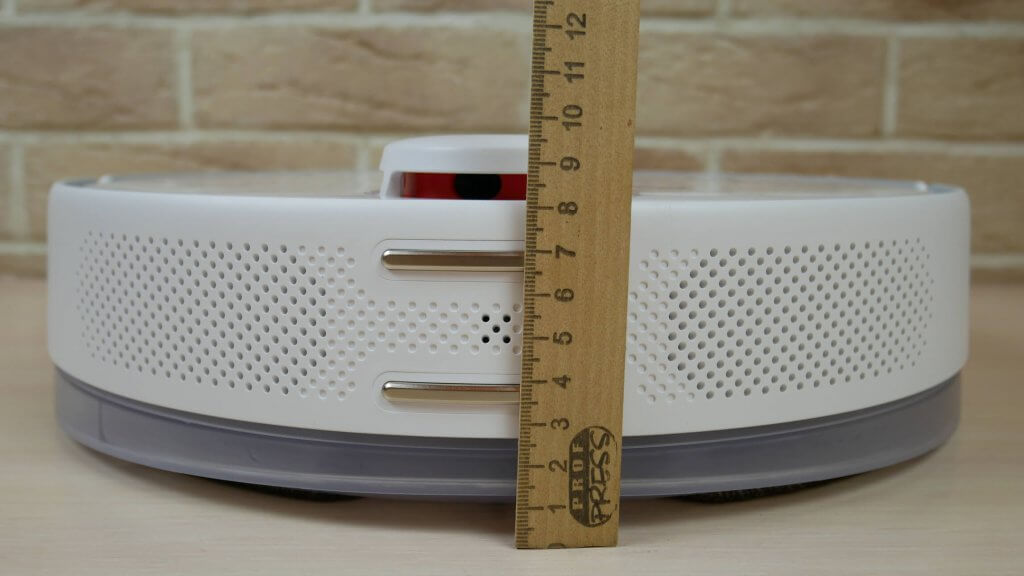

Rear view
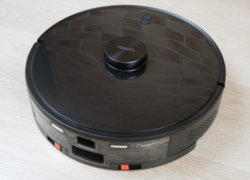
The lidar cover is spring-loaded. This prevents the robot vacuum from getting stuck under furniture. Two mechanical buttons are located on the body: start/pause and forced return to the charging base.
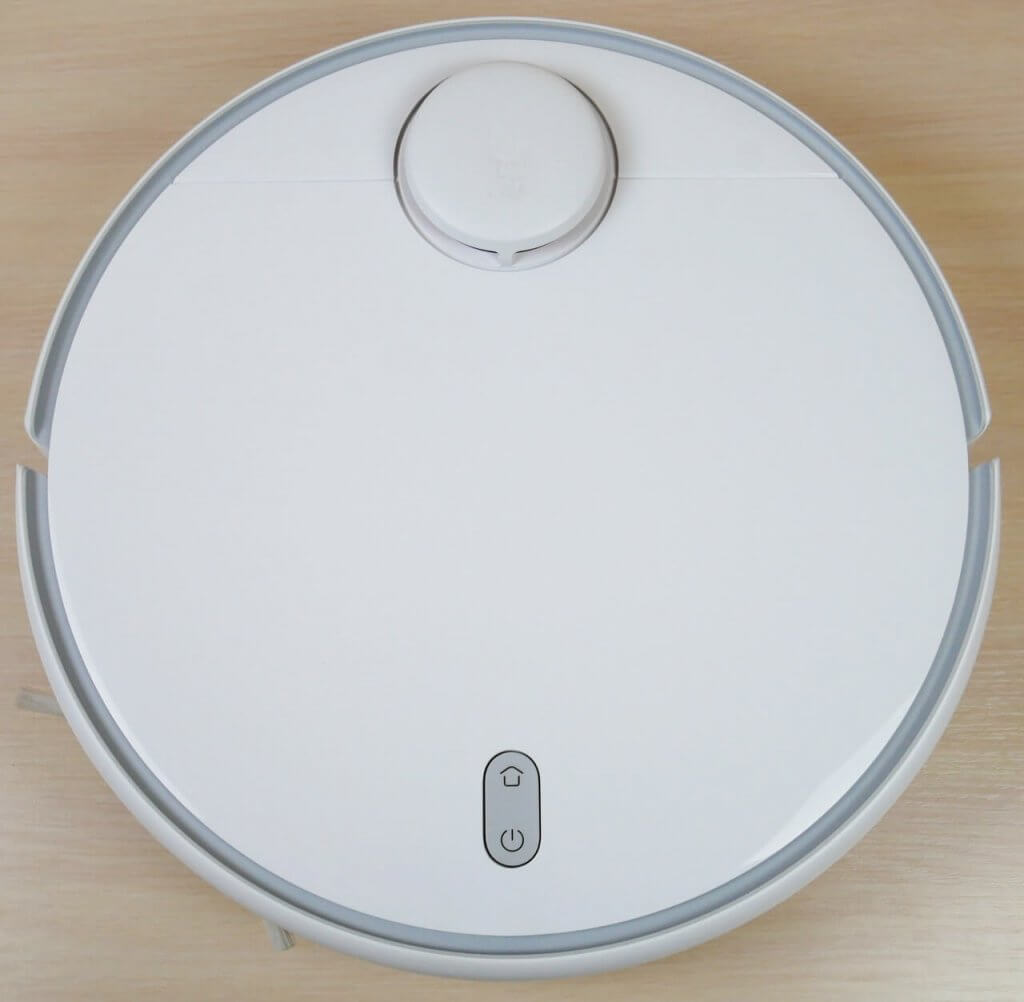

Top view
The dust collector is located under the top cover. The filtration system consists of a mesh filter and a HEPA filter.
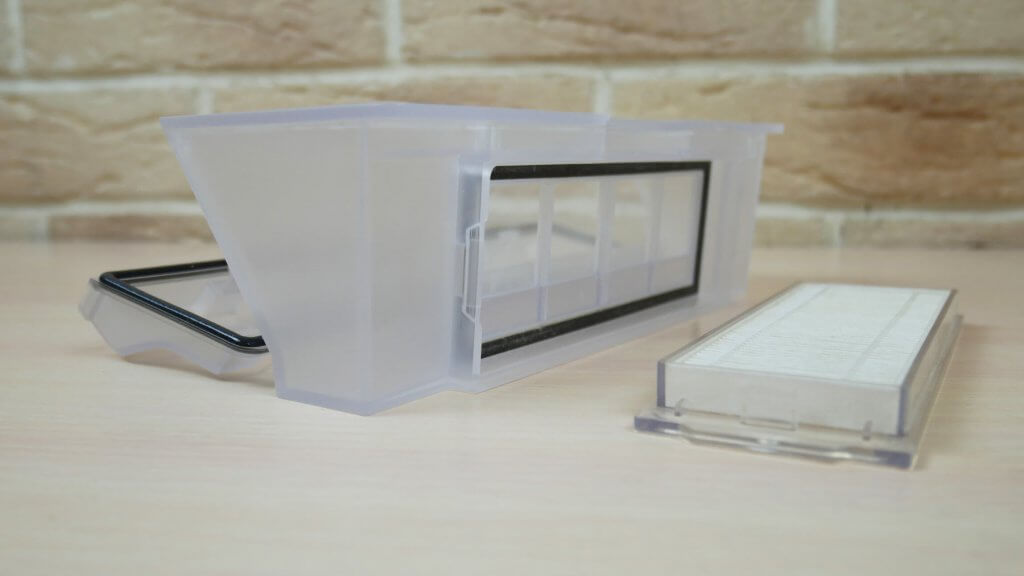

Filtration system
Let's take a look at the robot's underside. It has six fall protection sensors. It has a single, three-beam side brush, secured with a screw.
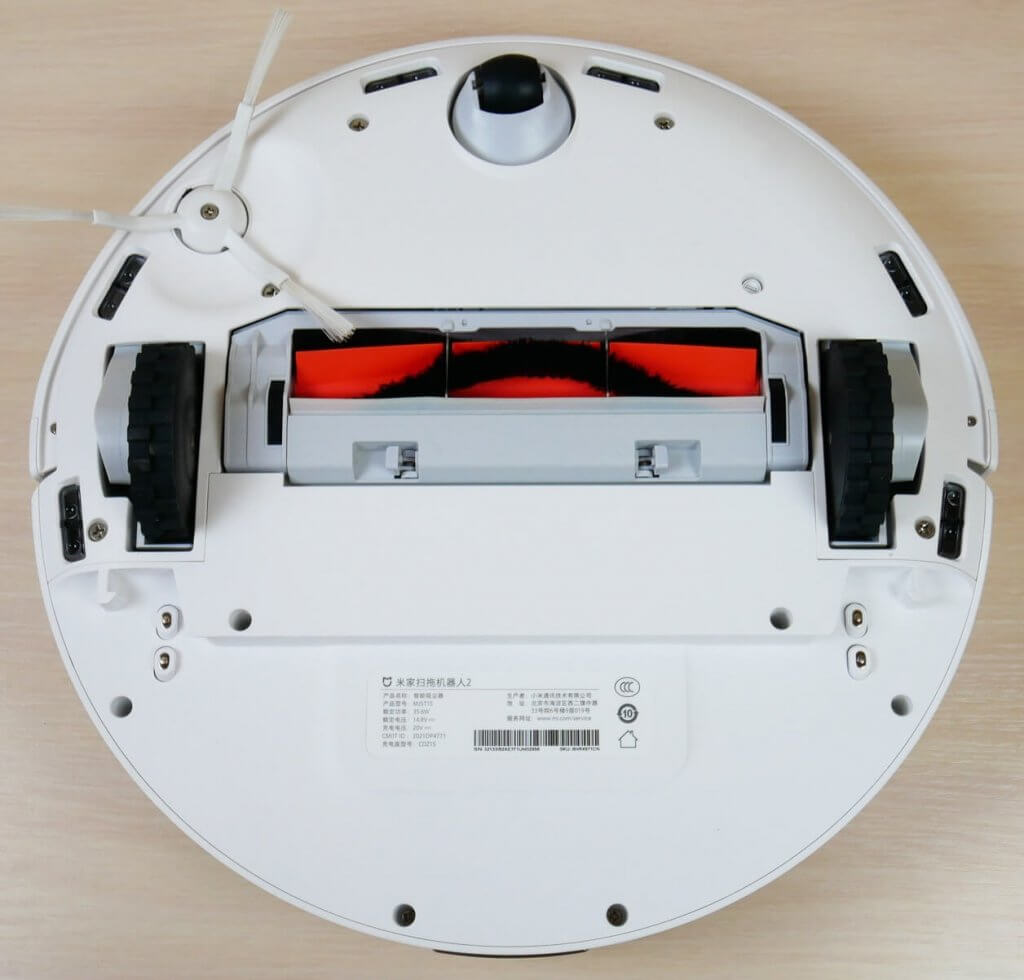

Bottom view
We can see that the central brush is better positioned than the Mijia LDS: it has more bristles and is detachable on both sides. This is a plus. Furthermore, the brush unit is floating, allowing it to better adapt to the contours of the floor.
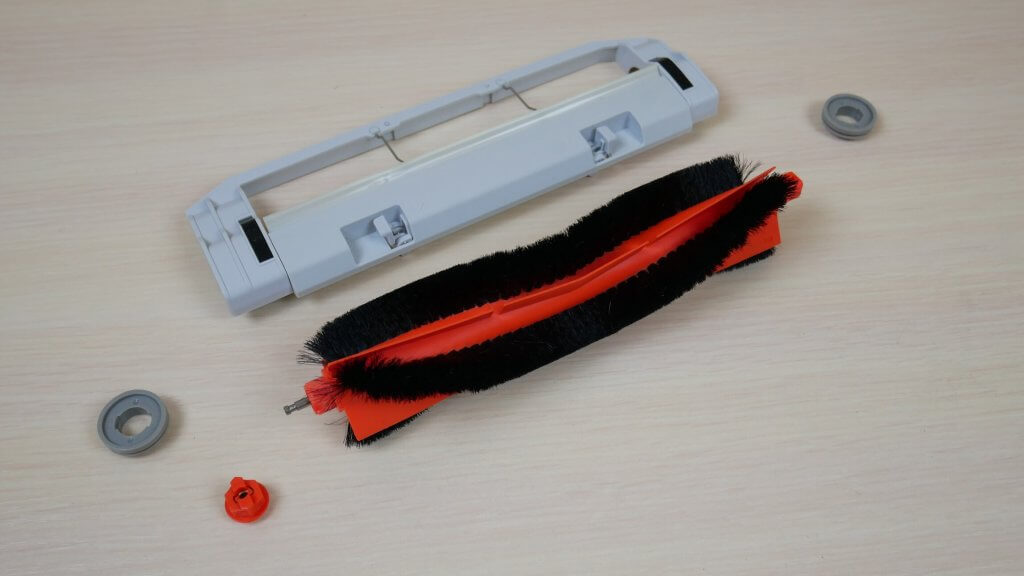

Central brush
The water tank is attached to the bottom of the body. As a reminder, the previous model had a holder with a cleaning cloth attached to the bottom, and the water tank was housed in a combined dirt and dust container. The cleaning cloth is bare on the sides, so be prepared for the robot to leave a small unwashed area along the baseboard. A vibration module is located inside the nozzle. The tank itself holds up to 190 ml of water.
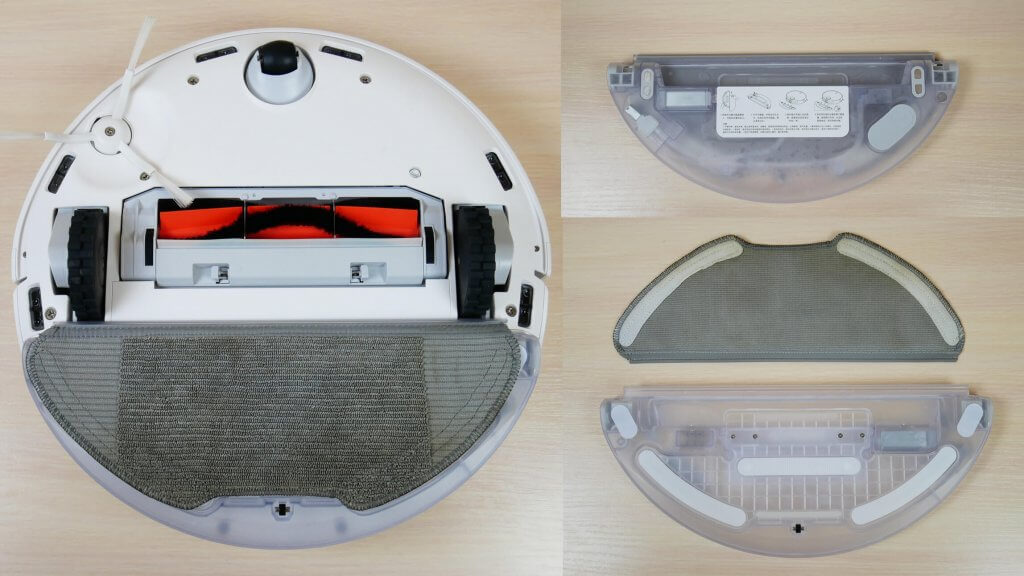

Wet cleaning attachment
Overall, the build quality of the Xiaomi Mijia Robot Vacuum Mop 2 has improved slightly compared to the previous model: the central brush has been updated, two anti-fall sensors have been added, and the water tank is now installed separately, preventing the capacity of the dust collector from being stolen.
Technical specifications
The main characteristics of the Xiaomi Mijia 2, as stated by the manufacturer:
| Battery | Li-Ion 3200 mAh |
| Suction power | Up to 2800 Pa |
| Cleaning area | Up to 180 sq.m. |
| Battery life | Up to 110 min |
| Dust collector | 550 ml |
| Water tank | 190 ml |
| Obstacle clearance | up to 20 mm |
| Dimensions | 350*9.5 cm |
We see that the suction power has increased significantly: 2800 Pa, compared to 2100 Pa for the Mijia LDS. The other specifications remain unchanged. The only controversial issue concerns the dust bin capacity. I couldn't find any precise information. The LDS holds up to 550 ml, while the Mijia 2 appears to have the same dimensions, but I didn't have the previous version on hand to compare. Different sources also list different capacities, ranging from 450 to 550 ml. If anyone knows for sure, please let me know in the comments. I'm still leaning toward the same capacity.
Functional capabilities
Let's move on to an overview of the Xiaomi Mijia Robot Vacuum Mop 2's features. The robot vacuum cleaner is controlled via the proprietary Mi Home app. Since the robot is a Chinese version, it must be connected to the China region. Connection issues should not occur in this case.
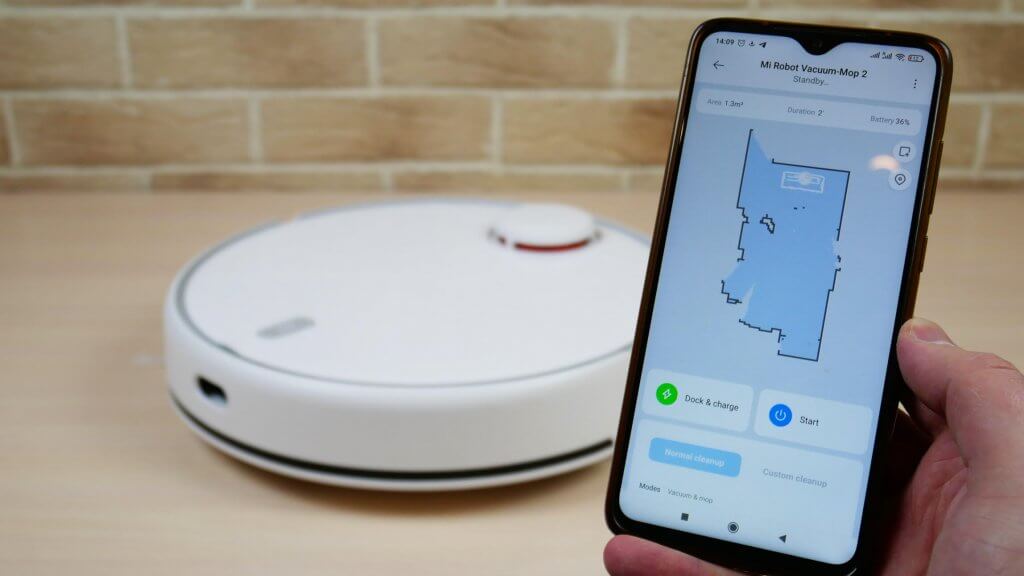

Control via app
The app interface is in English, which isn't so great. On the main dashboard, the robot creates a room map and automatically divides it into rooms. By tapping on the rooms, you can select the desired rooms for cleaning. To the right of the map are two more modes: cleaning in a selected zone and local cleaning.
Swiping up opens a menu where you can adjust basic cleaning parameters. First, you'll be asked to select one of three modes: dry cleaning, dry and wet cleaning, or wet only. Below that, you'll find controls for suction power and the mop pad's wetting level. By tapping the "Custom Cleanup" tab, you can further customize your cleaning settings. For each room, you can select the number of passes the robot makes (1 or 2), the cleaning mode, the individual suction power, and the water level applied to the mop pad. You can also set the cleaning order for each room. This is a plus.
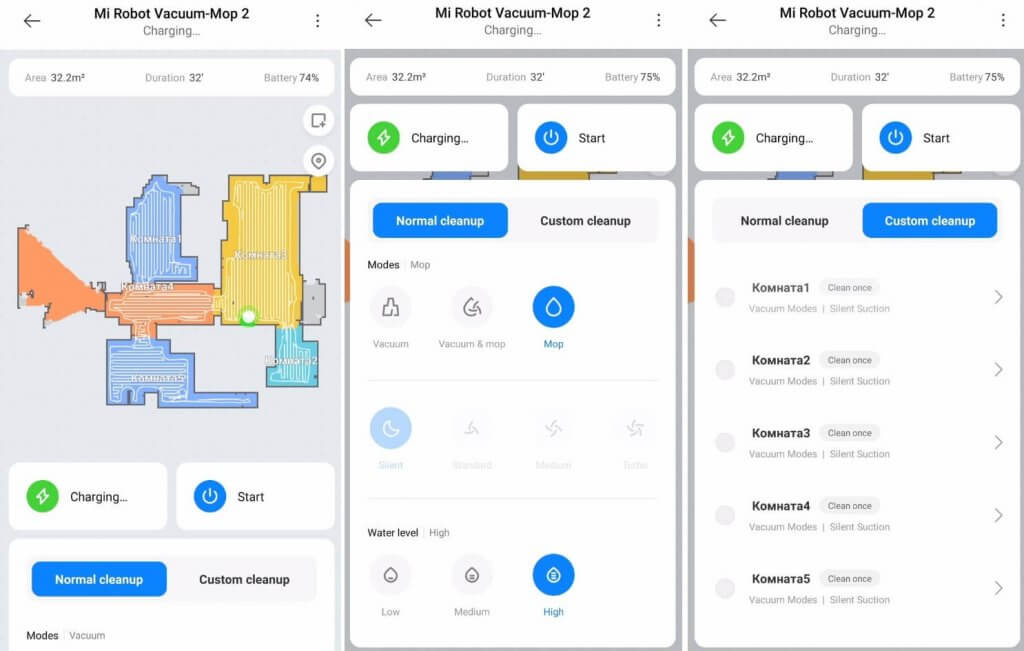

Cleaning modes
In the settings section, you can view your cleaning history, select a desired cleaning map from several stored in memory (the robot supports multi-maps), and set virtual walls and no-go zones in desired locations. There are even separate no-go zones for wet cleaning mode. You can also edit the map by changing room boundaries and naming them.
Next on the list is setting up a scheduled cleaning. Here, you can select the days of the week, the appropriate time, and the cleaning mode, including custom settings for each room.
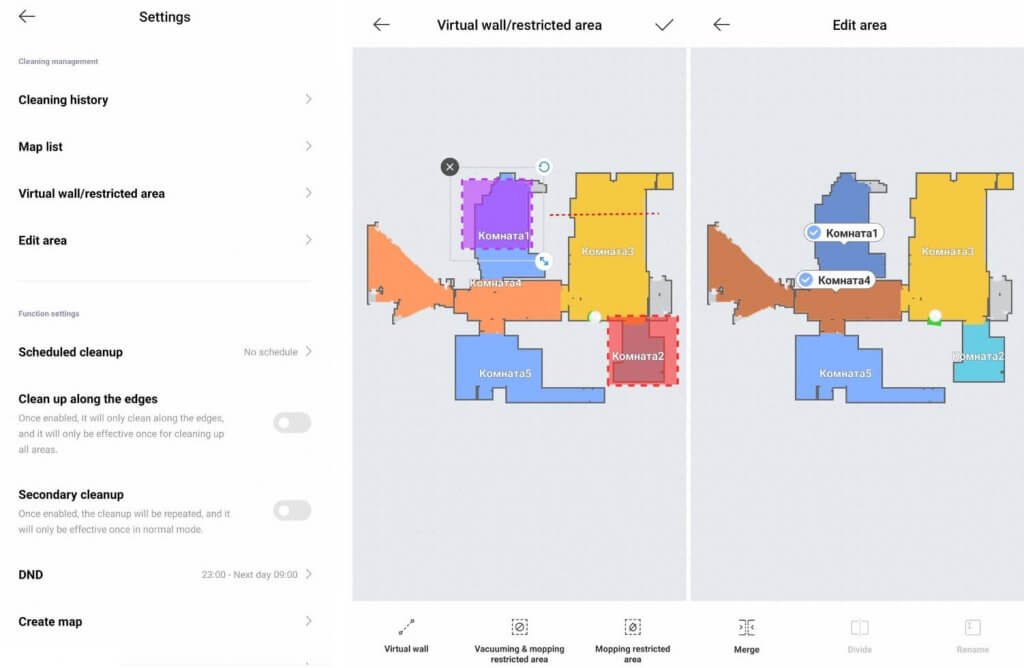

Basic settings
You can also enable perimeter cleaning, select double-pass mode for the entire accessible area, set a quiet time, create a new map or reset an existing one, monitor consumables, enable sound-based search for the robot, and configure additional settings. In this section, you can turn voice alerts on and off, adjust their volume, and select a wet cleaning pattern. The Xiaomi Mijia Robot Vacuum Mop 2 can mop floors in either a serpentine or Y-pattern, which is a plus. You can also enable vibration, calibrate the sensors, and manually control the robot.


Additional settings
Overall, the robot vacuum's functionality is very good, and you can flexibly customize the cleaning experience to your specific needs. The only key feature missing is an automatic power boost when entering carpets.
Testing
A detailed video review with all the tests has already been prepared and published on our channel. I recommend watching the entire video:
Navigation
First, let's test the robot vacuum's navigation in a room with obstacles. The Xiaomi Mijia Robot Vacuum Mop 2 first sweeps the entire perimeter of the accessible area, then begins cleaning in a serpentine pattern. It got stuck on the dryer for a bit, but managed to free itself, swept around the box and all the chair legs, and then returned to its base without a hitch. Test successful!
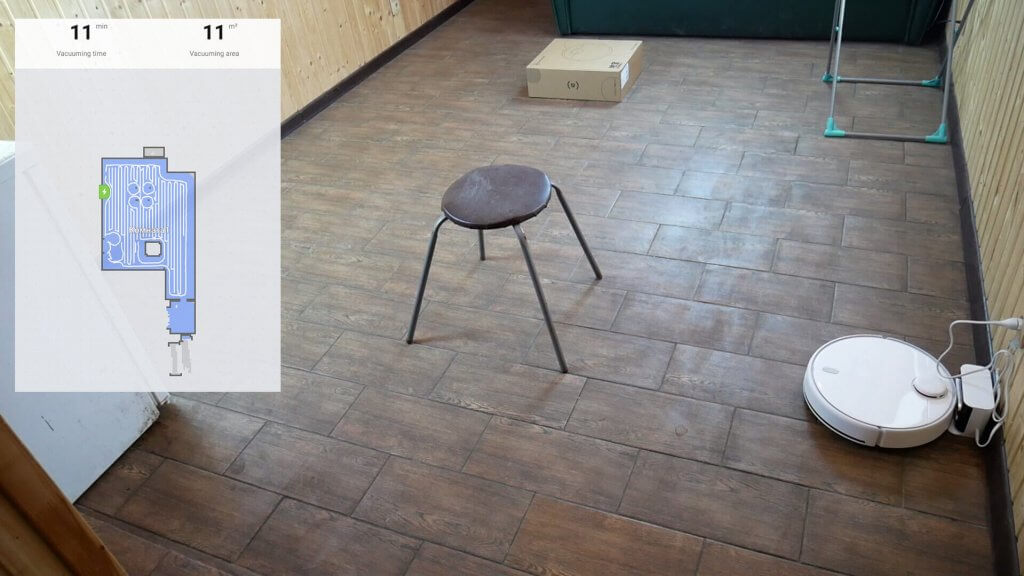

Navigating within a room
There are no complaints about navigation within the house either. The robot vacuum cleans room by room, first along the perimeter, then in a serpentine pattern. There are no uncleaned areas left; navigation is excellent!
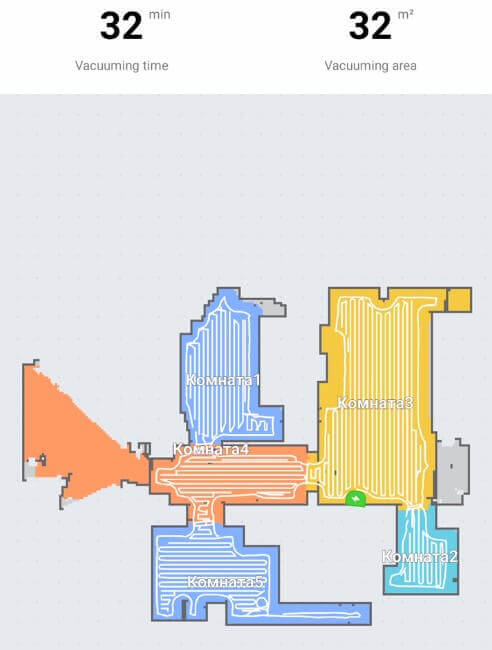
Navigation within the home
Suction power
The suction power is quite standard, the same as the Mijia LDS, despite the stated 2800 Pa. The Xiaomi Mijia 2, like most other Xiaomi robot vacuums, was only able to suck up debris from a 2 mm deep crevice. So the increased power is largely a marketing ploy. However, it's sufficient for automatically maintaining a clean home!
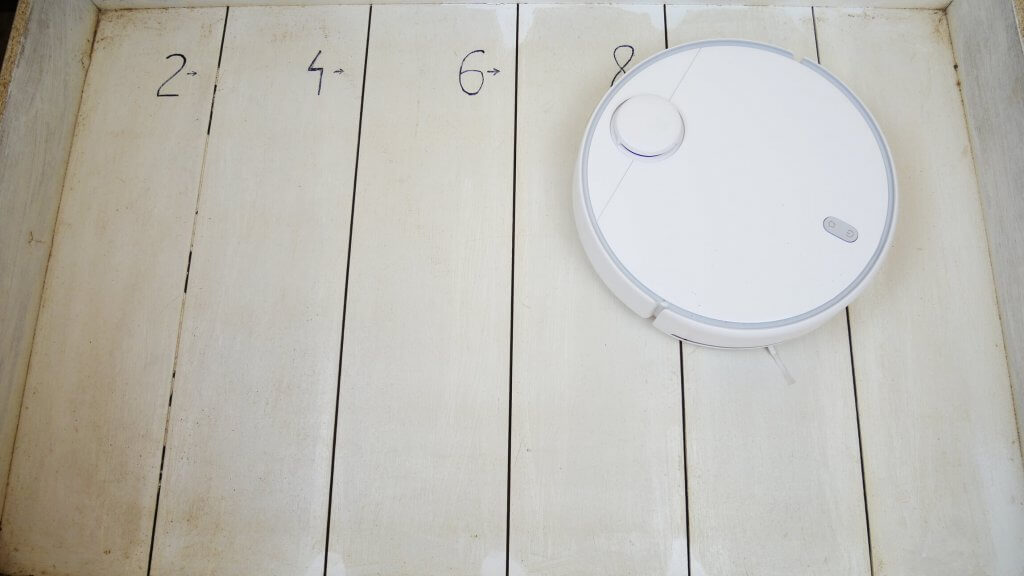

Suction power
Dry cleaning of laminate flooring
The quality of debris collection on laminate floors was excellent. The robot completely collected debris on the rack, leaving only a small amount in the corners due to its round shape. A few hairs got caught in the center brush, but the bulk of the debris was collected in the dust bin. Test passed successfully!
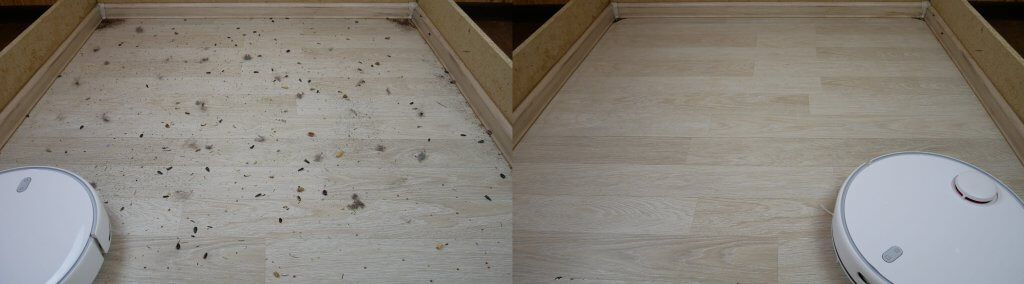

Dry cleaning of laminate flooring
Cleaning the carpet
Carpet cleaning performance is average, which is typical of Mijia robot vacuums. After each pass, the robot may leave behind some debris, and to clean it all, it needs to pass over the same area several times. Therefore, this robot vacuum is far from the best option for cleaning carpets.
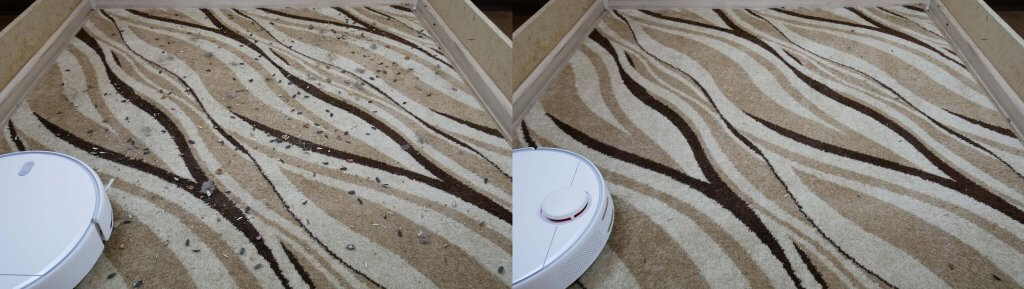

Cleaning the carpet
Wet cleaning
The wet cleaning performance is above average. The Xiaomi Mijia 2 is capable of removing light stains from the floor, leaving virtually no streaks. The cloth adheres well to the floor and absorbs dirt. However, due to the structure of the cloth, the unwashed area along the baseboard is quite wide.
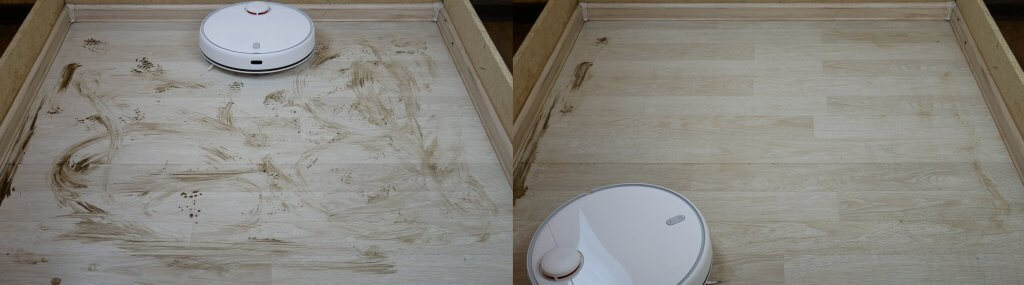

Wet cleaning
As for vibration, I didn't notice any benefit at all. It just creates unnecessary noise. So the vibration module in this model is purely a gimmick.
However, wet cleaning is perfectly adequate for maintaining a clean home. Furthermore, it's important to note that the robot vacuum cleaner can vacuum and mop the floor simultaneously.
Wet cleaning and carpets
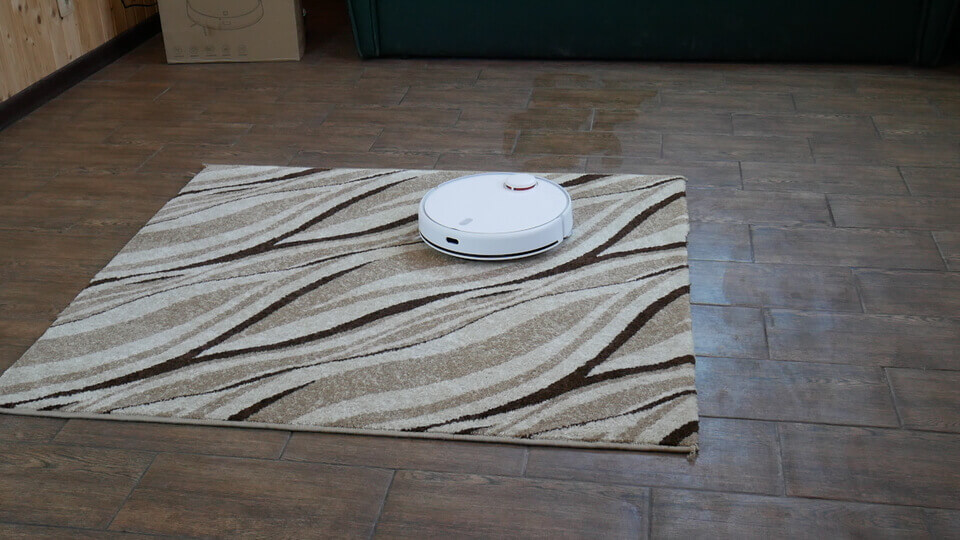
A new test, which was decided to be added in 2022, involves simultaneous dry and wet cleaning on carpets. The Xiaomi Mijia Robot Vacuum Mop 2 is unable to independently detect carpets, avoid them during wet cleaning, or at least turn off the water supply when entering a carpet. Therefore, be sure to set no-go zones for carpets when using wet cleaning.
Wet cleaning of the carpet
Obstacle clearance
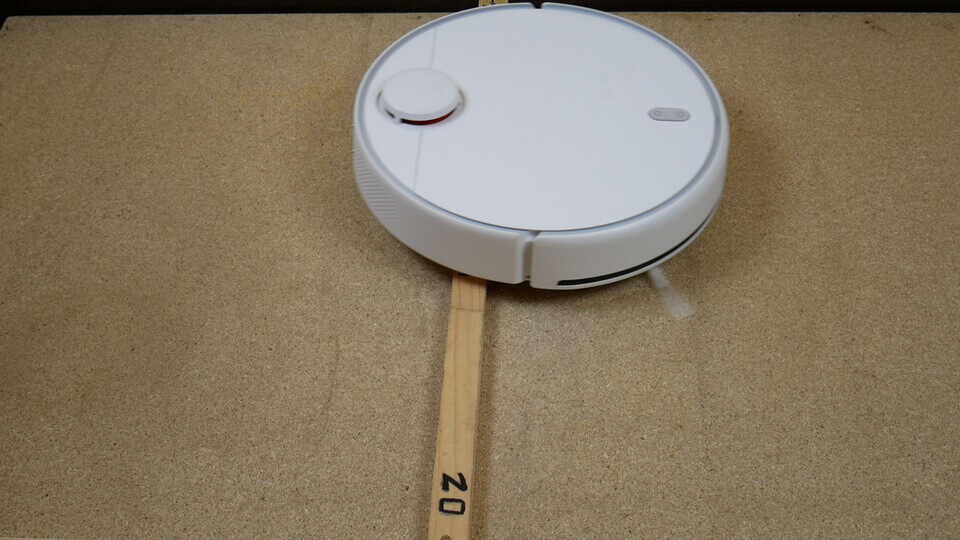
This model has good obstacle clearance. The robotic vacuum cleaner can easily navigate a 2-centimeter threshold.
Obstacle clearance
Driving on dark surfaces
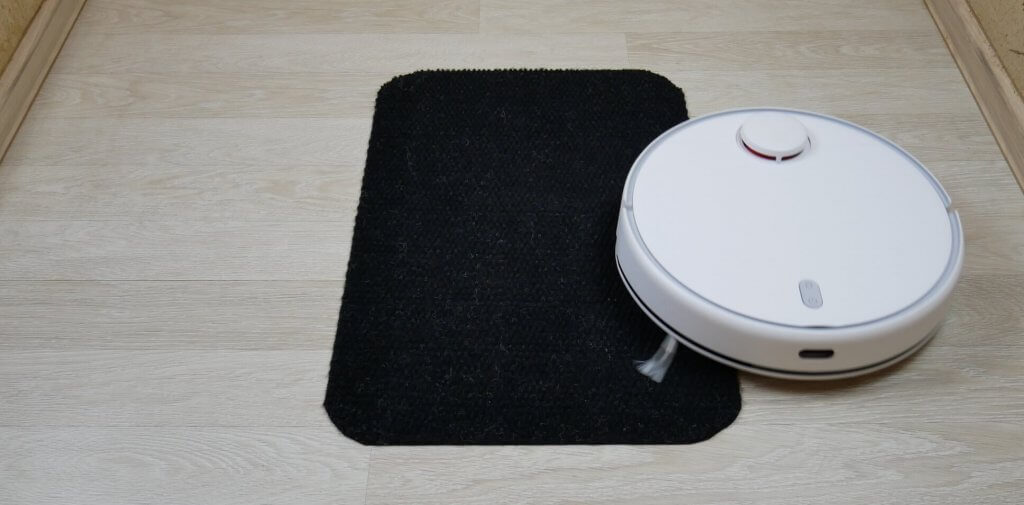
Another upgrade concerns its performance on black surfaces. The updated robot vacuum cleaner is resistant to dark stains and moves over them without a problem, unlike its predecessor, the Mijia LDS, and most other Xiaomi robots. That's a plus!

Driving on dark surfaces
Noise level
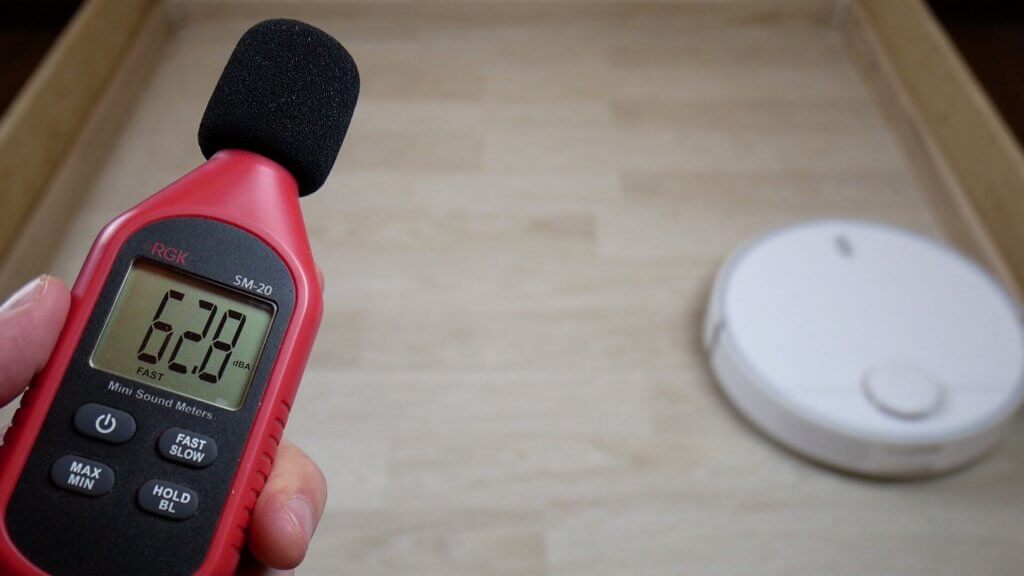
Finally, we measured the robot vacuum's noise level in different modes. In Quiet mode, the noise level was around 60-62 dB, in Standard mode it could reach 64 dB, at Medium power the noise level reached 65 dB, and in Turbo mode, the peak noise level was 67.1 dB.

Noise level
Again, for comparison, the previous model reached 73 dB with the same power. So, Mijia engineers have taken care to reduce noise levels. That's a plus!
Let's sum it up
Xiaomi Mi Robot Vacuum Mop 2 has been thoroughly reviewed and tested. our evaluation system he managed to gain 68 out of 100 pointsThis is 4 points higher than its predecessor, the Xiaomi Mijia LDS Vacuum Cleaner, thanks to a number of upgrades.
Overall rating of robot vacuum cleaners tested on robovac.washerhouse.com:https://robovac.washerhouse.com/en/rejtingi/robovac-obshhij-rejting-robotov-pylesosov-robo.html.
I'll share my personal opinion about the robot vacuum cleaner I reviewed. I liked the following:
- Good navigation.
- A large number of functions.
- High quality dry and wet cleaning on hard surfaces.
- Simultaneous dry and wet cleaning.
- Y-shaped wet cleaning.
- Not afraid of dark surfaces.
- Good obstacle clearance.
- The noise level has become lower.
- Great price, especially during sales season.
Among the disadvantages I would highlight:
- Not very good cleaning on carpets.
- The application interface is in English.
- The robot vacuum cleaner is designed for the Chinese market, which means the app doesn't work very well and sometimes freezes, plus the robot speaks Chinese.
- The vibration module and the increased declared suction power did not justify themselves in real conditions.
Overall, I can say the robot vacuum is quite good, and the updates have truly improved it compared to the Mijia LDS. In my opinion, the only downside is its performance on carpets, but if you're looking for a robot vacuum for hard floors and your budget is around $200, I recommend this model. It's truly more functional, more practical, and quieter.
On this note, I'd like to conclude my review of the Xiaomi Mi Robot Vacuum Mop 2. If you have any questions, please ask them in the comments. Happy shopping, everyone. Bye!
Which is better Mor2 or Viomi V3?
If the price is the same, then Viomi.
Good afternoon
Please tell me if this model has the ability to create separate cleaning maps.
There's a main room (kitchen-living room) with access to bedrooms with high thresholds, and a second floor. So, can I clean by just moving the vacuum cleaner, selecting a cleaning map, and running it automatically?
Hello! Could you please tell me which is better: the Xiaomi Mi Robot Vacuum Mop 2 Pro or the Dreame L10 Pro? They're practically identical in price and have similar features for the inexperienced user. My apartment is 65 sq. m. Thank you.
I'd still choose the Dreame. Or the 360 S8, which is also good for the money. There's a review on the website, too.
I would be glad to receive advice on what you think is more interesting and more profitable for its price: the Xiaomi MiJia Robot Vacuum-Mop 2 (MJST1S) for 10,000 or the 360 s9 for 14,500?