Dreame X50 Ultra Complete vs. Roborock Saros Z70: What's the difference between these flagships and which is better?
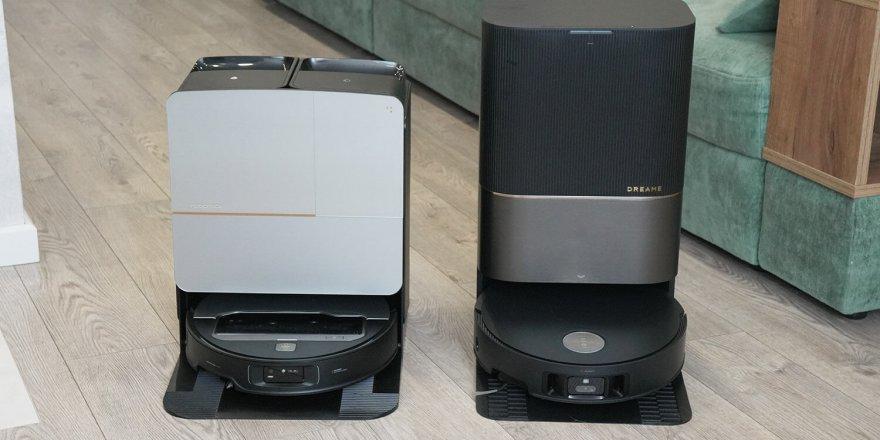
Hello to all readers of the project! In this review, I decided to compare two top-end robot vacuum cleaners from popular competing brands, namely the flagships Dreame X50 Ultra Complete And Roborock Saros Z70Both robots hit the market in the summer of 2025, both boast unique capabilities and advanced functionality, and both clean large areas efficiently. A comparison of key parameters will reveal the differences between the models, helping you choose the best one for your needs. So, let's get started!
Price
First, let's compare the prices of the robots. At the time of writing, the Roborock Saros Z70 costs between $1,800 and $2,000. The Dreame X50 Ultra Complete is priced lower, at between $1,200 and $1,400. Let's see what these manufacturers offer for that price.
Equipment
First, let's compare the robot vacuum cleaners' package contents. Roborock's package is standard and includes a spare dust bag for the station, a proprietary basket for storing the robot's collected items, and an instruction manual.
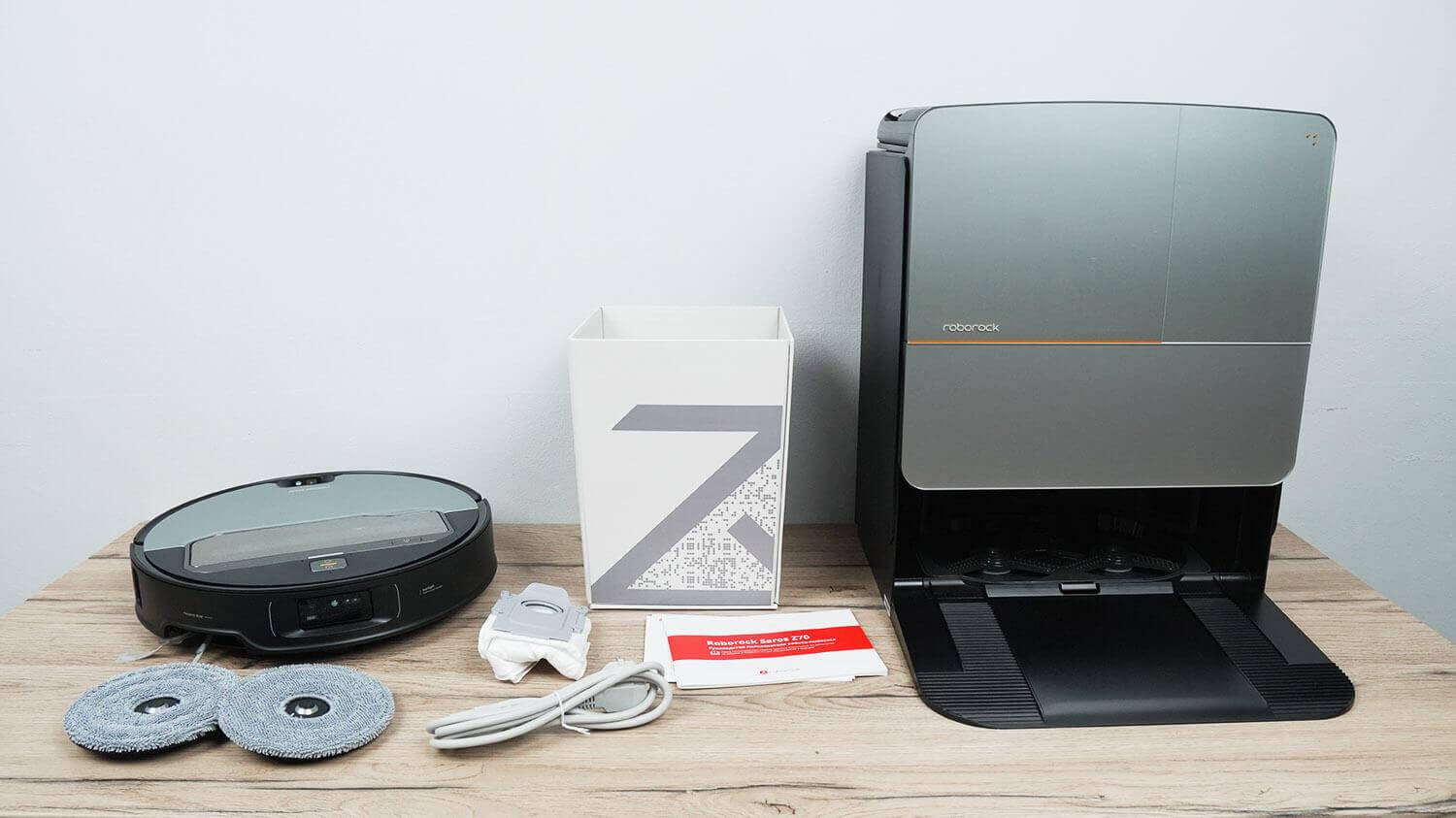
Roborock's package contents
The Dreame comes with an extensive package. It includes a 1-liter bottle of branded cleaning solution, 12 spare microfiber cloths, a set of spare turbo brushes, two spare side brushes, three spare HEPA filters, four spare station bags, and documentation. Dreame's flagship model clearly has the advantage here.
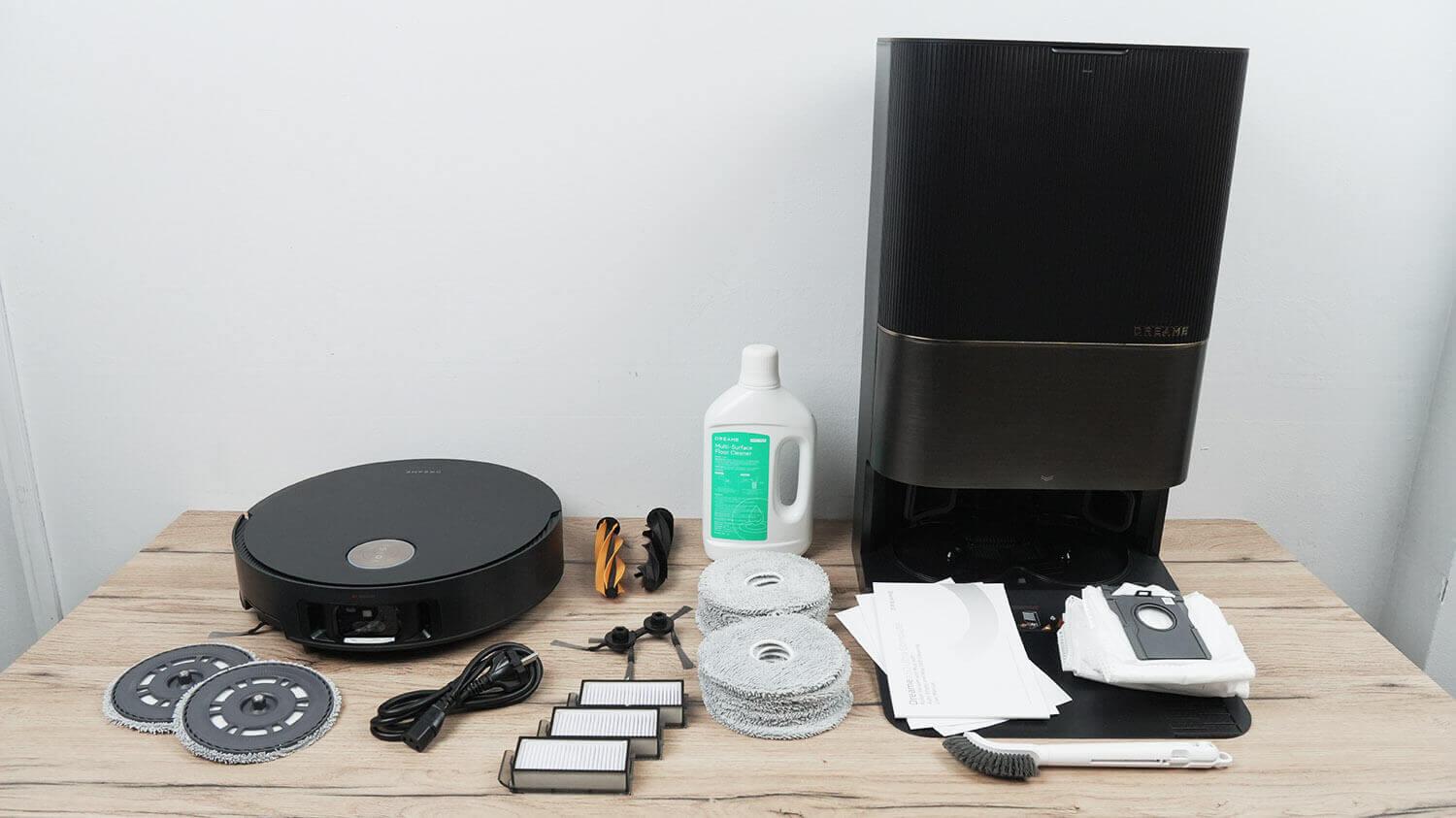
Dreame Equipment
Appearance and characteristics
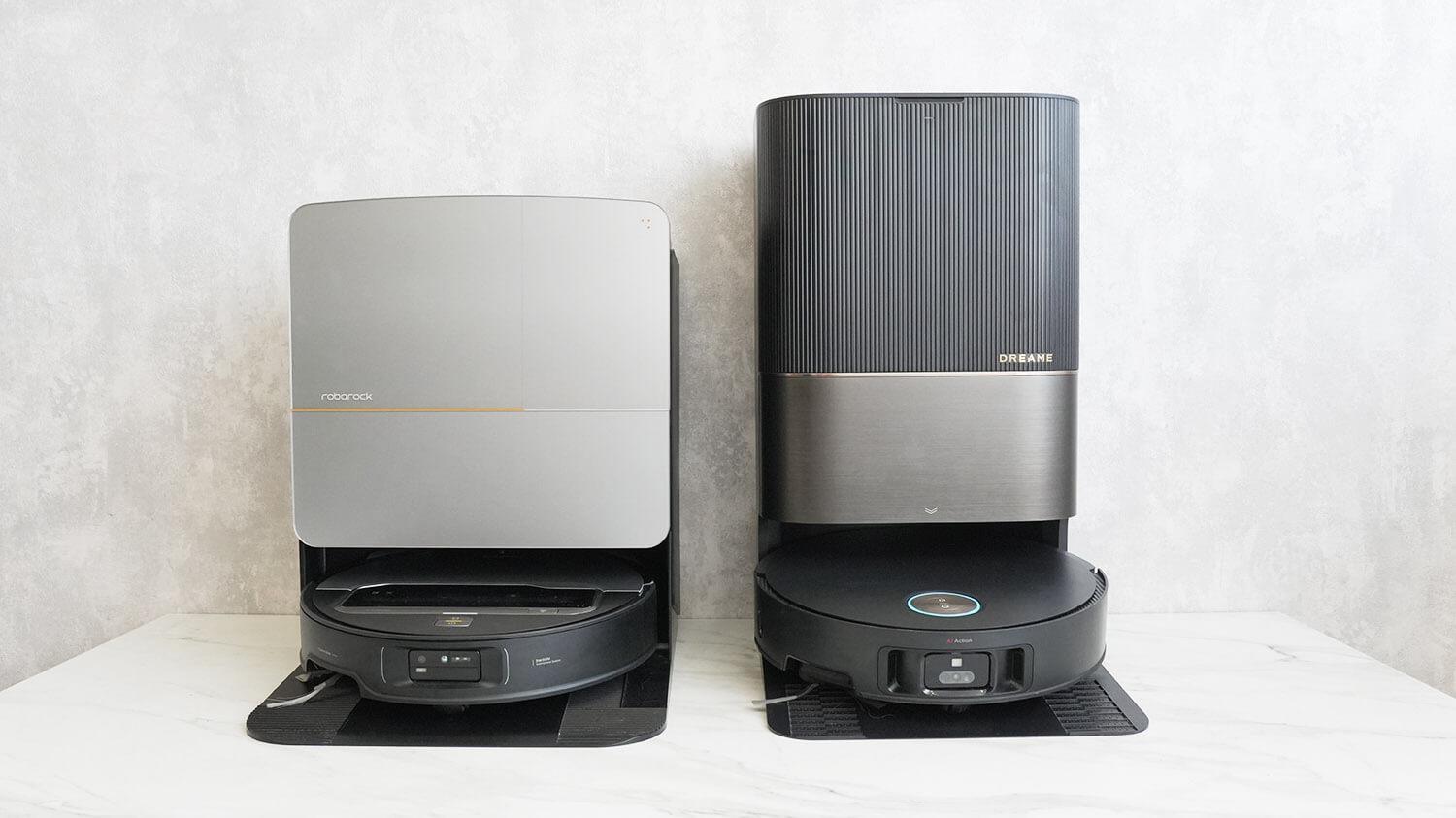
Now let's compare the flagships' appearance, as there are many differences. Let's start with the robot vacuums themselves. Both have a round body, a control panel at the top, a wall sensor on the right, and an object recognition system with a backlight in the center.
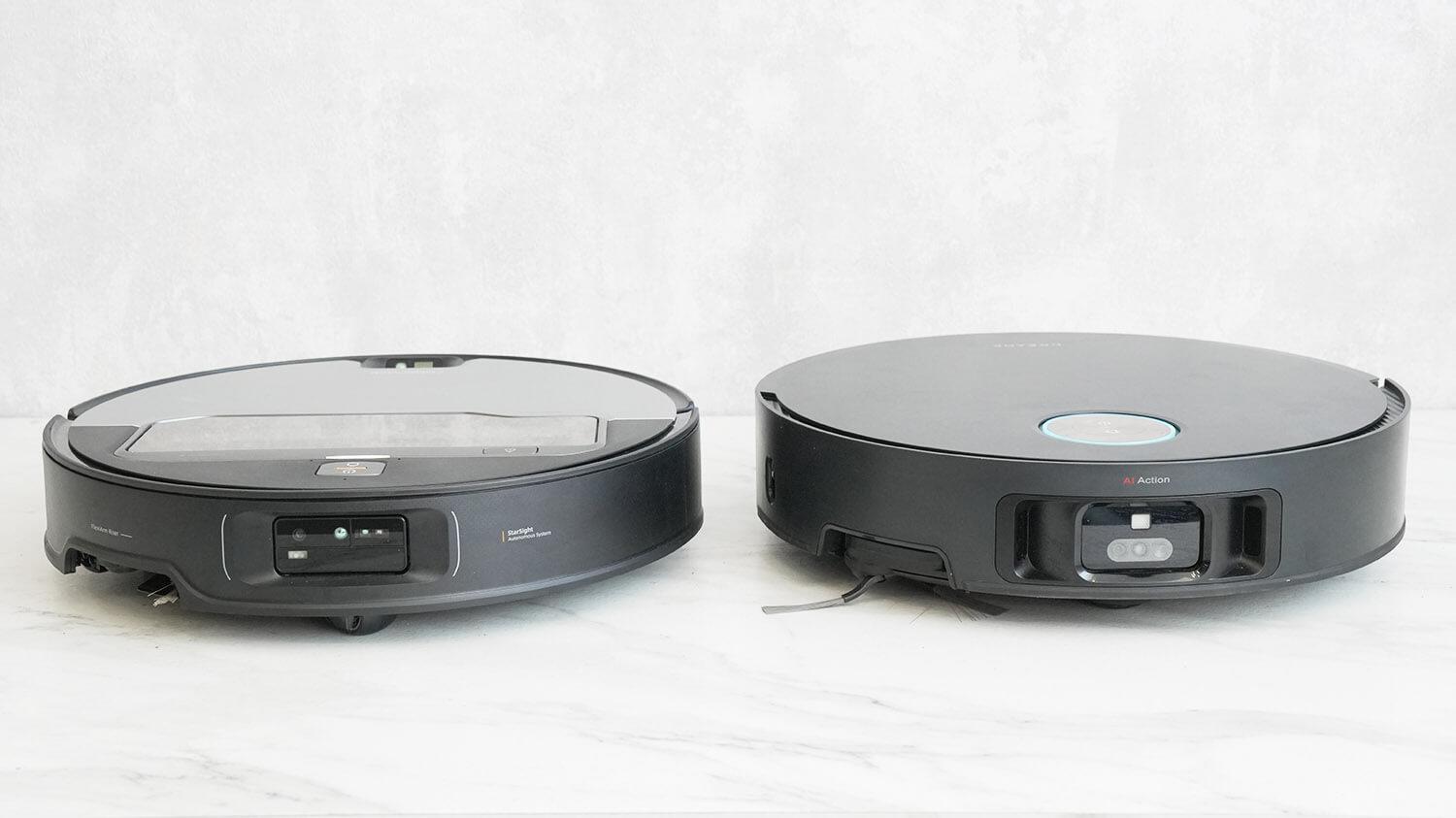
Appearance of robots
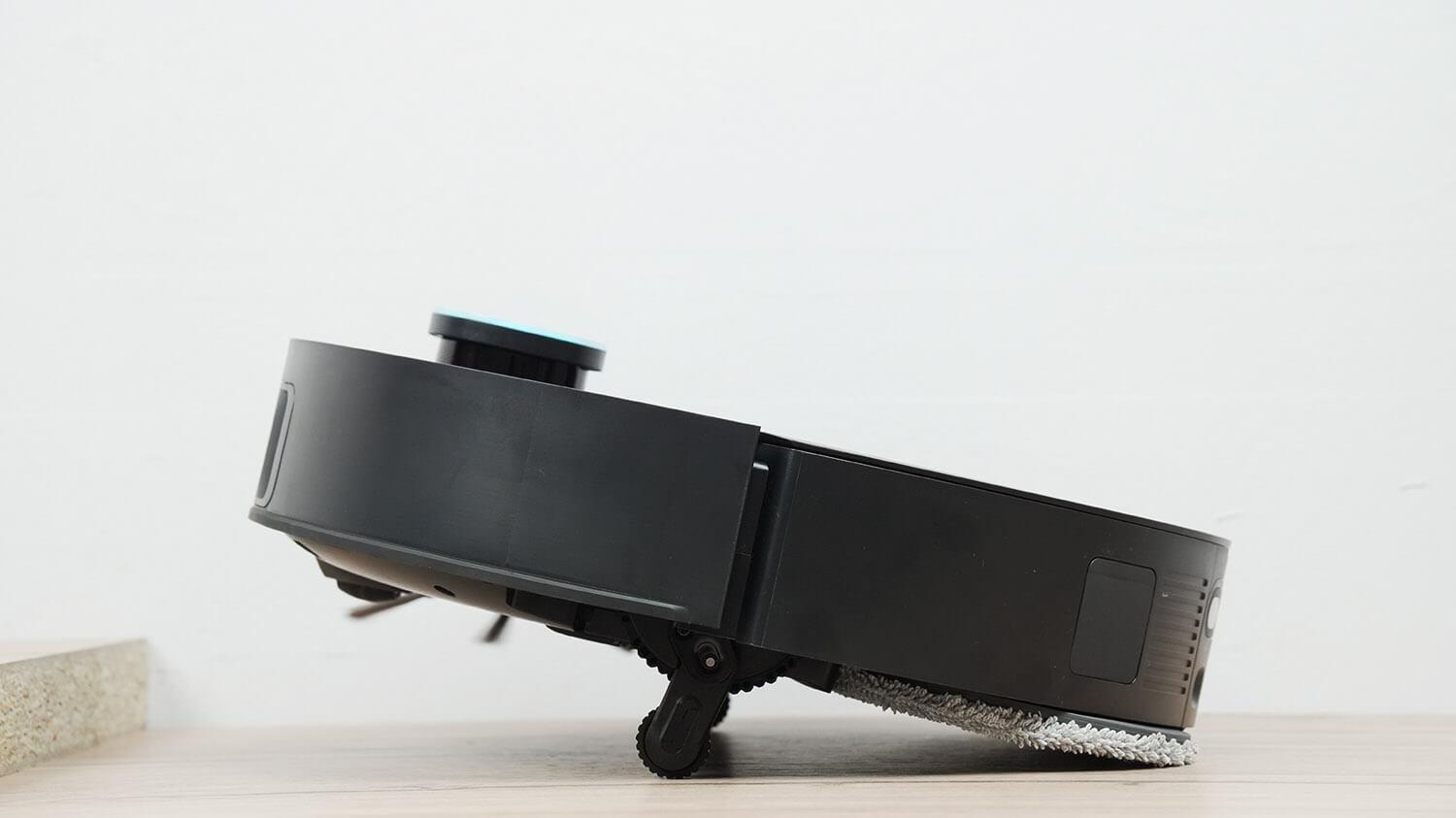
Robots have different navigation systems, and this affects the height of their bodies. The Dreame X50 Ultra Complete uses traditional lidar navigation, which fits under furniture as tall as 90 mm, as the robot itself is 89 mm tall with its lidar lowered. The Roborock Saros Z70 uses camera-based navigation and doesn't move in or out. However, its thinner body, at 80 mm, allows it to fit under furniture as thin as 80 mm.
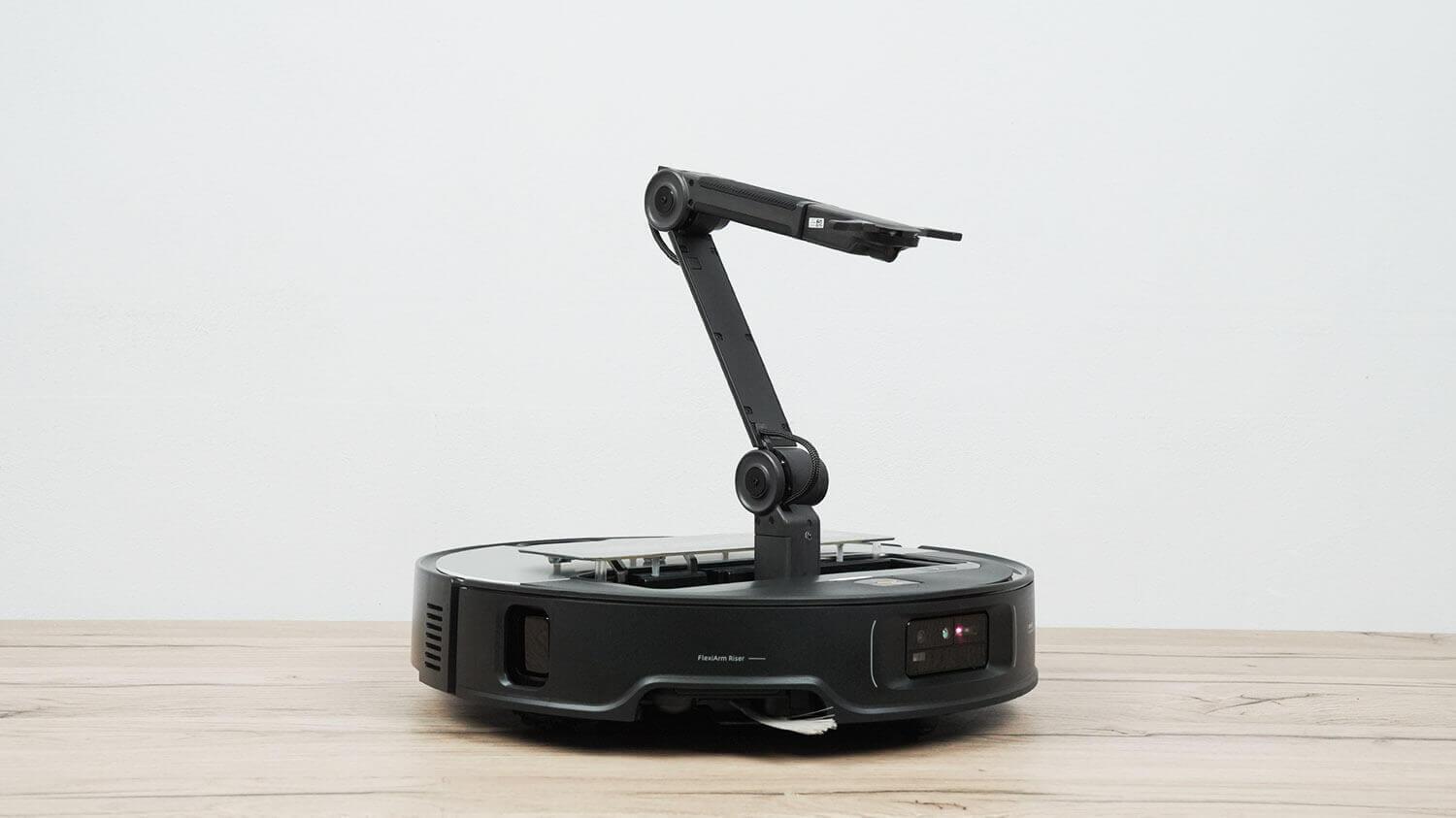
The key feature of the Roborock Saros Z70 is its extendable arm, which can be used to pick up socks, shoes, and other items from the floor. The robot automatically moves them to a designated location on the map, ensuring a complete cleaning without missing any spots.
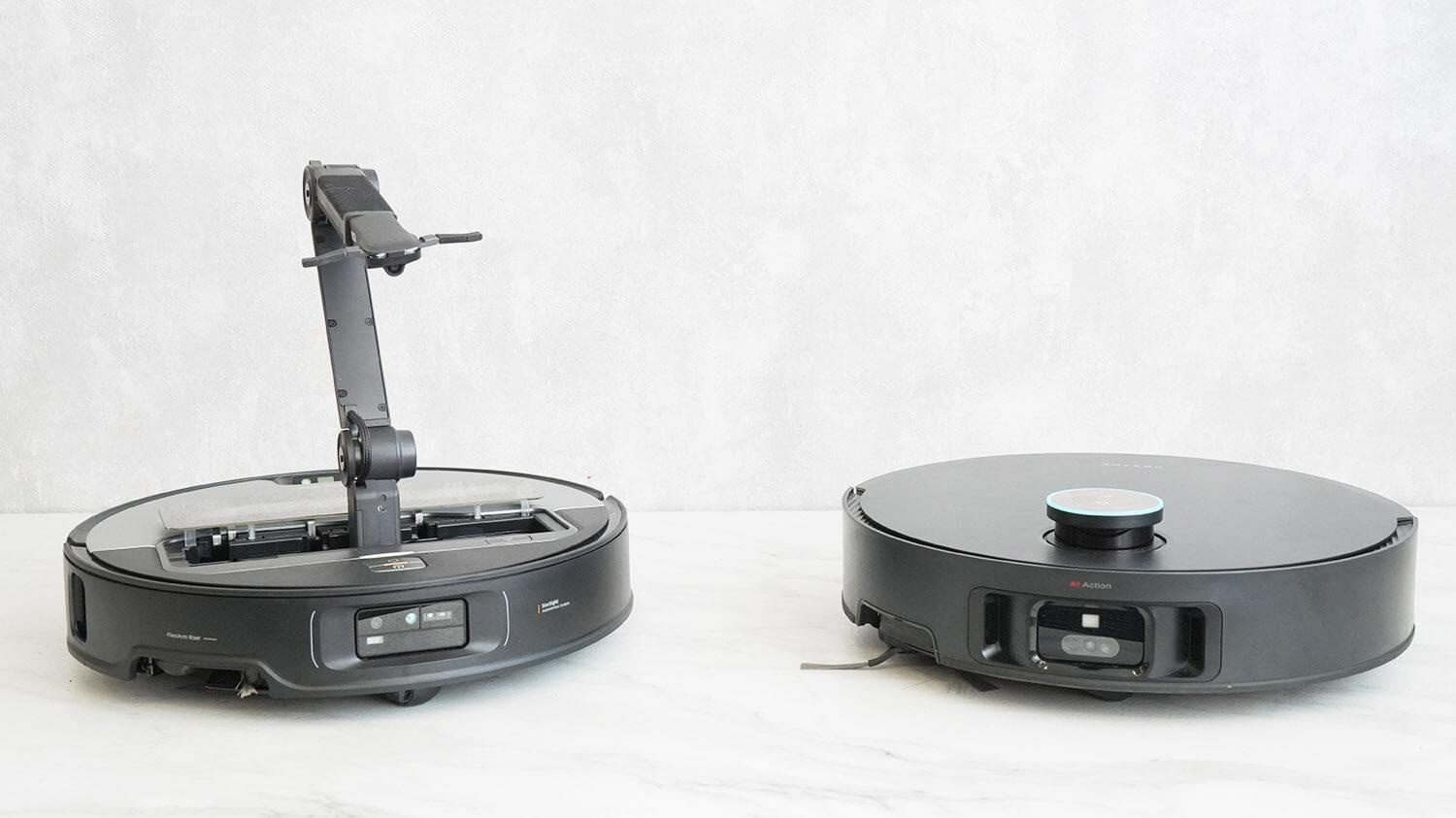
Extendable arm and lidar
The Dreame X50 Ultra Complete's dust bin is noticeably larger, as the Z70's dust bin was sacrificed to accommodate the hand. The Dreame's HEPA filter, however, is smaller but thicker.
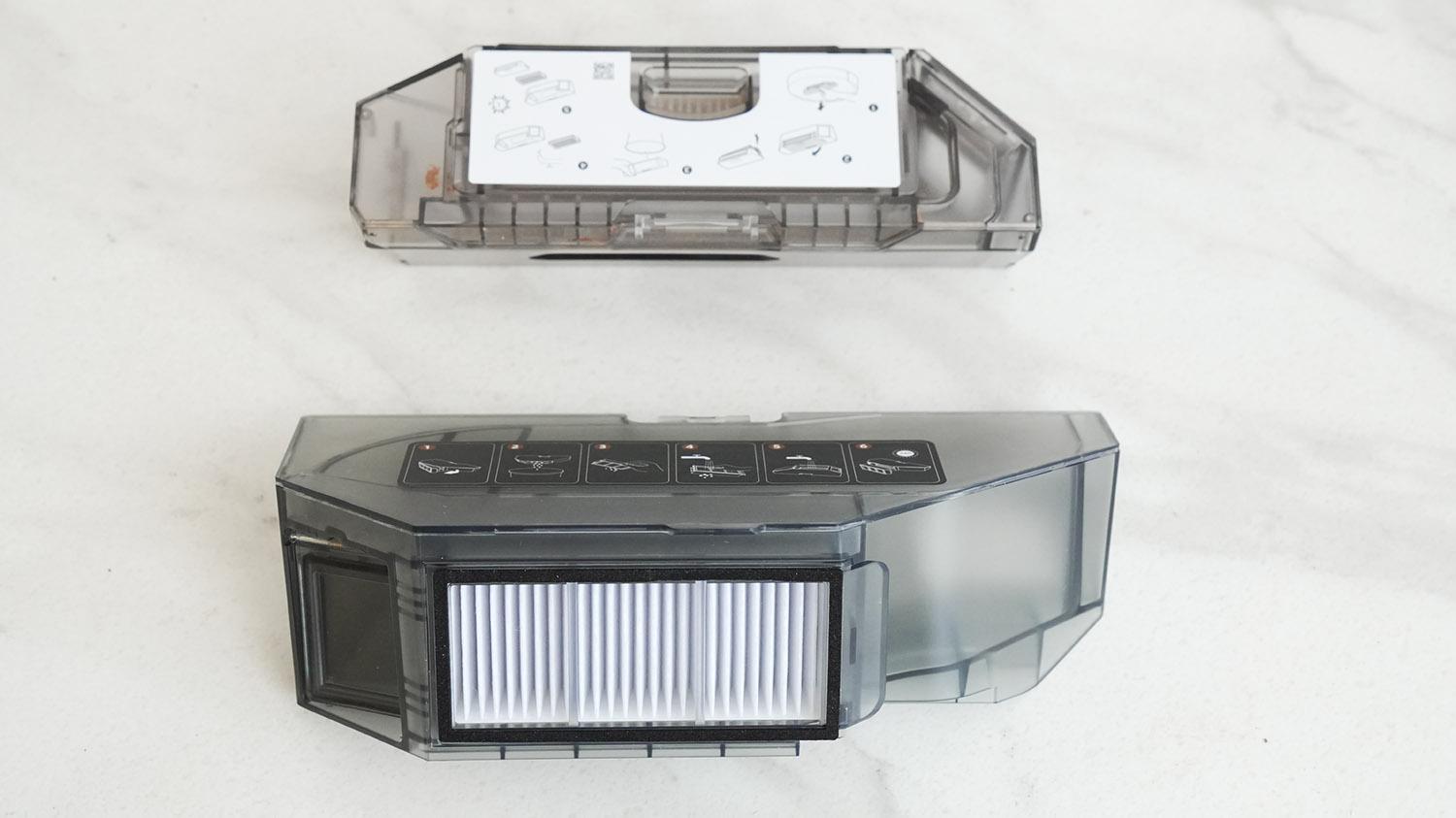
Comparison of dust collectors
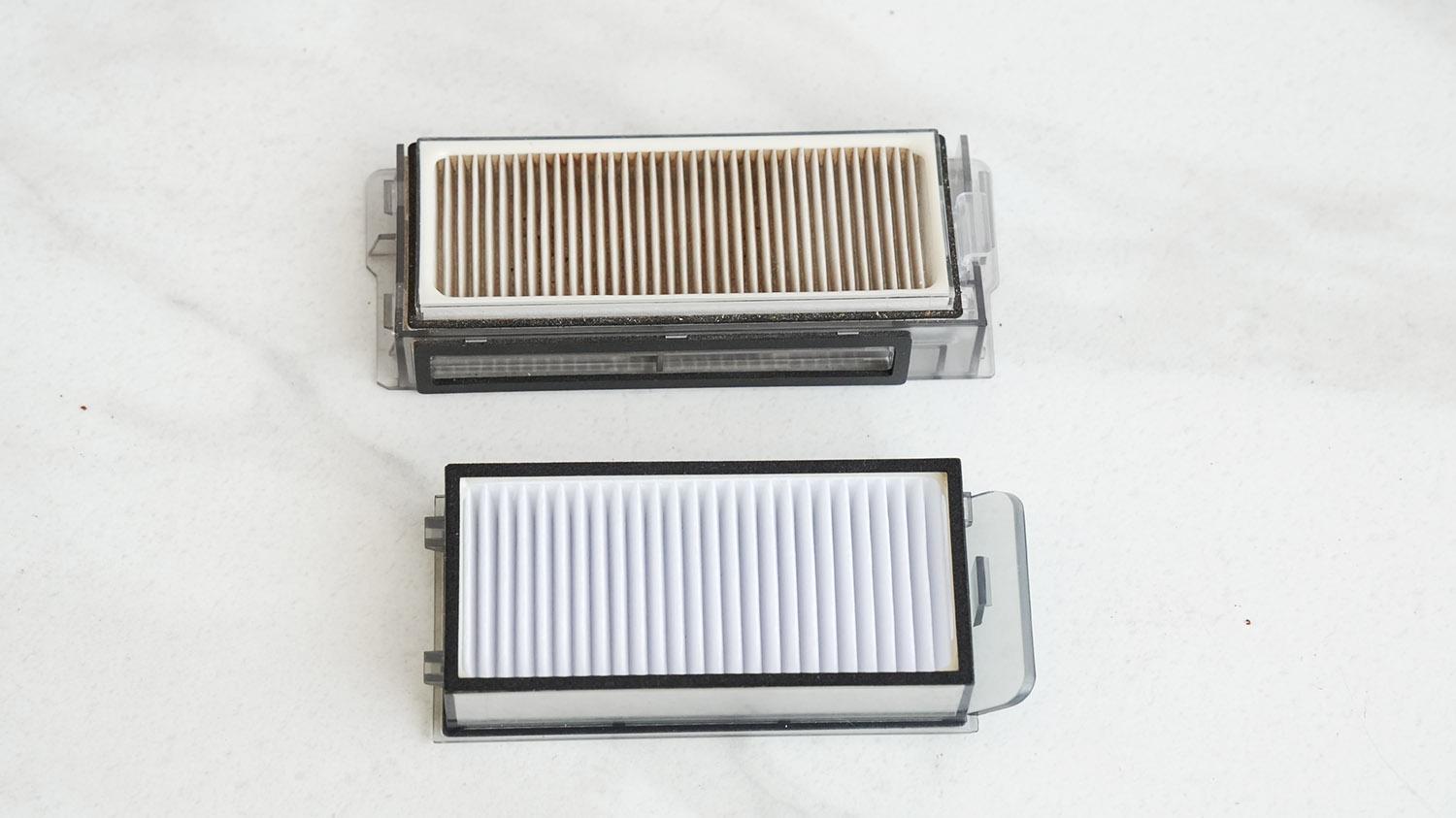
Comparison of HEPA filters
I'll also add that the Roborock has slightly higher suction power: 22,000 Pa compared to 20,000 Pa. I'll compare the actual results in tests.
The water tanks of both robots are hidden inside the body, the volume is approximately the same: 80 ml for Dreame and about 70 ml for Roborock.
Robot vacuum cleaners have very similar cleaning modules, but there are still differences. Both have a side brush that extends into corners to completely sweep away debris. However, Roborock's is dual-beam. This prevents hair from getting tangled, a truly effective solution.
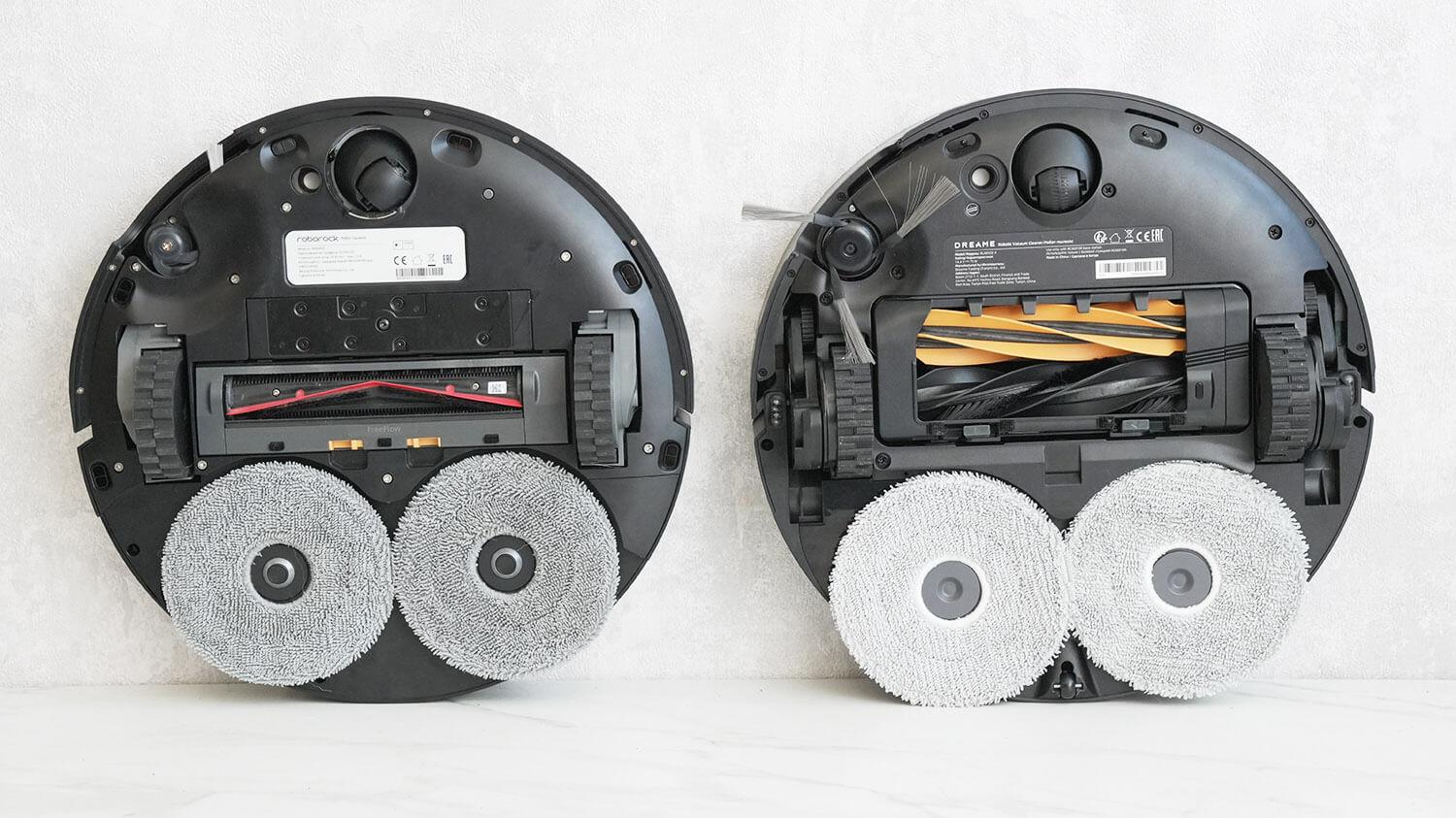
Cleaning modules
The central brushes are different. The Roborock Saros Z70 has a turbo brush with built-in blades for cutting through tangled hair and fur. The Dreame X50 Ultra Complete has two cone-shaped, bristle-petal turbo brushes for shedding tangled hair and fur. In other words, both brushes have anti-tangle protection. How each solution performs in real-world conditions will be demonstrated in the tests below.
The wet cleaning cloths are also very similar, but Roborock's cloths are slightly thicker.
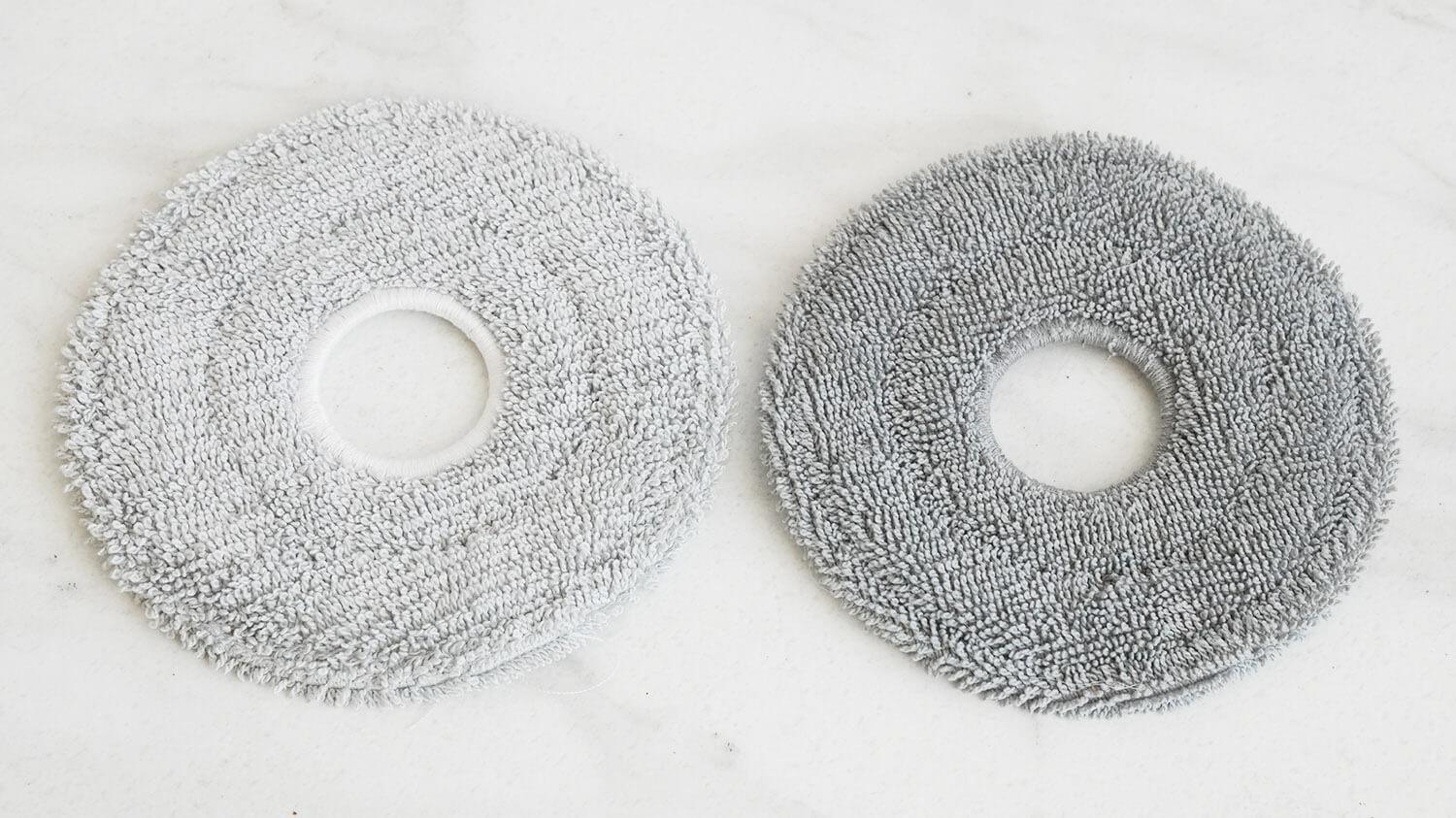
Napkins
Both models feature a cleaning cloth that extends to the edge for a thorough cleaning of the floor along the walls. But the Dreame also features a rear-end that can reach into corners and, even more impressively, a rear-end that can swivel under furniture and doors for a more thorough cleaning. This, in my opinion, is a very significant difference.
I'll add that Roborock has 6 fall protection sensors, while Dreame only has 4. It's a small difference, but it's still a difference between the robots.
And it's equally important to mention the body lift, which is implemented in both Roborock and Dreame. The former claims to be able to overcome thresholds up to 4 cm high, while the latter can do so up to 6 cm. I'll show you the reality in my tests.
The stations also differ significantly. First, the Dreame X50 is available in two station versions: a standard, tall version with water tanks, and a built-in version for connection to water and drainage. The tall version supports the installation of a module for connection to both sewer and water pipes. At the time of writing, Roborock is only available with one station—one with water tanks. It is not compatible with the module for connection to sewer and water pipes. There's also a built-in station for connection to utility lines, but unfortunately, it's not available in our market.
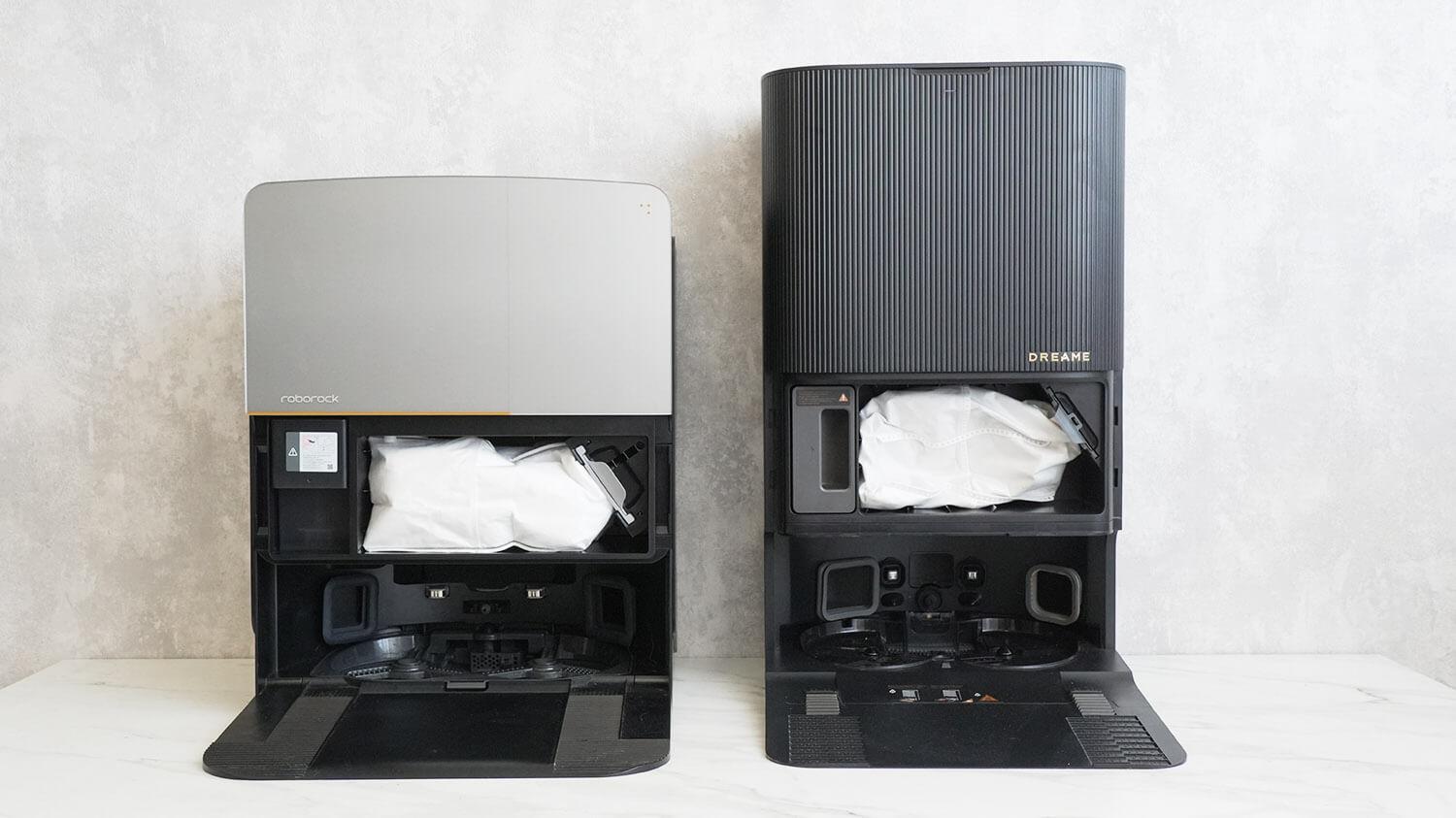
Stations
The stations have identical functions: they wash napkins with hot water, dry with warm air, add detergent, and self-clean the dust container. Everything is more or less the same. There are some minor differences in the specifications, which I'll highlight below, but overall, they're not noticeable to the average user.
One major difference is that the Dreame X50 Ultra Complete has two UV lamps in its station: one for disinfecting the wipes in the station and one for disinfecting the bag. But more importantly, the wipe washing area is designed differently. The Roborock Saros Z7 has a removable wipe washing tray, which consists of a removable module with combs for cleaning the wipes, a tray with scrapers, and a coarse filter for dirty water. The Dreame X50 Ultra Complete has a flat bottom without combs, which should improve the self-cleaning performance of the station's bottom and make it easier to clean. Only the coarse filter in the tray is removable, and I prefer this design.
The water tank and waste bag sizes are also slightly different in favor of the Dreame, but this is not a very significant difference.
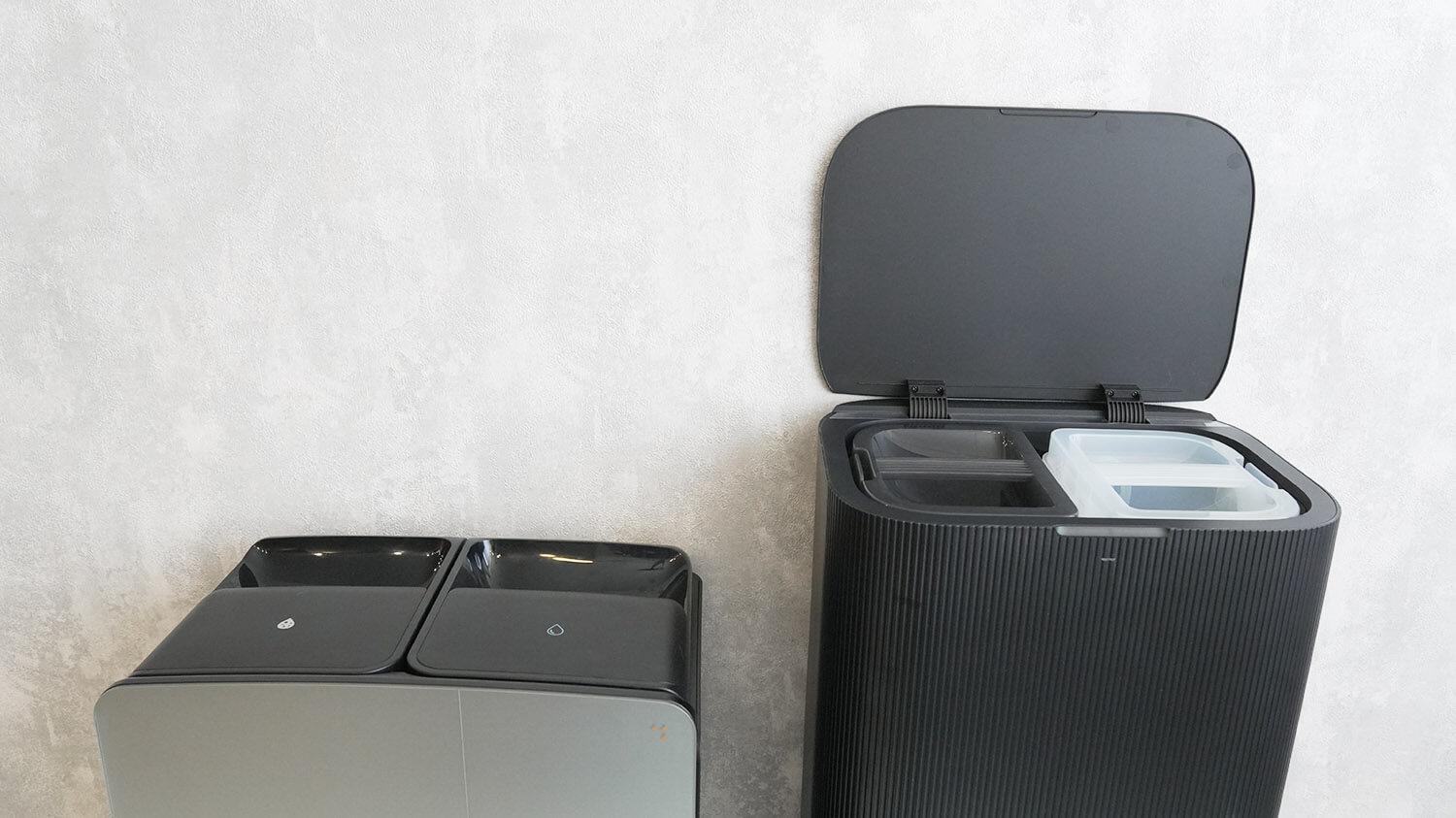
Location of tanks
Overall, there are quite a few differences in design and specifications, and I've summarized them in a table for easy comparison. If I missed anything, please let me know in the comments what other components differ in the robots' design.
| Dreame X50 Ultra Complete | Roborock Saros Z70 | |
| Price | $1,200-$1,400 | $1,800-$2,000 |
| Equipment | Annual set of all consumables and cleaning agent | Spare bag and basket for collecting things |
| Navigation | Lidar + sensor and camera system | System of sensors and cameras |
| Battery | Li-Ion 6400 mAh | Li-Ion 6400 mAh |
| Suction power | up to 20,000 Pa | up to 22,000 Pa |
| Overcoming obstacles | up to 60 mm | up to 40 mm |
| Fall protection sensors | 4 | 6 |
| Body height | 89-111 mm | 80 mm |
| Dust collector | 395 ml | ≈180 ml |
| Water tank | 80 ml | ≈70 ml |
| Side brush | Retractable, three-beam | Retractable, double-beam |
| Central brush | Two, protection against hair winding is implemented | One, protection against hair winding is implemented |
| Wet cleaning wipes | Two, round, with an extension to the baseboard and scrolling in the gaps under the furniture | Two, round, with an extension to the baseboard |
| Stations | 1. Standard with tanks (+ installation of a module for cold water supply and sewerage is supported)
2. Built-in for connection to utility networks.
|
1. Regular with tanks (not connected to sewerage and water supply) |
| Station functions | Self-cleaning dust collector, washing cloths with hot water (80°C), drying with warm air (up to 60°C), automatic mixing of detergent. | Self-cleaning dust collector, washing cloths with hot water (80°C), drying with warm air (55°C), automatic mixing of detergent. |
| The capacity of water tanks at the station | 4.5+4 l | 4+4L |
| Garbage bags at the station | 3.2 l | 2.5 l |
| Station sizes | 590*340*457 mm | 381*475*488 mm |
| Self-cleaning of the station bottom | Flat bottom | Scrapers |
| Key feature | A mechanical arm for picking things up from the floor |
Functional capabilities
Speaking of capabilities, the functionality is again very similar. Both robots are controlled via a proprietary mobile app in Russian. There are numerous modes, including smart, custom, and even voice control via proprietary assistants. There's also Alice support, remote home monitoring, and the ability to lift cloths, brushes, and housings. Overall, there aren't any significant differences, in my opinion. Perhaps, as mentioned earlier, one robot's arm lifts and slides into its housing, while the other uses a lidar.
Roborock Saros Z70 and Dreame X50 Ultra Complete
It's much more important to highlight a crucial detail that not everyone takes into account. The Dreame X50 Ultra Complete is the international version of the robot vacuum cleaner, which supports Russian voice control and the robot itself can speak Russian, among many other languages. The Roborock Saros Z70 has two versions: global and Russian. The global version speaks English and other languages except Russian. The proprietary assistant also supports multiple languages, but Russian is not listed. To ensure Russian language support, you must order the Russian version from official distributors in Russia. Pay attention to this, as even popular marketplaces and online retailers often sell the global version for the same price, but it's not adapted for the Russian market.
Testing
The most interesting part is comparing the test results. You can explore all the tests in the detailed reviews of each robot.
A video version of the comparison has already been published on the channel:
In this video, I will only compare the results in the table:
| Dreame X50 Ultra Complete | Roborock Saros Z70 | |
| Operating time and useful cleaning area at maximum settings | 128 min / 102 sq.m. | 109 min / 76 sq.m. |
| Object recognition day:
6 different items 3 socks 4 wiring 6 simulated excrement
|
6/6 3/3 4/4 6/6 |
6/6 3/3 3/4 5/6
|
| Object recognition at night:
6 different items 3 socks 4 wiring 6 simulated excrement
|
6/6 3/3 2/4 6/6 |
4/6 3/3 2/4 2/6
|
| The depth of suction of debris from cracks in different modes:
Level 1: Level 2: Level 3: Level 4: Level 5: |
2 mm (good) 2 mm (better) 2 mm 4 mm (partially) 8 mm (partially)
|
2 mm (partially) 2 mm (better) 4 mm (partially) 10 mm (partially) 10 mm (better)
|
| Cleaning behind the curtains | Yes | |
| Anti-tangle Hair Protection | It didn't work in difficult conditions, but in everyday conditions the brushes are clean. | It didn't work in difficult conditions, but in everyday life the brush is clean. |
| Quality of waste collection | High on various surfaces, but large debris blocks the turbo brush | |
| Removing difficult stains | 6 passes | 6 passes |
| Obstacle clearance | up to 5 cm (one level)
up to 6 cm (two levels: 4+2 cm) |
up to 3 cm (one level)
up to 4 cm (two levels: 3+1 cm) |
| Robot noise level | 58.5-72 dB | 55-71.3 dB |
| Noise level of the station | 72 dB | 72.5 dB |
Here we see that the Dreame X50 Ultra Complete offers longer battery life, more accurate object recognition, cleans behind curtains, and navigates tall obstacles better. It also has no trouble picking up large debris. The Roborock Saros Z70 offers slightly more power and a slightly lower noise level. Both robots clean floors equally well and are adept at removing tangled hair and pet hair from the main brush.
Personal opinion
So, what's the bottom line? Both robot vacuums have certainly demonstrated progress. Roborock's solution takes automated robotic cleaning to a new level. It not only collects dirt and mops the floor, but also picks up items. This is definitely the future, and other brands will soon be showcasing their solutions. Plus, the robot is slightly slimmer, and for some, this may even be a key factor when choosing between the two flagships.
But for me, the Dreame X50 Ultra Complete's advantages in this comparison are more compelling. It performed better in tests, has more advantages in the design comparison, is better equipped, and is even more affordable.
So, of the two, I ultimately chose the Dreame, the long-awaited version with a built-in docking station. But in any case, both robots are very good and deserve to be ranked first and second in the overall ranking of tested robot vacuum cleaners according to the project. In the video description, I've included a link to the overall ranking, individual reviews of each robot, and links to purchase from trusted stores.
On that note, I'd like to conclude this comparison. If you have any questions or missed any important points, please let me know in the comments. Happy shopping, everyone. Bye!