Roborock Saros 10R vs. S9 MaxV Ultra (Saros 10): What's the difference and which is better?
Hello to all readers of the project! In this video, I decided to compare very similar robot vacuum cleaners – the top new products of 2025. Roborock Saros 10R And Roborock S9 MaxV Ultra, which was presented at the CES 2025 exhibition as Saros 10Both launched at around $1,400, both are equipped with advanced features, and both have been reviewed. Accordingly, I'll compare their design, specifications, and test results, after which I'll express my opinion on which robot vacuum is best for different conditions. So, let's get started!
Appearance
First, let me explain the differences in the robots' design. The Roborock S9 MaxV Ultra is available in black and white, while the Saros 10R is only available in black. For many, this difference alone may be crucial.
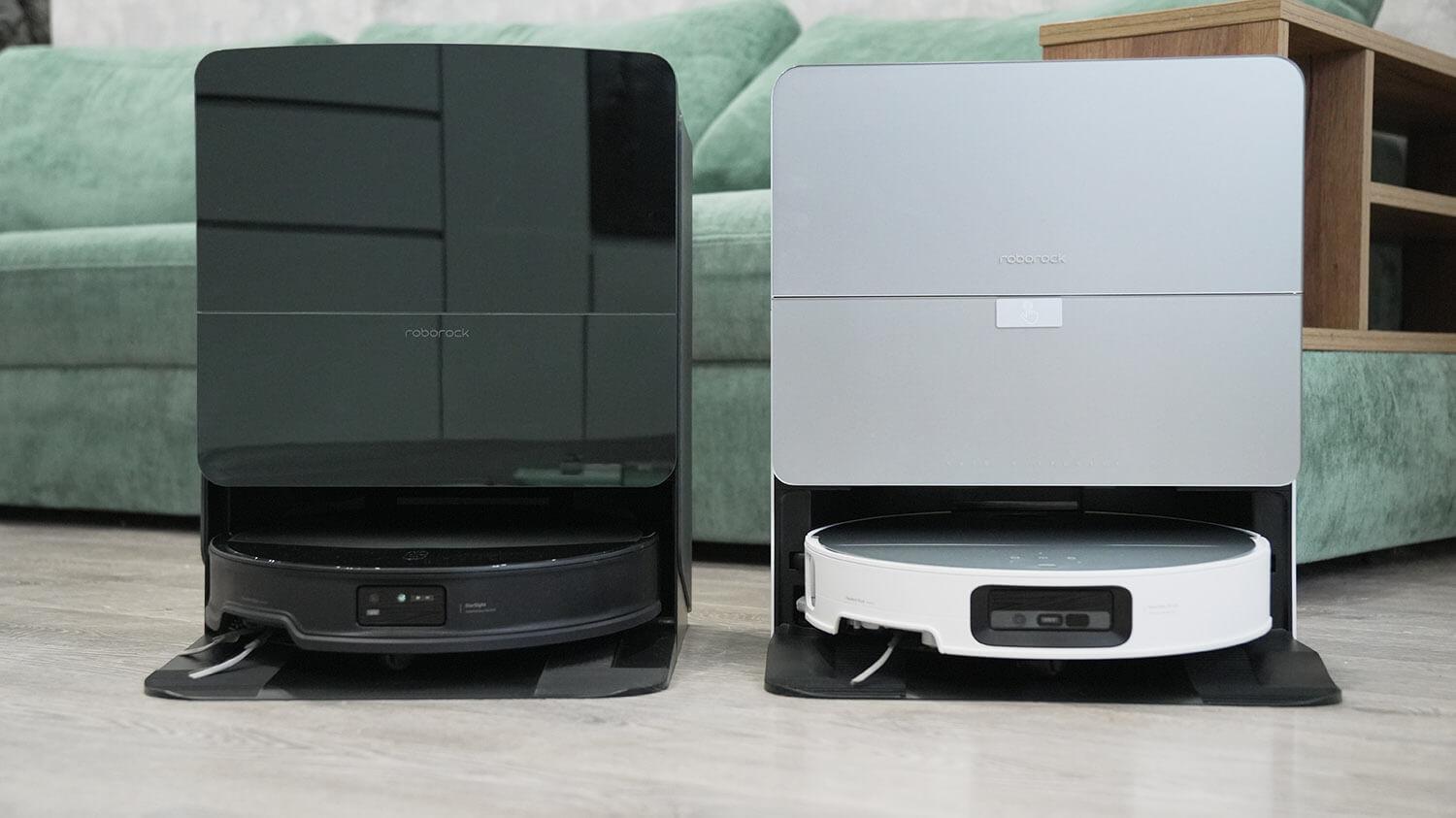
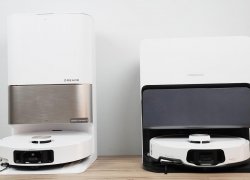
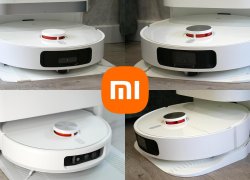
Roborock Saros 10R and S9 MaxV Ultra
Speaking of navigation, both robots feature an object recognition system with a backlight on the bumper. Only the S9 MaxV Ultra has this technology, dubbed StarSight Autonomous System 2.0, which works in tandem with sensors and cameras on the side near the self-cleaning dust bin curtain. The Saros 10R, meanwhile, features Reactive AI 3.0 Object Recognition, which works in tandem with the familiar lidar sensor that retracts into the body. Thanks to the new navigation system, both robots boast a body height of 7.98 cm, allowing them to clean under 8 cm-thick furniture.
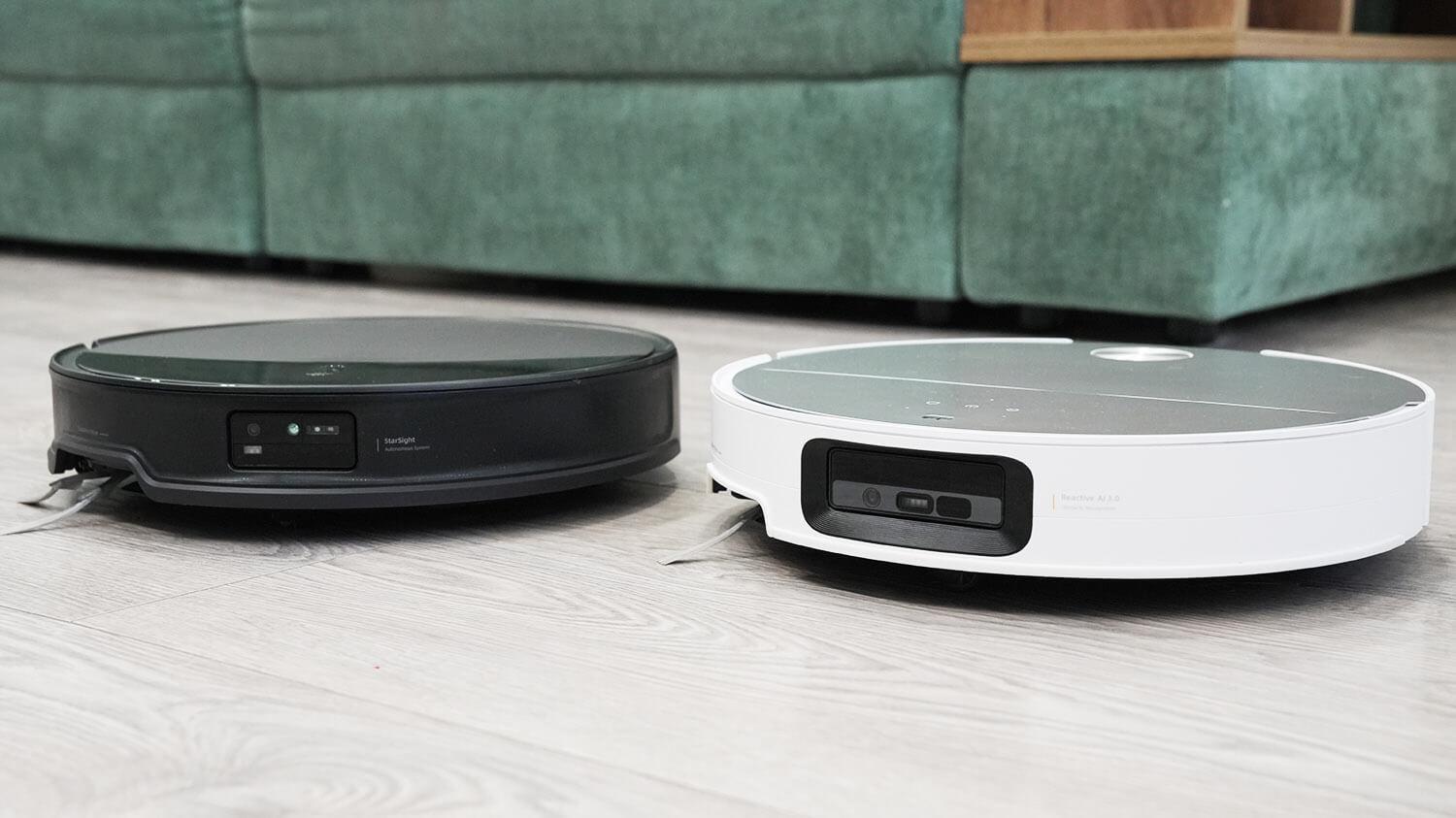
Navigation
The dust collectors are typically located under the top cover. Their shapes vary, as do the HEPA filters. This will impact the test results, as I'll demonstrate below. The S9 MaxV Ultra has a noticeably larger filter.
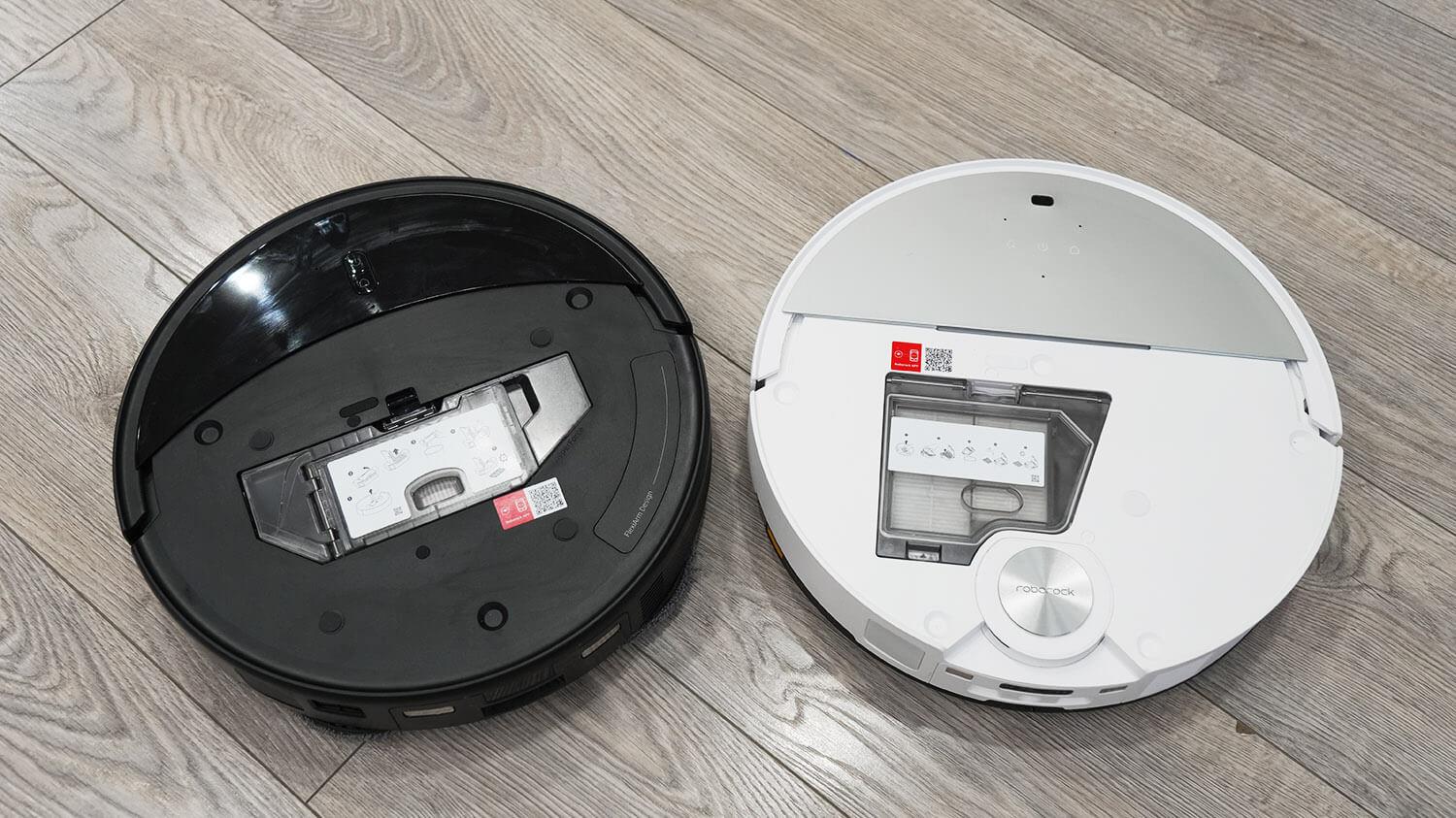
Dust collectors
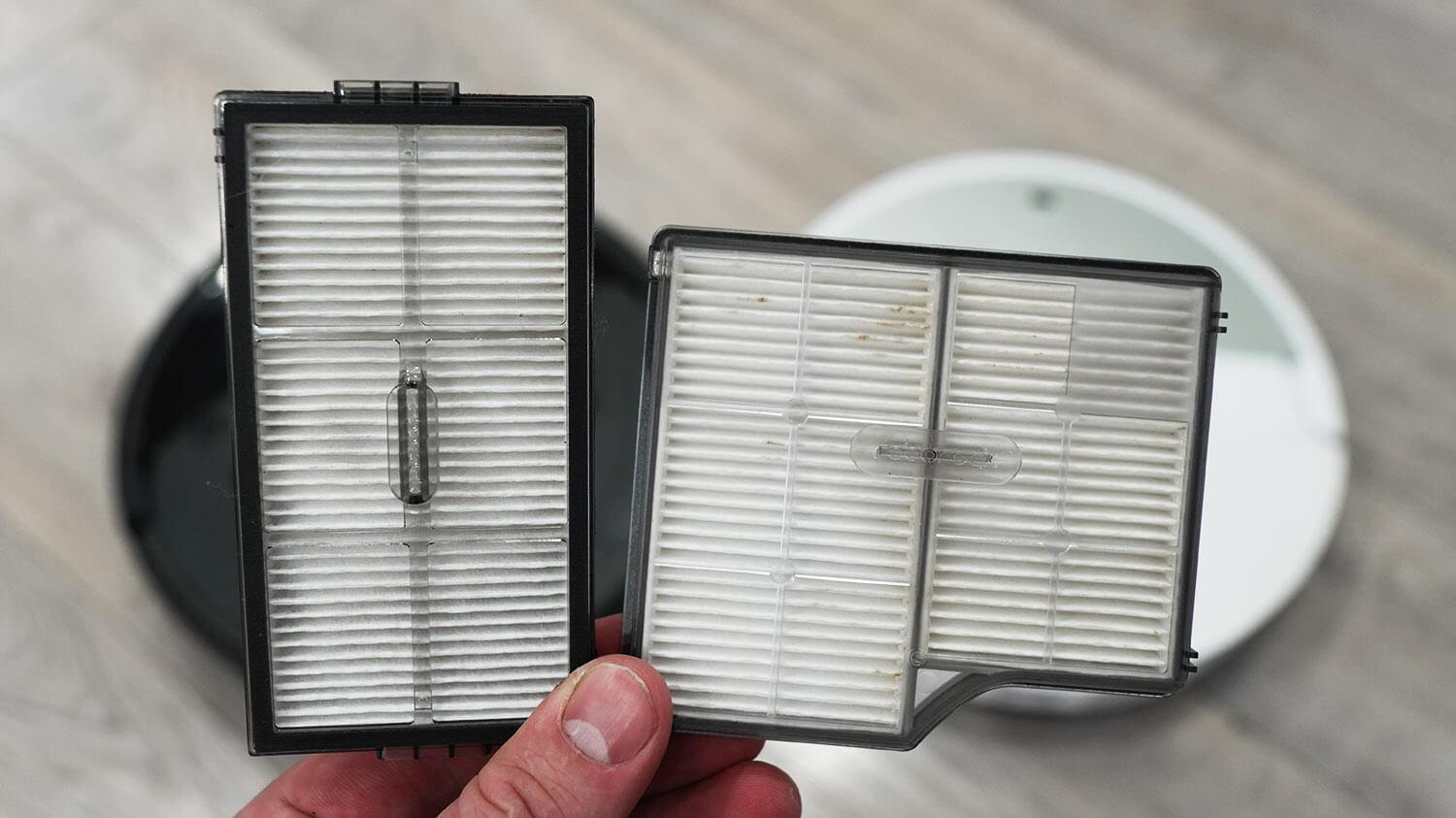
HEPA filters
Water tanks are hidden inside the building in both locations. Water is supplied automatically at the stations.
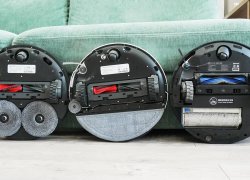
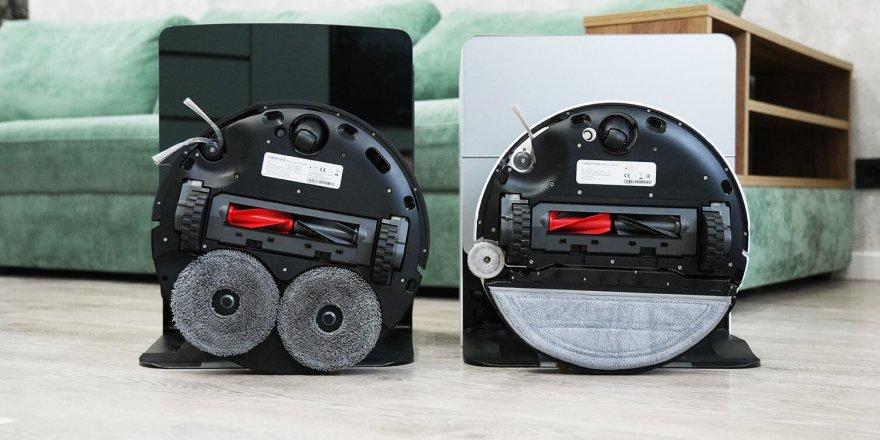
The robots' side and center brushes are identical underneath. These feature dual-beam side brushes with automatic lifting and retracting functions in corners, as well as the company's signature DuoDivide turbo brushes, which remove pet hair and fur. However, the cleaning modules for wet cleaning are different. The Roborock Saros 10R has the familiar round rotating mops, one of which extends to the edge of the body. The Roborock S9 MaxV Ultra has a vibrating cleaning pad and an additional rotating mop at the edge. Both have automatic cleaning pad lifts and can be detached from the cleaning station for a full dry cleaning.
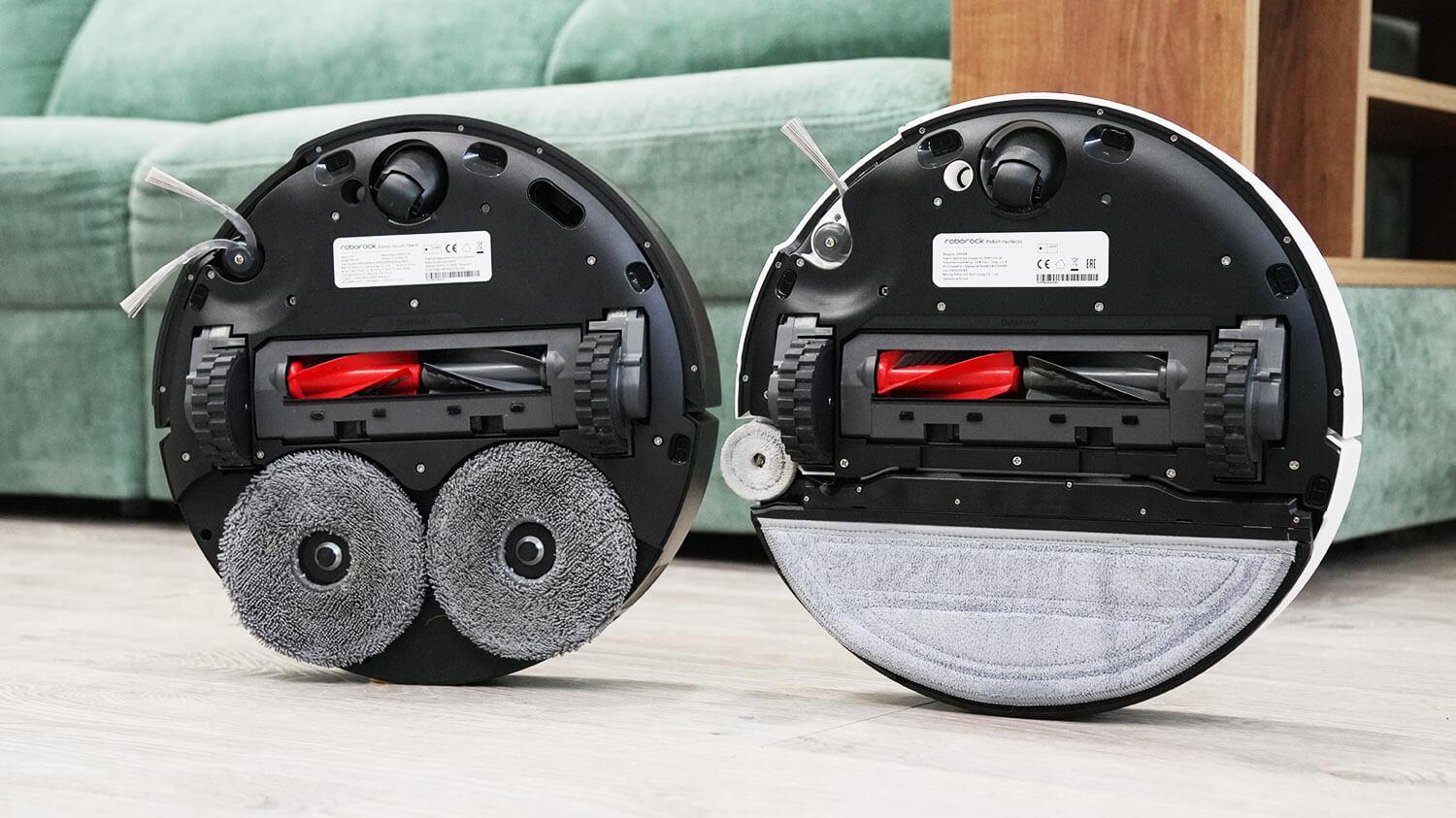
Bottom view
I'll just add here that the Saros 10R has an additional optical sensor on the bottom of the body, which is used to more accurately avoid wires on the floor.
It is also worth mentioning that both robots are equipped with a body lifting function to overcome high thresholds and
As for the stations, they are also very similar, but with some minor differences. The Roborock Saros 10R station is glossy, and it will show all dust and fingerprints. The S9 MaxV Ultra station's coating, in my opinion, is more practical.
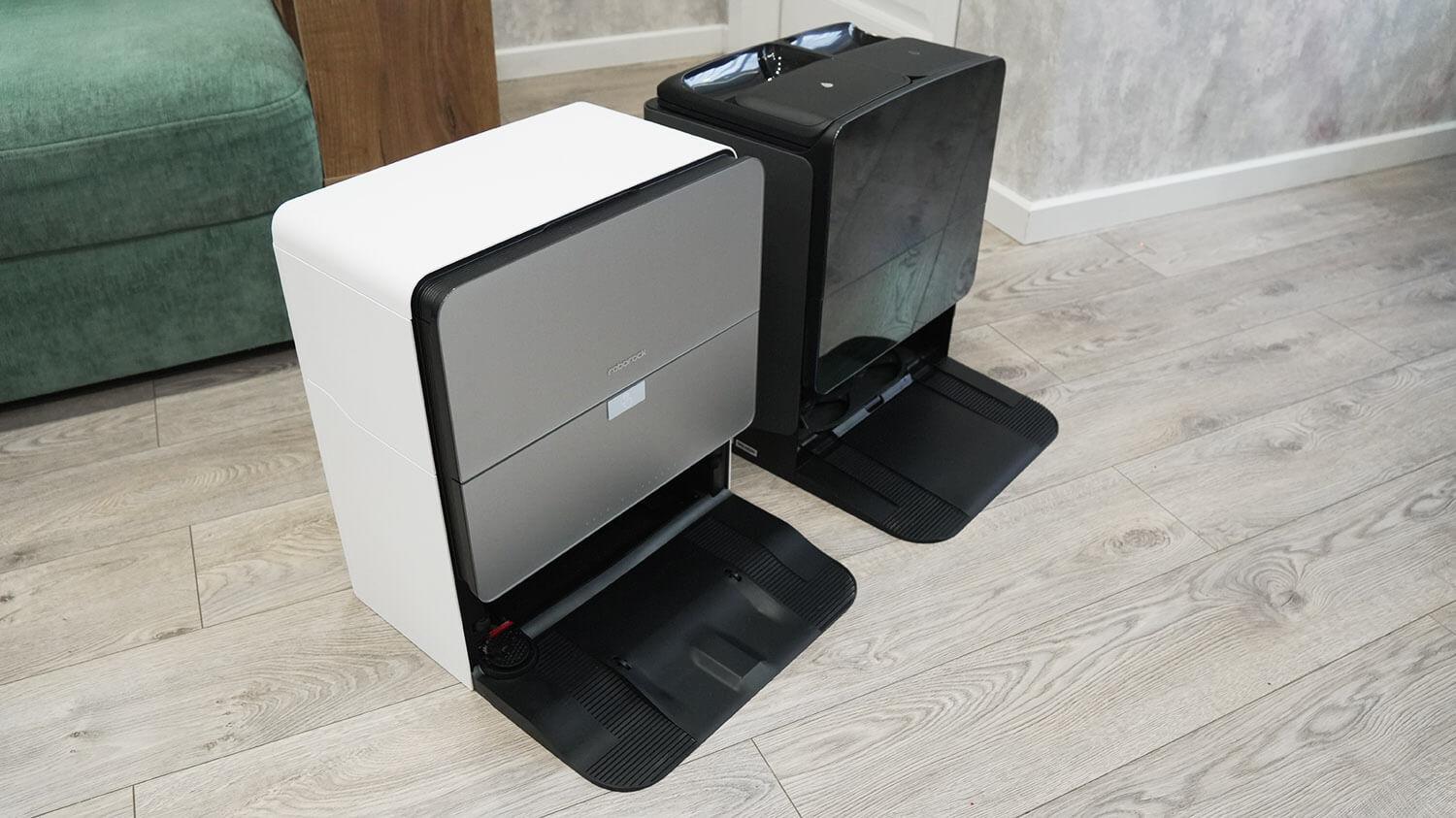
Exterior appearance of the stations
The Roborock Saros 10R's fuel tanks are located directly on top, uncovered. The S9 MaxV Ultra's fuel tanks are hidden under a cover, also on top.
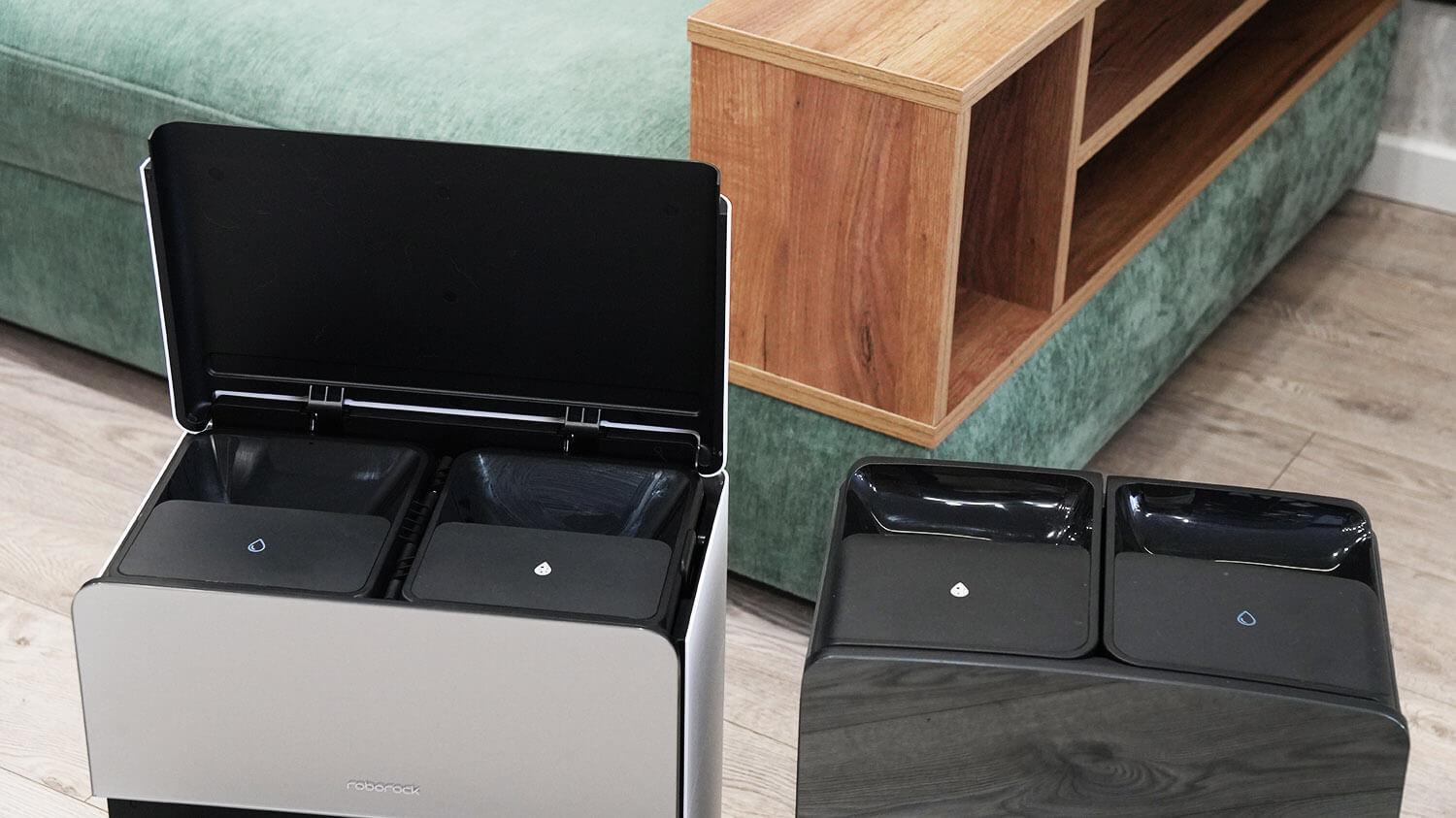
Tanks at the station
The S9 model has a conveniently designed lid for the bag and detergent compartment. It opens with a push and is held in place by hinges. The Saros 10R requires you to manually remove the lid completely and then replace it.
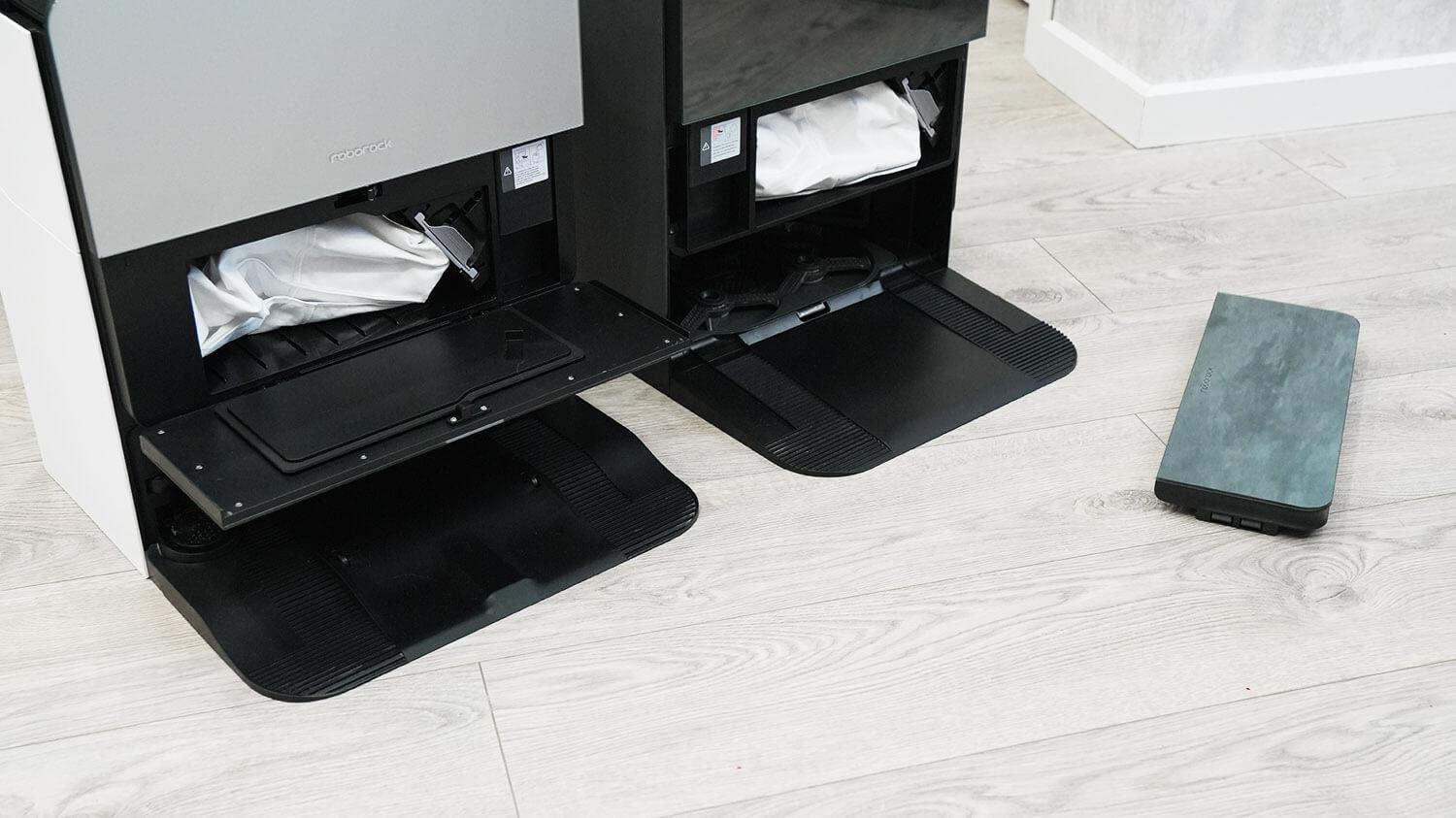
Design of lids
The washcloth areas at the stations differ because the washcloths themselves differ. Both have self-cleaning bottom scrapers and a coarse liquid filter.
We see that the differences between the robots are minimal, but they exist.
Technical specifications
Let's compare the specifications of the Roborock Saros 10R and Roborock S9 MaxV Ultra. For easy reference, I've compiled all the data in a table:
| Saros 10R | S9 MaxV Ultra | |
| Battery | 6400 mAh | 6400 mAh |
| Suction power | 20,000 Pa | 22,000 Pa |
| Dust collector | 270 | 270 |
| Water tank | 70 | 70 |
| Tanks in the station | 4 +3 | 4 +3.5 |
| Bag in the station | 2.5 | 2.7 |
| Passability | Up to 40 mm | Up to 40 mm |
| Dimensions of the robot | 353*80 mm | 353*80 mm |
| Dimensions of the station | 381*475*488 mm | 440*409*470 mm |
Here we see a slight difference in suction power, which will be verified in tests. And this is the main difference in specifications. The capacity of the dust collectors, bags, and tanks is approximate, as different sources provide different information, so don't rely too heavily on them; in this regard, the robots are roughly the same.
Functional capabilities
In terms of functionality, the robots are also virtually identical. They have the same cleaning settings, smart modes, control via the Hello Rocky voice assistant, remote monitoring, the same water and air heating temperatures, and other settings. I only noticed one significant difference: the Roborock S9 MaxV Ultra has a mode that increases the pressure on the cleaning cloth when it detects dirt. The body tilts toward the back, effectively applying pressure to the floor. Otherwise, I didn't notice any differences in functionality.
Testing
Finally, the test results. For a detailed look at how each robot vacuum performed in the tests, I recommend checking out the individual reviews for each one. Here, I'll briefly outline the differences found in the key tests and summarize them in a table.
| Saros 10R | S9 MaxV Ultra | |
| Operating time and useful cleaning area at maximum settings | 122 min / 88 sq.m. | 107 min / 90 sq.m. |
| Object recognition day:
6 different items 3 socks 4 wiring 6 simulated excrement |
6/6 3/3 4/4 6/6 |
6/6 3/3 4/4 6/6 |
| Object recognition at night:
6 different items 3 socks 4 wiring 6 simulated excrement |
5/6 3/3 3/4 3/6 |
5/6 3/3 4/4 1/6 |
| The depth of suction of debris from cracks in different modes:
Silent: Equilibrium: Turbo: Maximum: Max+: |
2 mm 4 mm (partially) 4 mm (better) 4 mm 8 mm (partially) |
2 mm (partially) 2 mm (partially) 2 mm (better) 4 mm (partially) 4 mm (better) |
| Removing difficult stains | 6 passes | 9 passes |
| Robot noise level | 58-66.8 dB | 56-67.5 dB |
| Noise level of the station | 72 dB | 72.5 dB |
We see that the robots have roughly the same autonomy and similar difficulty recognizing objects in the dark. Personally, I'll say that I didn't notice any difference in navigation, even though they implemented completely different approaches. The technologies and spatial orientation principles are different. It's fair to say that the S9 MaxV Ultra cleans slightly faster due to its higher lidar efficiency, but in practice, you're unlikely to notice the difference.
Where they do differ is in the durability of the implemented navigation technologies. In my opinion, the lidar lift may prove less reliable over time, but I'd be happy to be wrong. There are two reasons for this. First, the lidar is constantly being raised and lowered, which means the mechanism that powers it has a lifespan. Second, at the time of writing, the lidar was observed to be hit when the robot was maneuvering through tight spaces, as well as getting stuck in narrow gaps. The Saros 10R presented no issues in this regard.
In terms of power, the Roborock Saros 10R performed better, being able to clean debris from deeper crevices.
The Saros 10R also performed better in terms of removing stains from the floor.
The robots offer comparable dry cleaning performance on hard floors and sweeping debris into corners. They also perform well on carpets, but both have the problem of the side brush lifting on carpets, leaving an unswept area along the baseboard if the carpet is laid close to the wall.
The most important thing to compare, and what will be interesting to many watching this video, is the differences in approaches to wet cleaning. So, I created a separate review comparing them. rotating round wipes, a vibrating platform and a rollerThe first two module versions were compared using the Roborock S9 MaxV and Roborock Saros 10R. The video has already been published on the channel.
In short, the S9 MaxV Ultra vibration platform does absorb dirt better, leaving fewer streaks and, consequently, fewer stains on the floor. It also dampens the floor more gently and exerts less mechanical stress on the surface. This is especially true for floors with engineered wood, parquet, or laminate flooring that you're concerned about damaging.
However, round mops leave a more noticeable wet mark on the floor, remove dirt better, and have a smaller blind spot in inner and outer corners. It's a matter of personal preference.
Video comparison version on our channel:
Personal opinion
So, what's the bottom line? Personally, I liked the Roborock Saros 10R better, as it seemed to offer more reliable navigation without sacrificing efficiency, slightly more power despite its smaller size, and better wet cleaning. That said, the price for this model is currently slightly lower, at $1,000-$1,200, compared to the new S9 MaxV Ultra, which costs around $1,350. It also scored higher in testing—237 points versus 231.
But this doesn't mean the Roborock S9 MaxV Ultra is worse than the Saros. It's simply different. It has a different navigation system, resulting in slightly faster cleaning. The cloth is gentler on the surface, which will protect delicate surfaces from swelling and other problems. The cloth also absorbs dirt better without leaving streaks, which is especially important on glossy floors, which greatly highlight stains and marks. And then there's the color. With the S9 MaxV Ultra, you have the choice between a white or black robot, which can be very important.
In any case, you're unlikely to notice a significant difference in cleaning performance and battery life in a home environment. Both robots perform well and deserve top spots on the 2025 best-of list.
On that note, I'd like to end this review. If you have any questions, please ask them in the comments. Happy shopping, everyone. Bye!