Round cloths, vibrating platform, or roller: a comparison of robotic vacuum cleaner cleaning modules
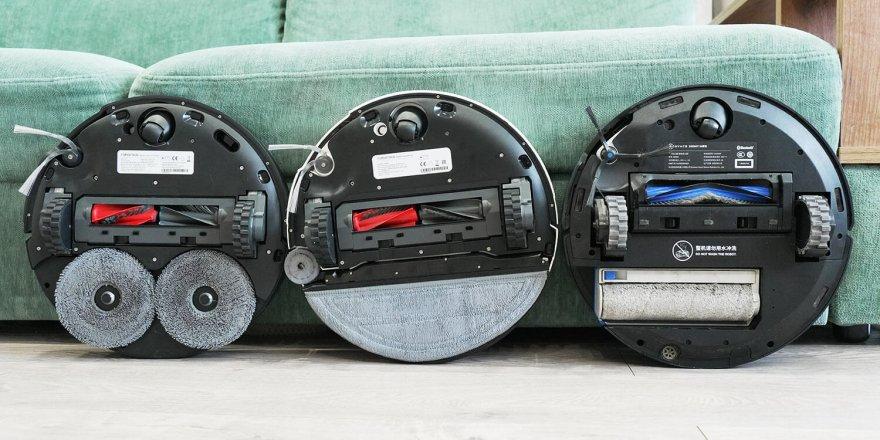
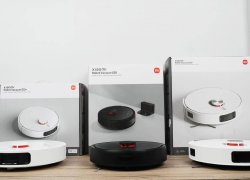
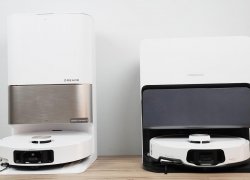
Hello to all readers of this project! In this review, I've decided to compare the three most effective cleaning modules for wet cleaning in robotic vacuum cleaners. These include two round rotating pads, a straight pad mounted on a vibrating platform, and a roller. Each floor cleaning technology has its own pros and cons, so I'll compare the parameters I consider most important. The comparison included top-of-the-line robot models with competing cleaning module options, namely: Roborock Saros 10R, Roborock S9 MaxV Ultra And Ecovacs Deebot X8 Pro Plus, reviews of which are already available on the channel. You can decide for yourself which option to choose, based on all the nuances. So, let's get started!
Important! I clearly demonstrated all the tests in the video review and described the test results in the article!
Video:
Washing the floor from dirt
The first and most important thing for many is which technology cleans the floor better. The test is simple but illustrative. I evenly coated one kitchen tile with dirt and ran each robot through a double pass.
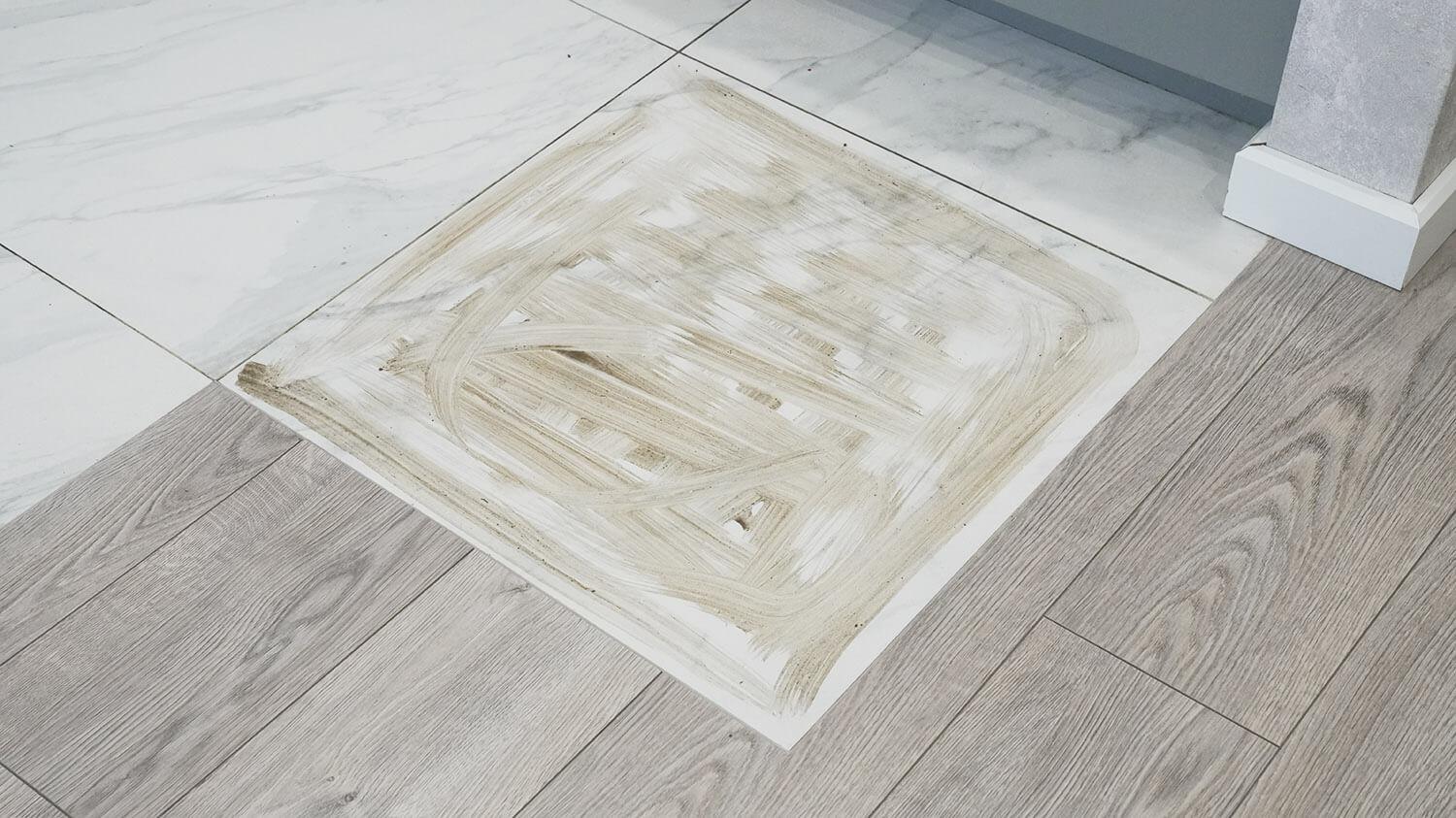
Dirty tiles for testing
I first tried two round rotating cloths. After just one pass, it was clear that these cloths had a drawback: circular streaks on the floor. However, if the cloths were thick, they absorbed dirt well, and when mopping the floor in a tight zigzag pattern, we saw no streaks left after the second pass. The floor appeared clean. We take a dry, clean cloth, wipe the floor and see that dirt still remained on the floor and it was not washed perfectly.
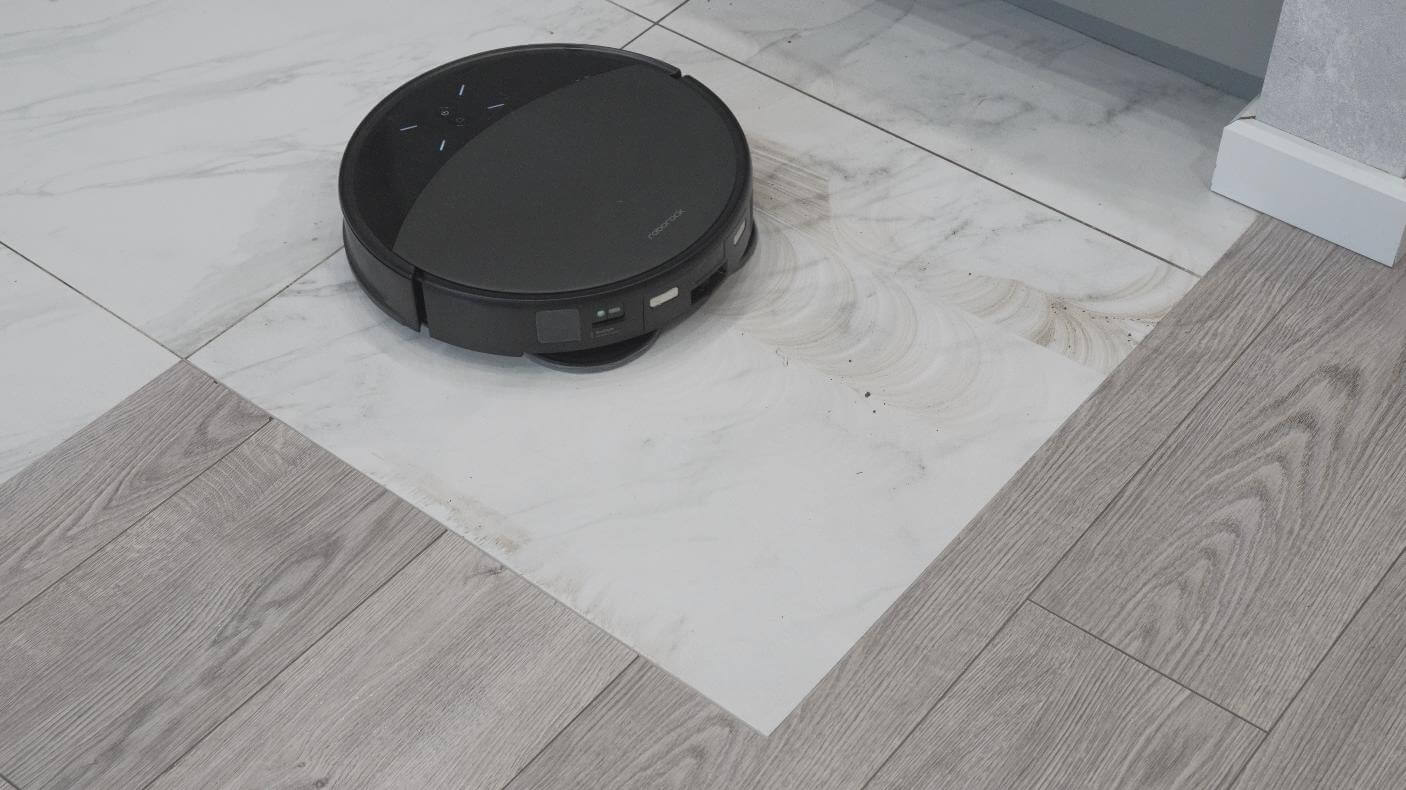
Cleaning dirt with a robot using round cloths
Now we run the vibration platform model. In this case, there are no circular streaks, but streaks remain, which the robot also removes on a second pass, leaving no visible traces. We wipe the floor with a cloth in the same manner and see that some dirt remains. Visually, it appears slightly less.
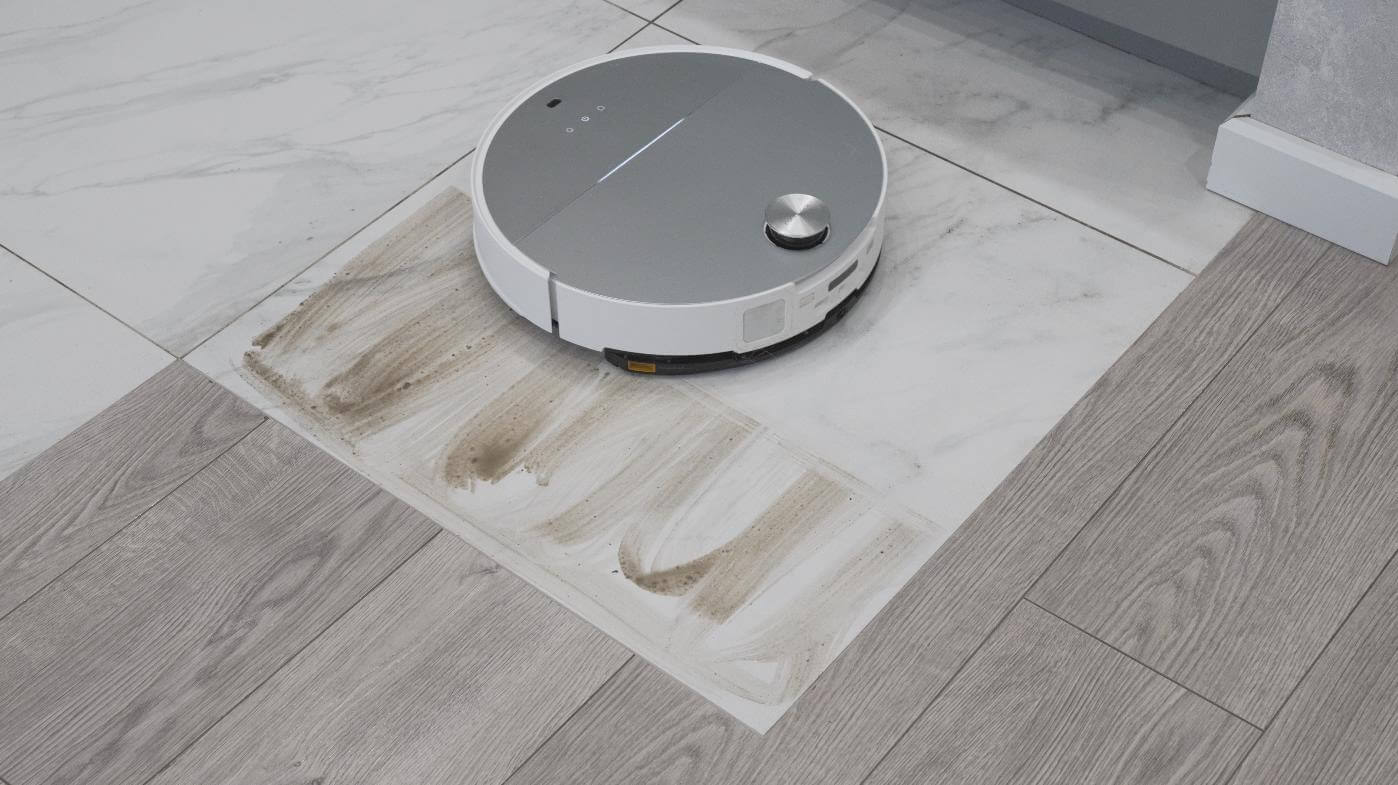
Cleaning dirt with a robot with a vibration platform
The third test sample is a robotic vacuum cleaner with a floor cleaning roller. Here we see that it leaves no marks or streaks, but there are some small missed areas that the roller cleans a second time.
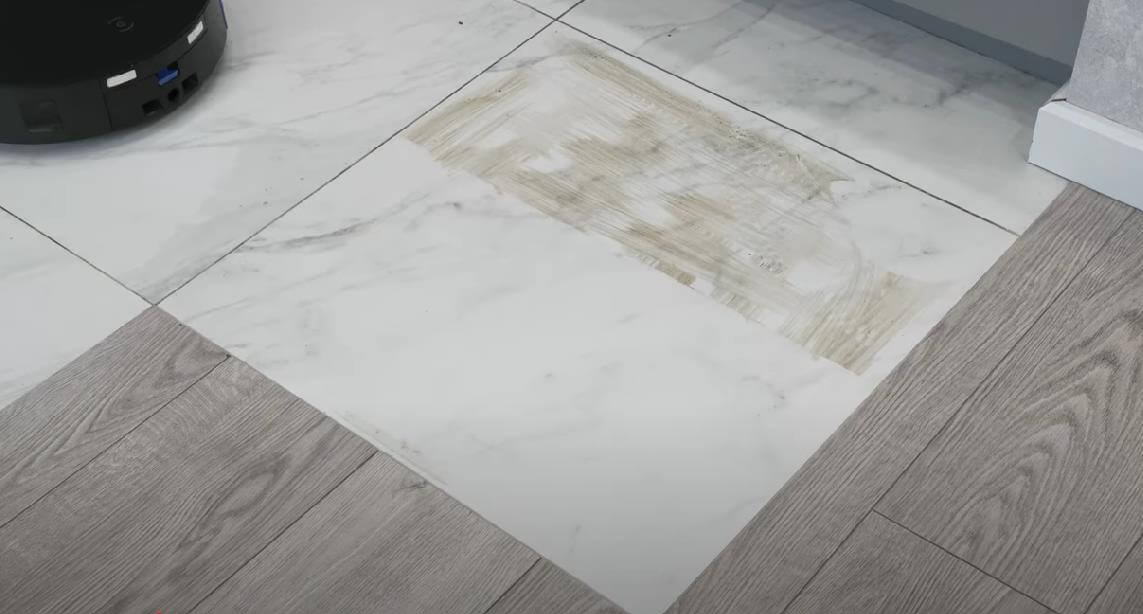
Cleaning dirt with a robot with a roller
And most importantly, we look at the condition of the cleaning pad – it's practically clean after checking the floor. This is because the roller is washed not only at the cleaning station but also during the robot's cleaning process, as it is constantly supplied with clean water, and dirty water is discharged into a separate compartment, thereby self-cleaning the roller in real time. Therefore, the cleaning module itself leaves no dirty marks.
I let the napkins dry thoroughly and looked at the result again:
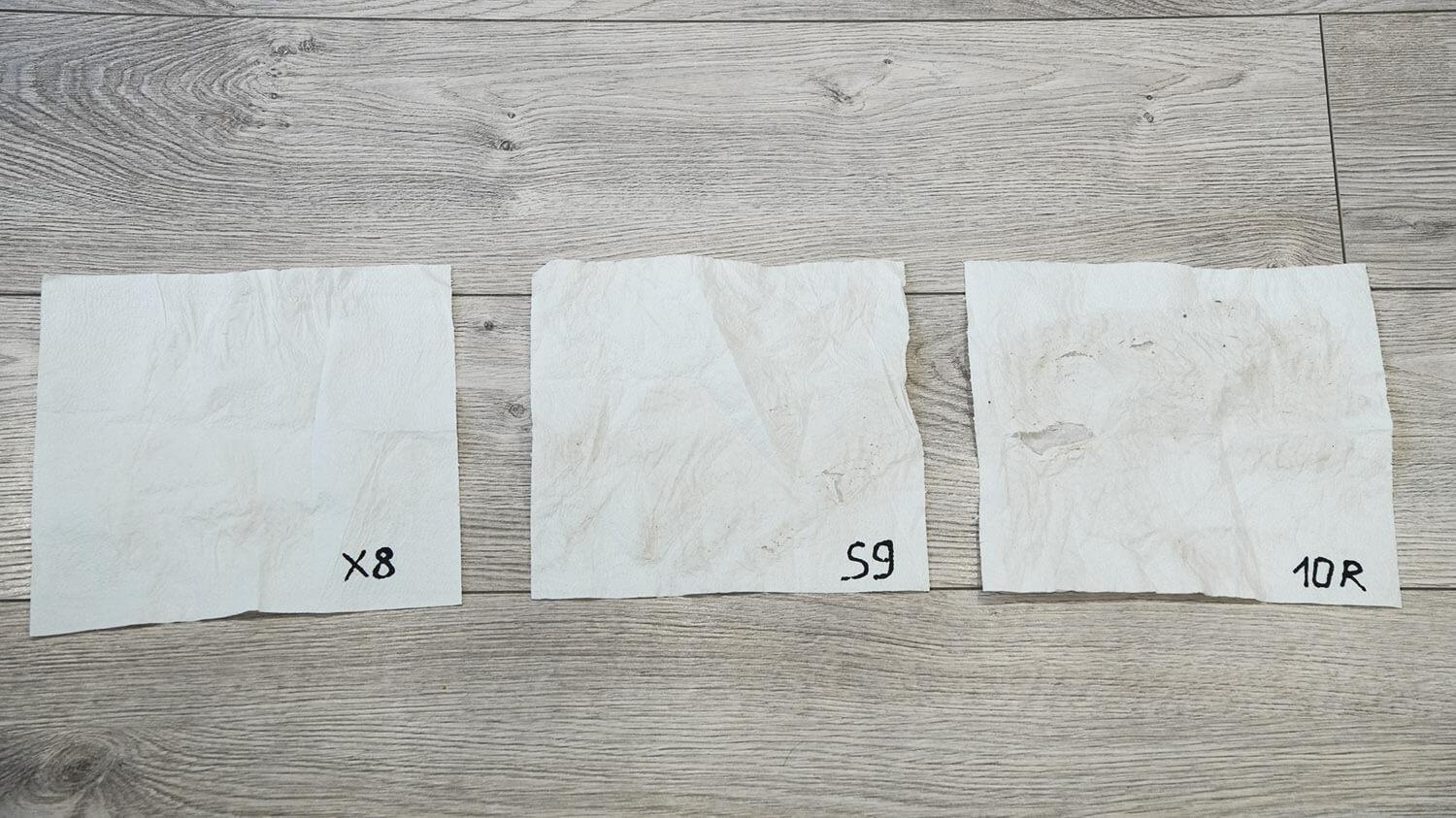
The condition of the napkins after wiping the floor
The dirtiest wipe after mopping the floor with a robot with round rotating mops. The floor, and consequently the paper wipe, is slightly cleaner after passes with the vibrating platform. And finally, the cleanest wipe after mopping the floor with a robot with a roller. Let's move on!
Removing difficult stains
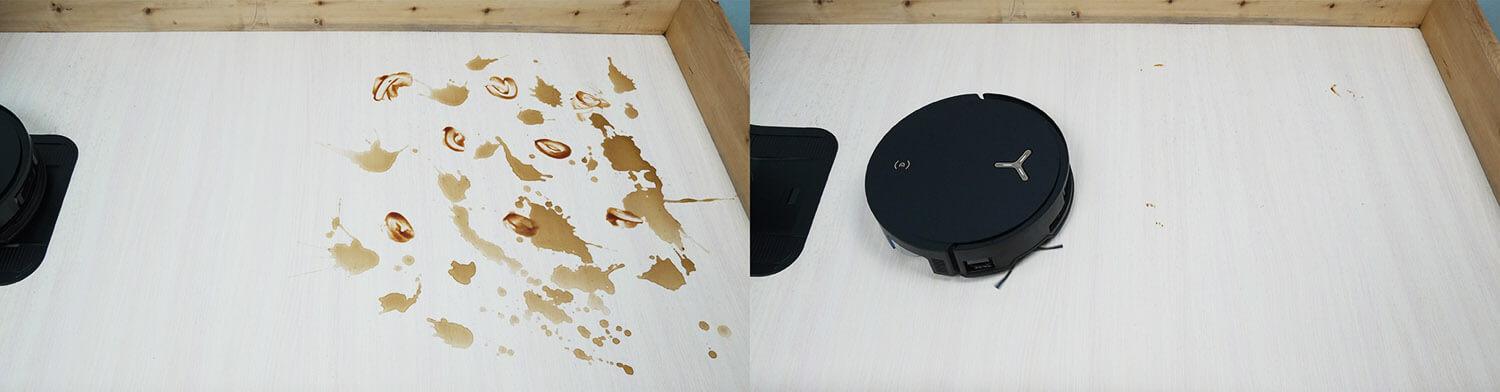
The next test will show us which cleaning module is best at removing tough, dried-on coffee and sauce stains. The two round rotating pads actually showed the best results. The robot was able to remove stains from the floor in six passes, even without using detergent. However, the robot also performed well in this test, compared to similar cleaning modules. Typically, round pads remove stains in 8-12 passes, with the average being 10.
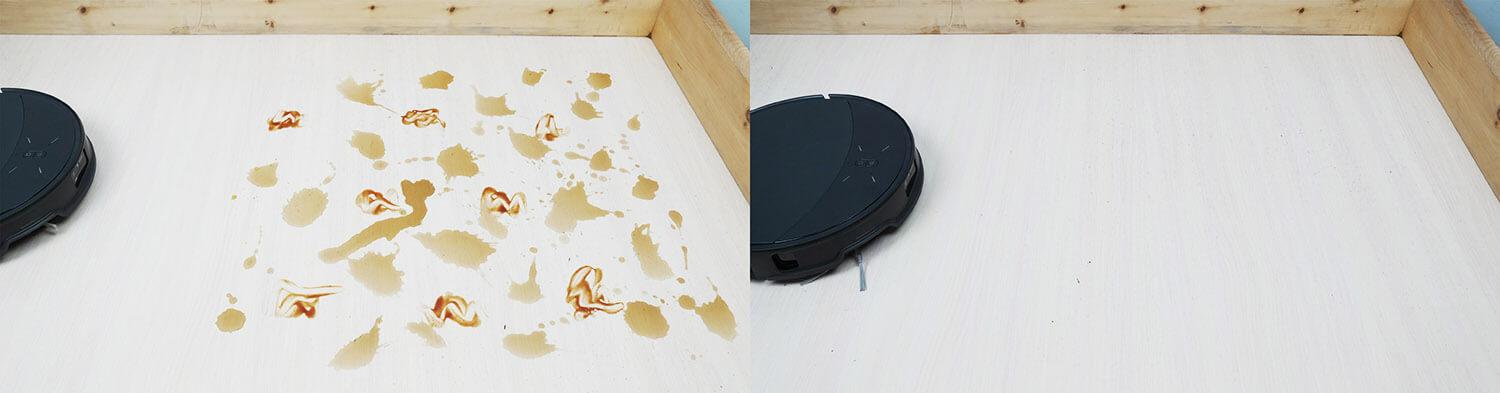
The robot vacuum cleaner with a vibrating platform removed stains in 9 attempts, which is also a good result! A similar vibrating platform in previous models completed the task in 11 attempts. This means it's about as effective as rotating round mops.
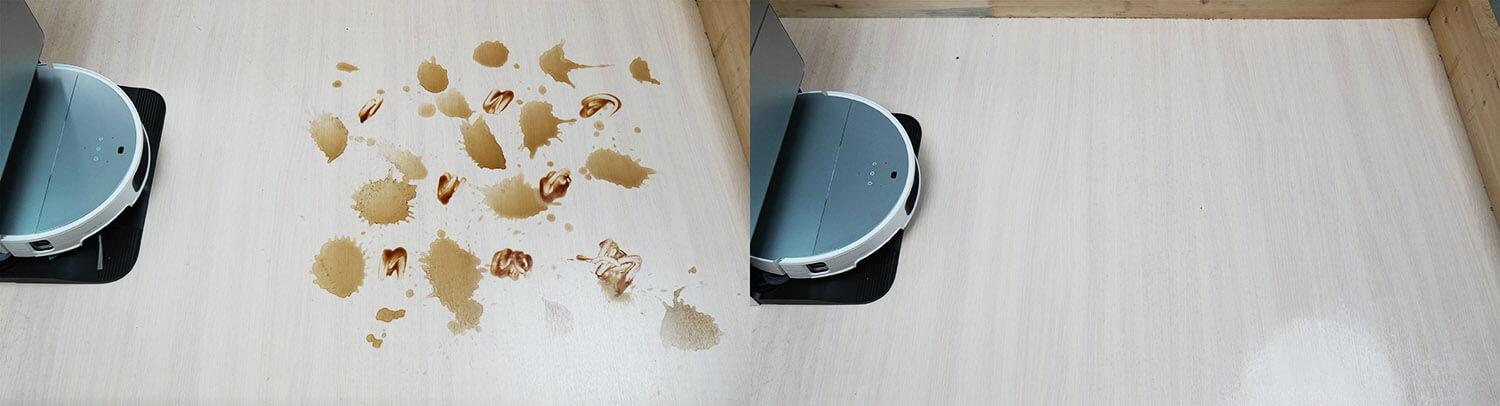
The robot vacuum cleaner with a roller, however, failed to complete the task even after 16 attempts. This cleaning module likely has a smaller contact patch, and its actual contact with the floor is weaker. Perhaps other models would have performed better; there are several already on the market. However, this particular comparison sample performed the worst.
Blind spots
An equally important parameter is blind spots along baseboards, furniture, and in corners, as the design of the cleaning modules greatly influences this parameter.
So, extending one of the round cloths to the edge of the body allows the robots to thoroughly clean areas along walls and furniture. I should also note that the cloth edges are soft, so if they bump into anything, they won't scratch. At least, I haven't noticed any damage in two years of using similar robots in my home environment.
Additionally, the round cloth holder in some models can not only extend to the edge of the body but also reach deeper into spaces under furniture and doors. This is a crucial advantage of this cleaning module. The vibrating cloth and roller are physically unable to fit into tight spaces due to their size.
The vibration platform on most robots, not just Roborock, doesn't extend to the edge of the body, leaving a blind spot along the baseboard that's typically 4 to 6 cm wide. Roborock solved this by installing an additional round mat along the edge, reducing the blind spot to no more than 5 mm.
Another alternative solution is to use the back of similar products from other brands. However, this edge pad doesn't press as firmly, resulting in larger blind spots, literally a couple of millimeters.
As for the roller, they were able to make it retractable, which is great. But there are two caveats. First, the roller's edge is framed by the locking mechanism, so even if it's pressed flush against the baseboard, there's still an inevitable blind spot equal to the thickness of the plastic, which is a couple of millimeters. Second, it simply can't be pressed tightly against the baseboard, as it will scratch it and other objects. Therefore, the robot's algorithms must maintain a minimum distance from walls and furniture to avoid touching the plastic end. In my case, the movement algorithm wasn't very accurate, and the blind spot reached 4 cm. In reality, it can be at least 5 mm, taking into account the end and the safe distance from the wall for furniture.
I also checked the blind spots in the inner and outer corners separately. In my opinion, the outer corners are cleaned most thoroughly by the round cloth that extends toward the body. Look for yourself: it rotates almost flush against the baseboard, cleaning up to the corner, then the robot turns and cleans from the corner in a new direction:
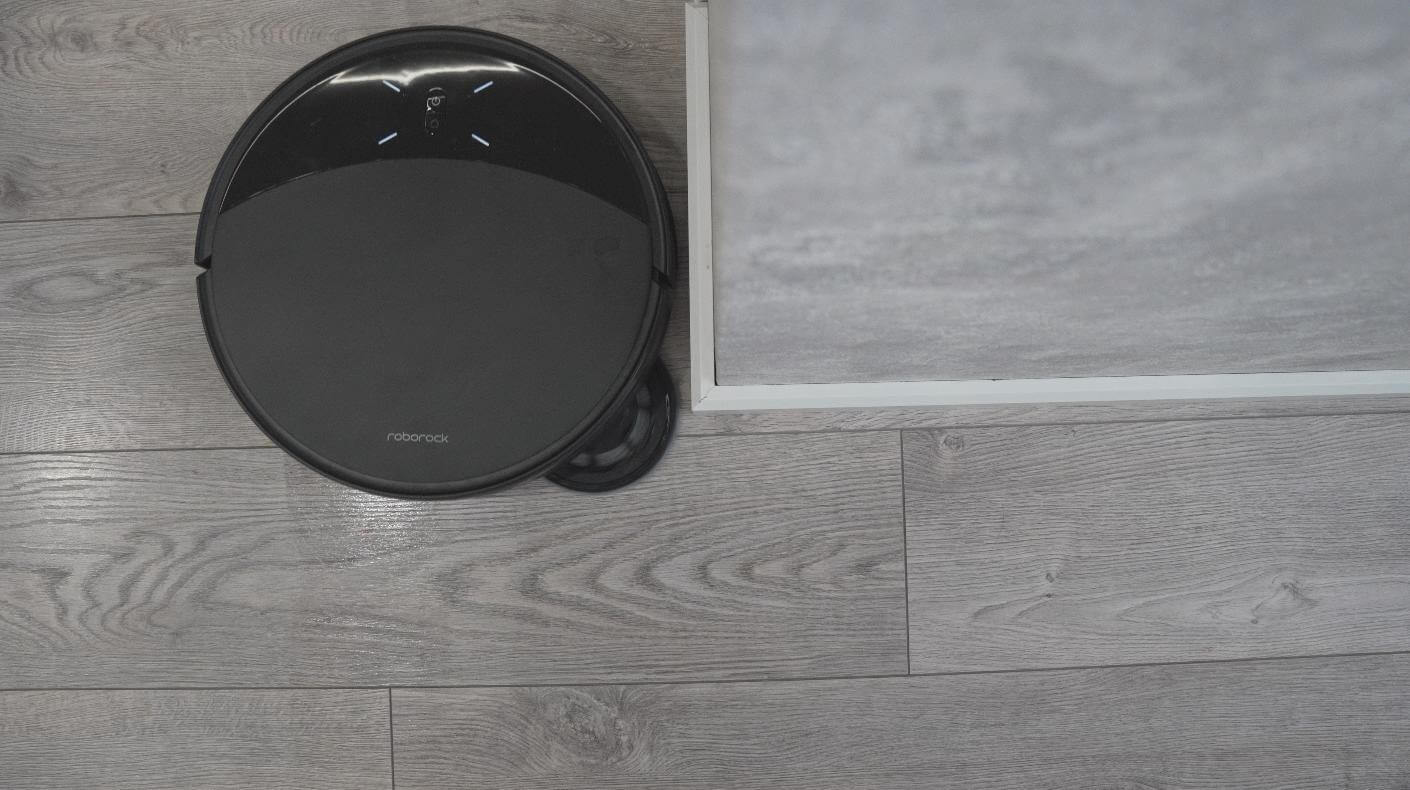
Washing an outer corner with a round cloth
The vibration platform has a slightly larger distance from the outer corner, but the result is still good:
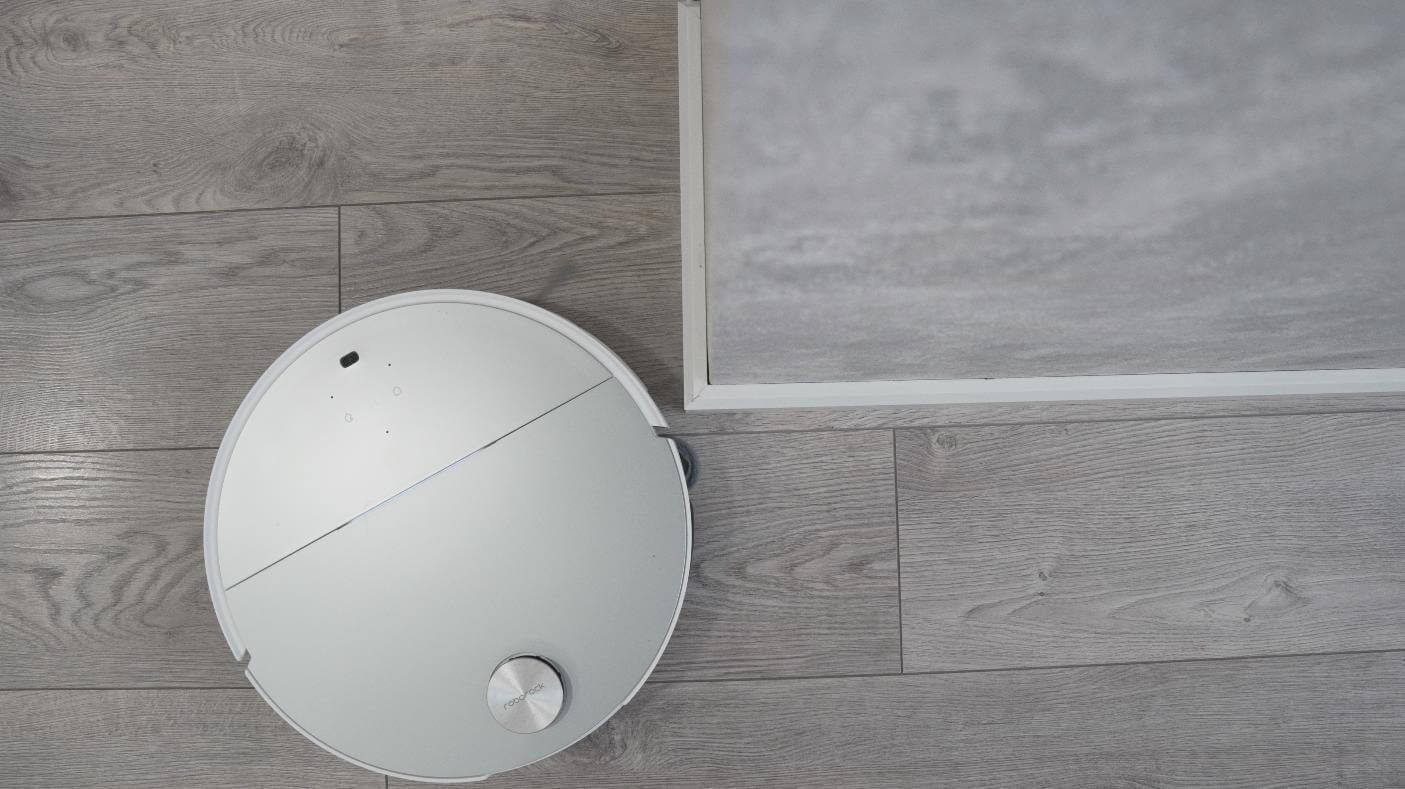
Washing an external corner with a vibrating platform
The roller has the largest blind spot when cleaning the floor along the outer corners. Again, this may be due to an issue with this particular model, but I can only use this result for comparison purposes.
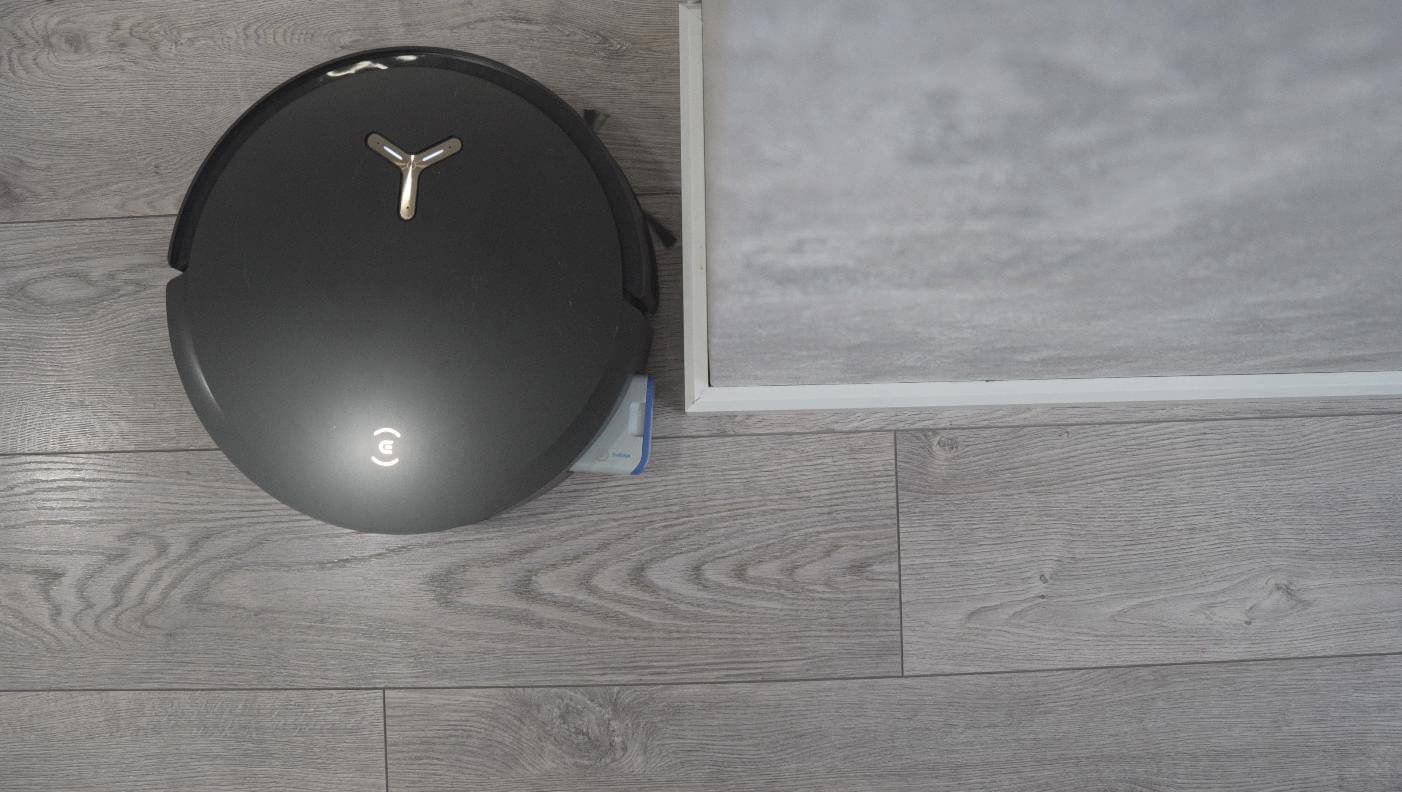
Washing an outer corner with a roller
I checked the blind spot in the inner corners in a similar manner, only with dirt so that it was clearly visible.
Two rotating wipers again showed the best results, with a blind spot in the corner of about 3 cm. We focus specifically on the blind spot, not the circular streaks, as the wiper will remove them upon repeat use, but in everyday use, they'll simply leave a wet, transparent mark from water.
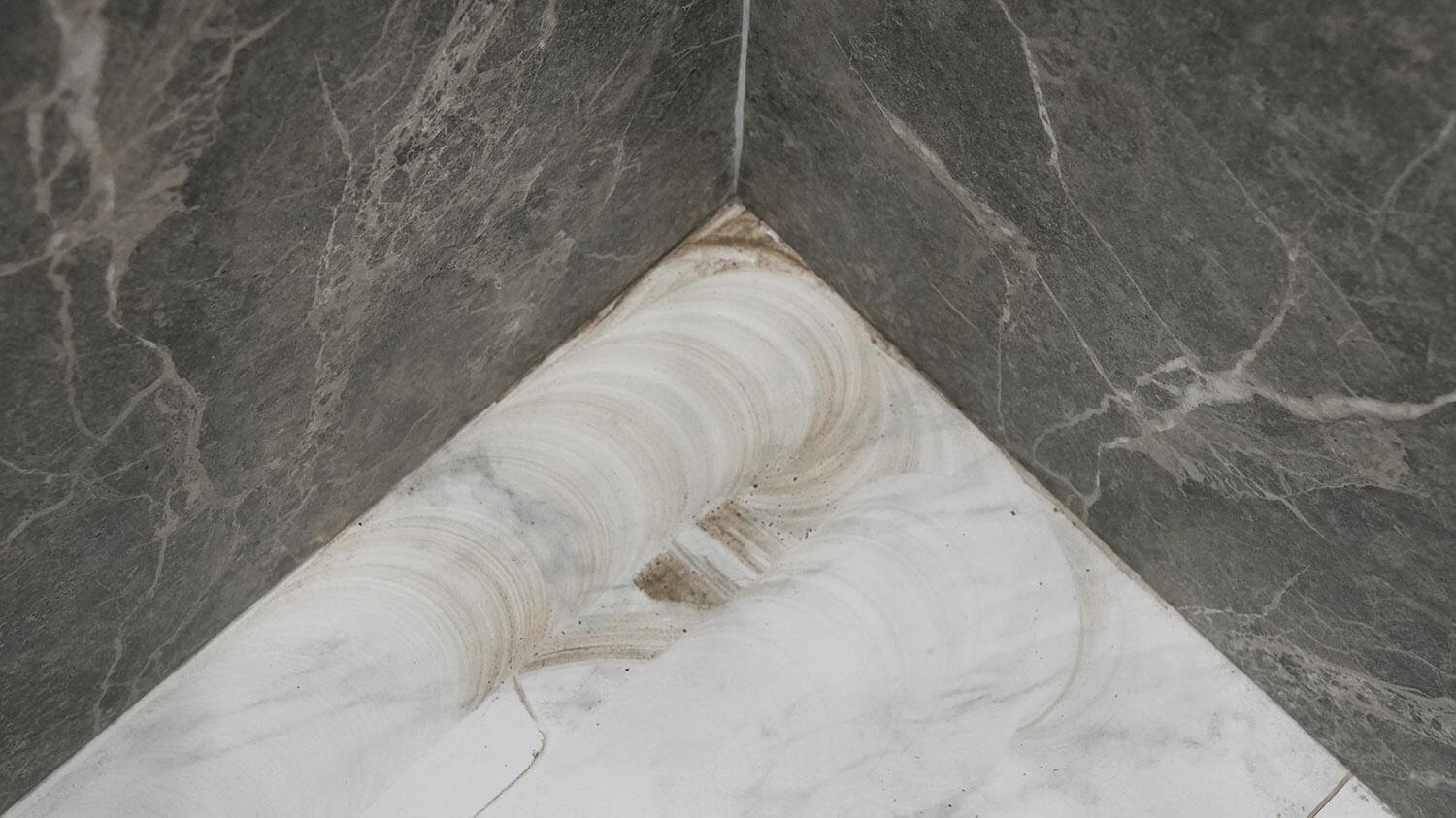
Blind spot in the corner (round napkin)
The vibrating wipe leaves a slightly larger blind spot, about 6 cm in the corner. The roller produced the same result.

Blind spot in the corner (vibration platform)

Blind spot in the corner (roller)
Self-cleaning quality at the station
Immediately after the dirty tests, I will compare the condition of the cleaning modules before and after self-cleaning at the station.
I consider the self-cleaning performance of the round wipes to be very good. The straight wipe on the vibrating platform is also equally effective. However, the roller again performed the worst. After self-cleaning, it's still clearly dirty.
The problem here is that self-cleaning rollers require combs, and the pile structure itself absorbs dirt more deeply. Therefore, even upright wet vacuum cleaners, which self-clean for up to three minutes at the station, don't always achieve high-quality self-cleaning. A robotic vacuum cleaner that mops the floor with a roller, at least in this implementation, performed worse in this test.
A wet mark on the floor
I also decided to check the wet marks on the floor after the robot passed through a small area with the water flow set to maximum. Many people use the maximum setting to ensure the robot cleans the floor effectively. And visual feedback is often the key to determining how well the robot performs.
We run the robot with round wipes and see that the residue is quite thick and doesn't dry completely even after a second pass. On the second pass, the wipes don't lose their moisture content and leave a noticeable wet mark.
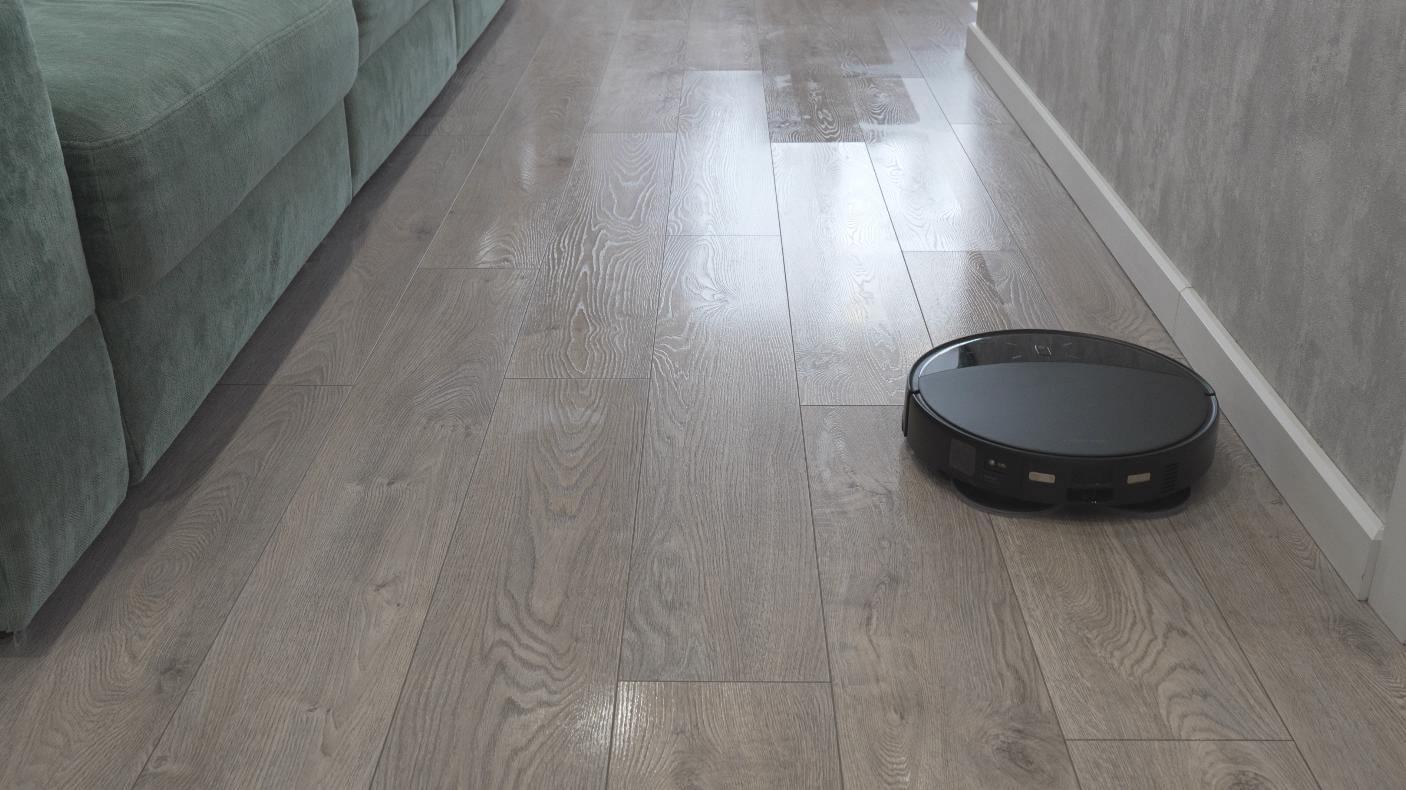
Wetting the floor generously with two round cloths
Now let's test the robot with a vibrating cloth. We see that the wet trail is also uniform and noticeable. But you'll agree, it's not as thick as with rotating mops. Still, even at maximum settings, the water flow is more moderate. The second pass doesn't lose any of the cloth's moisture.
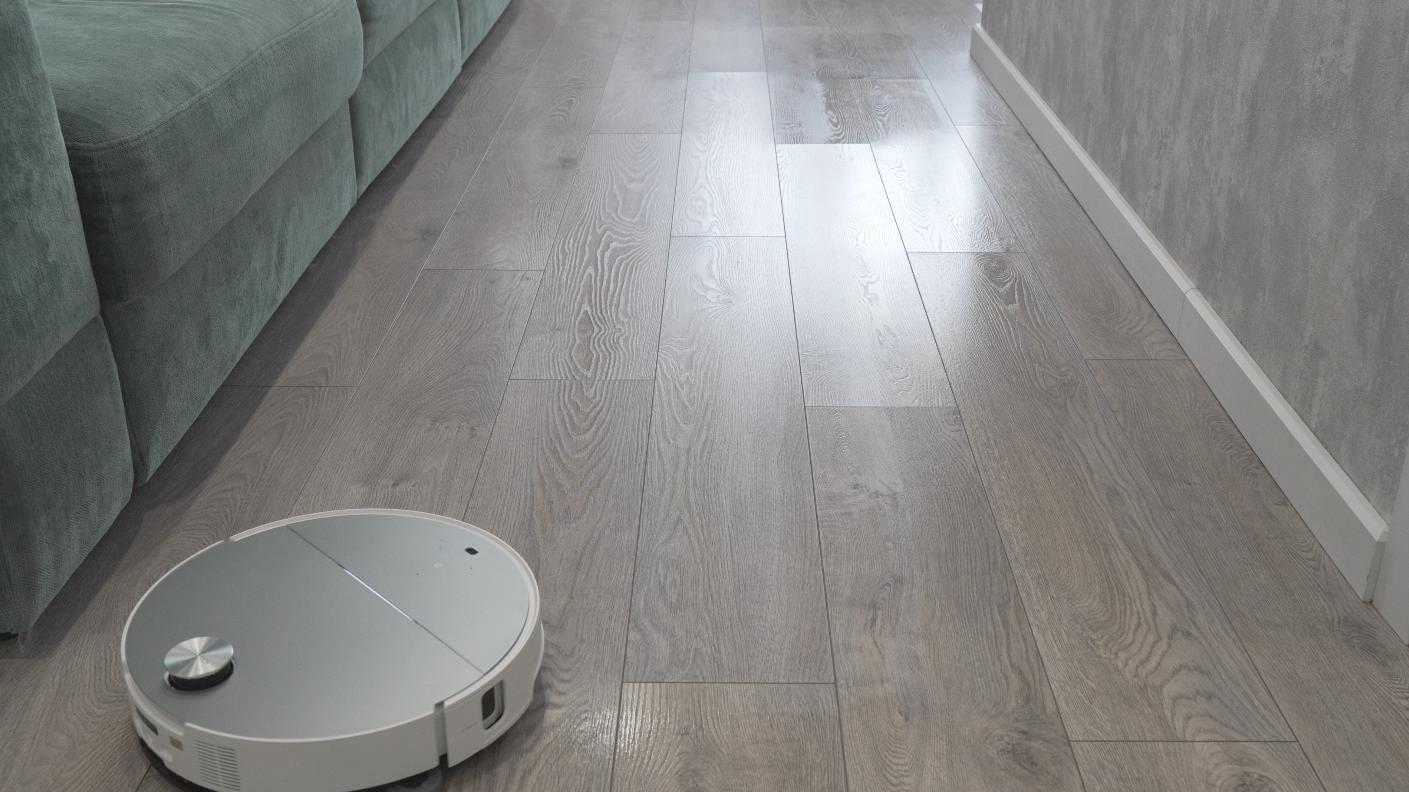
Abundant wetting of the floor with a vibrating cloth
Now look at how the roller handles the job. The wet trail is indeed much stronger; you can even see water droplets on the surface, which, in my opinion, isn't very good and is sometimes seen with upright wet vacuum cleaners with the same roller. That is, at the highest settings, there's a real oversupply of water. However, the trail itself is also smooth and has no missed spots.
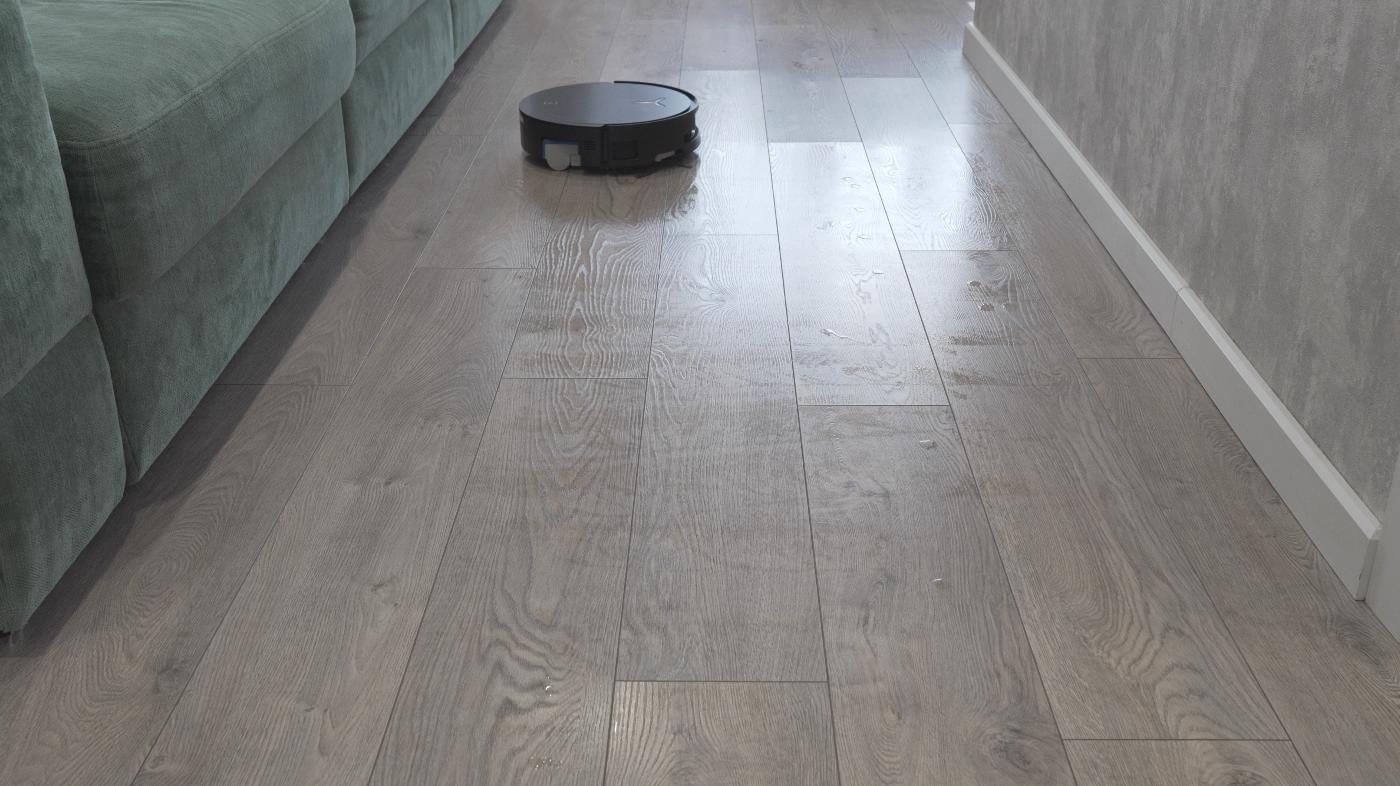
Abundance of wetting of the floor with a roller
But the most important thing about the roller is that water is automatically supplied to it, washing the pile during the cleaning process. This means the floor remains wet, and there's no need to rinse the roller at the station. This isn't the case with two round pads or a vibrating platform. With the latter two cleaning module options, the pads typically dry out after 10-15 square meters, making the station essential.
Impact on floor coverings
A very important aspect deserves special attention: the cleaning module's effect on the flooring, as this, coupled with the amount of wetting, significantly impacts the longevity of the flooring. In my opinion, the vibrating pad used by Roborock offers the most gentle action, thanks to its ultrasonic vibrations. It doesn't rub the joints and is least likely to swell over time. When using two rotating pads, I can say from personal experience that my laminate flooring did bulge slightly at the joints. It's not critical, but still noticeable. This is because the rotating pads exert greater mechanical stress on the flooring. With a roller, I believe the situation is similar to that of rotating mops. It's not the best option for parquet, engineered wood, or other surfaces where gentle care is desired.
Cost of consumables
Well, the last thing I would like to compare is the cost of consumables and their service life.
Round mops on AliExpress start at around $11 for 6 pairs. This means that one pair costs around $1.80. Genuine mops will cost at least $20 for 4, or $10 for a pair.
A set of vibration pads for the vibration platform will cost approximately $8 for 5, or about $1 per pad. Original pads will cost about $18 per pair, or $9 each. That's a price range of $160-$9.
A single rollerball on this same marketplace starts at $4 each. The original rollerball on the official website costs $30, or $26 each.
Personal opinion
I compared all the parameters I considered essential. I've included them in a table for easy review:
| Round rotating napkins | Vibration platform | Roller | |
| Floor cleaning quality from dirt (double pass) | Average, leaves a little dirt on the floor + circular streaks with one pass | Average, leaves a little dirt on the floor (less than two round cloths), fewer streaks | High, leaves virtually no marks on the floor |
| Removing difficult stains | 6-10 passes | 9-11 passes | >16 passes |
| Blind spot (along the baseboard) | 0-5 mm | 0-5 mm | 5-40 mm |
| Blind spot (outer corners) | up to 5 mm | up to 10 mm | up to 40 mm |
| Blind spot (inner corners) | ≈30 mm | ≈60 mm | ≈60 mm |
| Washing floors in narrow spaces | Yes, there are models with a scrolling case. | There is no physical possibility | There is no physical possibility |
| Self-cleaning quality at the station | High | High | Low |
| Wet trace on the floor with maximum water supply level | Uniform, extremely moderate | Uniform, moderate | Uniform, may leave puddles |
| Humidity resource | ≈15 sq.m. | ≈15 sq.m. | Depends on the volume of the built-in water tank, >15 sq.m. |
| Impact on the coating | Light mechanical impact during rotation | Delicate | Light mechanical impact during rotation |
| Cost of the set | 180-1000 | 160-900 | $4-$26 |
What can I conclude? Some may find the comparison somewhat unfair due to the models selected. For example, a different robot vacuum with a roller might perform better or worse, or a robot with round cleaning pads. However, the general nuances will all be roughly the same, and you can always use the model you've chosen and its test results in the table.
In my opinion, two rotating round pads are currently the best option in terms of floor cleaning quality, elimination of blind spots, and impact on the flooring. It's no wonder that flagship models from most renowned brands use this cleaning module. If desired, you can reduce the pad wetting level to achieve the same cleaning result as a vibrating platform. This will reduce the impact on the floor. However, for cleaning particularly dirty areas, this option is the least preferable, as the rotating pads can leave circular streaks.
Rollers are likely the future of robotic vacuum cleaners, as they are the only option that can achieve maximum floor cleaning results thanks to self-cleaning technology that cleans without having to enter a station. However, this technology is still in its infancy and requires significant refinement. This applies to blind spots, self-cleaning performance, floor pressure, and the amount of roller wetting. If you're choosing a robotic vacuum cleaner now, a roller is best suited for cleaning particularly dirty surfaces. For example, areas where you take off your shoes, or if you constantly need to clean food debris in the kitchen, which is especially important if you have children. In this case, even the technology implemented in the Ecovas X8 is the best solution.
A vibrating platform is a good alternative in two situations. First, if you have a delicate floor and are very concerned about damaging it. A vibrating cloth doesn't wet the surface as much and exerts less mechanical force without compromising the quality of the cleaning. Second, a vibrating cloth is a better choice if your flooring is prone to streaks and marks, such as black glossy tiles. In this case, a straight vibrating cloth is definitely superior to round mops and rollers. However, keep in mind that this type of cleaning module may have significantly more drawbacks than the Roborock S9 MaxV Ultra or the smaller S8, but rather robots from other brands. They also likely have larger blind spots due to the lack of an additional cloth, and the impact on the surface may be much greater if the vibrations are mechanical rather than ultrasonic. So, it all depends heavily on the model with a vibrating platform you choose, and there are quite a few.
I hope that, based on all the compared parameters, test results, and my personal opinion, you now have a clearer understanding of the differences between the different types of cleaning modules and which one is best for your needs. Thank you all for your attention, and happy shopping. Bye!