Roborock S8 MaxV Ultra vs. Dreame X40 Ultra: Which Robot Vacuum Cleaner Is Better?
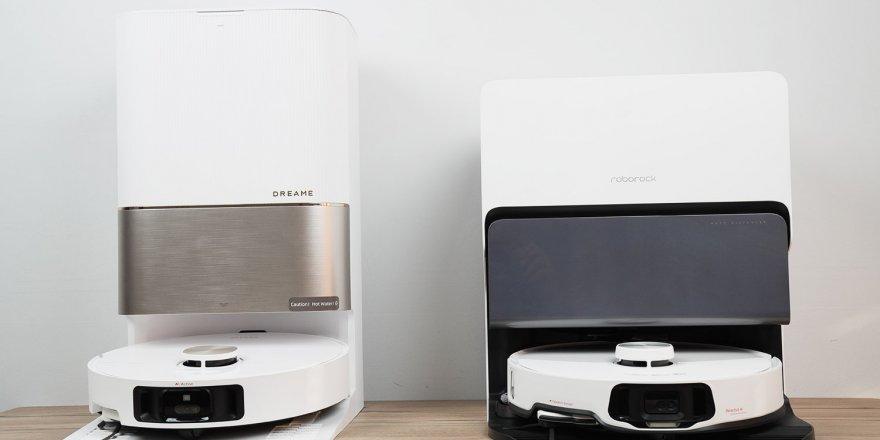
Hello to all readers of the project! In this review, I decided to compare the flagship robot vacuum cleaners of 2024 from top manufacturers that are each other's main competitors in the market. Specifically, the best international versions of robots from Roborock and Dreame. In 2024, these are Roborock S8 MaxV Ultra And Dreame X40 Ultra CompleteSince the robots are virtually identical in price, yet very similar in features and specifications, it's important to highlight the real differences and which one is better, taking all parameters into account. This is what we'll discuss below. We'll look at the differences on the outside, inside, and in testing. So, let's get started!
Price
First, let's compare the robots' prices. The Roborock S8 MaxV Ultra costs between $1,300 and $1,600. The average price is around $1,400.
The Dreame X40 Ultra Complete, on the other hand, costs between $1,300 and $1,400. This means the two robots are priced identically.
Both are officially sold by distributors, with a local warranty and full service support. Let's move on!
Equipment
Now let's compare what's included for this price. Roborock's package is simple: a robot vacuum, a docking station, a power adapter, instructions, and a spare bag.
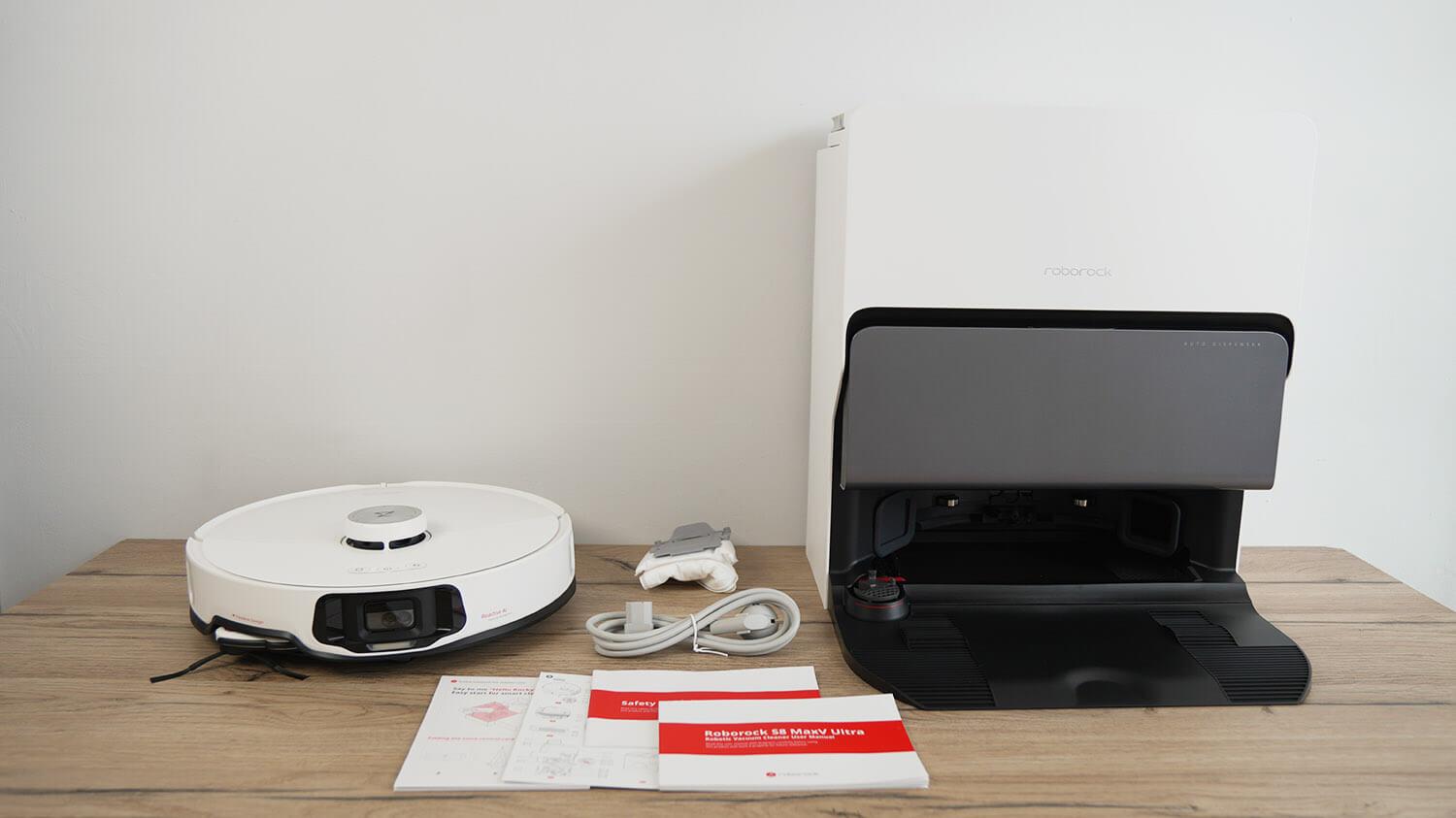
Roborock's package contents
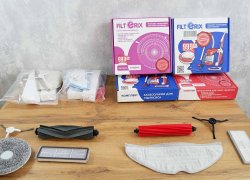
For the same price, Dreame includes a robot, station, adapter, and instructions, as well as a liter bottle of detergent, 12 spare cloths, two spare side brushes, a spare silicone turbo brush, three spare HEPA filters, and four extra bags for the station.
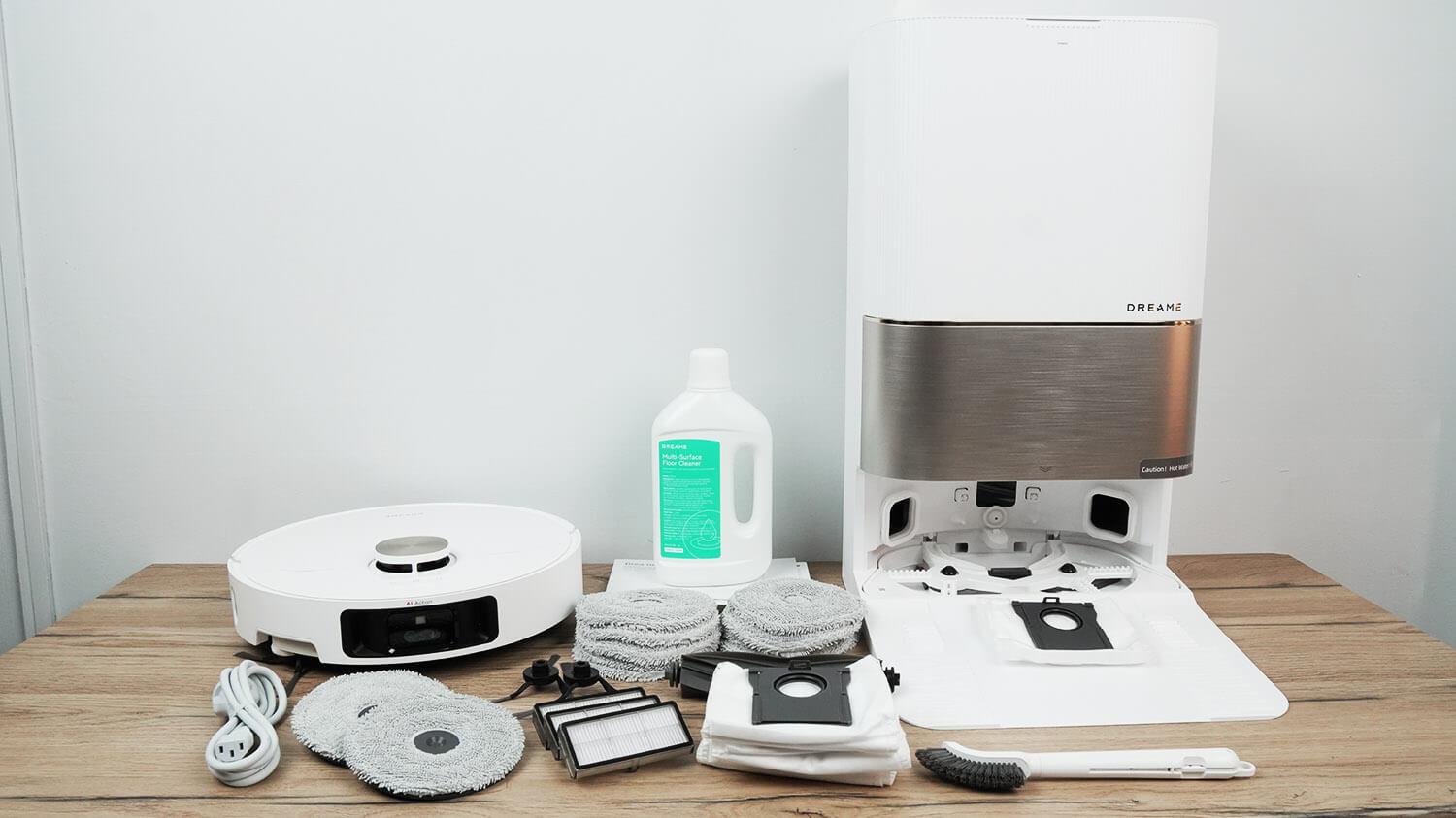
Dreame Equipment
It's obvious here who gets the first advantage.
Appearance
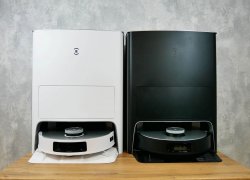
Now let's compare the robots' appearance. It's worth noting that the Roborock S8 MaxV Ultra and Dreame X40 Ultra Complete are largely identical in design. Both are round, feature lidar, object recognition, and an active camera, retractable side brushes, and similarly positioned dust collectors and water tanks, which are hidden inside the body of both robots.
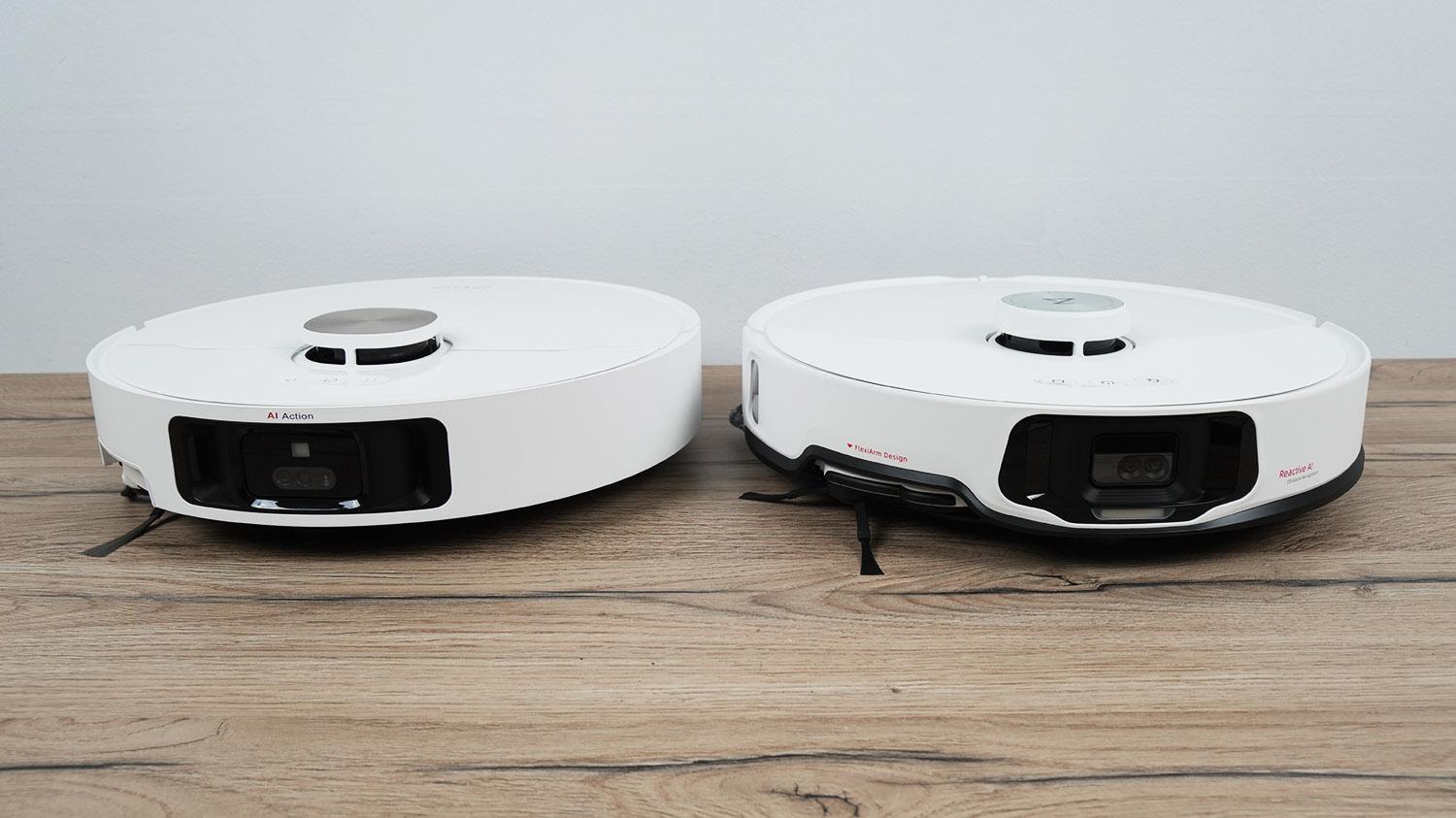
Front view
The central brush units and cleaning modules for wet cleaning differ. The Dreame X40 Ultra Complete has two rotating mops, one of which extends to the edge for a thorough cleaning along baseboards and furniture. The Roborock S8 MaxV Ultra has a tandem of a standard straight mop pad, which vibrates gently as it moves, and an additional round mop pad to eliminate the blind spot between the main mop pad and baseboards. This is an alternative to the retractable mop. Both mop pads lift when entering carpets, during dry cleaning, and when the robot moves into the cleaning area or station.
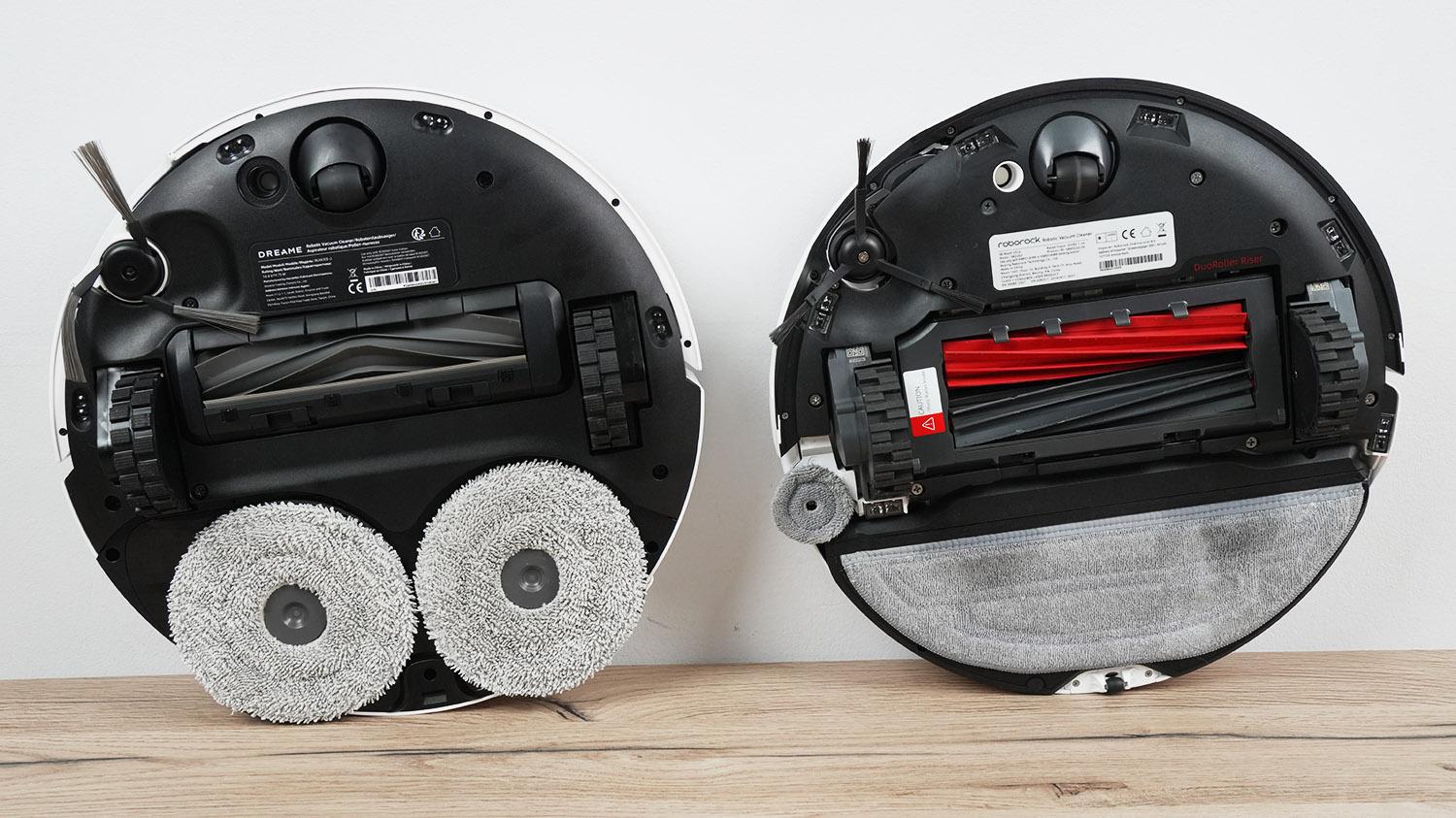
Cleaning modules
A significant difference here is that Dreame's pads can be automatically detached and attached to the docking station, completely eliminating contact between the wet pads and carpets. Roborock, meanwhile, increased the pad lift to 20 mm, which is twice as high as Dreame's, which has a 10.5 mm lift when attached.
In addition to the cleaning cloths, robots also raise their brushes during floor cleaning and when returning to the station. However, while the Roborock only raises the turbo brush assembly, the Dreame raises both the turbo brush and the side brush.
Speaking of central brushes, the Dreame has a single silicone turbo brush. It can be replaced with a turbo brush with blades, which automatically cuts hair from the shaft and cleans carpets better. The Roborock has two silicone turbo brushes that rotate in opposite directions.
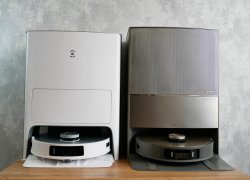
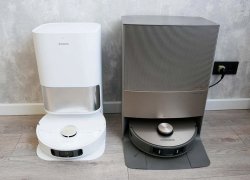
The stations are also virtually identical in functionality and design: both have water tanks at the top. Trash bags and detergent dispensers are located in the middle. Below are trays for washing and drying cloths.
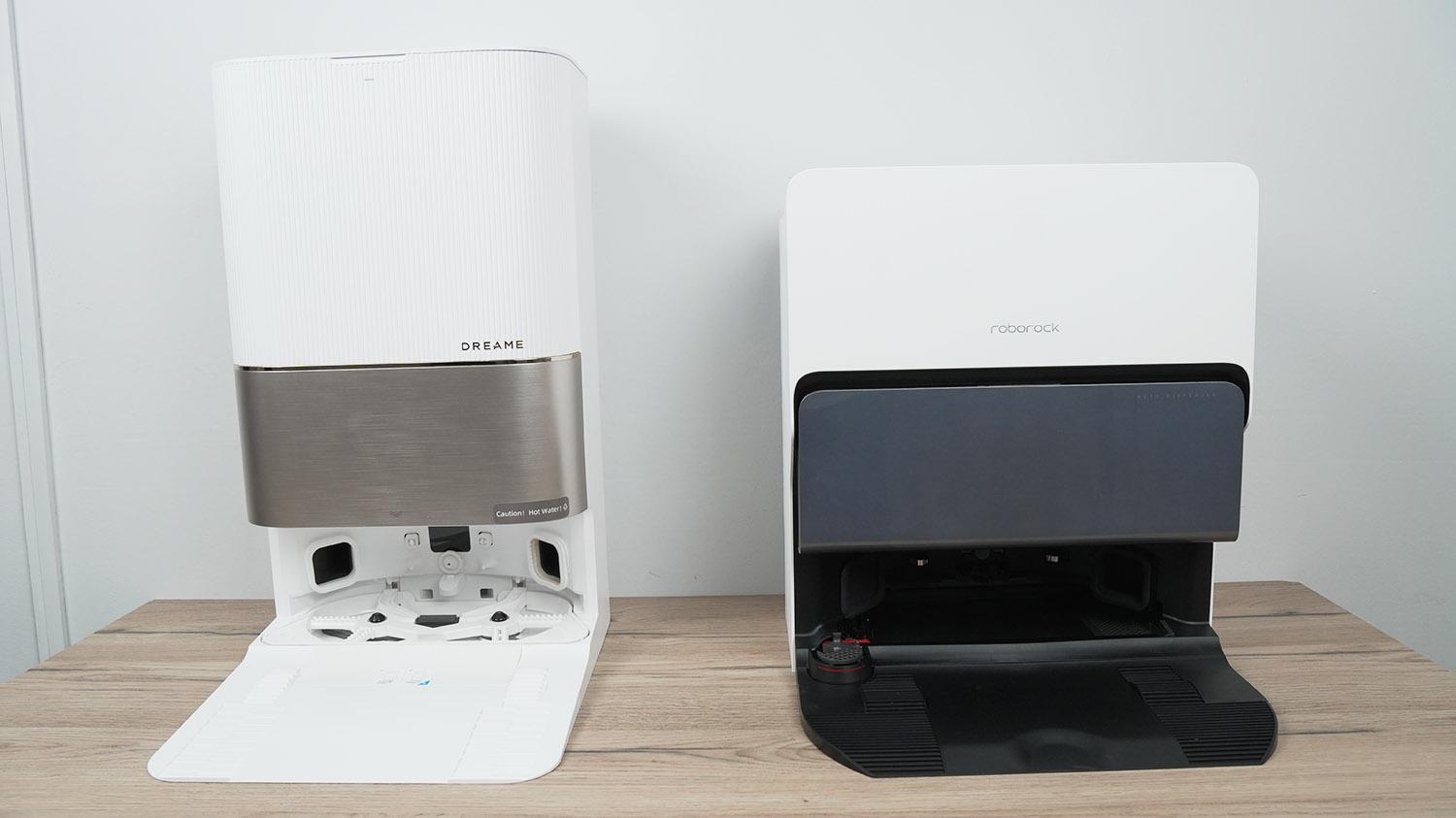
Stations
An important detail: the Dreamy station can be connected to both the sewer and water supply by replacing the tanks with a module. Roborock has a separate station with tanks, like the one reviewed. There's also a separate station for connecting to utility lines. However, it's not even available on the market. So, in essence, the Roborock S8 MaxV Ultra can't be connected to the sewer.
I'll add that Dreamy's station is higher, but narrower. The robot itself is lower and can fit under the standard 10-centimeter clearance of furniture. I'll highlight all the parameters in the specifications. Which is where we'll get to next.
Technical specifications
All declared and verified characteristics, as well as design features, are presented in a table for easy reference:
| Dreame X40 Ultra Complete | Roborock S8 MaxV Ultra | |
| Navigation | Lidar + backlit object recognition system | Lidar + backlit object recognition system |
| Dust collector in the robot | 300 ml | 270 ml |
| Filtration system | HEPA filter | HEPA filter |
| Fall protection sensors | 4 pcs | 6 pcs |
| Water tank in the robot | 80 ml | 100 ml |
| Cleaning module | Retractable side brush, silicone central brush, two round cloths (one of which is retractable) | Retractable side brush, two silicone central brushes, vibrating straight cloth, additional round cloth at the edge. |
| Tanks in the station | 4.5 + 4 l | 4 + 3.5 l |
| Bag in the station | 3.2 l | 2.7 l |
| Drying napkins | Yes | Yes |
| Water heating at the station | Wash with hot water (70°C) | Wash with hot water (60°C) |
| Detergent tank in the station | Yes | Yes |
| Removable tray for washing napkins | Yes | No |
| Connection to cold water supply and sewerage | Yes, the module is optionally available. | Yes, a separate station (not available for sale in Russia) |
| Dimensions of the robot | 350*97 mm | 353*103 mm |
| Dimensions of the station | 590*340*456 mm | 419*409*470 mm |
| Robot noise level | 54-72.5 dB | 56-71.5 dB |
| Noise level of the station | 66-67 dB | 69-73 dB |
| Declared power | 12,000 Pa | 10,000 Pa |
I'll just note that the noise levels of both the robots and the stations were measured personally. The Dreame's station is much quieter in its self-cleaning mode. The robots themselves are roughly the same noise level. The Roborock is 1 dB quieter, but also noticeably weaker, which I'll demonstrate later.
Functional capabilities
Speaking of capabilities, the functionality is again very similar. I've compared the main features in another table:
| Dreame X40 Ultra Complete | Roborock S8 MaxV Ultra | |
| Object recognition | Yes | Yes |
| Remote home monitoring | Yes | Yes |
| Raising the central brush | Yes | Yes |
| Lifting napkins | Yes | Yes |
| Raising the side brush | Yes | No |
| Identifying stains on the floor | Yes | Yes |
| No-go zones and virtual walls | Yes | Yes |
| Storing multiple maps in memory | Yes | Yes |
| Automatic power increase on carpet | Yes | Yes |
| Automatic selection of cleaning parameters | Yes, CleanGenius | Yes, SmartPlan |
| Branded voice assistant | Currently missing, should add "Ok, Dreame" | Yes, "Hello, Rocky |
| Yandex.Alice Support | Yes | Yes |
The main difference here is support for the proprietary voice assistant. Roborock allows you to give commands to the robot using your voice, but Dreame, for some reason, doesn't yet have this feature in the app. They promise to add it. Based on experience testing previously released models, Roborock has a better implementation of voice control via the proprietary assistant. It supports more commands, and the robot recognizes them better.
I'll point out an important detail that not everyone takes into account. The Dreame X40 Ultra Complete is the international version of the robot vacuum cleaner, which supports Russian voice control and the robot itself can speak Russian, among many other languages. The Roborock S8 MaxV Ultra has two versions: global and Russian. The global version speaks English and other languages except Russian. The proprietary assistant also supports multiple languages, but Russian is not listed. To get Russian, you need to order the Russian version from official distributors in Russia. Pay attention to this, as even popular marketplaces and online retailers often sell the global version for the same price, but it's not adapted to the Russian market.
Testing
The most interesting part is comparing the test results. You can explore all the tests in the detailed reviews of each robot.
In this video, I will only compare the results in the table:
| Dreame X40 Ultra Complete | Roborock S8 MaxV Ultra | |
| Recognizing objects in good lighting conditions | 6 out of 6 items | 6 out of 6 items |
| Recognizing objects in complete darkness | 6 out of 6 items | 5 out of 6 items |
| Suction power | Cleans cracks up to 10 mm deep | Cleans crevices up to 4 mm deep |
| Sweeping in the corners | Fully | Partially (the algorithm requires improvement) |
| Collecting debris on laminate flooring | High quality | High quality |
| Cleaning a low pile carpet | High quality | High quality |
| Cleaning a medium pile carpet | Above average quality. Issue discovered: If the rug is placed close to a wall or furniture, it doesn't clean the rug's perimeter well due to the side brush being raised. | Above average quality |
| The quality of self-cleaning of the dust collector | High | High |
| Removing difficult stains | 8 passes | 11 passes |
| Washing quality of napkins | High | High |
| Obstacle clearance | 2.2 cm | 2 cm |
| Driving on black surfaces | Yes | Yes |
I'll note that the Dreame actually performed better at recognizing objects in the dark and is MUCH more powerful. It also handled tough stains faster. However, there's a caveat: on carpets, it automatically raises the side brush, which results in inferior cleaning performance on carpeted areas along the walls. This is important to keep in mind.
Build quality
Finally, we disassemble the robots and see that even their internal components are virtually identical. The differences in reality are minimal, but here's what we discovered:
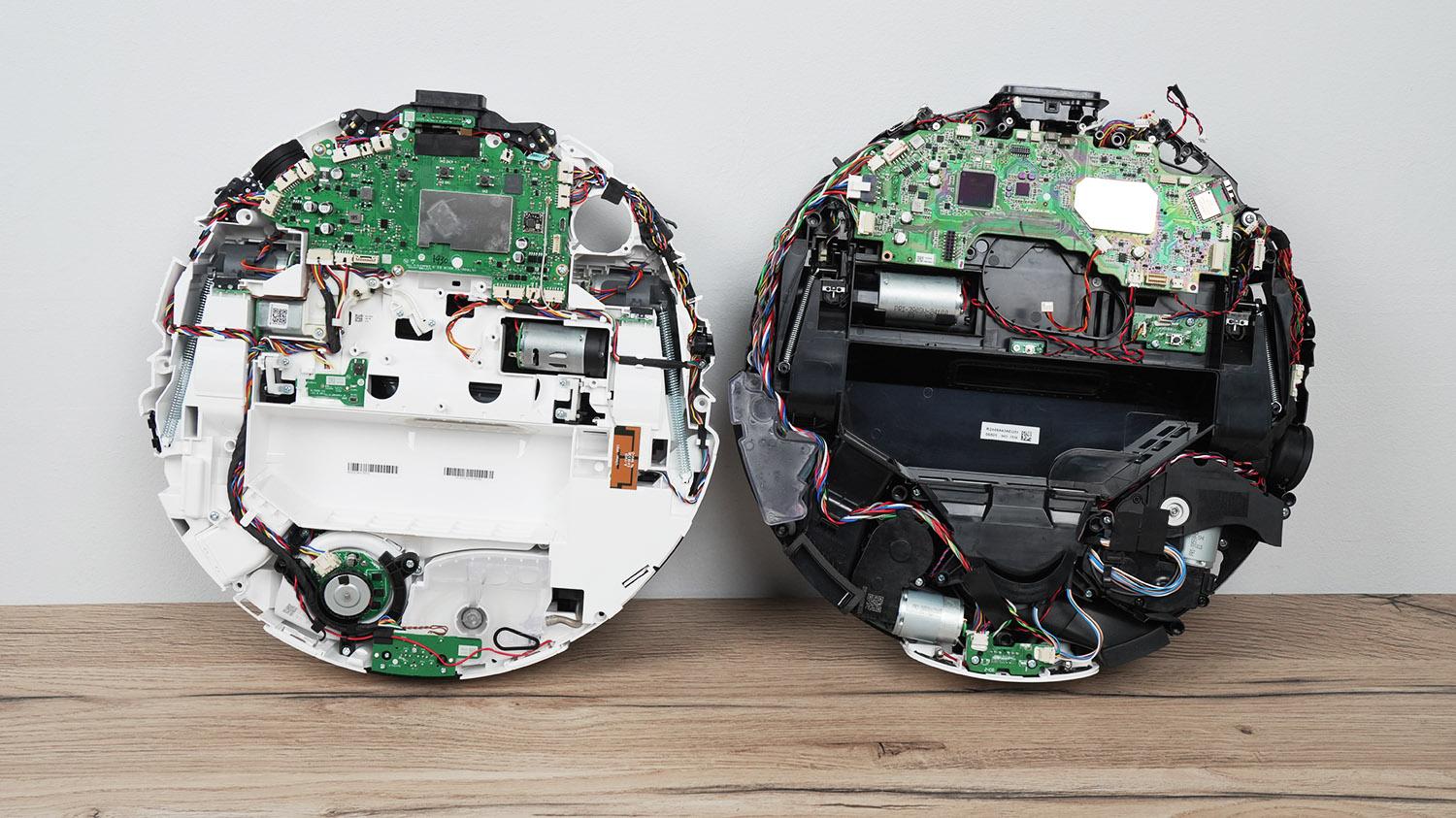
Disassembled robots
Roborock's main board is coated with varnish to protect it from moisture.
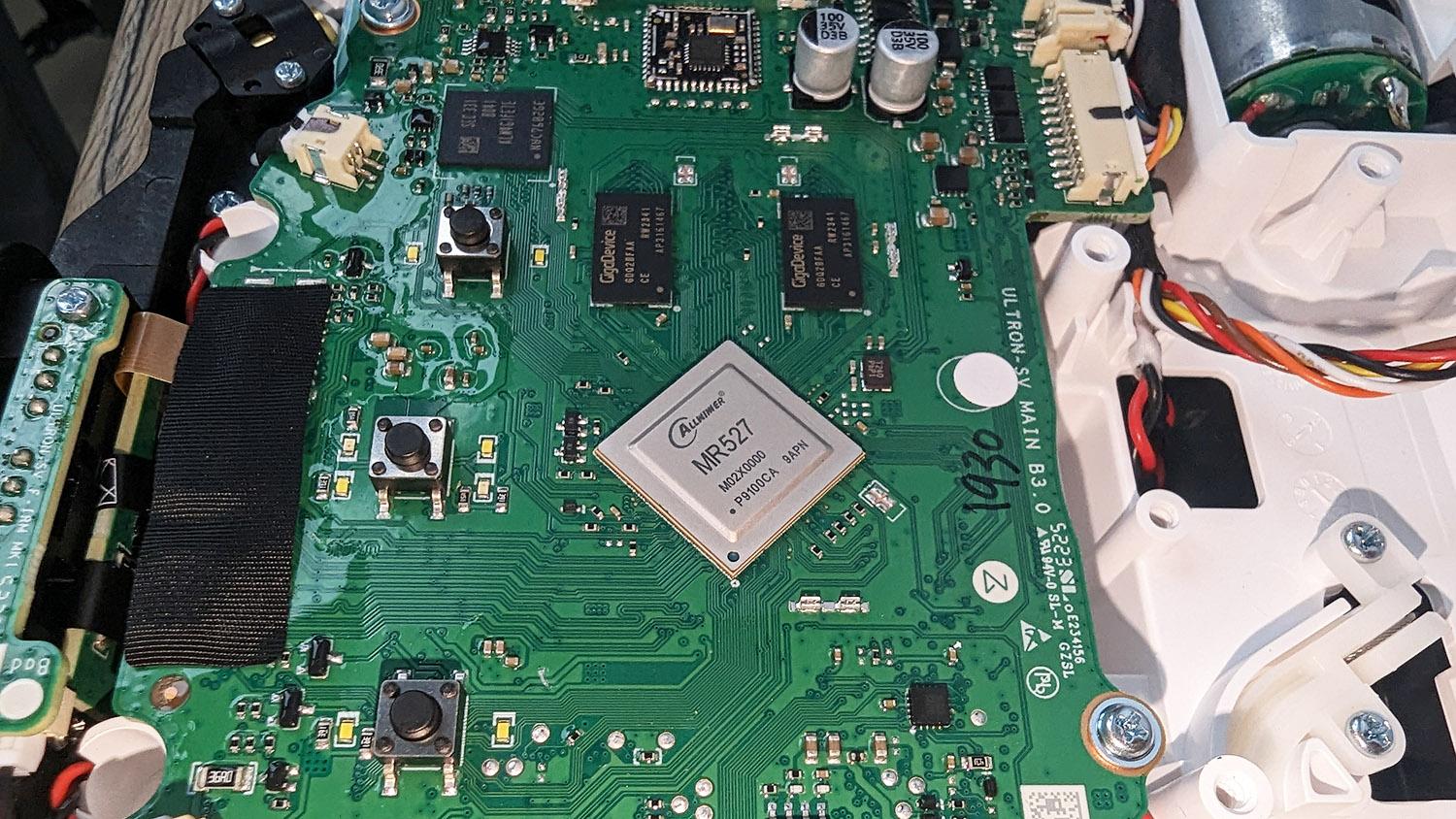
Roborock's waterproof board
Surprisingly, no moisture protection was found on the Dreame X40 Ultra Complete.
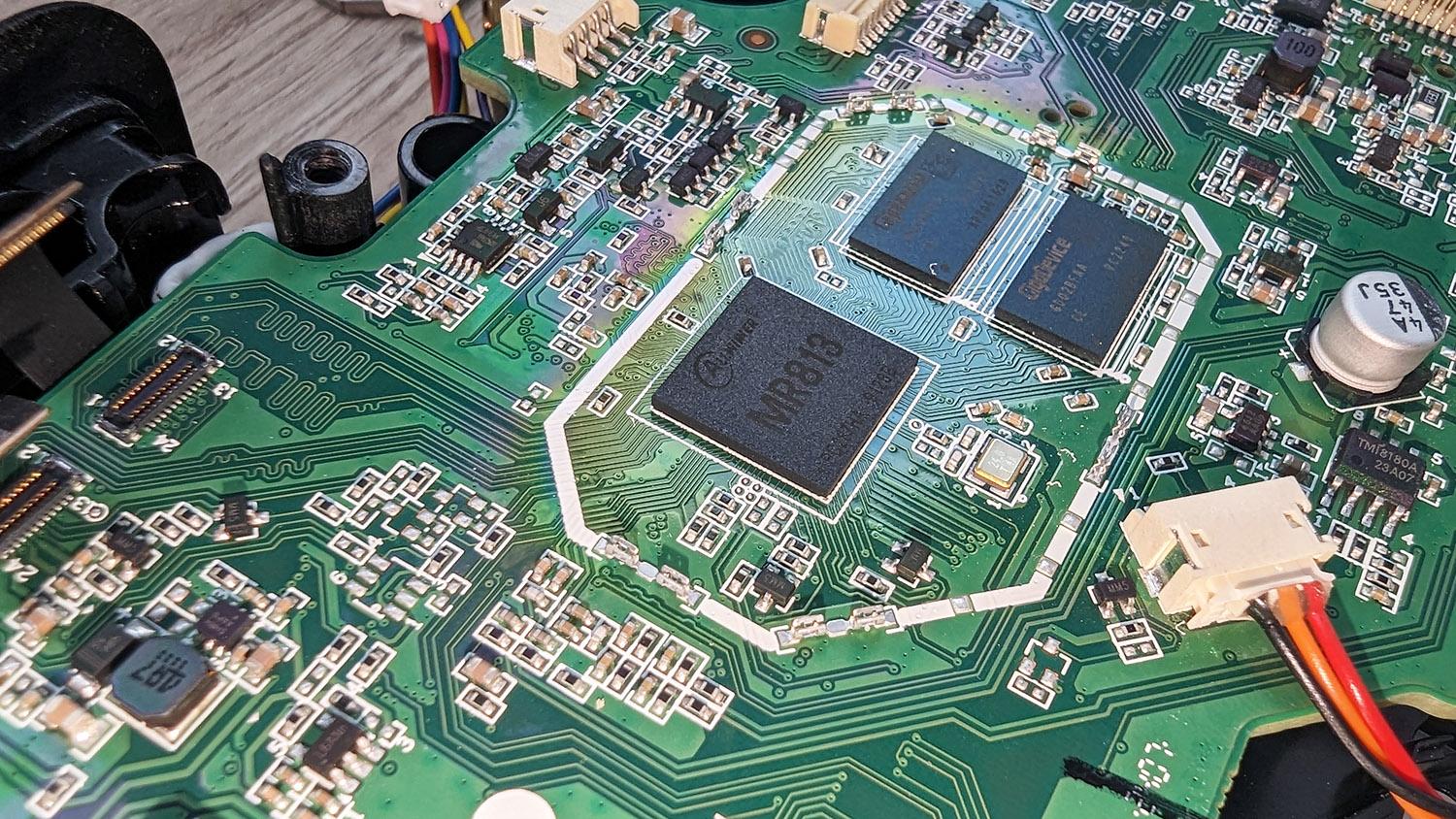
Dreame board without moisture protection
In fact, just two weeks ago I disassembled my Dreame X20 Pro Plus and found that the board was also protected with varnish. It's a strange situation. However, a service center representative suggested that Dreame may have abandoned moisture protection for the boards because it complicates repairs and desoldering components, while not providing a 100% guarantee that the board won't short-circuit if water gets inside. Nevertheless, we remain convinced that moisture protection is a good thing, and that Roborock has an advantage in this regard.
The most important thing I wanted to determine during the disassembly was the reliability of the retractable side brushes. Because, again, there was a growing belief that the Dreame's side brush quickly fails due to poor soldering, as robot owners claim.
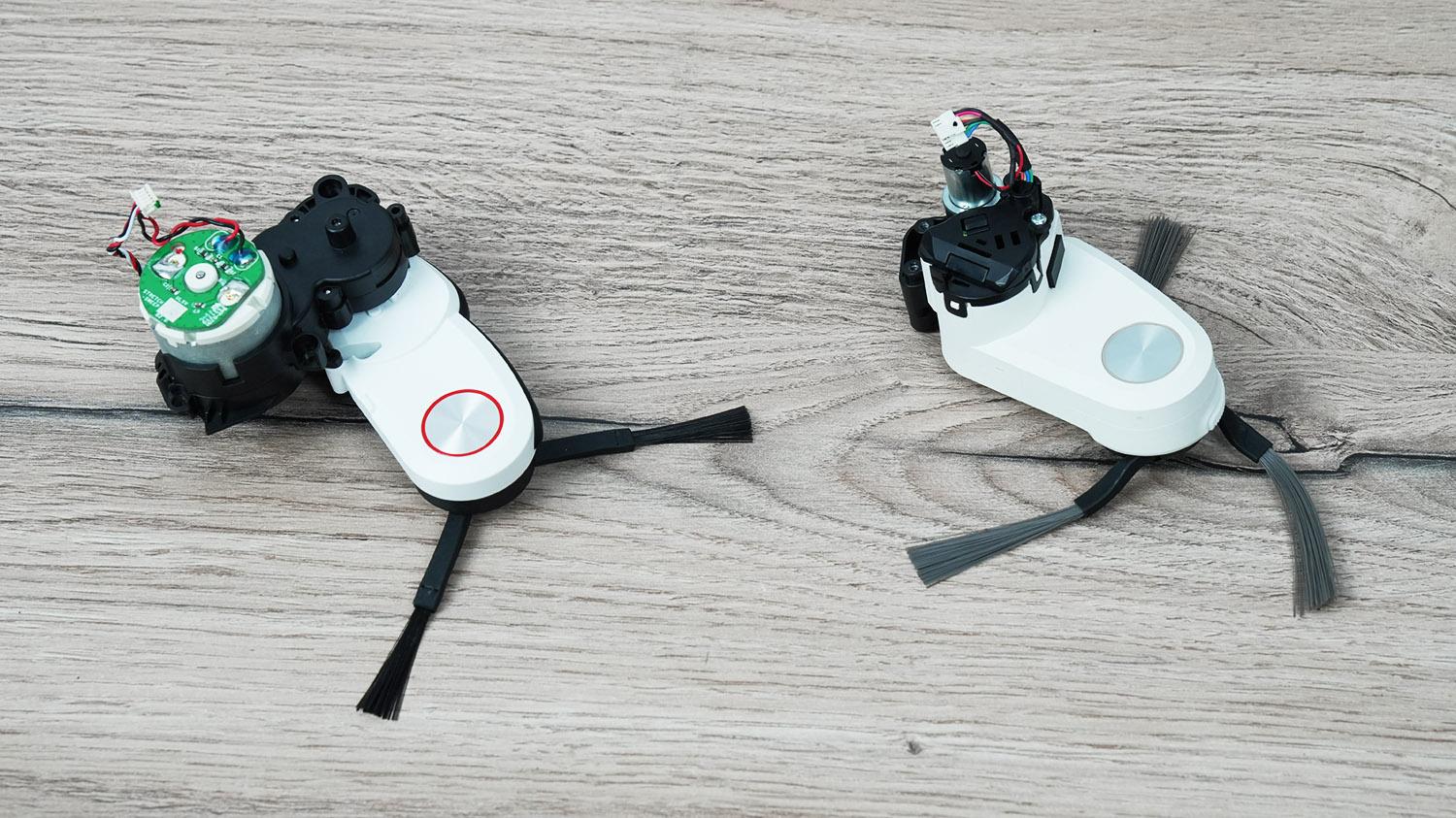
Side brushes
This is what the Roborock side brush looks like. It has a single brush motor that controls both the side brush extension and its rotation:
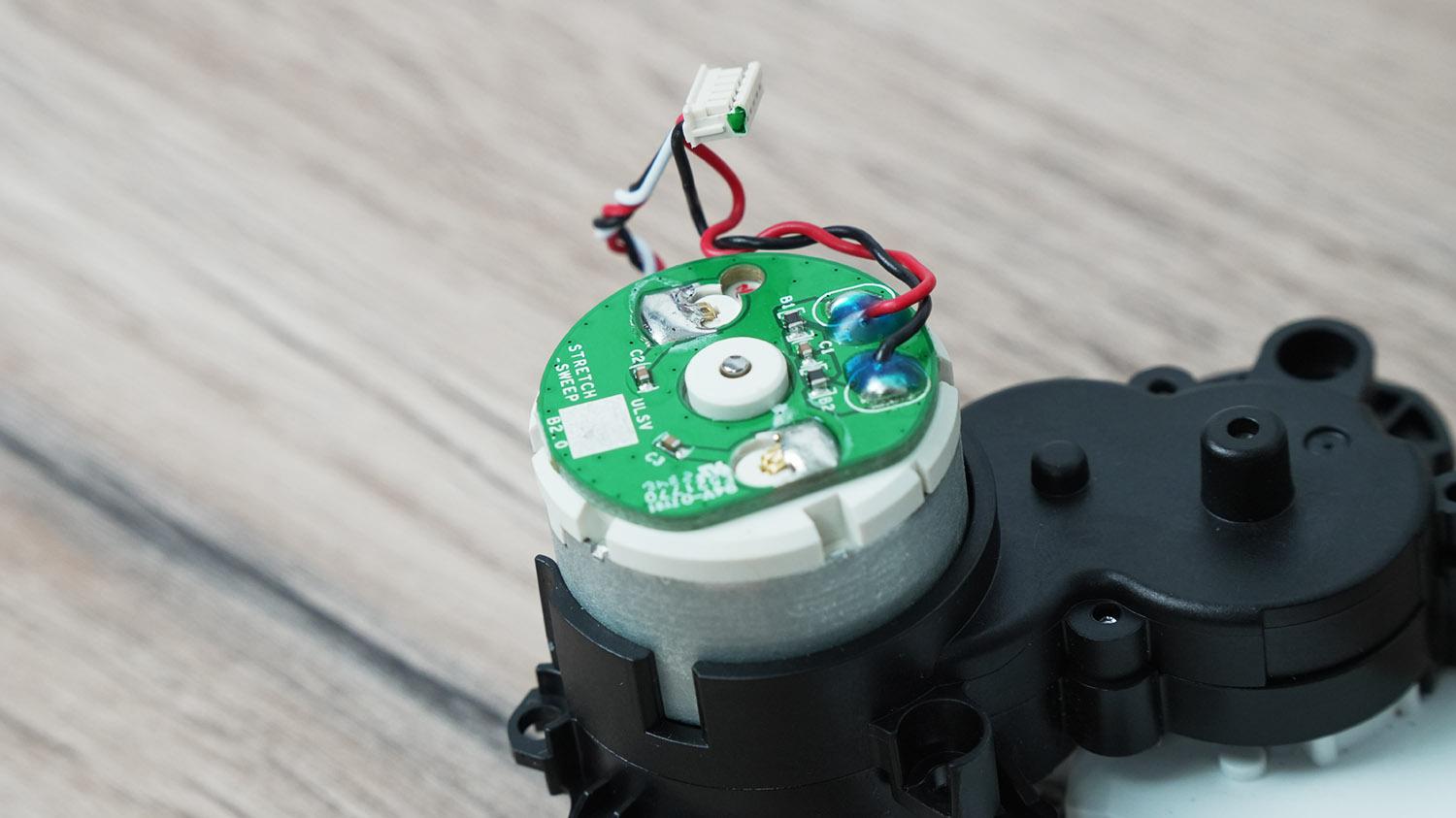
Roborock side brush motor
Let's take a look at the Dreame. Upon disassembly, no faulty soldering was found, as haters often point out online. Interestingly, the design is different. Two motors are installed. One, the smaller one, is a brush motor and is responsible for the side brush extension. The second, larger one, is responsible for the rotation.
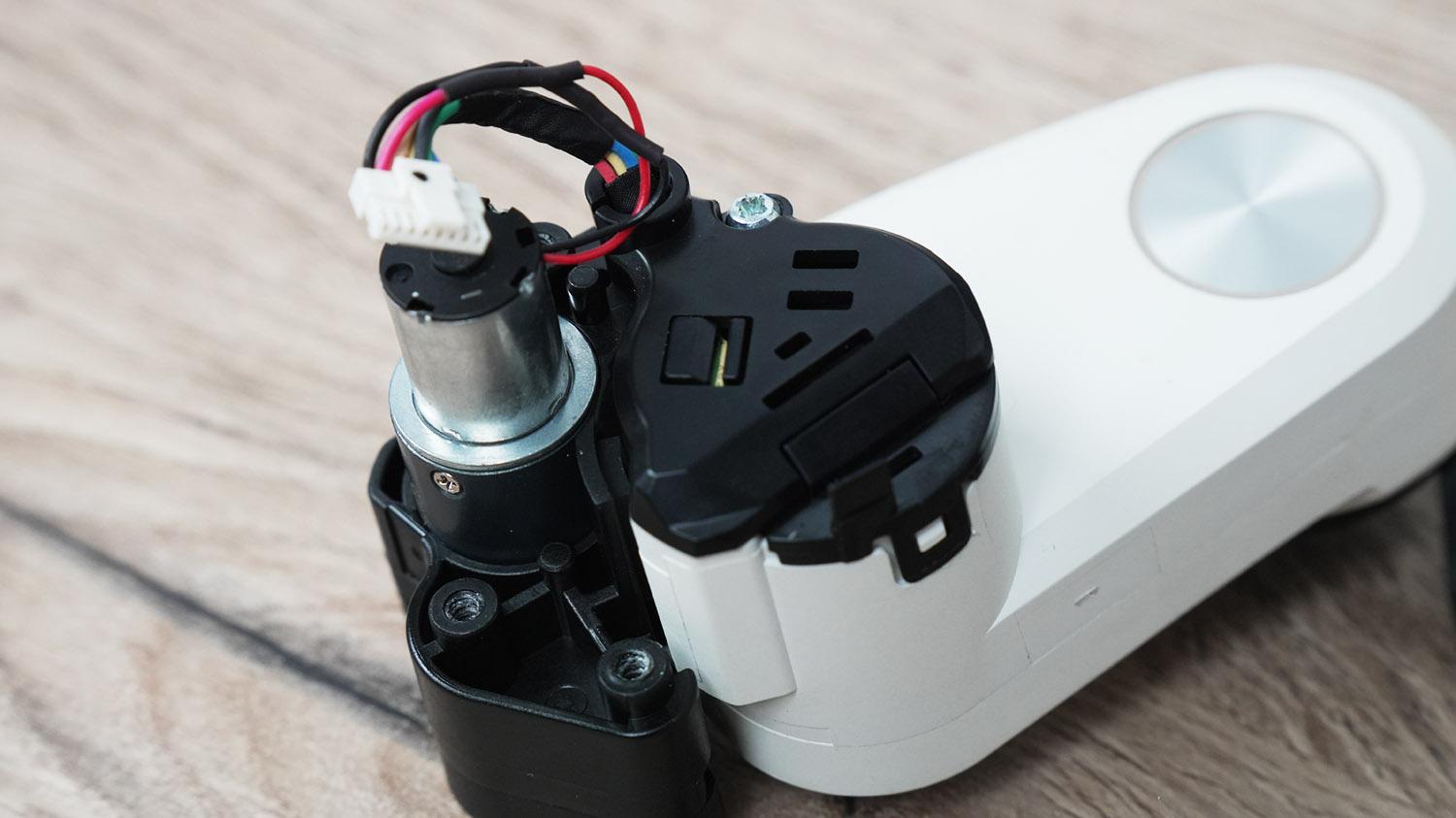
Dreame Side Brush Motors
What's even more interesting is that the second motor is brushless. This type of motor is much more reliable and durable. It turns out that the Dreame actually has a more complex design, with two motors, but the main rotation motor is more reliable. The Roborock's design is simpler, but not exactly more reliable. We didn't find any issues with soldering or assembly. Therefore, we can't single out a clear winner here.
What surprised me when comparing lidars was that Roborock's lidar motor isn't protected by a housing to prevent debris from getting inside. This isn't good. Many manufacturers, even those making budget robots, have moved away from this design. Dreame's lidar motor is protected by a housing, and I'd give Dreame a point here.
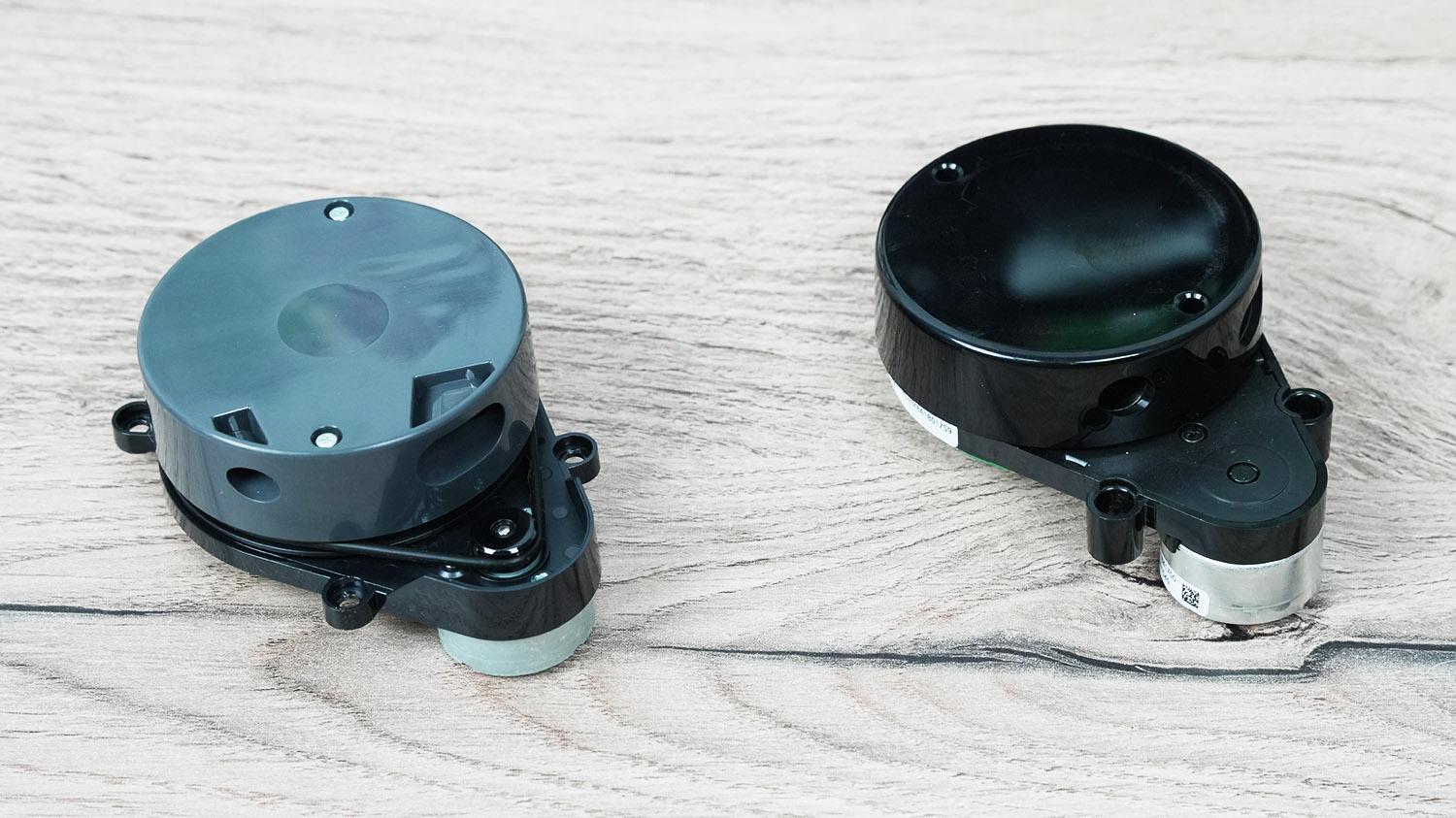
Lidars
A slight difference was also found in the battery assembly. The Dreame has standard cardboard inserts on the ends. The Roborock features additional moisture protection with plastic inserts. While the batteries are protected from moisture on the inside, Roborock has also provided additional protection on the outside.
Another small difference: the Dreame's bottom cover in the battery compartment has no additional protection. The Roborock has a moisture-resistant gasket and a thin, heat-dissipating rubber layer.
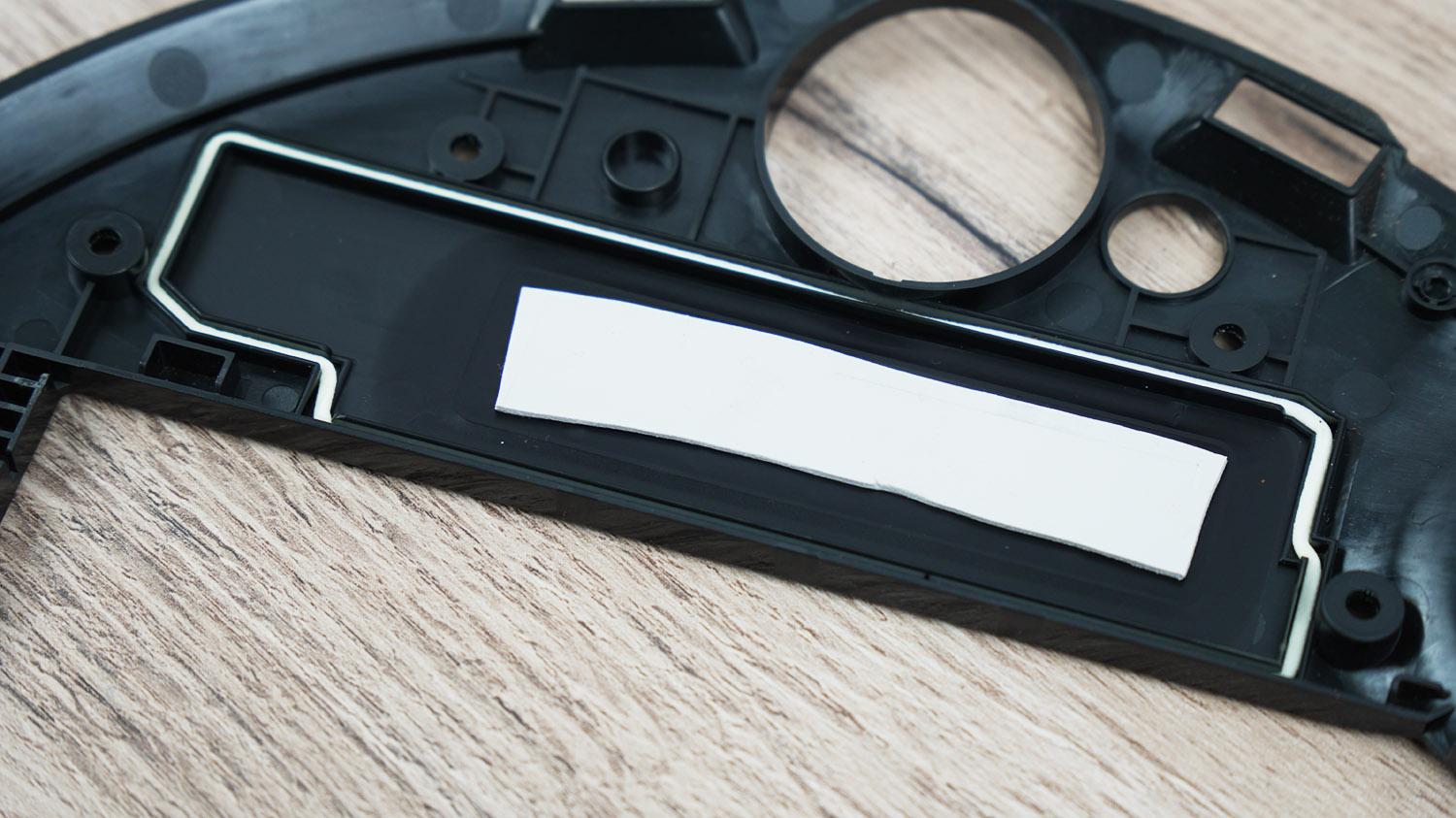
Water resistance on the Roborock lid
That's probably where the differences in the robots' assembly end. Both are very intricately assembled, and to replace a wheel, for example, you have to completely disassemble it. This means that both robots are difficult to repair. However, I liked the fact that both Roborock and Dreame have QR codes on each part for quickly finding the right one.
There are even fewer differences between the stations:
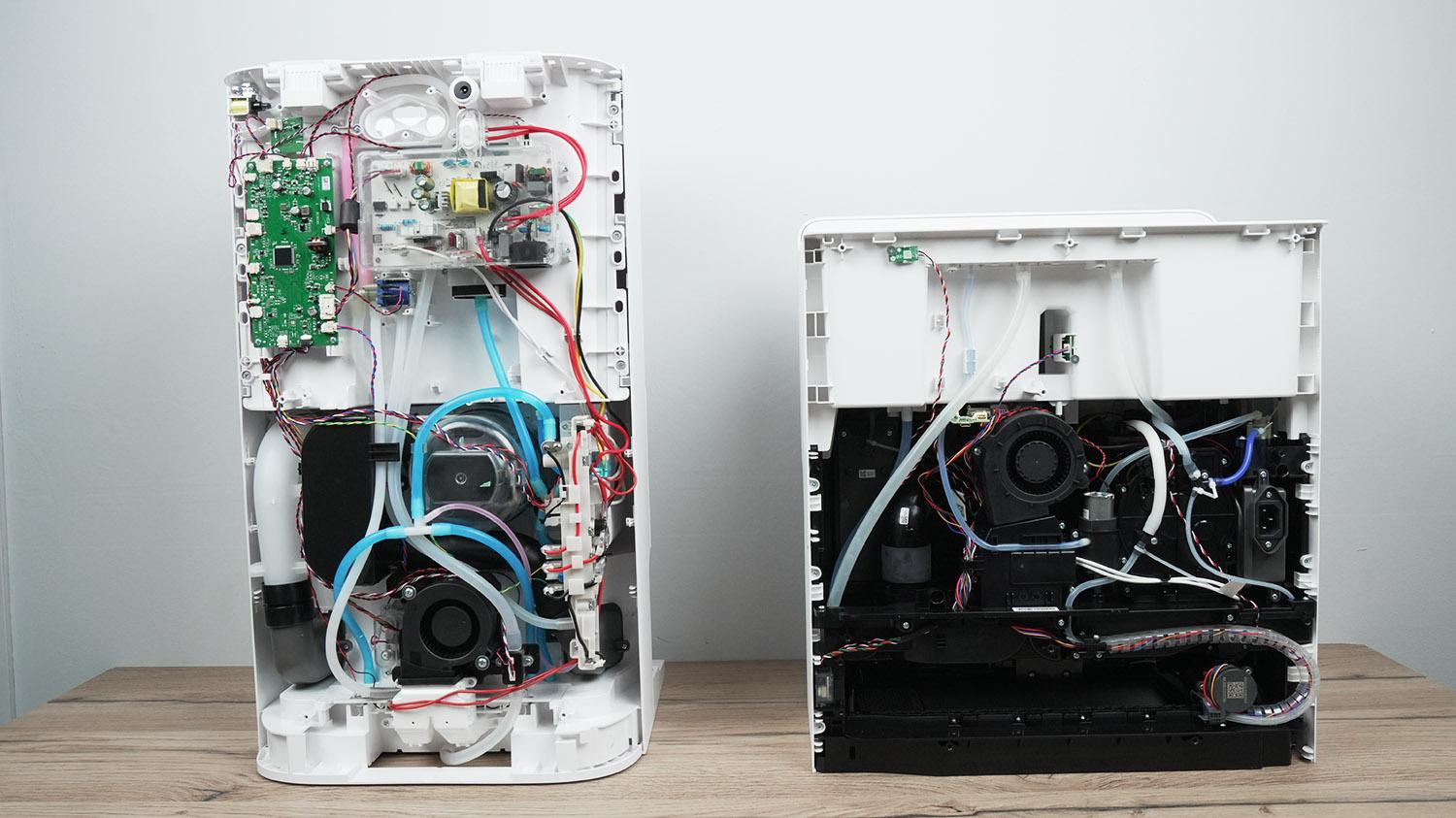
Dismantled stations
What I liked about Roborock is that the tubes are equipped with clamps, which increase the reliability of the internal wiring system.
But at the same time, all of Roborock's components are arranged in such a way that the station must be completely disassembled for diagnostics or repairs. Dreame has made this much more convenient. Simply remove the back cover, and the entire internal components are visible. Components can be easily inspected and replaced.
In terms of the stations' build quality, everything inside is very similar. Both have enclosures for the power supplies and self-cleaning motors, but the control boards are completely unprotected from moisture.
So, ultimately, there's no obvious or overriding difference in build quality. In some small areas, Roborock may have taken greater care to protect the internal components, but this doesn't significantly impact the robots' reliability or durability. Moreover, both brands have their own strengths and weaknesses in build quality, as demonstrated by the lidars, side brushes, and other components.
Incidentally, an interesting fact is that when we conducted a similar build quality comparison three years ago with a different specialist, comparing 2021 flagships, the findings were roughly the same. Roborock was slightly, but still slightly, better on the inside compared to Dreame and other brands. So, they're still holding their own. Roborock has the edge here, by a long shot, but, again, making this a primary consideration when choosing a robot doesn't make sense.
Let's sum it up
What can I say in conclusion? Overall, both robots deserve to be considered among the best in 2024. But in my opinion, Dreame's engineers have done more work and released a more successful product. In the table, I've highlighted what I consider to be the most important criteria that, when compared, demonstrate the differences between the flagships:
| Dreame X40 Ultra Complete | Roborock S8 MaxV Ultra | |
| Price | $1300-$1400 | $1300-$1600 |
| Equipment | Annual set of ALL spare consumables | 1 spare bag for the station |
| Suction power | Very high (10 mm) | Medium (4 mm) |
| Sweeping in the corners | Yes, completely. | Partially |
| Removing stains | 8 passes | 11 passes |
| Cleaning a medium pile carpet | Above average quality. Issue discovered: If the rug is placed close to a wall or furniture, it doesn't clean the rug's perimeter well due to the side brush being raised. | Above average quality |
| Protecting the turbo brush from hair and fur | They practically don't wrap around the brush (silicone) + you can buy a turbo brush with blades | They practically do not wrap around the brushes (silicone ones) |
| Object recognition | Great | Great |
| Connection to sewerage and cold water supply | Yes | Yes, but with a different station (not sold in Russia) |
| Branded voice assistant | Temporarily unavailable | Yes |
| Robot noise level | 54-72.5 dB | 56-71.5 dB |
| Noise level of the station | 66-67 dB | 69-73 dB |
| Build quality | High | High. A little better than D.reame. |
| Dimensions of the robot | 350*97 mm | 353*103 mm |
| Dimensions of the station | 590*340*456 mm | 419*409*470 mm |
| Additional features | The wipes are completely detachable at the station, the tanks and bag at the station are more spacious | The lifting height of napkins has been increased to 20 mm |
Additionally, I would like to note that in overall ratingBased on the existing robot vacuum cleaner rating algorithm, the Dreame X40 Ultra Complete scored 234 points, while the Roborock S8 MaxV Ultra only scored 212 points. They ranked first and fifth, respectively.
So, in my opinion, of these two robots, in terms of cleaning quality, practicality and functionality, the Dreame X40 Ultra Complete is the more advanced solution.
Dreame purchase links:
But if for some reason you don't want to choose the Dreame, I wouldn't say the Roborock S8 MaxV Ultra is a bad option. On the contrary, it's a good alternative to the Dreame for the same price, with its own advantages and disadvantages.
Links to purchase Roborock:
These two robots, being the companies' flagships, are in any case much better than flagship solutions from other famous brands.
I'd like to end on this note. I hope you found the information useful and interesting. In the near future, I plan to compare the Chinese flagships from these two brands, namely the Roborock V20 and the Dreame X40 Pro Ultra. Perhaps some other competing models would be worth comparing, such as the Roborock Qrevo Master and Dreame Bot L10s Pro Ultra HeatWhat do you think? Let me know in the comments what comparisons you'd find interesting.
Happy shopping everyone. Bye!