Roborock Saros 10R vs. Saros Z70: All the Key Differences

Hello to all readers of the project! In this review, I decided to compare two top-of-the-line robot vacuum cleaners from Roborock, namely Saros 10R and the 2025 flagship – Saros Z70Visually and in terms of specifications, the robots are very similar, with the exception that the advanced Z70 model has a floor-lifting arm. But in reality, there are many more differences, and below I'll compare these two robot vacuums in detail to help you choose the best option for your needs. So, let's get started!
Price
First, let's compare the prices of the robots. The Roborock Saros 10R costs between $1,100 and $1,400, while the Saros Z70 costs between $1,800 and $2,000. The difference is significant. Let's figure out what we're paying extra for.
Appearance
First, let me show you how the robots differ in design. The most important feature is the Saros Z70's extendable arm. It allows the robot vacuum to automatically pick up various objects from the floor that might interfere with cleaning or are simply in the wrong place. Currently, the algorithms only work with socks and shoes, but they promise to add more objects to the database in the future.
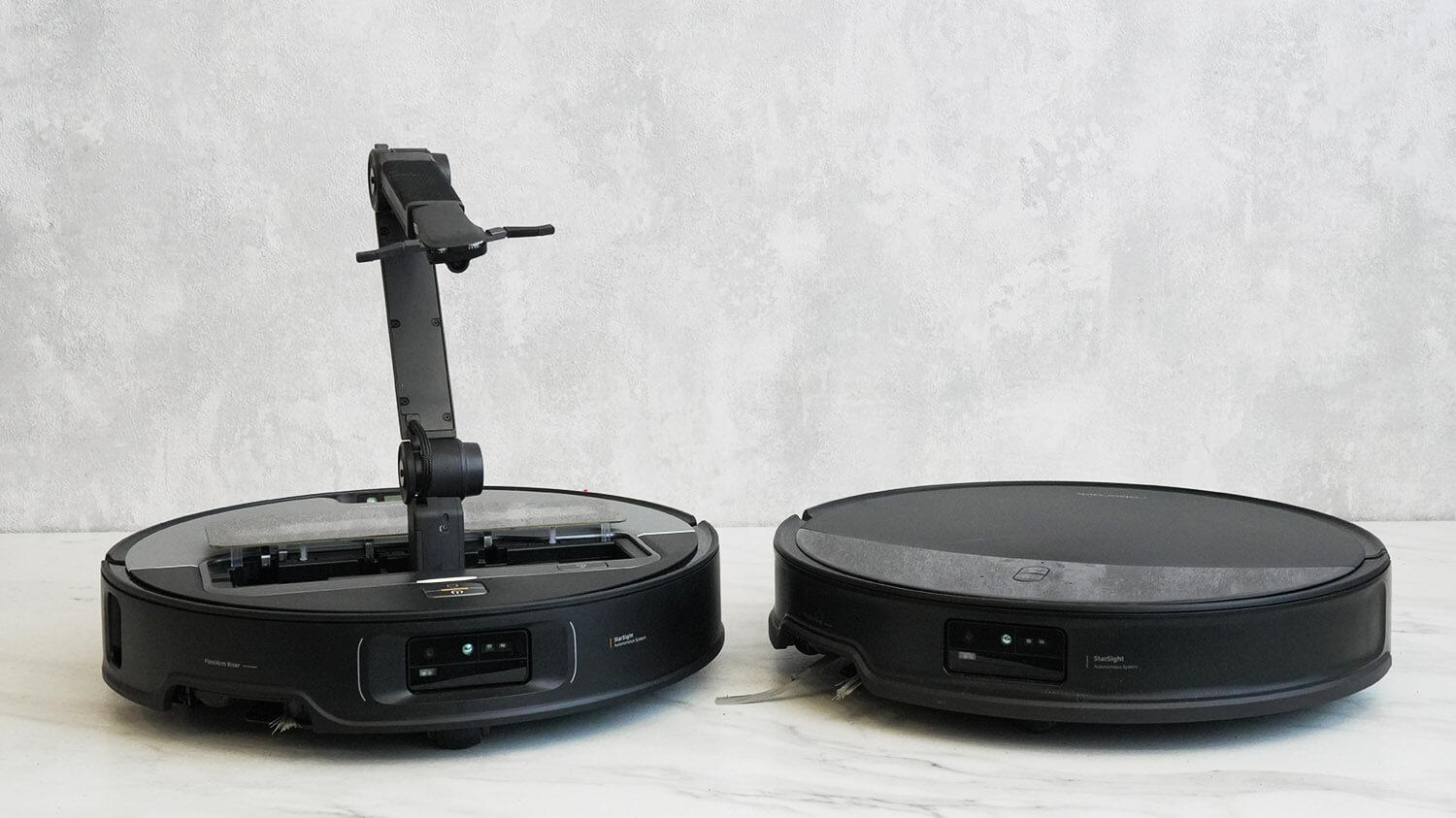
Roborock Saros Z70 and Saros 10R
The robots themselves are visually very similar. They share the same thin 80mm frame, round shape, object recognition system based on StarSight Autonomous System 2.0 sensors and cameras, and identical dust collector locations. The Saros Z70 has an additional camera on the top of its frame, which ensures the proper functioning of the robotic arm.
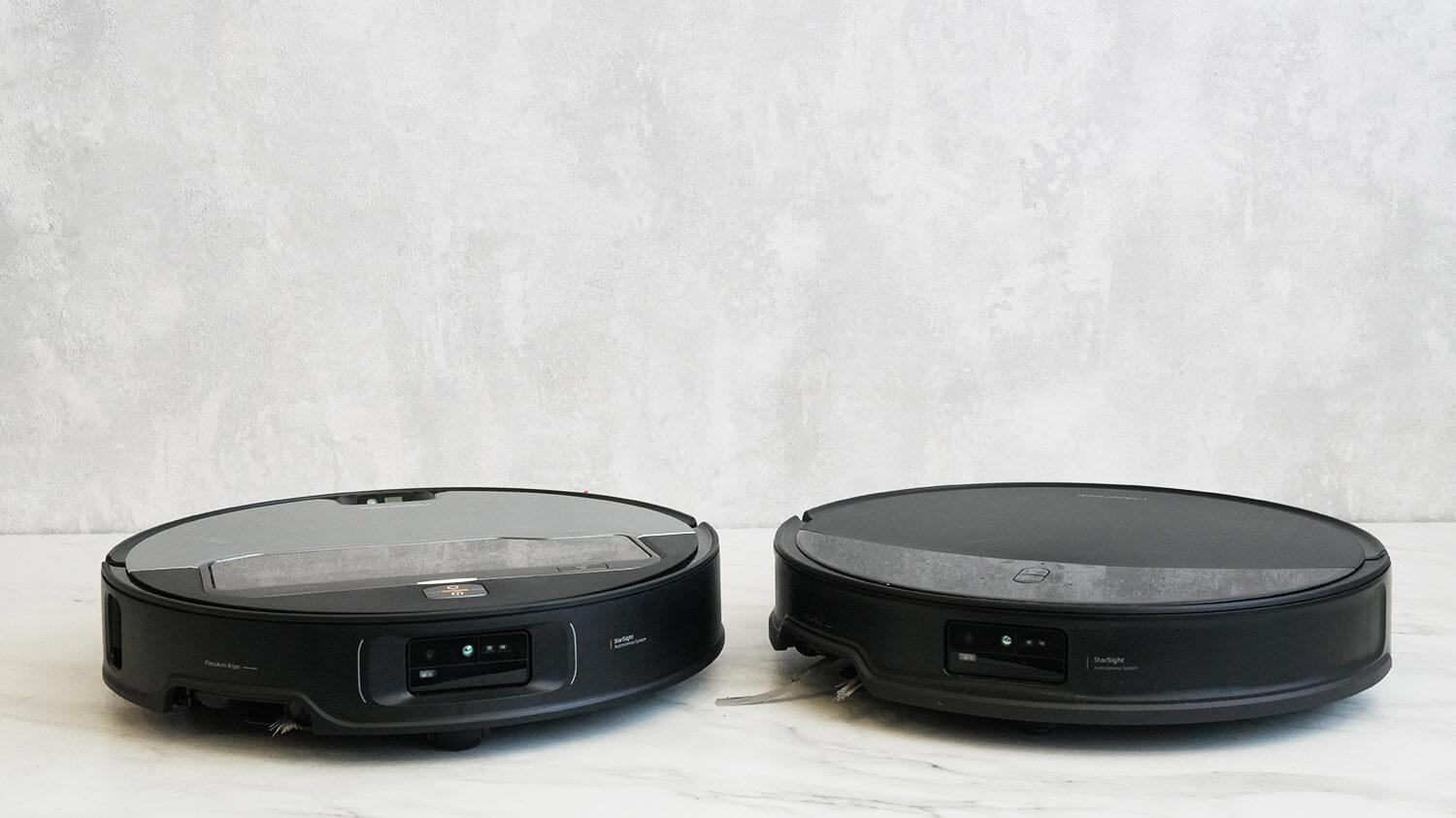
Appearance of robots
The Roborcok Saros 10R's dust bin and HEPA filter are noticeably larger, as the Z70's hand-held vacuum sacrificed some of its dust container capacity to accommodate the vacuum's larger body.
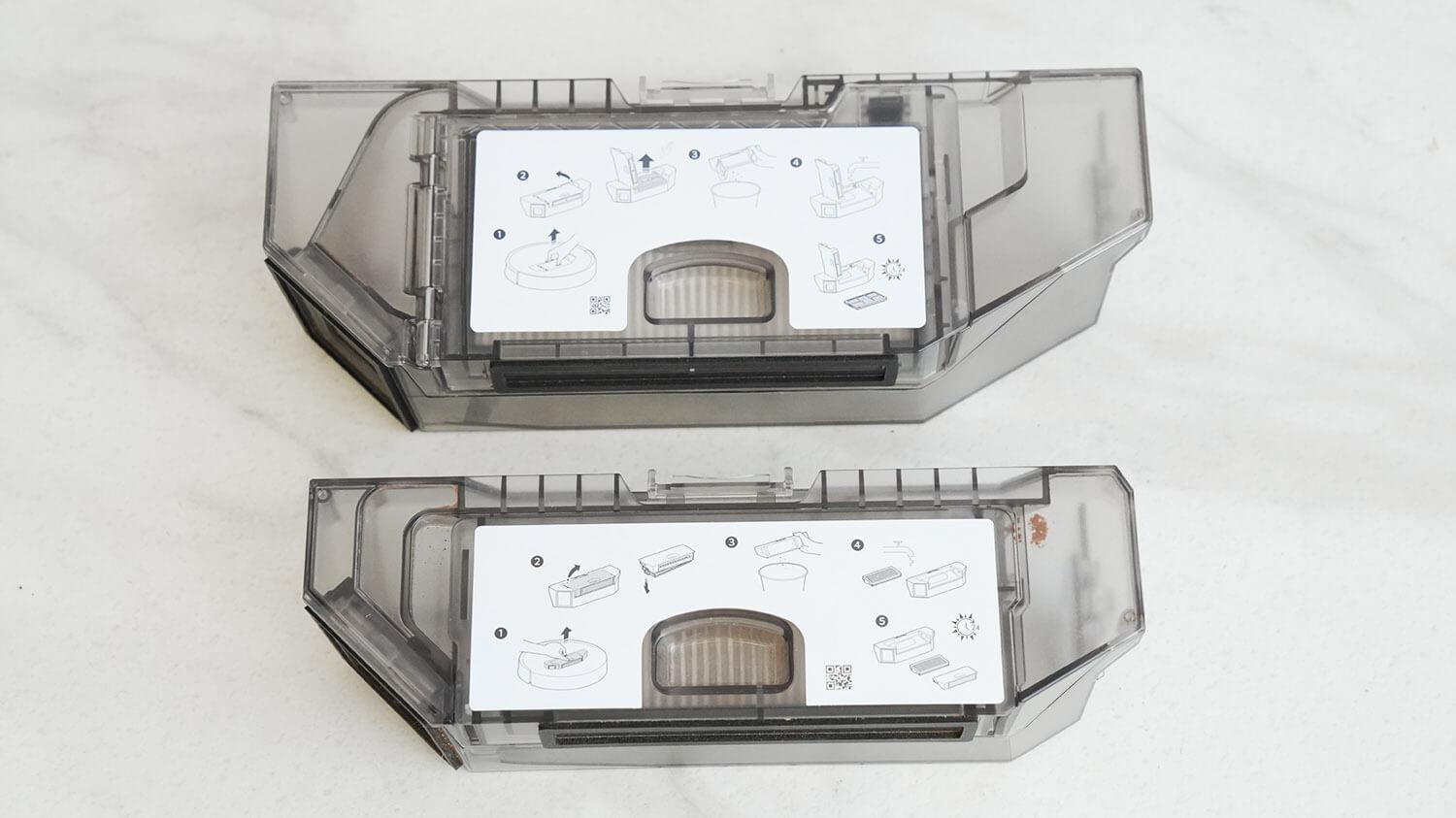
Comparison of dust collectors
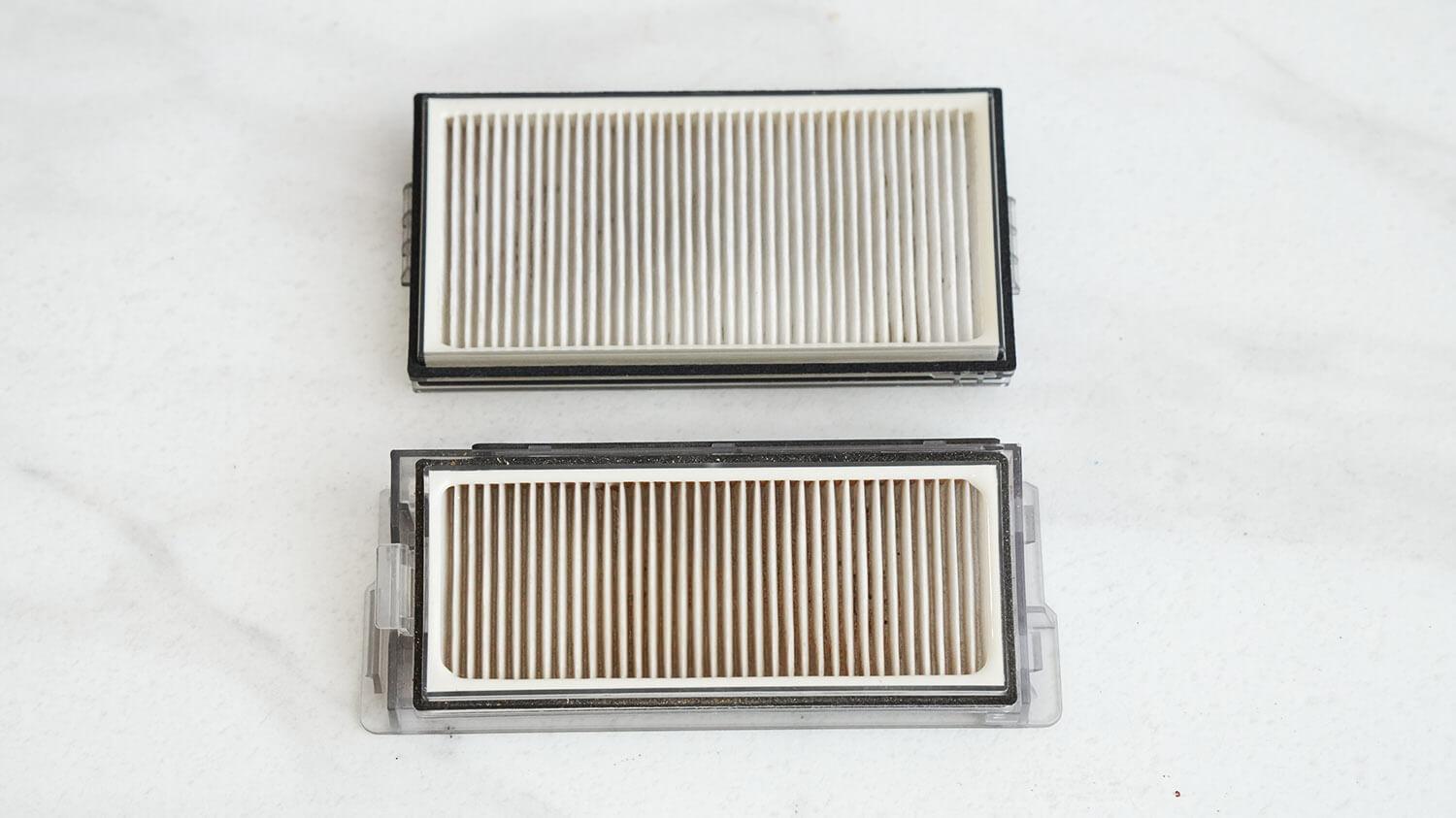
Comparison of HEPA filters
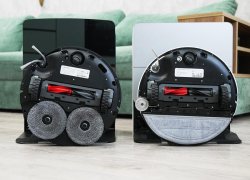
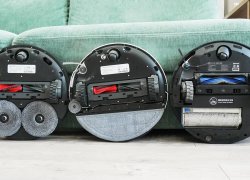
The robots are also virtually identical underneath, but there are some differences. First, the Roborock Saros 10R has an additional optical sensor for detecting wires on the floor. It's located underneath between the fall protection sensors.
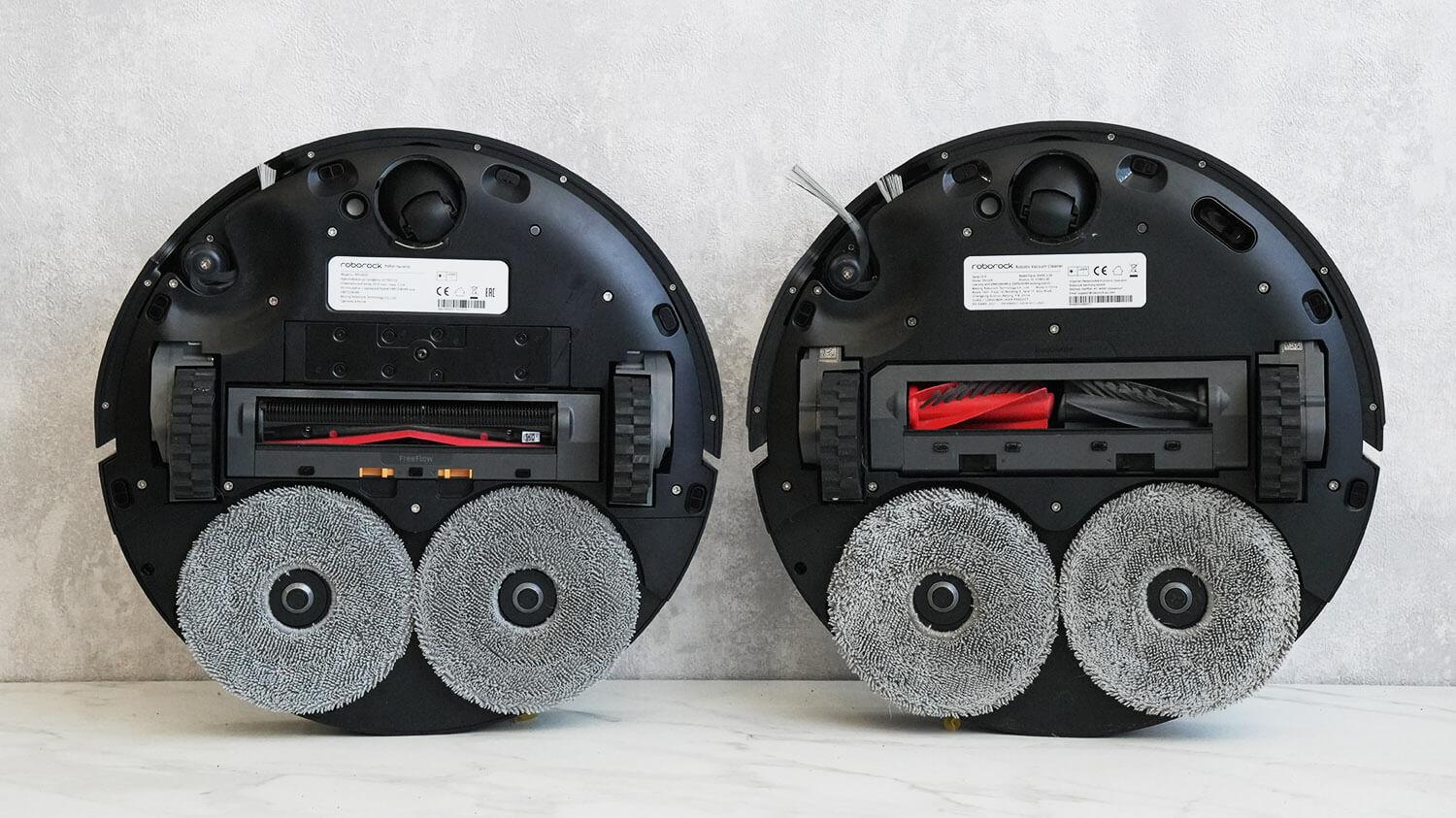
Comparison of cleaning modules
Secondly, the central turbo brushes are different. The Roborock Saros 10R has two bristle-petal half-brushes with a central gap through which tangled hair and fur is discharged. The Roborock Saros Z70, on the other hand, has a single bristle-petal brush with internal blades for cutting through tangled hair and fur.
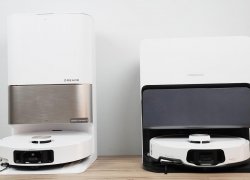
The stations are identical in size, features, and design. The only difference is in appearance. The Saros 10R has a glossy finish, while the Z70 has a matte finish. I prefer the larger model; it's more practical.
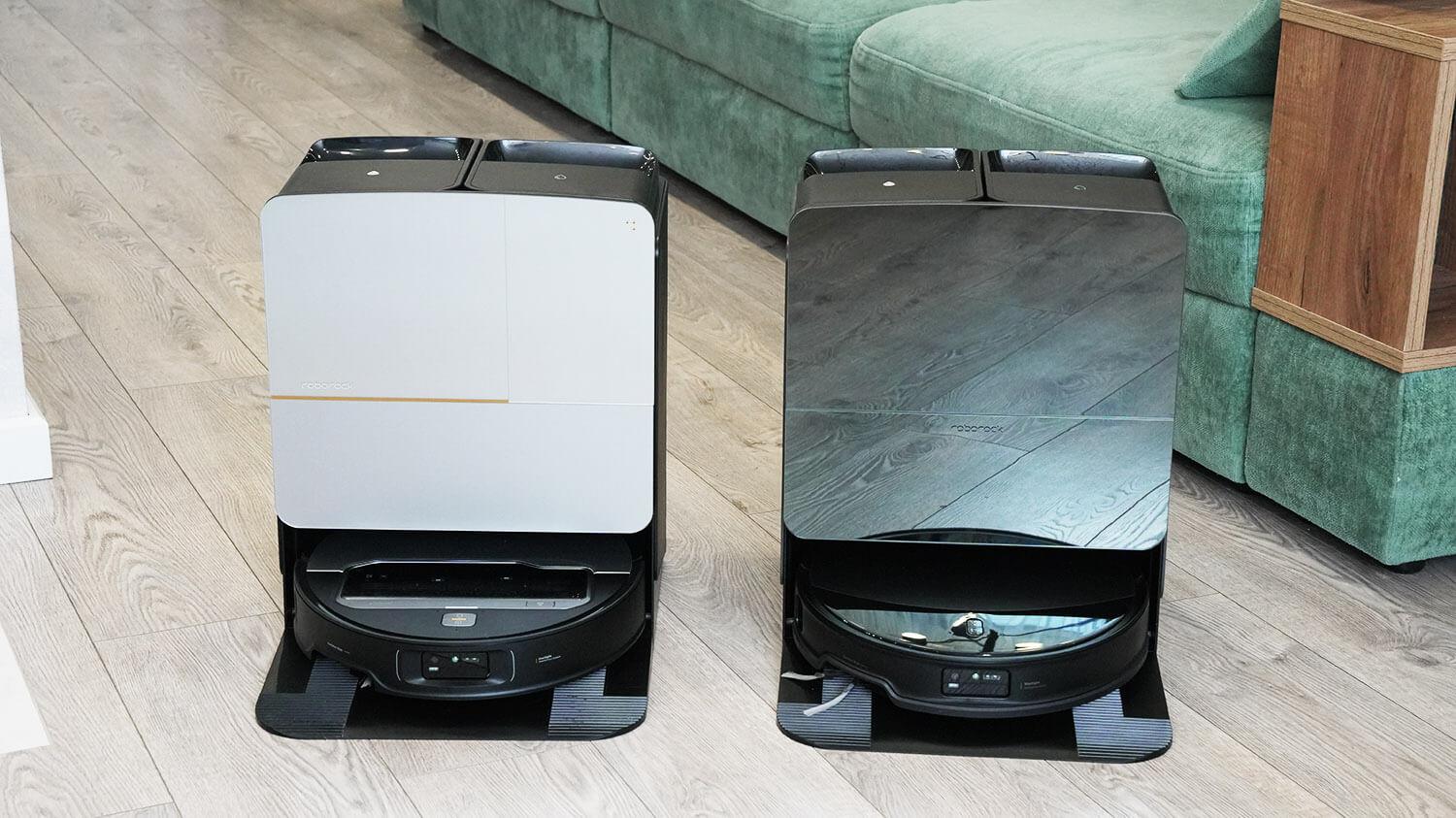
Robots at stations
In summary, the design differences lie in the hand, dust bin and filter size, central brush design, and the presence of an additional optical sensor on the bottom. If I missed anything, please let me know in the comments what other design differences the robots have.
Technical specifications
Let's compare the specifications of the Roborock Saros 10R and Z70. For easy reference, I've compiled all the data in a table:
| Saros 10R | Saros Z70 | |
| Battery, mAh | 6400 | 6400 |
| Suction power, Pa | 20,000 | 22,000 |
| Dust collector, ml | 270 | 180 |
| Water tank, ml | 70 | 70 |
| Tanks in the station, l | 4+3 | 4+3 |
| Bag in the station, l | 2.5 | 2.5 |
| Passability, mm | up to 40 | up to 40 |
| Robot dimensions, mm | 353*80 | 353*80 |
| Station dimensions, mm | 381*475*488 | 381*475*488 |
You see, the only difference is the stated suction power and dust container capacity. Let's move on!
Functional capabilities
In terms of functionality, the robots are also virtually identical. They have the same cleaning settings, smart modes, control via the Hello Rocky voice assistant, remote monitoring, the same water and air heating temperatures, and other settings. I only noticed one major difference: the Roborock Saros Z70 has a mode that increases the suction power when it detects dirt. The body tilts toward the rear, effectively applying pressure to the floor. When I tested the 10R, this mode wasn't available in the app, but it may be added with a software update. The Z70 also has additional features related to its robotic arm, which can be controlled manually and chosen to allow the robot to move the collected items. Otherwise, I didn't notice any differences in functionality.
Testing
Finally, the test results. For a detailed look at how each robot vacuum performed in the tests, I recommend checking out the individual reviews for each one. Here, I'll briefly outline the differences found in the key tests and summarize them in a table.
| Saros 10R | Saros Z70 | |
| Operating time and useful cleaning area at maximum settings | 122 min / 88 sq.m. | 109 min / 76 sq.m. |
| Object recognition day:
6 different items 3 socks 4 wiring 6 simulated excrement
|
6/6 3/3 4/4 6/6
|
6/6 3/3 3/4 5/6
|
| Object recognition at night:
6 different items 3 socks 4 wiring 6 simulated excrement
|
5/6 3/3 3/4 3/6
|
4/6 3/3 2/4 2/6
|
| The depth of suction of debris from cracks in different modes:
Silent: Equilibrium: Turbo: Maximum: Max+: |
2 mm 4 mm (partially) 4 mm (better) 4 mm 8 mm (partially) |
2 mm (partially) 2 mm (better) 4 mm (partially) 10 mm (partially) 10 mm (better)
|
| Anti-tangle Hair Protection | Well implemented, the hair is thrown into the gap between the halves of the brush | It's poorly implemented, most of the hair remains on the brush and isn't cut through. |
| Quality of waste collection | High on different surfaces | High on various surfaces, but large debris blocks the turbo brush |
| Removing difficult stains | 6 passes | 6 passes |
| Robot noise level | 58-66.8 dB | 55-71.3 dB |
| Noise level of the station | 72 dB | 72.5 dB |
Here we see that the Roborock Saros Z70's battery life is slightly shorter, as the hand also drains the battery.
It also performed slightly worse at recognizing objects on the floor, but I think a firmware update should improve the situation. In any case, both robots require improvements to their object avoidance systems.
The flagship model still has higher power thanks to a new turbo brush design and reduced aerodynamic losses during suction.
However, in complex tests, the new brush proved less effective at preventing hair and fur from tangling. However, in everyday use, both brushes remained clean after several full cleaning cycles.
But a truly serious drawback of the Z70's updated blade brush is that it gets clogged with large debris. This issue was discussed in a separate video about robot vacuum cleaner power. I recommend watching the video about power to learn where and why power is lost.
At the same time, the robots offer comparable dry cleaning performance on hard surfaces and sweep debris out of corners. They are also effective at cleaning carpets with varying pile heights.
Robots are equally adept at removing tough stains, and they also clean large areas of flooring efficiently thanks to their all-in-one station.
And the last minor difference is that the Roborock Saros 10R is a little quieter at maximum power, while the Z70 is quieter at minimum power.
Personal opinion
So what's the bottom line? It turns out the differences between the robots aren't just in the hand. Although it does take the robot vacuum to a new level of cleaning performance and autonomy, the flagship model actually turned out to be more powerful. But the Saros 10R has its own strengths that few people talk about. These include a better-implemented anti-hair and fur tangle protection system, higher atomic density, a larger dust collector, and, just as importantly, no issues picking up large debris. And its object recognition is also slightly better, which is equally important.
So, given the information you've received, you must decide for yourself which is more important. In my opinion, both robots deserve attention and will definitely be included in the updated ranking of the best robot vacuums of 2025. In my opinion, the Saros 10R is currently the best option, but if the price of the flagship drops slightly, so that the mechanical arm doesn't require such a significant premium, a more functional robot with a robotic arm would certainly be more attractive.
You can order the Roborock Saros 10R by following this link:
You can order the Roborock Saros Z70 by following this link:
I also recommend watching the video comparison to clearly see the differences between the robots:
That's all I have for now. If you have any questions, please ask them in the comments. Happy shopping, everyone. Bye!