The History of Robot Vacuum Cleaners: A Brief History with Facts
In 2020, robot vacuum cleaners are no longer something futuristic; they can be found on display in most chain stores, as well as in modern homes and apartments. New household robots are equipped with artificial intelligence, enabling them to autonomously clean the entire available space of a home, thereby saving owners time. Robot vacuum cleaners have become a significant competitor to conventional and upright vacuum cleaners, although it is still advisable to combine them with the latter for spot cleaning of hard-to-reach areas (such as stair steps). Most interestingly, this type of household appliance appeared on the market for sale relatively recently, less than 20 years ago. Within the framework of this article, the editors of the website robovac.washerhouse.com The history of the creation of robotic vacuum cleaners and their evolution to the present day will be examined.
So, if we leave aside the mentions in science fiction novels, in practice it all started since 1996, when the BBC showed viewers a prototype of the first robotic vacuum cleaner from Electrolux. A little later, in 2001, the world's first robotic vacuum cleaner, the Electrolux Trilobite, was released, and mass production began. since 2002This was a unique automatic vacuum cleaner that sparked the rapid development of this type of household appliance.
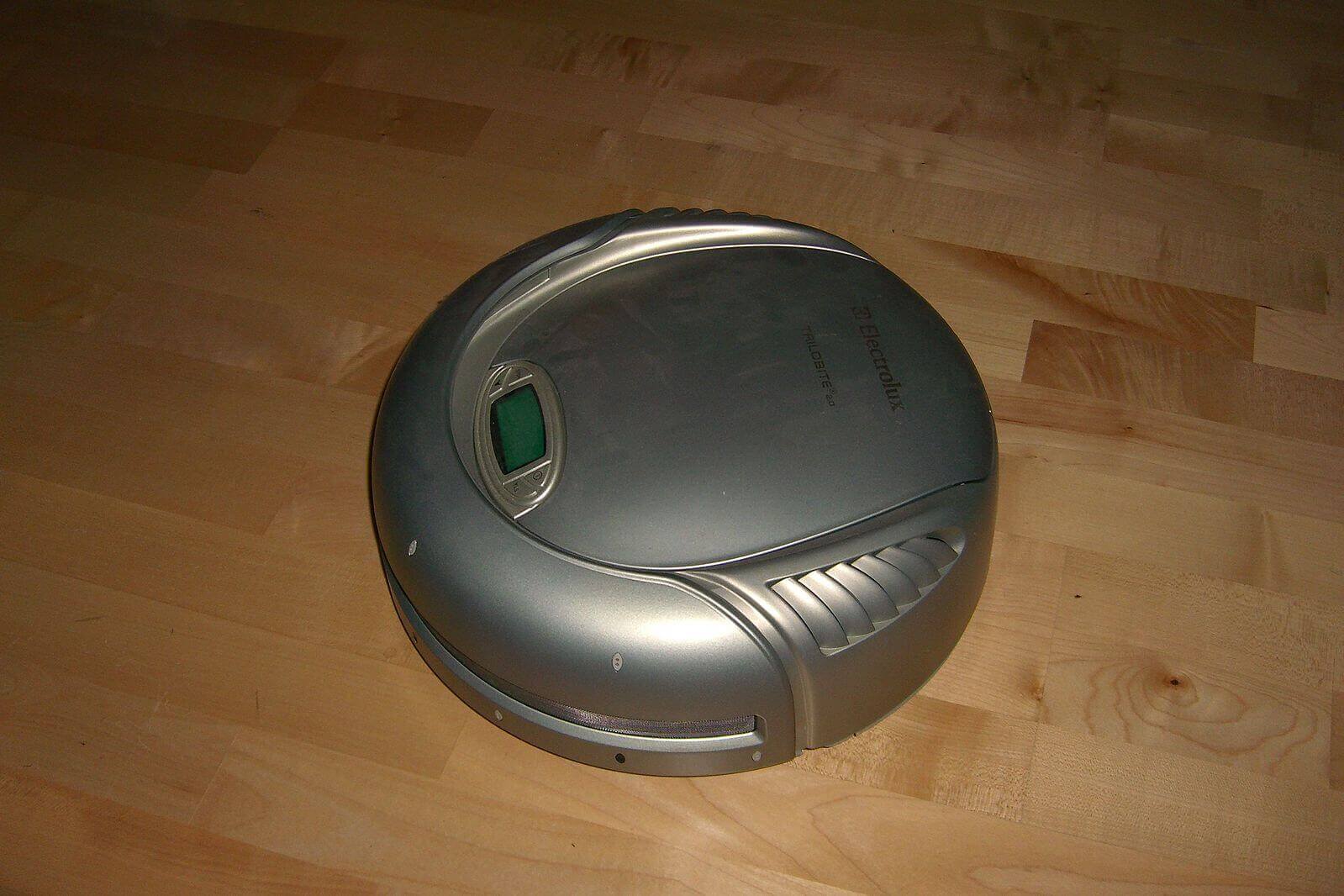
Electrolux Trilobite
In the same In 2002 The initiative was seized by the future market leader (until a certain point), the American company iRobot. They demonstrated their first robotic vacuum cleaner for dry cleaning (the Roomba series), which only went on sale in 2004. Incidentally, iRobot itself was founded in 1990, but before producing household robots, production focused on robotics for the military and the NASA space program.
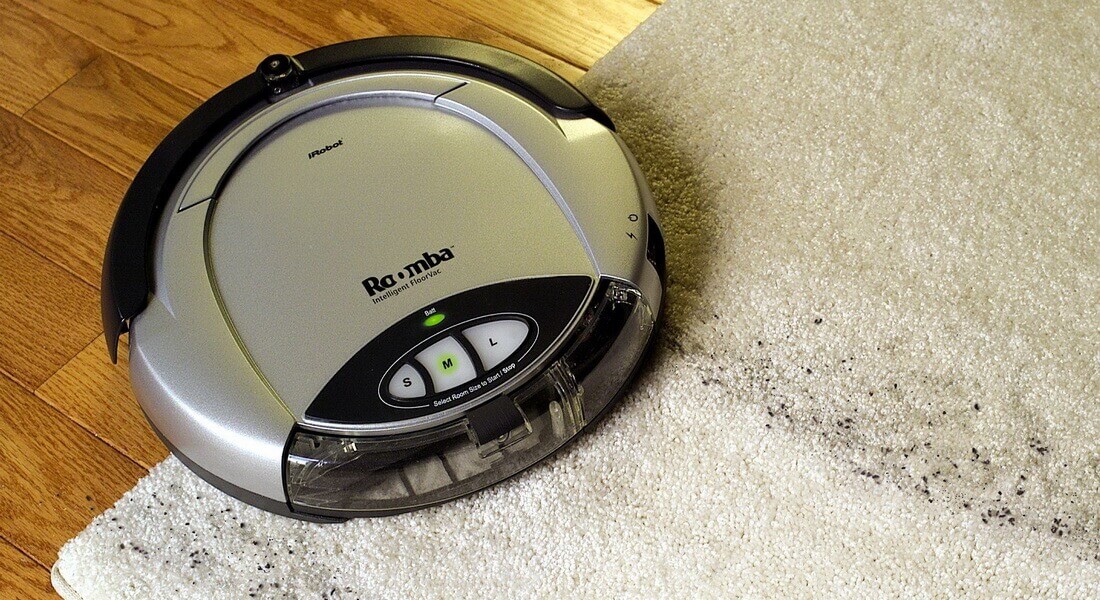
The first iRobot Roomba
In 2004 Electrolux, the pioneering company, introduced the updated Electrolux Trilobite 2.0 model to the market. At the same time, new players entered the market—robot vacuum cleaners from renowned brands. Korean companies LG (LG ROBOKING) and Samsung (Samsung VC-RP30W) announced their developments, as did the German robot vacuum cleaner RoboCleaner RC 3000 from Karcher and the Sensor Cruiser from Siemens.
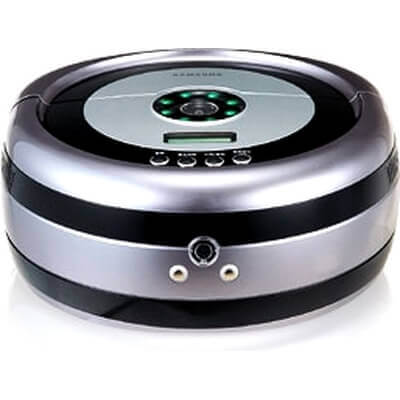
Samsung VC-RP30W
2005 The market has become more interesting and transformative, as new popular brands have emerged and continue to compete successfully to this day. These include the American Neato Robotics (founded in 2004) and the Korean iClebo.
2006 became no less pivotal in the history of robotic vacuum cleaners. ECOVACS Group, founded in 1998, created the ECOVACS ROBOTICS division, which specializes in the production of household cleaning robots: robotic vacuum cleaners and window cleaners. To this day, Ecovacs products are renowned for their excellent cleaning performance and advanced features.
After 2006 Many Chinese robot vacuum cleaner manufacturers began to appear on the market, and renowned brands such as Infinuvo, Dyson, Hitachi, Panasonic, and others also announced their developments. Only Dyson truly achieved the desired success, later creating one of the most powerful robot vacuum cleaners.Dyson 360 Eye (in 2015, but the development took more than ten years).
When it comes to the history of robotic vacuum cleaner development in Russia, there are several key points to consider:
- In 2009, iRobots officially appeared on the market.
- In 2010, the first models of the Xrobot company (China) appeared.
- In 2011, the company launched sales of its first robotic vacuum cleaners. Clever&Clean.
- From 2012 to 2014, brands such as Panda, Okami, Gutrend, iBoto, Genio, Hobot, and others emerged. At the same time, iLife debuted on the market – one of the best-selling Chinese robotic vacuum cleaners in the budget segment.
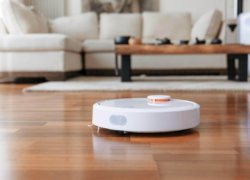
- 2016 – a turning point in the history of robotic vacuum cleaners. In September 2016, Xiaomi released its first robotic vacuum cleaner (model Xiaomi Mi Robot Vacuum Cleaner), which literally revolutionized the market. Interest in this model arose due to its optimality in every sense: lidar-based navigation, app control, powerful suction, a central brush, and a price of under $300.
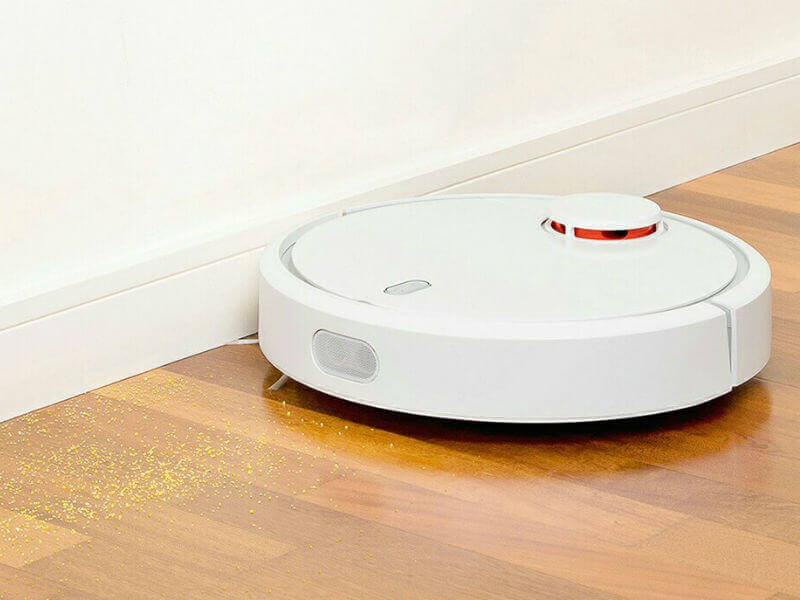
Xiaomi Mi Robot Vacuum Cleaner
Since 2016, Xiaomi has released more than ten robot vacuum cleaners for various purposes and price ranges. Interestingly, the popularity of these devices is currently Xiaomi robot vacuum cleaners (if we take into account only the models of the Roborock company) surpassed the leaders iRobot, which had no serious competitors since 2010.


Xiaomi vs. iRobot
As you can see, almost 67,000 people have expressed interest in Roborocom in the last month, while only 56,000 people have expressed interest in iRobots. This interest is driven by a variety of factors: product price, functionality, and reviews of the models.
Also, since 2016, the company's first robotic floor polishers have appeared on the market. Everybot.
In 2019, Lenovo announced its first robot vacuum cleaner (Lenovo X1) and Narwal (Narwal T10). Regarding the latter, the Narwal T10 is the world's first robotic vacuum cleaner with a self-cleaning base. It will surely become one of the most exciting robots when mass production begins and the first batch hits the market.
As of February 2020, there were no major announcements. As always, we're looking forward to new flagships from Xiaomi, iRobot, and other well-known brands.

If you simply ask for “robot vacuum cleaner,” the statistics for Xiaomi will be even better.
That's true, and the gap is 113.6k versus 9.3k.