How a window cleaning robot works and which one is best to choose in 2022
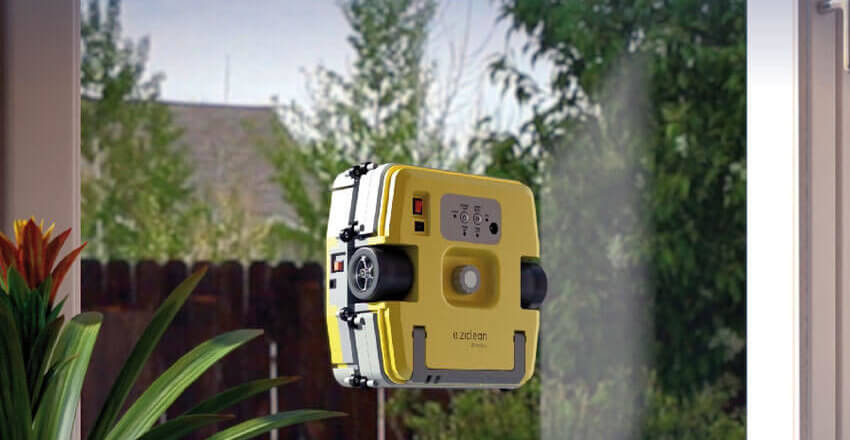
Along with the growth of the robot vacuum cleaner market, there's been a rise in demand for so-called window cleaning robots. This new type of smart technology means the range of models is limited—at most 10-15 noteworthy models are available (by mid-2022). In this article, we've decided to introduce our readers to the latest trends. robovac.washerhouse.com This article will explain what a robotic window cleaner is, how it works, and most importantly, which one is best to choose in 2022.
Types of window cleaners and how they work
Today, robotic windshield wipers are divided into 3 main groups:
- Magnetic
- Vacuum
- Manual
There are also household window cleaning robots and industrial models (professional models for cleaning office buildings). Regarding the latter, there are very few of them, and the GEKKO Facade is a clear example. This article will focus specifically on the models used in home settings, first examining their operating principles.
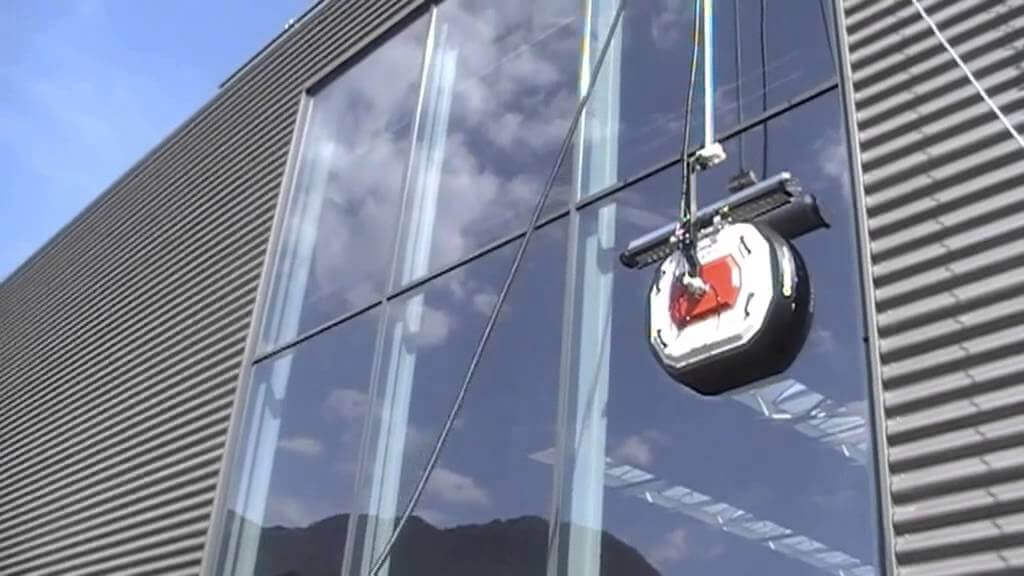
GEKKO Facade Industrial Washer
Double-sided magnetic window cleaners are rarely used anymore, and were primarily manufactured by Windoro (made in Korea). The design consists of two units installed on either side of the window. These units are held in place by magnets, which effectively attract the halves together.
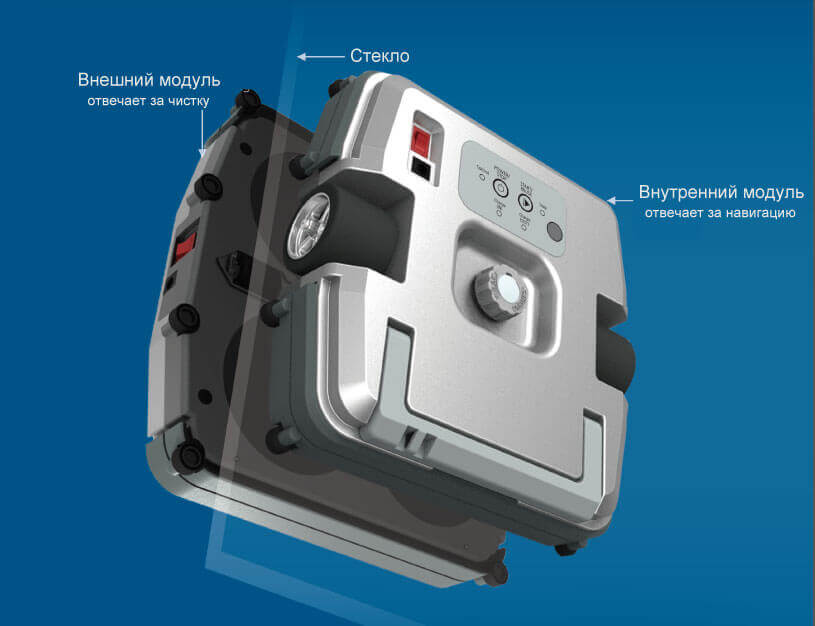
Magnetic robot
Advantages of this type of windshield wipers:
- They don't fall out of the window during a power outage.
- Lower power consumption.
The disadvantages are more significant:
- They're only suitable for cleaning windows because they're attached on both sides. Magnetic robots can't clean tiles, glass doors, or other vertical surfaces.
- More complex installation on glass.
- Limitations in application conditions: the glass thickness must be no less than 5 mm and no more than 28 mm. For reference, the standard glass unit thickness is 40 mm, making it impossible for a window cleaner to work (or, more accurately, hold) on such windows.
It is precisely because of these disadvantages that magnetic window cleaners lose out to vacuum window cleaning robots in the competitive battle. Let's talk about them.
Window cleaning robots come in a variety of shapes: oval, D-shaped, and square. They operate by creating a vacuum with an electric motor, which causes the robot to attach itself securely to the window. The photo shows how a window cleaning robot works:
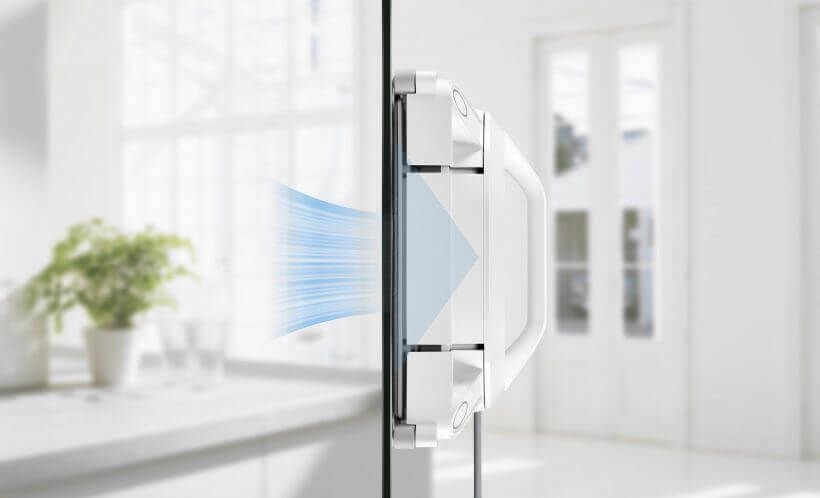
Vacuum operation
Advantages of vacuum window cleaners:
- Versatility (can wash tiles, glass of any thickness and even wipe the floor).
- Suitable for double glazed windows.
- Small size and weight.
- Easy installation and removal from the surface.
In principle, this is all a buyer needs. However, when it comes to downsides, we'll highlight the following:
- They operate primarily off the mains. Although a battery is included, it's more of a backup, ensuring that if the power goes out in your apartment or house, the washer will continue to operate autonomously for up to 30 minutes.
- High probability of fall.
Overall, the disadvantages aren't as significant as those of the magnetic version, which is why vacuum models are in higher demand. The product lineup includes products from companies such as Hobot, Bist, Atvel, iBoto, Redmond, Genio, Ecovacs, and others.
And the last type of window cleaning robot is manual. When it comes to robots, there aren't many of them, and the obvious examples are Everybot RS500 And RS700The devices are designed primarily for automatic cleaning of horizontal surfaces (floor polishers), but vertical surfaces, including tiles and windows, can also be manually cleaned. A handle on the body is provided for this purpose.
Everybot RS500:
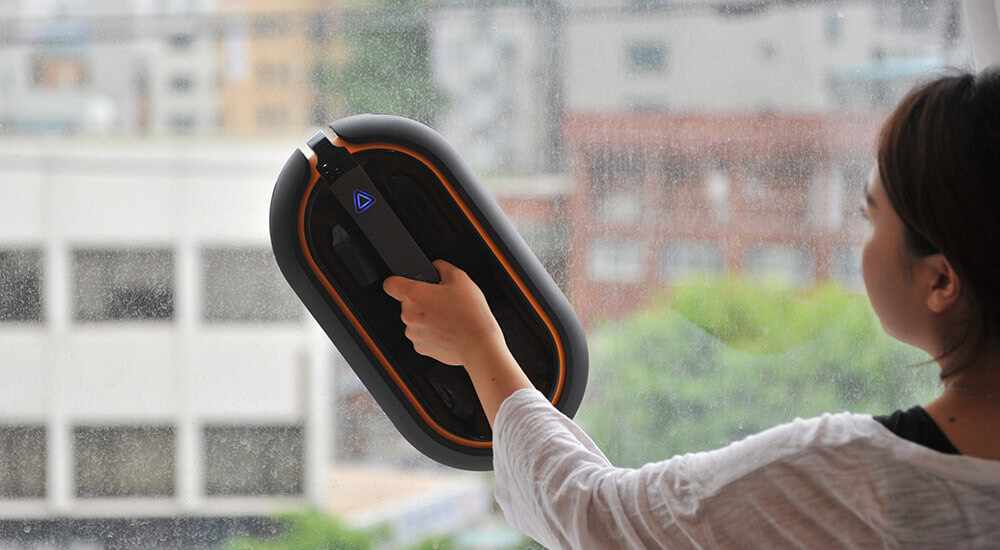
Hand wash
The advantages include versatility and affordability (low prices). The disadvantages include not cleaning windows automatically.
Everybot RS700:
We've covered the different types of window cleaning robots, but it's equally important to discuss how the glass cleaning mechanism itself works. Manufacturers are introducing new solutions for more thorough cleaning, but the following cleaning options are commonly used:
- Thanks to rotating discs with round cloths, which wipe away dirt and dust from the surface as the robot moves across the window.
- The moving block cleans the glass with a reciprocating motion, while the stationary block wipes away dirt. A striking example of this operating principle is Bist Win A100 and Garlyn MaxClean.
- The stationary cloth performs dry or wet wiping of the surface as the robot moves across the glass.
Bist Win A100:
It's also important to note that while most windshield wipers require manual application of cleaning solution to the microfiber cloth or brushes, some models do this automatically. These models have a reservoir for the cleaning solution (usually around 100 ml). In rare cases, manufacturers specify that cleaning solution should be applied to the glass before using the wiper.
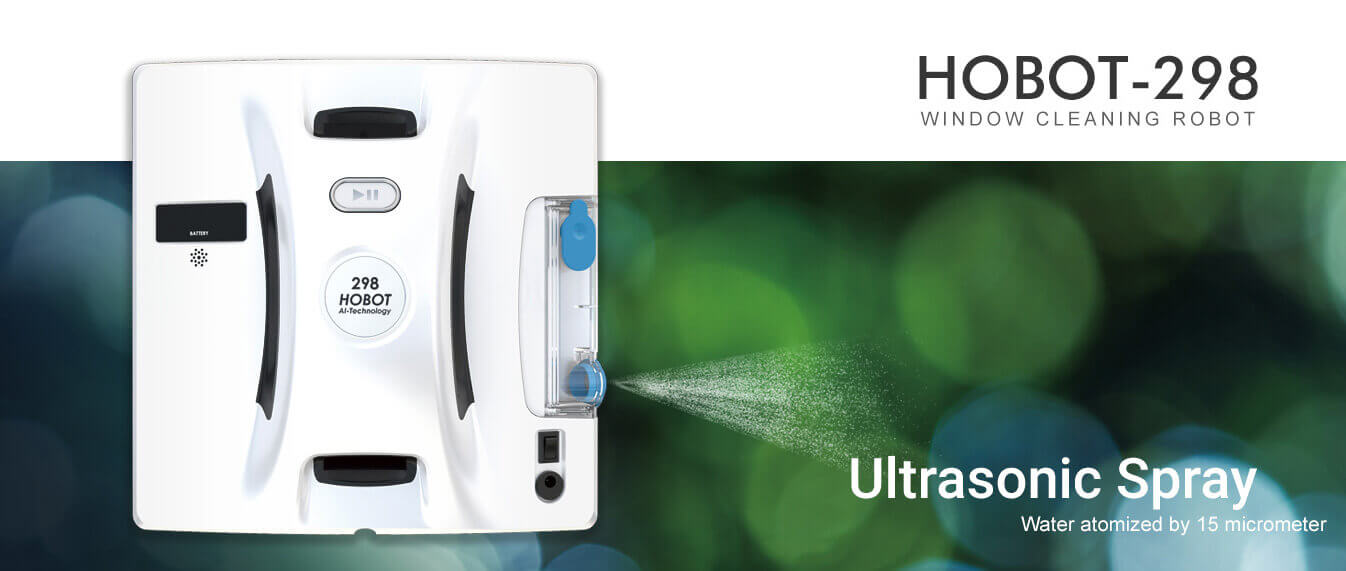
Spraying the detergent
We've covered the surface mounting principle and existing window cleaning technologies. It's also important to discuss how the robot moves across the surface. Manufacturers provide this through either wheels, rubber tracks, or the coordinated operation of suction cups and rotating brushes.
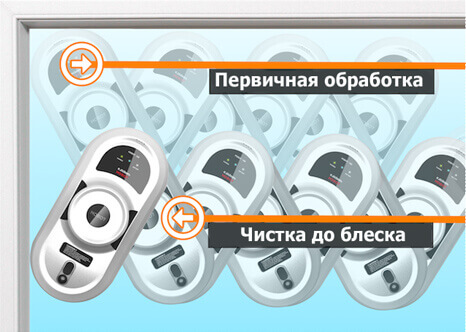
Movement algorithm
Surface movement and traversal of the entire area are ensured by special sensors (edge and dirt detection). Movement modes can vary: zigzag, edge-to-edge, N- or Z-pattern, etc.
We've covered the basics of how a window cleaner works. Now let's talk about what to look for when choosing the right model.
How to choose a window cleaning robot
Carefully reviewing the information provided above will help you choose the right option based on design and operating principle. Now we'll briefly discuss what manufacturers offer and what features are worth the price.
We recommend watching a video in which we examine each of the selection criteria in detail:
The first is this battery capacityThis parameter determines how long the washer can operate without recharging. A good battery capacity is 600 mAh or more. There are models equipped with batteries with a capacity of up to 2000 mAh. Incidentally, the battery itself can be lithium-ion (Li-Ion) or lithium-polymer (Li-Pol).
Second - opening hoursA good indicator is the ability to work without recharging from 20 to 30 minutes.
Quantity and quality of napkins This will directly impact the effectiveness of the cleaning. The better the material, the longer the cloths will last and the better they will clean glass, tiles, or mirrors. Also, make sure the cleaner is equipped with scrapers, as they effectively clean the surface.
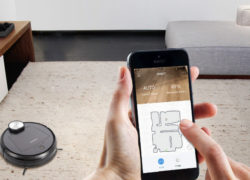
The next important selection criterion is control typeIt can be controlled via buttons on the body, a remote control, or a smartphone app. The latter option is more convenient for many, and it can also send notifications to your smartphone in the event of an emergency, allowing you to quickly identify the problem and remove the robot from the window.
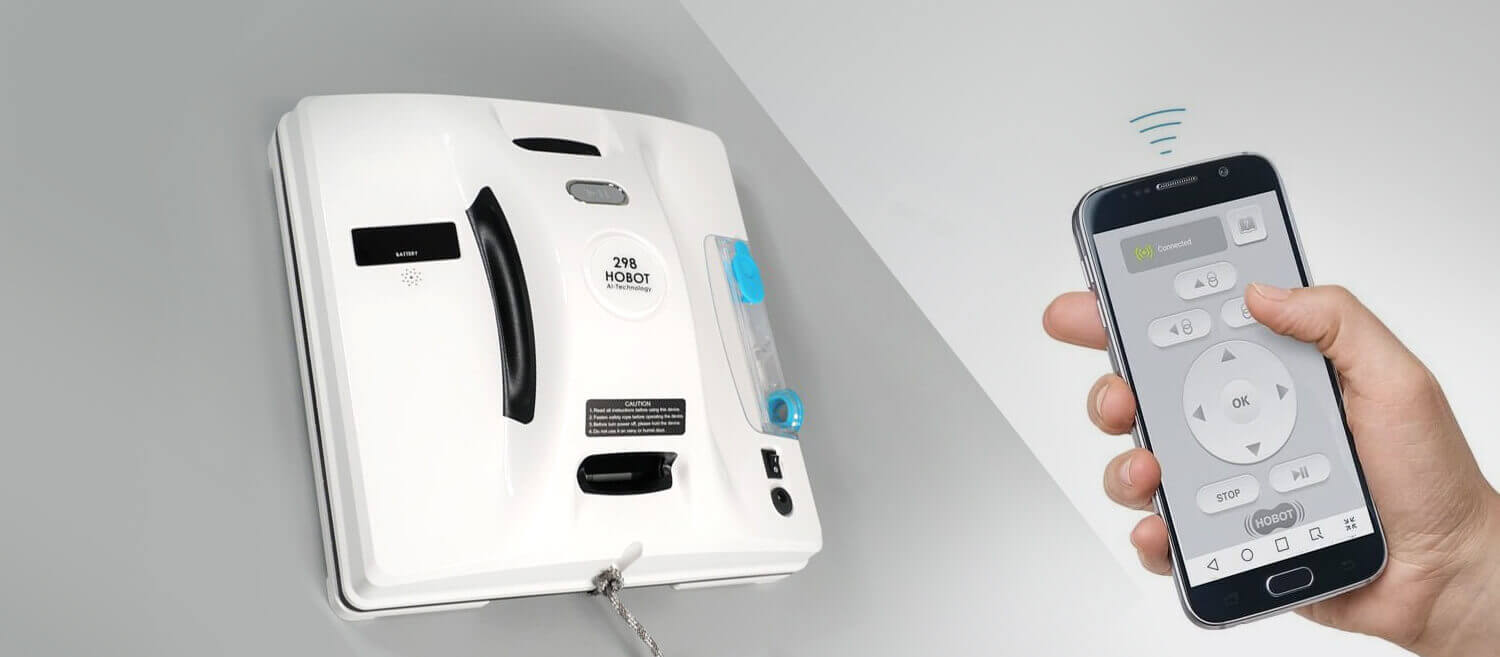
Control via Wi-Fi
It depends on what speed of work The speed of cleaning windows, tiles, mirrors, or any other surface will depend on the window cleaning robot you choose. Based on customer reviews, 2-3 minutes per square meter is considered a reasonable cleaning time.
Noise level Another important characteristic is noise. A drawback of all window cleaners is their noise level, making it unpleasant to be in a room with the device running. Try to choose a quieter robot; the noise level is expressed in dB. The average value from testing these devices is 70-72 dB.
Minimum working surface size This is something you should definitely consider, especially if you're choosing a window cleaner for narrow windows or, conversely, for a large area (such as the facade of a building). Manufacturers specify this specification, and it typically ranges from 35 to 600 cm.
Also, when choosing a robot window cleaner, consider its power consumption. suction powerThe higher this value, the stronger the robot's suction power. Consequently, it's less likely to fall and the surface is cleaned more thoroughly. Devices with claimed suction power of up to 3000 Pa are available on the market.
It depends on what length of power cord and extension cordThe ease of use of the windshield wiper will depend on its size. It's best to have a cord that's long enough for you. For example, models that can work horizontally can clean a larger area, which may be limited by the cord length. The length of the safety cord should also be considered; it's also better to have it longer.
Well, the last important selection criterion is the ability to work with frameless glassA special sensor algorithm allows the washer to detect where the glass ends (if there's no frame) and prevent falls while moving. This provides a unique fall protection feature. Modern automatic windshield wipers are suitable for frameless windows, and it's a good idea to choose a system that's designed for this purpose.
When choosing a window cleaning robot, it's important to read reviews of the model you're interested in. This will help you understand all its advantages and disadvantages. For example, many people complain that a particular robot doesn't clean corners, is noisy, or is simply difficult to operate. Reviews from real customers are very helpful.
And don't forget that the device must come with a warranty. Without one, you'll have to pay for repairs yourself, if it can be repaired at all. Ordering a robot from AliExpress or other Chinese marketplaces means you're not eligible for a return, and unfortunately, this type of equipment is prone to failure or malfunction.
The Best Robot Window Cleaners and Models in 2022
In conclusion of our discussion of robotic window cleaning, I'd like to share with you a list of the most reliable manufacturers and the best value and quality models available in 2022.
Speaking of companies, Windoro, Ecovacs Robotics, Hobot, Genio, and Atvel specialize in smart robotic window cleaners. Bist and Redmond, equally well-known in the CIS, also produce this type of equipment. I'd especially like to highlight iBoto, which produces not only window cleaners but also robotic vacuum cleaners. Reviews for them are generally positive.
A full ranking of window cleaning robots for 2022 will be released closer to fall. After testing several new products, they will be reviewed in August.
Let's briefly highlight the 5 best square window cleaning robots in 2022 (at the time of updating the information):
- Hobot 2S Ultrasonic
- ECOVACS W1 PRO
- Atvel Zorro Z5
- Genio Windy W250
- Xiaomi Mijia Hutt W66
And the 5 best round window cleaners:
- Hobot 388 Ultrasonic
- Genio Windy W150
- Xiaomi Hutt DDC55
- iBoto Win 390
- dBot W120
You can study the detailed review of the models on our website in the section: https://robovac.washerhouse.com/en/tag/dlya-okon.
Now you know which window cleaning robot is best to choose in 2022, what kind of equipment it is, and who makes them. We hope you found this information clear and useful!
Finally, we recommend watching our video about the TOP 5 new window cleaning robots in 2022:
The Winbot X has been forgotten. The only fully functional, standalone vacuum cleaner that works without a power outlet.
Good afternoon! Thank you very much for the detailed analysis; it's very helpful and informative. As an expert, could you please tell me what your opinion is on the Xiaomi Bobot WIN3060 car washer, compared to the Bist Win A100?
Hello! I haven't tested the Bobot in detail yet, so I can't say for sure. Beast is a decent window cleaner; it does its job well. Another interesting option is the new Hobot; check out the review: https://robovac.washerhouse.com/en/obzory/hobot/robovac-hobot-298.html
Good afternoon! I still don't understand how much electricity it consumes (for example, a vacuum cleaner).