Deerma DEM-S30: 13,000 Pa, self-cleaning, polisher mode!
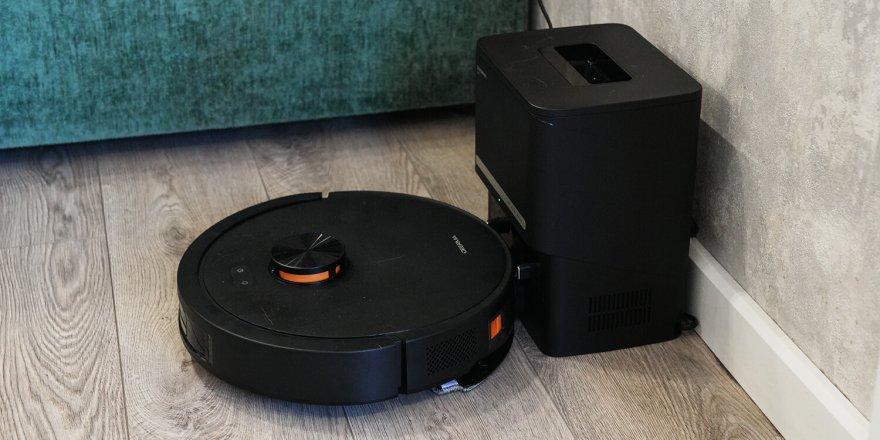
Hello to all readers of this project! This review will focus on the Deerma DEM-S30 robot vacuum cleaner. It retails for $199.90 at the time of writing. For this price, the robot is equipped with a self-cleaning dust bin, lidar for navigation, a wet mopping function, and increased suction power of 13,000 Pa. A decent set of features for the price. Below, I'll thoroughly test the Deerma DEM-S30, highlight its pros and cons based on the test results, and then express my opinion on the robot. So, let's get started!
Equipment
Let's start with the package contents. The robot vacuum cleaner arrived in this branded box:
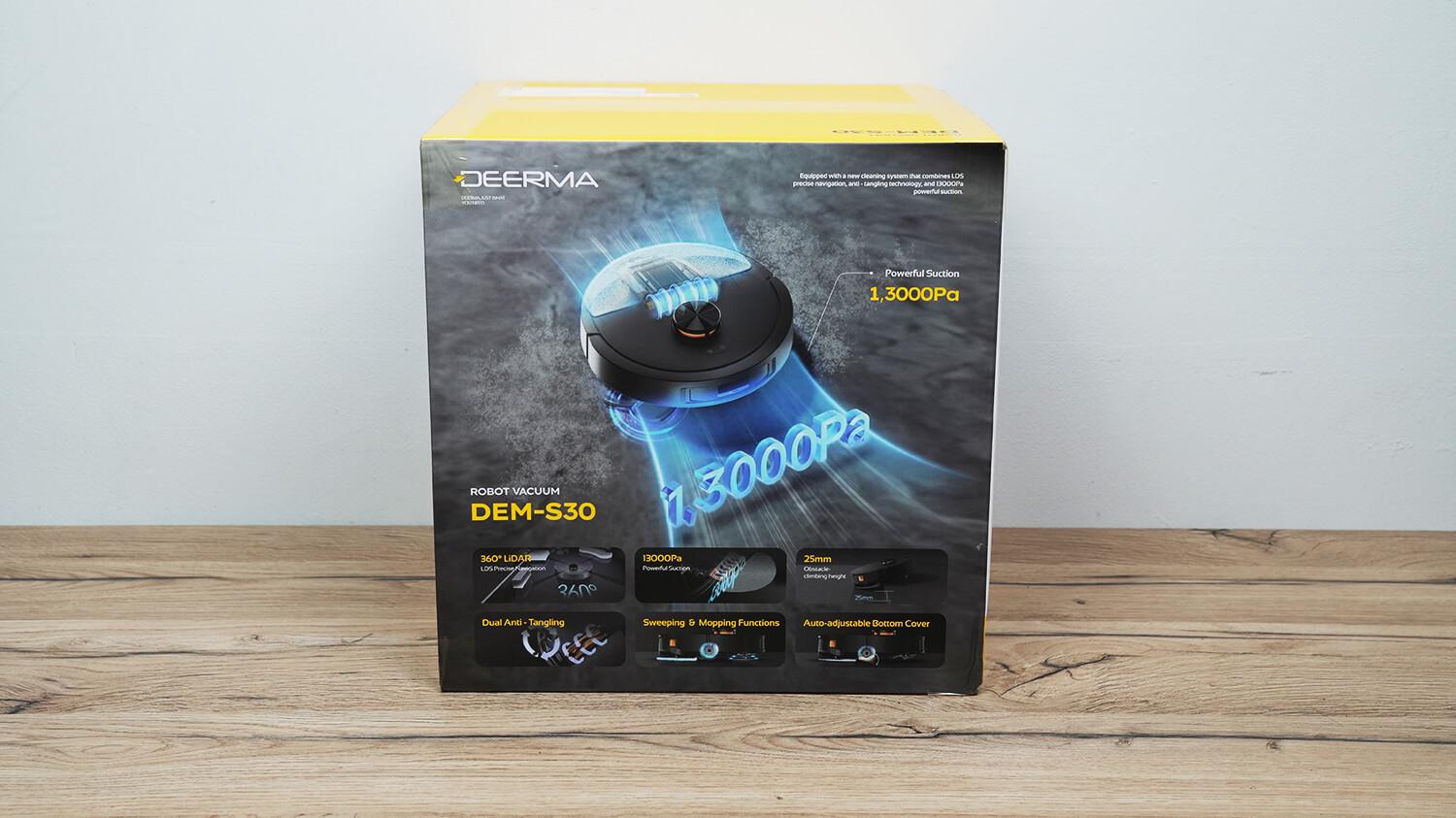
Box
In addition to the robot and station, the package includes a holder with a cleaning cloth, a cleaning tool for the robot, and an operating manual in Russian.
Appearance
Now let's take a look at the design of the Deerma DEM-S30. It comes in black. The robot vacuum cleaner itself is round, with a height of 97 mm from the floor.
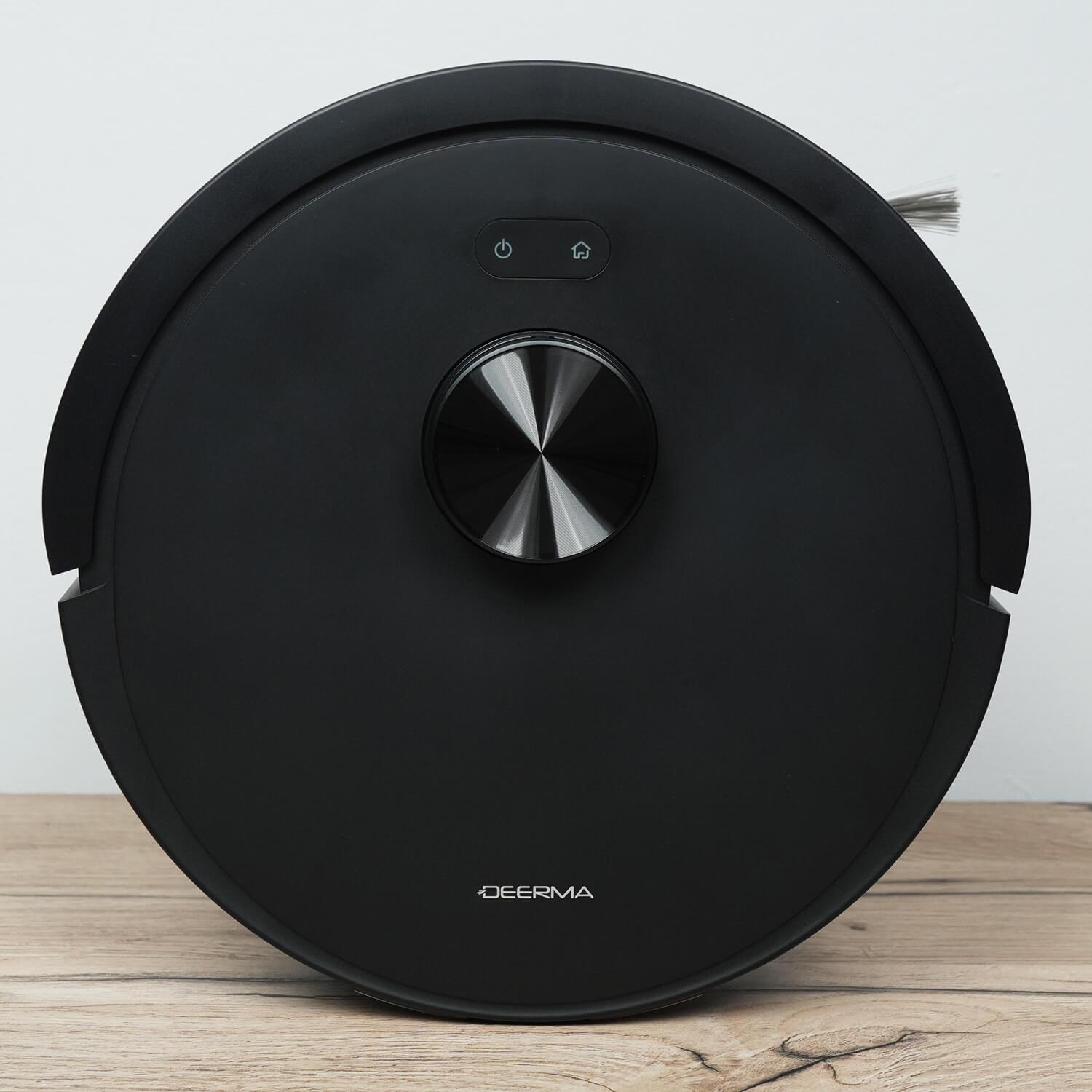
Top view
There's no wall sensor, but in the center we see a sensor system called AI Action. Interestingly, the technology has the same name as the one used in Dreame robots.
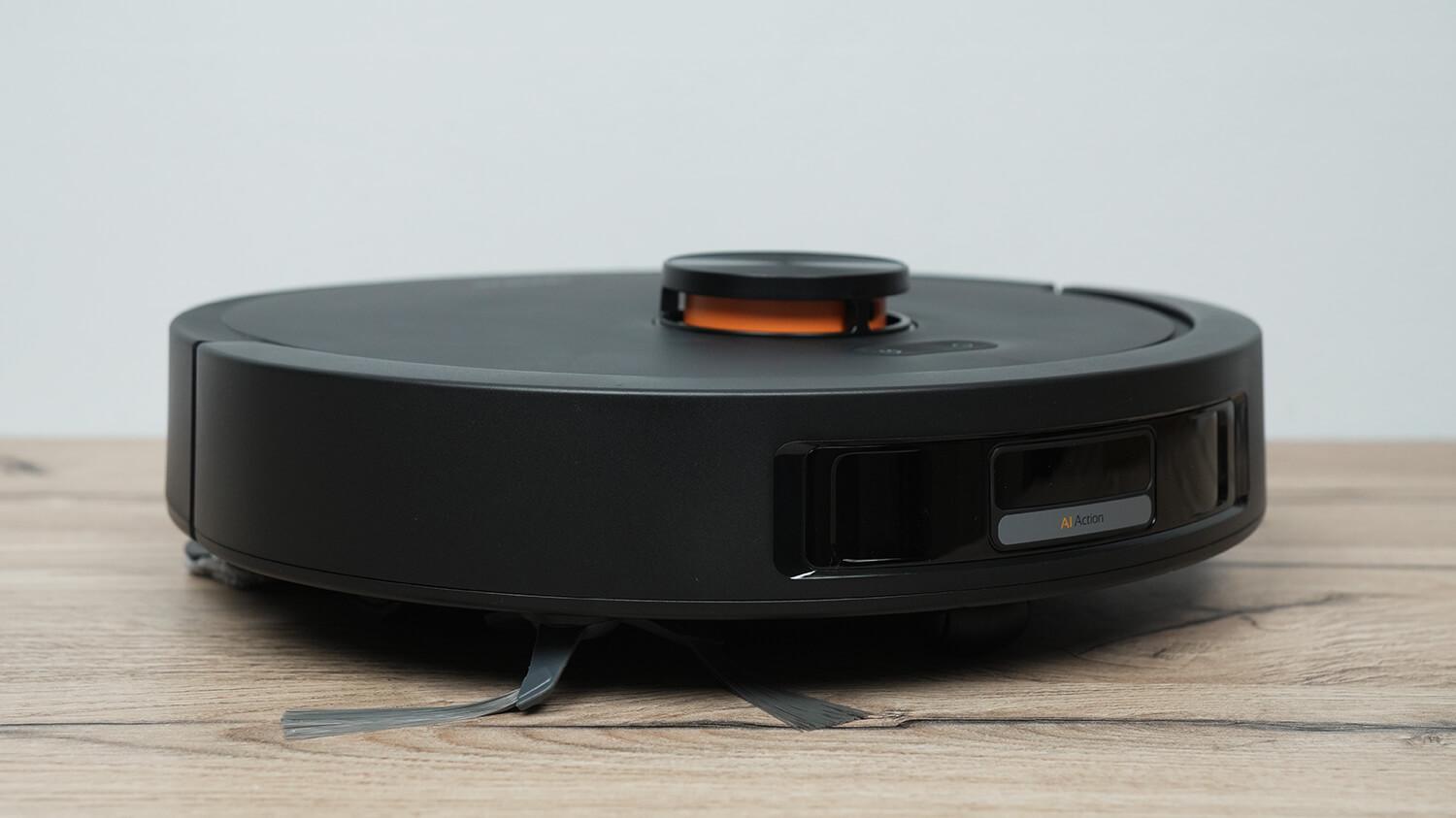
Side view
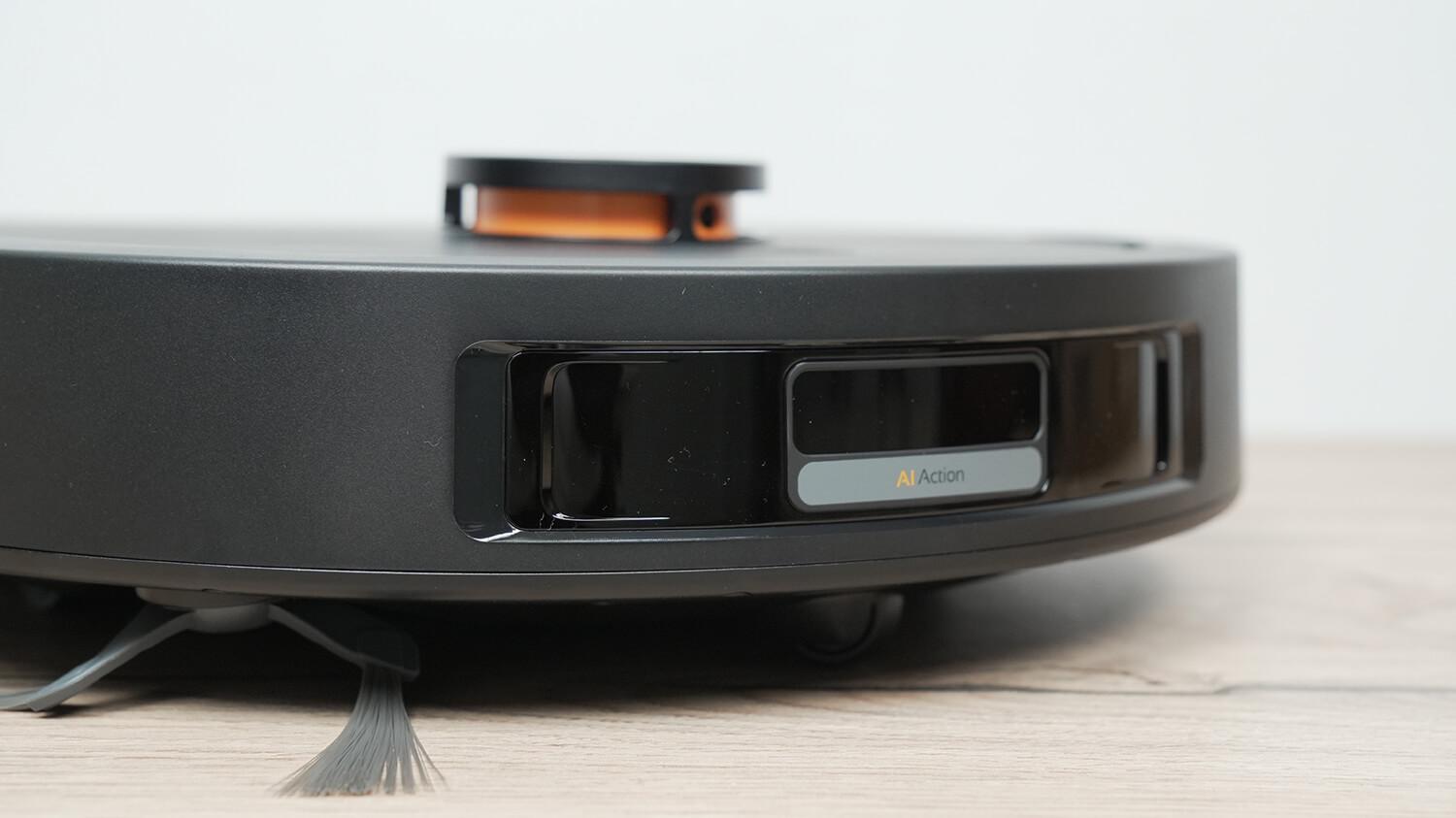
Object Identification System
The navigation lidar is equipped with a spring-loaded cover to prevent it from getting stuck under furniture. Two mechanical control buttons are located nearby.
The combined waste and water container is mounted at the rear. The water tank holds 260 ml. The dust container holds 240 ml of dry waste. The filtration system includes a HEPA filter and mesh.
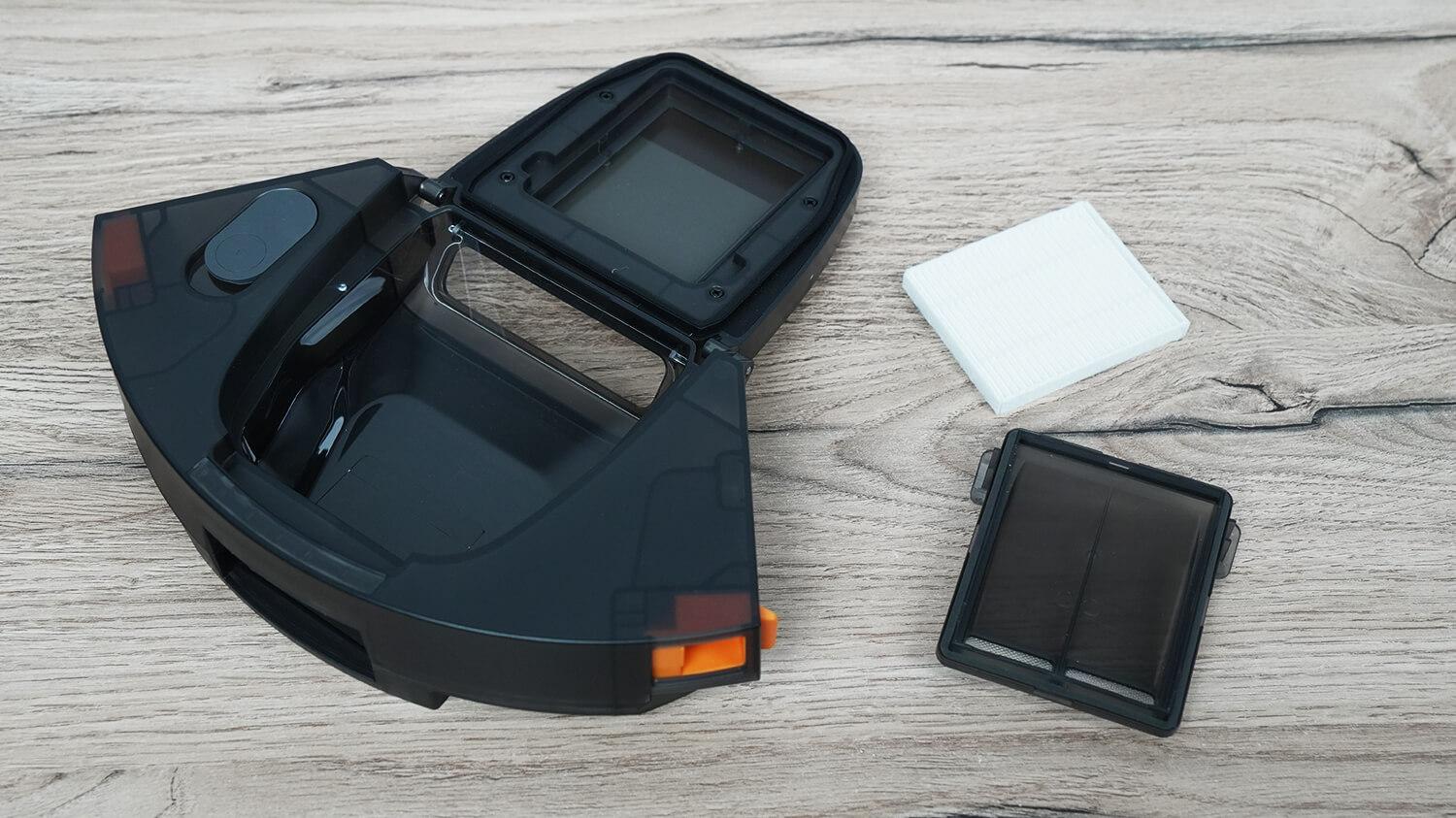
Combined container
A holder with a wet cleaning cloth is attached to the bottom of this container. The cloth is secured with Velcro and a pocket, and water is pumped to the cloth.
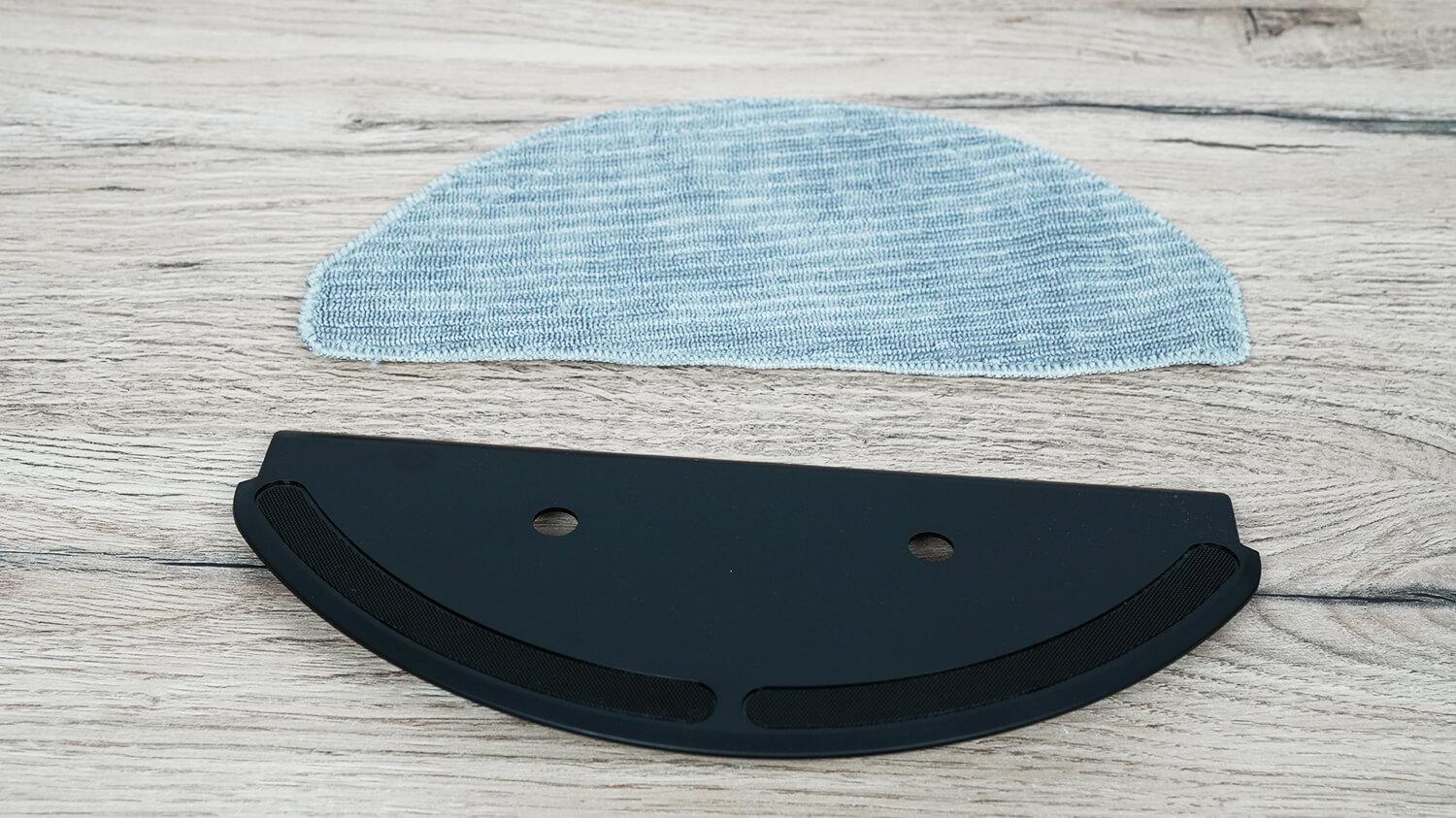
Napkin holder
The robot has three anti-fall sensors on the bottom, but no carpet sensor. It has a single, three-beam side brush, secured with a screw. The beams are angled.
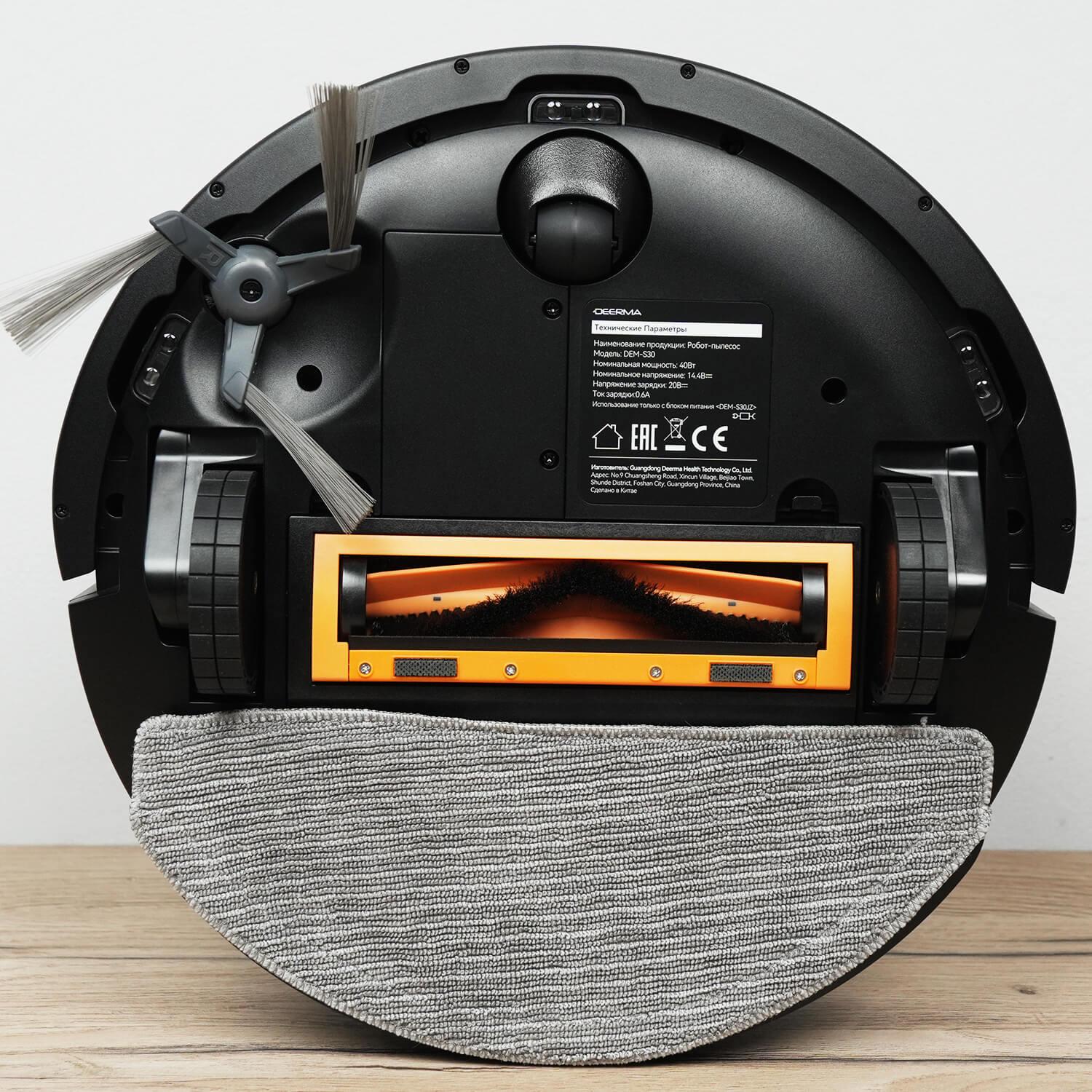
Bottom view
The central brush block is non-floating; only the orange scraper is movable. The turbo brush has bristles and petals. It can be disassembled on both sides to remove tangled hair and fur.
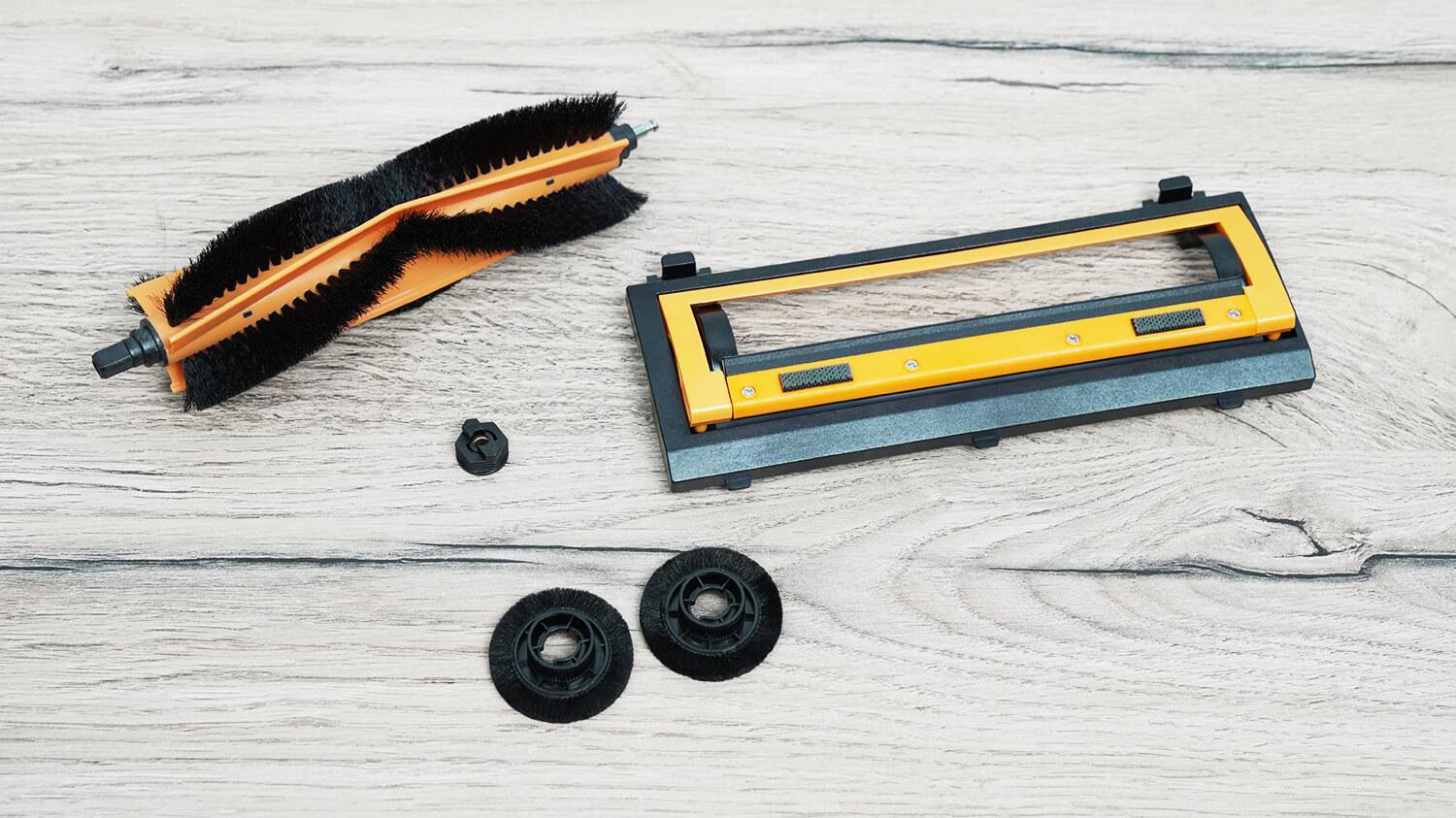
Central brush
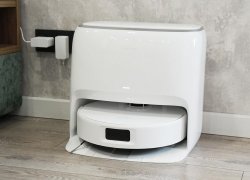
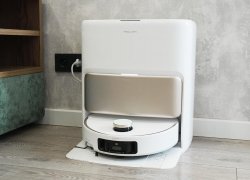
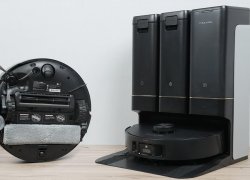
Speaking of the station, the robot vacuum cleaner charges and empties its dust bin on it. I liked the station's compact size, which will be discussed later. The dust bag is located under the top cover and is more compact than most other robots. It holds up to 3 liters of dry waste.
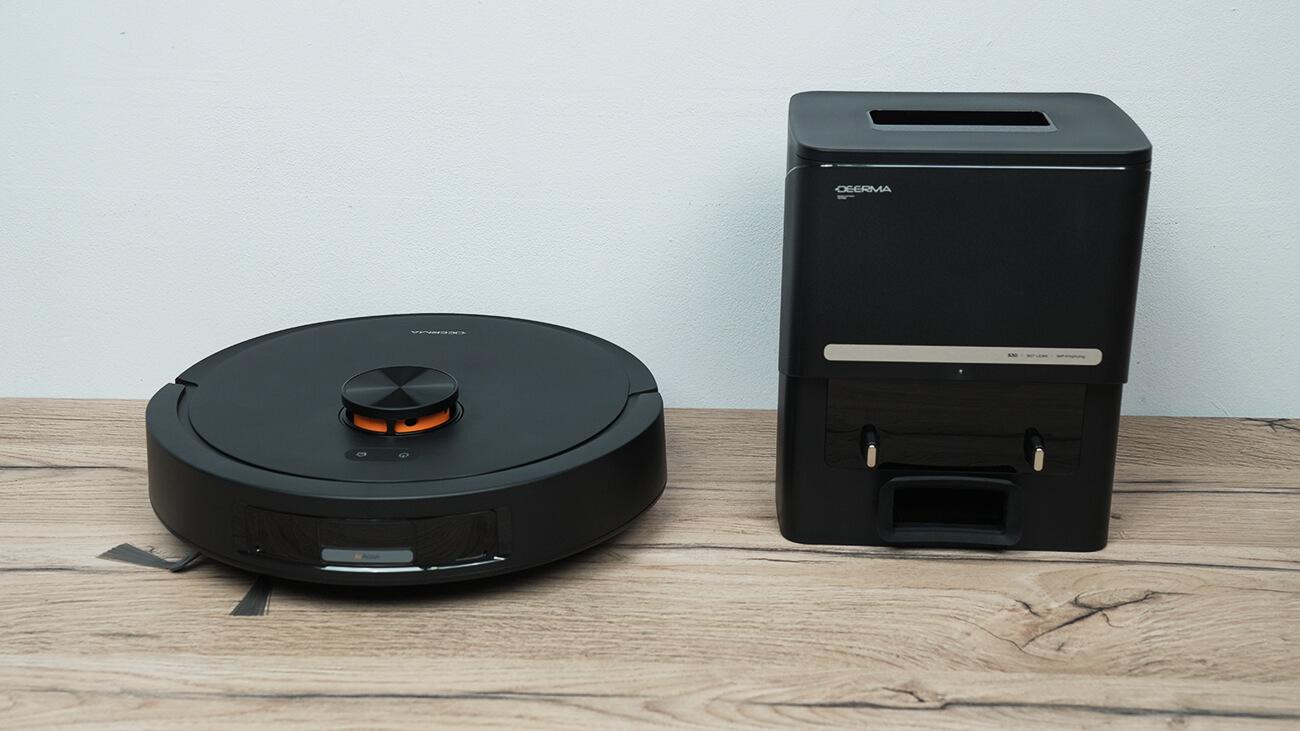
Robot and station
All the pros and cons of the design will be discussed during the final review. Let's move on!
Technical specifications
The main characteristics of Deerma DEM-S30, as declared by the manufacturer:
- Li-Ion battery 2600 mAh.
- Suction power up to 13000 Pa.
- Station power: 400 W.
- Dust collector 240 ml.
- Water tank 260 ml.
- Garbage bag: 3 l.
- Obstacle clearance up to 2.5 cm.
- Robot dimensions: 325*97 mm.
- Station dimensions (W*H*D): 214*173*260 mm.
In my opinion, the battery is a bit weak for lidar navigation and the claimed high suction power. The station's power is also a bit weak. The other specifications are comparable to similar devices.
Functional capabilities
Speaking of features, the Deerma DEM-S30 is controlled via the Mi Home mobile app, which is convenient for syncing with Xiaomi smart home devices. When registering, select Russia as the region. The interface is in Russian, and the robot itself, incidentally, also speaks Russian.
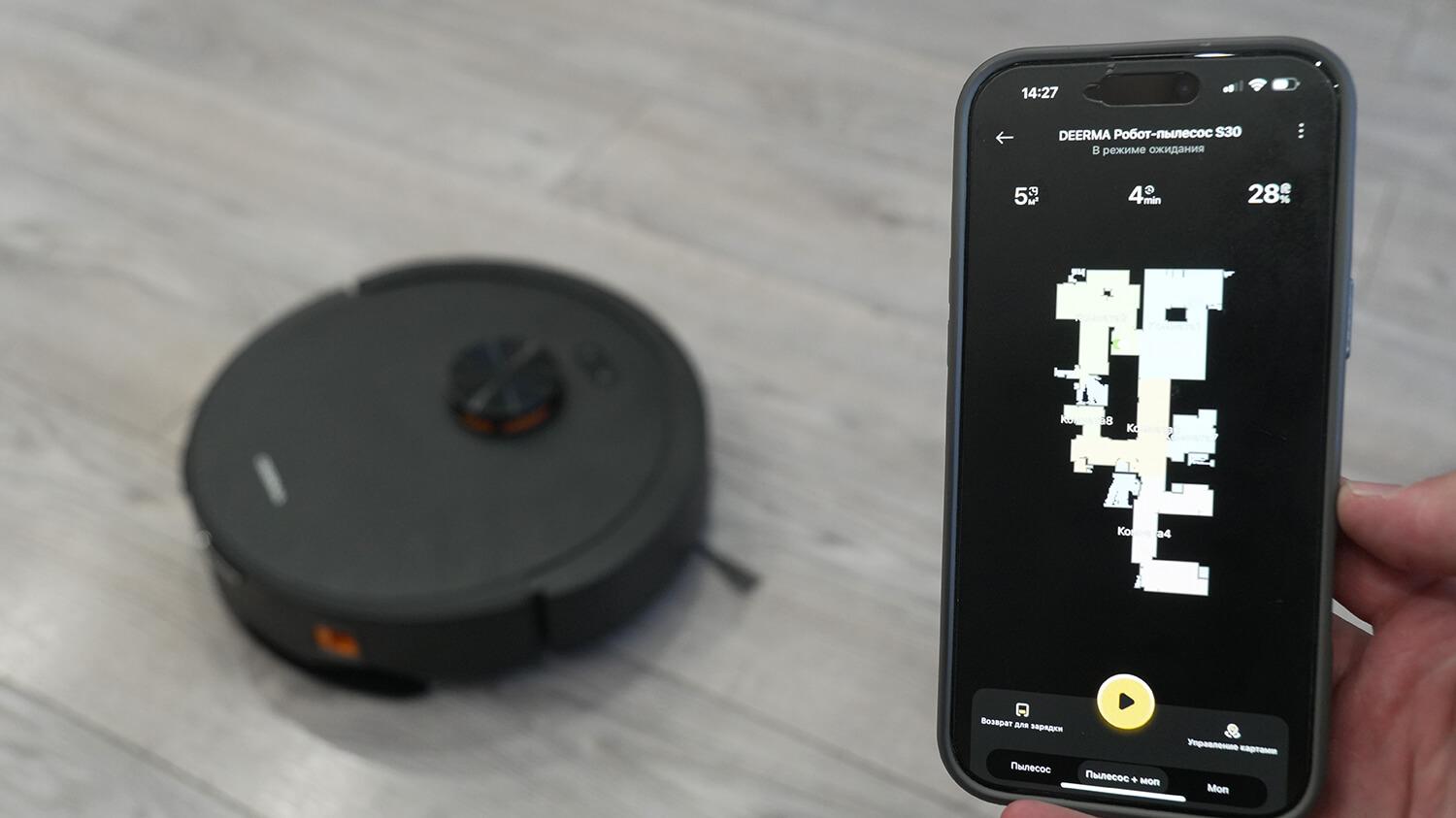
Control via app
The main functions are displayed on the screen:
- Self-cleaning of the dust collector at the station.
- Special floor washing mode.
- Saving multiple cleaning maps in memory.
- Automatic zoning of premises into rooms.
- Selecting areas and rooms for cleaning.
- Virtual walls and no-go zones (and for wet cleaning mode).
- Suction power adjustment.
- Adjusting the degree of wetting of the napkin.
- User mode.
- Cleaning log.
- Setting up cleaning according to a schedule.
- Voice notifications in Russian.
- Automatic power increase on carpet.
- Yandex.Alice support.
It's worth highlighting the special floor cleaning mode, which moves the robot vacuum in a Y-shaped pattern. I was also pleased to see a user mode for flexible cleaning settings for each room. This robot also supports control via Alice.
Incidentally, even without a carpet sensor, the robot can automatically increase power on carpeted surfaces. It does this based on the load on the turbo brush. If the load increases, it means there's carpet underneath the robot, and the power needs to be increased.
But what I didn’t like was that you couldn’t manually start self-cleaning at the station or select the self-cleaning mode.
Testing
A detailed video review of the Deerma DEM-S30, including all tests, has already been prepared and published on the channel:
Navigation
And finally, let's move on to the tests. First, we'll test the Deerma DEM-S30's navigation in a room with obstacles. After leaving the station, the robot begins its perimeter walk. The legs of a clothes dryer presented a challenge, but it eventually managed to escape the trap. I also tried sweeping around the legs of a table, but I had to push them too hard due to the lack of a wall sensor and the mirror coating on the legs. I carefully swept around the box. The mirror introduced some error in the map, but this is a problem with most lidar robots. Overall, there were some minor issues, but nothing critical.
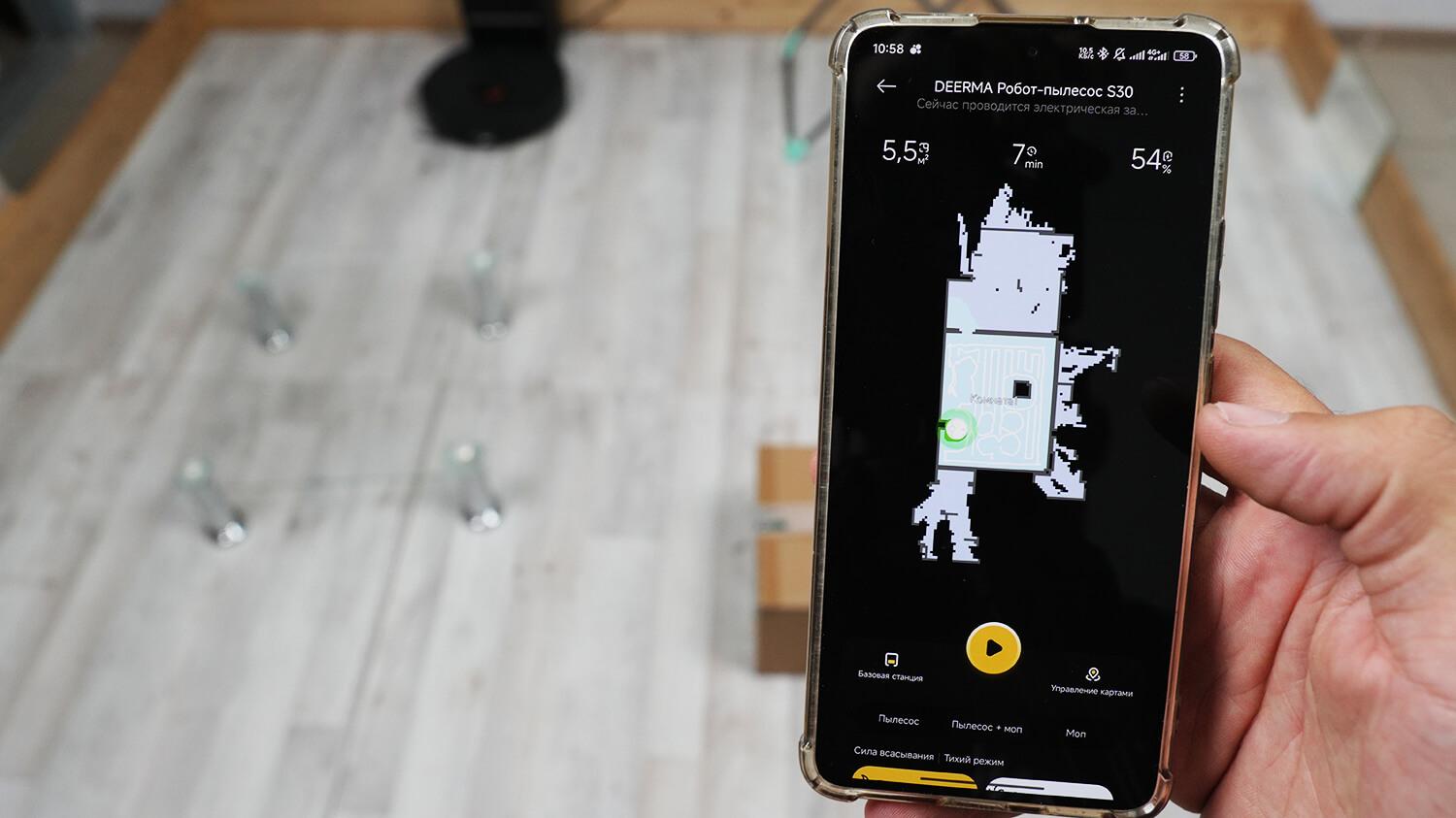
Navigating an Obstacle Room
When it comes to navigating within the home, the Deerma DEM-S30 goes room by room, first along the perimeter, then in a serpentine pattern. Cleaning speed is high, and there are no uncleaned areas. This test was passed.
Object Identification System
I also tested the object detection system on the bumper, called AI Action. The robot chewed a dummy pet surprise, chewed a sock, moved a shoe and a scale, chewed a wire, and moved a stuffed animal. Basically, it doesn't have any object detection system.
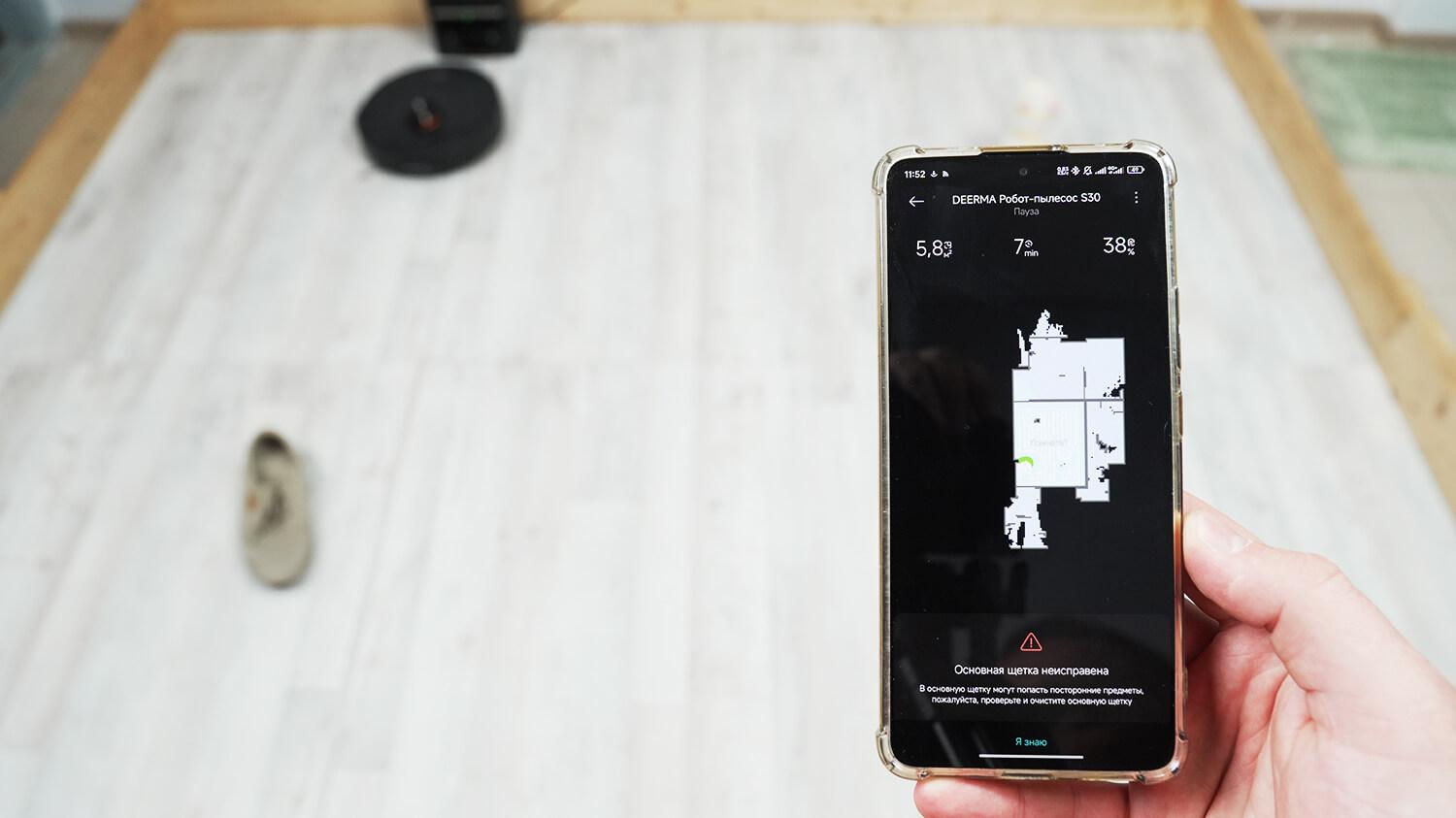
Definition of objects
Passing under low furniture
I also tested whether the robot can fit under a standard 10 cm gap under furniture. Yes, it can do this without any problem. The test was successful.
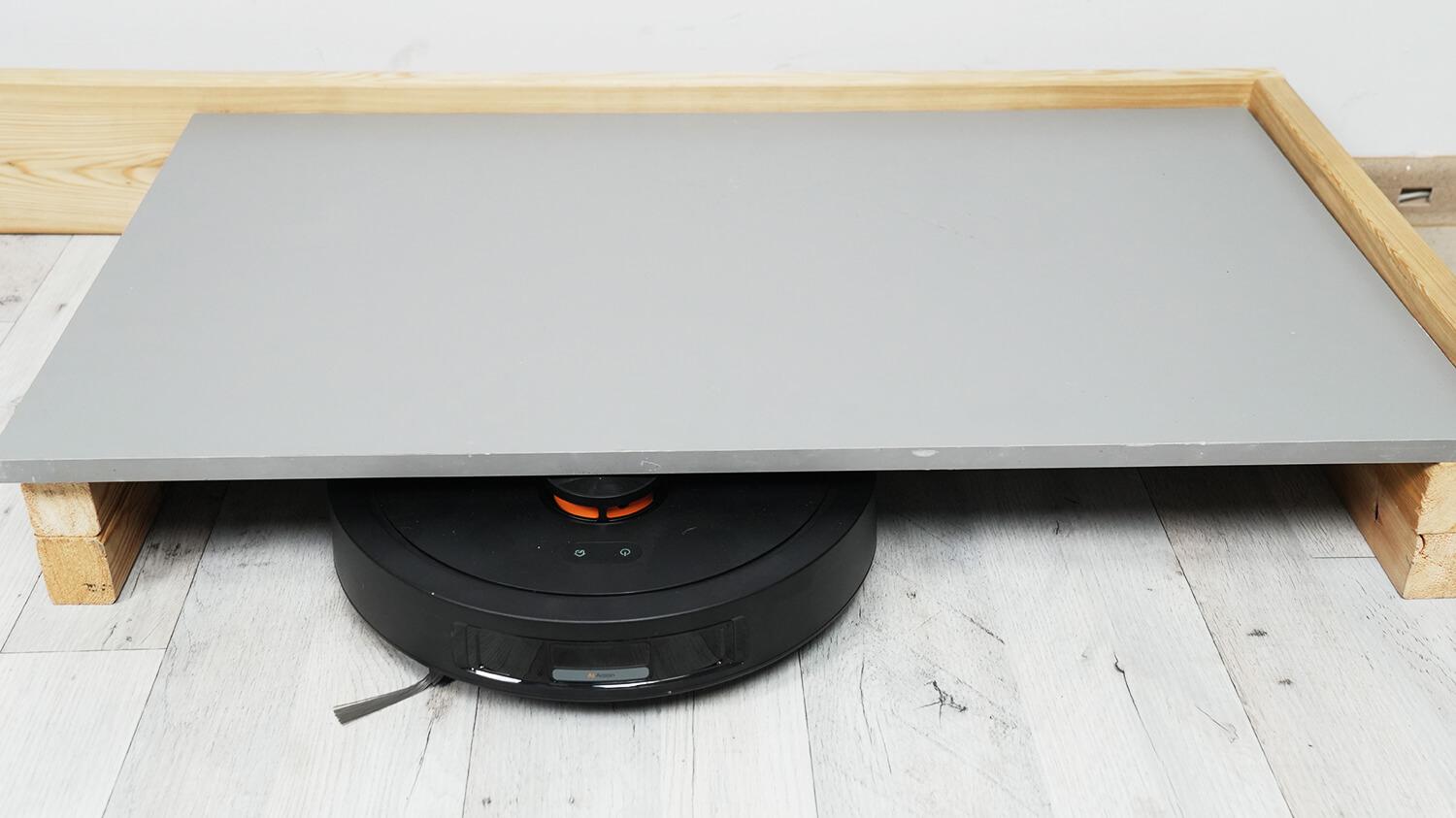
Passing under low furniture
Autonomy
I also tested how long the battery lasted when running the robot at maximum power with wet cleaning enabled. It lasted 55 minutes, cleaning almost 50 square meters of usable space. In reality, that's just over the equivalent of cleaning a two-bedroom apartment of 70 square meters once. There's also a mode to resume cleaning after recharging at the charging station. In any case, the robot's battery life is poor. The battery drains quickly at maximum power.
Suction power
One of the most important tests is to check the robot's actual suction power. In Quiet mode, the robot was able to partially remove debris from a 2 mm gap. In Standard mode, it cleaned a 2 mm gap slightly better. In Average mode, the result remained unchanged. And in Powerful mode, the robot was able to clean a 2 mm gap well. Overall, the result is quite standard. I cannot confirm the claimed superior suction power.
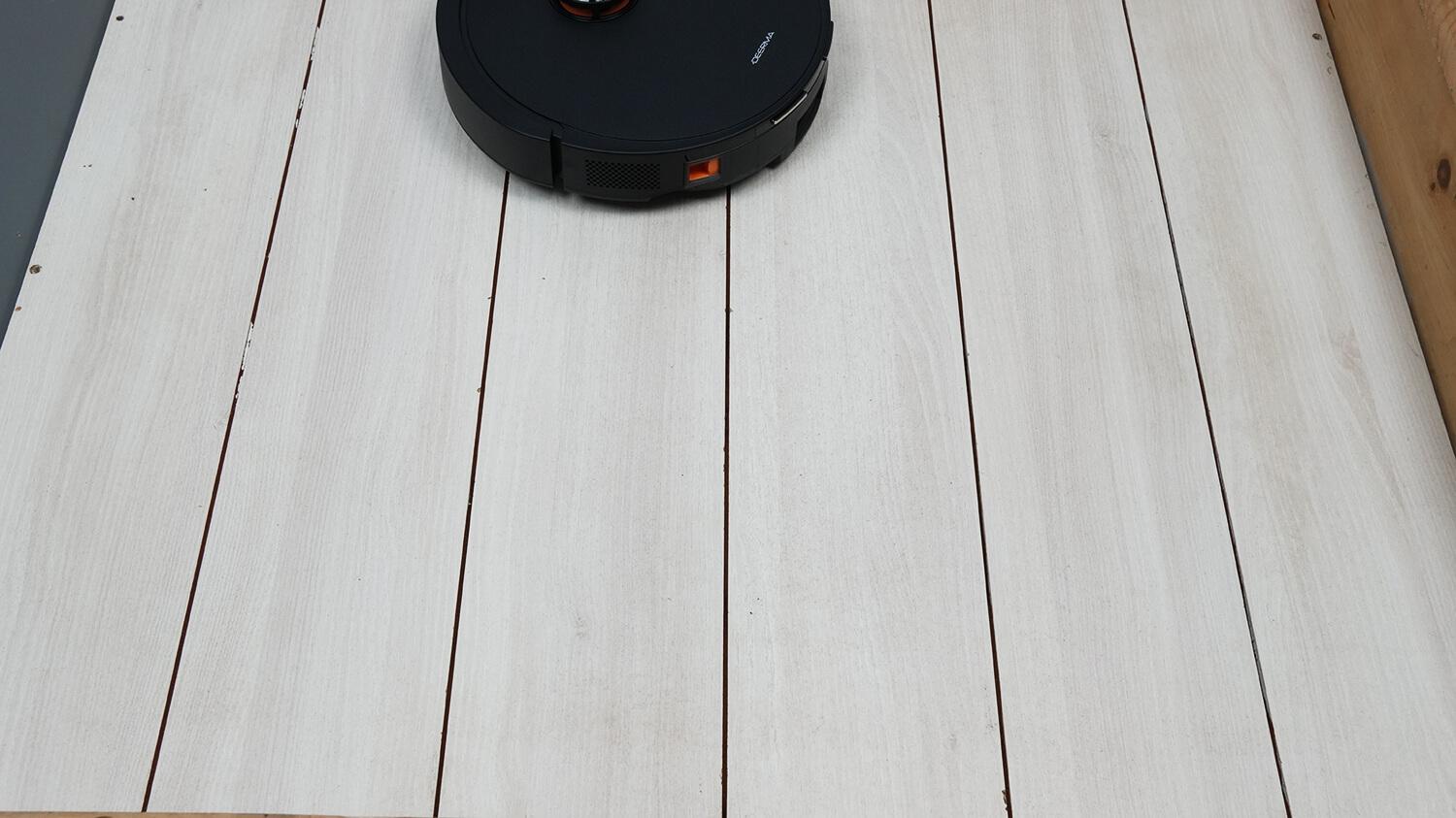
Suction power
Dry cleaning
The quality of debris collection on laminate floors is good. Debris of varying textures was collected from the rack. Only the corners were left unswept, a weak point for most round robots.
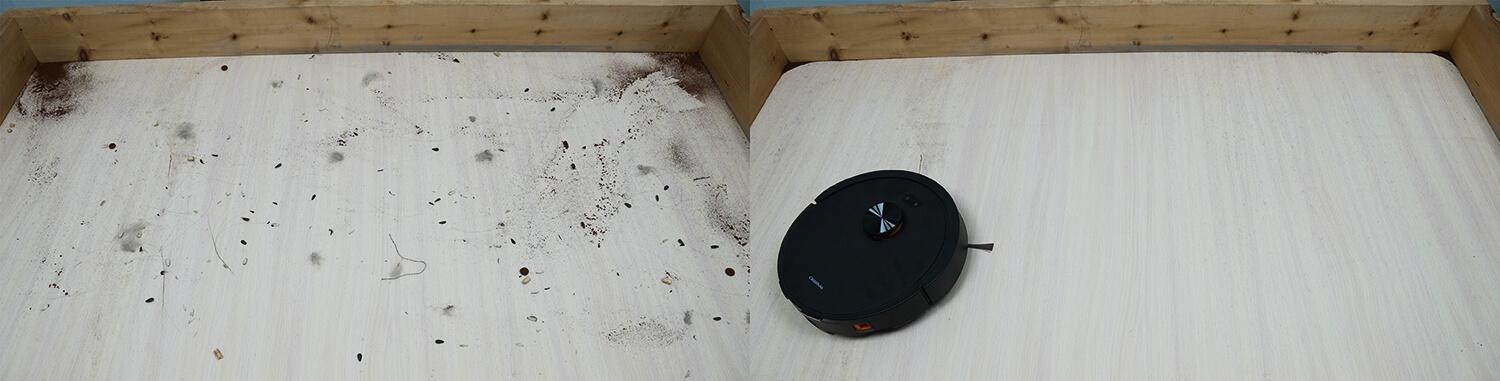
Dry cleaning
We see that hair and fur are tangled around the turbo brush, and this is quite expected.
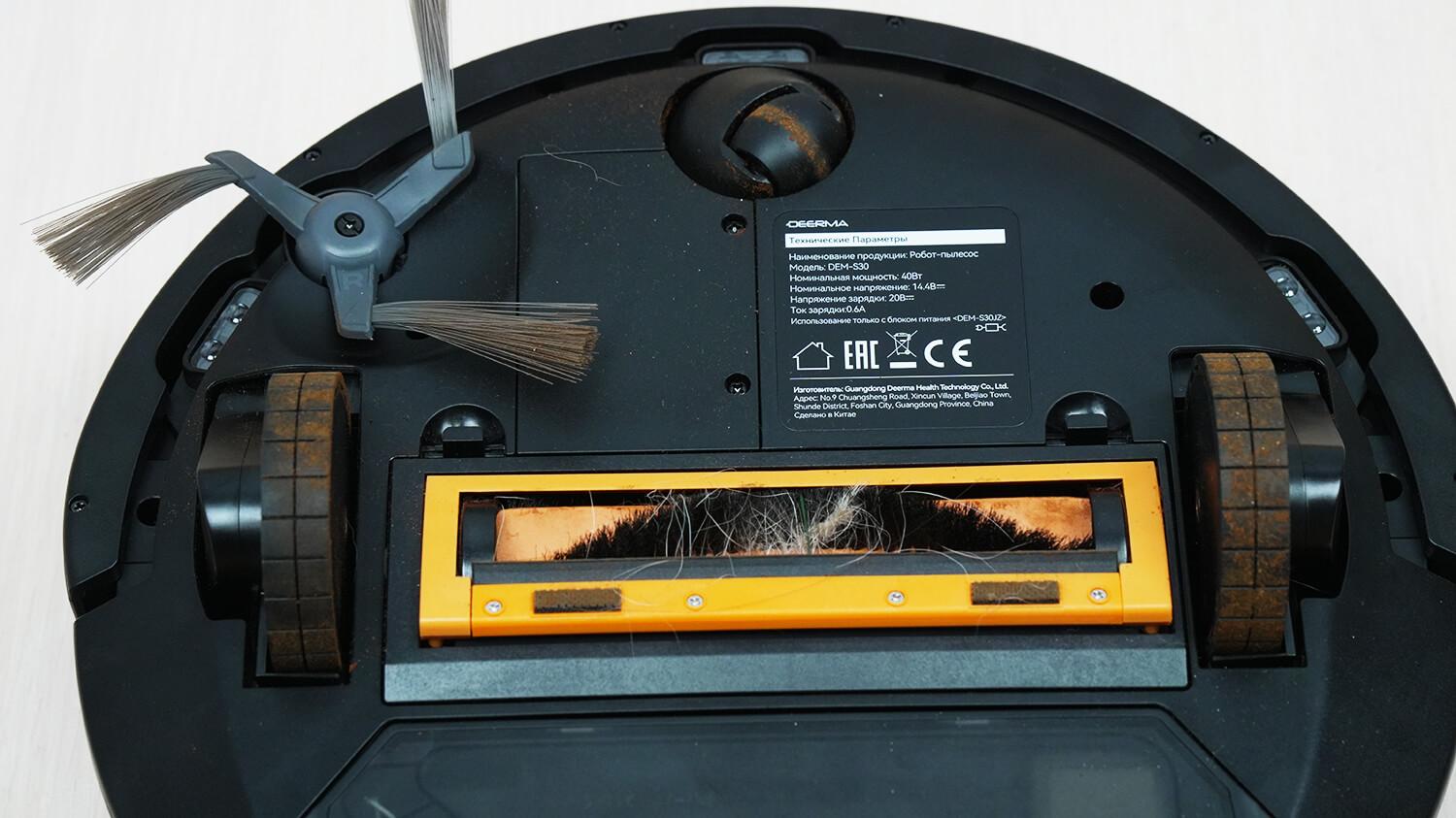
Cleaning module status
Carpet cleaning
The robot cleans low-pile carpets without any problems. On medium-pile carpets, cleaning performance is lower—some debris, such as pet food and sunflower seed shells, remains in the pile and the robot is unable to pick them up. This is likely due to the non-floating central brush unit and the robot's limited power.
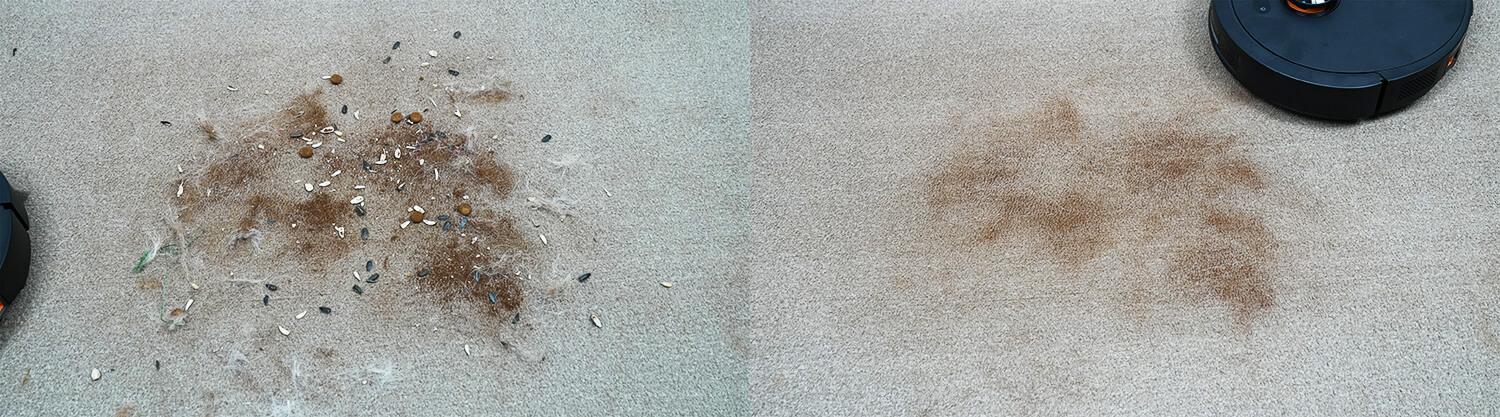
Carpet cleaning
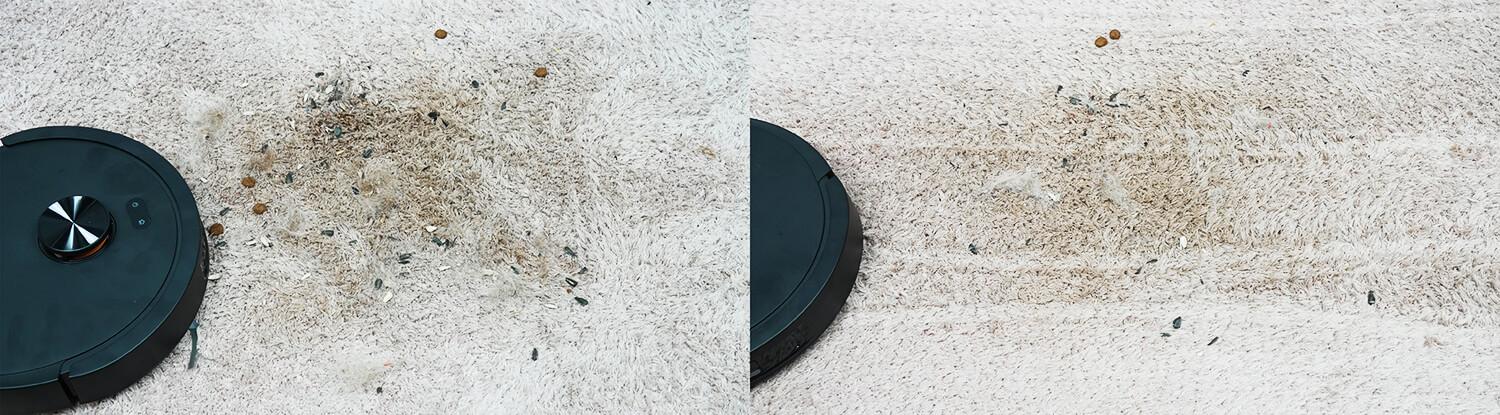
Carpet cleaning
Self-cleaning
After the dirty tests, I ran the self-cleaning mode and saw that the station didn't do a very good job, even the second time. Large debris wasn't being removed from the dust bin. I found the station's power to be a bit weak. Some similar stations consume up to 1000 watts of power during self-cleaning, while this one only consumes 400.
Wet cleaning
Although robots without a cloth washing station are still a primitive wet cleaning option by 2025 standards, given the robot's price, the lack of such a station is logical. The implemented wet cleaning is suitable for light dirt removal and gentle wiping of floors from dust that the central brush doesn't capture.
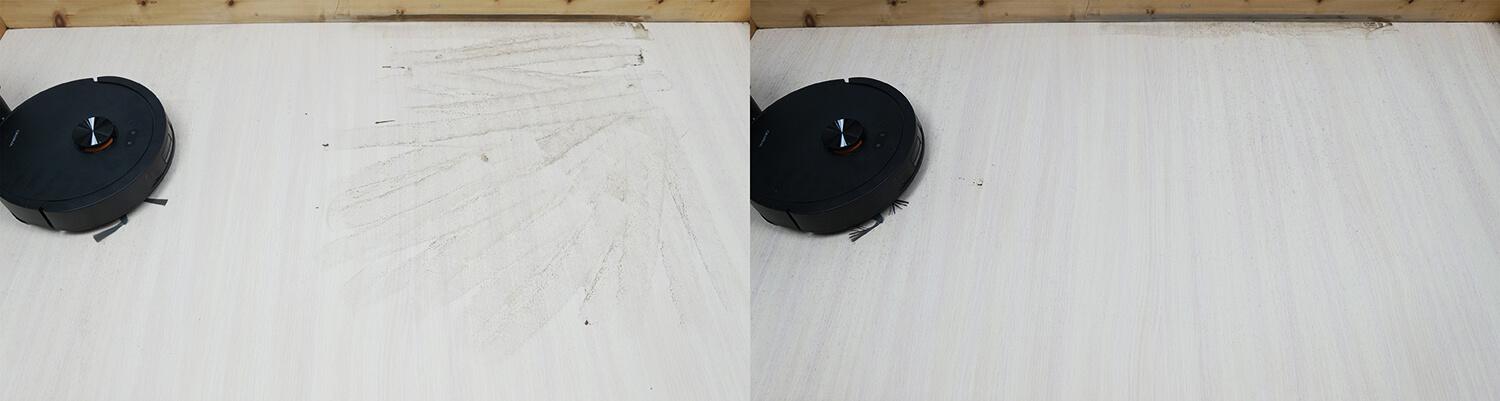
Wet cleaning
Since the napkin does not extend to the edge of the body, the blind zone near the baseboard is about 6 cm.
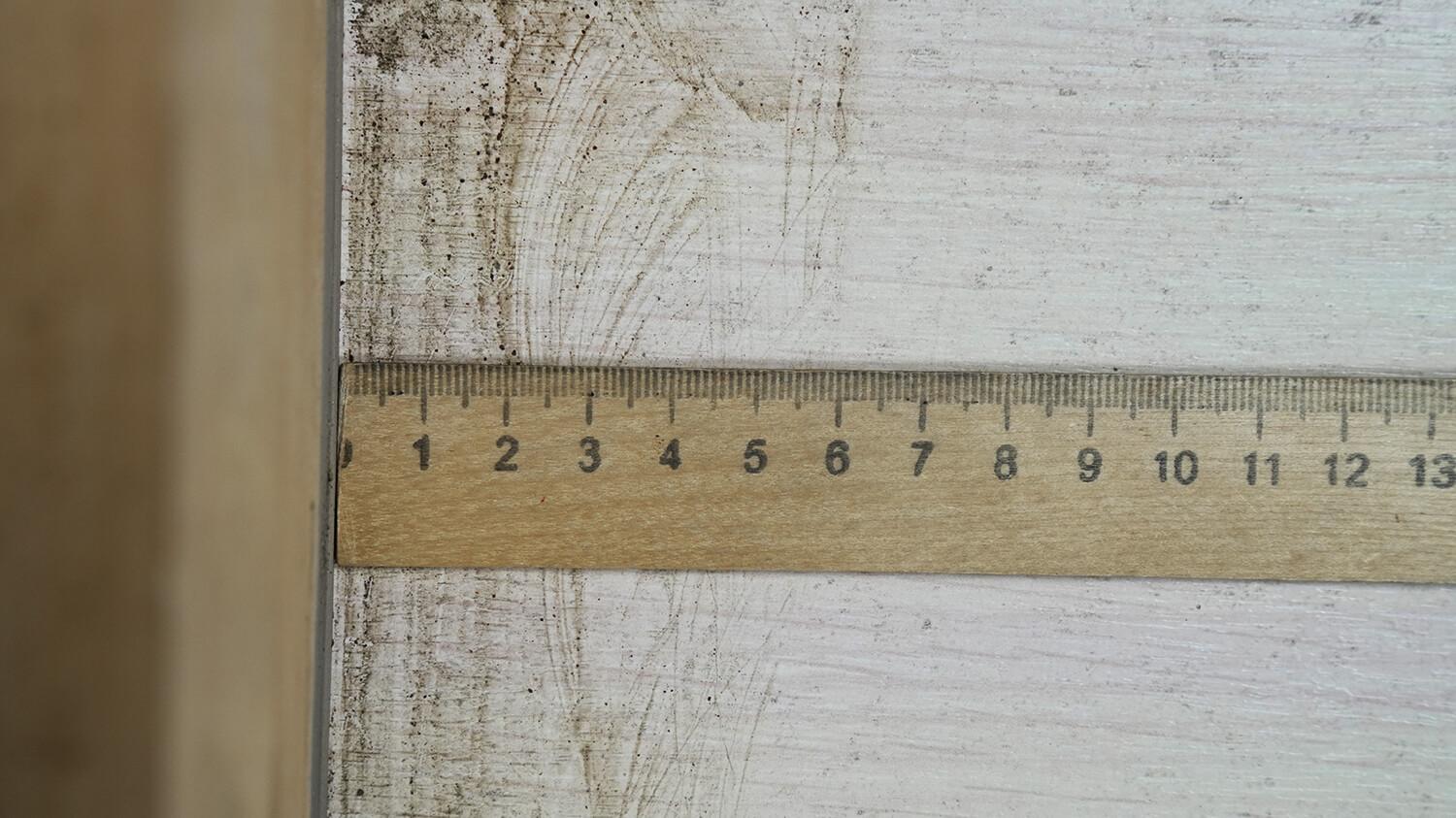
Blind spot
Wet cleaning and carpets
And when it comes to wet cleaning on carpets, the Deerma DEM-S30 doesn't skid around carpets when wet cleaning. It simply climbs onto the pile and increases its power.
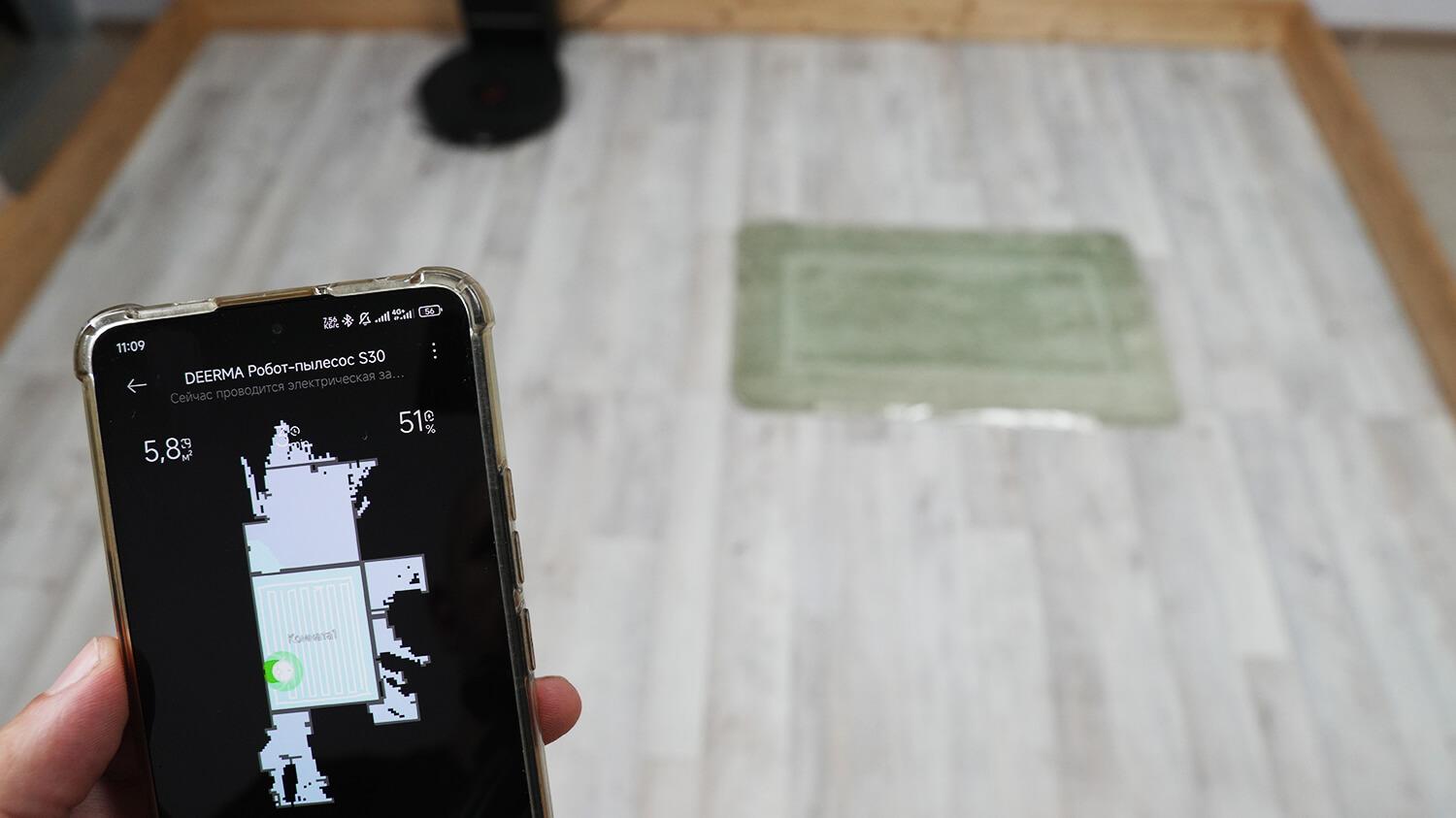
Wet cleaning and carpets
Obstacle clearance
The robot has good maneuverability. It can navigate a 2 cm threshold, and the manufacturer claims it can even climb up to 2.5 cm.
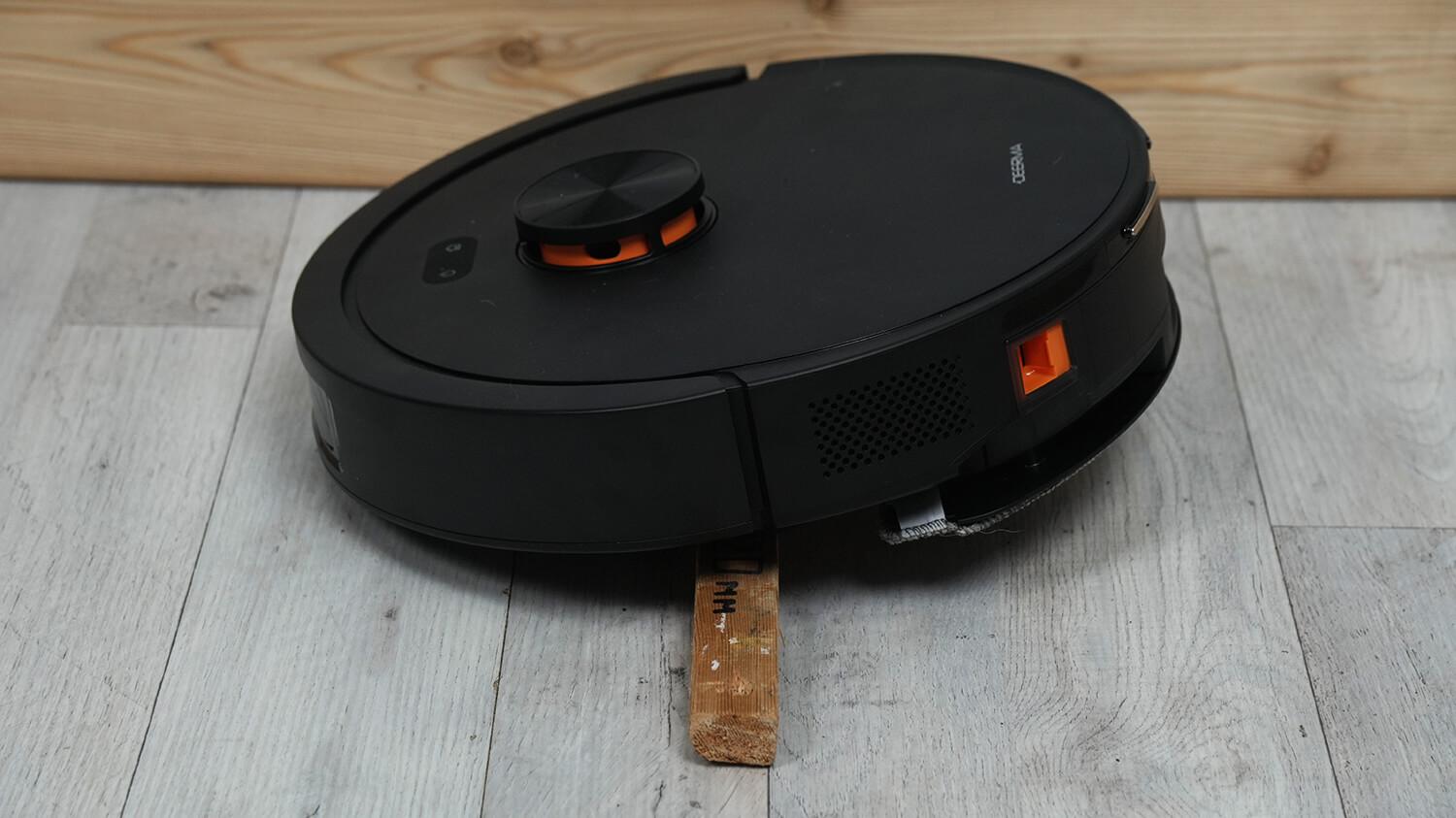
Obstacle clearance
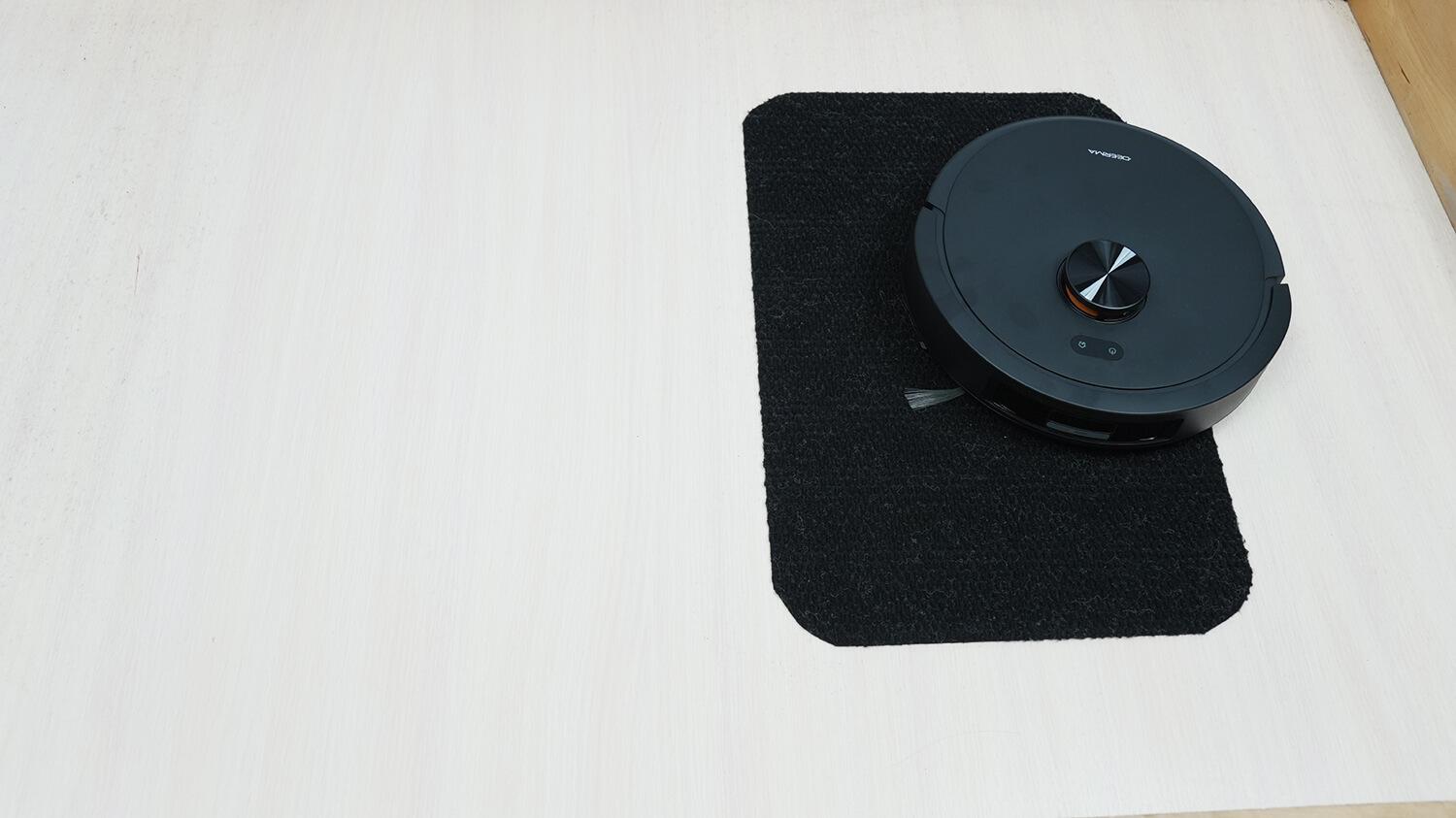
Driving on black surfaces
The robot is not afraid of black carpets, which is a plus.
Driving on black surfaces
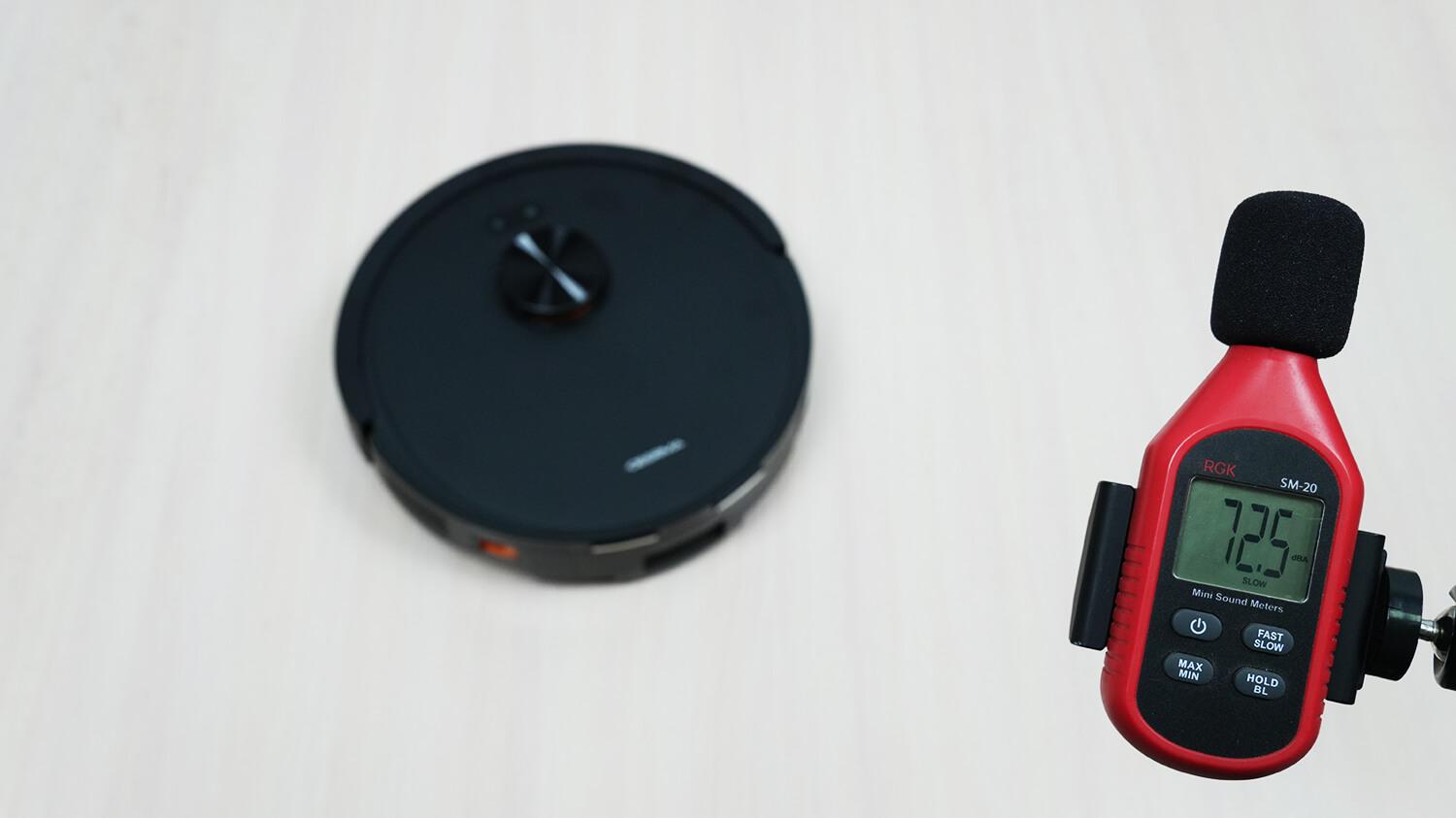
Noise level
As for the noise level, it ranges from 59 to 72.5 dB, depending on the selected operating mode. Yes, the noise level is slightly elevated, despite the standard power. The station's noise level during self-cleaning reaches 75 dB. This is also standard.
Noise level
Personal opinion
The Deerma DEM-S30 robot vacuum cleaner has been thoroughly reviewed and tested. our evaluation system he managed to gain 110 pointsThe result is weak for this price segment, which is due to a number of comments.
Overall rating of tested robot vacuum cleaners: https://robovac.washerhouse.com/en/rejtingi/robovac-obshhij-rejting-robotov-pylesosov-robo.htmlI'll share my opinion about the robot. I liked the following:
- Availability of a self-cleaning station.
- Compact dimensions of the station.
- Good quality dry cleaning on laminate and carpet.
- Y-shaped movement pattern for wet cleaning.
- The app's functionality allows you to flexibly customize cleaning parameters and sync the robot with your Xiaomi smart home system.
- Yandex.Alice support.
- Full Russification of the robot, application, and documentation.
- Not afraid of black carpets.
- Availability of warranty and service.
As for the shortcomings, here are some comments about the robot:
- The claimed suction power was not confirmed in real-world tests.
- There is no way to force the station to start self-cleaning of the dust collector or to turn it off if necessary.
- The station's capacity is weak. It's unable to unload large debris, such as animal feed.
- Weak battery and, as a result, poor autonomy of the robot.
- Simplified assembly: no wall or carpet sensors, no floating central brush unit. And the robot doesn't have an object detection system on the bumper.
- Increased noise level during operation.
So, what's the bottom line? Certainly, some of the criticism stems from the robot's price, but the advantages outweigh the benefits. However, the robot does have its own unique features that create a mixed impression. I would recommend considering this model for cleaning small areas and areas with minimal carpeting. Ideally, it would be suitable for cleaning hard surfaces. In these conditions, it can maintain a decent level of cleaning automatically.
On that note, I'd like to end this review. If you have any questions, please ask them in the comments. Happy shopping, everyone. Bye!