Deerma DEM-X70: An Affordable Robot Vacuum Cleaner with an All-in-One Station
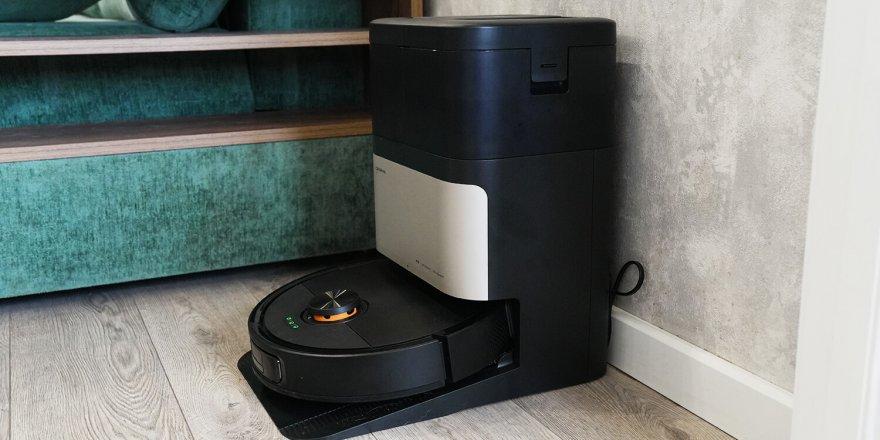
The Deerma DEM-X70 robot vacuum cleaner is a new product for 2025, boasting 13,000 Pa of suction power, two rotating cleaning pads with baseboard access and a carpet lift, and an all-in-one cleaning station. At the station, the robot vacuum self-empties its dust bin, washes its cleaning pads, and dries them with hot air. This complete package costs between $360 and $400, which is quite reasonable considering its features. I thoroughly tested the Deerma DEM-X70, highlighted its pros and cons, and then shared my opinion. Let's get to the review!
Equipment
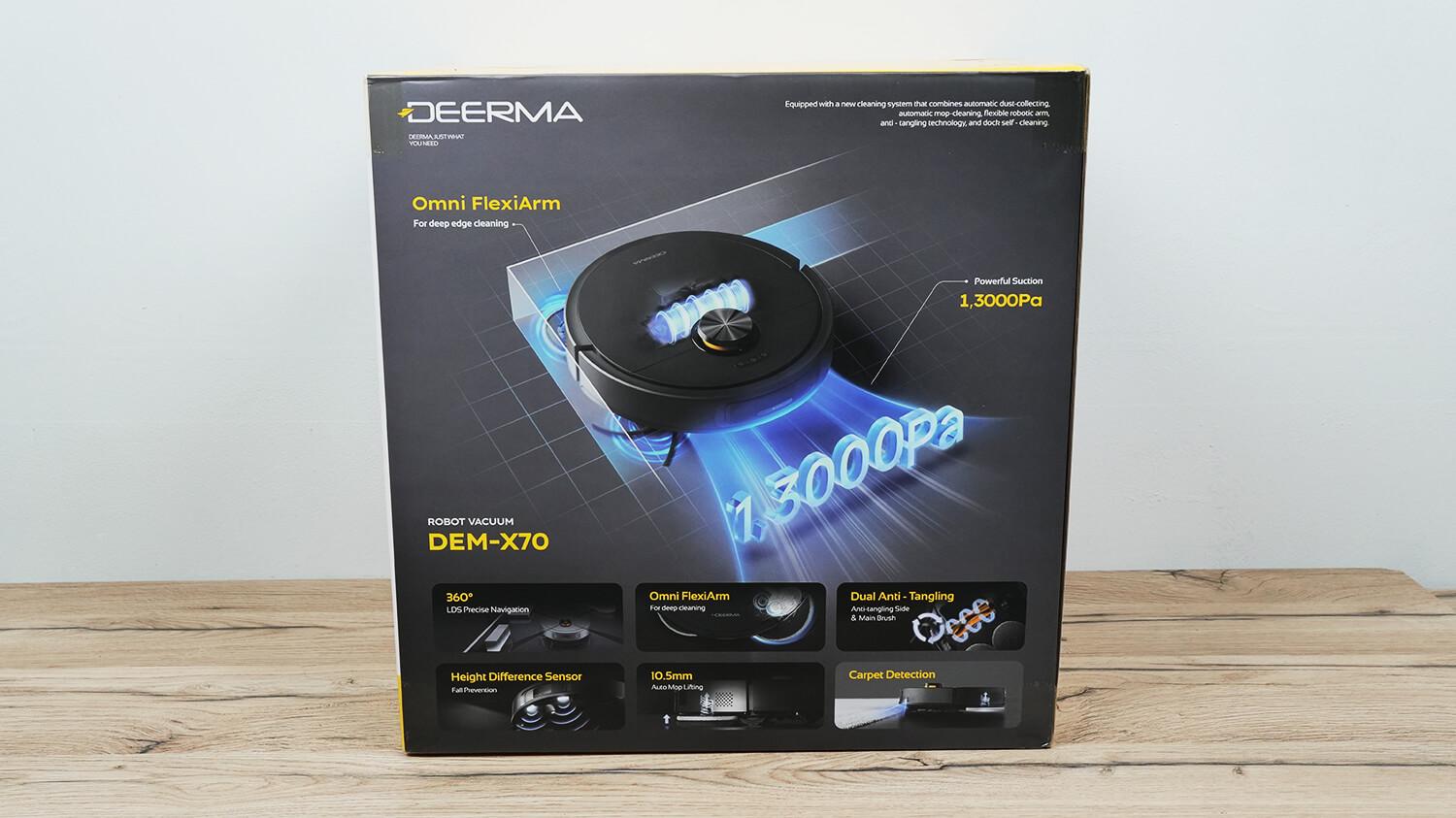
The robot vacuum cleaner is packed in a branded colored cardboard box:
Box
In addition to the outer color box, special logistics packaging is provided, providing double protection against damage during transportation.
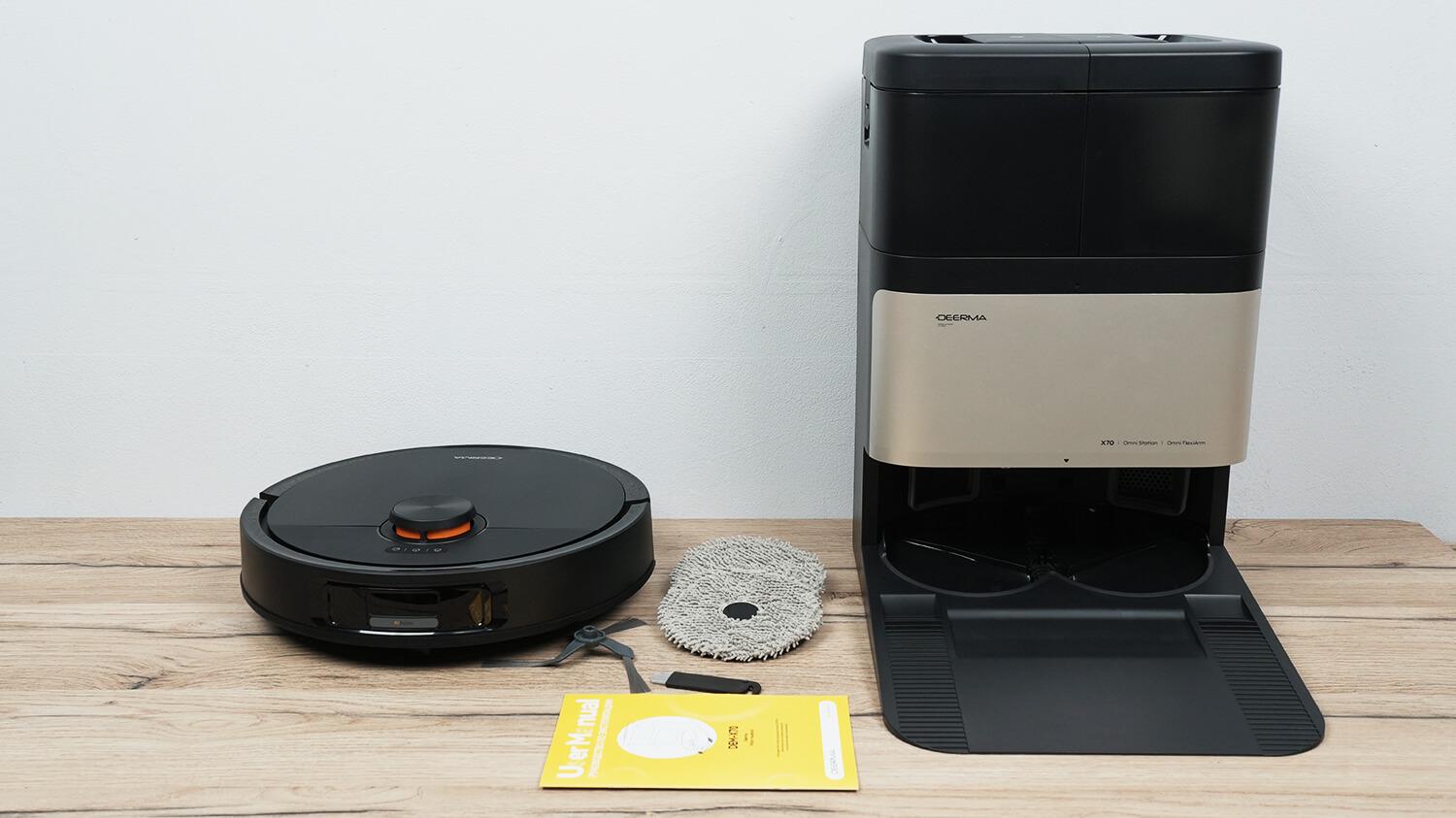
In addition to the robot and station, the package includes two holders with wipes, a side brush that must be installed on the robot, a cleaning tool, and an operating manual in Russian.
Equipment
Appearance
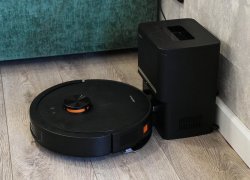
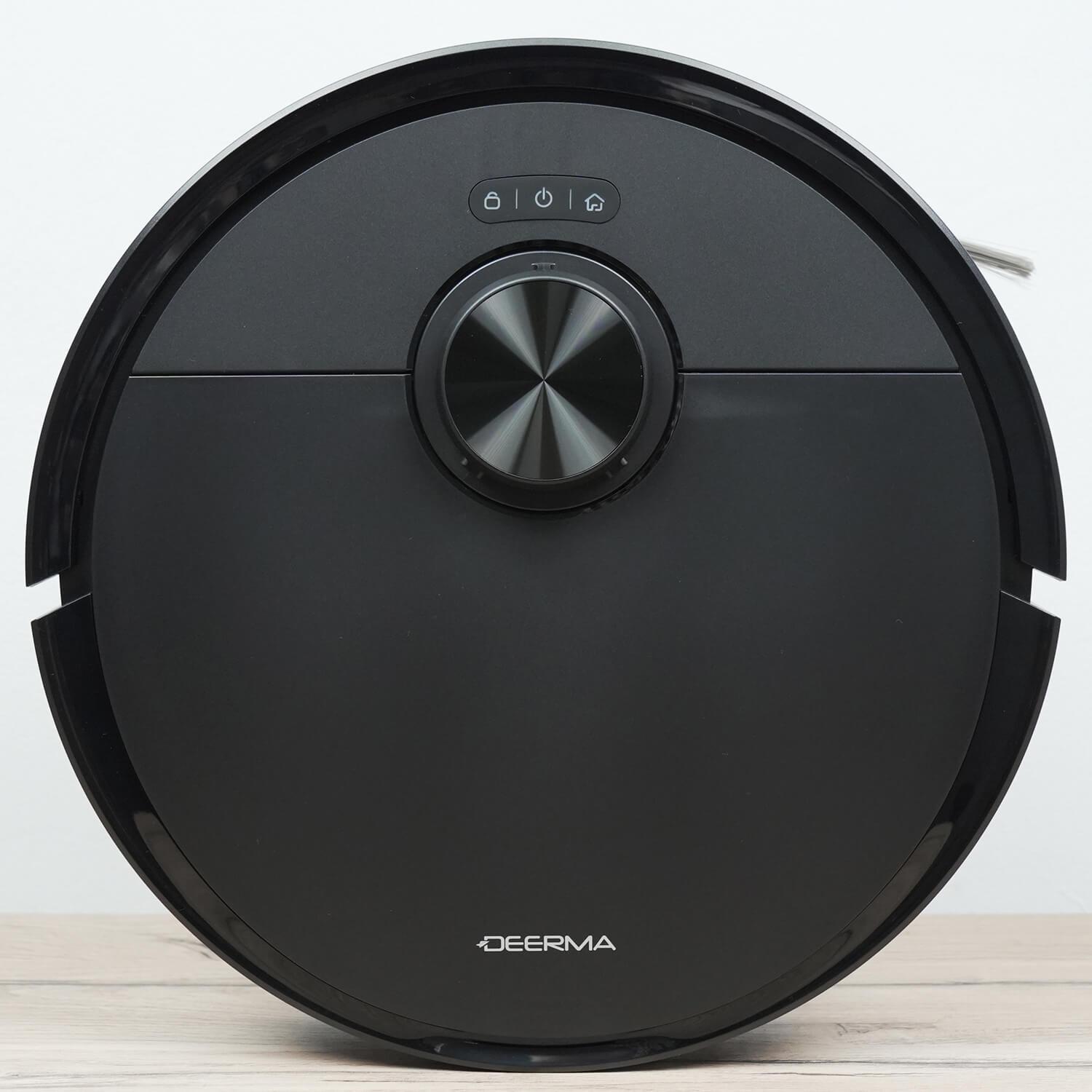
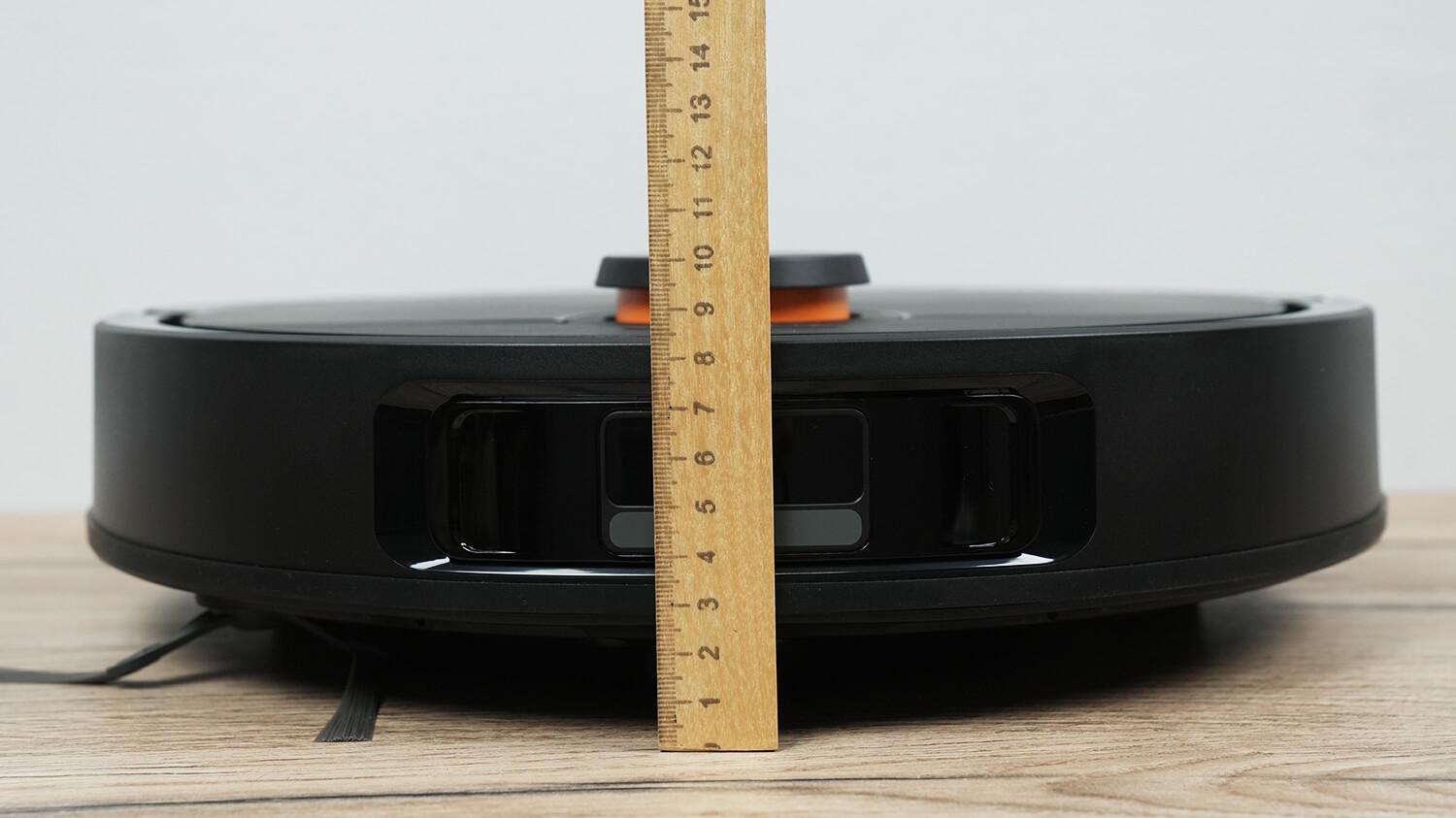
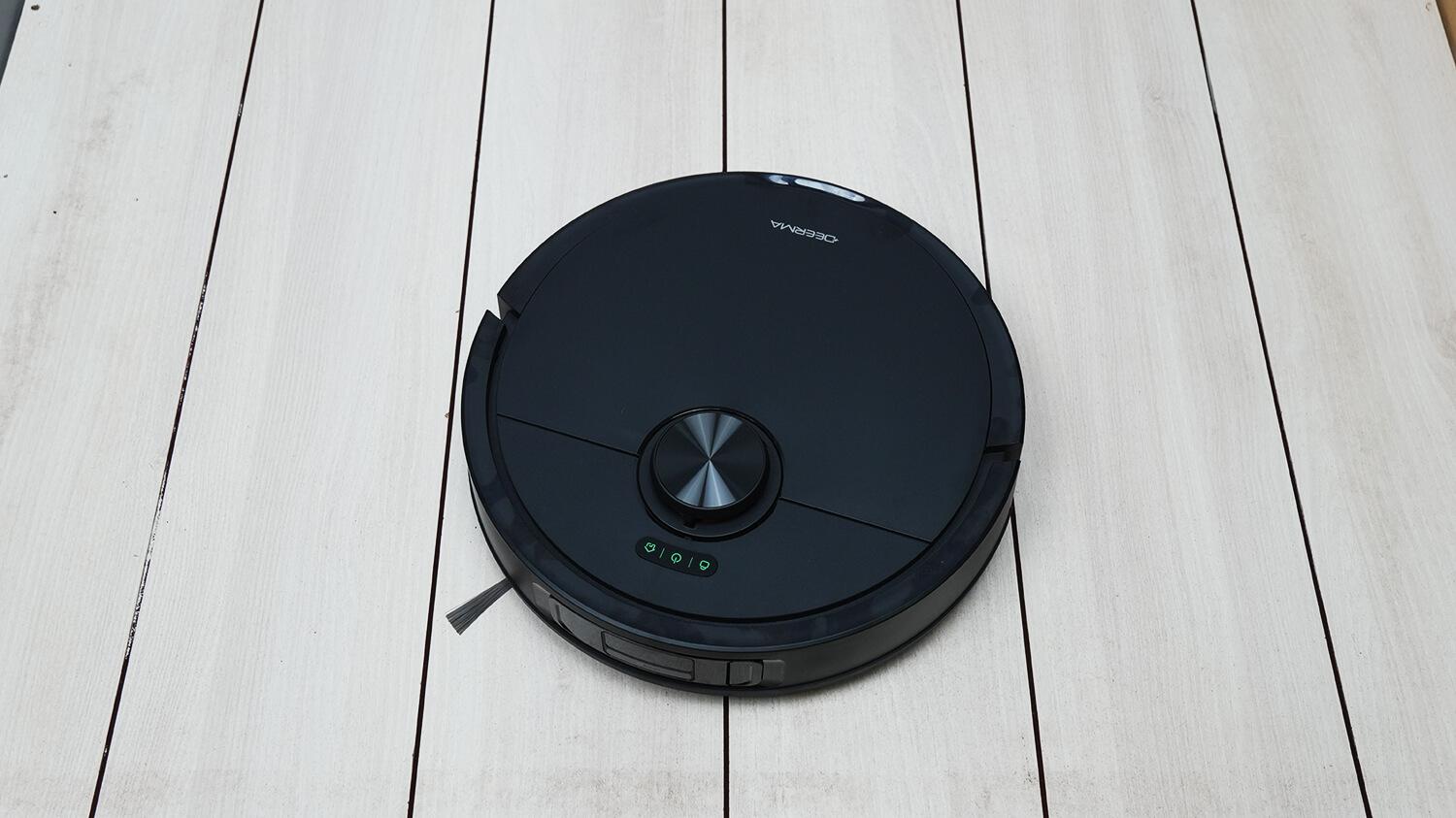
Now let's take a look at the design of the Deerma DEM-X70. It's black and has a round body. It stands 10 cm above the floor.
Top view
Body height
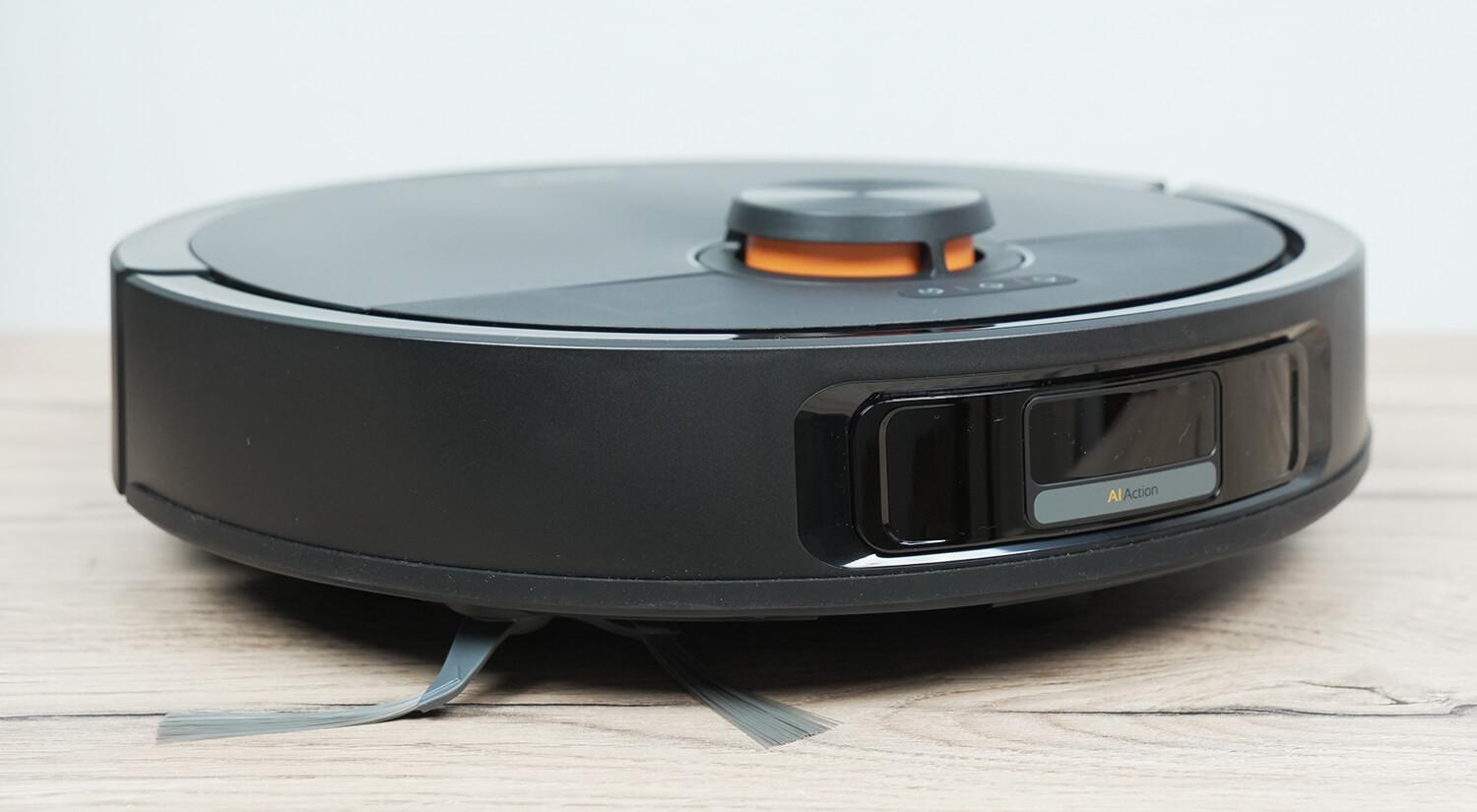
There's no wall sensor. A central sensor system detects and accurately navigates objects on the floor. This technology is called AI Action.
Side view
A lidar sensor is responsible for navigation. The cover is not spring-loaded. Three mechanical control buttons are located nearby.
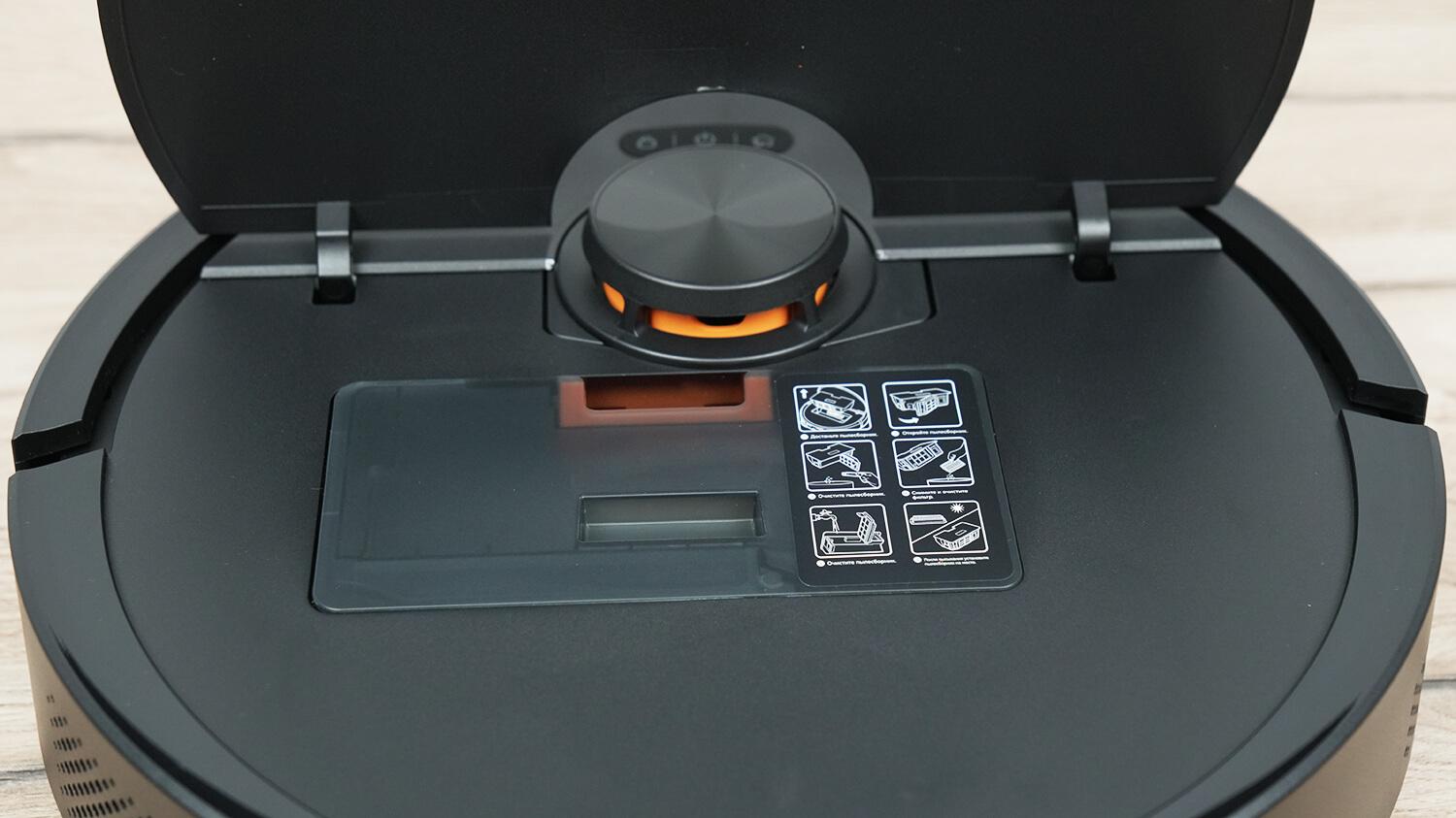
A 300 ml dust container is located under the lid on top. The filtration system is based on a HEPA filter and a mesh. The robot does not have a water tank. The cleaning cloths are only moistened at the cleaning station.
Dust collector location
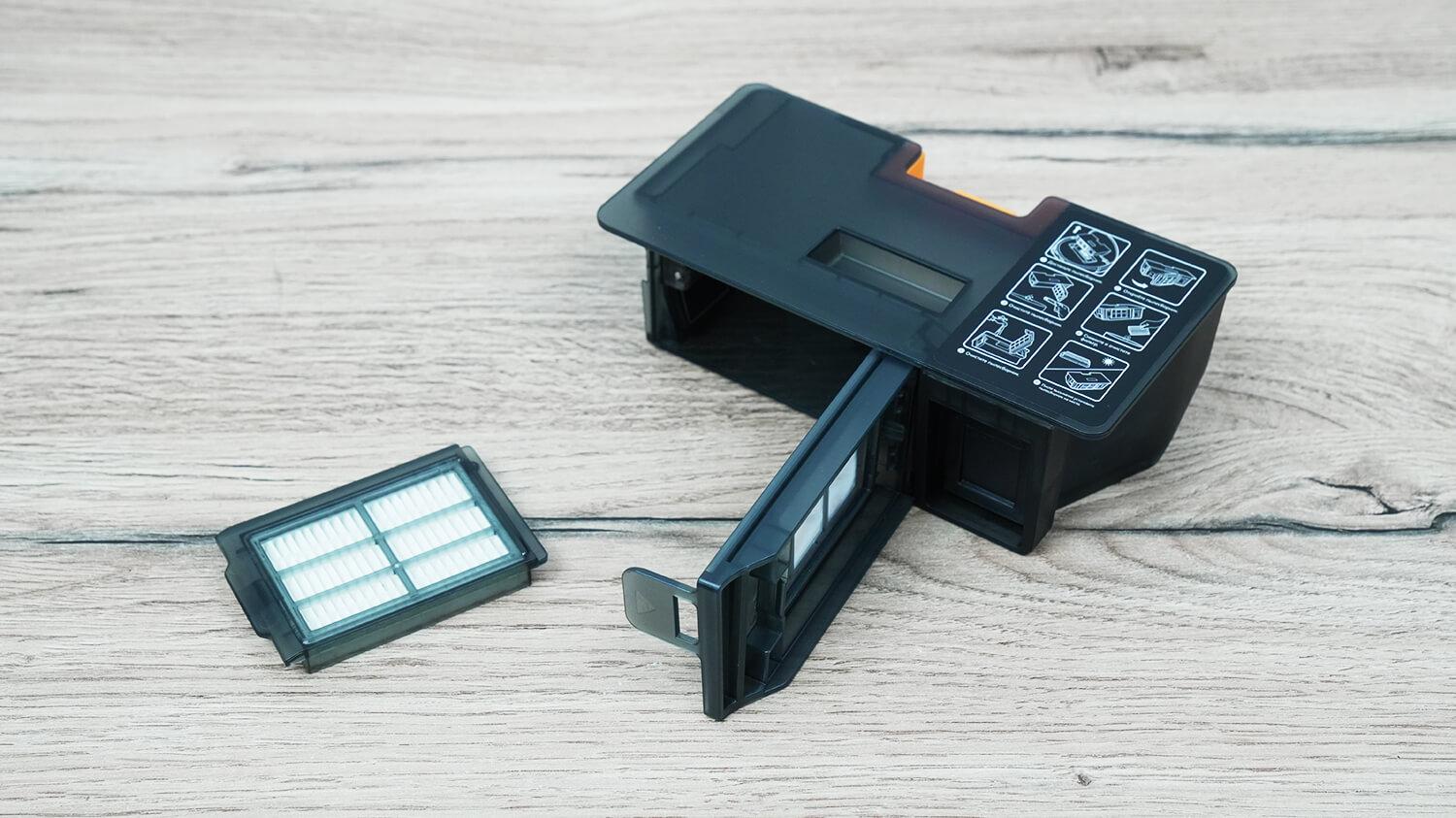
Filtration system
The robot has four drop protection sensors installed underneath. There's even a carpet sensor, which is a plus. There's only one side brush: a three-beam, quick-release brush.
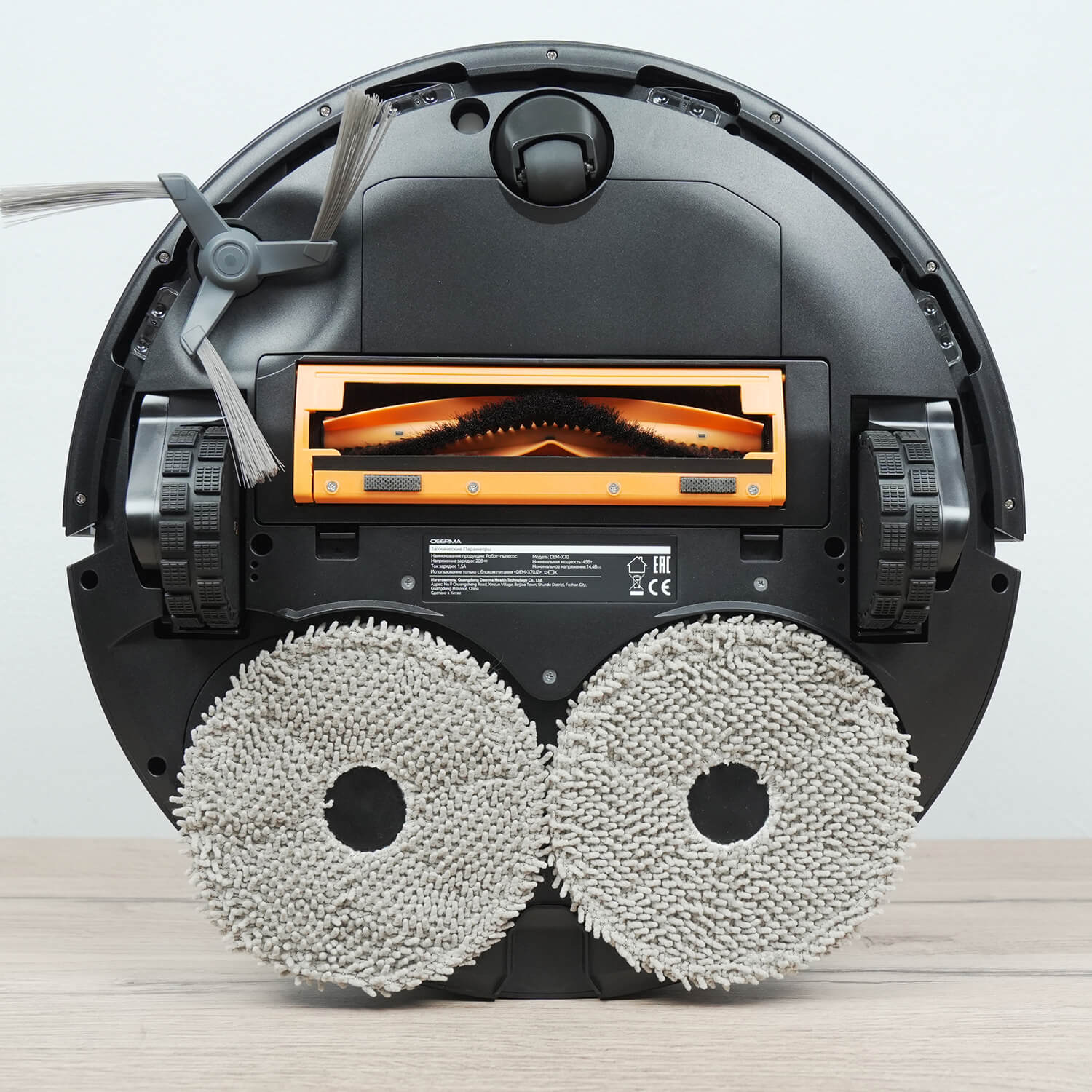
Bottom view
The central brush unit is non-floating, but a movable scraper has been implemented. The central brush is made of bristles and petals and can be disassembled on both sides to remove tangled hair and fur.
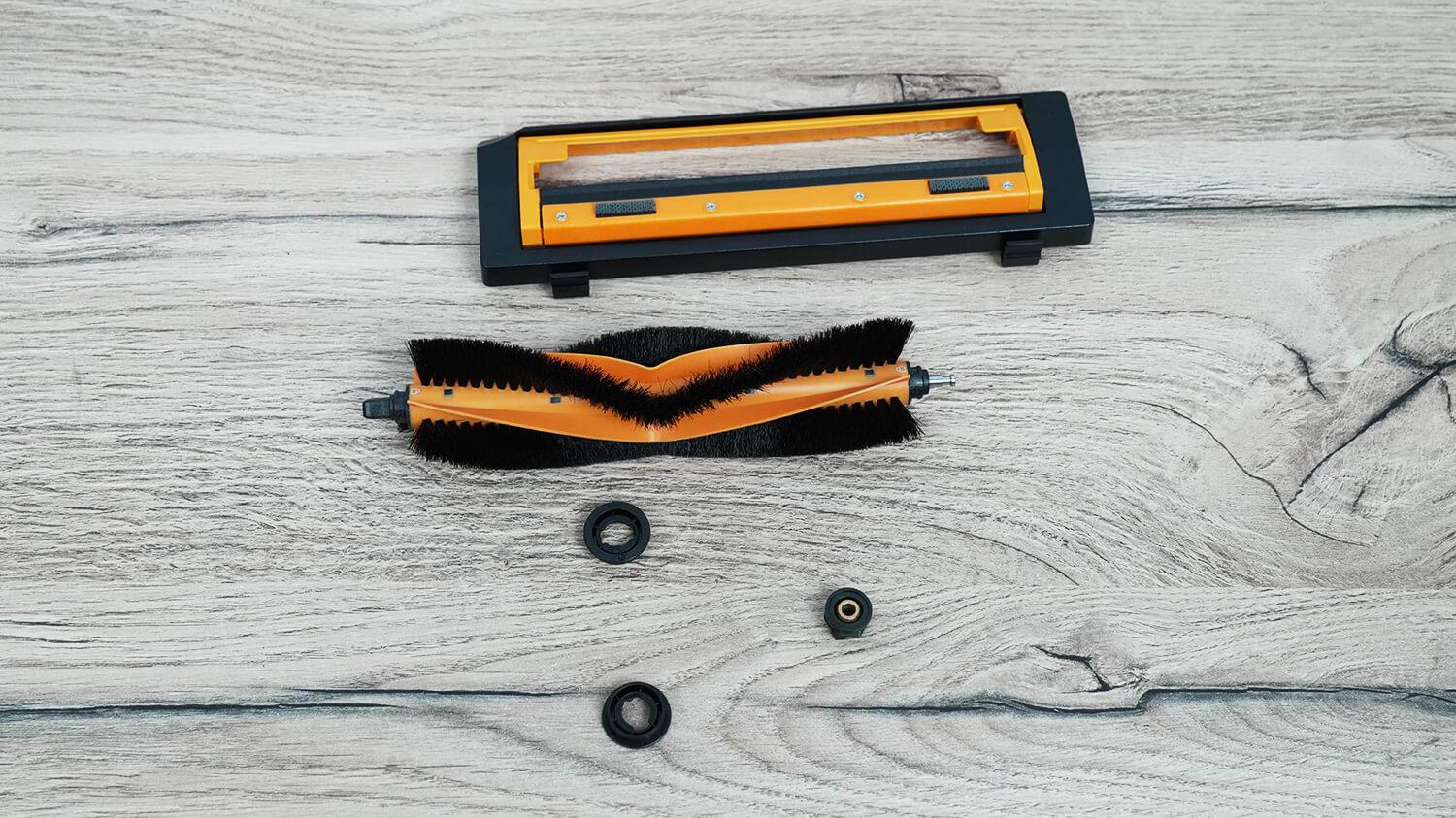
Central brush
The robot cleans floors with two round, rotating pads. They're a standard design, secured to holders with Velcro. A mechanism is installed behind the right holder to extend the pad right up to baseboards and furniture. It's also worth noting that the pads automatically lift up when entering carpets. I also noticed that the robot backs up into corners, allowing the pads to reach them more easily, which is a plus.
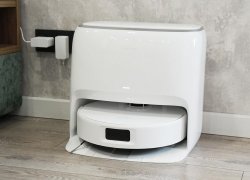
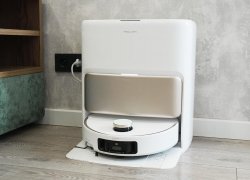
Speaking of the station, the Deerma DEM-X70 self-empties the dust bin, rinses the cloths with water, and dries them with hot air. The water isn't heated when washing the cloths, nor is there automatic detergent mixing, but the air is heated to 75 degrees Celsius during drying. The station isn't connected to a sewer or water supply.
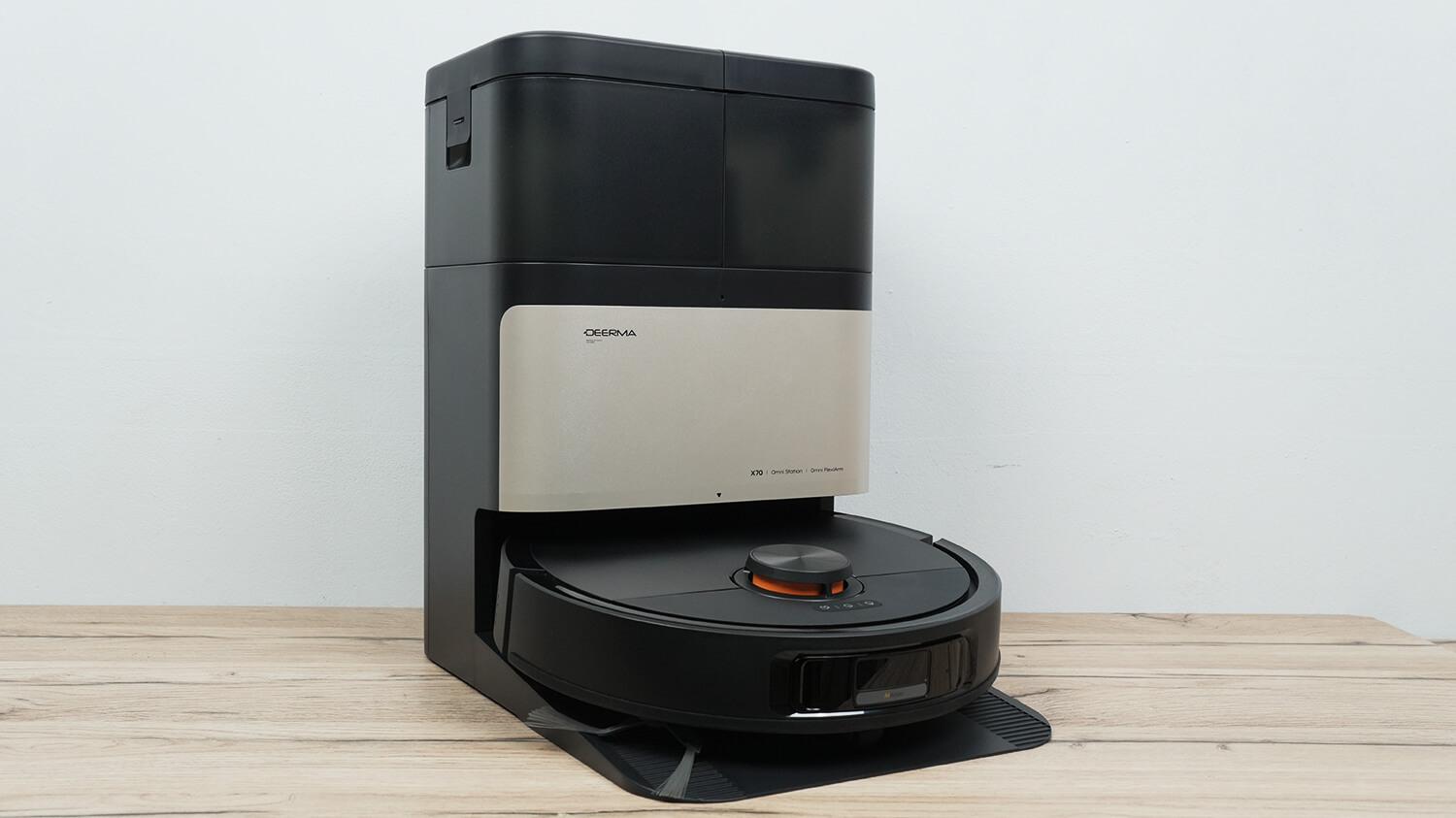
Robot at the station
The robot's access ramp is non-removable. The wipes' washing platform is also non-removable, but flat. This makes it easy to maintain. Only the coarse water filter is removed for draining.
A 3-liter trash bag is located under the gray lid in the center of the station. It's a standard design.
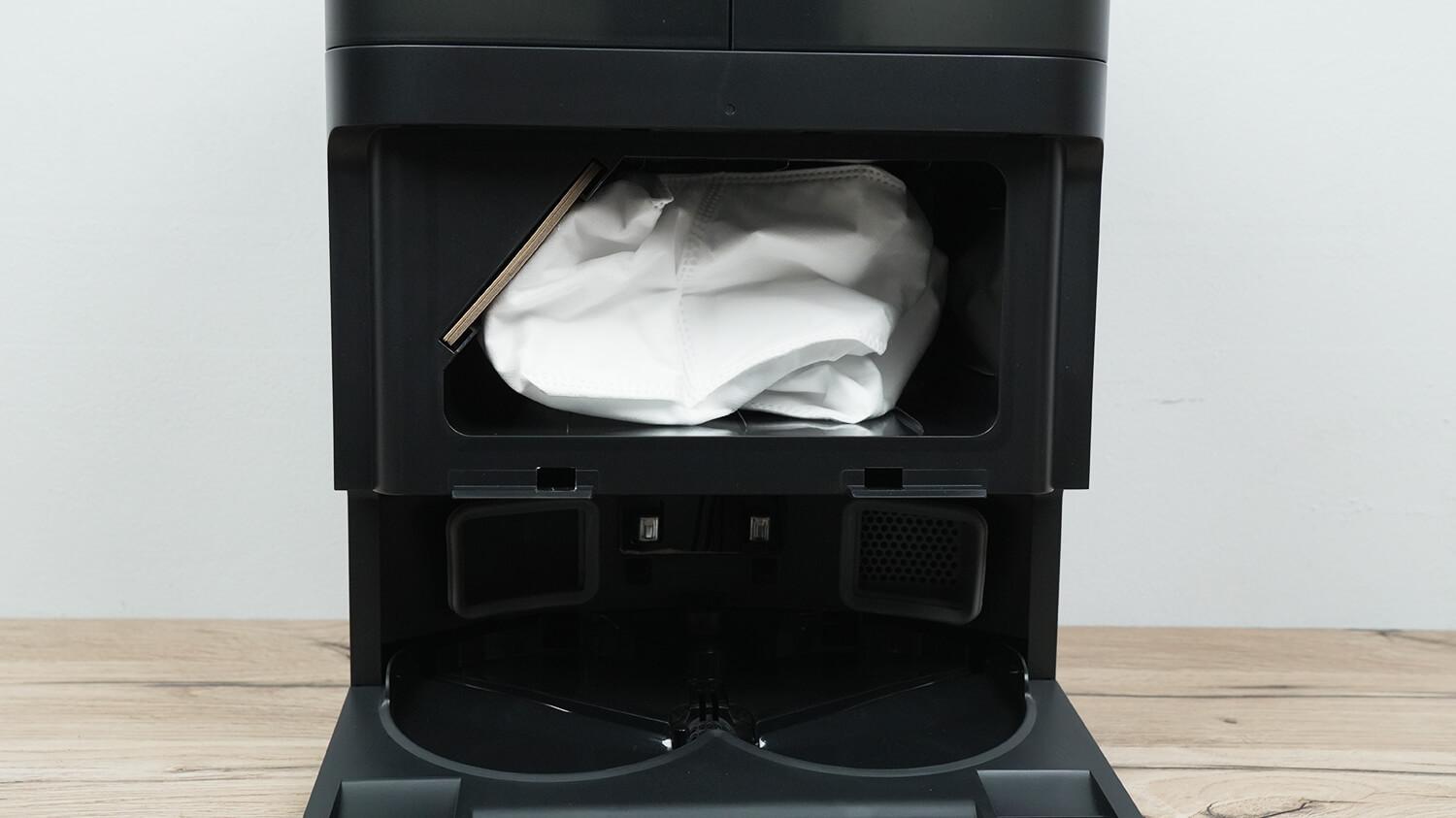
Bag location
The water tanks are located on top. The clean water tank holds 3 liters, while the dirty water tank holds 2.3 liters.
The pros and cons of the robot's design will be discussed during the final review. Let's move on!
Technical specifications
The main characteristics of Deerma DEM-X70, as stated by the manufacturer:
Robot vacuum cleaner:
- Li-Ion battery 5200 mAh.
- Suction power up to 13,000 Pa.
- Operating time up to 240 min.
- Dust collector 300 ml.
- Water tank: none.
- Obstacle clearance up to 20 mm.
- Dimensions: 350*100 mm.
Station:
- Power: 650 W.
- Clean water tank: 3 l.
- Dirty water tank: 2.3 l.
- Bag in the station: 3 l.
- Dimensions (H*W*D): 467*350*460 mm.
The increased suction power stands out here, which will be verified in tests. The other characteristics are on par with similar devices in this price range.
Functional capabilities
Speaking of features, the Deerma DEM-X70 is controlled via the Mi Home mobile app in Russia. Connection is simple and easy; just follow the prompts. The interface is in Russian.
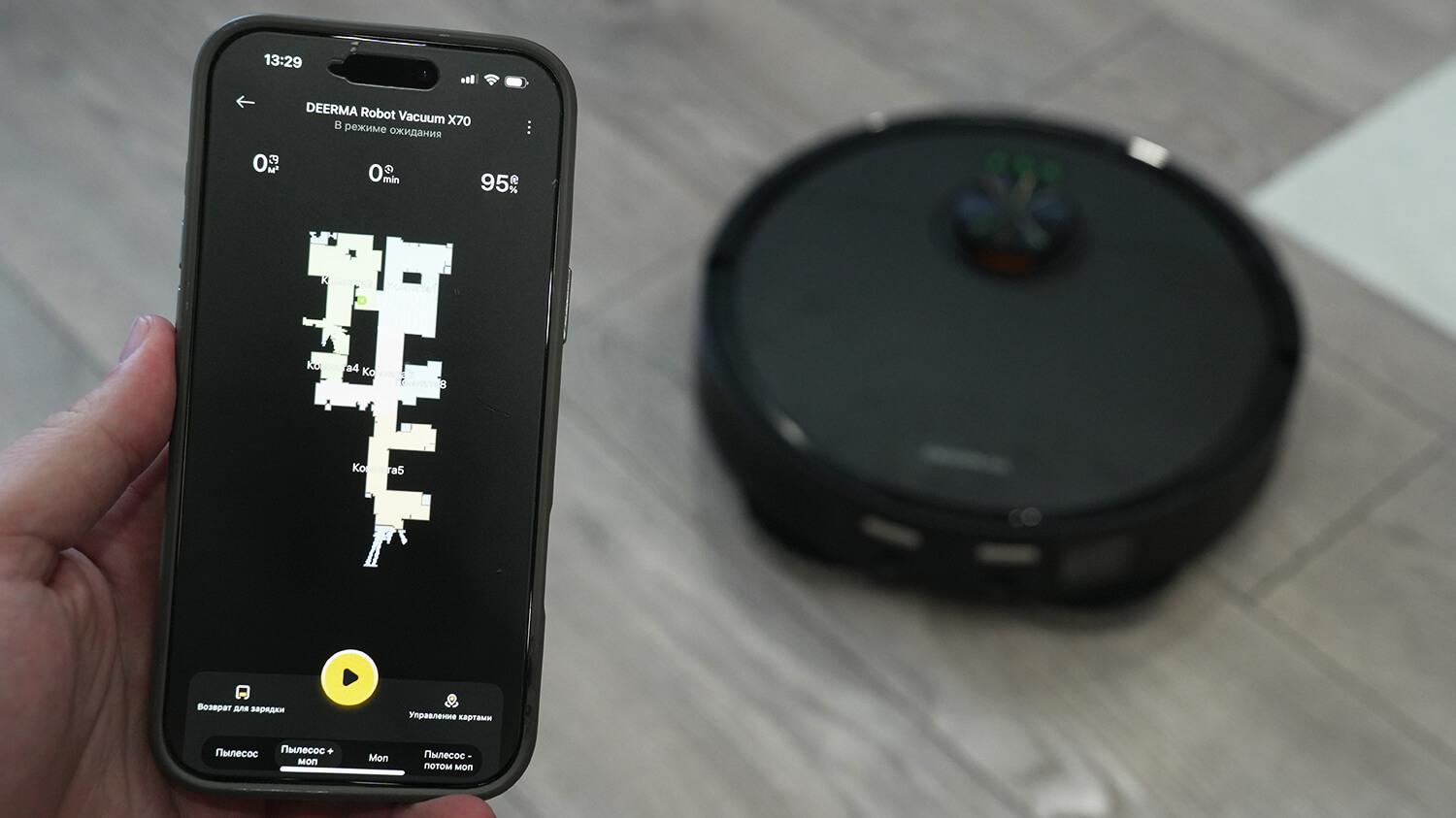
Control via app
The main functions are displayed on the screen:
- Self-cleaning of the dust collector at the station.
- Rinse wipes with water (without heating).
- Drying napkins with hot air (75°C).
- Special floor washing mode.
- Moving the napkin to the baseboard.
- Lifting napkins on carpets.
- Saving multiple cleaning maps in memory.
- Automatic zoning of premises into rooms.
- Selecting areas and rooms for cleaning.
- Virtual walls and no-go zones (and for wet cleaning mode).
- Suction power adjustment.
- Adjusting the degree of wetting of the napkin.
- User mode.
- Cleaning log.
- Setting up cleaning according to a schedule.
- Voice notifications in Russian.
- Yandex.Alice support.
- Automatic power increase on carpet.
It's worth highlighting the special floor cleaning mode, which moves the robot vacuum in a Y-shaped pattern. I also appreciated the custom mode for flexible cleaning settings tailored to each room.
Overall, there are all the basic options for flexibly customizing cleaning parameters to suit your own needs.
Testing
A detailed video review of the Deerma DEM-X70, including all tests, has already been prepared and published on the channel:
Navigation
And finally, let's move on to the tests. First, we'll test the Deerma DEM-X70's navigation in a room with obstacles. After leaving the station, the robot begins its perimeter walk. The legs of a clothes dryer presented a challenge, but it eventually managed to escape the trap. It also tried sweeping around the legs of a table, but it had to push them too hard due to the lack of a wall sensor and the mirror coating on the legs. It was shallow around a box. The mirror introduced some error in the map, but this is a problem with most lidar robots. Overall, there were some minor issues, but nothing critical.
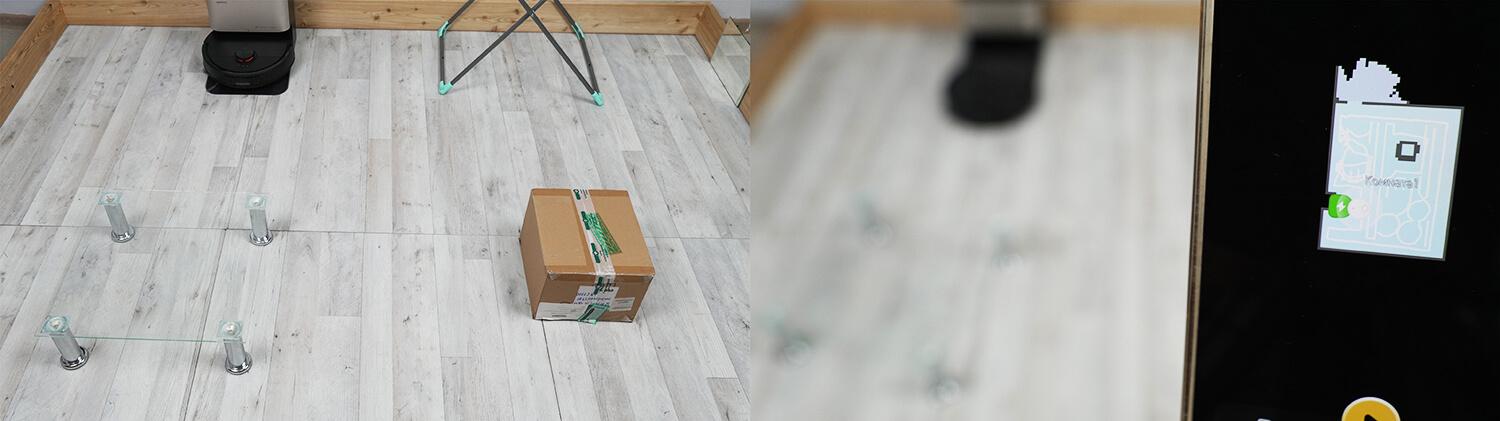
Navigating within a room
Speaking of navigating within the house, the Deerma DEM-X70 goes room by room, first along the perimeter, then in a serpentine pattern. Every 10 square meters, as I determined, it returns to the station and washes its cleaning pads, then resumes cleaning from where it left off. Cleaning speed is high, and there are no uncleaned areas. This test was passed.
Object Identification System
I also tested the bumper's object detection system, called AI Action. The robot first circled the perimeter, then began cleaning the available area in a zigzag pattern. While moving, it knocked over a toy, drove over a simulated pet surprise, knocked over a shoe, chewed on a wire, drove onto a scale, and knocked over a sock. In short, it failed to detect or avoid all six objects.
The situation with the other items wasn't much better. Of the three socks, the black one snagged and identified the carpet, while the red and white ones were chewed. All four wires were moved and displaced, and some were chewed. And of the six pet imitation toys, as expected, all six were moved and some were chewed.
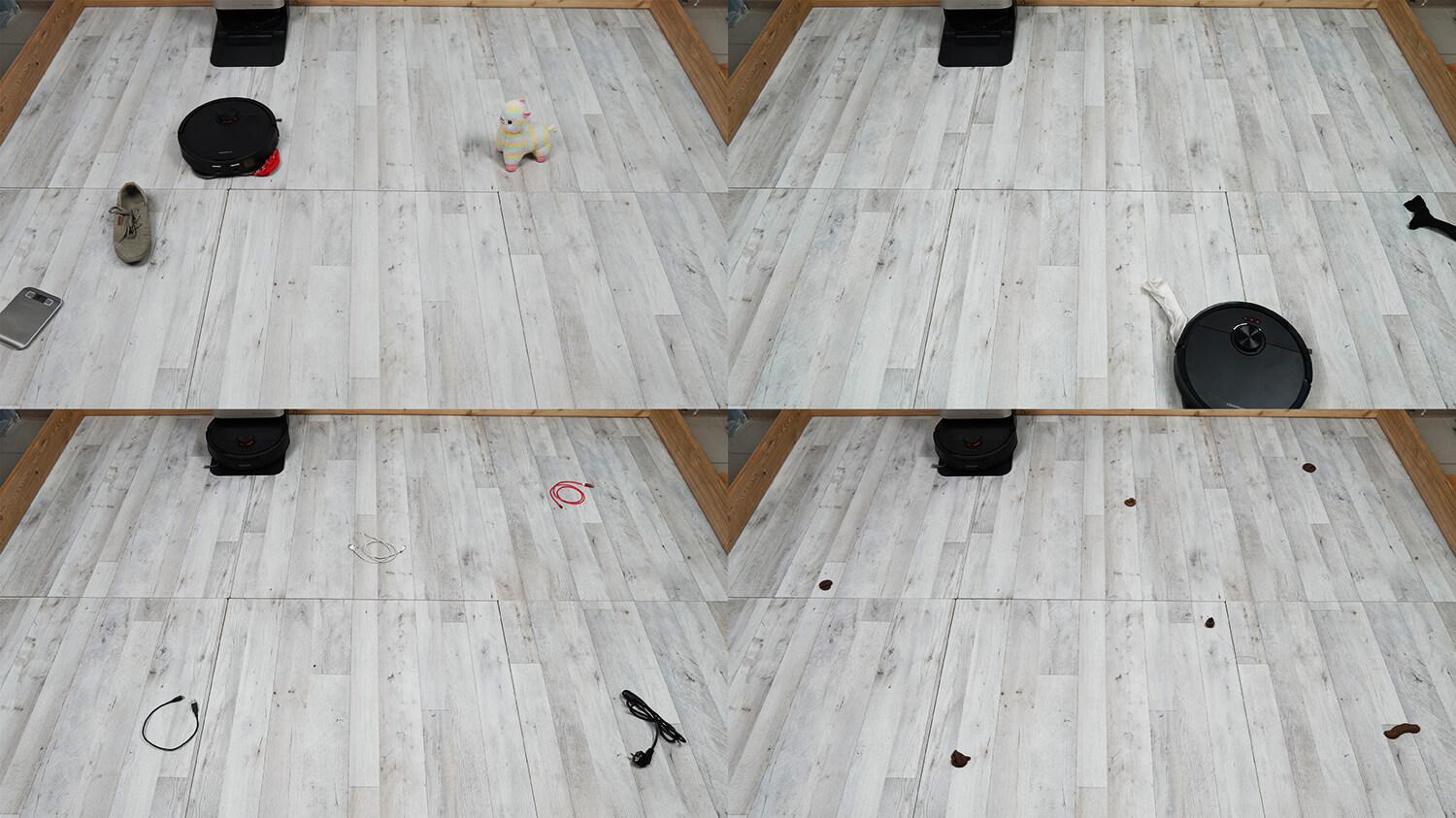
Object Identification System
In general, he doesn’t have any system for identifying objects.
Passing under low furniture
I also checked whether the robot could fit under a standard 10 cm gap under furniture. Yes, it can. However, I should note that it was quite a struggle to get into the gap, as the body itself is 10 cm high. Because the lidar doesn't have a spring-loaded cover, it had to rub a bit.
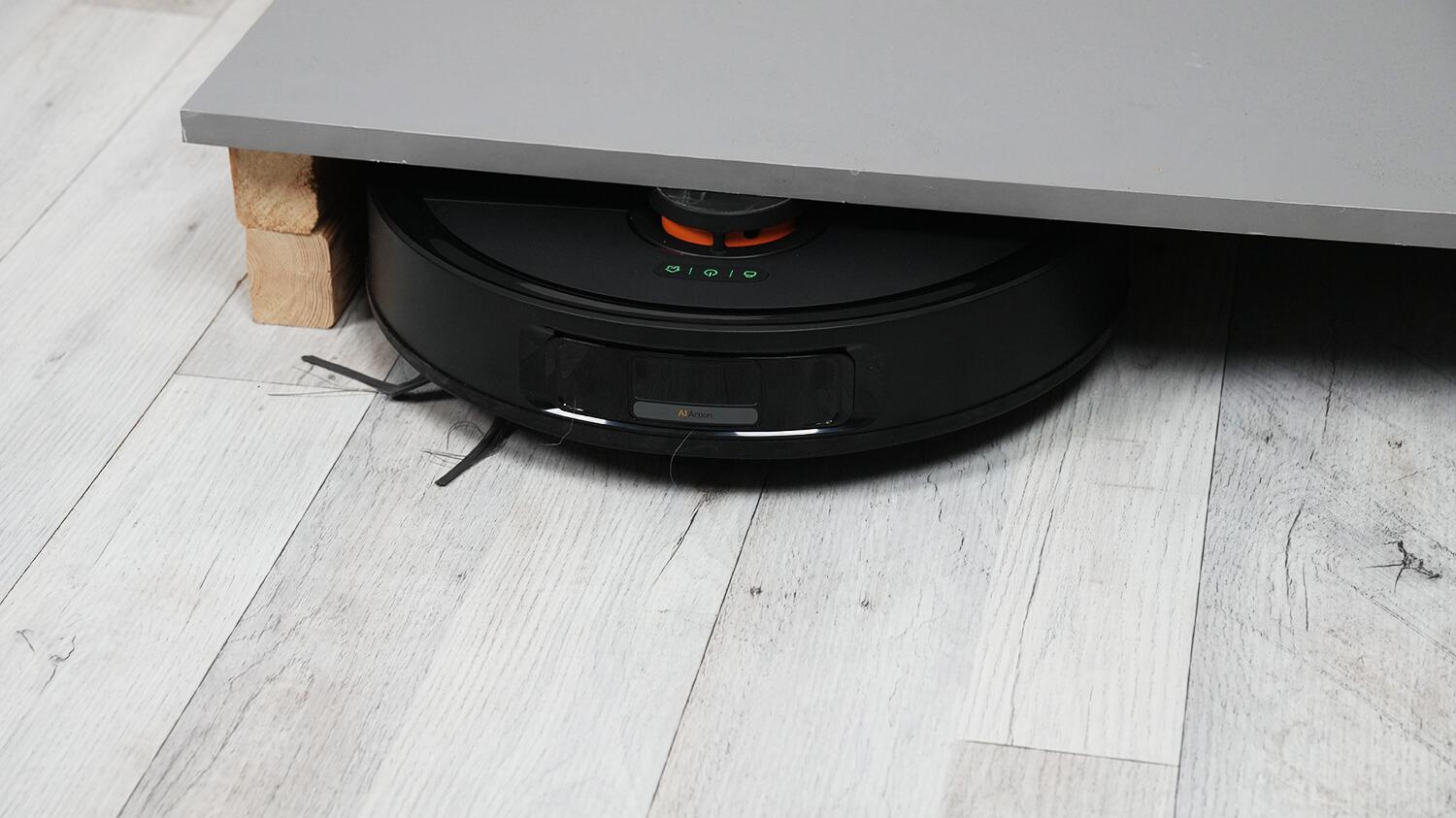
Passing under low furniture
Autonomy
I also tested how long the battery lasted when running the robot at maximum power with wet cleaning enabled. It managed to run for 60 minutes, cleaning almost 50 square meters of usable space. In reality, that's just over the equivalent of cleaning a two-bedroom apartment of 70 square meters once. There's also a mode to resume cleaning after recharging at the charging station. In any case, the robot's battery life is poor. The battery drains quickly at maximum power.
Suction power
One of the most important tests is to check the actual suction power. In Quiet mode, the robot couldn't clean debris even from a 2 mm gap. In Standard mode, it partially cleaned a 2 mm gap. In Medium mode, it cleaned a 2 mm gap better. In Power mode, the result was unchanged. Overall, the power is quite standard. I can't confirm the claimed superior suction power.
Suction power
Dry cleaning
The quality of debris collection on laminate floors is good. Various debris types were collected from the rack. Only the corners were left unswept, which is a weak point for most round robots. However, the robot cleans the outer corners well. We can see hair and fur tangled around the turbo brush, which is expected. However, the side brush is clean. That's a plus.
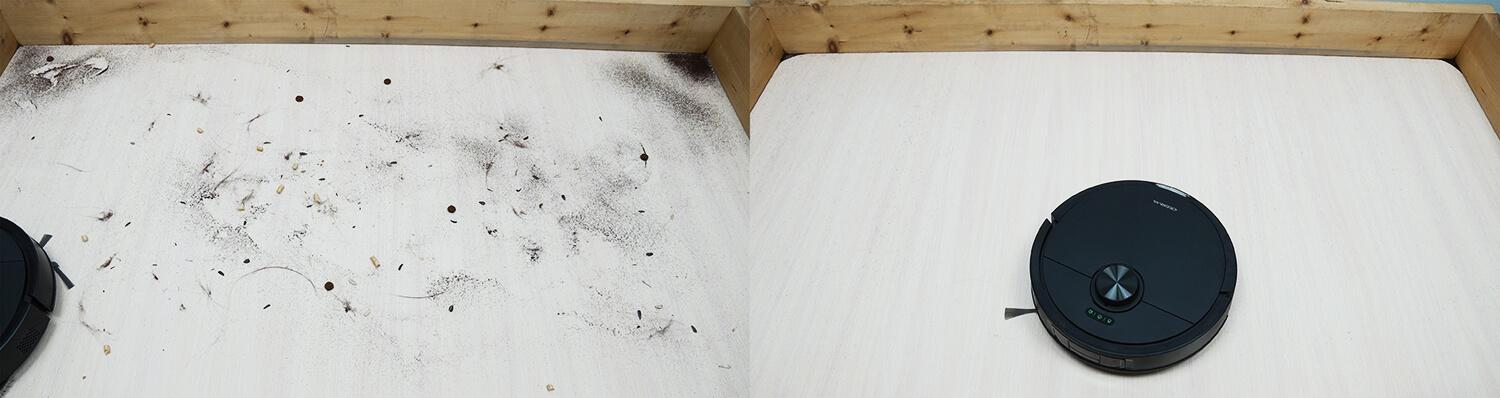
Dry cleaning
Carpet cleaning
The robot cleans low-pile carpets without any problems. On medium-pile carpets, cleaning performance is lower—some debris, such as pet food and sunflower seed shells, remains in the pile and the robot is unable to pick them up. This is likely due to the non-floating central brush unit and the robot's limited power.
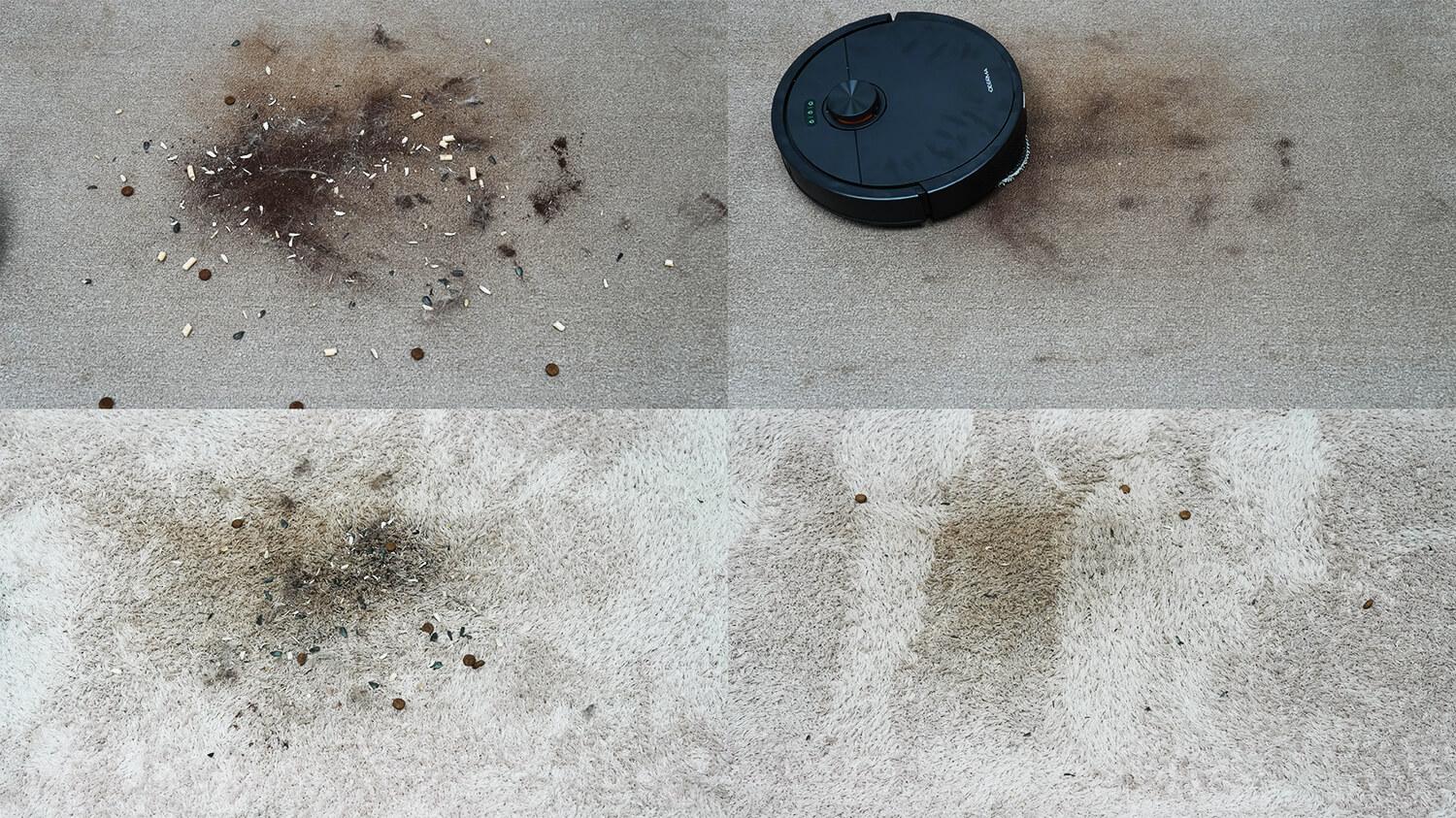
Carpet cleaning
Self-cleaning
Immediately after the "dirty tests," I checked how well the robot vacuum self-cleaned. I returned it to the station and started the self-cleaning routine. The results were good.
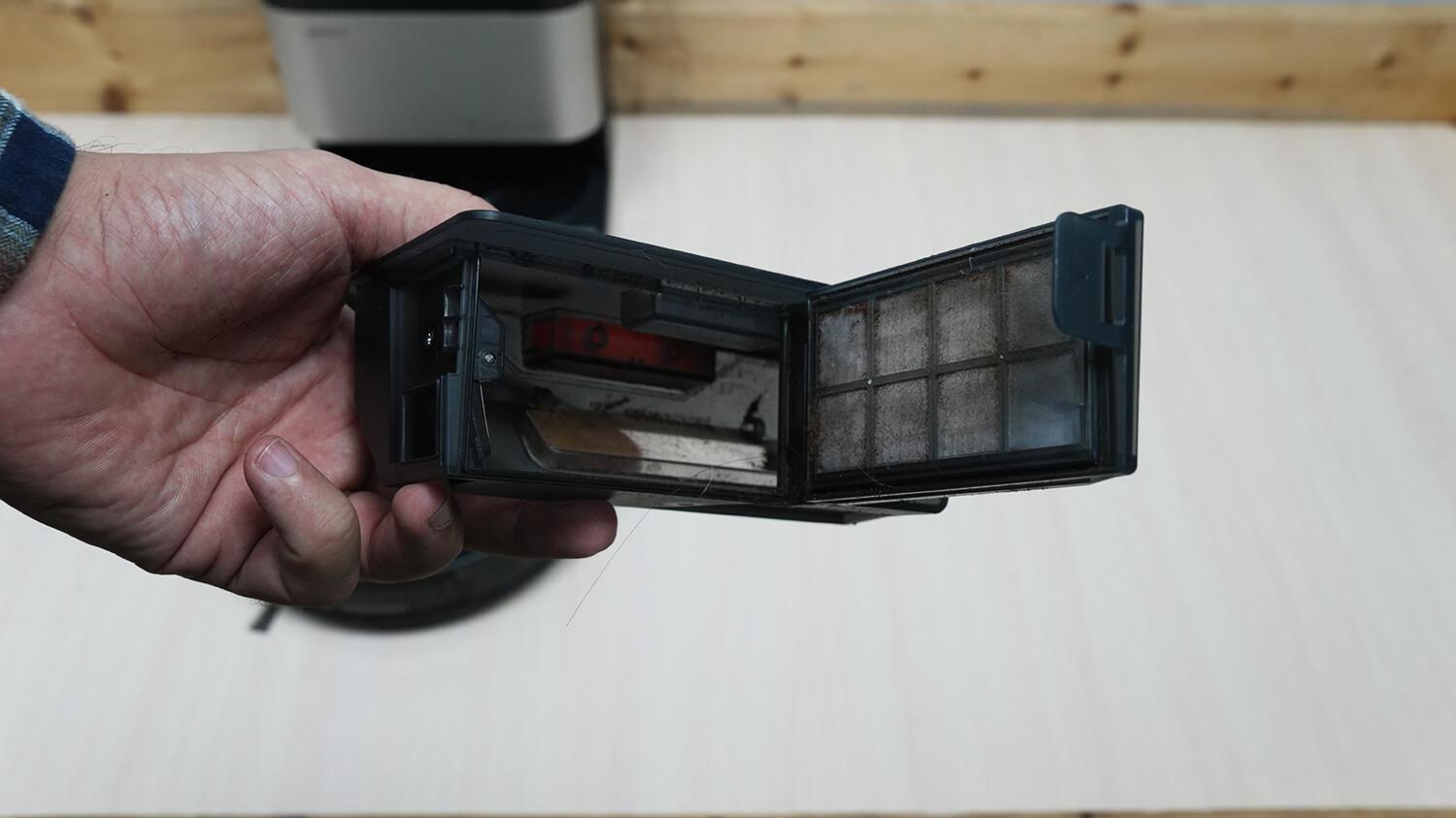
Self-cleaning
Wet cleaning and carpets
When wet cleaning carpets, the robot has two options: bypassing the carpets in wet cleaning mode, or entering the carpets with the mopping pads raised. The latter option allows the robot to vacuum and mop the floor simultaneously, leaving the carpets dry and clean.
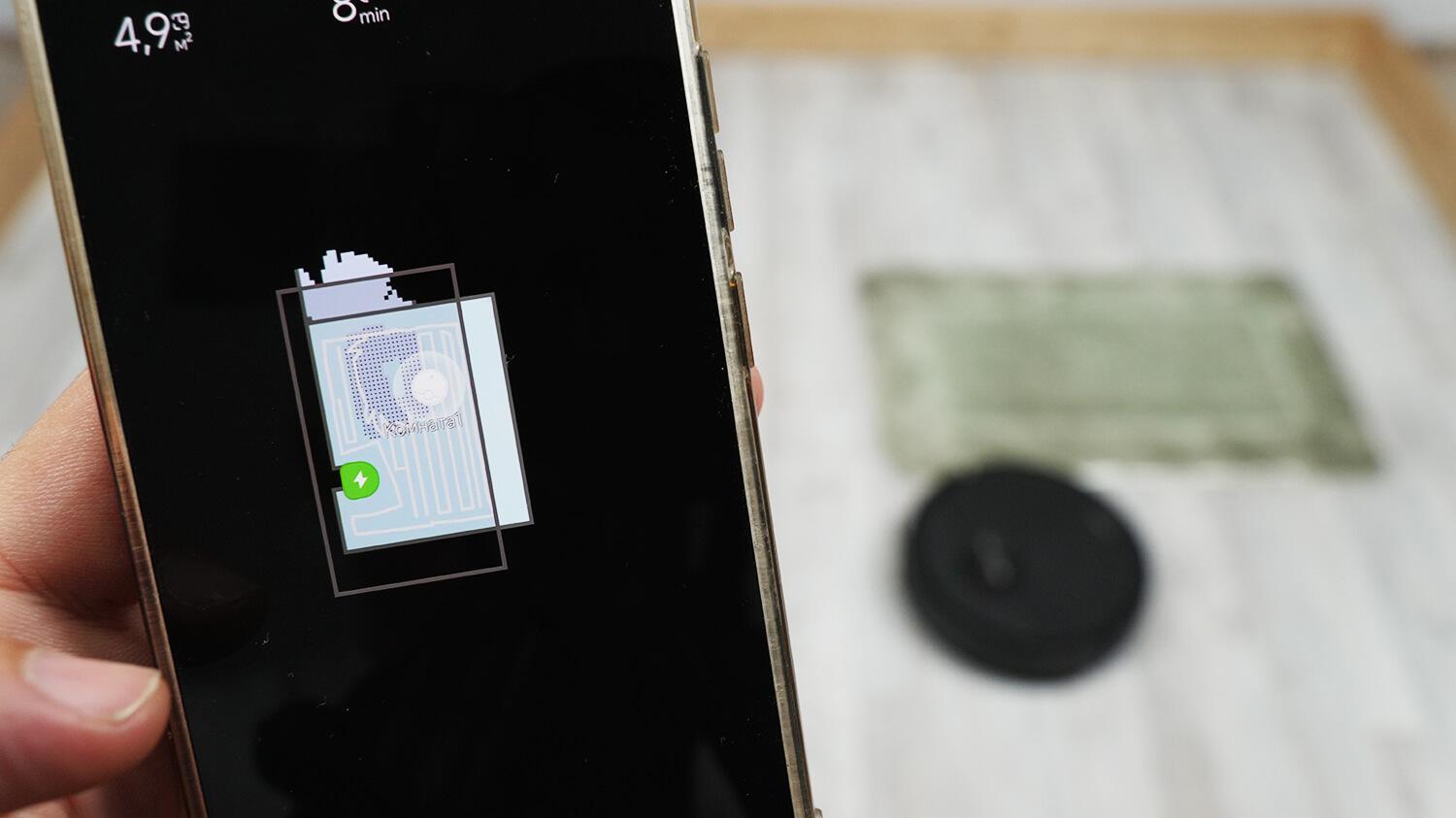
Carpet detour
Wiping off dirt
The dirt removal performance is also excellent. The cloth presses firmly to the floor and absorbs dirt. It also eliminates the narrow area along the baseboard, thanks to the extension of one of the cloths. That's a plus!
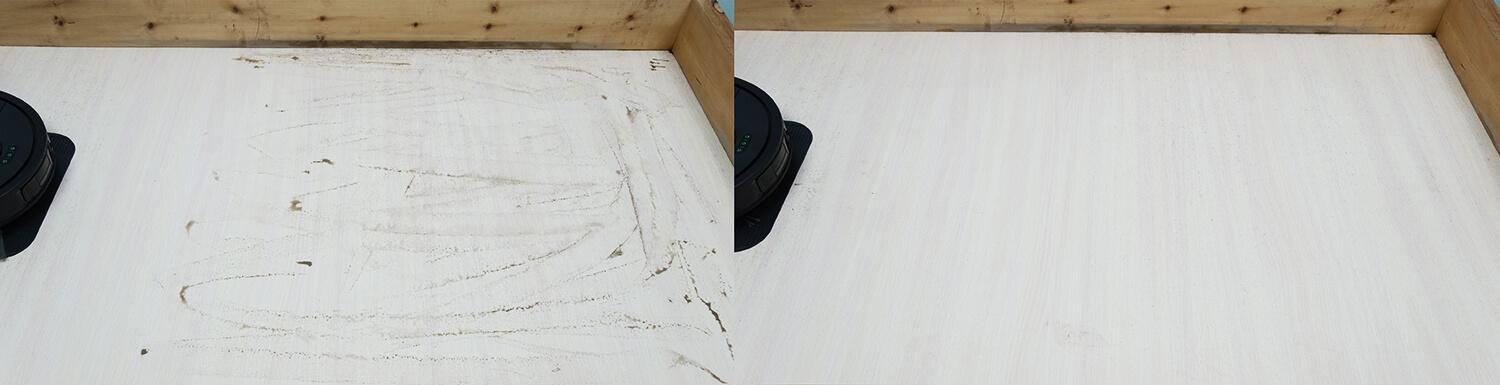
Washing the floor from dirt
Removing stains
When it came to removing tough stains, the robot was able to remove even dried-on coffee and sauce stains. Granted, it didn't do it on the first try. To be precise, most of the stains were removed on the fifth try. On the sixth try, it completed the task completely, which is an excellent result. The Y-shaped motion pattern certainly increased stain removal efficiency. However, we do see some small marks left behind when returning to the cleaning station; likely the floor is being soiled by the turbo brush, which doesn't lift up during cleaning.
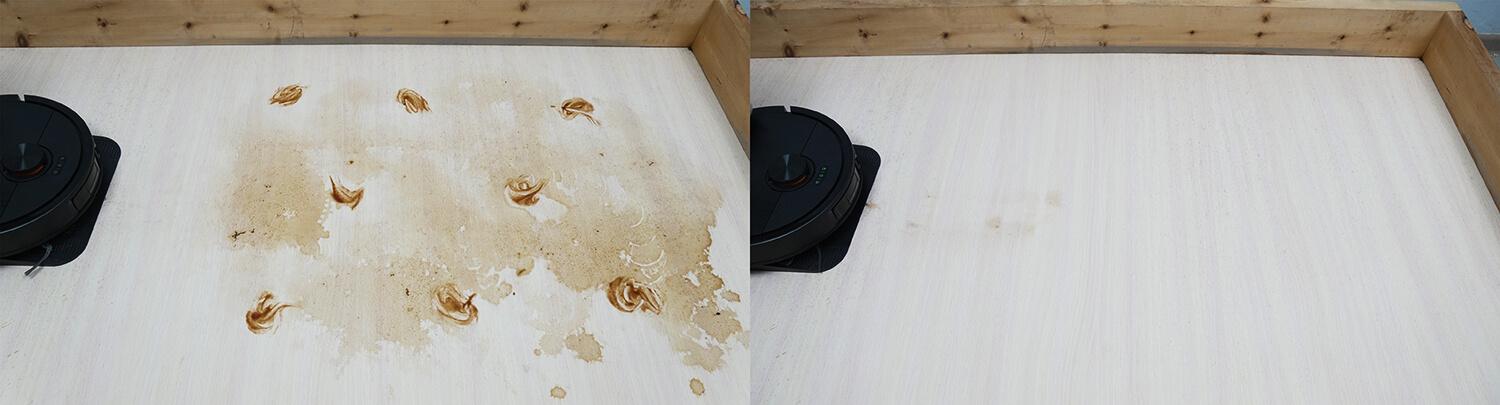
Removing stains
Washing and drying test of napkins
I'd like to immediately talk about the effectiveness of the station itself. Let's start with the cleaning quality of the wipes. Even after extensive testing, the wipes look significantly better after washing at the station. And this is despite the fact that there's no heating of the water. Fortunately, the lack of ridges in the bottom of the station didn't affect the self-cleaning performance. In a domestic environment, after washing the floor, the wipes also rinse well at the station. Dirt isn't washed away by the pressure of warm water. That's a plus.
I decided to check the temperature myself – in my case, the temperature in the water supply area was around 22 degrees. There really was no water heating.
But the drying temperature is high – the sensor showed over 52 degrees and this is a good result!
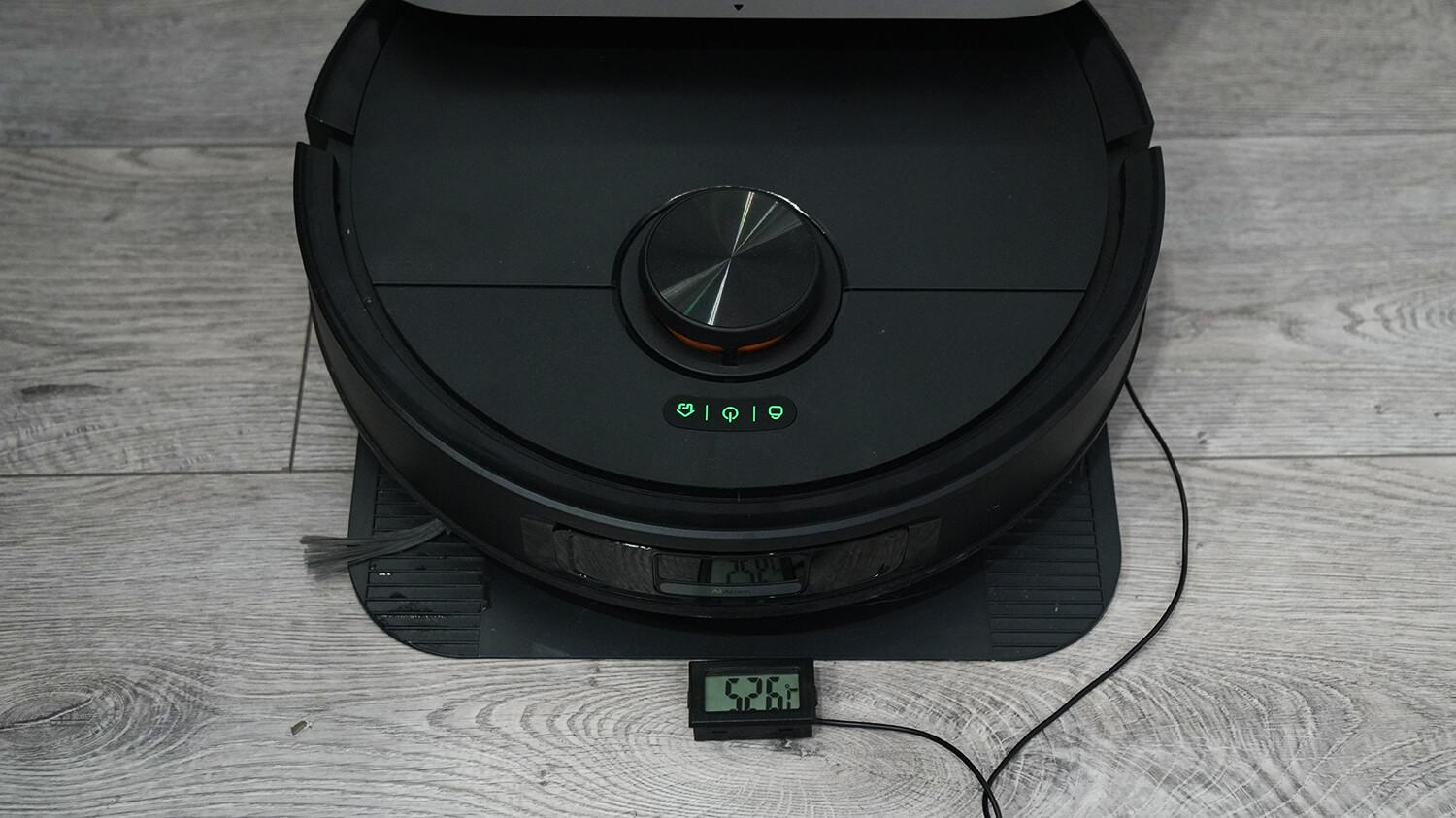
Drying temperature
Station maintenance
A few words about station maintenance. After using the robot for a week in a home environment, we see that the station's bottom isn't actually very dirty. Some debris has accumulated on the coarse filter, which will need to be cleaned manually periodically. Overall, the station's updated design clearly simplifies maintenance without compromising its self-cleaning performance!
Passability
An equally interesting test is the robot's maneuverability. The robot crosses a 2-centimeter threshold without any problem.
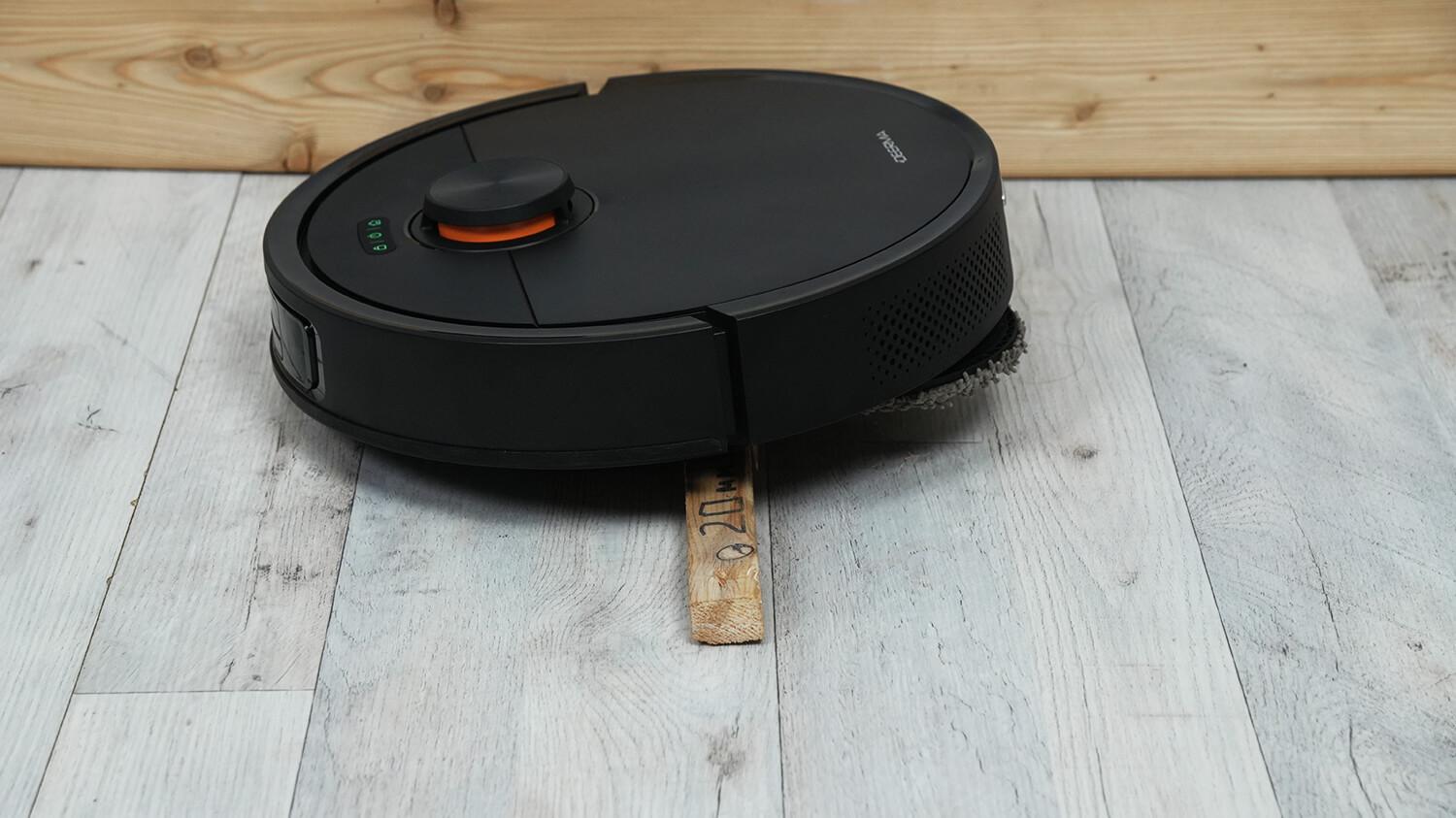
Passability
Driving on black surfaces
Driving over black carpets is no problem. The robot glides over the black carpet as if nothing had happened.
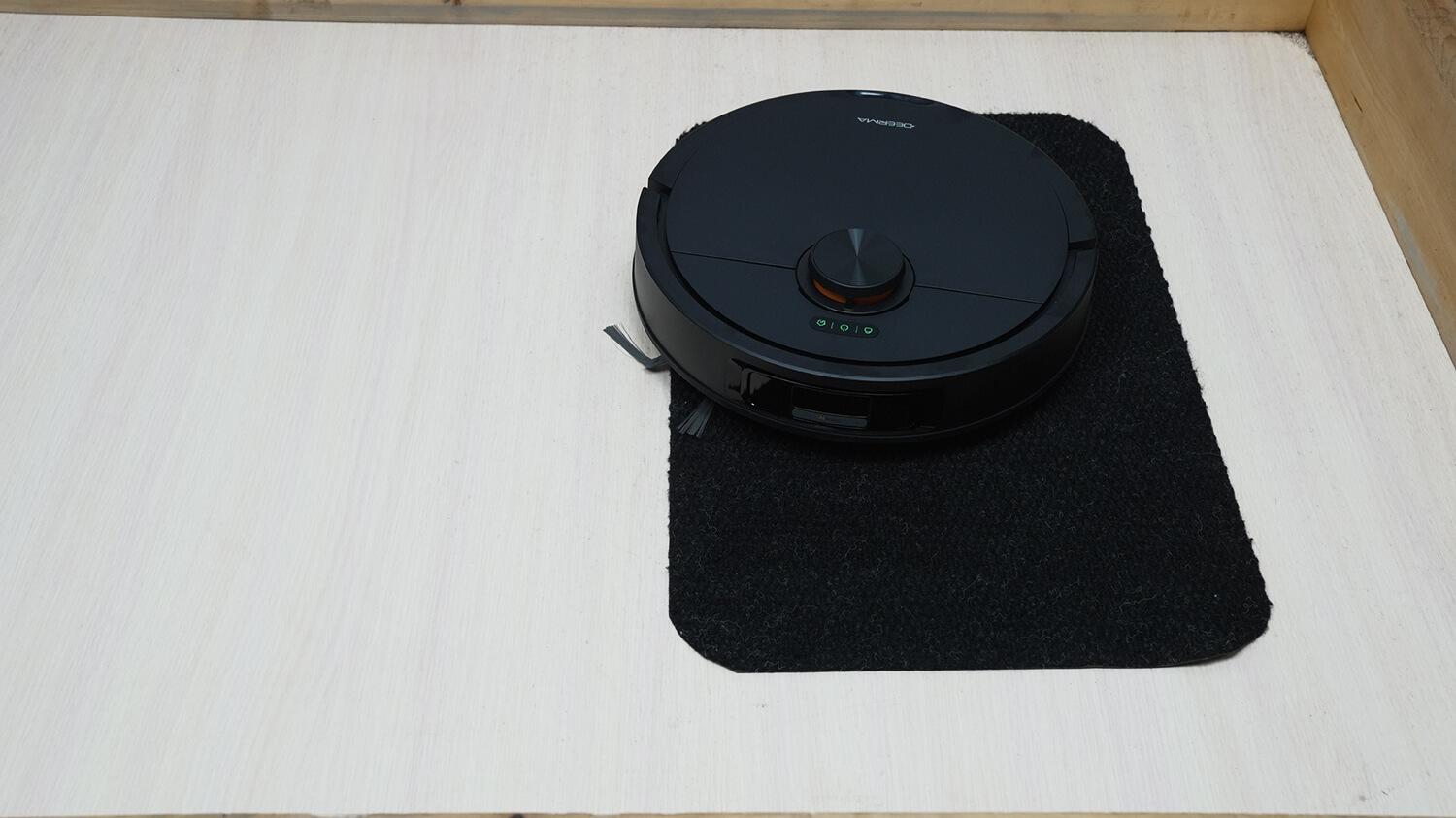
Driving on black surfaces
Noise level
As for the noise level, it ranges from 63.5 to 69 dB, which is standard. The station's noise level during self-cleaning is approximately 82 dB, which is elevated.
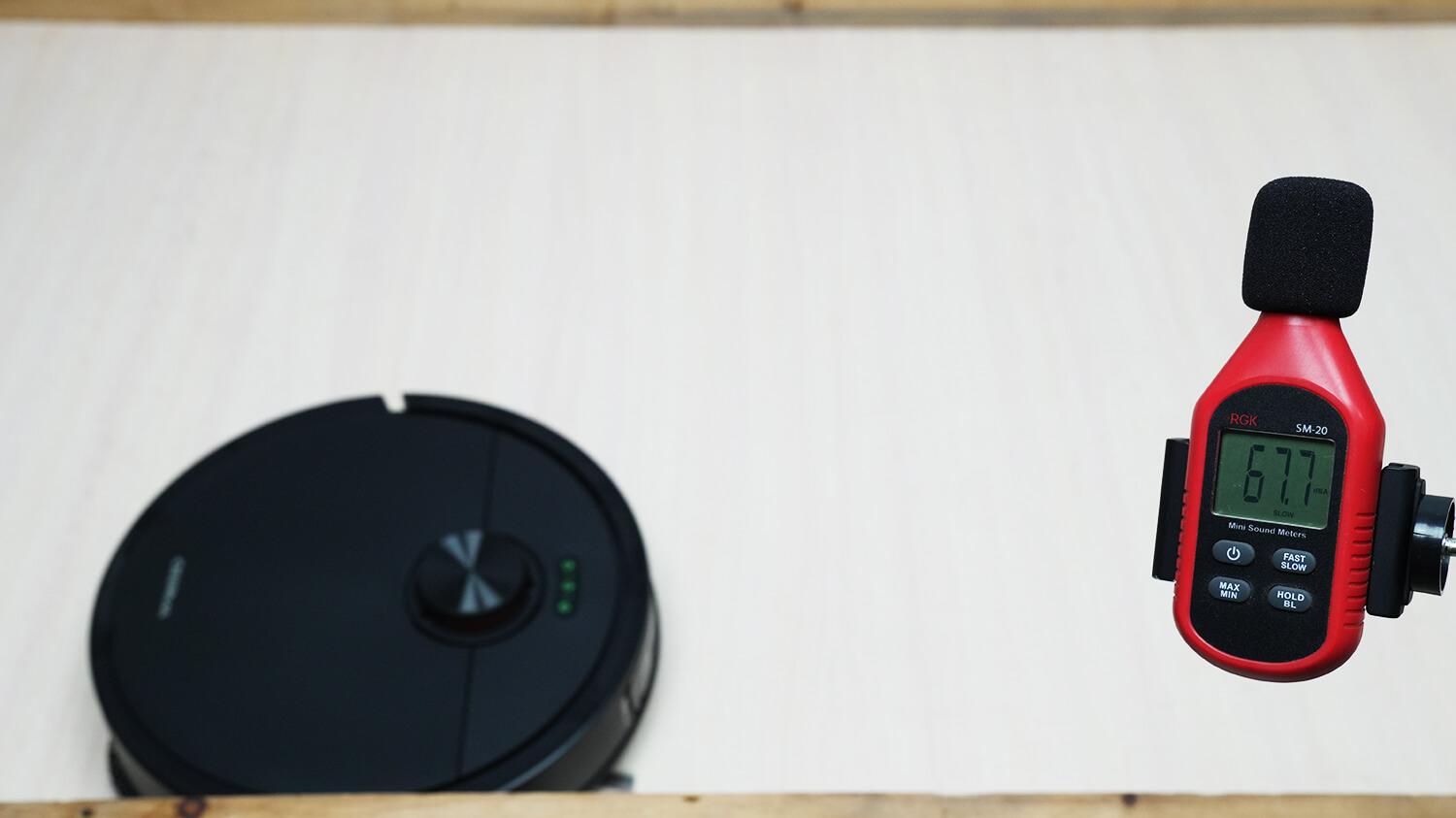
Noise level
Personal opinion
The Deerma DEM-X70 robot vacuum cleaner has been thoroughly reviewed and tested. our evaluation system he managed to gain 158 pointsThe result is not bad for this price segment.
Overall rating of tested robot vacuum cleaners: https://robovac.washerhouse.com/en/rejtingi/robovac-obshhij-rejting-robotov-pylesosov-robo.htmlI'll share my opinion about the robot. I liked the following:
- Optimal price considering the availability of the “All in one” format station.
- Good quality dry cleaning on laminate and carpet.
- The Y-shaped movement pattern during wet cleaning allows the robot to remove difficult stains from floors faster than its competitors.
- High-quality floor cleaning over large areas thanks to the station-based wipe cleaning.
- Move the cloth to the baseboard to thoroughly wash the floor along the walls and furniture.
- Automatic lifting of napkins when driving onto carpets.
- The robot vacuum cleaner moves its back into corners when washing the floor.
- Drying napkins with hot air.
- The flat bottom of the station makes it easier to maintain without compromising the quality of the napkin wash.
- The app's functionality allows you to flexibly customize cleaning parameters and sync the robot with your Xiaomi smart home system.
- Support for smart speakers Yandex Alice, Xiaomi, Google Home and Alexa.
- Full Russification of the robot, application, and documentation.
- Not afraid of black carpets.
- Availability of warranty and service.
As for the shortcomings, here are some comments about the robot:
- The claimed suction power was not confirmed in real-world tests.
- The battery drains quickly at maximum power, resulting in poor robot autonomy.
- The robot doesn't have a water tank. Wipes are only moistened at the station.
- There is no heating of water when washing napkins.
- The station cannot be connected to the sewerage and water supply.
- Simplified assembly: no wall sensor, non-floating central brush unit, lidar without spring-loaded cover. And the robot doesn't have an object detection system on the bumper.
- Doesn't sweep out debris in the corners.
- There are problems with cleaning medium pile carpets.
- Increased noise level of the station during operation.
Ultimately, for a price under $400, I think most of the criticisms are forgivable. Based on my test results, I would recommend the Deerma DEM-X70 for dry and wet cleaning, primarily on hard floors and low-pile carpets. It cleans large areas efficiently, is easy to operate, and is self-contained thanks to the station. So, if these criticisms are minor, I see no particular reason not to recommend this device.
On that note, I'd like to end this review. If you have any questions, please ask them in the comments. Happy shopping, everyone. Bye!