iRobot Roomba i7+ After a Year of Use: An Honest Review
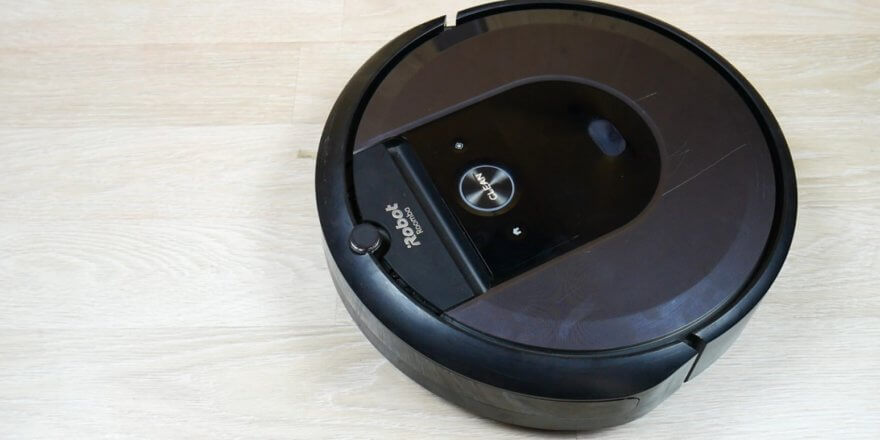
Greetings to all readers of the site robovac.washerhouse.com! As promised, I've prepared a review of my own robot vacuum cleaner. iRobot Roomba i7+ After a year of active use. This robot works in my house almost daily, keeping the flooring near-perfectly clean. This review will consist of three parts. First, I'll tell you how the robot's appearance has changed over the past year. Then, I'll describe all the positives and negatives of its use. Finally, I'll spend a little time on the numbers, calculating the cost of maintaining this robot and the general cost of cleaning with a robot vacuum. So, let's get started!
Appearance and condition of brushes
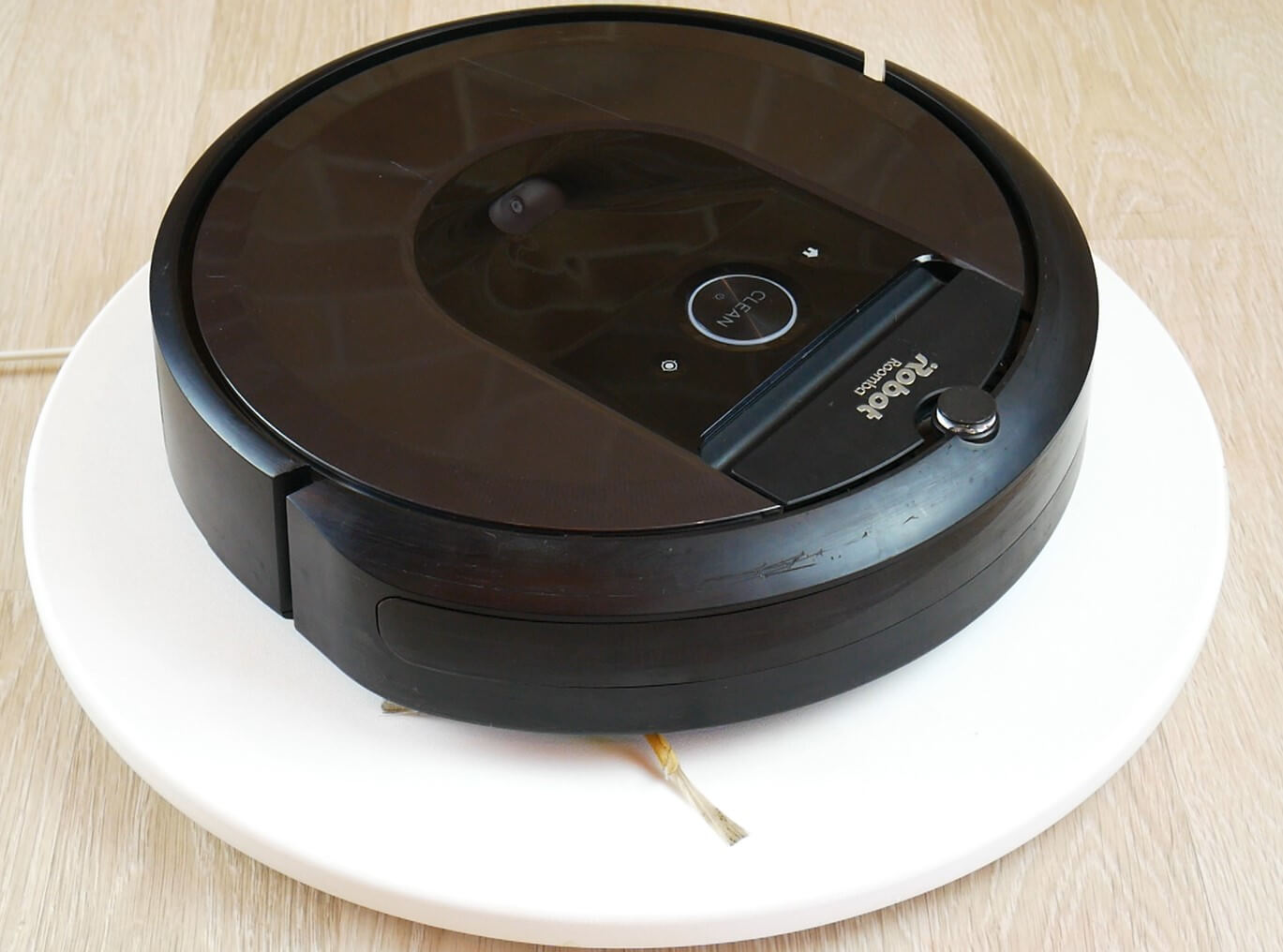
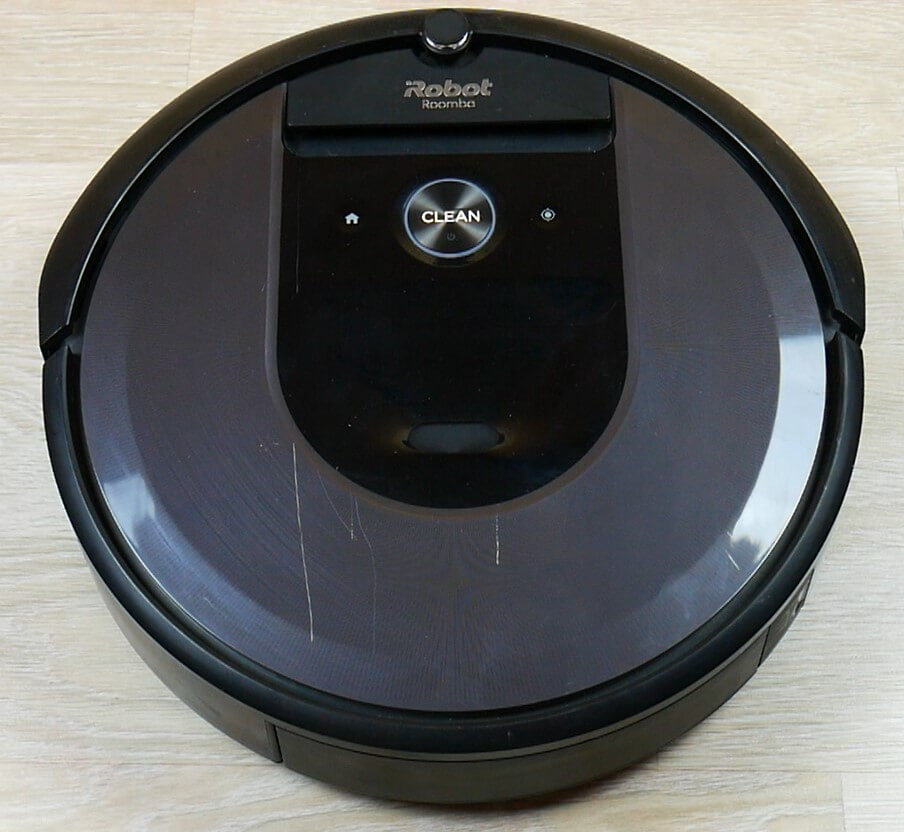
Let's take a look at the robot from above. The bumper with the mechanical touch and the top cover suffered the most damage. The bumper is in fair condition; there are a few deep scratches, but they are barely noticeable on the matte black plastic. However, the glossy top cover was noticeably scratched when the robot passed under furniture. The scratches are deep and noticeably mar the robot's appearance. This immediately suggests that the anti-jamming system isn't very well designed.
Side view
Top view
Now I'll show you what the iRobot Roomba i7+ looks like from underneath. It's worth noting that I haven't replaced either the brushes or rollers in a year. Here's their actual condition.
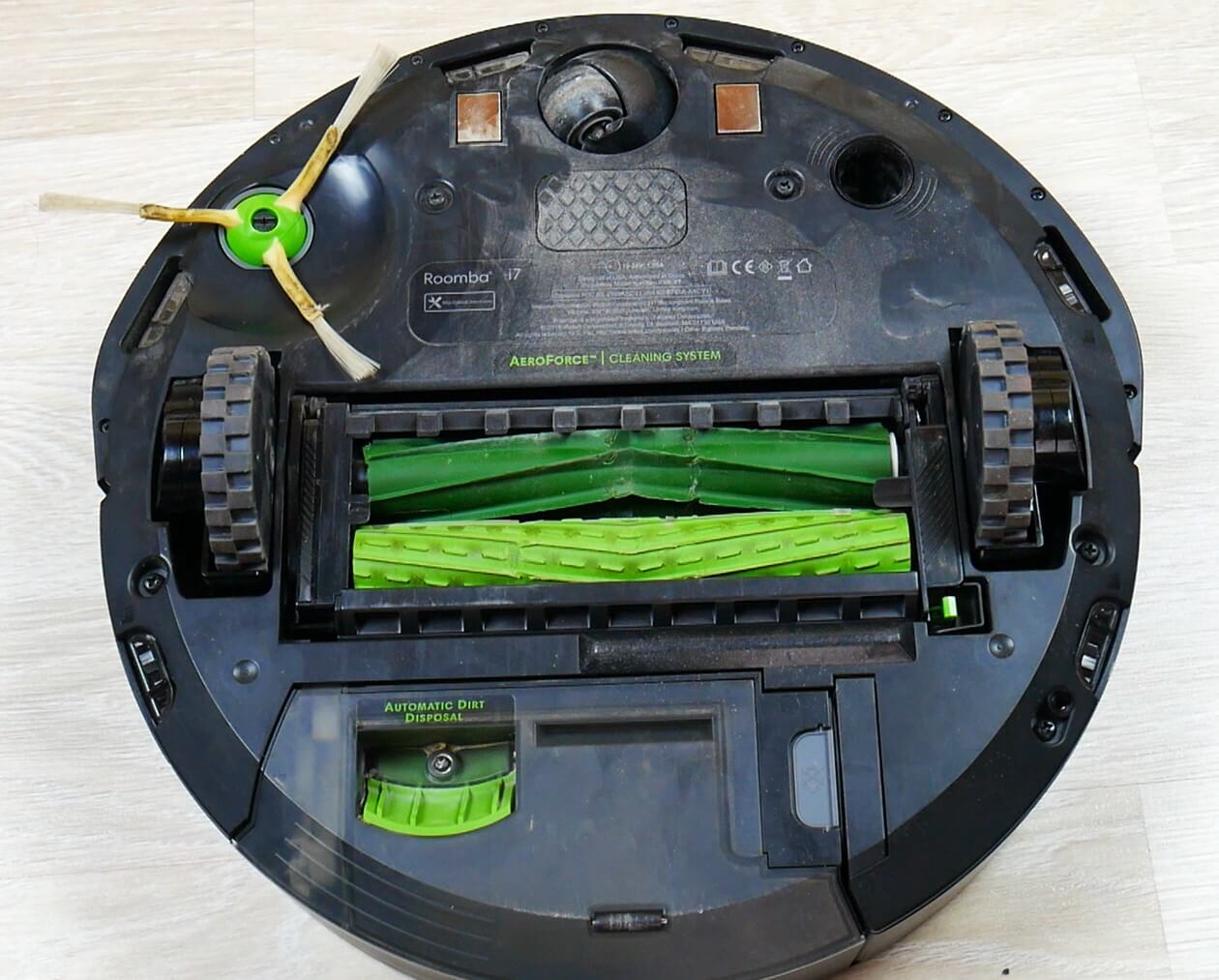
Condition of brushes after a year
Now I'll show you what the new side brush looks like, which I still have as a spare from the kit. And I'll also give the robot a neater look.
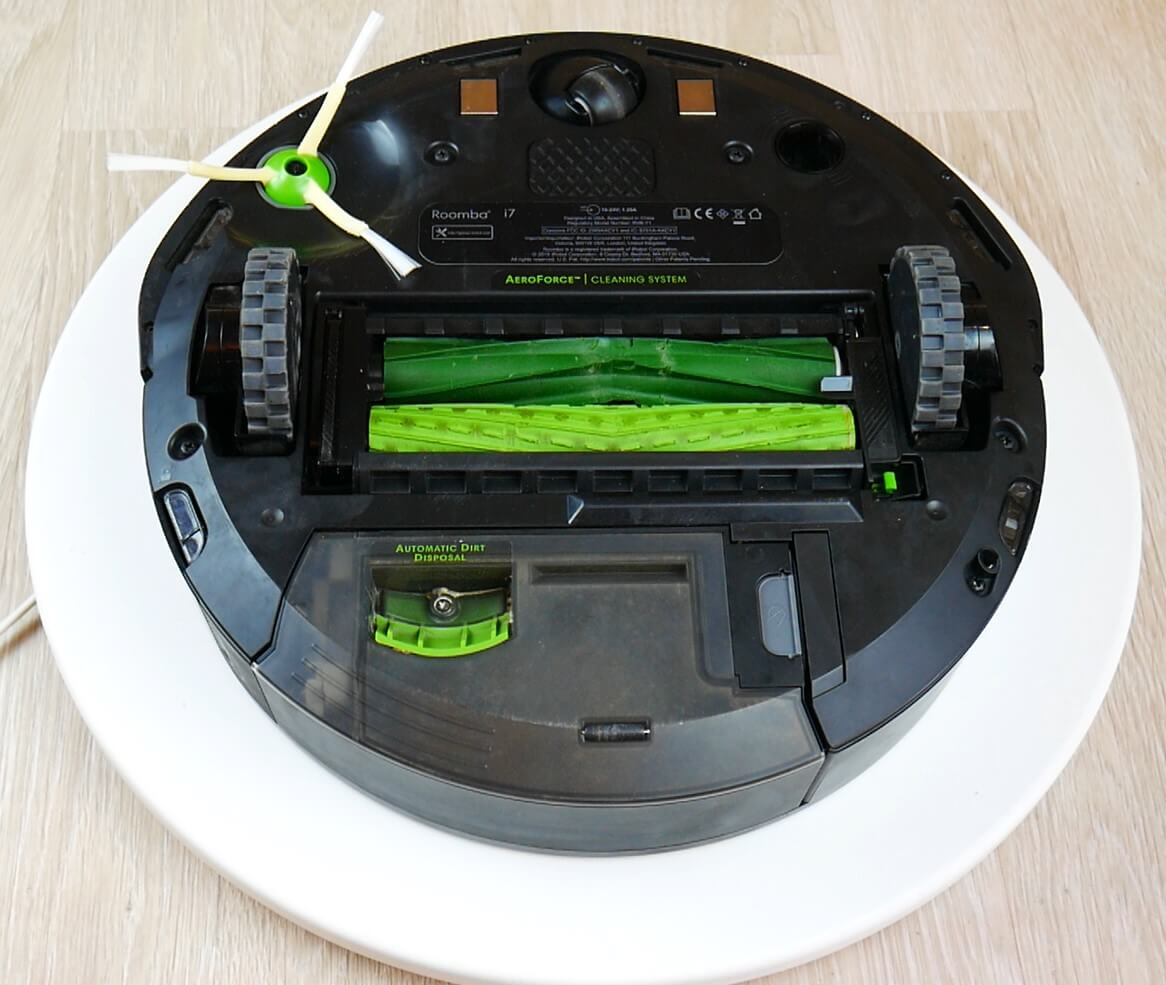
Bottom view
You can see that the silicone rollers are already worn out, and ideally they need to be replaced, which I'll do soon. The manufacturer recommends replacing the rollers after 6-12 months of use, which is exactly what I'm looking for.
Cuts on the rollers are caused by hair that gets tangled and pulled around the rollers during cleaning. As a result, the hair ends up getting cut. It's worth noting that the manufacturer didn't include a roller cleaning knife, so cleaning them manually isn't very convenient. That's about it for the downsides.
Overall, assessing the condition of the robot itself and its accessories after a year, I'm satisfied. Nothing has broken; there are some defects, but they're obvious, as the robot is turned on at least twice a week, sometimes more often. There haven't been any other issues during the year of use. Everything works like clockwork.
The self-cleaning base, or rather the platform itself, was also scratched, but not critically.
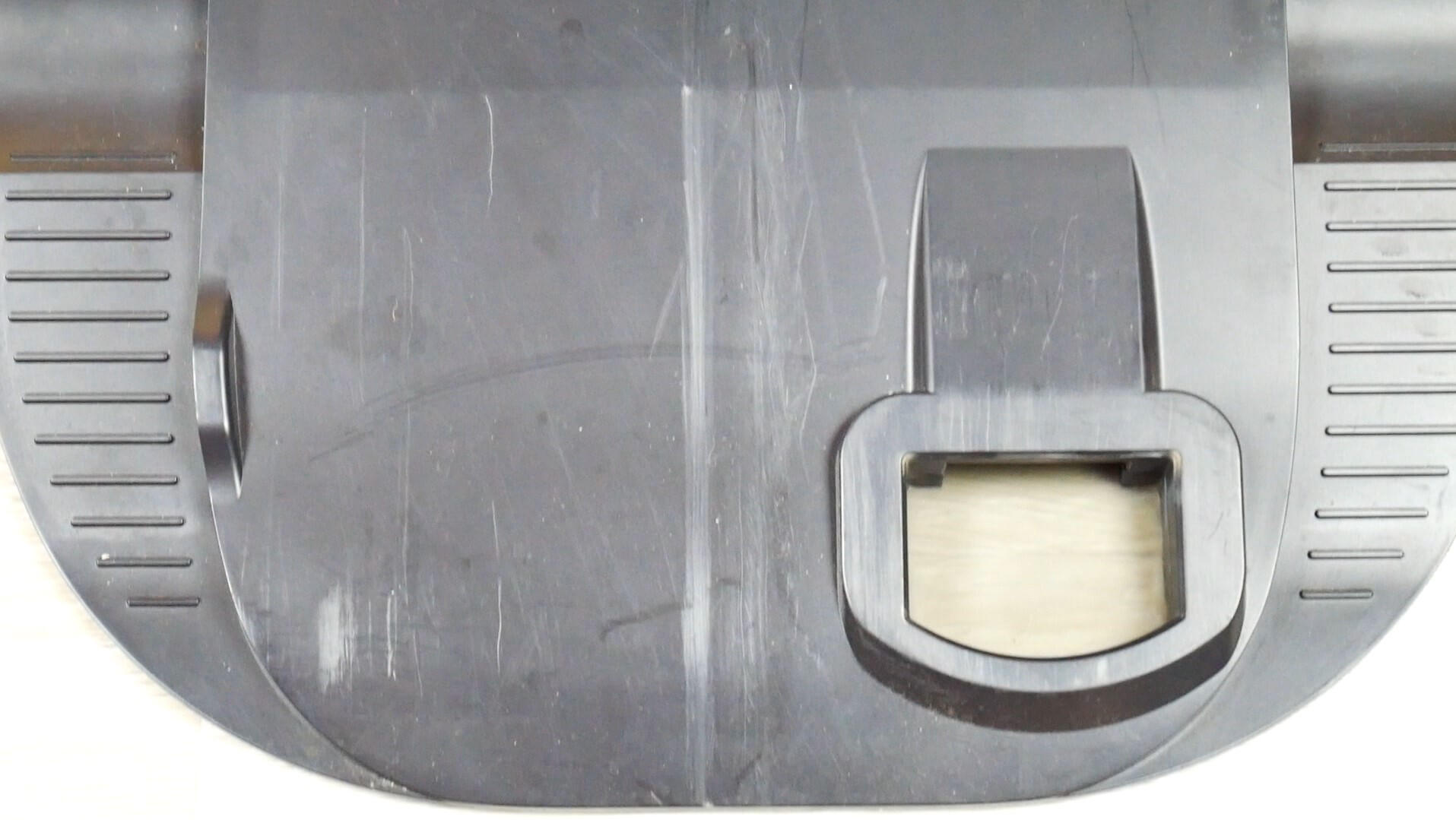
Base status
All real customer reviews of the iRobot Roomba i7+ are collected on a separate page. We recommend checking them out: .
The cleaning process
Now I'll share my observations from a year of using this robot. Firstly, the cleaning quality is very high, especially on carpets, and I have two of them, one in the bedroom and one in the living room. The carpets are fluffy, too. The robot vacuums them perfectly, literally brushing out hair and fur. A solid A+ here.
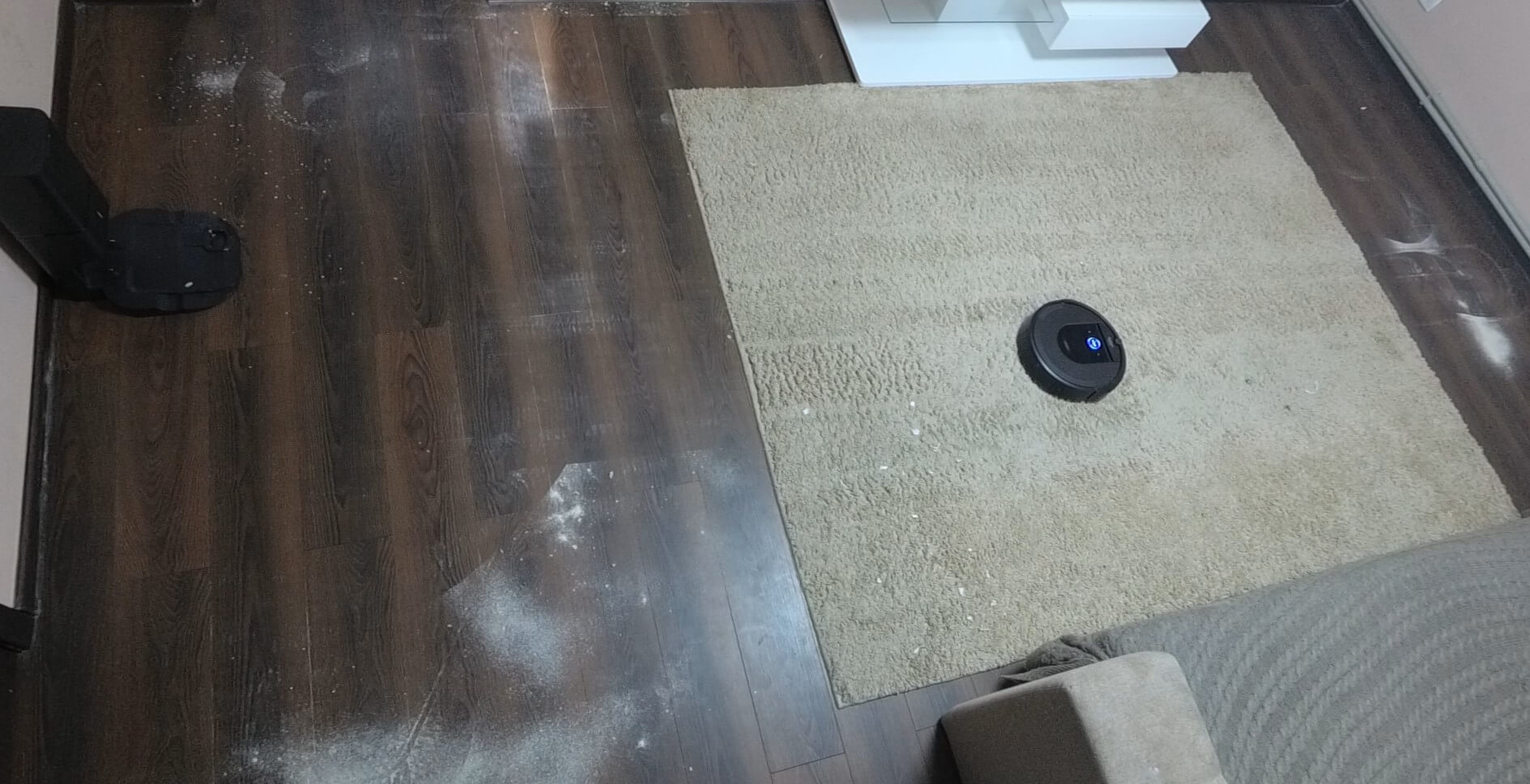
The cleaning process
Navigation is generally good, and the robot doesn't miss any areas, but there's a small caveat regarding cleaning in a selected room. While the robot can make two passes in full-area cleaning mode, in confined spaces it only goes through the room once, focusing more on speed. As a result, if the room was heavily soiled, it will only clean about 60-70% of the area, and then need to be restarted. It would be better if you could choose to clean a single room or at least a selected area in two passes, as some competitors do.
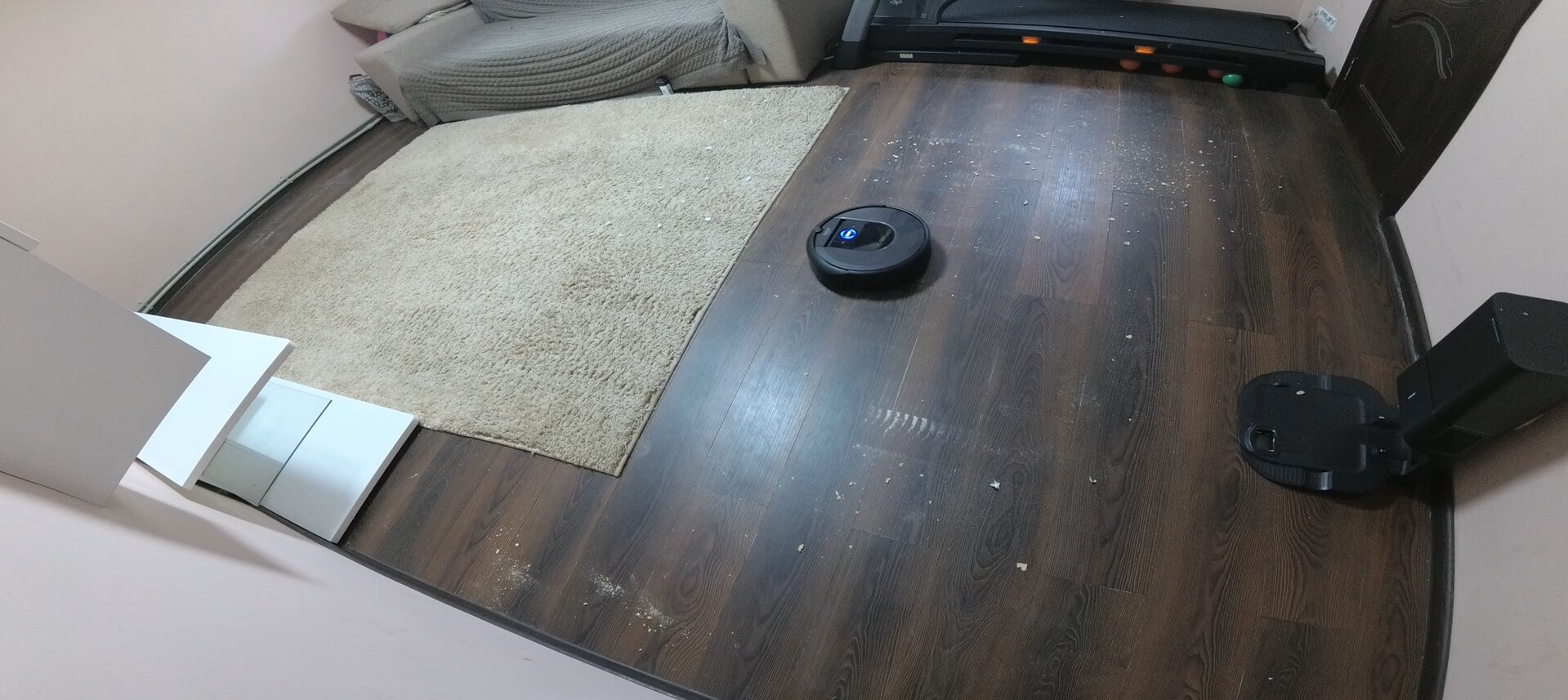
Cleaning of the selected room
The second negative is that the robot can get stuck when running into obstacles, like the feet of a dryer, which is exactly what I use. Here's an example from a comparison test of this robot vacuum cleaner with others:
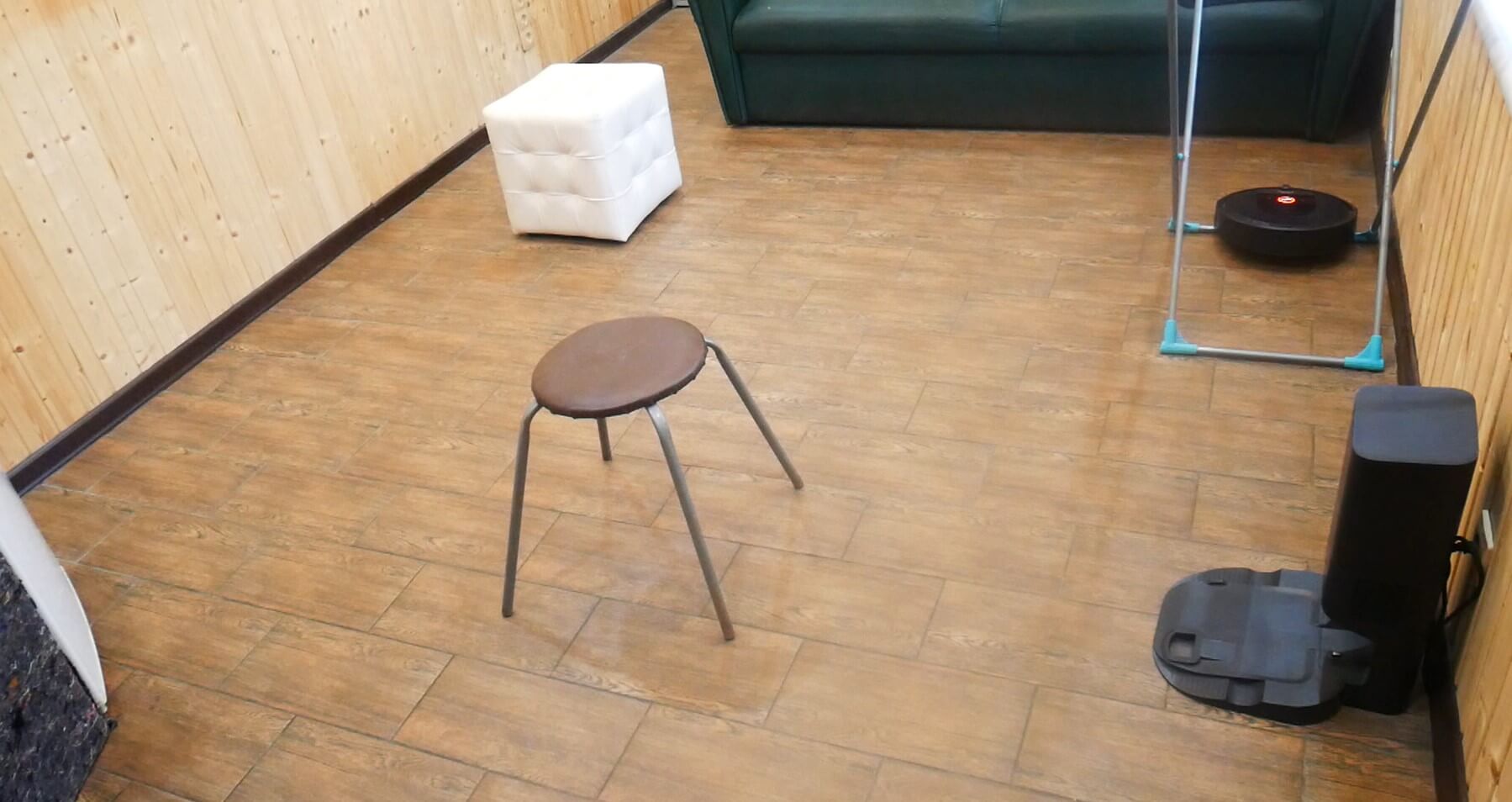
The robot vacuum cleaner is stuck
You see that the robot is stuck and without manual intervention, nothing will happen; it will go into error mode. We have to set a no-go zone in this area.
Moreover, the robot will almost instantly lock up if there are socks, a charger cord, or, for example, the end of a Christmas tree light on the floor. In this battle, the tree is sure to fall. So, the iRobot Roomba i7+ teaches discipline and order almost from the first day of use.
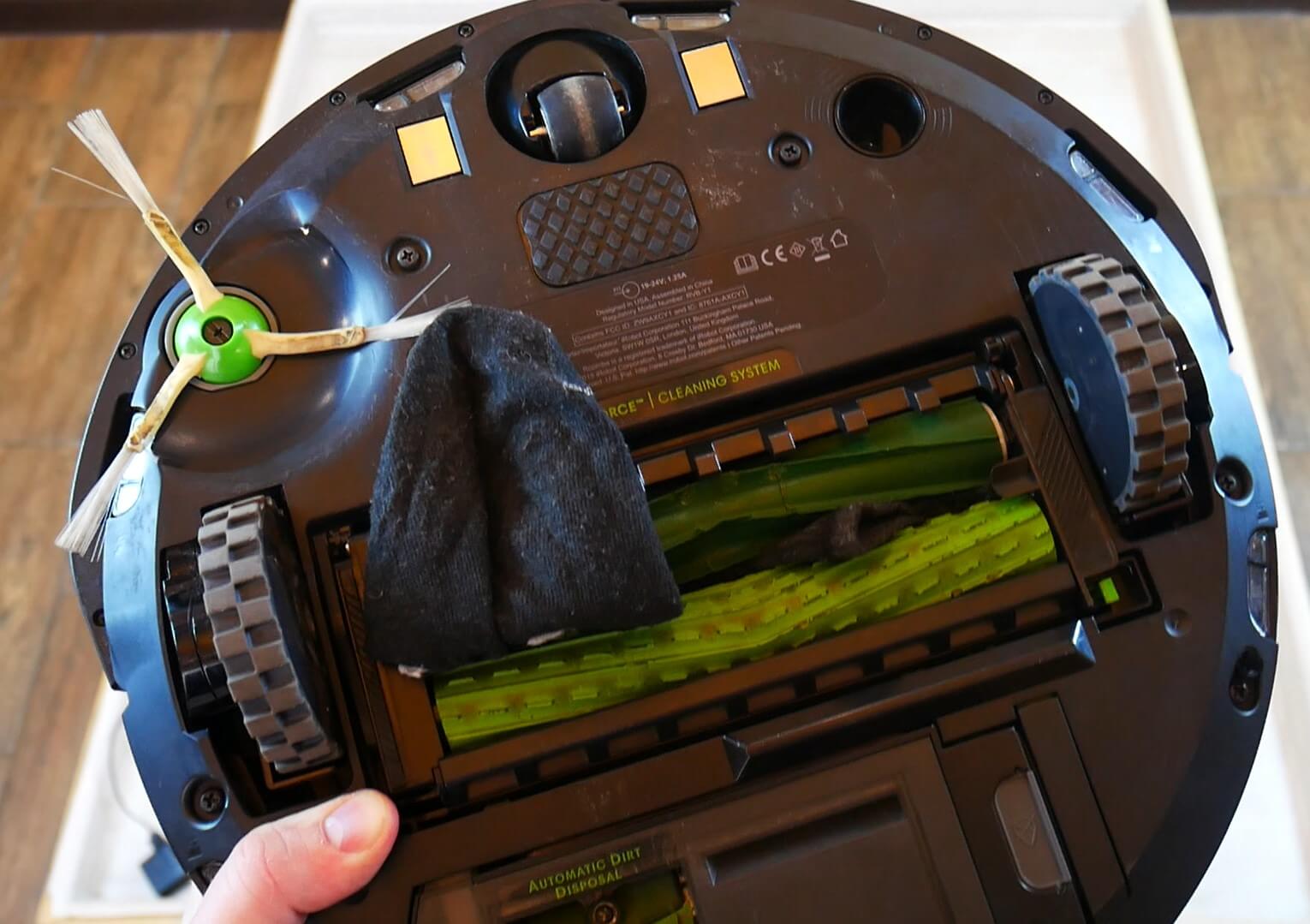
Blocked rollers
This cannot be called a disadvantage, but when you launch a robot with an active camera to recognize objects, for example, Roborock S6 MaxV, the difference in ease of use is noticeable.
It's also important to note that this model's battery is rather weak. Its capacity is 1800 mAh, so the robot can only operate autonomously for 75 minutes at most. This is sufficient for my home, but if the area to be cleaned is 100 square meters or more, it's unlikely the Roomba i7+ will be able to clean all the rooms in one cycle in two passes.
These are all the negative aspects that have accumulated over a year of operation. On the positive side, darkness doesn't affect this robot's navigation at all. Once it has mapped the room, you can safely turn off the lights in all rooms, and it will clean the entire accessible area, even at night.
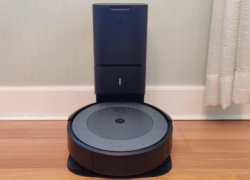
I loved how the self-cleaning base empties the dust bin. It literally sucks the life out of this robot, leaving no fur, hair, or even any large objects that the robot vacuum could pick up.
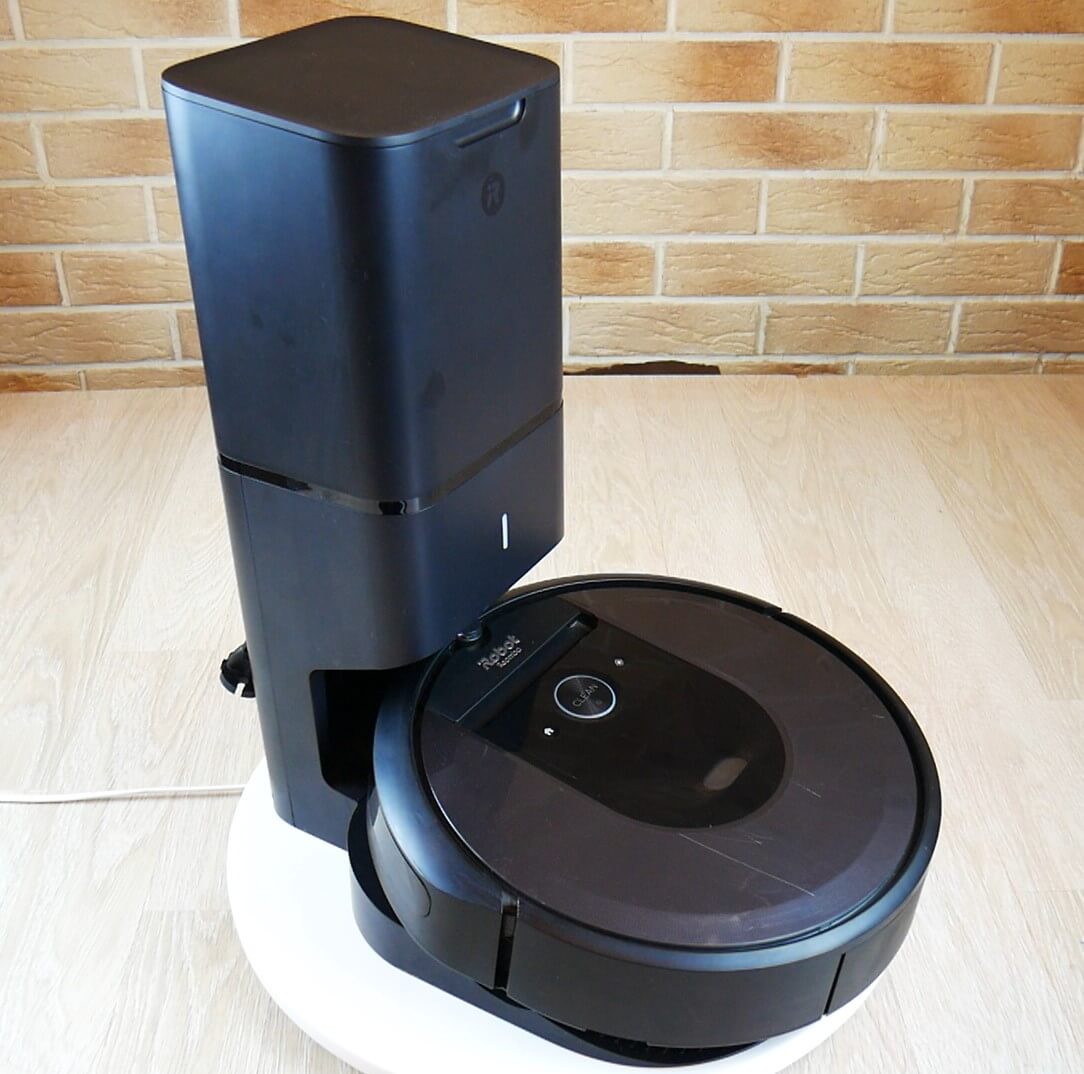
Robot on the base
Another positive is the app's performance. While it's far from the most functional of any I've used for a long time, over the past year there haven't been any fatal errors, resets to settings, or map errors. Everything works reliably. Restricted areas work correctly, and the cleaning schedule also works. No complaints.
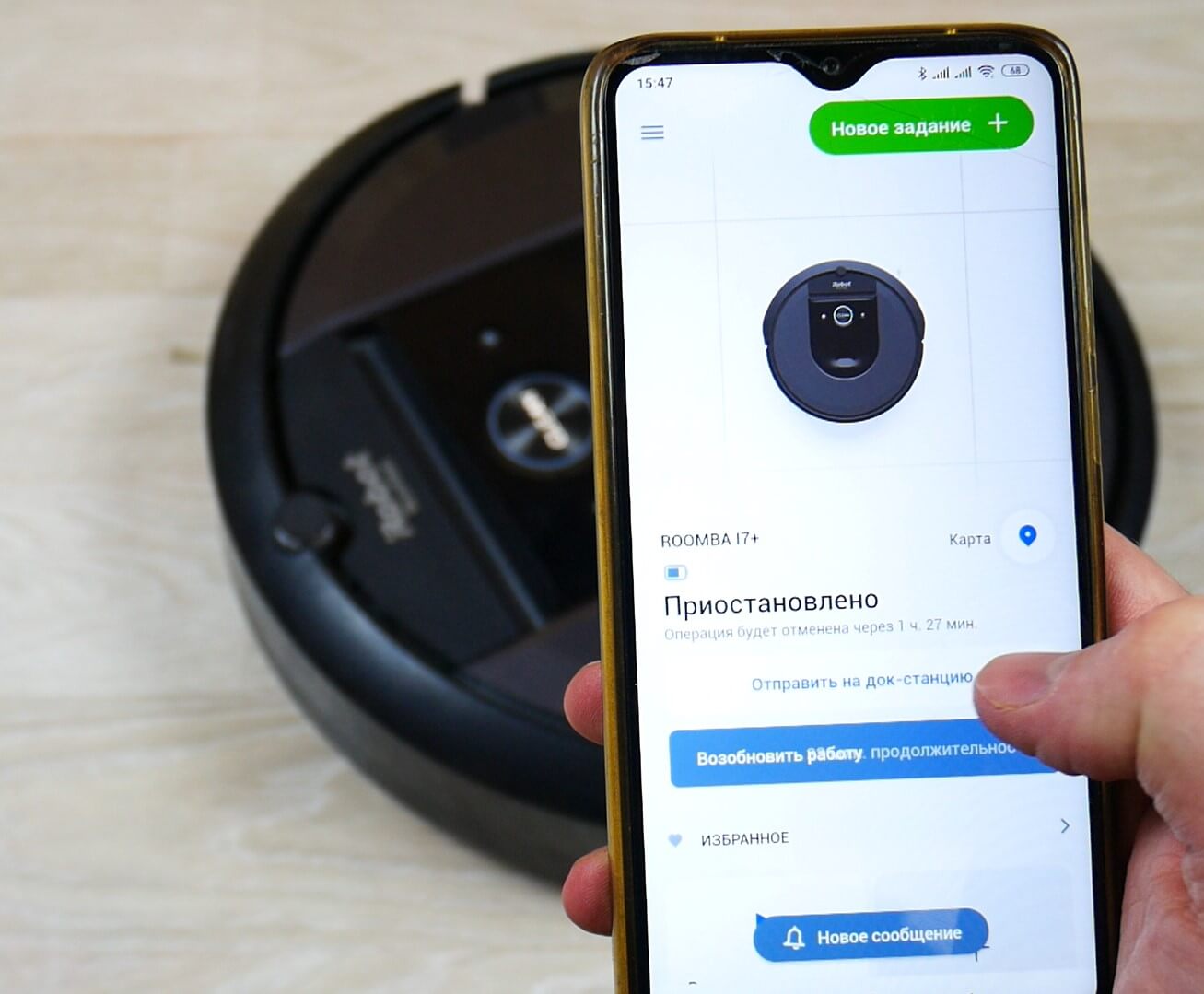
iRobot Home App
A bit of calculations
Well, in conclusion, I’ll tell you a few more useful facts about this robot vacuum cleaner; I even managed to calculate some of them.
First, I'll show you the app's statistics. In just over a year of use, the robot vacuum cleaner has cleaned 2,071 square meters of space.


Cleaning statistics
In my case, the effective cleaning area was about 34 square meters, meaning 60 full cleanings were performed. That's a little more than once a week. In reality, I turned it on more often, so there's some statistical error there. Here's proof: the robot was launched 196 times, which means it was turned on almost every day. But there were also various tests. comparisons, which affected the number of activations. I believe there were about 120 actual activations per year. The self-cleaning base was activated 445 times. For your reference, after cleaning, the base activates twice in a row to ensure the dust bin is completely emptied.
After that, I decided to measure my robot's energy consumption. Over almost 10 days of operation—230 hours, to be precise—with daily use, the robot consumed only 0.59 kW.
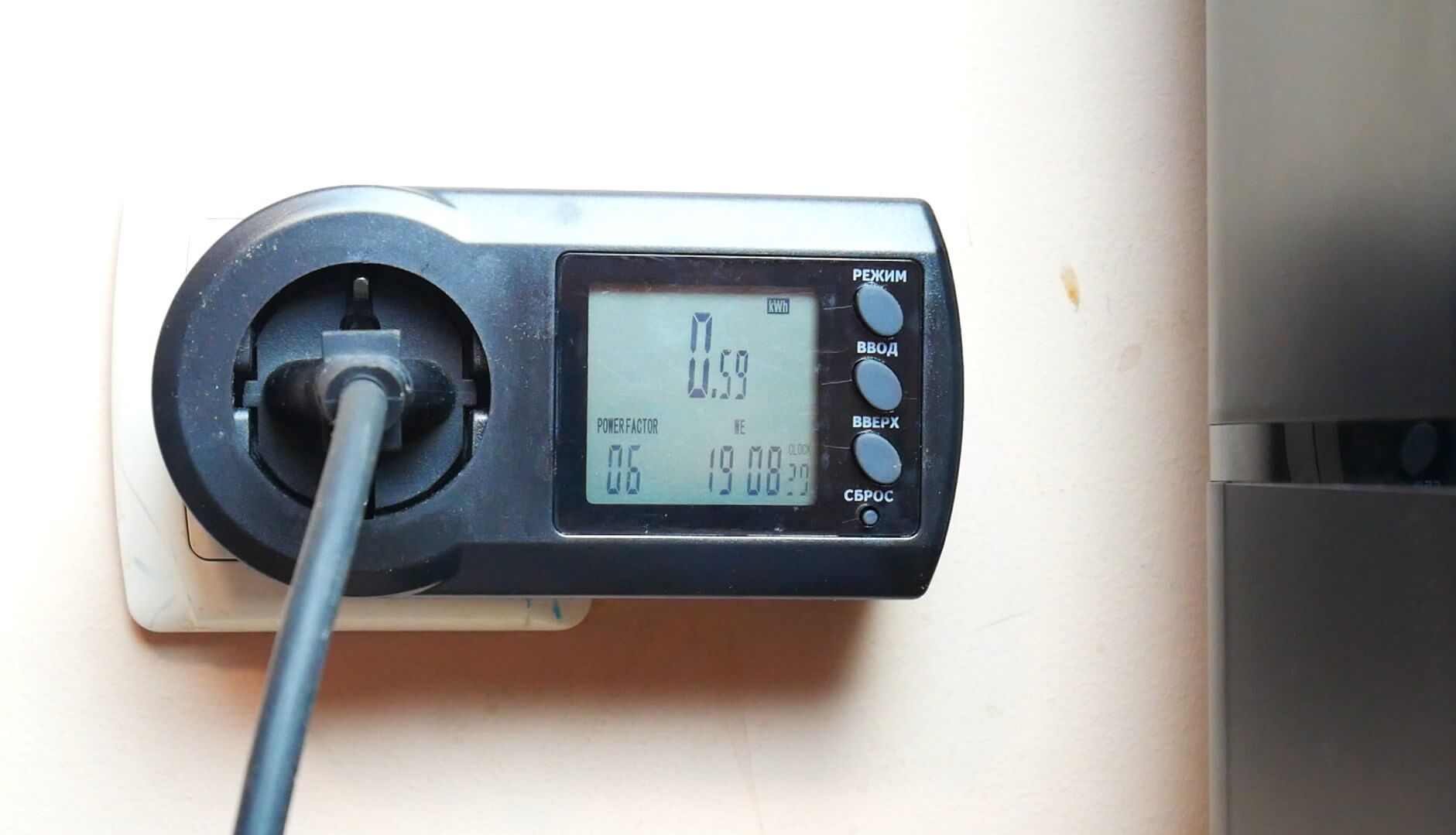
Energy consumption of a robot vacuum cleaner
It's safe to assume it will use no more than 2 kW per month when turned on daily, and 20-30% less when turned on every three days. Keep in mind that the self-cleaning base is quite powerful, and when self-cleaning is activated, it begins consuming electricity. But let's take the maximum: 2 kW per month equals 24 kW per year. Keep this value in mind.
So, for 120 cleanings, the robot uses 24 kW. Single-tariff metering using the single-rate tariff for Moscow and the surrounding region at the time of writing is $0.0566. I'm using this as an example. In my region, 1 kW costs $0.0109, which is five times cheaper. So, for a rough estimate, the robot vacuum cleaner used $1.36 per year, using the Moscow tariff. And that's for 120 cleanings, mind you. Maintenance costs for the robot must also be included. You can see that in my case, using it this way is still tolerable, but even if I follow the manufacturer's recommendations, the result is:
- We change the side brush at least once a year, it costs $3.
- We change the HEPA filter every two months; it costs $4, making it $24 total. But I'd recommend blowing it out and changing it safely every six months; it's half the price.
- We change the scraper rollers once a year; they cost $16 as a set.
- I don't see any point in replacing the front wheel, even though the manufacturer recommends doing it once a year and it costs $10. I'm not taking that into account.
- The base bags hold up to 30 times the dust bin's capacity. I've replaced three bags in a year. They cost $7 each on the website, which is $21.
Total robot maintenance costs were $64 plus electricity costs of $1.36. Total annual costs were $65.36. Per cycle, that's almost $0.55 per cleaning session. On the one hand, that might be a bit pricey.
But you can save a lot by ordering consumables on AliExpress. Currently, there's an offer for $8.54 for a set containing two roller scrapers, three side brushes, three HEPA filters, and a dust bin cleaning brush. You can also purchase six base bags separately for $8.62. So, instead of paying $6,400, you'll pay $1,716, bringing your total cost to just $18.52, which translates to just $0.15 per cleaning. Now that's much more interesting.
If you're interested, I'll order a set of consumables from AliExpress and compare them with the originals. Let me know what you think in the comments. The reviews are mostly positive.
On this note, I'd like to conclude my review of the iRobot Roomba i7+. I'd be very interested to hear your thoughts on what was missing and how you feel about writing such detailed reviews after using the robots.
Finally, I recommend watching the video version of the review; it will help you get an even better idea of the robot's condition after a year of use:
How well does it remove sand?
Above average. There are more powerful robots, but this one is also more powerful.