Robot Vacuum Cleaner Test 2020: Comparing Roborock, iClebo, iRobot, Okami, and Xbot

Greetings to all readers of the site! In this publication, we finally tested the best robot vacuum cleaners of 2020 from various companies. The comparison included flagships such as Roborock S6 MaxV, iClebo O5, Okami U100 Laser, iRobot Roomba i7+ and new product Xbot L7 ProA special thank you to the companies for agreeing to an honest comparison and providing their most advanced robots for testing. Now we'll determine which robot performs best across various criteria, comparing cleaning performance, design, and other equally important parameters. So, let's get started.
Video version of the test
I recommend watching the robot vacuum cleaner test video we prepared right away. We've also provided the same information in written form below:
Comparison criteria
Appearance and design
To begin, let's review the robots' key design features and compare them to competitors. You can learn more about each model in our separate articles. In this video, we'll simply compare them without further ado.
The Roborock S6 MaxV is equipped with a lidar sensor and a camera for navigation. The camera recognizes objects on the floor and can also be connected remotely from a smartphone to monitor your home.
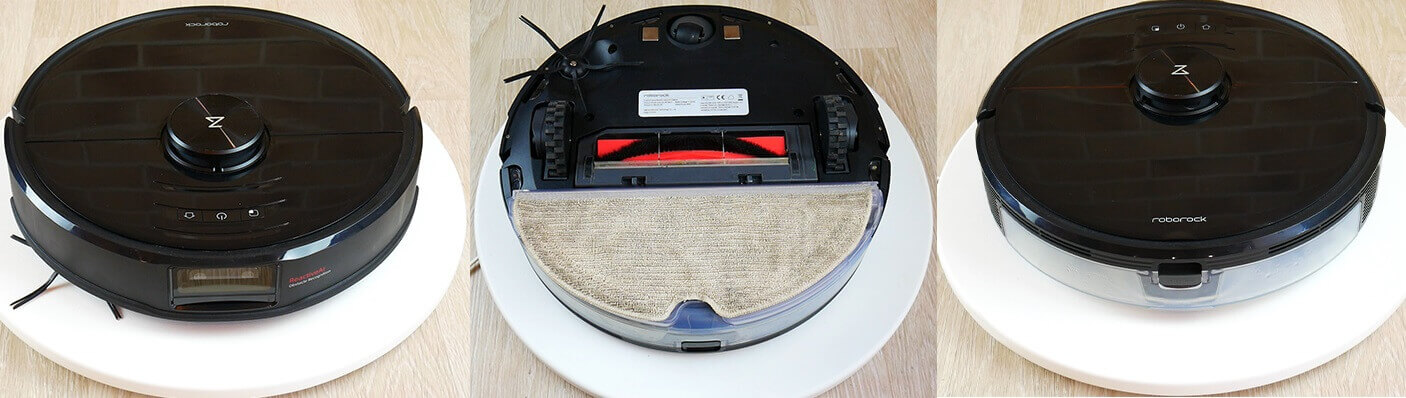
Roborock S6 MaxV
The robot is suitable for both dry and wet cleaning. It has a 460 ml dust collector and a separate 300 ml water tank. It has a single, five-point silicone side brush. Additional design features include a wall detection sensor on the mechanical side bumper, a detachable center brush for easier cleaning of hair and pet hair, six under-mounted anti-fall sensors, and a lidar button to prevent it from getting stuck under furniture. The robot's height from the floor is 97 mm. The average price at the time of this video is $550.
The next participant in our comparison is the Xbot L7 Pro. This is a new player on the market, and according to the manufacturer, it's a Taiwanese development. A couple of weeks after the comparative test is published, we'll publish a detailed review of this robot, where we'll tell you everything we can about it.
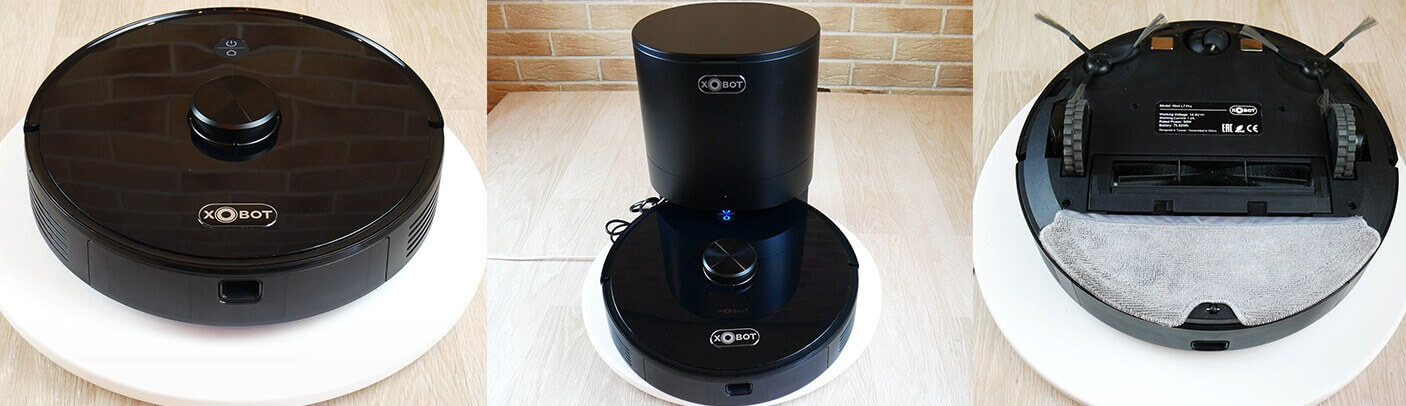
Xbot L7 Pro
The robot vacuum cleaner is equipped with a self-cleaning base, lidar navigation, and is suitable for both dry and wet cleaning. The central brush is a detachable bristle-petal brush, and there are two side brushes. They are standard, three-beam, and lint-filled. The dust container has a capacity of 600 ml, and the wet cleaning nozzle holds 110 ml. Both are installed simultaneously on the robot, allowing the Xbot L7 Pro to vacuum and mop simultaneously. A wall sensor is mounted on the bumper, and four anti-fall sensors are located on the bottom. These are all the main features. The body is 97 mm high. According to the manufacturer, the model will initially retail for $360 with the standard charging base and $500 with the self-cleaning base.
Now let's take a look at the iClebo O5. This robot uses camera navigation and a rubber center brush, but a bristle-petal brush is optional.
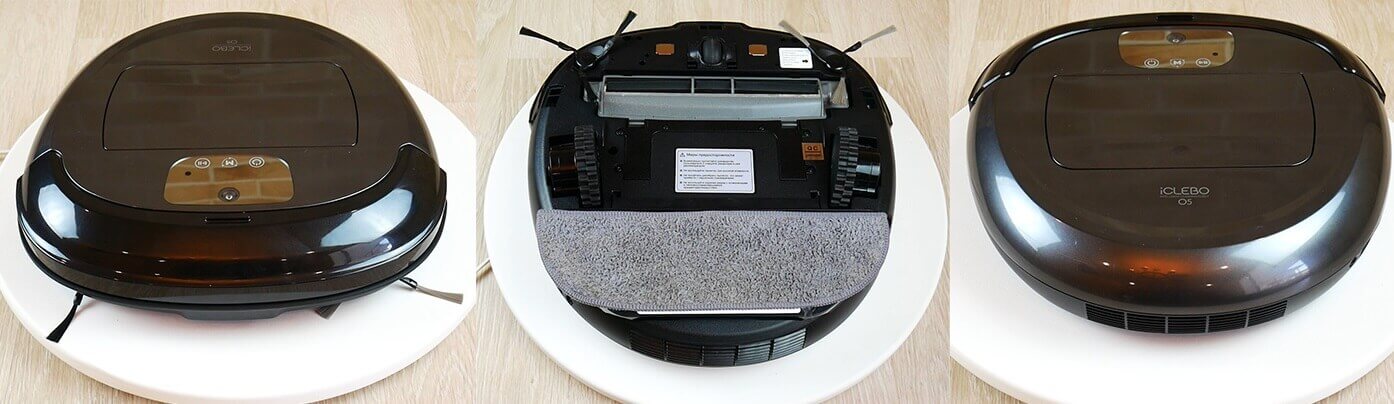
iClebo O5
The brush itself is elongated, measuring 20 cm in length. This is 3.5 cm longer than the two previous robots. The brush is non-detachable. There are two side brushes, three-beam, and bristle. Three fall protection sensors are installed underneath. The dust collector capacity is 600 ml. There is no water tank, but a cleaning cloth is included; it must be manually moistened before installation. The robot is primarily suitable for dry cleaning, but the cleaning cloth can also be used to wipe floors of dust. The body height is 87 mm. The average price is $430.
The next flagship is the Okami U100 Laser. It features lidar for navigation, is suitable for both dry and wet cleaning, and has an optional UV lamp for surface disinfection.
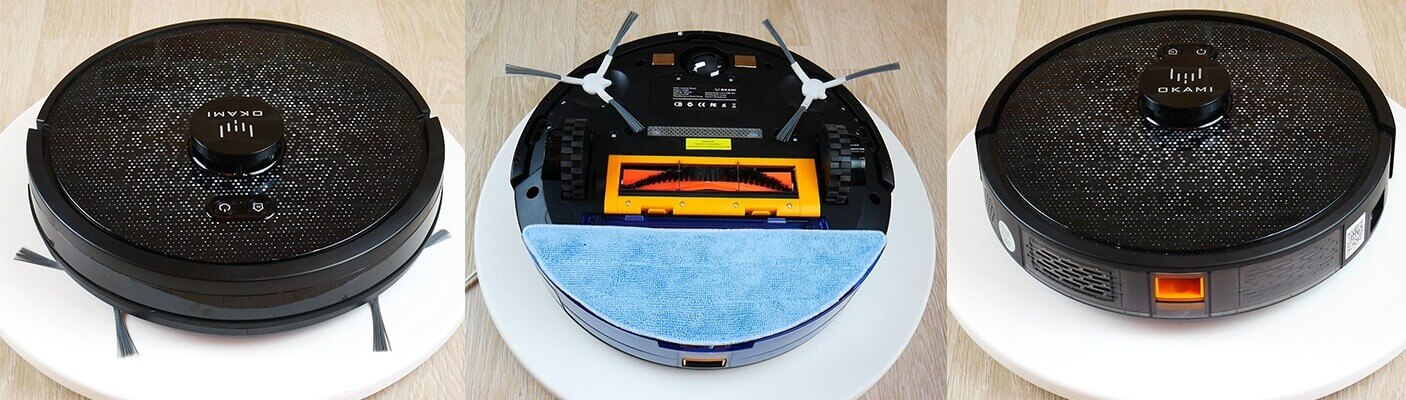
Okami U100 Laser
There are two side brushes, three-pronged and bristly. Additional protection against hair tangling is provided by the side brushes. The central brush is a detachable, bristle-and-petal design. The dust bin has a capacity of 600 ml, which can be replaced with a water tank that holds 300 ml of water and 60 ml of dry debris. This model, in other words, has separate dry and wet cleaning modes, but in wet cleaning mode, the robot can sweep small debris into a small compartment. However, it cannot vacuum during this mode, as the motor is housed in a separate dust bin. Three anti-fall sensors are installed underneath. The Okami's body is 10 cm high. The average price is $400.
The fifth participant in the battle is the iRobot Roomba i7+. It's not the most advanced model in the line, but the differences from the flagship s9+ are negligible. The price difference, however, is $400, making this robot, in my opinion, more affordable and therefore a more interesting comparison.
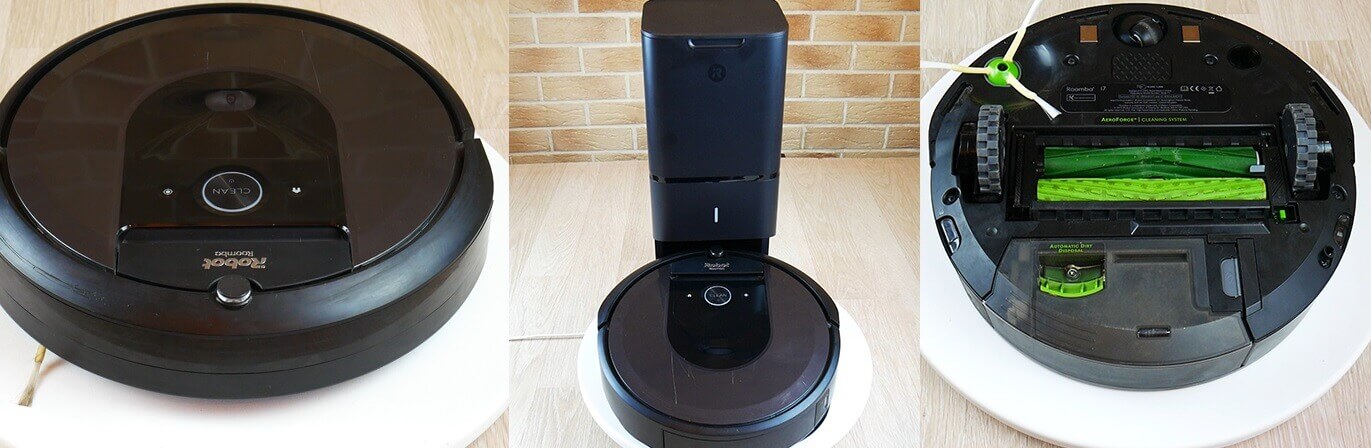
iRobot Roomba i7+
The Roomba i7+ features a navigation camera, a self-cleaning base, one side brush, and a unique cleaning module with two silicone scraper rollers. Like the Roborock, it has six anti-fall sensors on the bottom. The dust bin has a capacity of 400 ml, but the dust bin base can hold up to 30 times the capacity. Wet cleaning is not supported. The height of the body is 9 cm. The average price is $700 to $750 with the self-cleaning base and $530 with the standard charging station.
Our introduction is over. Let's give our first assessment of the robots being compared. Of course, robots with unique, useful features receive the maximum two points. In our case, these are floor object recognition and a self-cleaning base. Accordingly, Xbot, iRobot, and Roborock each receive two points. Another half point can be awarded to the Okami for its UV lamp. Personally, this isn't a particularly important feature for me, but let's be objective: it's the only one equipped with such a feature, and perhaps this lamp will be of interest to some.
Roborock: 2 iClebo: 0 Okami: 0.5 Xbot: 2 iRobot: 2
The presence of a second side brush deserves special consideration, but given the dry cleaning performance, which is roughly the same for all robots, a second side brush doesn't make the robot more effective. However, its presence sometimes helps improve debris collection, so I'd give a maximum of half a point for the second side brush. Overall, iClebo, Okami, and Xbot each receive half a point.
Roborock: 2 iClebo: 0.5 Okami: 1 Xbot: 2.5 iRobot: 2
The body height is roughly the same for everyone and ranges from 9-10 cm, so there is no clear favorite here.
Each robot deserves a point extra for its mopping function, except for the iRobot and iClebo. However, the iClebo at least has a floor polishing mode, so it's fair to give it half a point.
Roborock: 3 iClebo: 1 Okami: 2 Xbot: 3.5 iRobot: 2
We'll compare the wet cleaning function separately later and evaluate its effectiveness. For now, we'll focus solely on the design.
The last thing to consider is the build quality and the components themselves. iClebo and iRobot are undoubtedly the best builders. These robots are made of extremely durable materials. Roborock's build quality is slightly inferior, but it's better than Okami and Xbot. Overall, one point goes to the first two robots, and half a point to Roborock.
Roborock: 3.5 iClebo: 2 Okami: 2 Xbot: 3.5 iRobot: 3
Equipment
Now let's compare the robots' configurations. We can also award a maximum of one point for this.
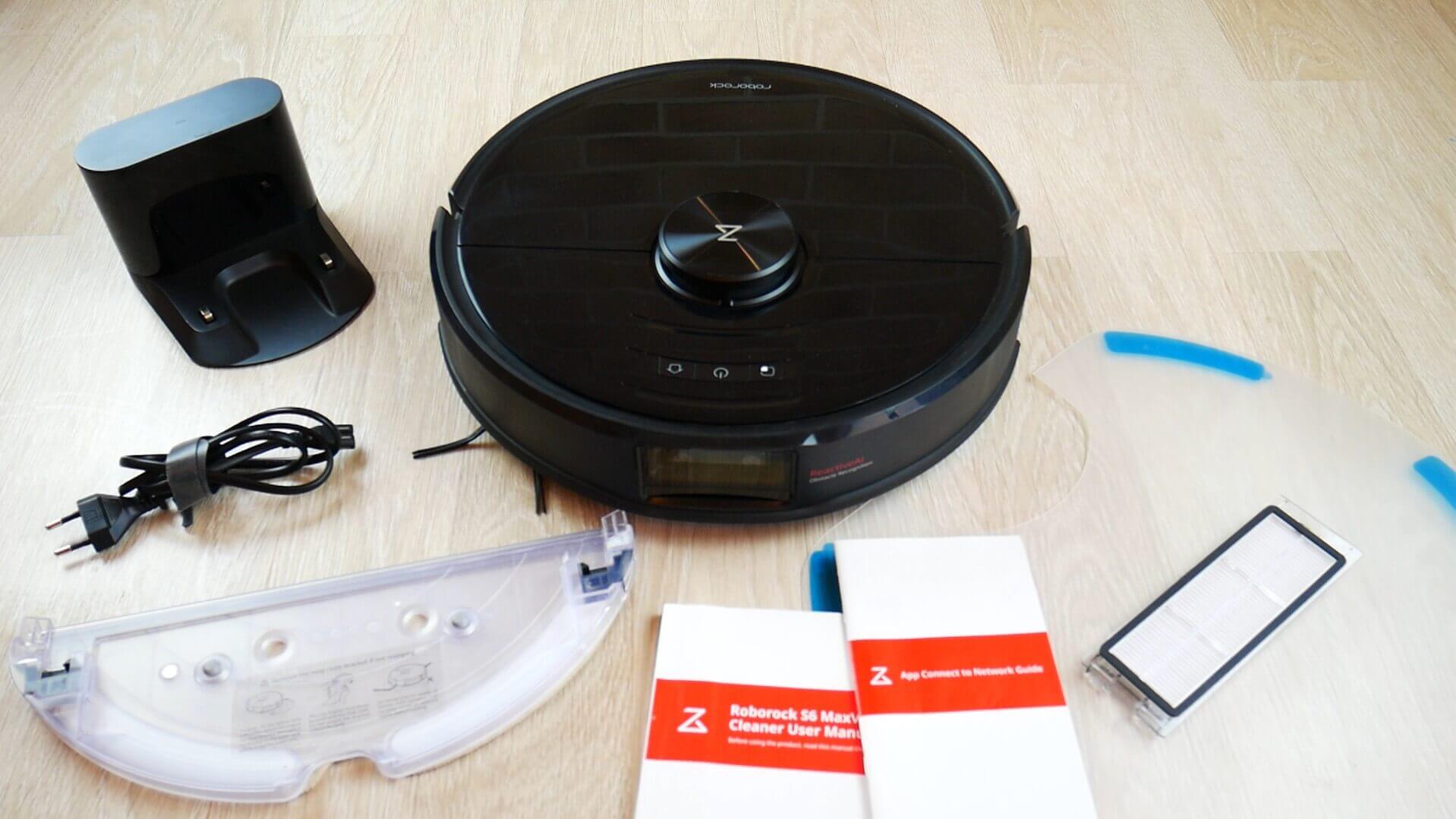
The Roborock comes with a charging base with a power adapter, a wet mop attachment with one cleaning cloth, instructions, and a spare HEPA filter. The package contents are sparse.
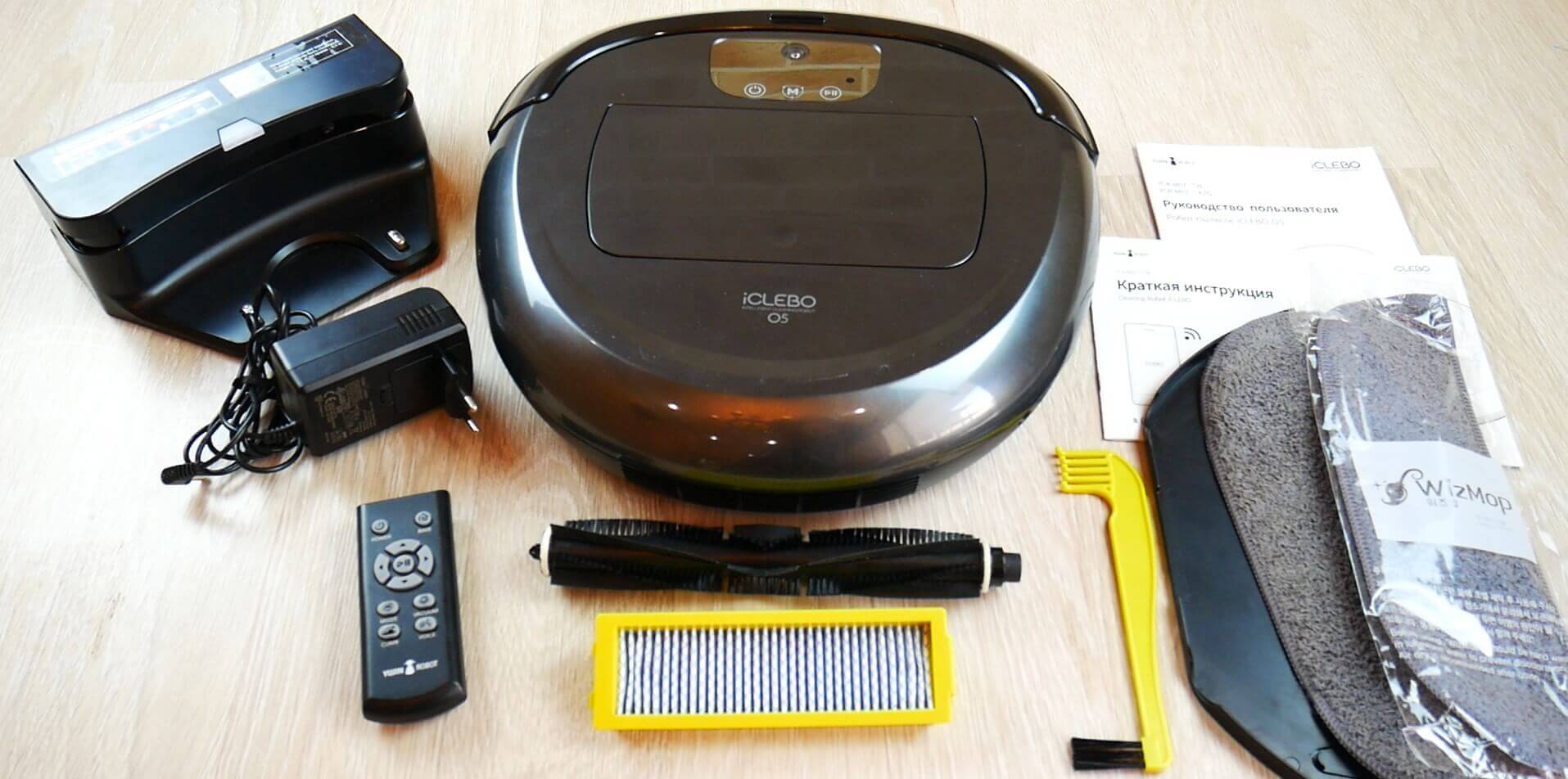
The iClebo also comes with a charging base, but also comes with a second spare microfiber cloth, a remote control, and a spare HEPA filter.
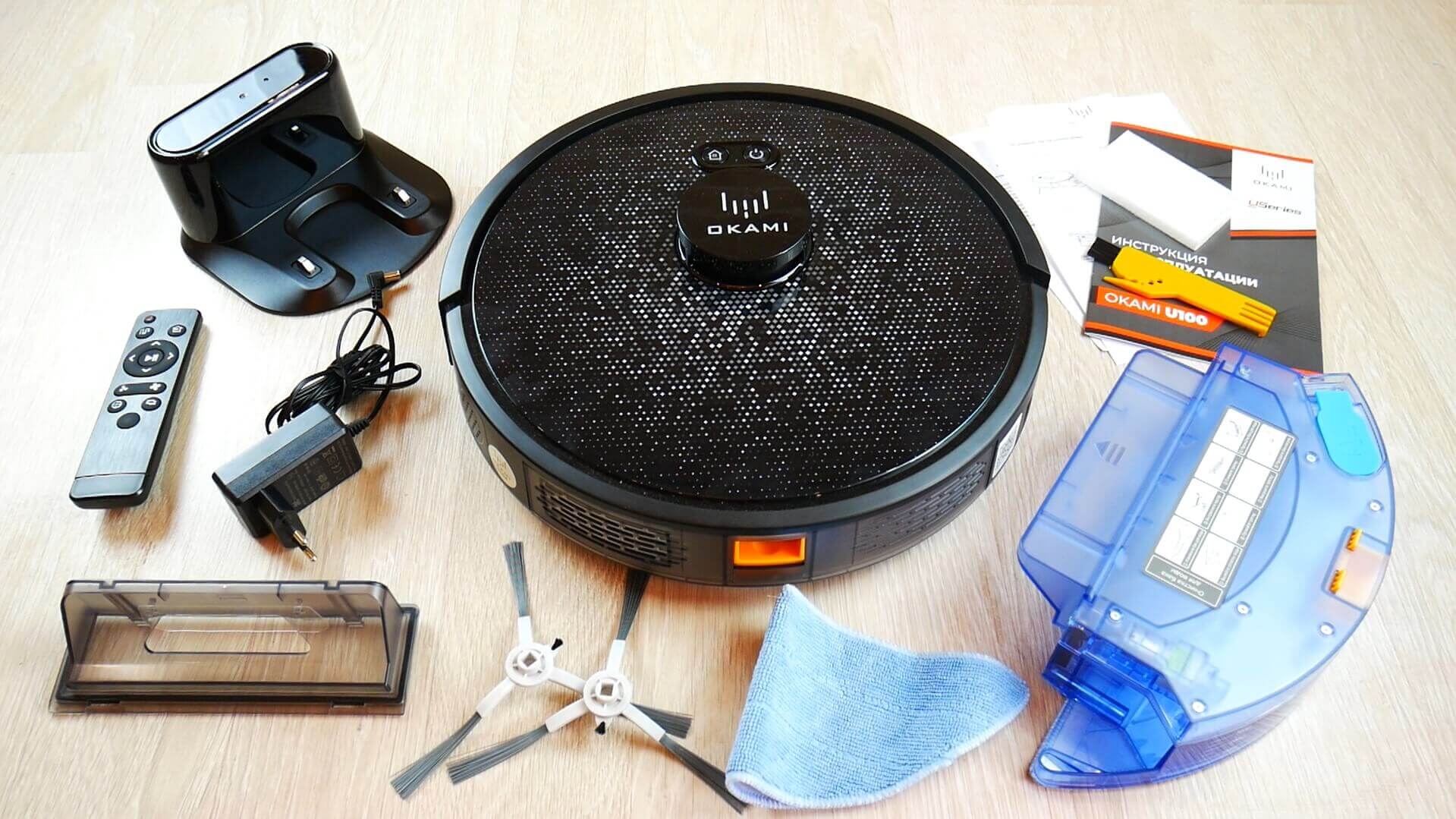
Okami comes with a charging base, two spare side brushes, two spare HEPA filters, a spare cleaning cloth, and a remote control. This is much better. It includes all the necessary consumables for the first few days of using the robot.
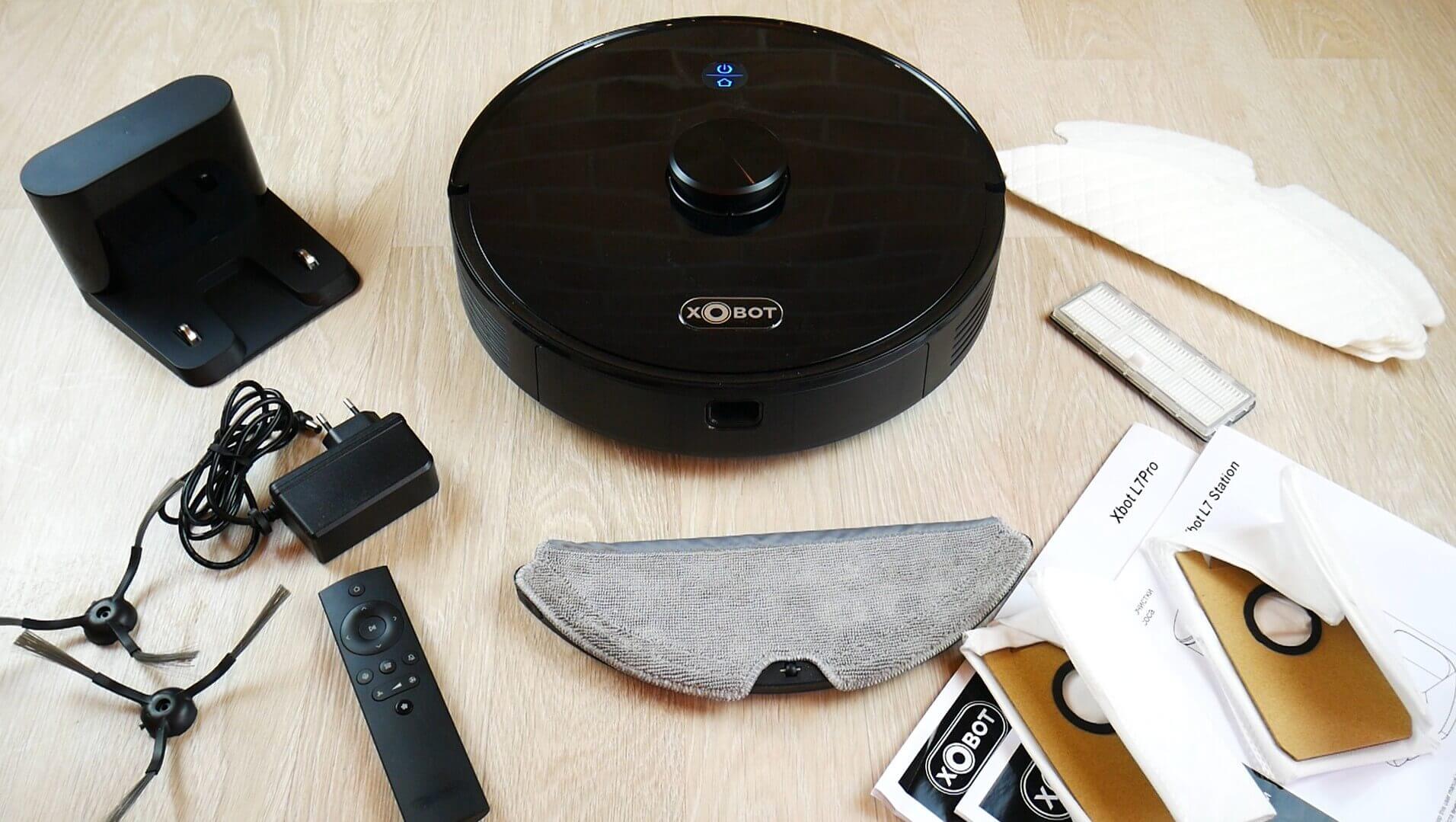
The Xbot comes with a base, two spare side brushes, a remote control, and a spare HEPA filter. There are no complaints about the included accessories.
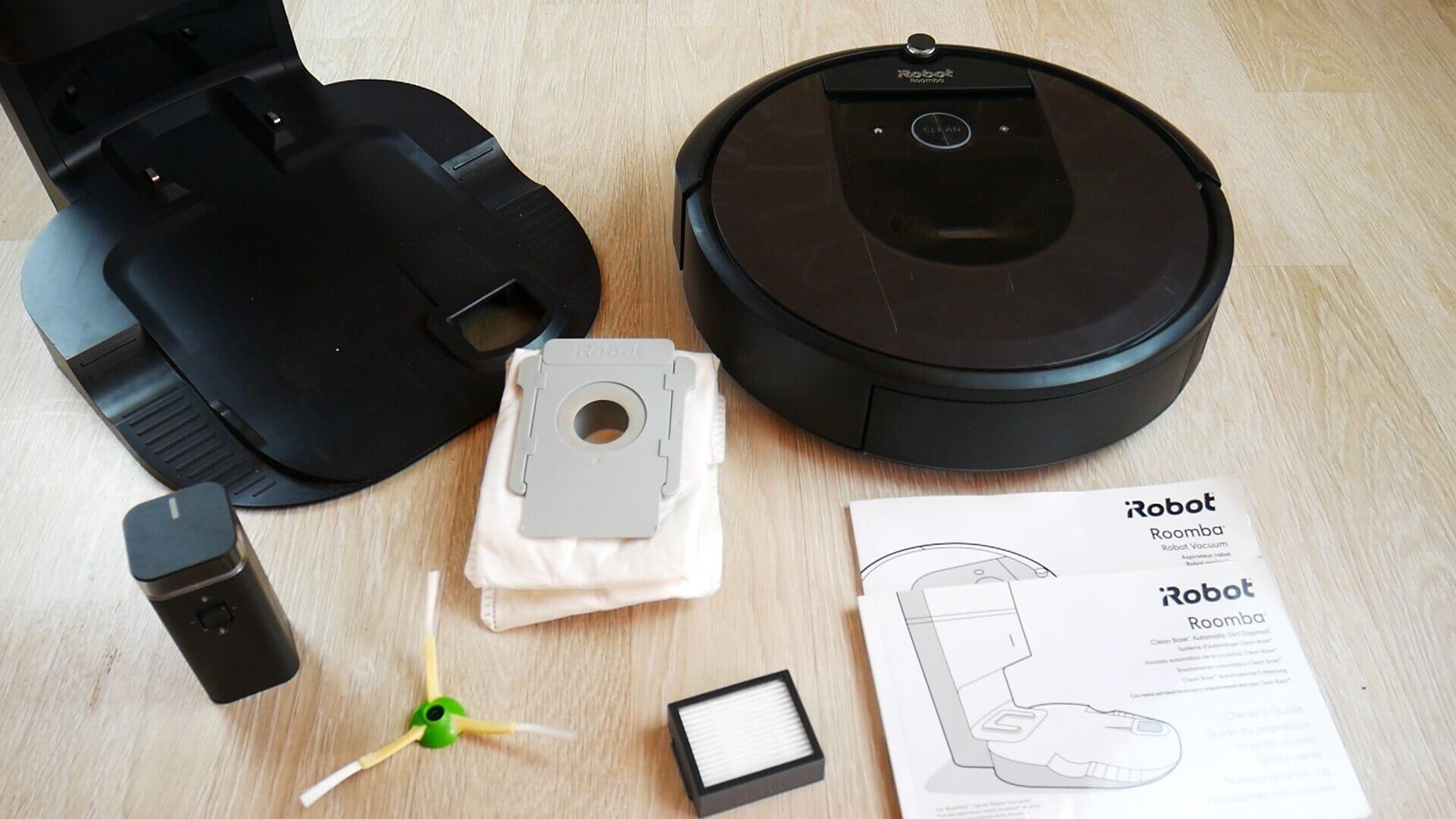
In addition to the charging base, iRobot's accessories include a spare side brush, a spare HEPA filter, a spare self-cleaning base bag, and a travel limiter. Everything needed for the first replacement is also included.
So, what's the bottom line? A special bonus for the inclusion of a remote control, as an alternative to smartphone control, which isn't for everyone. iClebo, Okami, and Xbot come with a remote control.
Roborock: 3.5 iClebo: 3 Okami: 3 Xbot: 4.5 iRobot: 3
Another half point goes to Okami and Xbot for their comprehensive set of accessories, which will definitely last for the first six months of use. The iRobot also includes a spare side brush and a replacement base bag, so it also deserves half a point.
Roborock: 3.5 iClebo: 3 Okami: 3.5 Xbot: 5 iRobot: 3.5
Now that we're on the subject of consumables, let's compare the cost of the main ones and their availability:
| Roborock S6 MaxV | iClebo O5 | Okami U100 | Xbot L7 Pro | Roomba i7+ | |
| Side brush | 890 | 600 | 990 | 150 | 300 |
| Central brush | 1490 | 1800 | 1500 | 460 | 1600 |
| HEPA filter | 990 | 500 | 990 | 270 | 400 |
| Napkin | 690 | 600 | 990 | 260 | —- |
| Kit | 1300-2500 | 5500 | 1800-3000 | —- | —- |
As you can see, all prices are roughly the same, except for Xbot, which provided preliminary prices for accessories, as the robot itself will go on sale in December 2020. Some robots have more expensive center brushes, while others have more expensive side brushes. So, we'll dispense with the points. You can order accessories for the robots from official stores (for Roborock, I recommend Lamobile); there were no availability issues at the time of writing.
Functions
Now let's compare the features of the flagship models. Since all robot vacuum cleaners are controlled via a mobile app, we've reviewed all of their features. In total, we've compiled a table of the top 10 features.
| Roborock S6 MaxV | iClebo O5 | Okami U100 | Xbot L7 Pro | Roomba i7+ | |
| Building a map of the premises | + | + | + | + | + |
| Saving multiple cleaning maps in memory | + | — | + | + | + |
| Zoning the premises into rooms | + | — | — | + | + |
| Continuing cleaning after recharging at the base | + | + | + | + | + |
| Suction power adjustment | + | + | + | + | — |
| Adjusting the water supply level | + | — | + | — | — |
| Adjusting the power and water supply for individual rooms (individually) | + | — | — | — | — |
| Automatic power increase on carpets | + | + | — | + | — |
| Manual control | + | + | + | + | — |
| Restricted areas and cleaning zones on the map | + | + | + | + | + |
| Total: | 10 out of 10 | 6 out of 10 | 7 out of 10 | 8 out of 10 | 5 out of 10 |
As you can see, the Roborock S6 MaxV is the most functional robot vacuum. Its competitors don't offer a single app feature that this robot doesn't have, earning it a full 2 points. The XBot L7 Pro is roughly on par in terms of features, with the only difference being its adjustable wet cleaning mode, which we'll explore later. It's equally capable in all other features, so it also earns a full 2 points. Okami and iClebo have slightly fewer features, but the most useful ones are still available in the app. They each receive 1 point. iRobot has the most minimal features in this regard, but they're still sufficient for automatically maintaining a clean home. However, in this comparison, it receives no additional points.
Roborock: 5.5 iClebo: 4 Okami: 4.5 Xbot: 7 iRobot: 3.5
Navigation
Let's move on to the main part of the comparison—the tests. First, we'll compare the navigation of all the robots within a single room with various obstacles commonly encountered in everyday life. These include chair legs, dark areas for camera-equipped robots (the area behind the sofa), mirrors for lidar-equipped robots, clothes dryer legs (which robots often get stuck on), and simply objects lying in the robot's path. In our case, it's a ottoman.
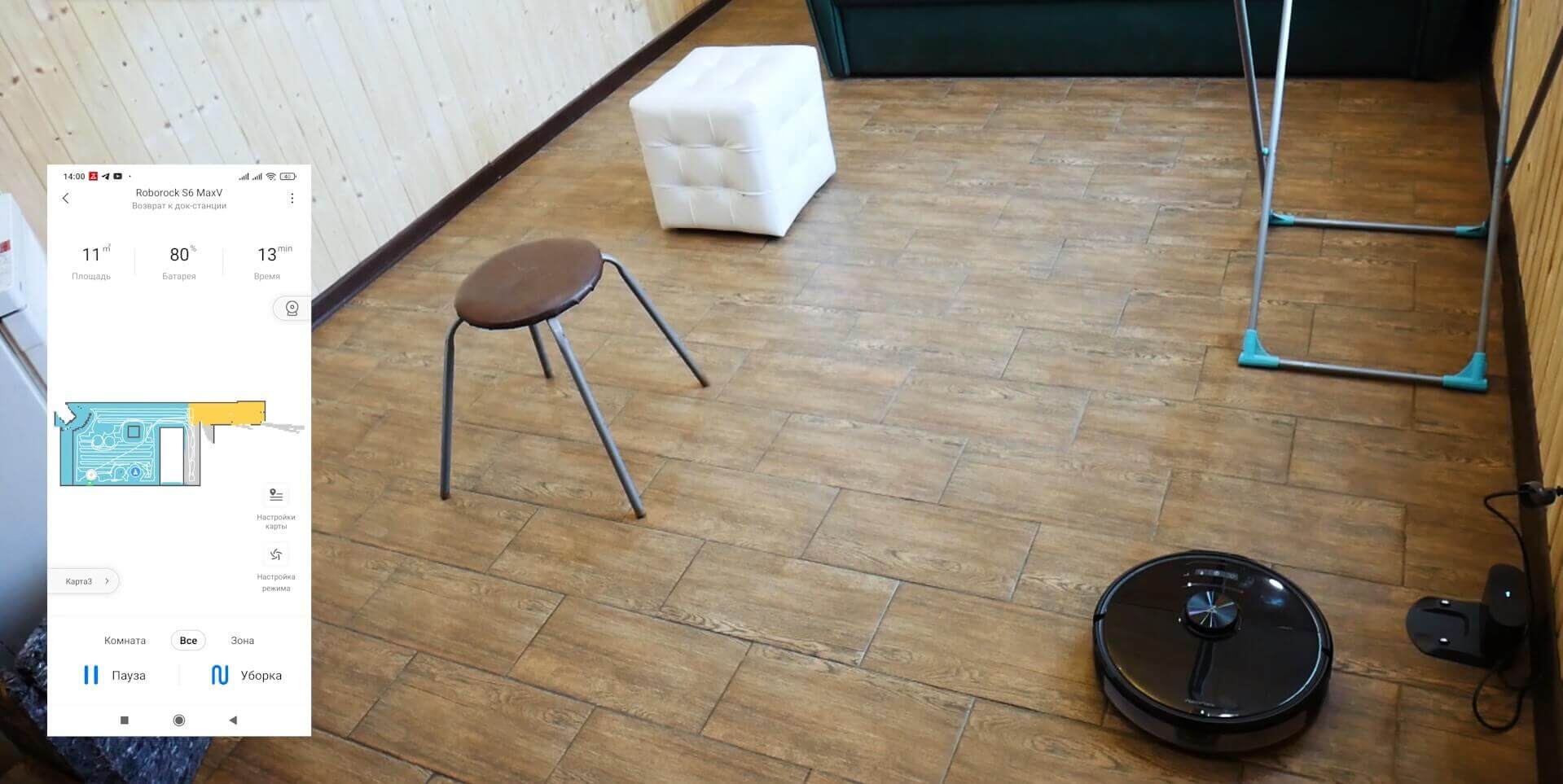
The Roborock S6 MaxV managed to escape from a trap created by the legs of a dryer; the camera even detected them as an obstacle. It covered the entire accessible area, first along the perimeter and then in a serpentine pattern. It thoroughly cleaned around two chair legs, lightly brushing against them, and also cleaned the dark area behind the sofa. The map was accurate, except for the area around the mirror, but this inaccuracy didn't affect cleaning performance; the robot covered the entire accessible area, including the area around the mirror. It took 13 minutes to clean the 11 square meters. Considering the obstacles, this is a good result.
The iClebo O5 bumped into obstacles more often and performed worse around the chair. The map was less accurate, but the robot cleaned the entire accessible area. The dark area behind the sofa didn't pose a problem for the camera, and the robot navigated well in the dark. However, it doesn't clean the perimeter separately, only a serpentine path. Therefore, the cleaning speed was slightly faster: the robot cleaned 11 square meters in 12 minutes.
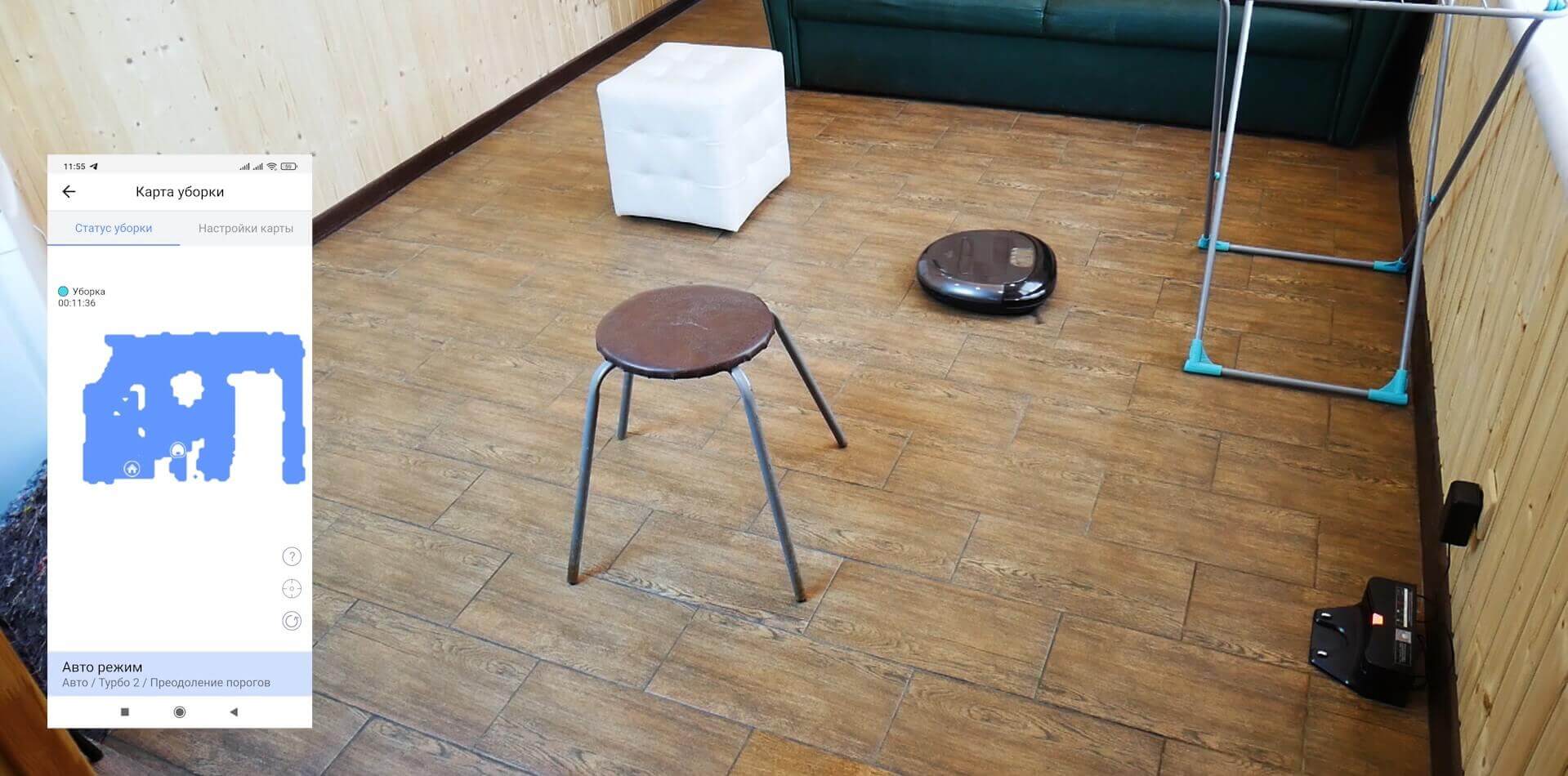
Okami also first sweeps around the perimeter and then cleans in a zigzag pattern. It touches the furniture minimally, and the robot also cleaned around each chair leg. It covered and cleaned the entire accessible area. Navigation is good, and the cleaning cycle took only 12 minutes. The mirror introduced some mapping errors, but this didn't affect cleaning performance.
Okami Navigation
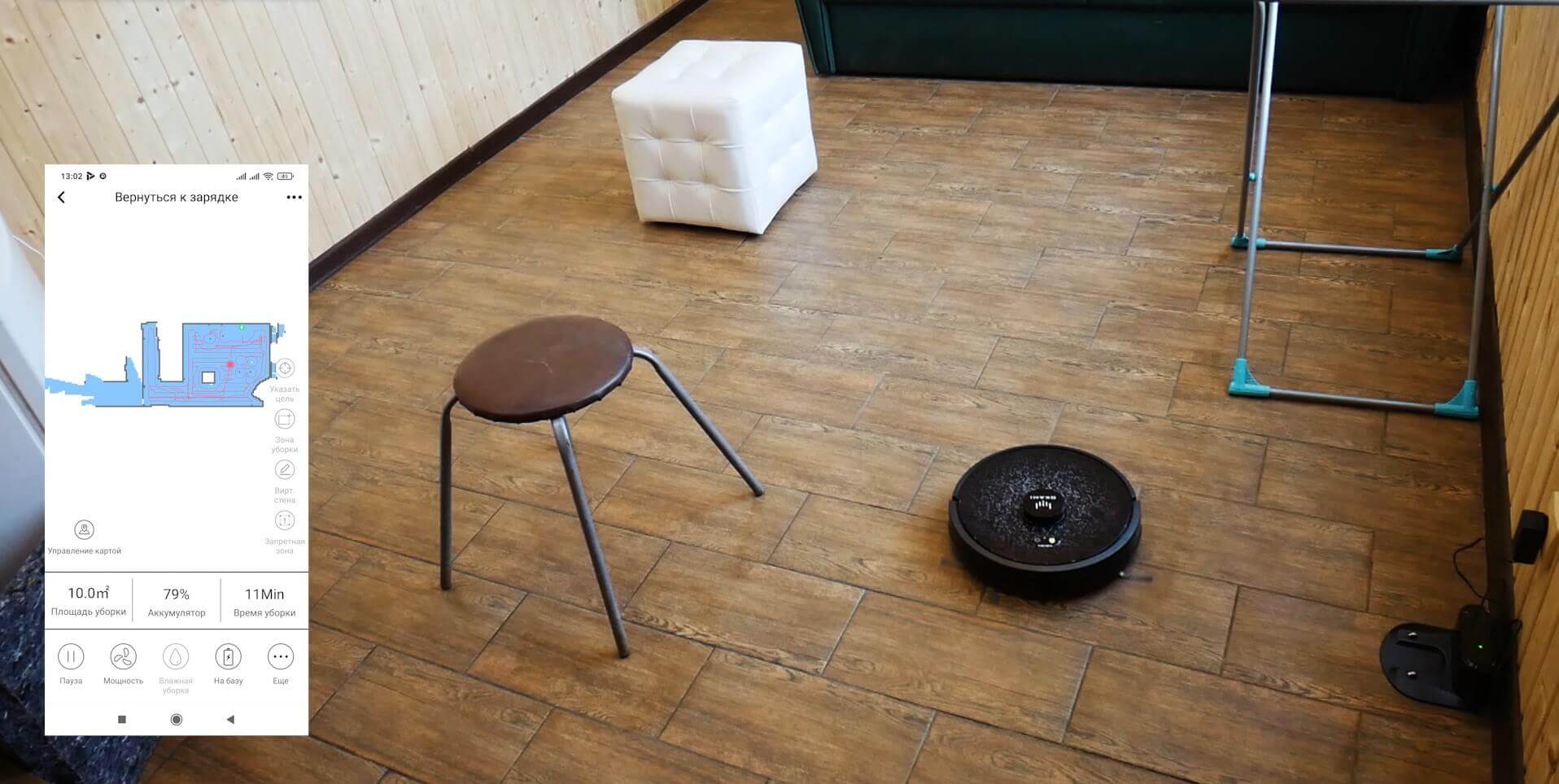
The Xbot L7 Pro also sweeps the perimeter first, then begins cleaning in a zig-zag pattern. It couldn't move the dryer's legs, but it didn't get stuck on them either. Its contact with objects is gentle, except for the chair legs. It moved the chair, which meant it only partially cleaned around the legs. Otherwise, the navigation is fine; it cleaned everything, and the mirror, as in previous cases, didn't interfere with the lidar. Cleaning speed is high, and the robot cleaned 11 square meters in 11 minutes.
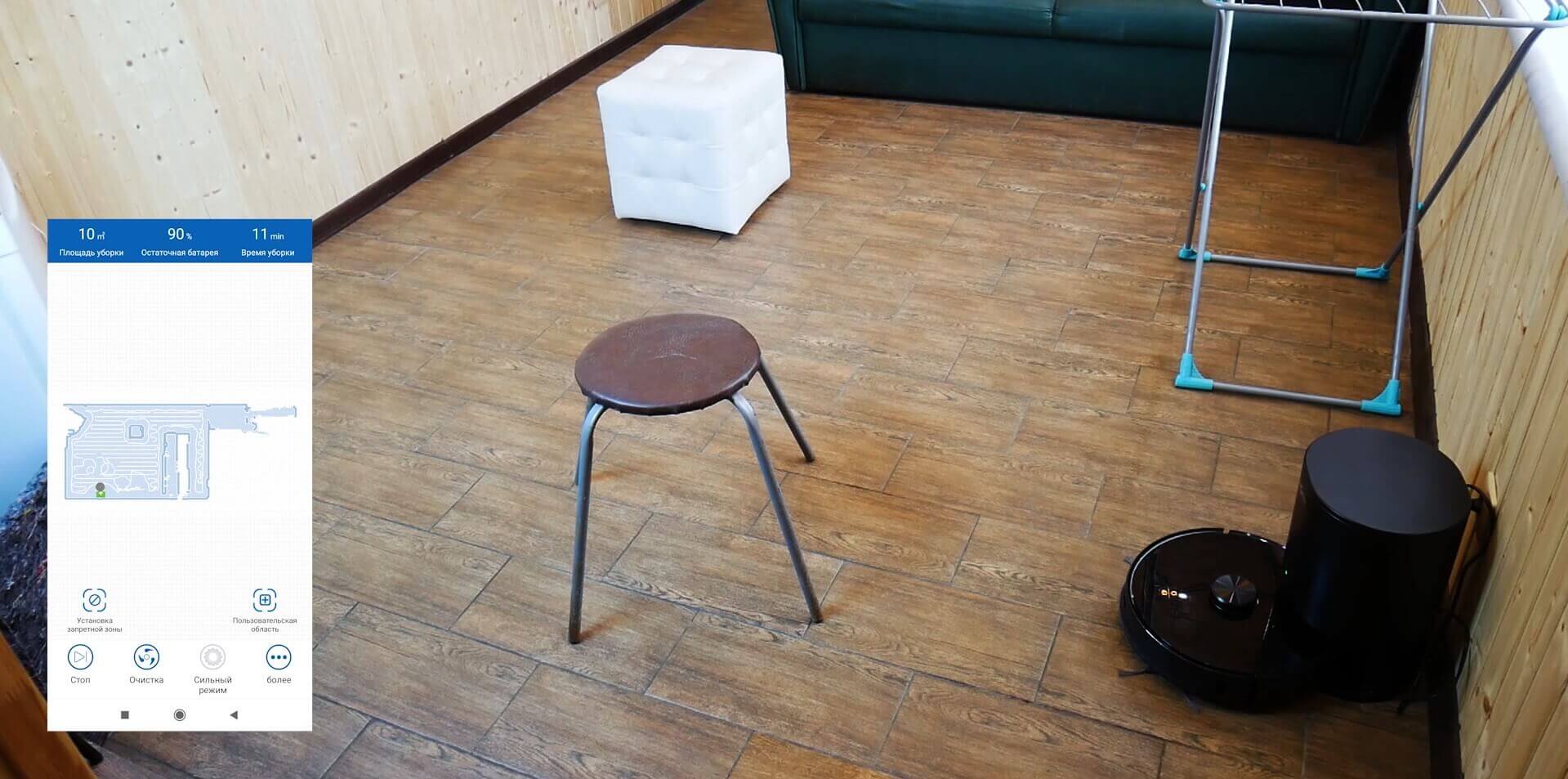
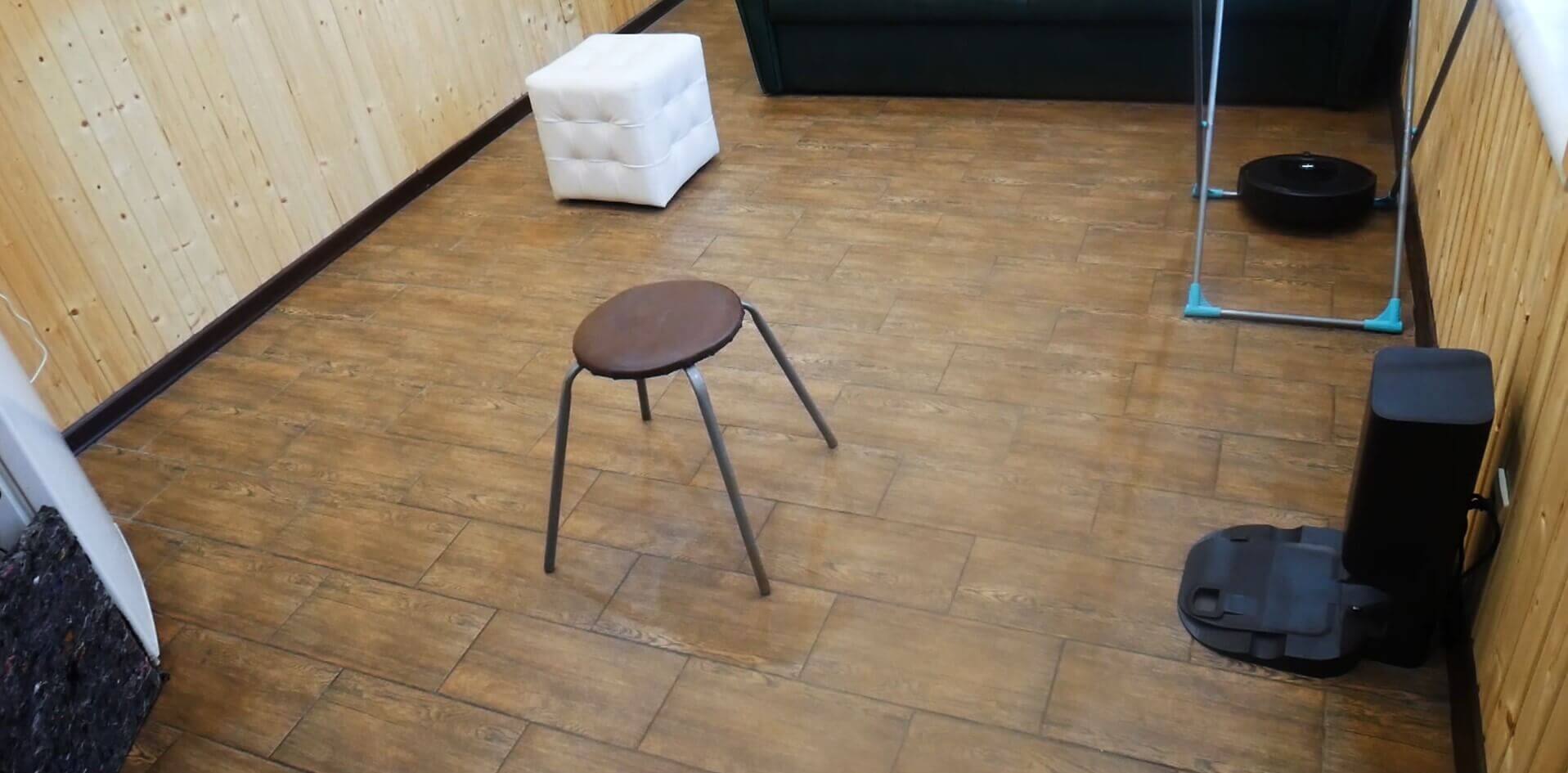
The final robot vacuum to undergo this test was the iRobot Roomba i7+. The dryer's legs presented a significant challenge, causing it to get stuck and had to be manually released. Otherwise, the robot bumped into obstacles slightly more than lidar-equipped models. It circled several chair legs, but didn't finish cleaning near the refrigerator. During its perimeter sweep, it somehow decided to return to the chair legs and return to its base. iRobot doesn't create a real-time map of the room, so it can't track its movements, but it navigated the dark area behind the sofa in a single snaking motion, and its navigation in the dark was unaffected. The cleaning took about 15 minutes.
For cleaning large areas, we'll show you reports with saved routes:


Mapping by robotic vacuum cleaners
As you can see, robots with lidar create a more accurate map. Roborock has the best navigation in this regard: it divided the room into rooms and cleaned the entire available area in a single serpentine motion. The robot cleaned 34 square meters in 27 minutes, a very high speed. Okami divided the entire available area into several zones and cleaned the room in 34 minutes. Xbot followed a similar logic, but divided the entire area into fewer zones, cleaning the house in 33 minutes. iClebo created a less accurate map, but it nevertheless corresponds to reality. Surprisingly, it also took a short time, only 34 minutes. Meanwhile, iRobot, in a similar cleaning task in one pass, cleaned the entire room in 57 minutes. The Dirt Detect feature played an additional role here, allowing the robot to identify the dirtiest areas and clean them more thoroughly by making multiple passes.
So, in the end, all robots have good navigation systems, but as has been proven time and again, lidar is better at mapping a room and navigating spatially. Overall, I'd give Roborock a full 2 points for navigation, thanks to its more sophisticated cleaning algorithm. Okami and Xbot each get 1.5 points, and iClebo gets 1 point. iRobot loses out to the others in this comparison.
Roborock: 7.5 iClebo: 5 Okami: 6 Xbot: 8.5 iRobot: 3.5
Quality of dry cleaning on laminate flooring
Now, we'll test how our flagship robot vacuums clean laminate floors at the booth. For the test, we used hair, wool, buckwheat, rice, bread crumbs, and ground coffee to simulate dust.
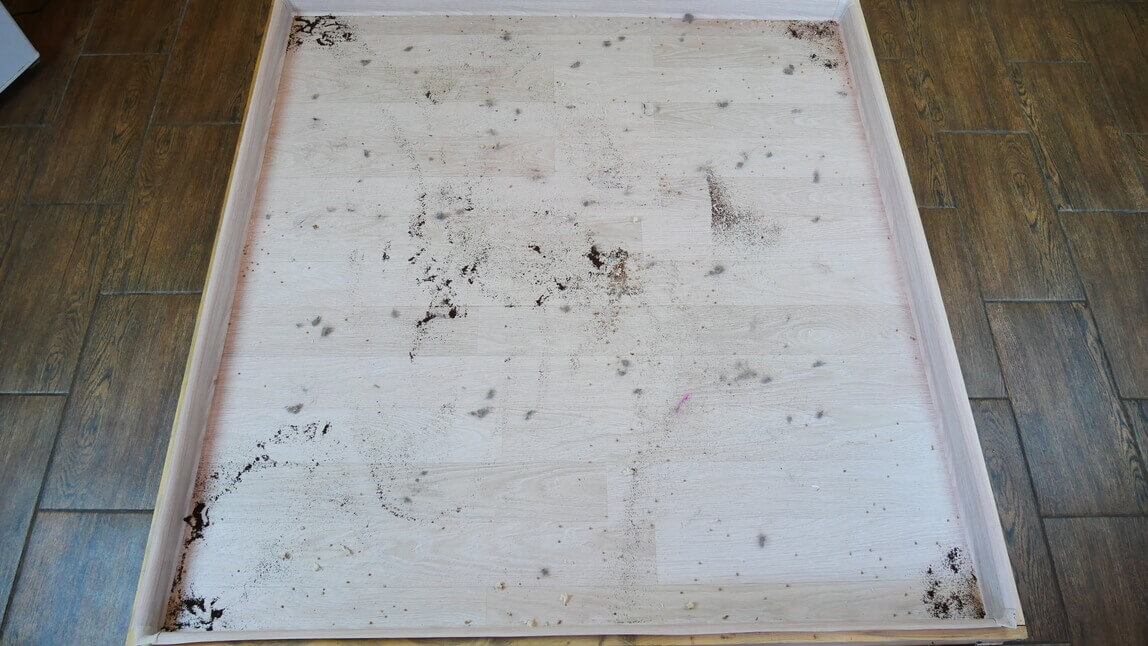
The Roborock S6 MaxV picked up all the debris from the floor, leaving only the corners uncleaned. It mostly cleaned two of them, but not the other two. All the debris was collected in the dust bin. Pet hair and fur were tangled around the center brush. I think the cleaning performance is good.
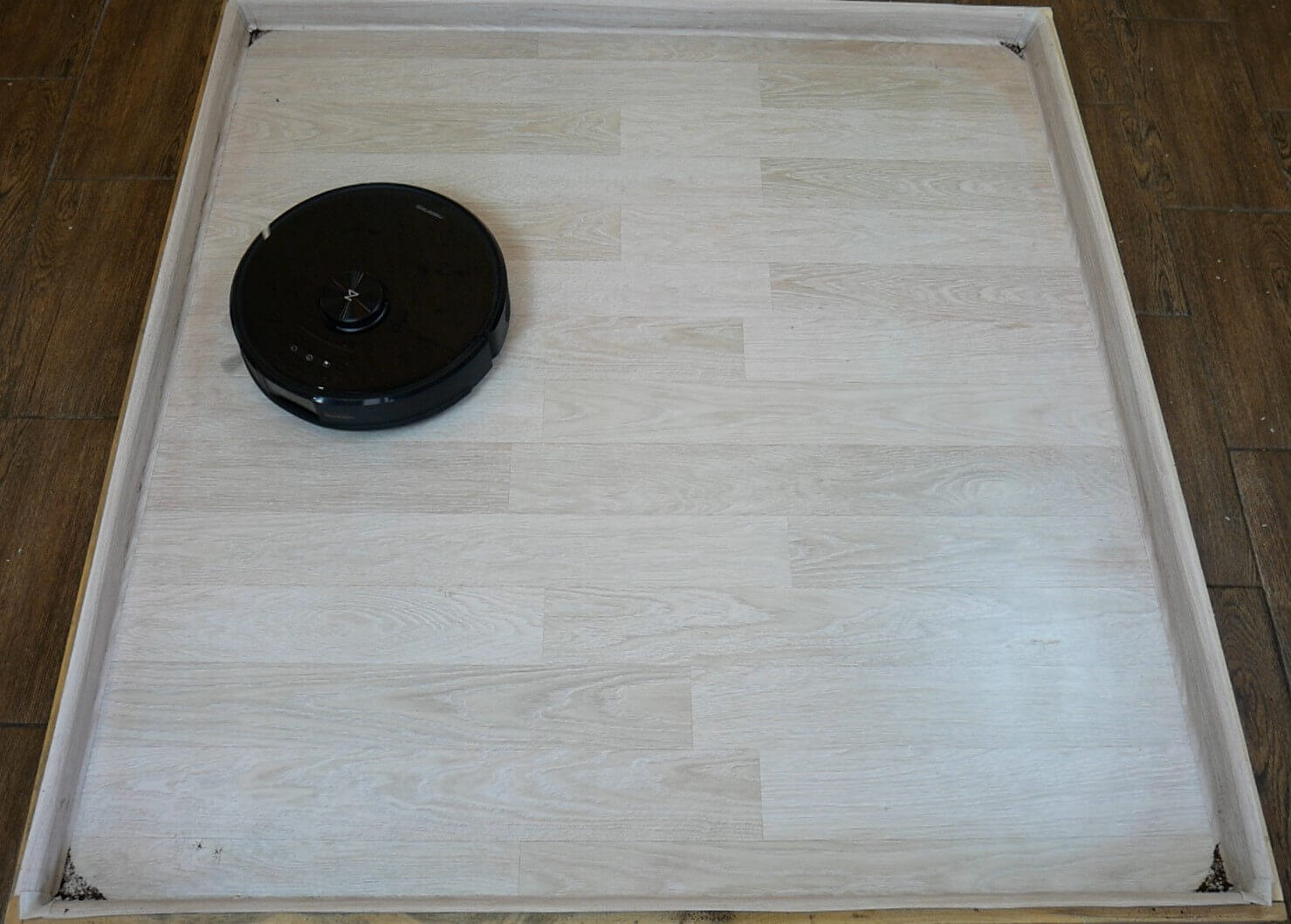
The iClebo O5 also performed well in cleaning various debris and even swept corners a little better, though some dust remained. Hair tangled around the central brush, and all debris was collected in the dust bin. The test was passed successfully.
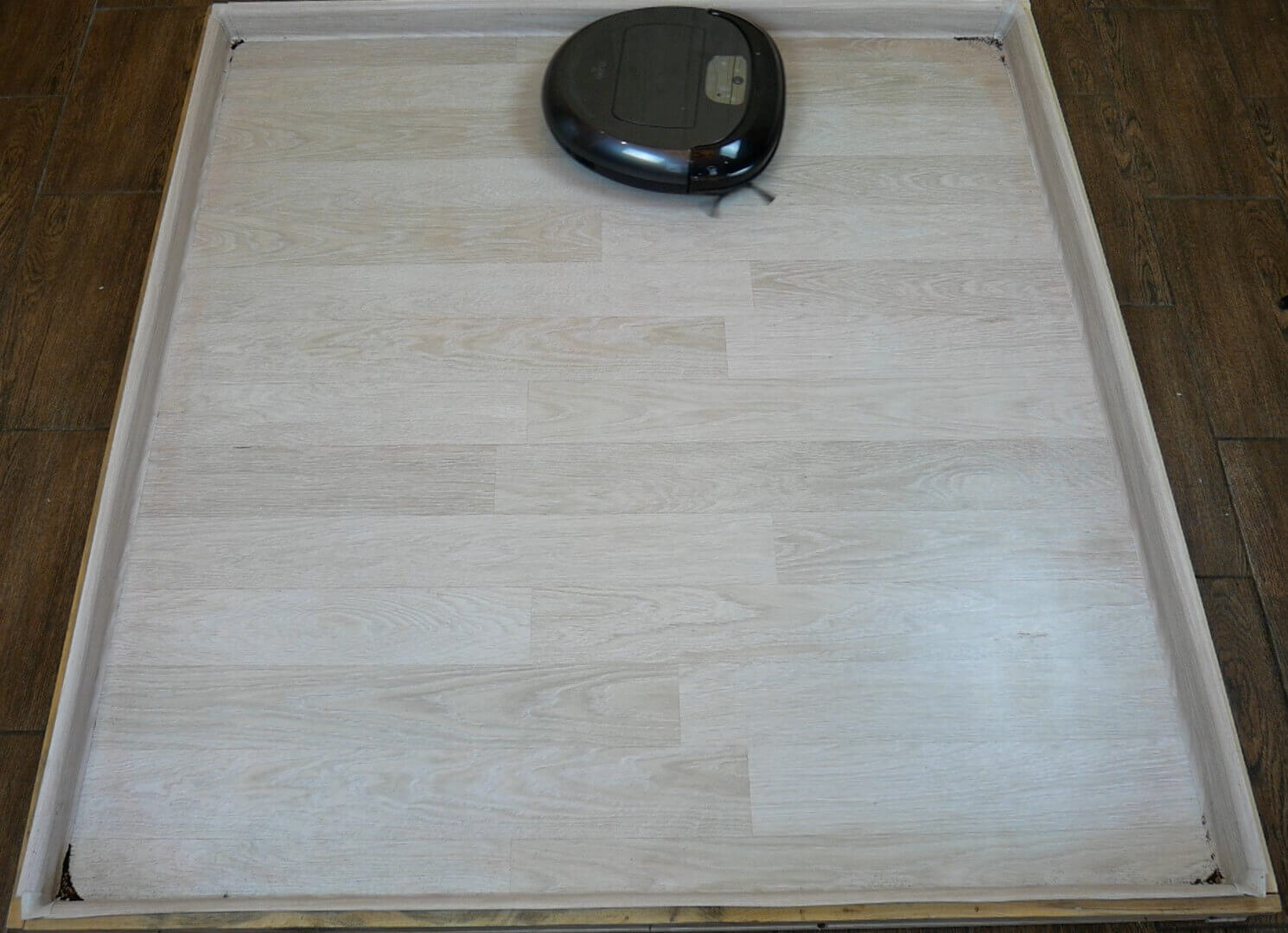
The Okami U100 Laser handled most of the debris, but it didn't sweep the corners very well. There was also some debris along the baseboards, but it was minimal. Hair was tangled around the center brush, and pet hair and small debris were collected in the dust bin.
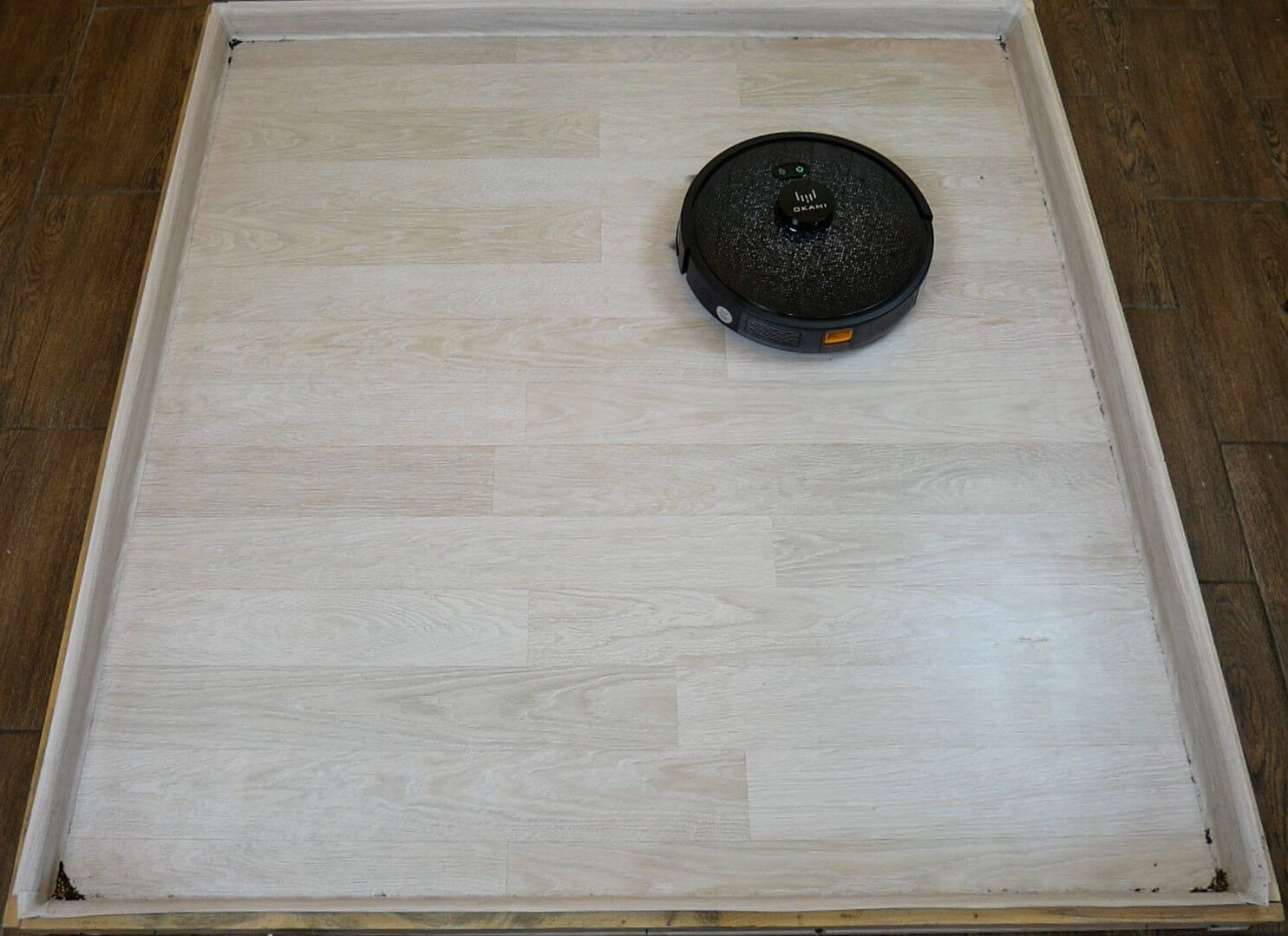
The Xbot L7 Pro has picked up the most debris and swept corners so far. For a round robot vacuum, its dry cleaning performance is very good. The dust bin had accumulated the bulk of the debris, and hair had gotten tangled up in the turbo brush.
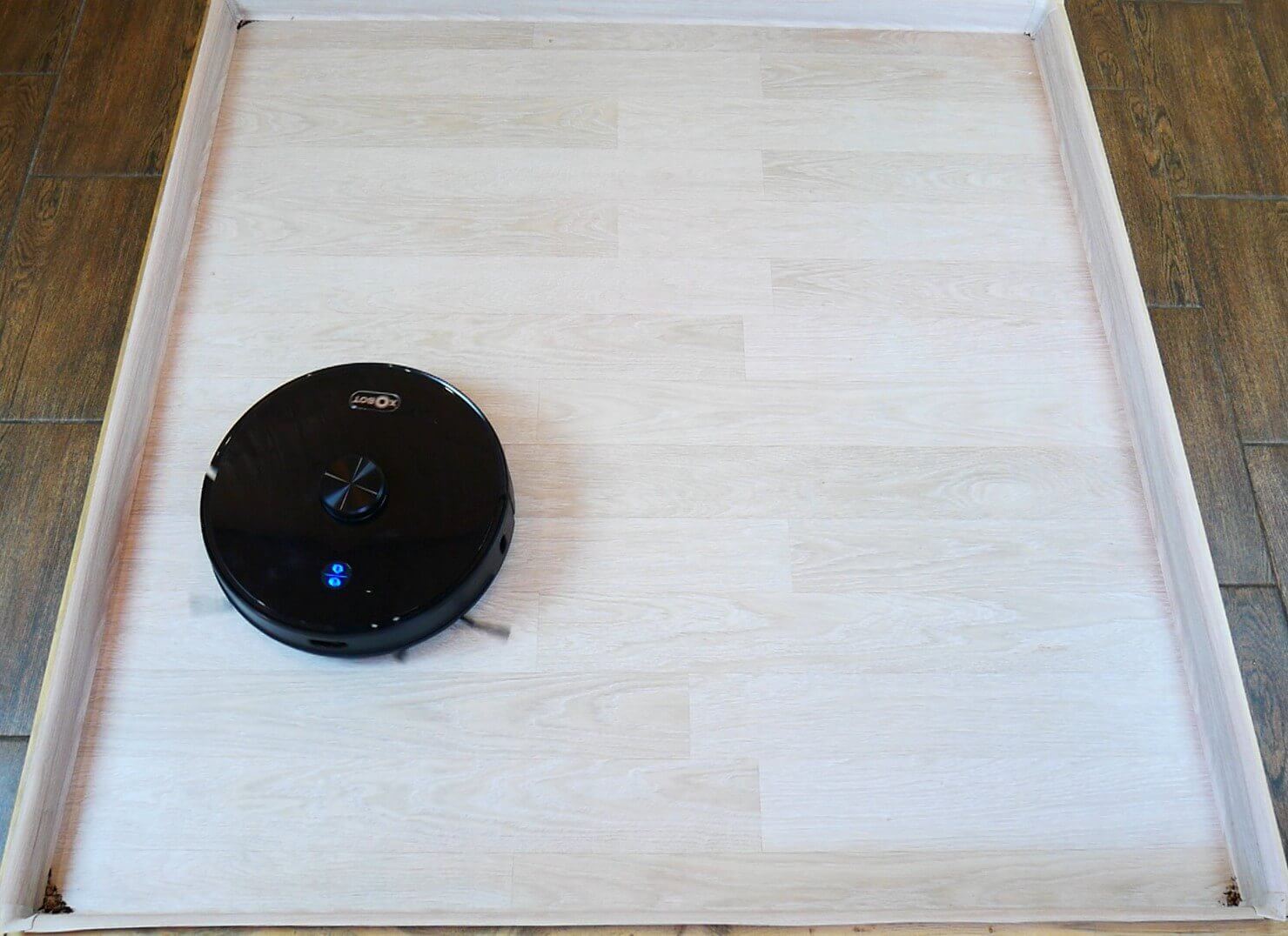
The iRobot Roomba i7+, like all the others, didn't impress with its flawless dry cleaning performance. It left debris in the corners and just a little along the baseboard.
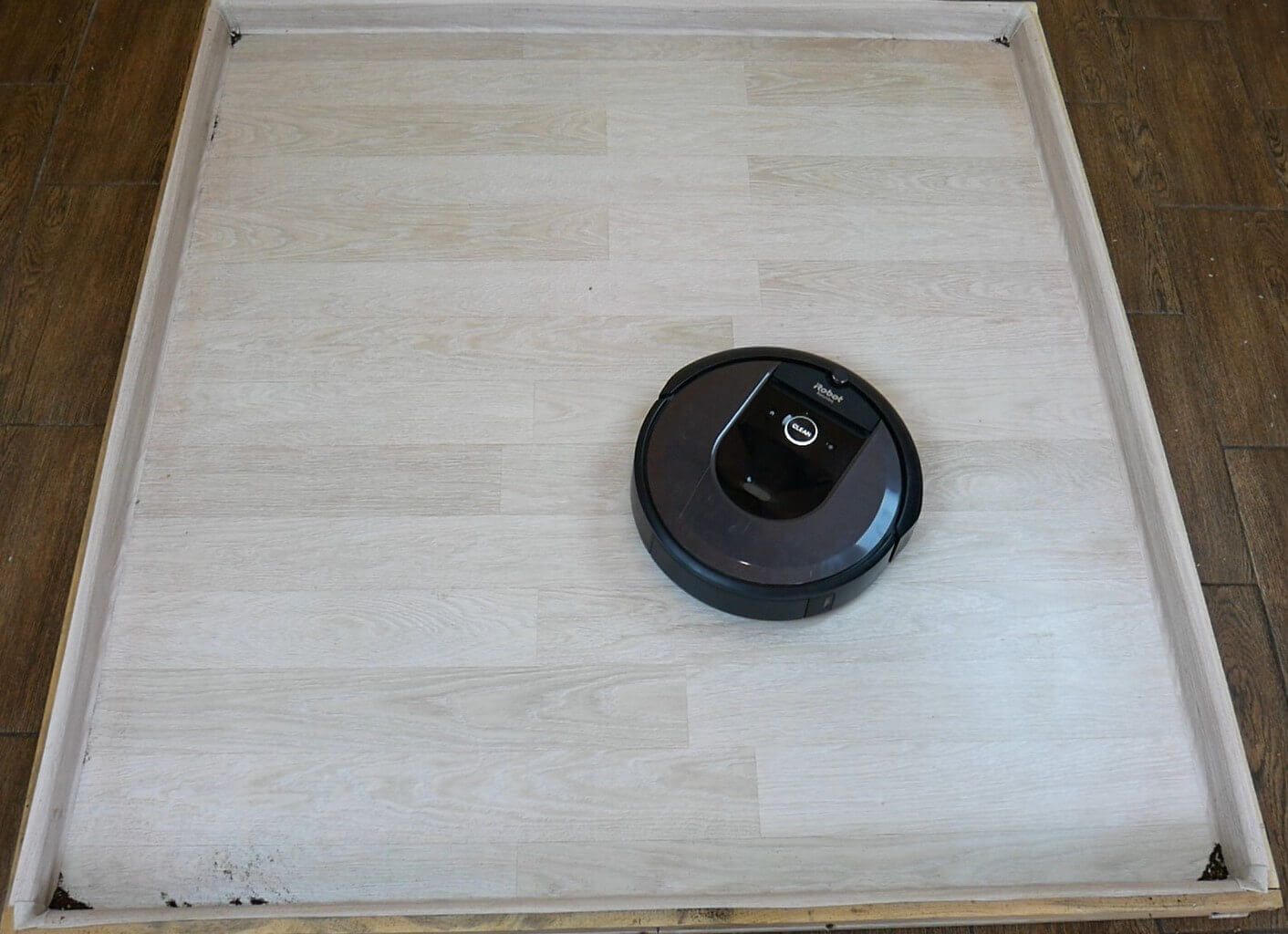
In the end, neither robot cleaned the stand perfectly, but iClebo and Xbot did a slightly better job in comparison. We'll give them half a point each.
Roborock: 7.5 iClebo: 5.5 Okami: 6 Xbot: 9 iRobot: 3.5
The quality of suction of debris from cracks
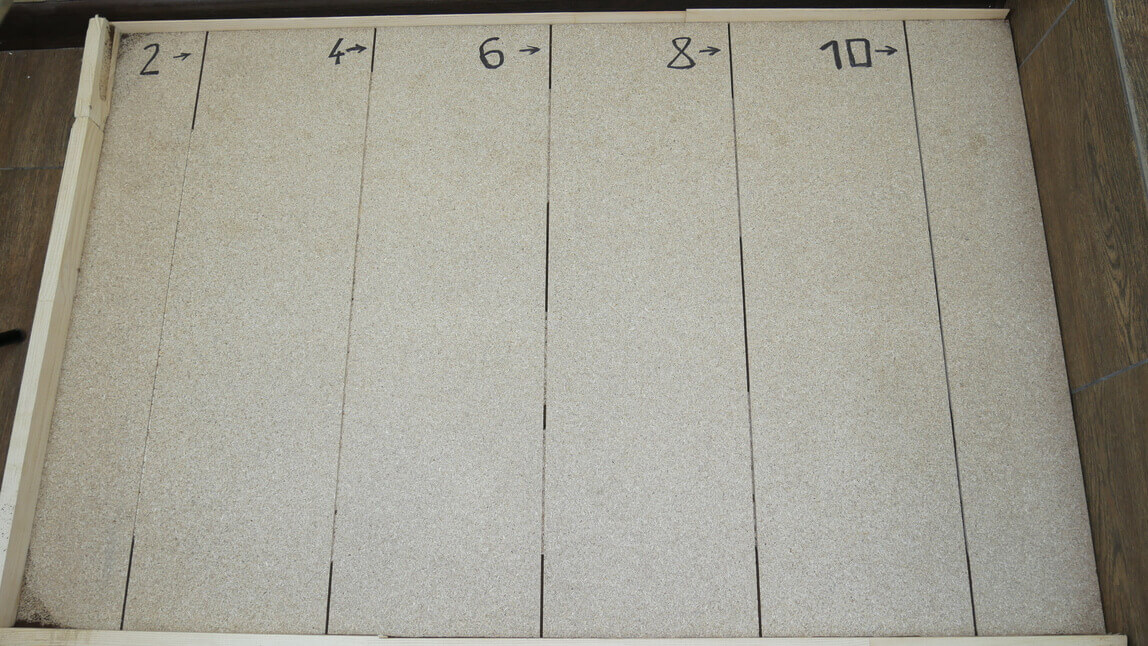
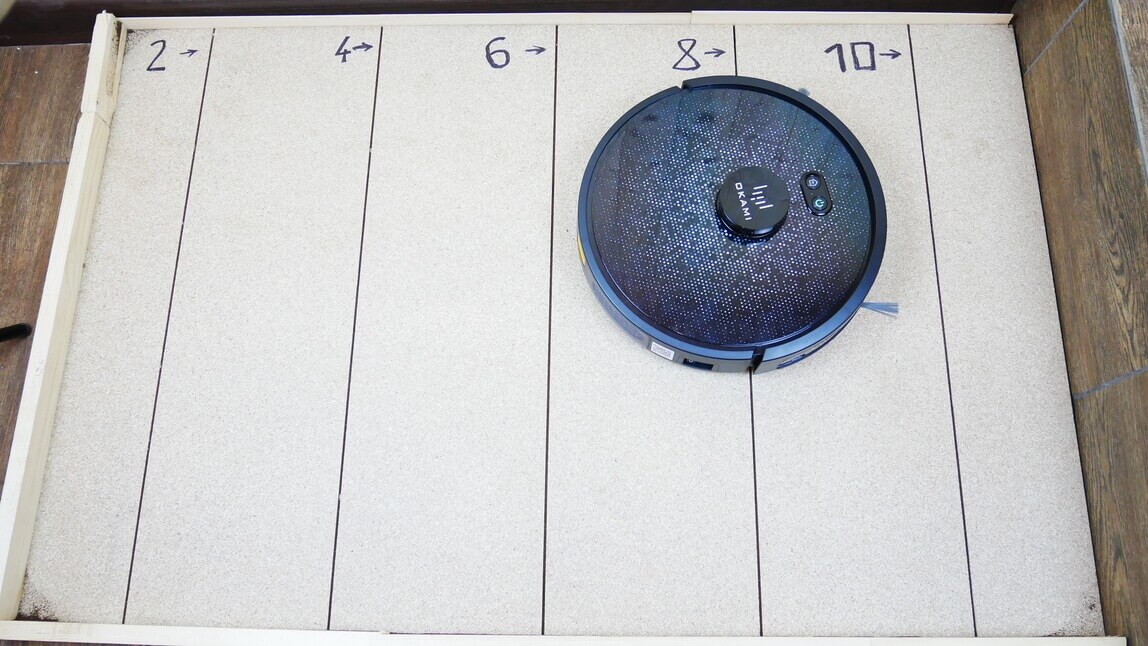
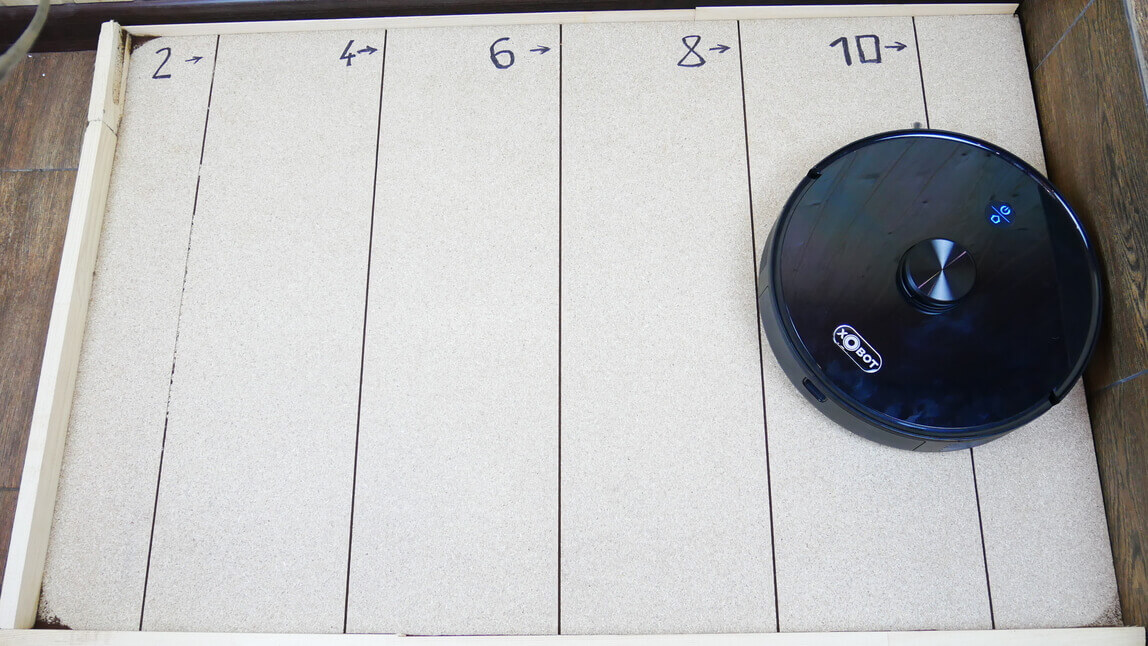
Now let's compare how deep robot vacuums can reach in crevices. We cut crevices ranging from 2 to 10 mm deep in our test setup.
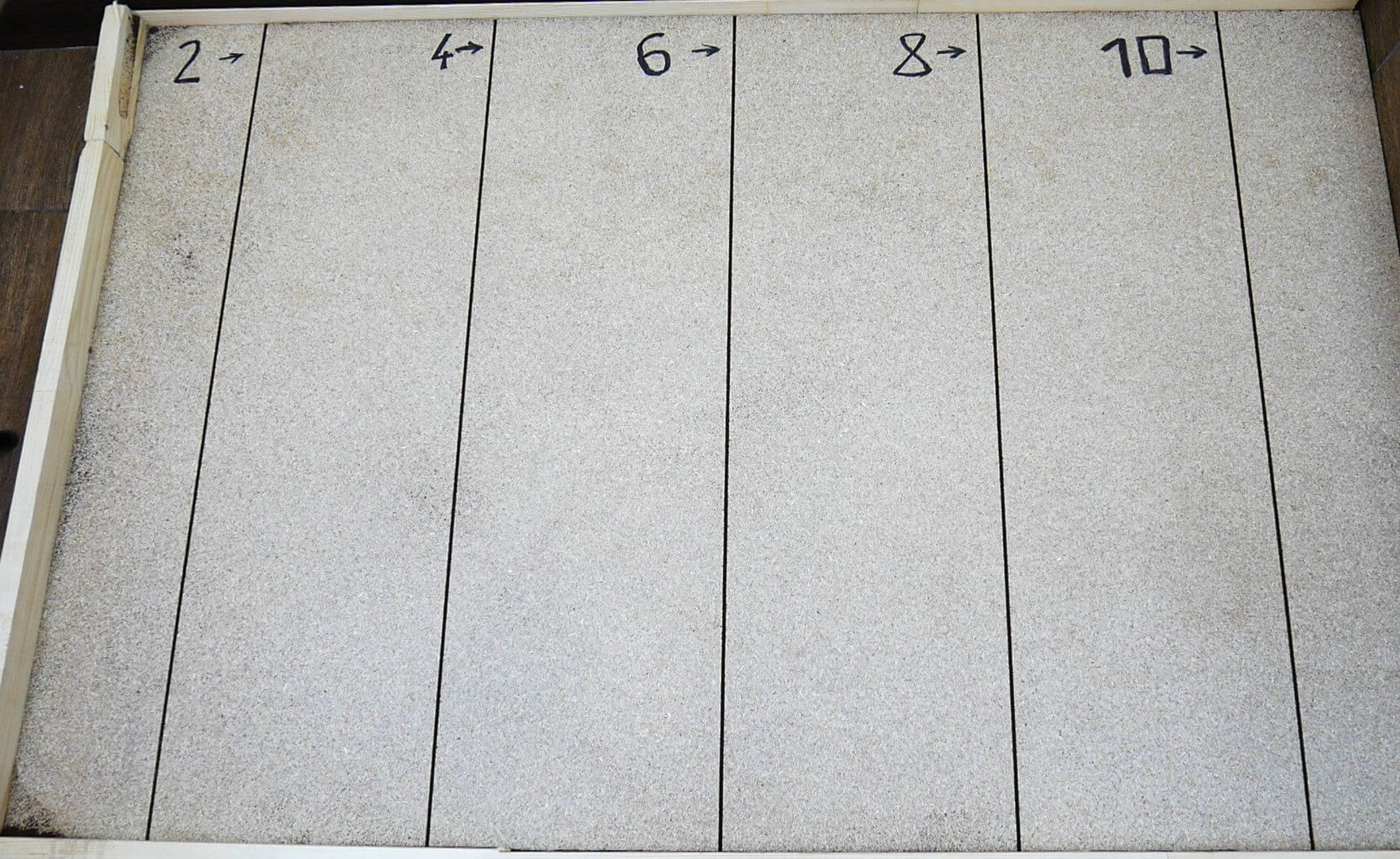
Suction power testing stand
The setup remained virtually unchanged after running the Roborock S6 MaxV on maximum power. Despite the claimed high suction power, the turbo brush throws debris into the suction channel, preventing it from dislodging debris from crevices, and therefore preventing the robot from vacuuming dust out of crevices.
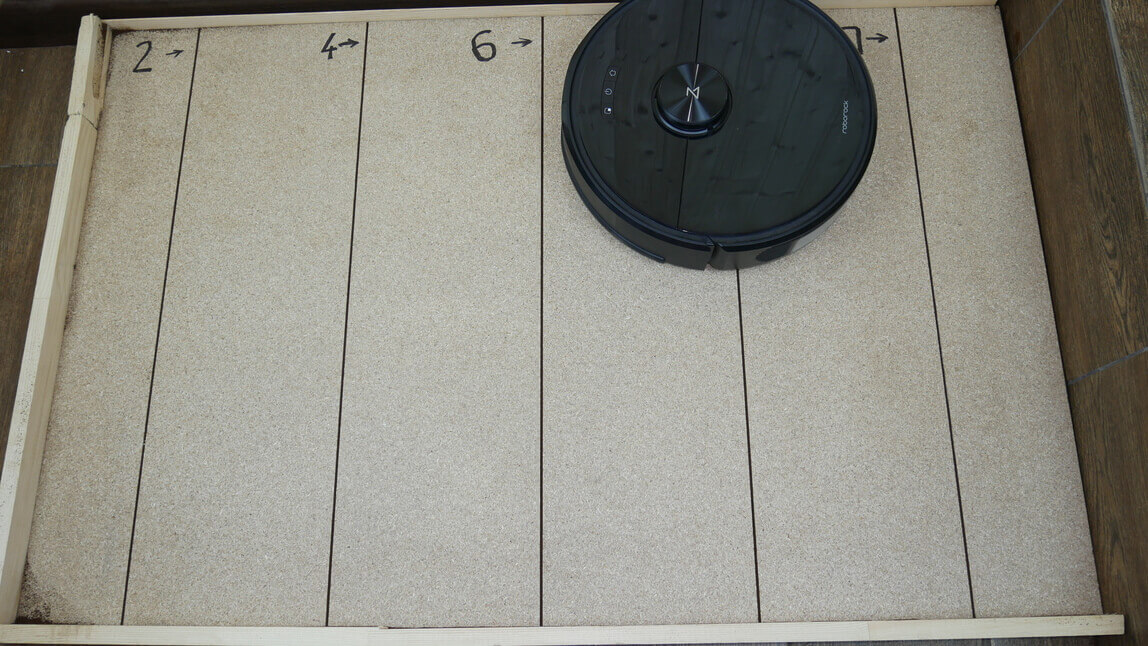
The iClebo O5 is a huge improvement over the Roborock. It effectively vacuumed dust from crevices up to 10 mm deep. During our testing, we confirmed that the iClebo is, in fact, the most powerful of the robots compared.
Okami also failed to suck out the debris from the cracks to make them empty.
The Xbot L7 Pro was able to better pick up debris from a 2mm-deep crack. It struggled with other cracks.
iRobot was able to partially collect debris from crevices as deep as 2 mm.
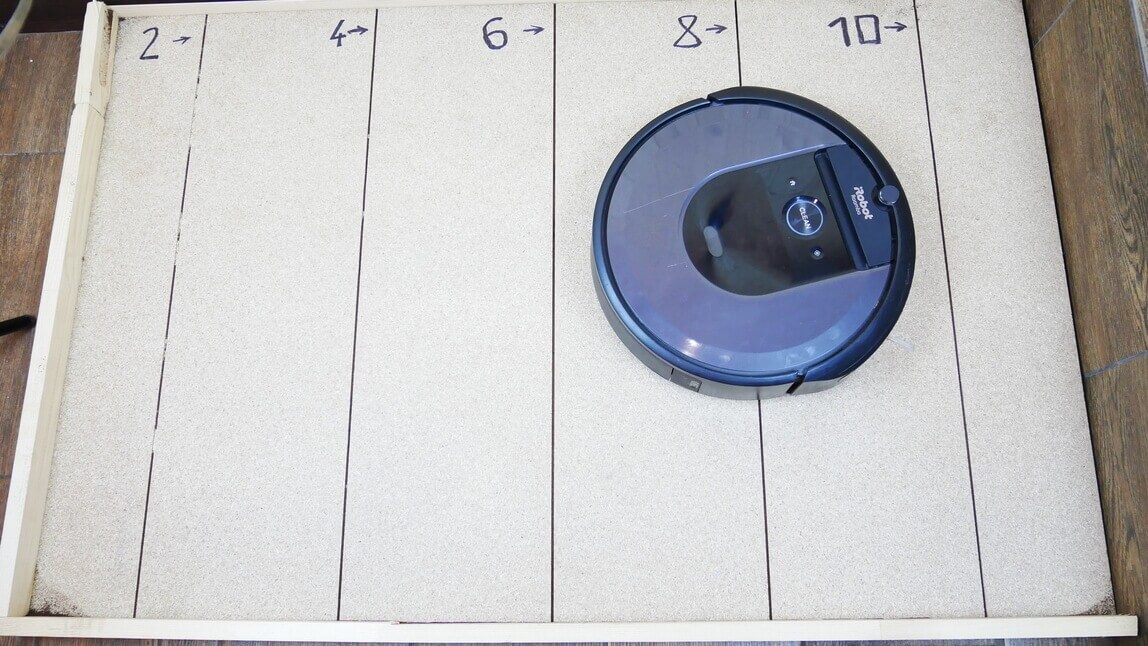
As a result, the iClebo O5 is the most powerful robot. We awarded it one point in this test. Xbot and iRobot performed slightly better than Okami and Roborock, and therefore received half a point each.
Roborock: 7.5 iClebo: 6.5 Okami: 6 Xbot: 9.5 iRobot: 4
Dry cleaning quality on carpet
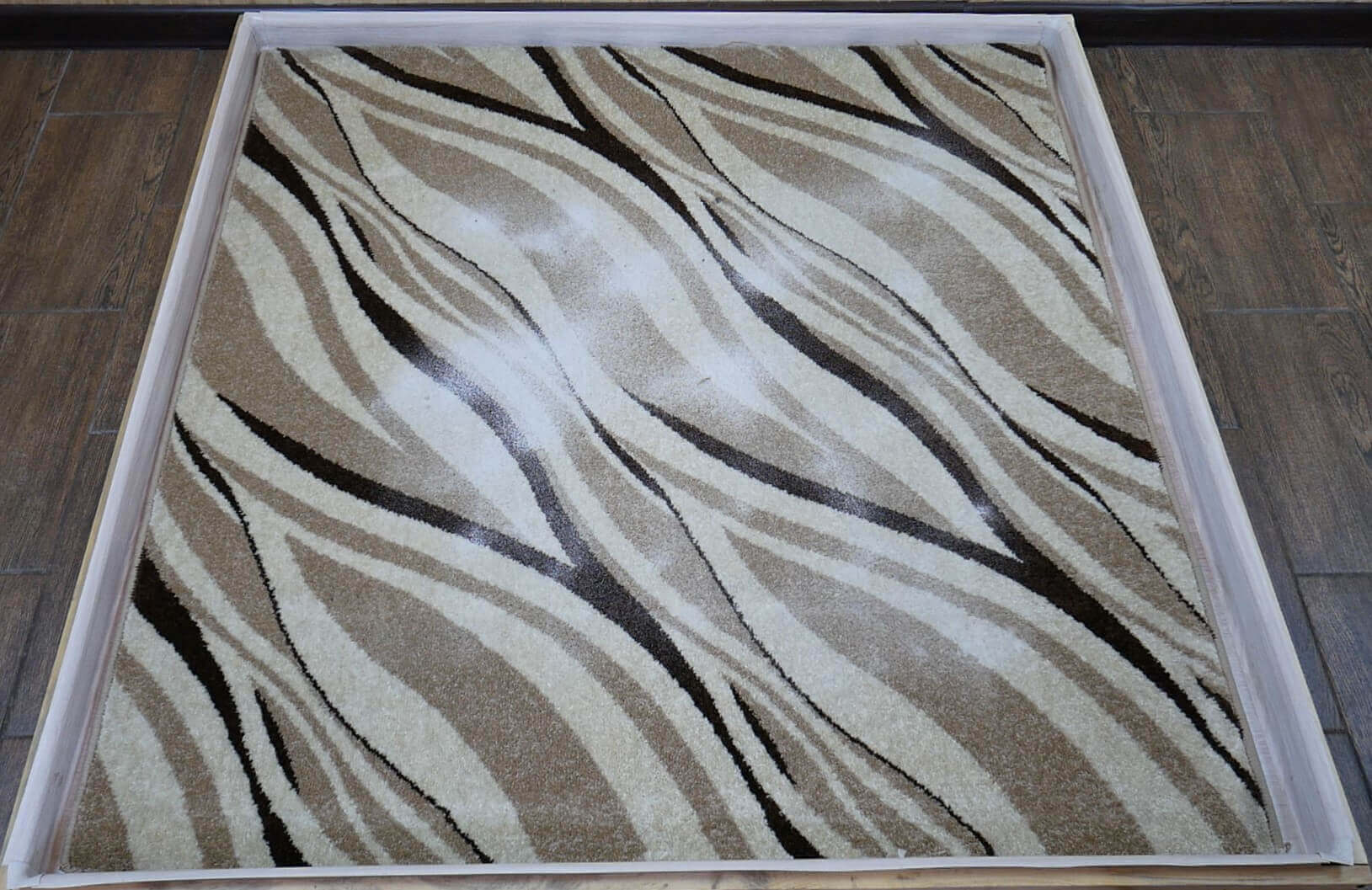
Now let's see how these robot vacuums will suck up sand from the carpet, ensuring the turbo brush can work effectively. We sprinkled 200 grams of sand on the carpet and pre-weighed the empty dust bags of each robot, so that after the tests we could re-weigh them again and determine how much each could collect in the same amount of time. Each robot was given about 7 minutes for the test.
Weight of empty dust collectors:
- Roborock 160g
- iClebo 173 g
- Okami 360 g
- Xbot 288 g
- iRobot 231 g
Weight of full dust collectors:
- Roborock 221 g
- iClebo 235 g
- Okami 405 g
- Xbot 333 g
- iRobot 332 g
Result:
- Roborock 61g
- iClebo 62 g
- Okami 45 g
- Xbot 45g
- iRobot 101g
iRobot achieved the best result, collecting 101 grams of sand. Roborock and iClebo completed the task with results of 61 and 62 grams, respectively. This is a negligible difference. Xbot and Okami performed the worst, collecting 45 grams of sand each.
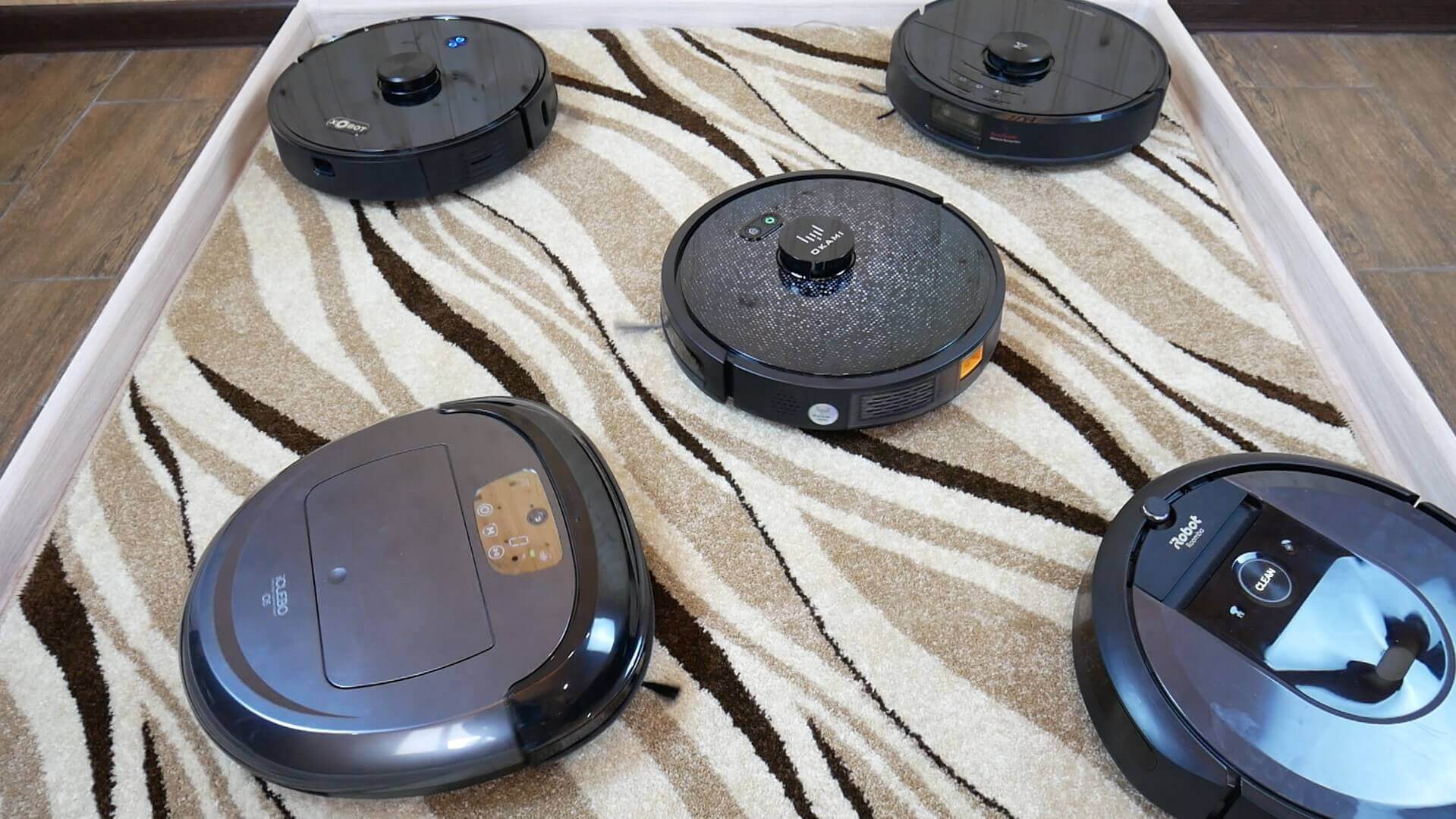
Robot vacuum cleaners on carpet
As a result, we award 1 point to iRobot and half a point each to Roborock and iClebo.
Roborock: 8 iClebo: 7 Okami: 6 Xbot: 9.5 iRobot: 5
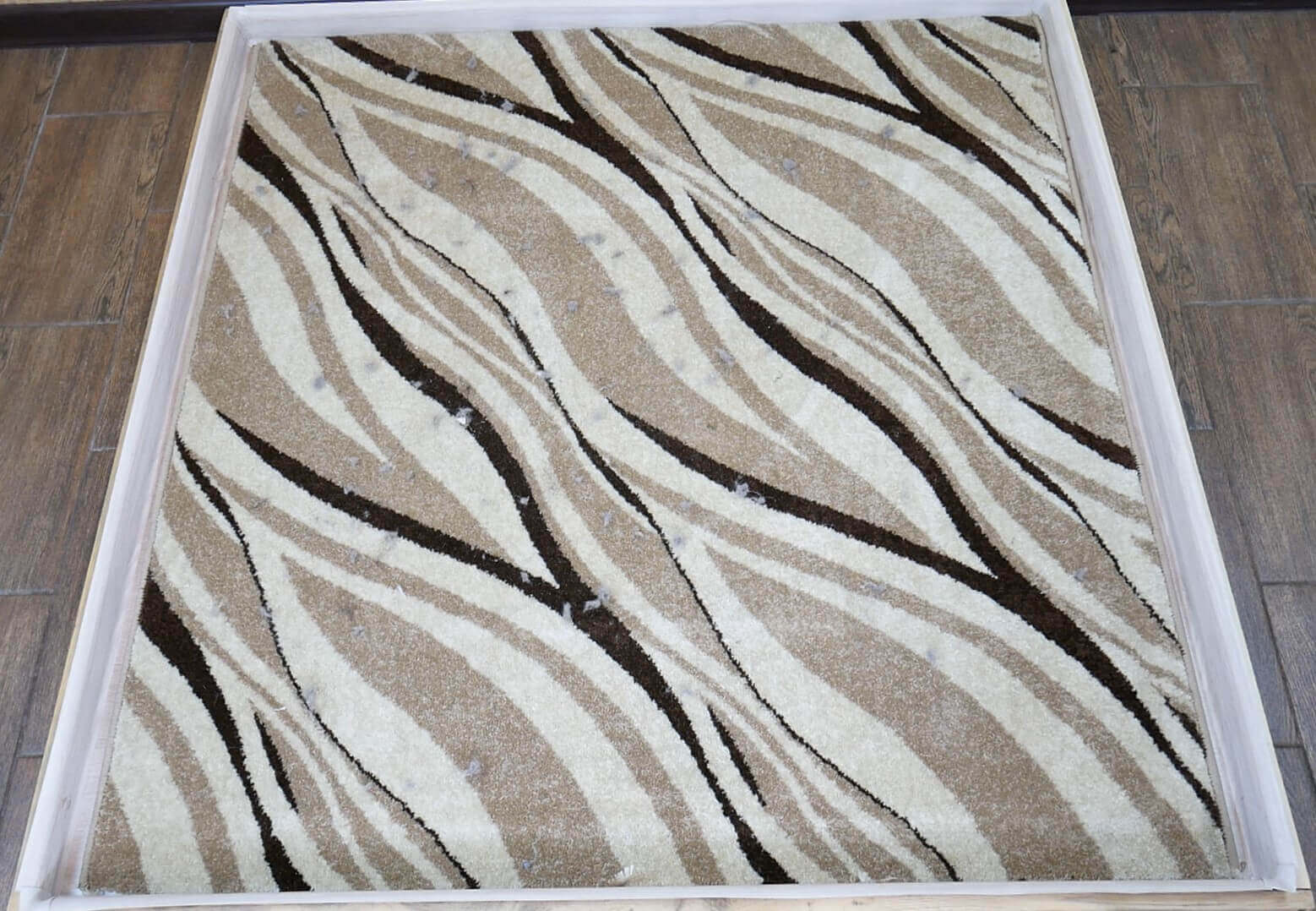
We also tested how well the compared robots removed pet hair from carpet. They all performed admirably, so it's a tie.
Quality of dirt removal
We stained a laminate stand with dirt from shoes to see how robots could handle tough stains.
The Roborock S6 MaxV robot cleaned away all the dirt well and left no streaks.
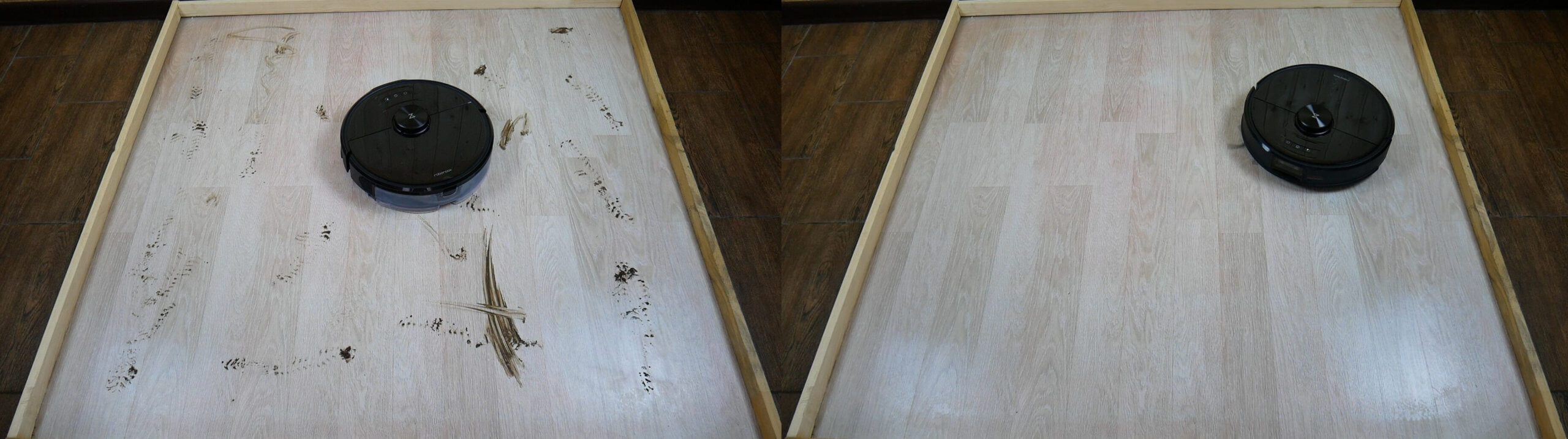
The iClebo O5 didn't do a good job of removing dirt and failed to do its job. However, the cloth is suitable for wiping dust off the floor. It's better than nothing compared to, say, an iRobot.
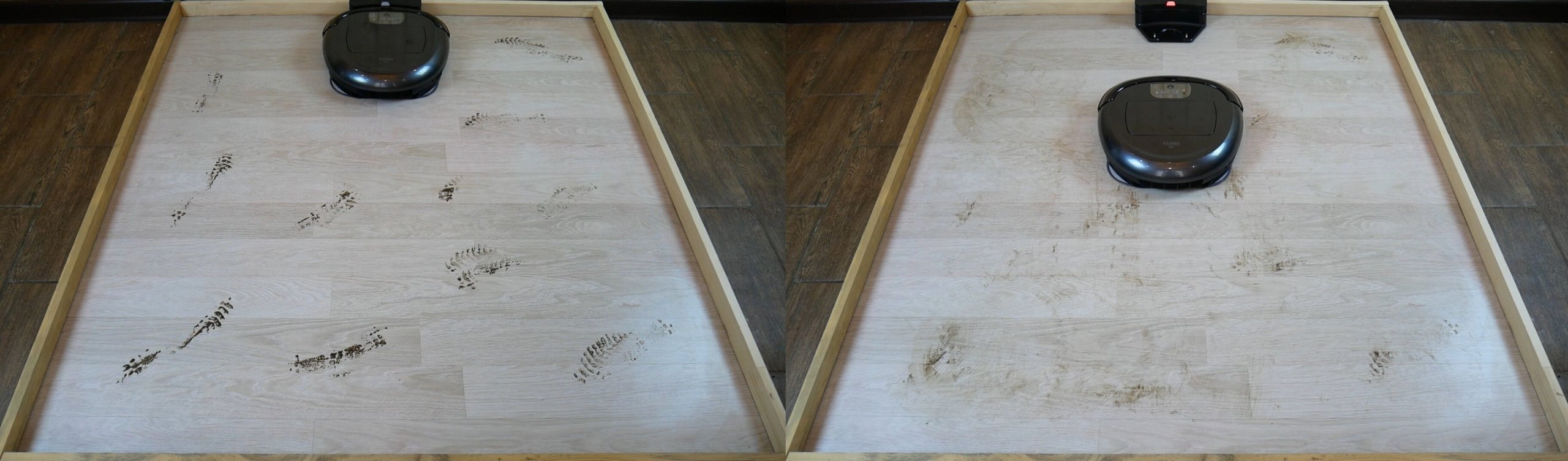
The Okami U100 Laser removed most of the dirt, but not perfectly, especially around the perimeter.
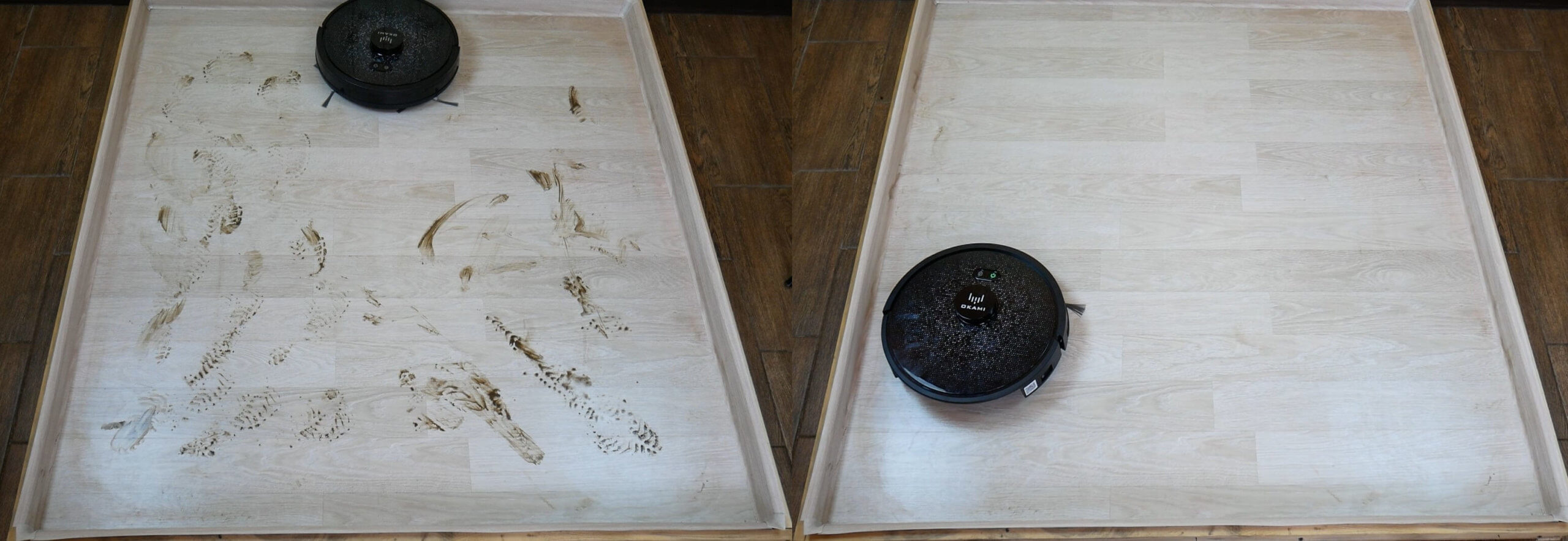
The Xbot L7 Pro also didn't do a perfect job, although it did remove some of the dirt.
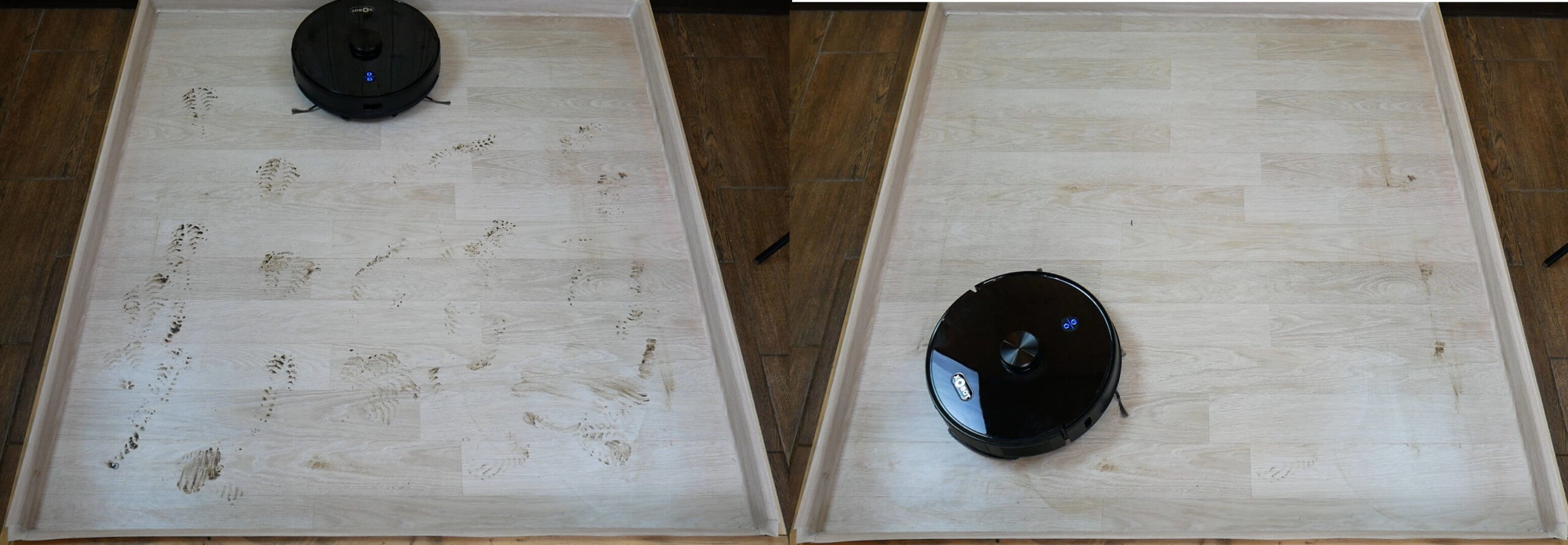
As a result, Roborock receives the maximum 1 point. Okami and Xbot each receive 0.5 points. iClebo failed the task, and iRobot doesn't clean the floor at all, so they receive no points.
Roborock: 9 iClebo: 7 Okami: 6.5 Xbot: 10 iRobot: 5
Area serviced with wet cleaning
Another test was conducted to determine how much area a cloth would cover in wet cleaning mode. In our case, the room area being cleaned was 11 square meters.
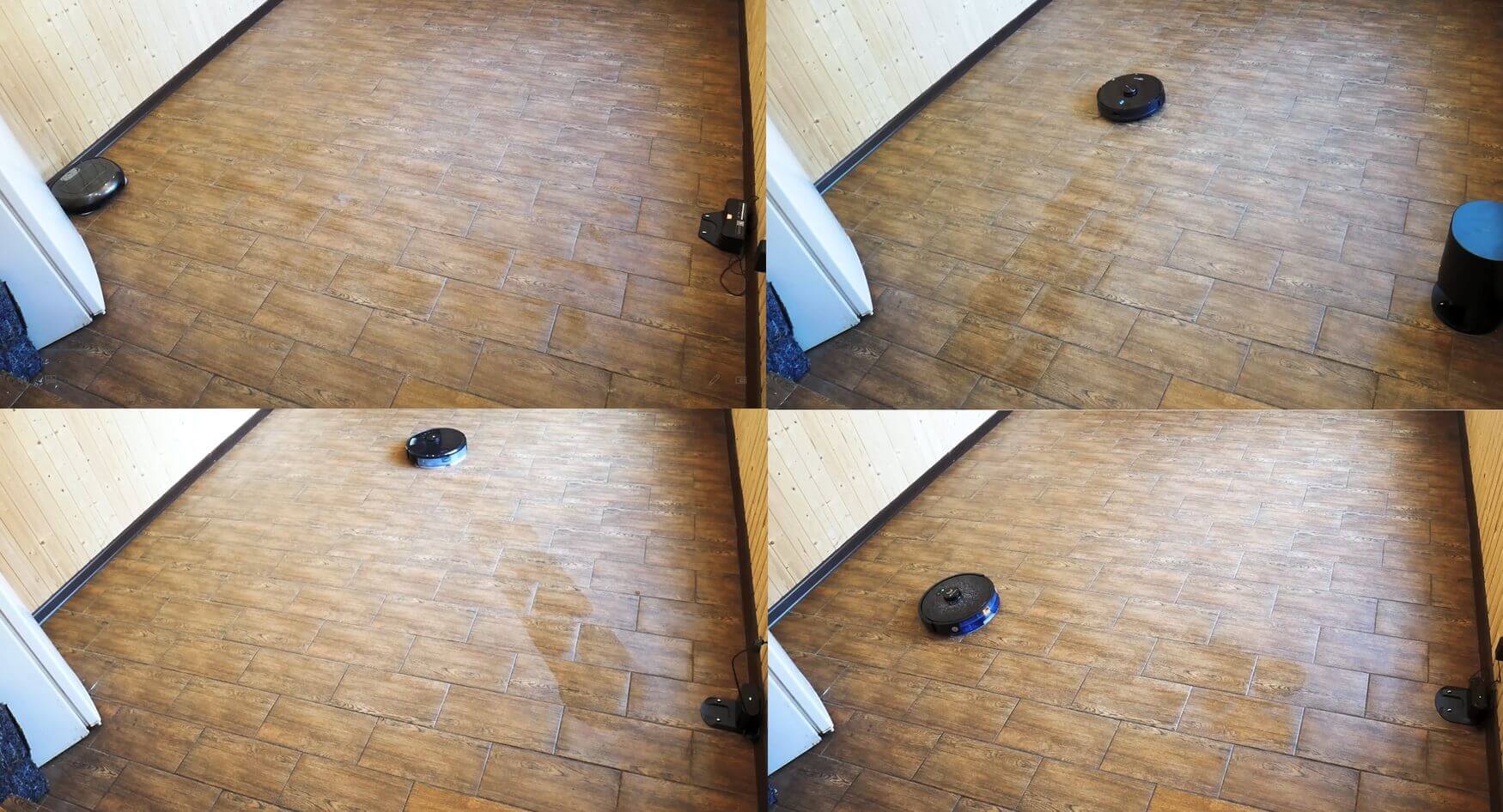
The iClebo can clean a floor area of up to 15 square meters. The Xbot L7 Pro can clean up to 40 square meters in wet mopping mode. The Roborock S6 MaxV passed the entire area eight times before running out of water. This means its cleaning area is approximately 100 square meters. The Okami U100 Laser passed the entire area twice, and the water level in the tank remained virtually unchanged. Therefore, this robot vacuum can wet mop areas larger than 100 square meters until its battery runs out.
But when comparing the wet cleaning capabilities of the Roborock and Okami, it's important to note that at the highest setting, the Roborock wets the floor better, with a greater amount of water flowing onto the cleaning cloth. Furthermore, it offers a full-fledged dry cleaning in wet cleaning mode, where the robot actually vacuums. It's also important to note that the Roborock settings allow you to customize the water flow level for each room. For example, in a kitchen with tile floors, set the maximum water flow level to level 3, while in rooms with laminate floors, set it to level 2 or 1. So, this is certainly a useful option.
As a result, I give Roborock a full 2 points, Okami 1.5 points, and Xbot 1 point. I already gave iClebo 0.5 points at the beginning, so as to at least objectively evaluate its wet cleaning performance compared to the iRobot.
Roborock: 11 iClebo: 7 Okami: 8 Xbot: 11 iRobot: 5
Passing dark spots
Another test was to determine how flagship models from different companies handle dark spots on the floor. In our case, it was a black carpet.
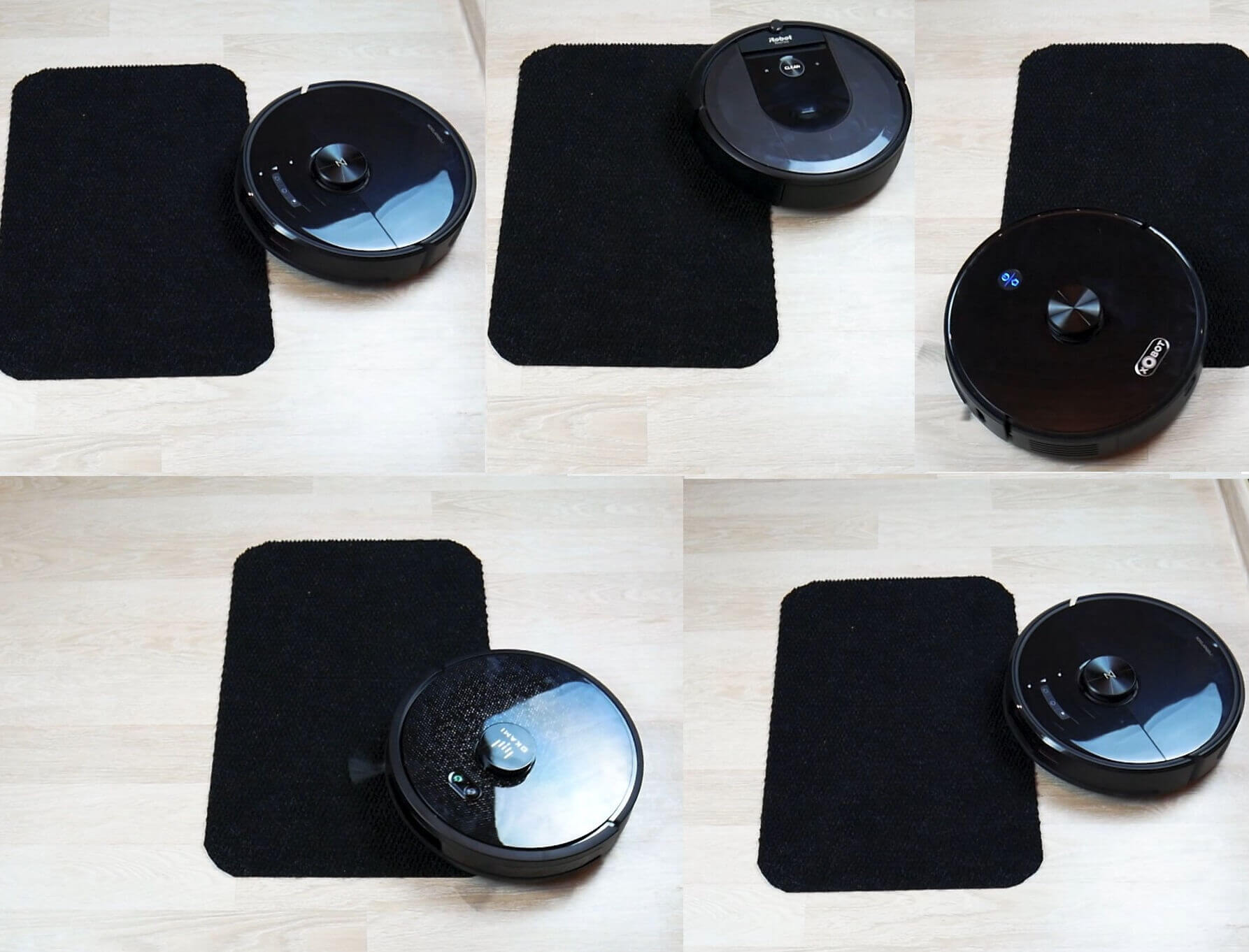
The test revealed that iClebo, iRobot, and Xbot have no problem with dark spots on the floor. However, Roborock and Okami recognize them as elevation changes. Therefore, the top three robots receive the highest scores in this test.
Roborock: 11 iClebo: 8 Okami: 8 Xbot: 12 iRobot: 6
Threshold passability
Let's determine what thresholds each robot can cross. Roborock easily crosses thresholds up to 2 cm high, as claimed by the manufacturer. iClebo was also able to cross a threshold of 20 mm in our test, although it doesn't always succeed. Even the manufacturer claims a threshold of up to 15 mm. Okami can cross thresholds up to 15 mm, and Xbot can also cross thresholds up to 20 mm. iRobot cannot cross obstacles higher than 15 mm.
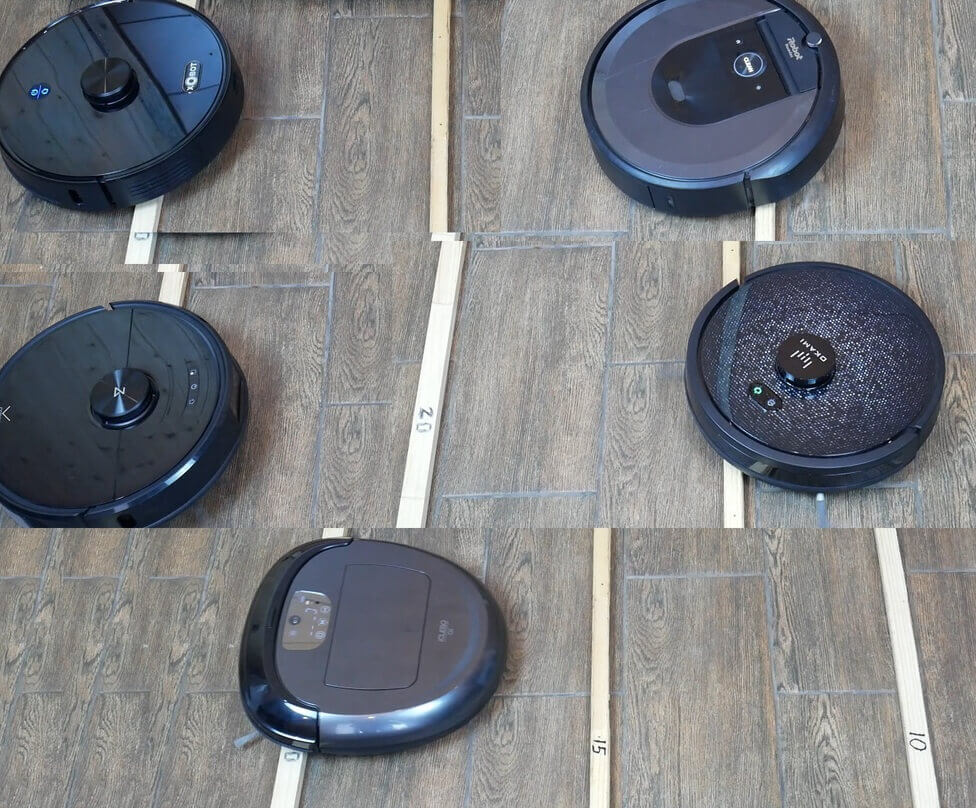
So in this regard, everyone gets one point except Okami and iRobot.
Roborock: 12 iClebo: 9 Okami: 8 Xbot: 13 iRobot: 6
Avoiding obstacles on the floor
Another important comparative test of robot vacuum cleaners is how they perform when there are obstacles on the floor, such as cords and socks. These two objects often block the robot's brushes, requiring outside intervention to get the robot back into action.
Roborock S6 MaxV detected a charger and a sock on the floor, so it avoided them and cleaned only the area it considered safe.
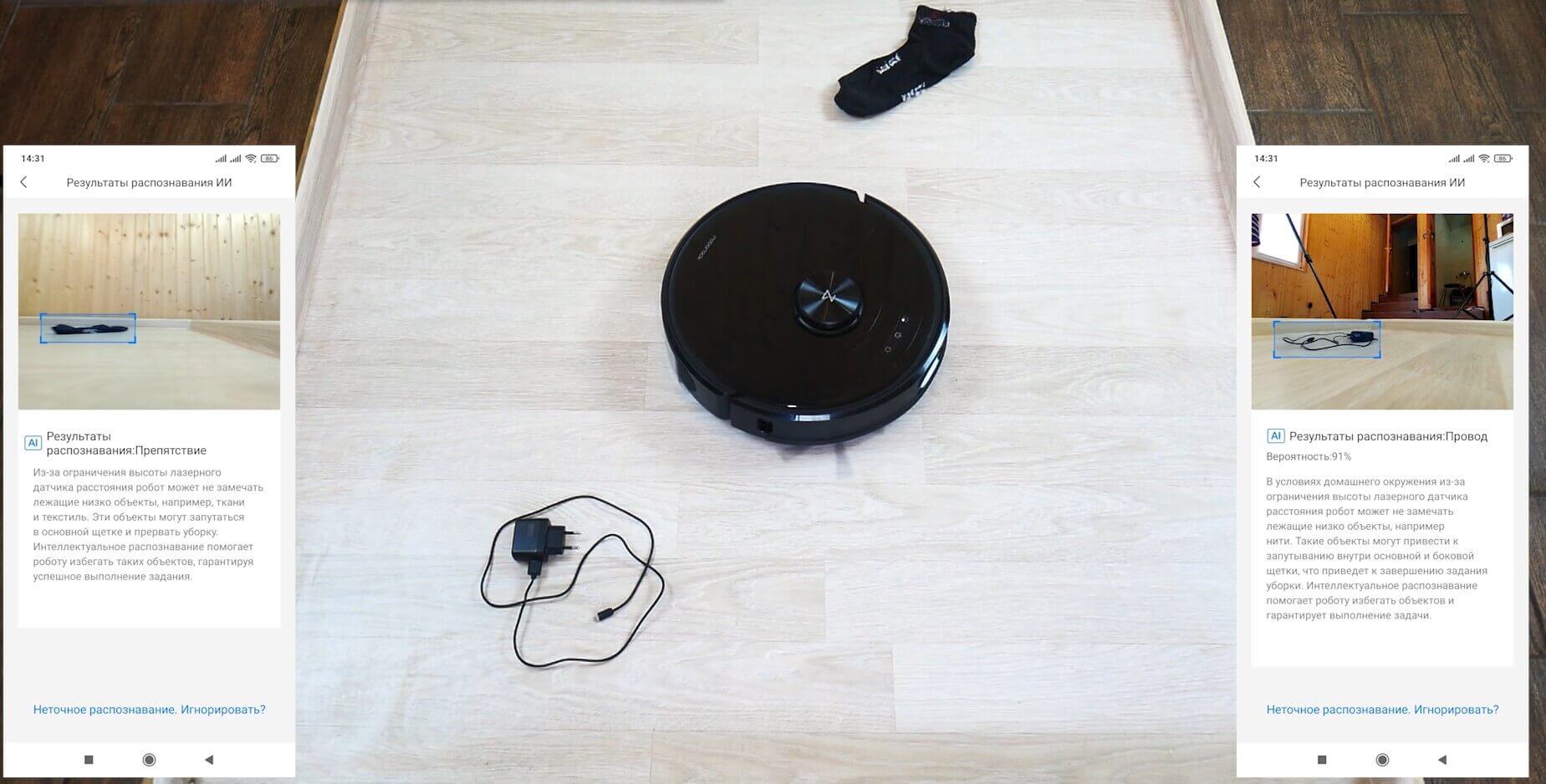
Roborock detected a sock and cord on the floor.
As for the remaining robots, each one failed to complete the cleaning process because either a sock became tangled around the central brush, or the charging cord became entangled around the central or side brushes. As a result, manual intervention was required.
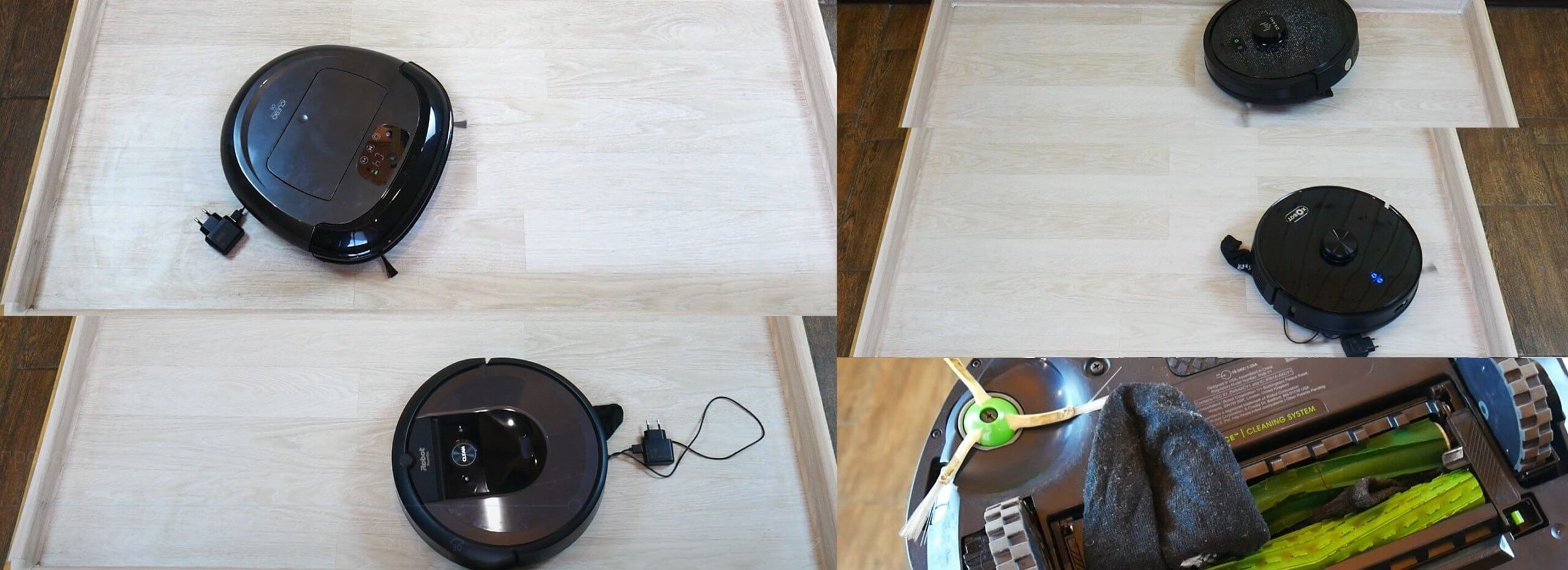
In this test, the Roborock S6 MaxV and its innovative camera are a clear winner. This robot gets the nod.
Roborock: 13 iClebo: 9 Okami: 8 Xbot: 13 iRobot: 6
In addition, due to numerous requests from subscribers, we've decided to demonstrate how the Roborock S6 MaxV handles spilled sauce or pet surprises. You can see for yourself:
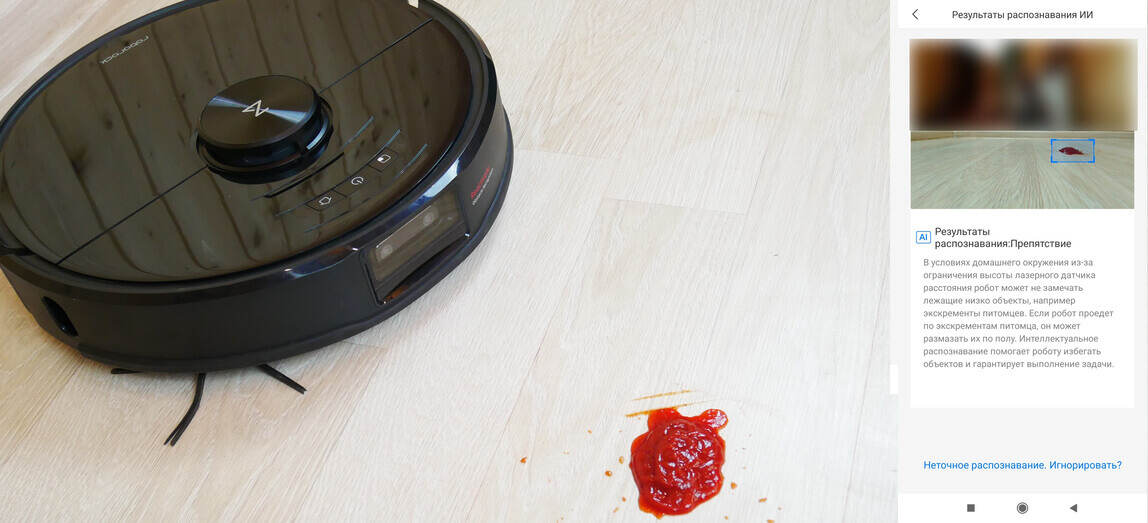
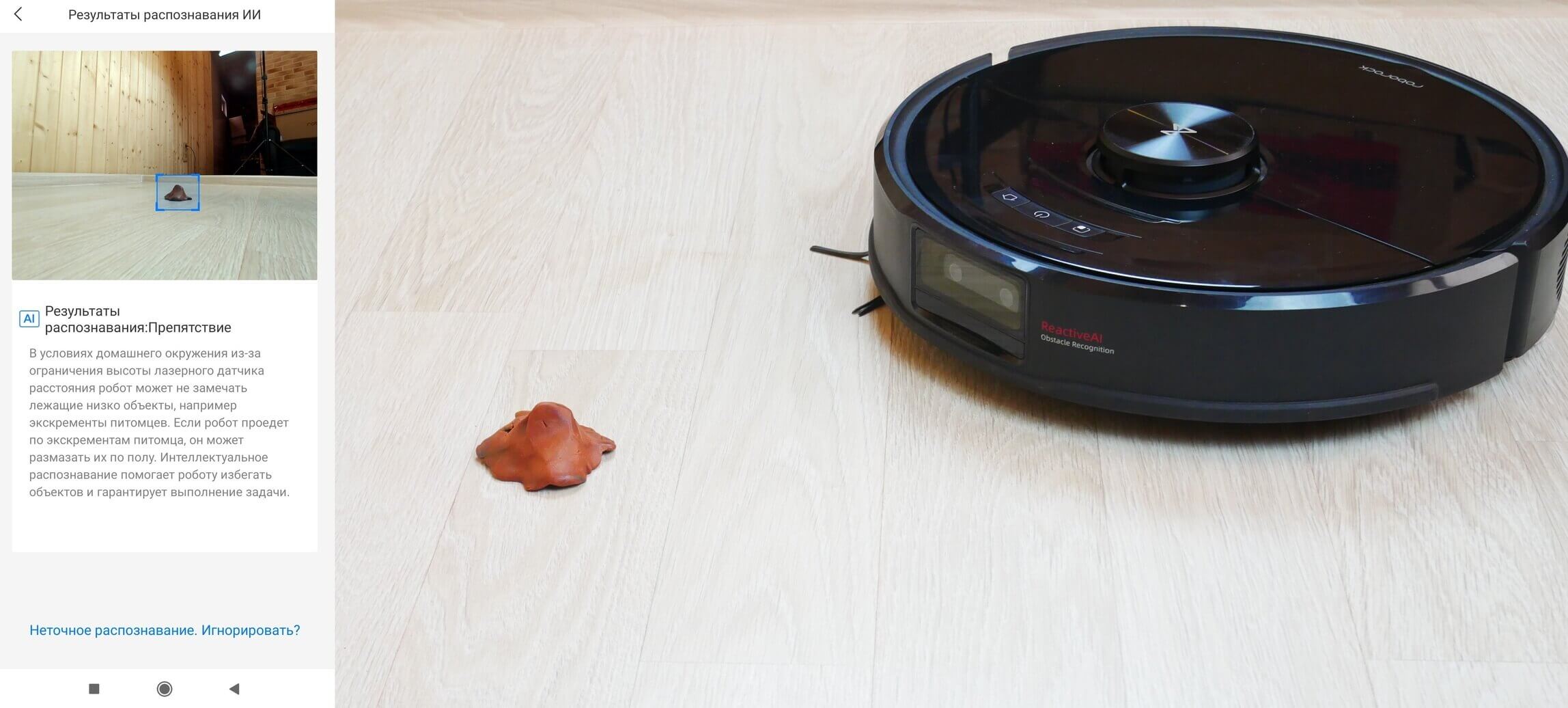
Yes, it recognizes these types of obstacles and avoids them. I think this deserves a few points, as the issue of pets and their waste is a pressing one. But we've already evaluated the camera before, so I'd give it at most another half point for this test.
Roborock: 13.5 iClebo: 9 Okami: 8 Xbot: 13 iRobot: 6
Noise level
Finally, we compared the robots' noise levels in different modes. For this, we used a special device called a sound level meter.
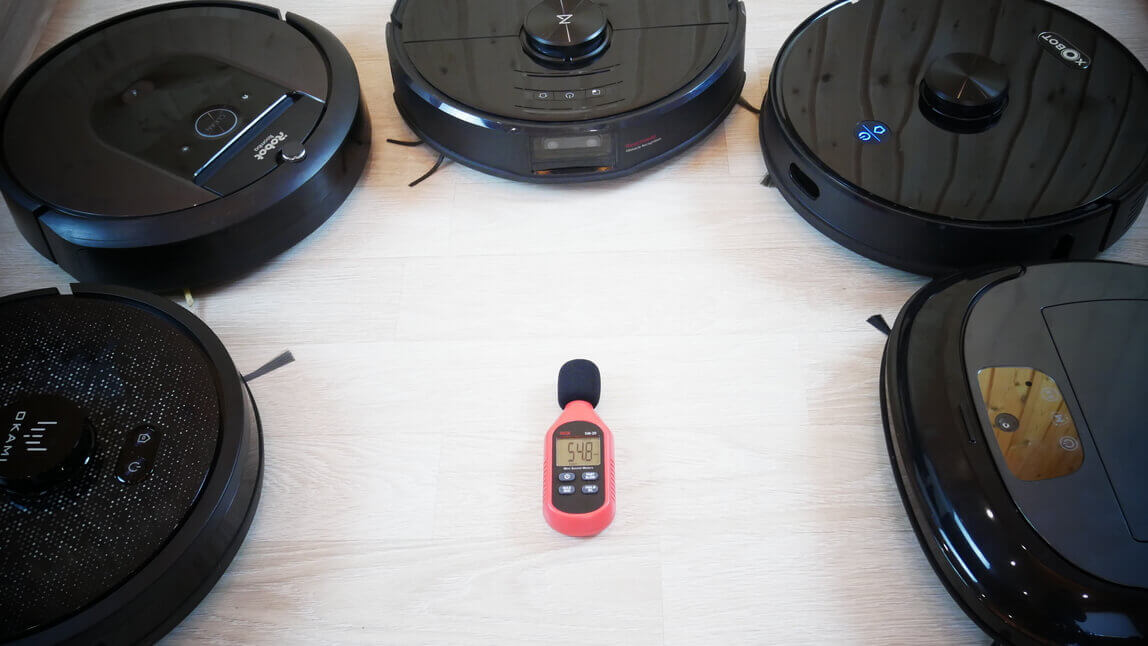
You can see all the values in the table:
| Mode | Roborock S6 MaxV | iClebo O5 | Okami U100 | Xbot L7 Pro | Roomba i7+ |
| Floor polisher | Up to 59.2 dB | — | Up to 57 dB | Up to 58.5 dB | — |
| Minimum power | Up to 62 dB | Up to 67.1 dB | Up to 62.5 dB | Up to 62.1 dB | — |
| Average power | Up to 63.3 dB | Up to 71.5 dB | Up to 62.6 dB | Up to 63.3 dB | Up to 67 dB |
| Maximum power | Up to 67 dB | Up to 72.3 dB | Up to 65.2 dB | Up to 71.1 dB | — |
We see that the Okami U100 Laser is the quietest of all. The iRobot doesn't have adjustable suction power, so we've entered the maximum suction power value into the table. We'll give the Okami one point. The Roborock and iRobot are slightly louder, but quieter than the other robots. We'll also award them half a point each.
Let's sum it up
The final result is as follows:
Roborock: 14 iClebo: 9 Okami: 9 Xbot: 13 iRobot: 6.5
Of course, this rating is my personal opinion based on testing under identical conditions. Perhaps my scoring system will seem biased to some, and some tests should have been given more or less points. I'd be grateful if you shared your opinion in the comments.
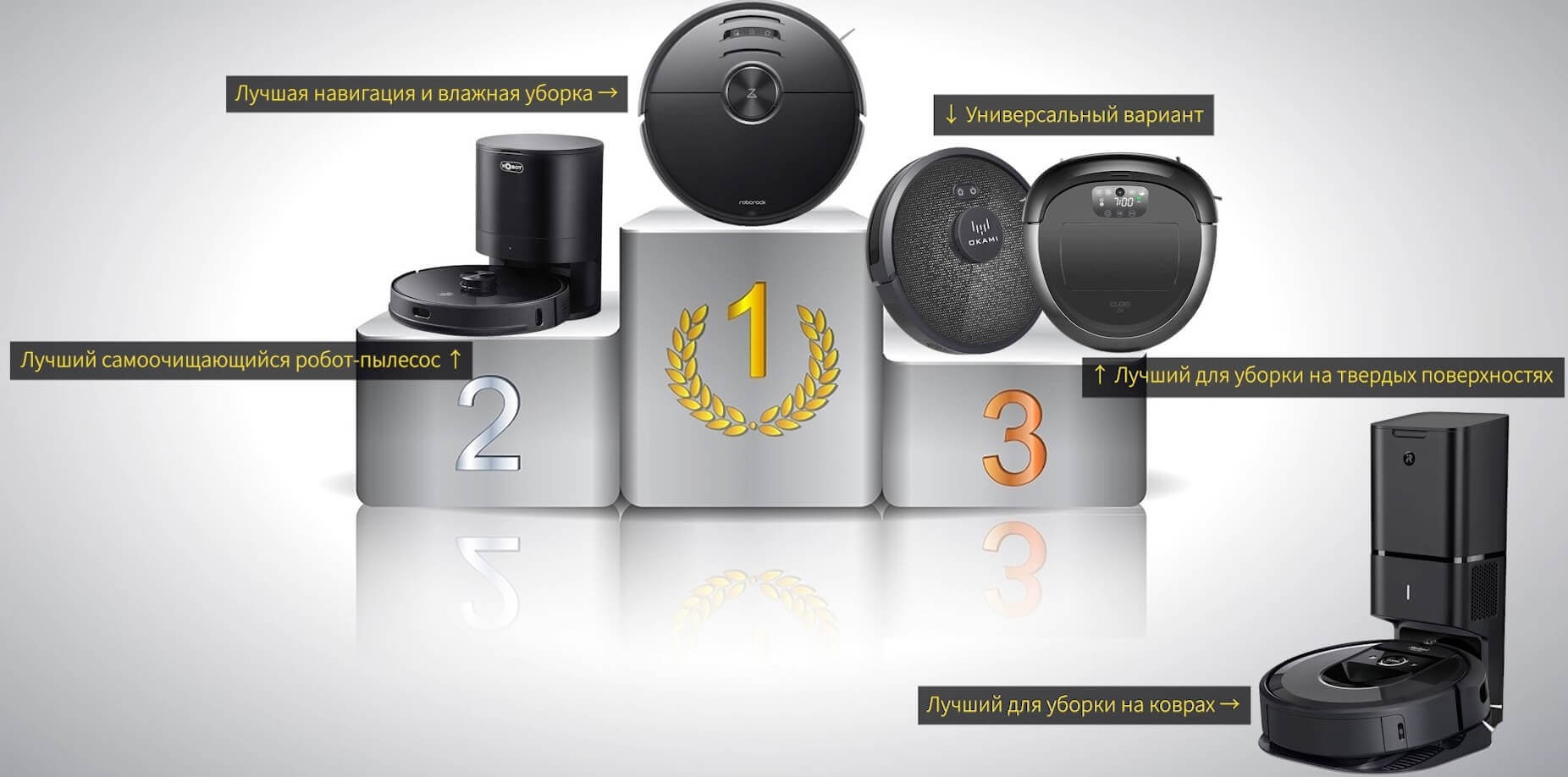
To summarize, the Roborock S6 MaxV wins, but by a narrow margin over the new Xbot L7 Pro. Their functionality is virtually identical, and their cleaning performance is roughly the same. The only significant differences are in their wet mopping capabilities and their main feature. It's up to you to decide whether to choose more advanced navigation with artificial intelligence or a self-cleaning base and remote control as an alternative to an app, which isn't for everyone.
The same situation applies to iClebo and Okami. They are different, but they achieved the same results in the final standings. The iClebo O5 is slightly inferior in terms of functionality and navigation, but nevertheless demonstrated the highest performance on hard surfaces. The build quality and brand reputation should not be underestimated.
In this comparison, Okami may be of interest to a certain audience because it has some advantages over Roborock, such as remote control, two side brushes, and better accessories. It also has advantages over Xbot and iClebo, such as superior wet cleaning. There are also clear advantages over iRobot. However, its competitors are also better in certain respects. So, it all depends on your preferences, but in any case, the robot deserves attention and holds its own in the market. ranking of the best robot vacuum cleaners of 2020.
iRobot is undoubtedly the leader in carpet cleaning thanks to its unique, patented cleaning module design. However, its navigation and functionality are clearly inferior. Its saving grace is its self-cleaning base, which only a few robots in the world could boast as of late 2020. Overall, this robot performed worse, largely due to its lack of wet mopping, which was assessed multiple times across various criteria.
I hope you found this comparative test of the best robot vacuum cleaners of 2020 interesting and were able to choose the best option based on price, cleaning performance, and features. If you have any questions, please ask them in the comments below. Happy shopping, everyone!
Thanks for the detailed review! Very relevant. I'm currently looking for a robot vacuum cleaner. I think the wet and dry cleaning performance should be given more points. That's what people buy a vacuum cleaner for. It's much more important than, for example, the included accessories. Price is also worth noting.