Comparing a robotic floor polisher and a hand-held floor polisher: which is better for cleaning floors?!
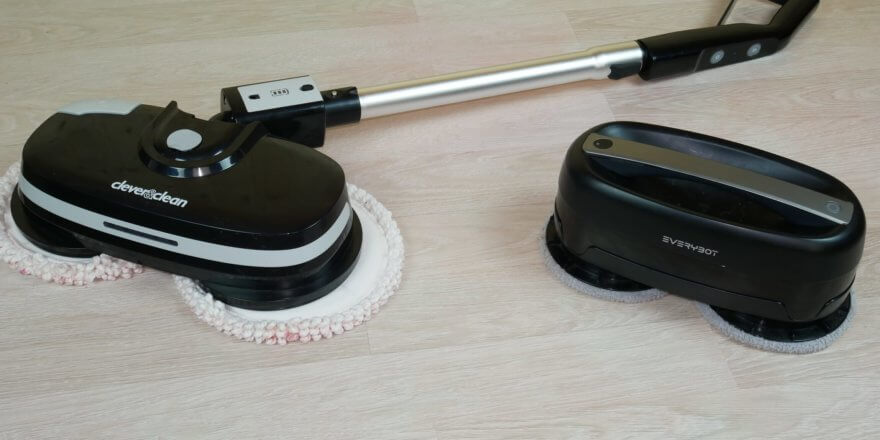
Hello to all readers of the site robovac.washerhouse.com! We recently tested a new hand-held floor polisher. Clever&Clean Glider A5, which performed excellently and left a good impression. In this publication, we decided to compare this handheld floor polisher with a robotic floor polisher. We chose a similarly designed robot as our competitor. Everybot EdgeLet's determine the best way to clean floors: with a handheld floor polisher or a robotic floor cleaner. We'll compare the devices based on many criteria, including cleaning performance. So, let's get started!
Comparison #1 – Cleaning Quality
First, we'll use a special test bench to determine which floor polisher is better for heavy-duty cleaning: a manual one or a robotic one. For the test, we stained the laminate flooring with sauce, paint, dirt, lipstick, and spilled coffee.
Examples of stands before testing:
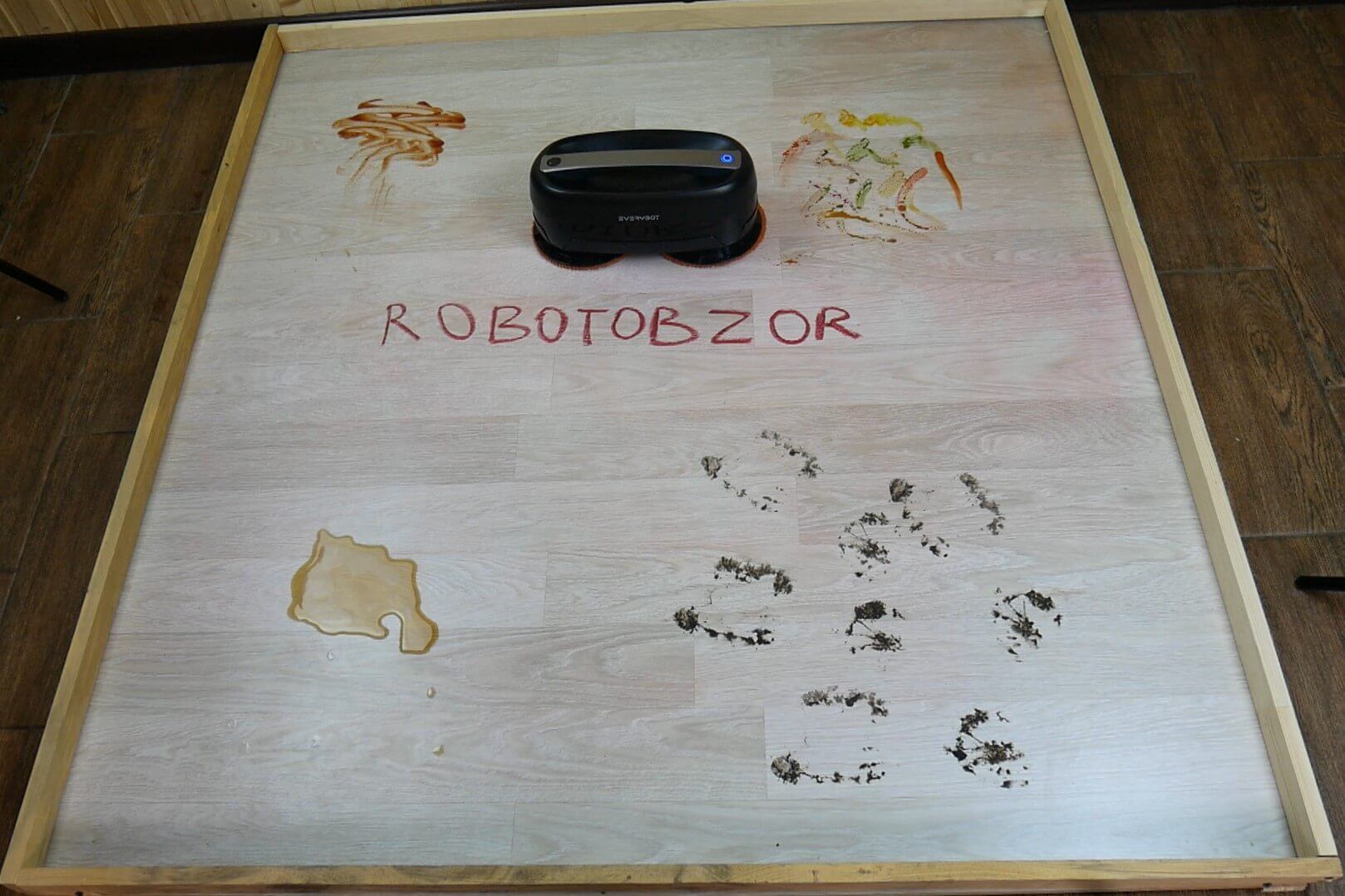
Robot on the stand
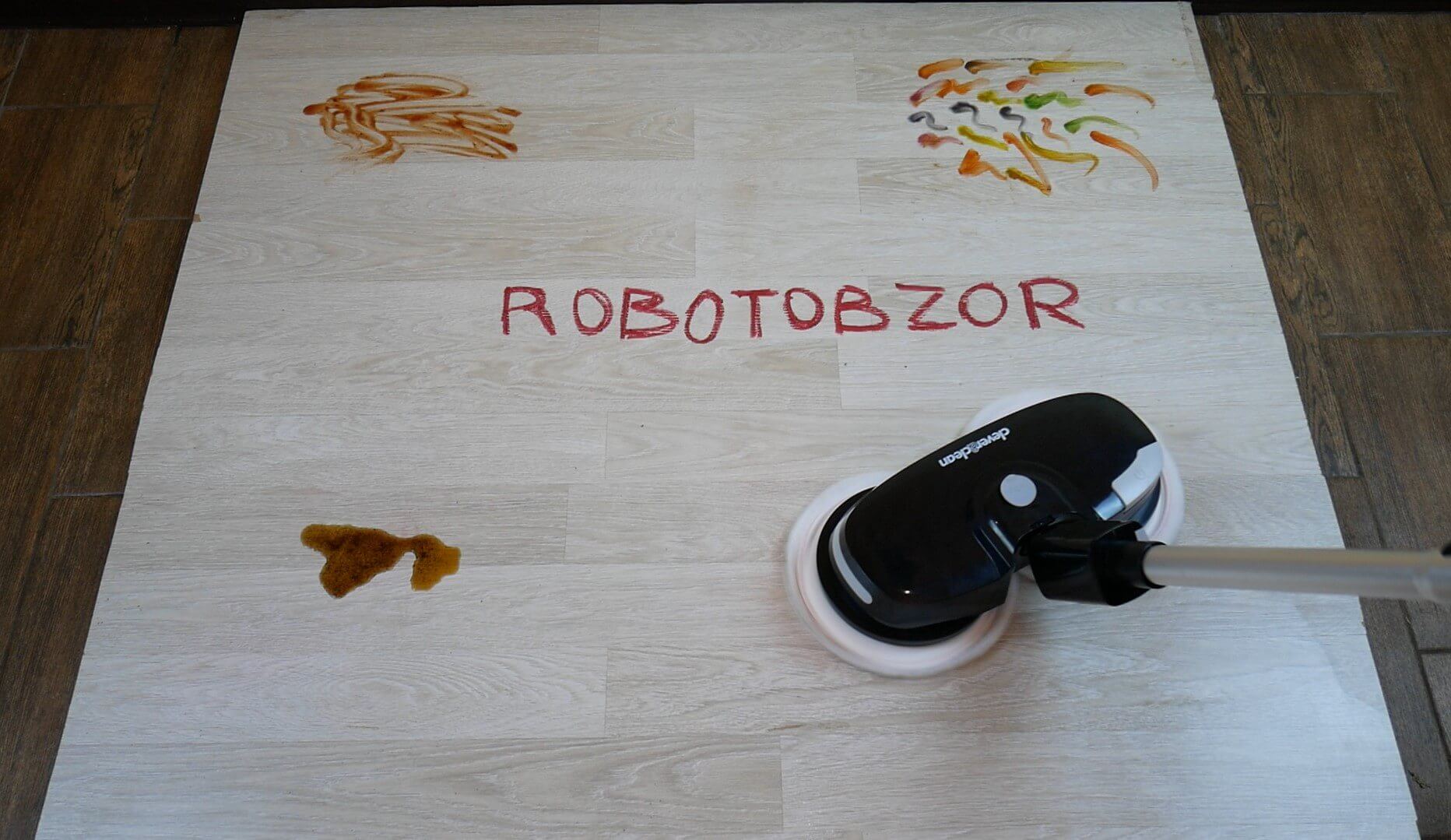
Electric mop test
The comparison was demonstrated in our video review:
Overall, the Glider A5 hand polisher is slightly better at removing dirt (but both did the job), which is why it gets its first point.
C&C Glider A5 1:0 Everybot Edge
Comparison #2 – Cleaning Time
An equally important comparison criterion is the time spent cleaning. Within a single room, let's compare how long it takes to clean a floor with a handheld floor polisher and a robotic floor polisher.
I cleaned the room, which has a useful area of about 10 square meters, with an electric mop in just 2 minutes and 10 seconds. I slowed down in some areas to scrub the floor more thoroughly.
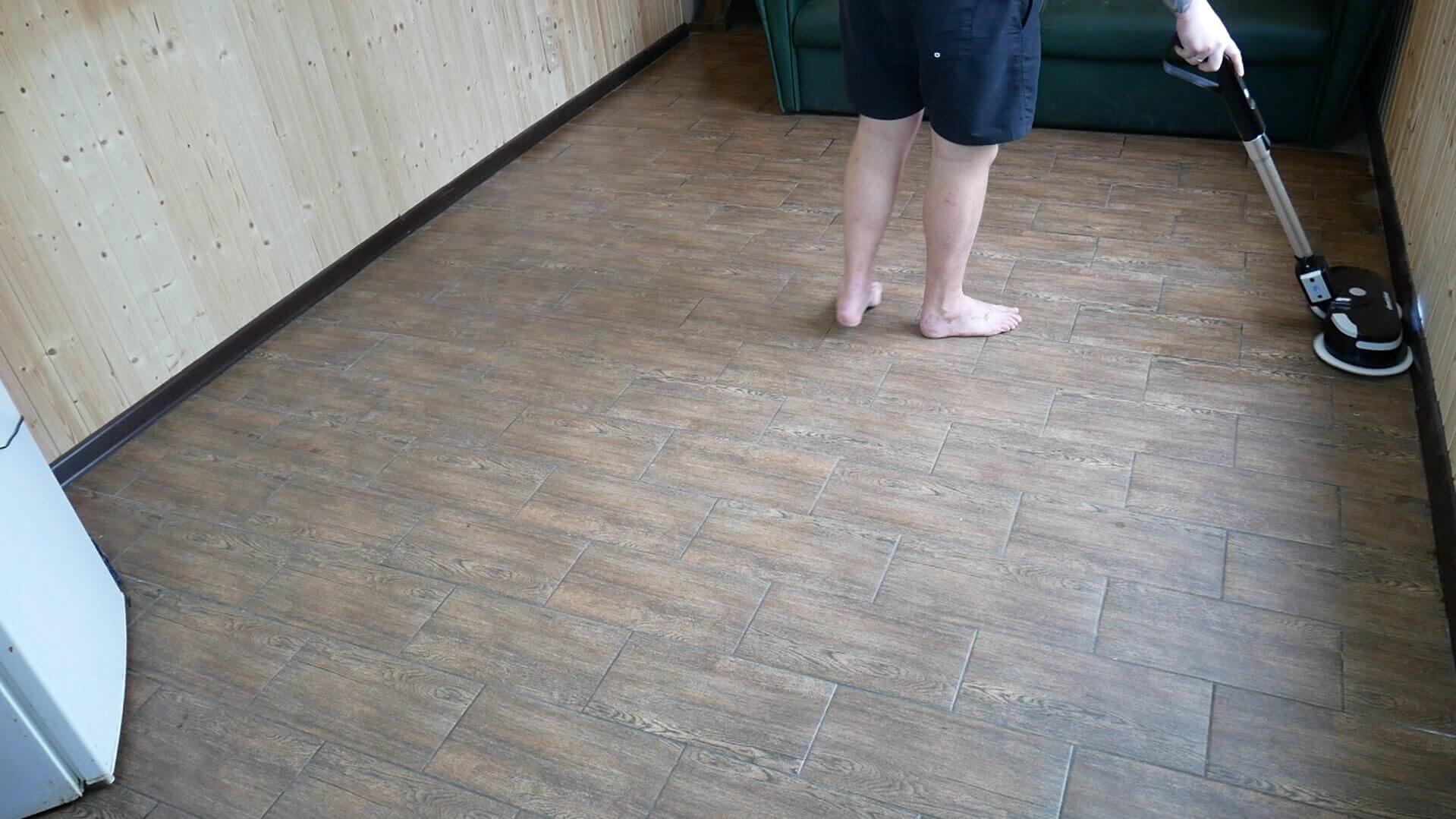
Washing the floor with a hand polisher
As for the robotic mop, Everybot Edge doesn't automatically end its cleaning cycle after it's covered the entire area. It will either clean for 100 minutes in automatic mode or 50 minutes in accelerated mode.
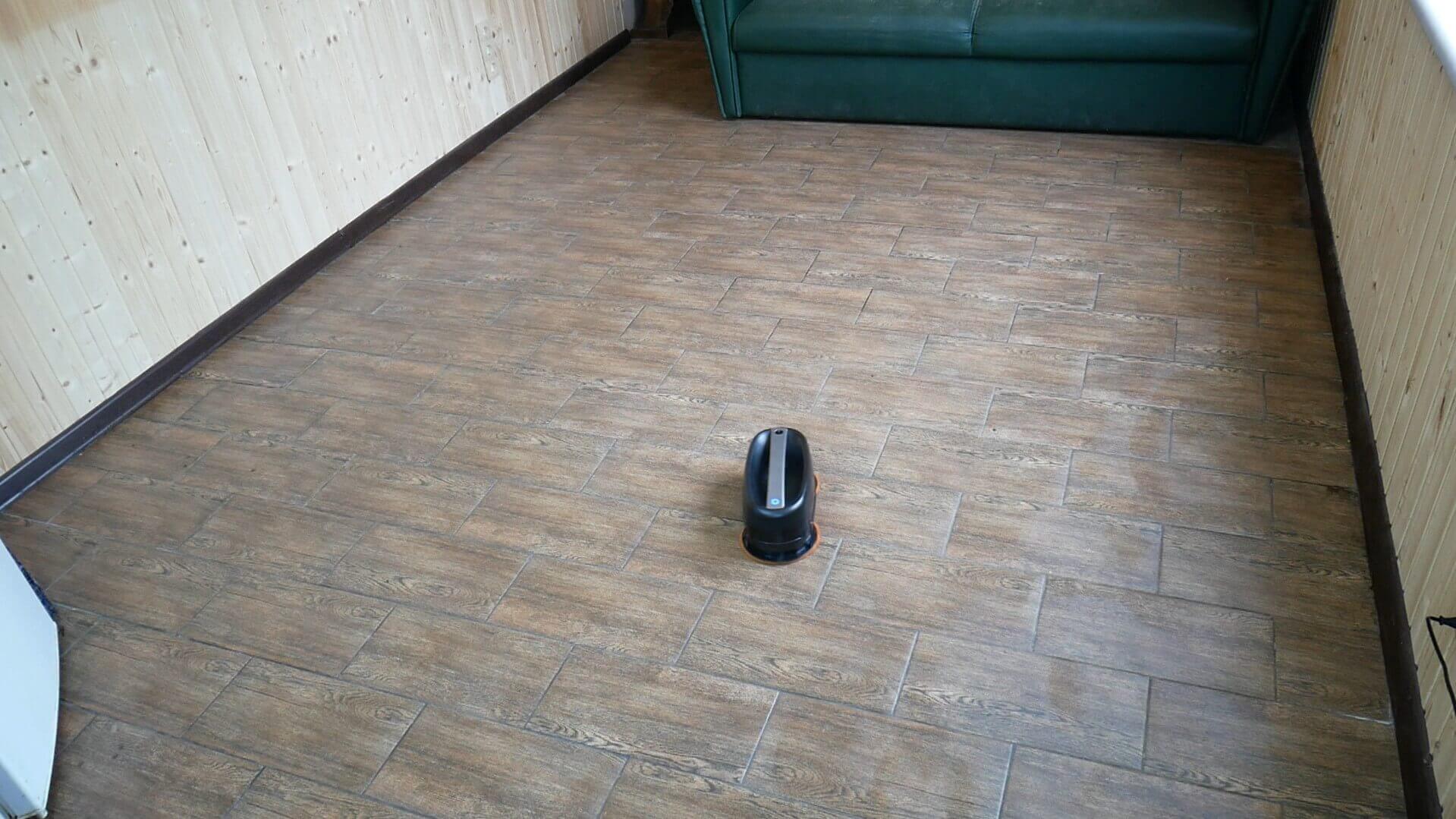
Robotic floor cleaning
Just checking the speed, it took the robot just under 20 minutes to cover the entire area once. But as we've already mentioned, the minimum cleaning cycle is 50 minutes.
But here's an important detail: a robotic floor polisher, like a handheld floor polisher, only takes a couple of minutes to set up. Then you simply turn it on and go about your business, wasting no time cleaning. So, with a robotic floor polisher, the actual floor cleaning process takes zero minutes, compared to 2 minutes and 10 seconds with an electric mop. How do you like this turn of events? Do you agree? I'd love to hear your thoughts in the comments. In my opinion, as counterintuitive as it may sound, cleaning with a robot takes up less of your free time.
C&C Glider A5:
So, Everybot Edge wins this round for its autonomy. I'd even give it 2 points, as automatic cleaning is a big step toward freeing up your time from routine household chores and using it productively.
Everybot Edge:
Overall, 2 points in favor of the robotic floor polisher.
C&C Glider A5 1:2 Everybot Edge
Comparison #3 – Design Features
In addition to the quality of the floor cleaning and the time spent cleaning, it's also important to consider the design of the floor polishers themselves. Let's discuss them in more detail.
The robot takes up less storage space. It can charge on a windowsill or in a secluded corner behind the sofa, without disrupting your home's decor. This isn't a particularly important factor, but it's worth considering nonetheless.
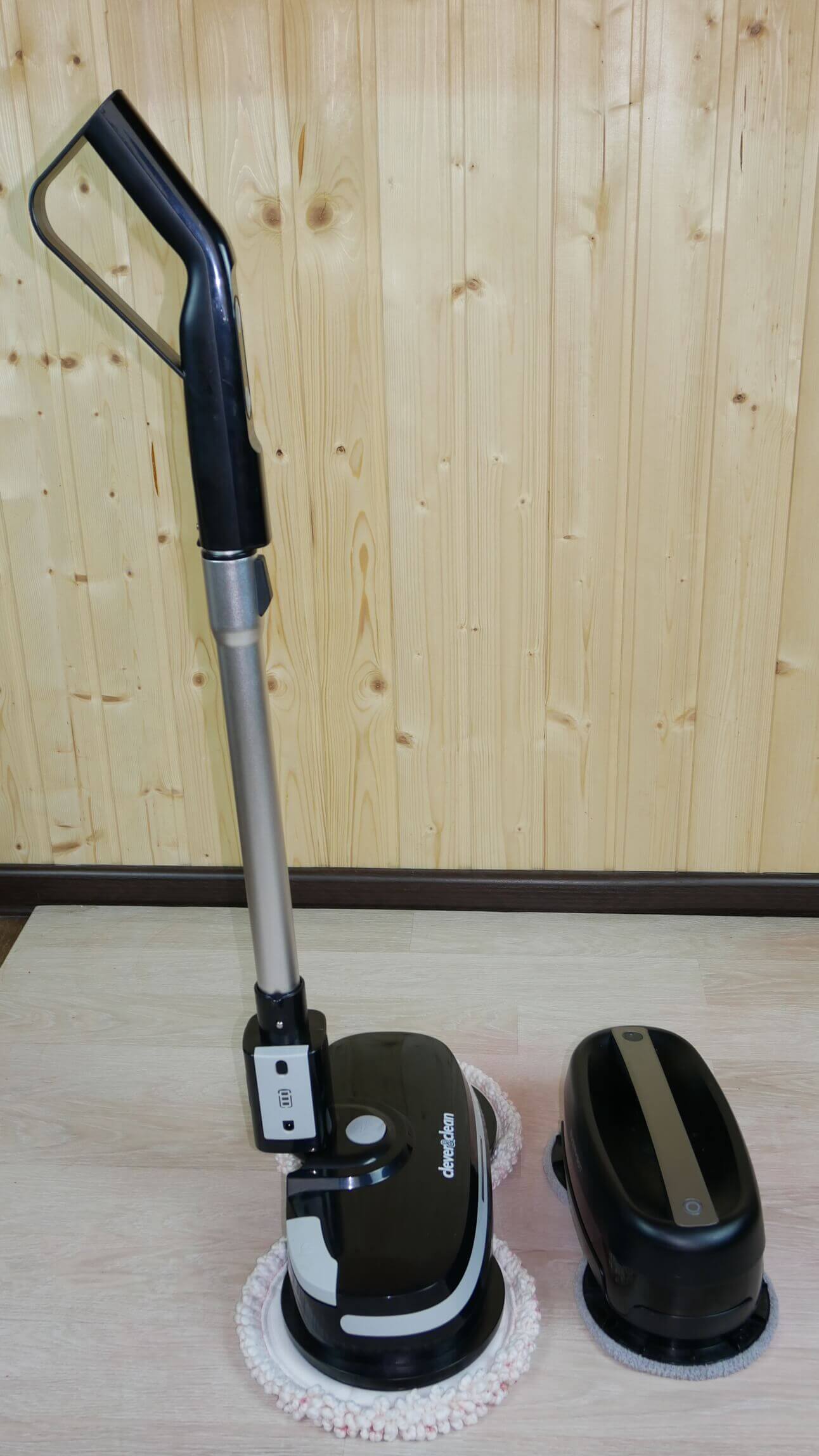
Dimensions of floor polishers during storage
The second argument in favor of a robotic mop is its versatility. It can be used to clean vertical surfaces, such as kitchen backsplashes, windows, or bathroom walls, if needed. This is facilitated by its lightweight design and convenient handle.
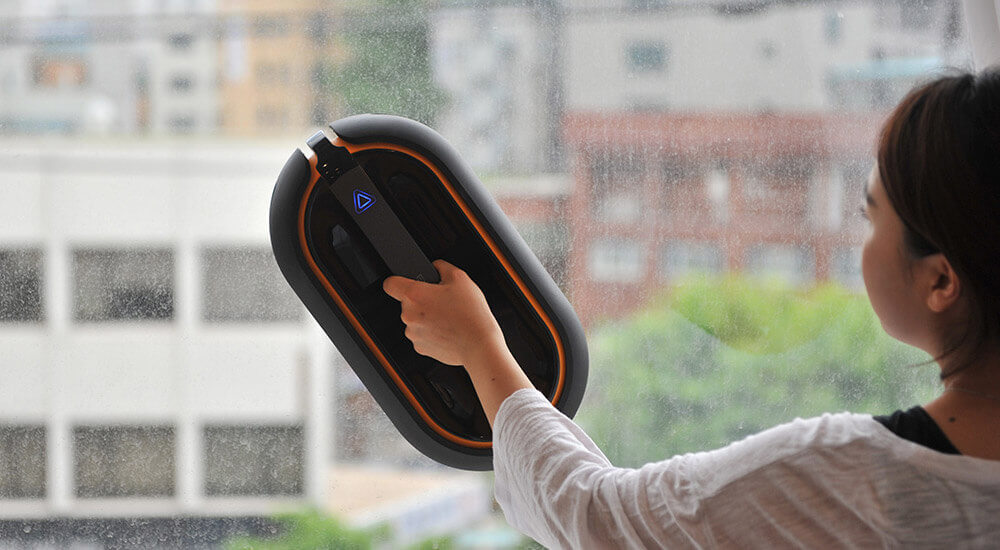
Window washing
Third, the Everybot Edge is slightly quieter. Its noise level is 46 dB, compared to 60 for an electric mop. This isn't a significant difference, but it's a fact.
Now let's list the design features that favor a hand-held floor polisher:
Firstly, the water tank inside the handheld floor polisher holds 300 ml of water. The two water tanks inside the robot hold 60 ml of water each, for a total of 120 ml. The handheld electric mop has a larger capacity, making it suitable for cleaning larger areas.
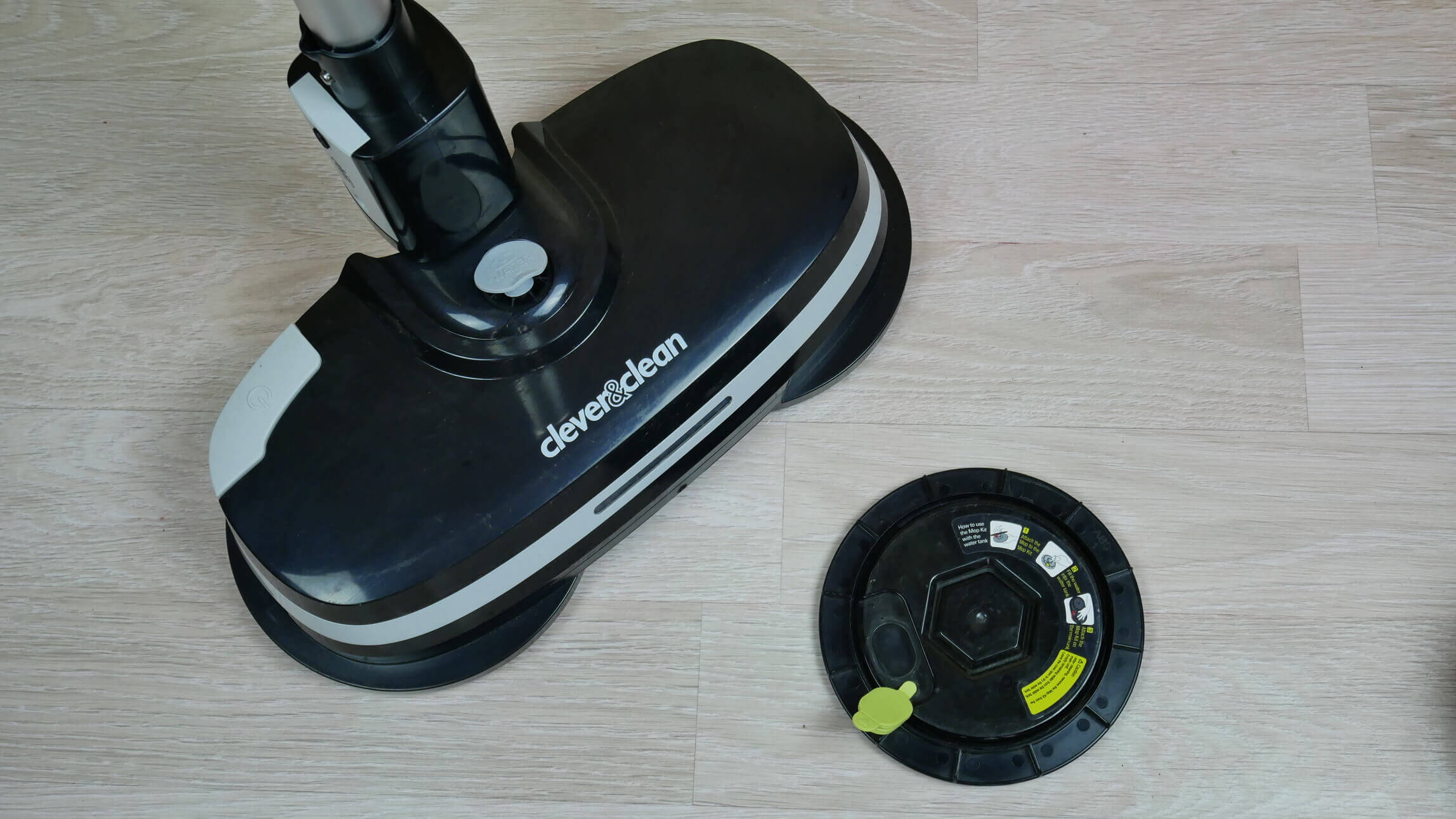
Comparison of tanks
Secondly, the height of a handheld floor polisher is about 9.5 cm, while a robotic floor polisher is a whopping 13 cm. Therefore, a handheld floor polisher can fit under low furniture, such as a kitchen cabinet, while a robotic floor polisher won't fit under some furniture.
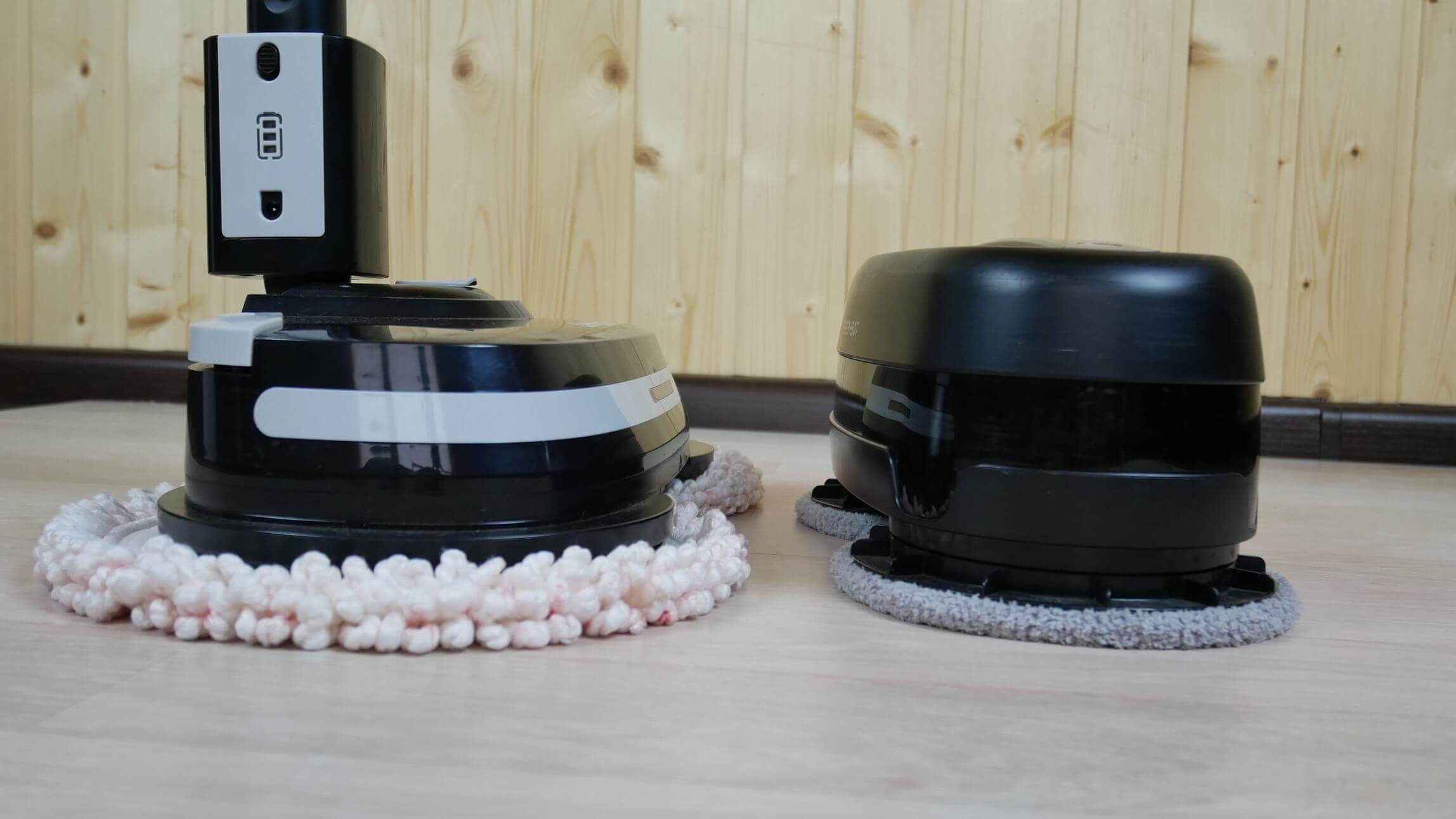
Height comparison
Third, the rotation speed of the handheld floor polisher's pads is higher than that of the robotic mop. This is because the robotic mop moves by rotating the pads one after the other, so they can't rotate any faster. But cleaning quality is important to us, so the faster the pads rotate, the better the mop cleans or polishes the floor. Incidentally, the handheld mop's pads are larger in diameter: 22 cm versus 15.5 cm. This means the electric mop covers a larger area in a single pass.
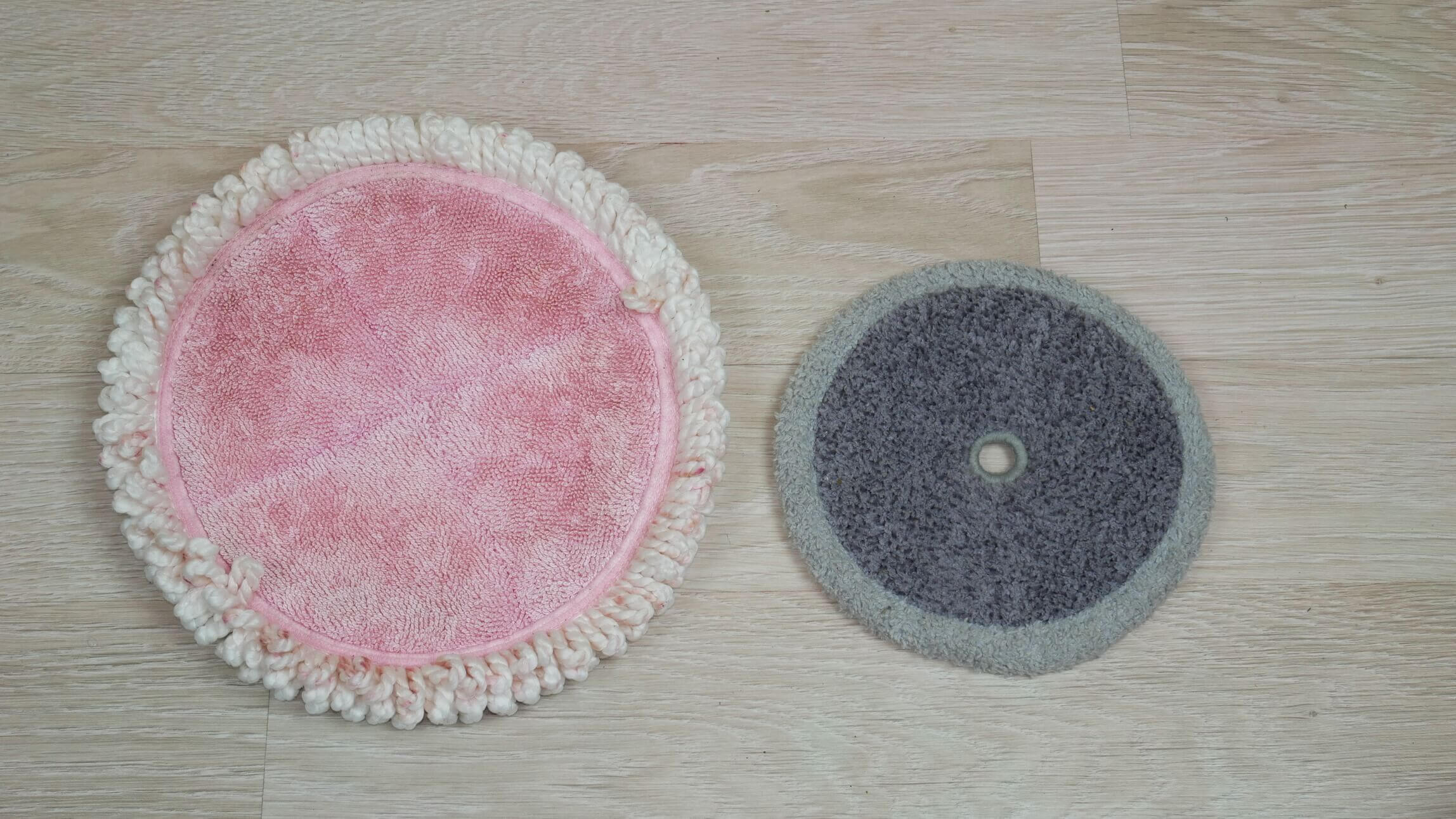
Comparison of napkins
Another argument in favor of a handheld floor polisher is the floor wetting system itself. The robot's system is designed so that liquid flows by gravity through the cloth. These, in turn, become clogged with dirt during cleaning, and when water is applied from above, the dirt can be washed away and leave marks on the clean floor. After a certain amount of time, the cloths must be removed, rinsed, and then reattached to the robot to ensure the floor is completely clean. A handheld floor polisher, however, wets the surface differently. The nozzle is located at the front; it wets the floor itself before the cloths, and the cloths then scrub it, removing dirt. This means clean water is delivered directly to the floor rather than passing through the dirty cloths. As a result, dirt streaks don't remain on the surface during cleaning. All the dirt stays on the cloths.
We've summarized all the design differences in a table to help you easily see the differences between the Everybot Edge robotic floor polisher and the Glider A5 hand-held floor polisher:
| Everybot Edge | Glider A5 | |
| Dimensions | 327*165*136 mm | 390*190*940 mm |
| Scope of application | Horizontal and vertical surfaces | Horizontal surfaces |
| Noise level | 46 dB | Up to 60 dB |
| Water tank | 2*60 ml | 300 ml |
| Body height | 13 cm | 9.5 cm |
| Napkins | ⌀15.5 cm | ⌀22 cm, rotates faster |
| Wetting the floor | By drip through napkins | Spraying clean water before wiping |
Overall, the design features score 4 points in favor of the handheld floor polisher and 3 in favor of the robotic floor polisher. Overall, I personally find the points listed for the Glider A5 more compelling, so overall, the handheld floor polisher wins this round.
C&C Glider A5 2:2 Everybot Edge
Comparison #4 – Cost
And finally, the final deciding factor is price. The Everybot Edge robotic mop currently costs $200, while the Glider A5 handheld mop is half the price, at $100. This is an important detail to consider. While these are very different devices, and while each is inexpensive for its class, it's still worth the price. Nevertheless, for many, price will be the deciding factor when choosing between them. This round goes to the electric mop.
As a result, we get a score of 3:2 in favor of the electric mop.
C&C Glider A5 3:2 Everybot Edge
Let's sum it up
In conclusion, I'd like to note that both compared devices performed well at their primary task—floor cleaning. The robotic mop performs almost as well, but does so without human intervention, albeit for longer. This is important to consider. Here's a simple example. Washing a floor with an electric mop takes an average of 10 minutes on a 30-40 square meter floor. If you wash the floor every other day, that's about two and a half hours a month. Or more than a day a year. So that's just floor cleaning, and how much time is spent on other tasks that take up your free time? In the robotic example, the time spent is limited only to preparation. The rest of the time can be spent relaxing or doing more productive things.
In all other respects, a handheld floor polisher certainly has more advantages. Therefore, when asked what's best for cleaning floors, I'd choose the Glider A5 right now. If the robot had advanced navigation, automatic charging, and the ability to rinse the pads on its base (which are already available), the outcome would be different. So, it's up to each individual to decide what's better: autonomy and free time, or a lower price and slightly better cleaning performance with less effort.
That's all I have for you. Please let me know in the comments which floor polisher you liked best. Happy shopping, everyone!
It will be useful to read: