Robot Vacuum Navigation Comparison: Lidar vs. Camera
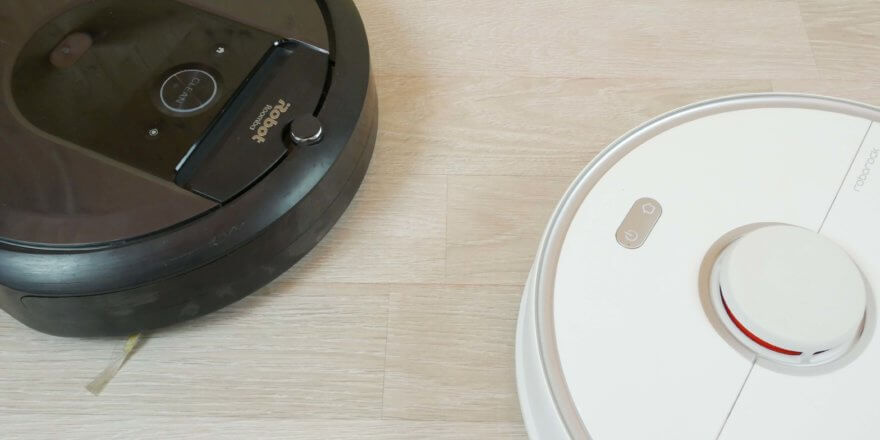
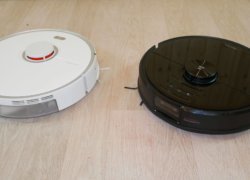
Greetings to all readers of the site robovac.washerhouse.comIn this article, we'll compare the two most accurate types of robotic vacuum navigation: lidar-based and camera-based. This type of navigation is typically found in mid- and premium-priced models. This is due to the high cost of the sensors themselves. Some brands use exclusively cameras in their flagship models, while others use exclusively lidar. We'll now compare these two by testing the navigation systems of top-of-the-line models. iRobot Roomba i7+ And Roborock S5 MaxSo, let's figure out which is better: lidar or camera for navigation.
Briefly about navigation
Let's first briefly review what precision navigation based on lidar and camera is, and what features these two systems have.
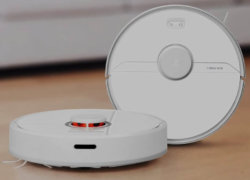
The lidar in robotic vacuum cleaners is mounted on the top of the body. It's a kind of "turret" with a rotating laser rangefinder inside, also known as an LDS sensor.
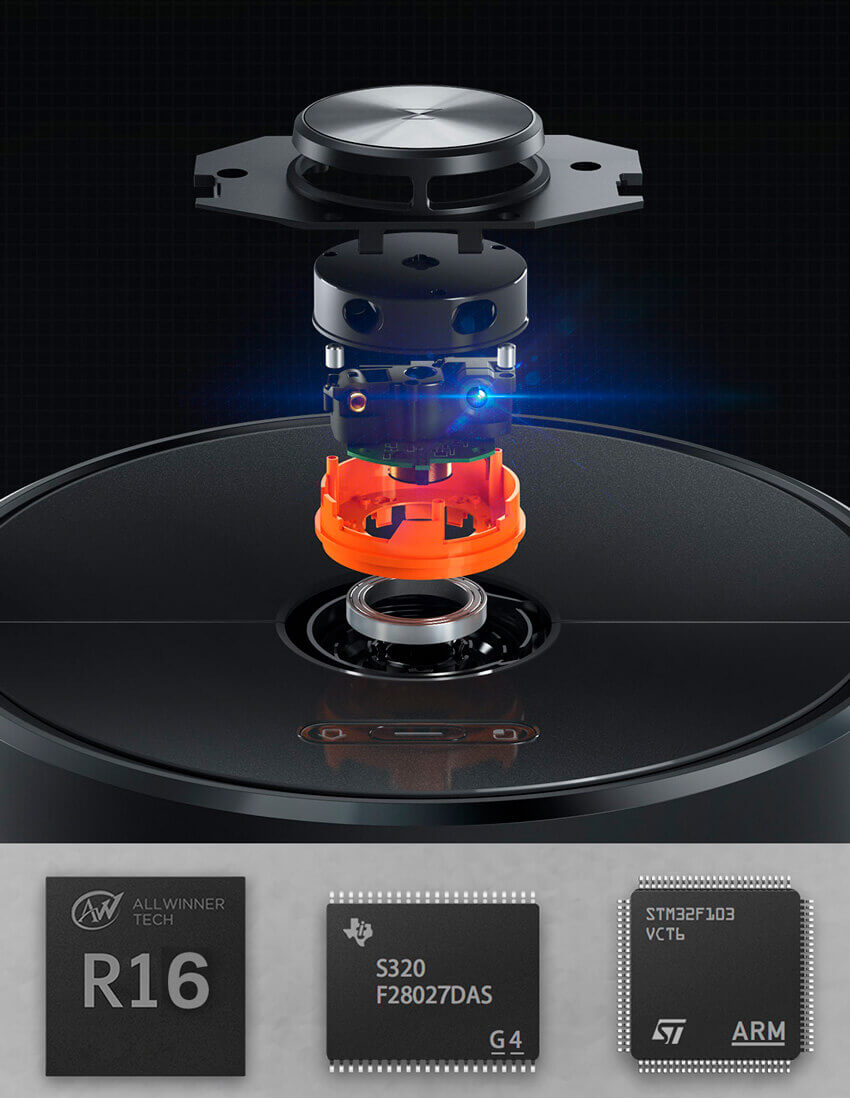
Lidar design
This laser rangefinder rotates 360 degrees at high speed, scanning objects around it, calculating distances to them, and creating an accurate map of the room.
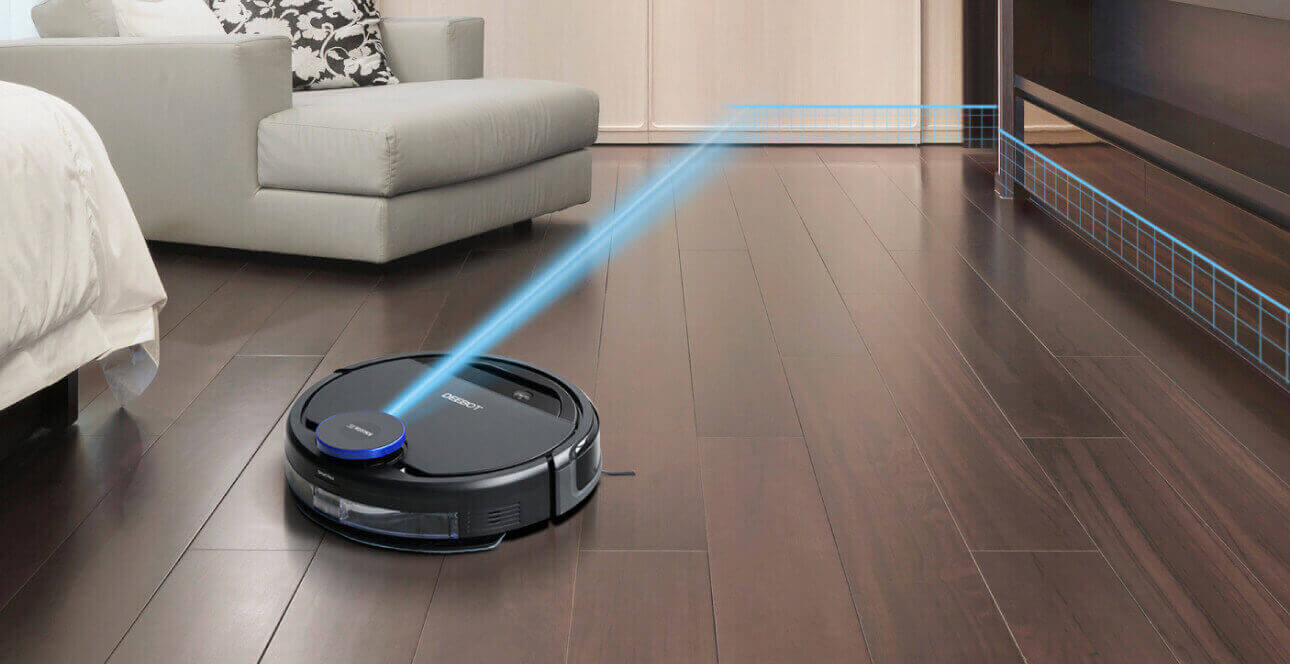
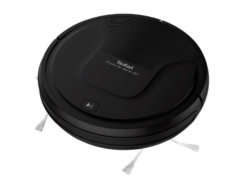
Robot vacuum cleaner with lidar
The advantages of lidar include equal navigation accuracy at any lighting level, i.e., both day and night. Furthermore, laser scanning technology is more precise. Disadvantages include more frequent lidar failures due to the rotating mechanism, as well as problems scanning reflective surfaces. This could include mirrored cabinet doors in a room or chrome chair legs. Furthermore, most often robotic vacuum cleaners with lidar They reach 10 cm in height due to the turret on top, and therefore the robots' maneuverability under furniture is inferior to that of flat models.
The camera, in turn, is a visual navigation system. A map of the room is constructed by reading and processing images from the camera. It scans the ceiling, taking multiple images, and uses this data to create a floor plan of the rooms.
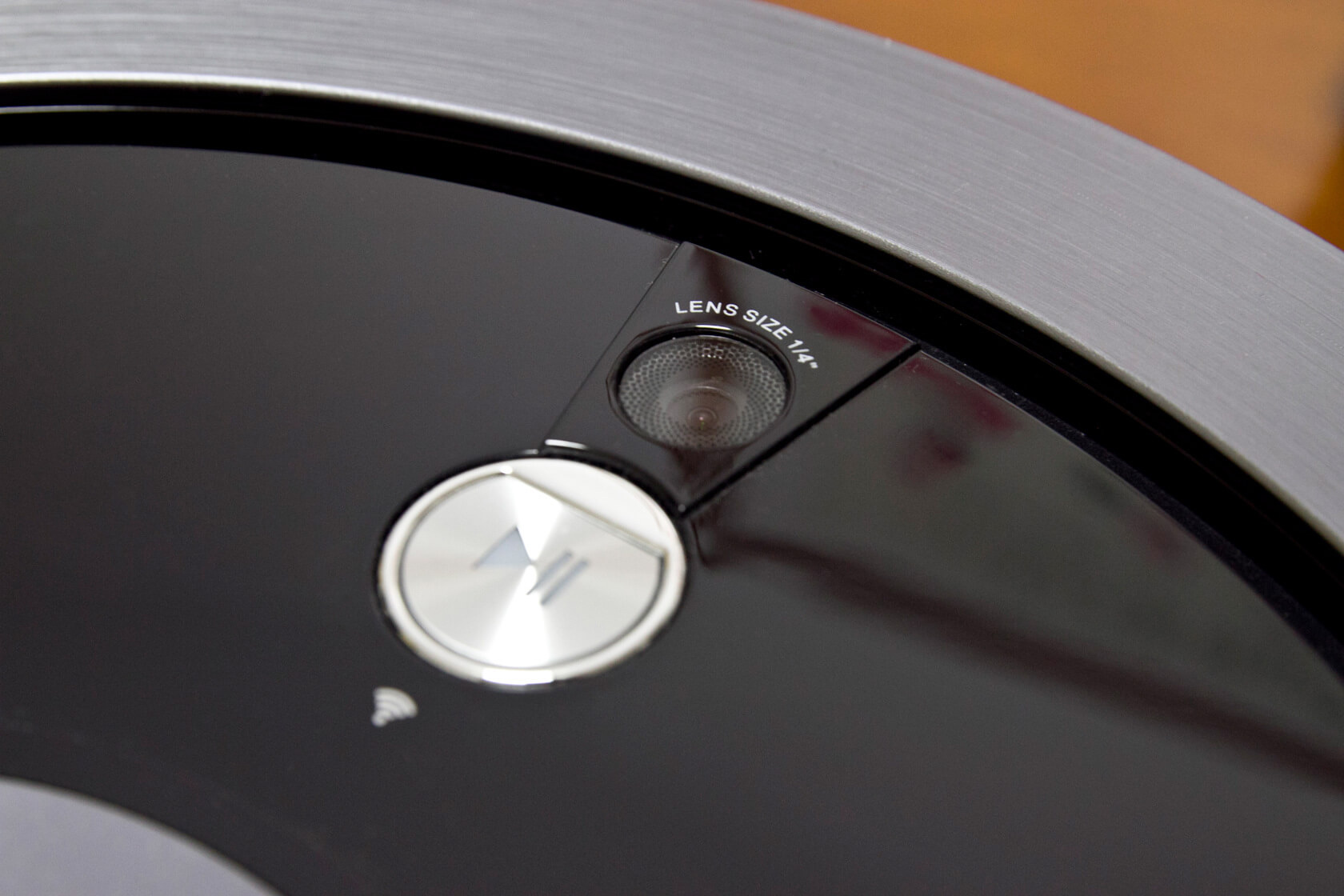
Camera
Camera-based navigation is more reliable in terms of camera durability and is slightly less expensive. Furthermore, the camera doesn't increase the robot vacuum's height; some models are only 7-8 cm tall, allowing the robot to navigate under low furniture.
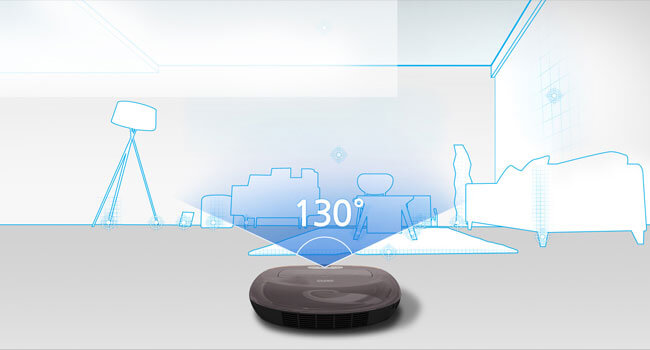
Camera navigation
Disadvantages of visual navigation: in low light or dimly lit areas, the camera simply "goes blind." Furthermore, the accuracy of visual navigation is always inferior to laser scanning, especially if the ceiling lacks key visual cues for the robot to use.
Next, we'll compare lidar and camera technology under identical real-world conditions to see which type of navigation helps robotic vacuum cleaners perform better.
Comparison #1 – Introductory Drive
To test the robots' navigation as objectively as possible, we created several obstacles in the test room, namely:
- We installed a mirrored wardrobe door.
- We created a darkened area between the wall and the sofa.
- We placed a chair, children's toys, and a box to act as obstacles in the robots' path. We also added a weight to the box to prevent it from moving even when lightly touched by the robot.
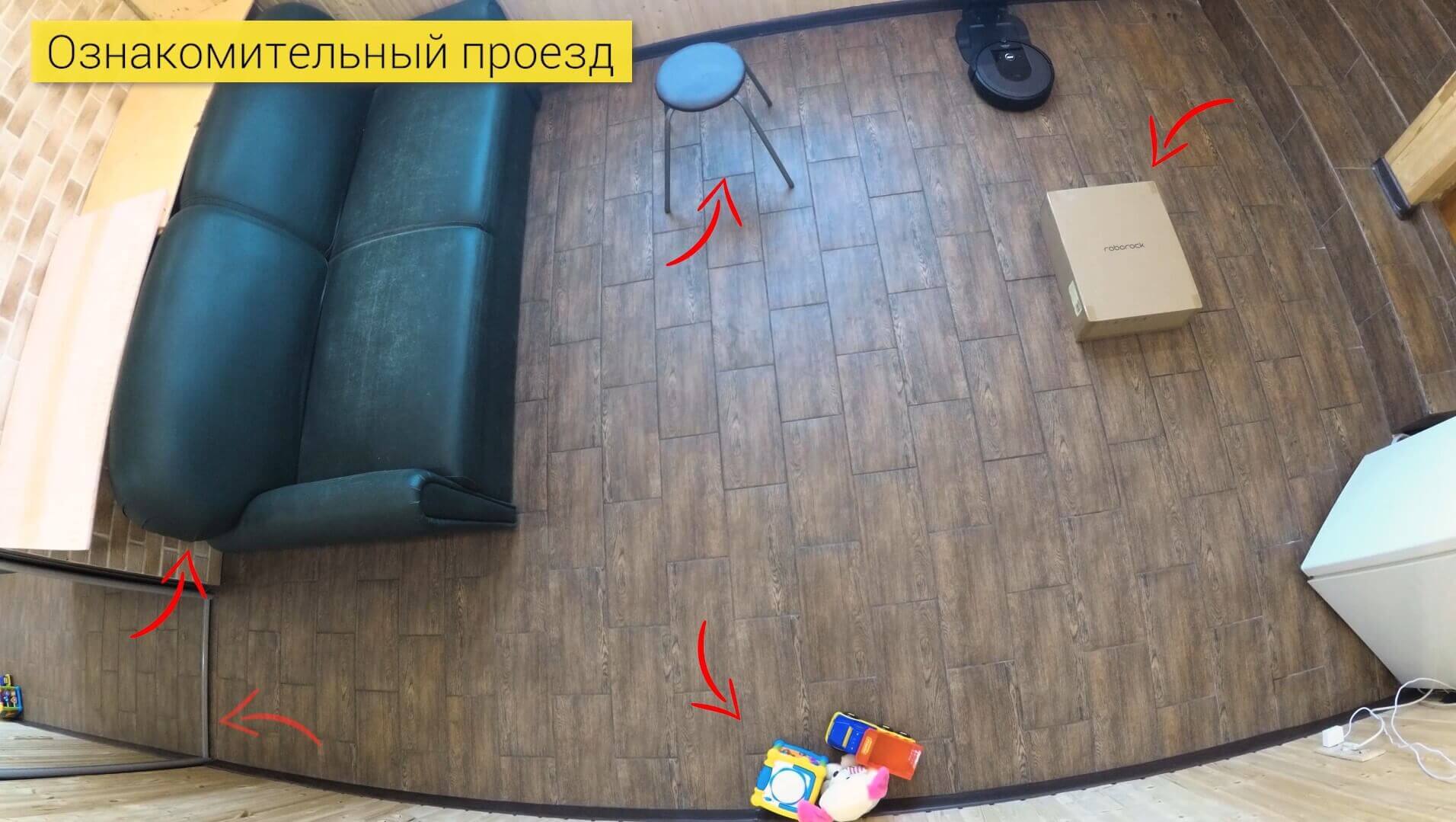
Obstacles in the room
The test itself is shown in the video, we recommend watching it:
As a result, it turned out that:
- The iRobot Roomba i7+ slightly moved all objects in its path, only cleaning around one of the chair legs, and basically covered the entire accessible area, even twice in some areas. The robot took just over 10 minutes to complete its introductory run. This time, the robot navigated the darkened area between the wall and the sofa without issue, but during one test, it did get a little confused in the darkness.
- The Roborock S5 Max, with lidar-based navigation, is much gentler on objects, hitting only one toy. It also circled each chair leg and covered the entire accessible area twice, dividing the room into zones. It had no trouble navigating in the dark, but the robot vacuum identified the mirrored door as an extension of the room, which it couldn't access. However, this didn't affect the cleaning performance of the entire accessible area; it simply created a non-existent part of the map. The robot didn't hit the mirror itself and attempted to navigate through it. The introductory drive took 19 minutes, but the robot created a more accurate map.
Comparison #2 – Moving with a Saved Map
Now let's see how the robots' movement algorithm changes after they've built a map of the room and saved it to memory. We've also added the ability to set no-go zones on the map; we'll add one zone at a time and test how the robots respond to them. Everything is clearly demonstrated in the video above.
The iRobot Roomba i7+ cleans zone by zone in a serpentine pattern. It didn't clean around the chair legs, had no navigation issues in the dark area, and recognized the no-go zone without entering it. A single cleaning took about 12 minutes.
As for the Roborock S5 Max, the movement algorithm has changed. The robot first moved around the entire accessible area along the perimeter, and then began cleaning in a single, serpentine motion. It cleaned around all the chair legs, barely touching any obstacles, and avoiding the restricted area.
Another observation: the iRobot Roomba i7+ only made a one-way pass behind the sofa, while the Roborock S5 Max made two passes back and forth within the same area, meaning it cleaned the narrower area more thoroughly. After that, the robot made a second pass across the entire area and returned to its base. It took just over 18 minutes, but again, it covered a larger area.
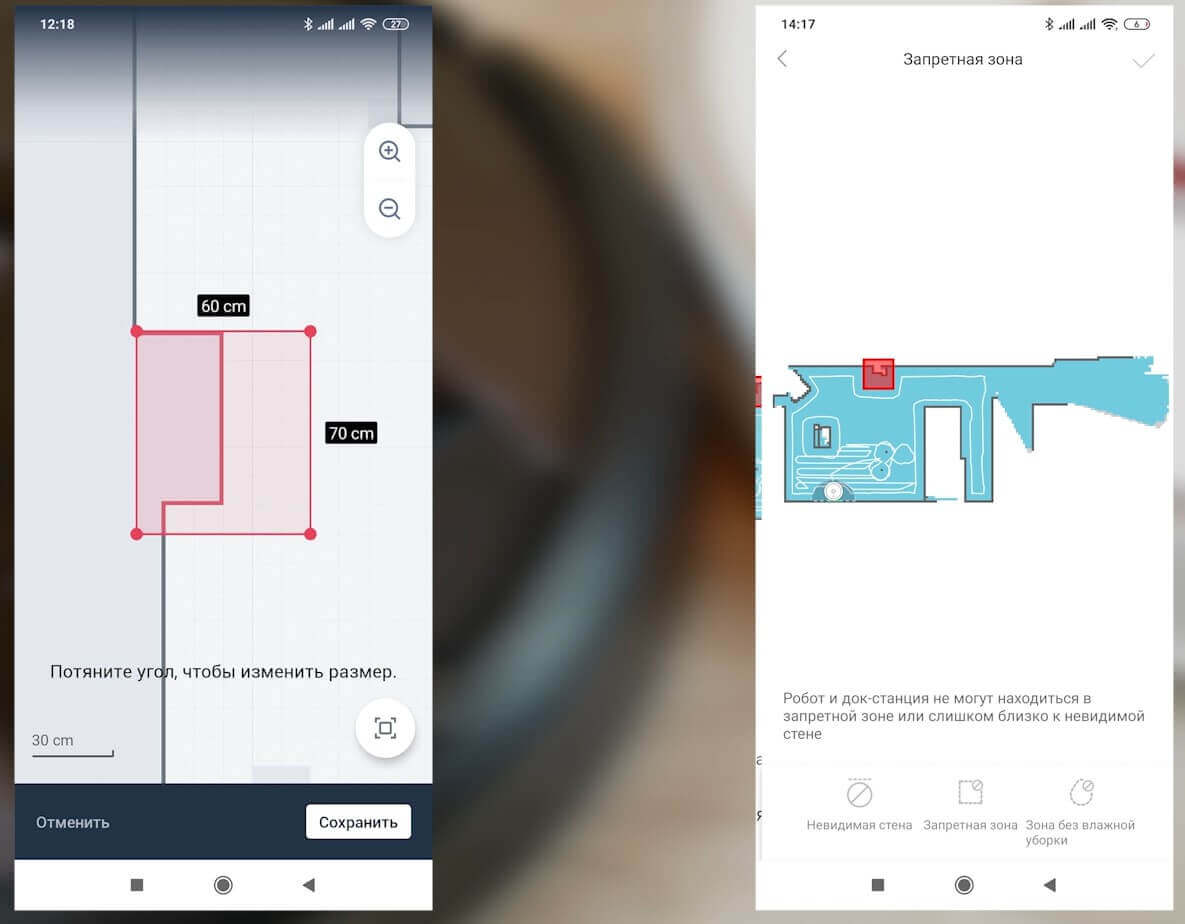
Robot movement with a saved map
Comparison #3 – Orientation in a Multi-Room Space
And finally, I'd like to compare how lidar- and camera-based robot vacuums map the entire house and how long it takes them to clean that area. In our case, that's five rooms with a total area of about 40 square meters. The effective cleaning area is about 35 square meters.
The iRobot's camera calculated a surface area of 27 square meters, although the actual area is approximately 35 square meters. However, the calculation accuracy is high, and the geometry matches the actual home environment. The robot cleans this area in a single pass in approximately 50-55 minutes, stopping at particularly dirty areas detected by its optical sensor.
Roborock's lidar created a room with the same geometry, but calculated the area more accurately, at 34 square meters, which is almost identical to the actual area. Furthermore, it only needed 31 minutes to clean the entire area, which is significantly faster.
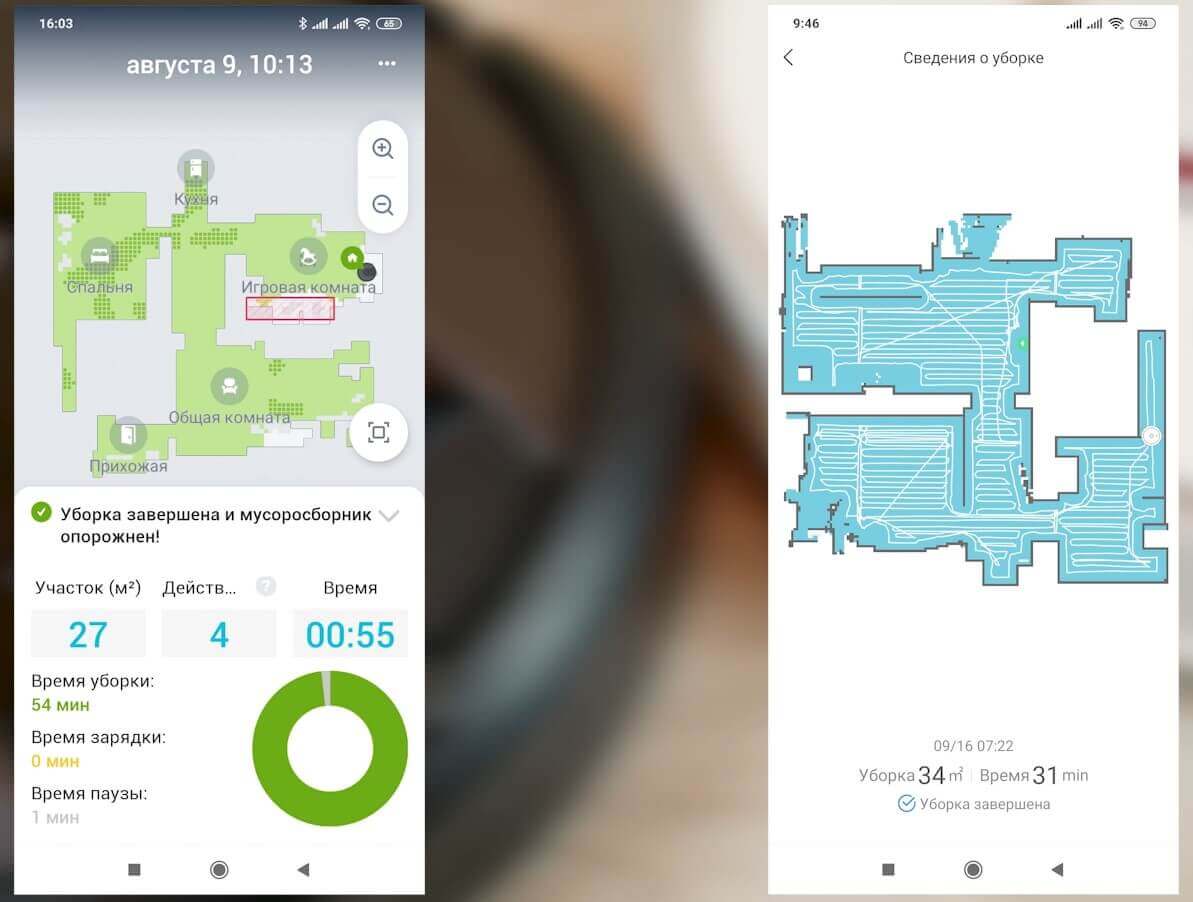
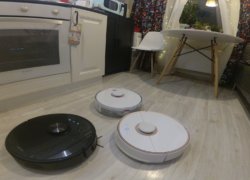
Orientation of robots in a multi-room environment
Ultimately, lidar produces a more accurate map and allows for faster traversal of the entire accessible area if there are multiple rooms. Furthermore, the lidar-equipped robot in our case traversed problematic areas more thoroughly, such as the area between the chair legs and the narrow, darkened space behind the sofa. Lidar-equipped robots also make softer contact with objects, causing them to hit their bumpers less frequently.
By the way, it is important to note that after several passes robot with a camera, especially if you turn it on at different times of day with varying lighting levels in the rooms, the robot's navigation pattern will be automatically developed, and even at night, it will be able to cover the entire available area without leaving any uncleaned areas. So, the iRobot Roomba i7+ may encounter navigation issues in dimly lit areas only during a test drive. This issue will resolve later.
Let's sum it up
In conclusion, let's highlight the features of robotic vacuum cleaners with precise navigation based on lidar and a camera.
In any case, both navigation types allow for precise mapping of the room and maximize robotic cleaning efficiency. The compared robots can store multiple cleaning maps in their memory, which is useful for two-story homes. They also support cleaning after recharging, room zoning for scheduled room-by-room cleaning, and the ability to set no-go and cleaning zones on the map.
At the same time, lidar creates a more accurate map, so it cleans faster and leaves a minimum of missed areas. As you can see, there is no critical issue when working with a mirror. In any case, there are ways to avoid inaccurate mapping, such as applying a protective film to the mirror at the lidar level to prevent the sensor's invisible infrared rays from reflecting.
Regarding the durability of the laser rangefinder itself, high-quality robots, like Roborock, are equipped with a reliable lidar, so they'll last a long time. However, no one is responsible for unknown Chinese robots, and in these cases, there's a chance the navigation system could fail sooner. And don't forget about the height; thin robots with lidar aren't available, so this is probably the only significant drawback.
The camera's mapping accuracy is slightly inferior, especially in larger areas of 100 square meters and above. These robots also tend to clean more slowly. However, the camera is less likely to malfunction and doesn't interfere with the robot's height. Orientation issues in low light may occur either during a familiarization walkthrough or in models where the camera is more of a dummy than a real navigation device.
So, I'd say robot vacuums with lidar are better at navigation, but not so much that I shouldn't consider models with cameras. It's all individual and largely depends on the robot vacuum you choose.
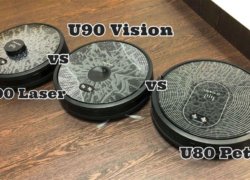
In any case, in 2020, the best navigation system is a combined lidar and camera system. You can see a comparison of lidar and lidar+camera systems in our video:
That's all from me. Happy shopping, everyone!