Camera-guided robot vacuum cleaners: Top 7 models of 2021
Hello to all readers of this site! This article will review the best robot vacuums with camera navigation in 2021. I'd like to point out right away that the camera in these robots is used solely for spatial orientation and optimal navigation algorithms. This camera cannot be used for monitoring your home. In terms of camera mapping accuracy, it's inferior to lidar, but much better gyroscopeIn other words, it's an intermediate option that still qualifies as an advanced navigation system. Furthermore, camera-based models are often shorter than lidar-based models, as the navigation system doesn't protrude beyond the body. This ranking features the seven best camera-based robots. I'll review the specifications, capabilities, and cleaning performance of each of the top seven robots so you can choose the best option for your needs and budget. So, let's get started!
iRobot Roomba S9+
Our rating is opened by the flagship robot vacuum cleaner from iRobot called Roomba S9+It's quite expensive, at $1,175. That's slightly less than the combined cost of all the other entries in the ranking!
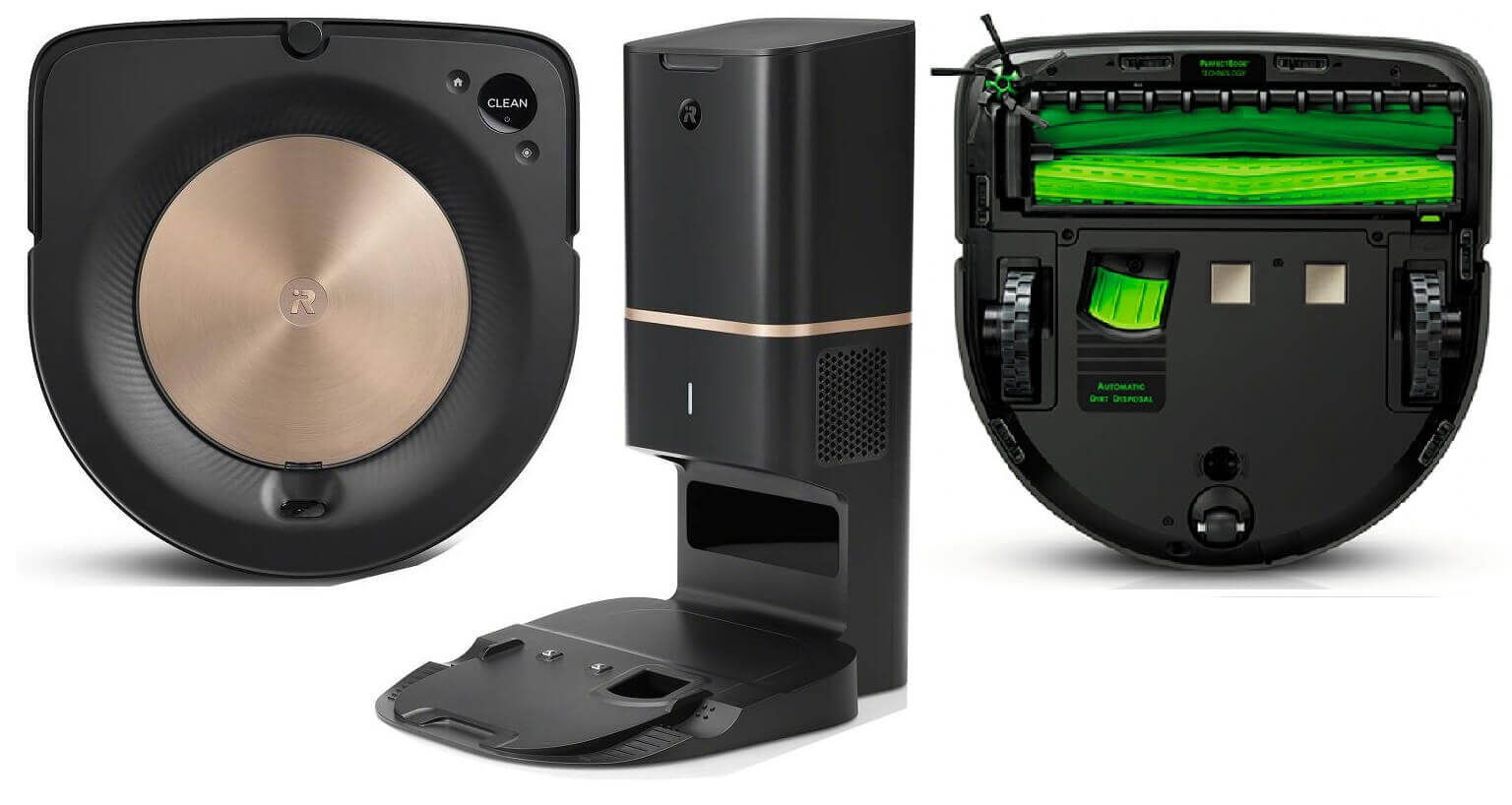
Roomba S9+
Specifications:
- Li-Ion battery.
- Cleaning area >100 sq.m.
- Dust collector 400 ml.
- Dimensions: 311*89 mm.
So, for that price, the manufacturer offers a reliable and well-built robot vacuum cleaner with a camera for navigation, a self-cleaning base, and a patented cleaning system using two silicone squeegee rollers. The robot is controlled via a proprietary mobile app and is suitable for dry cleaning only. However, it can be synchronized with the company's robotic mop. iRobot Braava Jet m6 for combined dry and wet cleaning in turns.
Using the camera, the robot creates a precise map of the room and can store up to 10 unique cleaning maps in its memory. It automatically zones each map into rooms. This allows you to select specific rooms for cleaning and set no-go zones in areas where the robot should not enter.
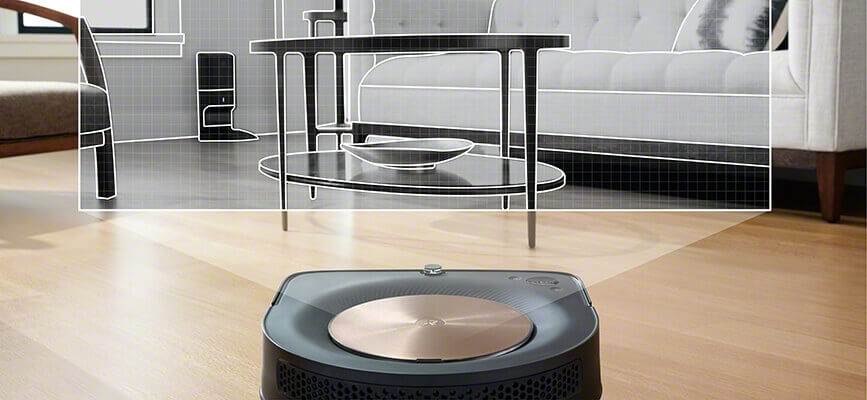
Space scanning
The iRobot Roomba S9+'s D-shaped body is also worth mentioning, allowing it to sweep debris into corners effectively. Its squeegee rollers also allow the robot to effectively pick up debris on carpets, making the rollers easier to clean of tangled hair and fur, which they pick up better. Overall, in terms of cleaning performance and reliability, this is undoubtedly the best robot vacuum with a navigation camera in 2021. However, the price tag is quite steep.
iCLEBO O5 WiFi
The silver medalist in our top 7 is just as reliable and reputable, but costs much less – $430. This Korean robot vacuum cleaner iCLEBO O5 WiFi.
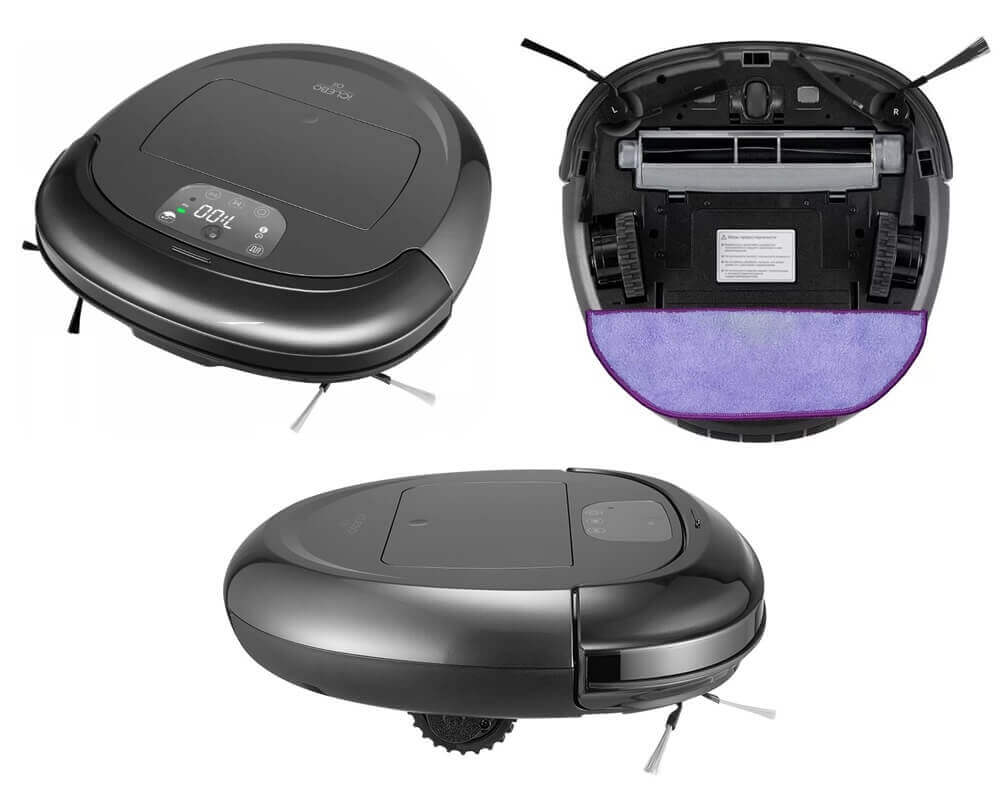
iCLEBO O5 WiFi
Specifications:
- Li-Ion battery 5200 mAh.
- Cleaning area up to 220 sq.m.
- Dust collector capacity is 600 ml.
- Passability up to 15 mm.
It also has a camera on board for navigation. However, this device can only store one map in its memory and does not automatically zone the room into rooms. However, you can use the saved map to set cleaning zones in specific rooms, as well as no-go zones in areas where the robot should not clean.
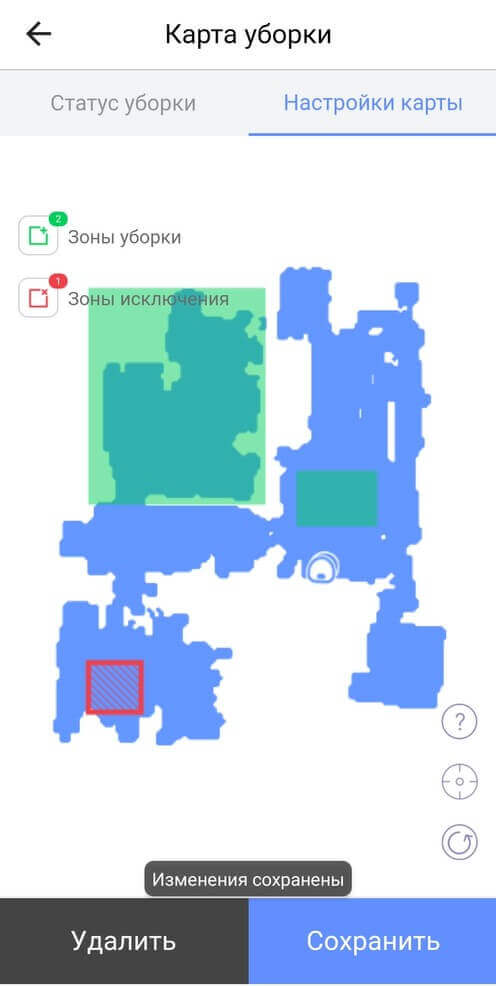
Zones on the map
The iCLEBO O5 WiFi is suitable for dry cleaning only, but it comes with a nozzle that can be used with a microfiber cloth, which you can dampen by hand. This isn't an alternative to wet cleaning, but it will allow the robot to pick up dust from the floor during dry cleaning.
The robot vacuum cleaner is controlled via a proprietary mobile app and remote control. You can adjust the suction power and select different cleaning modes. The body is shaped more like a D-shape, allowing the robot to better sweep debris into corners.
The iCLEBO O5 WiFi comes standard with a silicone turbo brush, which is easier to clean from hair and pet hair and is better suited for hard floors. A bristle-petal brush, which is better at picking up debris on carpets, is available as an option. Overall, this is the best value robot vacuum with a camera in the premium segment.
Dreame F9
Entered the top three Dreame F9, which is a complete copy Mijia 1C or as it is also called Mi Robot Vacuum Mop.
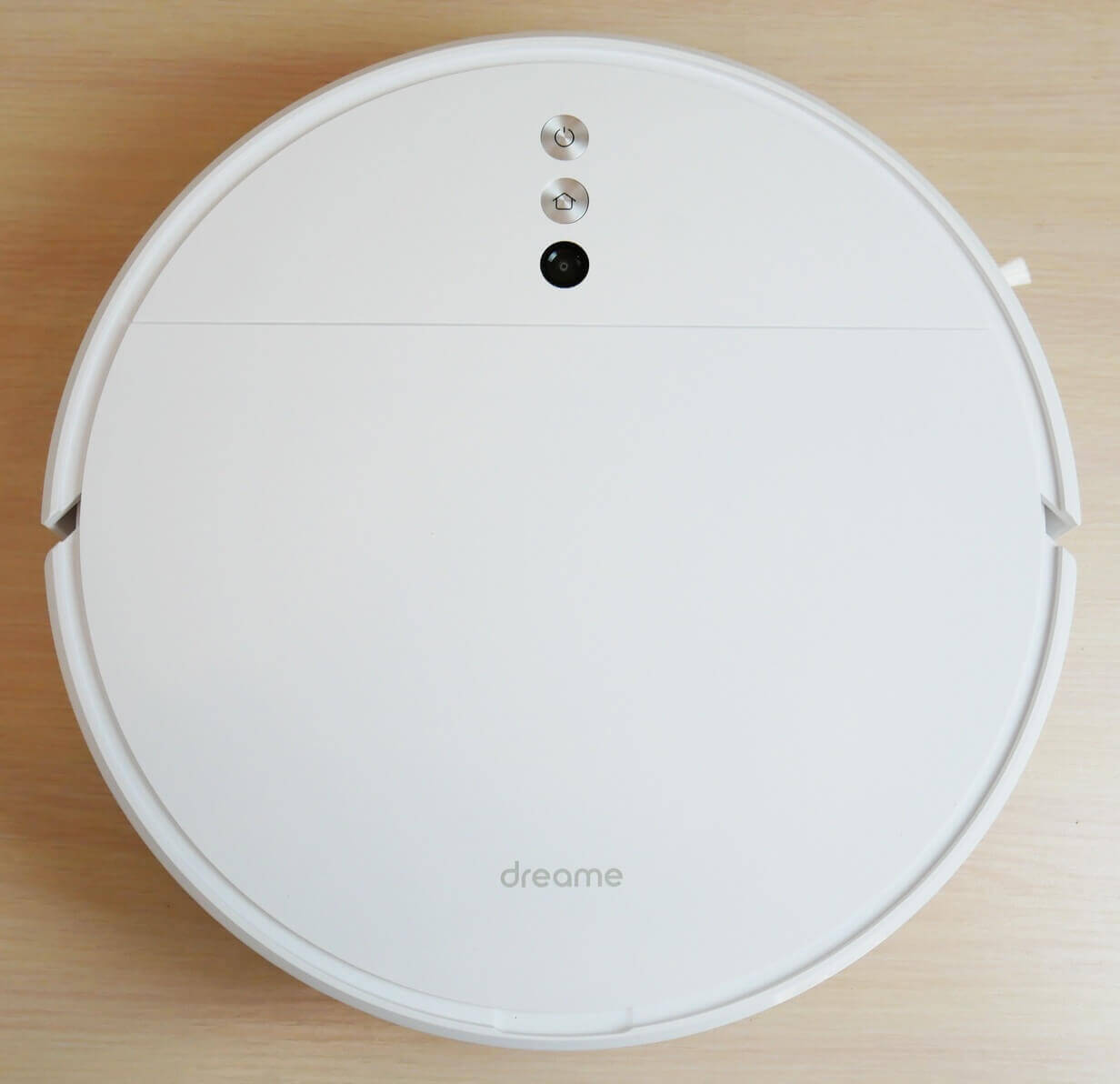
Dreame F9
Specifications:
- Suction power 2500 Pa.
- Li-Ion battery 5200 mAh.
- Cleaning area up to 200 sq.m.
- Dust collector 600 ml.
- Water tank 200 ml.
- Passability 20 mm.
Only the Dreame F9 model has been upgraded with a 5200 mAh battery instead of 2500 mAh. This allows the robot to clean longer on a single charge and cover a larger area in a single cleaning cycle. The price difference is negligible. The Dreame F9 costs around $180-190, while the Mi Robot Vacuum Mop costs $160-170. Whether you pay extra for the battery is up to you.
In any case, these two robots are identical in functionality. They create a room map, save it in memory, and divide it into rooms. They are controlled via a mobile app, which, in addition to setting no-go zones and selecting rooms for cleaning, allows you to adjust the suction power and the wetness of the cleaning cloth.
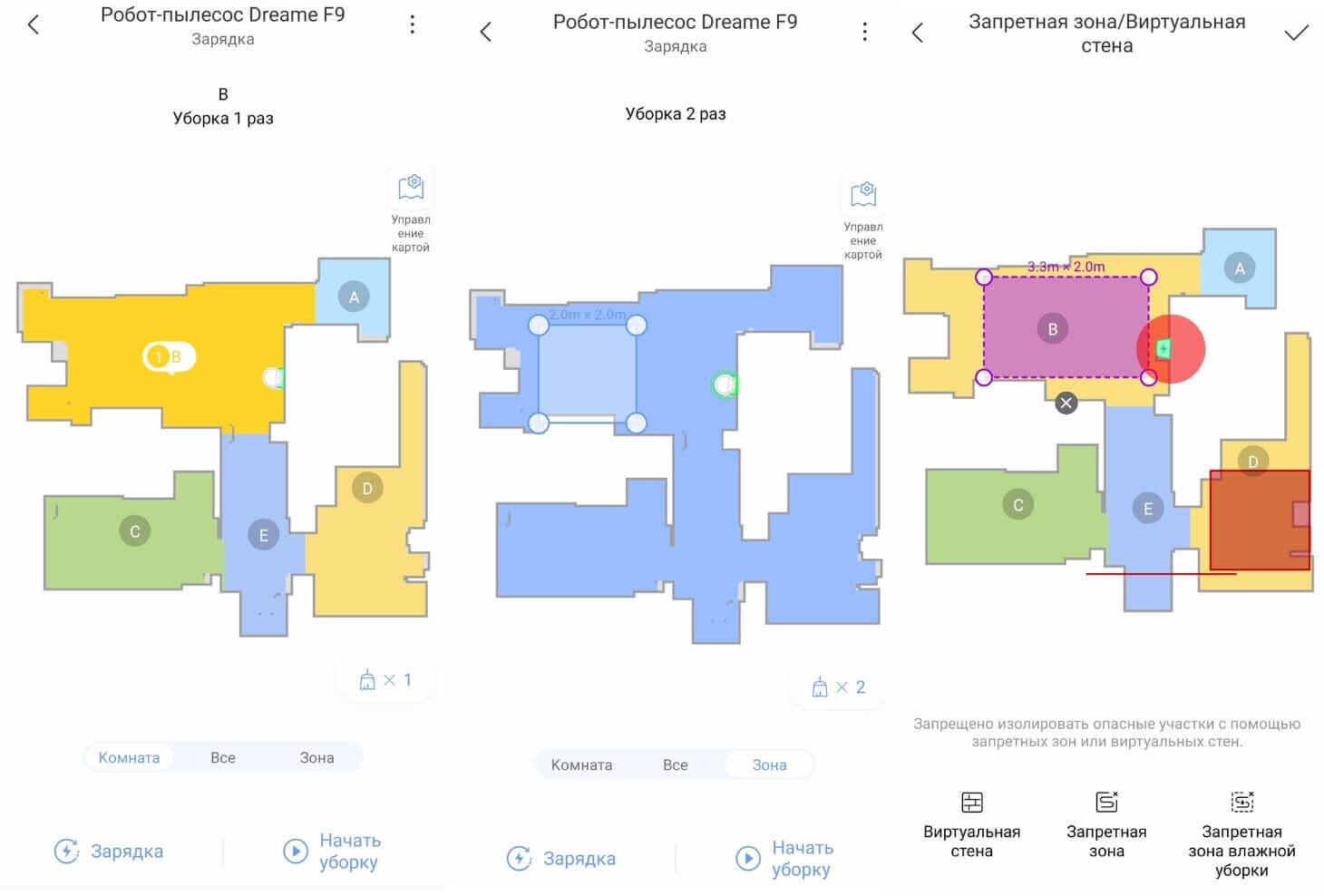
Thanks to the bottom-mounted nozzle, the robot can vacuum and mop simultaneously. Many users highly praise these robotic dupes and consider them the best value for the money, so be sure to check them out. Let's move on!
iBoto Smart C820W Aqua
Recently we received a review iBoto Smart C820W AquaThis robot vacuum cleaner, priced at $170-$190, features a camera for navigation, wet and dry cleaning functions, and can be controlled not only via a mobile app but also with a remote control.
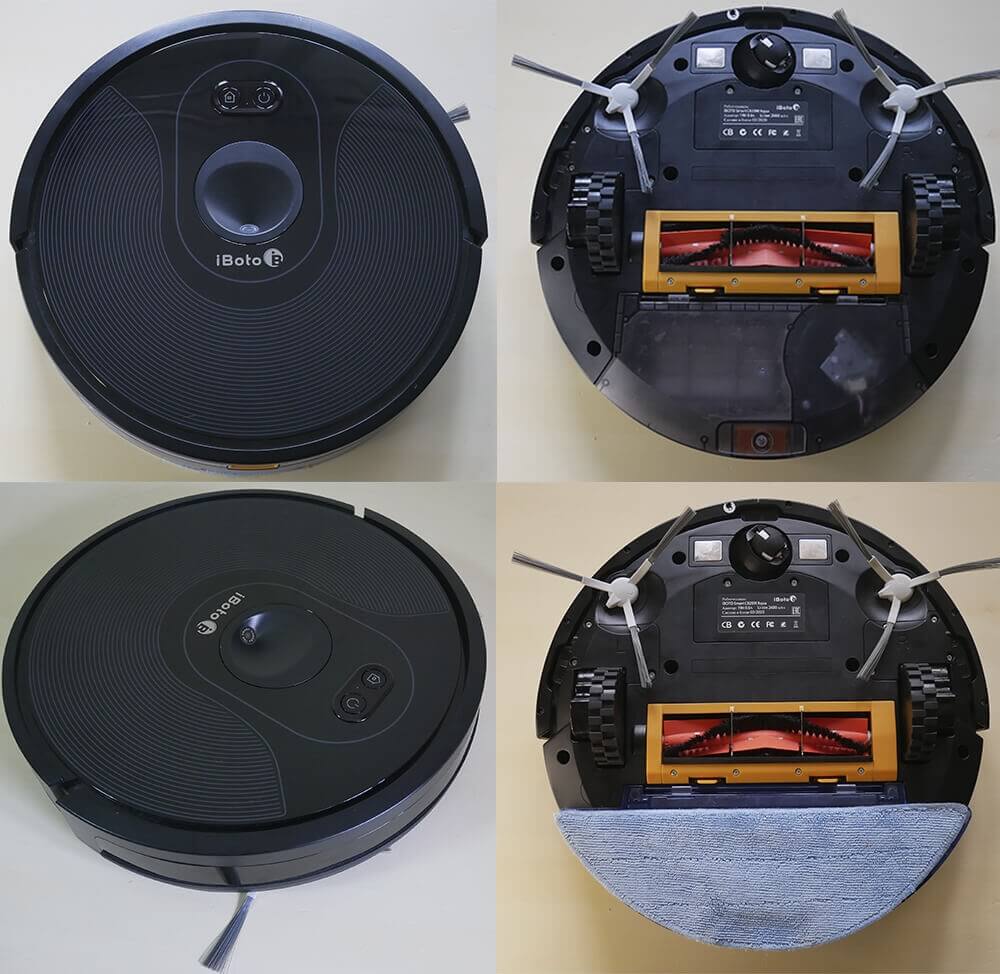
iBoto Smart C820W Aqua
Specifications:
- Suction power up to 2500 Pa.
- Li-Ion battery 2600 mAh.
- Cleaning area up to 100 sq.m.
- Dust collector capacity is 550 ml.
- The water tank capacity is 300 ml.
- Passability 15-20 mm.
The device stores a cleaning map in its memory but does not zone it by room. You can set no-go zones and select specific cleaning zones on the map. You can also adjust the suction power and water flow rate in the settings.


iBoto app
The quality of the dry and wet cleaning was impeccable. The only thing worth noting is that this model has separate dry and wet cleaning functions. The dust bin is interchangeable with a water tank. However, the tank also has a small dirt collection compartment, so while the iBoto Smart C820W Aqua is mopping, it also sweeps up debris with its brushes. This model also has a remote control as an alternative control method, as well as a warranty and service support from an officially operating manufacturer.
Yeedi 2 Hybrid
The 2021 robot vacuum cleaner ranking continues with a new product with a camera: Yeedi 2 Hybrid.
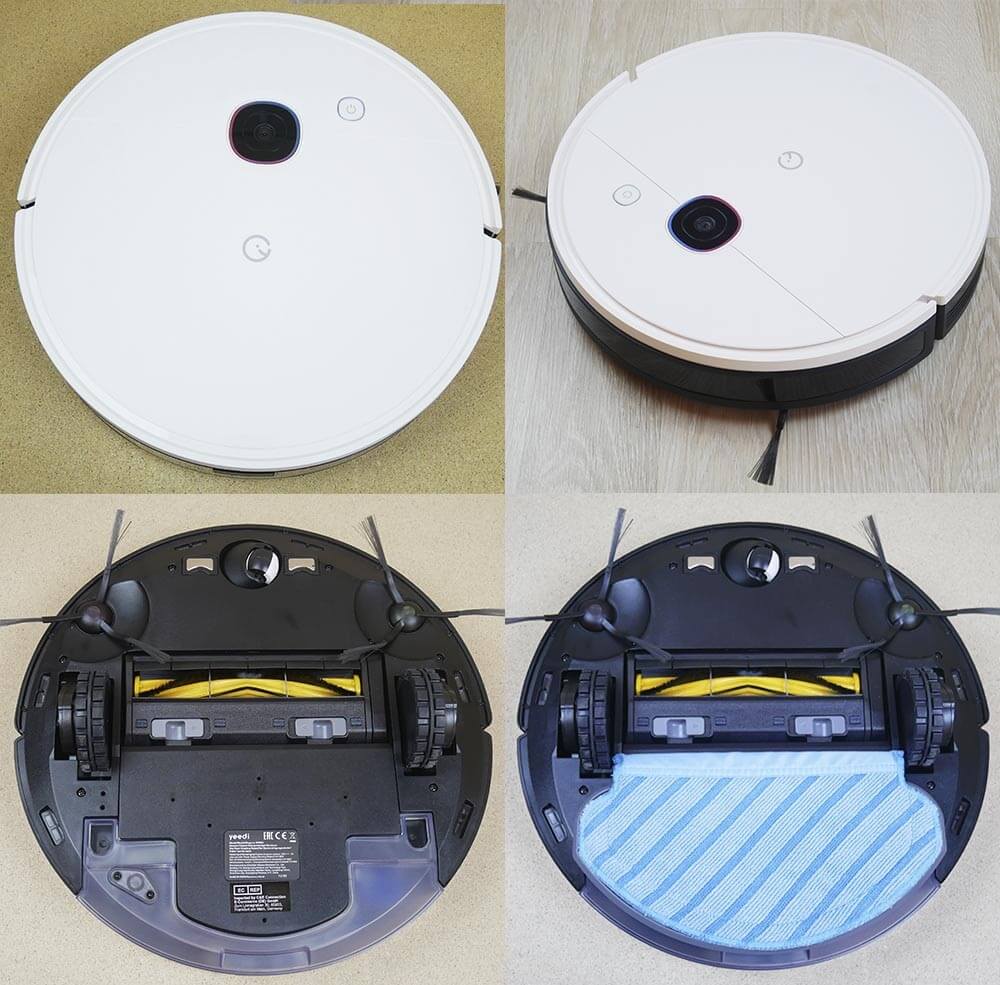
Yeedi 2 Hybrid
Specifications:
- Suction power 2500 Pa.
- Li-Ion battery 5200 mAh.
- Cleaning area up to 200 sq.m.
- Dust collector 430 ml.
- Water tank 240 ml.
- Passability 20 mm.
This robot also features room mapping, storing one map in memory, and automatic room division. Room-by-room cleaning and no-go zones are available on the map.


Working with the Yeedi card
The main thing that impressed me about the Yeedi 2 Hybrid was its high suction power. It can suck up debris from crevices up to 10 mm deep and is one of the the most powerful robot vacuum cleanersWe tested the Yeedi 2 Hybrid robot vacuums. Both wet and dry cleaning performance is also excellent. The robot vacuum is controlled via a proprietary app, which, in addition to editing the map, allows you to adjust the suction power and water flow rate. After reviewing the robot, we were very impressed, despite its price tag being between $200 and $220. Overall, if you're looking for a powerful robot vacuum with a camera for navigation and your budget is around $200, I recommend considering the Yeedi 2 Hybrid.
Xiaomi Mijia 1T
A new robot vacuum cleaner was announced at the end of 2020. Xiaomi Mijia 1T, an alternative name for the Mi Robot Vacuum Mop 2 Pro+ model.
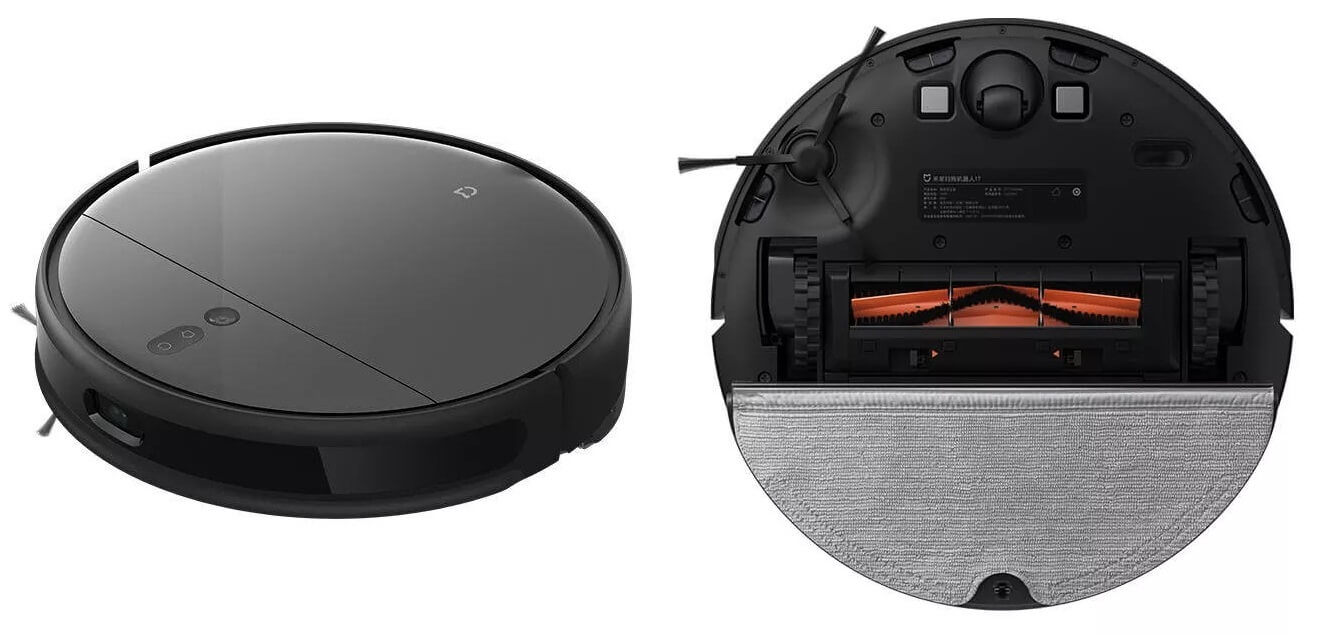
Xiaomi Mijia 1T
Specifications:
- Suction power 3000 Pa.
- Li-Ion battery 5200 mAh.
- Cleaning area up to 240 sq.m.
- Dust collector 550 ml.
- Water tank 250 ml.
- Passability 20 mm.
It's equipped with two cameras: one on top for navigation, and a second on the front bumper for object recognition. This makes it the most affordable robot vacuum cleaner to date that can detect objects on the floor. The navigation camera allows the robot to build a map of the room, save it in memory, and automatically zone it into rooms. This allows you to direct the robot vacuum to specific rooms for cleaning, as well as set no-go zones.
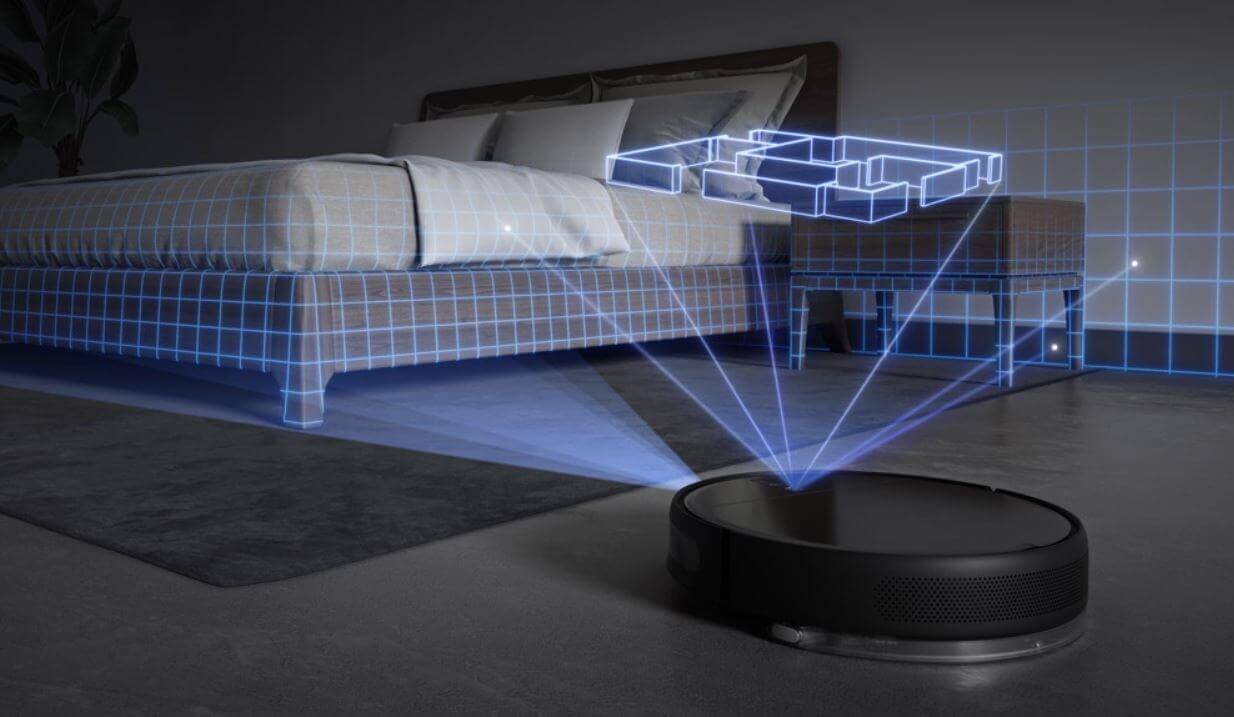
Map construction
Of the other features, it's important to highlight the robot's simultaneous dry and wet cleaning capabilities, adjustable suction power and cloth wetting, and app control. All this for $230-$270. Essentially, it's an updated version. Mijia 1C with a camera for object recognition and a more powerful 5200 mAh battery.
iLIFE W450
And finally, the ranking of robot vacuum cleaners with a camera is closed by a unique design and operating principle. iLIFE W450, which appeared on the market at the beginning of 2021.
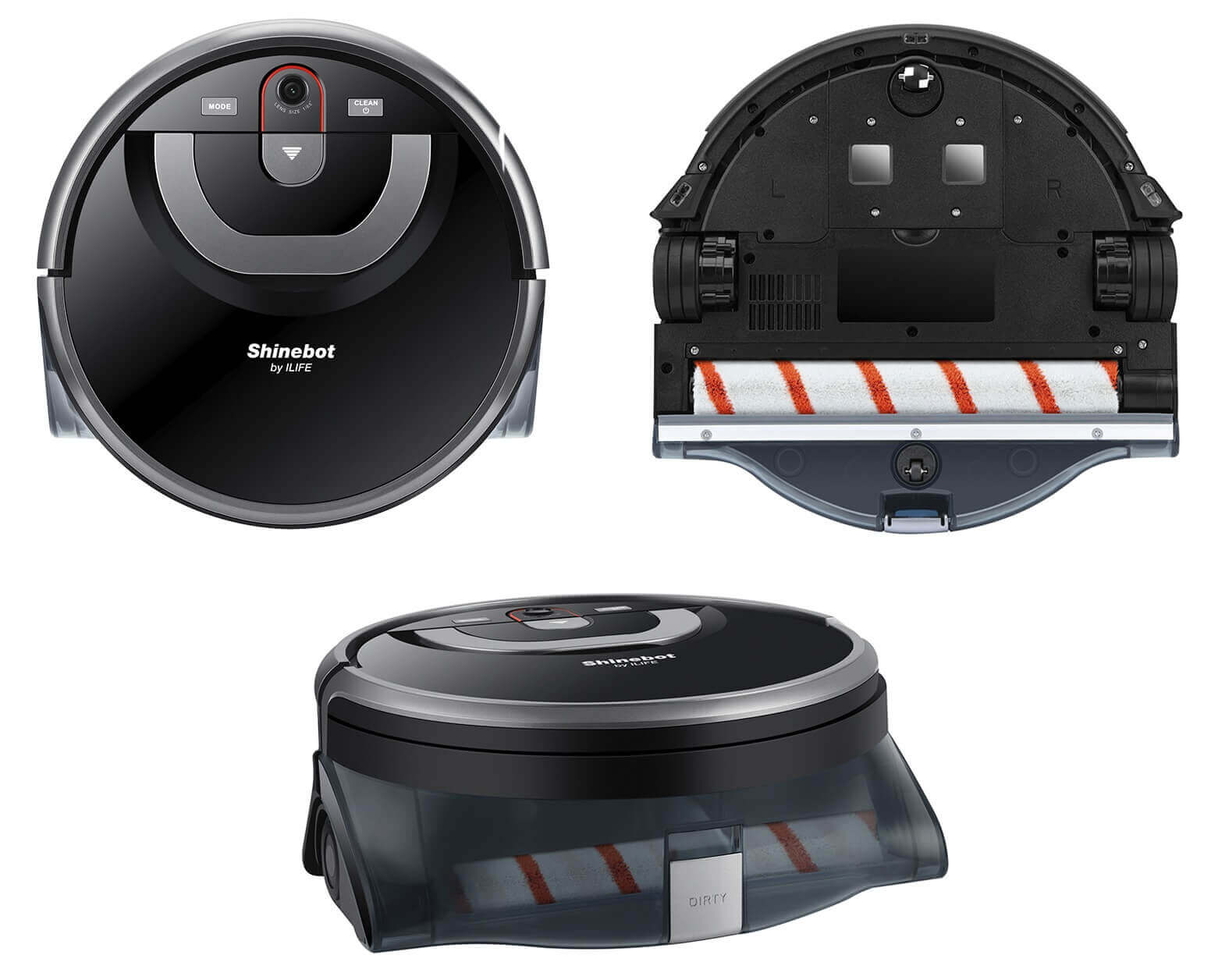
iLife W450
Specifications:
- Li-Ion battery 2500 mAh.
- Cleaning area 80-100 sq.m.
- The volume of the clean water tank is 850 ml.
- The capacity of the dirty water tank is 900 ml.
- Passability of obstacles up to 3 mm high.
This is one of the few washing robotic vacuum cleanersIt features a separate tank for clean and dirty water, as well as a rotating roller and scraper. This design allows the robot to effectively clean floors and remove heavy dirt.
Thanks to its camera, it navigates much better than its predecessor, the 400, and creates a map of the room. However, the map is not stored in memory, and it is not possible to set no-go zones or cleaning zones.
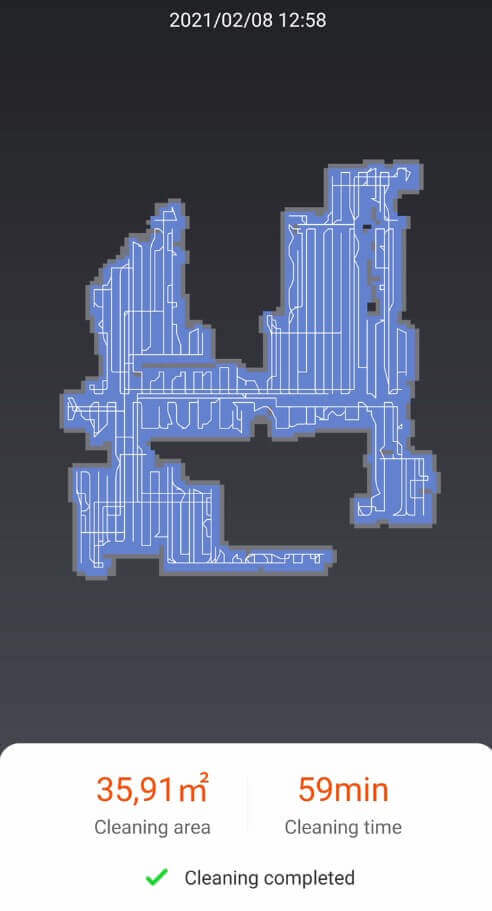
Cartography
There are no complaints about navigation; during testing, the robot navigated well within five rooms. Floor cleaning performance is excellent. However, this model lacks side brushes, so it doesn't pick up debris along baseboards very well. Even at the lowest water flow rate, the iLIFE W450 is quite wet, making it more suitable for cleaning tile and stone floors, as well as linoleum. On wood floors, there's a risk of damaging expensive parquet or laminate. Nevertheless, this unique robotic vacuum cleaner with a camera for navigation is definitely worth considering and being included in this rating.
Video version of the rating for the first half of 2021:
So, we've reviewed the best robot vacuum cleaners with camera-based navigation in 2021. We hope our rankings helped you find the best option for your needs and budget. If you think we missed a particular robot, please let us know in the comments, and we'll discuss it further. Happy shopping, everyone. Bye!
I've been reading your reviews. Everything is clearly laid out and laid out. Thank you, I've systematized my knowledge of robot vacuums; everything is clear now. One thing remains unclear. Why do you consider the iClebo O5's incomplete wet cleaning a drawback? It's a bonus, and a very good one at that. The cloth absorbs moisture well and is enough for cleaning one room. iRobot doesn't have any wet cleaning at all. Yet you don't consider this a drawback. You don't mention the iClebo O5's advantages—high-quality dry cleaning and smart navigation. Why? Even though the O5 really does clean well. It cleans carpets perfectly, not to mention smooth floors.
Hello! iClebo positions itself as a robot vacuum cleaner for both dry and wet cleaning, not just dry (like the iRobot). Therefore, their wet cleaning feature is a drawback. I also point out the lack of wet cleaning in the iRobots as a drawback. As for the iRobot, it cleans much better thanks to its patented central brush system (two rubber rollers) and a self-cleaning base, so for me, it's the better choice in this rating. Overall, I consider Xiaomi to be the best. https://robovac.washerhouse.com/en/rejtingi/robovac-luchshie-roboty-pylesosy-2019-goda.html
We're starting to have an interesting conversation. I love all kinds of robots, especially the ones that help me. But on topic.
1. I found the iKlebo website, and here's what they write in the O5 description: Ideal for cleaning all types of debris on various surfaces, including pet hair.
And almost at the very bottom of the page: The iCLEBO O5 WiFi uses a unique WizMop microfiber cloth for damp wiping floors. The cloth can be pre-moistened with plain water. Thanks to its larger size and high-quality material, it's sufficient for cleaning a large area without the need for additional moistening. It doesn't leave marks on tiles.
So the manufacturer doesn't market it as a wet/dry vacuum cleaner. Yes, you can mop floors if you want. But that's just a bonus. Its intended purpose is stated in the description.
Regarding cleaning quality comparisons, it depends mainly on suction power. The iClebo Omega and O5 have the same suction power as the iRobot 9 Series. You can also purchase a separate combo brush for the iClebo, which will comb out pet hair from carpet. So, there's no difference in cleaning quality.
Regarding the iRobot i7's self-cleaning base, which is why it costs $700 compared to the Aclebo O5's $40,000, it's truly astonishing. Who would pay that much for it? Considering its runtime is only 75 minutes on a single charge. And its brush design means it's worse at cleaning carpet than the iRobot 9 Series. And it doesn't have any wet cleaning feature.
Here's an excerpt from the i7 review: iRobot has updated the familiar rubber rollers of previous high-end Roomba models. Instead of two identical brushes, the vacuum now features a roller with long protrusions for removing large debris. This gives the robot greater cleaning capabilities on hard surfaces, but has become less effective at cleaning carpets: the i7+ picked up only 60 grams of debris out of 220 grams spread across our short-pile carpet test.
Everything would be fine with Xiaomi. If it weren't for the reviews that say, "It worked perfectly, then broke after six months (a year)." And I've seen quite a few reviews like that. So much for the best robot. A gamble. It might work, but it might break. And then you'll either have to pay for repairs or waste your money.
Perhaps this model isn't positioned that way on the manufacturer's official website; online stores list it as "for dry and wet cleaning." So I'm primarily relying on that. Overall, I hope to soon be able to get my hands on all the flagship models from different companies for a joint test. Under the same conditions, I'll be able to compare the iKeybo, Xiaomi, and iRobot, as well as other well-known premium models. That will ensure a fair comparison, though for now, this is just my subjective opinion as the author of this website.
Well, apparently the sellers are positioning the product this way to make it more appealing. There are some aspects of the iClebo Omega's specifications on Yandex Market that I don't understand.
They write: Type of movements: spiral, zigzag. And he moves in a serpentine motion. Well, there is also local cleaning. But these aren't spirals and zigzags, are they?
And here's another thing: there's a liquid suction function. However, the instructions state that the vacuum cleaner should not be used in damp areas or on surfaces with spilled liquids.
A joint test would be great, of course. But I think to fully grasp all the nuances of a robot vacuum, you need to use it for a while. Like any technology, you need to get used to it. So it would be good to conduct another test—an extended one. Use each robot in turn for a week and then report back. I'd be very interested in reading such a test.
Well, I've been using the iRobot Roomba i7+ for over a month now, almost two. I've gained enough knowledge from my personal experience with it, so I'll be preparing a video review in just a few weeks, covering all the nuances.
Then I understand. Each person has their own best robot. I'll be very interested in reading your video review; I'll be looking forward to it.
Hello!
I checked it out, thanks. The app is well-designed. You can even name rooms. Everything else is clear. Good overview.
Hello! I have a question: why isn't the cleverpanda i7 robot listed in this rating? How is it inferior to, for example, the Okami U90 Vision? This question is relevant, as I'm considering purchasing the cleverpanda i7.
Hello! The reputation is controversial.