Neatsvor W10: An affordable robotic window cleaner with automatic water supply
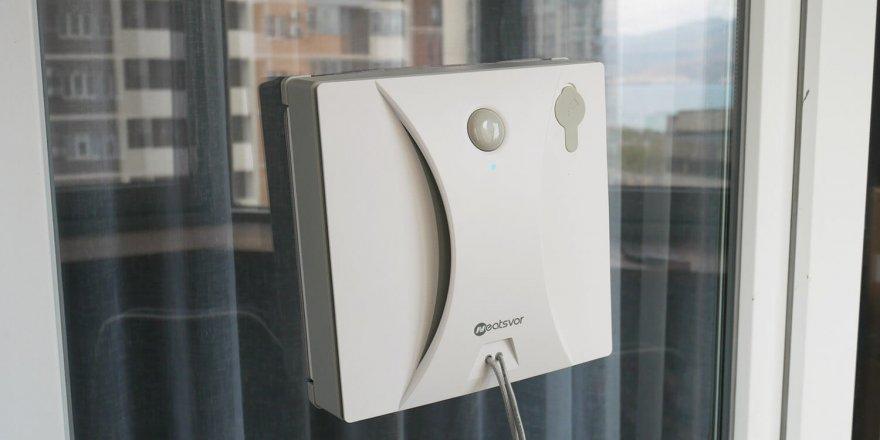
The Neatsvor W10 window cleaning robot, priced between $140 and $160 (at the exchange rate at the time of writing), boasts an automatic water supply feature. Otherwise, it's a fairly standard square-shaped window cleaning robot controlled by a remote control. Below, I'll show you how the Neatsvor W10 performs its primary function, followed by a discussion of the pros and cons I discovered during testing. Let's get started!
Equipment
The window cleaning robot arrived in this branded box:
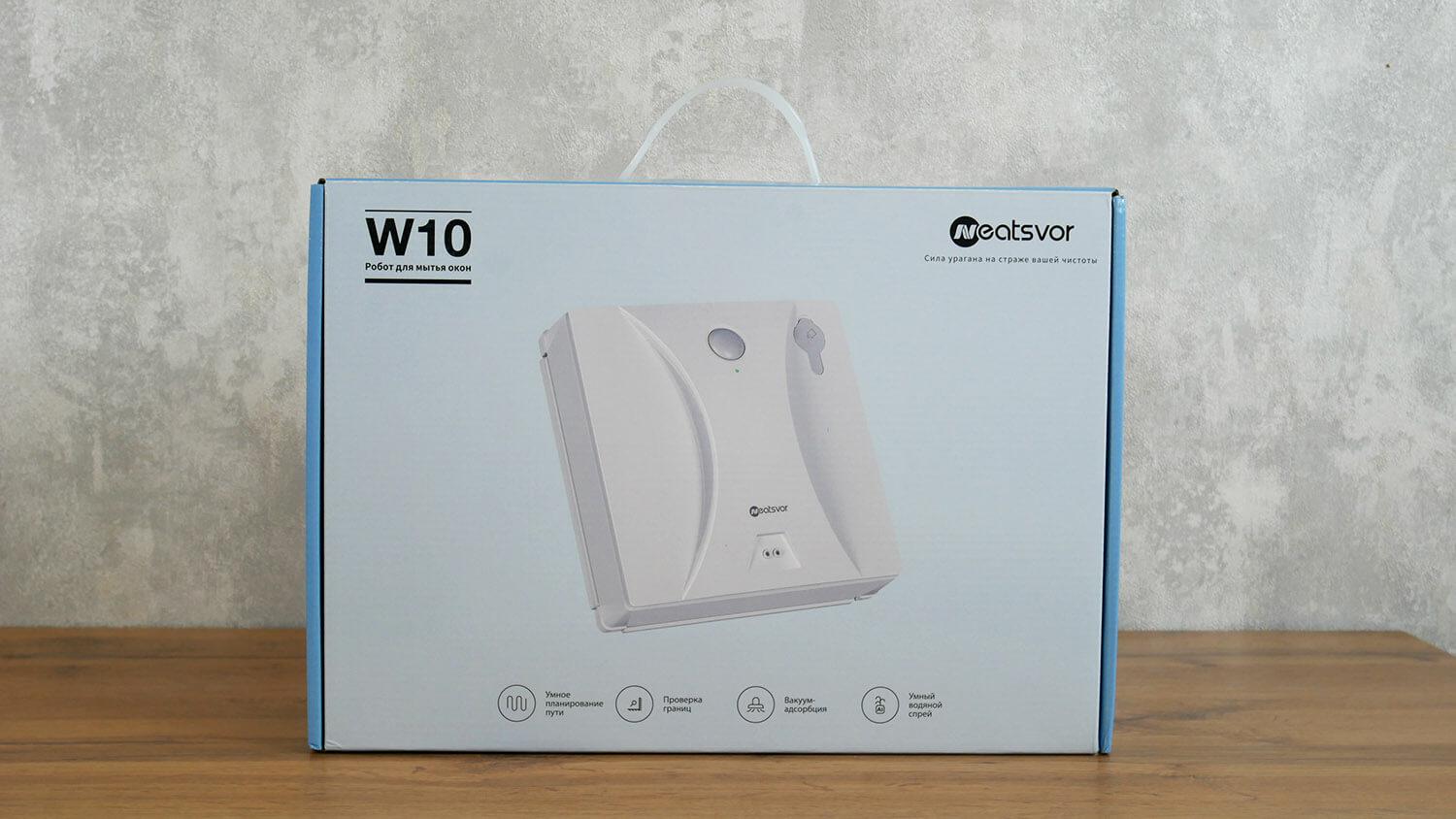
Box
The package includes:
- Power unit.
- A cord for connecting the power supply to the outlet.
- Three spare microfiber cloths. The robot itself already comes with an extra cloth.
- A bottle for spraying water or detergent onto a cloth.
- Remote control without batteries.
- Operating instructions in Russian.
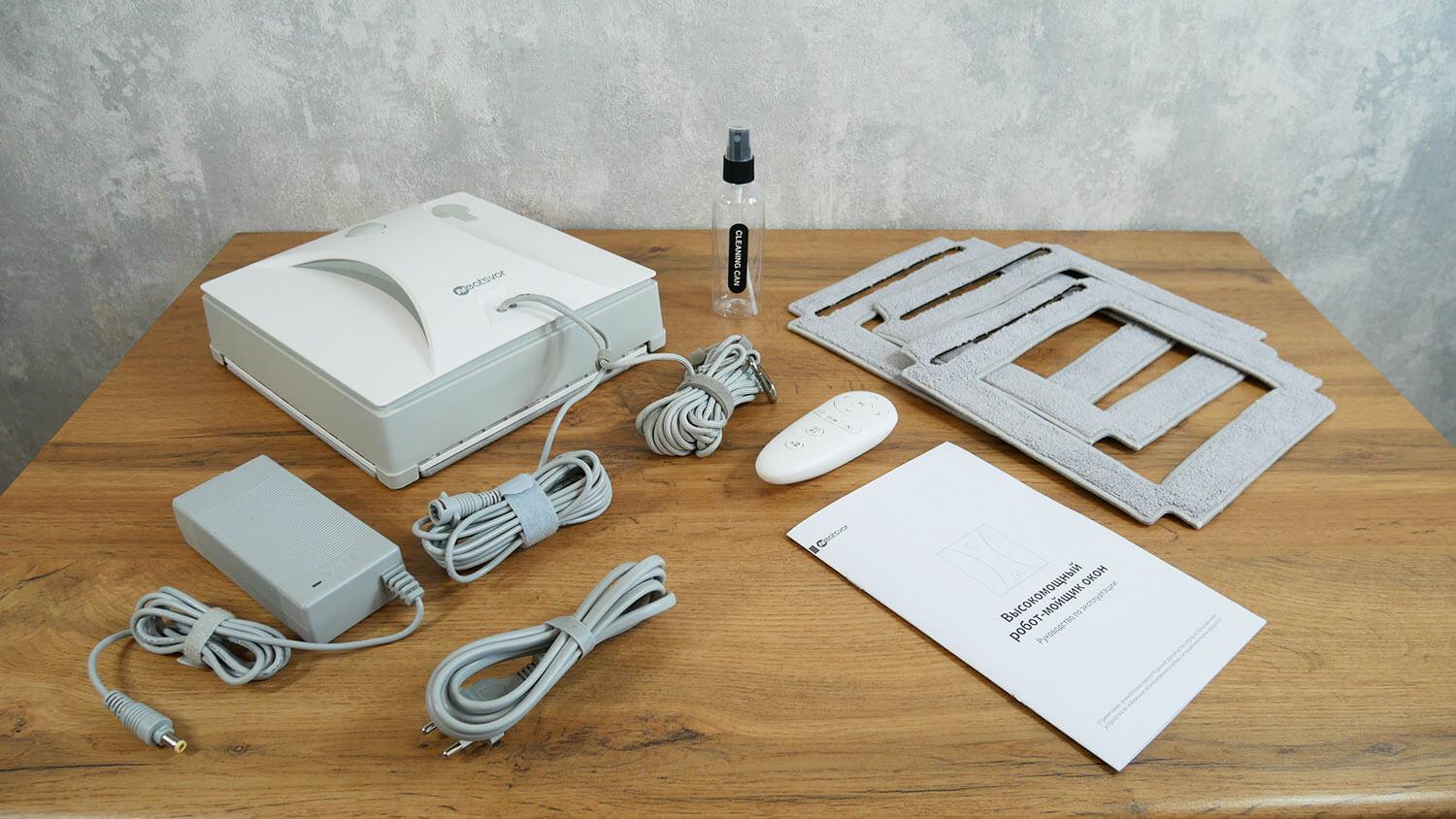
Equipment
Standard equipment.
Appearance
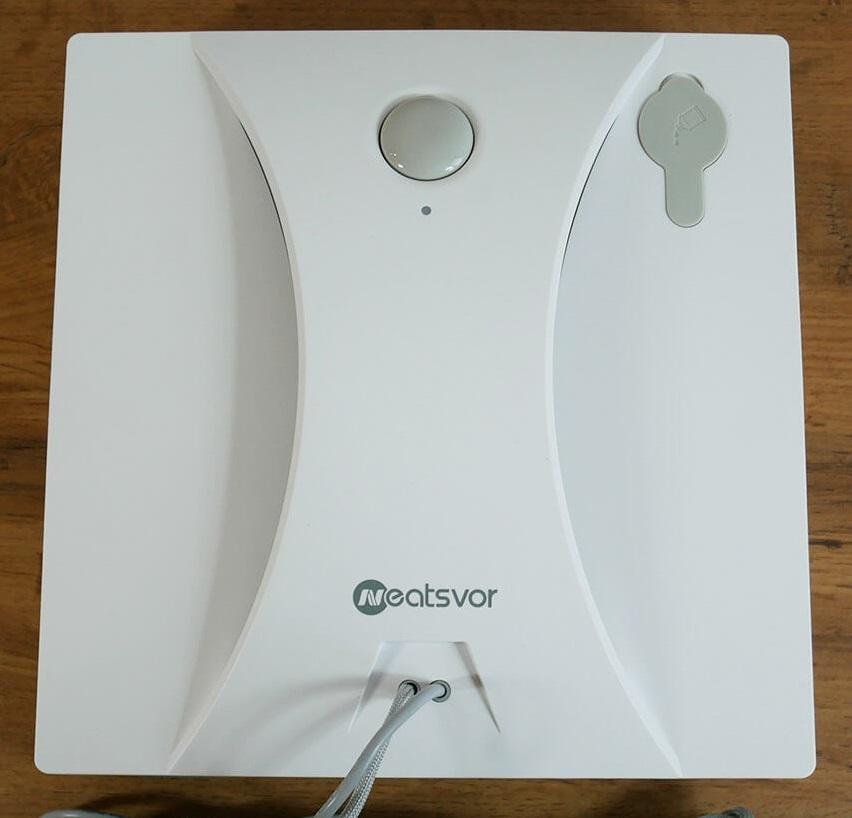
Now let's take a look at the Neatsvor W10's design. It's white and gray. Its body is square. The robot's safety cable and extension cord are non-removable.
Top view
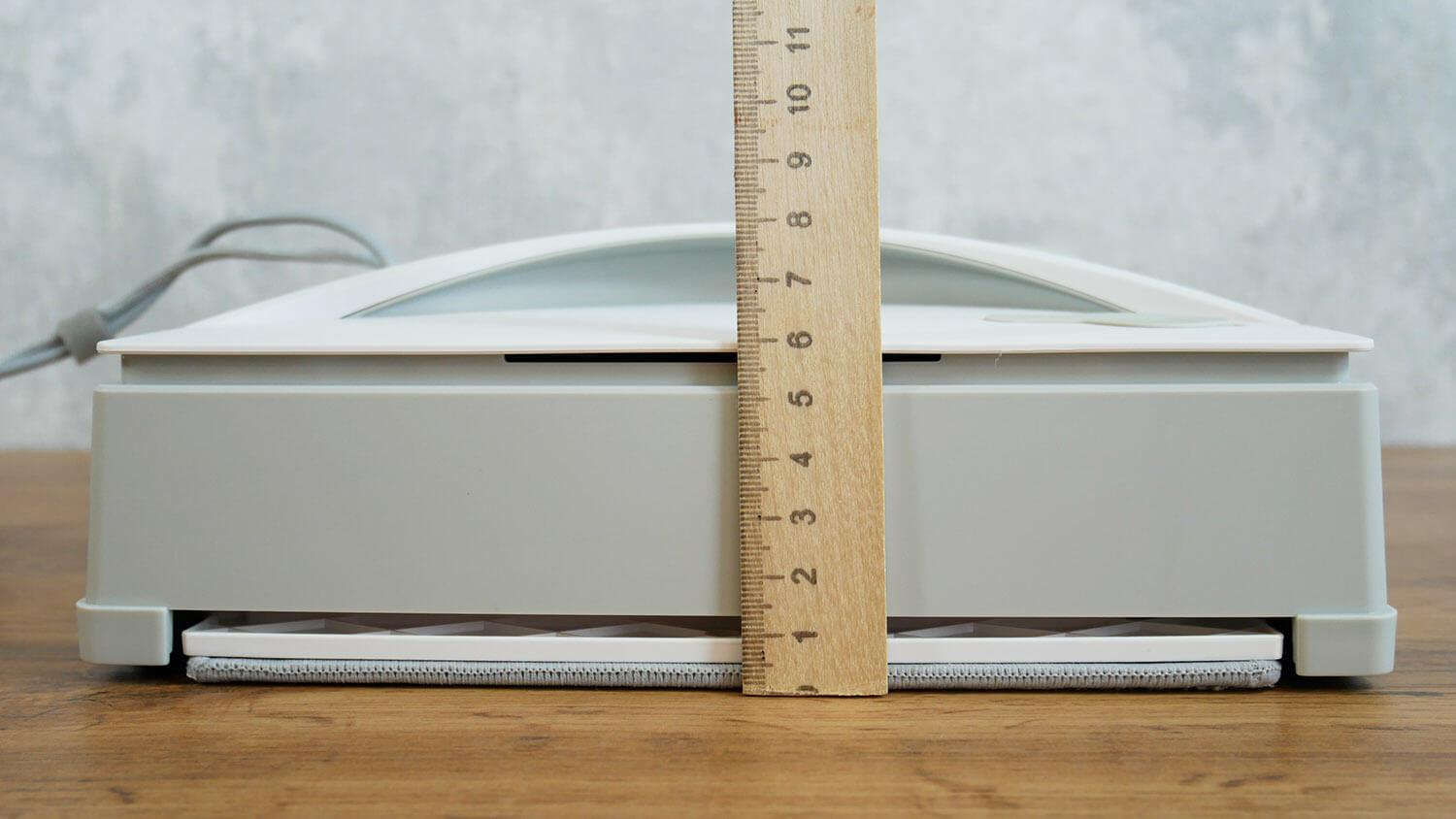
The body height is 8 cm, which allows the robot to be used on windows with bars.
Body height
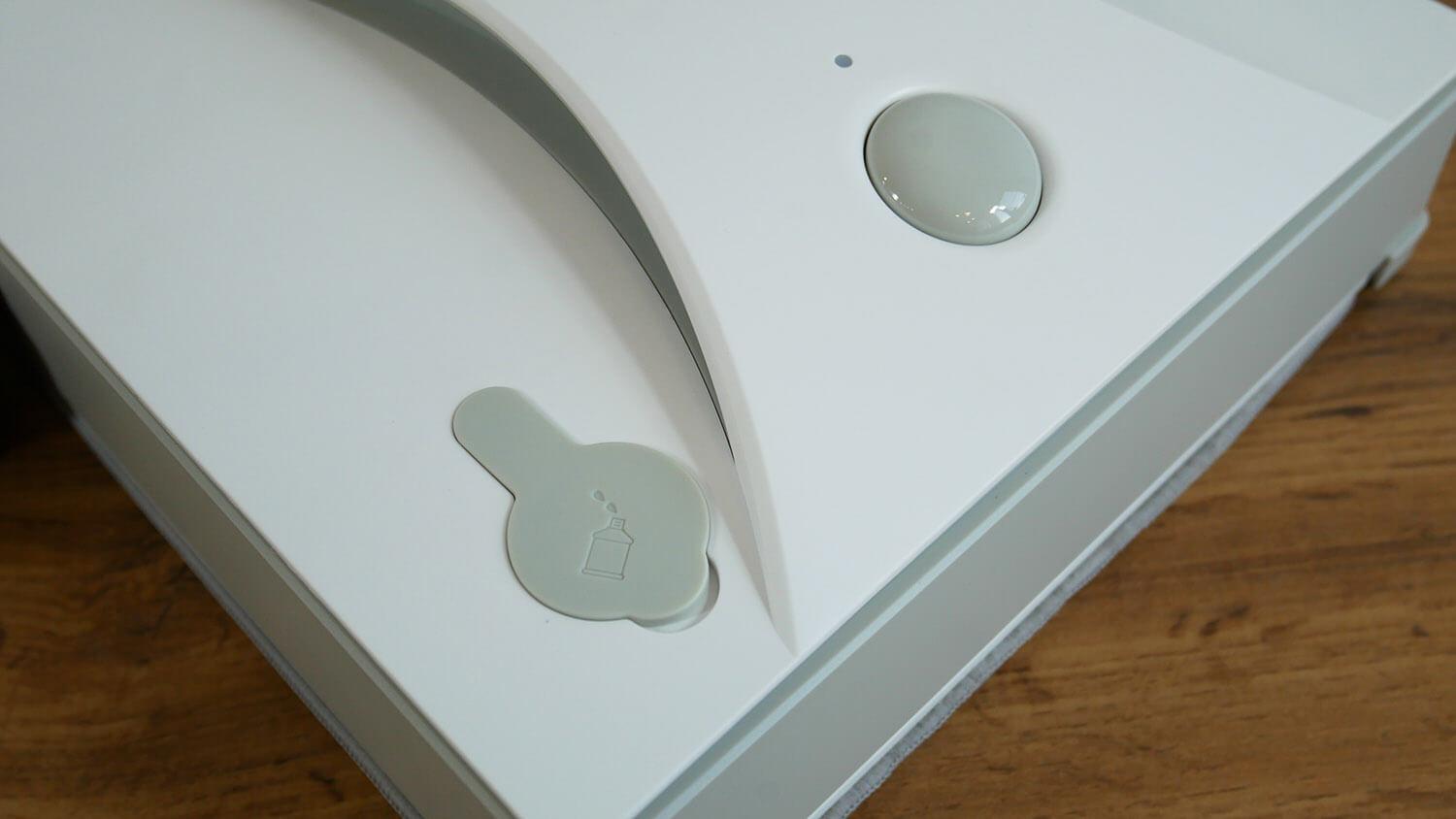
The top of the body houses a single control button, a status indicator, and a water-fill opening with a sealed valve. The water tank holds 150 ml.
Control button and water tank lid
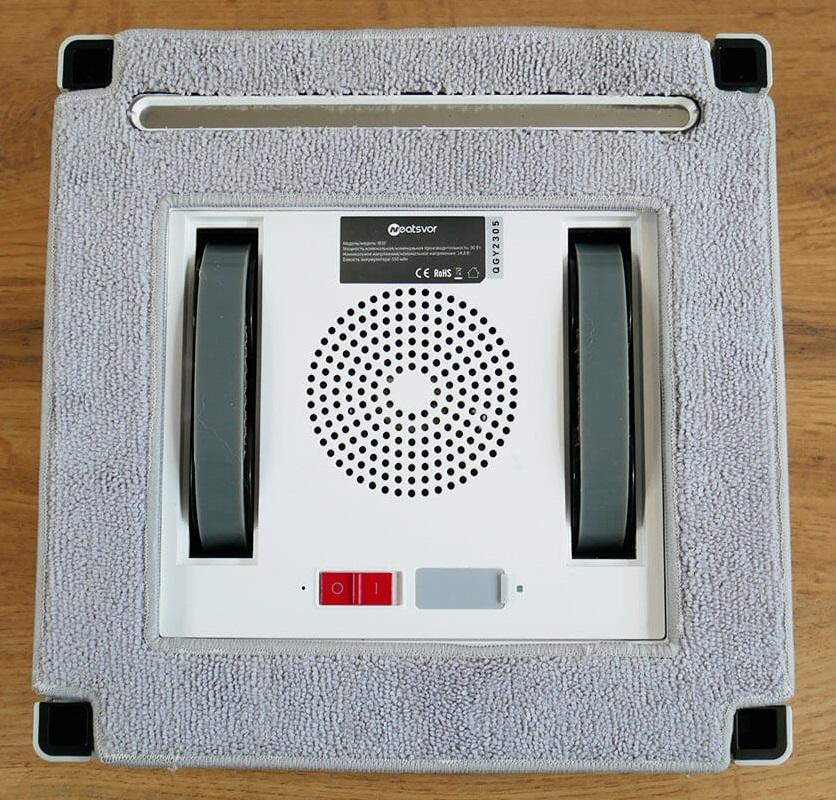
The robot's underside is equipped with tracks for movement. Between them are ventilation holes for the motor, which suctions the window cleaning robot to the surface. A power switch is located nearby.
Bottom view
And most importantly, the automatic water supply system. It's located near the front and features a row of holes. These holes spray water onto the surface, which is then immediately absorbed by the cleaning cloth. This arrangement eliminates the risk of water droplets blowing away when cleaning windows from the outside in windy weather. The cleaning cloth is attached to the robot with Velcro. Drop protection sensors are located in the corners, detecting the edges of the surface.
Overall, the robot's design is quite standard and practically identical to the Xiaomi Mijia HUTT W66 and Genio Windy W250. The latter, incidentally, was also reviewed: https://robovac.washerhouse.com/en/obzory/robovac-genio-windy-w250.html.
Technical specifications
Main characteristics of Neatsvor W10, as declared by the manufacturer:
- Backup battery: Li-Ion, 650 mAh.
- Power consumption: 90 W.
- Battery life: up to 25 min.
- Water tank: 150 ml.
- Dimensions: 228*228*80 mm.
- Weight 1.5 kg.
- Noise level: up to 49-67 dB.
- Travel speed: 2.5 min/1 sq.m.
Overall, the specifications are quite standard. I measured the noise level myself. If the robot is indoors, the noise level is around 66-67 dB. However, if it's installed outside and the window is closed, the noise level will depend on the soundproofing of the windows. In my case, it was 49-50 dB.
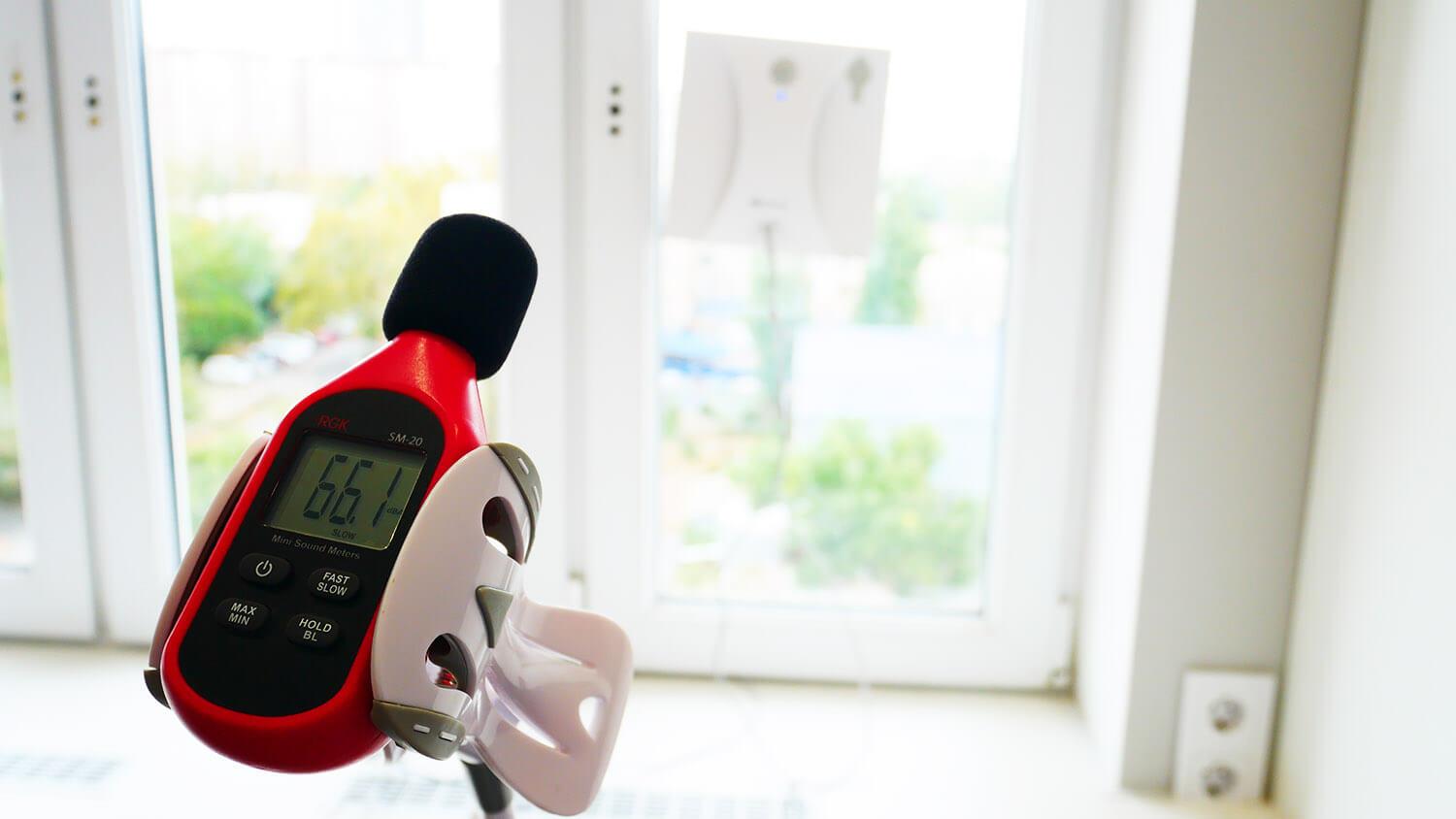
Noise level
Functional capabilities
Let's take a look at the Neatsvor W10's functionality. The window cleaning robot is controlled using the included remote control. It's important to keep this in mind, as it doesn't support app control.
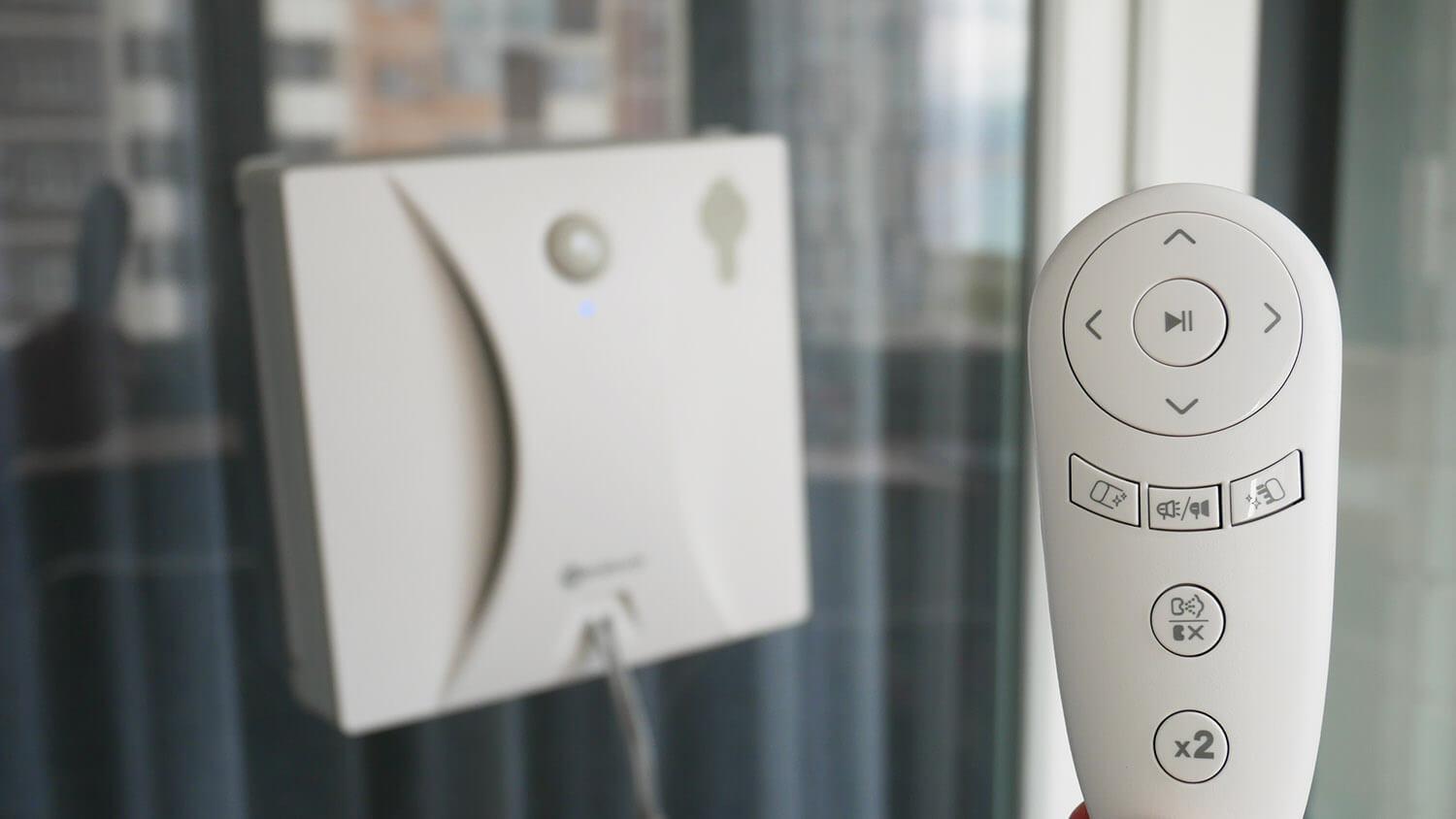
Control via remote control
The remote control has the following functions:
- Manual control of arrows.
- Start/pause.
- Dry cleaning mode.
- Turn voice notifications on/off.
- Wet cleaning mode.
- Turning the water supply on/off.
- Double pass mode of the available area.
Basically, the basic functionality is covered. It's also worth noting that Neatsvor W10 speaks Russian.
Testing
A detailed video review of the Neatsvor W10, including all tests, has already been prepared and published on the channel:
Navigation and window cleaning quality
And finally, let's move on to the tests. First, we'll check how the Neatsvor W10 handles its primary task—cleaning windows from the outside. We'll also be able to evaluate its navigation. Considering the windows haven't been washed since fall and are quite dirty, it's recommended to first run the robot for dry cleaning, without spraying any cleaning solution. That's what I did. I ran the robot a second time with clean cloths and the automatic liquid feed function. After the second wash, the windows were clean, without any marks or streaks.
Let's compare the condition of the windows before and after:
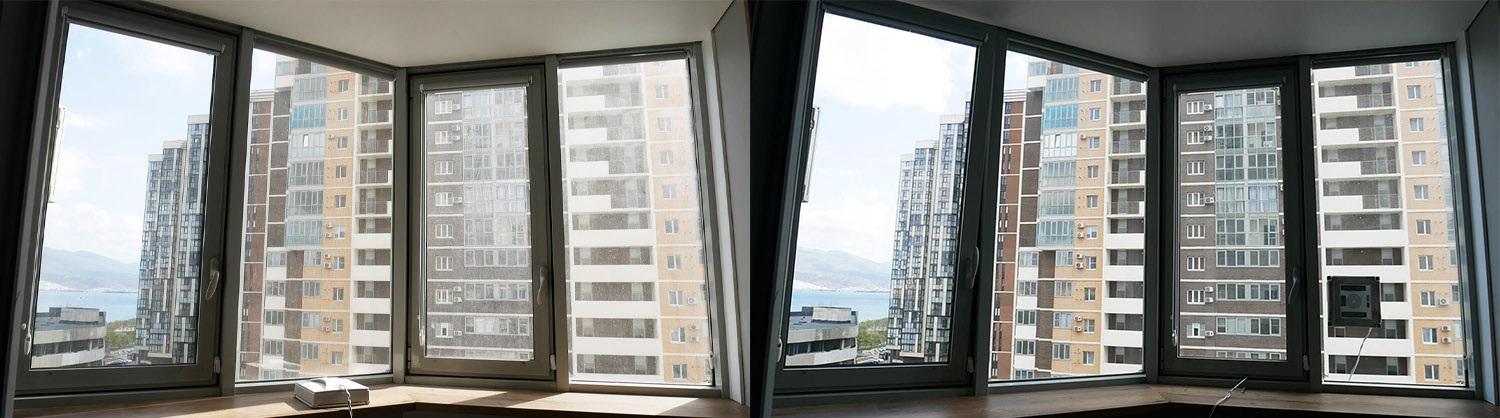
Window cleaning quality
I'll just note that sometimes the tracks slip on the window, and sometimes the robot doesn't reach the very top of the window. This doesn't happen every time, but I observed it several times during testing. It's typical for most square-type robotic window cleaners.
The weak point of all window cleaning robots, including this one, is that corners remain unwashed. This is because of the break sensors installed in the corners.
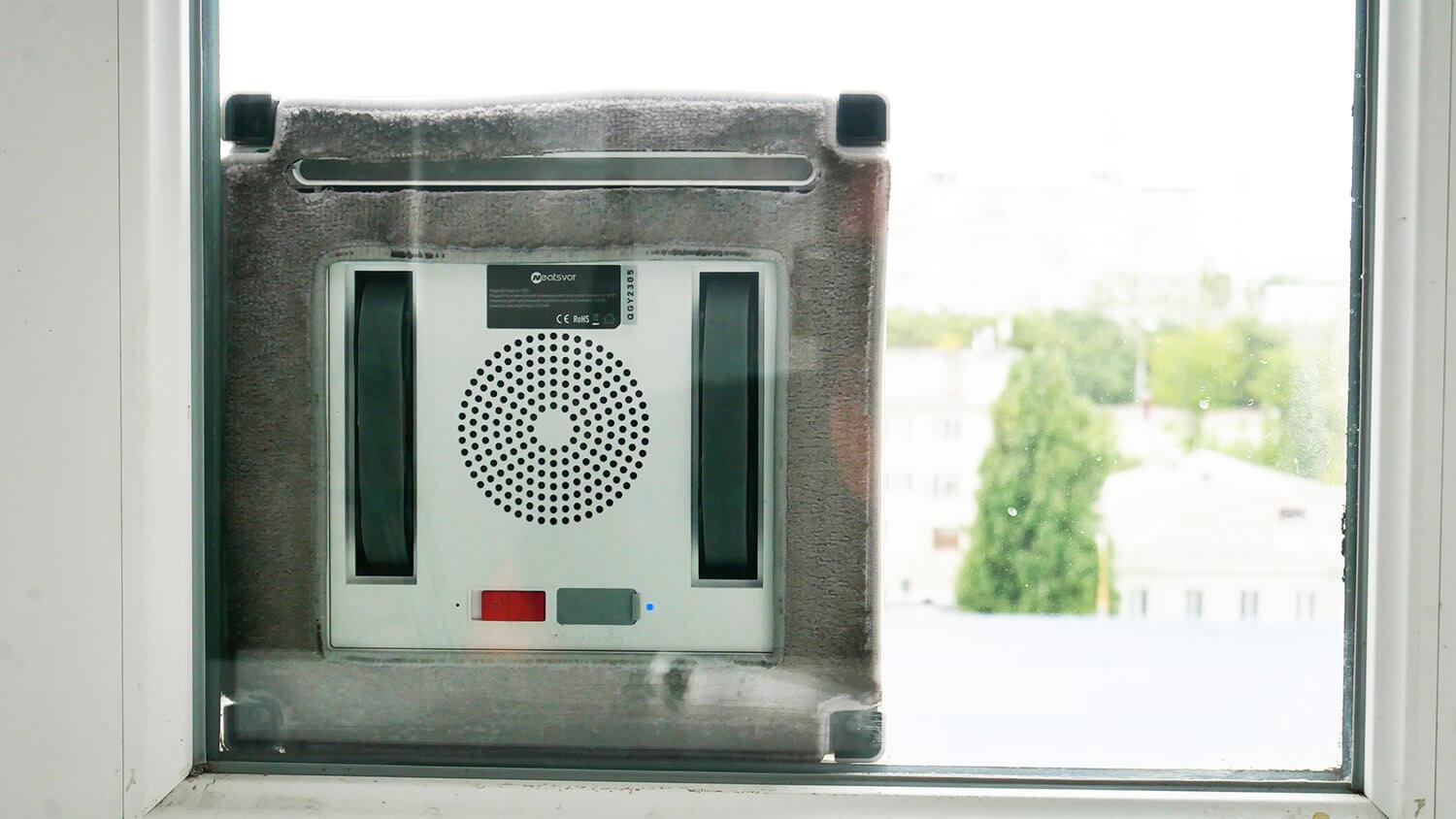
Washing a window in the corner
And here's what the napkin looks like after the test:
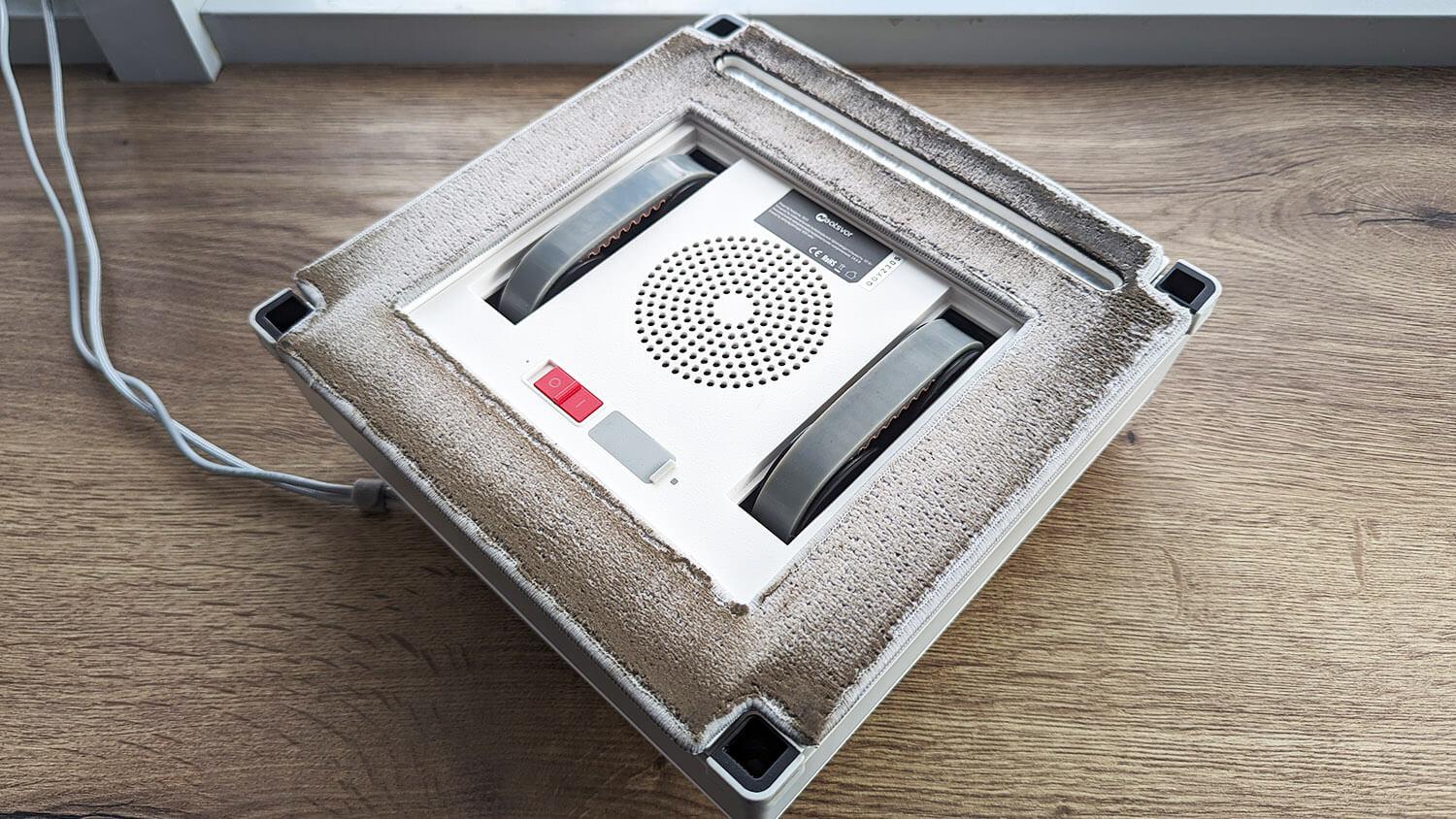
The condition of the napkin after washing the window
Application on other surfaces
This robot can also be used to clean tiled walls, shower stalls, and mirrors. It's even worth noting that the Neatsvor W10 can gently roll away from the edges of frameless surfaces without losing its grip. That's a plus!
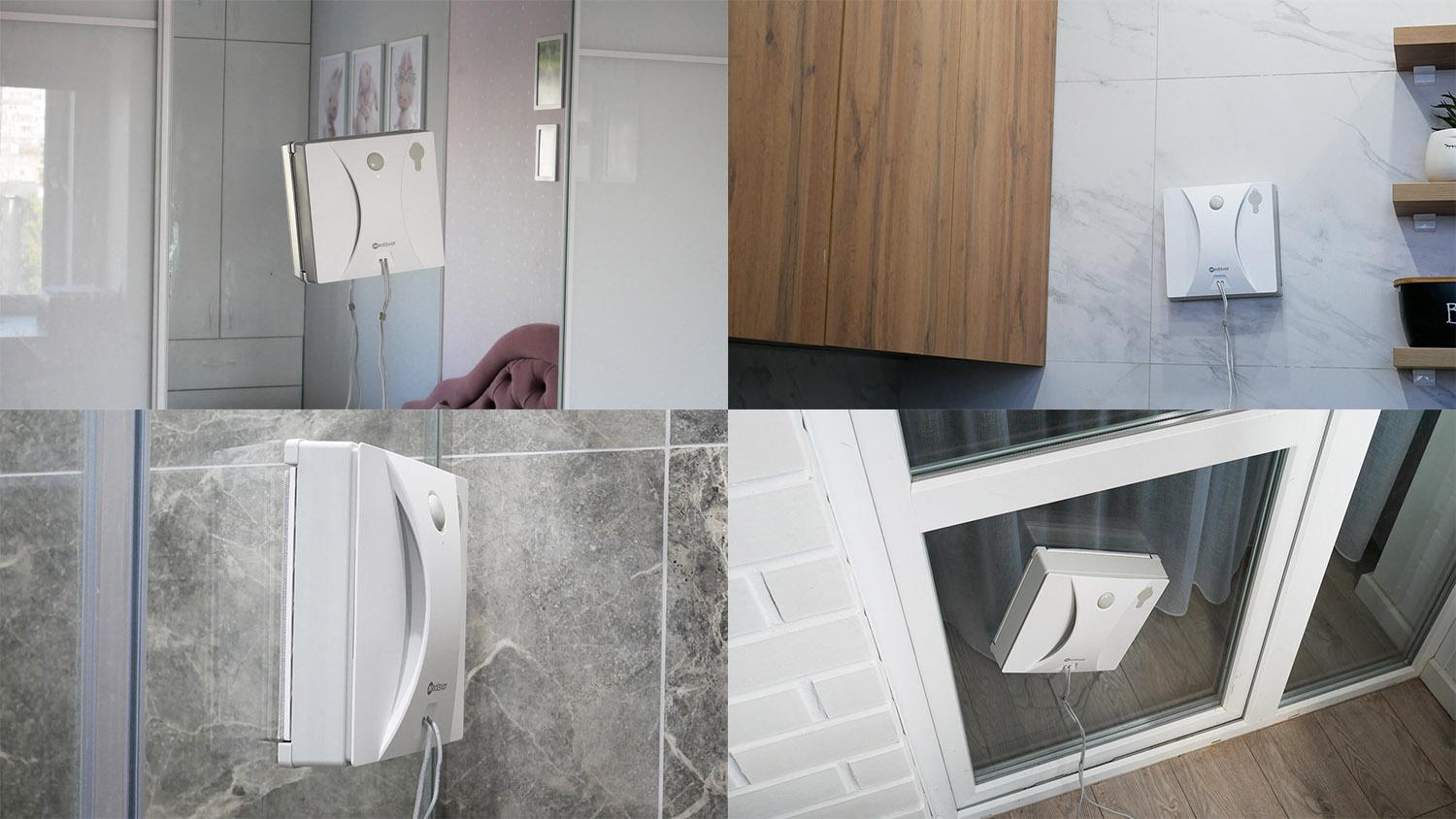
Washing vertical surfaces
For those interested, this window cleaning robot can't operate on horizontal surfaces. When approaching an edge, it loses traction and the robot malfunctions.
Emergency mode
Let me explain how the Neatsvor W10 operates in emergency mode. When disconnected from the power supply, the robot starts emitting voice alerts, and the indicator light on both sides of the body changes from blue to red. This allows you to promptly detect the problem and remove the robot from the window.
Let's sum it up
The Neatsvor W10 window cleaning robot was thoroughly reviewed and tested. I'll summarize and share my personal opinion of the robot after using it. Here's what I liked:
- Automatic water supply to the surface. Moreover, the water isn't blown away by the wind, as is the case with many other robotic window cleaners.
- Increased volume of water tank compared to analogues.
- The double-pass function is not available in all robots.
- The quality of window cleaning is above average.
- Small body, which allows using the device on windows with bars.
- Possibility of washing frameless windows.
- Work on small windows.
- The robot's versatility. It's suitable for cleaning not only windows, but also glass doors, mirrors, and wall tiles.
As for the shortcomings, the following were found:
- It doesn't wash into the corners.
- A non-removable electrical extension cord, which makes replacement more difficult if the cord is damaged
- Does not work on horizontal surfaces.
- Occasionally, navigation glitches occur and the robot does not reach the top of the window.
Overall, most of the criticisms are typical for all robotic window cleaners. Considering the price, the Neatsvor W10's design and features are on par with similar products, so I see no compelling reason not to recommend it.
On that note, I'd like to end this review. If you have any questions, please ask them in the comments. Happy shopping. Bye!
One comment