Everybot Edge: A robotic window cleaner
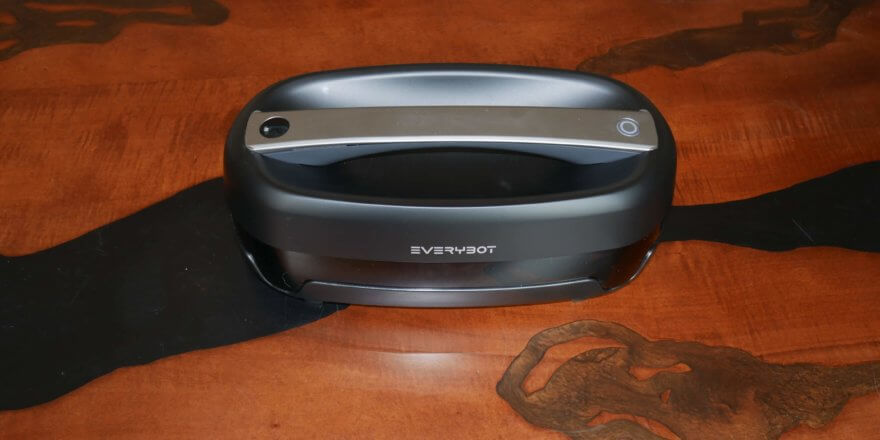
In this review, we'll be looking at the new Everybot Edge robotic floor polisher, which hit the market in early 2020. Edge, translated from English, is no coincidence, and the Korean manufacturer has given its new product this name. Unlike its predecessor, this floor polisher offers a more powerful cleaning experience. Everybot RS700 The robot's body has become significantly narrower, and the cleaning pads extend beyond the edges of the body, allowing for more thorough cleaning of so-called "edges," such as areas along baseboards and in corners. Furthermore, the Edge model no longer features soft-touch mechanical bumpers, replaced by sensors located around the perimeter of the body. This allows the robot to get extremely close to walls. The wall-floating algorithm has also been changed: now the robot moves in a straight line, rather than the previous circular motion. Below, we'll provide a detailed review of the Everybot Edge, examining its key features and functionality. At the end of the video, we'll show a cleaning test with this floor polisher and summarize our personal opinions, highlighting the model's pros and cons.
Equipment
The package includes:
- The robot polisher itself.
- Remote control.
- Batteries for the remote control (2 pcs.)
- Water tanks (2 pcs.).
- Microfiber cloths (4 pcs.)
- Network power adapter.
- Silicone brush for cleaning napkins.
- Operating instructions in Russian.
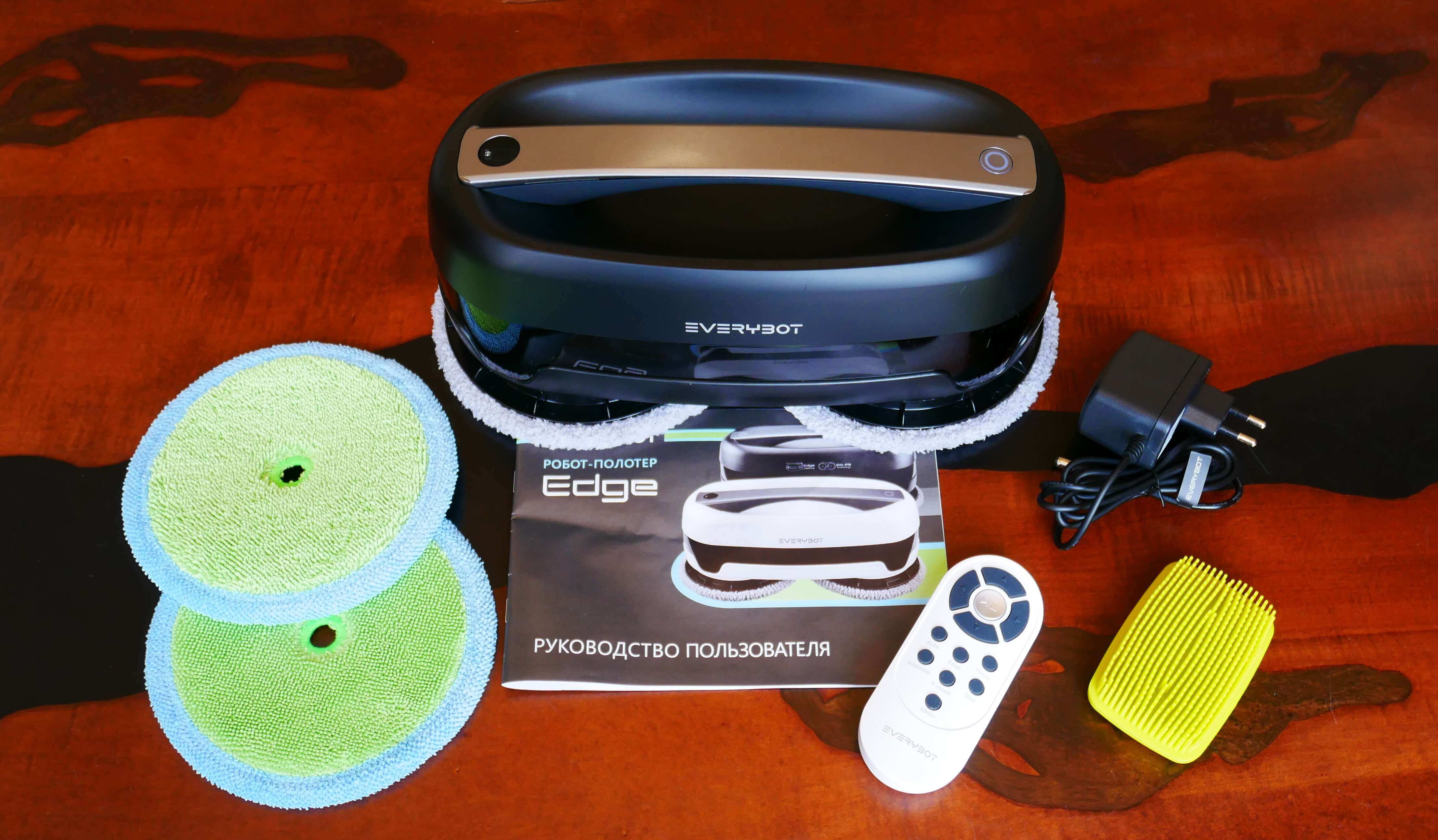
Everybot package
As you can see, a silicone brush has been added to the kit, making it easier to clean the cloths. The remote control has also been redesigned, and new operating modes have been added: accelerated (50 min) and operation with the cliff sensors disabled. We'll talk more about this feature later.
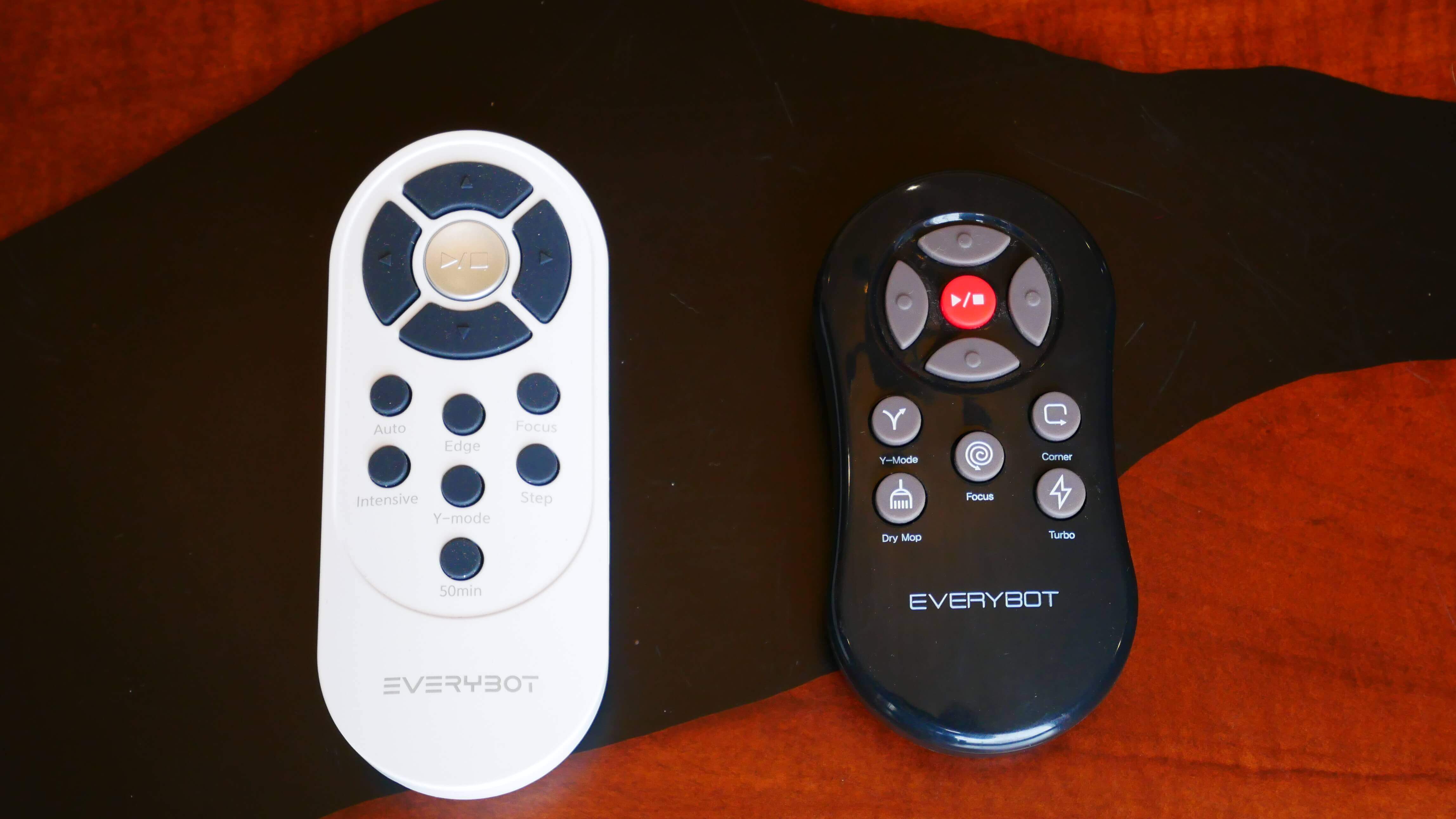
Comparison of the remote control with the RS700
Otherwise the package is complete, unfortunately the only thing missing is virtual wall to restrict movement.
Appearance
Now let's talk more about the robotic mop itself. As mentioned earlier, it's taller than the RS700, but thinner. The Everybot Edge's dimensions (W*D*H) are 327*165*136 mm, compared to 370*200*110 mm:
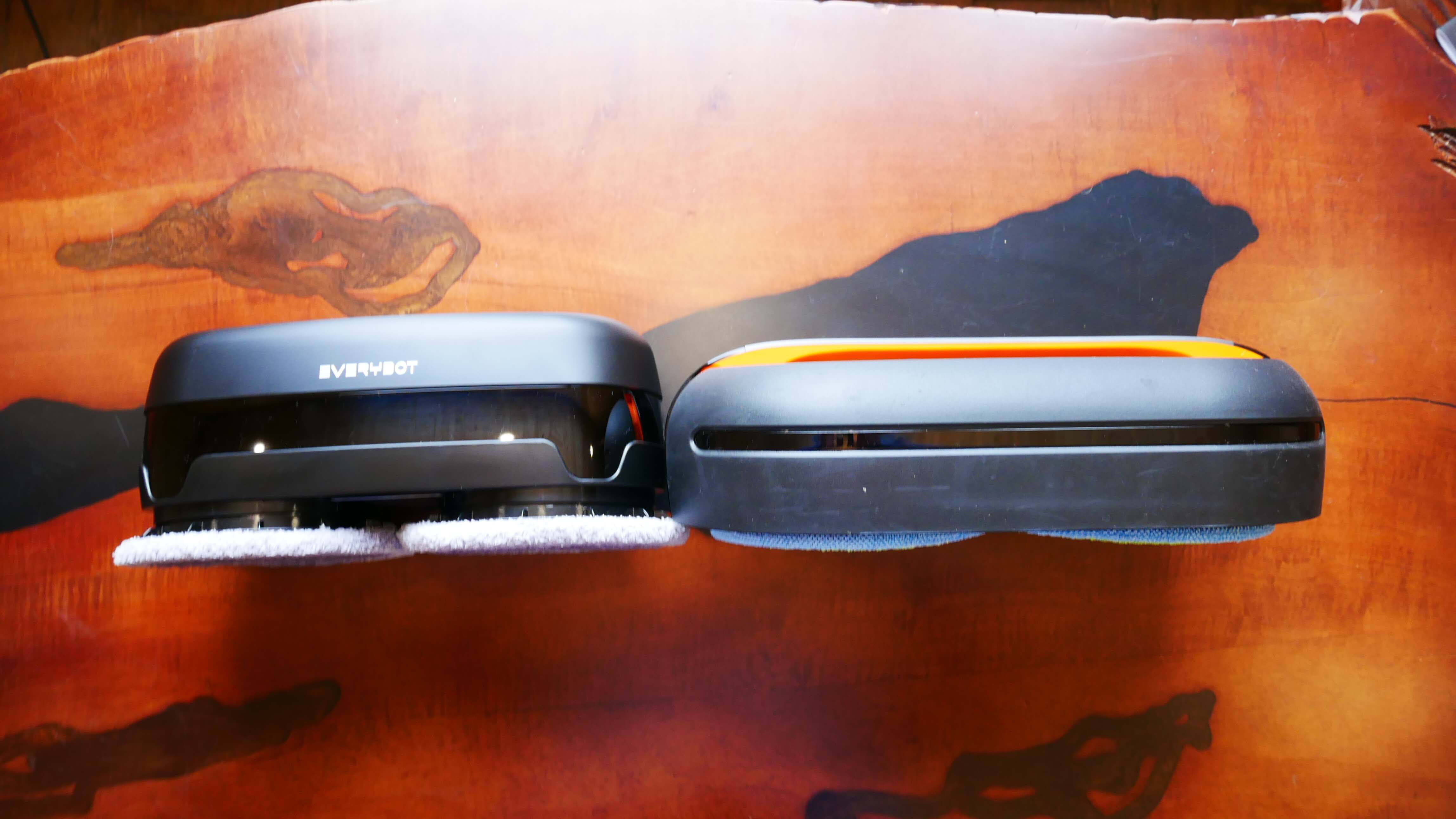
Edge vs RS700 comparison
This is both a good and a bad thing: the advantage is that the new floor polisher can fit into tighter spaces, which are common in bathrooms. However, the increased height negatively impacts the robot's ability to navigate under furniture.
The top handle is designed for easy carrying and manual cleaning of vertical and horizontal surfaces. A light sensor is located at one end of the handle, ensuring the robot can navigate to a brightly lit area after cleaning (not under a bed or table).
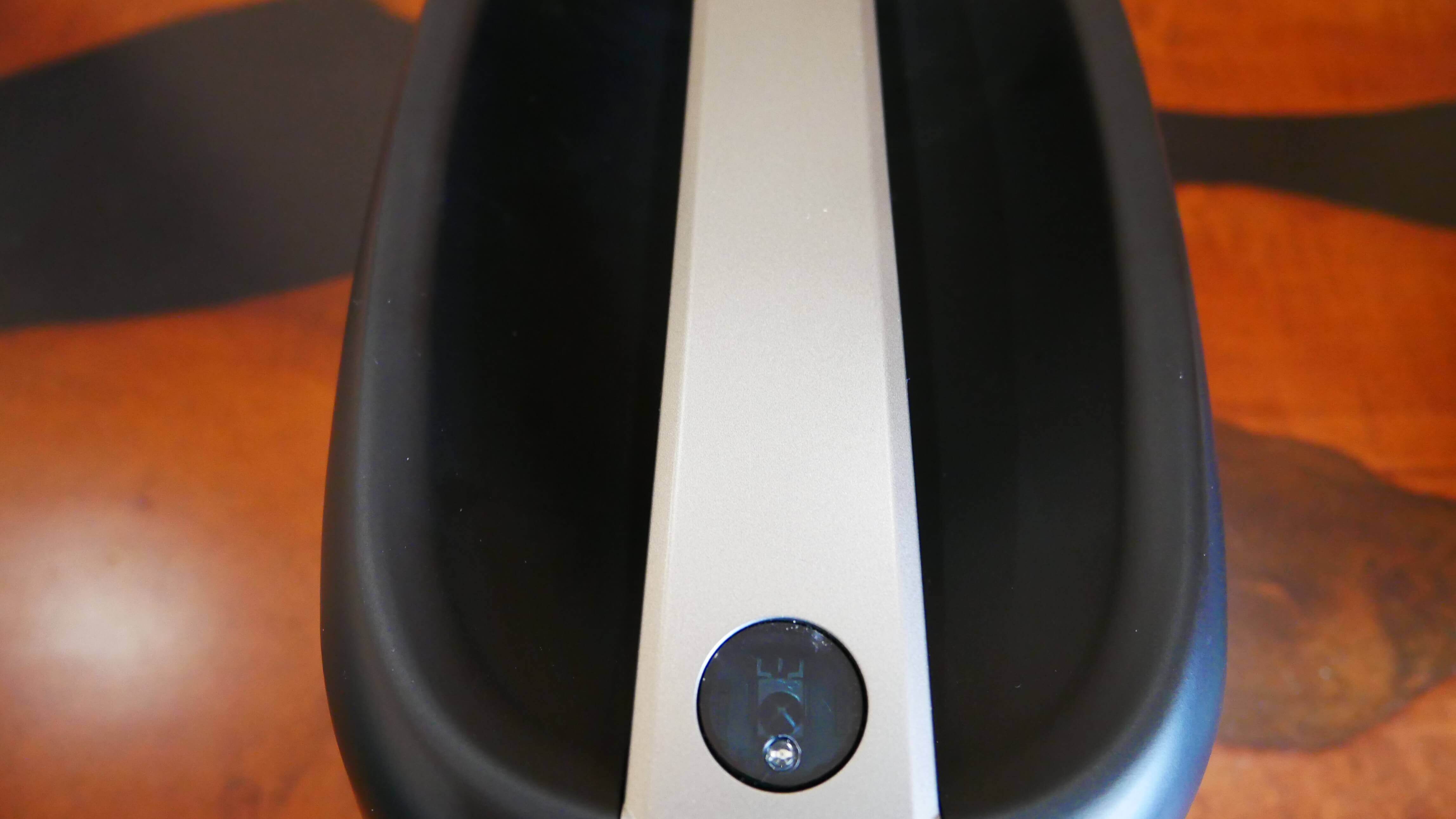
Light sensor
On the back of the handle there is a button to start the robot, around which there is a light indicator (signaling the operating status and possible errors).
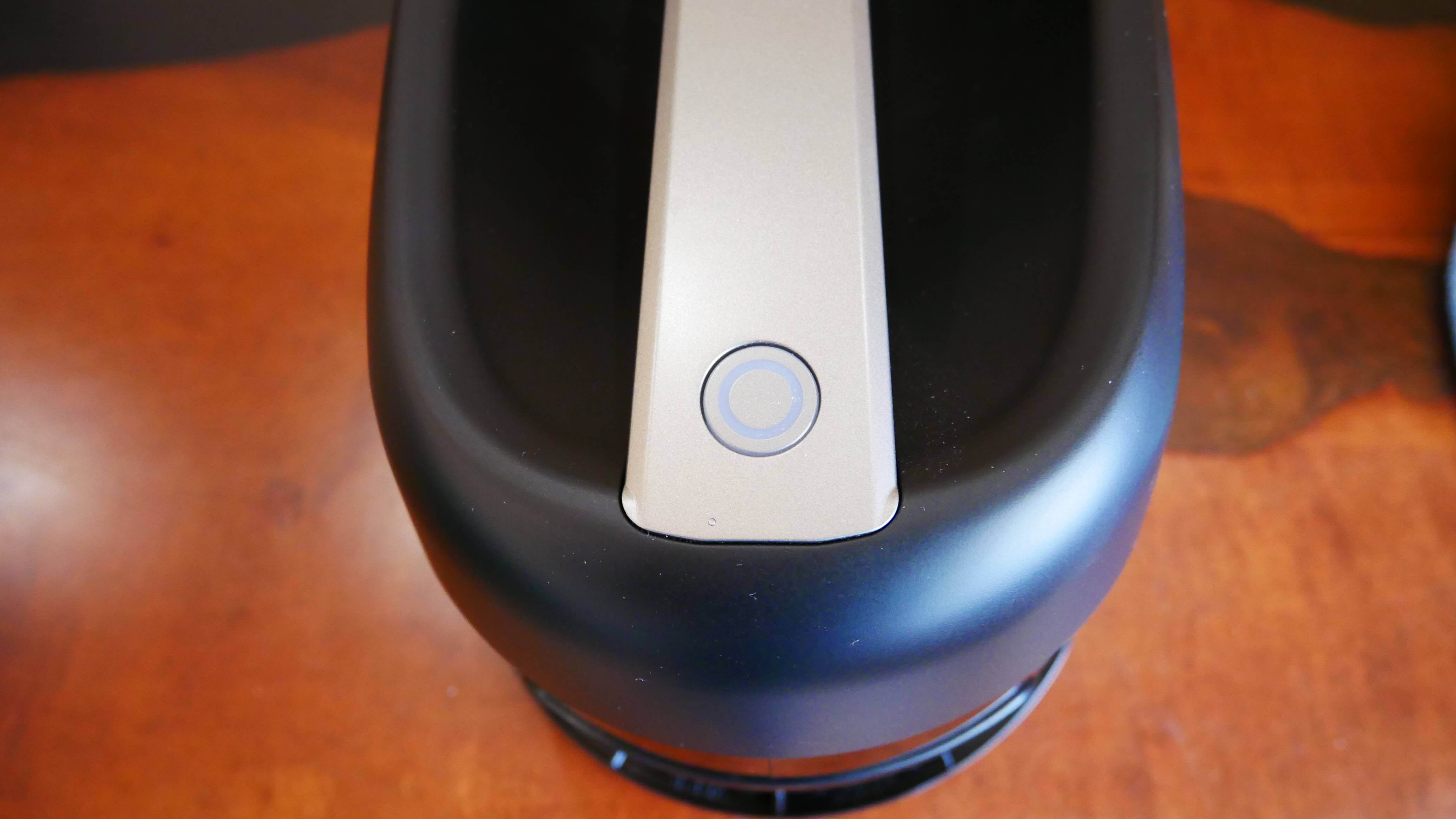
Power button
Around the robot's perimeter are proximity and obstacle detection sensors, as well as surface drop sensors that protect Everybot Edge from falling down steps.
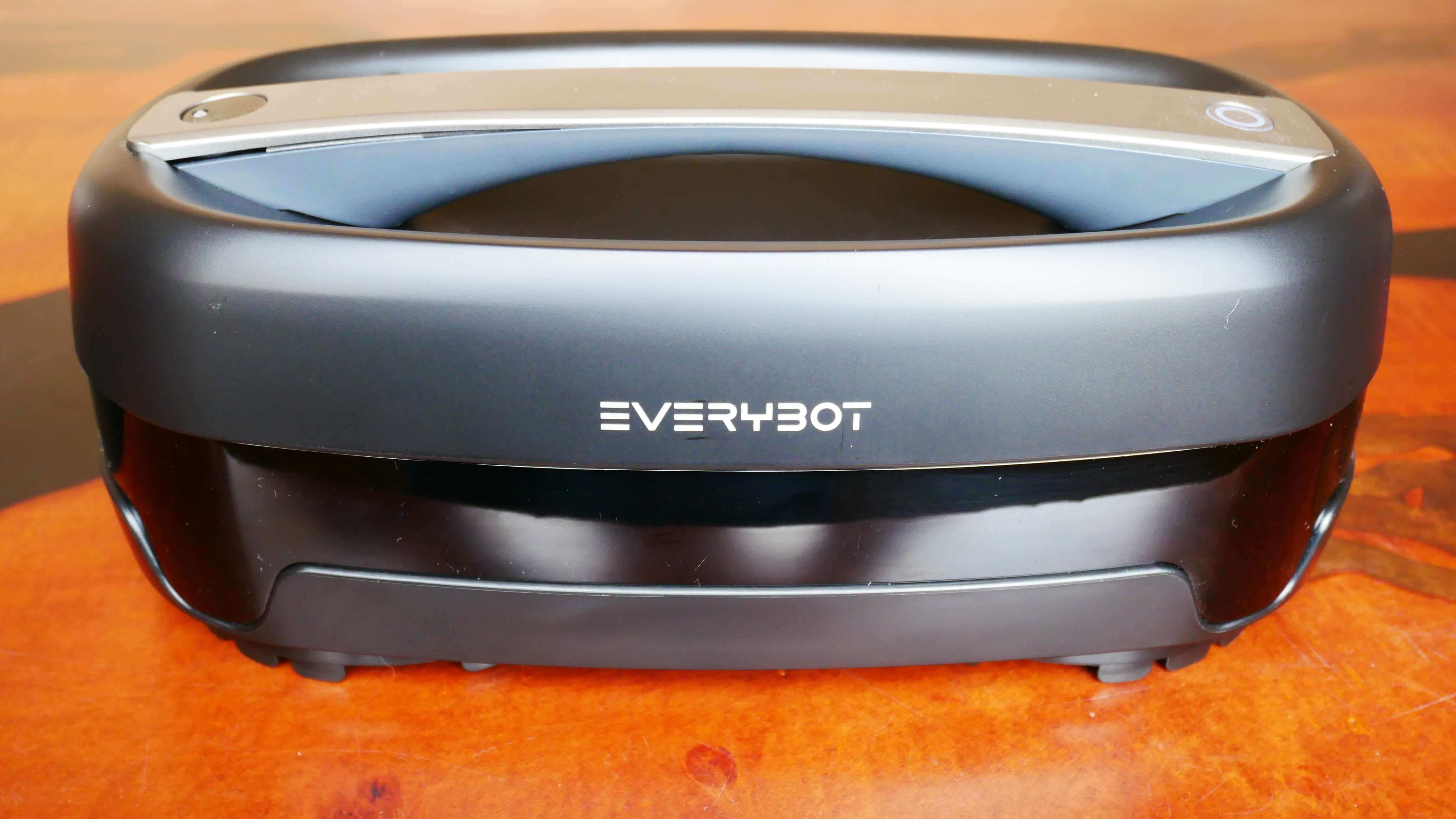
Side view
If you turn the robotic mop upside down, you can see the rotating discs for attaching the cleaning panel at the bottom.
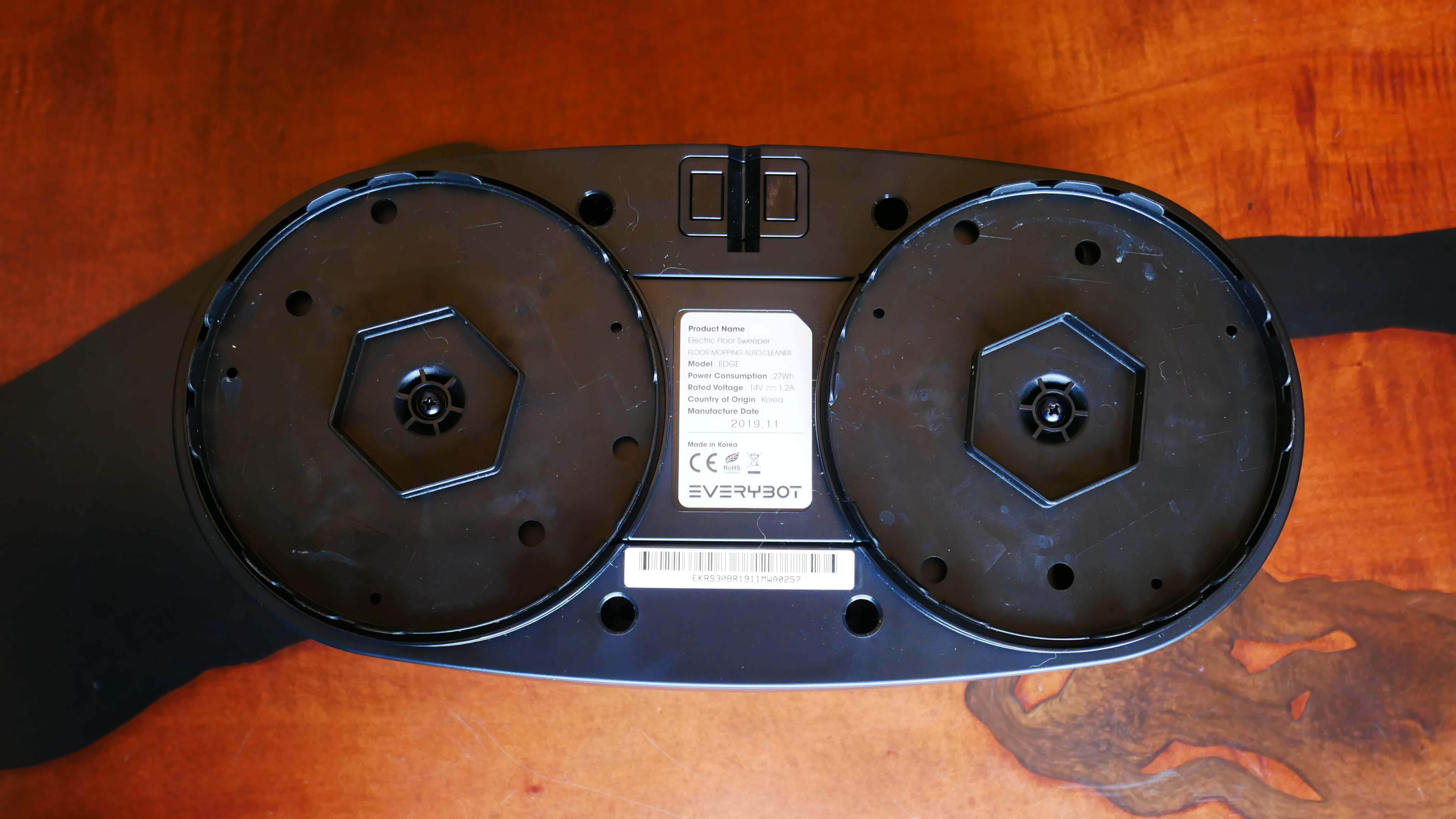
Bottom view
The panels are fairly easy to install on the robot. First, fill them with water and close the sealed valve.
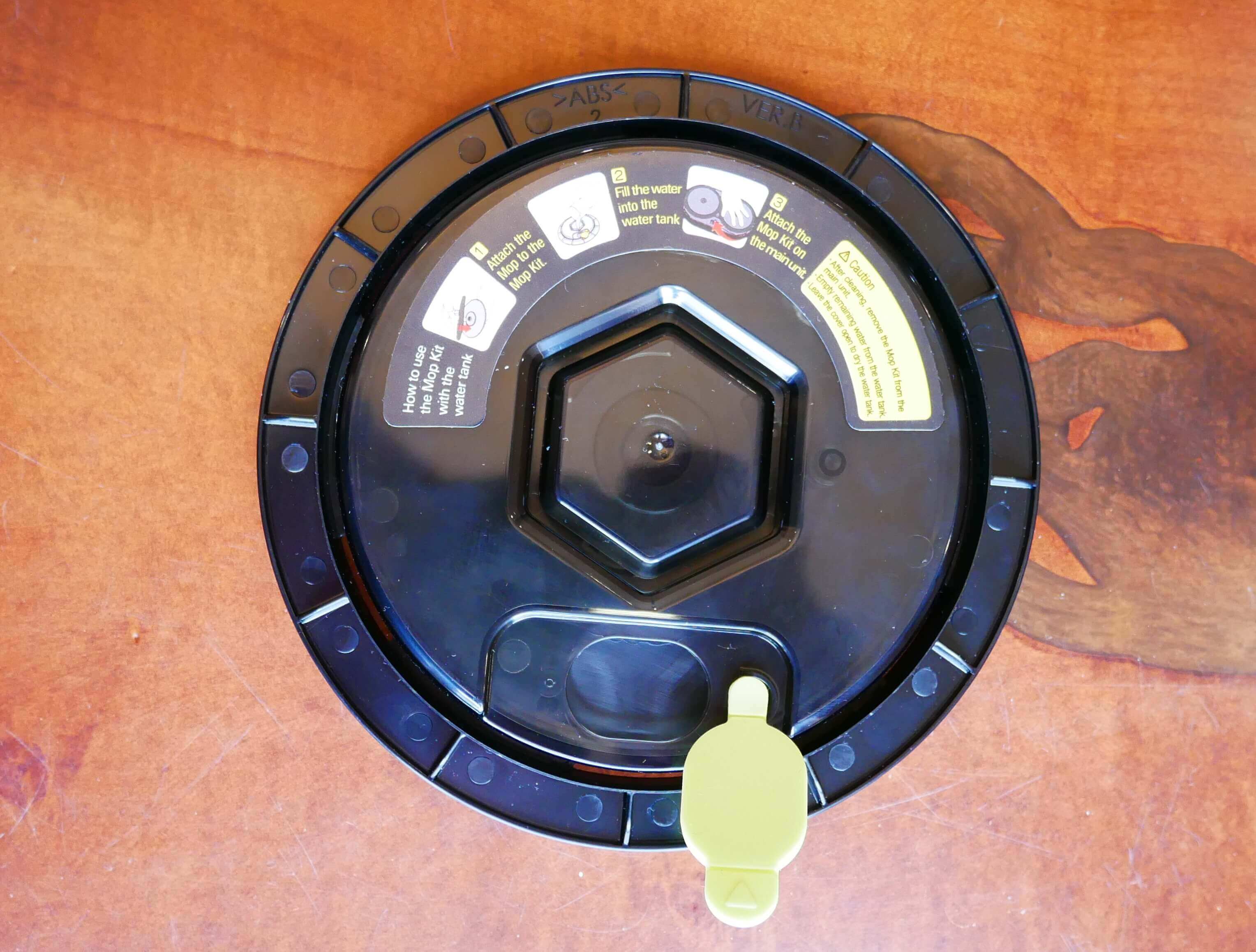
Washing panel
The wipes are attached to the cleaning panels using Velcro, and water flows onto the wipes through a special hole with a dispensing cloth.
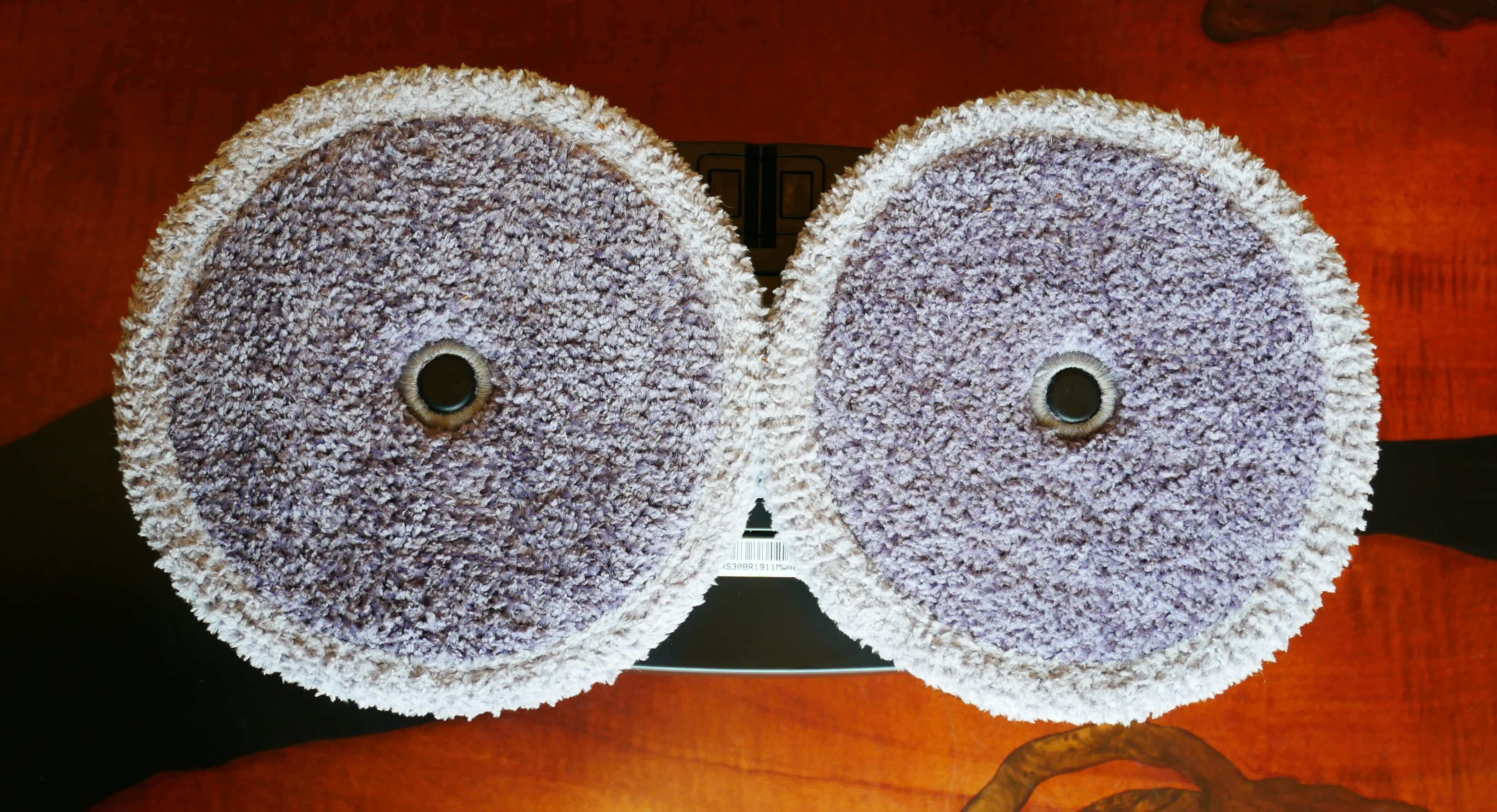
Napkins are installed
Overall, the robot has a stylish and understated appearance, which earned it a prestigious award at the 2019 Red Dot Design Award.
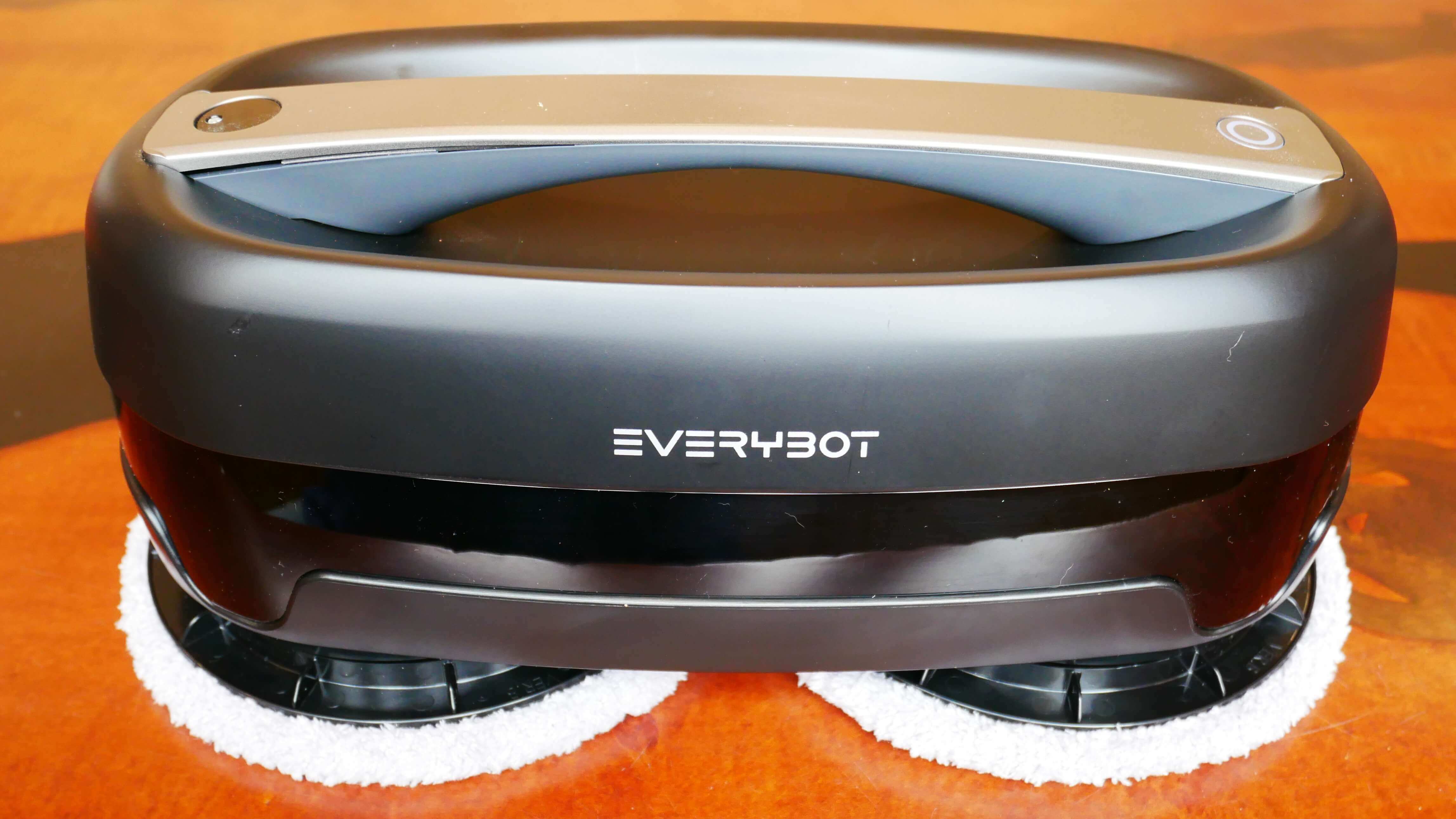
Side view (with napkins)
Technical specifications
The main characteristics of Everybot Edge are summarized in the table:
| Power supply | Li-Ion battery, capacity 2150 mAh |
| Opening hours | 50/100 min |
| Charging time | 100 min (150 min after full discharge) |
| Charging method | Manual using a network adapter |
| Power consumption | 27 W |
| Movement speed | Up to 20 cm/s |
| Overall dimensions | 327*165*136 mm |
| Weight | 1.5 kg |
| Noise level | 46 dB |
| Additional options | |
| Control | Button on the body, remote control |
| Sensors | Infrared obstacle sensors, altitude sensors, and a gyroscope |
| Notification | LED indication, sound signals |
Overall, the specifications haven't changed much. Besides the size changes, it's worth noting the reduction in weight and noise level. The Everybot Edge is now lighter, which is good for manual cleaning. However, as a floor polisher, the pressure it exerts on the floor has been reduced, making it slightly less effective at removing dirt in some situations.
Functional capabilities
Finally, let's take a look at the features of the new robotic mop. As we've already mentioned, the Everybot Edge is controlled by a remote control, with buttons indicating the following modes:
- Automatic cleaning (Auto) of the entire available area until the battery is completely discharged.
- Edge cleaning. Thorough cleaning of the floor along the walls and in the corners.
- Spot Cleaning (Focus). In this mode, the robot thoroughly cleans the surface around itself, moving in a spiral pattern.
- Intensive cleaning. The robot covers the entire available area more thoroughly, spending longer in each area.
- Simulated manual cleaning (Y-mode). Everybot Edge moves in a Y-shaped pattern, mimicking the movements of a human hand.
- Manual control of buttons from the remote control.
- 50-minute cycle (50 min). This mode is suitable for small spaces.
- Disabling the altitude difference sensors (Step).


Operating modes
It's important to discuss this last feature in more detail. A drawback of almost all robot vacuums and mops is that they don't work on black tiles or carpets. This is because the sensors detect black as a height difference. This problem is often solved by manually covering the sensors, which isn't very convenient or practical when buying a "smart" robot for household cleaning. The Everybot Edge has a remote control for disabling these sensors. This is convenient because it solves the problem of dark floors. If you have black tiles or very dark laminate flooring and no steps, disable the sensors using the Step button. However, if there are height differences in the room (for example, steps down), this shouldn't be done, as it could damage the robot.
It should be noted that the control range from the remote control does not exceed 5 meters.
The robot can also be used for manual cleaning of horizontal and vertical surfaces, such as window panes, kitchen backsplashes, or bathroom tiles. To do this, turn on the Everybot Edge (by holding the start button for 2 seconds), then quickly press the same button twice. The robot's discs will begin rotating, allowing you to begin cleaning.
That's basically all the functionality of the model under consideration. Let's move on to the summary.
Operating instructions
Before using the robot for the first time, we recommend reading the manufacturer's instructions. The manual describes the operating instructions for the floor polisher, what to do before cleaning, and how to care for the robot after cleaning. The manufacturer also discusses potential malfunctions and how to troubleshoot them yourself.
You can download the operating instructions in electronic form by following the link: Everybot Edge instructions.
Advantages and disadvantages
So, based on our introduction to the Everybot Edge and its testing (video below), we'll highlight the main pros and cons of this robotic mop.
Advantages:
- Compact dimensions, not counting the height.
- Multiple operating modes.
- Good quality cleaning around the perimeter.
- Careful handling of furniture: fewer and softer collisions with obstacles.
- Long battery life.
- Low noise level.
- Can work on dark floors.
- Possibility of manual cleaning of vertical surfaces.
- Availability of warranty and service.
- Affordable price.
As for the downsides, here are the ones that were found:
- There is no virtual wall.
- A tall frame may not fit under furniture.
- The cleaning cycle is limited only by time. It will clean a room of either 6 or 20 square meters in 50 to 100 minutes (depending on the selected mode).
In summary, for $200 (the price of the model at the time of writing), it's a contender for the title of one of the best robotic mops of 2020. Everybot Edge can handle cleaning areas of approximately 50 square meters (instead of a single room, like its predecessors). Furthermore, the cleaning module effectively removes light stains from floors.
This robot is suitable for daily cleaning of a house or apartment. It will have a difficult time tackling stubborn, dried-on stains, as it's lightweight and doesn't apply sufficient pressure. However, if your home isn't overly cluttered, it will make routine floor cleaning, which can be quite time-consuming, easier.
Finally, we recommend watching the video review of the Everybot Edge and its cleaning test on tiles:
Analogues:
It was interesting to read the review. We also have the Everybot Edge, and it cleans our floors really well; I'm very happy with it. I'd like to share some of my life hacks, so to speak. I set the cleaning cycle duration myself, using a timer on my phone. When it goes off, I drag the floor polisher to another room. It cleans our small bedroom in half an hour, the large one for 40 minutes, and the kitchen for 40 minutes, too; it's small, but the floors there are dirtier. Basically, I have a timer outside the floor polisher. It's more convenient for me. I also spray detergent on the dirty floors, like in the kitchen. It cleans the linoleum really well; the first time I used it, it even seemed to lighten the color.
This floor polisher is ideal for large open spaces, like mine, which is 120 square meters. When I don't want to clean it myself, I just turn it on. It's especially useful in the kitchen and large living room (20 square meters). It's gentle on furniture; 80 times out of 100, the sensors are triggered, and it doesn't touch furniture or other objects in its path. I use different modes, but my favorite is auto.
I have both carpets and floors at home, and I only need to clean the floors. Will this robot be able to handle that? Or will it try to get on the carpets?
Hello! He'll manage. He won't be able to get onto the carpet.
I read this review when I was choosing a floor polisher, and now I want to share my impressions. I bought the Everybot Edge as a complement to my robot vacuum. I run them one after the other. Everything is great, clean and beautiful. At first, I took out the disks and filled them with water. But one hot day, I sprayed some water on the floor to freshen it up, and then ran the floor polisher over it. Now I do that and wash the cleaning cloths in the washing machine. Cleaning has become even easier. The fact that it doesn't create a map isn't a big deal, as it cleans the room in one cycle. There are no unwashed spots. Thank you for the review; it helped me choose a floor polisher.