Robomow RT300: My first robotic lawn mower, which amazed me with its efficiency!
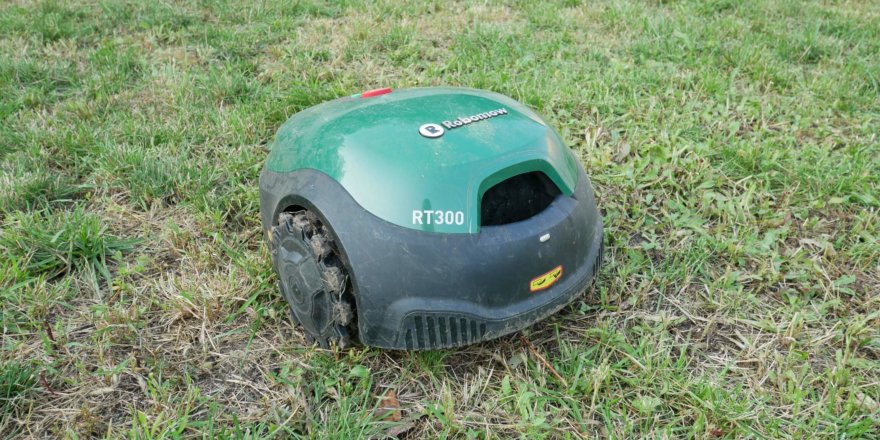
This review will examine the first robotic lawn mower I've had the pleasure of testing. It's the new 2021 Robomow RT300, which costs $550 at the time of writing. Israeli company Robomow was founded in 1995 and has been specializing in the production of lawn mowing robots for over 25 years. The new model has received a number of upgrades over the previous Robomow RX20. The main ones include a more powerful battery, a front wheel for improved stability, and a new wheel tread that improves its maneuverability. Next, I'll thoroughly test the Robomow RT300 and express my opinion on whether a robotic lawn mower, and this model in particular, is worth buying. So, let's get started!
Equipment
The Robomow RT300 arrived in this branded box:
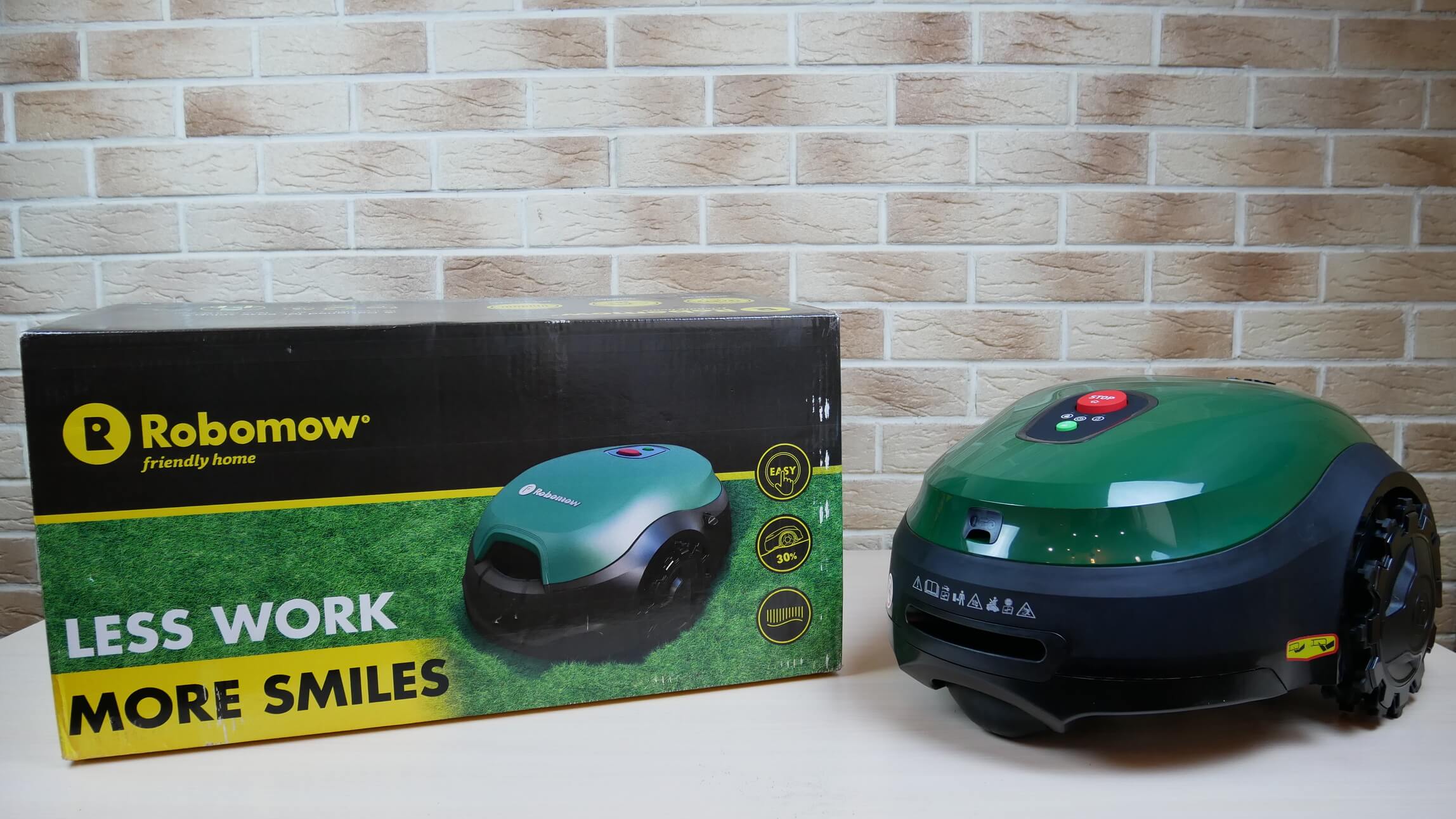
Robot and box
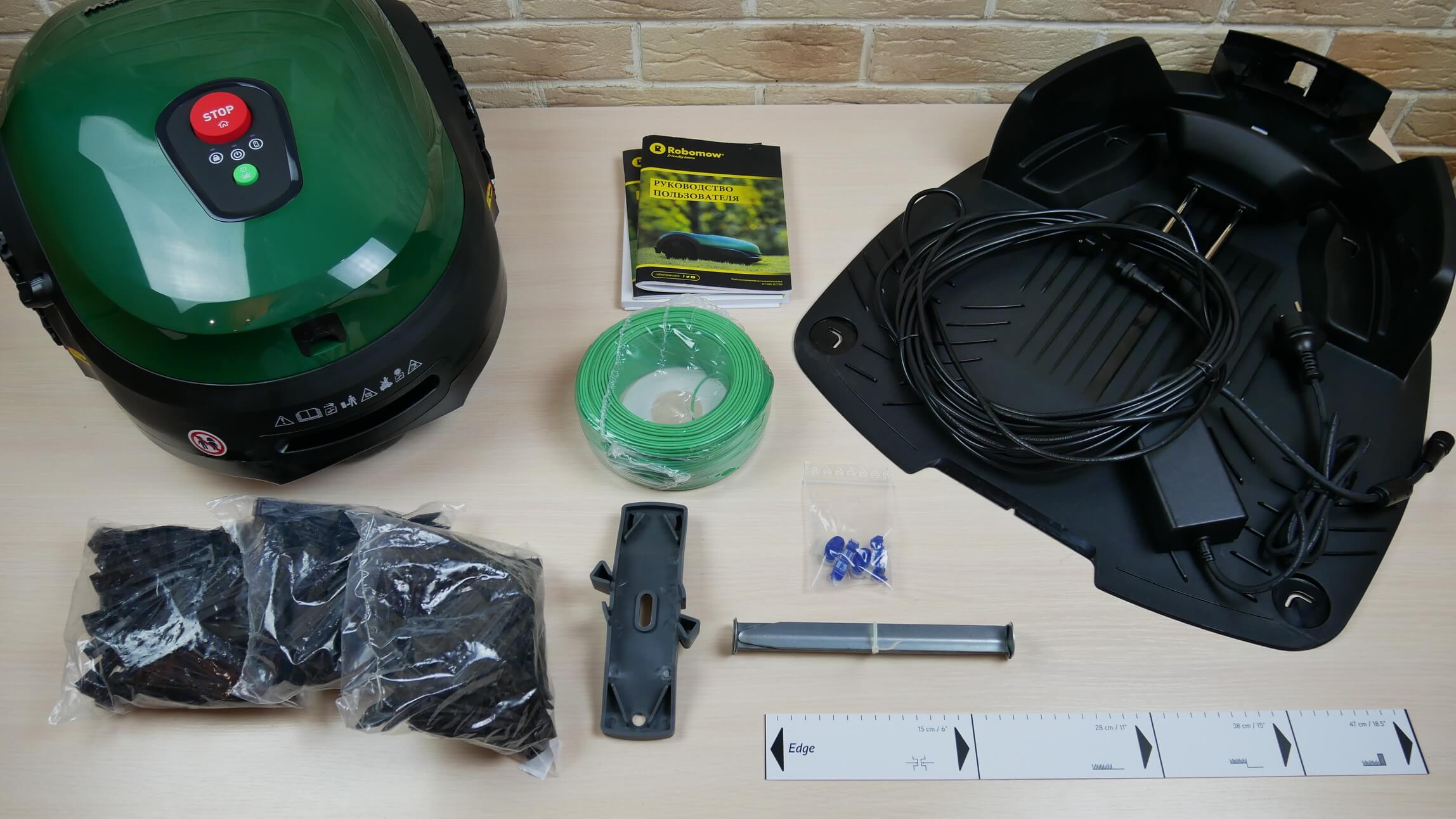
It comes complete with:
- Base station.
- Base station head.
- Power supply for connecting the base to the network.
- Extension cord 10 meters long.
- Documentation for the robot in several languages, incl. and in Russian.
- Perimeter boundary wire 125 meters long.
- Pegs for fastening the wire.
- A robot ruler, which is needed to measure the distance from the edge of the lawn to the location of the perimeter wire.
- Set of connectors for perimeter wire.
- Pegs for fixing the base station.
- Knife and wheel puller.
Equipment
This model includes all the necessary accessories for operating the robot. There's no need to buy anything extra, which is nice.
Appearance
Now let's take a look at the Robomow RT300's design. It's black and green, reminiscent of a turtle.
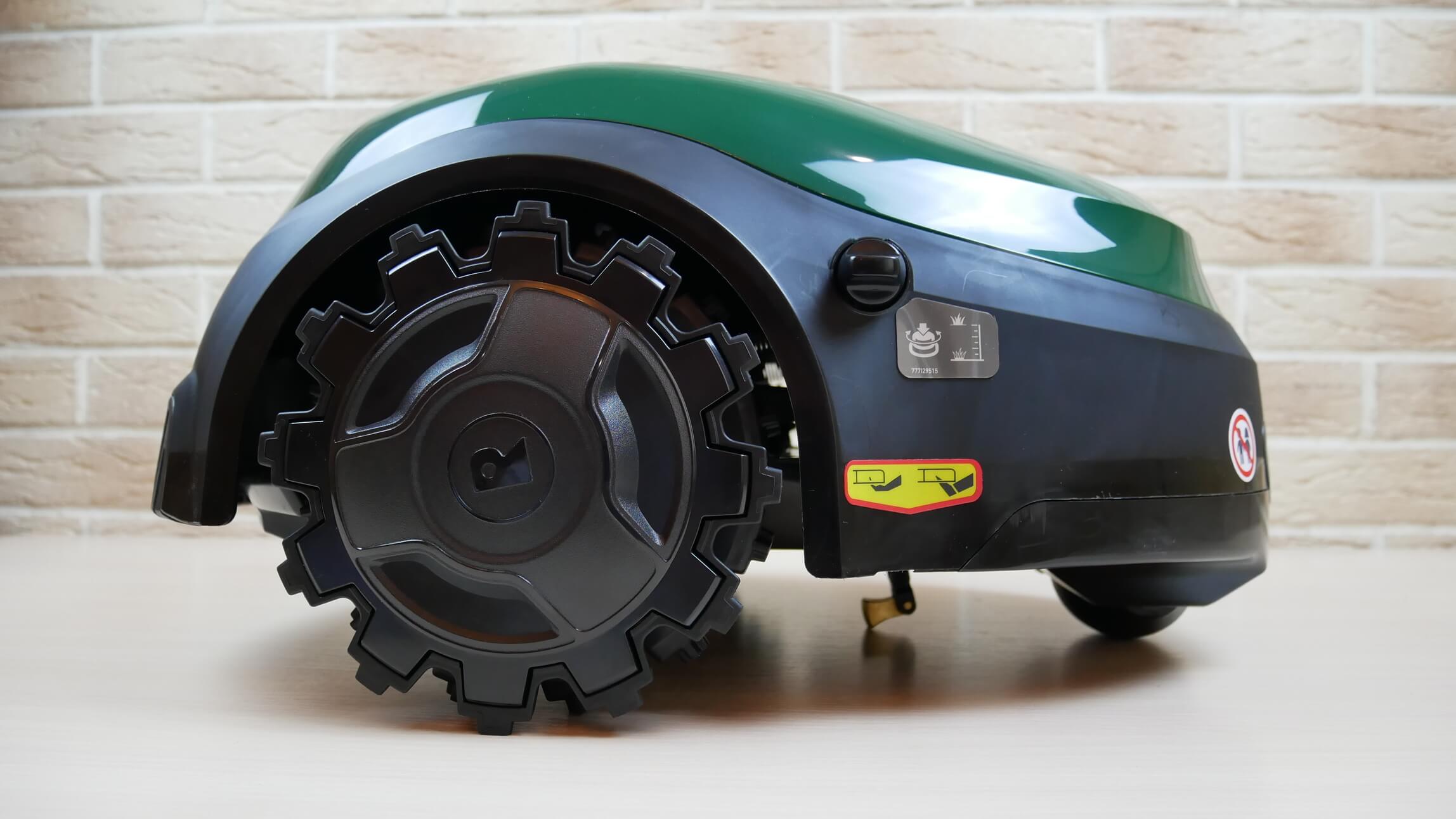
Side view
On the body we see the Robomow company logo and control panel.

Logo
It features moisture-resistant mechanical buttons: a red STOP button, which stops the mowing cycle and returns the robot to the charging base, and a green button, which starts the mowing cycle. Additionally, between the buttons are indicators indicating the robot's status.
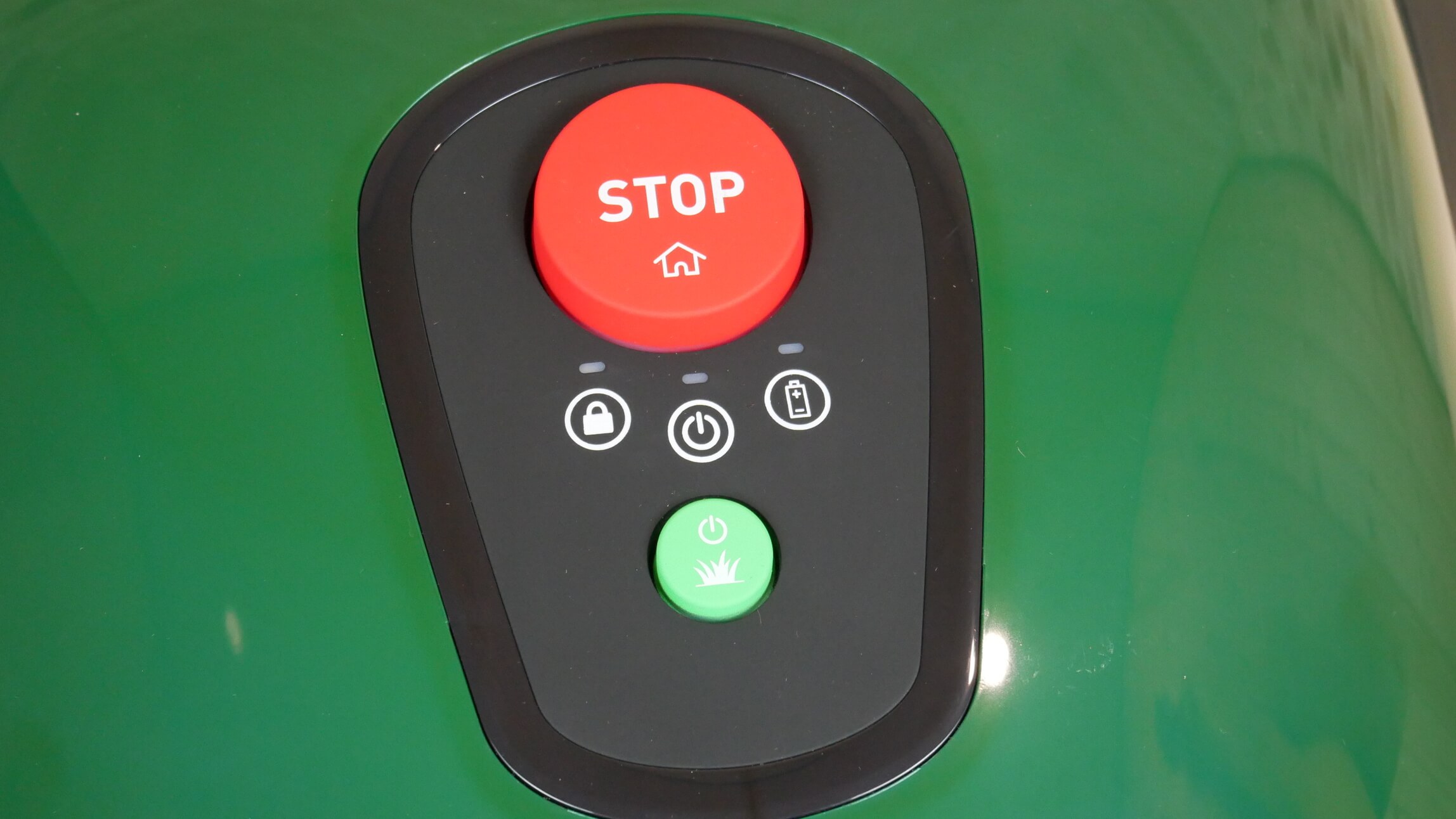
Control Panel
At the back of the body there is a convenient handle for carrying the robot from place to place if necessary.
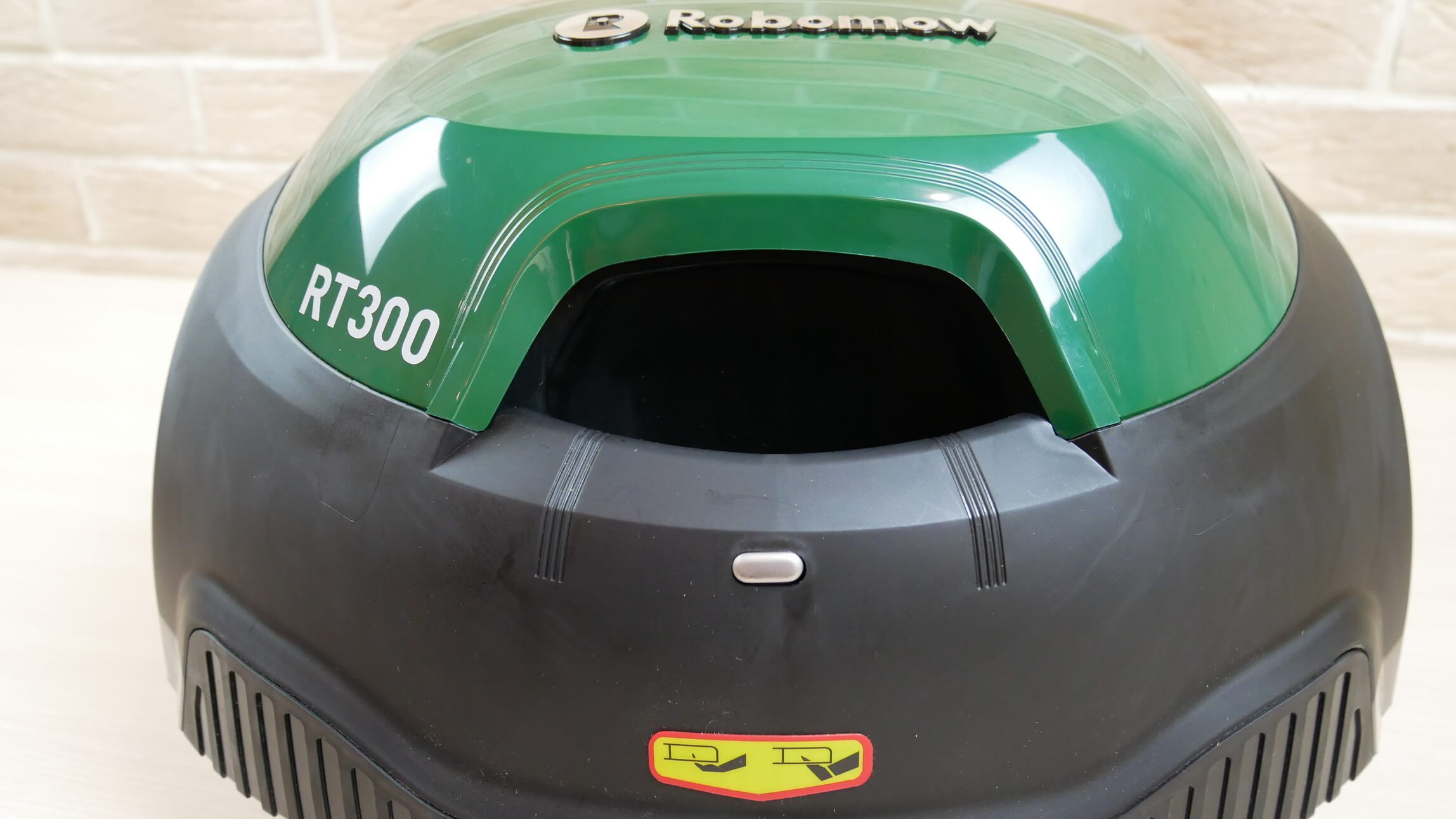
Robot carrying handle
There's a window at the front for docking the charging pins, and a cutting height adjuster is located on the side. Let's take a closer look at it.
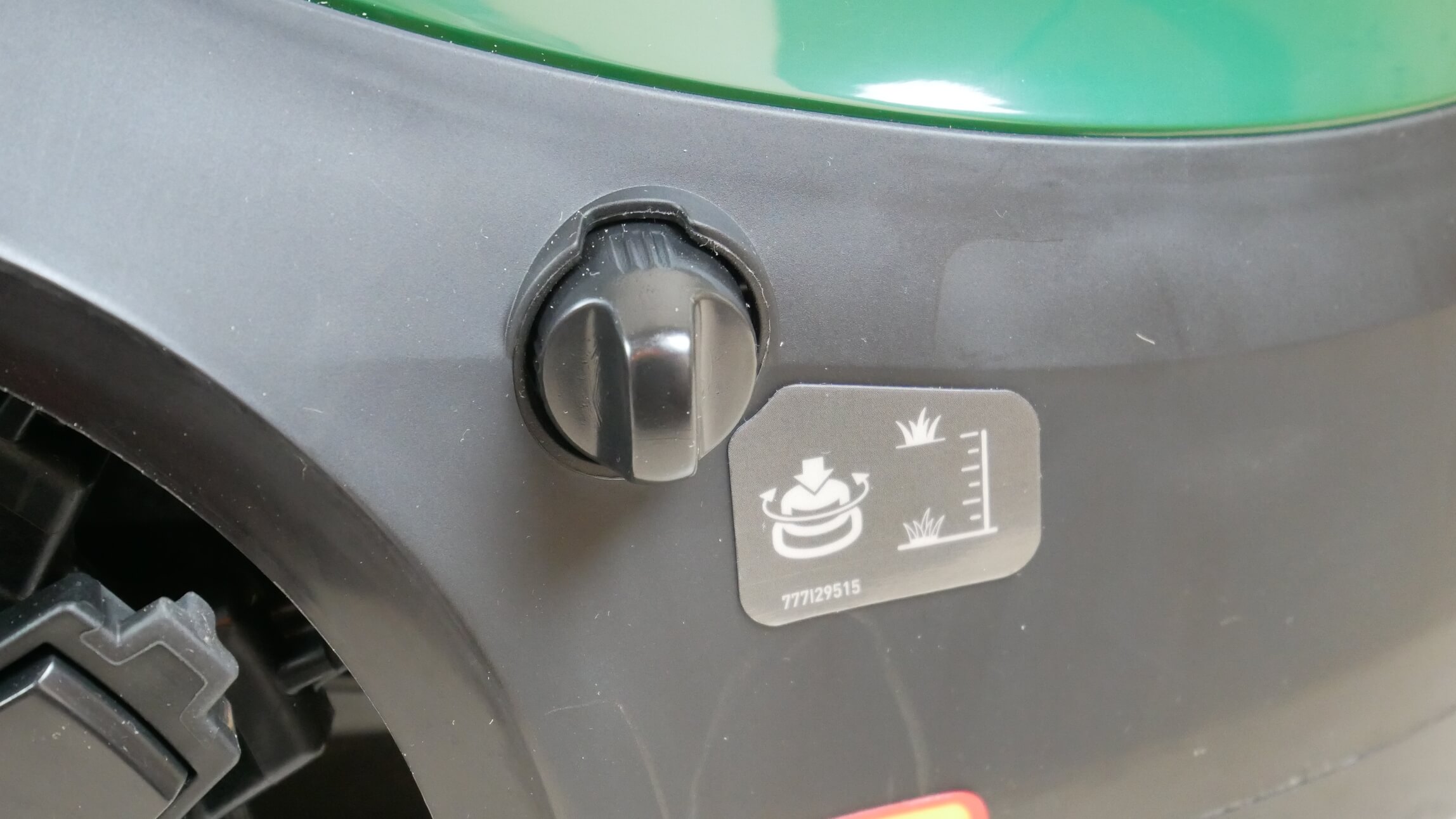
Cutting height regulator
The Robomow RT300 features adjustable cutting height. It has four positions, which can be changed by pressing and turning the knob. The lowest cutting height is just 15 mm, which is level 1. The highest cutting height is 60 mm, which is level 4.
And here's what the wheels look like. They're quite large and have a well-designed tread. Looking ahead, I'll say the Robomow RT300 has very good all-terrain performance.
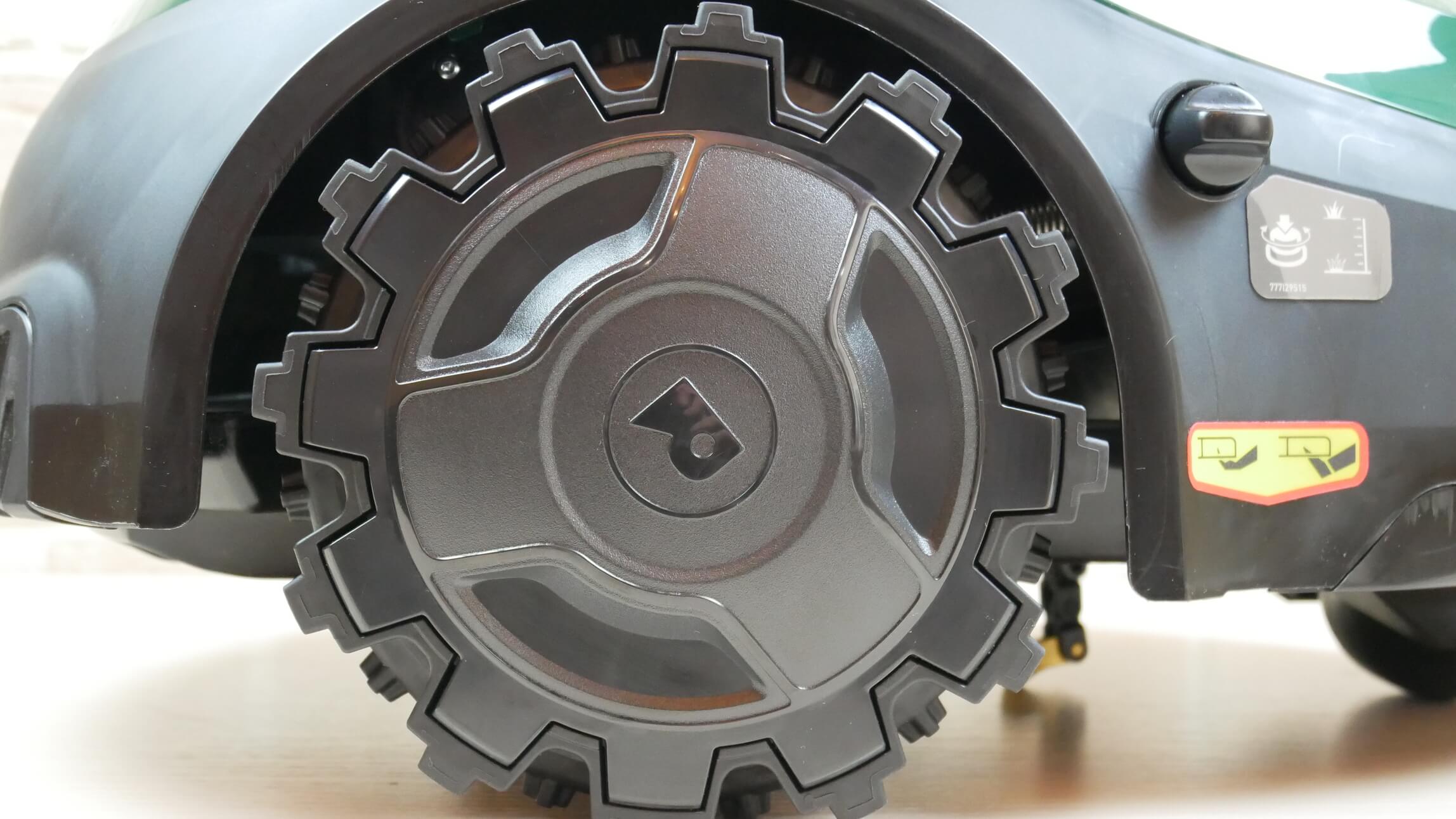
Wheel
The next thing I'd like to point out is the activation key. It's located above the docking port for the charging pins. This key completely cuts off the robot's power when removed from its docking station.
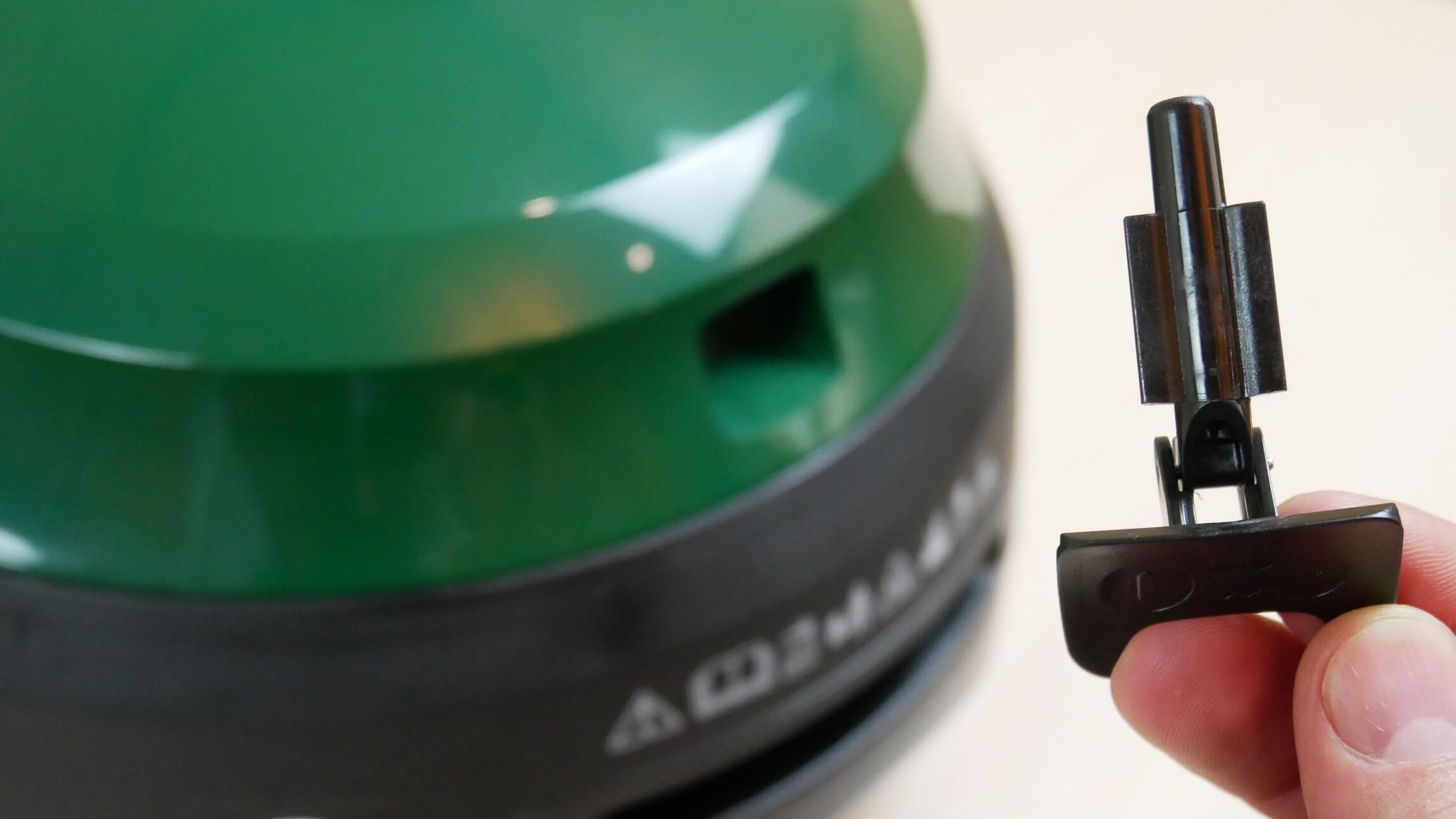
Activation key
Always remove the activation key when servicing the robot, especially when cleaning or removing the blade. In addition to the PIN code, it also serves as an anti-theft protection feature. Without the key, the robot will not start.
I would also like to point out that the robotic lawn mower has a large number of warnings on its body that must be followed.
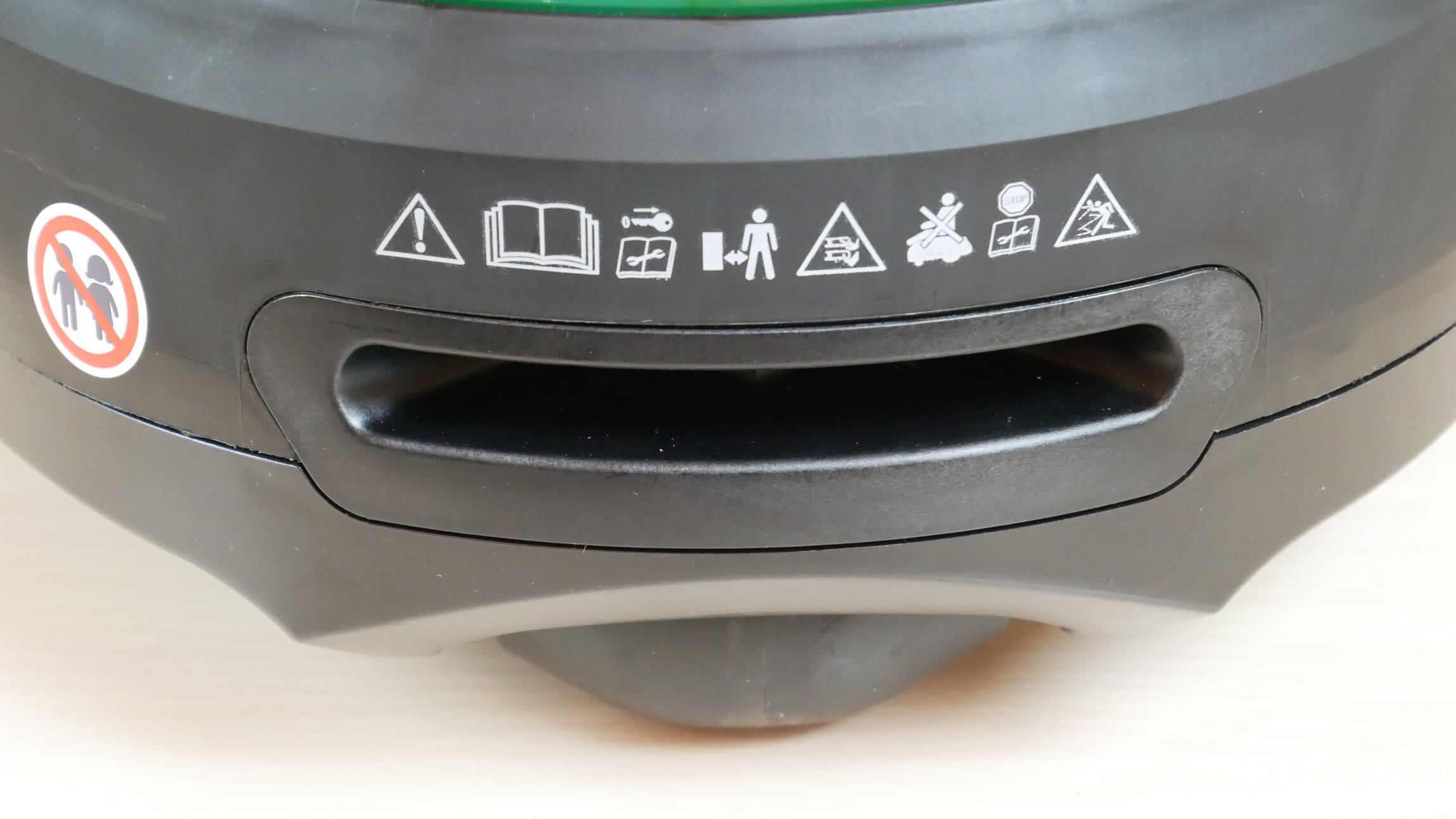
Warnings
This includes keeping children out of the Robomow RT300's operating area, carefully reading the instructions before use, and maintaining a safe distance from the mower. In short, be sure to read the safety instructions in the manual before using it for the first time.
Now let's look at how the machine is designed from the bottom. The main components are the blade, mounted in the center, and the mulch cleaner, which clears the stuck-on grass clippings from the robot as the mower operates.
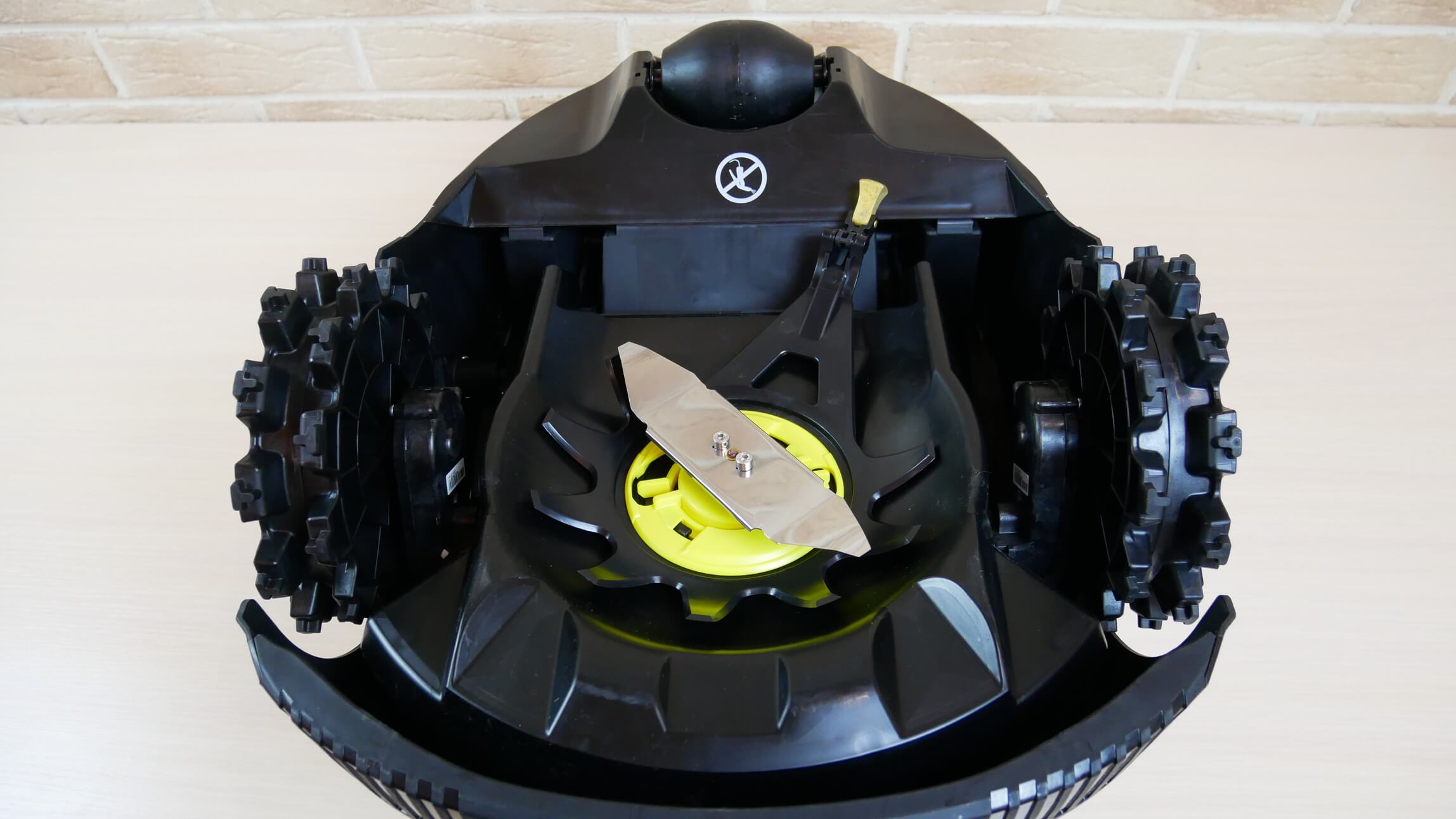
Bottom view
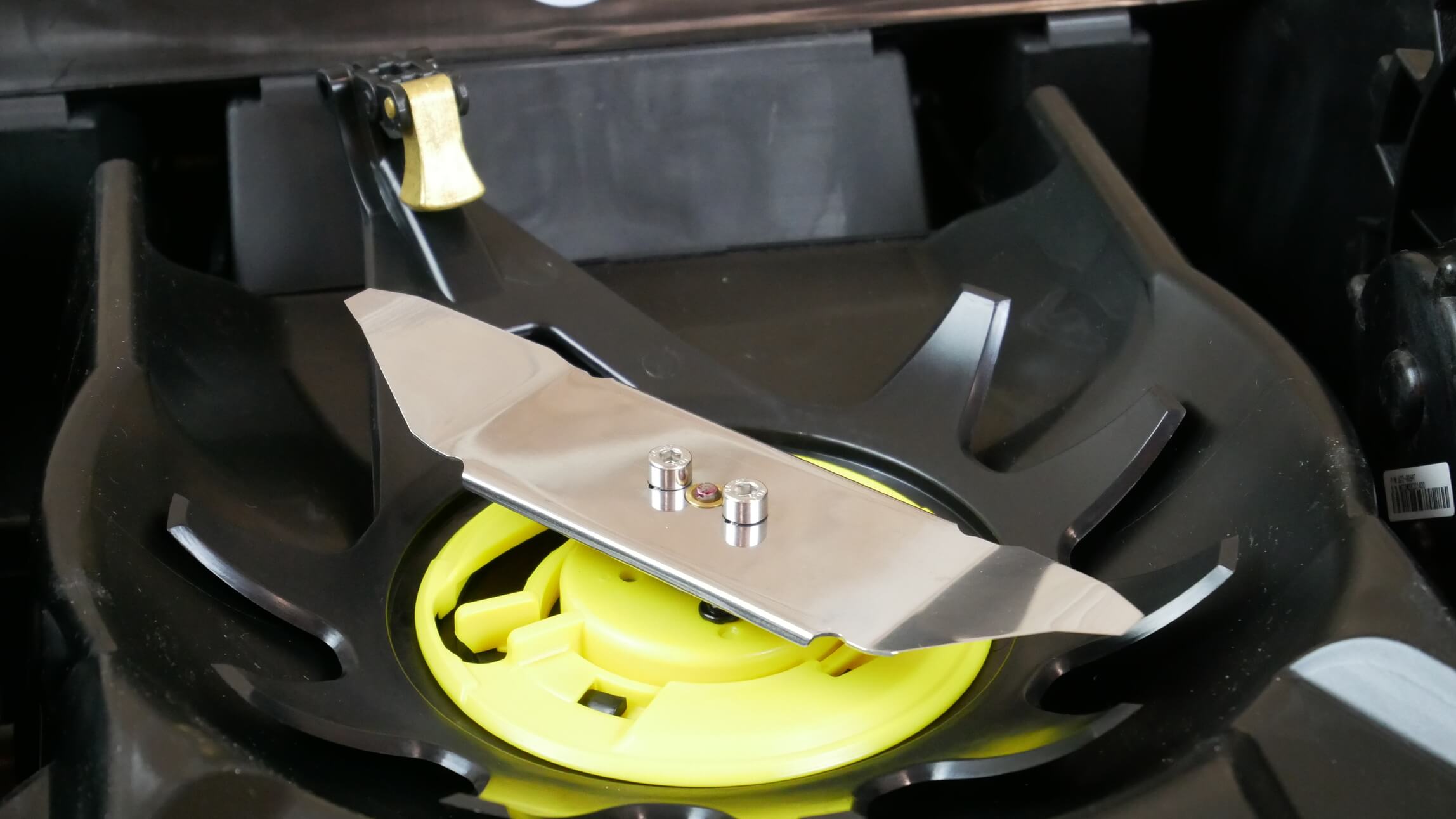
Knife
As mentioned at the beginning of the review, this model has been upgraded and a rear wheel has been installed, which increases the Robomow RT300's maneuverability and maneuverability.
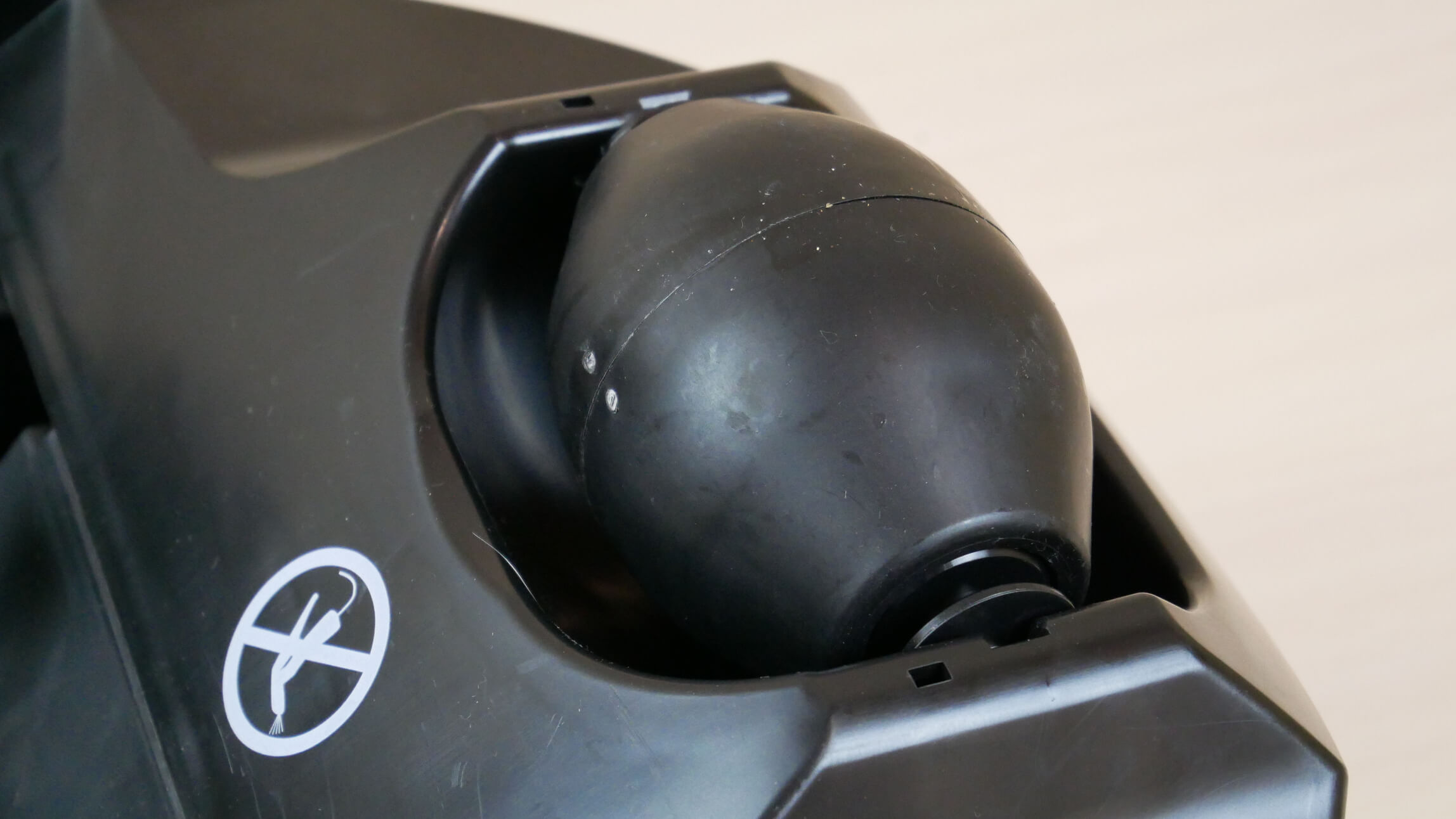
Rear wheel
That's all I wanted to say about the robotic lawn mower. I'll say a few more words about the base. The head contains connectors for the power supply and both ends of the perimeter wire. Charging is accomplished by docking the robot with the charging pins. Basically, everything should be self-explanatory.
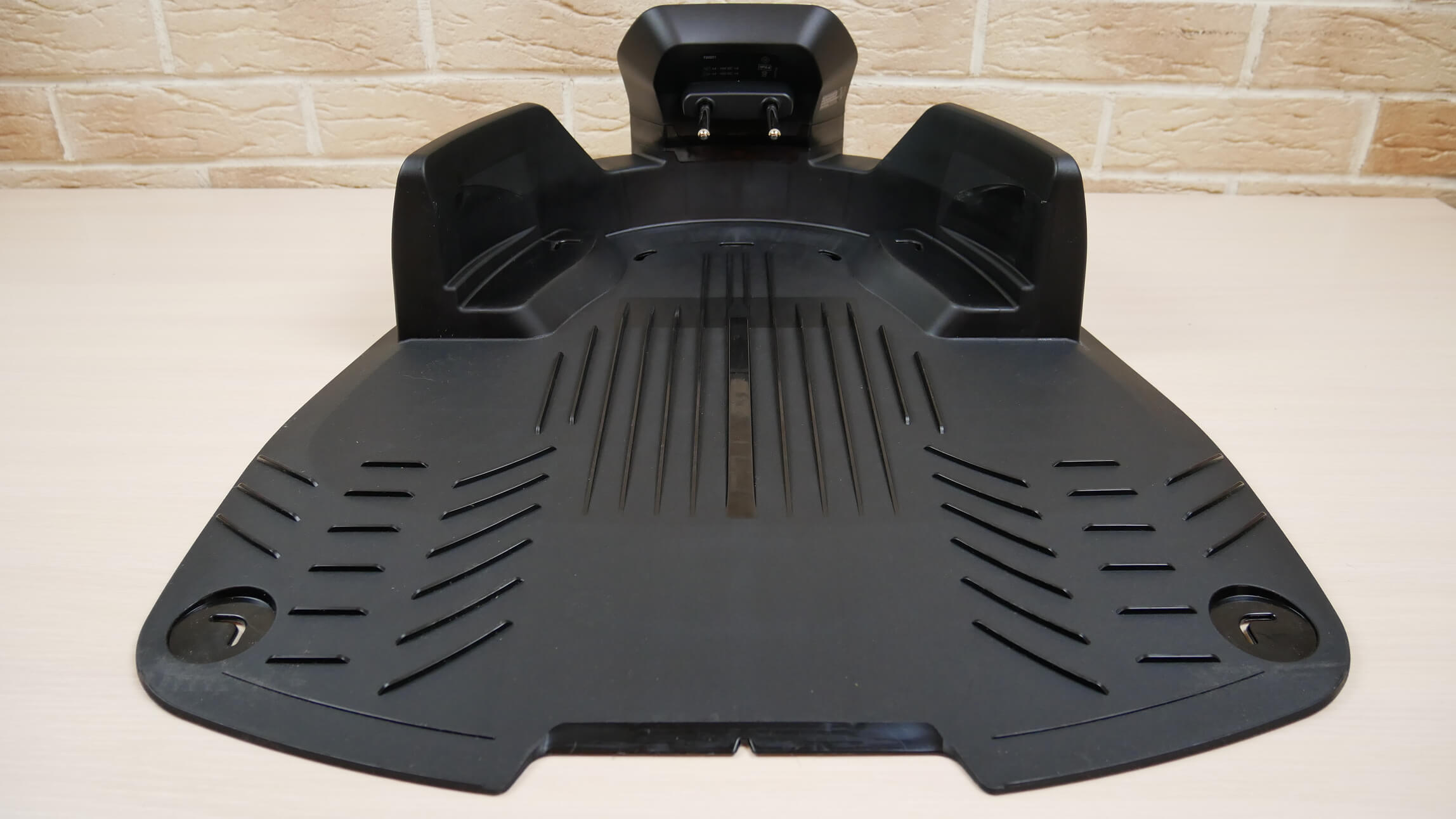
base station
My first impression of the Robomow RT300 is positive. The plastic is high-quality, the workmanship is good, and the robot itself looks stylish.
Technical specifications
The main characteristics of the Robomow RT300, as stated by the manufacturer:
- Battery: Li-Ion 10200 mAh.
- Power consumption: 6 kWh/month.
- Operating time up to 75 min.
- Charging time up to 180 min.
- Recommended lawn size: up to 300 sq.m.
- Cutting height 15-60 mm.
- Mowing width 18 cm.
- Maximum cutting angle: 30% / 16.5°.
- Maximum wire slope on a slope: 10% / 6°.
- Noise level up to 69 dB.
Functional capabilities
Now let's look at the main features of the Robomow RT300. The robotic lawn mower is controlled via the proprietary Robomow mobile app. Your smartphone connects to the robot via Bluetooth, so you won't be able to control it remotely from home or work. While the older models have all of these features, this one doesn't. Installing the app is straightforward; just follow the manufacturer's instructions.
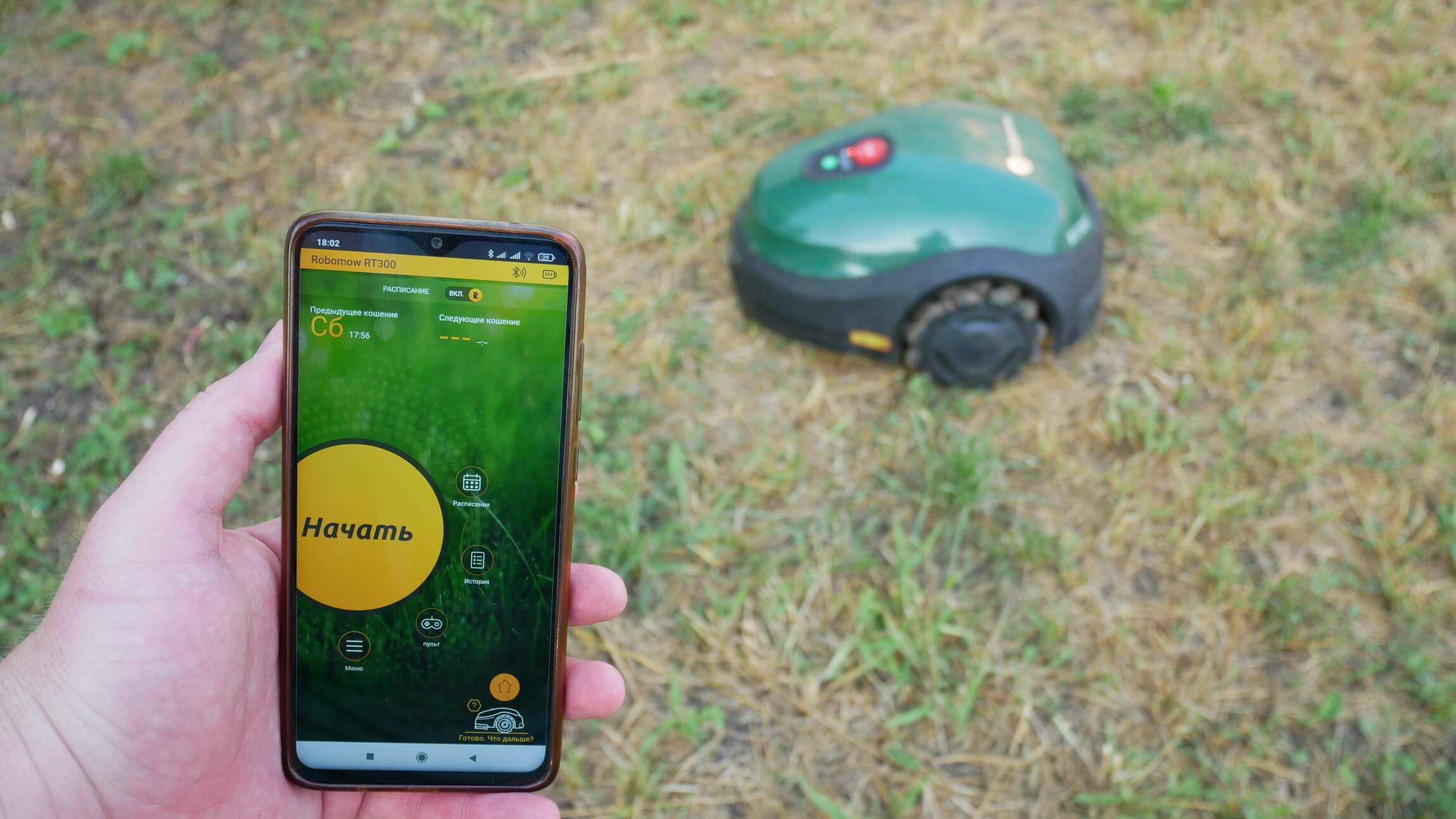
Control via app
The battery charge is displayed at the top of the main control panel, and you can schedule mowing below. When setting up a schedule, you can choose the time and days of the week to start, as well as the number of mowing cycles and the starting point: from the base or from a preset point. I'll explain this later. You can also choose the mowing cycle duration: 30, 60, or 75 minutes.
Let's return to the main control panel. Here you can view the previous mowing log, initiate manual control if needed, or return the Robomow RT300 to the charging station.
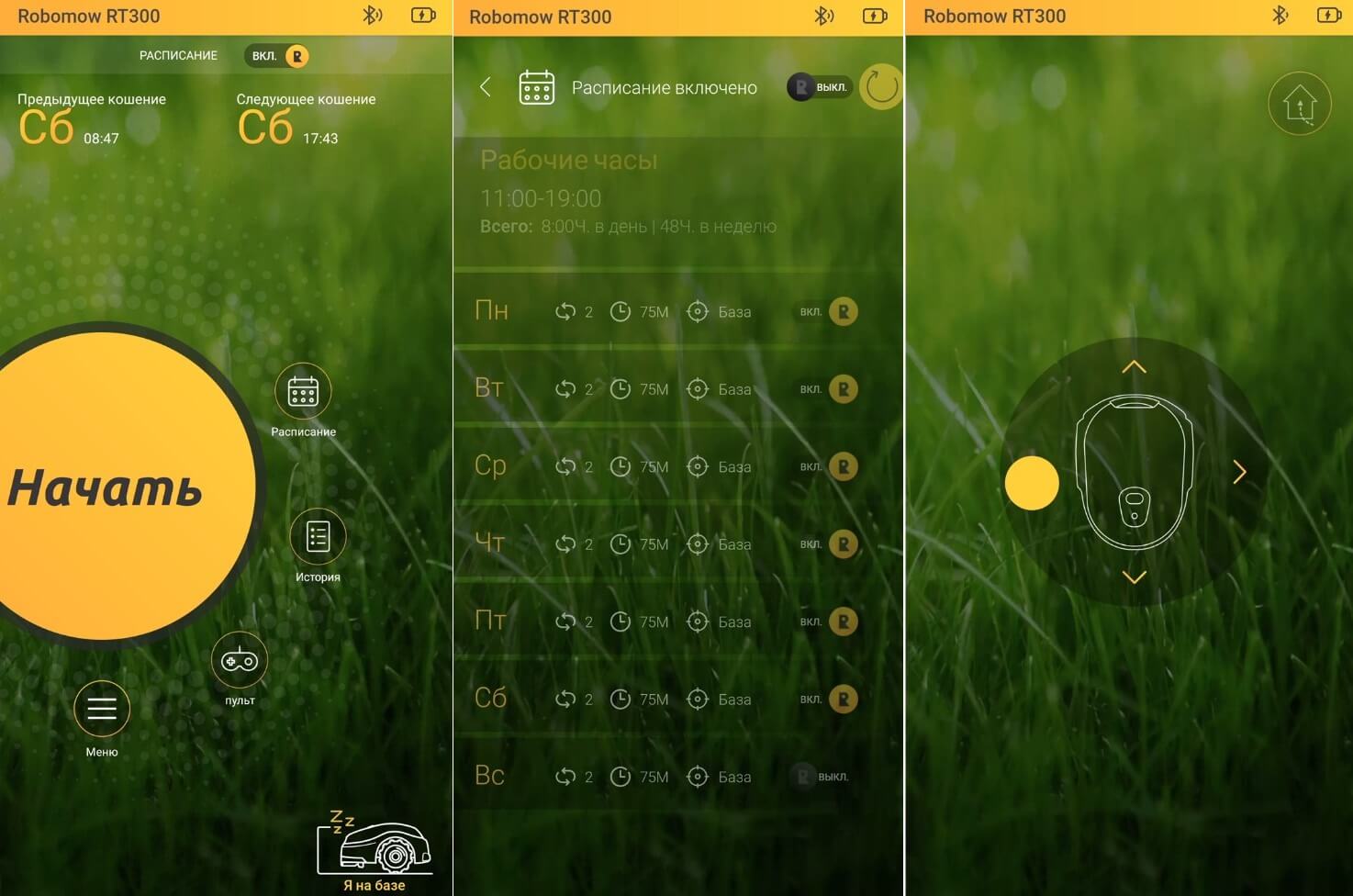
Settings and functions
In the "Menu" section, you can change the robot's name, set a password for the lawn mower to prevent thieves from stealing it from your property, and configure lawn settings. This section deserves more attention.
You can specify an approximate lawn area and set a starting point. This is useful if you have multiple mowing zones. In my case, I have two: the main lawn area and a children's playground with a narrow path leading to it. To ensure the robot can mow this area efficiently, I set a starting point and, when setting up the schedule, alternate between mowing the main lawn area and the children's playground area.

Lawn settings
The Robomow RT300 follows the perimeter wire to the desired point and starts mowing the lawn from there. It's very convenient.
Additionally, you can enable child lock, customize notifications, and choose one of three signal types to prevent interference when other robotic lawn mowers are nearby. You can also set the time, date, area units, and interface language. If necessary, you can update the firmware version and contact support.
On the main control panel, clicking the large "Start" button will launch the robotic lawn mower. Before doing so, you must select the starting point and duration of the mowing cycle.
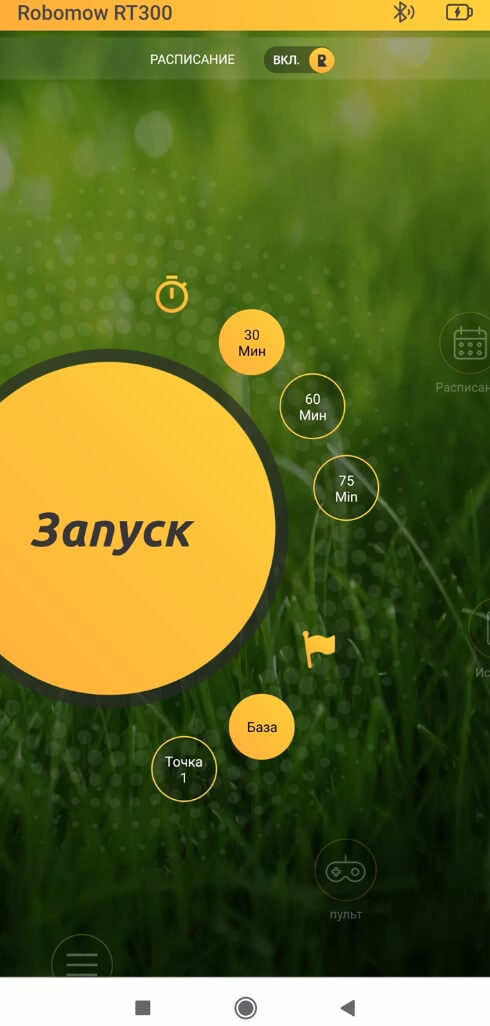
Start mowing
That's all the basic functionality of the Robomow RT300. Again, there's nothing to compare it to, so as someone who's using this type of equipment for the first time, I have no comment on its capabilities or what's missing.
Getting ready for work
I'm getting ready to launch the robot. This took me several hours. First, I planned out where the base station would be installed and planned the perimeter wire route accordingly. At this stage, I recommend carefully reading the instructions; they describe everything in detail.
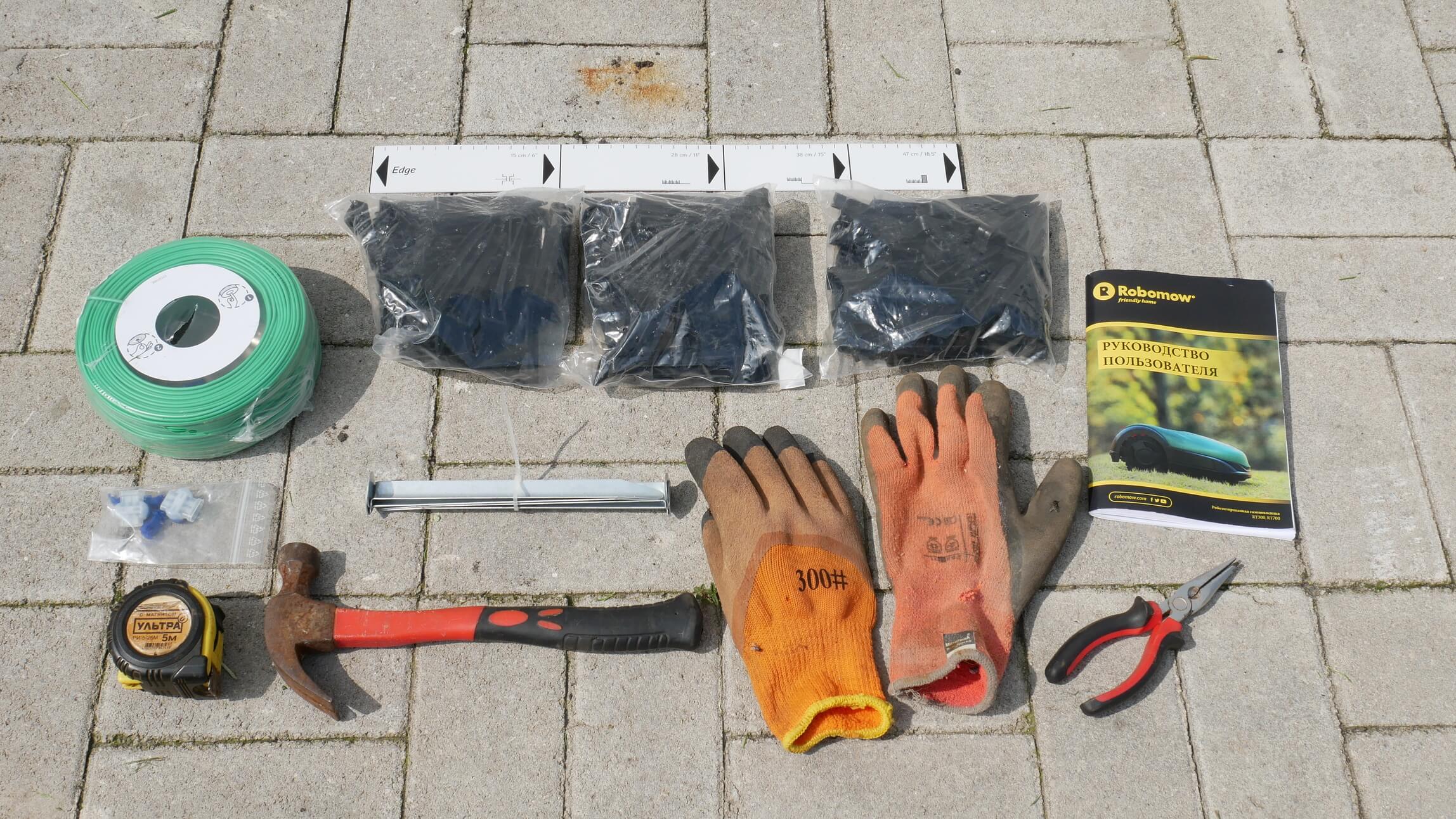
Tools and materials
I mowed the grass along the route of the perimeter wire to ensure that the wire would be easily secured to the ground.
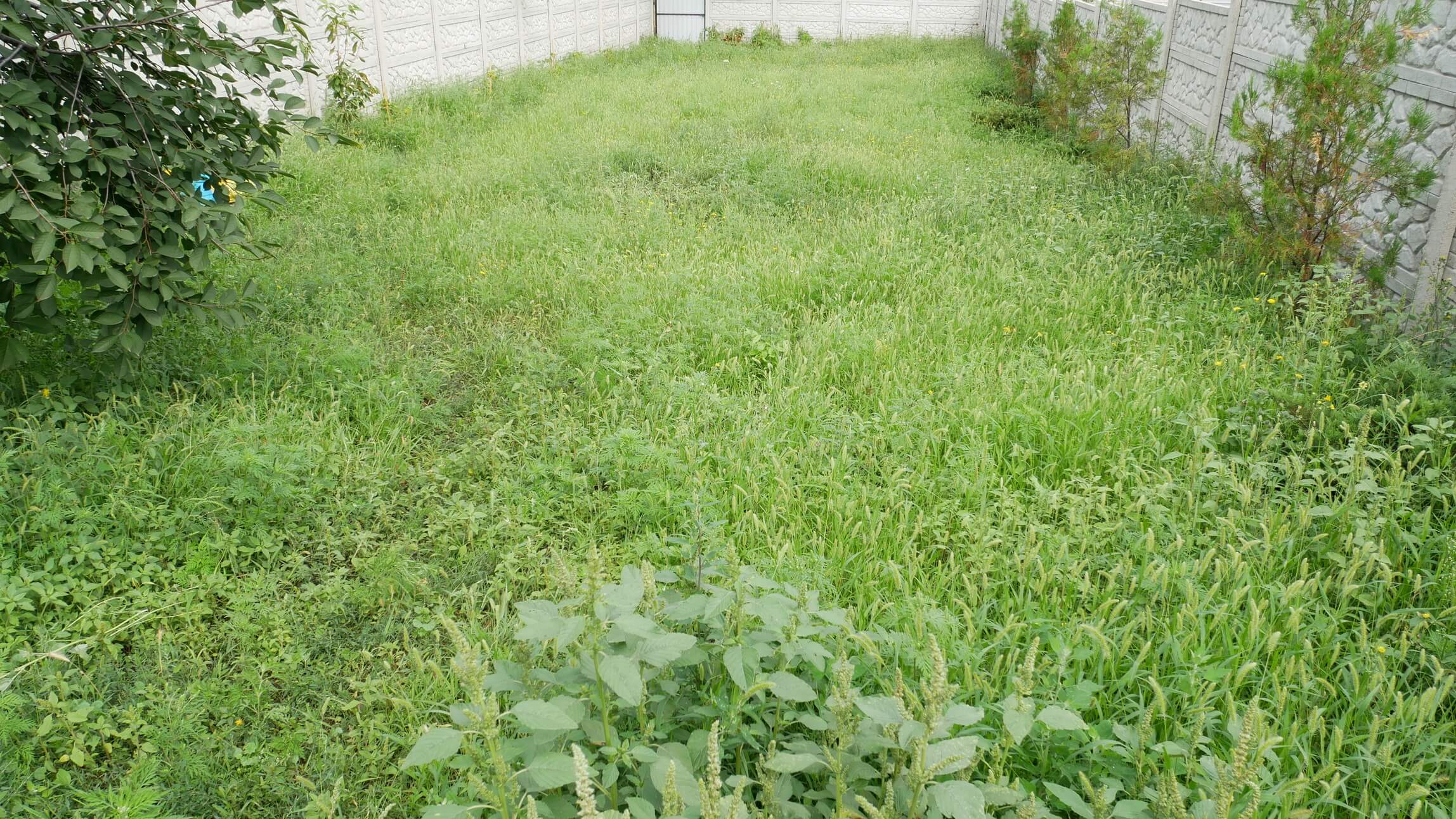
Initial state of the lawn
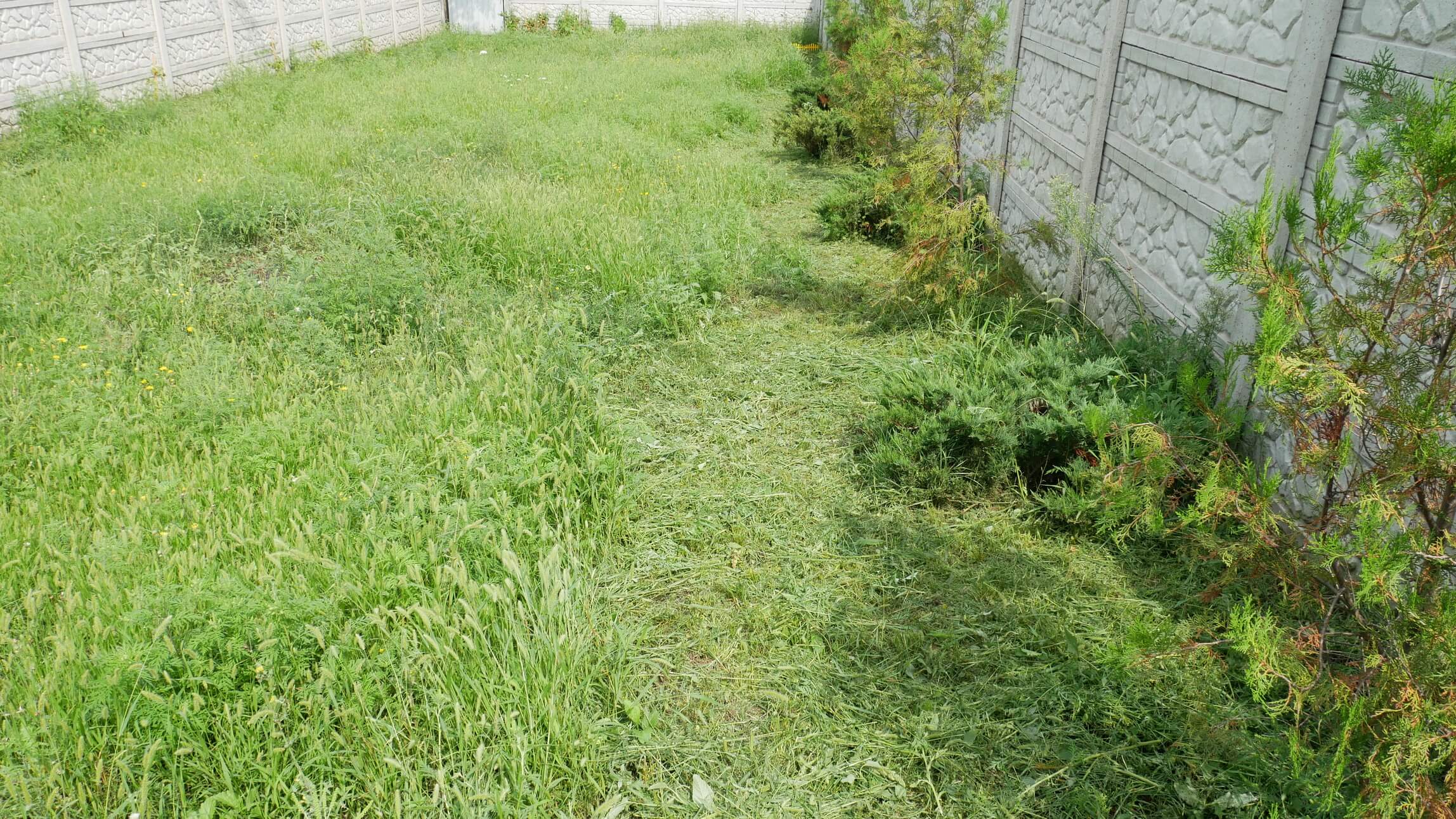
Mown out area for wire routing
After this, I punched the wire around the perimeter and connected the ends of the wire, as well as the power supply, to the base station.
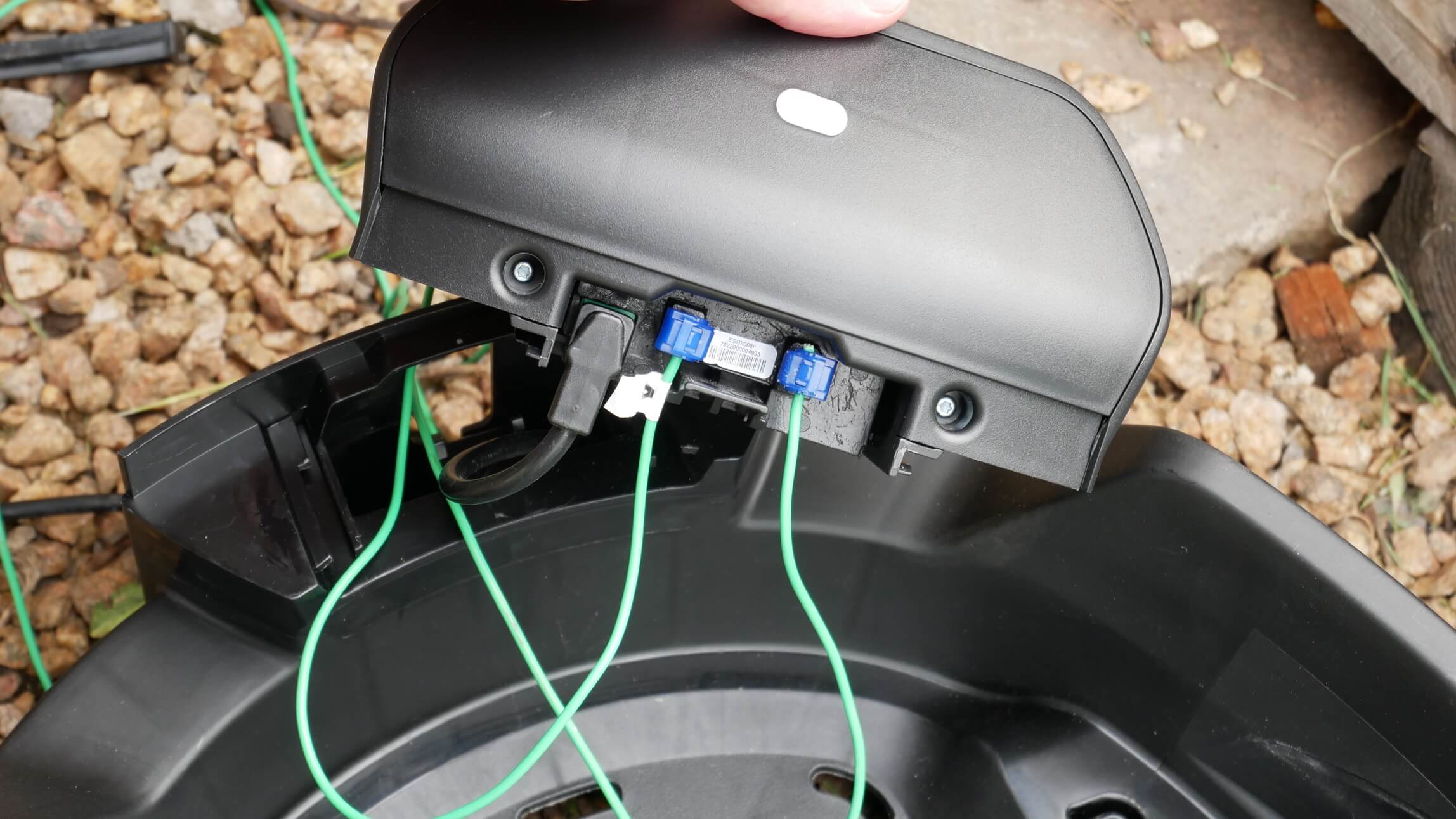
Connecting the database
The indicator turned green, meaning I did everything correctly. I installed the robot on the base and began the first launch.
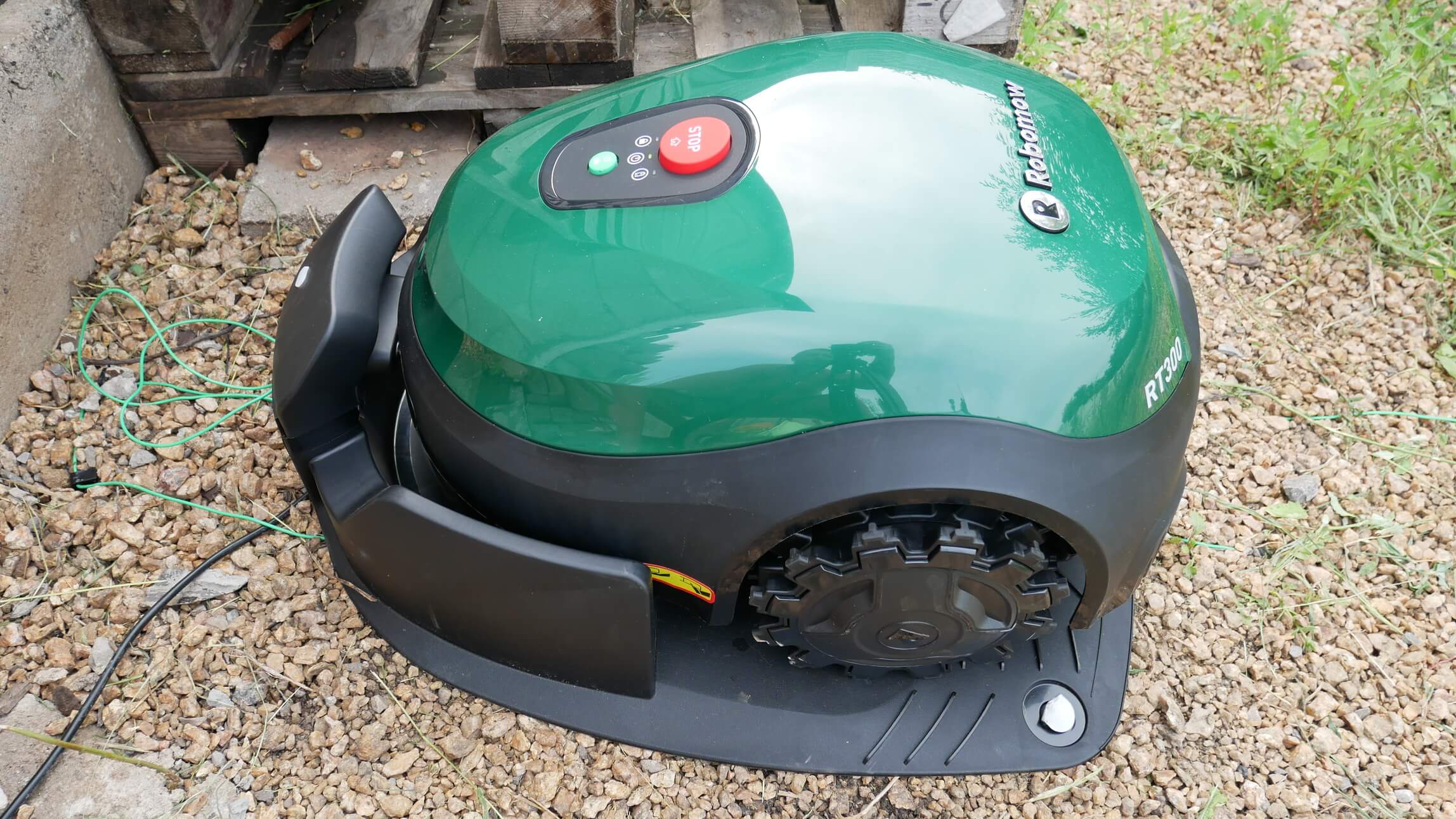
Robotic lawn mower based on
Testing
A detailed video review with all the tests has already been prepared and published on our channel. I recommend watching it:
Robomow RT300 against knee-deep grass
And finally, let's move on to the tests. I deliberately didn't mow the grass for over a month to test the Robomow RT300's capabilities. As you can see in the photo above, the weeds were more than knee-high. The instructions state that the grass height should be no more than 15 cm, but I was curious to see how the robot would handle such conditions and how maneuverable it actually was.
The Robomow RT300 surprisingly survived these conditions. It moves like a tank, tearing up tall weeds and attempting to mow them with its blade. The blade stops, and the robot gets tangled in the tall grass, but after several minutes of struggle, it finally manages to emerge from the thicket and continue mowing.
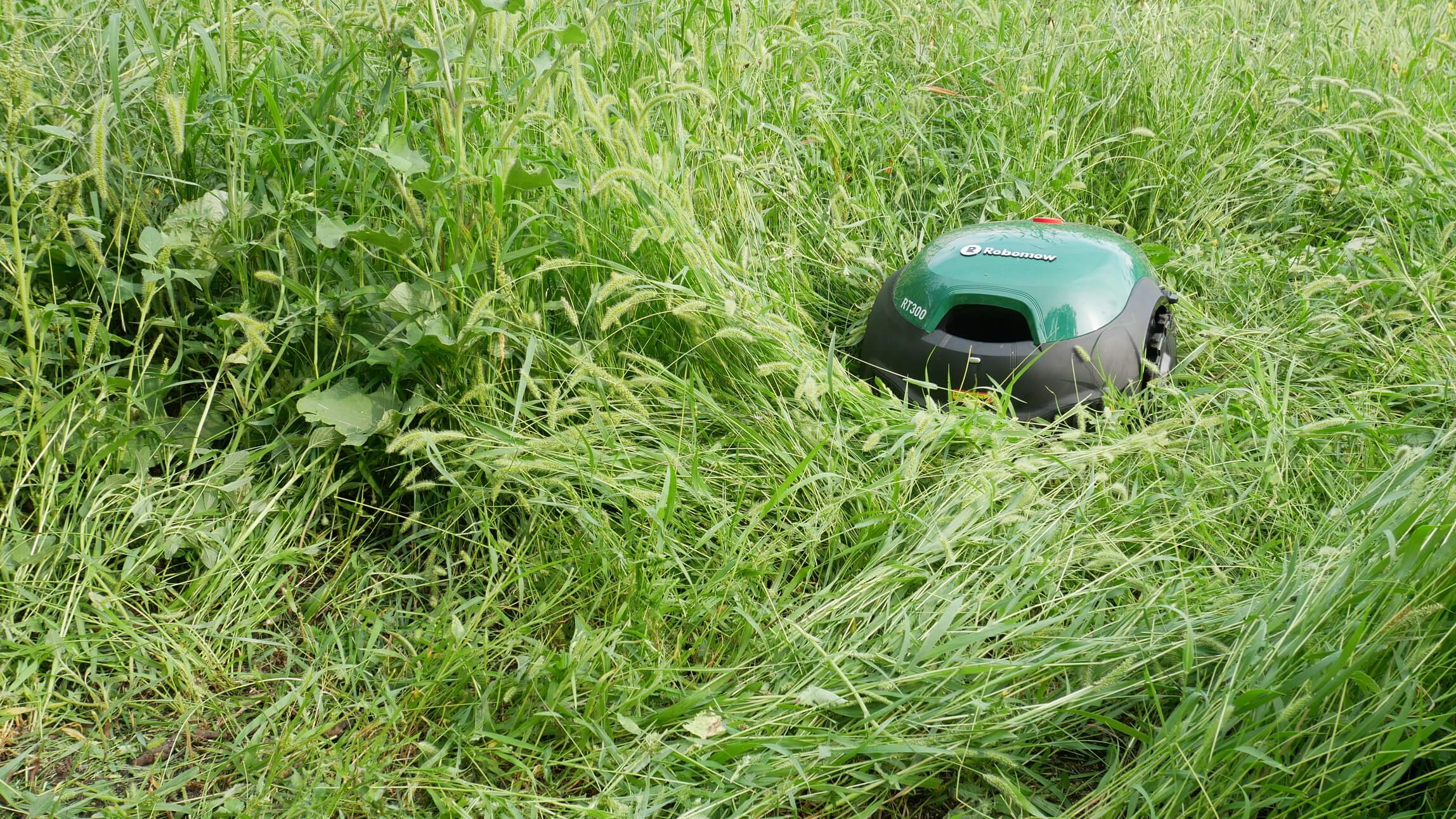
Mowing tall grass
It surprised me with its maneuverability and tenacity! Its efficiency is extremely low under these conditions, so I didn't push it too hard and decided to ease its work down to normal conditions. Using a trimmer, I trimmed the grass to the recommended 15 cm and continued testing.
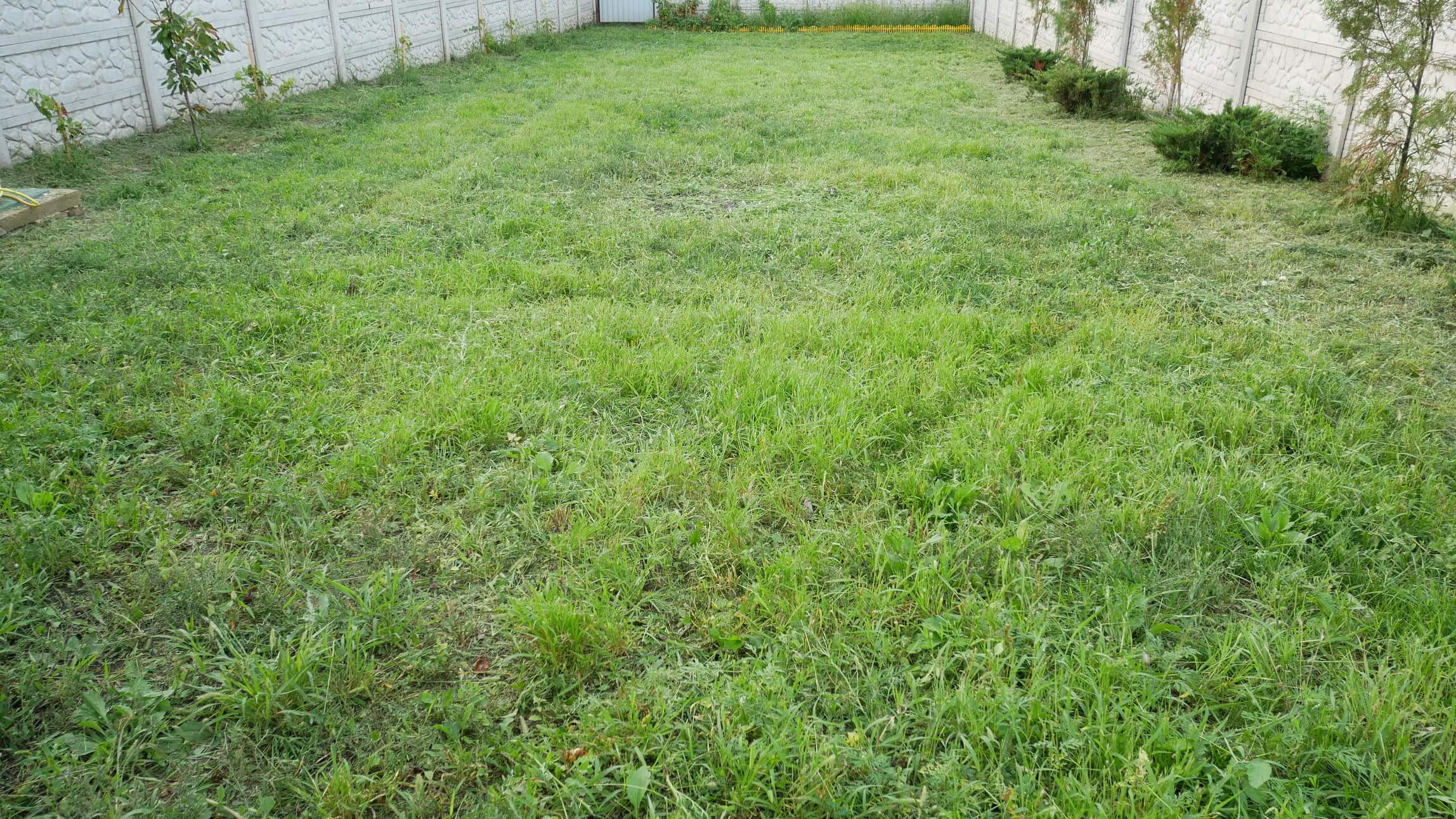
Slightly mown grass
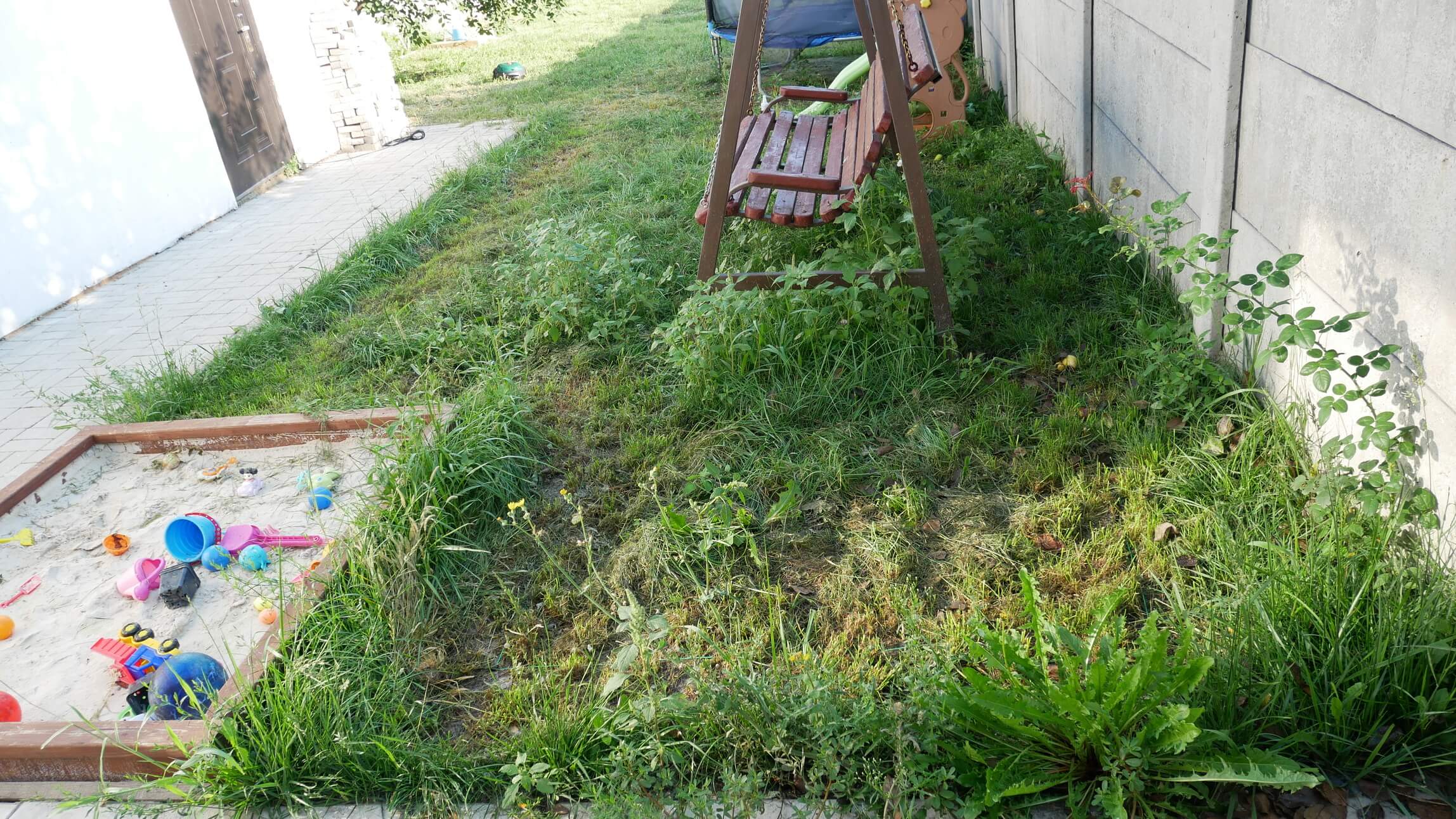
The initial state of the playground
When mowing short grass, the Robomow RT300 performs its primary function much better. It leaves a fine mown trail after each pass. The robotic lawnmower's movement pattern is erratic, moving freely, never leaving the boundary wire. The lawn's condition didn't change visually after one mowing, but don't expect results after just one mowing. I set up a mowing schedule and ran the robot alternately on the main lawn and in an additional area near the children's playground. Here's the result after two weeks of daily mowing:
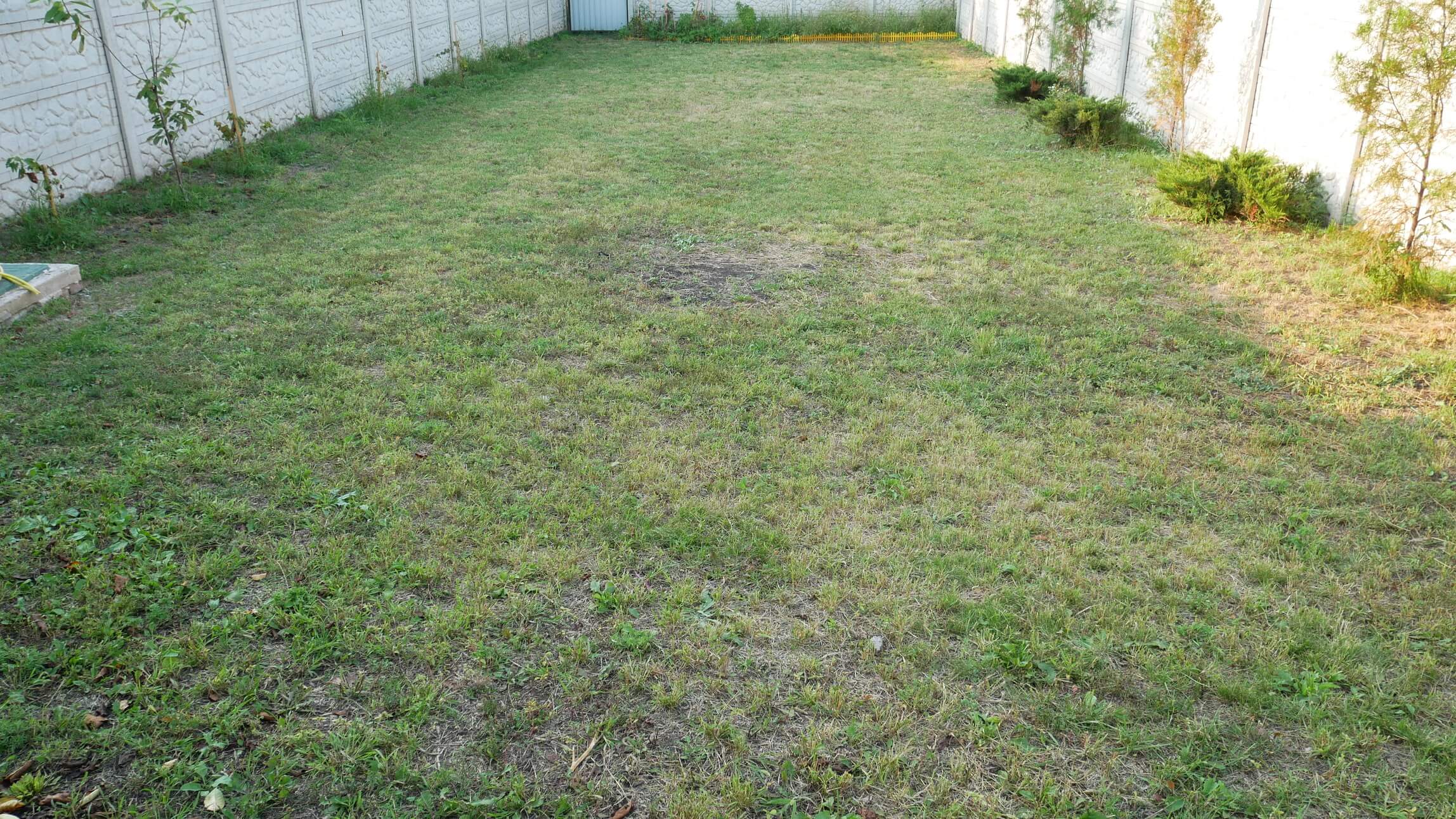
Lawn in 2 weeks
As you can see, the lawn has been transformed, and the area is now level, trimmed, and visually pleasing to the eye. The only areas left unmown are the edges, along the curb, the fence, and the bushes and trees, which are protected by a perimeter wire.
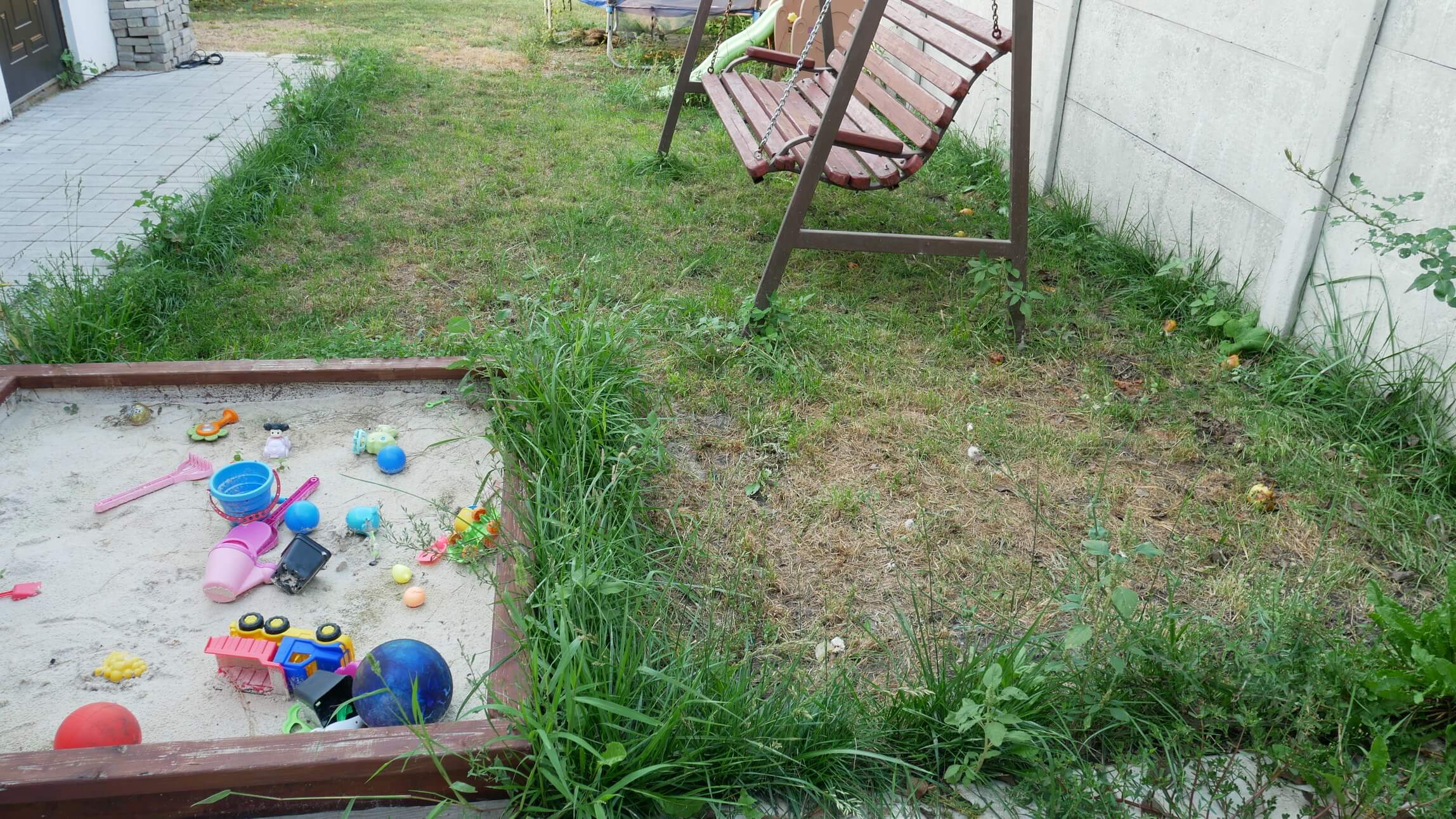
Uncut edges
In some areas, simply moving the boundary wire closer to the edge is sufficient. Unfortunately, however, this is currently a blind spot for robotic lawn mowers. They can't mow along fences for fear of damaging the blade on obstacles or bushes, tree trunks, and other objects. In older models, this problem is partially solved by moving the blade to the edge of the housing. With the RT300, however, this area will have to be mowed manually with a trimmer. However, if your lawn edge meets other flat areas, with proper perimeter wire installation, there may be no unmown areas at all.
Let me explain how the robotic lawn mower automatically returns to its charging base. The Robomow RT300 moves toward the edge, finds the boundary wire, and follows it back to the base. Docking is seamless, and charging is automatic. Very convenient.
And finally, evaluate the robot’s condition after the mowing cycle:
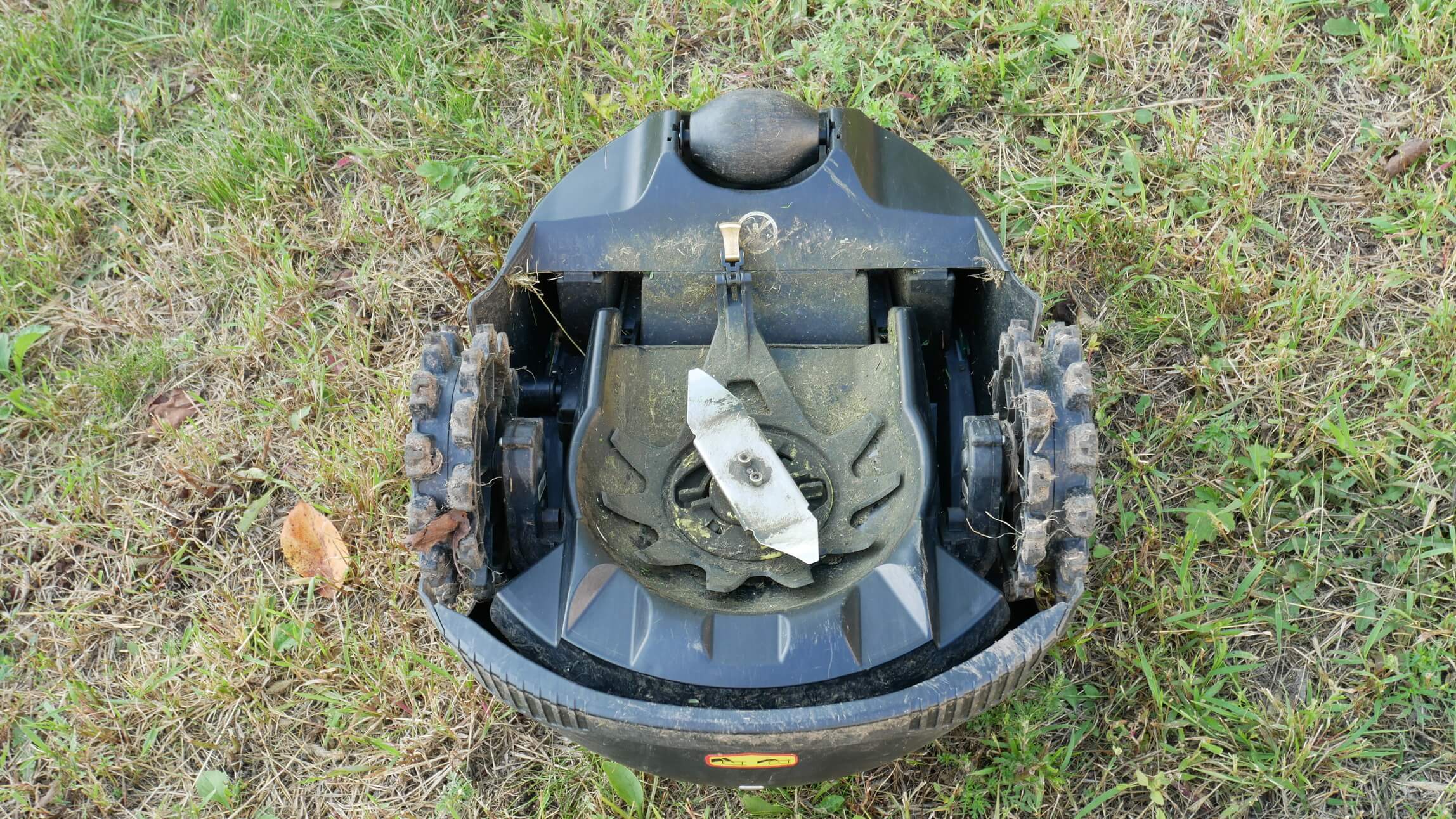
The state of the robot after operation
As you can see, there is no grass left on it; the mulch cleaner does its job effectively.
Robotic lawn mower and rain
Before expressing my personal opinion about the Robomow RT300, I'd like to specifically address the lawn mower's performance in adverse conditions, as requested by subscribers. This primarily concerns rain. You can run the robot in the rain without any problems; it's well protected from moisture ingress from above. The base and charging prongs will also function normally and pose no danger to humans. Everything is safe, and even if you or a child touches the exposed charging prongs, even in the rain, nothing will happen. However, you shouldn't do this just to test it. Follow safety precautions.
Overall, I personally don't recommend running the robot in the rain. Wet soil and cut grass will cause the robot to slip, grass will stick, and the treads will become clogged with mud, which could render it inoperable and require manual intervention. It's better to run the robot in dry weather; it will mow the lawn more effectively and won't require any assistance from you.
Safety
The Robomow RT300 operates safely and requires you to follow safety precautions. Important: do not wash the bottom or blades with water, as the robot's underside is less protected from moisture and may malfunction if over-wetted. Remove the key or disable mowing from the app if anyone is present, especially children or pets.
During the winter, it's recommended to store the robot and its head in a dry, heated room. Before storing, fully charge the battery and disconnect the power supply. The perimeter wire and base station can be left outside; they're safe even under a layer of snow.
And if you accidentally damage the perimeter wire, for example, with a shovel, you won't be electrocuted. The voltage is safe for humans. For this reason, the manufacturer recommends additionally protecting the lawn mower's power line with a residual-current device (RCD).
If I missed anything or you're interested in any other points, please let me know in the comments. If it's relevant, I'll be preparing a separate video about the Robomow RT300 robotic lawn mower and answering your most interesting and important questions.
Personal opinion
After using the Robomow RT300 for a month, I've formed an opinion about this model and robotic lawn mowers in general. Here are some of its advantages:
- This is a truly effective robot that can mow and maintain your lawn, provided you use it properly.
- Well-thought-out security system.
- The ability to set up cleaning according to a schedule, which makes the device completely autonomous.
- The perimeter wire allows you to protect trees, fragile objects in the area and plantings.
- The lawn grass cutting height can be adjusted.
- Low noise level during operation.
- Robomow RT300 is not afraid of rain.
- Excellent maneuverability. Even knee-deep grass can be handled with extended use.
- Possibility of mowing multiple areas.
As for the disadvantages, the main ones are:
Chaotic movement As a result, it can take weeks to get the lawn in order. In my opinion, it would be better if the robot cleaned in a serpentine pattern along the perimeter, like robotic vacuums with advanced navigation. But robotic lawn mowers aren't that simple. You can't install a camera for navigation, as the device can't navigate by the sky. And adding a lidar isn't easy, as the property may not have vertical boundaries. Consequently, the robot must work within the perimeter wire and move less deliberately. However, the manufacturer claims that the Robomow RT300 has a navigation algorithm, and it's not just a haphazard mowing. The main thing is that the robot is effective, and the lawn is truly well-mown after several dozen runs.
The next drawback is – no-mow zone along walls and objectsHere again, the main challenge is to avoid damaging the blades and objects when trimming close. But in my opinion, something similar to a side brush, like those found on robotic vacuum cleaners, could be implemented. Instead of a blade, install a spool of line, like in trimmers, and use the line to mow out-of-reach areas.
Well, the third remark, which concerns this model directly – Wi-Fi control is not providedAny actions can only be performed within the Bluetooth connection's range, which is no more than 10 meters. Therefore, it's impossible to remotely start the robot. However, the manufacturer states that GSM control is optional. Furthermore, if you properly schedule cleaning, you won't need to approach the robot except for periodic visual inspection and cleaning.
So, for me personally, the Robomow RT300's advantages far outweigh its drawbacks, and I believe it's definitely worth the money and does its job well. It's efficient, autonomous, safe, and visually appealing. I definitely recommend it.
On that note, I'd like to end this review. If you have any questions, please ask them in the comments. Happy shopping, everyone. Bye!