Comparison of the best robot vacuums of 2022: Roborock, Dreame, Xiaomi, Roidmi, and Lydsto
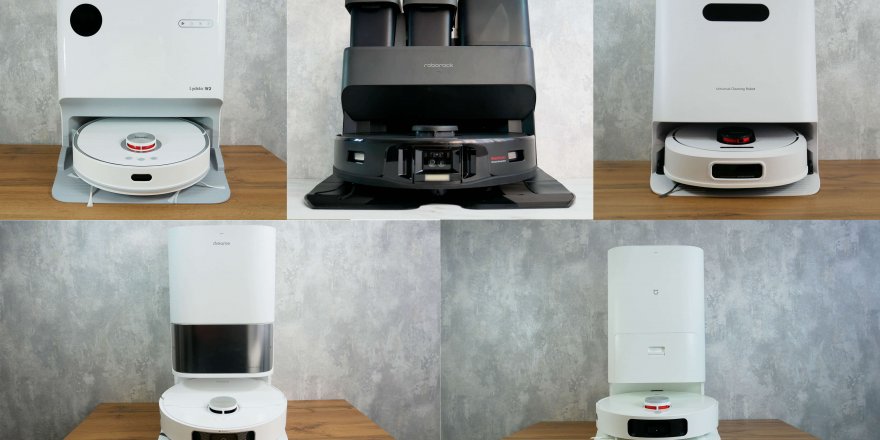
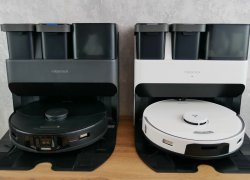
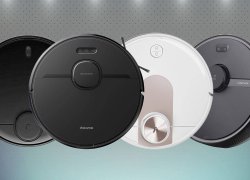
Hello to all readers of this site! In this post, I've decided to compare the best robot vacuum cleaners of 2022, flagship models from popular companies. Specifically, the Roborock S7 MaxV Ultra, Dreame Bot L10s Ultra, Xiaomi Miji OMNI 1S, Lydsto W2, and Roidmi EVA. All of these robots are equipped with combined stations for self-cleaning and rinsing, but the functionality and design of the models being compared differ slightly. More importantly, the price ranges also vary, which is why many people wonder whether it's worth the extra money and what it's actually worth, especially when it's actually worth paying twice as much for, in some cases. So, below, I'll compare the specifications, features, designs, and test results in detail, after which I'll express my opinion on which robot vacuum cleaner is the best in 2022 and the strengths and weaknesses of each model. So, let's get started!
Cost comparison
First, let's compare the prices of the robots. The most expensive one is Roborock S7 MaxV UltraIn Russia, with a local warranty and a Russian-language version, it costs $1,000, or about $1,450 at the exchange rate at the time of this comparison. On AliExpress, it's sometimes slightly cheaper. The price difference can be up to $150, but this will be the global version without the Russian voice package and, of course, the local warranty.
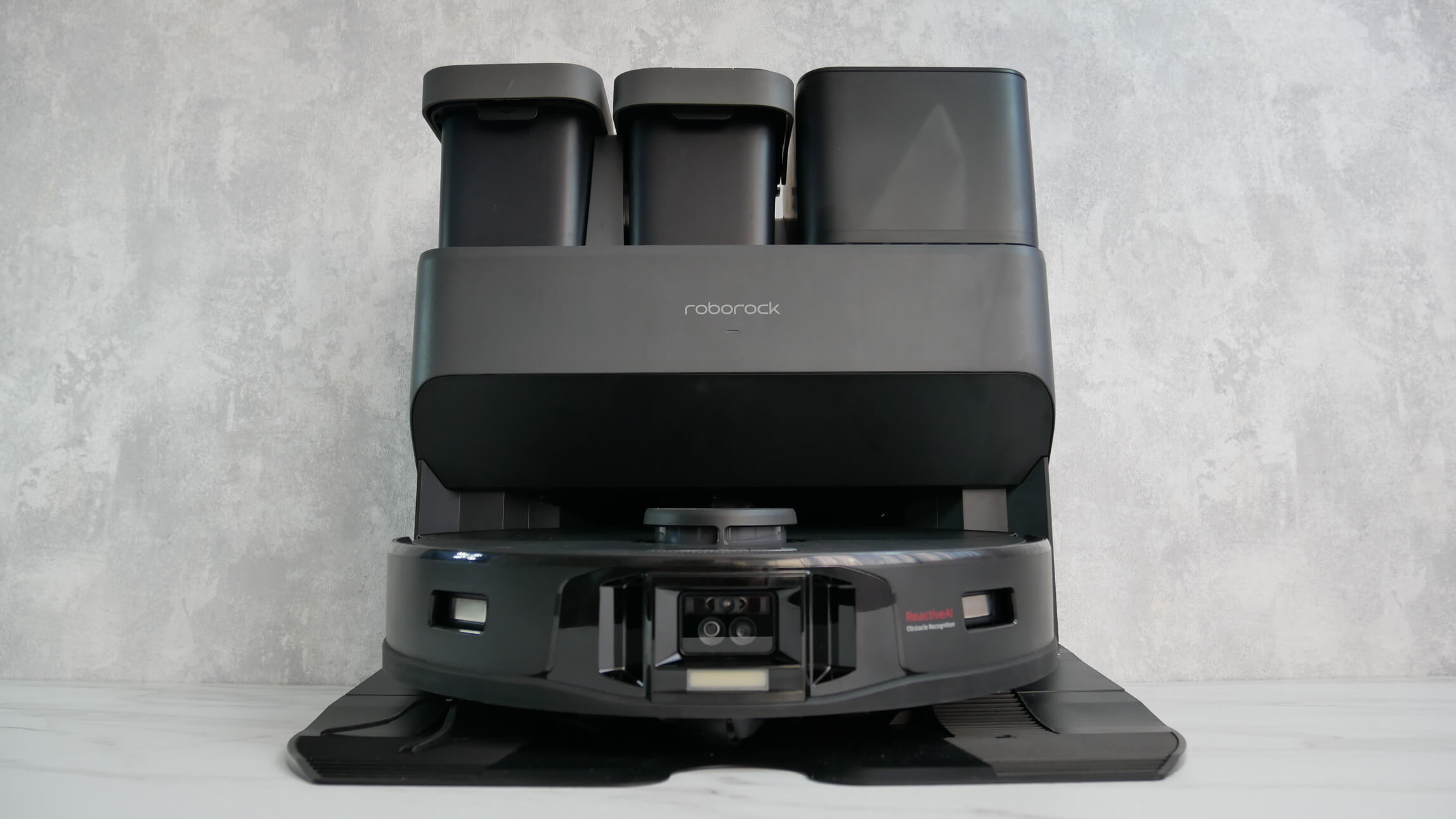
Roborock S7 MaxV Ultra
It's a little cheaper Dreame Bot L10s UltraIts price starts at $860, although in some stores it reaches $1100, which is more expensive than Roborock. However, a reasonable price is still around $860-$960, or $1250-$1400. This applies to both AliExpress and some local online stores.
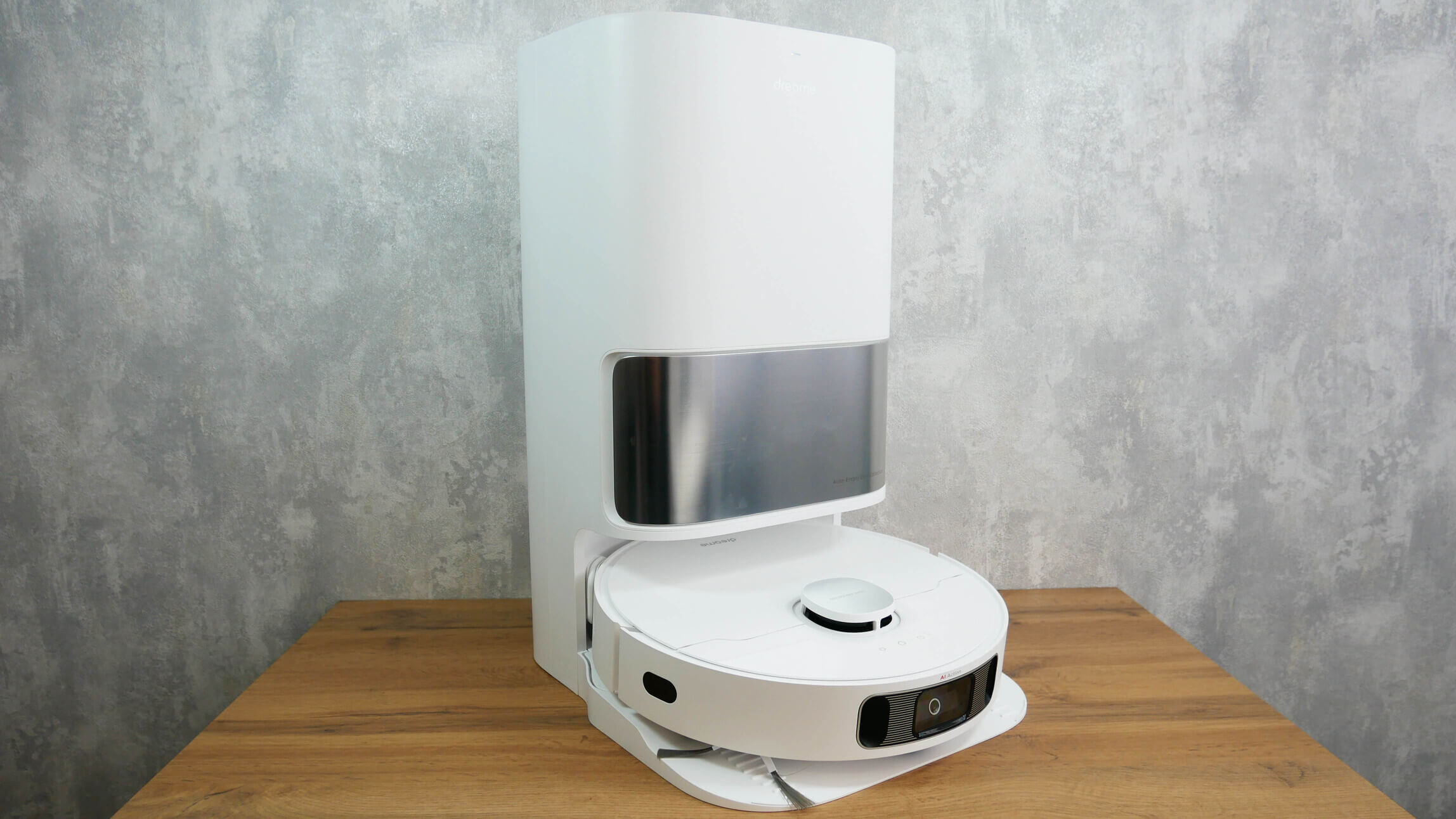
Dreame Bot L10s Ultra
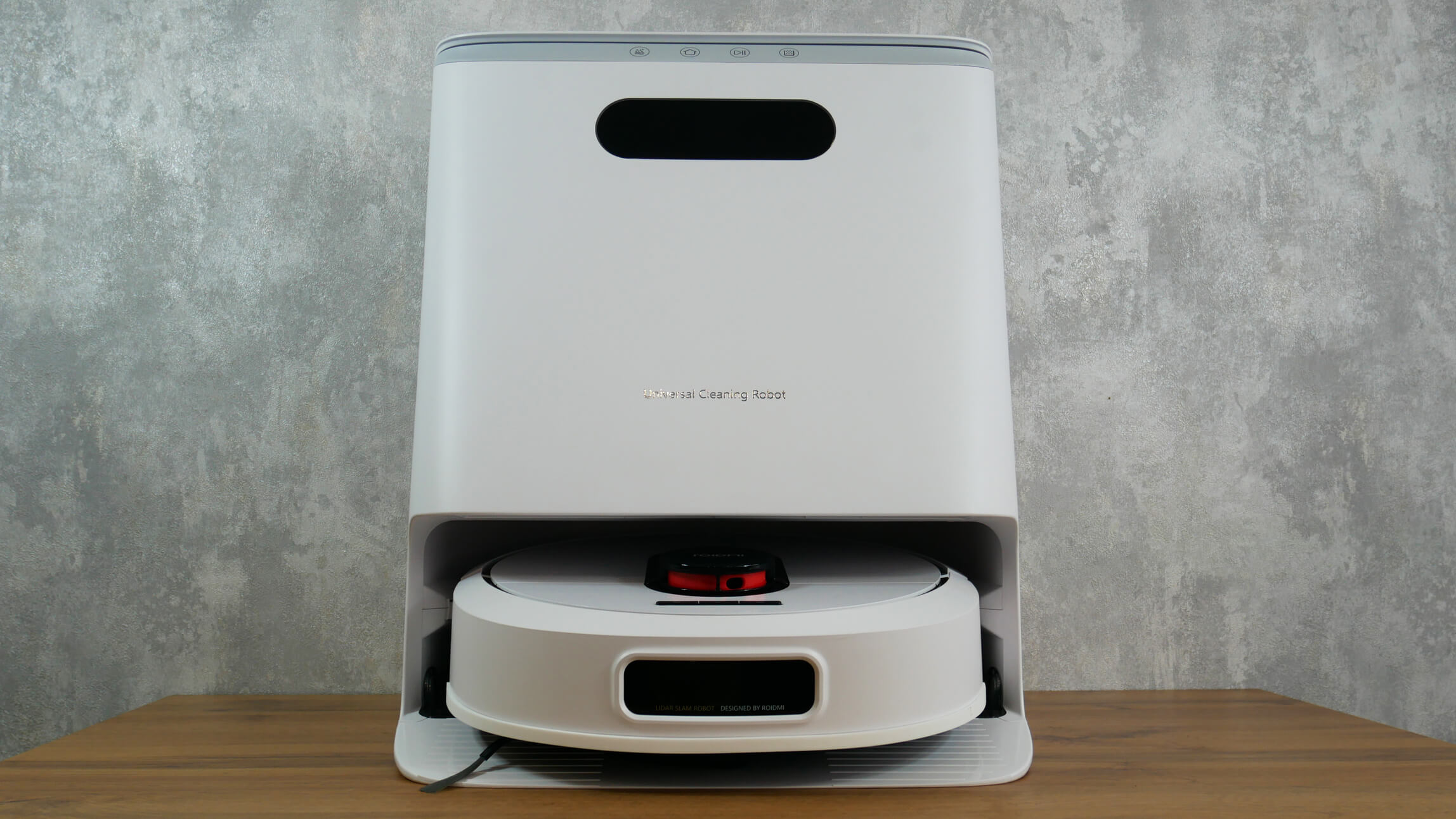
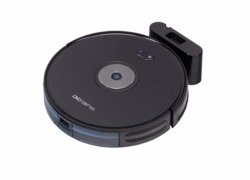
Roidmi EVAIn local stores, it costs around $630 or $920. On AliExpress, it's even cheaper, starting at $530 with shipping. However, you'll have to wait almost two months, and there's no local warranty. Overall, the price is in the $770-$920 range.
Roidmi EVA
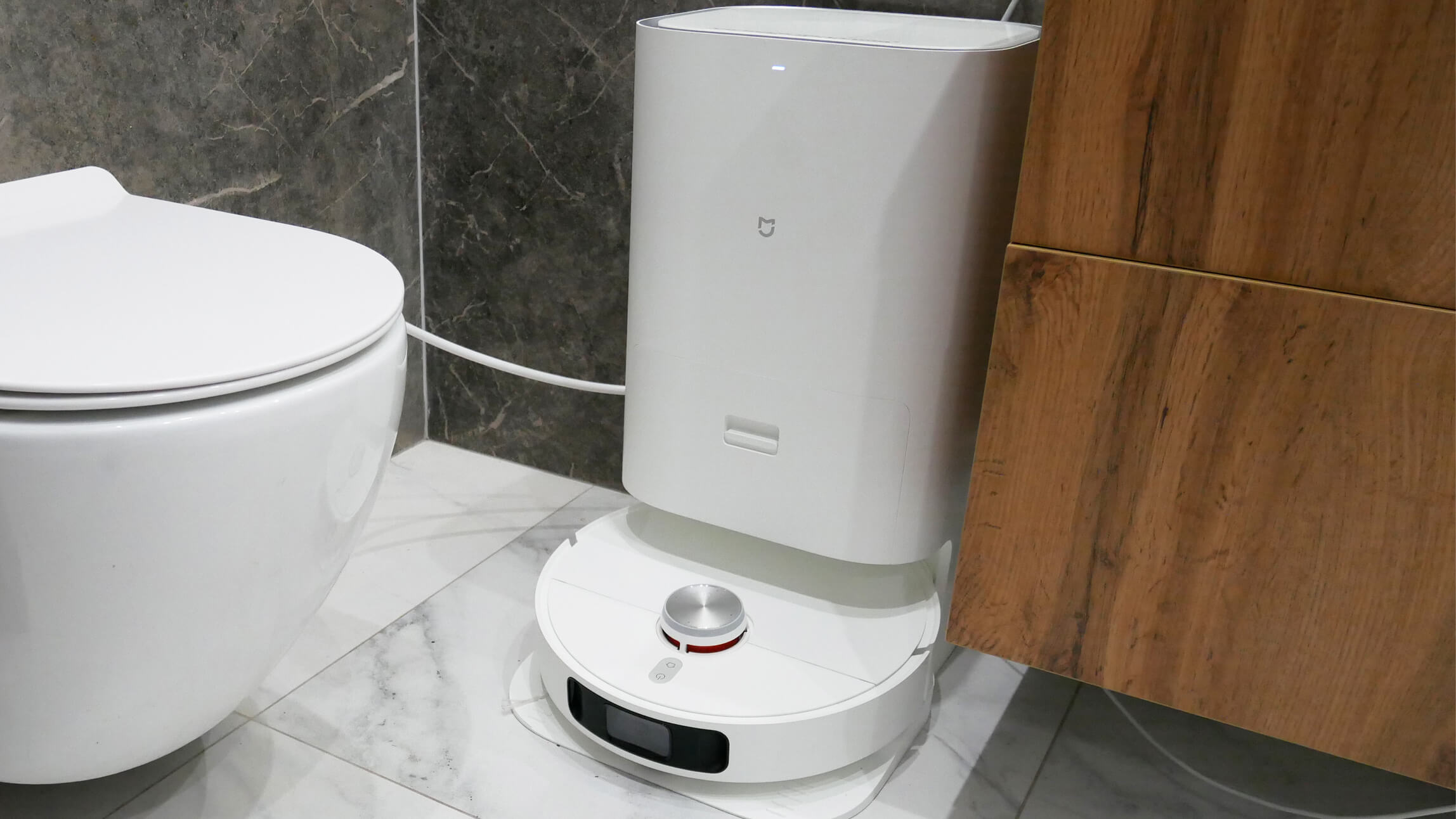
A new one is even cheaper Xiaomi Mijia OMNI 1SThis is an updated version of the popular Mijia OMNI B101CNThe main upgrade concerns the station, which can be connected to the water supply and sewer system. Otherwise, the robots are virtually identical, so you can compare both the 1S and the B101CN. The price of the robot and station on AliExpress starts at $470 with shipping. That's $680 in our country. The utility connection module adds another $90. The complete assembly costs up to $560, or up to $810.
Xiaomi Mijia Infinite Robot Vacuum-Mop 1S
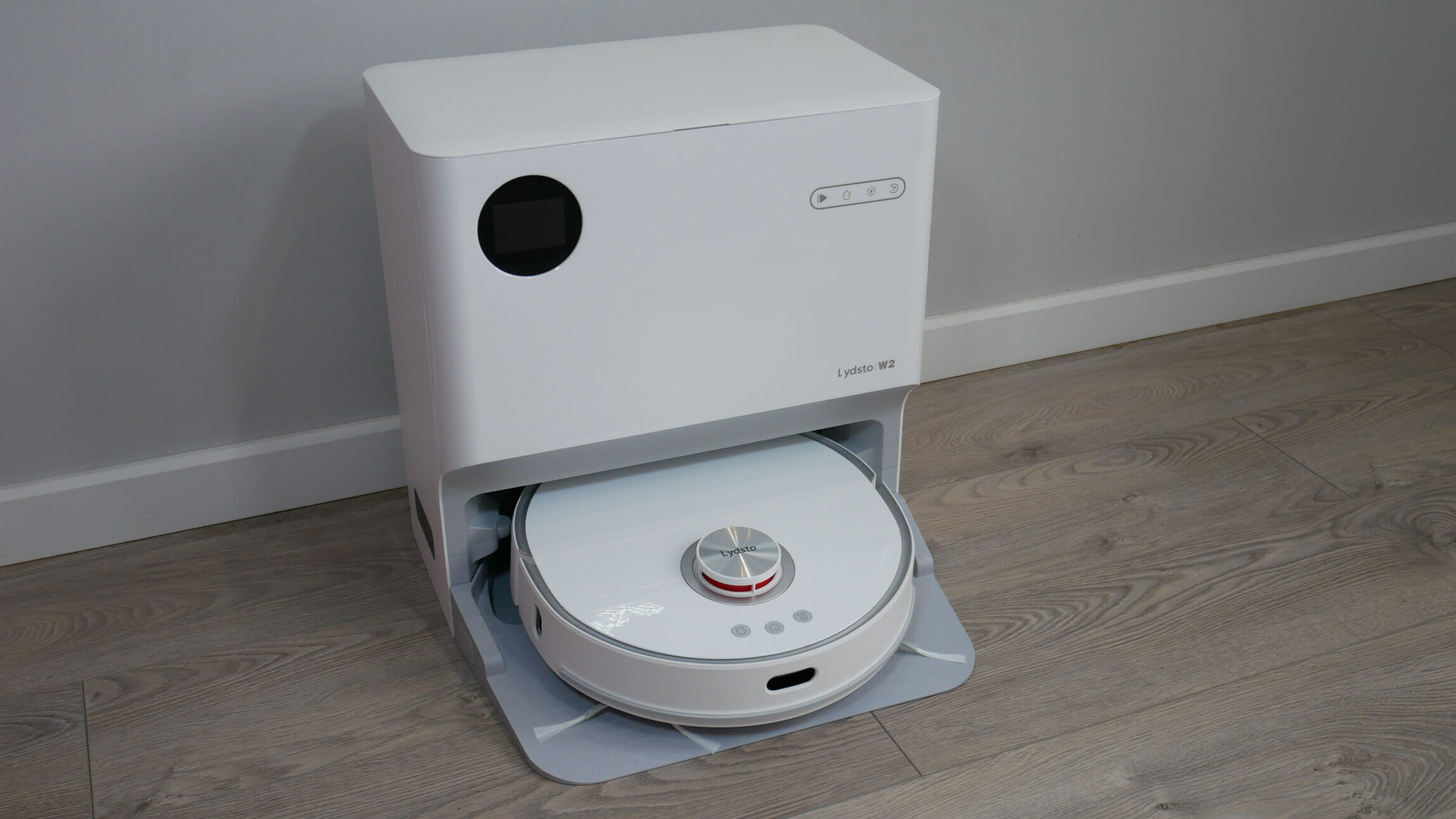
Well, it costs about the same. Lydsto W2On AliExpress, its price starts at $470, which is $680 at the current exchange rate, and can reach up to $550 in local stores with a full warranty. So, the price range is the same: $680-$800.
Lydsto W2
Ultimately, we see two equally expensive robots: Roborock and Dreame. Roidmi is mid-priced. And two equally "budget" robots, if that's what they can be called within the context of this comparison: Mijia and Lydsto. I've included purchase links in the table below. Next, we'll explore the differences between them and what the extra cost is.
| Aliexpress | ||
| Roborock S7 MaxV Ultra | from $1000 | $1000-$1100 |
| Dreame Bot L10s Ultra | $1000-$1100 | — |
| Xiaomi MIjia OMNI 1S | — | $460-$570 |
| Roidmi EVA | $700 | — |
| Lydsto W2 | from $600 | $570 |
Design features
Let's compare the robot designs. I've provided a detailed comparison of all the components in the table. If anything is unclear, you can ask in the comments, and I'll provide a detailed answer. I'll just make a few key comments regarding the design comparison.
| Roborock S7 MaxV Ultra | Dreame Bot L10s Ultra | Xiaomi MIjia OMNI 1S | Roidmi EVA | Lydsto W2 | |
| Navigation | Lidar | Lidar | Lidar | Lidar | Lidar |
| Identifying objects on the floor | Yes, recognition (AI) | Yes, recognition (AI) | Yes, definition | No | No |
| Dust collector | 400 ml | 350 ml | 350 ml | 350 ml | 350 ml |
| Filtration system | HEPA filter | HEPA filter and mesh | HEPA filter and mesh | HEPA filter and mesh | HEPA filter |
| Water tank | 200 ml | 80 ml | 80 ml | No | No |
| Number of side brushes | 1 | 1 | 1 | 1 | 2 |
| Central brush | Silicone, detachable | Silicone, detachable | Bristly-petal, collapsible | Bristly-petal, collapsible | Bristly-petal, collapsible |
| Type of napkin | Standard, smooth, minor ultrasonic vibrations | Two round rotating mops | Two round rotating mops | Two round rotating mops | Two round rotating mops |
| Lifting napkins on carpets | Yes | Yes | Yes | No | No |
| Fall protection sensors | 6 | 4 | 4 | 6 | 4 |
| Carpet sensor | Yes | Yes | Yes | Yes | Yes |
| Station | |||||
| Clean water tank | 3 l | 2.5 l | 2.5 l | 4 l | 4 l |
| Dirty water tank | 2.5 l | 2.5 l | 2.5 l | 4 l | 4 l |
| Bag in the station | 2.5 l | 3 l | 2.5 l | 3 l | 3 l |
| Drying napkins | Yes (sold optionally) | Yes, with hot air | Yes, with hot air | Yes, cold air | Yes, with hot air |
| Detergent tank | No | Yes, 300 ml | Yes, 300 ml | No | No |
| Removable tray for rinsing wipes | No | Yes, partially | Yes, partially | Yes, partially | Yes |
| Connection to cold water supply and sewerage | Yes (sold optionally) | No | Yes (sold optionally) | No | No |
| Peculiarities | LED camera illumination (better identification of objects in the dark) | You can install a Xiaomi bristle-petal brush | You can install a silicone brush from Dreame | It sweeps better in corners. | Sterilization of waste at the station, rinsing of wipes with warm water (50 °C) |
Roborock and Dreame are definitely better in terms of build quality, and this definitely impacts the price. Lydsto and Roidmi have slightly inferior plastic and build quality, but are still good. Xiaomi is less well-built and has a number of manufacturing issues. Sometimes water doesn't flow into the wipes' rinse tray, sometimes water doesn't flow from the robot's internal tank to the wipes, sometimes water doesn't drain from the tray into the dirty water tank, and sometimes the robots themselves arrive defective, with latches that don't engage. There are already many reviews on this topic.
I've highlighted the strengths of each robot. It's important to note that only Roborock and Dreame are equipped with full-fledged artificial intelligence to recognize and accurately navigate around objects on the floor. This is a progressive feature, and the extra cost is justified.
The silicone central brush is much easier to clean, making it a better solution if you need your robot vacuum to collect pet hair and fur.
The two round rotating pads definitely do a better job of wet cleaning than the standard flat pad like the Roborock.
An important design feature is the lifting pads on carpets. This allows the robot vacuum to simultaneously vacuum and mop, leaving carpets dry and clean. But that's not the only advantage of the lifting mechanism. It's surprisingly useful even in the absence of carpets. The pads are lifted not only on carpets, but also after the cleaning cycle is complete, as well as when the robot moves from the station to a selected room or cleaning area. In the first case, dirty pads won't come into contact with the already cleaned floor, so the robot will lift them and move directly to the station to clean. Secondly, the pads won't lose moisture and cleanliness on the way from the station to the selected area. This can be 10 or 20 meters, depending on the size of the home. I hope I've explained it clearly.
And as for drying the wipes, hot air effectively dries the wipes thoroughly, leaving them odor-free and preventing germ growth and dampness. This is definitely a useful feature, as is the included detergent reservoir, which automatically dispenses clean water when rinsing the wipes.
The last feature is the ability to connect to a sewer and water supply, further simplifying the robot's maintenance and operation. Mijia OMNI and Roborock boast such modules, which are sold optionally.
So, the picture becomes somewhat clearer, and it becomes clear why Roborock and Dreame are more expensive than their competitors, but that's not all. Let's move on!
Functional capabilities
The robots' functionality is virtually identical; some of these features have already been discussed in the table comparing their design features. Here are some other points to consider:
| Roborock S7 MaxV Ultra | Dreame Bot L10s Ultra | Xiaomi MIjia OMNI 1S | Roidmi EVA | Lydsto W2 | |
| Remote home monitoring | Yes | Yes | No | No | No |
| Storing multiple maps in memory | Yes | Yes | Yes | Yes | Yes |
| Virtual walls and no-go zones | Yes | Yes | Yes | Yes | Yes |
| Increased power on carpet | Yes | Yes | Yes | Yes | Yes |
| Customize cleaning settings for each room | Yes | Yes | Yes | No | Yes |
| Voice notifications in Russian | Yes (in RU version) | Yes | No | Yes | Yes |
| Yandex.Alice Support | Yes | Yes | Yes | Yes | No |
We see that Dreame and Roborock support all the basic features for easy operation and flexible cleaning settings. The other robots are practically on par, with the exception of home monitoring, but they fall slightly short in some areas, and each has its own drawbacks.
Testing
And the most important thing to compare is, of course, cleaning quality and the results of all tests. Let's go through them step by step.
The video comparison clearly demonstrates all test results, so I recommend watching the video:
I have no complaints about the navigation of any of the robots. They clean quickly, navigate large areas well, and leave no uncleaned areas.
Suction power is one of the key parameters people consider when choosing a vacuum cleaner. The table shows the stated suction power and the results of its testing on a test bench with gaps of varying depths.
| Roborock S7 MaxV Ultra | Dreame Bot L10s Ultra | Xiaomi MIjia OMNI 1S | Roidmi EVA | Lydsto W2 | |
| Power (declared) | up to 5100 Pa | up to 5300 Pa | up to 4000 Pa | up to 3200 Pa | up to 5000 Pa |
| Real power | 10 mm | 4 mm | 4 mm | 2 mm | 2 mm |
Here we see that Roborock turned out to be the most powerful in reality. Dreame and Xiaomi had weaker, but still strong, suction power. It's worth noting that the Mijia OMNI B101CN also achieved a suction power of 10 mm on the test bench, while the updated model was slightly weaker. I think the manufacturers decided to conserve the motor and reduced the speed, which was likely the right decision. Roidmi and Lydsto have standard power, but it's still sufficient for automatically maintaining a clean home. Given that the cleaning cloth doesn't lift on carpets, these robots are better suited for cleaning hard floors, where high power isn't particularly necessary.
The dry cleaning performance of all robots is roughly the same, but the Roidmi EVA definitely wins here, sweeping debris out of corners better thanks to its form factor.
All robots generally do a good job of cleaning carpets. However, there are two caveats. First, given its power, Roborock cleans carpets more thoroughly than other robots. Second, the silicone brush is generally better suited for picking up debris on hard surfaces, and on medium-pile carpets, its dust collection performance is inferior to that of a standard bristle brush. So, other robots compensate for their inferior power with a more suitable brush.
All robots with round cleaning pads, including Dreame, Xiaomi, Roidmi, and Lydsto, are definitely better at wet cleaning. Roborock's wet cleaning is decent in this regard, but the pad doesn't wet the floor as thoroughly, and it even seems less effective at scrubbing. It's better suited for picking up dust and small debris that the turbo brush might miss.
All the compared robots have difficulty removing stubborn, dried-on stains. However, they are primarily designed for everyday household use. They are not full-fledged floor cleaners or specialized floor-cleaning robots, like the Hobot Legee 7They may be able to remove stains after a few tries, but this isn't the result many people expect.
All robots offer equally good rinsing results, but Roborock has some minor issues with self-cleaning. Dust is discharged through the central brush, and sometimes debris gets blocked, making the robot's self-cleaning performance less than ideal.
The robots have equally good cross-country ability; they are capable of overcoming thresholds up to 2 cm high.
However, not all robots can navigate black surfaces. Roborock, Lydsto, and Roidmi have issues. The anti-fall sensors detect the black carpet as a height difference, causing the robots to back away. Xiaomi and Dreame have no such issues.
The last parameter I compared was the noise level in different modes. The data is included in a table for easy reference:
| Roborock S7 MaxV Ultra | Dreame Bot L10s Ultra | Xiaomi MIjia OMNI 1S | Roidmi EVA | Lydsto W2 | |
| Min. power | 60-61 dB | 56-57 dB | 58-60 dB | 57-59 dB | 58-60 dB |
| Avg. power | 63-64 dB | 58-60 dB | 61 dB | 60.5 dB | 62 dB |
| Max. power | up to 75.1 dB | up to 66.5 dB | up to 73 dB | up to 68.5 dB | up to 73 dB |
We see that the Roborock is the loudest in this comparison, and this is justified by its superior suction power. However, the Dreame Bot L10s Ultra is the quietest, even compared to the less powerful other robots in the comparison. This is a small, but still a plus for the robot.
Let's sum it up
I've compared the best robot vacuum cleaners of 2022, and now I'm ready to decide which one is best based on test results and other parameters.
Certainly, if we're talking about the BEST, this is not the first time the battle between Dreame and Roborock has been going on. They're more reliable, better built, more carefully designed, and, just as importantly, they have their own high-quality software. In my opinion, Dreame has released a more optimal solution this year, and this robot wins over its main competitor by a minimal margin. This is due to its more effective wipes, the presence of a detergent container, and even taking into account other factors such as better self-cleaning, no issues with driving on black surfaces, lower noise levels, and a more competitive price, especially during sales, when this robot is about $200 cheaper. And, again, this robot comes with a wipe-drying function right out of the box; no additional purchase required.
Dreame Bot L10s Ultra:
Roborock's advantages include a full on-site warranty, higher power (though Dreame's is no slouch either), and the optional addition of a module for connecting the station to the sewer and water supply. This option is certainly incredibly interesting, but it's not suitable for every renovation, as the robot will have to be installed either near the kitchen sink or in the bathroom. This isn't always a convenient solution. However, those who disagree can confidently choose Roborock. Again, overall, it's no worse, and for many, it might even be better. The problem is that both of these robots are expensive and aren't exactly the people's choice.
Roborock S7 MaxV Ultra:
But the Xiaomi Mijia OMNI 1S is definitely worth considering. At almost half the price, it boasts equally high-quality cleaning, basic useful features, and a station equipped with all the necessary components. This includes hot-air drying and a module for connecting to utility lines. However, this year Xiaomi released a flagship that's as crude as it gets. Both the B101CN and 1S arrived with defects that had to be fixed manually. This isn't great, considering the price and the fact that Roidmi and Lydsto, its closest competitors, have no issues out of the box. It's unclear how the Mijia OMNI will perform in another six months, given its condition out of the box. And again, there's no local warranty; all issues will have to be resolved through AliExpress, which is extremely inconvenient and time-consuming. Personally, all these issues upset me, but they don't bother me; I still think it's a popular choice.
Xiaomi MIjia OMNI 1S:
Roidmi and Lydsto, however, are now available with a local warranty, and there are no known issues with them. A key strength of the Roidmi EVA is its ability to effectively sweep debris out of corners.
Roidmi EVA:
Lydsto W2 doesn't have any particular strengths compared to all the other robots, and this makes it less competitive.
Lydsto W2:
On that note, I'd like to conclude this comparison. If you have any questions, please ask them in the comments. Happy shopping. Bye!
What can I say about all these robots? They're no better than the Proscenil M7 pro. This beauty beat the S7 and Lidsta in terms of cleaning time, quality, and navigation. The Xiaomi one completely lost its way on the second cleaning run, and upon returning to the base, it completely lost its base.
Conclusion: there's no point in paying through the nose when you can get a premium robot from China, the Proscenic m7 pro, and add a self-cleaning station, all for a total of $210 today!
Can you tell me if the Roborock S7 MaxV silicone brush is compatible with the Xiaomi Omni (1s)?