iLife W400
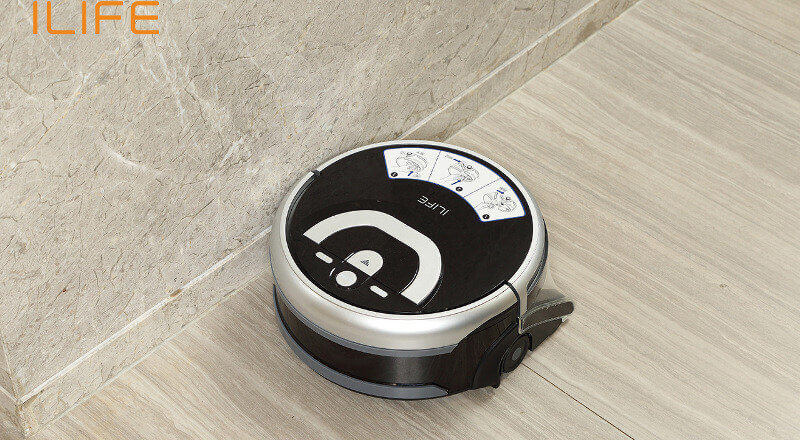
The iLife W400 is an unusual and therefore very attractive new robot vacuum cleaner. This device is designed for wet cleaning, but its operation is fundamentally different from the vast majority of other robots with this feature. While other devices have a microfiber cloth attached to the bottom that is mopped manually or automatically with water from a special container, this model operates on a completely different principle. To learn more about the iLife W400's cleaning capabilities, features, and specifications, read our review today.
Delivery set
The iLife W400 robotic cleaner comes in the company's traditional packaging, consisting of two cardboard boxes: an outer one to protect the device and its components from potential environmental damage, and an inner box shaped like a suitcase with a convenient plastic handle. The device and its packaging are lightweight, so transporting them should be no problem.
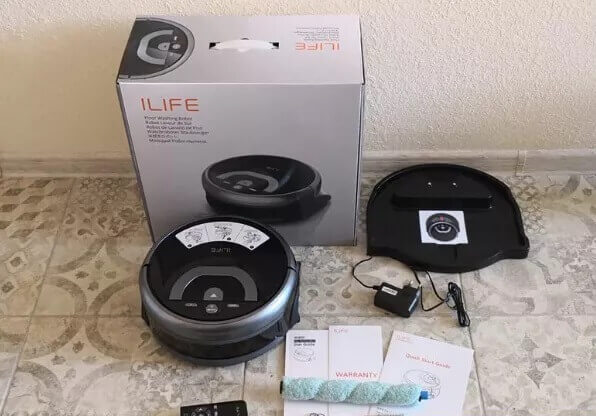
W400 Equipment
In addition to the robot vacuum cleaner, the following components are packed inside the suitcase:
- Power adapter.
- Charging base.
- Remote control with AAA batteries.
- Spare roller brush with non-removable microfiber head.
- Tools for cleaning tanks and robot body.
- A brief and detailed user manual in several languages, including Russian.
- Warranty card.
If necessary, you can purchase additional consumables; there will be no problem finding them.
Design
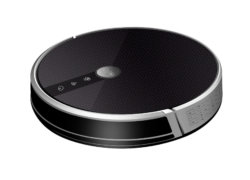
Although the iLife W400 differs significantly in its operating principle and design from other robotic vacuum cleaners on the market, as well as from standard vacuum cleaners, its appearance is similar. The iLife W400's cylindrical body is made of black plastic with a matte finish and silver accents. The top panel has a smooth, mirror-like finish that protects against scratches and damage. The main difference is the height of the body, which is significantly taller than its cleaning counterparts, at 118 millimeters. Therefore, this mopping robotic vacuum cleaner won't fit under low furniture.
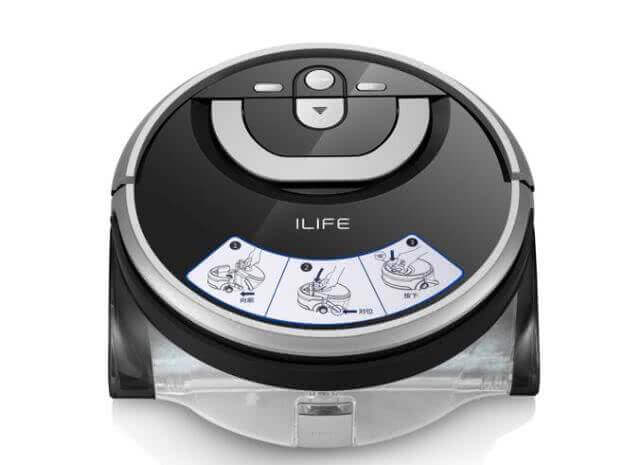
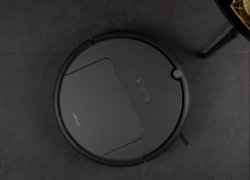
Top view
Another unusual feature is the visual division of the body into two distinct sections. The main section houses all the electronics, sensors, and the control unit. This section of the robot vacuum cleaner is separated from the other by a gap ending at the wheels. The wheels are also part of the main section. The rear section, on the other hand, is devoid of any electrical components, making it removable and washable under running water. This is where the reservoirs for clean and used liquid are located.
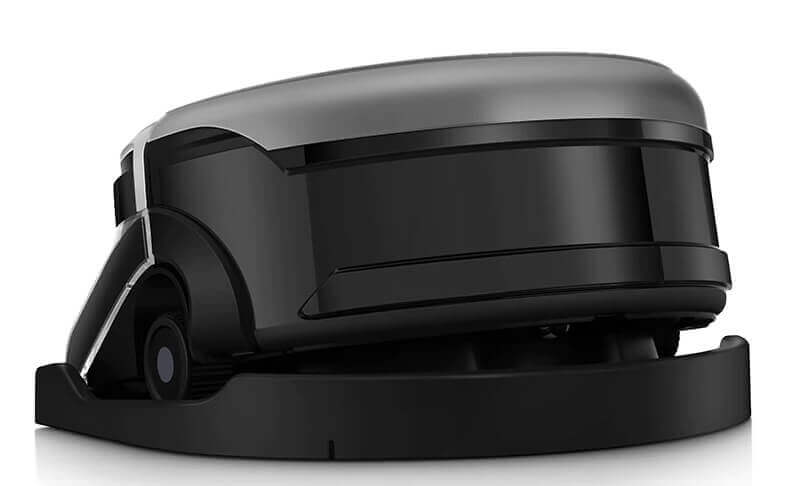
Side view
The front of the device is covered by a movable protective bumper, behind which are obstacle sensors. As for the wheels, the iLife W400 model has smaller and wider ones than other company robots, and the device is unable to navigate high thresholds.
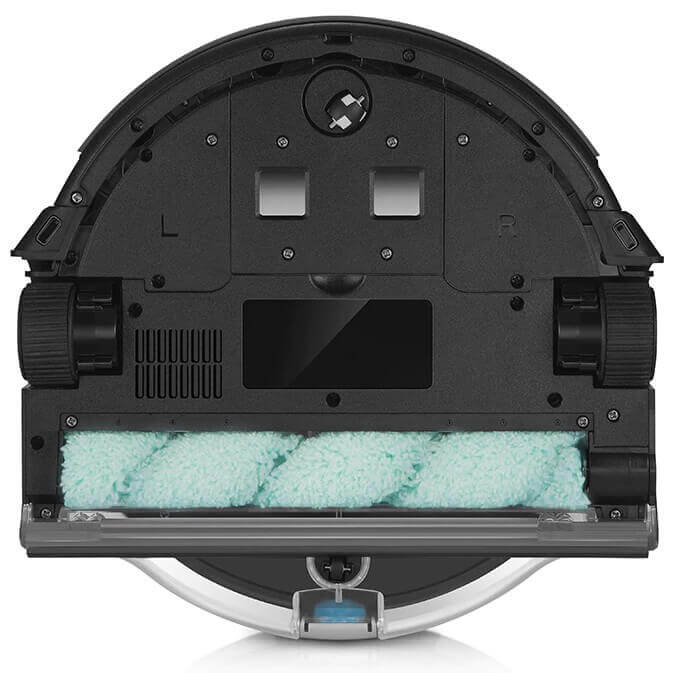
Bottom view
The control unit is located at the top of the robot vacuum cleaner. It includes a large button, a status information button, and mode selection keys. Near the control unit is a retractable plastic handle. It is used not only for carrying the device but also for easy docking of the two parts.
Technical specifications
An overview of the iLife W400's parameters is presented below:
| Battery | Li-Ion: 4.4 V, 36.0 Wh, battery capacity – 2500 mAh |
| Battery life | 80 minutes |
| Charging time | 300 minutes |
| Power consumption | 22 W |
| Maximum cleaning area | 90 sq.m. |
| Overcoming obstacles | Up to 15 mm |
| Water tank capacity | For clean water - 0.85 l; For dirty water - 0.9 l |
| Overall dimensions (L x W x H) | 282×292×118 mm |
| Weight | 3.3 kg |
| Noise level | 55 dB |
Functional capabilities
At the beginning of this review, we briefly described the iLife W400's cleaning process; now we'll go into more detail. As the robot vacuum cleaner moves across the floor, a pump draws liquid from the clean water tank and sprays it onto the floor in front of the roller through three pairs of holes. The roller brush rotates and washes the floor, capturing dirt particles and other debris. The roller is assisted by a squeegee, mounted directly behind it. The squeegee collects liquid from the floor, thus preventing streaks.
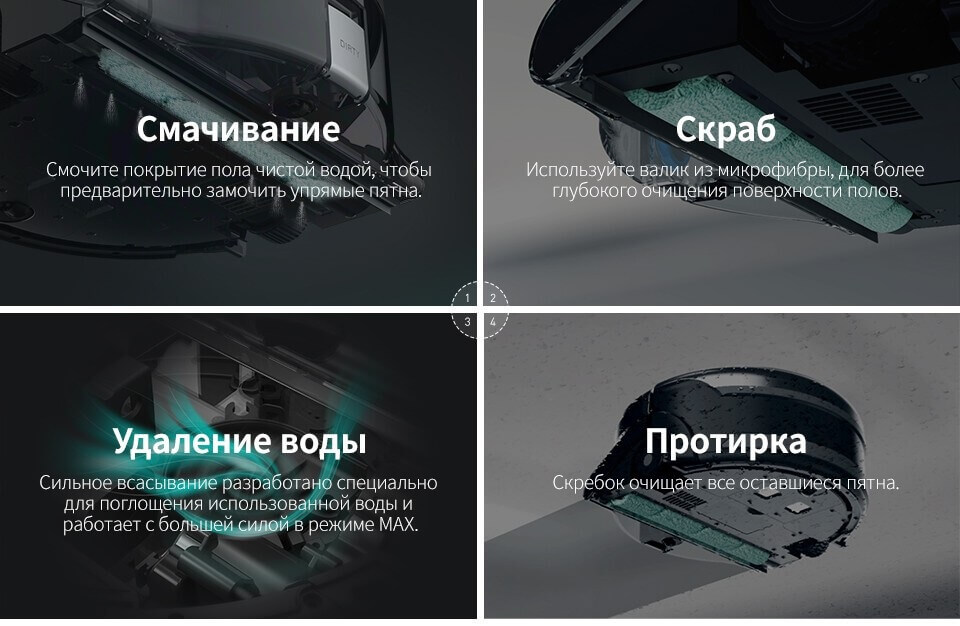
Cleaning technology
The robot's fan blows air through the roller compartment, clearing it of wastewater and debris. This "waste" is collected in a reservoir. Air is fed through a filter to the fan and exhausted through a grille on the bottom of the device. The presence of water in the clean water reservoir is detected by a special conductivity sensor. This explains why distilled water cannot be used in the washer. However, for greater cleaning effect, you can add a neutral detergent to the water.
After cleaning, empty the dirty water from the robotic mop and rinse the tank and filter. It is also recommended to rinse and dry the roller.
The iLife robotic cleaner is equipped with a set of sensors that help it navigate the room, avoid falls from elevated surfaces, and avoid collisions with surrounding objects.
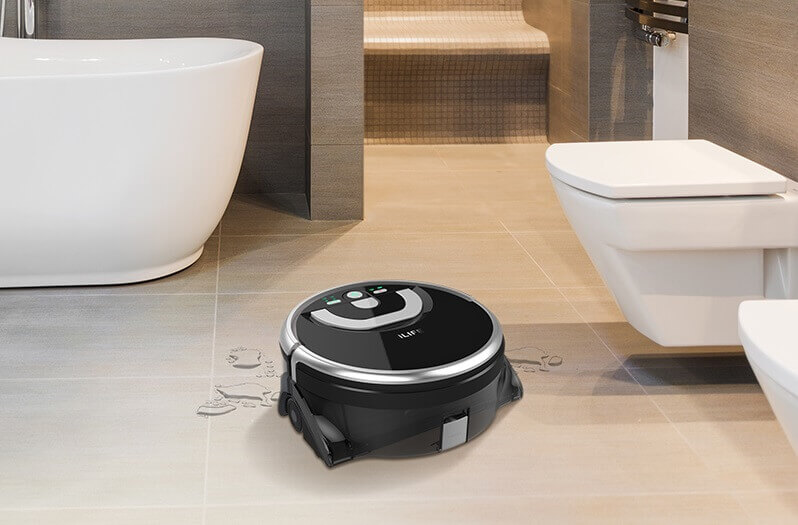
Washing the floor
The iLife W400 supports the following main cleaning modes: circle, zigzag, perimeter, and spot. You can also limit the area to be cleaned.
Advantages and disadvantages
Pros:
- High-quality wet cleaning.
- Well thought out design.
- Powerful battery.
- Equipment.
- Low noise level.
We didn't find any particular downsides to the cleaner, and considering the price (around $200 in 2019), it's a pretty good option for cleaning floors. The only minor quibble is its limited maneuverability, which is due to the small wheels. Otherwise, the cleaning performance is quite good, and the controls are simple.
Finally, it's important to note that the new iLife W400 robotic vacuum cleaner is best used as a complement to an automated dry cleaning robotic vacuum cleaner. You can also choose from a range of iLife robots.
Finally, we recommend watching a video review of the iLife W400, which shows how this floor cleaner cleans:
Analogues: