iRobot Roomba 671 and 675: What are the features and differences?
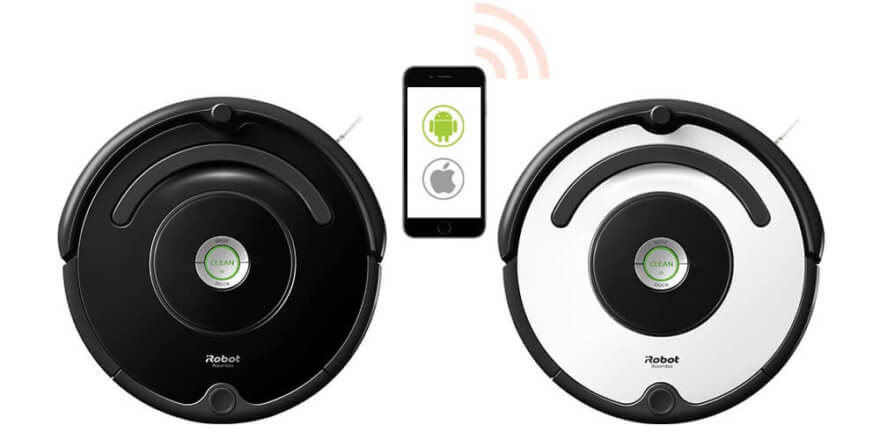
In 2020, robotic vacuum cleaners appeared on the market, which, incidentally, have been sold in Europe since 2018. We are talking about the iRobot Roomba 671 and 675 models, whose parameters and functionality are similar to each other and to their predecessor – 676th model. The main difference lies in the retail network. At the same time, the prices of the new models have significantly decreased: they can be purchased for as little as $100–$120, which is approximately one and a half to two times less than the price of the 676 model. In this review, we will examine the features of these dry cleaning robots in detail, as well as identify their main advantages and disadvantages.
Equipment
The iRobot Roomba 671/675 package contents can be described as meager; the manufacturer wasn't particularly generous with the robot's accessories. The basic components include:
- The robot vacuum cleaner itself.
- Docking station.
- Charging cable.
- Operating instructions.
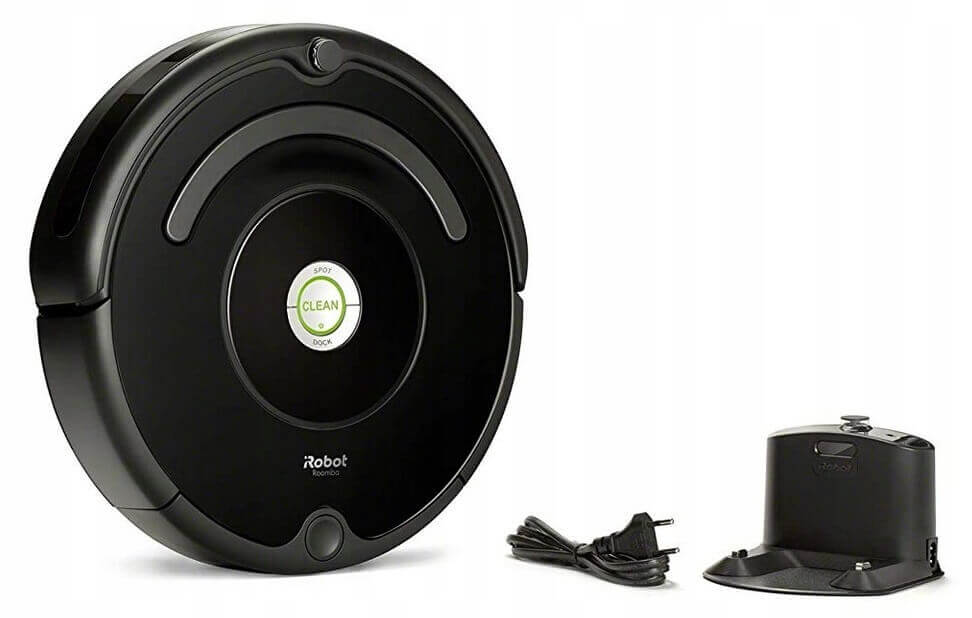
600 Series Equipment
These models do not come with a virtual wall, but they are compatible with a dual-mode barrier, which can be purchased separately.
Appearance
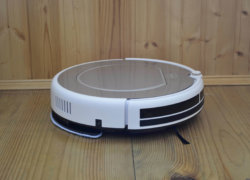
The iRobot Roomba 671/675 utilizes a traditional design: the appearance and construction of these robotic vacuums echo the manufacturer's earliest models. The housing is made of durable plastic and is shaped like a puck; when viewed from above, it appears almost perfectly circular. The dimensions are 340 x 340 x 92 mm. While not the most compact, the units will still fit under some furniture.
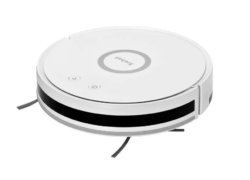
It's worth noting that the 671st model of the robot vacuum cleaner is black, while the 675th model is available in either white or black. The 676th model has a dark gray top, so it shouldn't be difficult to distinguish the two devices by eye. Otherwise, the design is identical.
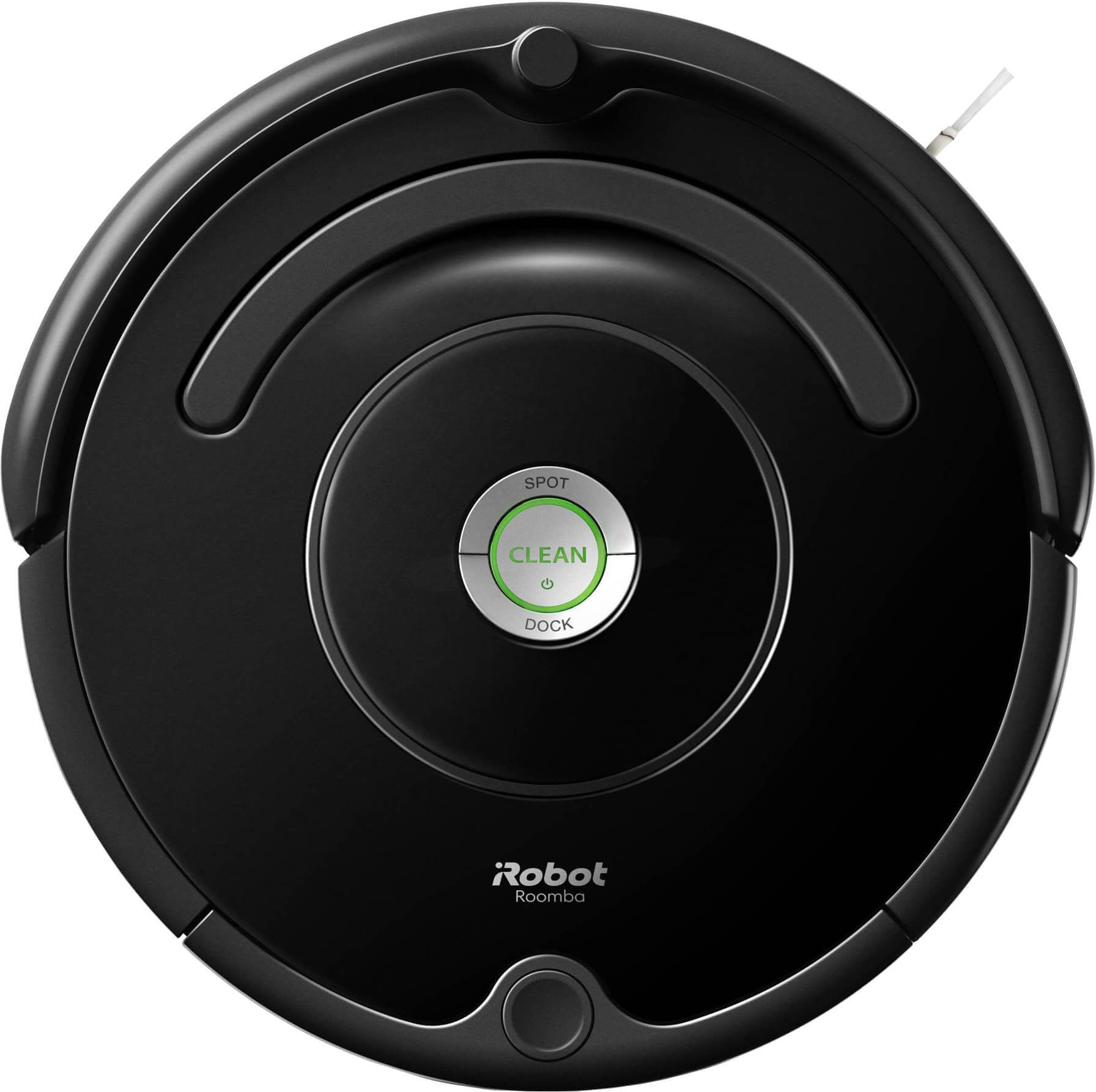
Roomba 671
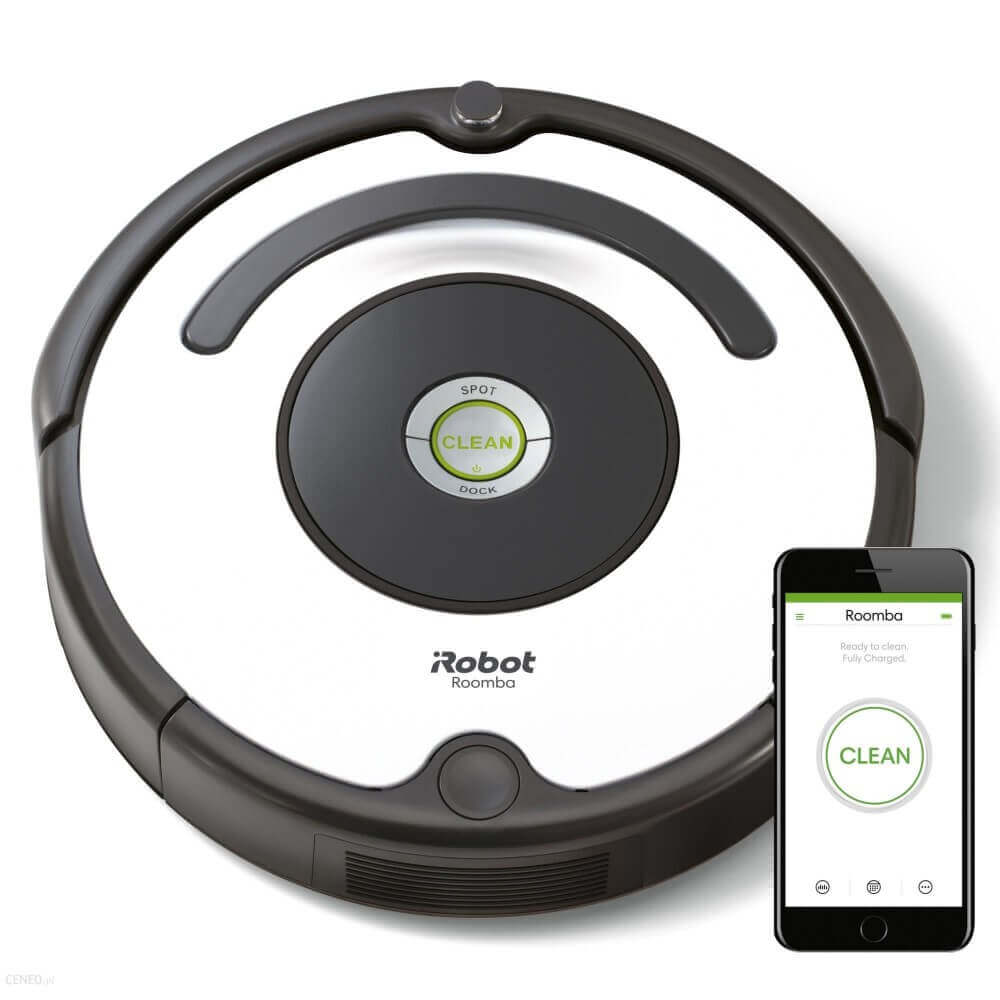
Roomba 675
The central part of the top panel contains three mechanical control buttons with green backlighting, as well as status indicators. These buttons are used to start the robot vacuum, activate local mode, and return the device to the charging base. A recessed carrying handle for the robot can also be found here.
The front of the iRobot Roomba 671/675 features a spring-loaded protective bumper with obstacle avoidance sensors. A dust bin slides out on the side for easy emptying and cleaning, simply by pressing the appropriate button.
When looking at the robots from the back, we see the following picture: the drive wheels are located on the sides, a swivel wheel is installed in the front, charging contacts, one side brush, height detection sensors, a battery compartment is located below, as well as a cleaning module in the center.
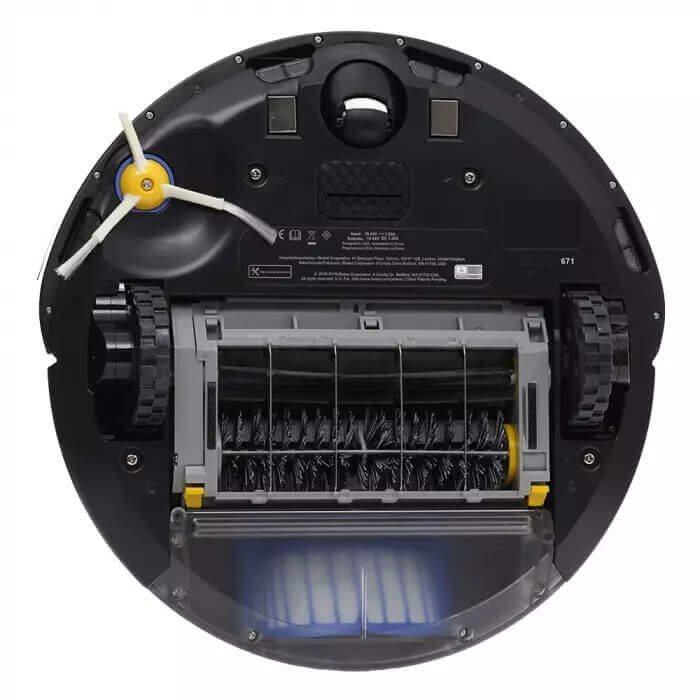
Bottom view
The cleaning module features two turbo brushes: one with rubber slats and the other with bristles. This module is mounted on a sliding frame with a stroke of approximately one centimeter, allowing the brushes to be pressed more firmly into the floor. This allows for smooth cleaning of uneven surfaces.
Technical specifications
The main characteristics of the iRobot Roomba 671 and 675 are summarized in the table:
| Type of cleaning | Dry |
| Power supply | Li-Ion battery |
| Battery capacity | 1800 mAh |
| Opening hours | 60-80 minutes |
| Charging time | 180 minutes |
| Cleaning area | 40-60 m2 |
| Suction power | 33 W |
| Maximum threshold height | 20 mm |
| Dust collector | 600 ml |
| Dimensions | 340*340*92 mm |
| Weight | 3 kg |
| Noise level | 55-60 dB |
Functional capabilities
The iRobot Roomba 671/675 robotic vacuum cleaners lack a modern navigation system or mapping function, so their basic movement patterns are erratic. To navigate indoors, the manufacturer equipped them with infrared obstacle sensors in the bumper and height sensors on the bottom (iAdapt Navigation). The iRobot Roomba 671/675 also features a mileage sensor located in the swivel caster. A turret with an infrared receiver is mounted on the top of the protective bumper, which is used to locate the docking station and the optional virtual barrier.
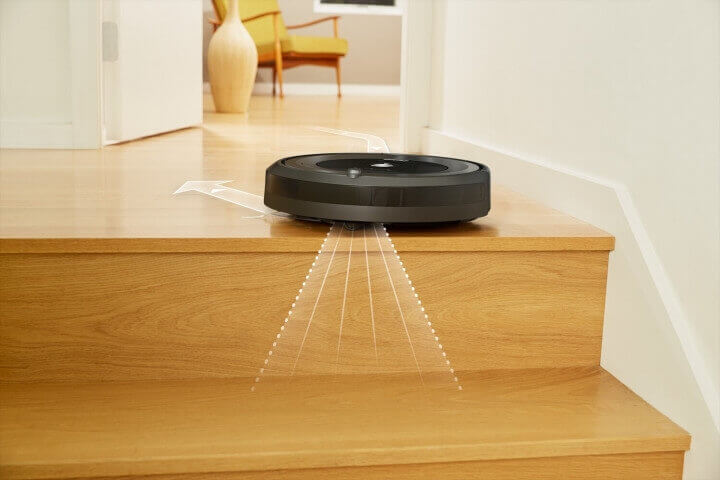
Operation of sensors
The robotic cleaning process is accomplished using a single side brush with three stiff bristles on rubber arms, as well as two main brushes that rotate in opposite directions. This technology allows for cleaning not only smooth floors but also effective carpeting with a thin pile. The iRobot Roomba 671/675 features an anti-tangle system that allows it to disentangle itself from various objects, such as cords. Collected debris is directed into a 600-milliliter cyclone dust collector with a HEPA-12 filter. The dust collector contains a motor, so rinsing it with water is strictly prohibited.
The main operating modes of the iRobot Roomba 671/675 robotic vacuum cleaners:
- Clean/Auto – randomly sweeps the entire available area until the battery is discharged or the cleaning process is complete. In both cases, the robot vacuum cleaner will return to the charging base. These models do not allow for continued cleaning. It's important to note that the device will avoid obstacles such as chair and table legs, and can also recognize walls and corners, cleaning along the perimeter.
- Spot cleaning is a spot cleaning of the floor surface over an area no larger than one meter in a spiral pattern. The robot must be manually positioned in these areas.
As an additional feature, the iRobot Roomba 671/675 features Dirt Detect technology, which detects heavily soiled areas. It uses an optical sensor that scans the airflow carrying debris. Upon detecting the dirtiest areas, the robot vacuum will perform a series of rotating movements in an expanding and then contracting spiral for more effective cleaning. Essentially, this is a short-term spot cleaning mode that can be activated automatically if the robot detects a dirty area.
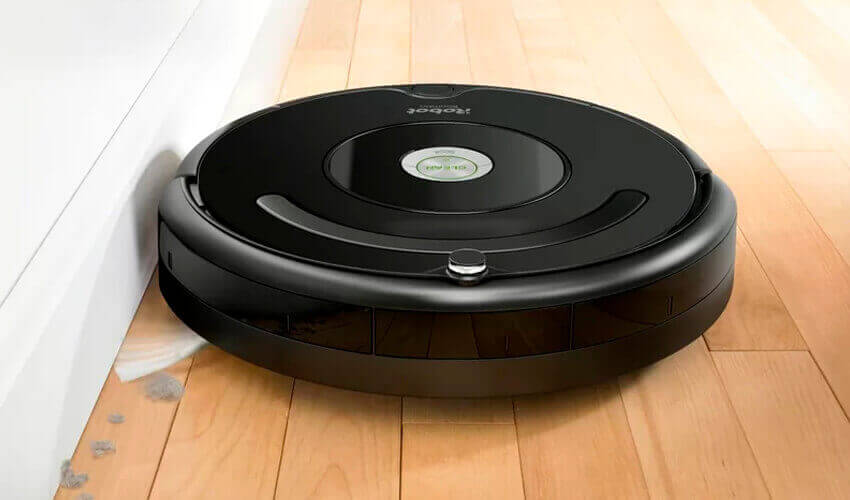
Cleaning along the wall
The Roomba 671/675 robot vacuums are controlled both via buttons on the body and remotely via the iRobot HOME smartphone app via Wi-Fi. The app's main useful feature is scheduling cleanings by time and day of the week, which is truly convenient. The Russian menu is also a plus. The app interface is identical for all three models mentioned in this review.
Advantages and disadvantages
Pros:
- Reasonable price.
- Build quality.
- Double turbo brush.
- Large dust bin with HEPA filter.
- Cleaning according to schedule.
- Local mode, Dirt Detect.
- Control via application.
Cons:
- Poor equipment.
- Poor navigation.
As you can see from the review, there are no significant differences in appearance, packaging, design, specifications, or functionality between the iRobot Roomba 671, 675, and 676. Moreover, the new models are significantly less expensive than their predecessors and similar robot vacuums from other manufacturers. Therefore, we recommend taking a closer look if you're looking for a reliable, budget-friendly robot vacuum from a reputable brand!
Our brief video review of the 676 model:
Analogues: