A comparative test of self-cleaning stations from Roborock, iRobot, Ecovacs, Viomi, Dreame, Roidmi, and Proscenic
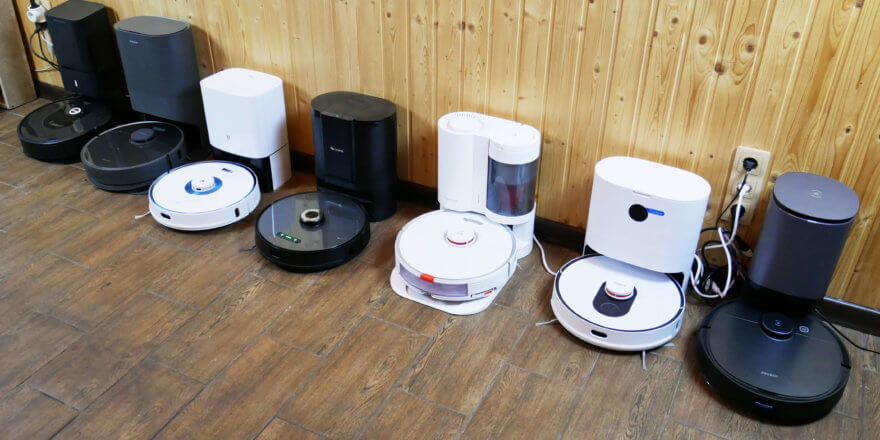
In this review, I decided to compare self-cleaning stations for robotic vacuum cleaners from different manufacturers. The fact is that in recent years, especially in 2021, there has been a high demand for self-cleaning robotic vacuum cleaners Accordingly, almost all renowned brands have already equipped their flagships with a dust-collecting station. This is where the idea came from to compare the key parameters of these stations and, most importantly, how well they perform in their primary function. The comparison included self-cleaning robotic vacuum cleaners such as Roborock S7, Ecovacs Deebot OZMO T9 AIVI Plus, iRobot Roomba i7+, Dreame Bot Z10 Pro, Viomi Alpha UV (S9), Roidmi Eve Plus and the Proscenic M8 Pro. Now we'll find out whose design is the most optimal and effective. So, let's get started!
Comparison of station and bag costs
First, let's talk about the cost of these stations. Some are optional, while others are integral to the robot vacuum. In this case, the base unit will be priced approximately, and I'll explain my reasoning.
The most expensive self-cleaning station is the new Roborock S7. Its price at the time of this video is $250 I even got a $5 discount, but it's still incredibly expensive. For example, one of the comparison products, the Roidmi Eve Plus, costs the same, but it's a robot vacuum with a docking station, not just a docking station.
The self-cleaning station for the iRobot Roomba i7+ costs approximately 21$7 . I relied on the fact that the robot without a base costs $528, and with a base $74.
The price for the station for Ecovacs Deebot OZMO T9 AIVI Plus varies within the range $150-200 .
The Viomi S9 is not sold without a docking station. The total price is between $400 and $450. However, it is similar in design and specifications. Viomi V3 costs around $300. Accordingly, the self-cleaning station can be priced at $100-150 .
The Dreame Bot Z10 Pro is also sold only with the station; I couldn't find it for sale separately. The total cost of the robot is approximately $33-$350, while an identical model Dreame Bot L10 Pro without the base costs about $240-$280. Actually, the overpayment for the base is no more than $110.
The situation is similar with the Proscenic M8 PRO. The Pro version with a station costs between $290 and $330, while the Proscenic M8 model costs between $230 and $270. Accordingly, the extra cost for the station comes out to 6 to $100 .
The Roidmi Eve Plus sells for an average of $250-270. I couldn't find a version of the Roidmi Eve without the docking station, although I've seen offers online before. Accordingly, the price of the docking station is in the range 7-$100 .
Ultimately, we see that Proscenic, Roidmi, Dreame, and Viomi offer the most reasonable price premiums for the base station. Meanwhile, Roborock, iRobot, and Ecovacs offer a station alone that's comparable in price to a good robot vacuum.
Additionally, in the table, I decided to compare the cost of spare consumables for stations, namely bags:


Design comparison
I'd like to pay special attention to the design features of self-cleaning stations. There are several interesting features worth highlighting.
Versatility
Well, first of all, it's worth highlighting the Roborock station's distinct advantage: its bagless dust collection bin. You can save significantly on consumables by using a flask with a built-in cyclone and mesh filtration system. This dust collection bin is easily removed and easy to maintain. It's also washable.
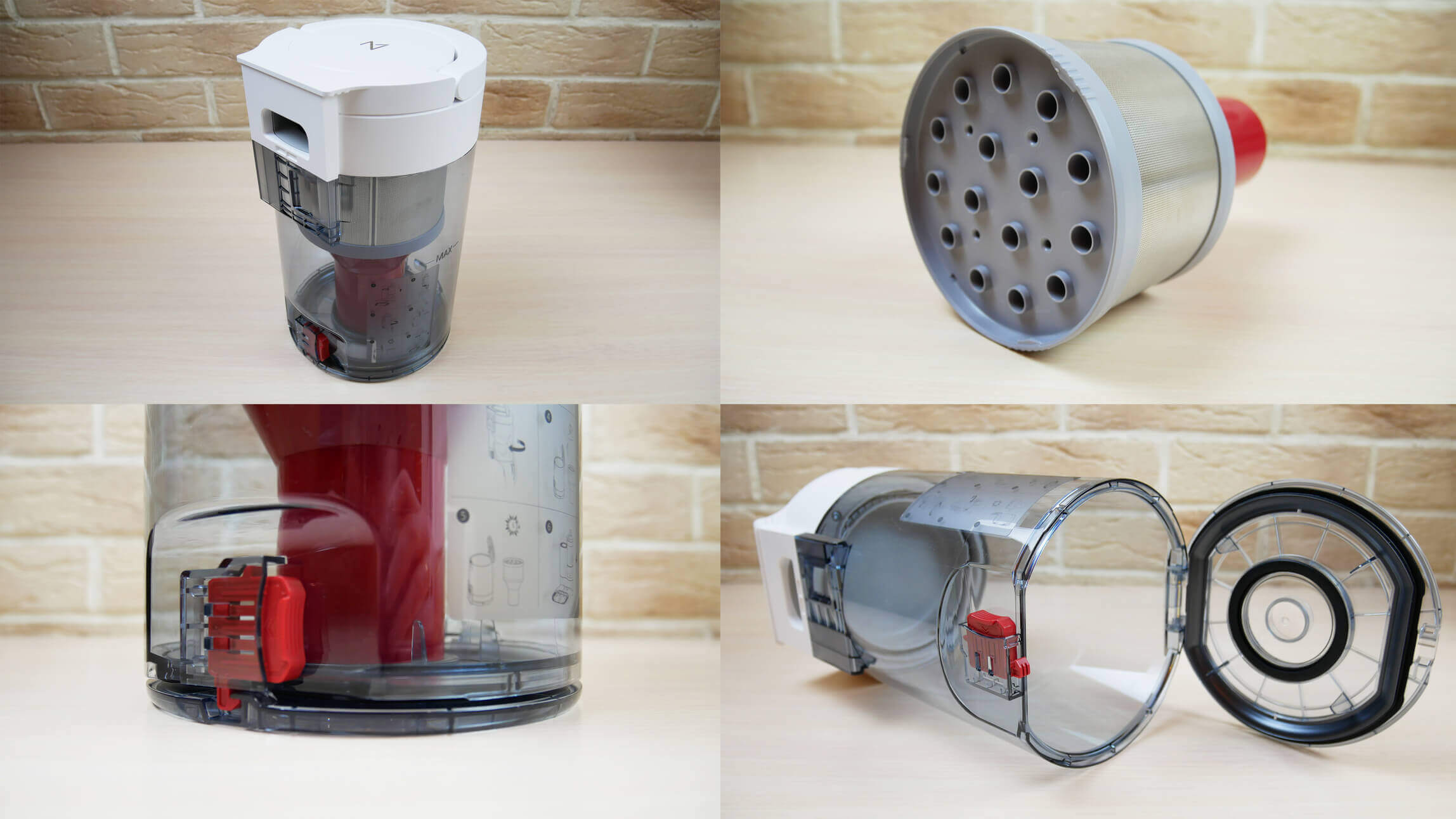
The engine bay of the Roborock station
If you want to minimize your contact with waste, you can install a 3-liter disposable bag in this compartment and simply change it every few months. This solution is currently unique, and it's appealing.
Other robot vacuum cleaner self-cleaning stations in this comparison test don't offer such versatility.
Garbage disposal
As for emptying the dust bin, iRobot, Ecovacs, Dreame, and Roborock all empty through the bottom. While the first three robots vacuum through a special curtain in the dust bin, Roborock has a unique system that unloads through the main suction channel and the central brush assembly.
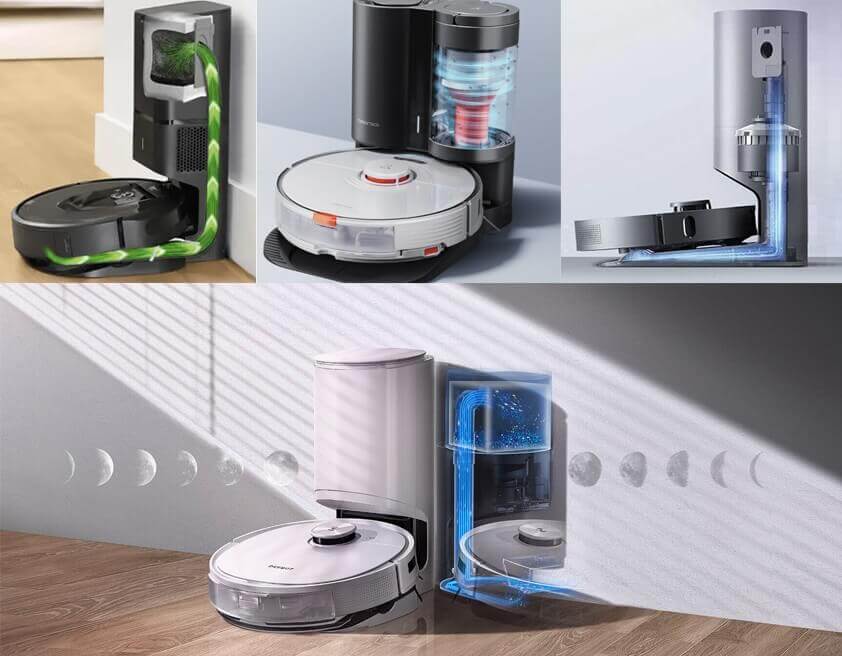
Unloading waste through the platform
Viomi, Proscenic, and Roidmi, on the other hand, have waste unloading from the rear. The robot's rear end is attached to the station via a combined container, which houses a special waste unloading curtain.
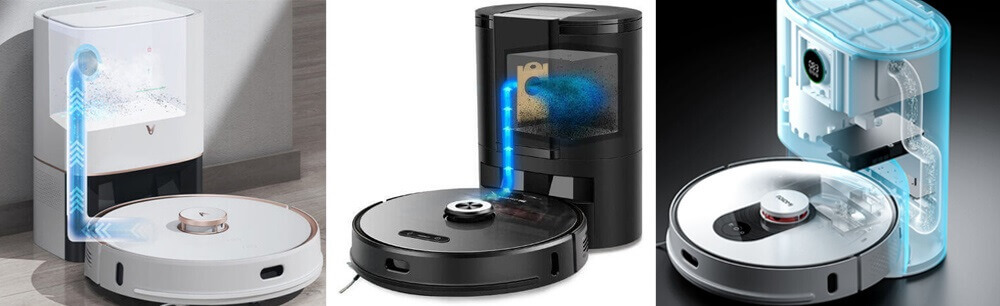
Rear waste unloading
In this way, manufacturers reduce the length of the garbage chute, the number of bends, and the speed of self-cleaning. How effectively this self-cleaning station handles garbage removal is something you'll see below.
Filtration system
When it comes to the additional filtration system, Roborock once again wins the competition. Inside the station, in the motor compartment, there's an additional filtration system using a HEPA filter and a fabric filter.
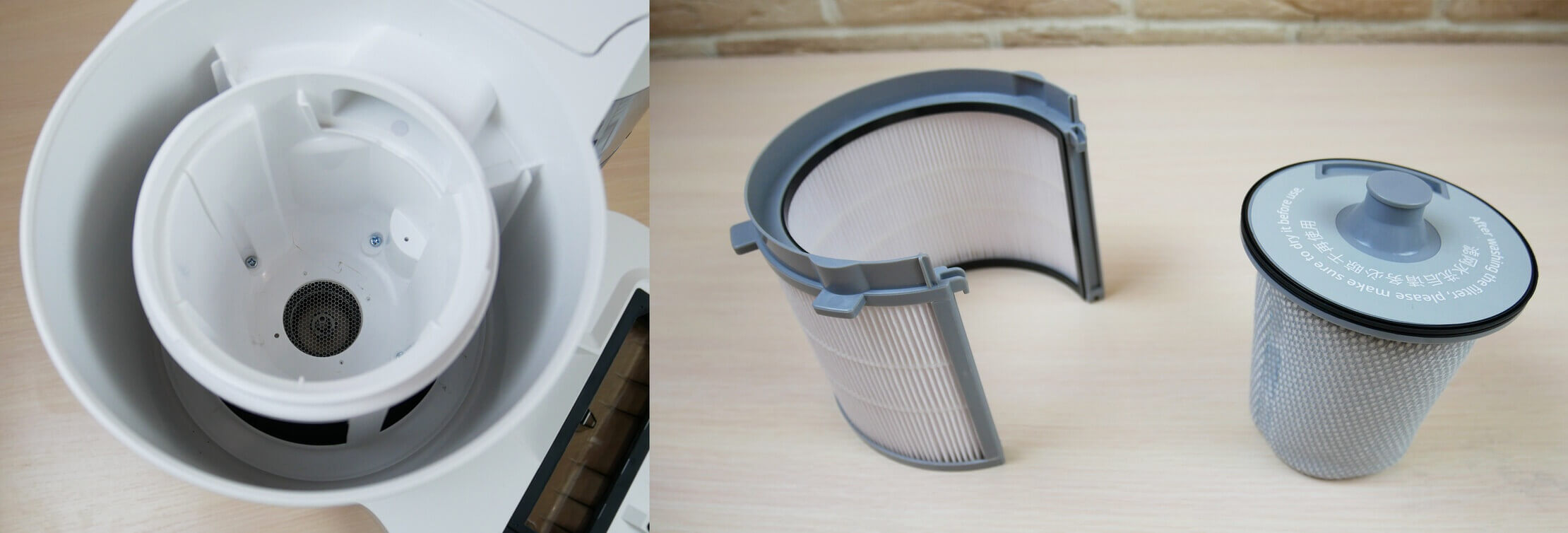
Roborock Filtration System
In addition, the Proscenic boasts a blown foam filter, which is hidden at the back under the lid.
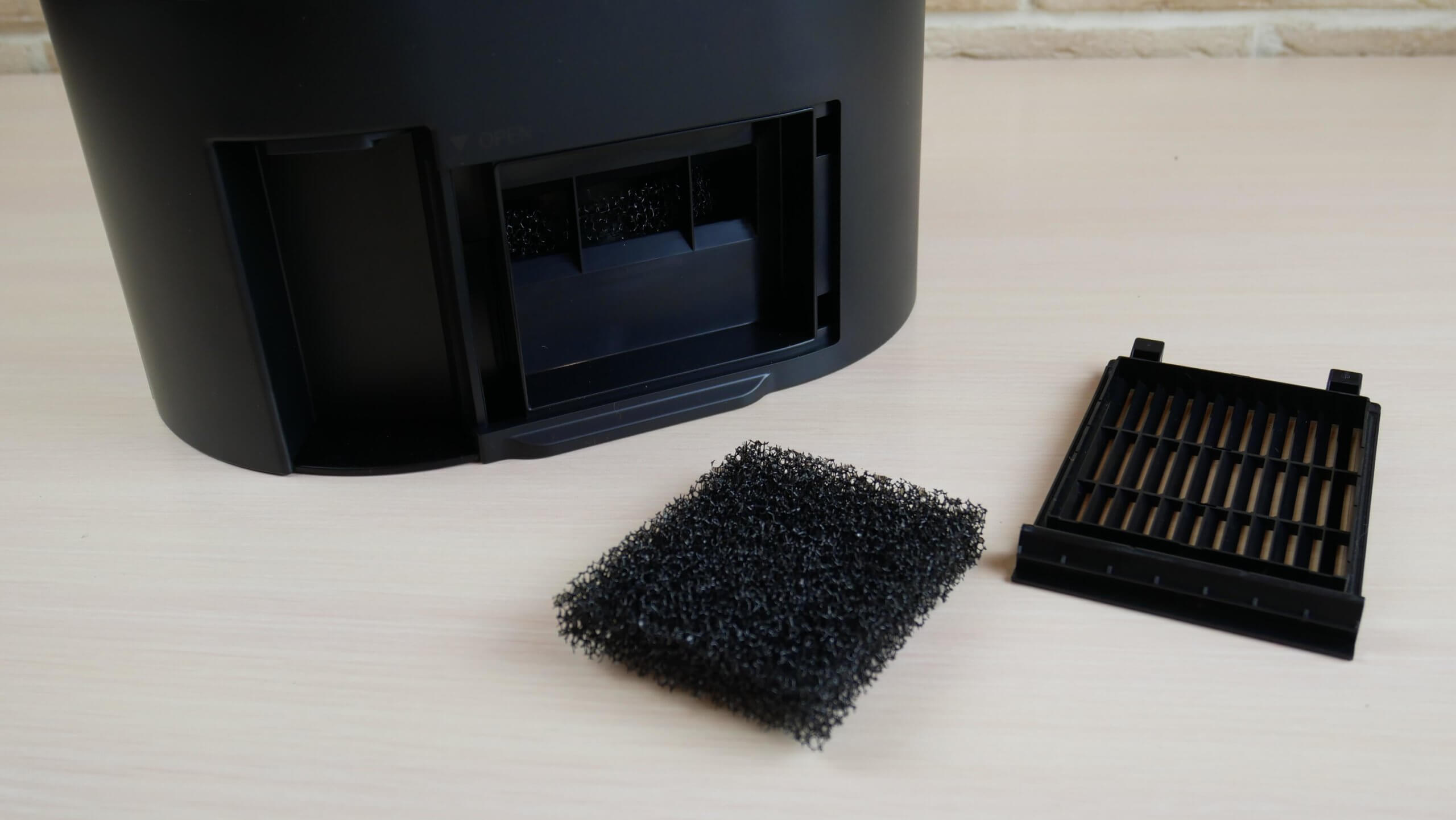
Procscenic Filtration System
I haven't found any filtration system on other robots that can be accessed without disassembling the body.
Service
Regarding station maintenance, and specifically the ease of cleaning when the suction channel becomes clogged with large debris, all 7 stations feature the ability to quickly disassemble the garbage chute by unscrewing it and removing it from the base housing.
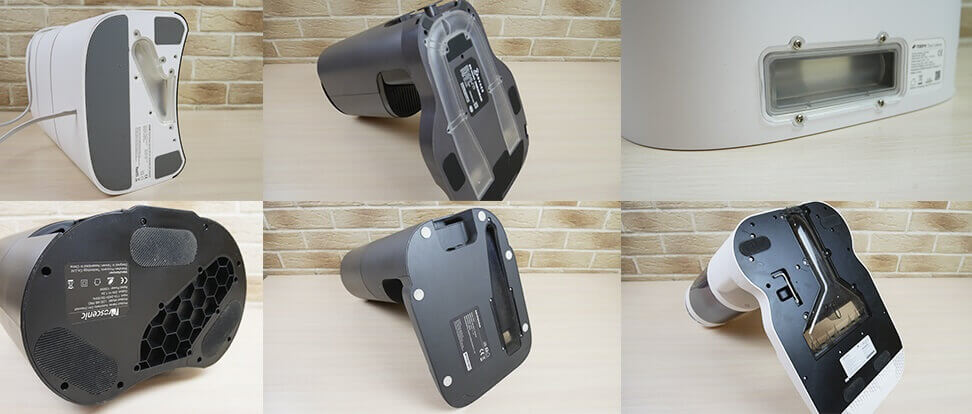
Maintenance of the station's garbage chute
Moreover, only Roborock has a special tool attached to the bottom of the base for this purpose. Convenience is in the little things.
Contact of the napkin with the floor
Another important observation: Roborock, Ecovacs, Draeme, and Roidmi eliminate contact between the cleaning cloth and the floor. In the first three cases, the robot moves completely onto the platform, while Roidmi has a plastic base on the station specifically for the wet cleaning attachment.
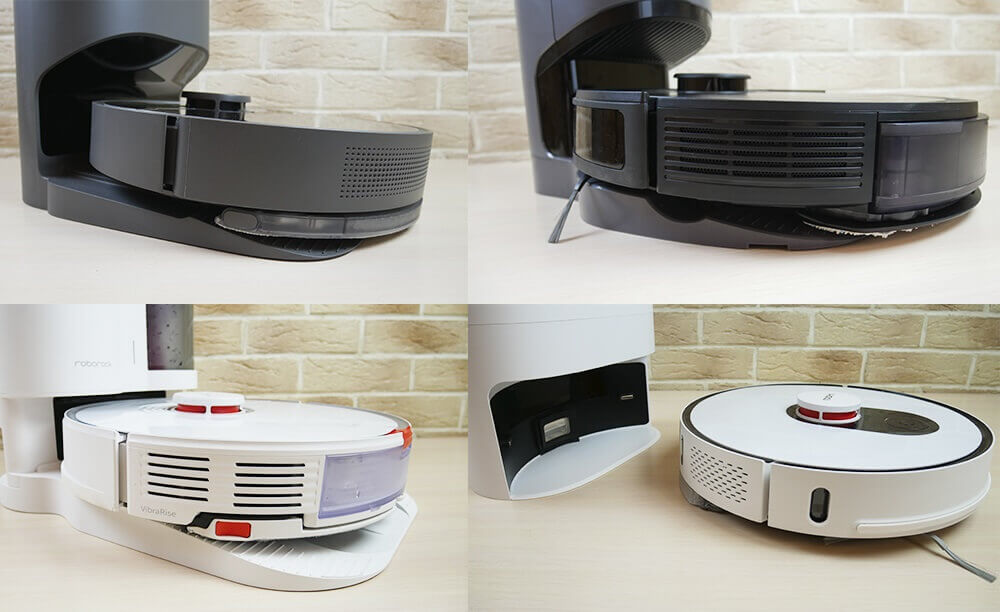
The napkin does not come into contact with the floor
Viomi and Proscenic remain on the floor after returning to the base, and therefore the wet cloth will come into contact with the floor, which is not very good.
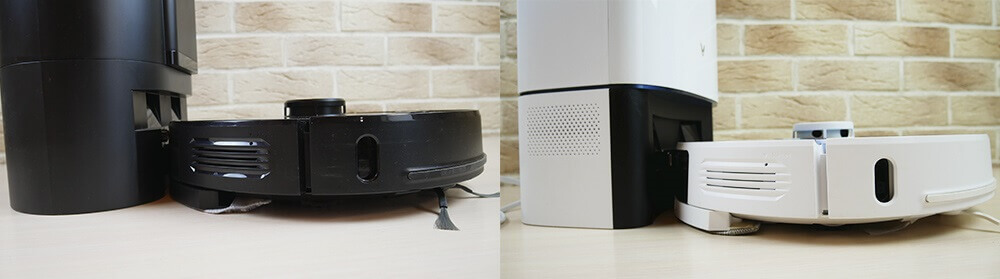
The napkin is in contact with the floor
iRobot is designed for dry cleaning only, so contact with the floor has no effect whatsoever.
Control panel and indication
The last thing I'd like to highlight is the control panel and indicator lights. iRobot, Ecovacs, Roborock, and Dreame are equipped with simple LED indicators that display the status of the self-cleaning station and simply indicate that the power is on.
Viomi and Roidmi have displays that show the battery charge and the status of the self-cleaning station. While this isn't exactly a useful feature, it's worth noting as a minor advantage over similar devices.
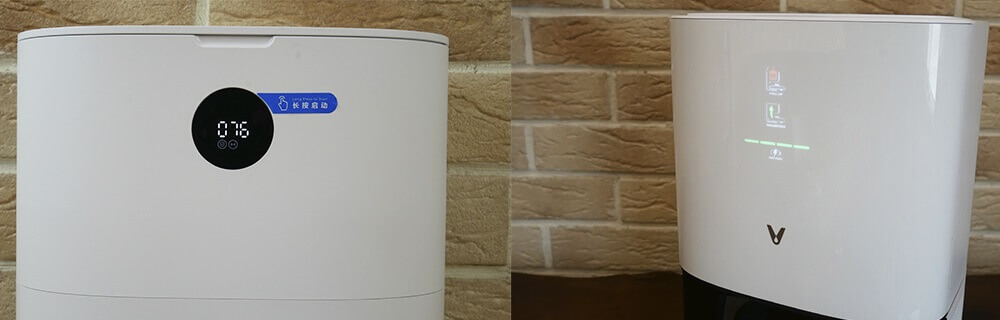
Display at the station
The Proscenic's panel is equipped not only with indicators, but also with control buttons—you can force the robot to return to the station or start/pause cleaning by pressing the appropriate button.
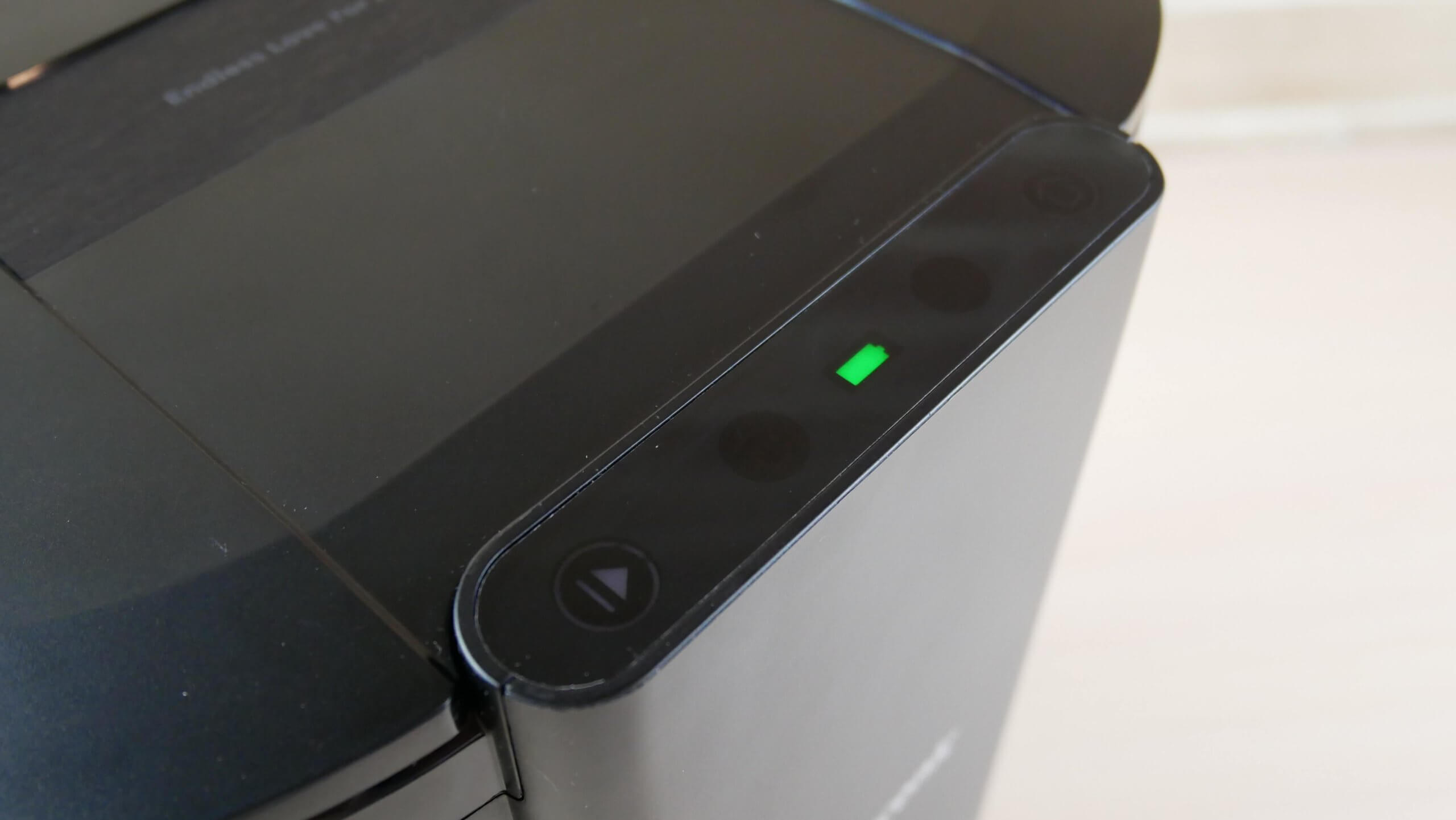
Control panel at the station
Oh, and finally, it's important to note that Roidmi has an ionizer installed inside the base, which disinfects the contents of the station. At least, that's what the manufacturer claims. It sounds more like marketing, but it's probably minimally useful.
Comparison of characteristics
Now I'll compare the specifications of self-cleaning stations as stated by manufacturers. Perhaps this will shed some light on the price differences. For convenience, I've compiled all the data into a table.

The Roidmi Eve Plus and iRobot Roomba i7+ have the most compact robot placement on the docking station. These robots take up the least amount of space on the docking station, which may be important for many. However, the Proscenic and Viomi, due to their docking station design, take up the most space.
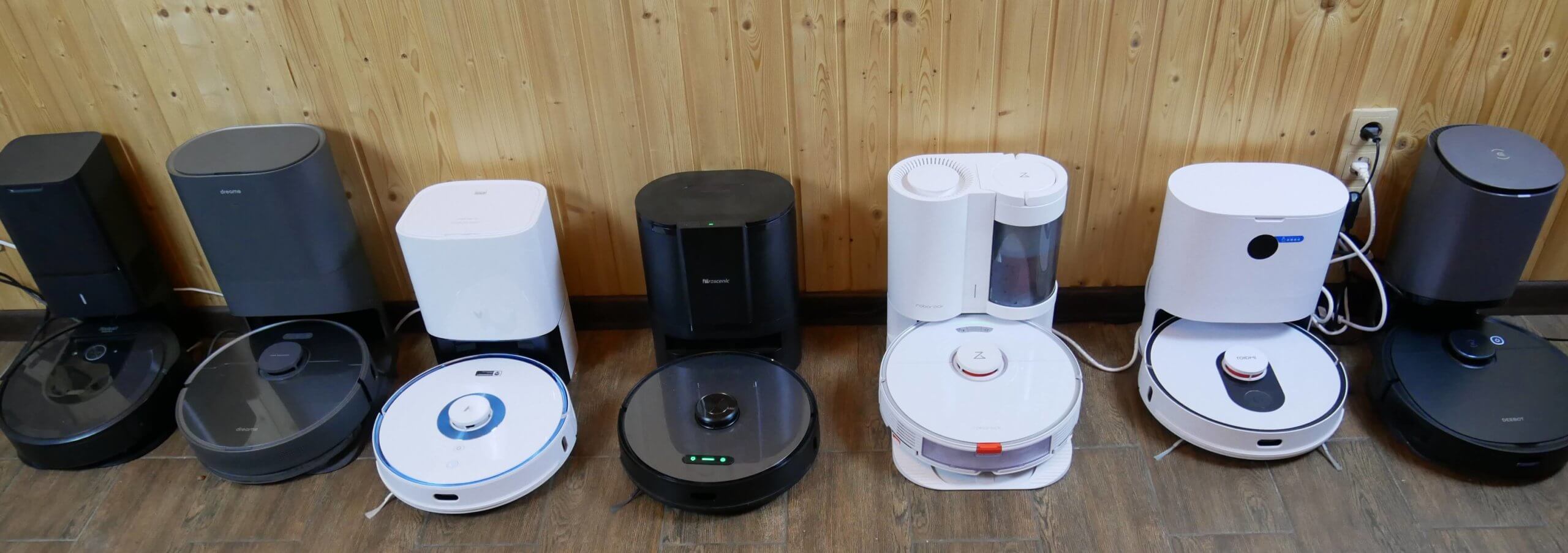
Placement of robotic vacuum cleaners at stations
It's worth noting that the iRobot self-cleaning station has the highest power output, and therefore is the loudest. The Dreame, on the other hand, is less powerful than its competitors, but also quieter.
Furthermore, Dreame, like Proscenic, boasts a larger bag capacity in the station. It's also important to note one feature of the iRobot self-cleaning station: each garbage dump cycle takes about 10 seconds, but if the robot determines that not all the garbage has been dumped, it will restart the self-cleaning cycle. This is a useful feature of the station, which proved successful in testing.
Self-cleaning quality comparison
And the most important point is to compare the self-cleaning quality of stations from different manufacturers. This is what they are actually designed for.
So, in the comparative test, I used six types of waste with different structures. Sand, buckwheat, beans, sunflower seeds, and nut shells were poured into the dust bins at a strictly specified 100-gram rate, so that the conditions were the same for all the tested robots and stations. As for wool and hair, I filled the dust bins by eye, as the bins vary in capacity and would never have filled 100 grams.
I recommend watching the detailed comparison in the video version right away:
The Roidmi Eve Plus was able to remove 70 grams of sand, 64 grams of buckwheat, 45 grams of beans, 75 grams of seeds, and about 10 grams of shells. The scale showed a difference of 12 grams, but some of the shells simply spilled out of the station. The station completely removed the wool and hair from the dust collector into a bag.
The Viomi S9 has slightly better self-cleaning performance. It was able to vacuum up 67 grams of sand, 99 grams of buckwheat, 67 grams of beans, 100 grams of seeds, and 97 grams of shells. The robot also easily removed hair and fur from the dust bin.
The Proscenic M8 Pro was able to remove 83 grams of sand, 95 grams of buckwheat, 59 grams of beans, a full 100 grams of seeds, and 13 grams of shells. It demonstrated better self-cleaning results with these types of debris, but the station failed to remove any pet hair or fur.
The Ecovacs Deebot OZMo T9 AIVI Plus sucked up 98 grams of sand, 99 grams of buckwheat, all 100 grams of sunflower seeds, 72 grams of beans, and only 5 grams of shells. Most of the fur and hair got stuck in the dust bin; the station couldn't handle this type of debris.
The Dreame Bot Z10 Pro had a similar experience. It sucked up 87 grams of sand, 96 grams of buckwheat, 97 grams of beans, 96 grams of seeds, and 6 grams of shells. The station also failed to remove fur and hair.
The Roborock S7 had a tricky situation. The station sucked up 98 grams of sand, just 27 grams of buckwheat, 99 grams of beans, 81 grams of sunflower seeds, and 36 grams of shells. However, the station was only able to remove hair and fur on the second attempt, and even then, an unfortunate incident occurred: fur and hair were pulled out of the dust bin, some of which ended up in the station's vacuum cleaner, but that's not all. The majority of the hair and fur was found between the central brush and the suction nozzle. Repeated checks resulted in an error message and a warning to check the dust bin for blockages. So, ultimately, there are issues with removing fur and hair.
And the iRobot self-cleaning station, in my opinion, delivered the best results. It sucked up 66 grams of sand, 93 grams of buckwheat, 84 grams of beans, 98 grams of sunflower seeds, and 84 grams of shells, while still discharging all the hair and debris without any problems.
To compare the results, I put them all in a table:


It's also worth noting that all robots were given several attempts, particularly for unloading hair and debris, and the best result was selected for comparison. Naturally, the dust collectors were filled manually, not by the turbo brush's natural throwing of debris. This may have impacted the stations' performance if the results were compared to natural filling and unloading. Nevertheless, the conditions were the same for all.
Which self-cleaning station is best?
Ultimately, in my opinion, iRobot has the best self-cleaning performance. Viomi, Dreame, and Ecovacs come second. Roidmi comes second, as even though its station is average, it can still remove various types of debris, including hair and pet hair. Roborock and Proscenic have their strengths and weaknesses, but I wouldn't call them the best. Although the combined container and station designs of Roidmi, Viomi, and Proscenic are virtually identical, it's surprising that the Proscenic was the only one that failed to remove pet hair and pet hair, despite several attempts at self-cleaning.
Personally, of all the stations I tested, I liked the iRobot and Viomi stations the most, as they fully accomplished their primary purpose. The Roborock station deserves special mention for its superior ergonomics and unique design.
I've demonstrated everything I wanted to, and I hope this comparison will help you choose between several self-cleaning robot vacuum cleaners, or even choose a robot without a waste disposal station.
Thank you all for your attention! If you have any questions, please ask them in the comments. Happy shopping. Bye!
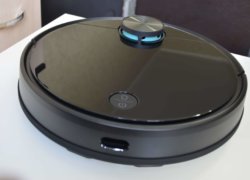
Good afternoon! I wanted to see a comparison of robotic HEPA filter self-cleaning. For example, with the Roidmi, the curtain in the container presses against the filter, leaving about 1/3 of it clogged with dense dust. This affects the suction power during the next cleaning. I solved this problem by removing the curtain. The dust doesn't spill out because the container doesn't need to be removed.