Comparison of the Hobot Legee 7 and Legee 688 by characteristics, functions, and other parameters

Greetings to all readers of the site! A review of the new robotic floor cleaner was recently published. Hobot Legee 7, which will appear on the market in May 2021. It replaces 688 model, which has been actively sold since 2019. In this post, I'll cover the key differences between the Hobot Legee 7 and Legee 688, as well as demonstrate their distinctive features in real-world conditions. So, let's get started!
Video comparison version
We recommend you see all the comparison steps clearly in our separate video:
Differences in characteristics and functions
First, I'll list in a table the main differences between these two robotic vacuum cleaners, as stated by the manufacturer:
| Hobot Legee 688 | Hobot Legee 7 | |
| Main navigation | Laser sensors in the bumper | Lidar on top of the body |
| Dimensions | 340*330*95 mm | 340*330*99 mm |
| Battery | Li-Ion 2750 mAh | Li-Ion 4500 mAh |
| Suction power | 2100 Pa | 2700 Pa |
| Battery life | Up to 90 min | Up to 140 min |
| Cleaning area | Up to 150 sq.m. | Up to 240 sq.m. |
| Dust collector capacity | 500 ml | 500 ml |
| Water tank capacity | 320 ml | 340 ml |
| Number of nozzles | 2 | 4 |
| Speed of movement of napkins | Up to 600 times/min | Up to 900 times/min |
| Control | Remote control, buttons on the body, app | Remote control (optional), buttons on the body, app |
| Building a map of the premises | Yes | Yes |
| Saving a map to memory | No | Yes, up to 5 unique cards |
| Additional features | Intelligent water supply depending on floor temperature. | Room zoning, room selection for cleaning, Russian-language voice alerts, virtual walls and no-go zones in the app, continued cleaning after recharging at the base station, and intelligent water supply based on floor temperature. |
And you can see that changes have affected navigation, design, specifications, and even functionality. We'll put all of this to the test in our comparative tests below.
Appearance and design
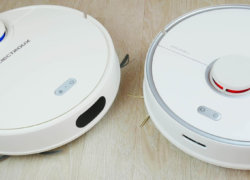
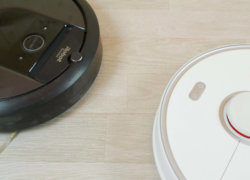
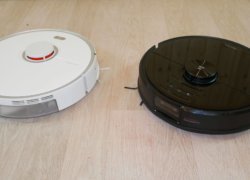
I'd like to immediately highlight the visual differences between these two robotic floor cleaners. Indeed, thanks to its lidar sensor, the Legee 7 is slightly taller than its predecessor, though the body itself is thinner.
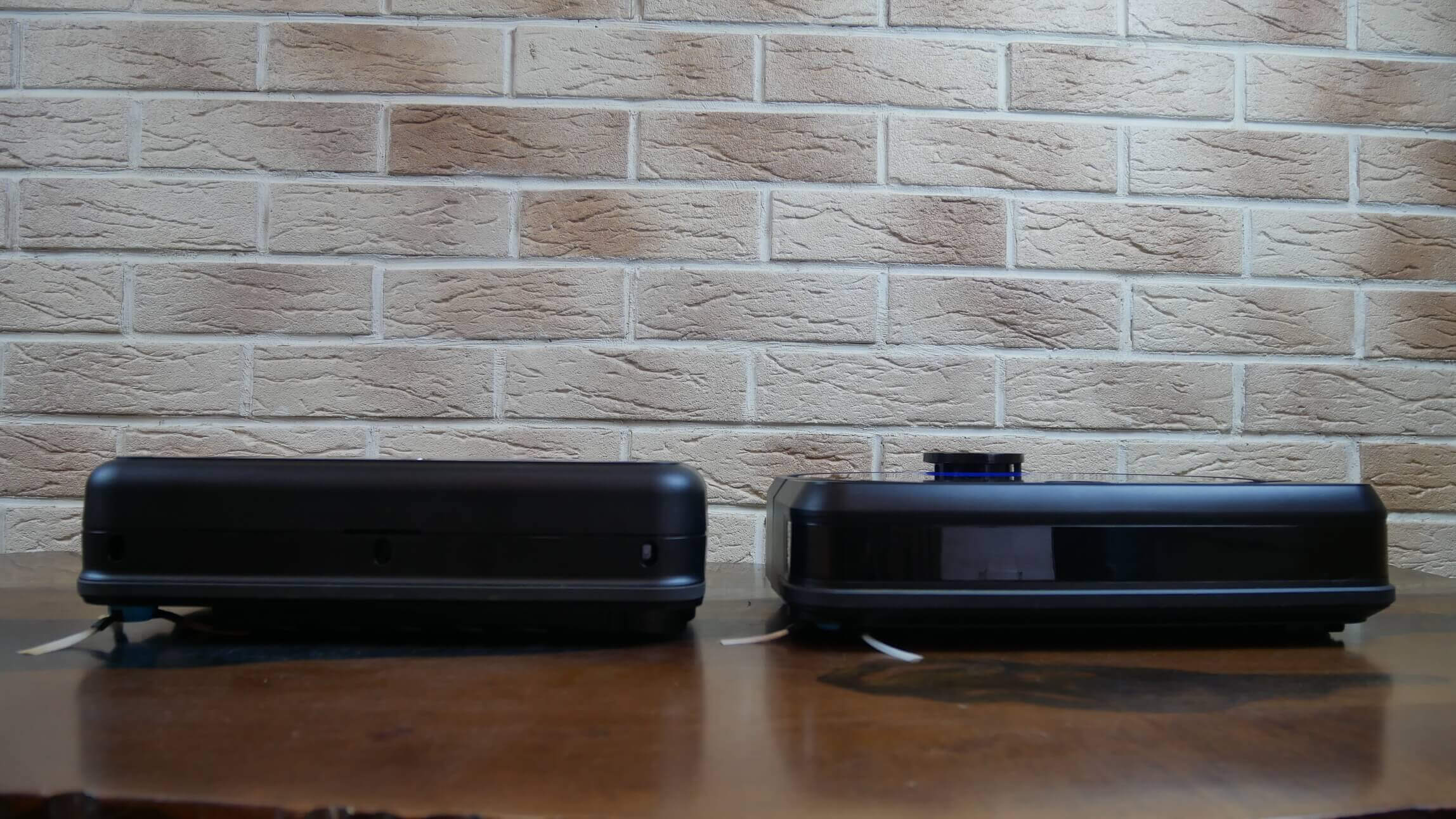
Height
The Legee 688 has two control buttons on its body: start/pause and forced return to the charging base. The Legee 7 has only four buttons: start/pause, power mode, return to the charging base, and floor polishing mode.
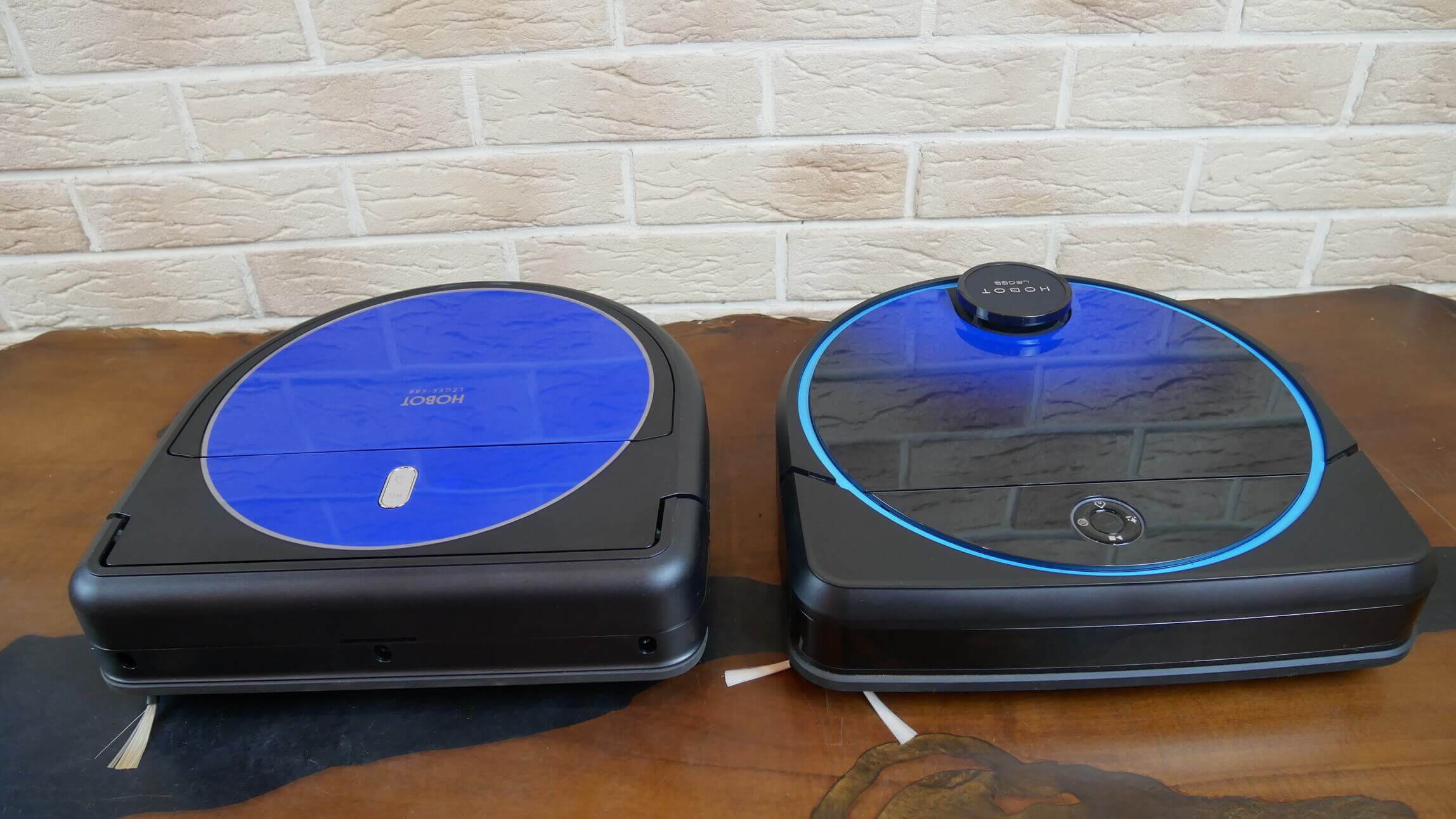
Top view
Moving on, the dust collectors and water tanks of these two robots are located on top, under the lid. The shapes of the water tanks and dust containers are different, so they are not interchangeable, as are the HEPA filters.
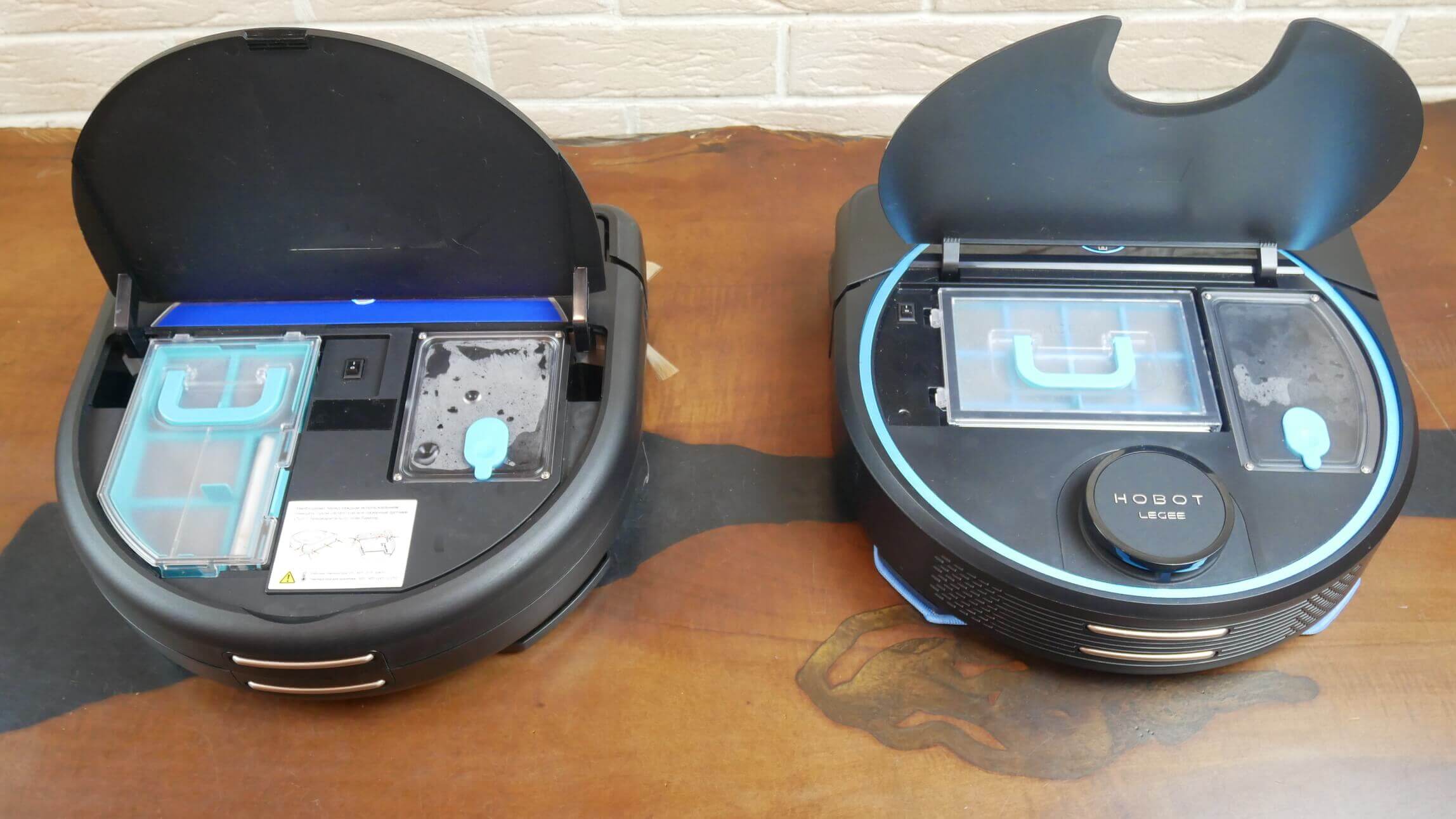
Placement of dust collectors and water tanks
By the way, the Legee 7 HEPA filter is washable, while the 688's cannot be wetted with water.
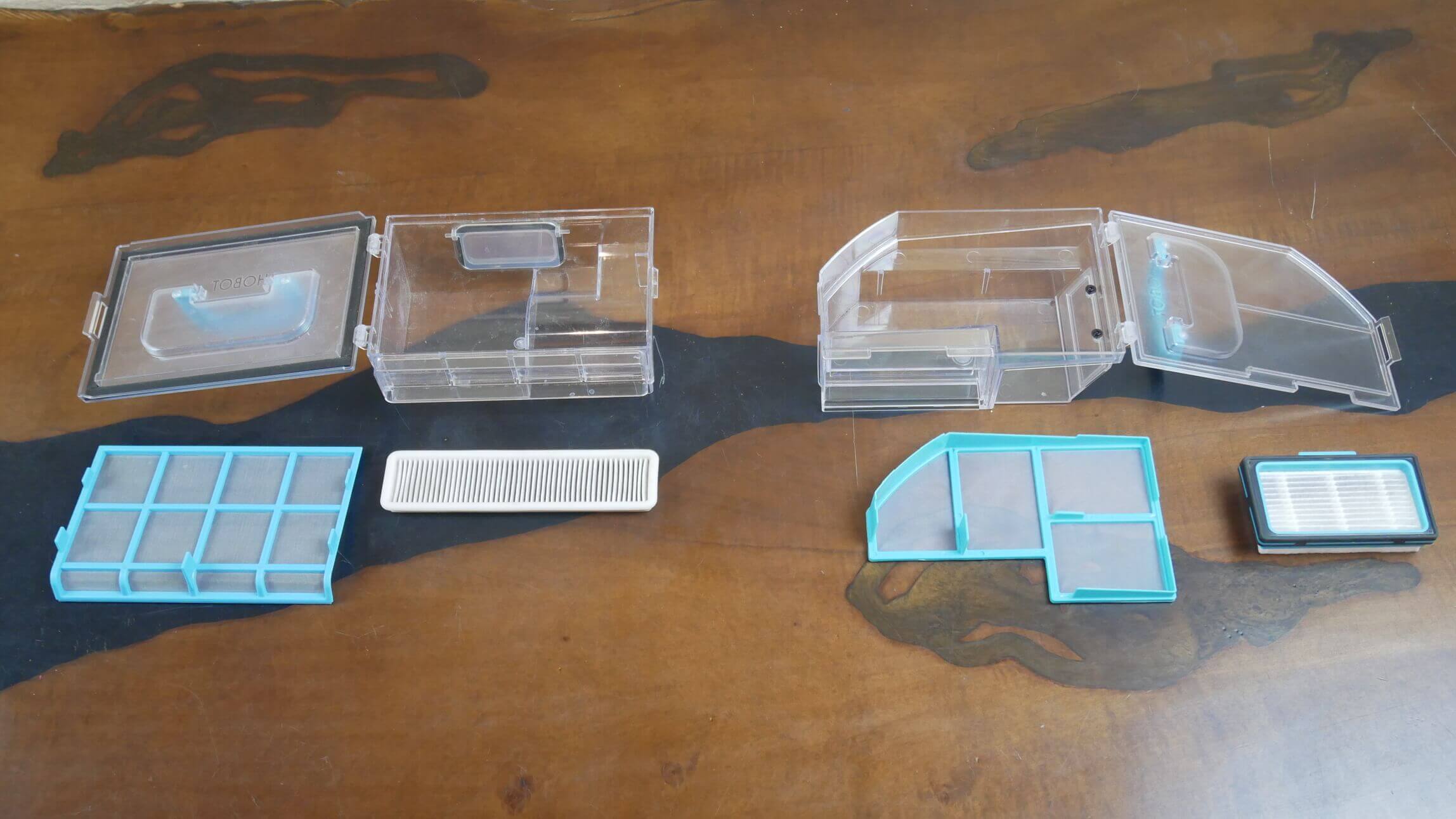
Dust collector design
The robots also differ on the back. We see that the Legee 688 has only two nozzles between the wipers, while the Legee 7 has four. This modification allows for a more even distribution of liquid on the floor, and likely allows for more generous wetting if needed. The wipers are also slightly different in shape.
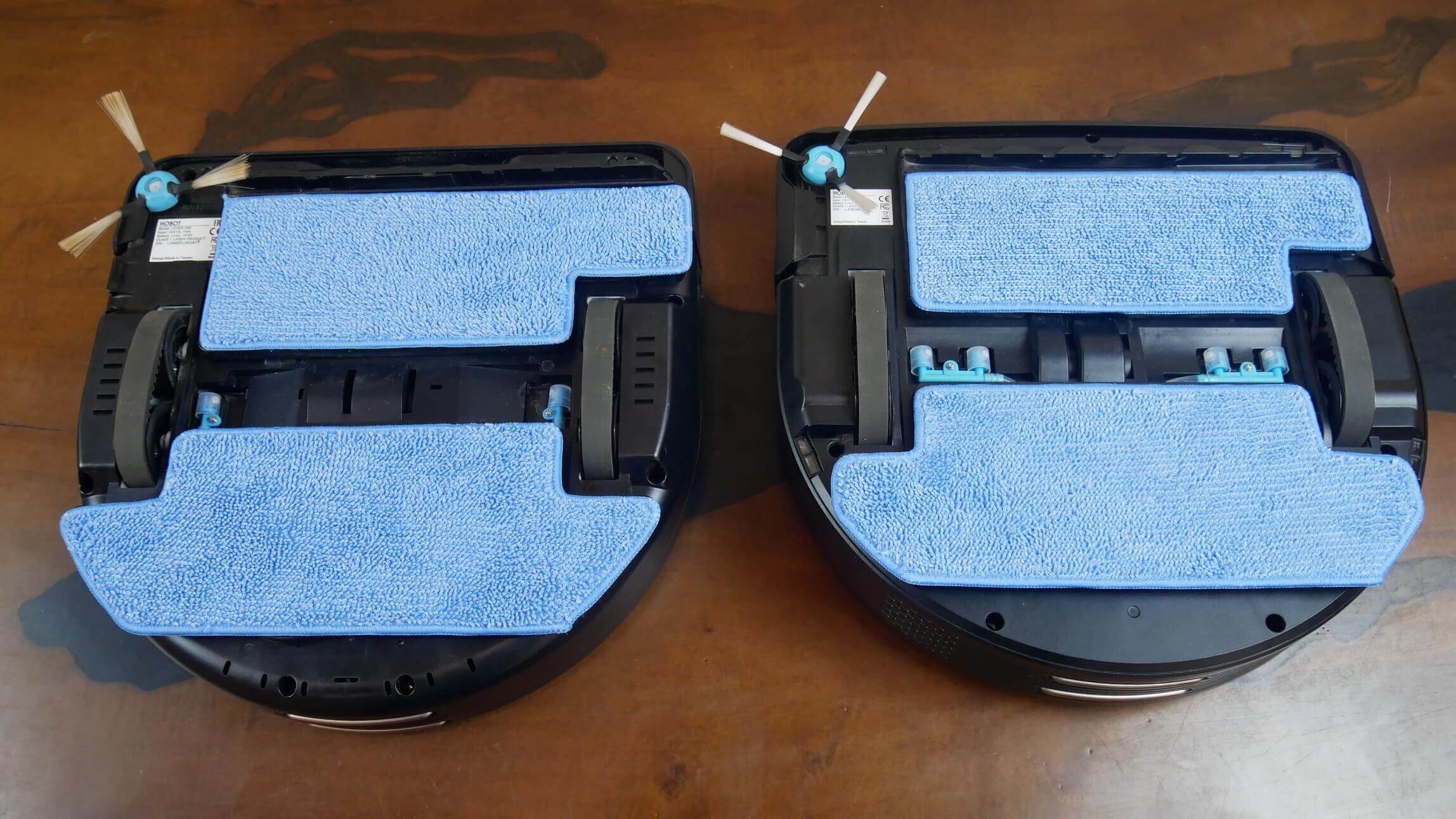
Bottom view
The last visual difference I noticed was that the Legee 7 has four anti-fall sensors at the bottom, while the Legee 688 only has two. The side brushes and suction holes are identical in design.
Comparative tests
Working hours and cleaning area
Let's move on to the comparative tests. Under the same conditions, in user mode at maximum settings, we ran the Hobot Legee 688 first, followed by the Hobot Legee 7. Here are the results:
| Legee 688 | Legee 7 | |
| 1st launch | 100-86%, 10:01, 9.97 sq.m. | 100-93%, 8:18, 11.36 sq.m. |
| 2nd launch | 86-72%, 10:10, 10.55 sq.m. | 93-83%, 9:27, 10.92 sq.m |
| 3rd launch | 72-55%, 11:25, 10.65 sq.m. | 83-74%, 7:18, 10.92 sq.m. |
| 4th launch | 55-43%, 11:02, 10.12 sq.m. | 74-64%, 9:21, 11 sq.m. |
| 5th launch | 43-32%, 11:35, 10.02 sq.m. | 64-53%, 8:49, 11 sq.m. |
| 6th launch | 32-19%, 10:48, 10.36 sq.m. | 53-43%, 8:22, 10.88 sq.m. |
| 7th launch | 43-33%, 9:31, 10.96 sq.m. | |
| 8th launch | 33-22%, 7:56, 11.04 sq.m. | |
| 9th launch | 22-16%, 5, 7.83 sq.m. | |
| Continued cleaning after charging | — | 10:55, 10.96 sq.m. |
| Total: | 65 min 3 sec, 61.67 sq.m. | 74 min 2 sec, 95.91 sq.m. |
As you can see, the Legee 688's battery lasted for six runs, covering approximately 66 square meters, to be precise. The Legee 7 completed eight full runs, and by the ninth run, the battery charge reached 17%, after which the robot returned to its base. After fully charging, the robot completed its final cleaning cycle and returned to its base. In any case, in 8.5 runs, the robot covered almost 96 square meters, which is almost one and a half times more.
The difference in battery life wasn't that significant: 65 minutes for the Legee 688 versus 74 minutes for the Legee 7. However, it's important to consider that the Legee 7 has a more powerful motor, the lidar system consumes additional power, the pads move faster, and it uses two additional nozzles. So, at maximum settings, the Legee 7 doesn't offer a significant advantage in battery life, but I think the difference will be more noticeable in ECO mode. In any case, the Legee 7 definitely outperforms the Legee 688 in terms of runtime and cleaning area, and our tests confirm this.
Suction power
However, in terms of suction power, no difference was detected between the Legee 7 and Legee 688 on the test bench. Both robots were able to vacuum debris from crevices as deep as 2 mm. So, in real-world conditions, they were equal in power.
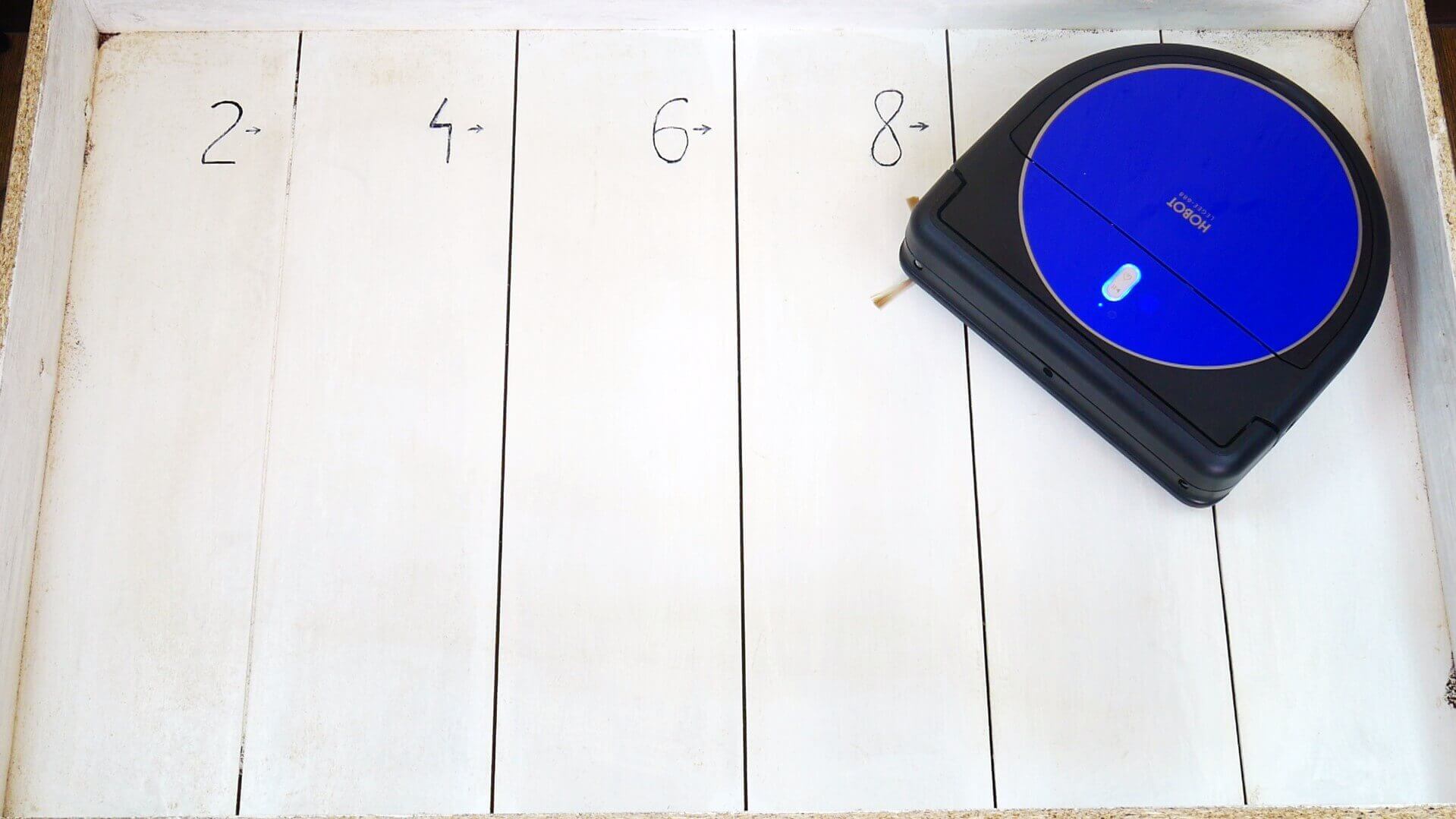
Suction power of the Legee 688
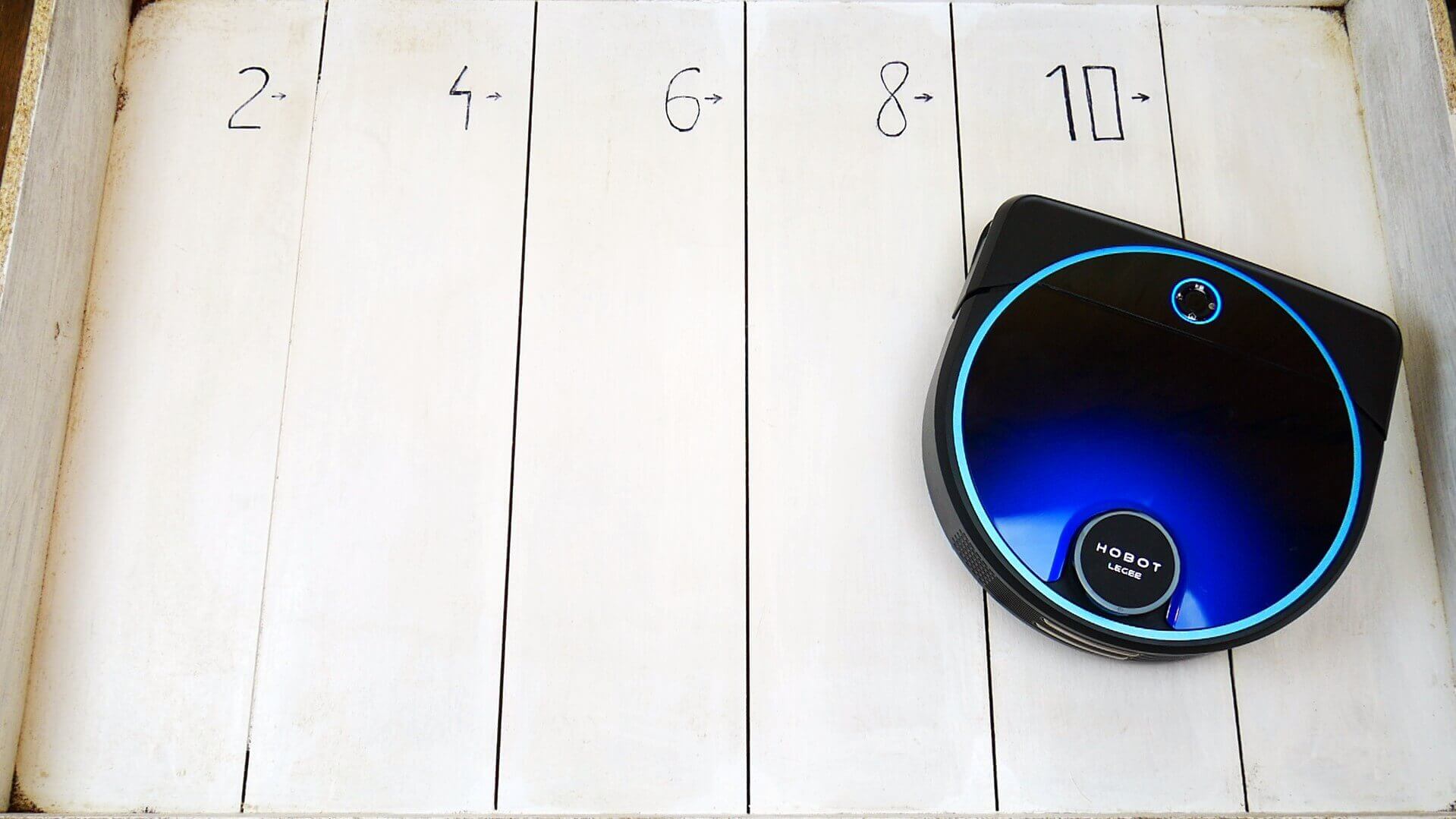
Suction power of the Legee 7
Navigation
Now let's test the robots' navigation, first in a room with obstacles, then across the entire house. Legee 688 first traverses the entire accessible area in a zigzag pattern, then navigates the perimeter and returns to its base. It didn't navigate around the chair legs or the box separately. It didn't get stuck on the clothes dryer. The full cleaning cycle took 15 minutes and 36 seconds. The map isn't entirely accurate, but overall, the room's geometry matches reality.
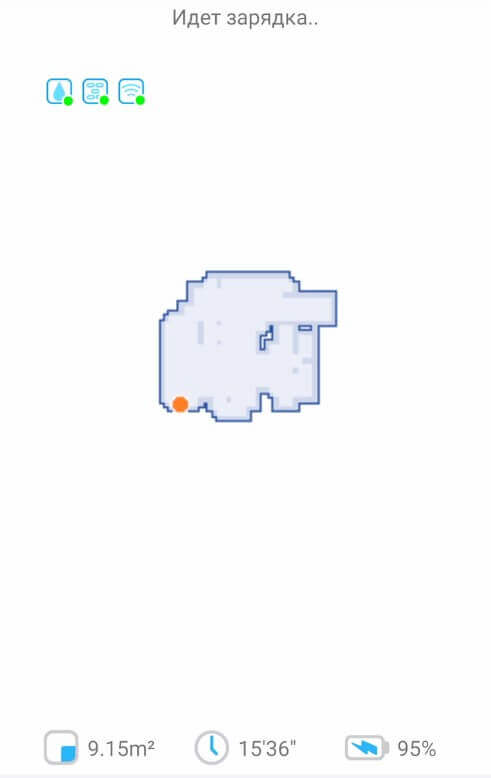
Legee 688 Navigation
Legee 7, on the other hand, first sweeps the perimeter of the room and then cleans the available area in a zigzag pattern. It also didn't clean around the box, but it did manage to circle one of the chair legs, suggesting that this algorithm is programmed to do so. It didn't get stuck on the dryer, and the cleaning took 9 minutes and 48 seconds. The lidar definitely helps this robot clean faster without compromising quality.
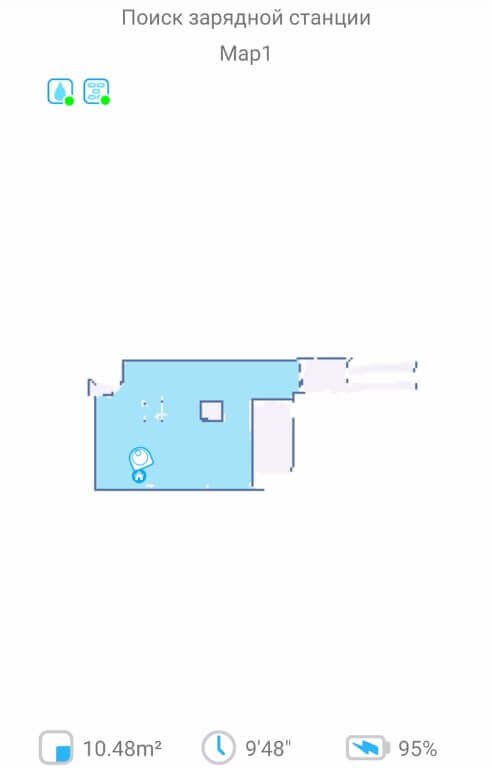
Legee 7 Navigation
Regarding the house's area, both robots were able to cover the entire available space, leaving no uncleaned areas. The room geometry is identical. The Legee 688 took almost 42 minutes to clean the entire house, which has a useful area of approximately 34 square meters, while the Legee 7 cleaned the entire house in 36 minutes. However, the 688 had trouble finding its home base and entered an error message, while the Legee 7 was able to find its home base and charge after completing its cleaning. Once again, we're convinced that lidar-based navigation is much better and more accurate.
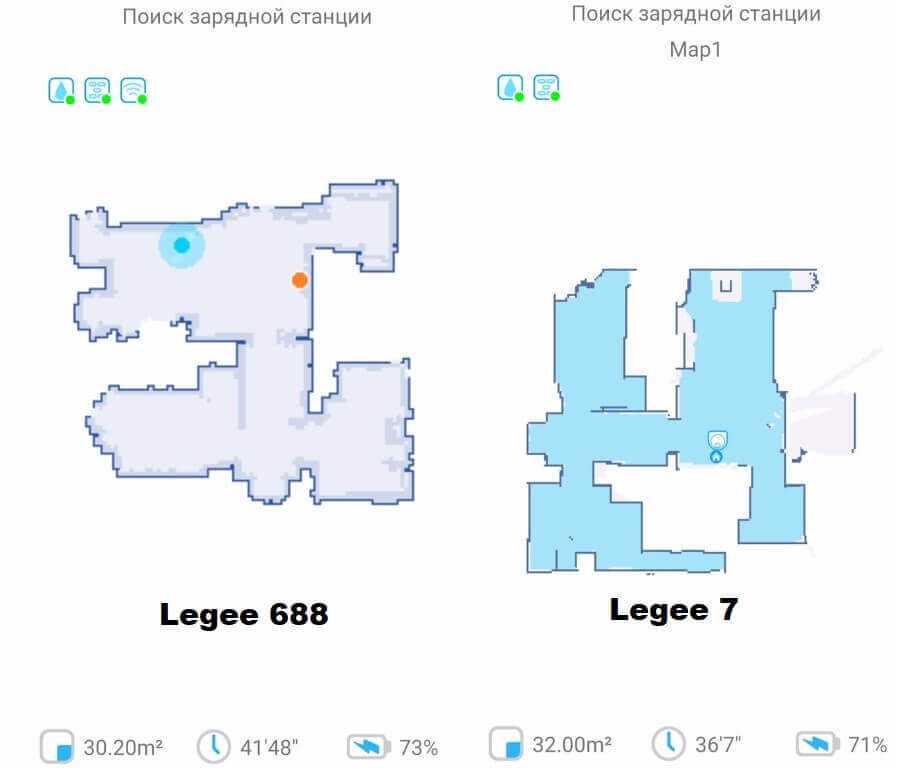
Navigation comparison
In this comparative test, the Hobot Legee 7 is a clear winner.
Removing dried stains
As for removing dried stains from the floor, the robots also demonstrated equally high cleaning performance. Both the Legee 688 and Legee 7 were able to remove dried sauce and coffee stains from the laminate flooring. So, it's essentially a tie.
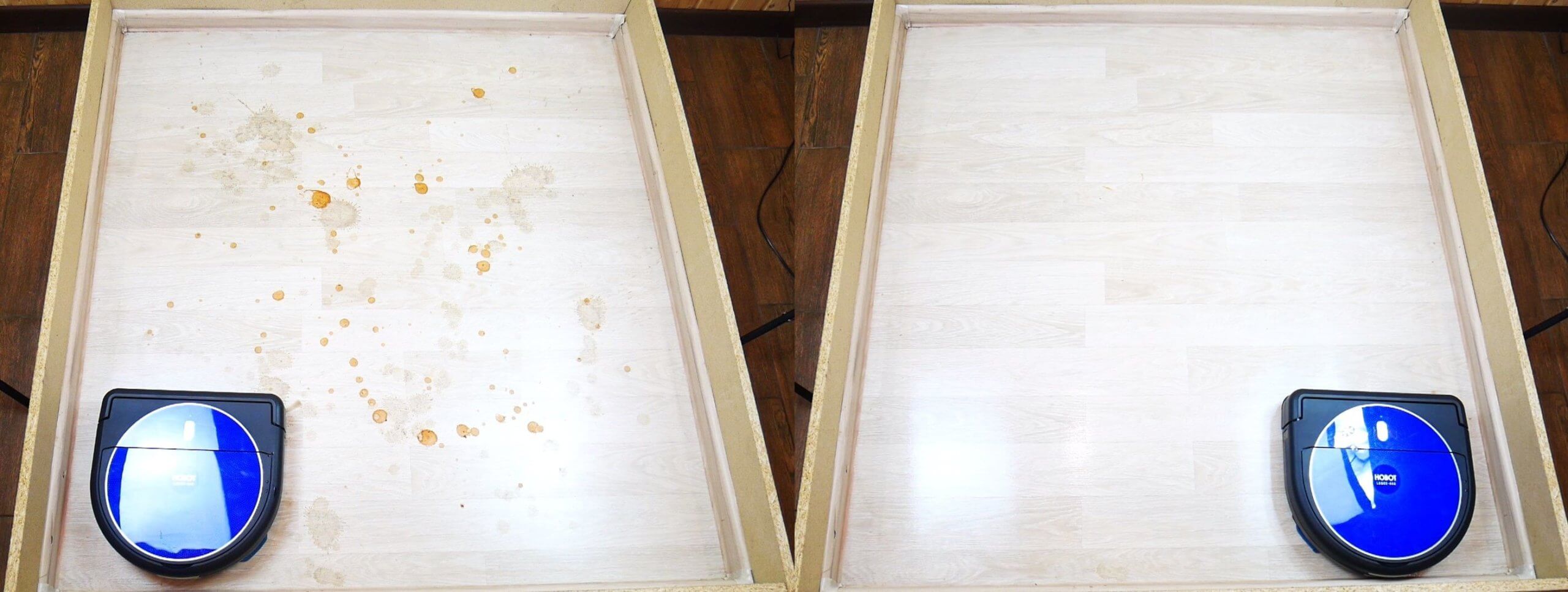
Removing dried stains Legee 688
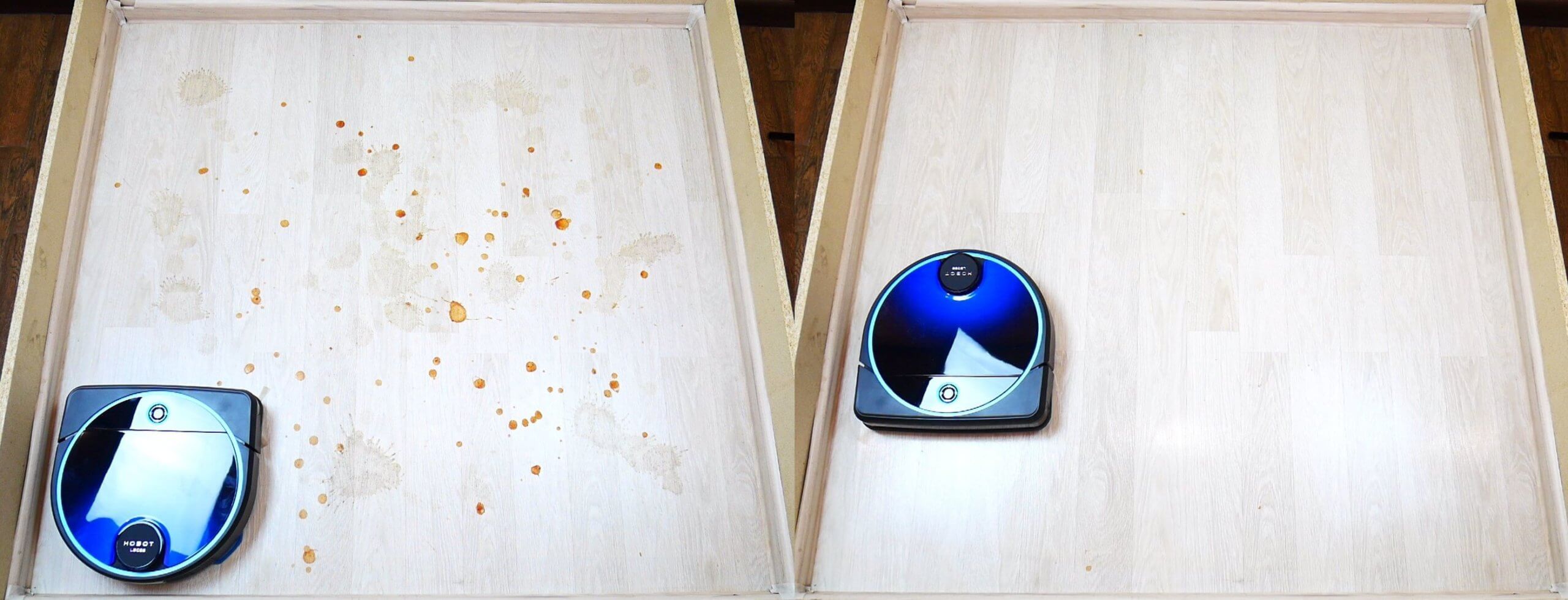
Removing dried stains Legee 7
I can only say that, during long cleaning sessions, the Legee 7 does indeed moisten a larger area in one pass, even after the pads have dried out a bit. Say, after 30-40 minutes of use. So, having two additional nozzles has improved cleaning efficiency, albeit slightly, in my opinion.
Functional capabilities
And finally, the last thing I'd like to compare is the robotic floor cleaners' app functionality. It's worth noting right away that the Legee 7 is controlled via a dedicated app, which is much faster.
The main features of Legee 688 are:
- View cleaning diary.
- Setting up cleaning by time and days of the week in one selected mode.
- 8 cleaning modes, including user-defined.
- Manual control allows you to manually activate the water supply from the nozzles, start automatic cleaning mode, clean the perimeter, and force the robot to return to the base for charging.
The robot also creates a real-time map of the room, but does not store it in memory. It's also important to note that the Liga 688 features intelligent water supply based on floor temperature. The warmer the floor, the more intense the water flow.
The Legee 7 offers much more capabilities thanks to its lidar. You can:
- View the cleaning diary.
- You can flexibly set up a cleaning schedule by choosing the time, day of the week, and, if desired, the rooms you want to clean, as well as a customized cleaning schedule for each room.
- Adjust the volume of voice alerts and turn on Do Not Disturb mode when needed.
- Select one of 8 operating modes, including setting up a user mode.
- Select the desired cleaning map, of which the robot can remember up to 5 in its memory.
- Edit the map by setting restricted areas, virtual walls, combining several rooms into one or vice versa, dividing a room into zones.
- You can also manually control the robotic floor cleaner. All functions are identical.
In addition, the Legee 7 now features the ability to voice its own commands. The robot now responds to commands not with the factory voice, but with a voice recorded by the owner. This is a very interesting development from the manufacturer!
Additionally, Liga 7 also features intelligent water supply depending on the floor temperature.
And finally, an important point: both robotic floor cleaners support voice control from an iPhone, but only the Ligi 7 will be able to be controlled via Google Assistant, Yandex.Alice, and even the voice assistant Marusya.
Ultimately, the Hobot Legee 7 is a clear winner in terms of functionality. Its precise navigation allows it to be equipped with very useful map-based features. These are especially useful in large areas and with many rooms.
Let's sum it up
So, we've looked at the main differences between the Hobot Legee 7 and the Hobot Legee 688. It's worth noting that the entry-level 688 model costs $370 at the time of writing, while the more advanced Legee 7, according to the manufacturer, will cost around $450.
The price difference isn't too significant, so the new product will undoubtedly generate increased interest when it goes on sale, which is tentatively scheduled for May 2021. In any case, both robotic floor cleaners perform well in their primary tasks; the Legee 7 is simply more suitable for larger areas and those who require advanced app functionality. The Legee 688, meanwhile, is ideal for cleaning multiple rooms and for those looking to save money.
That's all I have for now. If you have any questions, please ask them in the comments. Happy shopping, everyone!