Roborock S6 MaxV and Dreame Bot L10 Pro: Comparing the Top-of-the-Line Twins!
In this article I would like to compare two rather interesting robot vacuum cleaners: Roborock S6 MaxV, who headed our Best Robots of 2020, and a new product Dreame Bot L10 Pro, which could seriously compete with the Roborock. What do these two robots have in common? Of course, it's the navigation system on the mechanical bumper, which allows the robot to identify objects on the floor and avoid them while cleaning. Furthermore, both robots are equipped with lidar for navigation, effectively combining lidar with a front-facing sensor/camera. Furthermore, the compared models are suitable for both dry and wet cleaning. Ultimately, it's safe to say that Dreame has created a clone of the Roborock S6 MaxV. All that remains is to determine which robot vacuum cleaner is the better choice. That's what we'll discuss below. So, let's get started!
Design and build quality
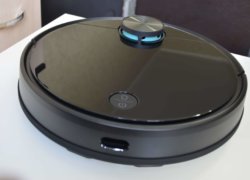
The first thing to compare, and one of the deciding factors, is the robots' design and build quality. Both robots are black.
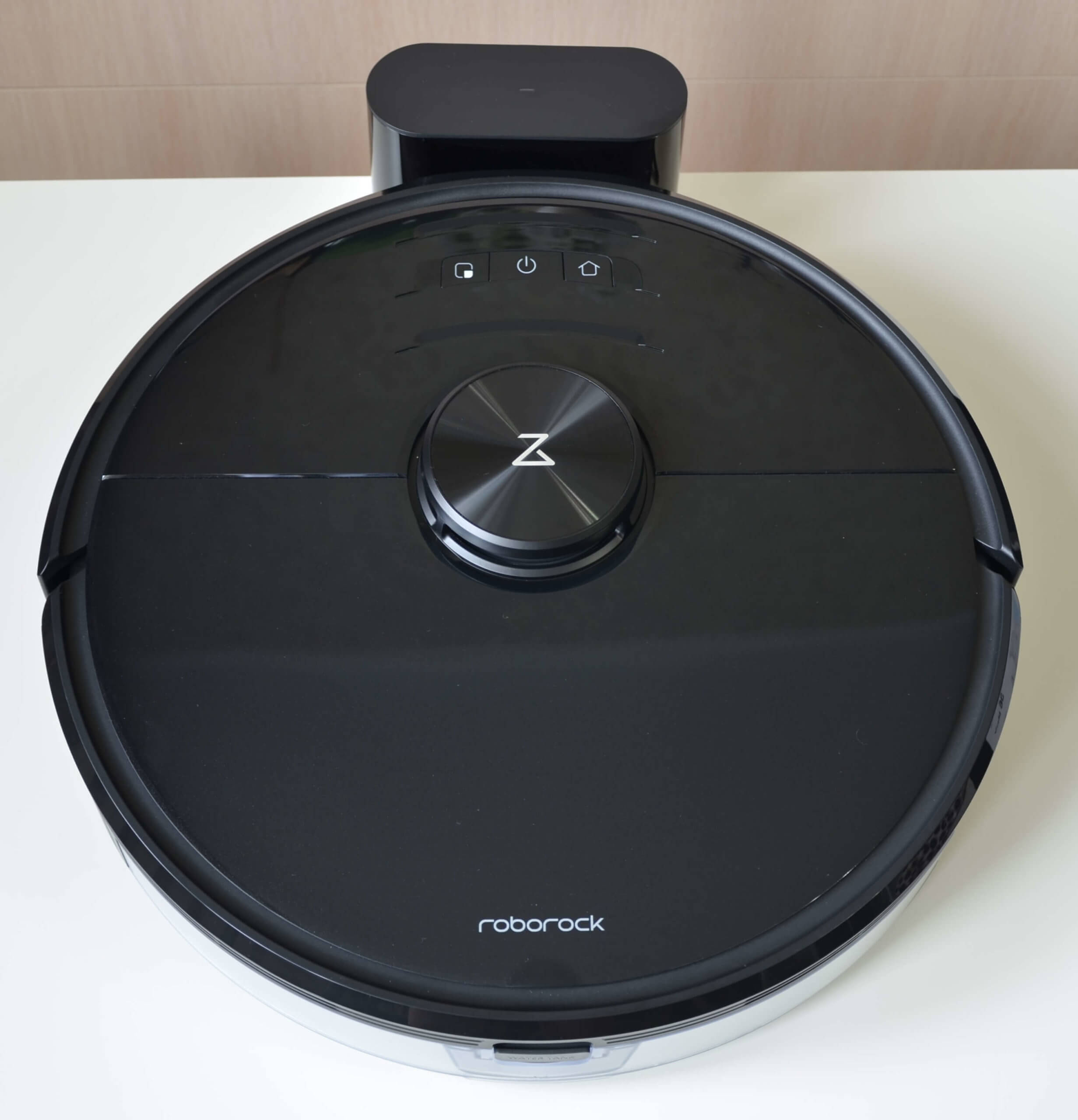
Roborock Top Cover
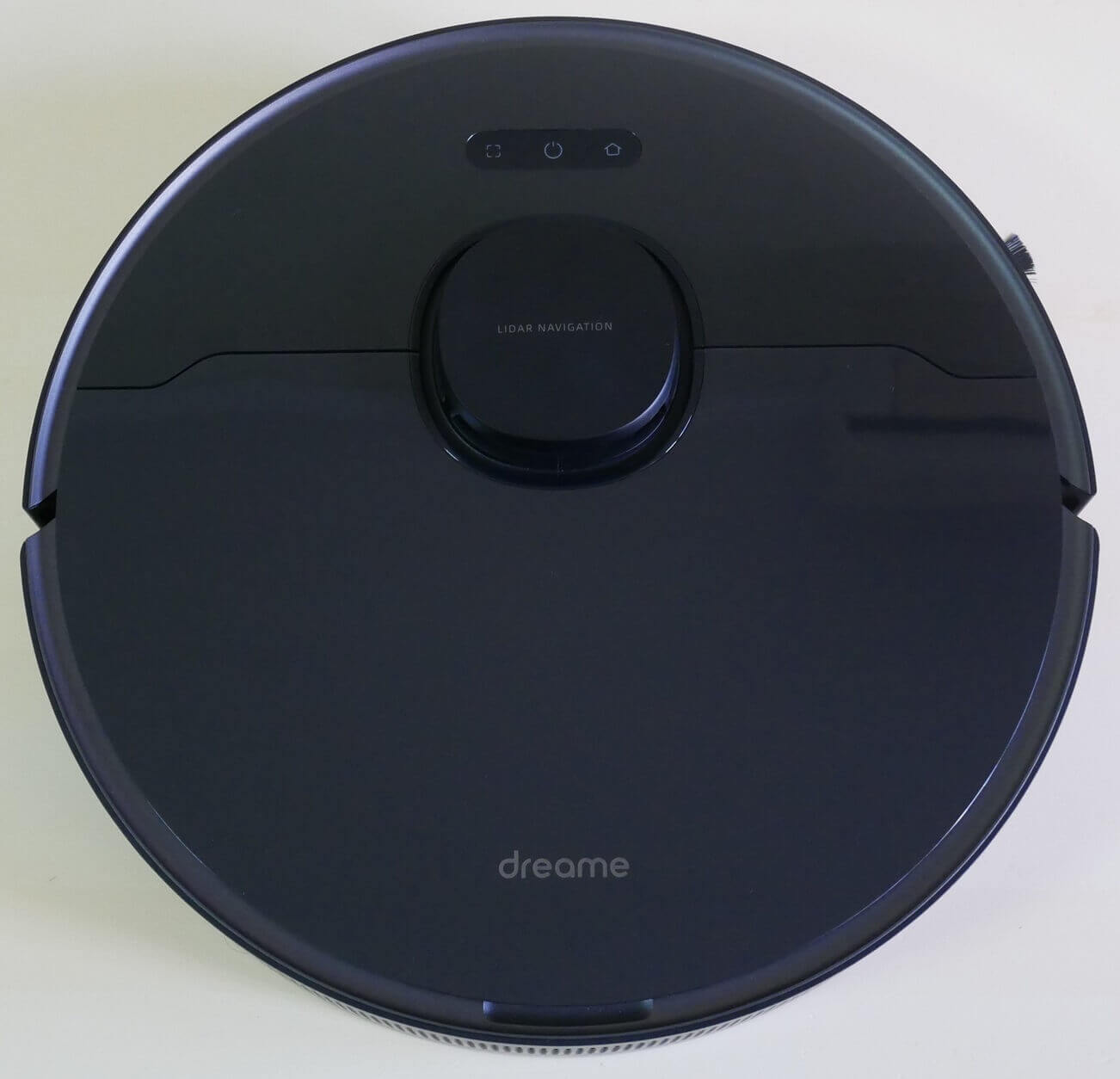
Dreame top cover
It's worth noting right away that the plastic they use is very similar in quality and even the coating. Visually, there's no difference, even in the coating on the glossy top cover. Both robots have three control buttons on the top. Both robots have a mechanical lidar sensor that prevents the robot from getting stuck under low furniture. Overall, the robots are completely identical.
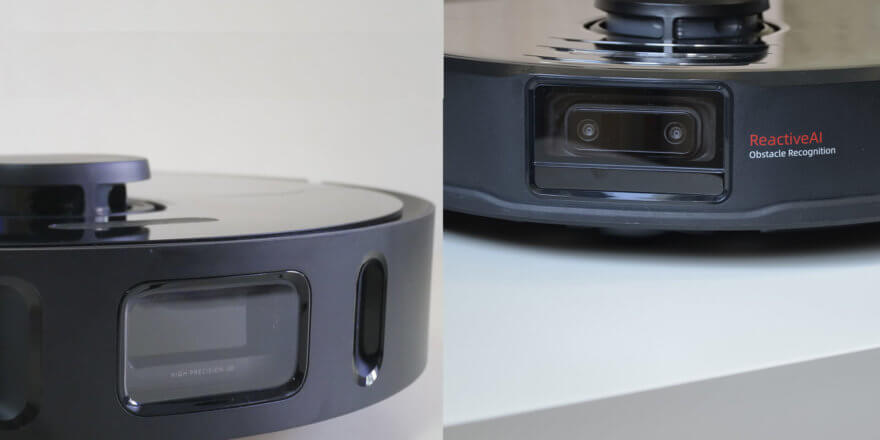
The Roborock S6 MaxV's mechanical bumper is equipped with one wall sensor and an active camera for recognizing objects on the floor.
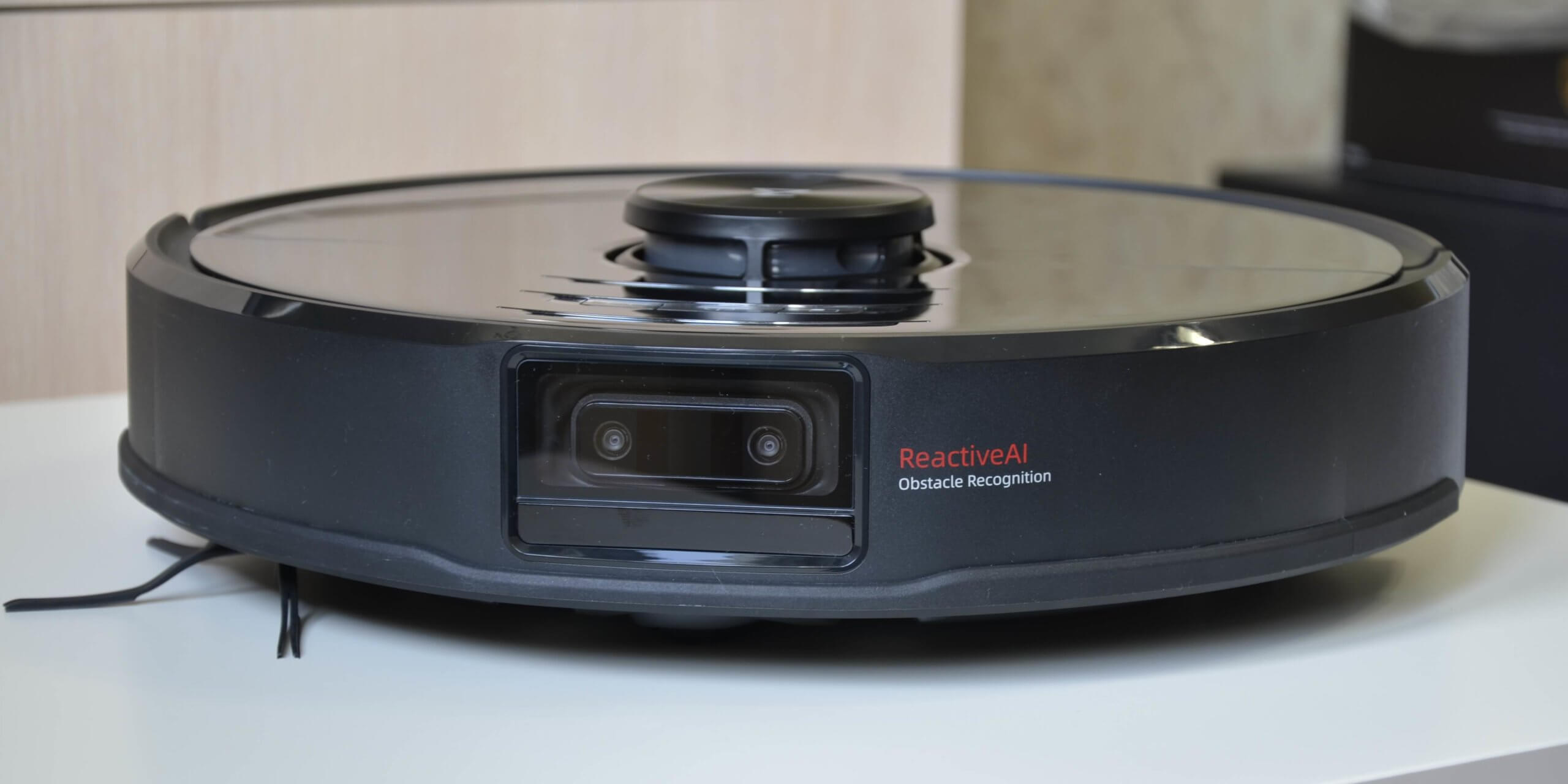
Active camera
Now attention! The Dreame Bot L10 Pro has a 3D sensor located in the center of its bumper, which visually resembles an active camera. Additionally, laser sensors are located on either side of the camera, which should improve the robot's ability to detect objects on the floor. We'll test this further to see if this is actually the case.
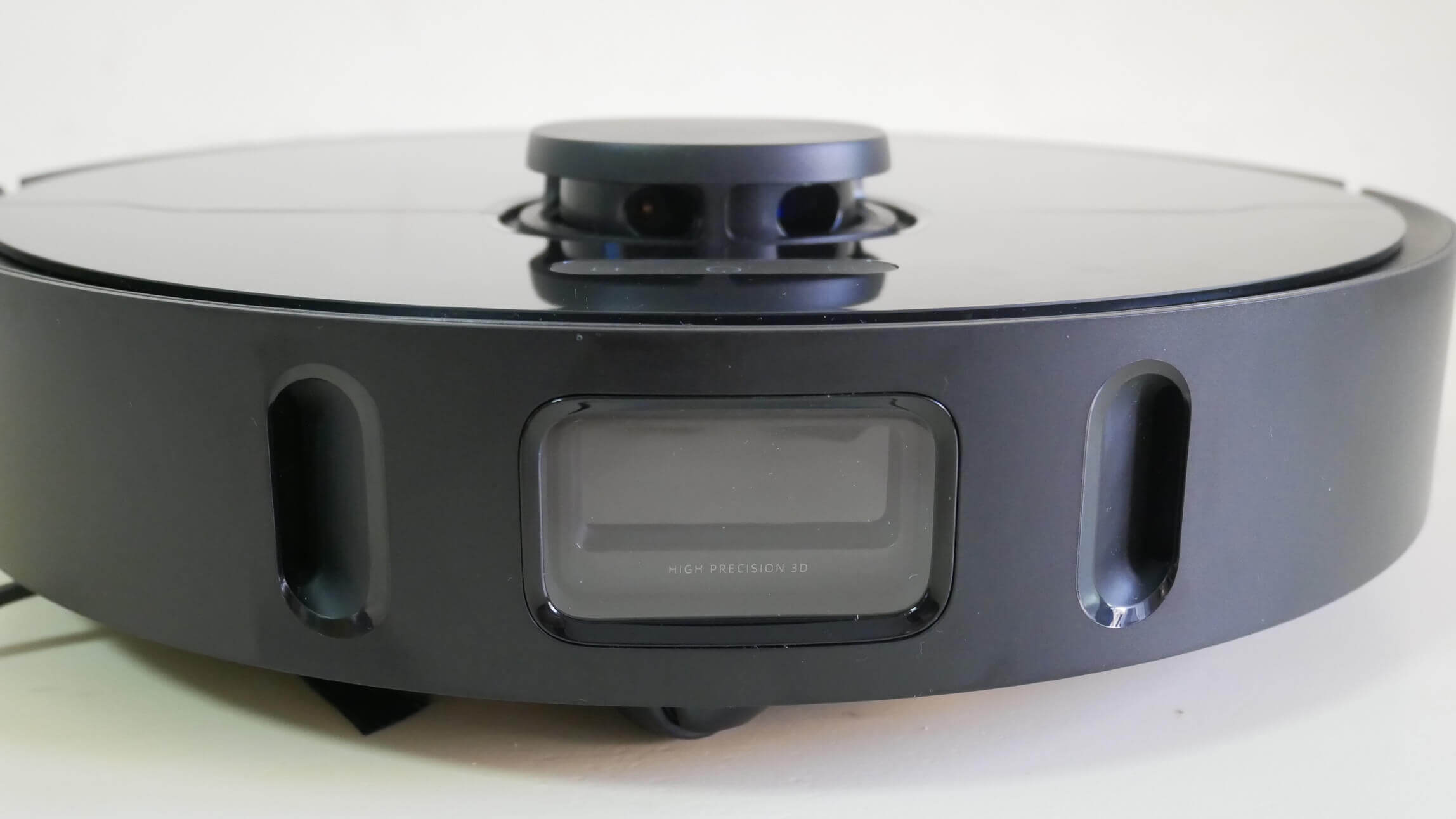
3D sensor
The twins also have a top-mounted dust bin. However, the Roborock S6 MaxV's holds 460 ml of dry waste, while the Dreame Bot L10 Pro's capacity is up to 570 ml. The filtration system is identical, featuring a mesh filter and a HEPA filter.
What's more significant is the way the wet cleaning system is implemented. Roborock uses a water tank mounted at the back of the robot, while Dreame uses a nozzle attached to the bottom of the robot.
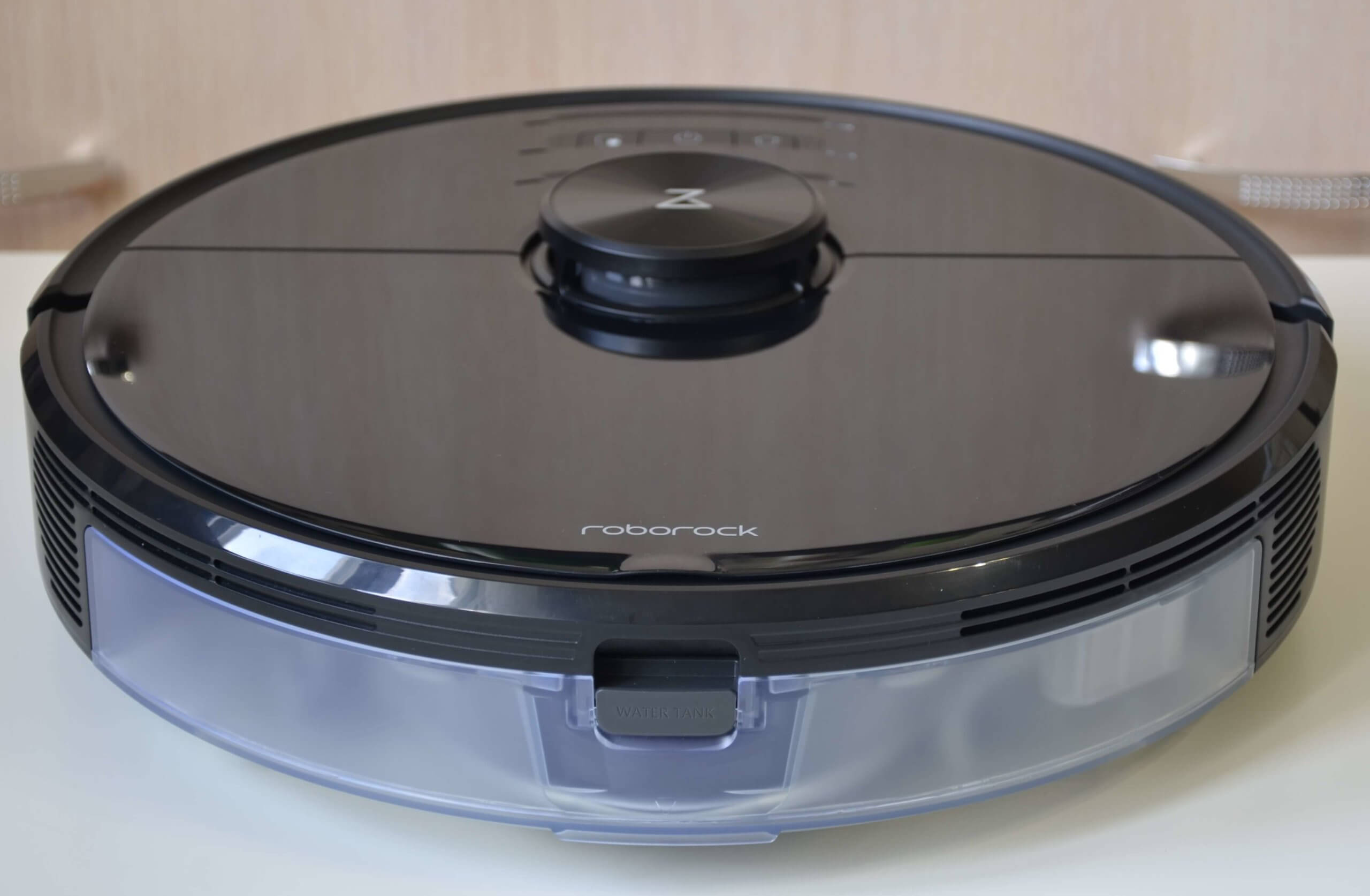
The water tank is installed at the rear
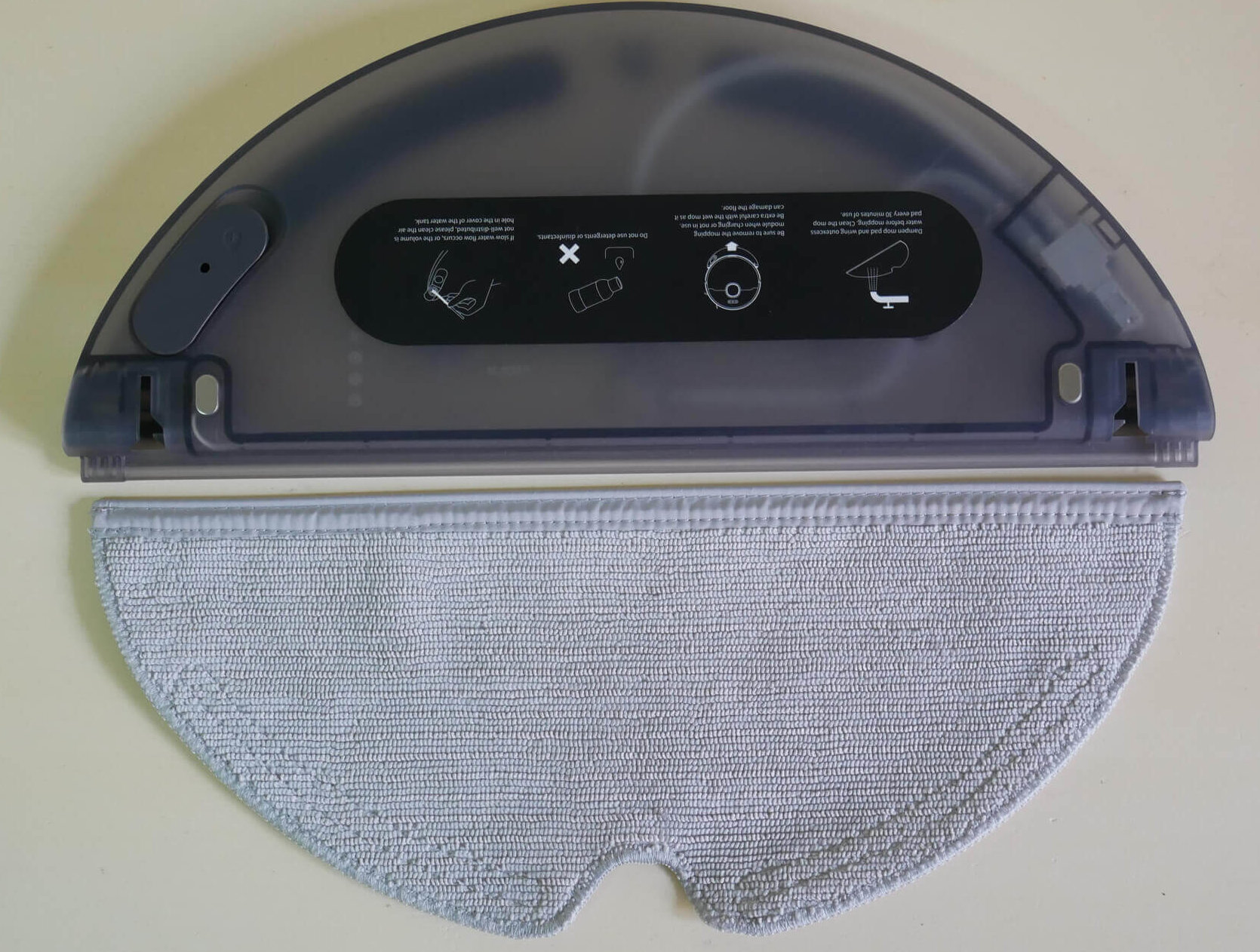
Dreame Wet Cleaning Nozzle
Both have a pump for electronically regulating the water supply. It's worth noting that the Roborock tank is larger, holding 297 ml of water, while the Dream nozzle holds no more than 270 ml. This is an extremely minor difference. The wipes are identical in structure and attachment method.
Let's take a look at the robots' undersides. They both have six anti-fall sensors, one side brush, and one center brush. However, the Roborock has a five-point silicone side brush, better suited for cleaning hard surfaces, while the Dream has a more standard three-point bristle side brush. It wears out faster, but is better at picking up debris on carpets.
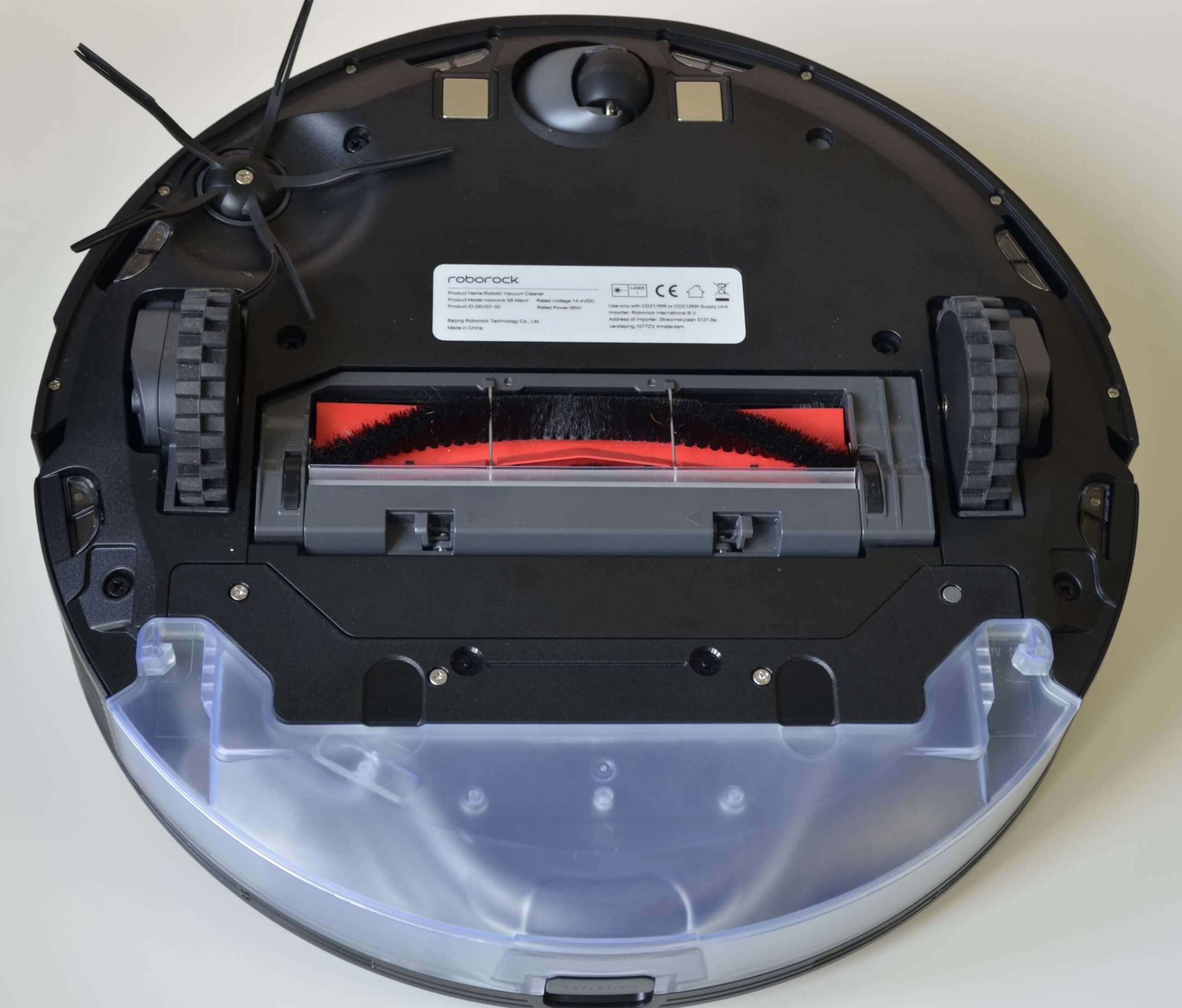
Roborock bottom view
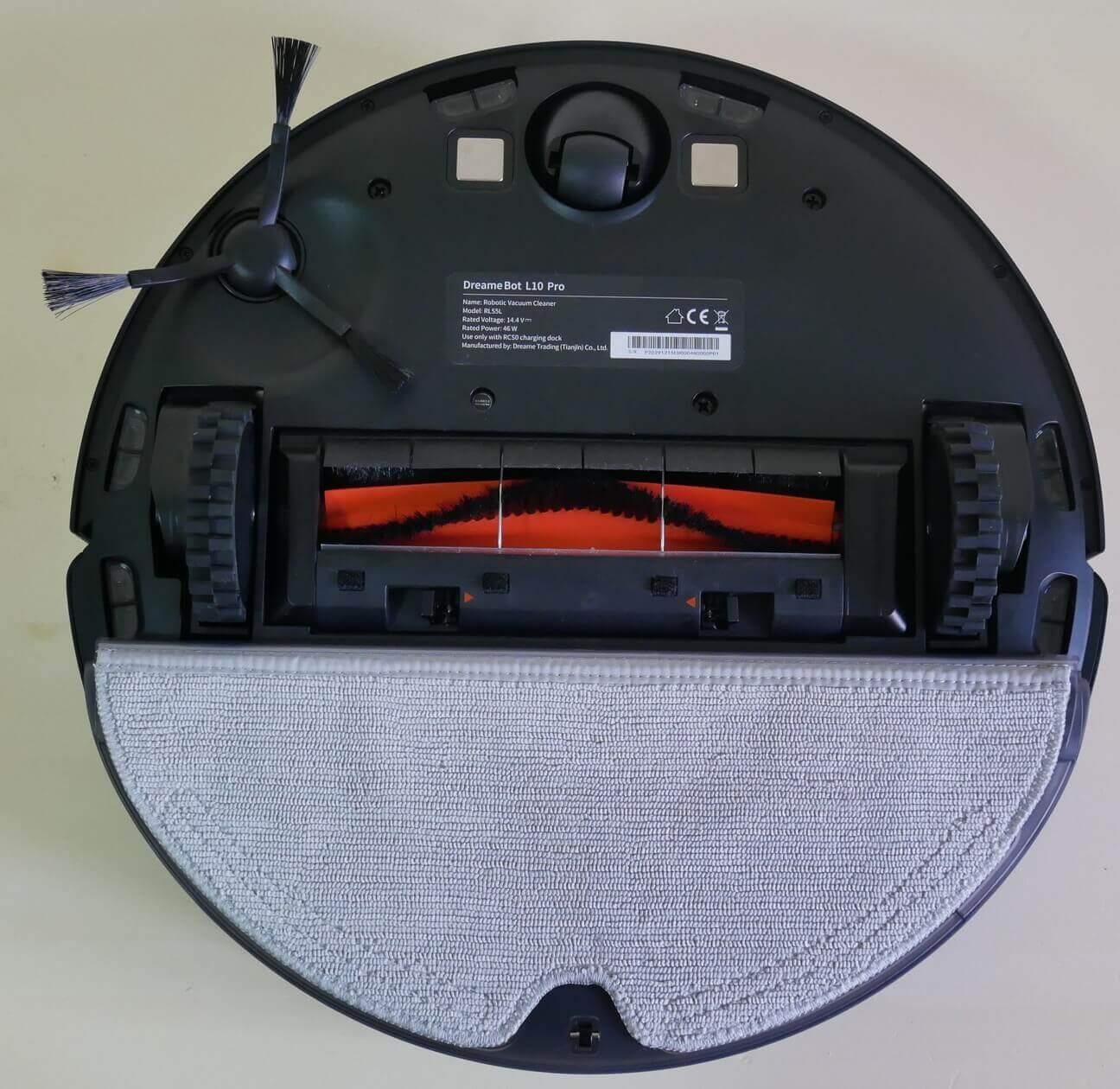
Dreame (bottom view)
The central brushes on the compared robots are identical. They can be disassembled on both sides for easy cleaning of tangled hair and pet hair. The brush quality is comparable.
So, what's the bottom line? Visually, the robots are very similar. The Dreame Bot L10 Pro has a slight advantage in terms of dust bin capacity, but the Roborock S6 MaxV has another advantage in return: a slightly larger water tank. I don't think either of these criteria will be decisive when choosing between these two robot vacuums.
But what is more important is precisely this object recognition systemRoborock has an active camera, which, combined with a powerful processor, allows the robot not only to identify objects on the floor but also to learn as it works. The learning neural network is the main advantage of this robot vacuum. The Dreame, on the other hand, is visually similar in its front-facing sensor, but in its case, objects on the floor are simply detected by the sensors rather than recognized. This is one of the key points of this comparison.
It's also worth noting that the quality of the parts installed inside the Roborock is likely slightly higher. I haven't personally disassembled these robots, but I did consult with a robot vacuum cleaner repairman who has been working with them for quite some time. His words confirmed my suspicions – while the Dreame doesn't yet measure up to the Roborock in terms of assembly and parts, it is still assembled to a higher standard than robots from other Xiaomi manufacturers, such as the popular Roidmi Eve Plus or Lydsto R1.
So, in terms of design and build quality, the Roborock S6 MaxV is better than the Dreame Bot L10 Pro, which is why it gets its first point.
Roborock 1:0 Dreame
Price
The next thing we'll compare is the robots' prices. The Roborock S6 MaxV costs around $480, which is the Russian version. The global version may be a couple of dollars cheaper.
Meanwhile, the Dreame Bot L10 Pro currently costs between $300 and $400. Since the robot is new to the market, you can still order it for $300, but I expect the price to increase slightly soon. Here's a link to purchase it from a trusted store:
Ultimately, Dreame clearly wins in terms of price, especially at the current exchange rate of $480 versus $300. For this, it certainly gets its first point. The score is even. Let's move on.
Roborock 1:1 Dreame
Equipment
Next, let's compare the accessories, as this can also affect the price of the robots. Roborock comes with a plastic docking station mat, instructions, a cleaning tool with a cleaning cloth attached, a charging base with a power adapter, and a spare HEPA filter. The accessories are quite sparse.
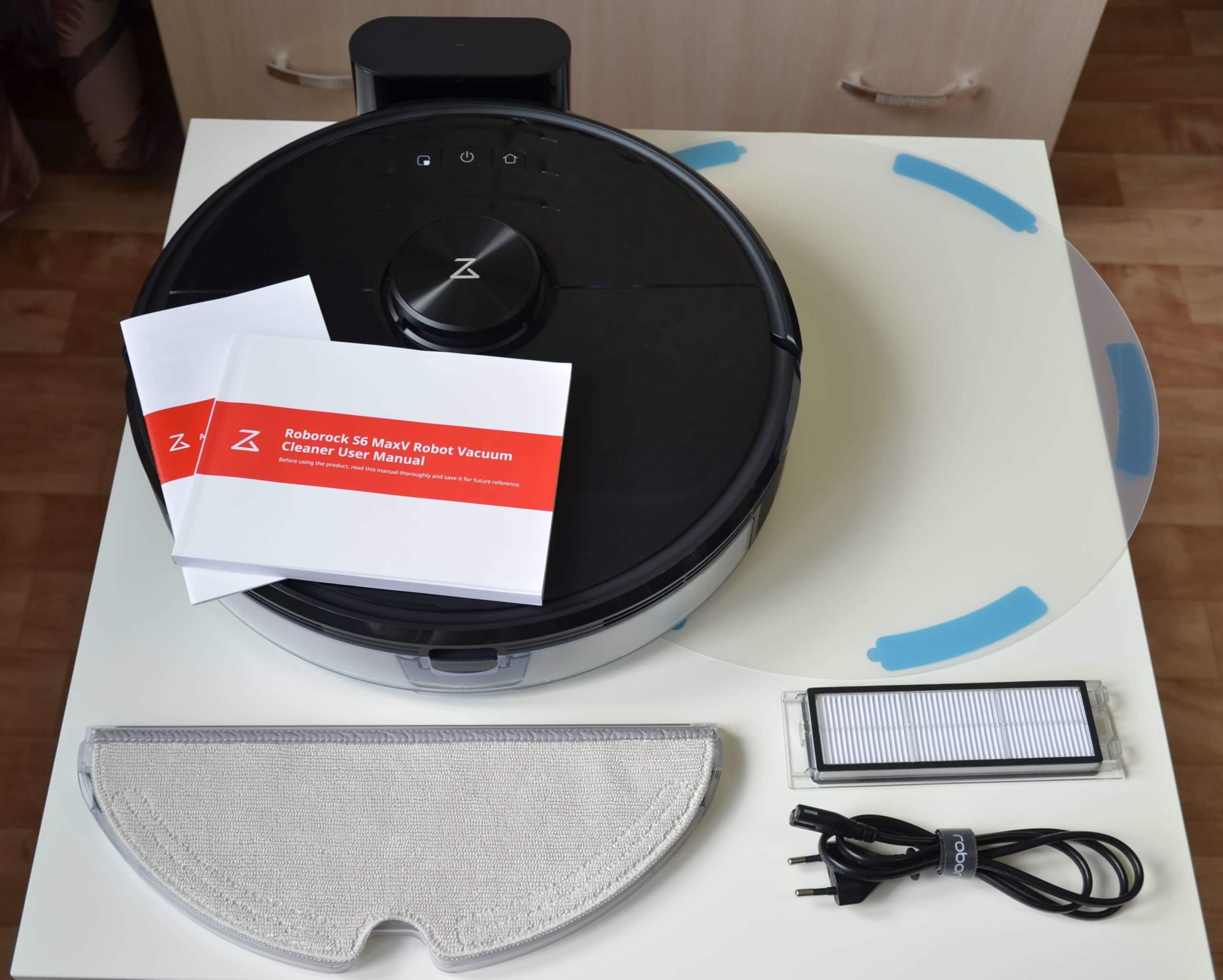
S6 MaxV trim level
But the Dream's situation is no better. The package includes a charging base with a power adapter, instructions, and a nozzle with a cleaning cloth. They didn't even bother to include a spare HEPA filter.
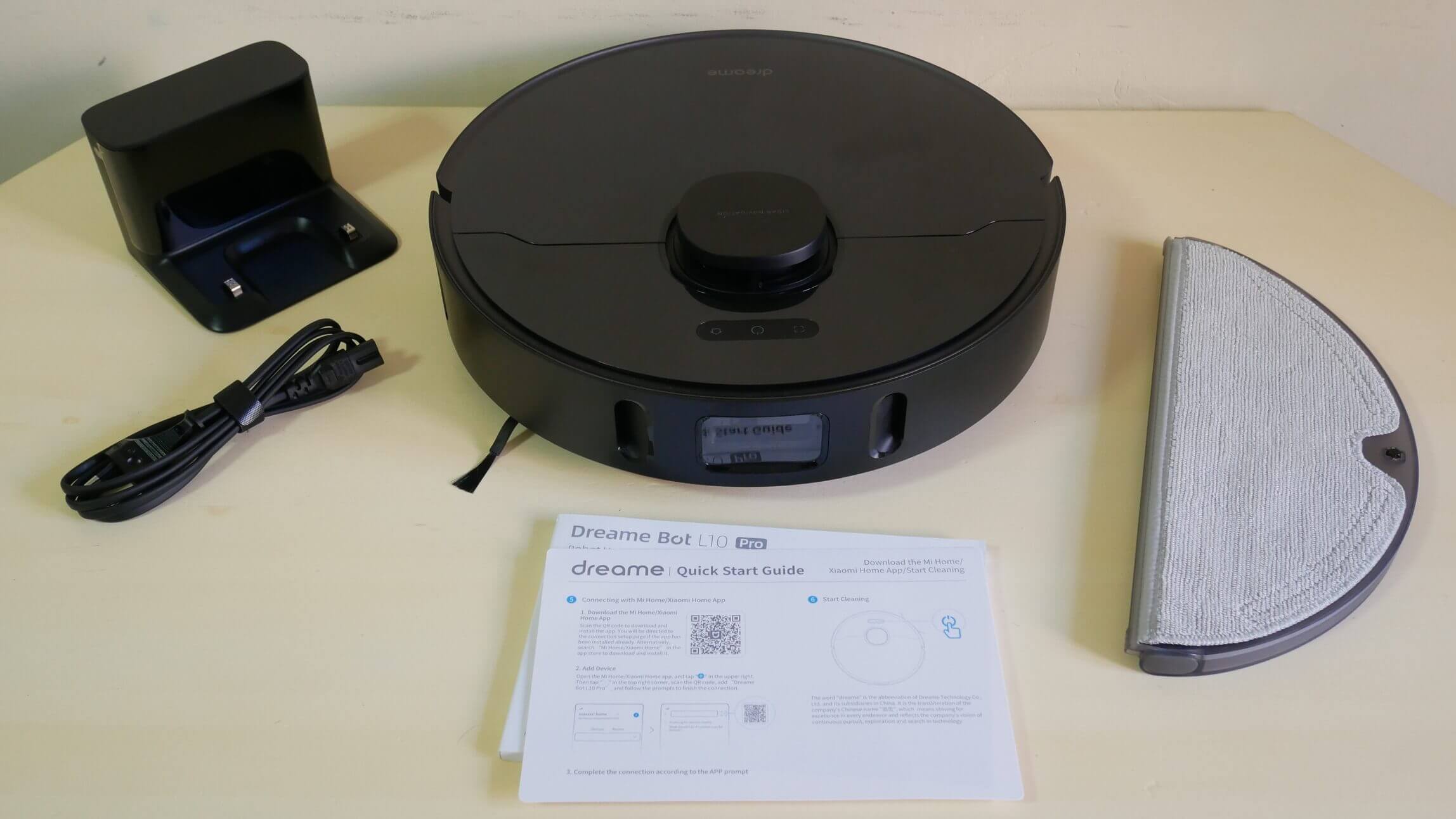
L10 Pro package
But in any case, both have minimal equipment, so in this regard it’s a draw.
Technical specifications
In the table below, we've compared the key features of the Roborock S6 MaxV and Dreame Bot L10 Pro:
| Roborock S6 MaxV | Dreame Bot L10 Pro | |
| Battery | Li-Ion battery 5200 mAh | Li-Ion battery 5200 mAh |
| Suction power | Up to 2500 Pa | Up to 4000 Pa |
| Opening hours | Up to 180 minutes | Up to 150 minutes |
| Cleaning area | Up to 250 m2 | Up to 250 m2 |
| Obstacle clearance | Up to 2 cm | Up to 2 cm |
| Dimensions | 350*97 mm | 350*97 mm |
| Noise level | Up to 67 dB (65 dB*) | Up to 65 dB (73 dB*) |
You can see that the robots have identical batteries, but the Dreame Bot L10 Pro has significantly higher suction power. This is precisely why its battery life is shorter. Their body dimensions and threshold clearance are identical. However, in terms of noise level, according to our measurements, the Roborock is significantly quieter than the Dreame Bot. This is, of course, due to its increased suction power. So far, the Dreame Bot L10 Pro's preliminary performance is superior, precisely due to its higher suction power. But we'll test this first, and if the difference is confirmed, we'll award it points. For the rest of the parameters, it's a tie.
Functional capabilities
Both robot vacuum cleaners are controlled via Xiaomi's Mi Home mobile app. The Roborock can also be controlled via its own app, but this isn't important for the purposes of this comparison.
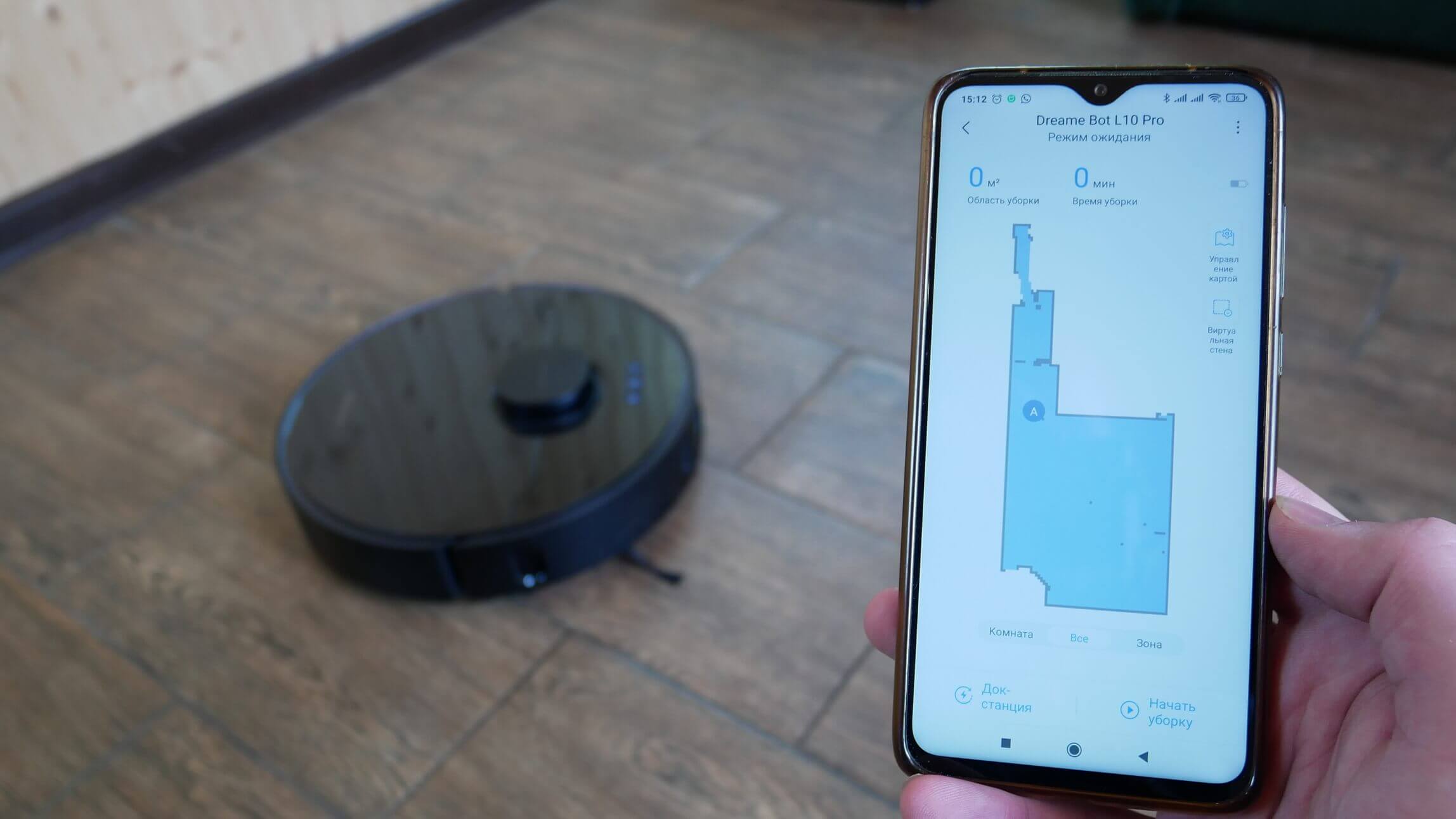
Control
Without going into too much detail, these robots are virtually identical in their core functionality, but the Roborock S6 MaxV has a few key differences:
- On the map, you can select a custom cleaning mode for each room, specifically the desired suction power and water flow level. With Dreame, the power and water flow level are only adjustable for the entire room.
- Roborock can take photos of objects on the floor and display them on a map, allowing you to see what's obstructing the cleaning process. Dreame doesn't yet have this capability.
- You can remotely connect to the Roborock active camera from your smartphone to monitor your home. The camera transmits HD images to your smartphone in real time. I find this a very useful solution. You can check on your home while you're on vacation or need to. You can also check on your pet or even a family member. Putting aside all preconceptions and mistrust, we simply consider this feature useful for a certain audience. If necessary, you can always disable this feature and set up protection to prevent anyone from accessing your robot vacuum.
These are the three main features for which Roborock currently scores. We've covered each robot in more detail in our separate reviews, so we recommend checking out our reviews for more information. Perhaps Dream will also get this feature in the future, and then there won't be any difference in functionality. Stay tuned for updates on our website. For now, Roborock is in the lead.
Roborock 2:1 Dreame
Testing
The most important thing to check is how the robots perform their primary task. We'll compare key aspects, namely:
- Accuracy of recognition of objects on the floor.
- General navigation accuracy and directions around the house.
- Suction power.
- Quality of dry cleaning on laminate.
- Quality of dry cleaning on carpet.
- Quality of wet cleaning.
- Ability to drive on dark surfaces.
- And the cross-country ability of robotic vacuum cleaners.
You can see all of these tests clearly in our comparison video, which has already been prepared and published on the channel:
As for identifying objects, Dream currently has some trouble with that. He doesn't recognize pet surprises. He's had no problems with everything else.
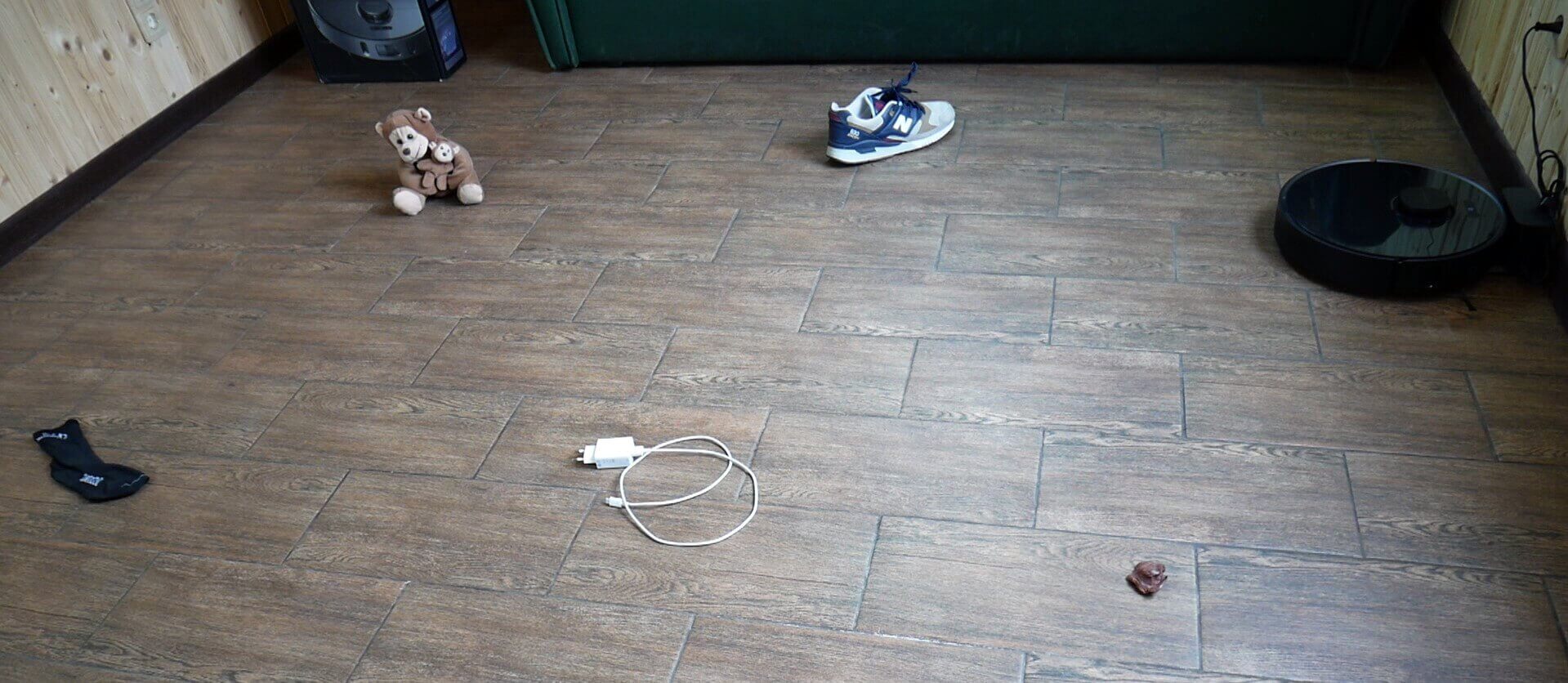
Identifying objects on the floor
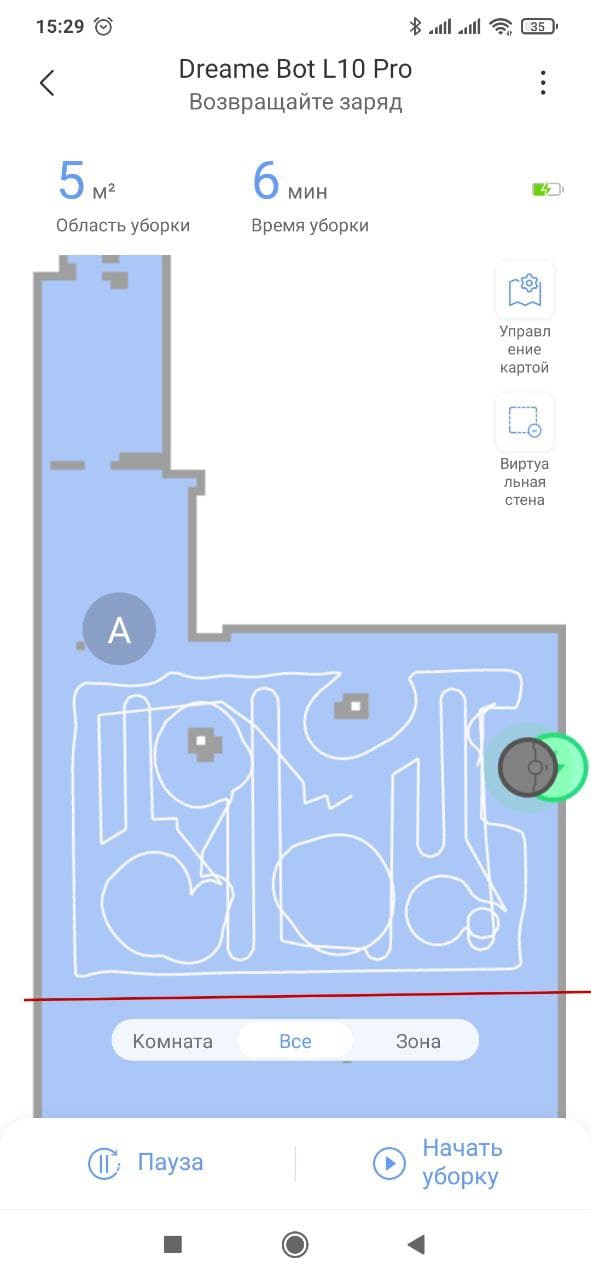
Recognized objects on the map
But Roborock easily recognizes excrement, displays it with a corresponding icon on the map and, accordingly, avoids it while cleaning.


Object recognition
And if we're talking about the accuracy of recognizing objects on the floor, then of course the S6 MaxV is currently higher, so we'll award it another point.
Roborock 3:1 Dreame
In terms of overall navigation, both robots are excellent. The map is accurate and automatically zones into rooms. The robots navigate independently around objects on the floor and even around chair legs. Cleaning speed is high, and both save multiple cleaning maps in memory, so in this regard, it's a clear tie.
Suction power – this is a major advantage that the Dreame Bot L10 Pro could offer. And here it really shines. It was able to suck up debris from crevices up to 10 mm deep, while Roborok can only suck up debris from crevices no deeper than 2 mm. Points for the Dreame Bot!
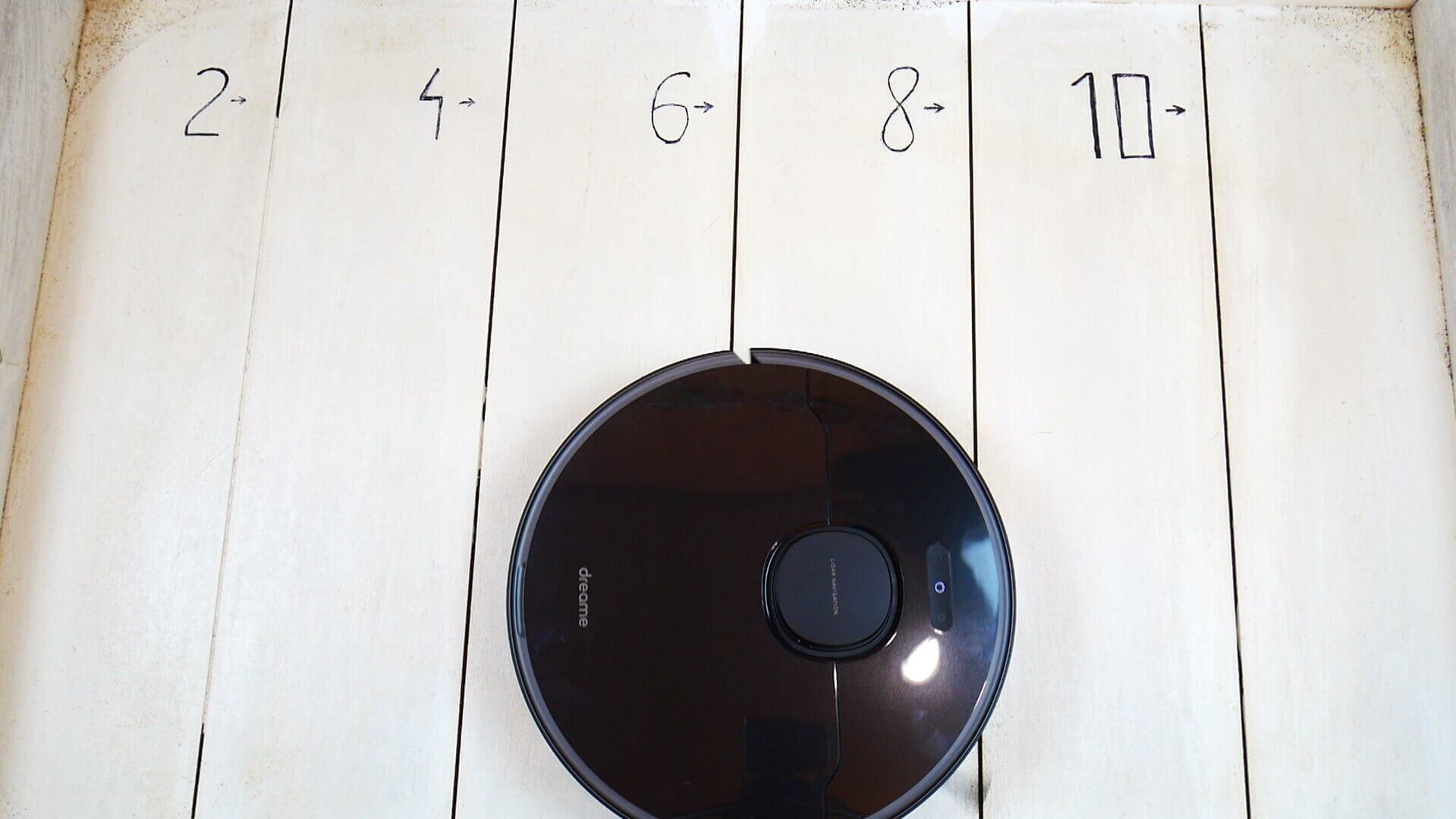
Dreame Suction Power
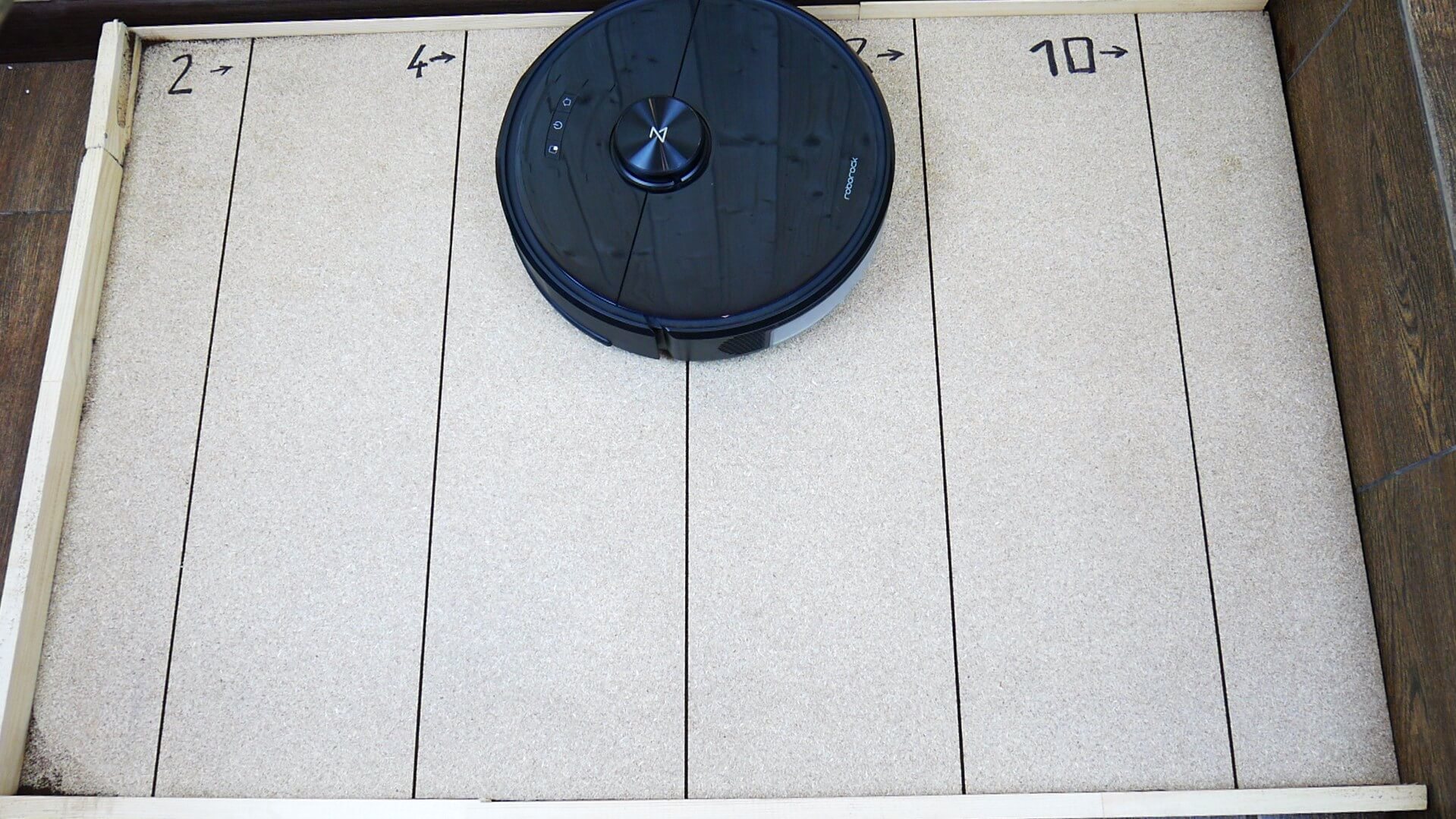
Roborock suction power
Keep in mind, however, that the power advantage is in Turbo mode. However, at maximum power, the Dream won't be able to clean even 100 square meters in one go. Furthermore, the motor's lifespan may be reduced when operating at maximum speed. So, while it's clearly more powerful, you need to be careful when adjusting the cleaning parameters. I would only use the maximum mode when cleaning specific rooms, such as those where carpets need to be cleaned more thoroughly.
Roborock 3:2 Dreame
These robots performed equally well in both dry and wet cleaning on laminate floors. They collected debris well, cleaning the entire benchtop. Only the corners remained uncleaned, but this is a problem with all round robot vacuums.
On carpet, they also performed equally well, based on visually capturing surface debris from the carpet. However, it's important to understand that, thanks to its higher suction power, the Dream vacuums more thoroughly and deeply into carpet, even when it's not visible to the naked eye. This is why it was awarded a point based on suction power. Increased suction power plays a significant role when cleaning carpets, but awarding a point based on this is not objective.
As for driving on dark surfaces, both robots are wary of black carpets, recognizing them by their height differences. It's a tie.
And their cross-country ability is on par. Both robots can handle 2-centimeter thresholds.
Let's sum it up
So, what's the bottom line? The Roborock S6 MaxV and Dreame Bot L10 Pro have both received very positive reviews and are truly excellent options, but when comparing them, it's difficult to say which is the clear winner. Let's weigh the strengths and weaknesses of these robots.
The Roborock S6 MaxV certainly boasts superior build quality and brand recognition, and most importantly, it features an active camera that recognizes objects. This camera also offers more advanced features.
The Dreame Bot L10 Pro offers a more competitive price and increased suction power. These are equally compelling reasons to buy it.
Therefore, the final opinion is:
If you're looking for a robot vacuum with object recognition and are worried about it running over your pet's surprises and leaving them scattered all over the room, the Roborock S6 MaxV is definitely worth choosing. It cleans well and also recognizes all objects lying on the floor. Plus, you can connect to the camera remotely, a useful feature that expands the device's range of applications. And don't forget that the Roborock supports more flexible cleaning schedules.
But if you're satisfied with the Dreame Bot L10 Pro's object detection performance, as demonstrated in tests. It's worth noting that this robot avoided a charging cord, a sneaker, a sock, and other objects, then this robot vacuum is certainly a more cost-effective solution. Moreover, it performed better as a carpet cleaner in terms of suction power. As a reminder, both robots perform equally well on hard surfaces.
So the final decision is yours. I've tried to cover the differences between these robotic look-alikes in as much detail as possible. Overall, I believe the Roborock S6 MaxV wins by a narrow margin, and as a robot vacuum cleaner with lidar and an active camera, it's the more well-designed model.
Roborock 3:2 Dreame
And here's a rather interesting fact: in our overall ranking of robot vacuum cleaners tested on robovac.washerhouse.com, these two robots scored almost identically: 77 out of 100 for the Dream and 79 out of 100 for the Roborock. And each received such a high score precisely for its own strengths. The overall ranking of robot vacuum cleaners tested on robovac.washerhouse.com: https://robovac.washerhouse.com/en/rejtingi/robovac-obshhij-rejting-robotov-pylesosov-robo.html.
That's all from me. Thank you for your attention! If you have any questions, please ask them in the comments. Happy shopping, everyone. Bye!
Hello!
If we were to compare the S7 and the L10 Pro, which one would you recommend? The price difference is 7,000 rubles, which favors the Dreamy.
Wet cleaning is important.
I think S7 is better)