Robocleaning. Part 2: Why are household robotic vacuum cleaners not suitable for commercial cleaning?

Continuing the topic of Robocleaning, in the second part I decided to consider the possibility of using top-end household robots for cleaning commercial premises. In my case, the test was conducted with the following models: Dreame Bot L10s Ultra And Ecovacs Deebot X1 OMNIThese aren't the brand's flagship models, but they are nonetheless premium and, for the purposes of this test, will be on par with flagships. The main goal of the test was to determine whether household robots can handle this task. If so, how effective are they? If not, why didn't they perform well? What are the key differences between household robots and specialized industrial devices? The test was conducted in a large clothing store in a shopping mall. The total area of this space is 453 square meters, including the sales floor, fitting rooms, administrative offices, and a utility room. So, let's get started!
Navigation test
First, I positioned the robots in suitable locations, and launched a quick room mapping operation. Dreame took almost 40 minutes to complete even a quick walkthrough. Fortunately, the map generated perfectly matches the actual geometry of the room, and the robot was even able to zone it, although I later manually adjusted the zone boundaries to more convenient ones.
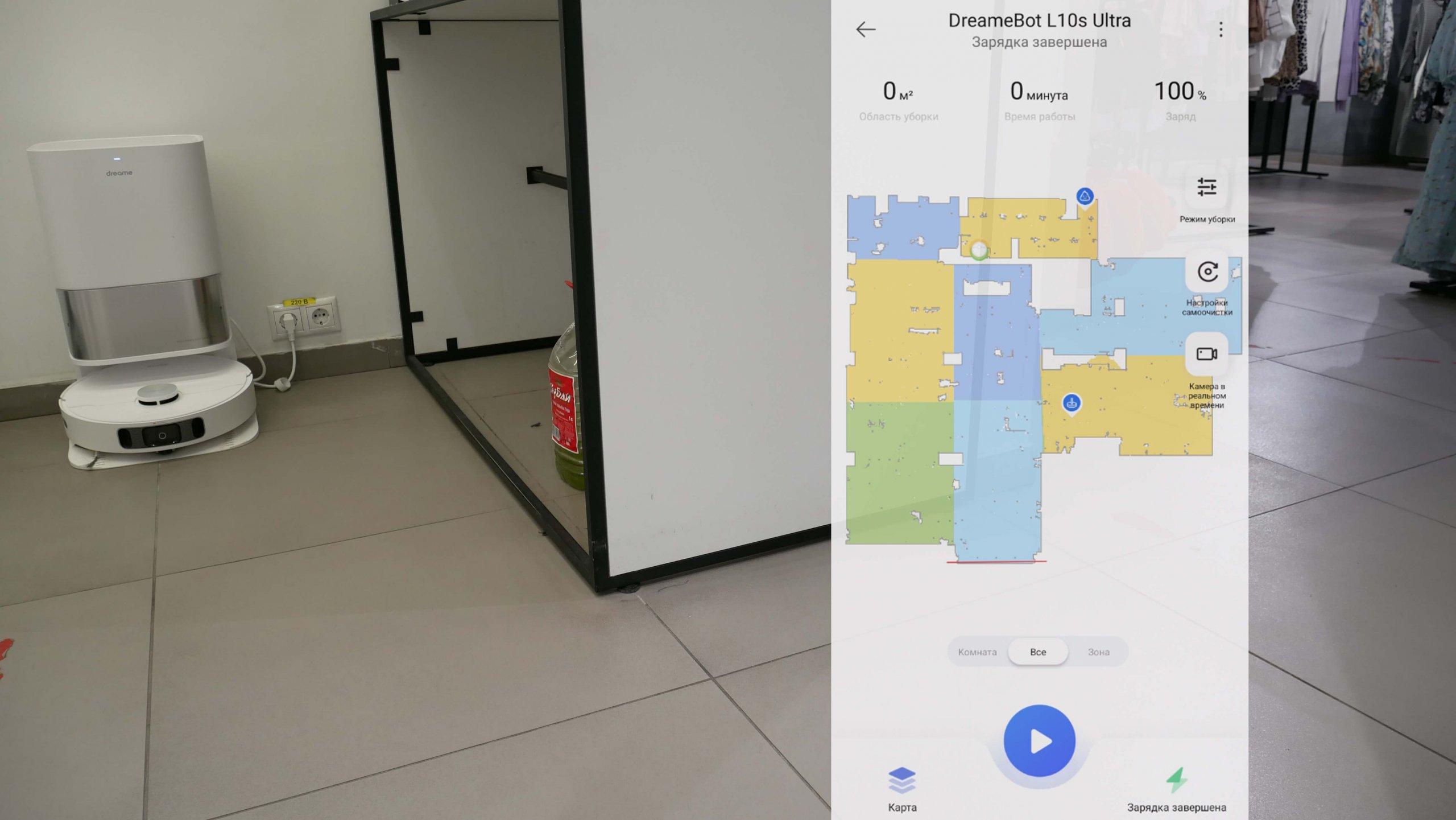
Dreame Navigation in a Large Area
Ecovacs, however, immediately dropped out of the race for the simple reason that it had a predetermined maximum cleaning area of 300 square meters. Accordingly, it created the room boundaries, but displayed only 300 square meters on the map, not the full 450 square meters.
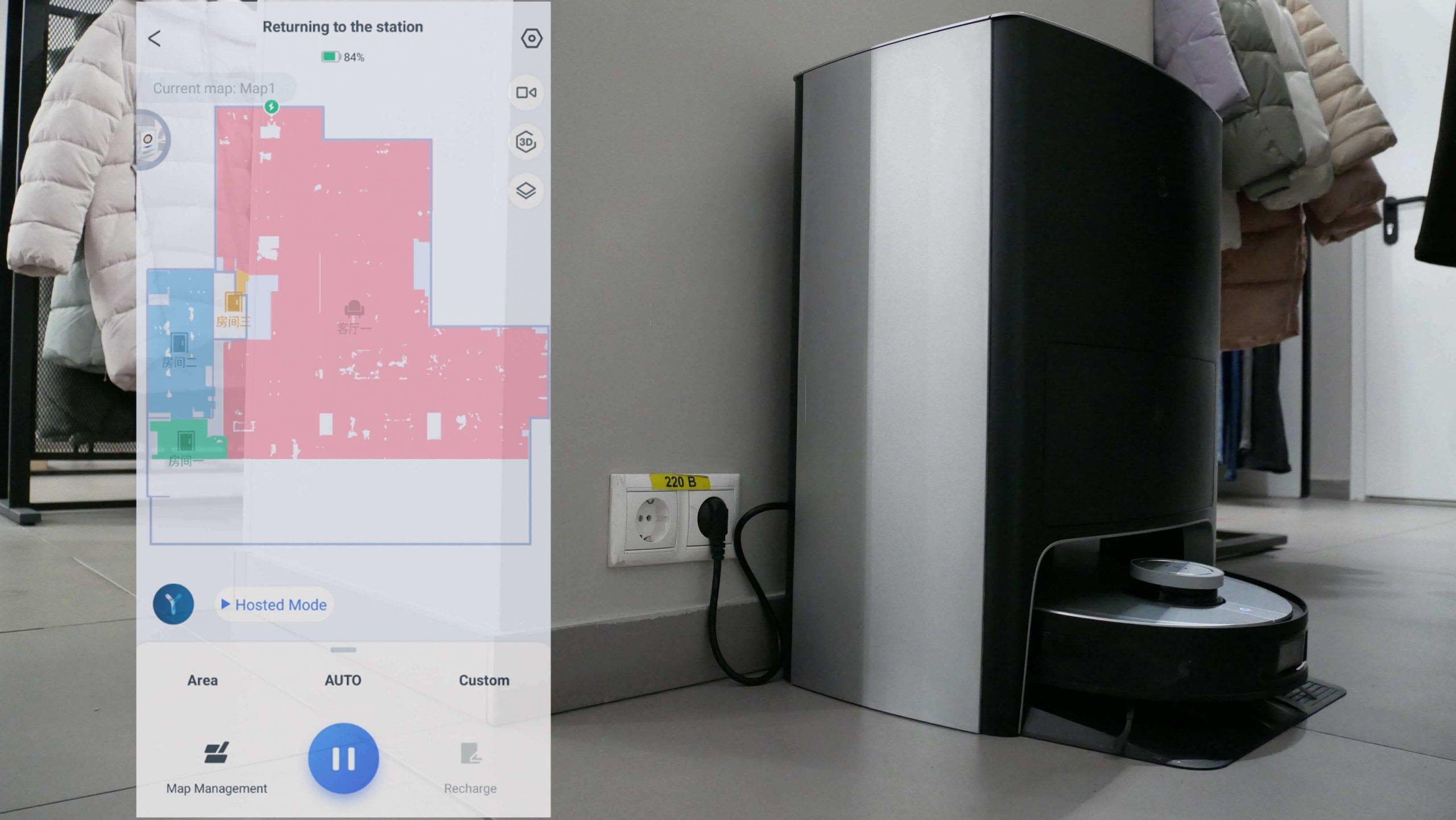
Ecovacs navigation in a large area
That is, some kind of software limitation is set. You can see how it looks on the map. That is, even navigation algorithms for household robots may simply not be designed for use in large areas, even if the battery lasts for several charges and there's a station capable of automatically maintaining the robot vacuum. Let's label this problem #1.
Autonomy test
The map is now created, let's launch the robot vacuum and see how it navigates and cleans. I'd recommend watching the video version of this post, with visual tests:
And here's an example of the Dreame Bot L10s Ultra: the robot cleans zone by zone around the perimeter, then in a serpentine pattern. That is, the movement algorithm is the same as in a home environment:
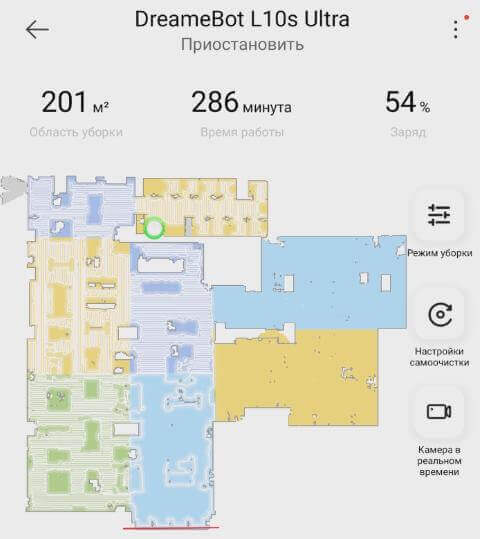
Dreame's in-store navigation
The robot isn't intimidated by the area it's tasked with cleaning, doesn't get lost, and doesn't leave any missed spots. That's already good. But the next consideration is how long the battery life will last even at minimum power, so it can not only vacuum but also mop the floor.
So, the robot covered 126 square meters in 163 minutes. And as soon as the battery charge dropped to 15%, the robot went to its station. Incidentally, it found it without any problem. Three hours later, the Dreame Bot L10s Ultra resumed cleaning where it left off. In the end, the robot managed to clean less than half the room overnight: 201 square meters in 286 minutes.
We expected the robot to cover the entire area overnight, from the time the shopping center closed until it reopened, but it didn't. Therefore, reason #2 why household robots are not suitable for cleaning commercial spaces: weak battery and I would even say that low movement speed.
Industrial cleaning robots move faster without compromising cleaning quality. But that's not the most important thing, as it's conceivable that there would be two or three robots for such a large space, each programmed to clean a specific area. This would allow for a breakthrough in the hopeless situation. After all, even three or even four premium household cleaning robots would cost significantly less than a single mid-range industrial robot.
The robot's condition after testing
And here's the icing on the cake—the robot's condition after cleaning half the required area all night. Frankly, it was painful to watch and imagine how I'd clean it all myself later. The dirty water from washing the wipes is collected in a special tank. Draining it is easy. I deliberately disabled the self-cleaning function of the dust bin so I could check how much debris it had collected in the morning. Incidentally, there was no debris in the room before starting the vacuum. At least, no visible debris.
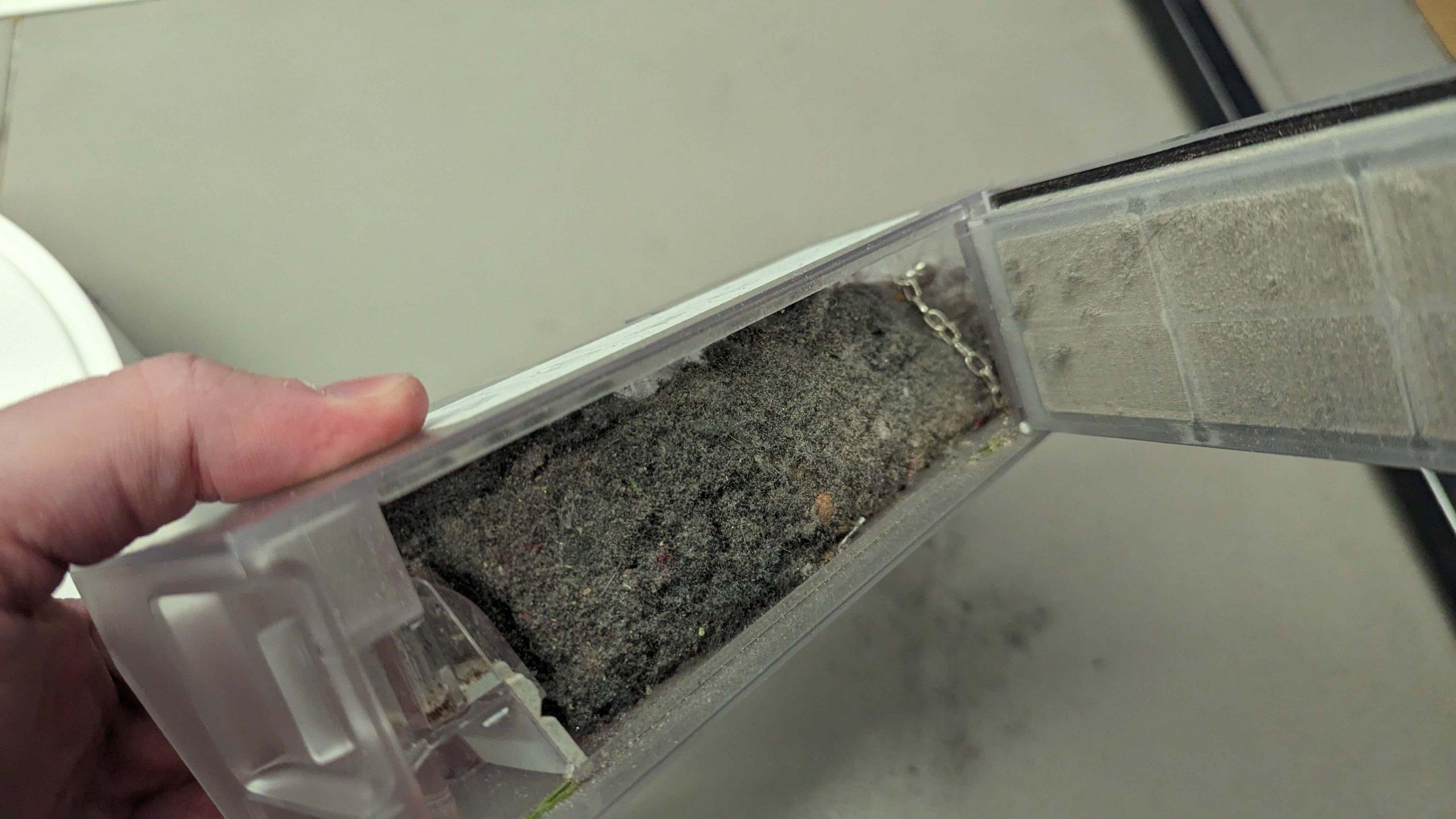
The result of a robot cleaning a sales area
And this, by the way, is one of the advantages of robots compared to cleaning with a cleaner—they vacuum, not sweep, and therefore the cleaning itself is more effective. Pros and cons of robocleaning were discussed in the first part.
The container and tanks aren't the most important thing. What matters is the condition of the cleaning module. And that's where it's a real disaster. The cloths are in terrible condition even after washing at the station, the side brush brushes are covered in dirt, the central brush was damaged in just one run, and there's a lot of dirt behind it. But the bottom of the platform where the cloths are washed is simply awful. Dirt is everywhere, and it's logical that the cloths haven't been washed.
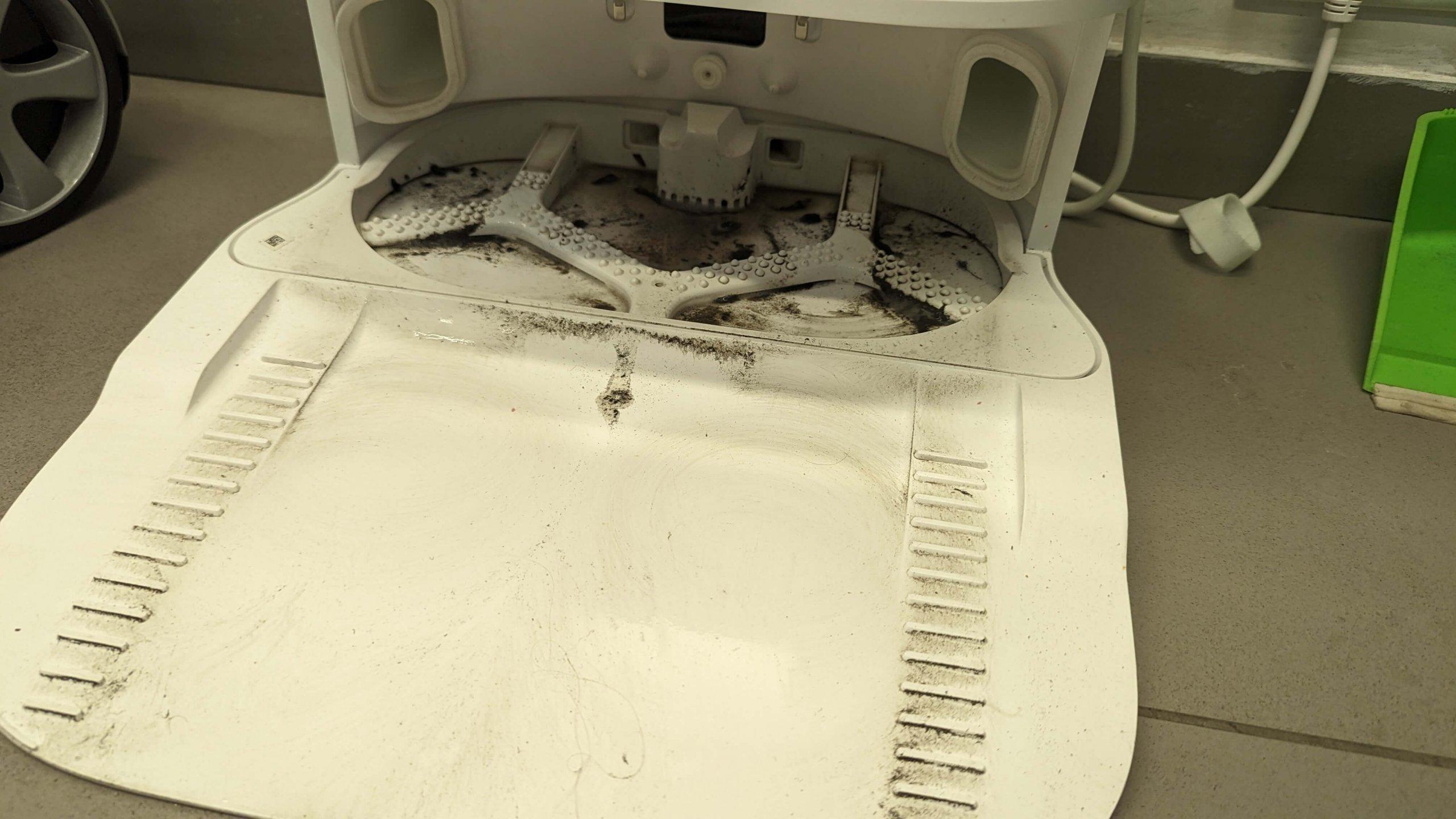
The condition of the station after cleaning the sales area
So reason number 3 is the cleaning module is not designed for such serious tasksAnd the person operating such a robot will spend more time than a cleaner performing a delicate cleaning in the morning before the store opens. Furthermore, consumables will need to be replaced almost every two weeks under such conditions, which is costly.
What else?
Furthermore, the mobility systems of household cleaning robots are not designed for commercial use. They can get stuck on various legs and furniture components. If the robot gets stuck early in the cleaning process, you'll have to quickly clean it up yourself in the morning before the store opens to the public.
Personal opinion
In general, the result is obvious - Household robots are not designed for cleaning large commercial spaces.Neither the cleaning module, nor the battery life, nor even the navigation system are capable of cleaning such objects. Yes, if you have a small retail space with all the furniture on the floor, a robot might be able to handle the job. But again, you need to be prepared for the fact that it will need to be manually maintained every day. If anyone has experience using robots in this way, I would appreciate a detailed comment on this topic. I might be wrong about something.
In future reviews on Robocleaning, I'll be focusing entirely on specialized industrial robots for cleaning commercial premises. I might even review some of them in similar conditions across a large area. :)
Happy shopping everyone. Bye!