Robot Vacuum Cleaners: Quick Answers to Frequently Asked Questions

- Can I leave the robot vacuum cleaner on the base after charging?
- What is the lifespan of a robot vacuum cleaner?
- How often should I change consumables in my robot vacuum cleaner?
- What kind of water should I use in a robot vacuum cleaner?
- What kind of detergent can be used in a robot vacuum cleaner?
- Does a robot vacuum cleaner need a station?
- Which napkin shape is best?
In this review, I've decided to answer the most frequently asked questions from those choosing their first robot vacuum cleaner, as well as from owners themselves. Even though robot vacuum cleaners have been on the market for over 20 years, some issues still require clarification. I've compiled seven of the most frequently asked questions. The answers were prepared in collaboration with representatives of major brands and service centers. So, let's get started!
Can I leave the robot vacuum cleaner on the base after charging?
The first and most frequently asked question about robot vacuum cleaners is: "Can I leave my robot vacuum cleaner charging?" The question is, isn't it harmful to the battery if the robot is constantly charging 24/7, even though it's only used a couple of times a week?
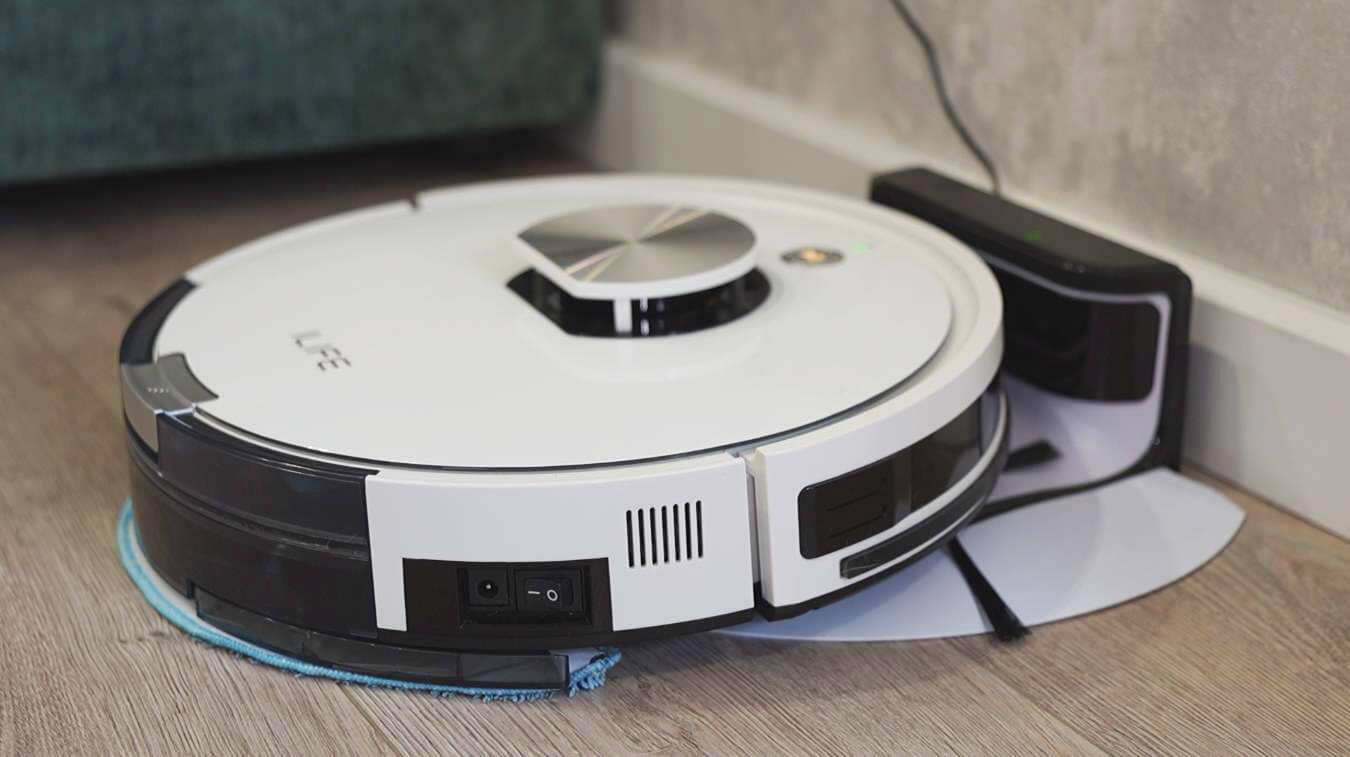
Robot vacuum cleaner on charge
So here is the answer: "It is possible and necessary to leave the robot on charge.".
Even manufacturers recommend this. Modern battery management systems in almost all robots are gentle on batteries, neither fully charging nor fully discharging them. This means that a 100% charge in the app doesn't actually indicate a 100% charge. According to the manufacturer's datasheet, this value is lower, but for user reassurance, it's considered 100%. Therefore, it's safer for the battery to leave the robot vacuum charging when not cleaning.
The only thing I recommend is to unplug a FULLY CHARGED robot vacuum when you're away for an extended period, such as during a business trip or vacation. Fire safety regulations also recommend this.
What is the lifespan of a robot vacuum cleaner?
The second most popular question I get is: "What's the lifespan of a robot vacuum cleaner?" Opinions vary, and it all depends primarily on how well you use the robot and which manufacturer it comes from.
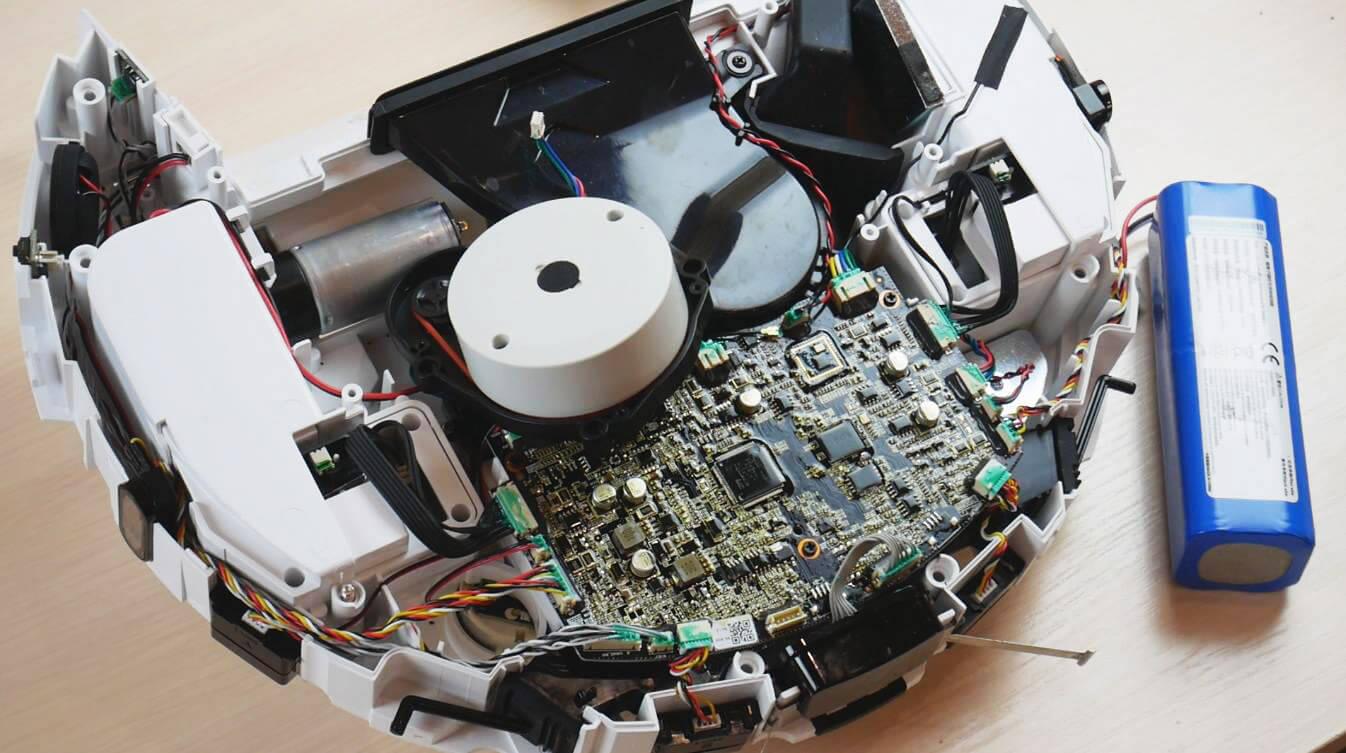
A disassembled robot vacuum cleaner
For example, based on reviews, the first iRobots successfully last 10 years, and the very first Xiaomi robot vacuum cleaner, which some owners still use, is already 8 years old and still in good working order. So, what is meant by service life: the period after which the first serious breakdowns occur, or the period after which it's no longer practical to repair the robot and it's easier to buy a new one.
Robot statistics are roughly as follows: batteries are the first to fail. With active use, a battery lasts for 2-3 years. Various drives, such as those for the side brushes, turbo brushes, wheels, and others, wear out over the same period. The navigation system can last about 3.5 years, according to service center representatives. Again, this depends on the quality of the assembly and the spare parts themselves. But in any case, the build quality of robots is declining; even the top brands are starting to cut corners and reduce the cost of assembly, which leads to earlier robot failure.
The majority of those “in the know” have come to the conclusion that at the moment the optimal The service life of a robot vacuum cleaner is from 3 to 5 yearsConsidering how much they're progressing, even if you compare a 2019 flagship with a 2024 flagship, the difference is colossal, and it makes sense to upgrade to a more functional and efficient robot every few years.
How often should I change consumables in my robot vacuum cleaner?
Moving on – many people ask, "How often should I change consumables?" It's simple: change the side brushes, turbo brush, and wipers as they wear out.
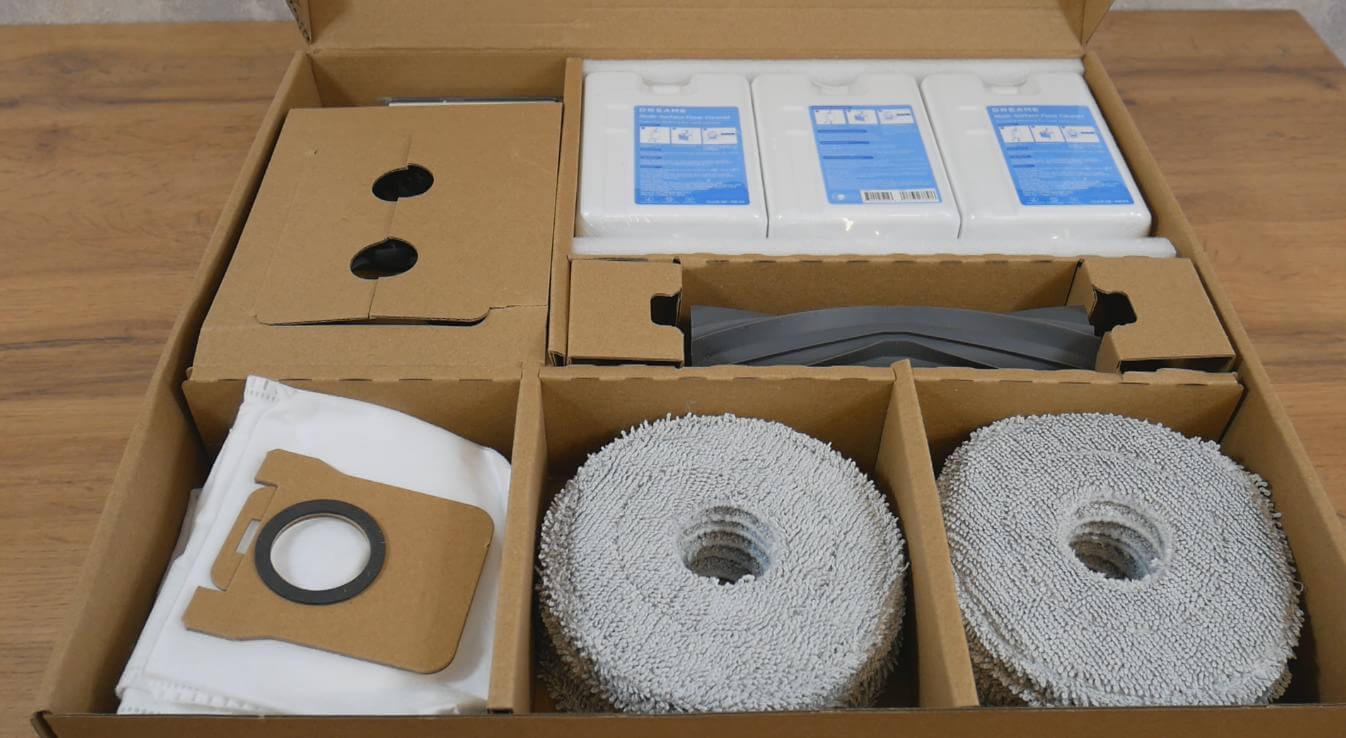
Consumables for a robot vacuum cleaner
That is, if we see that the brush has become deformed or the cloth has worn out, we change it. The main thing is to change the HEPA filter in a timely manner.The lifespan and efficiency of a robot vacuum cleaner directly depend on this. A clogged filter reduces suction power and the motor begins to overload. Therefore, it is recommended to clean and dust the filter as often as possible. It is recommended to change it approximately every three months.
In the app, each manufacturer sets individual replacement intervals, which can even be expressed in hours. For example, Dreame recommends changing the filter after 150 hours of operation. Using the counter, you can monitor the condition of consumables and replace them promptly.
And here's an important detail: the consumables statistics include an indicator called "sensor condition." This means they need to be cleaned after a certain amount of time the robot has been in use. They don't need to be replaced. 😊 This has also been a frequent topic of discussion.
What kind of water should I use in a robot vacuum cleaner?
Many robot vacuum owners wonder what kind of water to use: distilled, bottled, or simply filtered? Opinions vary widely here. I'll share my experience.
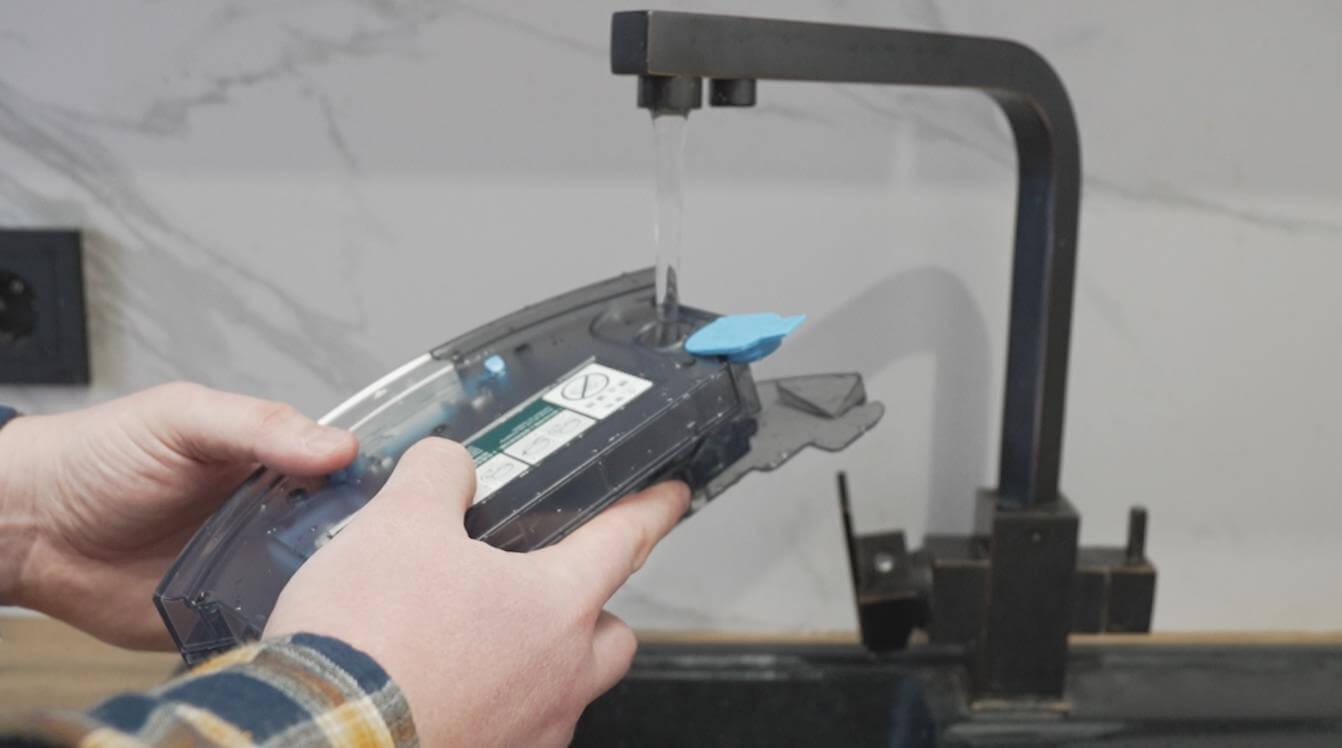
Filling the robot vacuum cleaner with water
It's generally accepted that distilled water is the best option. I thought so too, until the station came to test it. Trunk LuLu to the robot vacuum cleaner Hobot LEGEE-D8In this station, the overflow sensors don't trigger if distilled water with a TDS content of less than 5 ppm is added, as water with such a salt content is non-conductive. In other robots, distilled water can also cause malfunctioning electronic sensors.
And it was precisely the Hobot company that proposed Use water with a salt content in the range of 5 to 300 ppm for robotic vacuum cleanersExcessive salt levels primarily affect cleaning performance, leaving streaks after the salt water dries. The water supply system can also become clogged over time. A 4-stage, or better yet, 5-stage reverse osmosis filter can reduce salt levels. Or at least a water softening cartridge. Bottled water is also suitable, by the way. In my case, the tester showed the required 46 ppm.
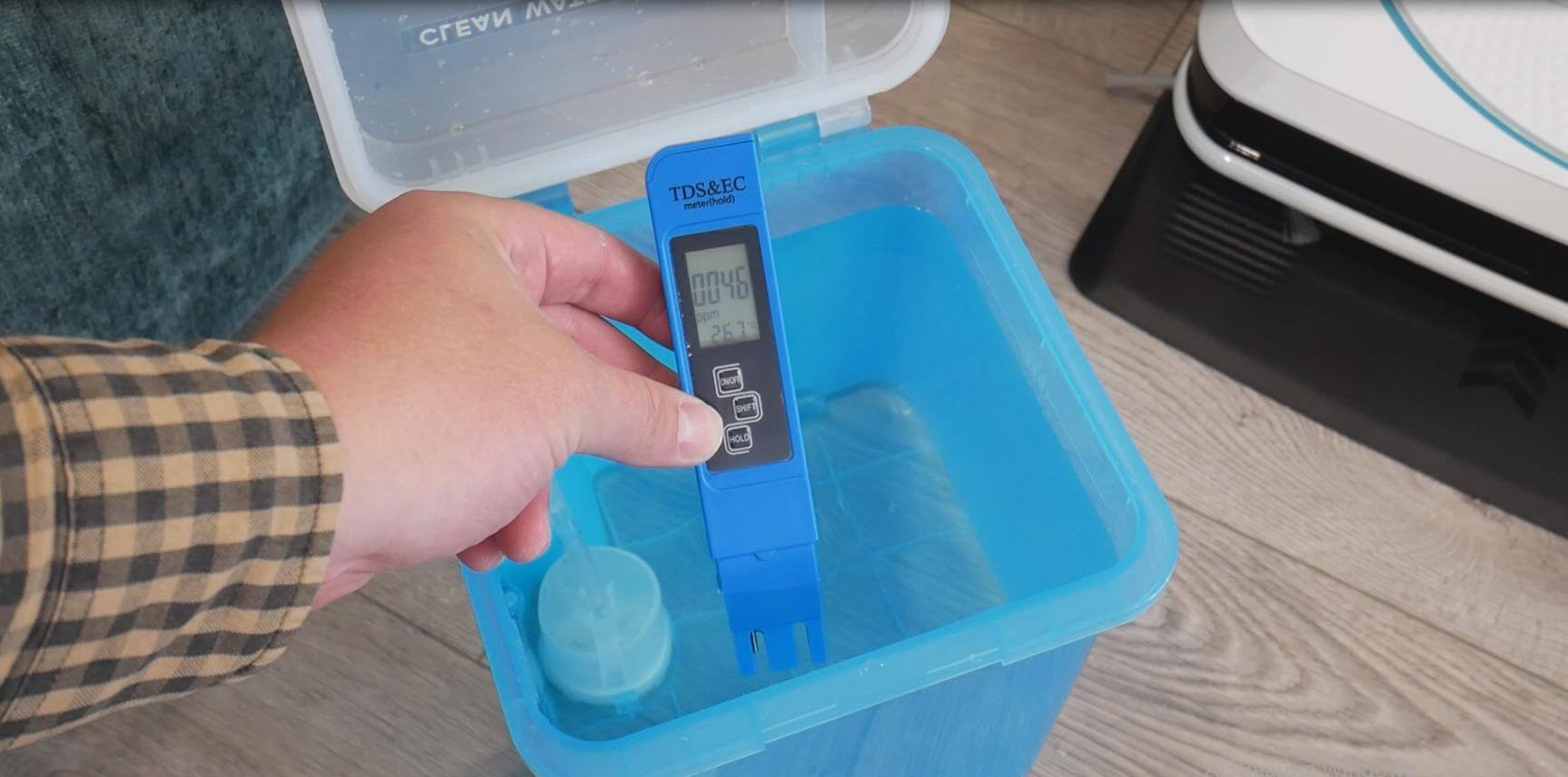
Checking the water quality with a tester
What kind of detergent can be used in a robot vacuum cleaner?
Continuing with the topic of water and robots, I'll answer another popular question: "What kind of cleaning solution can I use?" I recommend using only brand-name cleaning solutions that have been tested by leading robotic brands. Roborock, Dreame, Ecovacs, Hobot, Tineco, and other popular manufacturers offer such solutions. At the very least, they're certified and have been tested by factory engineers.
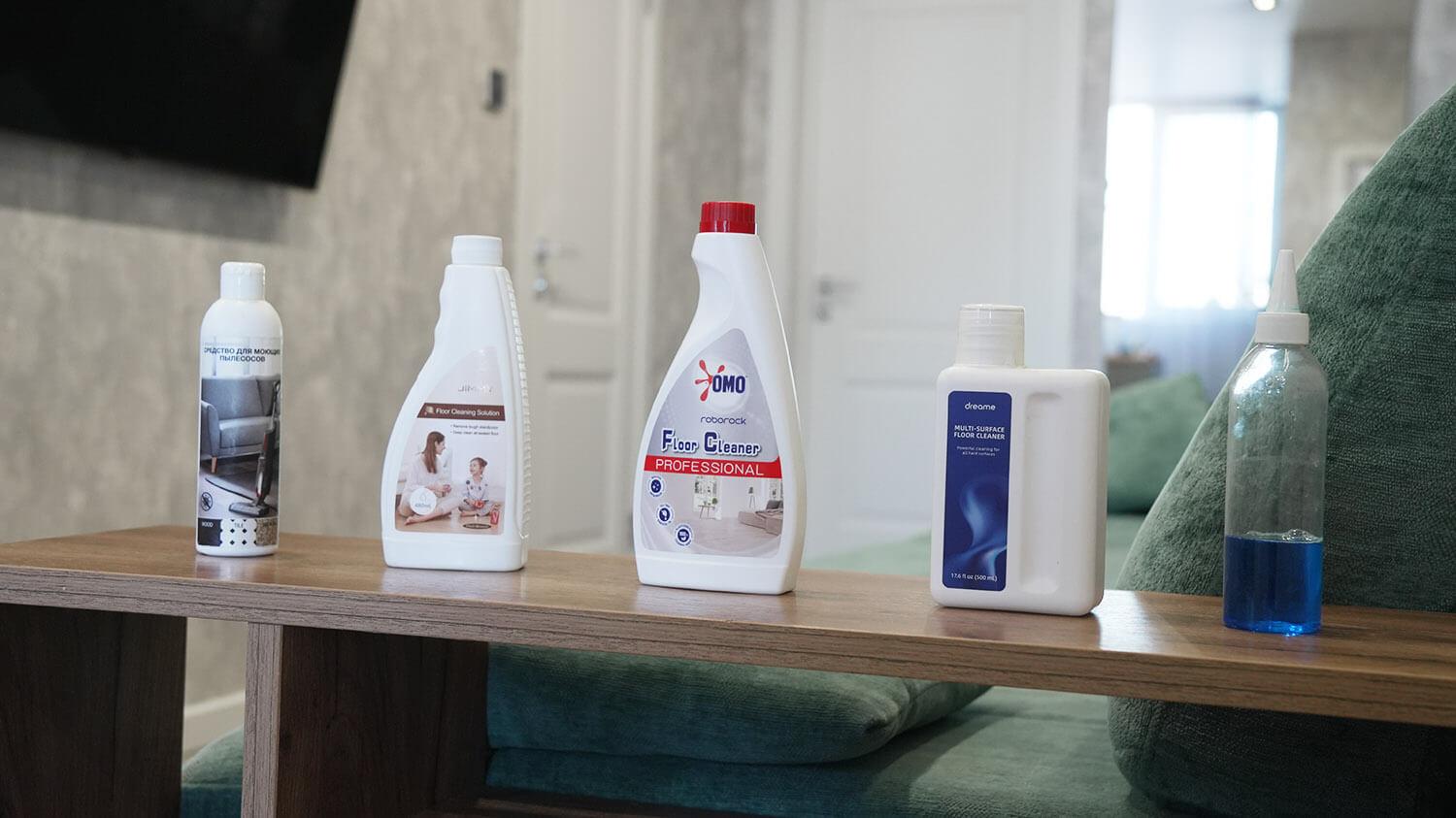
Cleaning products for robotic vacuum cleaners
But it's important not only to use brand-name products but also to mix them with water at the correct concentration, as specified in the instructions. Buying budget-friendly products labeled "For robot vacuum cleaners" on popular marketplaces is entirely at your own risk. One of the most common robotic vacuum cleaner failures is a breakdown of the water supply system due to improper use of cleaning products.
I was planning to do a comparative test of detergents in a lab, but the price for such a service was looming high. If anyone has any ideas or contacts on how to do this at a reasonable price, please leave a comment. I'll consider your suggestions.
Well, regarding the general answer to the question – You can use detergents that do not foam and do not contain aggressive chemicals., which can damage the soft plastic and rubber components of the vacuum cleaner.
Does a robot vacuum cleaner need a station?
People often ask, "Does a robot vacuum need a cleaning station?" I've answered this many times in reviews and other similar videos—if we're talking about a cleaning station for napkins, then yes.
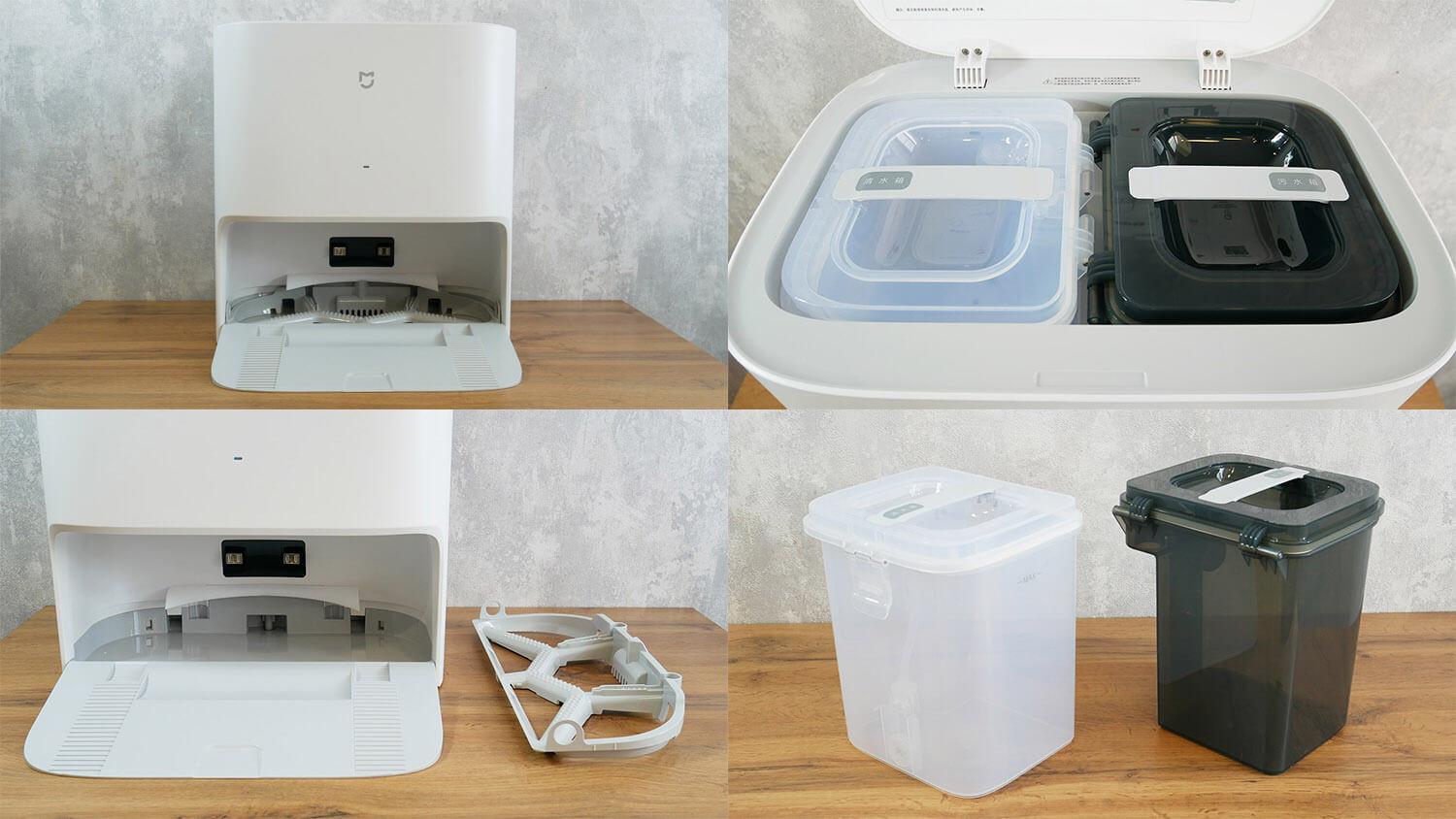
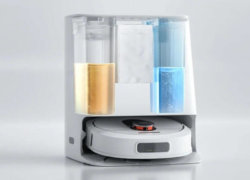
Napkin washing station
The station significantly increases the efficiency of wet cleaning and minimizes human intervention during robotic cleaning. There's no need to wash cloths by hand, and on large surfaces, floor cleaning efficiency remains unaffected during the cleaning process.
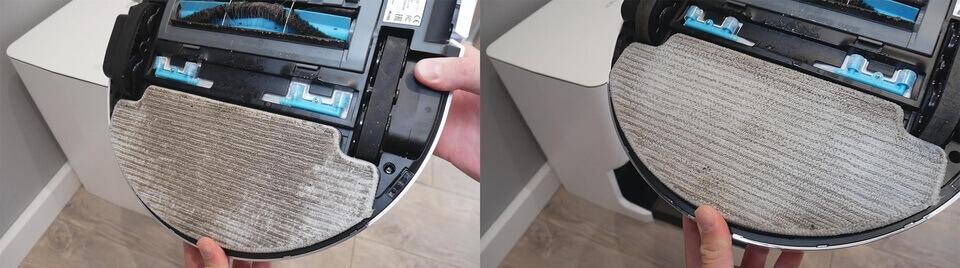
The quality of the napkin's washing
Moreover, the new stations can be connected to the sewer and water supply, significantly simplifying your life. Therefore, such a station is an excellent solution for both large and small areas, especially if you plan to run the robot on double or triple passes over the area being cleaned.
As for the self-cleaning station for the dust collector, this is a more convenient option that will free you from manually shaking out the dust from the container every one or two cleanings.
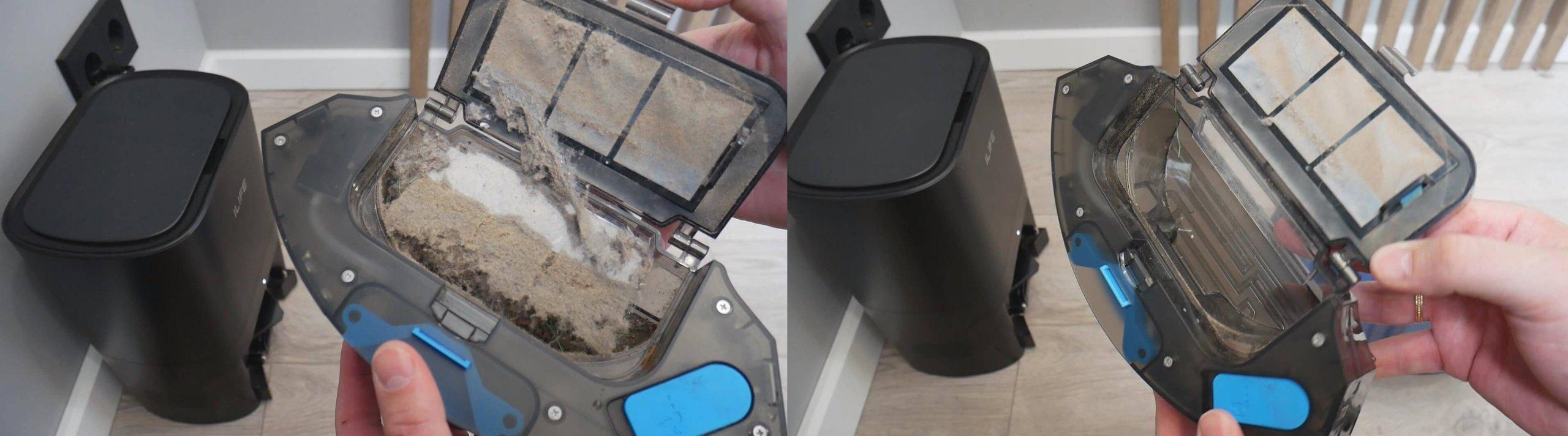
Self-cleaning
But in my opinion, both a self-cleaning station and a station for washing napkins are necessary if Choosing a robot vacuum cleaner in 2024In general, it's great when one station has both functions.
Which napkin shape is best?
And finally, the last question many were waiting for an answer to: "Which wipes are best?" Round, straight, or vibrating. Or "Which type of cleaning module is best?"
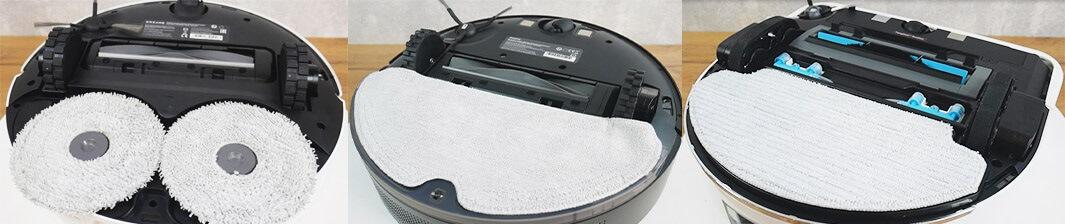
Types of wipes in robotic vacuum cleaners
Personally, I'm a fan of the two round rotating cloths found in most new flagship models. It's no wonder that almost all leading brands have switched to this design. A straight cloth, in my opinion, is a relic of the past, and its only advantage is that it leaves fewer streaks on the floor. But if you use the right water in your robot, and if it washes the cloths on the station, with the right detergent, and at the right intervals, even round cloths will be streak-free. This has been proven over over two years of use with various models.
Therefore, a regular straight cloth is the worst option of the three if you are choosing a robot vacuum cleaner and expect high-quality wet cleaning.
Comparing a vibrating cloth with two rotating ones, I can note that the vibrating platform does indeed remove dirt better than the other models from various manufacturers. Round rotating cloths are often gentle on the floor and are unable to remove tough stains. However, there are robots that can remove tough stains even with round cloths. I like round cloths because they leave a more visible wet mark on the floor and the appearance of the floor after cleaning with a robot with round cloths is more pleasing to the eye. I would consider a vibrating platform if you absolutely need the robot to scrub harder rather than wipe.
That's all I have for now! If I missed anything, please leave your question in the comments. The questions that get the most likes will be covered in a separate video, if you enjoy the information and want to see more of this format. Happy shopping, everyone. Bye!
Finally, I recommend watching the video version of this publication on the channel robovac.washerhouse.com: