Which is better: a robotic vacuum cleaner or an upright vacuum cleaner?
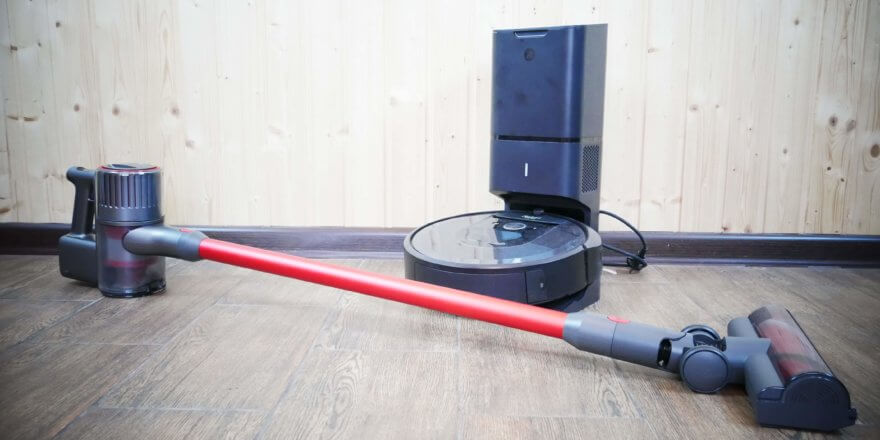
In this post, I'd like to address a very popular question: which is better for cleaning a house or apartment: a robot vacuum cleaner or an upright vacuum cleaner? Regular vacuum cleaners are completely out of the question; in my opinion, they're outdated and inferior to more modern alternatives in every way except power. I'll now review the main comparison criteria, awarding one point for each to a handheld cordless vacuum cleaner or a robot vacuum cleaner. The score will then determine which option is preferable. The comparison included an upright vacuum cleaner. Roborock H6 and several different robots: iRobot Roomba i7+, iCLEBO O5 Wi-Fi and others. So, let's go!
Current links for the iRobot Roomba i7+:
Price
One of the most important comparison criteria is the price of the vacuum cleaners, which is usually the starting point. At the time of writing, according to Yandex Market, upright vacuum cleaners range in price from $15 (a little over $20) to $750 (a little over $1,000). The range is wide, but from experience, I can say that truly powerful upright vacuums that pick up dirt well will cost between $15 and $300. That's $200-$400 in our case. For example, the Roborock H6, which was included in the comparison, costs $270.
Now let's analyze the prices of robot vacuum cleaners. There are, of course, models for $10, but those are just toys. Something that resembles a robot vacuum cleaner will cost at least $25, which is about $35, and the maximum can reach $1,200, which is $1,650. The average price for good robot vacuum cleaners ranges from $200 to $400, which translates to $275 to $550. My iRobot Roomba i7+ costs $750.
Yes, robotic vacuum cleaners will obviously be more expensive, and that's fair, because they're packed with sensors that allow them to clean your home autonomously.
Therefore, the score should ideally be given in favor of the vertical vacuum cleaner, but this is not entirely objective, since there is robot vacuum cleaners for $150 , which will do a good job of cleaning. A decent upright vacuum cleaner will cost the same. For $200, you can choose either a functional robot vacuum or a handheld version.
Therefore, in my opinion, in terms of price, there is a draw between a robot and a vertical vacuum cleaner.
Robot vacuum cleaner 0:0 Upright vacuum cleaner
Quality of cleaning
The second thing potential buyers are interested in is cleaning quality. We want a vacuum cleaner to do its primary job and keep the house clean. There are many beliefs that handheld vacuum cleaners are much more powerful than robots and perform vacuuming at a completely different level. This is a profound misconception that was acceptable five years ago. Now we've learned to do quite well. powerful robotic vacuum cleaners, which will effectively collect debris not only from hard floor coverings, but also from carpets.
I'll prove my point with a test. There's a stand with crevices of varying depths, from 2 to 10 mm. I poured ground coffee into them to simulate dust. Here's how the Roborock H6 upright vacuum performed. It picked up debris from every crevice, no matter how deep. This vacuum truly boasts high power.
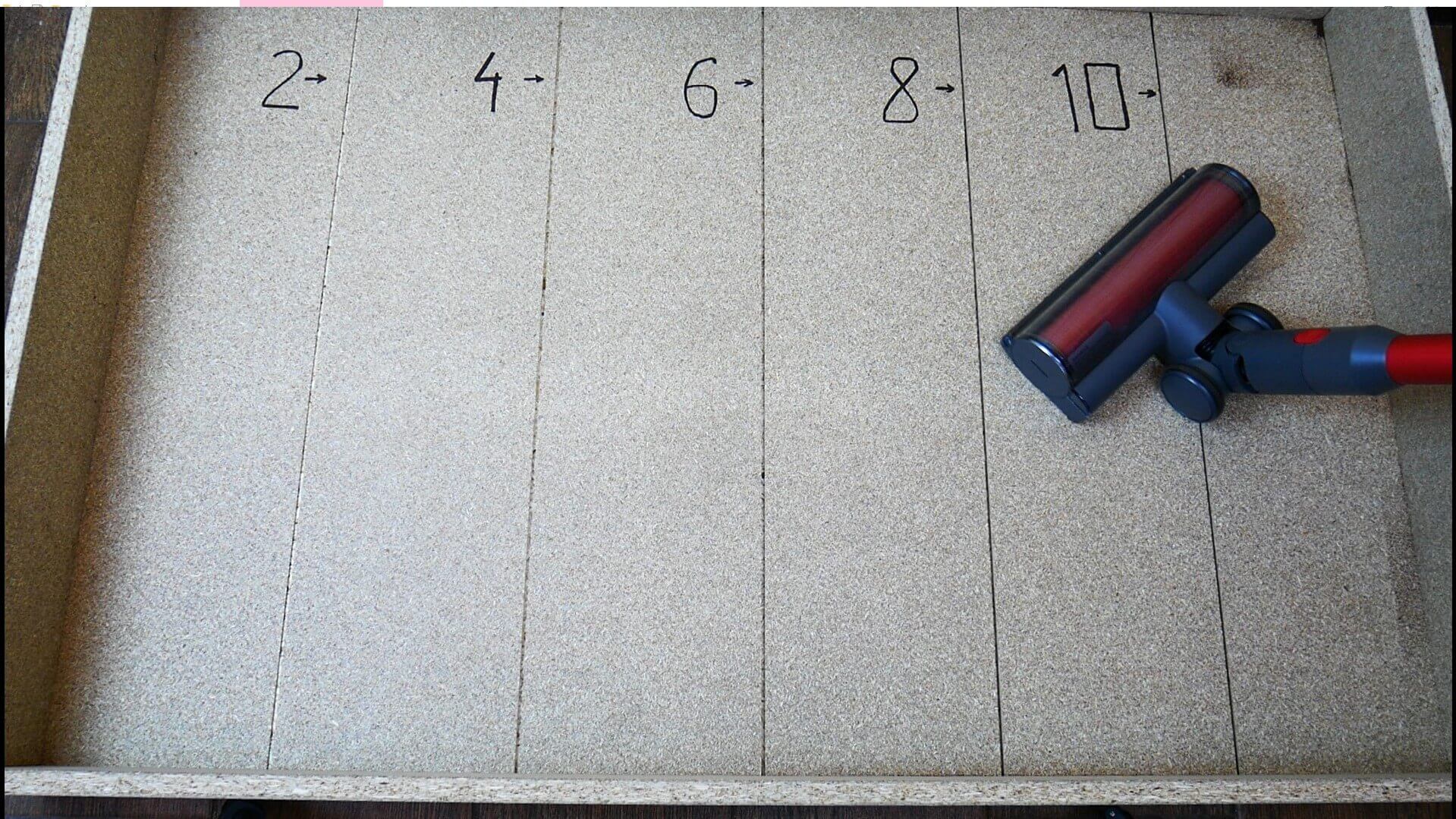
Suction power of a cordless vacuum cleaner
Here's how the powerful iCLEBO O5 Wi-Fi robot vacuum cleaner handled the same task:
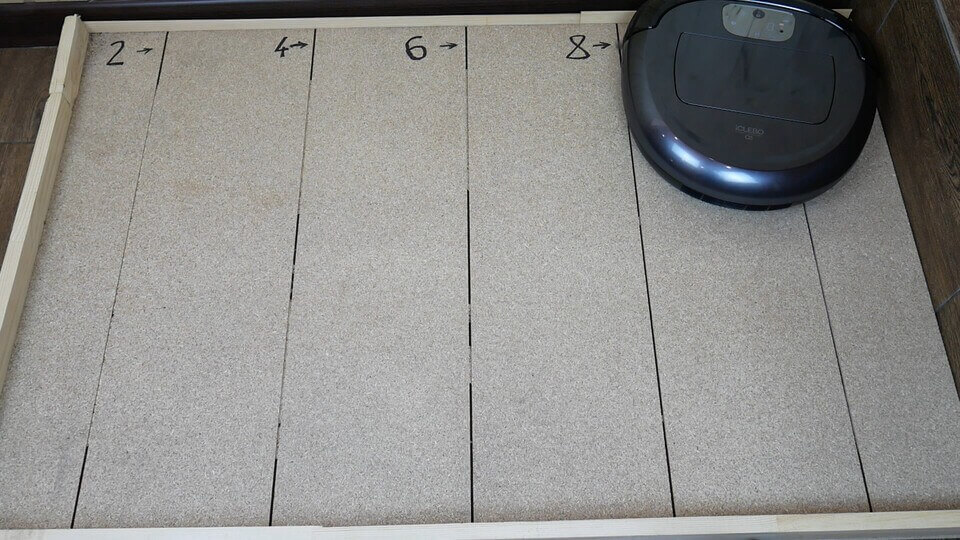
The suction power of a powerful robot
You can see that it can effectively vacuum up to 6 mm of crevices. It also partially vacuumed up to 8 and 10 mm of crevices. So, in terms of power, a robot vacuum and an upright vacuum are practically equal. But that's only if we're talking about a powerful robot. Most models can only vacuum up to 2 mm of crevices. But even that is actually more than enough to keep your home clean.
When it comes to picking up other types of debris, both handheld and robotic vacuums can effectively pick up pet hair, fur, and small debris from the floor. The key is to choose the right model wisely, and I can help you with that. If you need any help, please let me know in the comments.
Ultimately, in my opinion, the handheld vacuum cleaner and the robot are almost identical in terms of cleaning quality, so it’s another draw.
Robot vacuum cleaner 0:0 Upright vacuum cleaner
A visual comparison video where you can actually see the cleaning quality:
Battery life
Now here's an interesting comparison. Handheld vacuum cleaners can run for about 10 minutes on turbo mode, which is ideal for those who like to clean their floors thoroughly, even when it's not necessary.
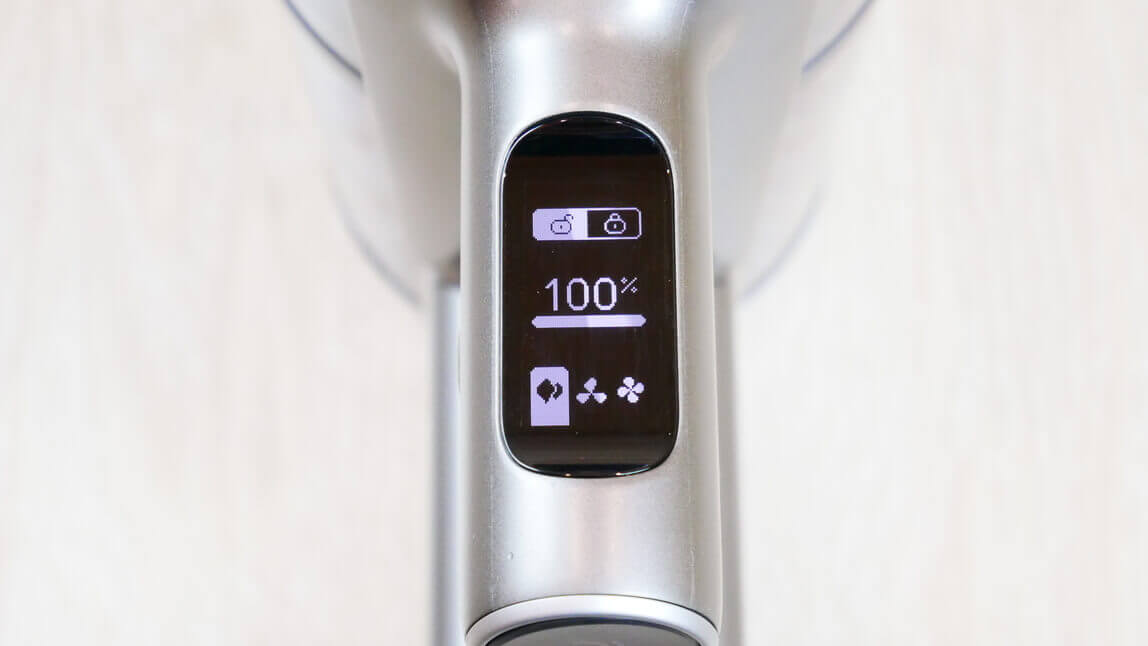
Operating modes
In standard mode, the average battery life is 25-30 minutes, which is usually enough for a full cleaning of your home, even if you have a private house of around 100 square meters. In eco mode, the runtime can reach up to an hour, but at this power level, the vacuum cleaner is truly weak and unsuitable for a full cleaning; this is more of a marketing ploy by manufacturers. In any case, many upright vacuum cleaners have a removable battery. You can purchase an additional one, charge it before cleaning, and swap out the dead battery for a charged one during cleaning.
At the same time, robotic vacuum cleaners can operate autonomously for an hour in maximum mode, about an hour and a half in standard mode, and up to 3 hours in eco mode.


Robot modes
This applies to models equipped with a high-capacity battery. This is enough for a full cleaning of a home up to 100 square meters. And most new robot vacuums with precise navigation can automatically resume cleaning where they left off after recharging at the base. This means the robot cleans 60 square meters in maximum mode, goes to recharge, returns, and finishes cleaning the same amount. This is undoubtedly very convenient.
But since we need battery life to determine whether the battery is sufficient for a full cleaning, and the cleaning speeds of a robot and a handheld vacuum differ, the main thing to summarize is that the battery life of the two vacuum cleaners being compared fully satisfies the need for a full cleaning in one go. A robot will clean 100 square meters in an hour and a half, while a handheld upright vacuum will do the job in 20-30 minutes. So, here too, the comparisons are very close.
Robot vacuum cleaner 0:0 Upright vacuum cleaner
Cleaning time
A small spoiler alert: there's finally a score difference in this regard. So, as mentioned earlier, cleaning with an upright vacuum cleaner takes 20 to 30 minutes. Technically, a robot vacuum cleaner cleans three times longer, up to an hour and a half. However, it doesn't require any attention and can clean while you're away—whether you're at work, taking a bath, or going for a walk. Ultimately, cleaning with the robot will take no more than a minute to open the app, find the remote, and turn on the desired cleaning mode. That's all. Maintenance, namely emptying the dust bin, is the same for both an upright vacuum and a robot.
Therefore, a robot vacuum cleaner certainly saves you time, and you don't even need to take cleaning time into account; everything happens automatically.
Robot Vacuum Cleaner 1:0 Upright Vacuum Cleaner
Operating costs
It's equally important to compare the robot's maintenance costs. I even compared the energy consumption of a stick vacuum and a robot. Let's take it one step at a time.
A robot vacuum cleaner requires a whole list of consumables to be replaced annually: the side brush at least once, the HEPA filter 4-6 times, the central brush once if needed, and the cleaning cloth 2-3 times if it has a wet cleaning function and you use it. For example, a set of consumables for Xiaomi robot vacuums costs around $20. They'll last for a year. If we're talking about consumables for an iRobot Roomba, the originals will cost at least $40 for an annual set.
Upright vacuums don't have many consumables, mostly filters. A year's supply of genuine filters for the Roborock H6, for example, will cost around $15. Accessories for Dyson vacuums are even more expensive. However, changing the filters at least every six months to a year is sufficient, and they're a bit cheaper.
In terms of energy consumption, my iRobot Roomba i7+ robot vacuum cleaner consumed 0.59 kW over 10 days of daily use, which is almost 2 kW per month. The Roborock H6, over the same period, consumed 0.49 kW, which is about 1.5 kW per month. So, in this comparison, an upright vacuum cleaner is slightly more cost-effective. However, in terms of dollars, even over a year, the robot vacuum's energy consumption is 24 kW, which is $1.36 at Moscow rates. The upright vacuum's energy consumption is 18 kW, which is $1.00. The difference is small.
Therefore, in total, slightly more cost-effective maintenance and energy costs give the upright vacuum cleaner first place.
Robot vacuum cleaner 1:1 upright vacuum cleaner
What else?
These are the main points I wanted to compare, and the final result is a tie. But there are a few more factors to consider to make a final decision and determine whether a robot vacuum cleaner or an upright one is better. I've compiled them in a table:
| Upright vacuum cleaner | Robot vacuum cleaner | |
| Versatility | + | — |
| Passability | + | + |
| Convenience | — | + |
| Storage | — | + |
| Functionality | — | + |
Upright vacuum cleaners are certainly more versatile, coming with several attachments for cleaning furniture, carpets, and hard-to-reach areas with a crevice tool. They can also be used for cleaning car interiors and removing cobwebs from ceilings.
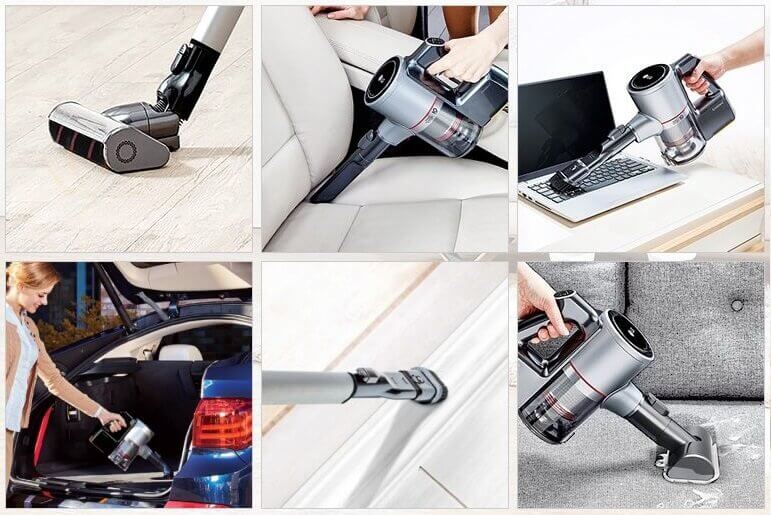
Using different attachments
In terms of maneuverability, this is a moot point. On the one hand, an upright vacuum cleaner allows you to clean stair steps, behind furniture in hard-to-reach places, and pick up debris on baseboards and radiators, among other places.
But a robot also has its advantages in this regard. It can get under low furniture—there are models as low as 6-7 cm—and clean under kitchen cabinets and under the bed, where humans rarely reach, even out of laziness. So in this regard, each has its advantages, and in my opinion, they are equally effective.
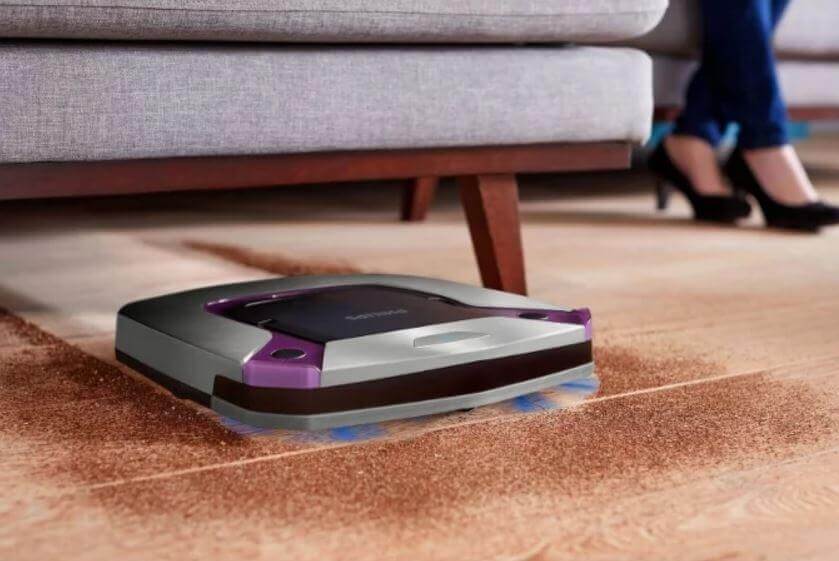
Cleaning under furniture
In terms of convenience, a robot vacuum cleaner has an obvious advantage. You can start it remotely from work, direct it to the desired room for cleaning, and schedule it to run at the desired time every day. It's very convenient.
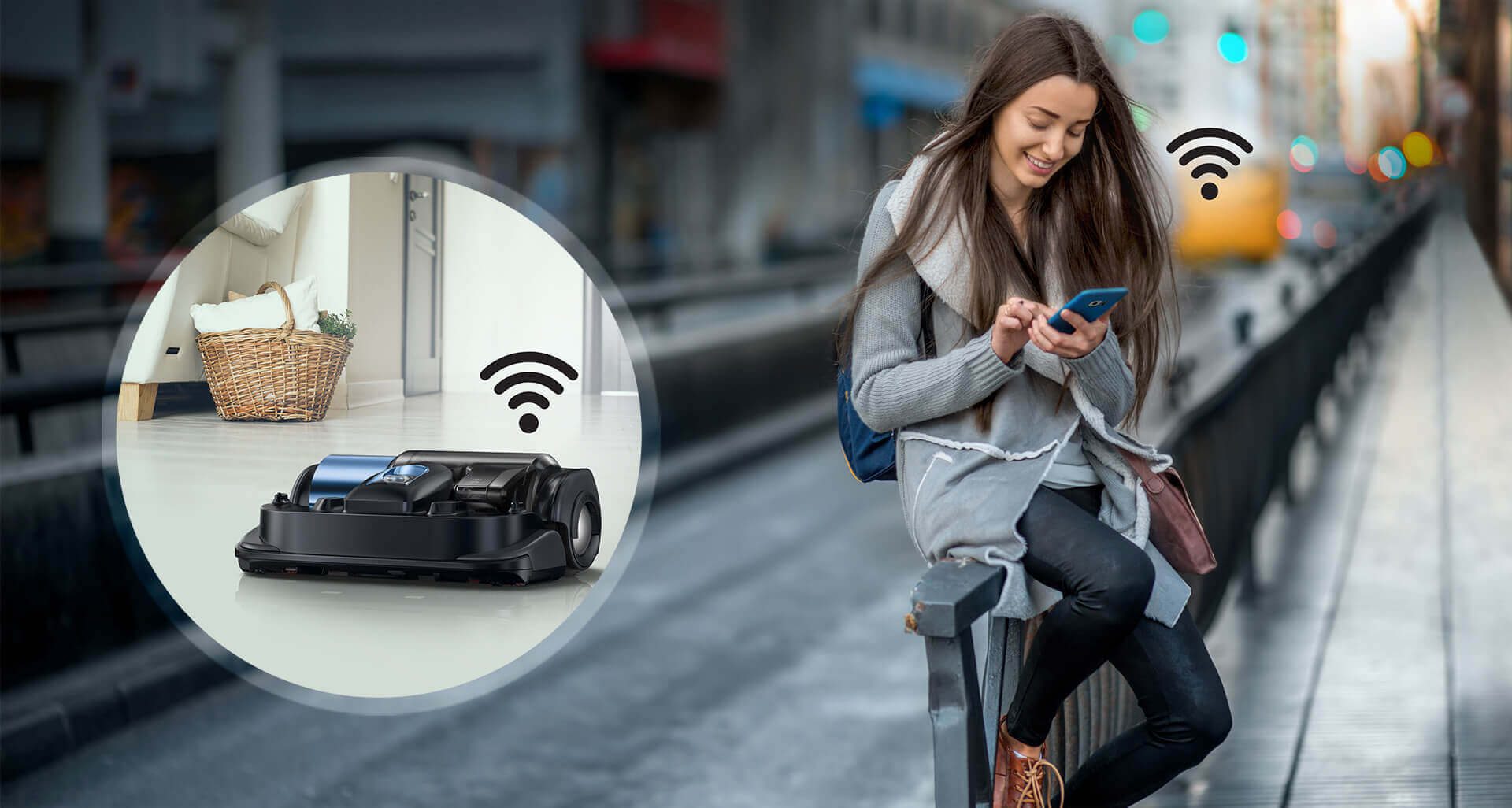
Remote control
A robot vacuum cleaner takes up less storage space; it fits compactly on its base and can be placed anywhere, as long as the charging base installation instructions are followed. A vertical vacuum cleaner requires more space and should ideally be wall-mounted, which can disrupt your home's decor.
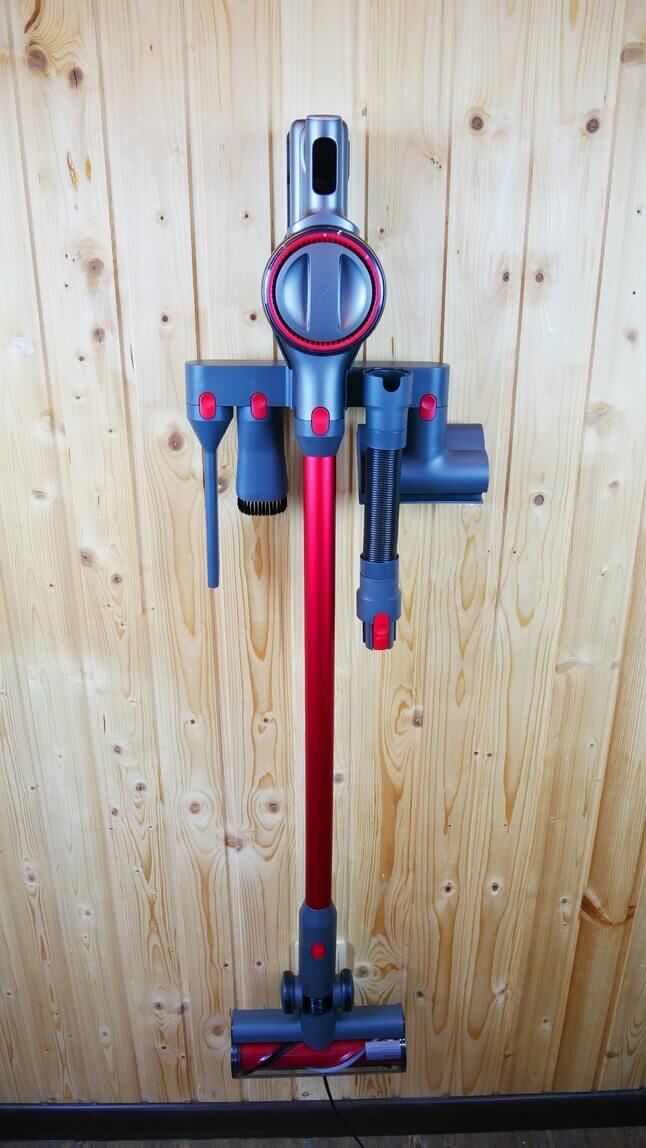
Storage on a bracket
In terms of functionality, robotic vacuum cleaners also have the advantage. They can clean themselves on their base, vacuum and mop simultaneously, talk to their owners, cheer them up, and even act as security guards while you're away. This feature is available in models with an active camera that can be accessed remotely from a smartphone. So, if you're looking to create a smart home, a robotic vacuum cleaner is definitely the way to go.


Functions
In the end, the robot vacuum cleaner won on most points, so the overall score was 2:1 in its favor.
Robot Vacuum Cleaner 2:1 Upright Vacuum Cleaner
I hope I've answered all your questions and will now make it easier for you to decide between an upright vacuum or a robotic vacuum. Ideally, the choice should be based on personal preferences. Often, the best option is a functional robotic vacuum with high-quality navigation, paired with an affordable upright vacuum for spot cleaning in areas beyond the robot's reach.
That's all from me. Happy shopping, everyone!

Excellent article, but the question remains, which vacuum cleaner is best to buy for regular cleaning of hair, our Maine Coon has very long hair.
Read a separate article on this topic. https://robovac.washerhouse.com/en/o-robotah/robovac-robot-pylesos-dlya-uborki-shersti.html
I also have a Maine Coon. We bought a robot vacuum cleaner. It's simply fantastic!!! We have a three-room apartment. Cleaning takes 40 minutes. I press one button on my phone and forget about it. How did I ever live without it?
What brand of robot vacuum cleaner do you like? I'm currently deciding which one to buy!
Hello, what robot vacuum cleaner would you recommend for a single apartment? One that also sucks up cat hair well and vacuums porcelain tiles and laminate flooring well.