What are the differences between robot vacuum cleaners and which one is better: 10 important differences
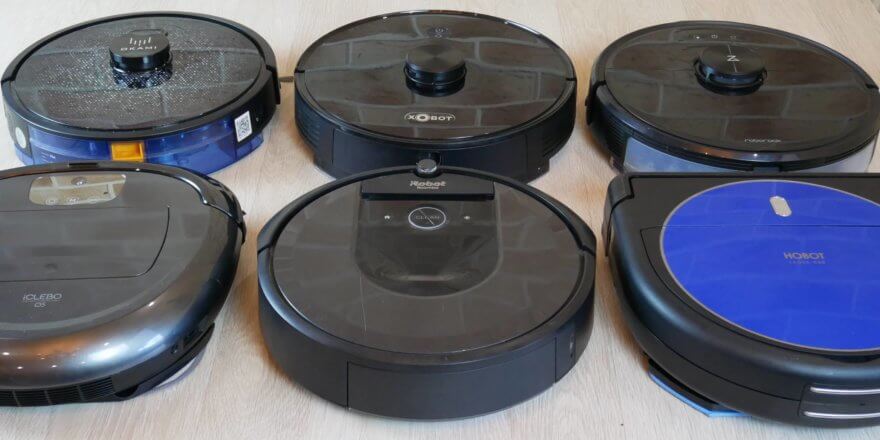
Hello everyone! You are on the channel. robovac.washerhouse.comIn this article, I'd like to explain the different types of robotic vacuum cleaners and how they differ from one another. Knowing the key differences and the rationale behind each design will help you choose the best option for your budget and needs. I've compiled a list of 10 key parameters that may differ in robotic vacuum cleaners. Let's look at them one by one. So, let's get started!
Video version:
Navigation
The main difference in robotic vacuum cleaners, which affects their price and usage, is the navigation type. Currently, there are robotic vacuum cleaners without navigation; they navigate solely using various sensors. They move erratically and are only suitable for cleaning small areas, say up to 40 square meters within three rooms, or better yet, one. Such robots are practically obsolete and are only found in the sub-$100 price range.
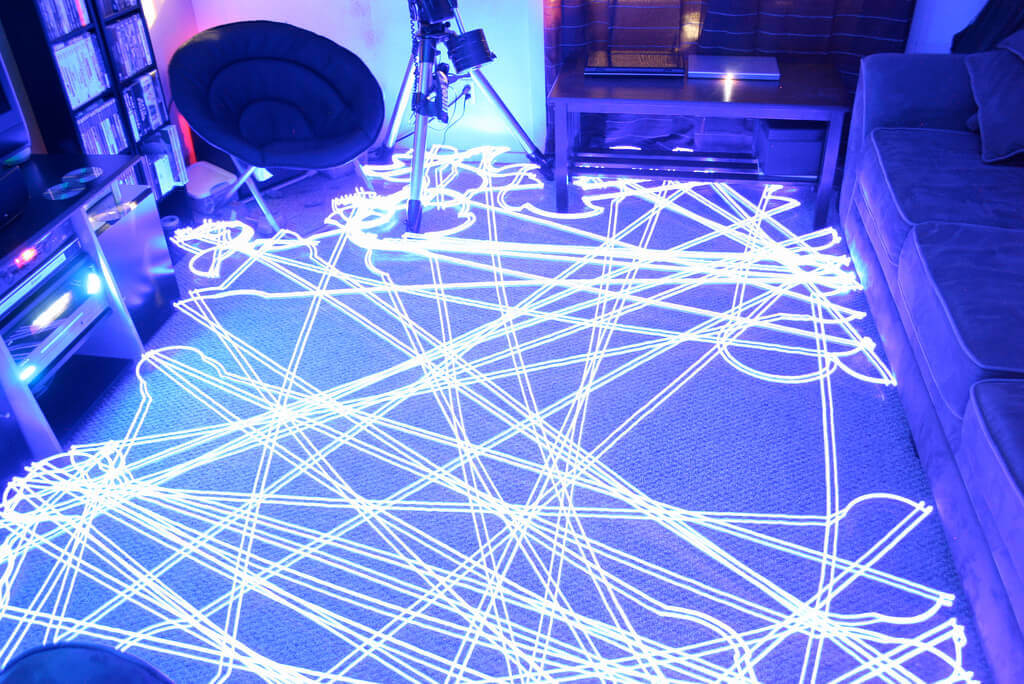
Chaotic movement
Slightly more expensive, ranging from $120 to $300, are robot vacuum cleaners with a gyroscope for navigation. It's hidden within the robot's body, making it undetectable. The gyroscope's presence is confirmed by the robot's ability to move in a serpentine pattern rather than randomly, and sometimes even draw a map of the room in the app, although this may not be accurate.

Snake-like movement
Furthermore, robots with a gyroscope finish cleaning automatically after completing the entire area, rather than idling until the battery runs out. I recommend choosing these models if you're on a budget or if your home is less than 60 square meters. They effectively clean 3-5 rooms, not just bedrooms, but the entire house or apartment.
More precise navigation is based on laser sensors installed in the mechanical bumper. Laser sensors allow the robot to better navigate, but they are still only effective in areas of approximately 60-80 square meters. Robots with laser-based navigation cost approximately $300-$450. However, this type of navigation is extremely rare.
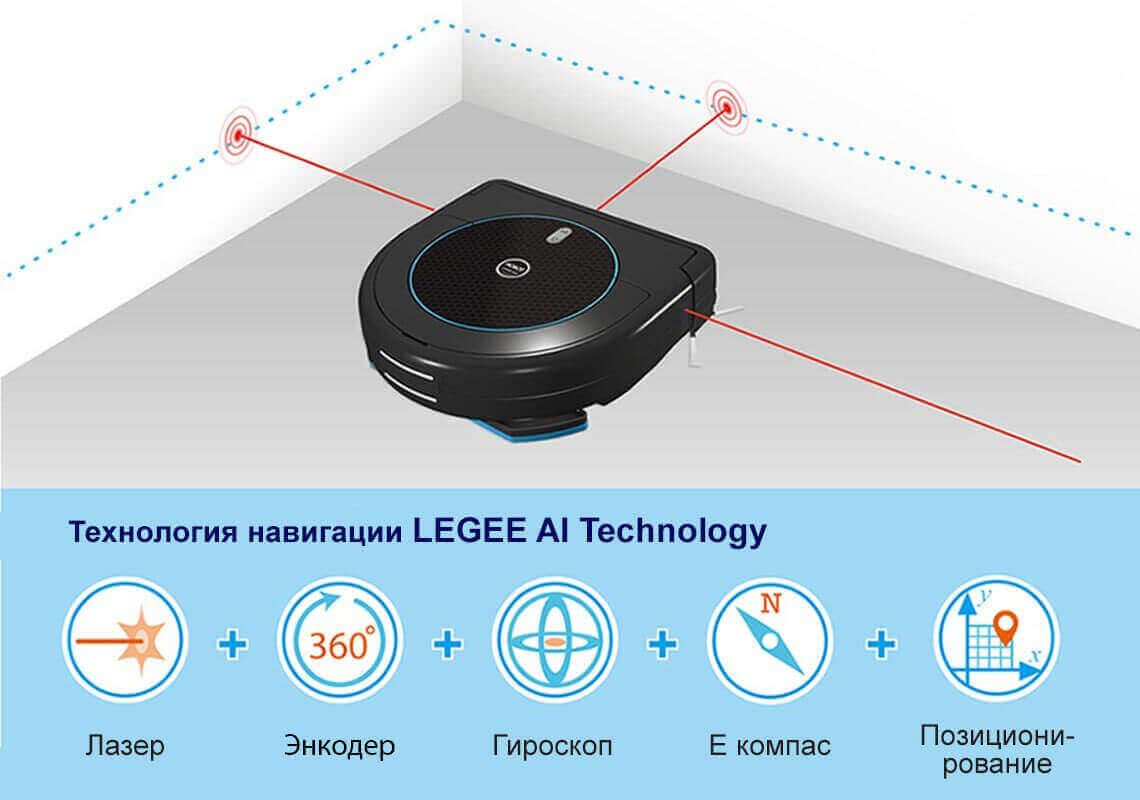
Laser navigation
Camera- or lidar-based navigation is considered advanced. Each type of navigation has its advantages and disadvantages, but we've found that lidar produces more accurate maps.
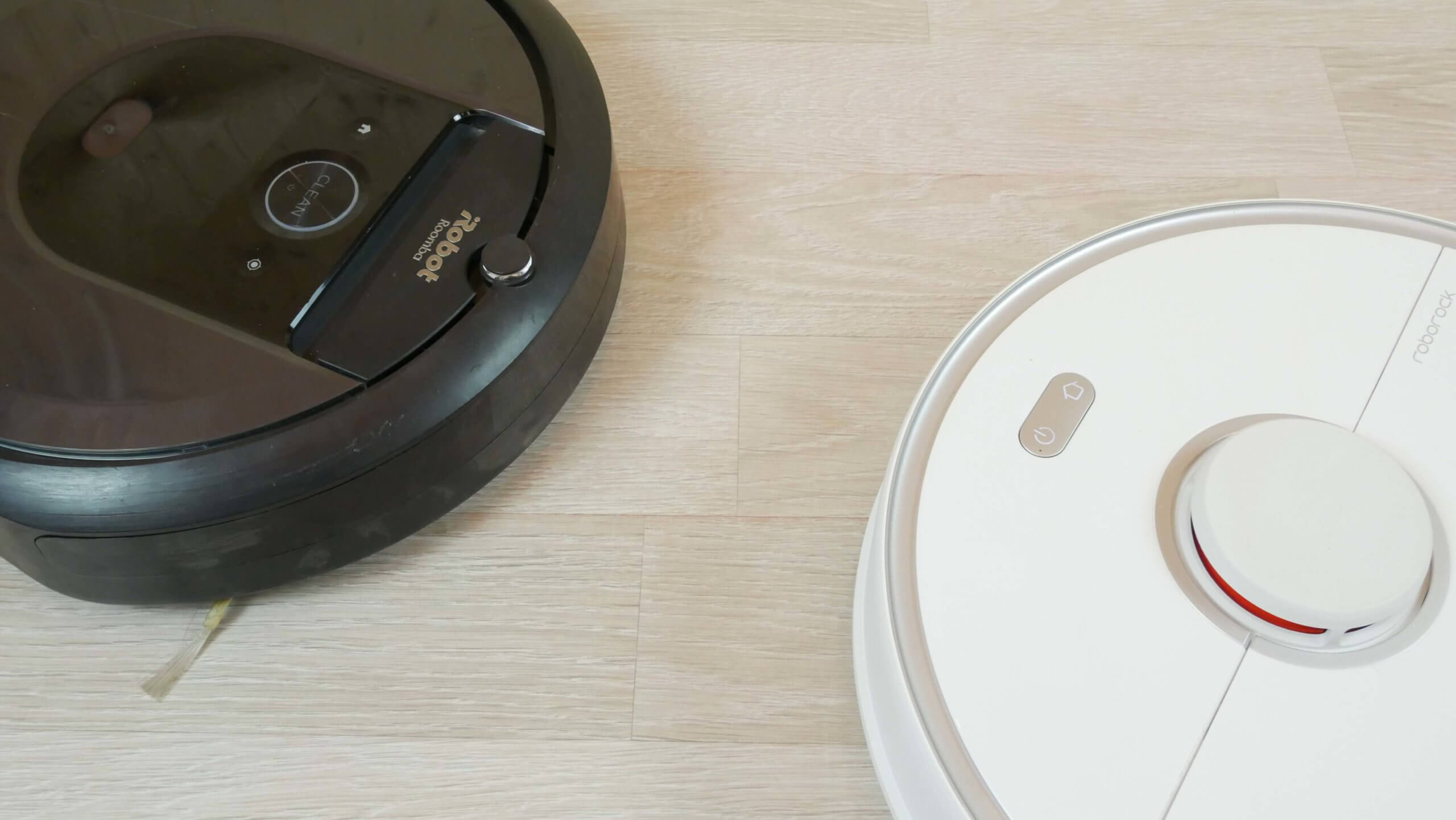
Lidar or camera
Lidar or camera These allow robotic vacuum cleaners to navigate areas larger than 100 square meters. The number of rooms is not particularly important. Furthermore, robots with this type of navigation can automatically divide a room into zones, and the app offers some interesting functionality, such as setting virtual walls that the robot will not enter. Robots with lidar or camera technology start at $300 and up, but some models can cost as little as $200.
And the most advanced type of navigation in 2020 is a lidar system, which creates a room map, combined with a front-facing camera that recognizes objects on the floor. There are only a few such robots in the world at the moment, and they truly are the smartest. The most well-known are Roborock S6 MaxV And Ecovacs Deebot OZMO T8 AIVIBut their price tag starts at $650.
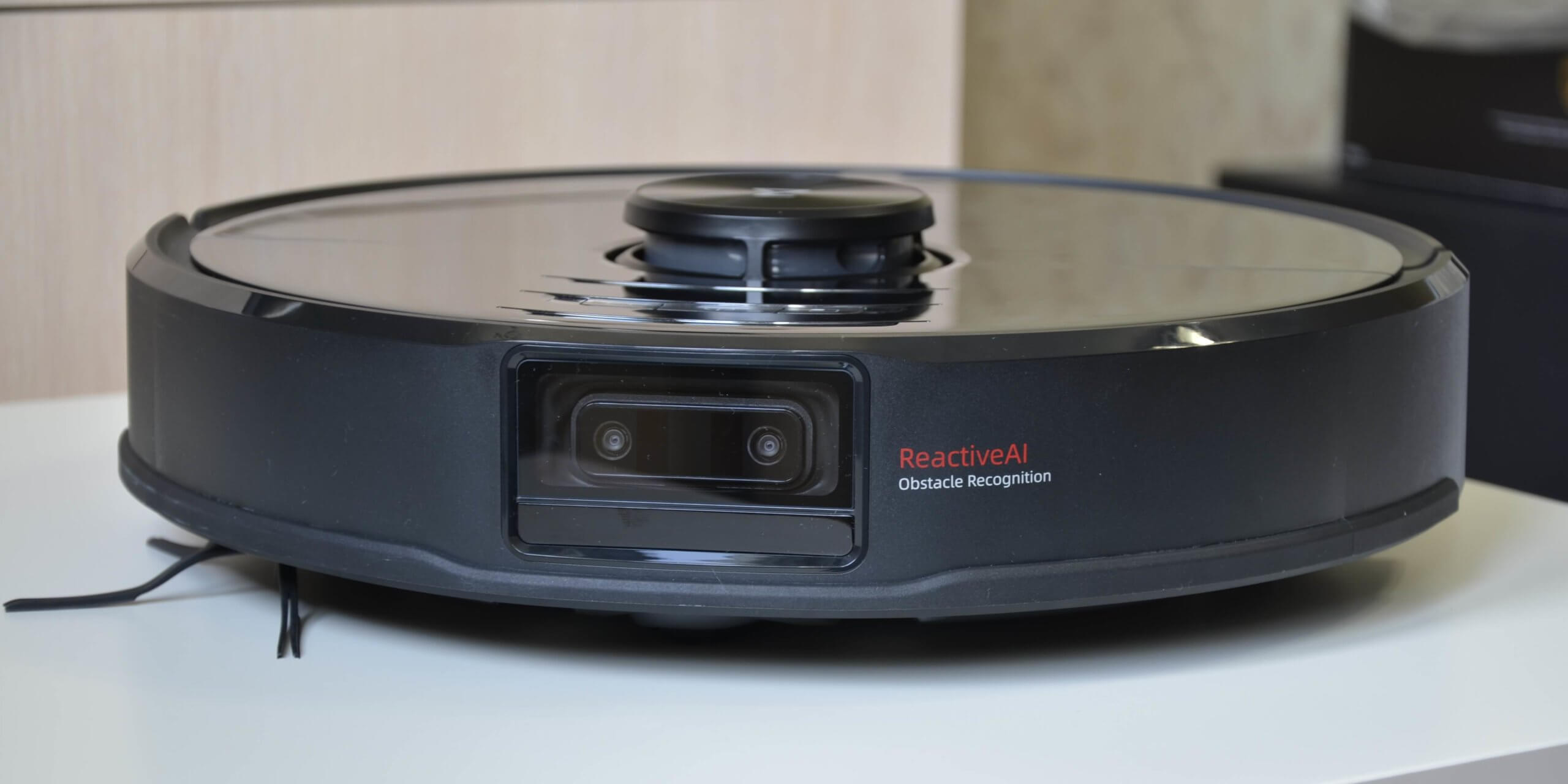
Lidar and camera
Choosing a robot vacuum cleaner, first of all, decide what type of navigation you need.
Current links to the Roborock S6 MaxV:
Type of cleaning
The second thing that distinguishes robot vacuum cleaners is the cleaning method. Some models are exclusively for dry cleaning, like the iRobot Roomba series. There are also robots for dry and wet cleaning, which can vacuum and mop the floor, providing a gentle wet cleaning. These currently represent the majority of robot vacuum cleaners on the market. There are also mopping robot vacuum cleaners that can fully mop and vacuum simultaneously. The Hobot Legee line is a well-known example.
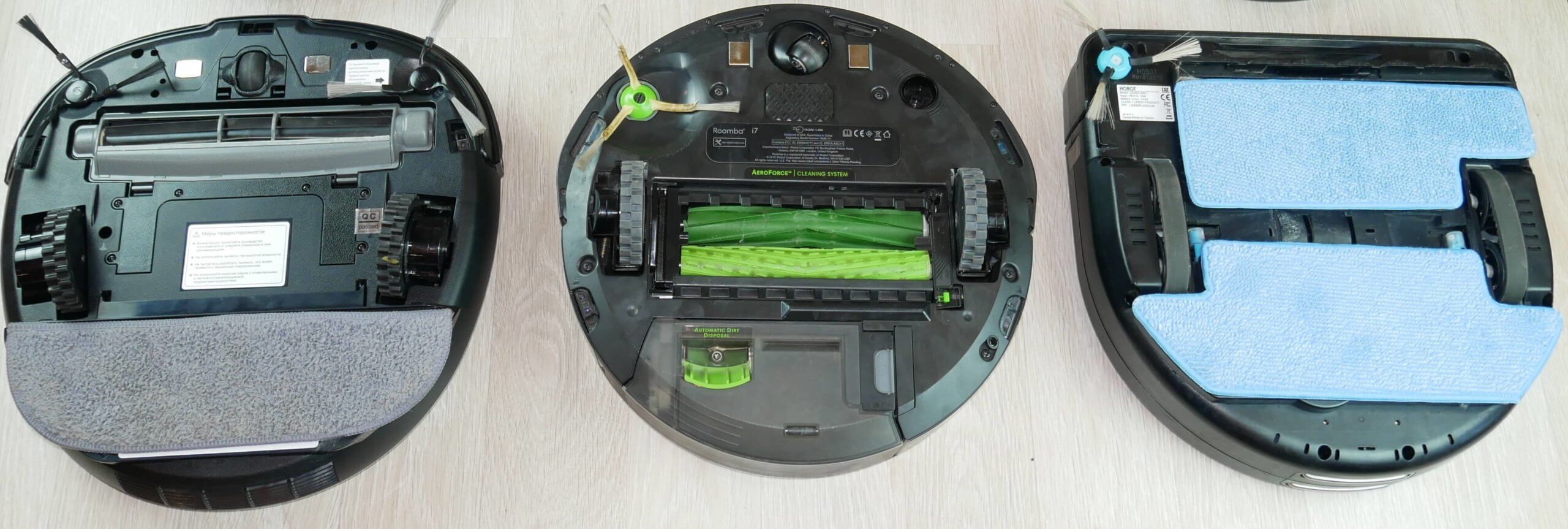
Robotic vacuum cleaners for various purposes
There are also so-called robotic floor cleaners, which, like robotic vacuum cleaners, are used specifically for floor cleaning, but are not capable of vacuuming. Among the most common are Everybot floor cleaning robots and iRobot Braava series.
If you have a lot of carpets in your house, or you don’t need wet cleaning with a robot, it’s better Choose a robot vacuum cleaner for dry cleaningIf you don't have many carpets, for example, only one in the bedroom, I recommend Choose a robot vacuum cleaner for dry and wet cleaningIf there are no carpets in the house, choose between washing robot vacuum cleaner and a robot for dry and wet cleaning. You may also consider purchasing robotic floor polisher, but then you will have to vacuum, either by purchasing another robot or a hand-held vacuum cleaner.
Cleaning block
The third important difference is the type of central cleaning unit. It can have a turbo brush, one or two, or a suction port. There are also universal options where the turbo brush can be replaced with a suction port if needed. Of the robots I tested, this is Liectroux ZK901 And Clever&Clean Aqua Series 03.
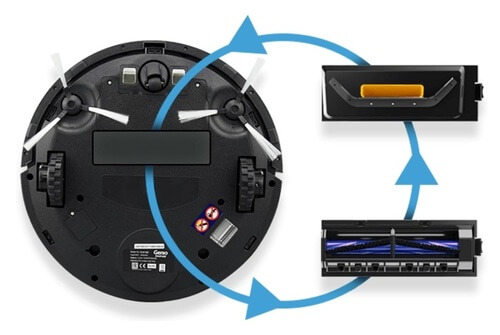
Replacement blocks
Liectroux ZK901:
The solution is truly interesting. No matter what anyone says, they clean up more effectively. robotic vacuum cleaners with a turbo brush, especially on carpets. This design is also best for cleaning hair and pet fur. Robots without a turbo brush are generally cheaper and better suited for cleaning smooth floors. Some argue that they are better for cleaning hair, as you don't have to constantly clean the central brush of hair, but cleaning efficiency will be significantly lower. It's no wonder that all leading brands equip their robots with a central brush and strive to make it more efficient by implementing new design solutions.
Central brushes
Continuing with the central brush, it's worth considering its design, as turbo brushes vary. Undoubtedly, the best design is iRobot's patented scraper rollers. They rotate in different directions, are made of silicone, and feature a tread. This allows for effective collection of pet hair, hair, and other debris, while also providing excellent carpet cleaning. Because of the patent, other manufacturers cannot use this design.
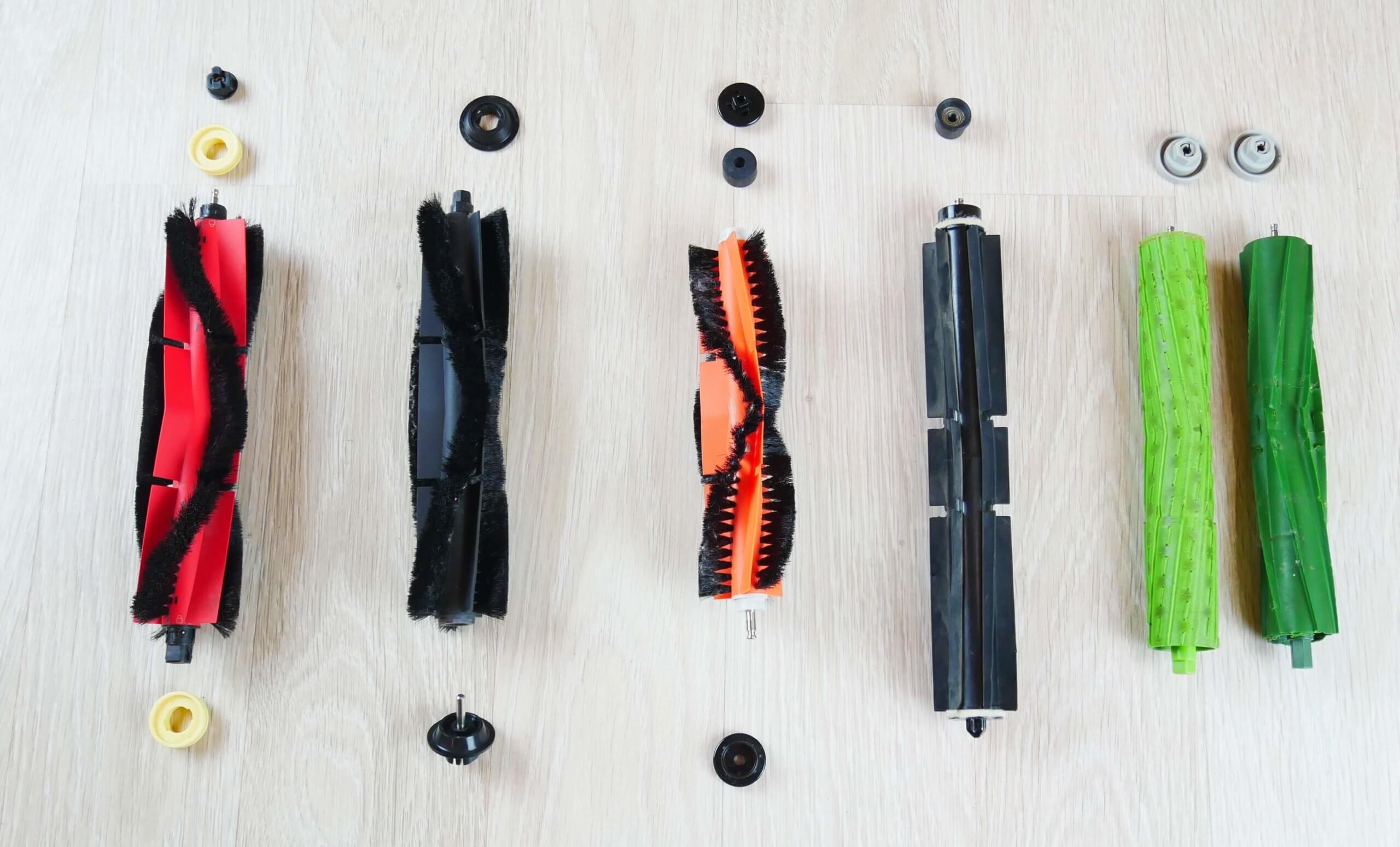
Types of turbo brushes
That's why other robots often have center brushes made of bristle and petal brushes. They're also good at picking up pet hair and lint, but they tend to pick up more of these types of debris. The difference between bristle and petal brushes is usually the density of the bristles. The denser the bristles, the better. Silicone center brushes are also available; they may be slightly less effective on hard surfaces, but they pick up less pet hair and lint and are slightly better on carpets.
The only major difference between central brushes is the ability to disassemble them for easy cleaning of tangled hair and fur. It's a big plus if the brush can be disassembled on both sides, as is now the case with new Roborock robot vacuums. Central brushes can also vary in length, but this isn't a significant issue.
Side brushes
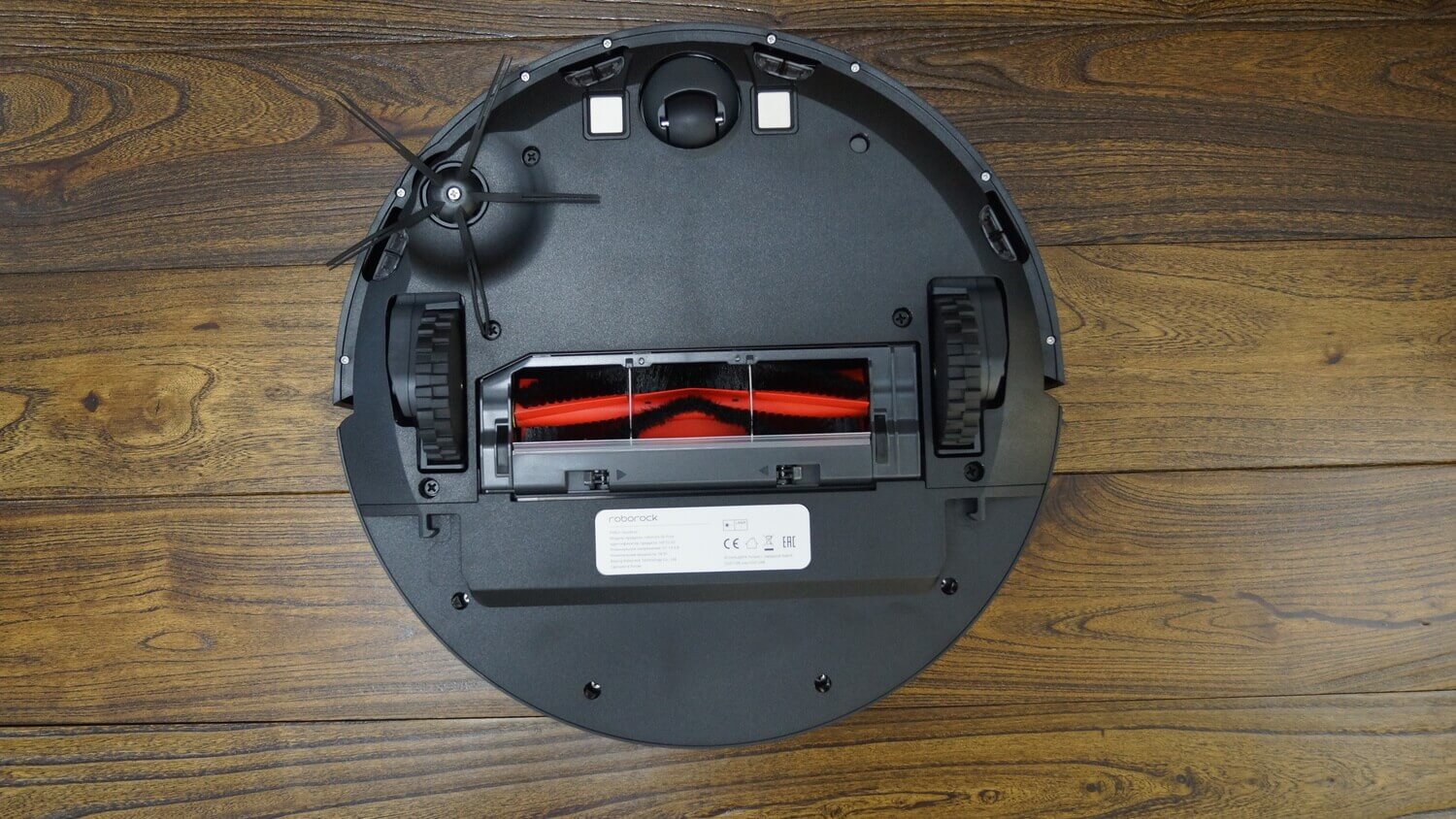
There's a lot of debate online about the number of side brushes. Popular brands like iRobot and Roborock limit themselves to installing one side brush, which is necessary for cleaning along baseboards and in corners. Other brands, however, install two side brushes, arguing that their robots cover a wider cleaning area in a single pass.
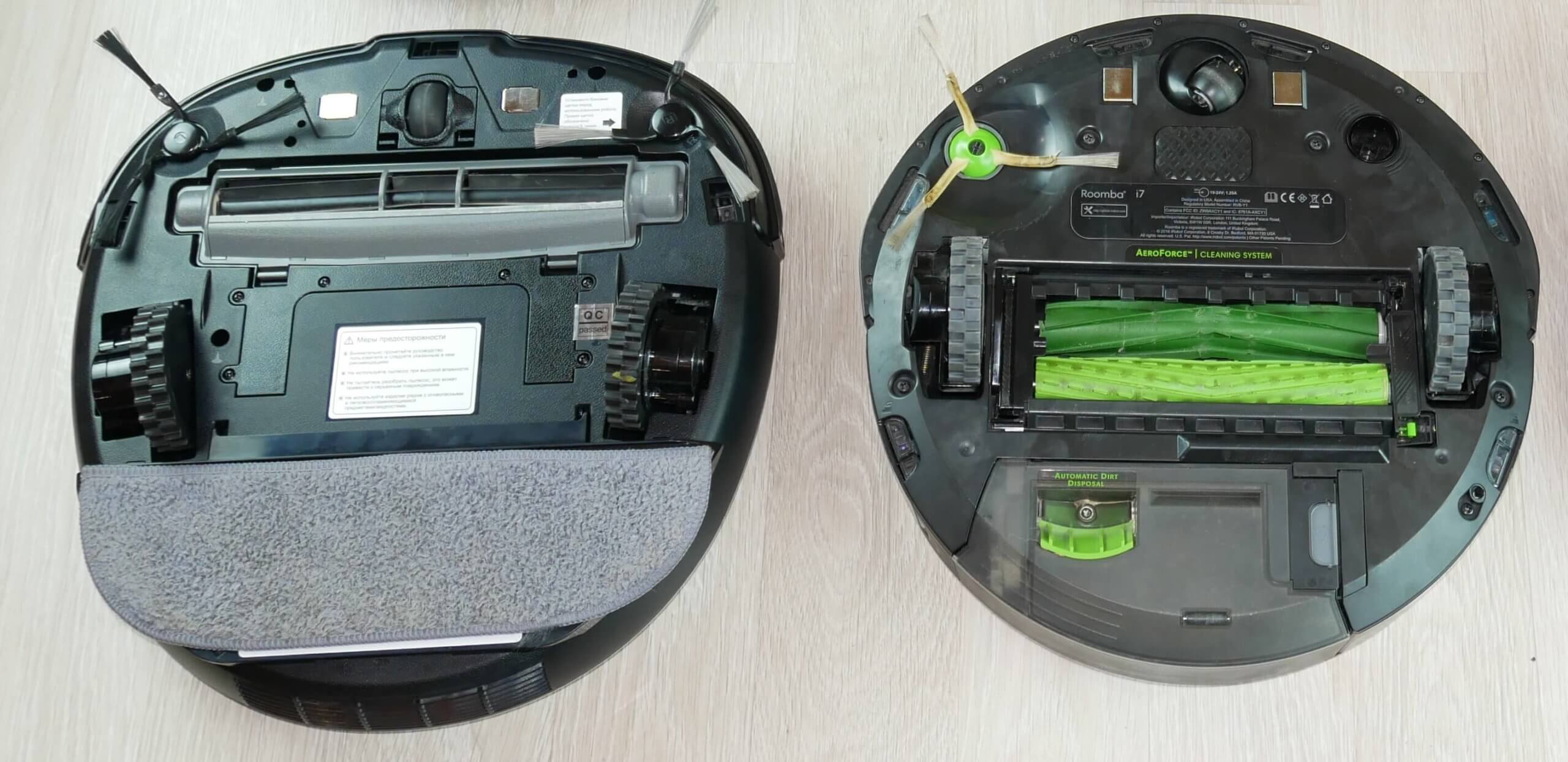
One side brush or two
In fact, if a robot vacuum has good navigation, it doesn't matter whether it has one side brush or two. It will still clean well, as it moves in a serpentine pattern in straight lines. If you don't believe me, take a look. A comparative test of the flagship robot vacuum cleaners of 2020Look at how each one cleans and compare the cleaning quality. However, if the robot doesn't have navigation, or the navigation is weak, then the second side brush will allow it to pick up slightly more debris during its erratic movements.
It's much more important to discuss the design of the side brushes themselves, as their effectiveness depends on it. First, it's best if the side brushes themselves aren't entirely made of bristles, but at least half that length. Long bristle brushes are less flexible, deform more quickly, and therefore less effective at picking up debris along walls and in corners. So, I don't recommend this design.
The second point is the mounting method. Side brushes can be attached with a screw, which requires a tool to install them. Alternatively, the mechanism can be quick-release, using locking clips. This option is much more practical.
Recently, Roborock robot vacuum cleaners have been equipped with silicone five-point side brushes. These are more wear-resistant, but perform slightly worse on carpets than the previous version with lint brushes.
Silicone side brush
Dust collectors
Dust collection containers, also known as dust bins, also vary in robot vacuum cleaners. Firstly, they vary in capacity. Dust bin capacity can range from 50 ml to 1 liter in some models. The average capacity is 450 ml, which I recommend sticking to to avoid the robot vacuum prompting you to empty the bin mid-cleaning.
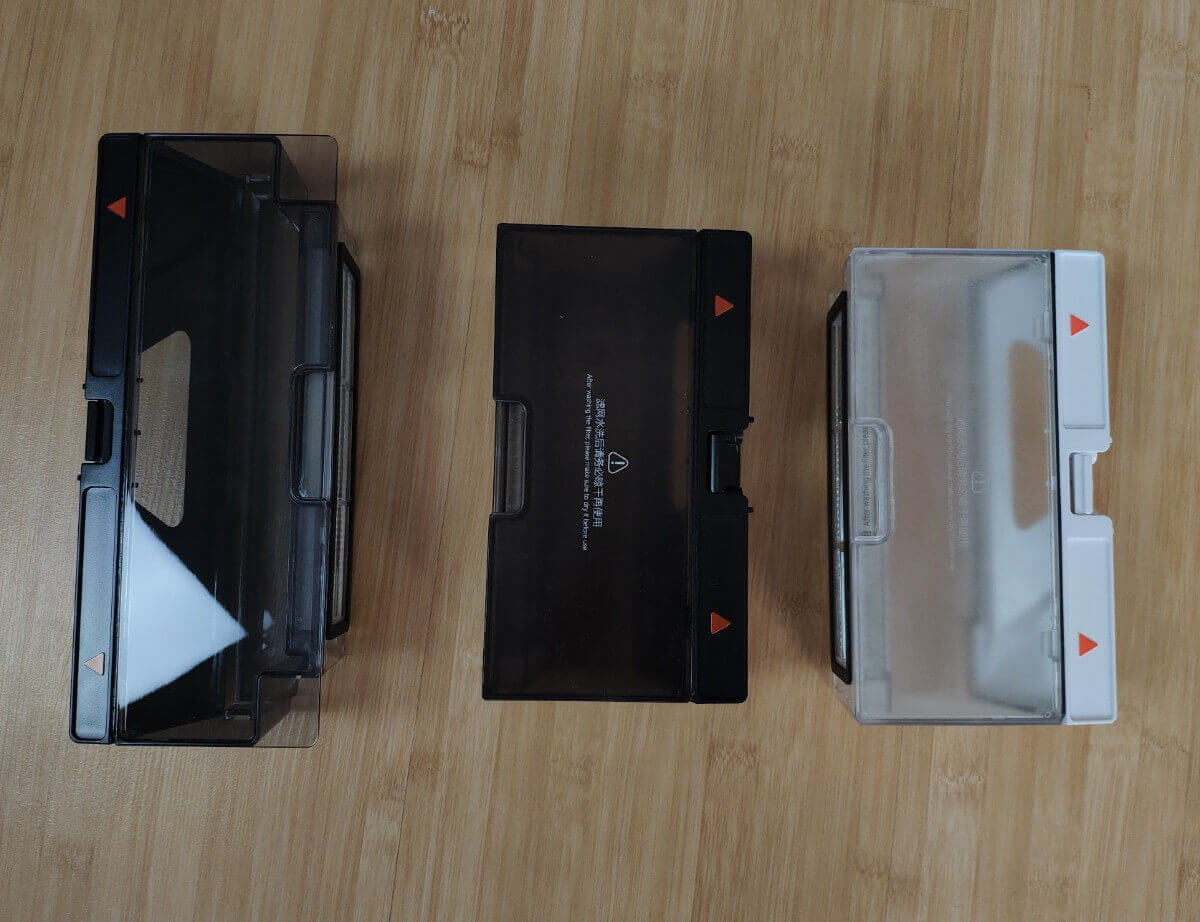
Comparison of dust collectors
Some dust collectors may have an internal motor and cannot be washed with water. Otherwise, there's no significant difference between them. The only caveat is a curtain on the suction side that prevents debris from spilling out when the container is removed. This is very convenient, as debris often spills onto the floor when the container is removed, causing inconvenience.
It's also important to jump ahead a bit and note that dust collectors can be installed together with the water tank on different sides of the robot, or can be swapped for the water tank.
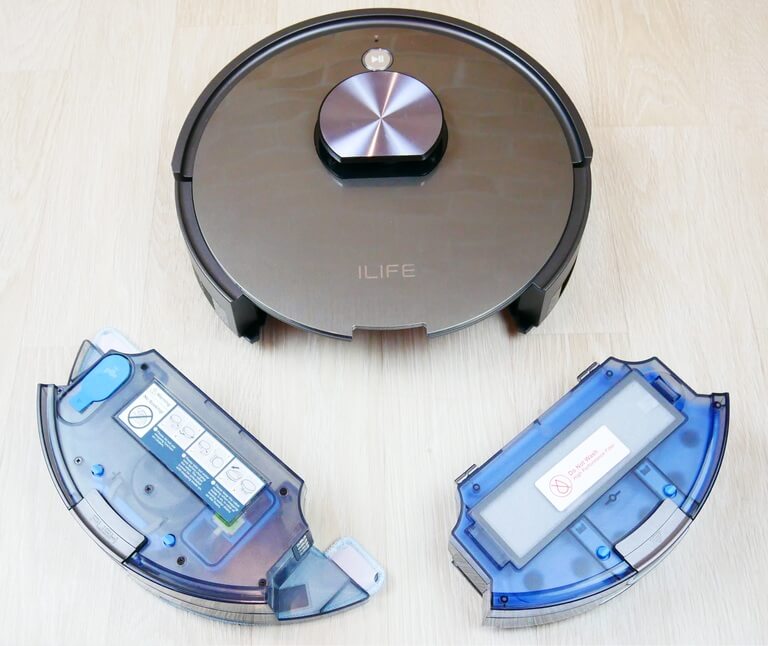
Water tank and dust collector
There is also a combined container with a compartment for water and waste.
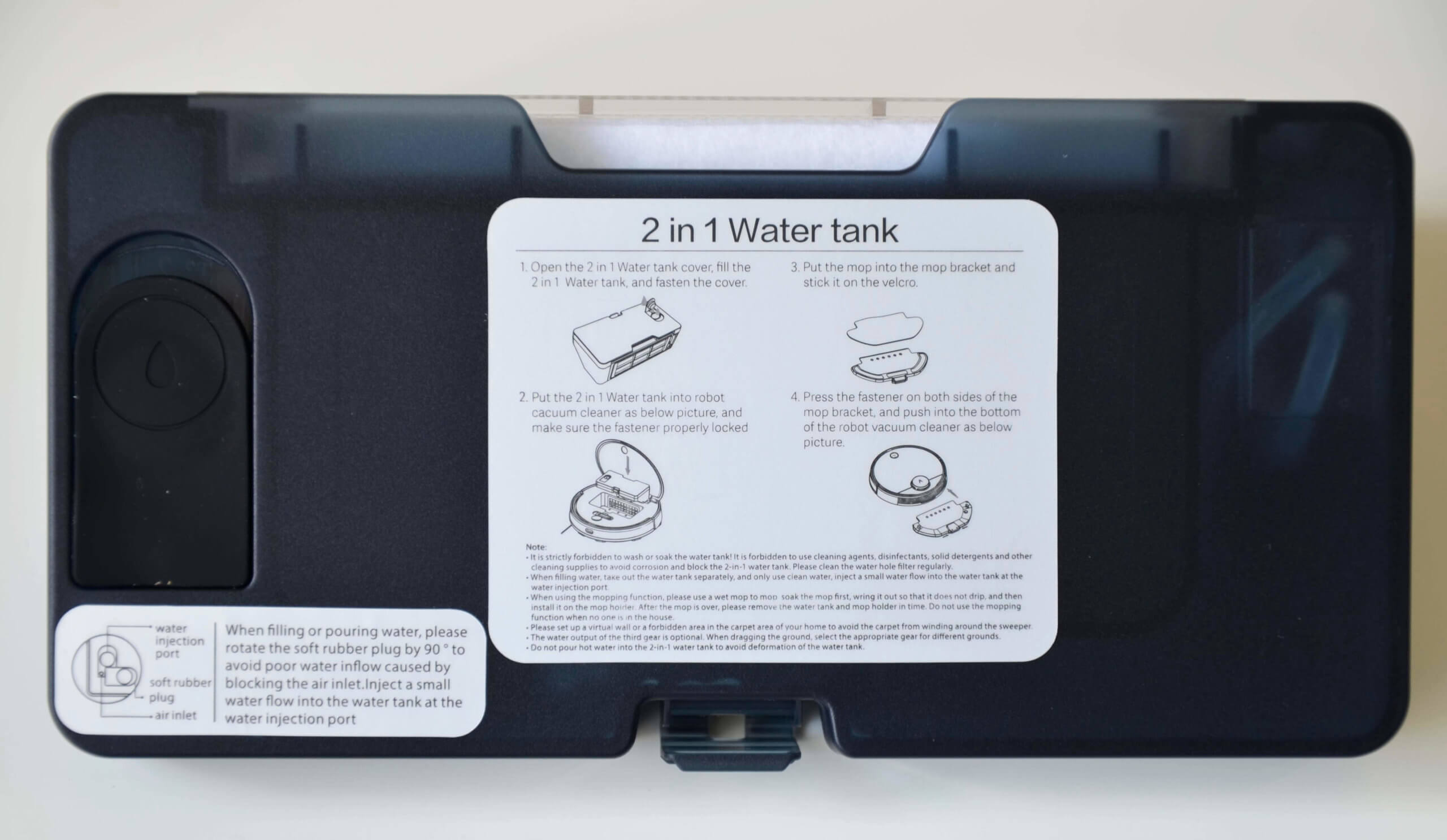
Combined container
The only difference here is that if the dust collector is replaced with a water tank, such robots cannot vacuum and mop simultaneously. At most, they can only sweep, throwing debris into a small compartment. This is not the best solution. It's good when a robot can perform both dry and wet cleaning simultaneously.
Water tanks
Here are some significant differences between robotic vacuum cleaners that are important to know. Some robotic vacuum cleaners on the market feature a wet cleaning attachment that attaches to the bottom of the unit, a full-size water tank that replaces the dust bin, or a water tank that attaches to the dust bin on either side.
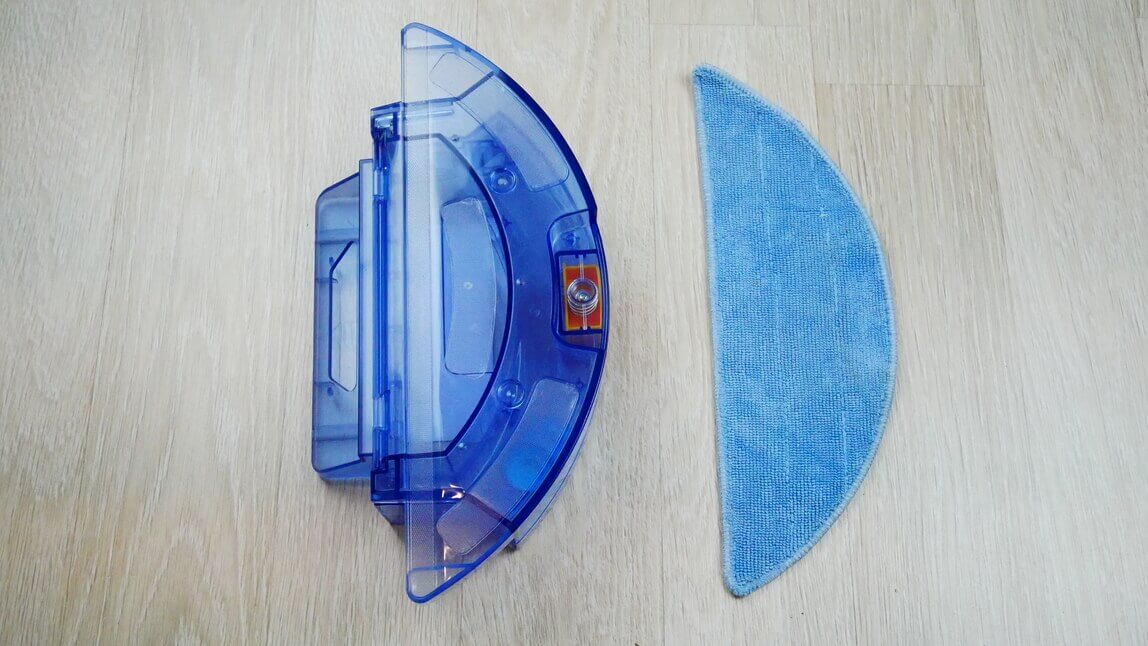
Tank with a napkin
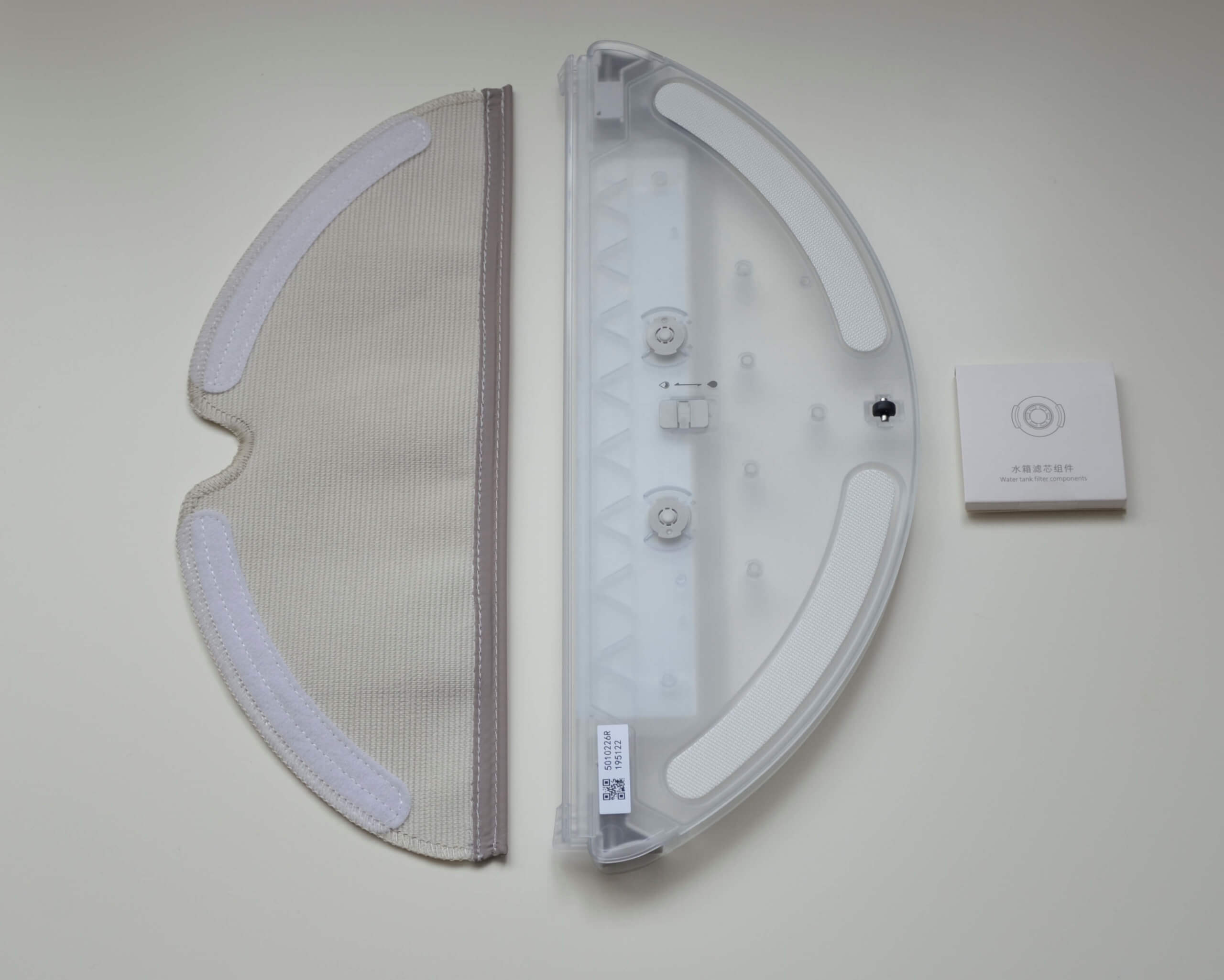
Wet cleaning attachment
Additionally, water tanks vary in capacity, typically ranging from 110 to 550 ml. A 110 ml tank is sufficient for wet cleaning of up to 40 square meters. Afterward, you'll need to refill the tank to ensure the robot leaves a wet trail. A 180-200 ml tank is sufficient for a surface area of approximately 60 square meters with a normal wet cloth. A 300 ml tank or larger is sufficient for wet cleaning of a home of 100 square meters or more.
An important difference between the tanks is the presence of a pump inside for electronic locking and supply of water to the cloth, as well as regulation of the degree of wetting of the cloth.
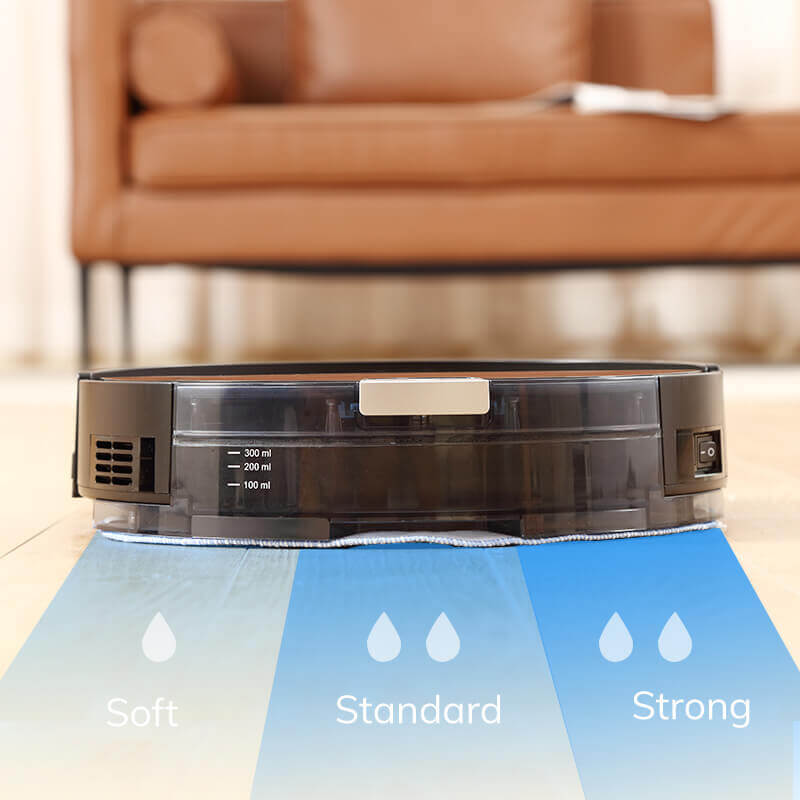
Adjusting the water supply
This is a very useful design solution, allowing you to adjust the water flow rate to suit your flooring type. An alternative solution is a mechanical regulator, but it is less convenient. In other cases, water flows by gravity to the cloth through dispensers.
And one last detail: some robot vacuums are equipped with tanks with a vibrating platform, which makes a reciprocating motion as it moves, thus slightly improving the cleaning performance. Of the recent robots I've tested, the new one with such a tank stands out. iLife A10s.
Body shape and height
When choosing a robot vacuum, it's equally important to know that all models vary in height and shape. The average height of robot vacuums is 9 cm, while models without lidar are typically around 8 cm, and models with a laser rangefinder are up to 10 cm, due to the height of the sensor itself.
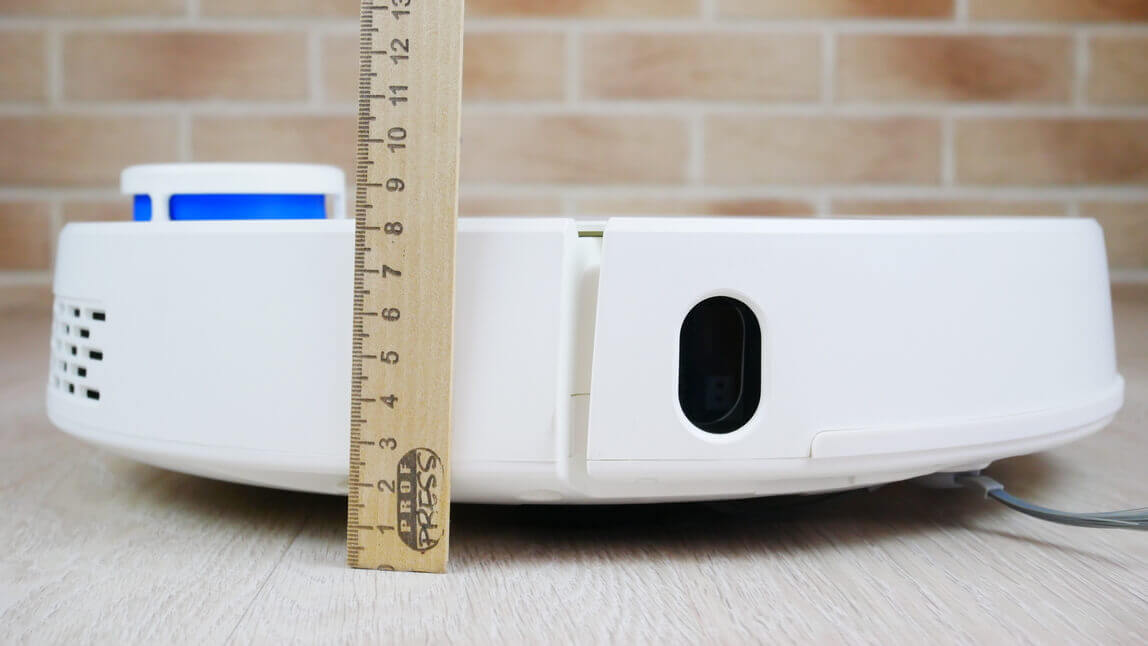
Body height
But there are also ultra-thin robot vacuum cleaners, measuring 3 to 6 cm in height. They can get under low furniture and clean there. But most often thin robot vacuum cleaners Either no navigation at all, or at most a gyroscope. Of all the ones I tested, I liked the new one. Tefal Explorer Series 60It's only 6 cm tall, yet it's equipped with a high-quality turbo brush and is generally well-built. So, if cleaning under low furniture is your priority, I recommend considering slim robots.
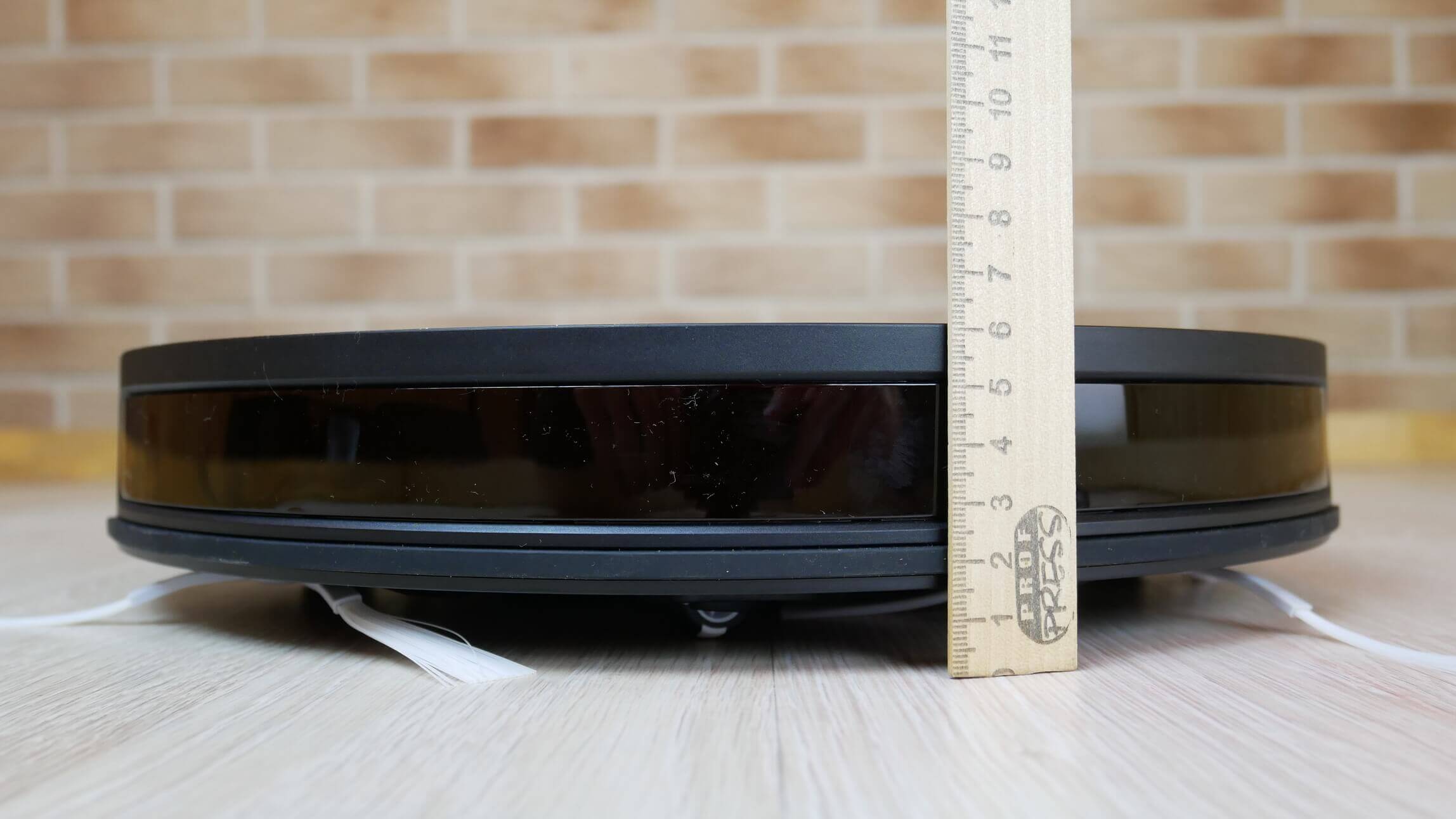
Tefal height
Regarding the body shape, robot vacuum cleaners are traditionally made round. This is a universal design. The main drawback of round robots is their poor cleaning performance in corners.
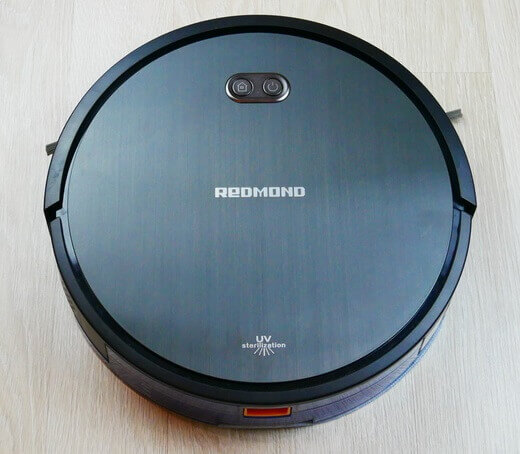
Round shape
This problem was solved by making the body square or D-shaped. This allows the robot to fit snugly into corners and effectively sweep out debris. Among the popular models, the D-shaped one stands out. iRobot Roomba s9+ And Hobot Legee 688, as well as its predecessors, the 668 and 669 models.
Current links to the Hobot Legee-688:
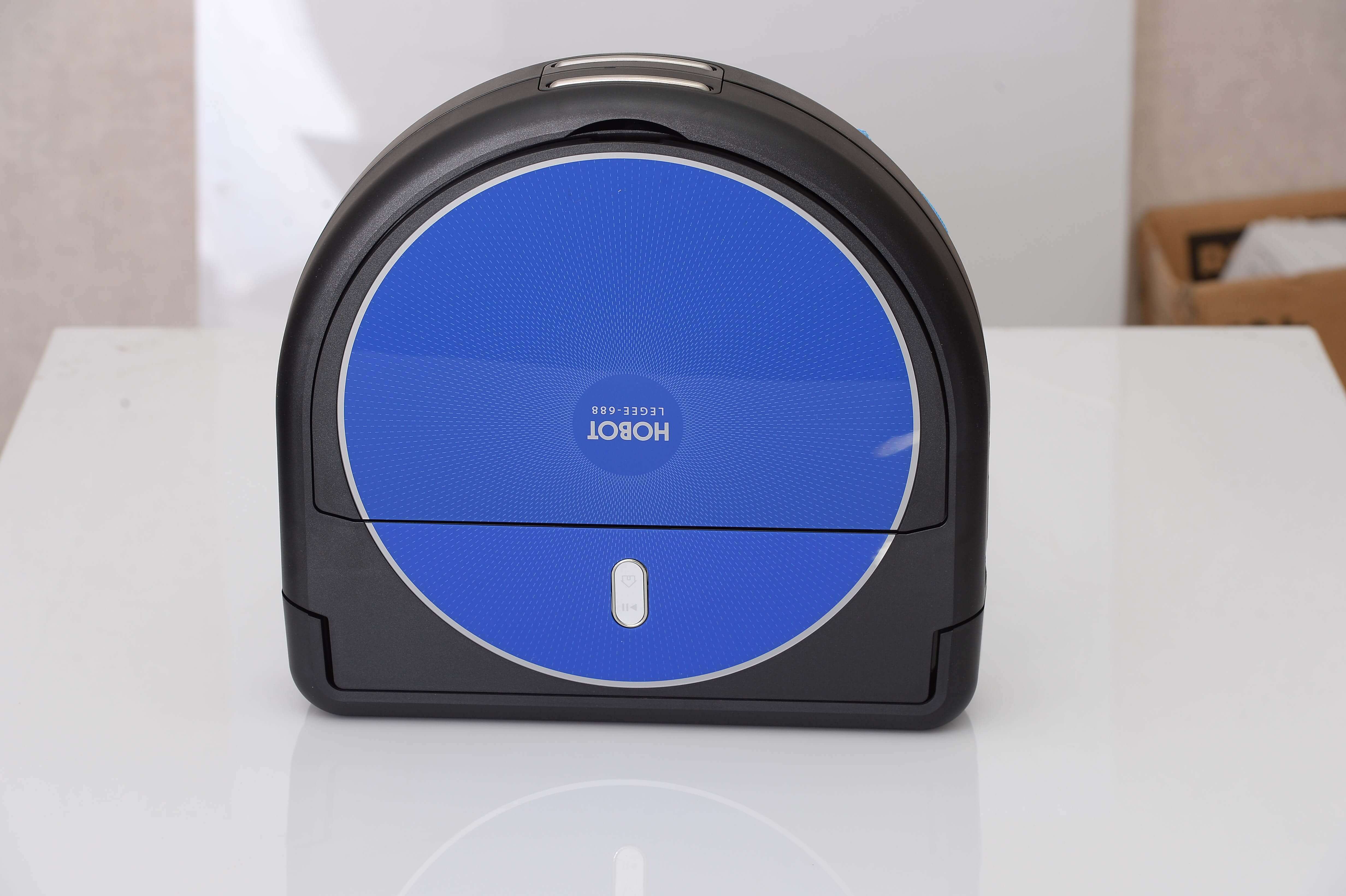
D-shaped body
There is also a transitional version, these are robotic vacuum cleaners. iClebo Omega And O5 Wi-FiThey're not round or D-shaped, but their corner cleaning performance is adequate: they're positioned in the middle. They sweep better than round robots, but not as well as D-shaped ones.
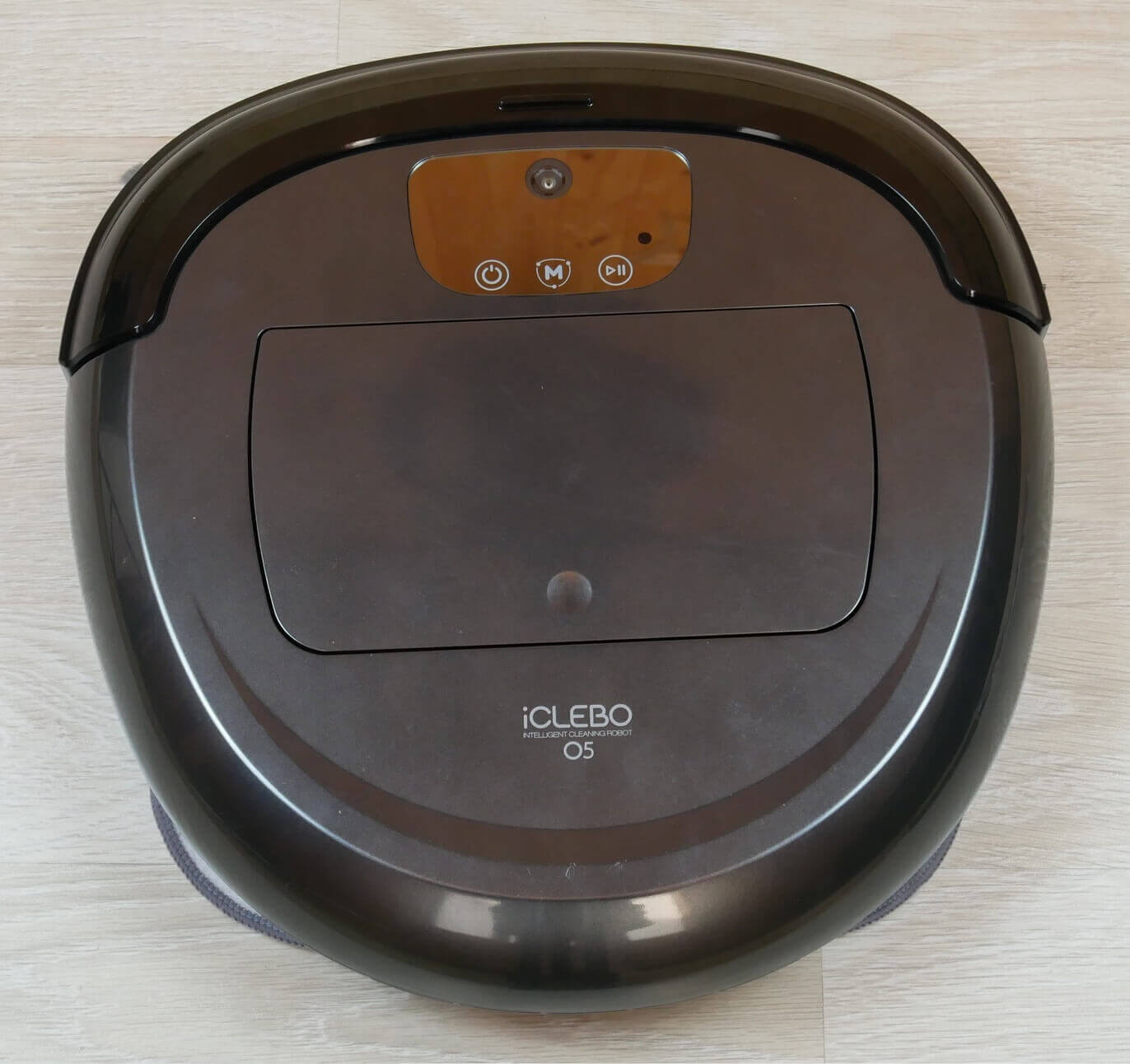
Ovoide body
iCLEBO O5 WiFi:
Control type
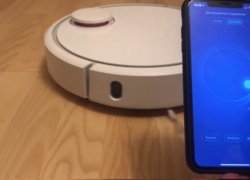
Although this topic is discussed near the end of the article, it's crucial to discuss the possible ways to control a robot vacuum cleaner. Most manufacturers, including top-tier ones, have now switched entirely to mobile app control. This isn't the best solution, as there's a segment of the population who simply can't master smartphones. For example, elderly relatives who want a robot vacuum cleaner that cleans effectively but doesn't require a Wi-Fi connection are likely to be a good choice. In this case, popular brands like Xiaomi and iRobot are often overlooked, as their entire functionality is available through their app.
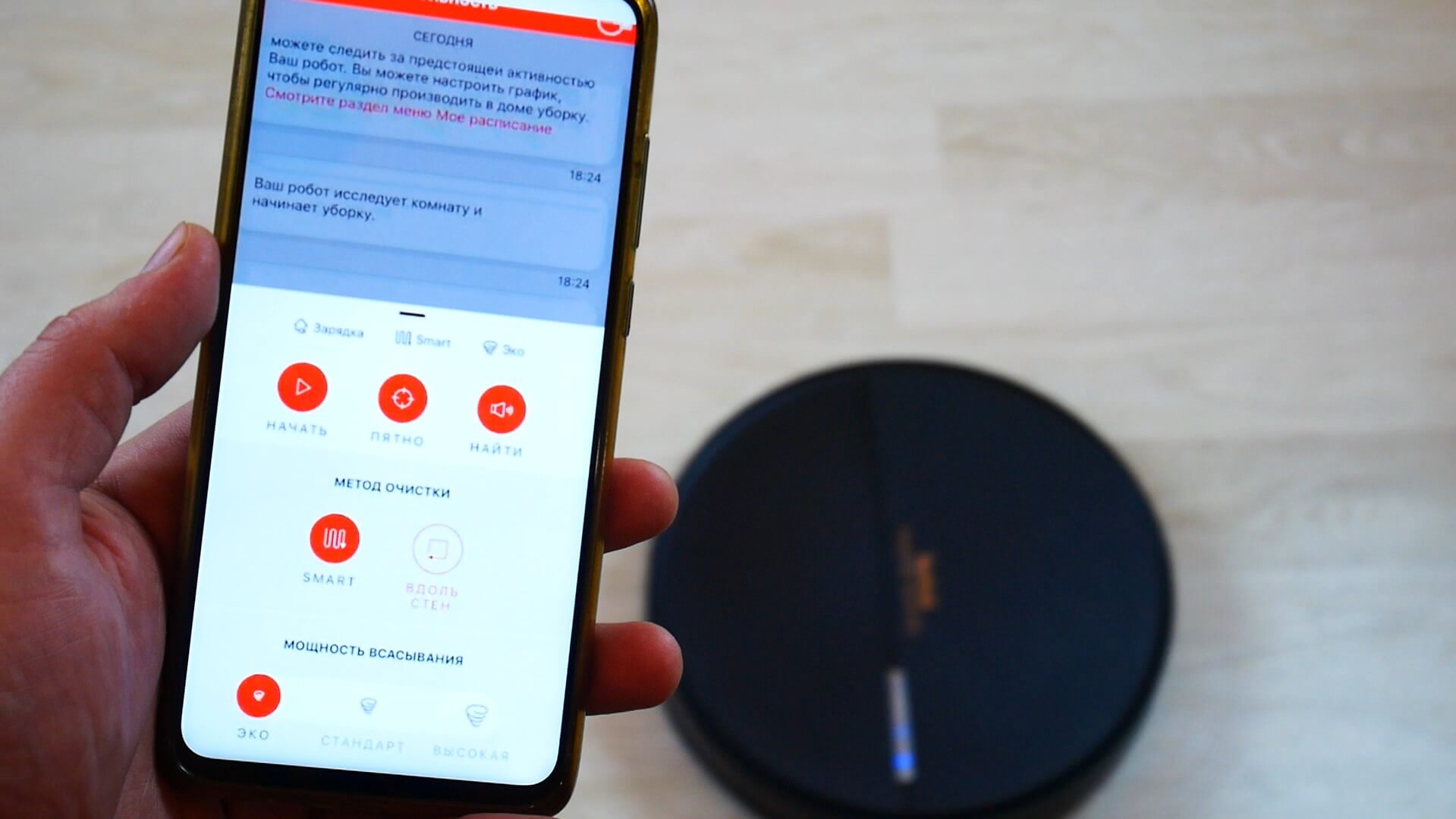
Control via app
A convenient option for such situations is a remote control with all the robot's main functions: manual control, one of three cleaning modes, schedule settings, suction power settings, and a forced return to the base. Having such a remote control will allow those without a smartphone or, for example, without internet access, to master the robot vacuum cleaner.
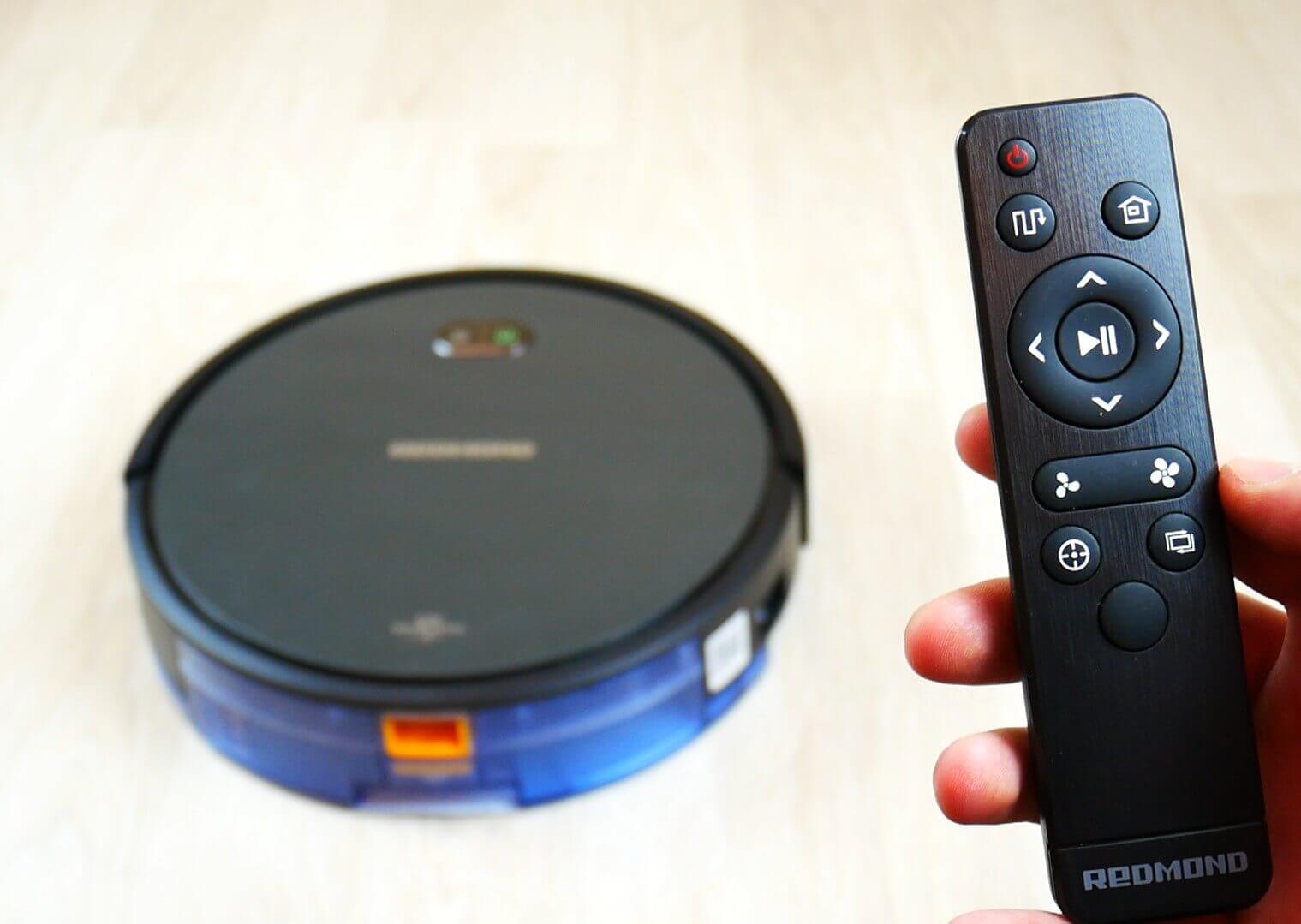
Remote control
But the best option in this case is a robot vacuum cleaner that can be controlled both by remote control and via a mobile app. These robots are the most versatile for everyone.
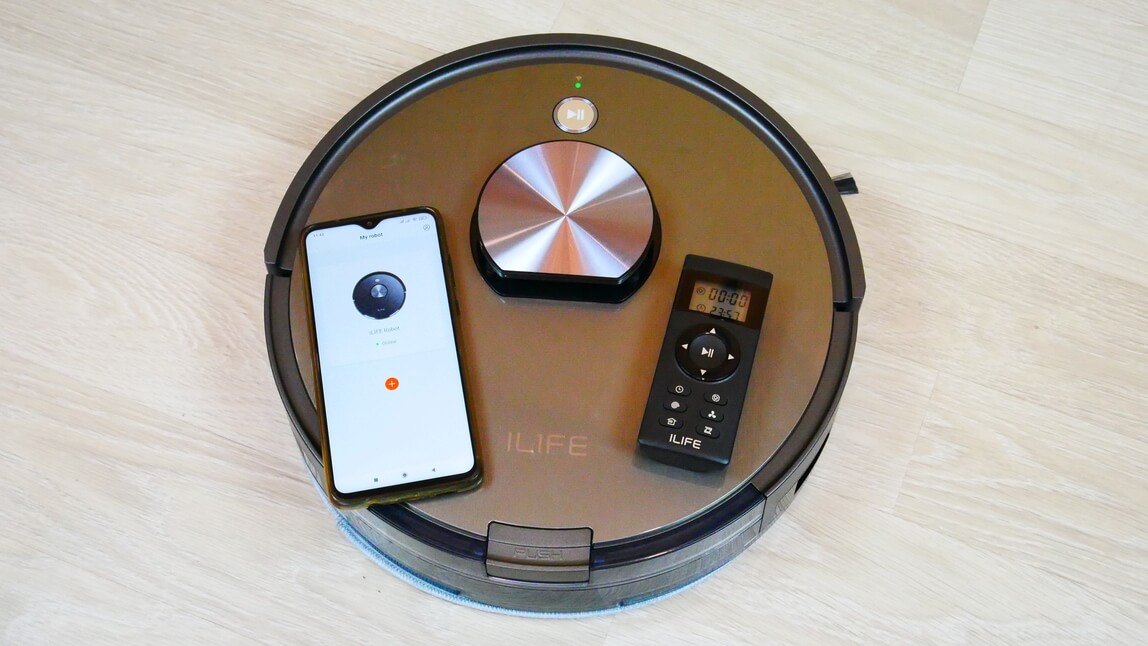
Additional features
In the battle for a place in the sun, manufacturers are making every effort to develop something new that will distinguish their product from the rest and make it superior. This is how the self-cleaning base was developed, allowing the robot to independently empty the dust bin between cleanings.
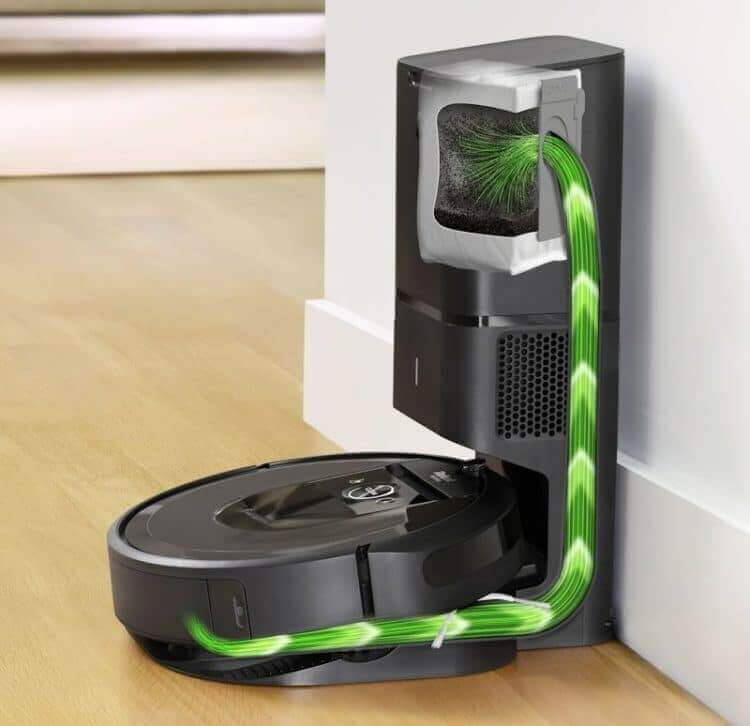
Self-cleaning
An active navigation camera that recognizes objects on the floor and is used for remote monitoring of the home when residents are unoccupied.
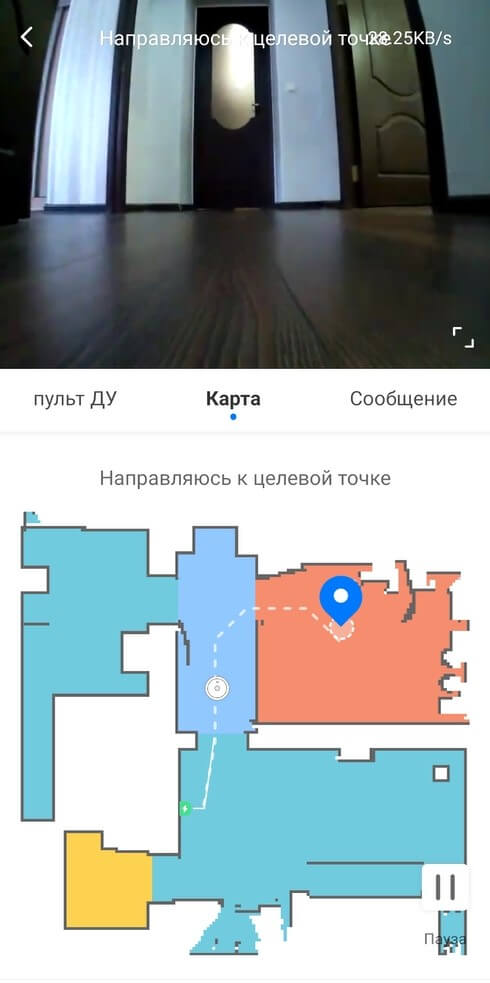
Active camera of a robot vacuum cleaner
These are the additional features that I consider very useful and that distinguish some premium robots from others. But there are also other, less effective or completely ineffective additional features, in my opinion. Clear examples are air ionization and a UV lamp.
So, we've covered the main differences between robot vacuum cleaners. Now you know what to look for when choosing a robot for your home, and how expensive robot vacuums differ from cheap ones. If I missed any points, let me know in the comments, and we'll discuss them separately. I've summarized the most important distinguishing features of this type of gadget. That's all for now. Happy shopping, everyone!


I didn't write about the noise!
And what about suction power? How to choose the optimal one?